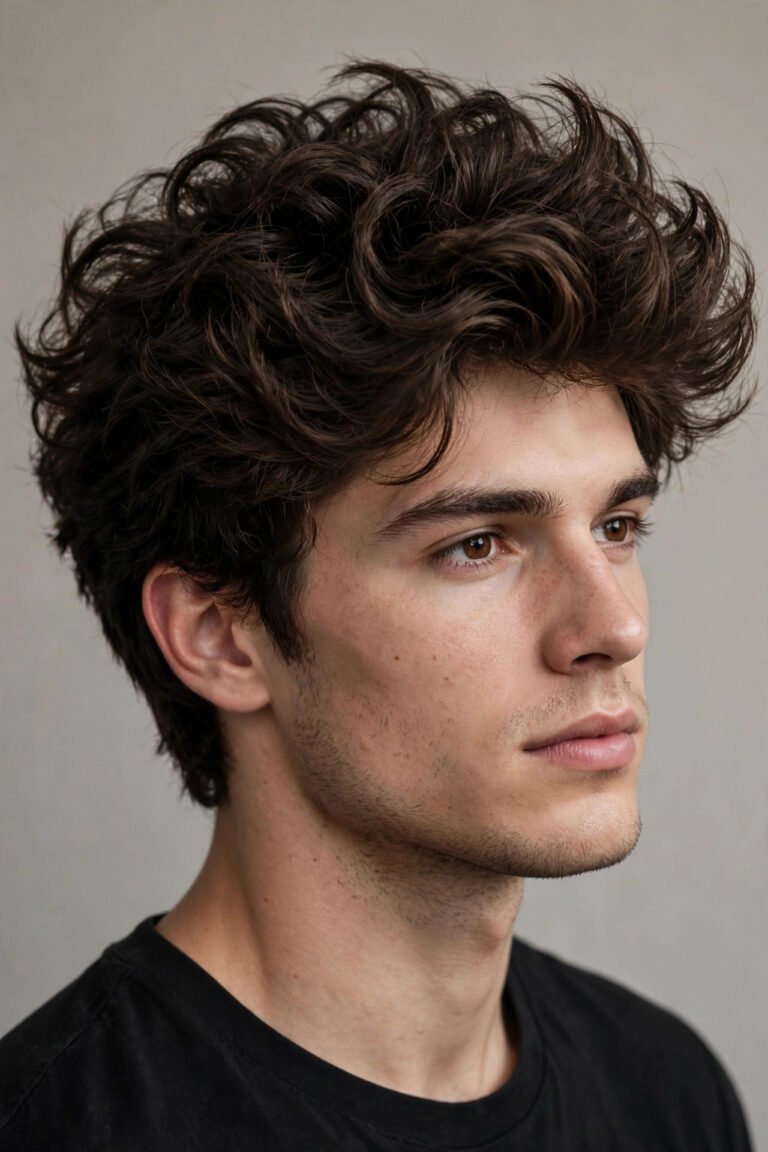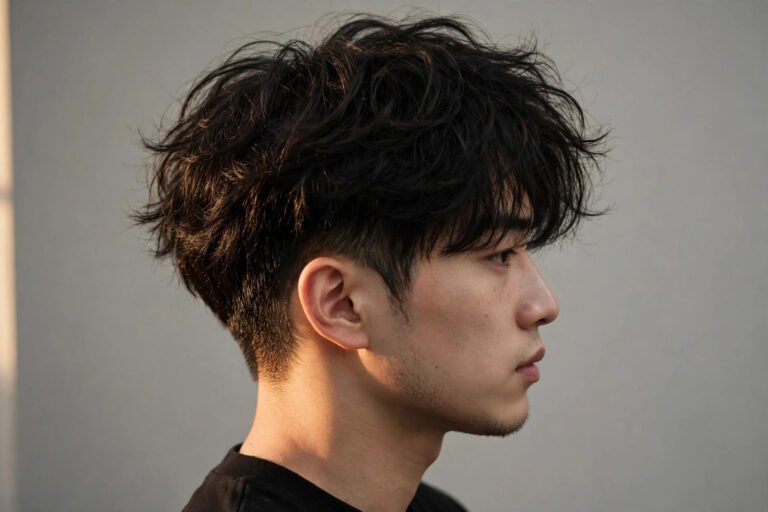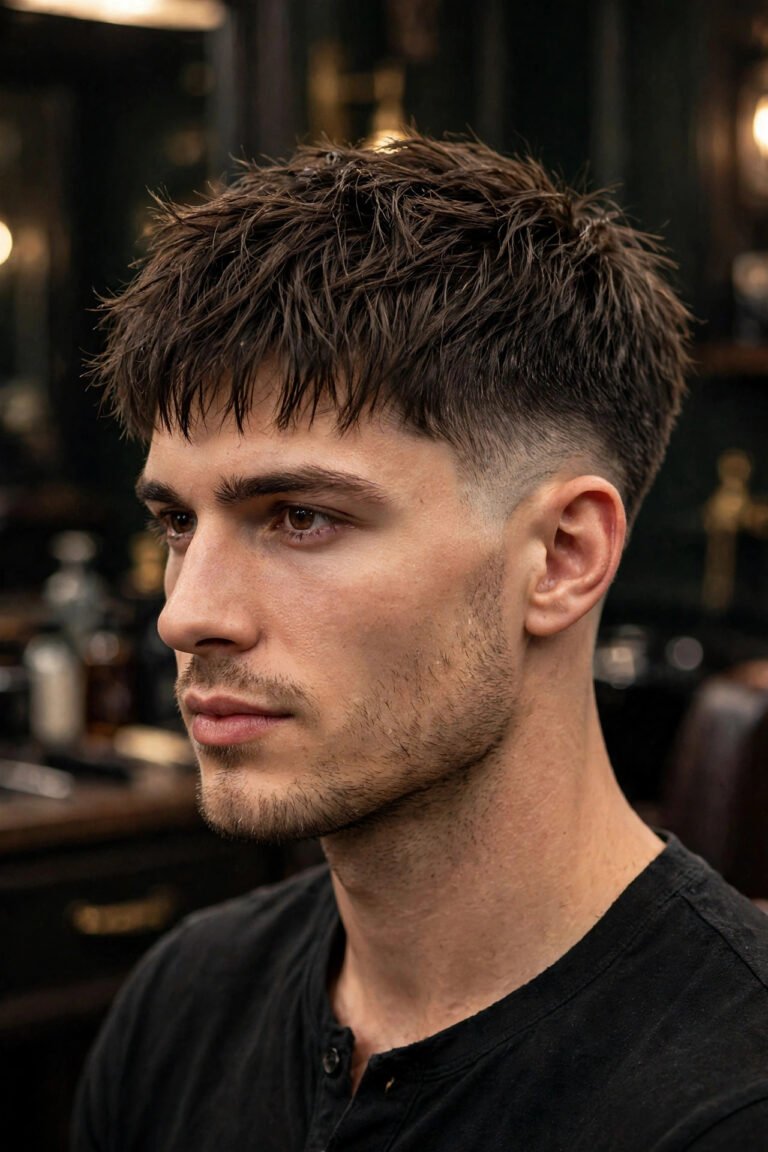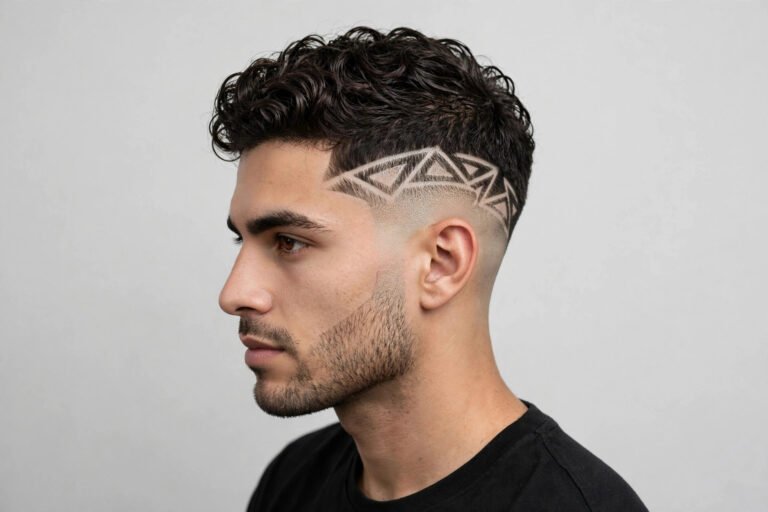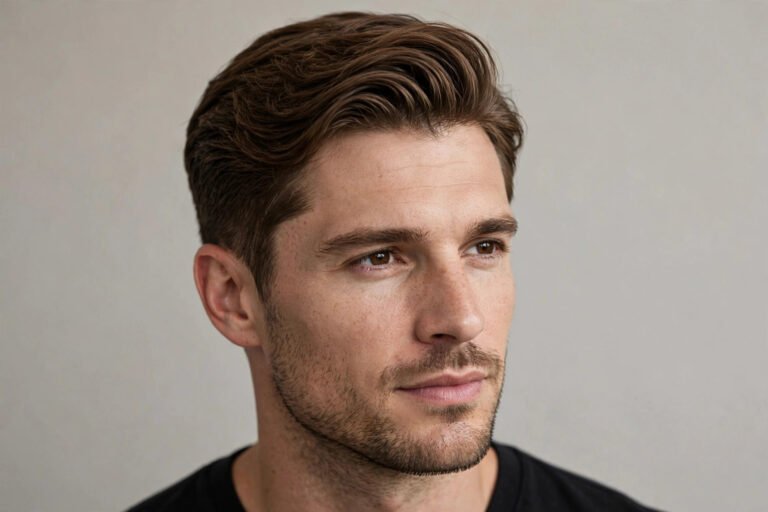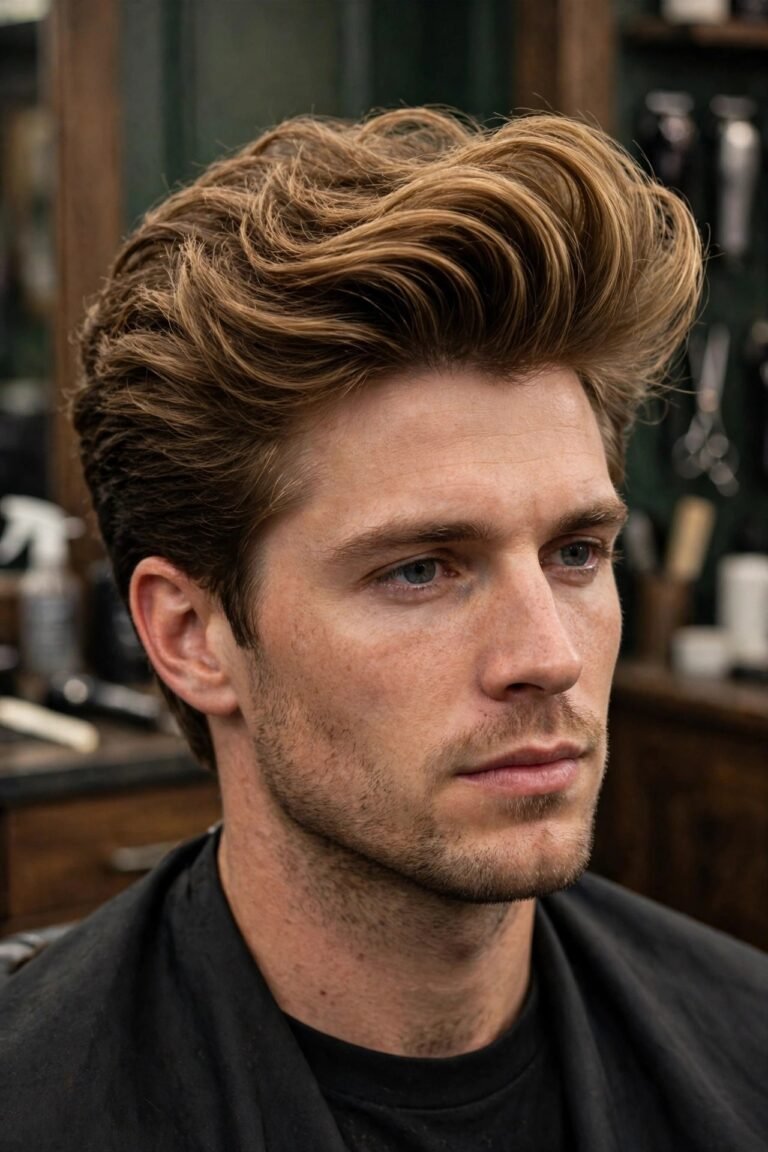
36 Soft Crop Haircut Ideas for Men in 2026
The Soft Crop Haircut Men Are Wearing in 2026 (And Why)
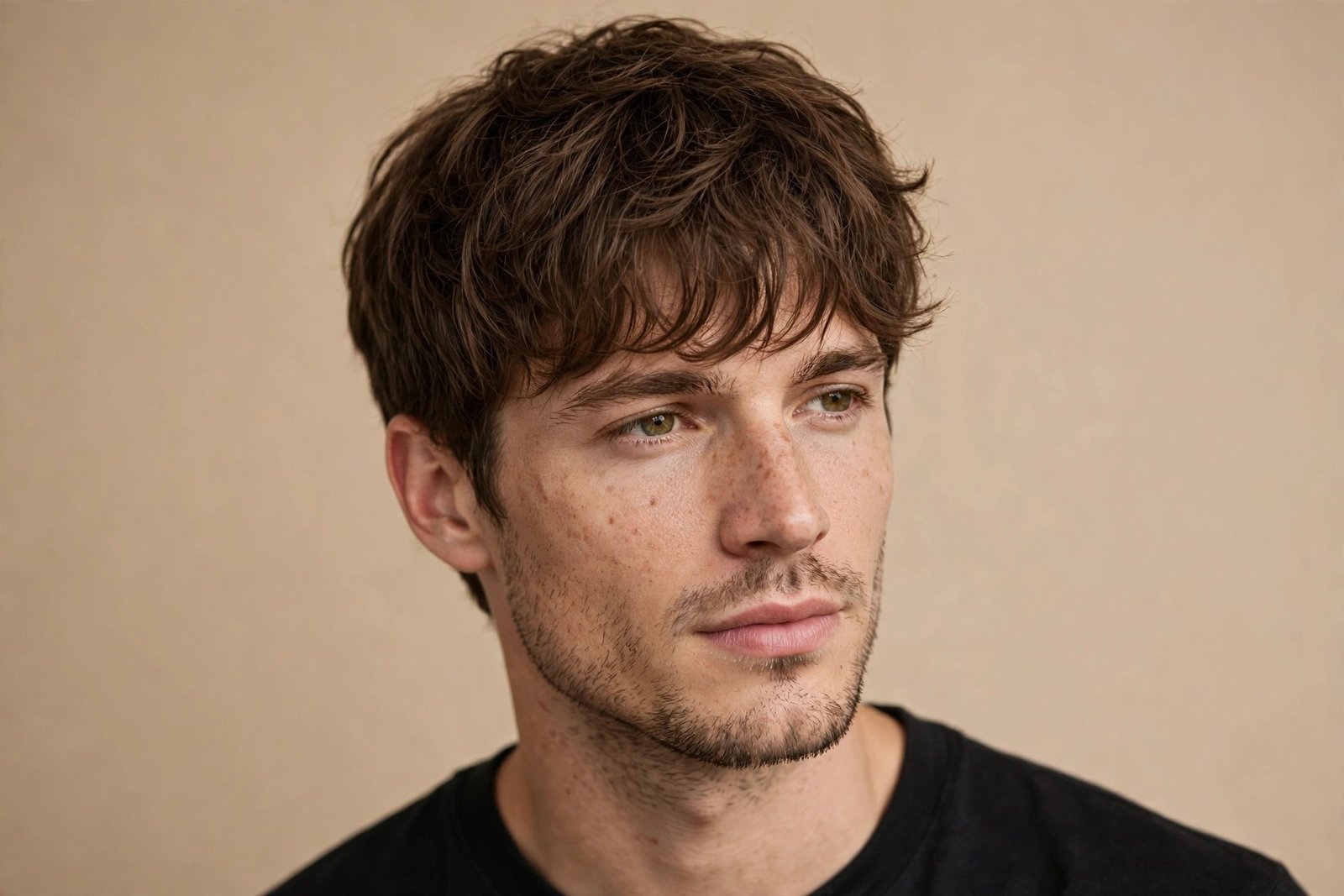
Let me get the most important thing out of the way first, because I do not want you scrolling through 36 ideas only to realise you were picturing the wrong haircut. The soft crop haircut men are wearing in 2026 is NOT the sharp, barbered crop you already know. We have separate guides on this site for french crop variations, textured crop fades, and crop cuts with faded sides — those are all about tight skin fades, crisp lines, and that freshly-lined-up look. This article is about the opposite of that: the grown-out soft crop, where the top is left long enough to move, the fringe falls naturally, the sides blend instead of fading to skin, and the whole thing looks like it grew that way on purpose. Two to four inches of textured, relaxed hair. Minimal styling. Zero sharp edges. That is the look we are building today.
And honestly? It is about time. For nearly a decade, men’s hair was a barbershop arms race — who could get the crispest fade, the sharpest lineup, the most surgical parting. It looked great in photos and cost a fortune to maintain, because a skin fade starts looking tired after about ten days. The 2026 trend reports all point the other way now: men’s hair is moving away from sharp barbering toward longer, softer, grown-out crops with a distinct Steve McQueen influence — textured, relaxed, unbothered. Hair that looks like hair, not like a project. The soft crop is the haircut that trend was waiting for.
What I love about it — and I say this as someone who has watched a hundred haircut fads come and go — is that the soft crop is not really a fad at all. It is a return to how men’s hair looked before the fade era took over: full, soft, a little undone. It flatters straight, wavy, curly, and coily hair. It works at 20 and at 55. It needs trims half as often as a fade, and on a lazy morning it asks for roughly two minutes of your time. There is a reason barbers keep telling me this is the most-requested haircut on the chairs right now, and it is not because of TikTok. It is because it actually works for real life.
So here is what you are getting: 36 grown-out soft crop ideas for 2026, every one of them fully broken down — who it suits, exactly what to tell your barber, how to style it, how to maintain it, and the honest downsides nobody else mentions. Plus a complete daily styling routine, a product playbook, and answers to the seven questions I get asked about this cut constantly. Grab a coffee. Your barber is about to become your favourite person.
Table of Contents
- The Soft Crop Haircut Men Are Wearing in 2026 (And Why)
- Why 2026 Belongs to the Grown-Out Crop
- 36 Soft Crop Haircut Men Love: Grown-Out Ideas for 2026
- The Soft Crop Haircut Men Ask For: Styling Routine and Care Guide
- Frequently Asked Questions
- Conclusion
Soft Crop vs. Sharp Crop: Know the Difference Before You Sit Down
I already said it once, but it is worth saying properly, because this is where most guys go wrong at the barber. A sharp crop — the french crop, the textured crop fade, the crop with faded sides — is built on contrast. Short on top, often an inch or less, with a blunt heavy fringe, and sides that fade down to skin or near-skin. The whole haircut is about edges: the edge between the top and the fade, the edge of the lineup, the edge of the parting. It is precise, it photographs beautifully, and it demands a barber visit every two to three weeks or it falls apart.
The soft crop removes all of that. The top stays long — two, three, four inches — cut with point-cutting and slide-cutting so the ends feather out instead of landing in a blunt line. The fringe is not chopped straight across; it is textured so it falls in soft, separated pieces. The sides are scissor-cut or gently tapered so they melt into the top with no visible line, no skin, no drama. From across the room, a sharp crop says “I just got a haircut.” A soft crop says “I have good hair.” Both are fine statements. They are just different ones, and you need to know which one you are asking for before the clippers come out.
Here is my practical advice: if you walk into the shop and your barber reaches for the clippers for the sides without asking, you are about to get a sharp crop by default, because that is what most barbers cut most days. The single most important sentence in this entire article is this one: ask for the sides with scissors, no fade line, no skin. That one request is the difference between the two haircuts. Say it first, before anything else, and you will never get the wrong cut again.
Why 2026 Belongs to the Grown-Out Crop
The shift did not come out of nowhere. Runway shows for the last two seasons have been full of grown-out, textured men’s hair — models with fringes falling over their foreheads, sides that clearly have not seen clippers in months, everything looking soft and touchable. Menswear itself has gone softer too: relaxed tailoring, washed fabrics, loafers instead of sharp derbies. Hair follows fashion, always has, and the Steve McQueen reference keeps coming up for a reason. McQueen’s hair was never “styled” in the modern sense. It was cut well, left alone, and it moved. That is the 2026 mood in one sentence. It is also exactly why the soft crop haircut men are requesting by name has beaten every sharper alternative this year.
There is also a quiet rebellion happening against maintenance. Guys are tired of the every-two-weeks fade cycle — the cost, the scheduling, the way the haircut looks perfect for four days and then slowly betrays you. A soft crop flips that relationship. It looks good on day one, it looks arguably better at week four when it has settled in, and it only asks for a proper trim every six to eight weeks. Barbers will not always tell you this, but they love cutting it too: it is scissor work, it is craft, and it lets them show what they can actually do instead of just fading up the sides on autopilot.
The other thing working in its favour is versatility. A sharp crop looks like one thing in every setting. A soft crop is a chameleon — push the fringe forward and it is casual, sweep it to the side and it is office-ready, add a little salt spray and it is a night out. One haircut, three personalities, and none of them require a YouTube tutorial to achieve. In a year when everyone is trying to simplify, that is not a small thing.
Who the Soft Crop Flatters Most (Spoiler: Almost Everyone)
Let us talk face shapes, because that is the question I get more than any other. The soft crop is genuinely one of the most forgiving cuts out there, but a few tweaks make it perfect. Oval faces can wear anything here — congratulations, pick your favourite and go. Square jawlines look fantastic with a soft crop because the softness on top balances the angles below; keep the fringe a little longer and textured so nothing looks boxy. Round faces need height on top and an off-centre fringe — that combination adds length where you want it. Longer, narrower faces should avoid too much height and instead let the fringe fall forward to shorten the forehead visually.
Hair texture matters more than face shape, honestly. Wavy and curly hair were born for this cut — the texture does half the styling work for you, and the grown-out length lets the natural movement show. Straight hair works beautifully too, but it needs the point-cut texture to be done properly or it can lie a little flat; a salt spray or light mousse becomes your best friend. Thick hair needs weight removed through the ends so it does not mushroom out. Fine hair needs the layers kept subtle so it does not look thin — but done right, a soft crop makes fine hair look fuller than a tight fade ever could, because there is simply more of it.
Age is a non-factor. I have seen this cut look incredible on 19-year-olds and on 60-year-olds, and the adjustments are tiny: younger guys can push the messiness, older guys keep the fringe a touch neater and the sides a touch cleaner. If you have significant thinning or a receding hairline, be honest with yourself and your barber — a soft crop needs coverage on top to work, and style 15 in this guide covers the grown-out buzz route if you are working with less density. The right cut for the hair you have beats the wrong cut for the hair you wish you had, every single time.
36 Soft Crop Haircut Men Love: Grown-Out Ideas for 2026

Here they are — 36 grown-out soft crop haircut men are actually wearing in 2026, every one built on the same foundation: length on top, softness through the ends, sides that blend instead of fading. No skin fades, no hard lines, no exceptions. Find the one that matches your hair texture, your face shape, and your life, then take the barber script straight to the chair.
1. The Relaxed Classic Soft Crop

This is the baseline — the soft crop in its purest, most wearable form, and the one I recommend to any guy trying the grown-out look for the first time. The top sits at roughly three inches, point-cut through the ends so it moves naturally instead of sitting in a helmet. The fringe falls just onto the forehead in soft, separated pieces, long enough to look deliberate but short enough to stay out of your eyes. The sides are scissor-cut to about an inch and a half at the top of the side, tapering gently down to the ear with no visible line where the top meets the sides. It is neat without being sharp, relaxed without being messy. It suits every face shape, every hair colour, and every age from 18 to 80. Honestly, if you only read one entry in this guide, make it this one, because everything else is a variation on what your barber is doing here. If you are new to the trend, this is the soft crop haircut men ask for most at the chair — simple, flattering, and impossible to get wrong.
Tell your barber: three inches on top, point-cut texture throughout, soft forward fringe, sides scissor-cut and blended with no fade line and no skin. Bring the neckline up just enough to look intentional — a soft, natural neckline, not a hard squared one. Styling is almost embarrassingly simple: rough-dry with your fingers, work a pea-sized amount of matte paste through the mid-lengths, push the fringe into place, done. Two minutes on a normal morning, zero on a lazy one. Maintenance is a trim every six to eight weeks, and here is the trick most guys miss: ask your barber to refresh the point-cutting each time but resist taking real length off the top. The shape lives in the length. The honest downside? If your hair is very straight and very fine, this can sit a little flat by the afternoon — a light salt spray at the roots in the morning fixes it. It also will not give you the razor-crisp photos that a fresh fade gives you, because that is not what it is. What it gives you instead is a haircut that looks good on day 30, which no fade can say.
2. The Steve McQueen Grown-Out Crop

The 2026 trend reports keep name-dropping Steve McQueen, and once you see the reference, you cannot unsee it. McQueen’s hair in the late sixties was the original soft crop: longer on top, textured, falling where it wanted, sides that clearly had not met clippers in a while. It looked like he cut it himself with good instincts — he did not, obviously, but that was the effect. This version leans into that energy. The top runs three and a half to four inches with long, broken layers that create movement in every direction. The fringe is longer here than in the classic version, sitting right at the eyebrows and swept slightly to one side like it landed there by accident. The sides grow a little longer too, soft over the ears, tapering naturally. There is an undone cool to it that no amount of product can fake — it has to be cut to fall this way.
Tell your barber you want a grown-out, McQueen-inspired crop: long textured layers on top, a longer side-swept fringe, and sides left soft and full with no fade whatsoever. Show a reference photo of McQueen circa 1968 if your barber is under 40 — half of them will know exactly what you mean, the other half need the picture. This cut suits wavy and straight hair best; very curly hair will take on a life of its own at this length, which can be great but is a different haircut. Styling: almost nothing. A little sea-salt spray on damp hair, scrunch with your fingers, let it air-dry. That is genuinely it. The downside is the grow-in: this looks best at week three and beyond, so if you like that just-cut crispness, you will be waiting a while. It also needs enough hair to work — if your crown is thinning, the longer top will expose it rather than hide it. But on the right head of hair, this is the coolest haircut in this entire guide, and it is not close.
3. The Soft Textured Fringe Crop

If the fringe is the soul of the soft crop — and I would argue it is — then this version is the soul laid bare. Everything here is built around the front: a textured fringe, cut with aggressive point-cutting and a little slide-cutting, that falls across the forehead in soft, irregular pieces. No two strands land at quite the same length, and that is the entire point. The top behind it is kept at two and a half to three inches with plenty of texture so the whole front half of the head has movement. The sides stay soft and blended, slightly shorter than the classic to give the fringe more presence by contrast. It is youthful, it is a little bit romantic, and it is the version you see all over the 2026 runway references.
Tell your barber: the fringe is the feature — point-cut it heavily so it breaks up naturally, keep it at eyebrow level or just above, and texture the top to match so the front does not look disconnected from the back. Sides blended soft, no fade. This suits straight and wavy hair beautifully; on curly hair the fringe becomes more of a curl-forward situation, which looks fantastic but needs a barber who understands curl. Styling takes one extra minute versus the classic: after rough-drying, use your fingers to separate the fringe into pieces with a tiny amount of paste on just the fingertips. The common mistake is over-styling it — if every piece is perfectly separated, it looks contrived. You want organised chaos, not a sculpture. Downside: fringes and foreheads have a relationship. If your skin runs oily, a fringe sitting on it all day can cause breakouts — keep a blotting paper handy or ask for the fringe a touch shorter. Also, windy days will test your commitment. But when it is sitting right, nothing in this guide photographs better.
4. The Long-Top Low-Maintenance Crop

This one is for the guy who wants great hair with the absolute minimum of effort — and I mean that as the highest compliment. The top here is the longest in the guide so far, a full four inches, which sounds like a lot until you realise that length is what makes it low-maintenance. Short hair shows every cowlick, every growth pattern, every mistake. Longer hair has weight, and weight behaves. The layers are long and soft, the ends are feathered, and the whole thing can be pushed forward, to the side, or straight back depending on your mood and how much time you have — which, on most mornings, will be none. The sides are kept simple: scissor-cut, blended, forgettable in the best way. If low-maintenance haircuts are your thing, you will also like our broader guide to low-maintenance haircuts for men, but this is the soft crop version of that philosophy.
Tell your barber: four inches on top with long soft layers, ends feathered, fringe that can fall forward or sweep aside, sides scissor-cut and blended with no fade. The key phrase is “cut it so I can do nothing to it” — a good barber will understand that means balanced weight distribution, not just length. Styling on a normal day: nothing. Towel dry, go. On days you want to look like you tried: a little cream through damp hair, rough-dry, done in ninety seconds. This suits thick, wavy, and curly hair especially well — the length lets the texture do the talking. Fine, straight hair can work but needs the layers done carefully or it will look stringy. The honest downside: at four inches, this is approaching medium-length territory, which means the awkward grow-out phase if you ever decide to change it up, and it means your barber has real power over how this looks — find one you trust. Also, hats will flatten it. But as a daily driver, this is the easiest haircut in the guide to live with.
5. The Undone Bedhead Crop

There is a fine line between “I woke up like this” and “I actually just woke up,” and this haircut lives exactly on it — on the right side. The undone bedhead crop takes the soft crop formula and pushes the texture harder: choppier point-cutting, more separation, pieces that kick in different directions. It is the most deliberately messy version in this guide, and here is the thing barbers will not tell you: messy-looking haircuts are the hardest to cut well. Anyone can make hair look tidy. Making it look artfully untidy — like it fell that way, like you have better things to do than fuss — takes real skill with the shears. The top is three to three and a half inches of heavily textured hair, the fringe is broken up and piece-y, and the sides are soft but kept slightly shorter so the top has room to be the chaos.
Tell your barber: “I want it to look undone — heavy texture, choppy ends, pieces going everywhere, but cut so it falls that way on its own.” Then let him work. Do not micromanage a bedhead cut; the whole point is controlled randomness, and hovering makes barbers nervous. This is a wavy and curly hair dream — your natural texture is the entire styling product. Straight-haired guys can absolutely wear it, but you will need a salt spray or texture powder to manufacture the piece-y-ness, and you will need to accept that it takes three minutes instead of thirty seconds. Styling: spray salt spray on damp hair, scrunch and twist random pieces with your fingers, rough-dry or air-dry. The downside is real: this is the highest-maintenance-looking low-maintenance cut. If the texture grows out wrong, it stops looking artfully undone and starts looking actually neglected — so do not stretch trims past eight weeks. And in formal settings, it reads casual no matter what you wear. But for everyday life? It is perfect.
6. The Natural Side-Part Soft Crop

Not every soft crop has to fall forward. This version takes the grown-out length and sweeps it to a soft, natural side part — no hard parting line, no comb marks, just hair that happens to fall mostly to one side because that is where it wants to go. Think of it as the relaxed descendant of the classic side part, minus all the formality. The top is three to three and a half inches, layered so it has somewhere to go when you push it over. The fringe becomes a side-swept fringe almost by accident, falling diagonally across the forehead. The sides are blended soft, maybe a touch neater than the bedhead version, because the overall effect here is polished-casual rather than undone. It is the soft crop for the guy who wants to look put-together without looking styled.
Tell your barber: soft crop with a natural side part — no hard part line, just length that falls to one side, fringe swept diagonally, sides blended. The important detail is the part itself: it should be found, not carved. A good barber will find your natural growth pattern and work with it; a bad one will razor in a line. This suits straight and wavy hair best — curly hair will do its own thing with the part, which is fine, but the effect is less pronounced. Oval, square, and longer faces love this because the diagonal fringe breaks up the forehead nicely. Styling: rough-dry, then push everything to your natural side with your fingers and a touch of cream. Thirty seconds. It holds all day because the length has weight. Downside: if you have a strong cowlick at the front, it will fight the side sweep — your barber needs to know about it so he can cut with it, not against it. And purists will say this is just a side part with extra steps. They are not entirely wrong. But extra steps that take thirty seconds are steps worth taking.
7. The Tousled Layered Crop

Layers are the engine of the soft crop — they are what turn length into movement — and this version puts them front and centre. The tousled layered crop uses long, soft layers through the top and crown, each one slightly shorter than the one beneath it, so the hair stacks with natural lift and separation instead of lying flat. The effect is volume without height, movement without mess. The fringe is layered too, falling in soft tiers rather than one blunt edge. The sides are kept simple and blended, because the top is doing all the talking. This is the version I point guys toward when they say “I want it to look like it has texture but I do not want it to look messy.” It is the neat freak’s soft crop, and there is no shame in that.
Tell your barber: long soft layers through the top — not choppy, not disconnected, just classic layering that creates movement — with a layered fringe and blended sides. The word “soft” needs to come out of your mouth at least twice, because some barbers hear “layers” and reach for the thinning shears like they are defusing a bomb. This suits straight and wavy hair perfectly; the layers give straight hair the movement it would not otherwise have. Thick hair needs the layers done with weight removal in mind, or it will pyramid out at the sides. Styling: a little volumising mousse on damp hair, rough-dry with your head tipped forward for lift, then push into place. Two minutes, and it looks like you have twice as much hair. The downside: layers grow out at different rates, so this one needs its six-to-eight-week trim more faithfully than most — skip it and the layers collapse into each other. And if your barber over-thins it, the ends go wispy and sad. Ask for layering with regular shears, not thinning shears, and you will be fine.
8. The Beach-Swept Crop

Some haircuts look like an office. This one looks like a coastline. The beach-swept crop takes the soft crop and gives it that windswept, salt-air texture — longer on top, pushed back and to the side like a breeze is doing half the styling for you. The layers are long and the ends are feathered so they flick outward naturally instead of curling under. The fringe is longer here, swept back off the forehead or falling to the side, because nothing says “beach” like a fringe that refuses to stay put. The sides are soft and a touch longer than usual, blending into the whole windswept story. It is the most romantic version in this guide, and I do not use that word lightly. If your hair has any natural wave at all, this cut will make you look like you surf, even if the closest you get to the ocean is a screensaver.
Tell your barber: grown-out soft crop, longer textured top swept back and to the side, feathered ends, longer fringe, soft longer sides with no fade. Bring a photo of literally any surfer and your barber will get it. This is a wavy-hair masterpiece — if you have natural wave, the cut just unleashes what is already there. Straight hair can wear it with salt spray doing the heavy lifting. For more ideas in this lane, our guide to wavy hair for men pairs well with everything in this section. Styling: salt spray on damp hair, scrunch, air-dry or rough-dry. That is the whole thing, and it is the rare styling routine that actually gets better when you are a little bit lazy about it. Downside: humidity is the enemy of the windswept look — in genuinely humid climates, this can go frizzy rather than beachy, so keep a light cream on standby. And the longer fringe means more forehead contact, so oily skin types should take note. But on the right day, in the right light, this is the haircut that makes strangers ask who cuts your hair.
9. The Gentle-Taper Soft Crop
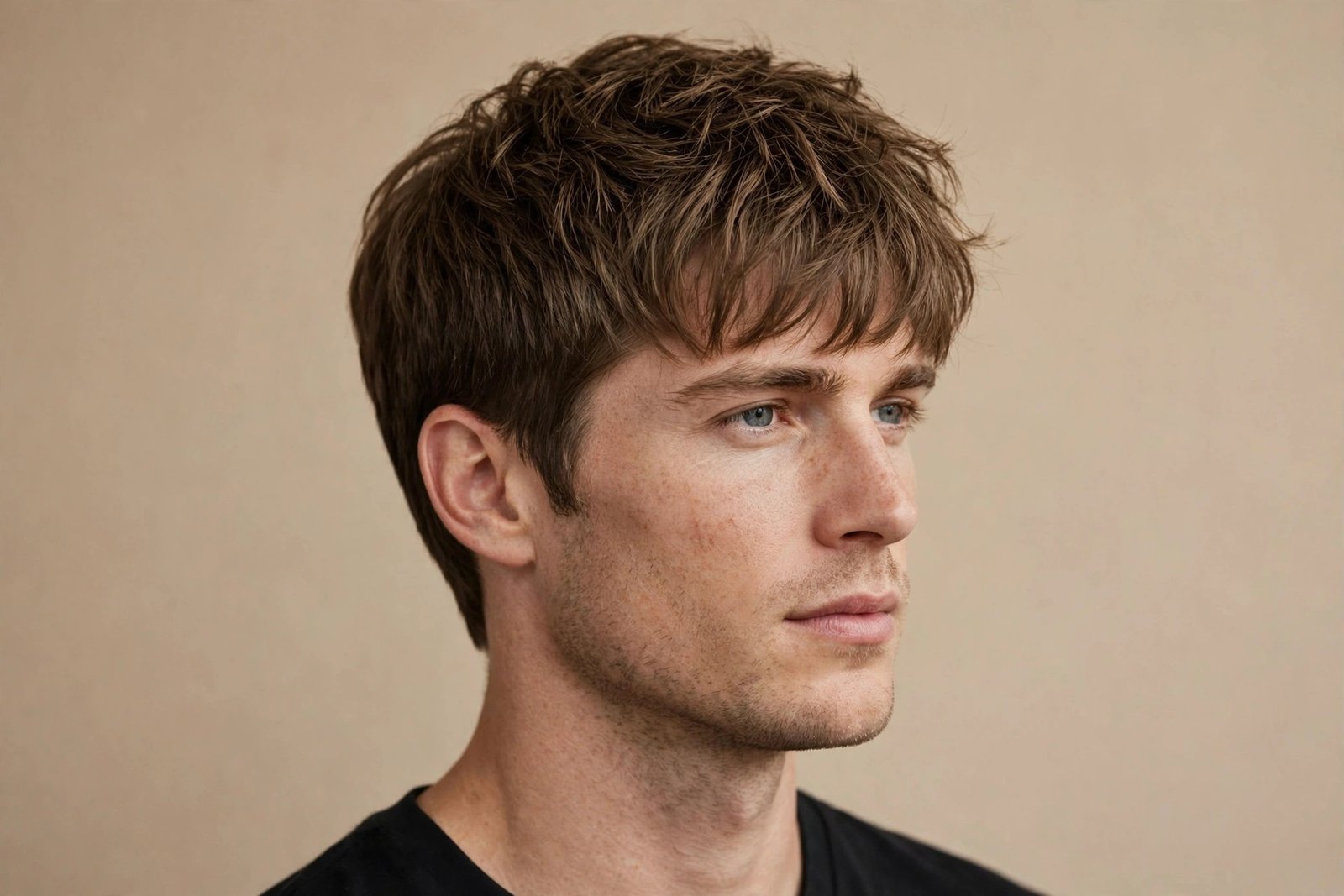
Let us address the elephant in the barbershop: some of you are reading this thinking “I like the soft top, but I am nervous about the sides being too long.” Fair enough. The gentle-taper soft crop is the compromise — it keeps the grown-out, textured top and the soft fringe exactly as they should be, but takes the sides down a little neater with a soft, low taper. Not a fade. A taper. The distinction matters: a taper gradually shortens the hair without ever hitting skin, without a visible line, without that high-contrast barbered look. It is tidier around the ears and the neckline, which makes the whole cut feel a touch more deliberate, a touch more grown-up. Think of it as the soft crop wearing a blazer.
Tell your barber: soft crop on top — three inches, textured, soft fringe — with a gentle low taper on the sides, scissor-over-comb, no skin, no fade line. Say “taper, not fade” explicitly, because in some shops those words have merged and you do not want to find out the hard way. This suits everyone, but it is especially good for guys transitioning out of the fade era — it gives you the neatness you are used to around the ears while the top does the new soft thing. It is also the most office-friendly version so far. Styling is the standard two-minute routine: rough-dry, matte paste, go. The taper means the sides need touching up a little more often — every four to five weeks for the sides alone, or just let them grow and enjoy the extra softness. Downside: purists will say the taper dilutes the grown-out philosophy. They have a point. But haircuts are not religions, and if a slightly neater side is what gets you into the soft crop, take it. You can always grow the sides out later.
10. The Shaggy Grown-Out Crop
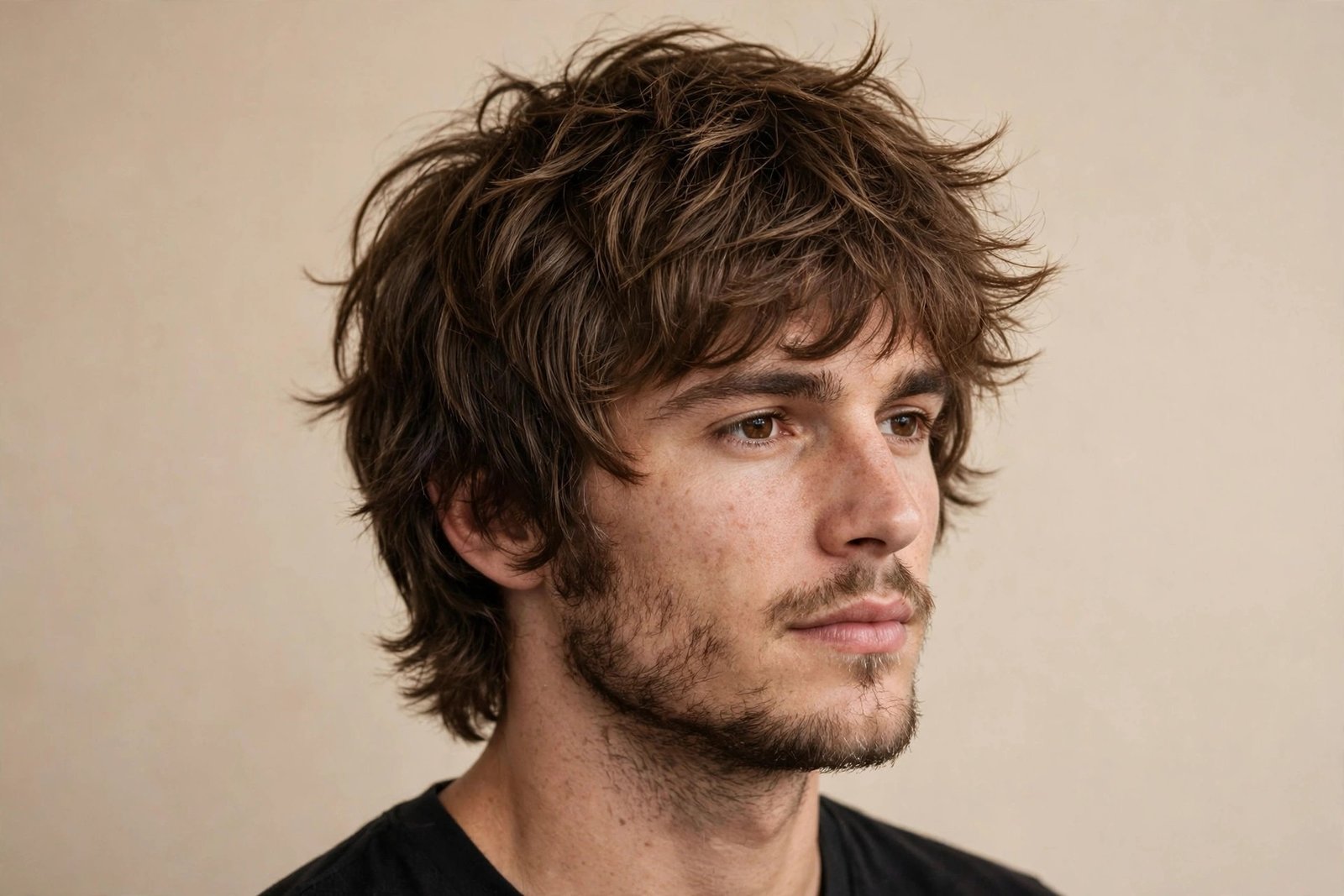
Now we are getting into the deep end of grown-out, and I love it here. The shaggy grown-out crop is what happens when a soft crop keeps growing and nobody panics — four to five inches on top, shaggy layers everywhere, ends that flick and curl where they please, sides long enough to tuck behind the ears if you are feeling it. It borrows from the seventies shag without going full costume: the shape is still a crop, still controlled at the neckline and around the ears, but the top is gloriously, unapologetically shaggy. This is the haircut for the guy who has always suspected he would look good with longer hair but is not ready to commit to actual long hair. It is the gateway. It is also, quietly, one of the most flattering cuts in this guide for wavy and curly hair, because the shag was literally invented to show off natural texture.
Tell your barber: grown-out soft crop with shaggy layers — long on top, lots of movement, textured ends, sides left longer and soft. The key instruction is “keep the shape at the neckline and ears, let everything else grow.” Your barber needs to understand that shaggy does not mean shapeless — there is still architecture under the mess. Styling: almost nothing, again. The length does the work. A little cream to tame frizz, maybe, and that is it. This suits wavy, curly, and thick straight hair; fine hair will struggle at this length and can look thin and straggly, so be honest about your density. The downside is the in-between: getting here from a shorter cut takes three to four months, and month two is genuinely awkward. Push through. Also, this is the least office-friendly version in the guide — it reads creative, casual, artistic. If your workplace has opinions about hair, have a backup plan. But if your life allows it, the shaggy grown-out crop is pure joy to wear.
11. The Curtain-Fringe Soft Crop
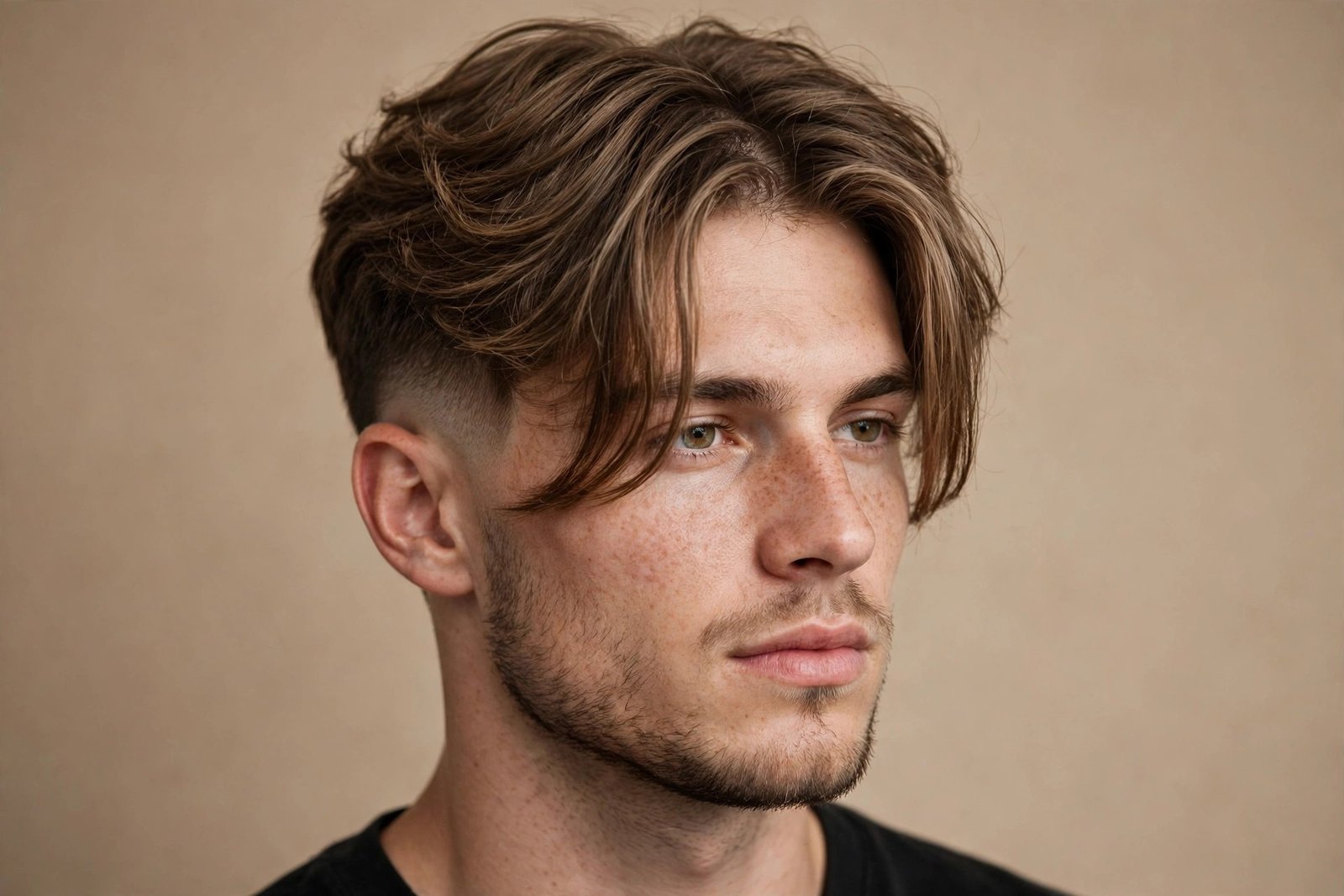
The curtain fringe refuses to die, and honestly, at this point it has earned its immortality. This version marries the nineties-and-again curtain — hair parted softly in the middle, falling to frame the face on both sides — with the grown-out soft crop body: textured length on top, soft blended sides, no sharp anything. The fringe here is the longest in the guide, hitting the cheekbones or even the jaw when it falls, and it is cut to split naturally down the middle or just off-centre. The rest of the top is three to four inches of soft layers that support the curtain without competing with it. It is romantic, it is a little bit dramatic, and on the right face it is devastating. If you have ever wanted to look like the lead in a period drama, this is your cut.
Tell your barber: soft crop with a long curtain fringe — parted in the middle or just off-centre, falling to frame the face, with a textured grown-out top and soft blended sides behind it. The fringe needs to be cut so it falls into the curtain naturally; if your barber cuts it straight across and tells you to “just part it,” find a new barber. This suits straight and wavy hair best — the curtain needs to drape, and very curly hair will curtain differently (still good, but a different look). Oval and longer faces love this; round faces should keep the curtain slightly off-centre to avoid emphasising width. Fans of the look should also see our curtain hairstyles for men guide for more variations. Styling: rough-dry with the part where you want it, a little cream to keep the curtain pieces together, done. Downside: the curtain needs training — for the first week or two, it will try to fall forward, and you will need to keep pushing it into place until it learns. Also, it is the highest-maintenance fringe in the guide in terms of trims; let it grow too long and it stops being a curtain and starts being just long hair in your face. But the payoff is enormous.
12. The Soft Crop for Wavy Hair
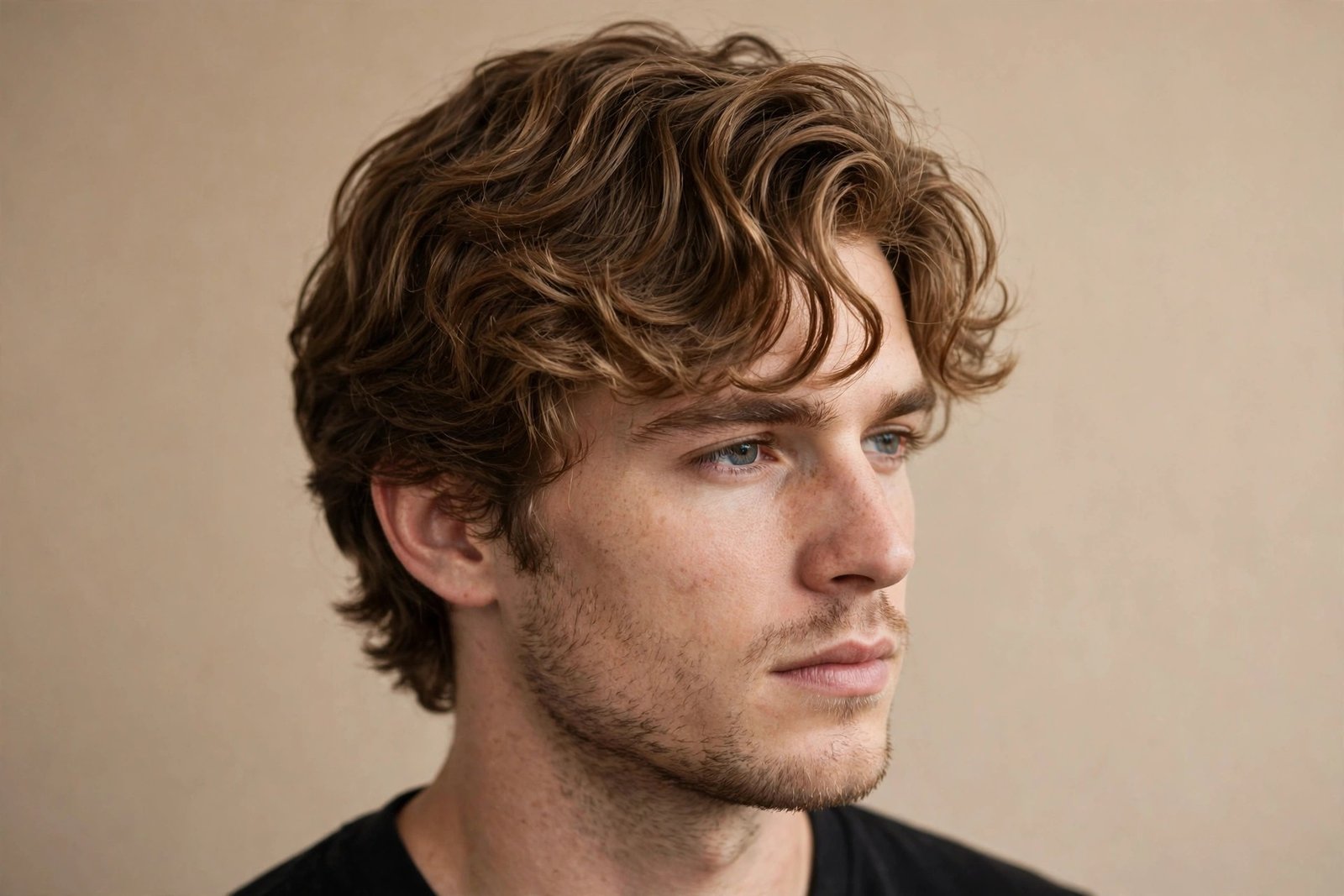
Wavy-haired guys, this is your home turf. The soft crop was practically invented for natural wave — the grown-out length gives the wave room to form, the point-cut ends let each wave separate instead of clumping, and the whole cut moves the way wavy hair wants to move. This version is tuned specifically for it: three to four inches on top, layers cut to enhance the wave pattern rather than fight it, a fringe that rides the wave forward, and sides kept soft and a touch longer so the wave continues around the head instead of being chopped off at the temples. The result looks effortless because, for you, it mostly is. Straight-haired guys need products to fake what your hair does before coffee.
Tell your barber: soft crop cut for natural wave — keep the length, layer to enhance the wave pattern, point-cut the ends so the waves separate, sides soft and blended. If your barber understands wave patterns, he will cut it slightly longer where your wave is strongest and slightly shorter where it is weaker, balancing the whole head. That is the mark of someone who gets it. Ask for it as the soft crop haircut men with natural wave keep requesting — most barbers will know it instantly, because wavy regulars have been living this cut for years. That is the mark of someone who gets it. Styling is minimal: scrunch a little curl cream or light mousse into damp hair, air-dry or diffuse, and leave it alone. The golden rule of wavy hair — touch it less — applies double here. Every time you run your hands through it, you break up the wave pattern. Downside: wavy hair has moods, and humidity, sleep, and hats all change the equation daily. Some mornings it will be perfect; some mornings it will have opinions. A silk pillowcase helps more than you would expect. And if your wave pattern is uneven — strong at the crown, straight at the front, say — be upfront with your barber so he can balance it. But when wavy hair meets the right soft crop, it is the lowest-effort great hair in existence.
13. The Soft Crop for Curly Hair

Curly hair and the soft crop are a match made in heaven, and I will die on this hill. Curls want length — length gives them weight, weight gives them definition, and definition is everything. A curly soft crop keeps three to four inches on top, cut curl-by-curl or in long soft layers so each curl can do its thing without the pyramid effect that haunts badly cut curly hair. The fringe is not really a fringe here; it is the front curls falling forward naturally, which looks incredible. The sides are the critical part: they need to be long enough to blend with the curls on top, because short sides plus long curly top equals the dreaded mushroom. Soft, blended, slightly longer sides. No fade, ever, on curly hair — a fade against curls looks like two different haircuts stacked on top of each other.
Tell your barber: curly soft crop, cut dry or mostly dry so he can see the real curl pattern, long soft layers, front curls falling forward, sides blended and long enough to match. If your barber wants to cut it wet and “it’ll spring up fine,” smile politely and find someone who cuts curls dry. This is non-negotiable. Styling: curl cream on soaking wet hair, scrunch, then do not touch it until it is dry. Diffuse if you are in a hurry, air-dry if you are not. The curls will shrink up as they dry — that is normal, that is the look. Downside: curly hair is the thirstiest hair type, so this cut without proper moisture looks dry and frizzy rather than soft. A leave-in conditioner is not optional, it is the price of admission. And wash day versus day-three hair will look like two different cuts — embrace it. But a well-cut curly soft crop is, pound for pound, the best-looking hair in this entire guide. The texture does all the work and takes all the credit.
14. The Airy Feathered Crop
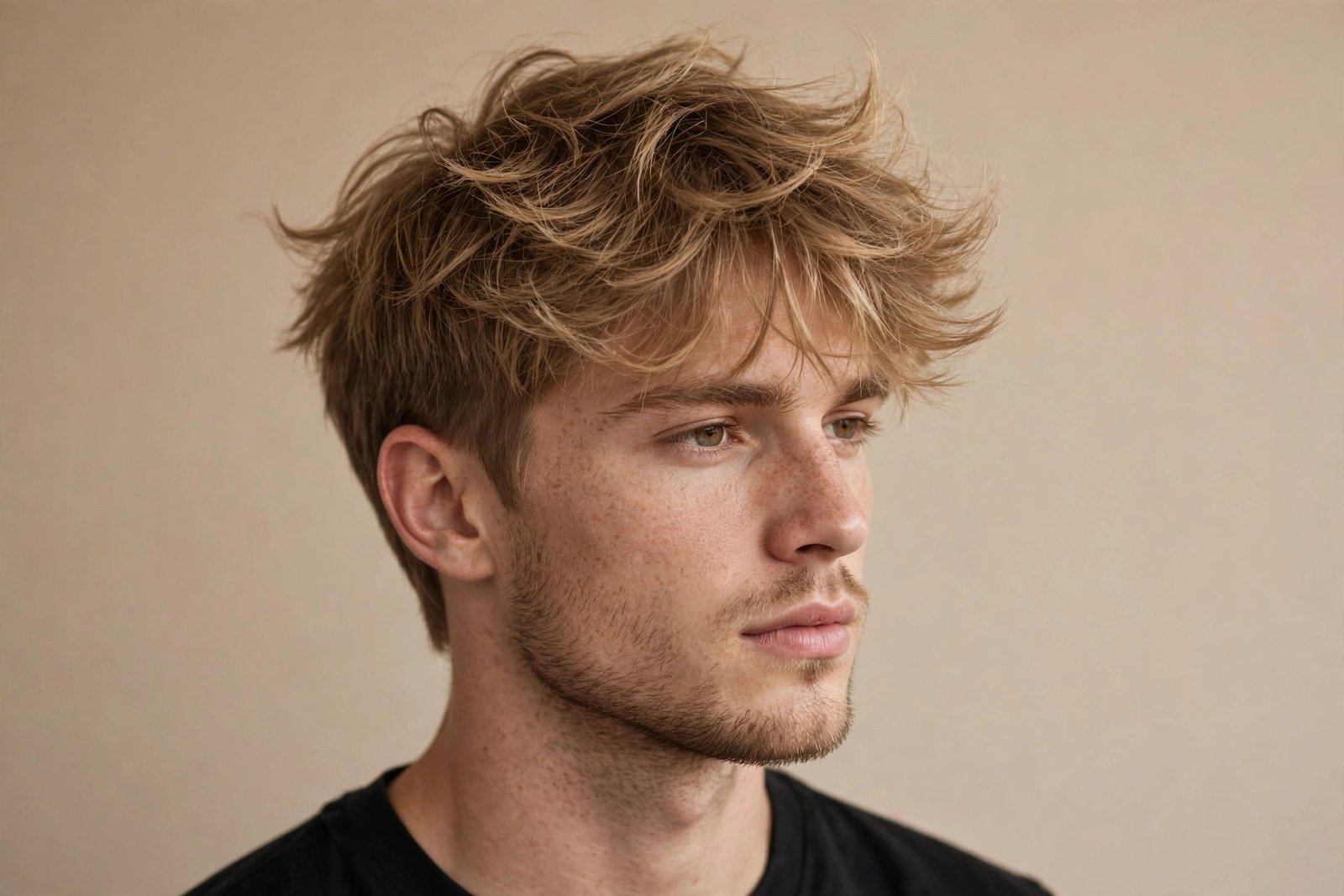
Some guys have hair that is heavy — thick, dense, the kind that laughs at gravity and does whatever it wants. The airy feathered crop is built for exactly that hair. The technique is all in the ends: aggressive feathering and point-cutting that removes bulk from the last inch of the hair, so the top feels light and airy instead of heavy and helmet-like. The silhouette stays a soft crop — three inches on top, soft fringe, blended sides — but the texture is wispy and weightless, with ends that flick and separate instead of clumping. It is the difference between a duvet and a weighted blanket. Same coverage, completely different feel. Guys with thick hair know exactly what I mean, because heavy hair in summer is a special kind of suffering.
Tell your barber: soft crop with feathered, weight-removed ends — I want it to feel light. The danger here is over-thinning, which leaves the ends wispy and see-through, so specify “feathered ends, but keep the density.” A skilled barber will point-cut deeply without taking too much. This suits thick, dense, straight or wavy hair best; fine hair should avoid heavy feathering because there is not enough hair to spare. Styling: the lightness means this responds beautifully to a rough-dry — flip your head forward, blast it with the dryer while shaking the roots with your fingers, and the airiness does the rest. A tiny amount of texture powder at the roots adds lift that lasts all day. Downside: feathered ends are the first thing to look scraggly when the cut grows out, so this one really does need its trim every six weeks. And in very humid weather, feathered ends can frizz — a smoothing cream on the ends sorts it. But for thick-haired guys who have spent their lives fighting the weight of their own hair, this cut is liberation.
15. The Grown-Out Buzz Soft Crop

Let us talk about the awkward phase, because every guy who has ever buzzed his head knows it: the weeks when it is too long to be a buzz and too short to be anything else. The grown-out buzz soft crop is the bridge — and it is also a legitimate destination for guys who like their hair short but hate the severity of a fresh buzz. The idea is simple: instead of buzzing it all one length, you grow the top out to two inches while keeping the texture soft, and you let the sides grow with it instead of re-fading them. The result is the shortest version of the soft crop in this guide — a soft, even, textured cap of hair with no harsh lines. It is minimal, it is clean, and it has none of the military severity of a proper buzz.
Tell your barber: I am growing out a buzz into a soft crop — even out the top at two inches with soft texture, blend the sides up with scissors, no new fade line. If you are starting from a fresh buzz, this is a three-month project, and the trick is trims that only tidy the edges while the top catches up. This suits guys with thinning hair or receding hairlines particularly well — the short, even length is honest about what is there, and the softness is far more flattering than a harsh buzz that spotlights every thin patch. It also suits anyone who wants the absolute lowest-maintenance version of this trend. Styling: nothing. Literally nothing. Maybe a little matte paste if you are feeling fancy. Downside: at two inches, you do not get the movement and versatility of the longer versions — this is a one-look cut. And the grow-out from a buzz tests patience; weeks four through eight are the danger zone where most guys give up and re-buzz. Do not. Push through, and you will land in soft crop territory with a head start on everyone else.
16. The Soft Crop with Fuller Sides

Here is a quiet rebellion inside the rebellion: while everyone else is tapering and blending, this version leaves the sides fuller and longer — properly grown out, soft over the ears, flowing into the top with no real distinction between “sides” and “top” at all. It is the closest thing in this guide to just having great longer hair, but the crop discipline is still there: the neckline is clean, the shape is intentional, and the top is still cut with the soft crop’s textured fringe and movement. The effect is romantic and a little bit rock-and-roll, like every guitarist you have ever admired. It is also the version that looks most different from the sharp-crop family, which is worth stating — nobody is confusing this with a fade.
Tell your barber: soft crop, but leave the sides full and long — I want it to grow over the ears, blended into the top, no taper, no fade, just clean up the edges. This is essentially a “do not touch the sides except to tidy them” haircut, and some barbers will struggle with the restraint. It suits wavy, curly, and thick straight hair — the fullness needs density to look intentional rather than neglected. Fine hair will look lank with long sides, so this is not the one for you. Oval, square, and longer faces wear it well; round faces should be careful, because width at the sides plus a round face is a combination that needs the top to have real height to balance it. Styling: the sides will do what they want, and you let them. A little cream to keep things smooth, tuck behind the ears when you need to look tidy. Downside: this is the slowest version to grow into and the easiest to misread as “has not had a haircut in months.” The difference is in the neckline and the top — keep those sharp-ish (soft-sharp, you know what I mean) and the length reads as choice, not neglect. It is a commitment, but it is a beautiful one.
17. The Relaxed Ivy Crop
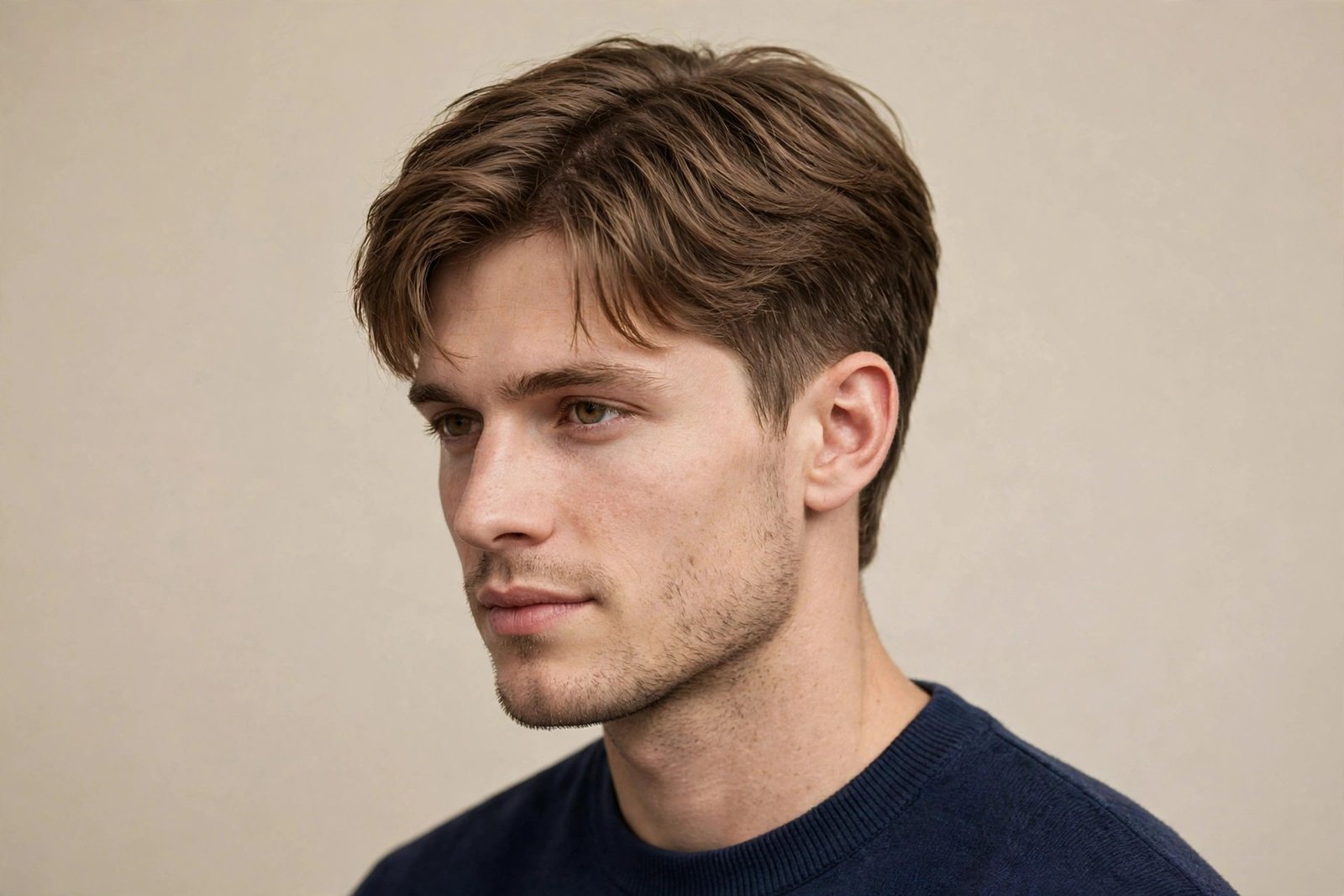
The Ivy League haircut has been around since before your grandfather was cool, and it refuses to leave because it works. The relaxed ivy crop takes that collegiate classic — shortish top, side sweep, neat sides — and runs it through the 2026 softness filter: a little more length, a lot more texture, sides blended instead of tapered tight. The top is two and a half to three inches, swept softly to the side with a natural part, and the whole thing has that “old money, new attitude” feel. It is the preppiest version in this guide, but preppy the way a vintage watch is preppy — it suggests taste without trying. If the bedhead crop is the art student, the relaxed ivy is the one who actually graduated.
Tell your barber: a soft, grown-out Ivy League — textured top swept to a natural side part, soft fringe, sides blended with scissors, no hard lines anywhere. The reference is the classic ivy, but everything a touch longer and softer. This suits straight and wavy hair beautifully; it is one of the few versions here that looks genuinely good on very straight, fine hair, because the side sweep gives it structure. It flatters oval, square, and heart-shaped faces especially. If the collegiate vibe appeals to you, our comma hair for men guide explores a related K-influenced take on soft, swept styles. Styling: side-part it with your fingers, a little cream for polish, and you look like you have your life together in about a minute. Downside: it is the least edgy version here — if you want your hair to make a statement, this whispers instead. And the side sweep needs the part to cooperate; strong cowlicks will fight it. But as a daily, professional, universally flattering soft crop, the relaxed ivy is almost impossible to beat.
18. The Windblown Crop

The windblown crop is the beach-swept crop’s moodier cousin — less surf shack, more Scottish highlands. The hair is pushed back and slightly to the side, textured and piece-y, with the fringe swept up and back off the forehead instead of falling forward. It is the soft crop for guys who do not love things in their face. The top is three to three and a half inches with strong texture through the ends so the swept-back shape holds without looking shellacked. The sides are soft and blended, maybe slightly shorter to give the swept-back top more contrast. There is something quietly dramatic about it — it is the haircut of every brooding male lead who stares out of a rain-streaked window. And it is practical: nothing in your eyes, nothing to push aside, just hair going back where it belongs.
Tell your barber: soft crop swept back — textured top pushed back and to the side, fringe off the forehead, sides blended soft. The cut needs enough texture that the back-sweep holds with minimal product; if it is cut too blunt, it will just fall forward again. This suits straight, wavy, and thick hair; very curly hair will not sweep back so much as spring up, which is a different (also good) look. Longer and oval faces love this because the exposed forehead adds length; guys with high hairlines might prefer a fringe-forward version instead — be honest about your forehead. Styling: rough-dry with the dryer pointing back, pushing the hair back with your fingers, then a little matte paste to lock it. Two minutes, and it stays all day because the length has weight. Downside: it needs that morning push-back — this is not a roll-out-of-bed cut the way the fringe versions are. And in strong wind (ironically), it can go from windblown-chic to actually-windblown. But for guys who want the soft crop attitude with a clearer forehead, this is the one.
19. The Soft Crop for Thick Hair

Thick-haired guys have a complicated relationship with haircuts. Too short and it stands straight up like a hedgehog. Too long and it becomes a weather system. The soft crop for thick hair threads the needle: enough length for the weight to pull it down naturally — three to four inches — with serious weight removal through the interior so it moves instead of sitting. The technique matters more here than in any other version: your barber should be point-cutting deeply, possibly using a razor or slide-cutting on the interior, taking out bulk while keeping the length. The fringe is textured and piece-y so it does not land as one heavy slab. The sides are blended but kept with enough length that they do not puff out. Done right, thick hair in a soft crop looks rich and full and expensive. Done wrong, it looks like a helmet. The difference is entirely in the weight removal.
Tell your barber: soft crop for thick hair — keep the length, but take the weight out. Say “I want it to move, not sit,” and watch his face — a good barber will nod immediately, because he knows exactly what that means. This is the soft crop haircut men with dense, heavy hair ask for once they are tired of fighting their own head. This is the one version where you should actively discuss technique: point-cutting, slide-cutting, interior weight removal. If your barber just cuts it one length and sends you home, your thick hair will punish you within a week. For more thick-hair thinking, our thick hair guide for men covers the broader playbook. Styling: thick hair usually needs less product than you think — the density holds shape on its own. A little cream to control the surface, rough-dry, done. The biggest mistake thick-haired guys make is using too much product, which just adds weight to already-heavy hair. Downside: this cut lives or dies by the barber’s skill with weight removal, so do not price-shop this one. And trims matter — as the weight grows back, the helmet returns. Six weeks, no excuses. But when it is fresh, there is no better-feeling hair in the world than thick hair cut to move.
20. The Soft Crop for Fine Hair

Fine hair needs the opposite strategy from thick hair, and most barbers get this backwards. Where thick hair needs weight removed, fine hair needs every strand protected — the layers stay subtle, the ends stay blunt-ish (softly point-cut, not shredded), and the overall shape is kept compact so the hair reads as dense. The soft crop for fine hair keeps the top at two and a half to three inches — long enough to look soft, short enough that gravity does not pull it flat against the scalp. The fringe is kept a touch fuller and less piece-y than other versions, because separation on fine hair can read as thinness. The sides are blended neatly. And here is the counterintuitive truth: a soft crop makes fine hair look thicker than a fade does, because there is simply more hair on the head. A skin fade next to fine hair on top just emphasises how little is up there. Fullness everywhere is the illusion you want.
Tell your barber: soft crop for fine hair — subtle layers, keep the density, do not over-texture. Say “I want it to look as full as possible” and make sure he hears you, because the instinct to texture everything is strong. This suits straight fine hair best; wavy fine hair gets a nice bonus from the wave. Styling is where fine hair wins: a volumising mousse or a tiny bit of texture powder at the roots, rough-dry with your head forward, and fine hair gets lift that thick hair can only dream of. The key is lightweight products — anything heavy will collapse it. Downside: fine hair shows scalp when it is oily, so wash frequency matters more here; day-two hair on fine hair is a different haircut. Dry shampoo is your friend. And be realistic about the grow-out — fine hair at four-plus inches starts looking stringy, so this version works best kept at the shorter end of the soft crop range. But within that range, it is genuinely flattering in a way most “fine hair” advice is not.
21. The Salt-and-Pepper Soft Crop

Grey hair and the soft crop were made for each other, and the salt-and-pepper version is proof. There is something about textured, grown-out hair that shows off grey beautifully — the variations in tone catch the light differently on every strand, and the softness of the cut keeps it looking distinguished rather than ageing. This version is the classic soft crop — three inches, textured, soft fringe, blended sides — worn with natural grey coming through however it wants to come through. No dye, no blending, no apologies. The 2026 mood is firmly pro-grey — the “distinguished” look is having a genuine moment — and the soft crop is the most modern way to wear it. A sharp fade with grey can look like you are trying too hard. A soft crop with grey looks like you have arrived.
Tell your barber: classic soft crop, and do not you dare suggest colour. The cut itself needs one adjustment for grey hair: grey hair is often coarser and drier than pigmented hair, so the texturing should be slightly less aggressive — coarse hair shreds easily and can look frizzy if over-point-cut. Ask for softer texturing and a little more weight through the ends. Styling: grey hair drinks moisture, so a leave-in conditioner or light cream is more important here than for younger hair. A pea-sized amount keeps the coarseness in check and lets the silver tones shine. Some guys like a purple shampoo once a week to keep the grey bright rather than yellow — it works, just do not overdo it or you will go lavender. Downside: honestly, very little. Grey hair can be wiry and unpredictable, so the first two weeks after the cut are a learning curve while you figure out how your particular grey behaves. But the salt-and-pepper soft crop is one of those rare cuts that looks better the more grey comes in. It is an investment that pays dividends.
22. The Sun-Bleached Soft Crop

This is not about bleach from a bottle — it is about the colour that happens when a soft crop lives its best life outdoors. The sun-bleached soft crop is the grown-out cut with natural, sun-kissed variation through the top: lighter ends, slightly golden pieces around the fringe, the kind of dimension that money cannot quite buy. The cut itself is the beach-swept family — three to four inches, textured, fringe falling naturally — but the story is the colour. If your hair lightens in the sun, this cut shows it off better than any other, because the texture breaks the light into a hundred different tones. Guys who surf, run, work outdoors, or just live somewhere sunny: this is your haircut wearing its environment.
Tell your barber: soft crop with plenty of texture through the ends — the texture is what catches the light. No colour work needed; the sun does it. If you want to enhance the effect, a few subtle sun-kissed highlights through the top can mimic a summer outdoors, but keep them natural — the whole point is that it looks unearned. Styling: salt spray, scrunch, air-dry. You are cosplaying as someone who does not think about their hair, so do not think too hard about it. The practical note: sun is brutal on hair health. Bleached-by-nature hair is still damaged hair, so a weekly deep-conditioning mask keeps the ends from going straw-like. A leave-in with UV protection exists and is worth using if you are outdoors all day. Downside: this is seasonal by nature — in winter the bleaching fades and you are left with the cut underneath, which is still a great cut, so no real loss. And if your hair does not lighten in the sun, this entry is aspirational rather than practical. But for the sun-kissed among us, it is pure gold, literally.
23. The Distinguished Grey Soft Crop

Where the salt-and-pepper is about the transition, the distinguished grey is about the arrival — fully or mostly grey hair, worn with complete confidence in a soft crop that is cut a touch neater than the younger versions. The top is two and a half to three inches, textured but controlled, the fringe is soft and tidy rather than piece-y, and the sides are blended with a little more precision. It is the boardroom version of the soft crop: all the modernity, none of the mess. And let me say something the industry does not say enough — fully grey hair in a soft, textured cut looks extraordinary. The silver tones have a luminosity that pigmented hair cannot match, and the soft crop’s movement shows it off. This is not “good for your age.” This is just good.
Tell your barber: soft crop, but keep it tidy — controlled texture, neat fringe, clean blend on the sides. The reference is distinguished, not edgy. As with all grey hair, the texture work should respect the coarseness — less shredding, more shaping. Styling: a smoothing cream is the hero product here, keeping the silver sleek and the coarseness tamed. Purple shampoo once a week keeps the grey bright and kills any yellowing — this matters more the greyer you are. A lot of guys in this category also benefit from a slightly shorter fringe, because a long fringe on a higher forehead draws the eye to the hairline. Be honest with your barber about where things stand. Downside: grey hair’s coarseness means bedhead is real — morning hair will have opinions, and you will need two minutes to negotiate. And the “distinguished” line is thin: let the sides grow too long and it tips from distinguished into dishevelled. Keep the six-week trim rhythm. But worn well, this is the most commanding haircut in the guide.
24. The College-Boy Soft Crop

Every campus has a haircut, and right now it is this one. The college-boy soft crop is the youngest-feeling version in the guide: fresh, textured, a little bit messy, the fringe falling forward like you have somewhere better to be. The top is three inches of choppy texture, the fringe is piece-y and eyebrow-skimming, the sides are soft and simple. It is the haircut of lecture halls, late nights, and group photos — low effort, high reward, and it looks good in every single one of those contexts. What makes it distinct from the bedhead version is the freshness: this is not artfully undone, it is just young. The texture is there, but it is neat texture. It is the difference between a band t-shirt that is vintage and one that is just old.
Tell your barber: young, fresh soft crop — textured top, forward fringe, soft sides, keep it neat but not sharp. If you are actually in college, bring a photo of whoever on campus has the hair you want — your barber will recognise the reference instantly, because he cuts it three times a week. This suits straight and wavy hair best; it is the rare version that works on almost every face shape because the proportions are so balanced. Styling: the standard two minutes — rough-dry, tiny bit of paste, push the fringe forward. It is designed for people who do not own a round brush and never will. Downside: it is unmistakably young. If you are 35 and getting this cut, it still looks good — but pair it with a tailored jacket rather than a hoodie or the effect is “man who does not know he graduated.” And like all fringe-forward cuts, it needs the trim rhythm to keep the fringe out of your eyes. But as a pure, joyful, low-stakes haircut, the college-boy is unbeatable.
25. The Off-Duty Weekend Crop

Not every version of the soft crop needs a philosophy. The off-duty weekend crop is the Friday-evening version: relaxed, tousled, a little bit lived-in, the haircut equivalent of comfortable shoes. The top is three to three and a half inches with easy, natural texture — not the deliberate choppiness of the bedhead version, just hair that looks like it has been lived in for a day or two. The fringe falls where it falls. The sides are soft and unbothered. It is the cut you wear with a t-shirt and jeans, to the market, to a mate’s barbecue, on a long walk with no destination. And here is the secret: because the soft crop grows out so well, by week four or five, every version in this guide starts looking like the weekend crop. This one just starts there.
Tell your barber: relaxed soft crop, natural texture, nothing too deliberate — I want the version that looks good on day three. The texturing should be moderate: enough that it has movement, not so much that it looks styled. This suits every hair type and every face — it is the universal donor of soft crops. Styling on the weekend: nothing, or salt spray if you are feeling it. The whole point is that this is the cut for when you are not trying. Downside: there is not much of one, honestly. It is a little too casual for formal settings — wear it to a wedding and you will look like you forgot there was a wedding. And if your hair is very straight and fine, “relaxed” can tip into “flat” without a little texture product. But as the default, everyday, no-thought-required version of the trend, the off-duty weekend crop is the one most guys will actually live in.
26. The Office-Ready Soft Crop
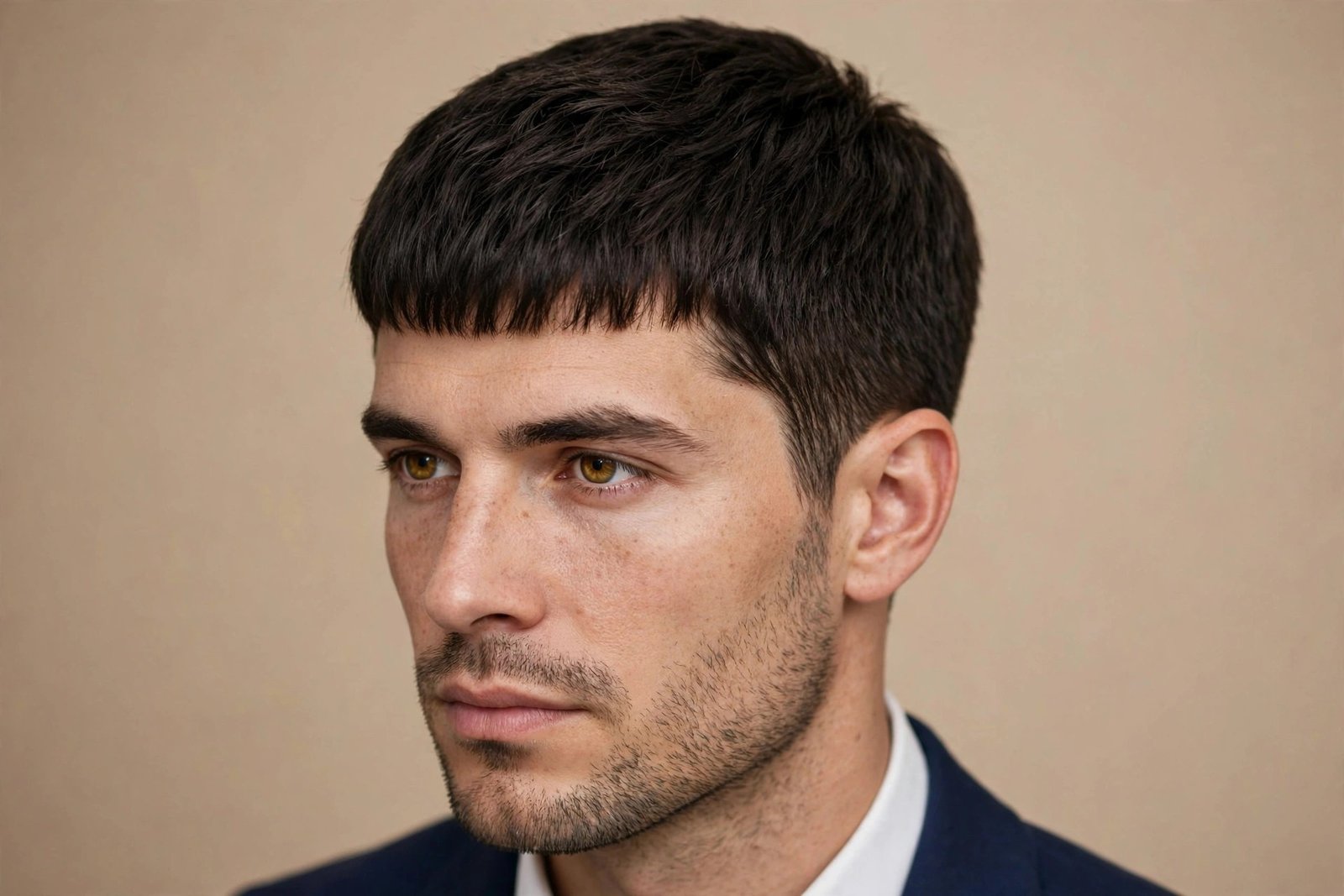
Here is the question every guy asks: “Can I wear this to work?” Yes — with this version. The office-ready soft crop takes the grown-out texture and tidies it just enough for professional settings: the top is two and a half to three inches, textured but controlled, the fringe is neat and sits just above the eyebrows rather than falling into them, and the sides are blended with a little more precision — think the gentle taper’s tidiness applied to the whole head. It is still unmistakably a soft crop — no fade, no hard lines, movement in the top — but it reads as polished rather than casual. It is the haircut that says you have taste and a job. Both can be true.
Tell your barber: soft crop, but keep it office-neat — controlled texture, tidy fringe above the brows, clean blend on the sides. The difference between this and the classic is small but real: a touch less length, a touch more control. This suits straight and wavy hair best; very curly hair in an office setting is a whole separate conversation about workplace bias that I will not pretend a haircut guide can solve. Styling: this is the one version where a little more effort pays off — rough-dry, then smooth a small amount of cream through with your fingers, and take ten extra seconds to place the fringe neatly. It is still a three-minute routine, just a deliberate three minutes. Downside: the tidiness needs maintaining — this is the version where stretching trims past seven weeks starts to show, because “neat” has a shorter shelf life than “relaxed.” And if your office is genuinely conservative, even this might raise eyebrows — know your room. But for the vast majority of modern workplaces, this is the perfect professional soft crop.
27. The Date-Night Soft Crop

There is the haircut you wear, and then there is the haircut you wear when it matters. The date-night soft crop is the same grown-out cut you already have, styled with ten percent more intention: a little more definition in the texture, the fringe placed just so, everything sitting exactly where you want it. The cut underneath is the classic or the textured fringe version — three inches, soft, blended — but the styling gets an upgrade. A touch more product, a little more attention to the pieces around the face, maybe the sides smoothed a touch neater. It is not a different haircut. It is your haircut, trying. And the beautiful thing about the soft crop is that it photographs incredibly well in low light — restaurants, bars, evening streets — because the texture catches warm light beautifully. Your fade could never.
Tell your barber: nothing special — this is a styling variation, not a cut variation. Get any of the textured versions in this guide and style it up when it counts. The styling routine for date night: wash and rough-dry as normal, then work a slightly larger amount of matte paste through — not enough to look product-y, just enough for definition. Use your fingertips to place two or three key pieces around the face deliberately. Step back, check the back with a hand mirror (nobody does this and everybody should), and go. The whole upgrade takes ninety seconds on top of your normal routine. Downside: the temptation to overdo it. More product does not mean better — it means crunchy, and crunchy is the enemy of everything the soft crop stands for. One product, small amount, done. And do not touch it all evening. The number one date-night hair mistake is fiddling. Style it, trust it, forget it.
28. The Travel-Proof Soft Crop
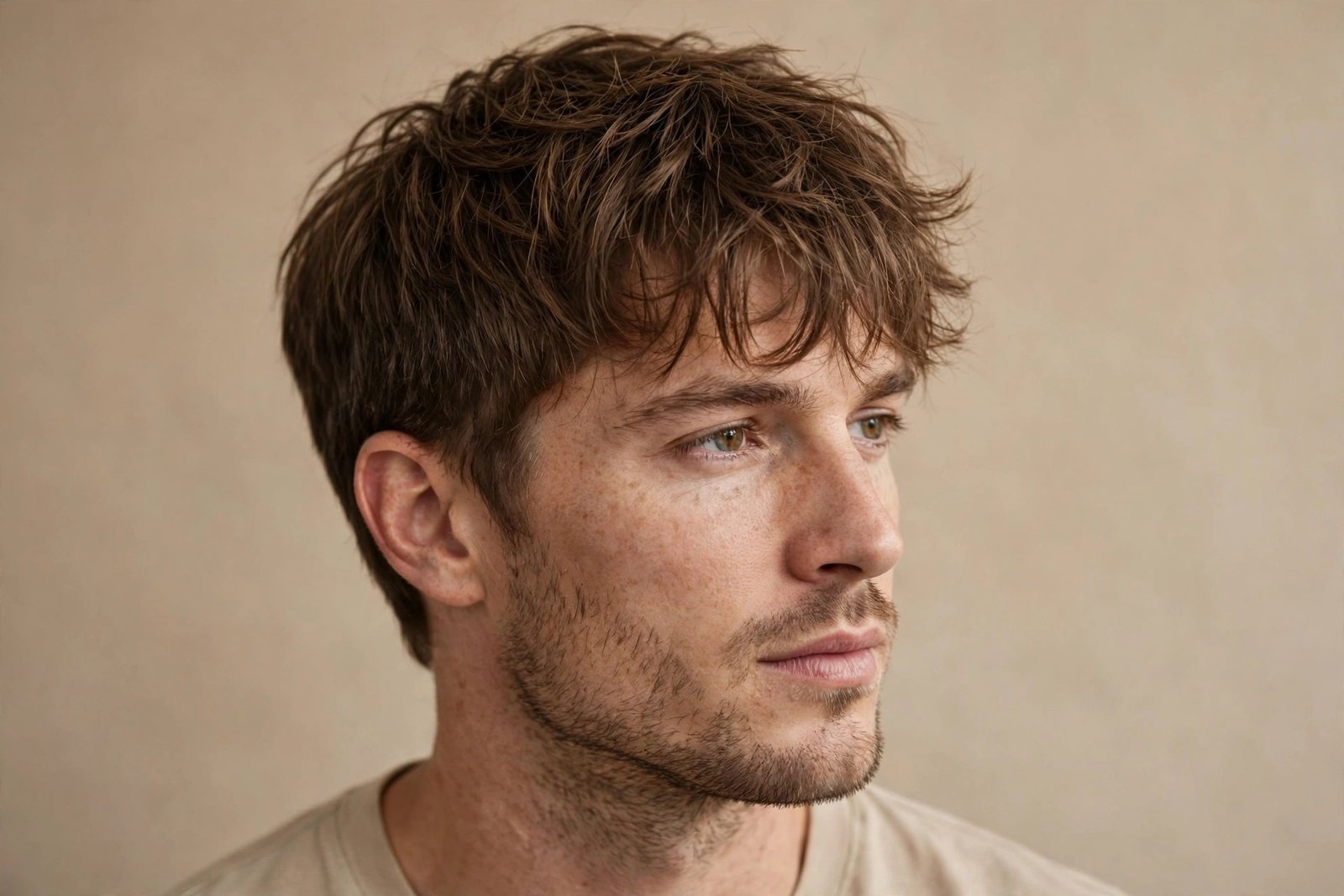
Long flights, hotel pillows, different water, no styling products because they confiscated your favourite paste at security — travel destroys good hair. Except this one. The travel-proof soft crop is the grown-out cut at its most resilient: three to three and a half inches of texture that looks good fresh, looks good slept-on, and looks good after a day of sightseeing in humidity you did not pack for. The secret is the length and the texture working together — short, precise cuts show every disruption, but textured length absorbs chaos. Hat hair? Shake it out, it is fine. Slept funny? The texture hides it. No products? The cut holds its own shape. This is the haircut for guys who live out of a carry-on.
Tell your barber: soft crop with resilient texture — I travel a lot and need it to survive neglect. Ask for texture that holds its shape without product, which means slightly less aggressive point-cutting and a bit more structural layering. This suits wavy and thick hair best — the natural body is the travel insurance. Fine, straight hair will need a travel-size texture spray in the dopp kit; accept this and pack accordingly. The routine on the road: water, fingers, go. Seriously. Wet it in the hotel sink, push it into place, let it air-dry while you have coffee. It will look like you tried. Downside: none, really, except that you will become insufferable about how low-maintenance your hair is while your travel companions fight with theirs. Also, if you are travelling somewhere very humid and your hair frizzes, pack the smoothing cream — the cut is resilient, not magical. But as a travel companion, the soft crop is the best haircut in this guide, full stop.
29. The Gym-Friendly Soft Crop

Sweat is the enemy of styled hair — it flattens, it separates, it turns product into soup. The gym-friendly soft crop is built to survive the workout and recover in the locker room in under a minute. The formula: slightly shorter than average — two and a half to three inches — with strong texture that bounces back, and a fringe that can be pushed back during the session and falls forward after. The sides are blended but kept neat enough that sweat does not turn them stringy. The key insight is that post-gym hair is mostly about the reset: this cut resets with water and fingers, no dryer, no product. Splash, push, go. You will look like you styled it. You did not.
Tell your barber: soft crop on the shorter side, resilient texture, fringe that works pushed back or forward. Mention the gym — a good barber will cut the fringe with a little extra versatility so it sits well in both positions. This suits all hair types, but thick and wavy hair recovers best; very fine hair can go limp with sweat and may need a dry shampoo puff at the roots post-workout. The locker-room routine: rinse or wet the hair, push it into place with your fingers, and let it air-dry on the way out. Sixty seconds. If your gym has a dryer, thirty seconds of rough-drying speeds it up, but you do not need it. Downside: headbands and hats during the workout will leave marks — the texture mostly shakes out, but a tight headband line can persist. Loosen it between sets. And if you swim, chlorine is a separate battle — rinse before and after, always. But for the lift-run-shower-repeat life, this is the cut that keeps up.
30. The Soft Crop with Stubble

Hair does not exist in isolation — it exists above a face, and that face might have stubble. The soft crop with stubble is about the pairing: soft, textured hair on top with a few days of rugged growth below, and the balance between them is what makes it work. The rule is contrast in texture, harmony in effort. The hair is soft and grown-out; the stubble is short and deliberate — three to five days of growth, kept tidy at the neckline and cheek lines. Both look effortless, and both are, in fact, maintained. It is the 2026 uniform for guys who want to look masculine without looking severe: nothing sharp on the head, nothing sharp on the face, just texture everywhere. If you want the full facial-hair playbook, our beard styles for men guide covers the options in detail.
Tell your barber: classic soft crop, and mention the stubble so he blends the sideburns into it properly — the transition from hair to stubble at the sideburn is where this pairing succeeds or fails. The sideburns should fade softly into the stubble, not end in a hard line. This suits every face shape, but it is especially good for longer faces, where the stubble adds width at the jaw to balance the length. Styling the hair is the standard routine; the stubble needs its own — trim every three to four days, keep the neckline clean, moisturise underneath because stubble itches when the skin is dry. Downside: stubble has a short optimal window. Day two is patchy, day six is a beard — the sweet spot needs maintenance, which slightly undermines the low-effort promise of the hair. And in very formal settings, the pairing reads casual no matter how neat the hair is. But for everyday masculinity, soft hair plus stubble is one of the best combinations in men’s grooming, and the soft crop is the ideal partner for it.
31. The Clean-Shaven Soft Crop

The counterpart to the stubble version, and the pairing has its own logic. Where stubble plus soft crop is rugged, clean-shaven plus soft crop is refined — the smooth face makes the textured hair the single focal point, and the contrast between sleek skin and soft, moving hair is genuinely striking. The cut here can afford to be a touch more textured and piece-y than the stubble version, because there is no facial hair competing for attention. The fringe can be a little longer, the top a little more tousled. It is the pairing for guys who like their grooming crisp below and relaxed above — the modern professional’s balance. There is also a practical bonus: without stubble to maintain, your entire grooming routine is the two-minute hair routine and a shave. That is it. Minimalism as a lifestyle.
Tell your barber: textured soft crop, and keep the sideburns neat and short since there is no stubble to blend into — clean, tapered sideburns that end tidily. The neckline should be clean too; without facial hair, a fuzzy neckline is more noticeable. This suits all face shapes, and it is particularly flattering for guys with strong jawlines, because the clean shave shows off the jaw while the soft hair keeps it from looking severe. Styling is the standard routine. The shave is the variable — and here is my honest advice: if you are going clean-shaven with a soft crop, keep the shave consistent. A day of stubble with this pairing looks accidental rather than intentional, because the whole look is built on the contrast. Downside: the daily shave is its own maintenance burden, which offsets some of the haircut’s low-effort appeal. And in winter, the smooth face plus the soft hair can read a little boyish — a heavier coat and some tailoring balance it. But as a clean, sharp, modern pairing, it is hard to fault.
32. The Soft Crop for Round Faces

Round-faced guys get told to avoid softness, which is nonsense — you just need the right kind of softness. The soft crop for round faces is engineered around two principles: height on top and asymmetry in the fringe. The top is kept at three to three and a half inches with texture that encourages lift at the crown — height visually lengthens the face, which is exactly what round faces want. The fringe is the critical piece: instead of falling straight across, it sits off-centre, sweeping diagonally, breaking up the roundness with an asymmetric line. Straight-across fringes emphasise width; diagonal fringes disguise it. The sides are kept slightly tighter and longer rather than wide — width at the temples is the enemy here. Everything about this cut is pulling the eye up and diagonally instead of sideways.
Tell your barber: soft crop for a round face — I need height on top, an off-centre diagonal fringe, and sides that stay narrow. Say “narrow on the sides, tall on top” and he will understand the architecture. This works on all hair types, but wavy and curly hair get a natural advantage — the volume comes built in. Straight-haired guys will need the texture powder or mousse trick for lift. For more face-shape thinking, our haircuts for face shapes guide is worth a read alongside this. Styling: focus your effort on the crown — rough-dry with lift, a little texture powder at the roots, and push the fringe to its off-centre position deliberately. The fringe placement is not optional here; centred, it undoes the whole effect. Downside: the asymmetry needs daily attention — this is not a shake-and-go version. And very round faces might find even this is not enough elongation, in which case a slightly longer overall cut (the shaggy version, kept narrow) is the next step. But for most round faces, this is the soft crop dialled in perfectly.
33. The Soft Crop for Strong Jawlines

A strong jawline is a gift, and the soft crop is one of the best ways to unwrap it. The logic is balance: angular, defined jaw below, soft, textured movement above. The contrast makes both features look better — the jaw looks stronger next to softness, and the hair looks softer next to the jaw. This version keeps the top at three inches with generous texture, the fringe soft and slightly longer so it does not create a boxy forehead line, and the sides blended to avoid adding width at the temples (a square jaw plus wide sides can go blocky). The overall effect is the classic masculine ideal updated for 2026: strong bone structure, soft modern hair. It is the haircut equivalent of a tailored suit with the top button undone.
Tell your barber: soft crop, and I want the top to stay soft to balance my jawline — textured, slightly longer fringe, sides blended narrow. The thing to avoid is anything that squares off the forehead: blunt fringes, hard part lines, sharp temple corners. Softness everywhere above the cheekbones. This suits straight, wavy, and thick hair; the jaw does the structural work, so the hair is free to be relaxed. Styling is the easy routine — the face shape carries the look, so the hair just needs to not fight it. A little paste, push the fringe, done. Downside: honestly, minimal. Strong jawlines are the easiest face shape to cut for. The only caution is against going too long on top — excessive height plus a strong jaw can elongate the face too much, so keep the three-inch range rather than pushing to four or five. And if you wear stubble with it, keep the stubble neat — scruffy stubble plus soft hair plus strong jaw is a lot of competing textures. But the fundamentals here are as close to foolproof as haircuts get.
34. The Soft Crop for Oval Faces

Oval faces are the universal donors of the haircut world — balanced proportions, no extremes to correct, everything works. So the soft crop for oval faces is less about correction and more about expression: this is the version where you pick the details you like best, because the face will not veto any of them. The recommendation here is the balanced classic — three inches on top, textured fringe at eyebrow level, softly blended sides — worn with whatever personality you want to project. Tousled for casual, neat for professional, swept for evening. The oval face is a blank canvas, and the soft crop is the paint. If you have an oval face and you are still reading, stop worrying about face-shape rules — they were written for everyone else.
Tell your barber: classic soft crop, and then pick your flavour — the texture level, the fringe style, the side length are all up to taste. My suggestion: try the textured fringe version first, because oval faces show off a great fringe better than any other shape. This works on every hair type. The only real consideration is proportion: oval faces can handle both shorter and longer versions, so choose based on lifestyle rather than geometry. Want low maintenance? Go longer. Want crisp? Go shorter. Styling is whatever the chosen version needs — the face imposes no extra requirements. Downside: the paradox of choice. When everything works, deciding is the hard part — so here is a tiebreaker: pick the version that matches your wardrobe. Streetwear wardrobe? Bedhead or shaggy. Tailored wardrobe? Relaxed ivy or office-ready. The hair should rhyme with the clothes. And one genuine caution: oval faces with very long foreheads might want the fringe a touch longer to balance proportions — mention it to your barber. Otherwise, enjoy the easiest face shape in the game.
35. The Left-Bank French-Boy Crop

Now for something with a little je ne sais quoi — and I promise that is the only French I will subject you to. The Left-Bank French-boy crop is the artistic, intellectual cousin of the soft crop: grown-out, tousled, a little bit romantic, the haircut of painters, poets, and men who read actual books in cafes. The top is three and a half to four inches with soft, piece-y texture, the fringe falls naturally with a slight side bias, and the whole thing has an insouciant quality that cannot be manufactured — only cut. Note the important distinction from our french crop guides: this has nothing to do with the french crop haircut. The name nods to Paris, not to the cut. This is still a grown-out soft crop — no fade, no blunt fringe, no sharp lines. It is French in attitude, not in barbering.
Tell your barber: artistic, grown-out soft crop — long textured top, natural falling fringe, soft everything. Show a reference photo, because “French-boy” means different things to different barbers and you want the soft, tousled version, not anything sharp. This suits wavy and straight hair with natural movement; it is the haircut for guys whose hair already has opinions. Oval, longer, and heart-shaped faces wear it beautifully; very round faces should keep the fringe off-centre. Styling: the least styling in the guide, arguably — the whole point is that it looks unconsidered. Salt spray or nothing, fingers or nothing, and let it be. Downside: the line between “artistic” and “unkempt” is real, and it is maintained entirely by the trim schedule and the neckline. Keep those tight and the length reads as choice. Let them slide and it reads as neglect. It also helps enormously if the rest of you supports the narrative — this haircut with a wrinkled t-shirt is just messy hair. With a decent coat and some intention, it is art. Context is everything.
36. The 2026 Editorial Soft Crop

We end where the trend started: the runway. The 2026 editorial soft crop is the most fashion-forward version in this guide — the one the stylists are putting on models right now. It takes the grown-out soft crop and refines it to a high polish: three inches of perfectly textured top, a fringe that falls in deliberate, separated pieces, sides blended so seamlessly the transition is invisible. The difference from the classic is in the finish — everything is a touch more considered, a touch more precise, while still reading as soft and grown-out. It is the soft crop with a stylist on set. And here is what I find interesting: the editorial version proves the trend has legs, because high fashion does not bother with haircuts that only work in real life for a month. This one works everywhere.
Tell your barber: the most polished version of the soft crop you can cut — refined texture, deliberate piece-y fringe, seamless blend. This is a scissor-skills showcase, so bring it to your best barber, not your cheapest. It suits straight and wavy hair best — the editorial finish needs hair that takes direction. All face shapes, with the fringe adjusted accordingly. Styling is where the editorial difference lives: this is the one version worth spending five minutes on. Rough-dry for shape, then work a small amount of styling cream through with real attention — place the pieces, define the separation, check it from every angle. It should look effortless, which, as every model knows, takes effort. The editorial secret, from the people who actually do this for a living: less product than you think, more attention than you want to give. Downside: it is the highest-effort version here, both in the chair and at home. And the polish fades fastest — by week five it has relaxed into the regular classic, which is fine, but the editorial moment is fleeting. Enjoy it while it lasts, photograph it, and know you are wearing the haircut of the year.
The Soft Crop Haircut Men Ask For: Styling Routine and Care Guide
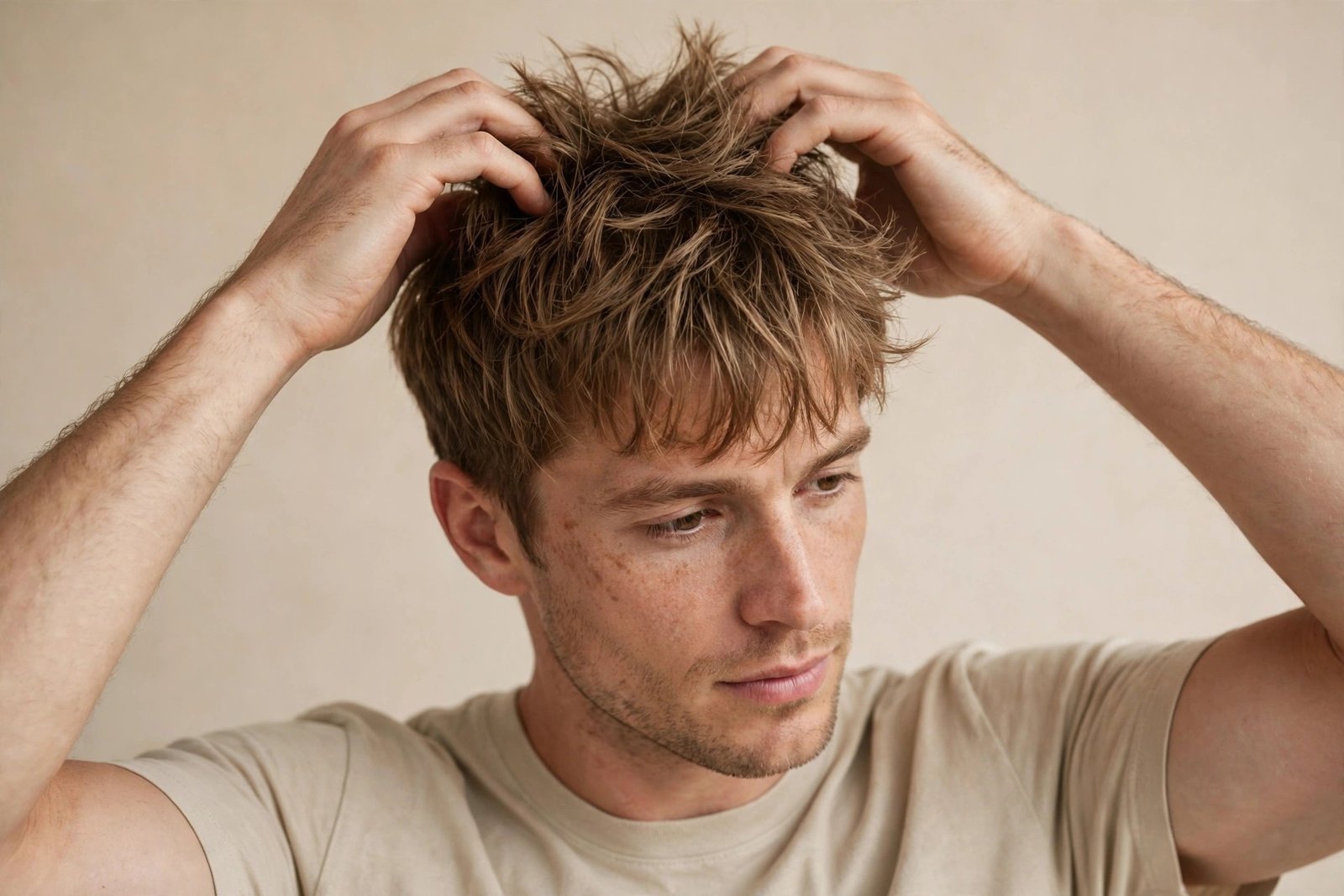
You have picked your version. Now let us make sure you can actually live with it. The good news: the soft crop asks less of you than any haircut you have probably worn. The bad news: “less” is not “nothing,” and the guys who treat it like nothing end up with hair that looks neglected rather than relaxed. This section is the complete playbook for the soft crop haircut men actually stick with long-term — the daily routine, the products that are actually worth buying, how to wash it, and the trim schedule that keeps it in the sweet spot.
The Two-Minute Morning Routine
Here is the entire morning routine, and I am not simplifying for effect. Step one: get the hair damp. If you shower in the morning, you are done — towel-dry it until it is damp, not dripping. If you do not shower in the morning, wet it in the sink or with a spray bottle. Dry hair does not take direction; damp hair does. This is the single most important technical fact in this section. Step two: apply product. A pea-sized amount of matte paste or styling cream — pea-sized, I mean it, you can always add more — warmed between your palms and worked through the mid-lengths and ends with your fingers. Not the roots; product at the roots kills volume. Step three: push it into place. Fingers, not a comb. Push the fringe where it goes, lift the crown a little, and step away. That is the routine. Two minutes, three steps, and you look like you have your life together.
The dryer question comes up constantly, so let us settle it. You do not need a hairdryer for a soft crop — air-drying works fine and a lot of guys prefer the result. But a dryer used correctly makes everything better: rough-dry with your fingers (no brush, no nozzle attachment needed) pointing the airflow in the direction you want the hair to go, and you get more volume, more control, and a finish that lasts longer. The whole dryer step adds ninety seconds. If you have fine hair that lies flat, the dryer is the difference between good and great. If you have thick or wavy hair, you can skip it most days. One rule for everyone: do not blast it on the highest heat — medium heat, keep it moving, and stop when it is about ninety percent dry. Over-dried hair looks fried, and fried is the opposite of soft.
The evening reset deserves a mention, because nobody talks about it. If your hair has collapsed by 6pm — flat at the crown, fringe doing something weird — you do not need to rewash it. Wet your hands, run them through the problem areas, push everything back into place, and let it air-dry for ten minutes. The cut’s texture reactivates with water. It is like a reset button. This works because the soft crop’s shape is in the cut, not in the product — the product just enhances what is already there. A fade, by contrast, cannot be reset without a full restyle, because its shape was in the precision, and the precision is gone by evening. This is one of those quiet advantages that adds up to a much better daily experience.
The Product Playbook: What to Buy and What to Skip
Walk into any grooming aisle and you will drown in options. For a soft crop, you need exactly three products, and most guys can get away with two. Product one: a matte paste or matte clay. This is the daily driver — it gives hold and definition without shine, and shine is the enemy of the soft, natural look. Look for words like “matte,” “texturising,” and “natural finish.” Avoid anything that says “high shine,” “wet look,” or “firm hold” — those are for different haircuts. Use a pea-sized amount; the number one product mistake is using too much, which turns soft texture into crunchy separation. If your hair feels stiff, you used too much. Wash it out, use half as much, try again.
Product two: a sea-salt spray. This is the texture cheat code, especially for straight or fine hair that needs help looking piece-y. Spray it on damp hair before drying — or on dry hair for a refresh — scrunch with your fingers, and you get that beachy separation that the cut is designed to show off. It is also the lightest option: on days when you want the cut to do everything, salt spray alone is enough. Product three, optional but recommended: a light styling cream. Cream is for the days when paste feels too dry — it adds a touch of moisture and control, tames frizz, and gives a slightly more polished finish. Guys with coarse, curly, or grey hair will reach for the cream more often than the paste. That is the whole shelf: paste, salt spray, cream. Everything else — pomades, gels, waxes, “texturisers” with seventeen claims — is noise for this haircut.
What to skip: hairspray, mostly. The soft crop is supposed to move, and hairspray freezes it. If you need extra hold for an event, a light mist is fine, but daily hairspray defeats the purpose. Skip heavy oils too — a drop of light oil on the ends can help very dry hair, but oils flatten soft crops fast. And skip the “2-in-1” shampoo-conditioners if you care about how this cut looks; they leave residue that weighs texture down. Which brings us to washing.
Washing, Conditioning, and Scalp Care
The soft crop shows off hair health more than a fade does, because there is more hair to look at. Dry, damaged hair in a textured cut looks frizzy and sad; healthy hair looks expensive. So the washing routine matters. Shampoo two to three times a week for most guys — daily shampooing strips the natural oils that give the soft crop its touchable finish, and the cut actually looks better on day-two hair than on freshly washed hair. When you do shampoo, use a proper shampoo for your hair type, focus it on the scalp (that is where the oil is), and let the rinse clean the lengths. Conditioner every time you shampoo, focused on the mid-lengths and ends — the textured ends are the oldest, driest part of the hair, and they need the moisture.
Once a week, give it a little extra: a deep-conditioning mask, ten minutes, especially if your hair is thick, curly, coarse, or colour-treated. It is the cheapest upgrade in grooming — a tub costs less than a haircut and lasts months. Scalp care is the unsexy part nobody mentions: a healthy scalp grows healthy hair, and the soft crop’s longer top means scalp issues (dryness, flaking) are more visible than under a tight fade. If your scalp is dry or flaky, a gentle exfoliating scalp scrub once a week and a moisturising shampoo will sort most of it. And water temperature matters more than you think — very hot water strips oils aggressively. Warm is fine. Your hair is not a dish.
Drying technique, one more time, because it is where washes go wrong: do not rub your hair with the towel like you are starting a fire. Press and squeeze — rubbing roughs up the cuticle and creates frizz, which is the enemy of soft. A microfibre towel or an old cotton t-shirt is gentler than a standard bath towel, and the difference is visible. Then the air-dry or rough-dry from the morning routine. The whole wash-to-finished pipeline, once you have done it a few times, takes less time than the average fade devotee spends on product alone. Healthy hair plus the right cut does the heavy lifting.
The Trim Schedule: Keeping It in the Sweet Spot
The soft crop’s trim schedule is one of its biggest selling points: every six to eight weeks, roughly half as often as a fade. But “less often” does not mean “whenever you remember.” The sweet spot for a soft crop is weeks two through six — the cut has settled, the texture has relaxed, everything looks natural. Before week two, it can look a touch too neat (the horror). After week eight, the texture starts collapsing: the ends get heavy, the fringe gets long, the shape goes from “grown-out” to “overgrown.” The difference between those two is about two weeks and one trim. Mark it in your calendar. Future you will be grateful.
What to ask for at the trim: “refresh the texture, clean up the edges, do not take length off the top.” Say it exactly like that. The trim should be mostly point-cutting to renew the texture, a tidy of the neckline, and a clean around the ears — fifteen to twenty minutes, not a full haircut. This is also the moment to adjust: fringe getting in your eyes? Take a quarter inch. Sides puffing out? A little more weight removal. The trim is a tune-up, not an overhaul. And here is the thing most guys do not realise: a good barber will remember your cut and adjust it over time. The third or fourth trim is when a soft crop really dials in, because your barber has learned how your hair grows and behaves. Loyalty to one barber pays off enormously with this cut — arguably more than with any other, because the cut is all about understanding your specific hair.
Between trims, the neckline is the thing to watch. A fuzzy neckline is the fastest way to make a soft crop look neglected — it is the one sharp detail the eye catches. Some guys clean it up themselves with a trimmer every couple of weeks; others pop into the barbershop for a quick neckline tidy (many shops do it free or cheap for regulars). Either way, do not let it go. The rest of the cut forgives neglect gracefully. The neckline does not. Keep it clean, keep the six-to-eight-week rhythm, and the soft crop will treat you well for as long as you want to wear it — which, if 2026 is any indication, might be a very long time.
Frequently Asked Questions

The seven questions about the soft crop haircut men ask most — answered straight, no fluff.
What exactly is a soft crop haircut for men?
A soft crop is a men’s haircut where the top is left long enough to move — usually two to four inches — with soft, point-cut ends, a fringe that falls naturally onto or just above the forehead, and sides that blend gradually instead of fading to skin. Nothing about it is sharp: no hard parting line, no crisp lineup, no high-contrast fade. The whole point is that it looks like great hair that happens to be cut well, not like you just walked out of the barber’s chair. It grows out gracefully, needs minimal product, and suits most hair textures.
How is the soft crop different from the french crop?
They are cousins, not twins. The classic french crop keeps the top short — often an inch or less — with a blunt, heavy fringe and sides faded or tapered tight against the head. The soft crop grows everything out: a longer, textured top, a fringe with movement, and sides that taper gently without a sharp fade line. If your haircut looks crisp and barbered from across the street, that is a french crop. If it looks soft, relaxed, and a little undone, that is the soft crop. We cover faded french crop variations in a separate article — this one is strictly the grown-out version.
What should I tell my barber to get a soft crop?
Bring a reference photo — it matters more than words. Then say: leave two to four inches on top with point-cut texture, a soft fringe that falls forward, and sides tapered or scissor-cut to blend with no hard fade line and no skin. Tell him you want it to look grown-out on day one, and that you plan to come back every six to eight weeks, not every two. If your barber reaches for the clippers on the sides immediately, stop him and ask for scissors — that single request is what separates a soft crop from every faded crop on the shelf.
How long does my hair need to be for a soft crop?
You need roughly two inches on top at minimum, and the look truly lands at three to four inches. If you are growing out from a buzz cut or a short fade, expect eight to twelve weeks before you have enough length. The in-between phase can look awkward, so ask your barber for a couple of tidy-up trims along the way — cleaning the neckline and softening the sides — while the top catches up. Curly and wavy hair can start a little shorter because the texture does half the work.
Does a soft crop suit a round face?
Yes, with one adjustment: keep some height and texture on top and let the fringe sit slightly off-centre instead of straight across. Height on top visually lengthens the face, and an asymmetric fringe breaks up the roundness. Ask your barber to keep the sides a touch tighter and longer rather than wide — width at the temples is what makes round faces look rounder. Style 32 in this guide is built specifically for round faces if you want the full playbook.
How much daily styling does a soft crop need?
Honestly? Two to five minutes. Towel-dry or rough-dry your hair, work a pea-sized amount of matte paste or sea-salt spray through the mid-lengths with your fingers, and push the fringe where you want it. That is the whole routine. The cut does the heavy lifting — if you need ten minutes and three products, your barber cut it too short or too blunt. On lazy days, most soft crops look fine with nothing at all, which is exactly why 2026 has fallen for it.
How often do I need trims to keep a soft crop?
Every six to eight weeks — roughly half as often as a fade. The soft crop is designed to grow out, so the shape survives the awkward weeks instead of collapsing after ten days. Ask for light point-cutting to refresh the texture and a gentle clean-up of the neckline and around the ears, but resist the urge to take real length off the top. If anything, many guys find the haircut looks even better at week five than week one.
Conclusion
Here is what I want you to take away from all of this. The soft crop is not complicated. It is longer on top, soft through the ends, blended on the sides, and it asks almost nothing of you in return. No sharp fades to maintain, no ten-minute styling routines, no panic when the trim is a week overdue. It is the haircut 2026 arrived at after a decade of increasingly severe barbering, and the collective sigh of relief is audible. Steve McQueen knew. The runways know. Your barber definitely knows — ask him, and watch his face light up at the prospect of cutting something with scissors instead of fading another set of sides on autopilot.
Pick the version that fits your hair, your face, and your life. Take the barber script from its section — word for word if you like, barbers appreciate specificity. Bring a reference photo from this guide. Say the magic sentence about scissors on the sides. And then enjoy the easiest great hair you have ever had — the soft crop haircut men will still be wearing well past 2026, because some trends are just good haircuts. If this guide helped you find your cut, have a look at our broader bro flow guide for the longer end of the grown-out spectrum — and for the science of why healthy hair photographs the way it does, Wikipedia’s hair article is a solid rabbit hole. For style inspiration beyond the chair, GQ covers the 2026 texture trend well. Now go book the chair. Your soft crop is waiting.