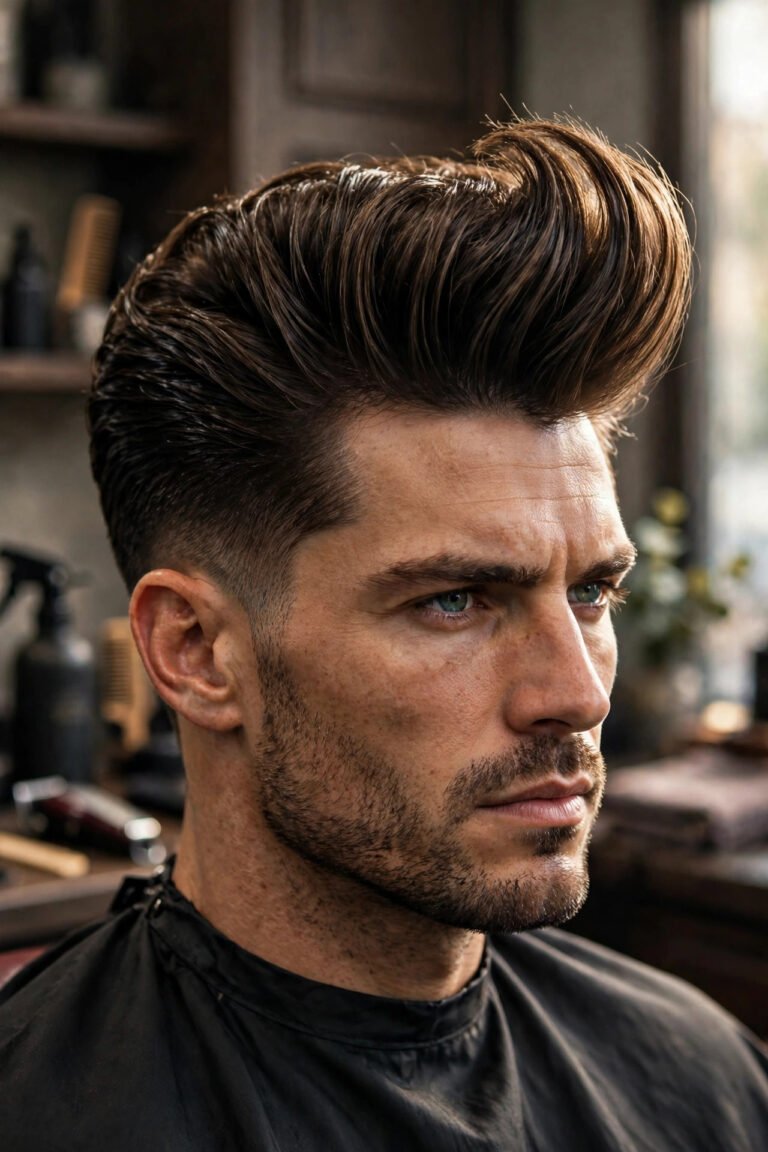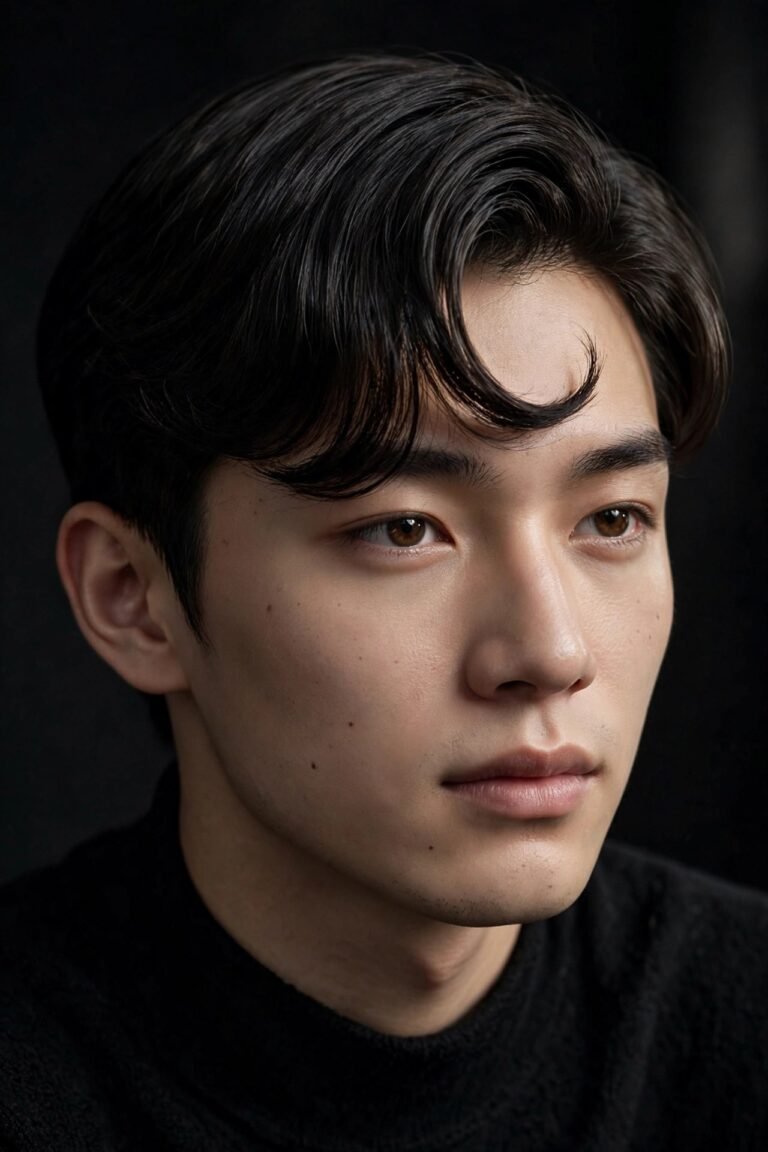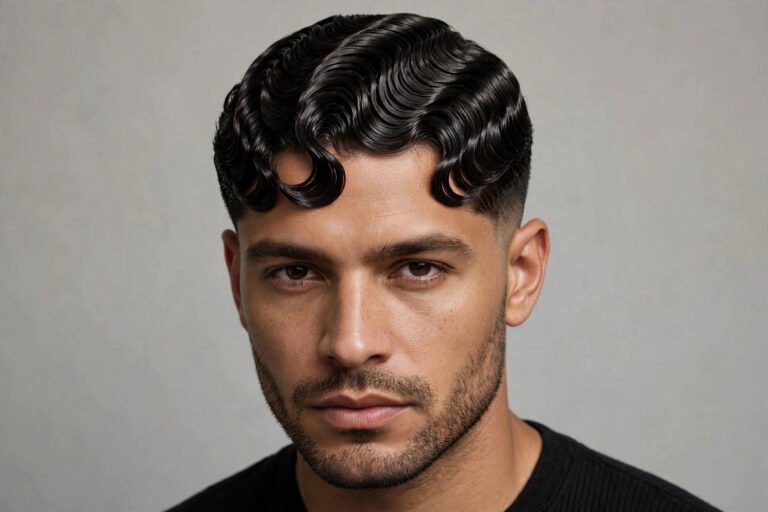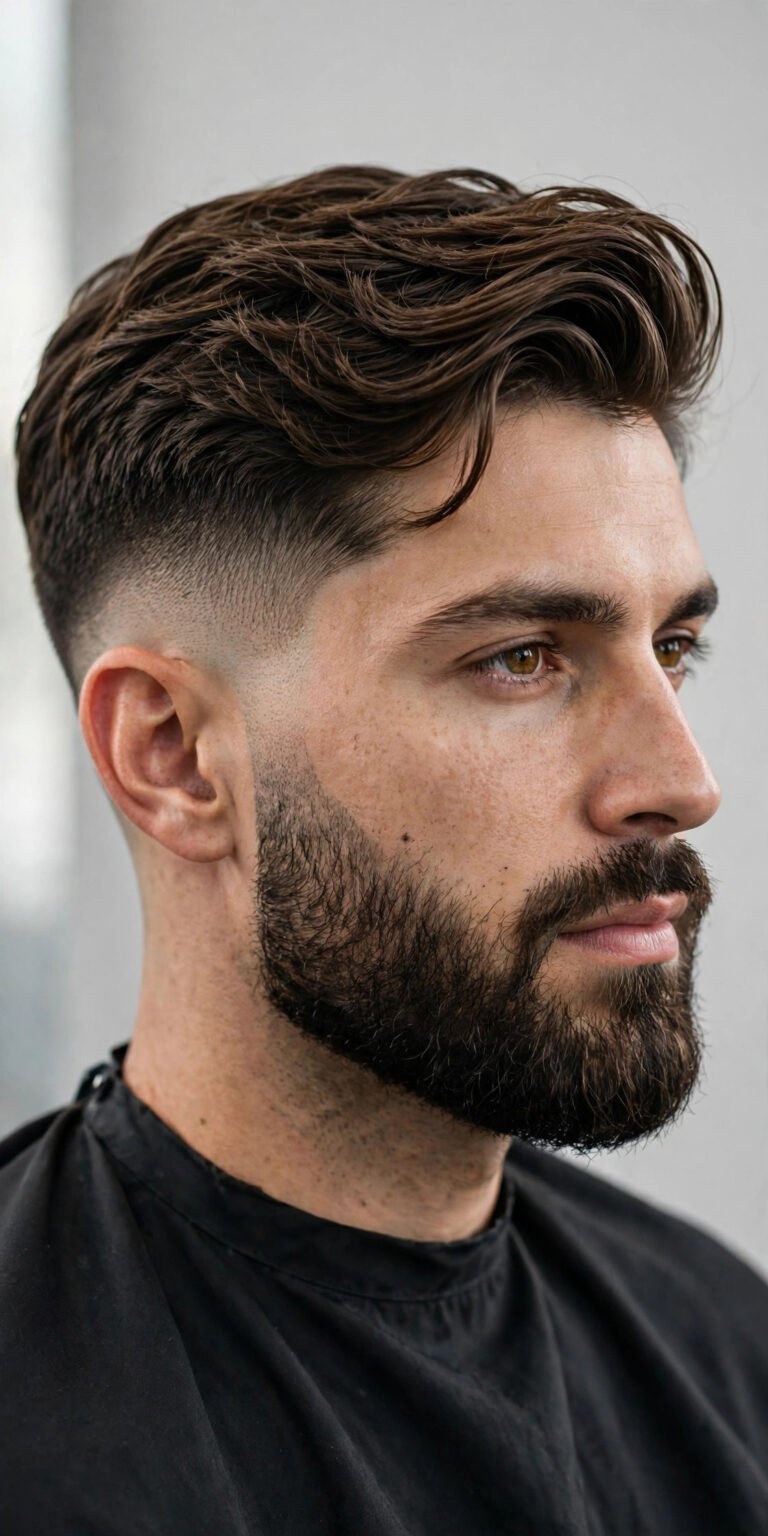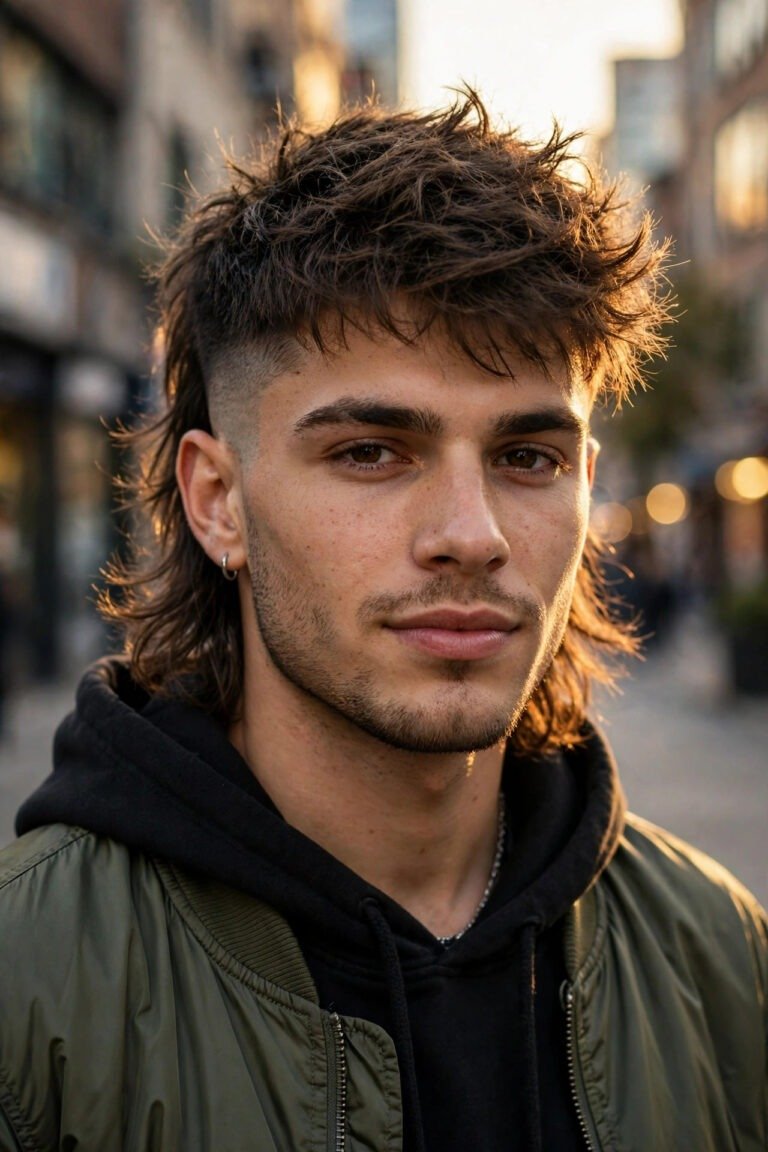
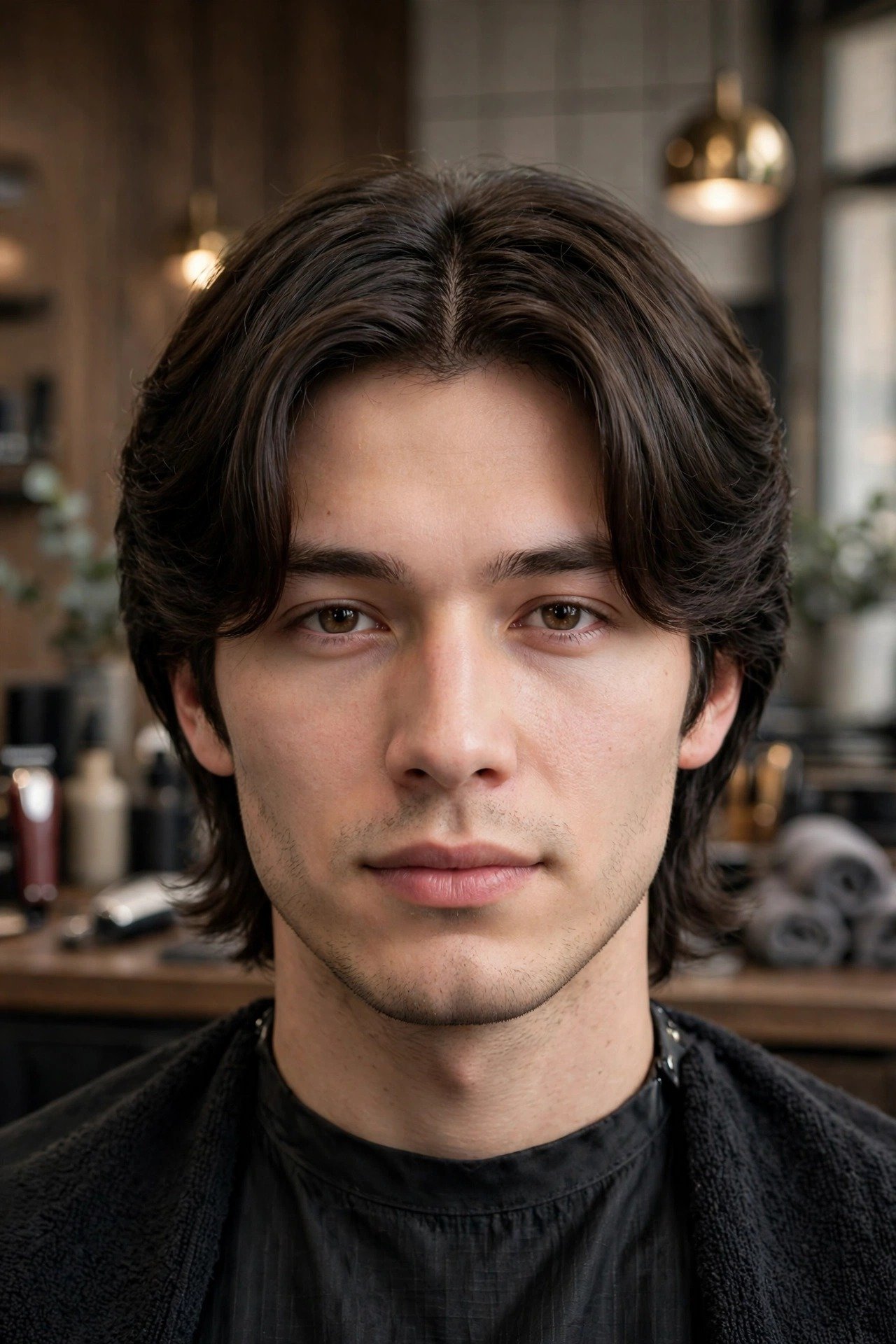
Middle Part Men 2026: 36 Classic, Curtain, Modern Styles
The middle part men are wearing in 2026 is no longer a nostalgic throwback — it has become the defining haircut of the year. From the red carpet to the barbershop chair, the centre parting has returned with a cleaner, sharper and far more versatile attitude than the floppy curtains of the nineties. It frames the face symmetrically, adds instant structure to almost any hair type, and works just as well with a sharp fade as it does with long, flowing lengths. Whether your hair is straight, wavy or curly, thick or fine, there is a middle part variation that will suit you, and this guide covers thirty-six of the very best.
What makes the middle part so powerful is its balance. A side part leans the eye one way; a centre part keeps everything even, which is why it photographs so well and why so many celebrities have adopted it. It also pairs beautifully with the other cuts dominating 2026 — you can blend it with the volume of our pompadour guide or the polished finish of our slick back guide for a look that feels both classic and completely current. Below you will find every variation that matters, with exact barber scripts, honest advice on who each style suits, and simple styling routines you can repeat at home every morning. Use the guide as a lookbook first, then take your favourite style to the chair with confidence.
What Is a Middle Part
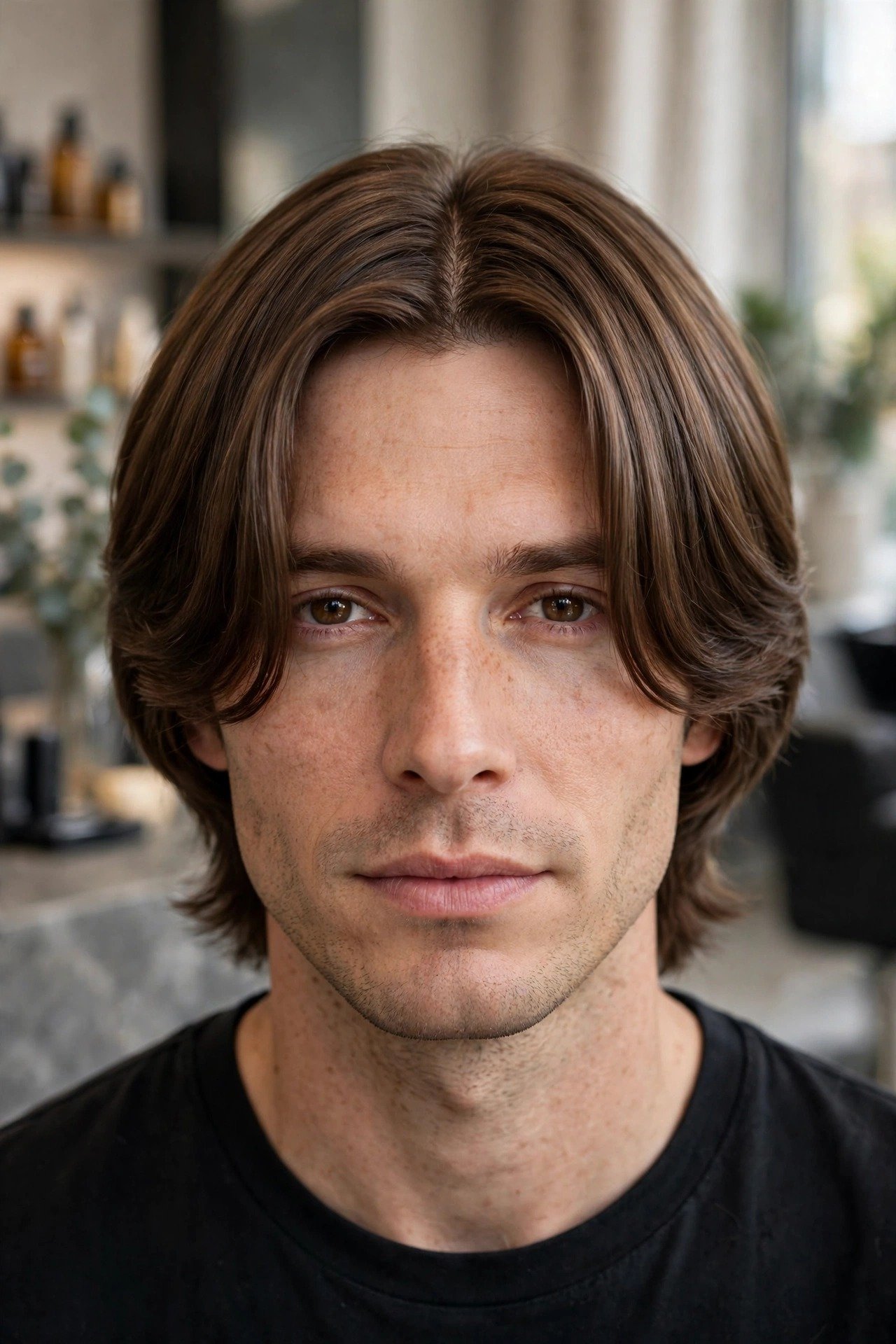
A middle part, sometimes called a centre part, is a hairstyle in which the hair is divided into two roughly equal halves by a straight line running from the forehead to the crown. The fringe falls evenly on both sides of the face, creating a symmetrical frame that draws attention to the eyes, cheekbones and jawline. Unlike a side part, which sweeps the hair across the forehead in one direction, the middle part lets the hair fall naturally to the left and right, and that symmetry is the whole point — it gives the face a balanced, deliberate look that reads as confident rather than fussy. The effect is flattering in photographs and in person, because the eye is drawn to the centre of the face rather than to one side.
The style has deep roots. It was the signature look of the nineteen-nineties, worn by everyone from boy-band singers to film stars, and it has returned in 2026 with better tools, better products and far more variety. Modern versions range from short, textured curtains to long, flowing lengths, and they can be combined with fades, tapers, undercuts or a natural finish. If you want a broader view of how centre-parted hair connects to longer styles, our flow haircut guide is a useful companion, and StyleX Magazine’s middle part guide offers another expert take on the trend. Reading both guides together will give you a clear picture of how the modern centre part differs from the looser, heavier curtains of the past.
Getting the part right matters more than most men realise. The line should sit at the natural centre of the head, found by following the line of the nose upward, and it works best when the hair is at least three to four inches long on top. Shorter hair can still be centre-parted, but the effect is subtler and needs more product to hold. The cut itself is usually layered lightly through the fringe so the hair falls softly rather than in a heavy curtain, and the sides can be kept long, tapered or faded depending on how bold you want the final look to feel. A good barber will check the part from the front and the back before finishing, because a centre line that drifts even slightly will show immediately.
Why the Middle Part Is Dominating 2026
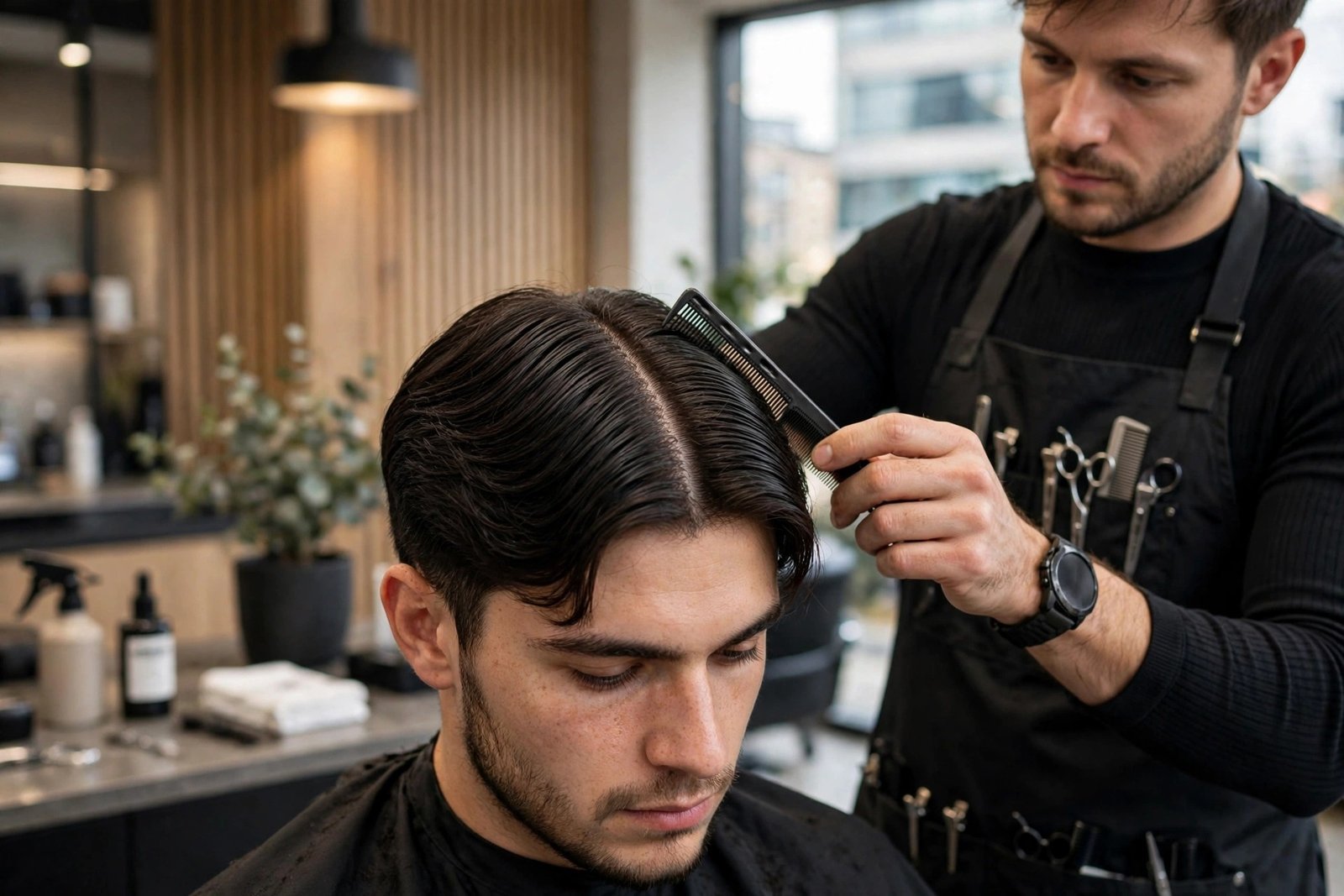
The middle part is dominating 2026 because it solves the problem most modern haircuts create: it looks intentional without looking overworked. In an era of textured crops and skin fades, the centre part offers something different — a softer, more grown-out silhouette that still feels sharp. Social media has accelerated the trend, with curtain cuts and eboy styles racking up millions of views, and barbers report that the centre part is now one of the most requested finishes in the chair, rivalling the textured fringe and the taper fade. The demand is strongest among men in their twenties and thirties, but the cut is increasingly popular with older men too, who like its clean, youthful energy.
Versatility is the other reason for its rise. The same basic parting can be worn sleek for a wedding, messy for a weekend, or grown long for a surfer-inspired finish, and it suits straight, wavy and curly hair alike. It also layers beautifully with the Korean-inspired cuts that have crossed over into Western barbershops — our Korean two-block guide shows how a centre part sits perfectly over a disconnected two-block base. For a second expert perspective on why the cut is everywhere this year, see the LowFadeStyles middle part guide Together, the two guides show how one simple parting can support everything from a sharp Korean two-block to a soft, grown-out curtain, and why barbers keep recommending the cut to new clients.
Celebrity influence has sealed the deal. Actors, musicians and sports stars have all been photographed with centre-parted hair in 2026, and the look translates well to real life because it does not demand a perfect face shape or a particular hair texture. It flatters oval and square faces by softening strong angles, adds width to long faces, and gives round faces a lengthening frame. Add in the fact that it grows out gracefully — there is no awkward in-between stage — and it is easy to see why the middle part has become the default choice for men who want a stylish cut that lasts. It also photographs exceptionally well, which matters more than ever in a year when most first impressions happen on a screen.
1. Classic Curtains

The classic curtain is the original middle part and still the most recognisable version of the style. The fringe is left long enough to fall to the cheekbones, parted cleanly down the centre, with soft layers that let each side curve gently away from the face. It suits oval and square faces best, because the even frame softens strong jawlines without hiding them, and it works beautifully on straight or slightly wavy hair with medium thickness. The look feels relaxed and romantic, with a nineties soul and a thoroughly modern finish.
Ask for a centre part with the fringe left at cheekbone length, around four to five inches, with light layering through the front so the hair falls softly rather than in one heavy sheet. Keep the sides long enough to tuck behind the ears or leave them to fall naturally, and ask your barber to keep the back at a similar length so the silhouette stays balanced all the way around. Tell them you want the classic nineties curtain shape, not a textured crop, and ask for the part to be cut in while the hair is dry so the natural fall is visible.
Style the classic curtain by towel-drying the hair until it is just damp, then working a small amount of sea salt spray through the fringe and blow-drying each side forward and outward with your fingers. Finish with a pea-sized amount of matte cream to define the ends and keep the part clean. The cut needs a trim every five to six weeks to keep the fringe at cheekbone length, and a weekly deep-conditioning treatment will keep the longer lengths soft, shiny and free of split ends.
2. Short Curtains
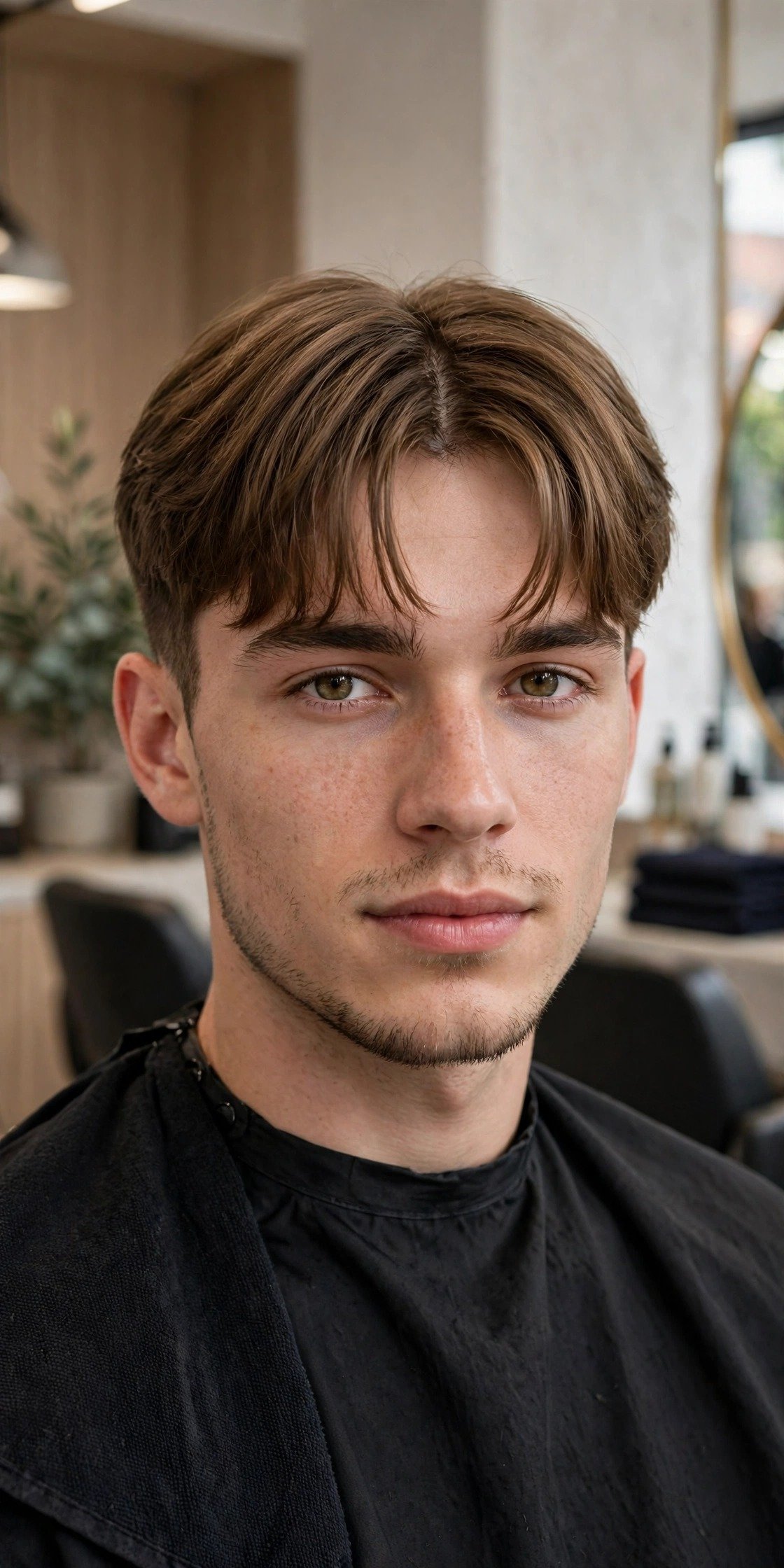
Short curtains take the classic shape and trim it down to a practical, everyday length. The fringe sits just above the eyebrows, parted in the middle, with the sides kept neat and close so the whole cut feels light and easy to manage. It suits men who want the curtain look without the commitment of longer hair, and it flatters round and oval faces by adding height and structure at the front. Straight and wavy hair both work well, and the shorter length means the style holds its shape with far less effort.
Ask for a middle part with the fringe cut to just above the eyebrows, around two to three inches, with light texture through the front so the hair does not sit too heavily. Keep the sides short but not faded, tapering them gently into the back, and ask your barber to point-cut the ends of the fringe so the line looks soft rather than blunt. Tell them you want a short curtain that can be worn with a clean centre part, and ask them to show you where your natural part sits before they finish.
Style short curtains by applying a small amount of volumising mousse to damp hair, then blow-drying the fringe forward and away from the part with a round brush. A fingertip of matte clay worked through the ends adds definition without weight. The cut holds up well between appointments, so book a trim every four to five weeks, and wash with a lightweight shampoo so the shorter fringe does not get weighed down by heavy conditioners or oils. A quick comb-through in the morning is all it takes to reset the part and keep the cut looking fresh.
3. Long Curtains

Long curtains are the most dramatic version of the middle part, with the fringe grown past the cheekbones and sometimes down to the jawline. The extra length gives the hair real movement, and the centre part creates a striking symmetrical frame that draws the eye straight to the face. It suits oval and long faces particularly well, and it is at its best on thick, straight or wavy hair that can carry the weight without collapsing. This is a statement cut that rewards patience, because growing the fringe out properly takes several months.
Ask for a centre part with the fringe grown to jaw length, around six to seven inches, with long layers cut through the front and sides so the hair moves freely. Keep the back long to match, and ask your barber to remove weight from the interior with thinning shears rather than cutting the length away. Tell them you are growing the curtains out and want the shape maintained, not shortened, and ask for the ends to be dusted lightly so they stay healthy while the length builds.
Style long curtains by applying leave-in conditioner to damp hair, then blow-drying with a round brush, curving each side away from the face to build a soft, sweeping shape. A drop of hair oil on the ends keeps the longer lengths glossy and frizz-free. Trim every six to eight weeks to remove split ends without losing length, and use a wide-tooth comb rather than a brush to protect the longer fringe from breakage. Sleeping on a silk pillowcase will also reduce friction and keep the long curtain smooth overnight.
4. Textured Middle Part

The textured middle part brings the classic centre part firmly into 2026. Choppy, point-cut layers through the fringe break up the solid curtain shape and give the hair a lived-in, piecey finish that looks effortless from every angle. It suits almost every face shape, but it is especially flattering on square and rectangular faces, where the texture softens strong angles. It works best on straight to wavy hair with medium density, and it is the ideal choice if your hair tends to sit flat and needs help holding volume.
Ask for a middle part with heavy texture through the fringe, point-cut into the ends so the hair separates into distinct pieces. Keep the top around three to four inches and ask your barber to use thinning shears through the interior to remove bulk without losing length. The sides can be kept long or tapered lightly, and tell them you want a deliberately messy, textured finish rather than a clean, polished curtain. Ask them to cut the fringe while it is dry so the texture falls naturally.
Style the textured middle part by working sea salt spray into damp hair, then rough-drying with your fingers and scrunching the fringe to encourage separation. A small amount of matte clay, warmed between your palms and pushed through the ends, will define the pieces and hold the shape all day. Book a trim every four to five weeks to keep the texture fresh, and avoid heavy waxes or pomades, which will clump the layers together and kill the piecey finish. A wide-tooth comb used on damp hair will keep the textured pieces separated without flattening the shape.
5. Wavy Middle Part

A wavy middle part lets your natural texture do the talking. The centre part splits the waves evenly, so each side falls in soft, natural curves that frame the face without any stiffness. It suits oval, square and heart-shaped faces, and it is one of the most forgiving middle part styles because the waves hide small imperfections in the part line. Medium to thick wavy hair is ideal, and the style looks even better as it grows out, with the waves gaining weight and movement over time.
Ask for a centre part with the fringe left at four to five inches, cut with long layers that follow your natural wave pattern rather than fighting it. Ask your barber to cut the hair dry or mostly dry so they can see exactly how the waves fall, and to remove weight from underneath rather than layering the top too heavily. Keep the sides at a similar length or taper them gently, and tell them you want the waves to be the feature, not something to be straightened away.
Style a wavy middle part by applying a curl-enhancing cream or sea salt spray to damp hair and scrunching the waves as they dry, either naturally or with a diffuser on a low heat. Avoid brushing the hair once it is dry, because that will turn the waves into frizz; use your fingers to reshape the part instead. Trim every five to six weeks to keep the shape, and use a moisturising shampoo and conditioner to keep the waves soft, defined and frizz-free. A silk pillowcase at night will protect the natural waves and keep the part looking fresh until morning.
6. Curly Middle Part
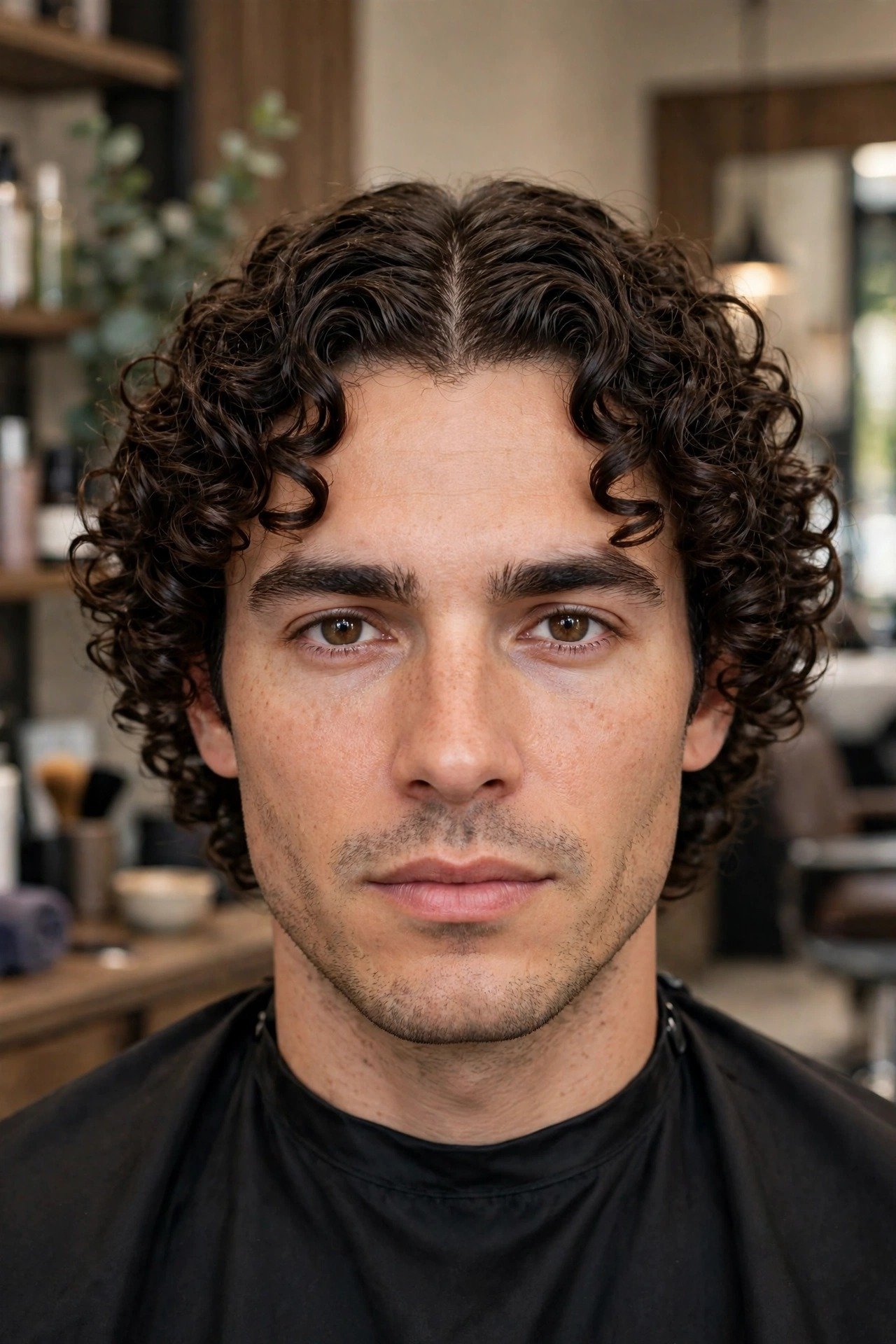
The curly middle part is proof that centre partings are not just for straight hair. When curls are split down the middle, they fall in a balanced, symmetrical cascade that frames the face beautifully and shows off the natural curl pattern to its best advantage. It suits round, oval and square faces, and it works on anything from loose waves to tight curls, provided the length is kept long enough for the curls to form properly. This is a confident, characterful style that turns natural texture into the main event.
Ask for a centre part with the curls left at four to six inches on top, cut curl by curl while the hair is dry so the shape follows your natural pattern. Ask your barber to keep the layers long and to avoid thinning the curls too aggressively, which can create frizz and uneven volume. The sides can be kept full or tapered slightly, and tell them you want the curls to fall evenly on both sides of the part, with the length preserved rather than cut back.
Style a curly middle part by applying curl cream to soaking wet hair, then scrunching gently and letting it air-dry or drying with a diffuser on the lowest heat. Never brush dry curls, and refresh the part each morning with a little water and a dab of curl cream. Trim every six to eight weeks, cutting only the ends, and deep-condition weekly so the curls stay hydrated, defined and free of frizz throughout the day. A silk pillowcase at night will protect the curl pattern and reduce morning frizz even further.
7. Korean Two-Block Middle Part
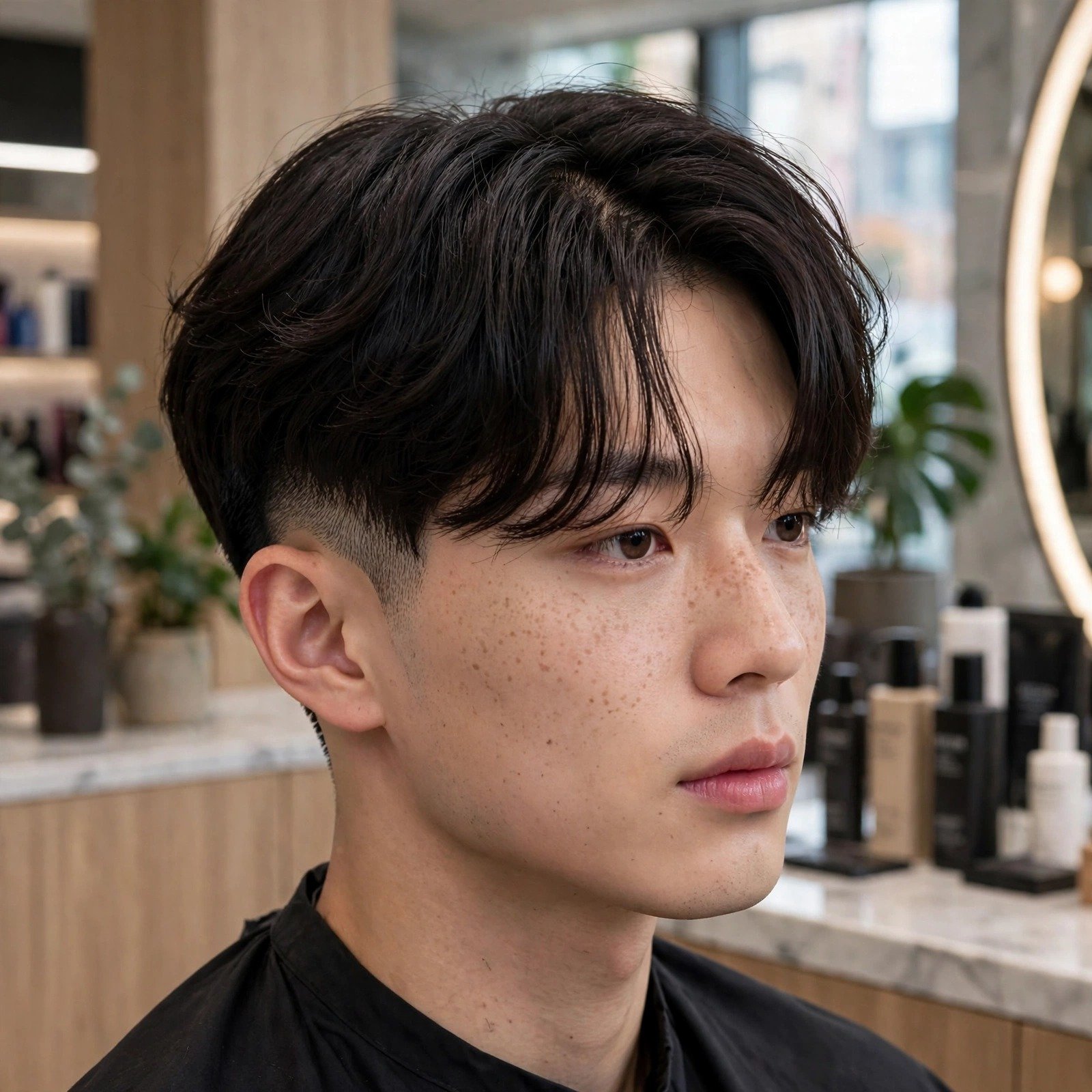
The Korean two-block middle part is the most influential import in men’s hair in 2026. The top is left long and centre-parted, while the sides and back are cut short in a disconnected two-block shape, creating a sharp contrast that makes the fringe the clear hero of the cut. It suits oval, heart-shaped and square faces, and it works best on straight or slightly wavy hair with medium thickness, which holds the clean, graphic silhouette. The result is youthful, polished and unmistakably modern. It has become a favourite among K-pop idols and young professionals alike, because it photographs beautifully and needs little daily effort.
Ask for a two-block cut with the top left at four to five inches and centre-parted, and the sides and back clippered short with a clear disconnection at the parietal ridge. Ask your barber to keep the transition sharp rather than blended, and to texture the fringe lightly so it falls softly over the shorter sides. Tell them you want the Korean two-block silhouette, not a standard fade, and ask them to show you how the top should sit over the sides before you leave the chair.
Style the two-block middle part by blow-drying the fringe forward and outward with a round brush, using a volumising mousse for lift at the roots. A small amount of matte clay will hold the shape without stiffness. The disconnected sides grow out quickly, so book a tidy-up every three to four weeks, and keep the top conditioned so the longer fringe stays smooth and sits neatly over the shorter sides. A quick pass with a straightener on the fringe ends will sharpen the two-block silhouette for special occasions.
8. Middle Part with Low Fade
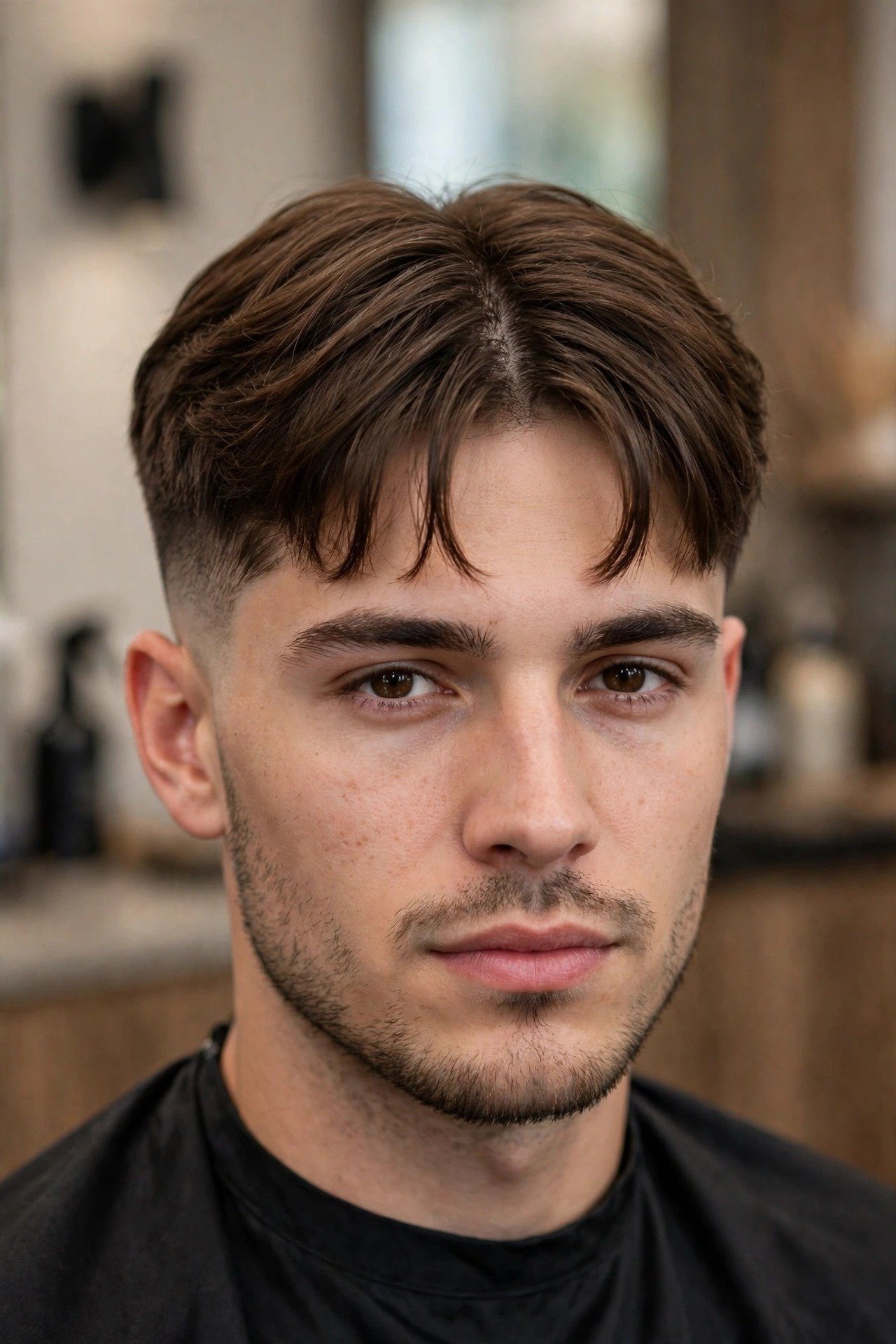
A middle part with a low fade is the smartest way to wear curtains with a clean finish. The fade sits low around the ears and neckline, keeping the sides tidy while the centre-parted fringe stays long and soft on top. It suits almost every face shape, but it is especially good for round faces, because the low fade adds structure without removing too much width. Straight, wavy and curly hair all work, and the low fade keeps the look office-friendly while the fringe keeps it stylish.
Ask for a centre part with the fringe at four to five inches and a low taper fade on the sides, starting just above the ears and blending into the top. Ask your barber to keep the fade subtle and low, with a clean neckline, and to leave enough length on top for the fringe to fall naturally to both sides. Tell them you want the fade to support the middle part rather than dominate it, and ask for the top to be textured lightly so it does not look too heavy.
Style the low fade middle part by blow-drying the fringe with a round brush, curving each side away from the part, and finishing with a fingertip of matte clay for definition. The low fade grows out gracefully, so a trim every four to five weeks is enough to keep it sharp. Use a lightweight shampoo and avoid heavy products on the faded sides, which can make the blend look greasy as the day goes on. A dry shampoo on the second day will refresh the roots and keep the low fade looking clean between washes.
9. Middle Part with Mid Fade
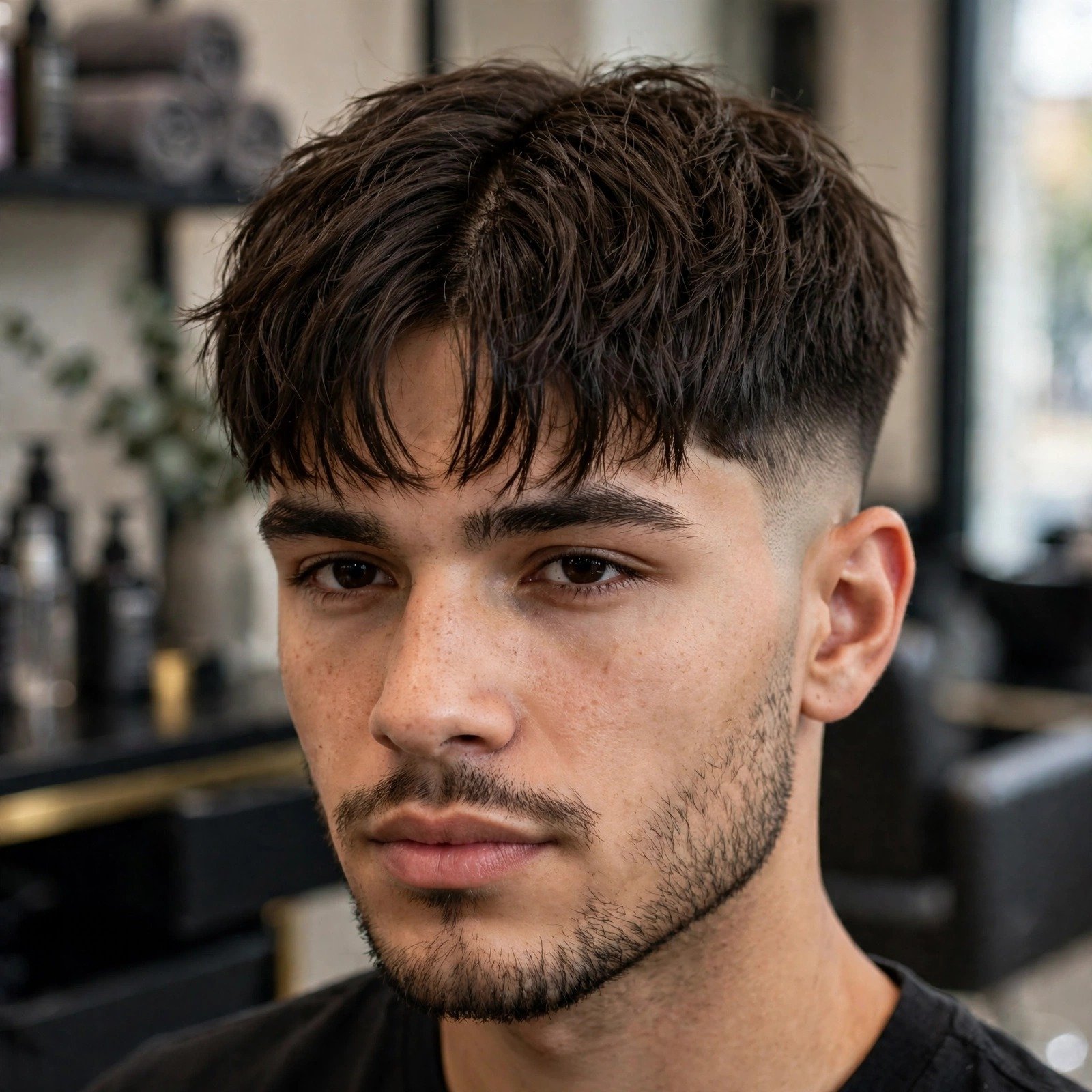
The mid fade middle part strikes the perfect balance between a soft curtain and a sharp, modern cut. The fade climbs to the middle of the head, giving the sides a clean, graduated finish, while the centre-parted fringe keeps its length and movement on top. It suits square, oval and rectangular faces particularly well, and it is a strong choice for thick hair, because the fade removes bulk from the sides while the top keeps its fullness. This is the version to choose when you want curtains that still look sharp.
Ask for a centre part with the fringe at three to five inches and a mid fade on the sides, blending from skin or a number one guard up into the longer top. Ask your barber to keep the blend smooth and the transition at the temple clean, and to texture the fringe so it sits lightly over the fade. Tell them you want the mid fade to frame the middle part, not compete with it, and ask for a sharp lineup at the front hairline if you like a crisper finish.
Style the mid fade middle part by applying sea salt spray to damp hair and blow-drying the fringe outward on each side with your fingers, building lift at the roots. Finish with matte clay for hold and definition. The mid fade needs upkeep, so book a trim every three to four weeks to keep the blend sharp, and keep the fringe conditioned so it stays soft against the clean faded sides. A lightweight leave-in conditioner will keep the fringe smooth and healthy without weighing down the faded blend at all.
10. Middle Part with High Fade

A high fade middle part is the boldest faded version of the style, and it makes a real statement. The fade climbs high up the sides, leaving a dramatic contrast between the closely faded sides and the long, centre-parted fringe on top. It suits oval, square and diamond faces best, and it works particularly well on thick, straight hair that can hold the weight of the longer top. This is a high-impact cut for men who want their middle part to look sharp, modern and impossible to ignore.
Ask for a centre part with the fringe at four to five inches and a high fade on the sides, taken up to the parietal ridge and blended tightly into the top. Ask your barber to keep the fade clean and the contrast strong, with a sharp edge at the temples if you like a defined finish. Tell them the top is the feature and the fade should frame it, and ask for light texture through the fringe so it falls evenly on both sides of the part.
Style the high fade middle part by blow-drying the fringe with a round brush for volume, then shaping each side with a small amount of matte clay. The high contrast means the fade shows regrowth quickly, so book a trim every two to three weeks to keep it crisp. Keep the top well conditioned, because the long fringe against the faded sides is the whole point of the cut and it needs to look healthy and intentional. A weekly hair mask will keep the long fringe strong enough to hold its shape against the high faded sides.
11. Middle Part with Drop Fade

The drop fade middle part adds a subtle curve to the classic faded curtain. Instead of running straight around the head, the fade drops down behind the ear, following the natural shape of the skull and creating a softer, more sculpted silhouette. It suits round and square faces, because the curved fade adds definition without harsh lines, and it works well on straight, wavy and curly hair. The result is a polished, contemporary cut that feels a little more considered than a standard fade. The curved line is subtle enough for the office yet distinctive enough to earn compliments from anyone who notices the detail.
Ask for a centre part with the fringe at four to five inches and a drop fade on the sides, with the fade line dipping down behind the ear and blending into the neckline. Ask your barber to keep the drop subtle and smooth, and to texture the fringe lightly so it falls naturally on both sides of the part. Tell them you want the fade to follow the shape of your head, and ask for a clean finish at the back so the curved line reads clearly from every angle.
Style the drop fade middle part by blow-drying the fringe outward with a round brush and finishing with matte clay for a natural hold. The curved fade grows out more gracefully than a straight fade, so a trim every four weeks is usually enough. Keep the fringe conditioned and use a light styling product so the top stays soft and moves naturally against the sculpted sides. Brushing the fringe gently each morning will keep the part line crisp and the drop fade looking deliberate and tidy all day.
12. Middle Part with Skin Fade

A skin fade middle part is the sharpest contrast you can pair with a centre parting. The sides are faded right down to the skin, leaving a clean, almost shaved finish that makes the long, centre-parted fringe on top look even more dramatic. It suits oval and square faces, and it is at its best on thick hair, where the weight of the top creates a strong silhouette against the bare sides. This is a confident, high-maintenance cut that always looks deliberate and polished. Barbers report it is one of the most requested faded finishes of the year, especially among men who want maximum contrast.
Ask for a centre part with the fringe at four to five inches and a skin fade on the sides, taken down to the skin with a foil shaver and blended up into the top. Ask your barber to keep the blend tight and the line at the top of the fade crisp, and to texture the fringe so it falls evenly on both sides. Tell them you want the sharpest possible contrast, and ask for a lineup at the hairline if you like the finish to look extra clean.
Style the skin fade middle part by blow-drying the fringe with volume at the roots and shaping it with matte clay or a light pomade. The skin fade shows regrowth within days, so book a trim every two weeks to keep it looking sharp, or learn to tidy the edges yourself between appointments. Keep the scalp moisturised and the fringe conditioned so the contrast between the bare sides and the long top always looks intentional. A moisturising scalp balm applied after washing will keep the faded skin comfortable and free of dryness between trims.
13. Middle Part with Taper
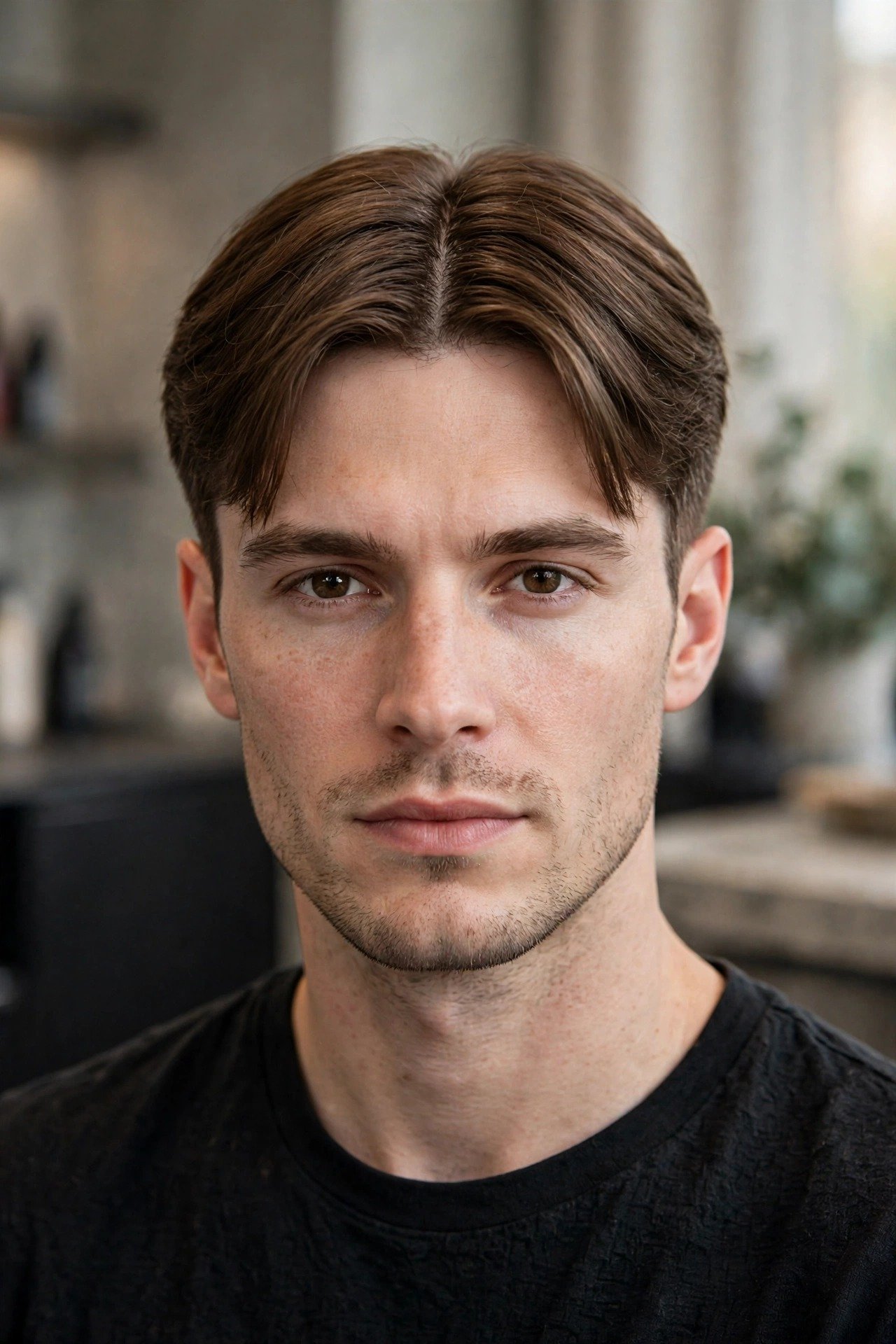
A middle part with a taper is the most classic and understated faded variation, and it never looks out of place. The sides gradually shorten toward the neckline without ever reaching the skin, giving a clean, gentlemanly finish that lets the centre-parted fringe take centre stage. It suits every face shape and every hair type, which is why it has been a barbershop staple for decades. If you want a middle part that works in the office, at a wedding and on the weekend, this is the safest and most versatile choice.
Ask for a centre part with the fringe at four to five inches and a classic taper on the sides and back, gradually shortening toward the neckline with a clean, natural finish. Ask your barber to keep the taper subtle and to blend it smoothly into the top, and to texture the fringe lightly so it falls softly on both sides of the part. Tell them you want a timeless taper rather than a fashion fade, and ask for the sideburns to be kept neat and tapered too.
Style the tapered middle part by blow-drying the fringe outward with a round brush and finishing with a small amount of styling cream for a natural, healthy shine. The taper grows out very gracefully, so a trim every five to six weeks is enough to keep it tidy. Use a gentle shampoo and a light conditioner, and avoid heavy waxes, which can make the tapered sides look flat and the fringe lose its movement. A soft-bristle brush will keep the taper neat and the fringe smooth without flattening either part of the cut.
14. Middle Part with Undercut

The undercut middle part is a bold, fashion-forward take on the centre parting. The sides and back are cut short and disconnected from the long top, so the centre-parted fringe sits in dramatic contrast against the closely cropped sides. It suits oval, square and heart-shaped faces, and it works best on straight or wavy hair with medium to thick density, which can carry the weight of the longer top. This is a statement cut that suits men who like their hair to look intentional and a little bit rebellious.
Ask for a centre part with the fringe at four to six inches and an undercut on the sides and back, clippered short with a clear disconnection and no blending into the top. Ask your barber to keep the undercut at one consistent length and to texture the fringe so it falls evenly on both sides of the part. Tell them you want a sharp, disconnected undercut rather than a fade, and ask them to show you how the top should be worn — pushed forward over the undercut for the full effect.
Style the undercut middle part by blow-drying the fringe forward and outward with a round brush, using volumising mousse for lift, and finishing with matte clay for a strong but natural hold. The disconnected sides grow out quickly, so book a trim every three to four weeks to keep the contrast sharp. Keep the top conditioned so the long fringe stays smooth and sits neatly over the short undercut sides. Sweeping the fringe slightly to one side on lazy days still works, because the undercut keeps the shape defined underneath.
15. Messy Middle Part

The messy middle part is the low-effort hero of the centre-parting family. The fringe is centre-parted but deliberately tousled, with piecey, uneven texture that looks like you have just run your hands through it. It suits oval, square and heart-shaped faces, and it is perfect for men whose hair has a natural wave, because the messiness is the point. This is the middle part for men who want to look stylish without looking like they tried too hard. It is also remarkably forgiving as it grows out, because the uneven texture hides regrowth far better than a neat, structured cut.
Ask for a centre part with the fringe at three to five inches, heavily textured with point cutting and a razor so the ends separate into uneven pieces. Ask your barber to keep the layers choppy and to remove bulk through the interior, and to leave the sides long enough to look relaxed rather than neat. Tell them you want a deliberately messy, bedhead finish, and ask them to cut the fringe dry so the natural, uneven fall is built into the shape. Ask them to leave the sides long enough, so the messy shape reads as relaxed rather than unfinished.
Style the messy middle part by working sea salt spray into damp hair and rough-drying with your fingers, scrunching and tousling the fringe as it dries. A pinch of texture powder at the roots adds lift and grip, and a tiny amount of matte clay will hold the pieces in place. Trim every four to five weeks to keep the texture fresh, and do not over-wash — two or three washes a week keeps the natural oils that give this style its lived-in texture. A pea-sized amount of clay is enough, because too much product will weigh the messy pieces down and spoil the texture.
16. Sleek Middle Part

The sleek middle part is the polished, red-carpet version of the style. The hair is centre-parted and smoothed flat against the head, with a glossy, controlled finish that looks expensive and deliberate. It suits oval and square faces best, and it is at its finest on straight, fine to medium hair that can be smoothed easily. This is the middle part to choose for weddings, formal events and any occasion where you want to look immaculate, because the clean lines and high shine always photograph beautifully.
Ask for a centre part with the fringe at four to five inches, cut with clean, blunt ends and minimal layering so the hair sits smoothly. Ask your barber to keep the sides long and neat, tapering them gently, and to finish the cut with a smoothing pass so the shape is visible. Tell them you want a sleek, polished middle part with a glossy finish, and ask them to show you how to comb the part straight while the hair is still damp. A final check in the mirror will confirm the sleek lines sit evenly on both halves of the head.
Style the sleek middle part by applying a smoothing cream or light pomade to damp hair, then combing the part straight and blow-drying each side flat with a paddle brush. Finish with a drop of shine serum on the lengths and a light mist of hairspray to hold the gloss. Trim every four to five weeks to keep the lines clean, and use a smoothing shampoo and conditioner to keep the hair frizz-free and glossy between appointments. Carrying a pocket comb means you can reset the part and restore the shine in seconds whenever it needs a touch-up.
17. Fluffy Middle Part
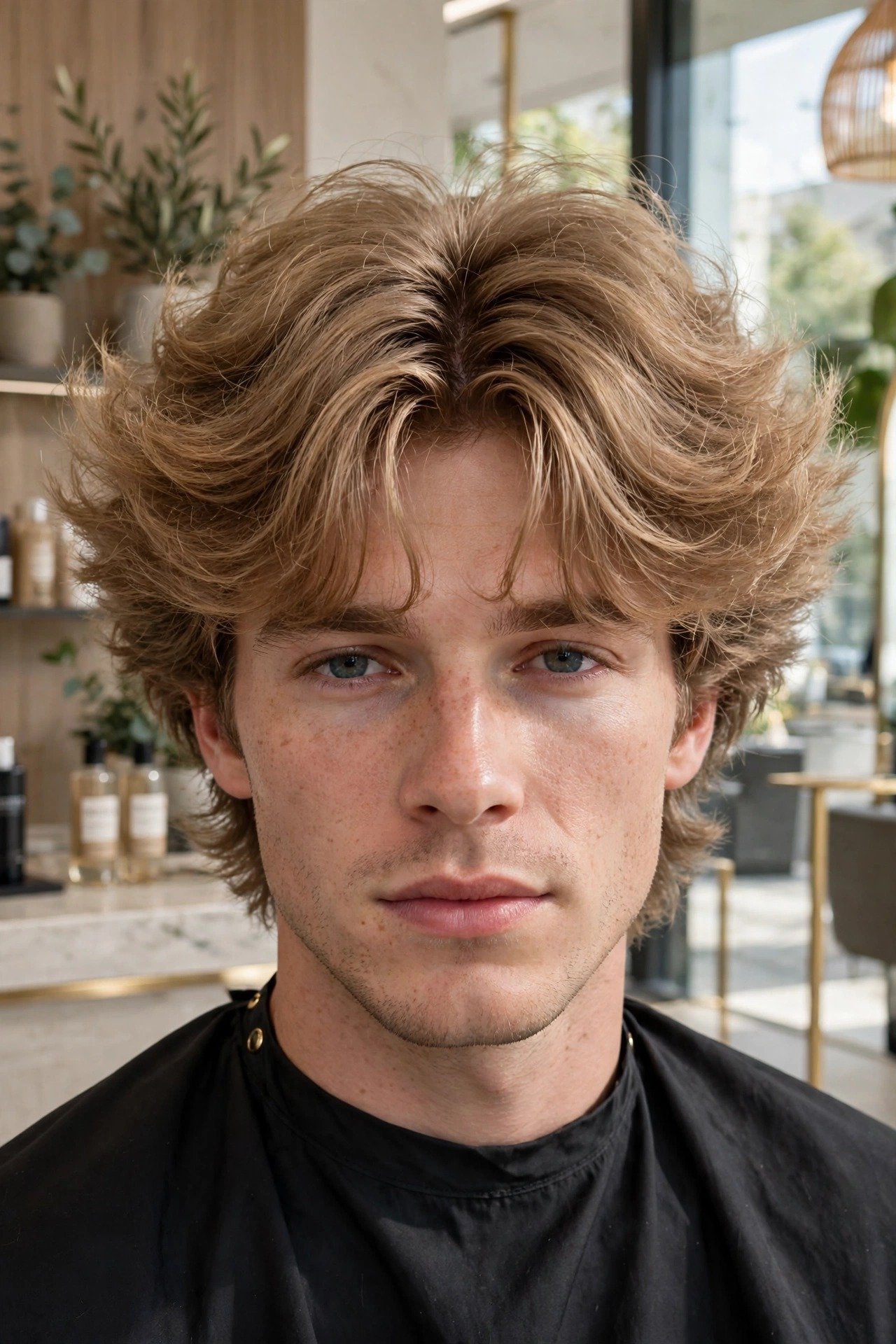
The fluffy middle part is all about soft, airy volume. The fringe is centre-parted and blow-dried into a light, cloud-like shape that sits away from the face, giving the hair a full, bouncy silhouette that feels youthful and fresh. It suits oval, long and heart-shaped faces, and it works best on fine to medium hair, because the fluffiness adds the illusion of thickness. This is the middle part for men who want volume without stiffness, and it looks particularly good in photographs thanks to its soft, rounded shape.
Ask for a centre part with the fringe at four to five inches, cut with long layers and plenty of internal texture so the hair lifts easily. Ask your barber to thin the ends lightly so the fringe feels light rather than heavy, and to keep the sides at a similar length so the fluffy silhouette stays balanced. Tell them you want a soft, voluminous middle part with an airy finish, and ask them to demonstrate the blow-dry technique that creates the lift. Ask them to thin the very ends of the fringe so the fluffy shape feels light rather than heavy at the front.
Style the fluffy middle part by applying volumising mousse to damp hair, then blow-drying the fringe upward and outward with a round brush, lifting at the roots on each side. Finish with a light dusting of texture powder rather than heavy clay, which would flatten the volume. Trim every five weeks to keep the layers fresh, and use a volumising shampoo so the hair stays light, bouncy and full of air. Blow-drying with your head tipped forward will add even more root lift and make the fluffy silhouette last longer.
18. Eboy Middle Part
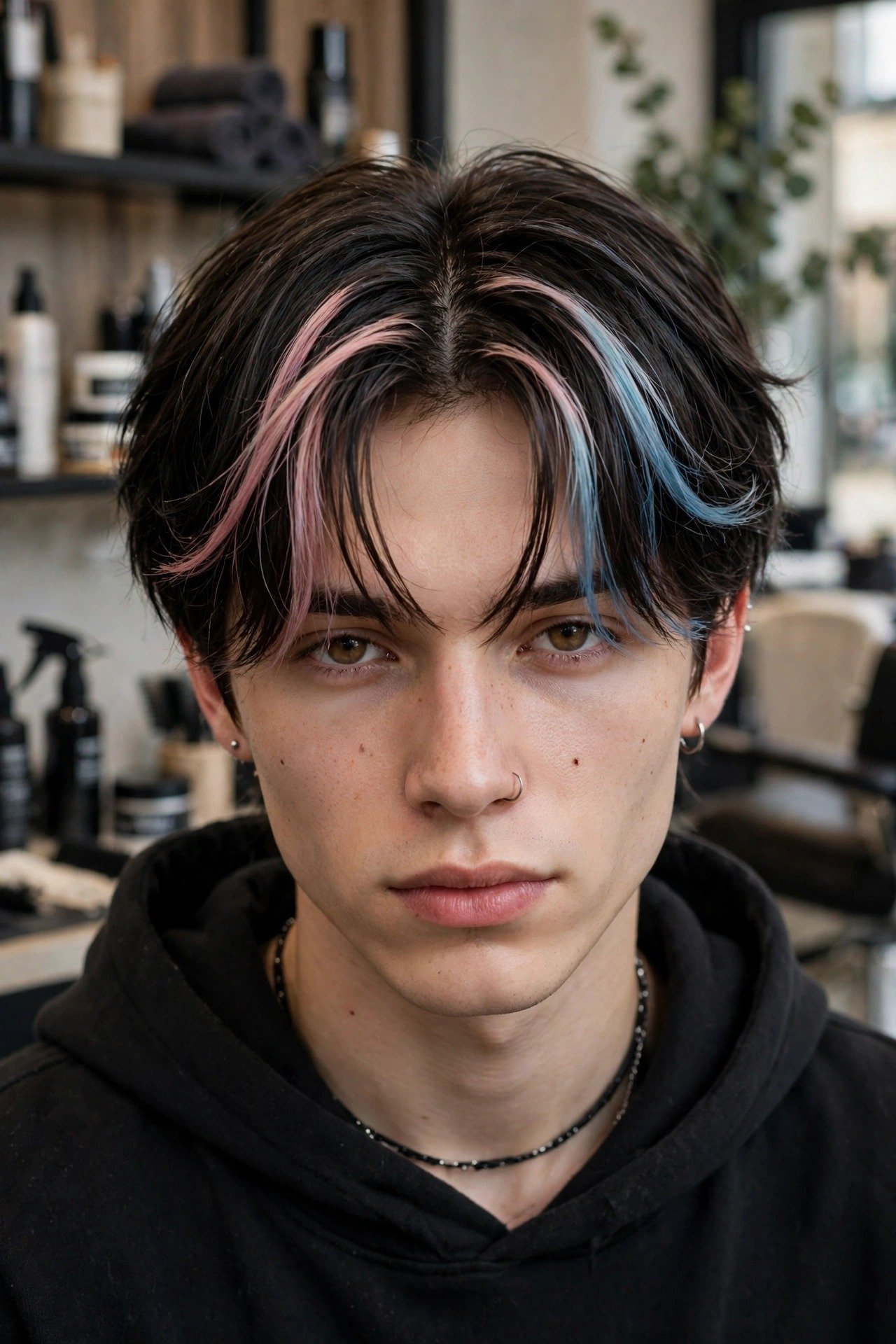
The eboy middle part is the internet generation’s take on curtains, and it is one of the most recognisable styles of 2026. The fringe is centre-parted and left long and straight, often with dyed streaks or bleached ends, and worn with a slightly messy, lived-in finish. It suits oval and heart-shaped faces, and it works best on straight hair with medium thickness, which holds the clean, graphic curtain shape. This is a youthful, expressive cut that pairs naturally with streetwear and a confident attitude. Social media made the style famous, and its bold curtain shape still stops the scroll whenever it appears in a feed.
Ask for a centre part with the fringe at four to six inches, cut straight across with minimal layering so the curtain shape stays strong and graphic. Ask your barber to keep the sides long and to finish the ends bluntly, and discuss colour — a bleached fringe or a couple of dyed streaks in front will complete the eboy look. Tell them you want the classic eboy curtain, not a textured crop, and ask for the part to be cut in cleanly so the two sides fall symmetrically.
Style the eboy middle part by straightening the fringe lightly if needed, then working a small amount of matte clay through the ends to define the curtain shape. Keep the part clean with a comb and finish with a light hairspray. Trim every four to five weeks to keep the blunt ends sharp, and if you have bleached the fringe, use a purple shampoo weekly and a deep-conditioning mask to keep the colour bright and the hair healthy. A heat protectant spray is essential before straightening, because bleached ends are far more vulnerable to heat damage.
19. 90s Curtains

Nineties curtains are the throwback that started the whole middle part revival, and the 2026 version is truer than ever to the original. The fringe is long, centre-parted and worn slightly floppy, falling past the cheekbones with a soft, natural curve on each side. It suits oval and square faces, and it works best on straight or slightly wavy hair with medium thickness. This is pure nostalgia done properly — a style that instantly recalls the boy bands and film stars of the decade, but with better cutting and better products than the original.
Ask for a centre part with the fringe at five to six inches, cut with long layers and a soft, feathered finish so the hair falls naturally on both sides. Ask your barber to keep the sides long enough to tuck behind the ears and the back at a similar length, and to avoid heavy texturing, which would make the cut look too modern. Tell them you want authentic nineties curtains, and ask for the part to be cut in while the hair is dry so the natural, slightly floppy fall is preserved.
Style nineties curtains by towel-drying the hair and working a little sea salt spray through the fringe, then letting it dry naturally or blow-drying it gently with your fingers. A small amount of light cream will keep the ends smooth without stiffness. Trim every five to six weeks to maintain the length and shape, and use a moisturising conditioner so the longer fringe stays soft and swings naturally as you move. A middle parting comb kept in your pocket will let you reset the nineties curtain quickly whenever the wind disturbs it.
20. Surfer Middle Part

The surfer middle part is the most relaxed version of the style, inspired by long days at the beach. The hair is centre-parted and left long and wavy, with sun-bleached ends and a naturally tousled texture that looks like it has been shaped by salt water and wind. It suits oval, square and long faces, and it is at its best on wavy or naturally textured hair with medium to thick density. This is a carefree, sun-soaked cut that works as well in the city as it does on the coast.
Ask for a centre part with the fringe grown to five to seven inches, cut with long, natural layers that follow your wave pattern. Ask your barber to keep the sides and back long and to remove weight from the interior so the waves move freely, and to avoid a neat, structured finish — the surfer look should feel grown-out and effortless. Tell them you want a beach-inspired middle part, and ask about subtle sun-kissed highlights to complete the effect. Ask for the ends to be point-cut lightly so the waves separate naturally instead of sitting in one heavy block.
Style the surfer middle part by working sea salt spray into damp hair and letting it air-dry, scrunching the waves as they form. A little matte clay on the ends will define the texture without weighing it down. Trim every six to eight weeks to keep the ends healthy, and use a hydrating shampoo and a leave-in conditioner, because sun, salt and longer lengths all dry the hair out faster than a shorter cut. A leave-in conditioner with UV protection is worth using in summer, when sun and salt water strip moisture from the hair.
21. Flow Middle Part

The flow middle part combines two great looks — the centre parting and the grown-out flow — into one effortless style. The hair is left long all over and parted down the middle, so it flows back over the ears and down toward the collar in a smooth, natural sweep. It suits oval, square and long faces, and it needs medium to thick hair with a natural wave or straight texture that can carry the length. This is a confident, laid-back cut that looks better the longer it gets, and it is perfect for men who are growing their hair out.
Ask for a centre part with the hair left long all over, around six to seven inches on top and at least four inches at the sides and back. Ask your barber to cut long layers through the hair so it flows naturally, and to remove weight from underneath rather than shortening the lengths. Tell them you are growing a flow with a centre part, and ask for the ends to be dusted lightly so the shape stays clean while the length builds toward the shoulders.
Style the flow middle part by applying leave-in conditioner to damp hair and blow-drying it back and outward with your fingers, encouraging the natural flow over the ears. A drop of hair oil on the ends keeps the longer lengths glossy and smooth. Trim every six to eight weeks to remove split ends, and brush the hair gently with a wide-tooth comb — never a fine brush — so the flow keeps its natural movement and does not turn frizzy. A boar-bristle brush used gently from the ends upward will keep the flow smooth and distribute natural oils through the lengths.
22. Middle Part with Wispy Fringe
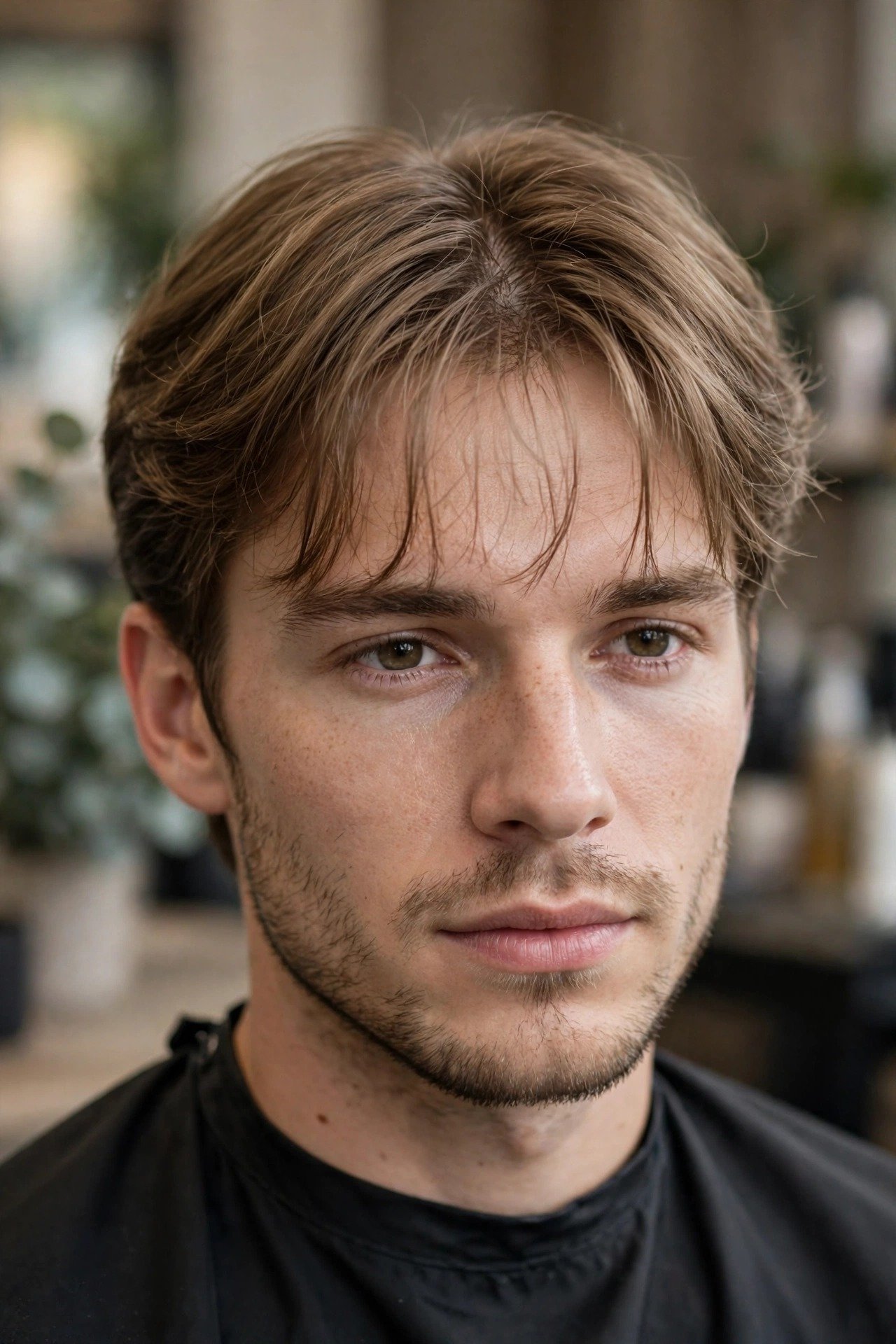
A middle part with a wispy fringe is the softest, lightest version of the style. The fringe is cut into fine, feathery pieces that fall gently over the forehead on both sides of the centre part, creating a delicate frame that never feels heavy. It suits round, oval and heart-shaped faces, and it is ideal for fine hair, because the wispy texture adds the illusion of movement without needing much density. This is a gentle, approachable cut that softens strong features and suits men who prefer a lighter, more natural finish.
Ask for a centre part with the fringe cut to three to four inches and thinned into wispy, feathered pieces, using point cutting or a razor to keep the ends light. Ask your barber to keep the layers soft and to avoid a blunt line across the forehead, and to keep the sides at a similar length so the wispy finish reads consistently. Tell them you want a light, feathery middle part, and ask them to show you how the fringe should fall when it is dry.
Style the wispy fringe middle part by applying a small amount of volumising mousse to damp hair and blow-drying the fringe gently with your fingers, lifting at the roots. A tiny amount of light styling cream will define the wispy ends without weighing them down. Trim every four to five weeks to keep the feathered ends fresh, and avoid heavy products entirely — waxes and thick clays will clump the wispy pieces together and destroy the lightness. A wide-tooth comb used gently each morning will keep the wispy fringe separated without pulling the delicate pieces out of place.
23. Middle Part for Thick Hair

Thick hair and a middle part are a natural match, because the density gives the fringe real presence and weight. The centre part splits the volume evenly, so each side falls in a full, substantial curtain that frames the face with authority. It suits oval, square and rectangular faces, and it works on straight, wavy and curly thick hair alike. The key is managing the bulk — without the right cutting, thick hair can overwhelm the part, but with proper layering it becomes the most impressive version of the style.
Ask for a centre part with the fringe at four to six inches, cut with long layers and plenty of internal weight removal so the hair falls rather than puffs out. Ask your barber to use thinning shears through the interior and to point-cut the ends, and to keep the sides textured or faded so the bulk is controlled. Tell them your hair is thick and you want the middle part to sit flat and fall naturally, not stand up or spread wide. Ask them to check the cut once the hair is fully dry, because thick hair often sits differently when dry.
Style a thick-hair middle part by applying a smoothing cream to damp hair and blow-drying the fringe outward with a round brush, using enough heat to control the volume. A small amount of matte clay will hold the shape without adding bulk. Trim every four to five weeks to keep the weight under control, and use a moisturising shampoo and conditioner so the thick fringe stays soft, manageable and free of frizz. Drying the hair in sections with a round brush will tame the thickest areas and stop the fringe from puffing out at the sides.
24. Middle Part for Fine Hair
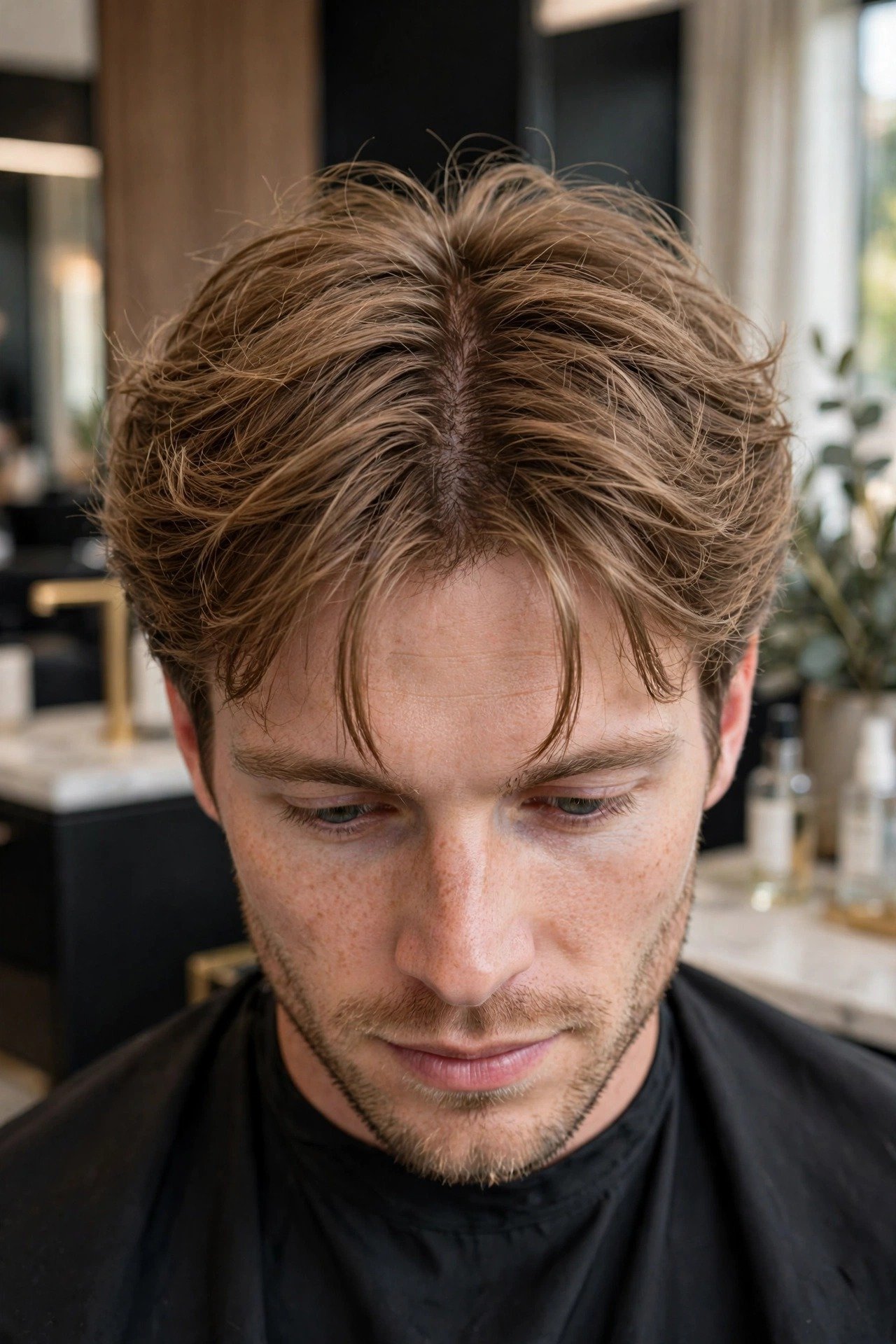
A middle part can work beautifully on fine hair, provided the cut is designed to create volume rather than expose thinness. The centre part splits the hair evenly, and with the right layering and styling the fringe gains lift and movement that makes the hair look fuller than it is. It suits oval, square and heart-shaped faces, and it is best kept at a shorter to medium length, because very long fine hair tends to fall flat. This is a smart, flattering option for men who want the curtain look without needing thick hair to pull it off.
Ask for a centre part with the fringe at three to four inches, cut with short layers and a blunt finish at the ends so the hair looks denser. Ask your barber to avoid thinning the fringe, which would remove the little volume you have, and to keep the sides neat and slightly tapered so the top looks fuller by contrast. Tell them your hair is fine and you want maximum fullness from the middle part, and ask for a cut that adds texture without removing weight.
Style a fine-hair middle part by applying volumising mousse to the roots of damp hair, then blow-drying the fringe upward and outward with a round brush to build lift. A dusting of texture powder at the roots will add grip and fullness that lasts all day. Trim every four weeks to keep the blunt ends looking thick, and use a volumising shampoo while avoiding heavy conditioners, which will weigh fine hair down and flatten the part. Washing the fringe separately on non-wash days with a little dry shampoo will keep the volume up without a full wash.
25. Middle Part for Thinning Hair

A middle part can be a surprisingly good choice for thinning hair, because the even split distributes what hair you have across the whole forehead rather than exposing a single thin area. With the fringe kept at a medium length and styled forward and outward, the part creates the illusion of coverage and fullness. It suits oval and square faces, and it works best when the hair is still thick enough at the front to form a fringe. The trick is keeping the cut textured and the styling light, so the hair looks natural rather than combed over.
Ask for a centre part with the fringe at three to four inches, cut with light texture and a slightly uneven finish so the hair does not sit in one flat sheet. Ask your barber to avoid a harsh, straight part line, which can expose the scalp, and to keep the sides neat and tapered so the top looks fuller. Tell them your hair is thinning and you want a middle part that maximises coverage, and ask them to cut the fringe dry so they can see exactly how it falls.
Style a thinning-hair middle part by applying volumising mousse or a thickening spray to damp hair, then blow-drying the fringe forward and outward with your fingers for lift. A light dusting of hair fibres or texture powder at the part line can add instant fullness. Trim every four weeks to keep the shape, and use a thickening shampoo while avoiding heavy oils and waxes, which will separate the hair and expose the scalp. A matte styling powder worked into the roots will give instant grip and make the fringe look noticeably fuller within seconds.
26. Middle Part for Round Faces
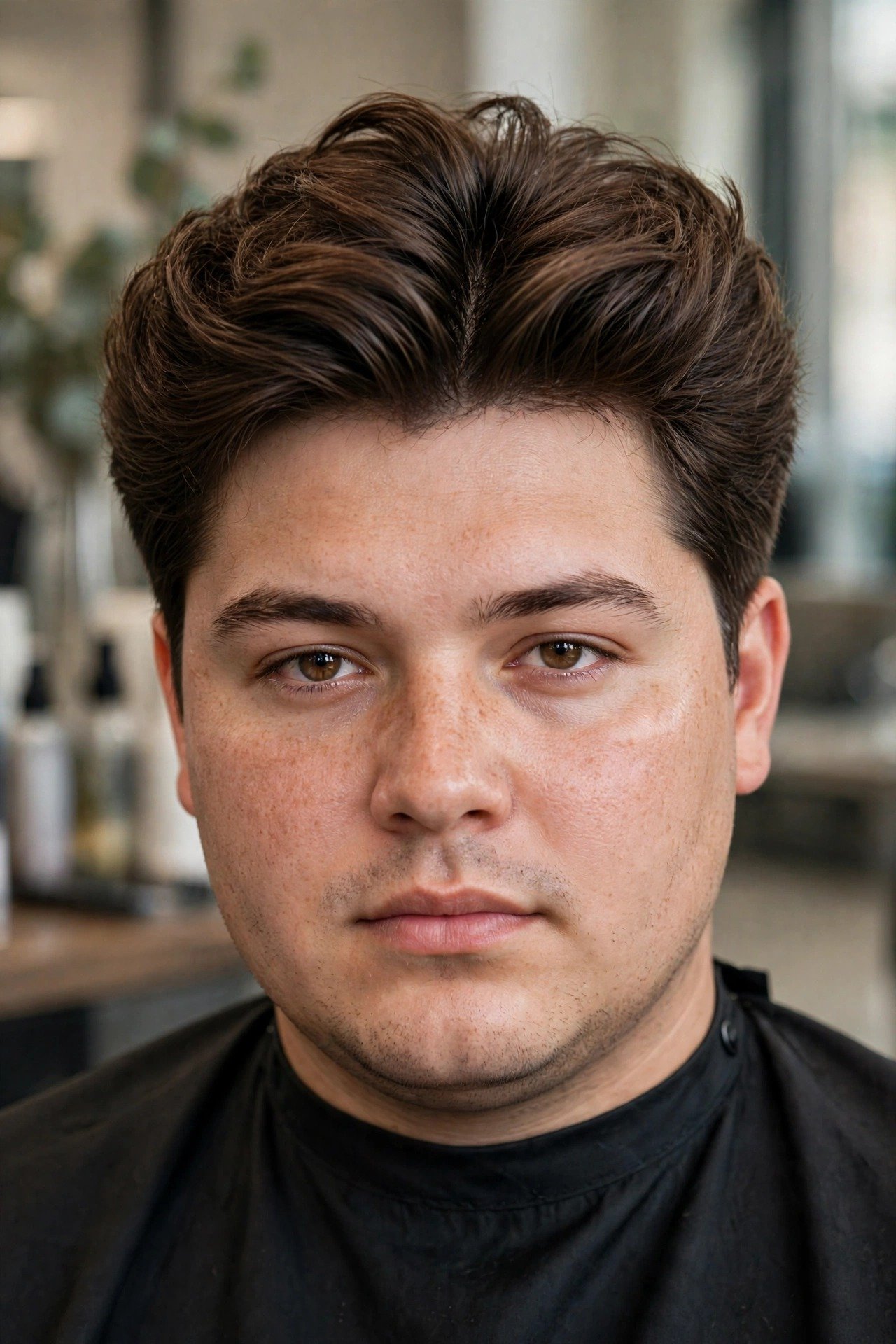
A middle part is one of the best haircuts for a round face, because the centre parting and the height on top work together to lengthen the face visually. The fringe falls on both sides of the face, creating vertical lines that draw the eye up and down rather than across, and the volume at the crown adds the height that balances rounder proportions. It suits straight, wavy and curly hair, and it works best when the fringe is kept at a medium length with plenty of lift at the roots.
Ask for a centre part with the fringe at four to five inches, cut with layers that build height at the crown and keep the sides neat and close. Ask your barber to avoid width at the sides, which would make the face look rounder, and to keep the fringe long enough to frame the face without covering the cheekbones. Tell them you have a round face and want the middle part to add length, and ask for the top to be cut so it can be styled upward for extra height.
Style a round-face middle part by blow-drying the fringe upward and outward with a round brush, building as much root lift as possible, and finishing with a volumising mousse or texture powder. Keep the sides flat and neat so the height on top is the focus. Trim every four to five weeks to maintain the shape, and avoid letting the sides grow wide, because width at the sides will undo the lengthening effect of the part. Keeping the fringe slightly longer at the front will draw the eye downward and strengthen the lengthening effect even further.
27. Middle Part for Oval Faces
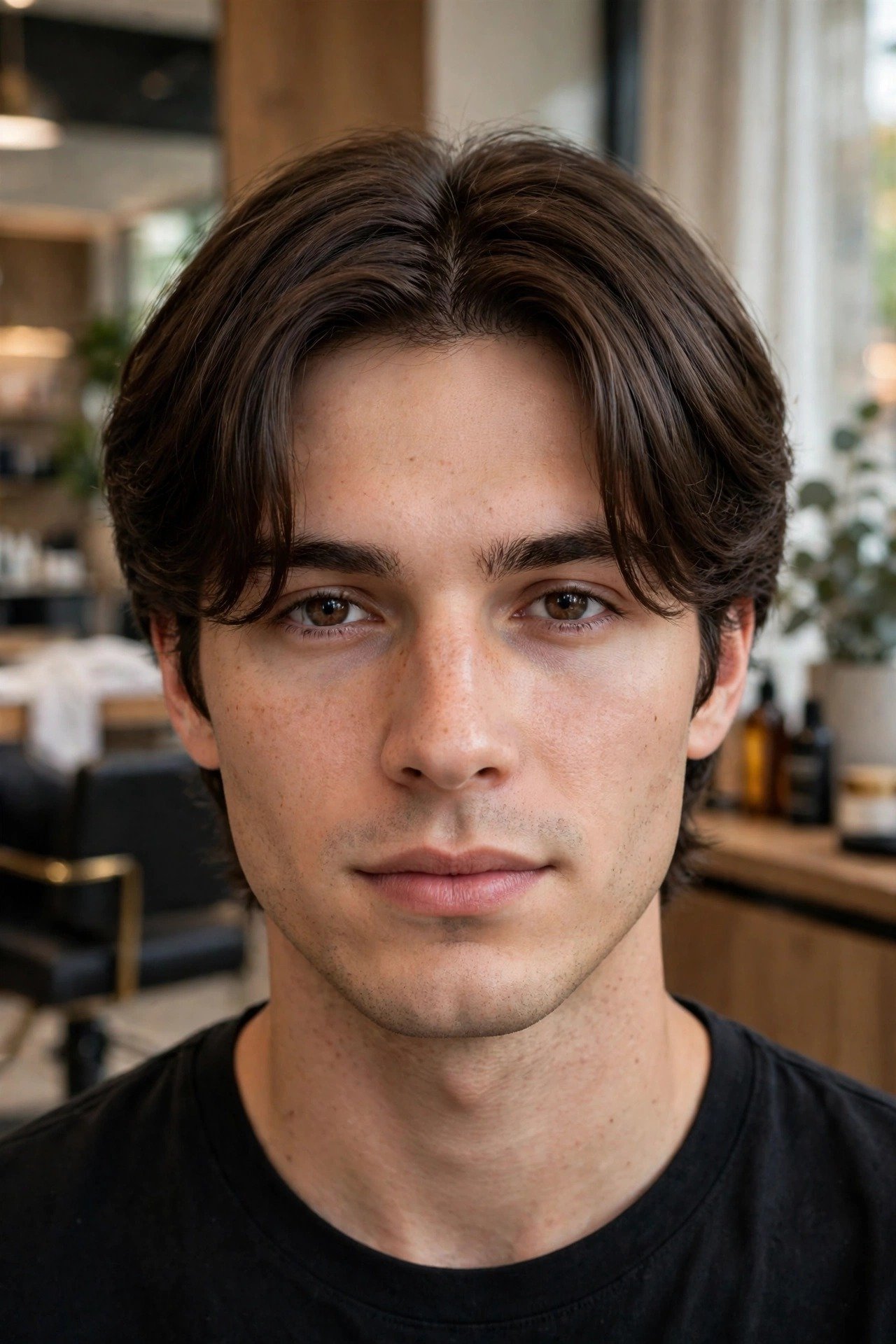
An oval face is the ideal canvas for a middle part, because the balanced proportions of the face match the symmetry of the centre parting perfectly. Almost any variation works — long or short, textured or sleek, faded or natural — and the part simply enhances features that are already well proportioned. It suits every hair type, from straight to curly, and it is the one face shape where you can genuinely choose the middle part you like best without worrying about whether it will flatter you. The only rule is to keep the fringe long enough to frame the face properly.
Ask for a centre part with the fringe at four to five inches, and choose the finish you prefer — textured layers for a modern look, a clean taper for something classic, or a fade for a sharper edge. Ask your barber to keep the part centred and the fringe even on both sides, and to cut the hair so it falls naturally without heavy product. Tell them you have an oval face and want to make the most of the symmetry, and let them recommend the variation that suits your hair texture best.
Style an oval-face middle part by blow-drying the fringe outward with a round brush and finishing with a small amount of matte clay or styling cream, depending on the finish you want. The versatility of the face shape means you can change the styling daily — sleek one day, messy the next — without the cut ever looking wrong. Trim every four to five weeks, and keep the hair conditioned so the fringe always falls cleanly on both sides of the part. A light texturising spray on damp hair will add gentle movement and stop the versatile cut from ever looking flat or plain.
28. Middle Part for Square Faces
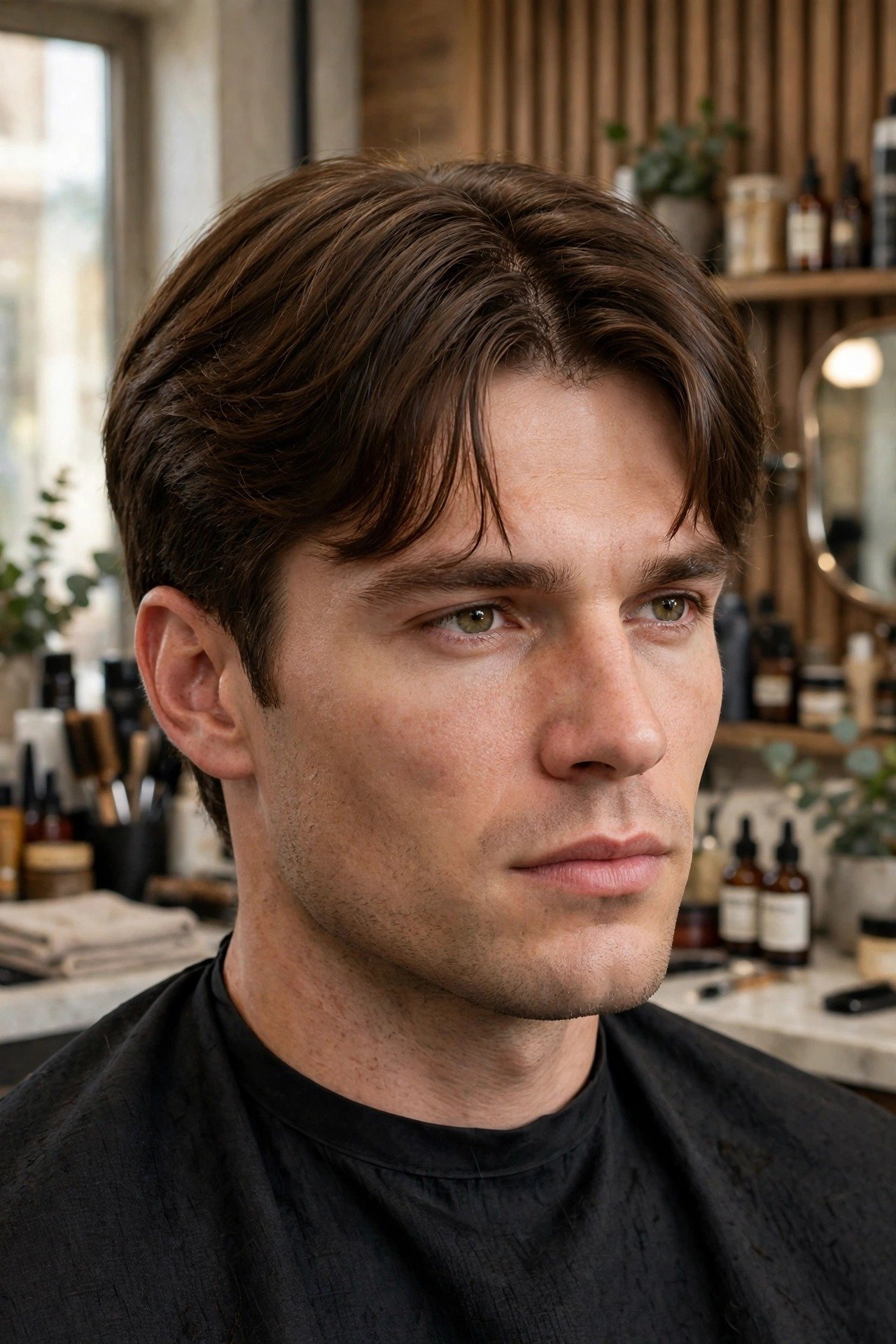
A middle part is an excellent choice for a square face, because the soft, even fringe balances the strong jawline and angular features that define the shape. The centre parting draws the eye to the middle of the face, while the curtain of hair on each side softens the corners of the jaw and forehead. It suits straight, wavy and curly hair, and it works best with a slightly longer fringe that has some movement, because a stiff, short fringe can emphasise the angles rather than softening them.
Ask for a centre part with the fringe at four to six inches, cut with soft layers that curve gently away from the face. Ask your barber to avoid a sharp, geometric finish at the front, and to keep the sides textured or tapered rather than harshly faded, so the overall silhouette stays soft. Tell them you have a square face and want the middle part to soften your jawline, and ask for the fringe to be cut so it falls naturally over the corners of the forehead.
Style a square-face middle part by blow-drying the fringe outward with a round brush, encouraging a soft curve on each side, and finishing with a light styling cream for a natural, touchable finish. Avoid slicking the hair flat or using heavy gel, which will emphasise the angles of the face. Trim every five weeks to keep the layers soft, and use a moisturising conditioner so the fringe stays smooth and falls gently against the face. A round brush used with a gentle outward curve will keep the fringe soft and stop it from sitting too flat against the forehead.
29. Middle Part with a Beard
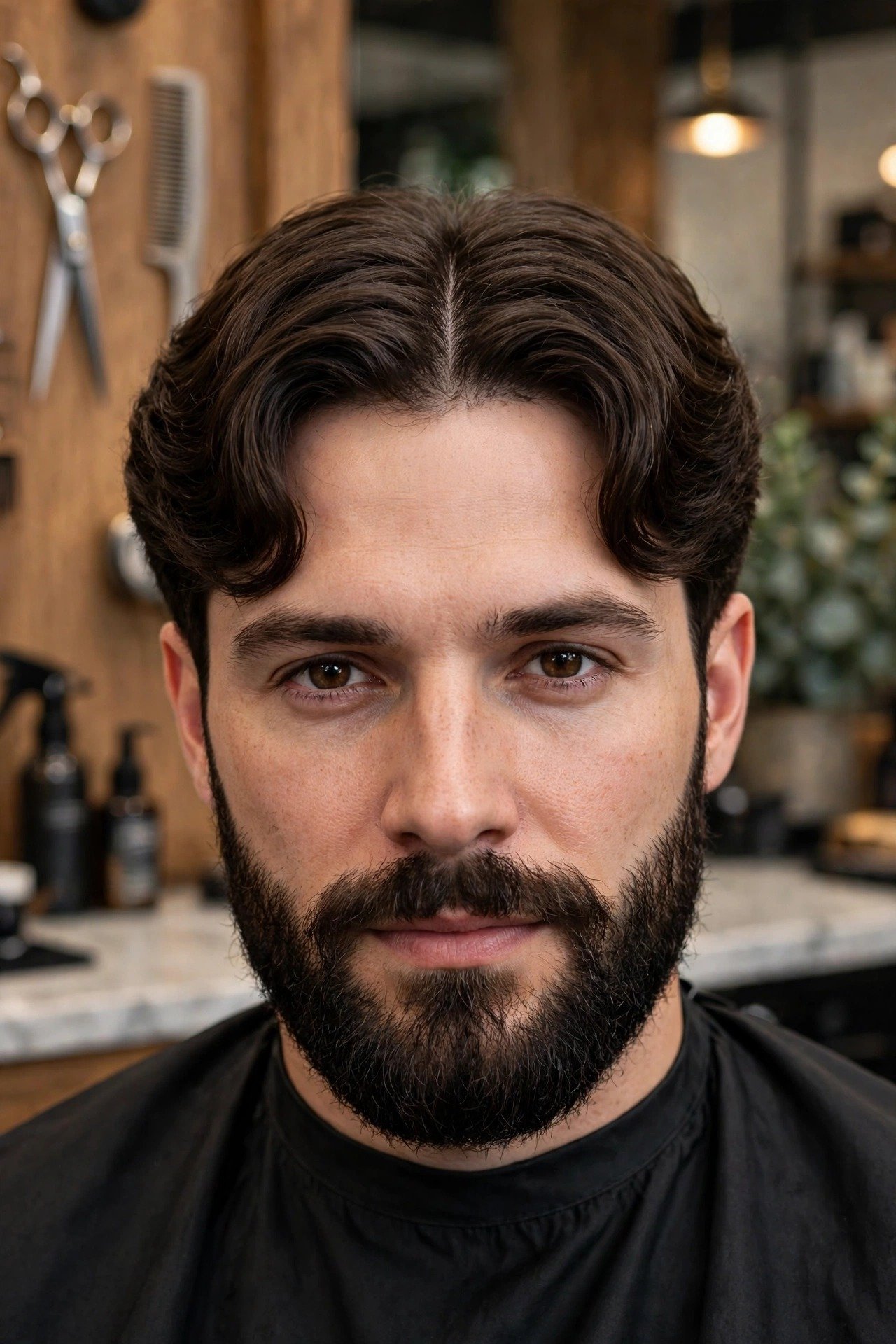
A middle part with a full beard is a powerful combination, because the symmetrical fringe on top balances the weight of the beard below. The centre parting frames the upper face while the beard frames the jaw, creating a balanced, masculine silhouette that looks deliberate and well-groomed. It suits oval, square and rectangular faces, and it works with straight, wavy and curly hair. The key is keeping both the hair and the beard well maintained, because the contrast between a tidy fringe and an unkempt beard will undo the whole look.
Ask for a centre part with the fringe at four to five inches, and tell your barber you are growing or keeping a full beard so they can balance the two. Ask for the hair to be cut with soft layers that fall evenly on both sides, and for the beard to be shaped with clean cheek lines and a defined neckline. Tell them you want the hair and beard to work as one look, and ask them to blend the sideburns into the beard so there is no harsh break between the two.
Style the middle part and beard together by blow-drying the fringe outward with a round brush and finishing with matte clay, then applying beard oil and combing the beard downward into shape. Trim the hair every four to five weeks and tidy the beard weekly, keeping the cheek lines clean and the length even. Wash the beard with a dedicated beard wash and condition the fringe regularly, so both halves of the look stay healthy and intentional. Combing the beard downward each morning and the fringe outward will keep the two halves of the look balanced and tidy all day.
30. Middle Part with a Short Beard
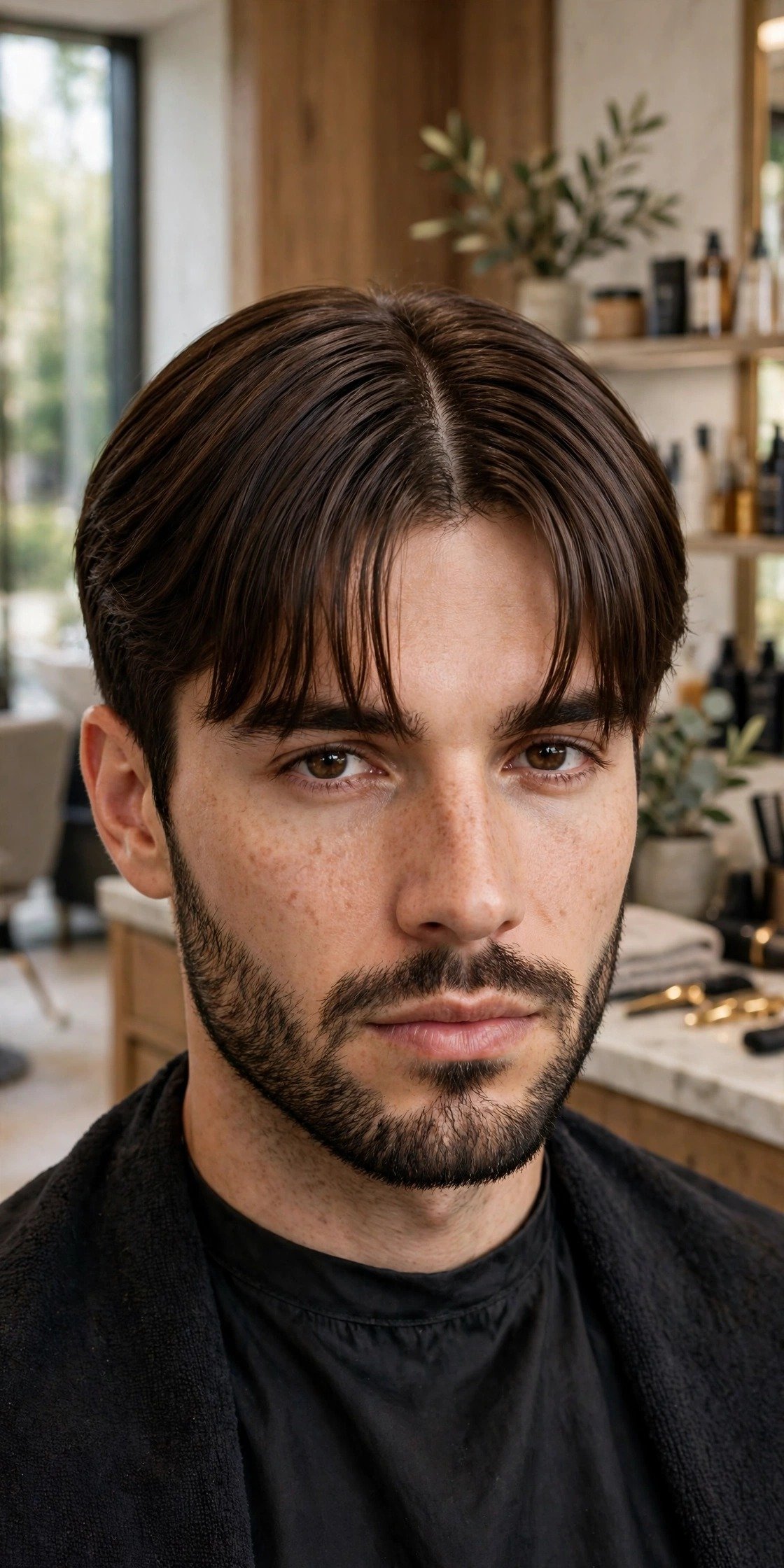
A middle part with a short beard is the most versatile pairing of hair and facial hair, and it suits almost every man. The short, neatly trimmed beard adds definition to the jaw without overwhelming the face, while the centre-parted fringe keeps the top soft and balanced. It suits oval, square and round faces, and it works with every hair type. This is the combination to choose when you want the ruggedness of a beard and the polish of a middle part in one clean, everyday look.
Ask for a centre part with the fringe at three to five inches, and a short boxed beard kept to around half an inch with clean, sharp lines. Ask your barber to shape the beard with a defined cheek line and a neat neckline, and to blend the sideburns into the beard so the transition looks seamless. Tell them you want the beard short and tidy rather than full, and ask for the fringe to be textured lightly so it sits naturally over the forehead.
Style the middle part and short beard by blow-drying the fringe outward and finishing with a small amount of styling cream, then applying a drop of beard oil and brushing the beard into shape. The short beard needs a tidy-up every week to keep the lines sharp, while the hair needs a trim every four to five weeks. Keep both the hair and the beard washed and conditioned, because a clean, well-kept short beard is what makes this pairing look so polished. A beard balm applied after washing will keep the short beard soft and help it hold its neat, boxed shape through the day.
31. Middle Part with a Goatee
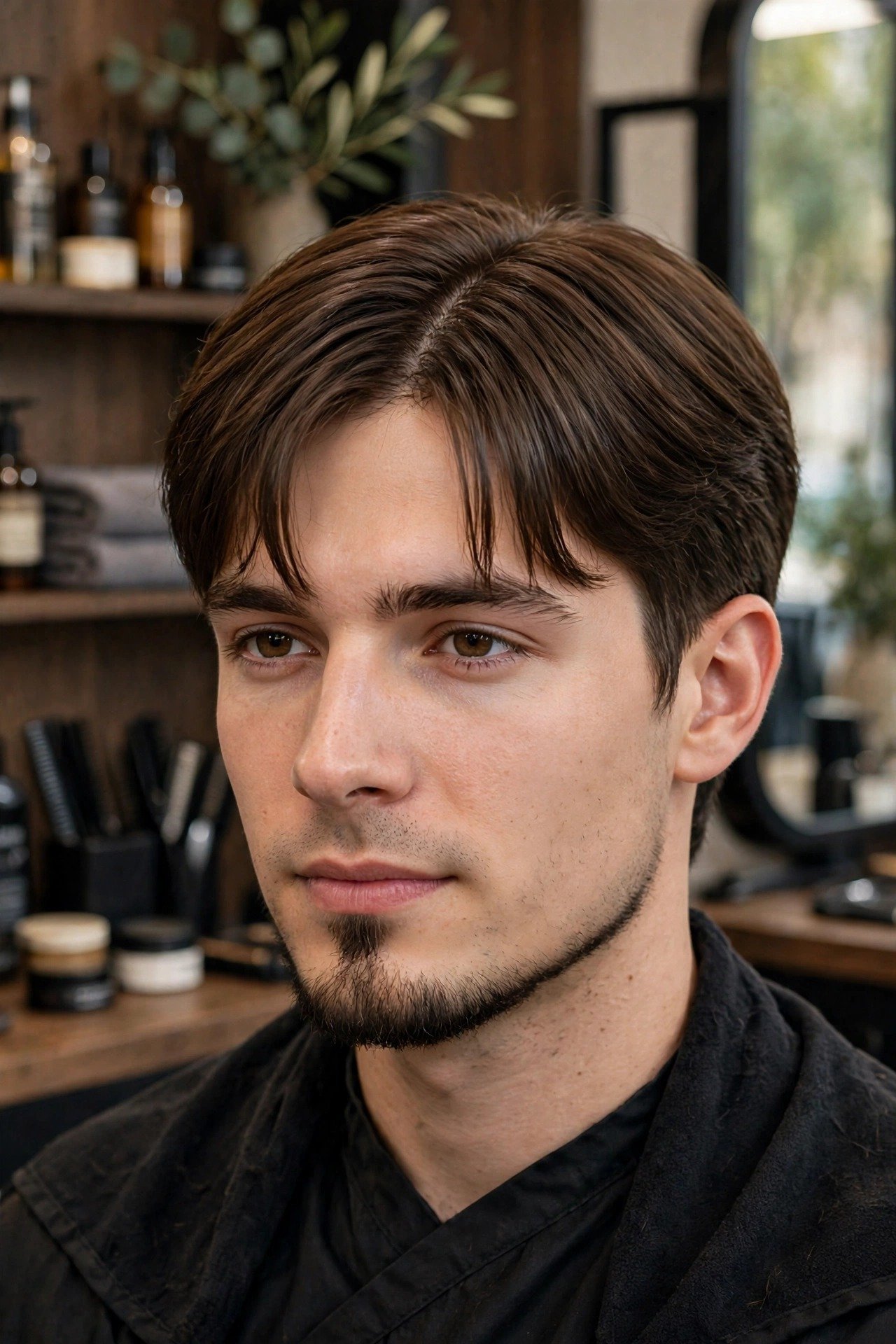
A middle part with a goatee is a sharp, distinctive pairing that suits men who want facial hair without the weight of a full beard. The goatee draws attention to the chin and mouth, while the centre-parted fringe frames the upper face, creating a balanced look that feels both classic and modern. It suits oval, square and diamond faces, and it works best on straight or wavy hair with medium thickness. The combination is clean, deliberate and easy to maintain, which is why it has remained popular for decades.
Ask for a centre part with the fringe at four to five inches, cut with soft layers that fall evenly on both sides, and a neatly shaped goatee with clean lines around the mouth and chin. Ask your barber to keep the goatee connected to the moustache and to tidy the cheeks so the face stays clean above the goatee. Tell them you want the hair and goatee to balance each other, and ask for the sideburns to be kept short so the goatee stands out as the feature.
Style the middle part and goatee by blow-drying the fringe outward with a round brush and finishing with matte clay, then applying beard oil to the goatee and combing it into shape. The goatee needs a tidy-up every few days to keep the edges sharp, while the hair needs a trim every four to five weeks. Keep the skin around the goatee moisturised and the fringe conditioned, so the whole look stays clean, sharp and well-groomed. A precision trimmer kept at home will let you touch up the goatee edges between barber visits without losing the shape.
32. Middle Part with Long Hair
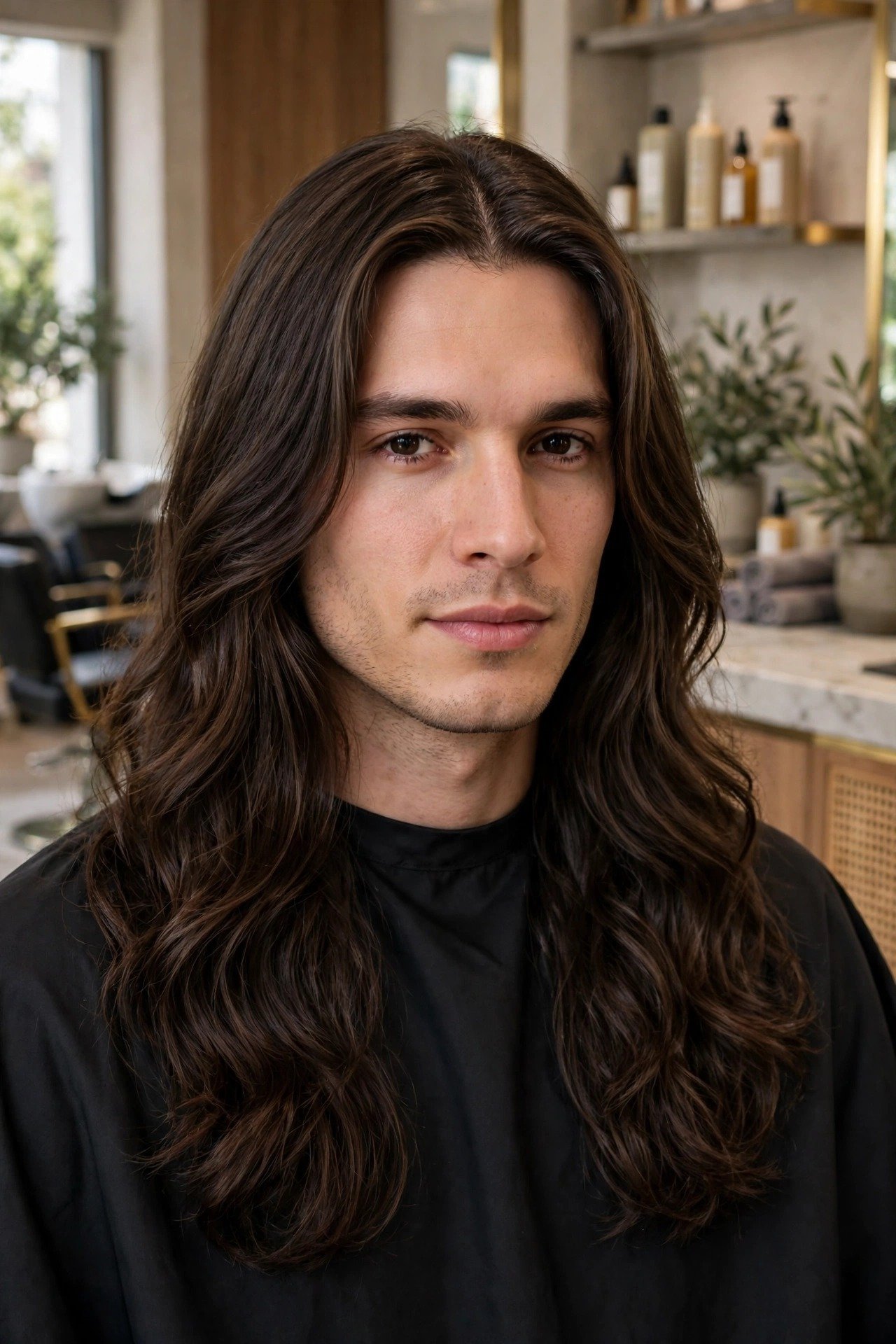
A middle part with long hair is the ultimate version of the style, with the centre parting running through hair that reaches past the shoulders. The length gives the hair real weight and movement, and the even split creates a striking, symmetrical frame that suits men who are confident enough to grow their hair out properly. It suits oval, square and long faces, and it needs medium to thick hair with a straight or wavy texture that can carry the length without looking thin or straggly.
Ask for a centre part with the hair grown to shoulder length or beyond, cut with long layers that remove weight without removing length. Ask your barber to keep the ends healthy with regular dusting and to avoid short layers at the front, which would break up the long curtain shape. Tell them you are growing your hair long with a centre part, and ask for the part to be cut in cleanly so the two sides fall evenly all the way down. Ask for the layers to be cut with the hair dry, so the true length and fall are visible during the cut.
Style long middle-parted hair by applying leave-in conditioner to damp hair and blow-drying it gently with a round brush, or letting it air-dry for a more natural finish. A drop of hair oil on the ends keeps the lengths glossy and frizz-free. Trim every eight weeks to remove split ends without losing length, and tie the hair back loosely when you sleep to prevent tangles and breakage overnight. A boar-bristle brush used gently from the ends upward will distribute natural oils and keep the long centre-parted hair glossy.
33. Middle Part with a Quiff
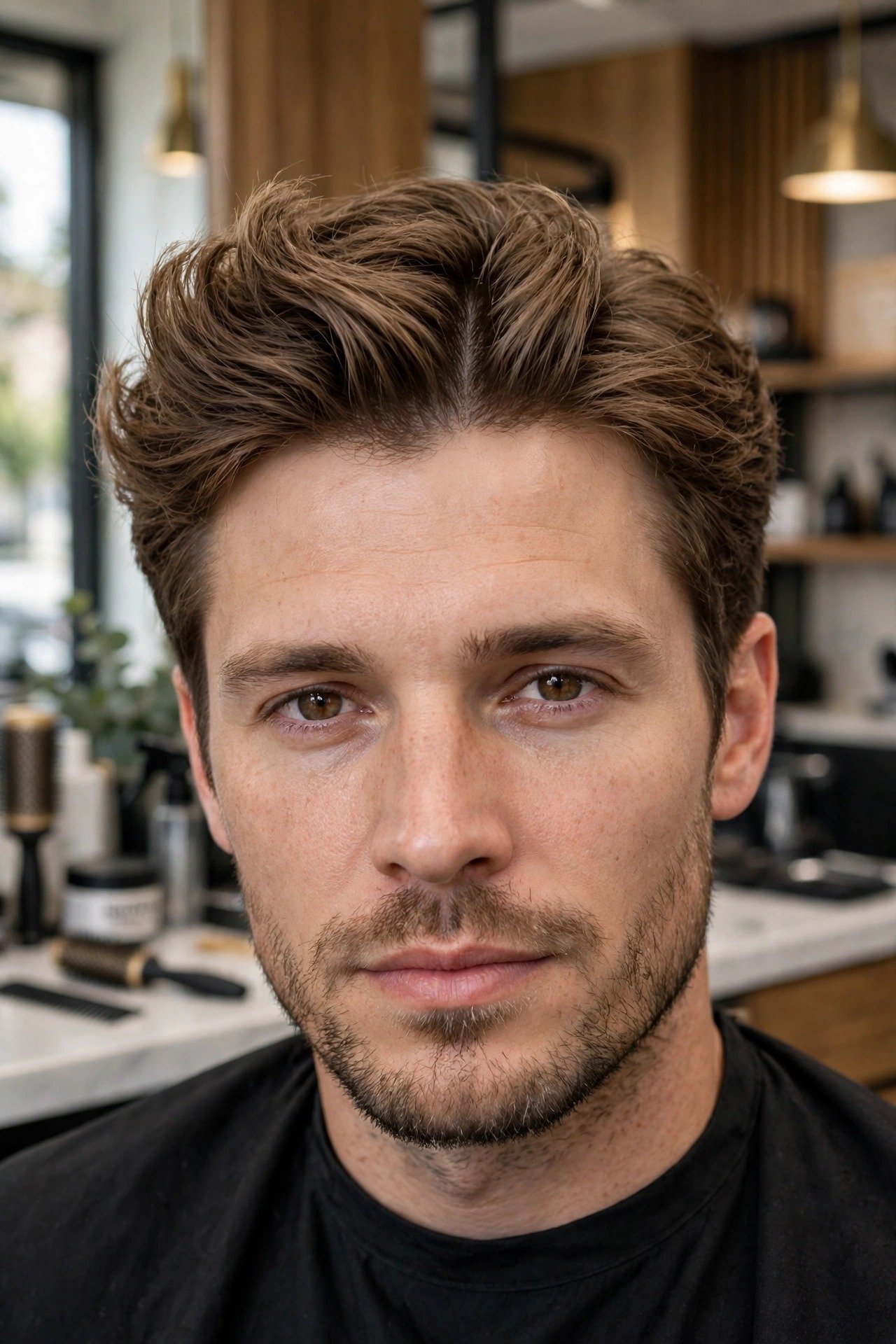
A middle part with a quiff is a creative hybrid that combines the symmetry of a centre parting with the height and drama of a quiff. The front of the fringe is lifted up and back on each side of the part, creating a voluminous, swept shape that adds real presence to the face. It suits oval, square and rectangular faces, and it works best on thick, straight or wavy hair that can hold volume. This is a bold, statement version of the middle part for men who like their hair to have height and attitude.
Ask for a centre part with the fringe at four to five inches, cut with layers that support volume at the front, and ask your barber to show you how to lift each side into a quiff shape. Keep the sides tapered or faded so the height on top stands out, and ask for texture through the fringe so the quiff holds its shape. Tell them you want a middle part with quiff volume at the front, not a flat curtain, and ask them to cut the fringe so it can be styled upward on both sides.
Style the quiff middle part by applying volumising mousse to damp hair, then blow-drying the front upward and outward on each side with a round brush, building height at the roots. Finish with a strong-hold matte clay, working it through the fringe to lock the lift in place. Trim every four weeks to keep the shape, and use a volumising shampoo so the hair stays light enough to hold the quiff all day. A final blast of cool air from the dryer will set the lift and help the quiff survive wind, hats and long days.
34. Middle Part with Slicked Back Sides
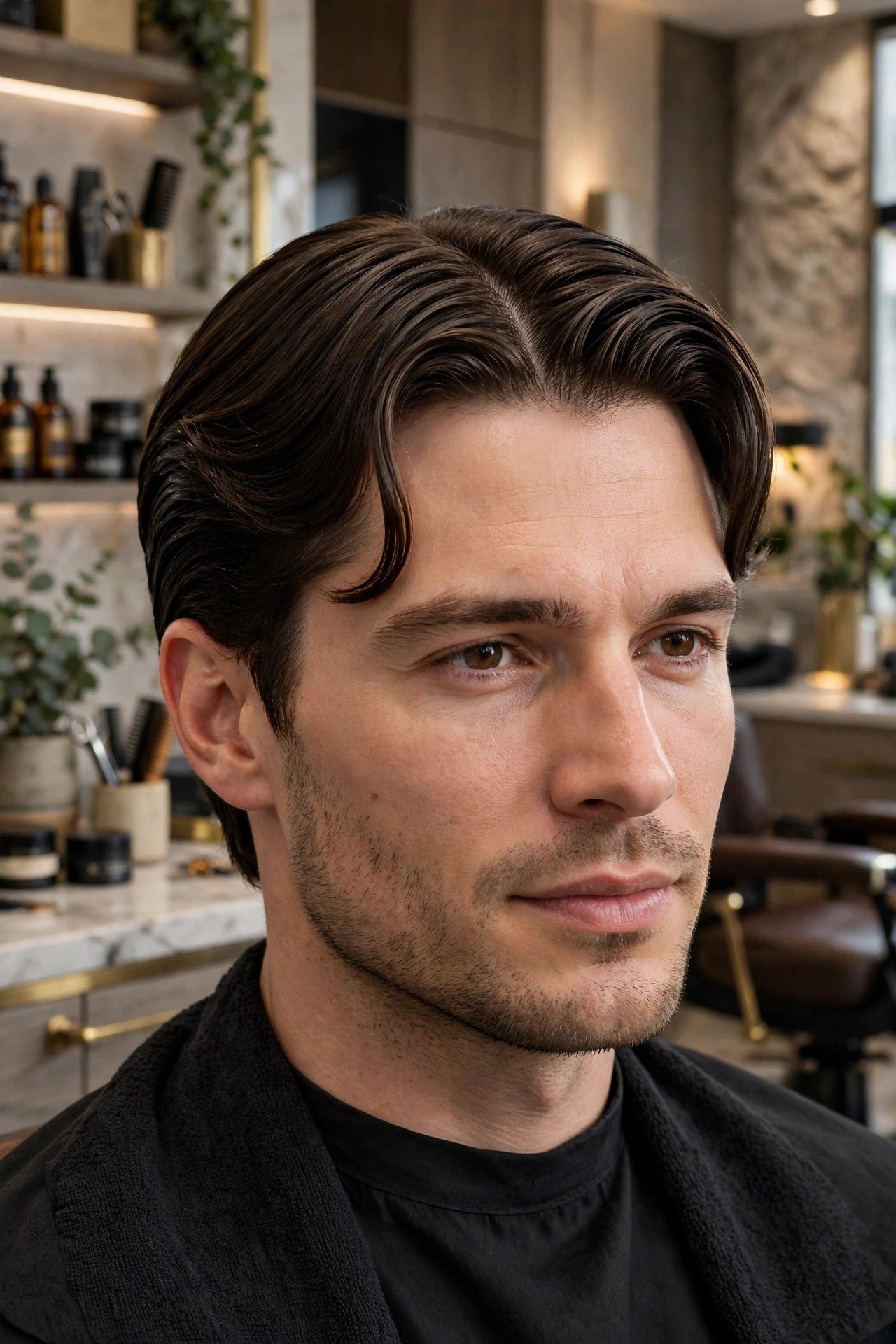
A middle part with slicked back sides is a polished, old-school variation that feels both vintage and modern. The centre-parted fringe falls naturally on both sides of the face, while the sides are combed back smoothly, creating a clean, groomed silhouette that works beautifully for formal occasions. It suits oval and square faces, and it is at its best on straight, fine to medium hair that can be smoothed easily. This is the middle part to choose when you want a refined, gentlemanly finish with a touch of retro charm.
Ask for a centre part with the fringe at four to five inches, and the sides left long enough to comb back, around two to three inches. Ask your barber to taper the sides gently and to cut the fringe with clean, soft layers so it falls evenly. Tell them you want the sides slicked back and the fringe centre-parted, and ask for a finish that can be worn smooth with pomade or left natural with a lighter product. Ask your barber to check the balance from behind as well, because the slicked sides should look as neat from the back as from the front.
Style the slicked-back sides by applying pomade or styling cream to damp hair, combing the sides straight back and the fringe into its centre part. Blow-dry the sides flat with a paddle brush for a smooth finish, and add a little extra product at the front to keep the part clean. Trim every four to five weeks, and use a smoothing shampoo and conditioner so the hair stays sleek, shiny and easy to comb back. A small tin of pomade kept in your bag will let you smooth the sides back into place whenever the style loosens during the day.
35. Middle Part with a Straight Fringe
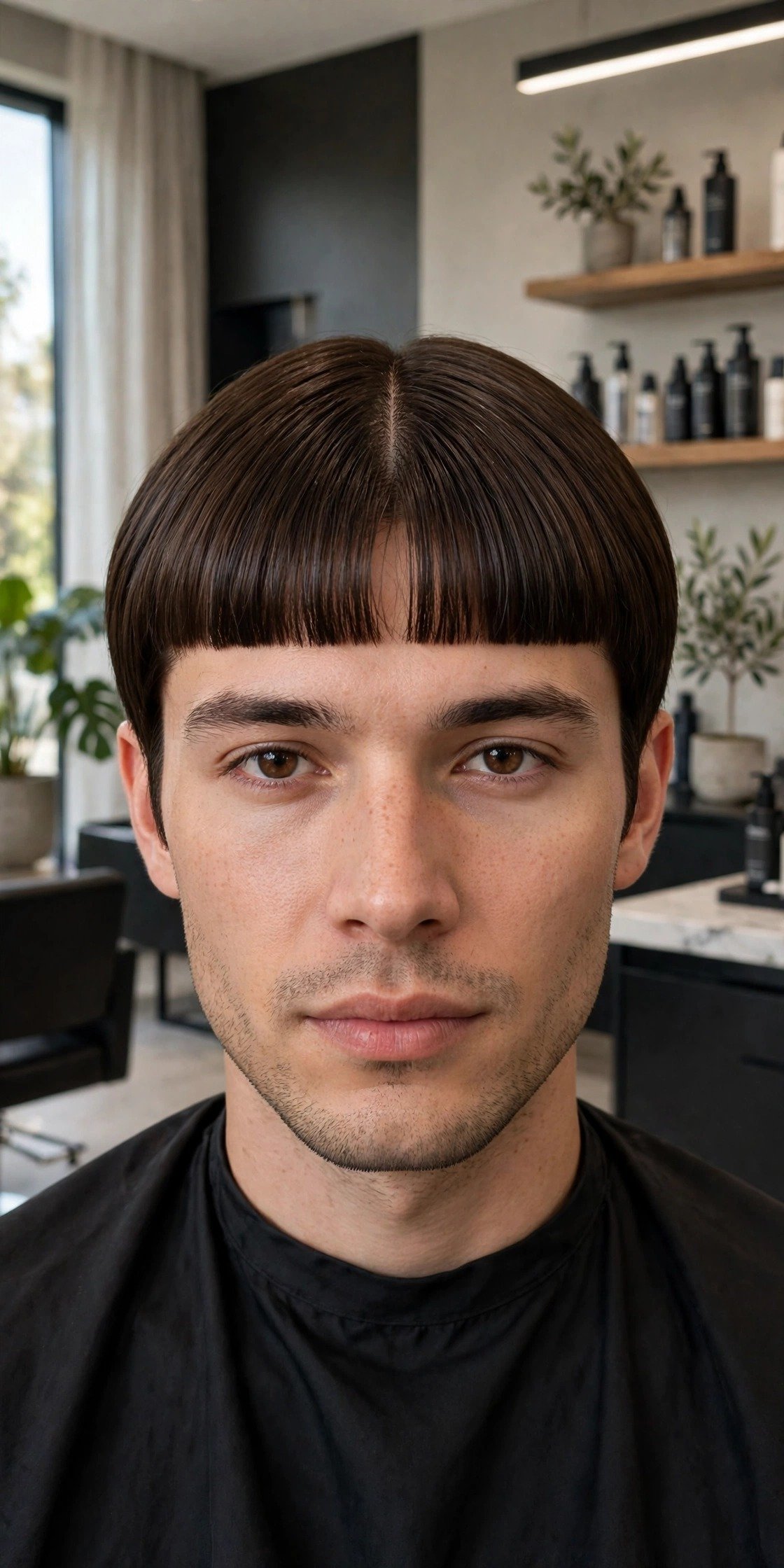
A middle part with a straight fringe is a clean, graphic take on the centre parting. The fringe is cut straight across at eyebrow level, then split down the middle, creating a sharp, symmetrical frame that feels modern and slightly editorial. It suits oval and heart-shaped faces, and it works best on straight hair with medium thickness, which holds the clean line. This is a precise, fashion-forward version of the middle part for men who like their hair to look sharp, deliberate and a little bit different.
Ask for a centre part with the fringe cut straight across at eyebrow level, around three inches, with a clean, blunt finish and minimal layering. Ask your barber to keep the sides neat and tapered, and to cut the fringe while it is dry so the straight line sits exactly where it should. Tell them you want a straight-across fringe split down the middle, not a layered curtain, and ask for the ends to be kept sharp rather than textured. A quick check in a hand mirror will confirm the line is even on both sides before you leave the chair.
Style the straight-fringe middle part by blow-drying the fringe forward and flat with a paddle brush, then splitting it cleanly down the middle with a comb. A small amount of smoothing cream will keep the line sharp and the hair frizz-free. Trim every three to four weeks, because a blunt fringe shows regrowth quickly and the straight line needs to stay crisp to look its best. A flat iron passed lightly over the fringe on special occasions will sharpen the straight line and give the cut a polished, editorial finish.
36. Modern Curtain Middle Part
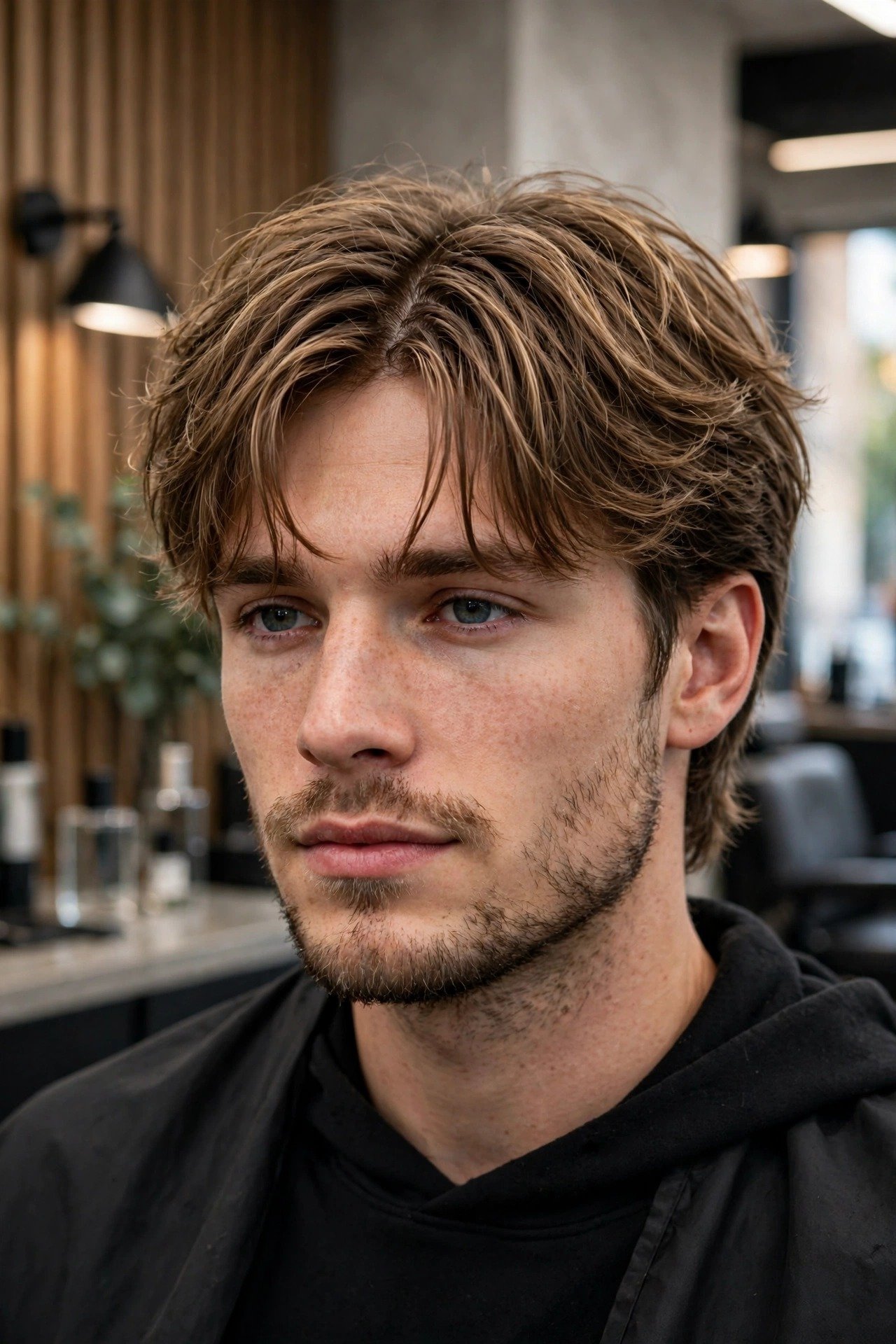
The modern curtain middle part is the 2026 update of the classic, and it is the version most barbers are cutting right now. It keeps the centre parting and the cheekbone-length fringe of the original, but adds contemporary texture, a cleaner taper on the sides and a more polished finish that suits modern life. It suits every face shape and almost every hair type, which is why it has become the default curtain cut of the year. If you want one middle part that does everything, this is the one to choose.
Ask for a centre part with the fringe at four to five inches, cut with modern texture through the front and a clean taper on the sides. Ask your barber to point-cut the ends for a soft, lived-in finish, and to keep the back neat so the silhouette looks intentional from every angle. Tell them you want the modern curtain — textured, tapered and up to date — and ask them to show you two ways to style it, one messy and one polished. Ask them to keep the fringe even on both sides, because symmetry is what makes the modern curtain look so clean.
Style the modern curtain by blow-drying the fringe outward with a round brush and finishing with matte clay for a textured look, or with styling cream and a comb for a polished finish. The versatility of the cut means you can change the styling to suit the day. Trim every four to five weeks to keep the texture and taper fresh, and use a lightweight shampoo and conditioner so the fringe stays soft, healthy and easy to style. Trying the messy finish on weekends and the polished finish for work will show off just how versatile this modern curtain really is.
How to Style and Maintain a Middle Part at Home

Start with freshly washed, towel-dried hair and a clear centre line. Use the tip of a fine-tooth comb to draw a straight part from the front hairline back to the crown, following the line of your nose upward. Work in small sections and keep the line as straight as you can — a wobbly part is the most common mistake and it shows immediately. If your hair has a strong natural cowlick, part it while it is still damp, because wet hair is far easier to train into a new direction than dry hair. If the part keeps drifting, a little styling cream worked into the roots while the hair is damp will help it hold.
Apply a pea-sized amount of sea salt spray or a light volumising mousse through the lengths, then blow-dry the fringe forward and outward on each side, using a round brush or your fingers to encourage the hair to fall away from the part. Dry each side in the opposite direction to the way it will sit, which builds root lift and stops the fringe from collapsing flat against the forehead. Keep the dryer on a medium heat and finish with a short blast of cool air to lock the shape in place. Take your time with this step, because the drying technique decides whether the fringe falls cleanly or collapses flat.
Once the hair is dry, work a small amount of matte clay or styling cream between your palms and push it through the fringe from root to tip, shaping each side so it curves gently away from the face. Use your fingers rather than a comb for a natural, textured finish, and only reach for the comb if you want a sleeker, more polished result. A light mist of flexible-hold hairspray will keep the part in place without making the hair feel stiff or crunchy. Less is more here — you can always add another fingertip of product, but removing too much means starting over with a wash.
Maintain the look with a trim every four to six weeks, keeping the fringe length while tidying the sides and cleaning up the neckline. Wash with a sulphate-free shampoo two or three times a week and condition the lengths so the fringe stays soft and manageable. If you are growing the style out, resist the urge to cut the fringe — push through the awkward stage with a little extra product and a headband on bad days, and within a few weeks the length will fall naturally into place. Regular trims during the grow-out keep the shape tidy without sacrificing the length you are working toward.
Frequently Asked Questions
How long does my hair need to be for a middle part?
You need at least three to four inches of length on top for a middle part to work properly, because the fringe has to be long enough to fall on both sides of the part rather than sticking up. Shorter hair can be centre-parted, but the effect is subtle and needs more product to hold. For the classic curtain look, aim for four to five inches at the front, and for long curtains you will need six inches or more. If your hair is currently short, expect two to three months of growing before the fringe sits properly, and use a little extra product during the awkward in-between stage to train the part into place.
What face shapes suit a middle part?
A middle part suits almost every face shape, which is one of the reasons it has become so popular in 2026. Oval faces are the ideal match, because their balanced proportions mirror the symmetry of the centre parting. Square faces benefit because the soft fringe balances a strong jawline, while round faces gain a lengthening effect from the vertical lines of the part and the height on top. Long faces look best with a slightly shorter fringe and some width at the sides, and heart-shaped faces suit a longer curtain that balances a wider forehead. Your barber can adjust the length and texture to suit your exact features.
Does a middle part work with thin hair?
Yes, a middle part can work very well with thin or fine hair, provided the cut is designed to create volume rather than expose the scalp. Keep the fringe at three to four inches with a blunt finish at the ends, which makes the hair look denser, and avoid thinning the fringe, which removes the little volume you have. Style it with volumising mousse at the roots and a dusting of texture powder, and blow-dry the fringe upward and outward for lift. Avoid heavy oils and waxes, which will separate fine hair and expose the scalp, and ask your barber to keep the part line soft rather than razor-sharp.
Does a middle part work with curly hair?
A middle part works beautifully with curly hair, and it is one of the best ways to show off a natural curl pattern. Split down the middle, curls fall in a balanced cascade that frames the face and lets each curl form properly. You need at least four to six inches of length on top so the curls have room to shape themselves, and the cut should be done curl by curl while the hair is dry, so the shape follows your natural pattern. Style it with curl cream on wet hair, let it air-dry or use a diffuser, and never brush the curls dry, because that will turn definition into frizz.
Does a middle part work with thick hair?
Thick hair and a middle part are a natural match, because the density gives the fringe real presence and a full, substantial curtain on each side of the face. The key is managing the bulk — without the right cutting, thick hair can puff out and overwhelm the part, so your barber should remove weight from the interior with thinning shears and cut long layers through the fringe. A fade or taper on the sides will also help control the volume. Style it with a smoothing cream and a round brush, blow-drying the fringe outward to control the shape, and trim every four to five weeks so the weight never builds up too much.
What fade should I pair with a middle part?
The best fade depends on the look you want. A low fade is the safest and most versatile choice, keeping the sides tidy while the fringe stays soft and long, and it suits almost every face shape. A mid fade adds more structure and works well on thick hair, while a high fade creates a bold, high-contrast look that suits oval and square faces. A drop fade follows the shape of the head for a softer, sculpted finish, and a skin fade gives the sharpest possible contrast. If you are unsure, start with a low taper, which grows out gracefully and can be taken shorter at your next appointment.
What products should I use for a middle part?
The essential products for a middle part are a volumising mousse or sea salt spray for the styling base, a matte clay or styling cream for hold and definition, and a light hairspray for finishing. Sea salt spray adds texture and grip, especially for messy or wavy versions, while matte clay gives a natural hold without shine. Use a pea-sized amount — too much product will weigh the fringe down and flatten the part. Finish with a flexible-hold hairspray to keep the part in place without stiffness, and use a sulphate-free shampoo and a light conditioner so the hair stays healthy and easy to style every morning.
What should I ask my barber for a middle part?
Tell your barber you want a centre part with the fringe left at a specific length — four to five inches is the classic starting point — and explain the finish you want, whether that is textured, sleek, faded or natural. Mention your hair type and face shape, and ask them to cut the fringe while it is dry so they can see how it falls. Bring a photo of the exact style you like, because a picture removes all guesswork. Ask them to show you where your natural part sits and how to style the cut at home, so you can repeat the look yourself the next morning without a second appointment.
How do I grow out a middle part?
Growing out a middle part takes patience, but the style grows gracefully because the fringe simply gets longer on both sides. Expect two to three months to reach a classic curtain length from a short cut, and resist the urge to trim the fringe during that time — instead, ask your barber to tidy only the sides and neckline. Use a little extra product to train the part while the hair is short, and try a headband or a small amount of clay on bad days. Once the fringe reaches four inches it will start falling naturally, and from there the style only gets easier to wear and to style.
How often should I get a middle part trimmed?
Most middle part styles need a trim every four to six weeks, depending on the variation and how fast your hair grows. Faded versions need more frequent attention — a skin fade or high fade should be tidied every two to three weeks, while a low fade or taper can wait four to five weeks. Longer curtain styles are more forgiving and can stretch to six or eight weeks, because the length hides regrowth. Book regular appointments rather than waiting until the cut looks untidy, because a middle part relies on clean lines and balanced length, and both are lost quickly once the fringe grows past its ideal shape.
Conclusion
The middle part is far more than a passing trend — it is a genuinely versatile haircut that suits almost every face shape and hair type, and the thirty-six styles in this guide prove just how much range a simple centre line can offer. Whether you choose classic curtains, a sharp faded version, a textured modern take or a long flowing finish, the key is the same: find your natural centre, keep the fringe long enough to fall properly, and work with your hair texture rather than against it.
Take your favourite style from this guide to your barber, use the exact script provided, and give the cut a week or two to settle before you judge it. With the right products and a trim every four to six weeks, a middle part will reward you with a look that is sharp, symmetrical and effortlessly stylish all year long. Book the appointment, commit to the part, and enjoy one of the best haircuts of 2026. Your barber can fine-tune the length and texture to your face shape, so do not be afraid to ask for small adjustments at your next visit.