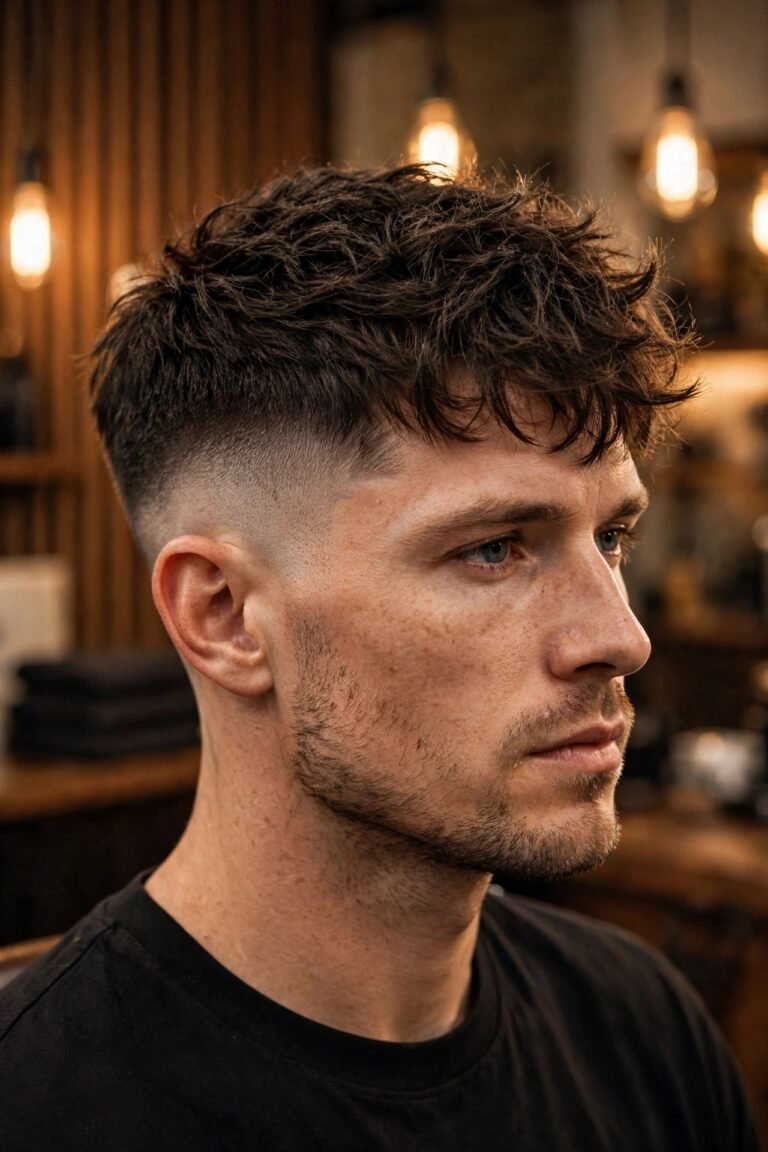
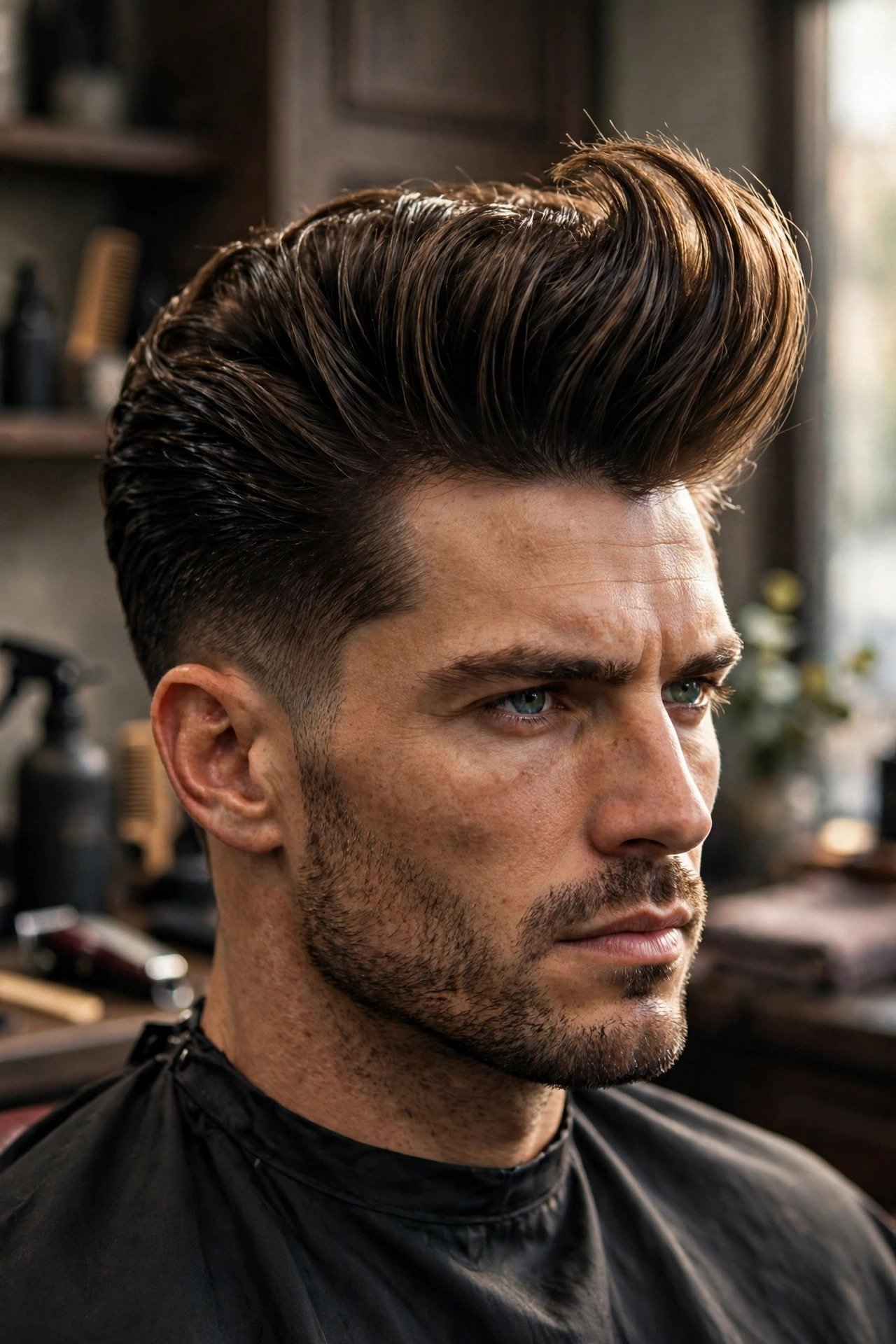
Pompadour Men 2026: 36 Classic, Modern Styles
The pompadour men are asking for in 2026 is the boldest classic haircut a man can wear — volume swept up and back on top, clean tapered sides, and a front that stands tall instead of lying flat. It is the Elvis classic gone modern, the barbershop favourite, the wedding and night-out showstopper, and the cut that turns thick hair and confident styling into the whole look. In this guide you will find 36 pompadour styles for 2026, each with a barber-ready script, honest styling advice, and the maintenance truth nobody tells you at the chair.
Whether you have thick hair that holds height all day, fine hair that needs clever volume, curls that need shaping, or a round face that needs length on top, there is a pompadour in this list built for you. We cover every length — from the short, wearable pompadour to the long, dramatic rockabilly sweep — alongside every finish, from skin fades and undercuts to silver blends, highlights, and beard pairings. Every style below follows the same proven structure: who it suits, exactly what to tell your barber, how to look after it at home, and how often you will need a cleanup.
What Is a Pompadour
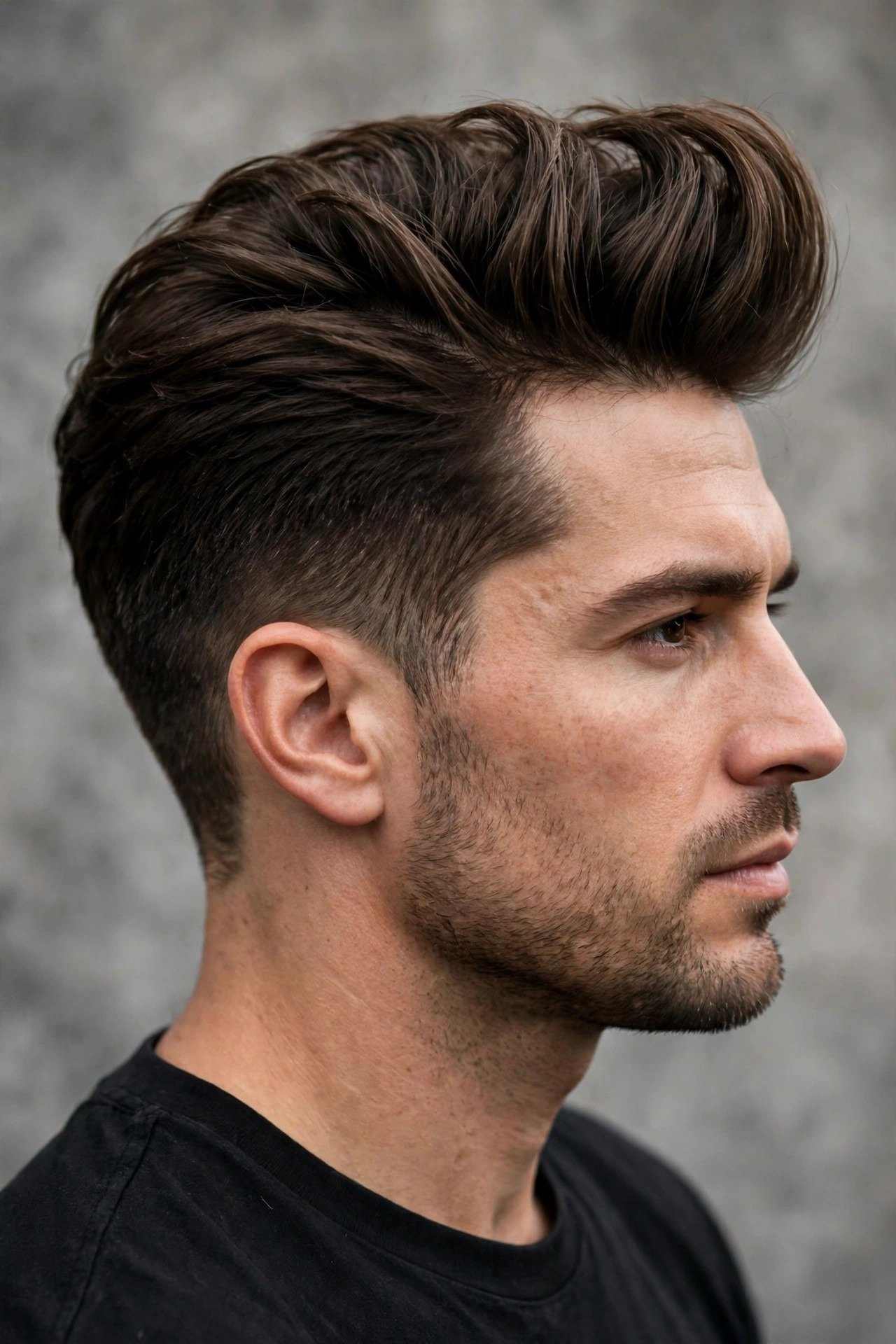
A pompadour is a men’s haircut with volume swept up and back from the forehead, with the top left long enough to stand tall — usually three to five inches at the front — while the sides and back are kept shorter, tapered, faded, or undercut. The front is brushed upward and backward with a blow dryer and a strong-hold product, which gives the cut its famous height and smooth, sculpted shape. Unlike a slick back, which lies flat against the head, a pompadour lifts the hair up and away from the forehead, and unlike a quiff, which pushes only the front upward in a loose wave, a pompadour sweeps the whole top back in one continuous, polished roll.
The pompadour takes its name from Madame de Pompadour, a mistress of King Louis XV of France in the eighteenth century, who wore her hair swept high above her forehead, and the style crossed into men’s fashion in the twentieth century through rock and roll. Elvis Presley made it famous in the 1950s, with his tall, glossy sweep becoming the symbol of rebellion and style, and rockabilly musicians, film stars, and greasers kept it alive through the decades. It faded from fashion in the 1970s and 1980s, then returned with the barbershop revival of the 2010s, and the modern pompadour now comes in dozens of finishes, from the sharp skin fade to the soft, textured sweep.
What makes a pompadour different from a quiff is the direction and the volume. A quiff lifts only the front section and lets the rest fall more naturally, while a pompadour combs the entire top backward in one smooth, tall shape that runs from the forehead to the crown. A slick back is the other close cousin, but it keeps the hair flat and close to the scalp, while a pompadour deliberately builds height, sometimes two or three inches above the forehead. That height is why the pompadour lengthens round faces, balances strong jaws, and photographs so well — it is a haircut with architecture, not just a length.
Why the Pompadour Is Dominating 2026
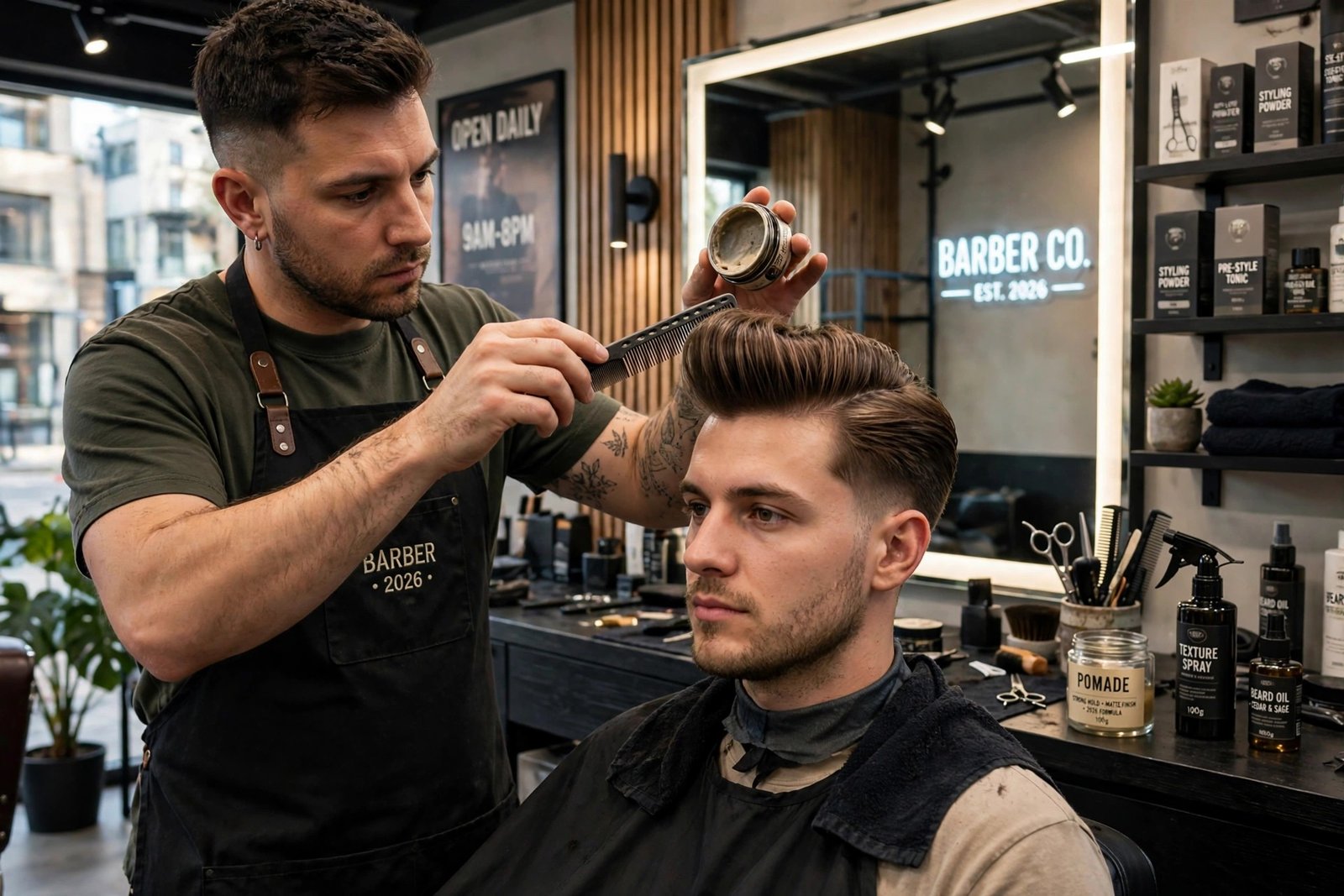
The pompadour is dominating 2026 because it sits at the exact intersection of the year’s biggest men’s hair trends: classic shapes, clean sides, and volume that photographs beautifully. According to Perfect Corp’s 2026 trending men haircuts roundup, the modern pompadour is listed among the standout men’s cuts of the year, praised for its polished height and its ability to suit almost any face shape. Barbers report it as one of their most requested longer styles this year, because men who grew their hair out want a cut that shows off the length instead of hiding it. The pompadour does exactly that, turning length on top into a deliberate, sculpted statement.
Celebrity and barbershop demand has pushed the trend even further, with actors, musicians, and influencers all choosing the pompadour as the confident, camera-ready style of the year. According to MenHairCuts’ roundup of the 30 men’s hair trends for 2026, the year’s defining direction is stronger outlines, cleaner fades, and volume that is easy to live with — a description the modern pompadour fits perfectly, especially paired with a low or mid fade. The same direction shows up in every major barbershop trend report published this year, and the pompadour stands out because it works for weddings, offices, and nights out alike. If you want the short end of the same clean-side movement, the buzz cut guide and the crew cut guide show how the same sharp sides look with almost no length on top.
The third reason is pure versatility. A pompadour can be slicked and glossy for a formal evening, textured and matte for a casual day, or worn messy and loose for a weekend, all from the same cut, just by changing the product and the drying direction. It flatters round faces by adding height, suits thick hair that holds a shape, handles wavy hair beautifully, and pairs naturally with a beard, which restores the balance the short sides remove. When one cut serves that many needs, looks smart in an office and striking on a night out, and needs only ten minutes with a dryer in the morning, it stops being a retro throwback and becomes the default statement cut of 2026.
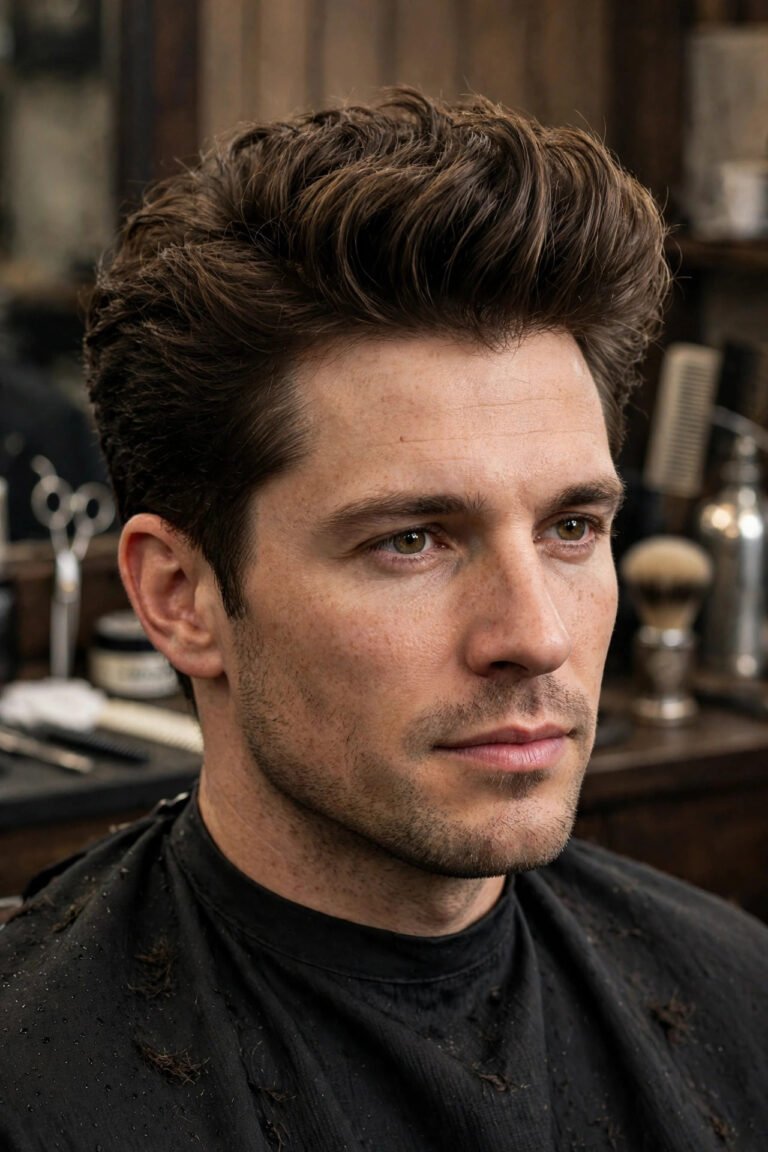
1. The Classic Pompadour
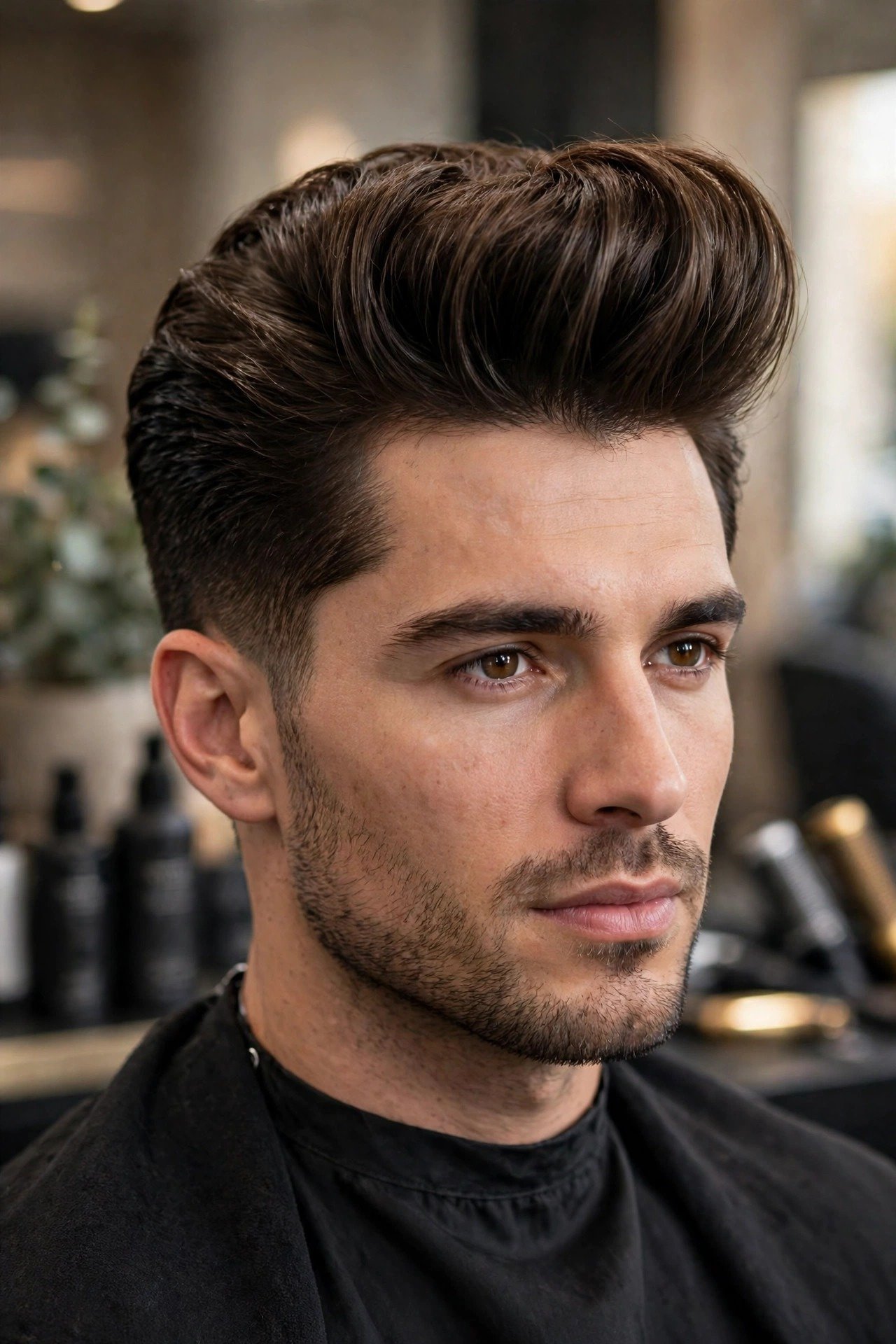
The classic pompadour is the original Elvis-era sweep, tall at the front, smooth on top, and neatly tapered at the sides with no fade drama and no harsh lines anywhere. It suits men with thick, straight hair best, because the density holds the height all day, and it flatters oval, square, and oblong faces by adding length and strong vertical lines. Men with a strong jawline love it because the tall front balances the lower face, and men with round faces love it because the height makes the face look longer and leaner. It is the most elegant pompadour there is: nothing messy, nothing overdone, just smooth volume and quiet, old-school confidence.
Stylist script: ask for the top left four to five inches long at the front, gradually shorter toward the crown, cut with scissors so it can be swept back in one smooth roll. Have the barber taper the sides with a number 2 guard blending down to a number 1 guard at the neckline, keeping the taper classic and soft rather than faded to skin. Keep the hairline natural, and ask the barber to leave enough weight at the front so the sweep stands tall instead of flopping forward. A light texturising pass on the very ends stops the top from looking stiff.
Styling routine: wash, towel dry until damp, then apply a volumising mousse and blow dry the front upward and backward with a round brush. Work a fingertip of water-based pomade through the top, comb it back smoothly, and finish with a light mist of hairspray. Maintenance: every three to four weeks; the tapered sides grow out gracefully, so the shape holds well between visits. A quick blow dry each morning resets the height in minutes. A boar-bristle brush used once a week keeps the long top smooth and spreads the scalp’s natural oils through the hair.
2. The Modern Pompadour
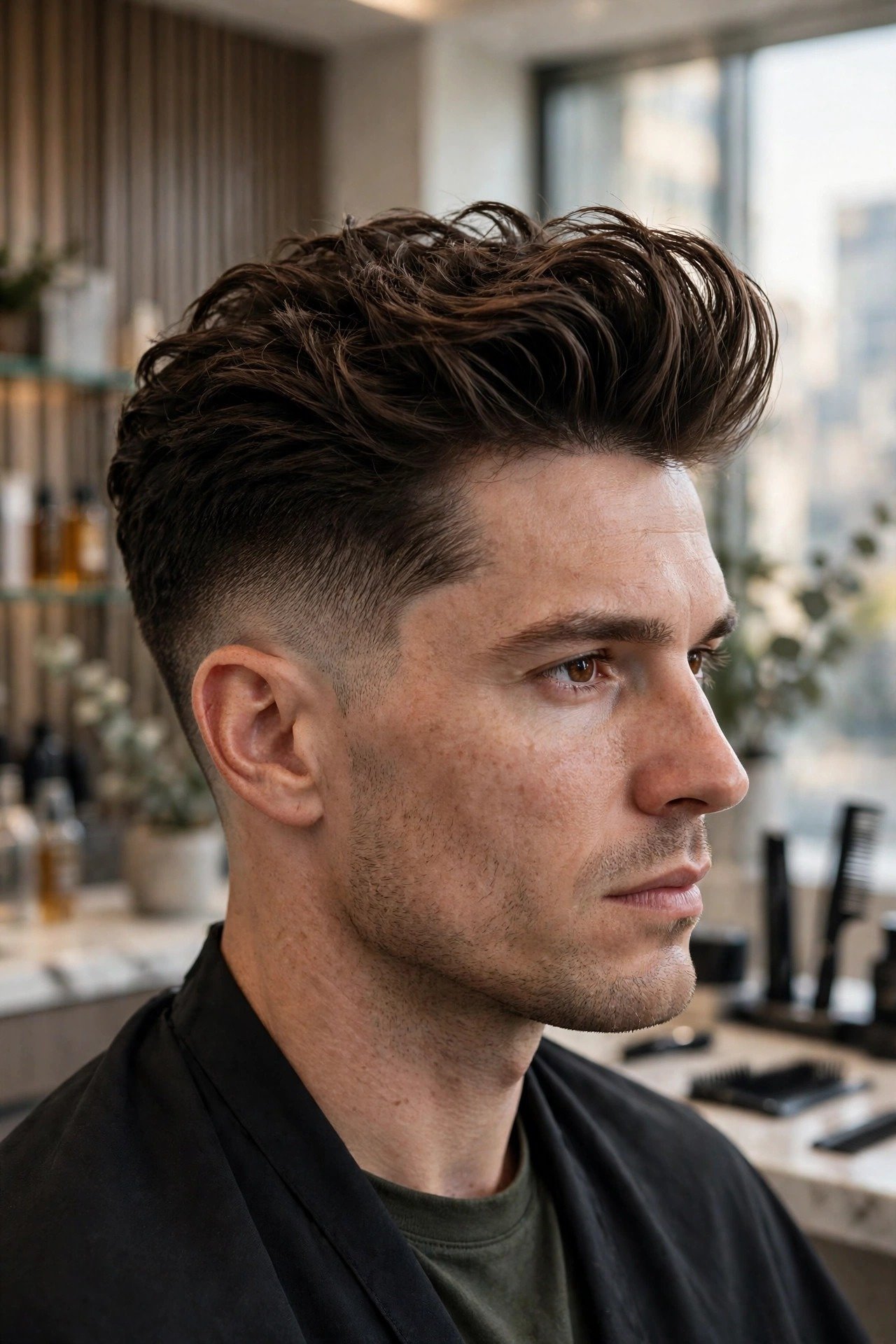
The modern pompadour keeps the classic height but loosens everything up, with textured, piecey volume on top and clean faded sides instead of a soft taper. It suits almost every man, because the relaxed texture flatters oval and square faces, works on straight and wavy hair alike, and looks smart in an office yet relaxed on a weekend. Men with thick hair love it because the texture removes bulk while keeping the height, and men with fine hair love it because the separated pieces create the illusion of density. It is the pompadour for 2026: the same famous silhouette, updated with movement, matte product, and a sharper outline.
Stylist script: ask for the top left three to four inches long at the front, cut with scissors and point-cut for texture, and a low taper fade on the sides blending from a number 2 guard down to a number 0 at the neckline. Have the barber keep the top long enough to sweep back with visible separation, and ask for the sides to be faded cleanly so the textured top stands out. Keep the hairline natural, and have the barber check the crown swirl, since that is where uneven cutting shows first on a textured pompadour.
Styling routine: wash, towel dry, then work a pea-sized amount of matte clay through the damp top and blow dry upward and back with your fingers for a textured finish. Let it air-dry for the last minute so the pieces stay separated. Maintenance: every three weeks; the faded sides need regular tidying to keep the contrast crisp. A little sea-salt spray on damp hair adds extra grip before the clay goes in. A wide-tooth comb in the morning keeps the textured top tidy without flattening the separated pieces that give it life.
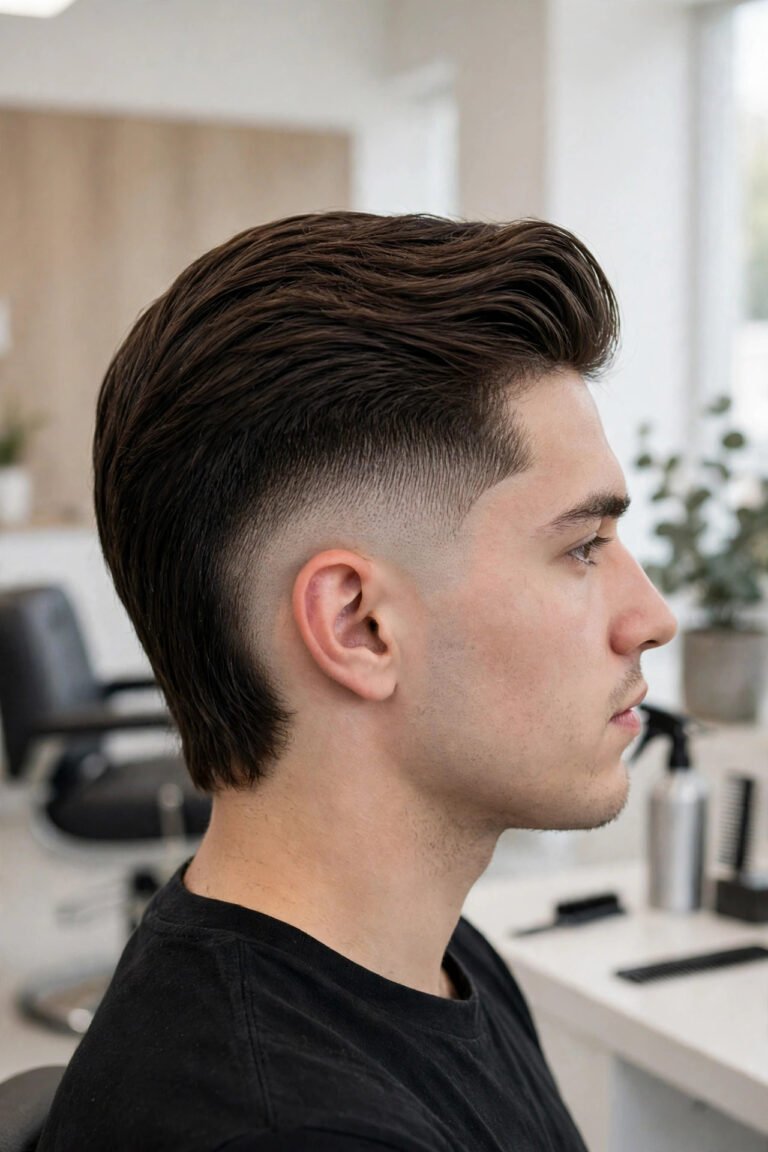
3. Pompadour with Skin Fade

A skin fade takes the pompadour and gives it a bold, modern frame, with the sides clipped down to bare skin while the top keeps its tall, swept-back volume. It suits men who want the drama of a pompadour with the deliberate edge of a fade, and it flatters oval, square, and oblong faces by adding height and clean vertical lines. Thick and dark hair shows the contrast best, since the tall top stands out sharply against the shaved sides. It is the pompadour for men who want their hair to look styled rather than simply long, and it photographs beautifully from every angle. It also suits men with strong features, since the bold contrast draws attention to the eyes and jawline.
Stylist script: ask for the top left four inches long at the front, then a skin fade on the sides that starts high near the temples and blends down to bare skin at the sideburns and neckline. Have the barber use a foil shaver for the closest finish at the bottom and blend upward with clipper-over-comb work so no harsh line shows. Keep the top even and the hairline crisp, and ask the barber to finish with a hot towel so the faded skin stays smooth and free of irritation. A sharp line-up around the forehead finishes the look.
Styling routine: wash and towel dry, then apply a light moisturiser to the faded skin so it stays smooth rather than dry. Blow dry the top upward and back, then work a small amount of matte pomade through it for hold. Maintenance: every two weeks; skin fades grow out visibly fast, so book the touch-up before the blend softens into a shadow. A foil shaver at home keeps the lowest part of the fade clean between barber visits. Exfoliate the faded skin once a week with a gentle scrub to prevent ingrown hairs and keep the blend looking crisp.
4. Pompadour with Low Fade

A low fade keeps the pompadour subtle and classic, fading only the bottom inch of the sides down to skin while the rest of the cut stays neat and the tall top does the talking. It suits men who want a tidy finish without the drama of a high fade, and it flatters every face shape, especially round faces, because the low graduation adds a touch of structure without shortening the sides. It is the quietest faded pompadour, the one that looks like a great classic haircut rather than a statement, and it grows out more gracefully than any other fade in this guide. It also suits older men, since the subtle fade looks smart without ever trying too hard, and it pairs well with a suit.
Stylist script: ask for the top left four inches long at the front, cut with scissors for a smooth sweep, and a low fade that starts just above the ears and blends down to skin at the neckline. Have the barber keep the fade low and tight, blending upward with a number 1 guard so the transition stays soft and subtle. Keep the top even and the hairline natural, and ask the barber to taper the sideburns neatly into the fade. A light taper at the nape keeps the back looking clean as it grows out.
Styling routine: wash, towel dry, and blow dry the top upward and back with a round brush, then work a pea-sized amount of pomade through it for a smooth finish. The low fade does the styling work for you, so the sides need no product at all. Maintenance: every three weeks; the low fade forgives growth better than higher fades, so you can stretch the gap between visits. A quick neckline cleanup with a trimmer at home keeps the back looking fresh for an extra week. A soft-bristle brush once a day keeps the tall top smooth and stops the sweep from looking flat by the evening.
5. Pompadour with Mid Fade
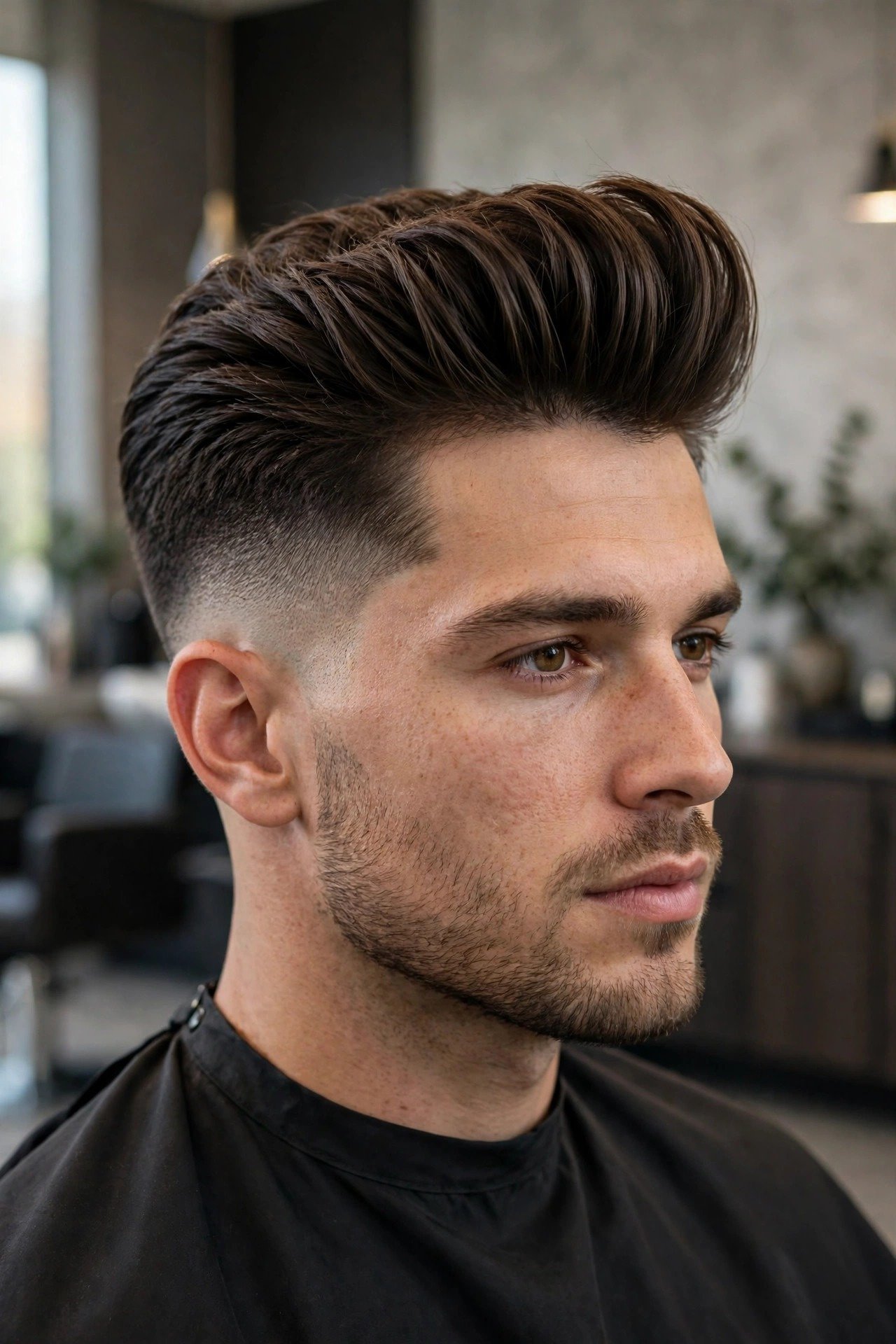
A mid fade sits halfway up the sides, giving the pompadour a balanced, contemporary frame that is bold without being as severe as a high fade. It suits most face shapes, and it works especially well on round and square faces, because the fade adds height at the sides while the tall top keeps the shape grounded. Straight and wavy hair both take it well, and the graduation reads clean from every angle. It is the most versatile faded pompadour in this guide, sharp enough for a night out and tidy enough for the office on Monday morning. It also suits men with beards, since the balanced fade connects neatly into a groomed beard without a hard step.
Stylist script: ask for the top left three to four inches long at the front, then a mid fade that starts around the middle of the sides and blends down to a number 0 at the bottom. Have the barber blend the fade smoothly with clipper-over-comb passes so the transition looks gradual rather than stepped. Keep the top even, the neckline clean, and the sideburns short and very neat. Ask the barber to check the fade from behind with a hand mirror, since the back is where an uneven blend shows first on a tall pompadour.
Styling routine: wash with a gentle shampoo, towel dry, and blow dry the top upward and back, then work a drop of matte clay through it for grip and texture. The mid fade needs no styling, just a quick check of the edges in the mirror. Maintenance: every two to three weeks; the mid fade holds its shape a little longer than a high fade, but the blend still softens quickly. A trimmer around the ears between visits keeps the outline crisp without a full recut. A light hair powder at the roots adds instant lift on flat days without leaving any wet product in the hair.
6. Pompadour with High Fade
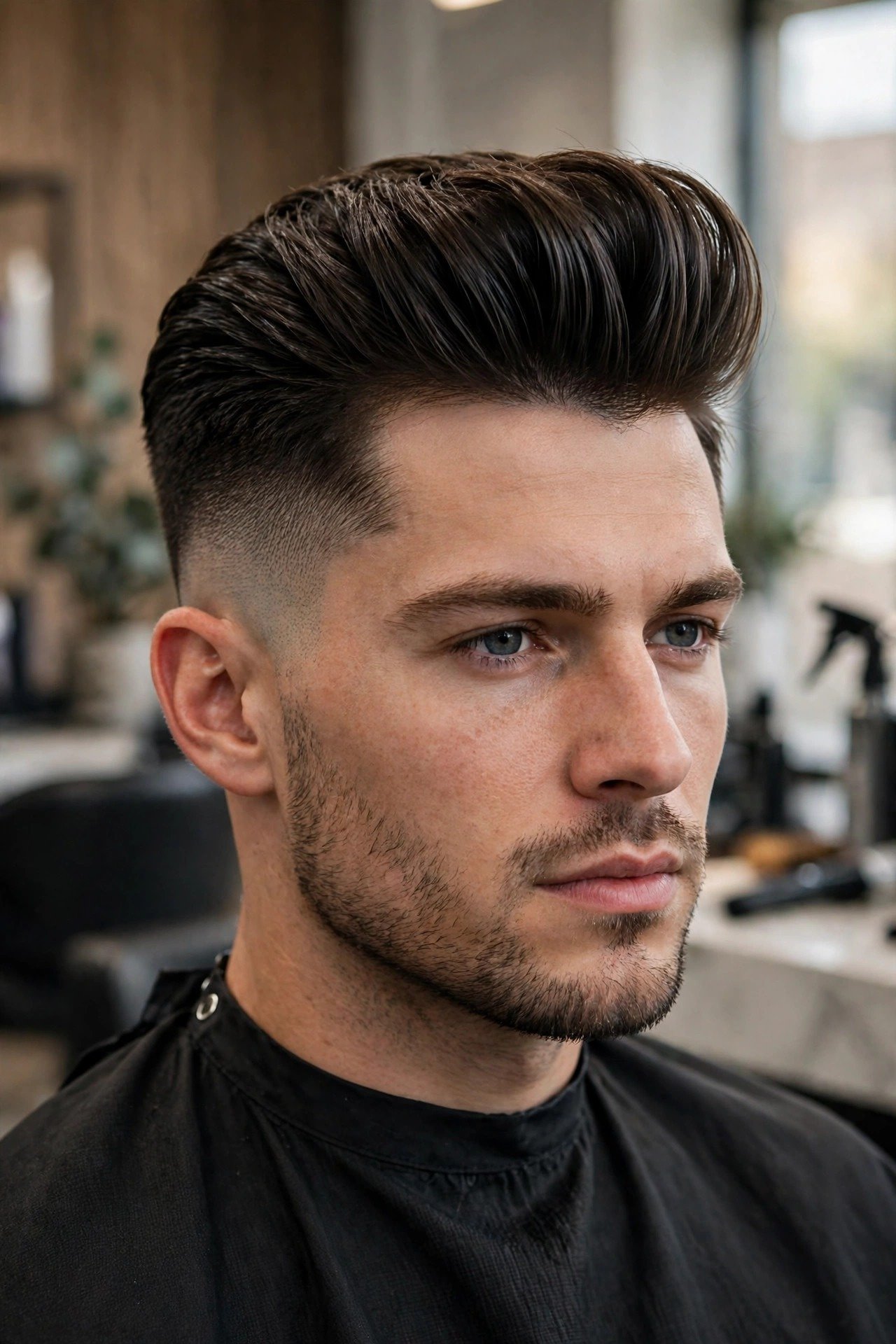
A high fade takes the pompadour to its sharpest, most dramatic version, with the sides clipped down high near the temples while the top keeps its tall, swept-back volume. It suits confident dressers and works best on thick or dark hair, where the difference between the top and the faded sides reads clearly, while oval and square faces carry the sharp lines well. The cut works because the fade strips away all side bulk, so the eye goes straight to the tall top and the strong jawline. It is a statement version of the pompadour, not a quiet one, and it turns heads in a way the classic taper never will. It also suits younger men, since the bold high fade matches the energy of current street style.
Stylist script: ask for the top left four inches long at the front, then a high fade on the sides that starts at the temples and blends down to skin at the sideburns and neckline. Have the barber use a foil shaver for the closest finish at the bottom and blend upward carefully so no line shows between the skin and the top. Keep the top even, the hairline crisp, and ask the barber to keep the fade tight and high so the contrast stays bold. A light texturising pass on top stops the tall hair from looking flat or heavy.
Styling routine: wash and towel dry, then blow dry the top upward and back with a round brush and work a pea-sized amount of strong-hold matte paste through it for height. The faded sides need no product at all, just clean edges and healthy skin. Maintenance: every two weeks; high fades grow out visibly fast, so book the touch-up before the blend softens into a shadow. Sunscreen on the faded skin is worth remembering in summer, since the short sides expose more scalp to the sun. Keep a small bottle of moisturiser in your gym bag, since the faded sides dry out fast after a hard workout.
7. Pompadour with Taper Fade
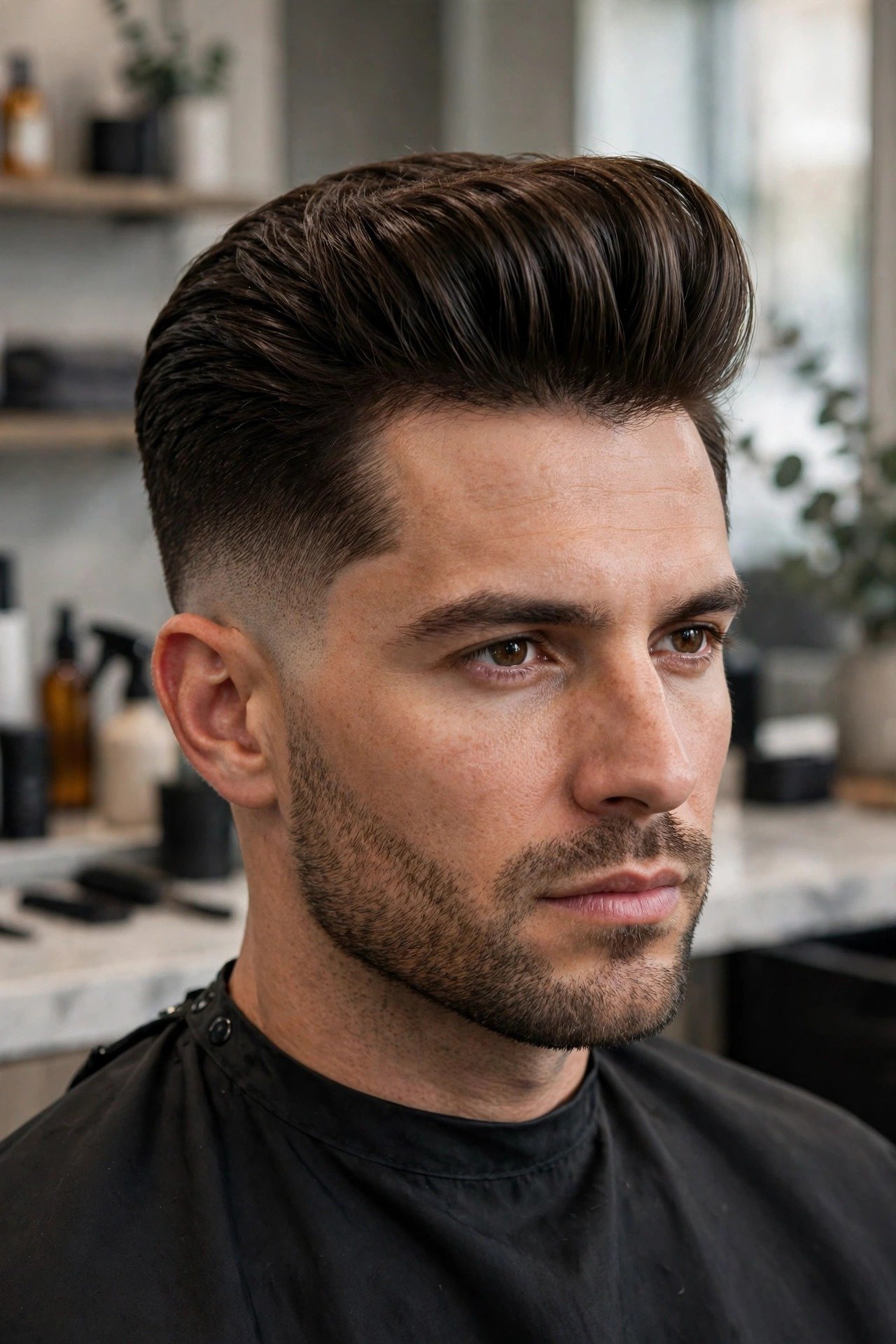
A taper fade gives the pompadour a smooth, graduated finish, with the sides shortening gradually from the top down to the neckline instead of dropping suddenly to skin. It suits men who like the pompadour but need a tidier, more professional finish for work or formal settings, and it works on straight, wavy, and thick hair alike. Oval and square faces benefit most, since the taper sharpens the outline while the tall top keeps the balance. The result reads polished from the front and effortless from the side, and it grows out more gracefully than a skin fade. It also suits men with curly hair, since the gradual taper tames the sides without hiding the curls on top.
Stylist script: ask for the top left four inches long at the front, cut with scissors for a smooth sweep, and a taper fade that starts just above the ears, fading from a number 2 guard down to a number 0 at the neckline. Have the barber keep the taper tight and gradual so the top stays full and untouched, blending the taper into the top with a clipper-over-comb pass. Keep the sideburns short and neat, and ask the barber to keep the neckline natural rather than squared hard. The taper should be subtle from the front and tidy from behind.
Styling routine: wash, towel dry, and blow dry the top upward and back, then work a pea-sized amount of pomade through it, sweeping it back for a neat finish. The taper keeps the shape looking intentional without any product on the sides. Maintenance: every three weeks; the taper grows out faster than the top, so regular tidy-ups keep the contrast crisp. A small trimmer at home keeps the nape neat between visits, so the back never looks scruffy. A quick check in the mirror before you leave the house keeps the sharp taper looking intentional all day long.
8. Undercut Pompadour

The undercut pompadour is the boldest version of the classic, with the sides clipped short and disconnected from the tall top, so the sweep stands out with maximum contrast. It suits men with thick hair and strong features, and it flatters oval and square faces by framing the tall top like a sculpture. The disconnect works because there is no blend to soften the edge, just a clean step between short sides and long top, which makes the height look even taller. It is the pompadour for men who want a statement, not a subtle haircut, and it pairs beautifully with a beard. It also suits men with dark hair, since the contrast between the shaved sides and the tall top reads clearly.
Stylist script: ask for the top left four to five inches long at the front, then an undercut on the sides clipped with a number 1 or number 2 guard, disconnected from the top with no blending. Have the barber keep the disconnect line clean and level all the way around, and cut the top with scissors so it sweeps back in one smooth roll. Keep the hairline crisp, and ask the barber to check the disconnect from behind, since an uneven line shows immediately. A light texturising pass on top stops the tall hair from looking too heavy.
Styling routine: wash, towel dry, and blow dry the top upward and back with a round brush, then work a strong-hold pomade through it and comb it back smoothly. The undercut sides need no product, just clean edges. Maintenance: every two to three weeks; the disconnect grows out visibly, so regular clipping keeps the step sharp. A trimmer at home keeps the undercut neat between visits. A little extra pomade on the front pieces keeps the tall sweep standing through a long working day.
9. Textured Pompadour
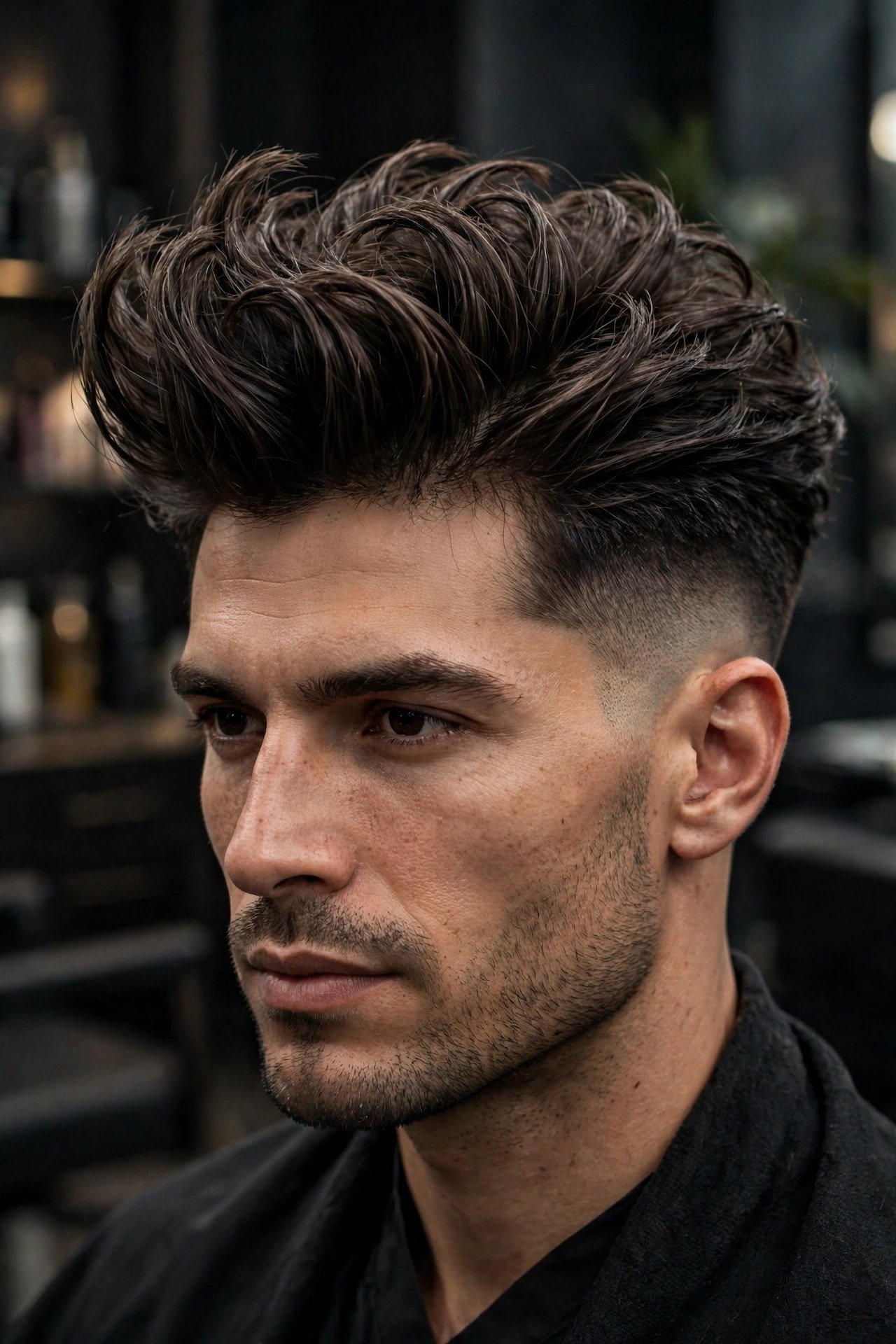
A textured pompadour keeps the classic height but cuts the top with choppy, separated pieces, so the hair has movement and grip instead of lying flat and smooth. It suits men with thick or wavy hair who want the pompadour’s height with a hint of styling freedom, and it flatters oval and square faces by adding a little height where it counts. The look works because the textured top catches the light differently from the even sides, giving the cut depth without adding maintenance. For a shorter textured option, see the textured crop guide for comparison. It also suits men with fine hair, since the separated pieces create the illusion of thickness across the whole top.
Stylist script: ask for the top left three to four inches long, cut with scissors and heavily point-cut for choppy separation, and a low fade on the sides that blends from a number 2 guard down to a number 0 at the neckline. Have the barber blend the sides into the top with clipper-over-comb work, keeping the transition smooth rather than stepped. Ask the barber to point-cut the very ends on top so the texture reads clearly, and to keep the neckline clean. The top should be just long enough to show texture, never so long that it flops forward.
Styling routine: work a pea-sized amount of matte clay through the top on damp hair, then blow dry upward and back with your fingers and let it air-dry for the last minute. The textured top holds its shape with very little product. Maintenance: every three weeks; the textured top grows out faster than the even sides, so regular trims keep the contrast fresh. A quick finger-comb in the morning resets the texture in seconds. A sea-salt spray on damp hair adds extra texture and grip before the clay goes in.
10. Slicked Back Pompadour
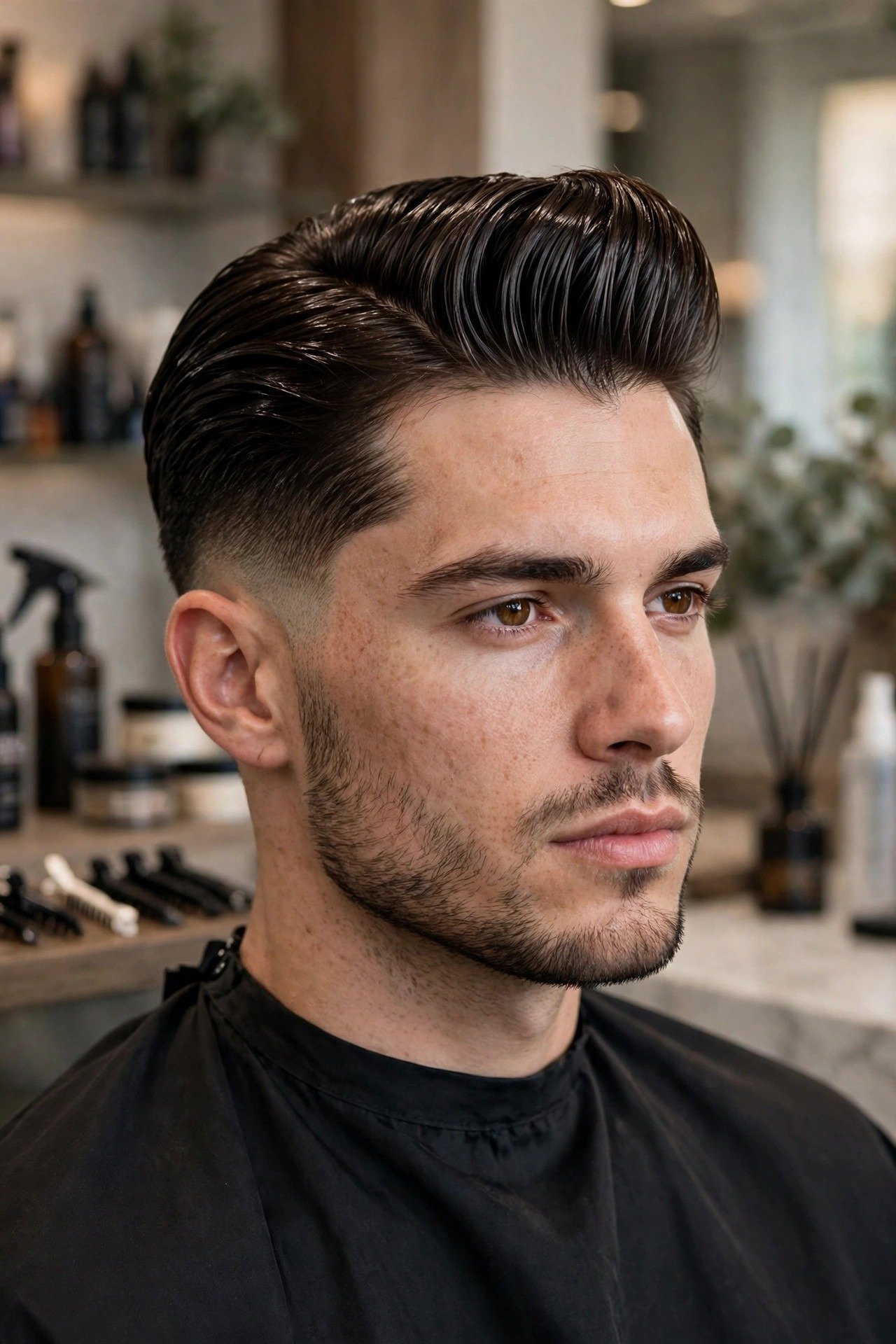
The slicked back pompadour is the glossiest version of the classic, with the tall top combed smoothly backward and finished with shine, like the screen idols of the 1950s. It suits men with thick, straight hair that lies smooth, and it flatters oval and square faces by creating one clean, unbroken line from forehead to crown. The shine works because it makes the height look deliberate and polished, turning a tall sweep into a formal statement. It is the pompadour for weddings, black-tie evenings, and any day you want to look properly put together. It also suits men with grey hair, since the smooth shine and tidy sides look distinguished and smart.
Stylist script: ask for the top left four to five inches long at the front, cut with scissors in even layers so it combs back smoothly, and a classic taper on the sides blending from a number 2 guard down to a number 1 guard at the neckline. Have the barber keep the top long enough to sweep back without a part, and ask for the sides to be tapered neatly rather than faded to skin. Keep the hairline natural, and have the barber check the sweep from the side profile so the height reads evenly from every angle.
Styling routine: wash, towel dry, then apply a water-based pomade and blow dry the top straight back with a comb, keeping it smooth and glossy. Finish with a light mist of shine spray for the classic wet look. Maintenance: every three to four weeks; the slicked shape holds its line well, but the taper needs regular tidying. A comb in your pocket lets you reset the sweep during the day without re-washing. A wooden comb spreads any product evenly through the top and keeps the smooth sweep looking sharp all day.
11. Messy Pompadour

The messy pompadour is the relaxed, lived-in version of the classic, with the top cut textured and tousled so it looks effortlessly undone rather than neatly combed. It suits men who like height but still need a casual finish, and it flatters oval and square faces by adding relaxed height and movement. The look works because the messy top contrasts with the clean faded sides, so the cut reads both relaxed and deliberate at once. It is the pompadour for weekends, creative workplaces, and men who hate looking too polished. It also works well on thick hair, since the density gives the tousled pieces plenty of body to play with.
Stylist script: ask for the top left three to four inches long, cut with scissors and heavily point-cut for choppy separation, and a taper fade on the sides that blends from a number 2 guard down to a number 1 guard at the neckline. Have the barber keep the top uneven on purpose, with shorter pieces mixed through longer ones, so the mess looks intentional rather than accidental. Ask the barber to keep the neckline clean and the sideburns short, so the messy top stays the focus of the cut.
Styling routine: work a pea-sized amount of matte clay through the top on damp hair, then scrunch and tousle it upward and back with your fingers and let it air-dry. The messier it looks, the better it works, so do not over-comb it. Maintenance: every three weeks; the messy top hides growth well, so the shape holds up between visits. A sea-salt spray on damp hair adds extra texture and grip before the clay goes in. A little extra clay on the front pieces keeps the tousled height standing through a long working day.
12. Short Pompadour
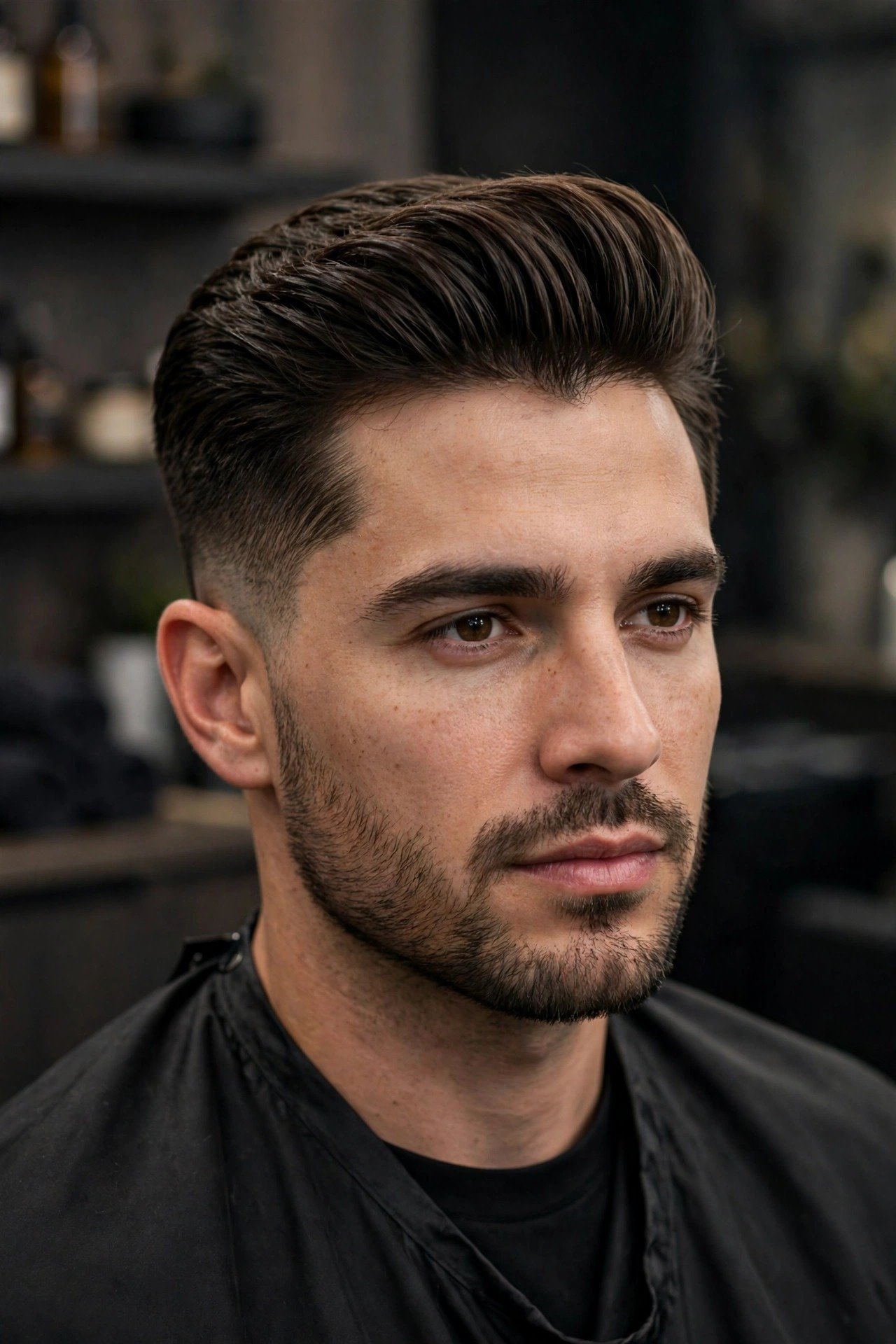
The short pompadour is the most wearable version of the classic, with the top left just two to three inches long, so the height is modest, tidy, and easy to style in minutes. It suits men trying a pompadour for the first time, since the shorter length is forgiving on head shape, and it flatters oval, square, and round faces alike. Wavy and thick hair get the most from it, because the shorter top still shows their natural texture without needing a long blow dry. It is the pompadour for men who want height without the drama of a tall rockabilly sweep, and a great starting point before growing it longer. It also suits busy men, since the morning routine takes five minutes instead of fifteen.
Stylist script: ask for the top left two to three inches long at the front, cut with scissors and lightly texturised, and a taper on the sides that blends from a number 3 guard down to a number 1 guard at the neckline. Have the barber keep the top short enough to sweep back with a quick blow dry, and ask the barber to texturise the ends lightly so the shorter top does not look bulky. Keep the neckline clean with a light taper, and have the barber check the front height from the side so the sweep reads evenly.
Styling routine: wash, towel dry, and work a pea-sized amount of matte clay through the top, then blow dry upward and back for a few minutes. The shorter top holds a light style, so you can change the direction day to day. Maintenance: every three to four weeks; the shorter top forgives growth better than longer versions, so the shape holds up longer. A quick comb-through in the morning resets the texture in seconds. A leave-in conditioner on the ends stops the top from drying out, especially during the cold winter months.
13. Long Pompadour
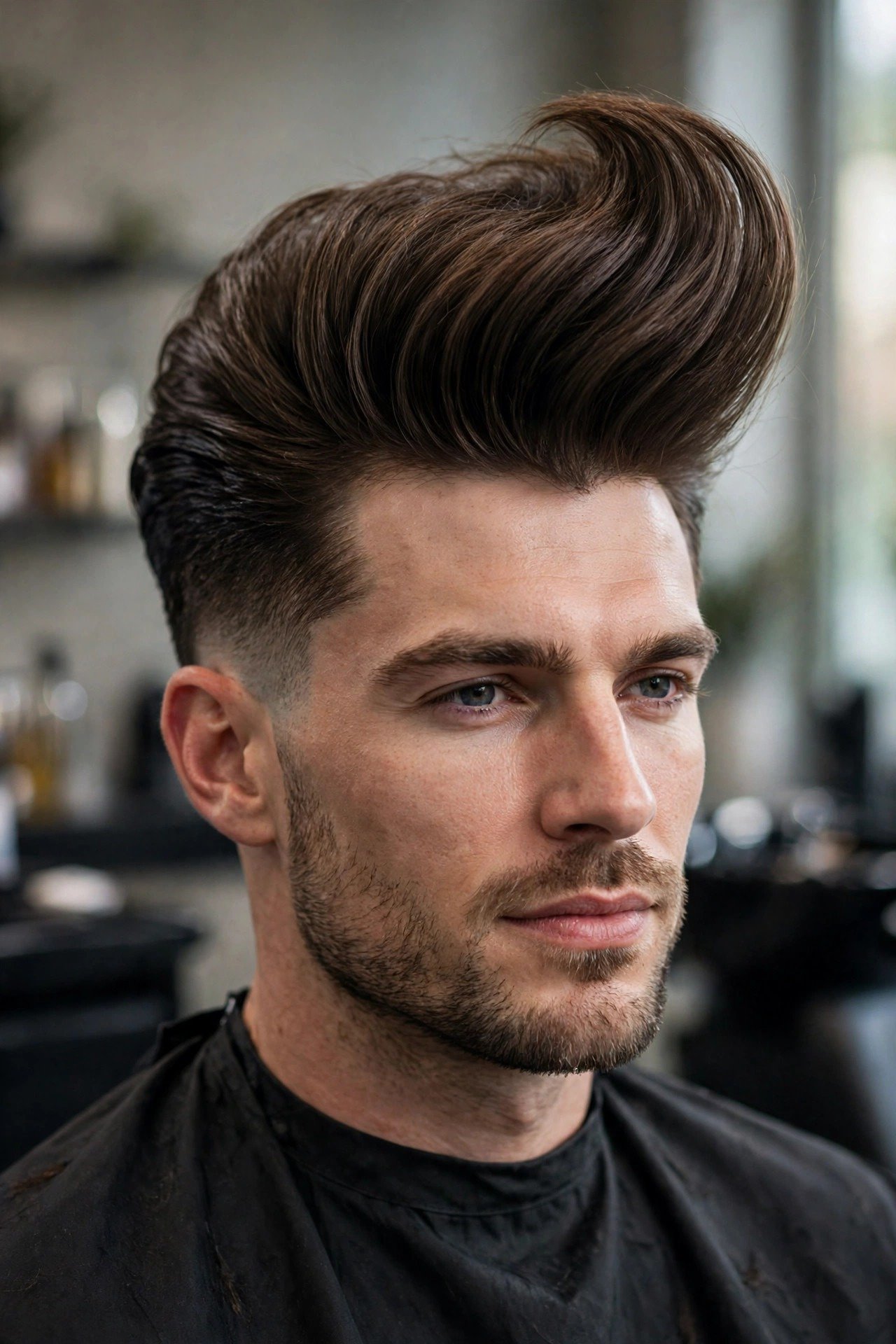
The long pompadour is the most dramatic version of the classic, with the top left five to six inches long at the front, so the sweep stands tall and flows back toward the crown in one long roll. It suits men with thick, strong hair that can hold serious height, and it flatters oval and oblong faces by adding striking vertical length. The drama works because the long top gives the barber real material to sculpt, creating a silhouette that is unmistakable from across a room. It is the pompadour for men who love the rockabilly look and are happy to spend ten minutes styling it. It also suits men with wavy hair, since the natural wave adds movement that keeps the long sweep from looking stiff.
Stylist script: ask for the top left five to six inches long at the front, gradually shorter toward the crown, cut with scissors in long layers so it sweeps back smoothly. Have the barber taper the sides with a number 2 guard blending down to a number 1 guard, keeping the sides neat so the long top stays the focus. Ask the barber to leave enough weight at the front so the sweep stands tall, and to thin the very ends lightly so the long hair does not look bulky. If you later want to grow it further, the flow haircut guide shows how to keep the shape while the length builds.
Styling routine: wash, towel dry, then apply volumising mousse and blow dry the front upward and backward with a round brush, section by section, so the height sets evenly. Work a strong-hold pomade through the top and comb it back, finishing with hairspray. Maintenance: every four weeks for the top, every three weeks for the sides; the long top forgives growth, but the sides need tidying. A silk pillowcase reduces friction overnight, so the long top stays smooth and the scalp stays calm while you sleep.
14. Pompadour with Beard

Blending the pompadour into a beard creates one continuous, rugged silhouette, with the sideburns melting into the beard so the whole look reads as a single statement. It suits thick and wavy hair best, and it flatters square and oval faces by adding strong, masculine framing around the jaw. The blend works because there is no hard line anywhere, just a smooth graduation from tall hair to beard, which balances the height on top with weight below. It is the pompadour for men who wear their beard as proudly as their hair, and it balances the polished top with rugged texture. The blend also suits men with patchy beards, since the gradual fade hides thin spots far better than a hard line ever could.
Stylist script: ask for the top left four inches long at the front, then have the barber fade the sideburns into the beard with a number 2 guard, keeping the cheek line natural and the neckline clean. Grow the beard to at least half an inch so the blend has something to work with, and ask the barber to shape the beard with a trimmer so the transition stays seamless from every angle. Keep the top even and the hairline natural, and have the barber check the blend from the side profile so the tall top and beard read as one shape.
Styling routine: wash the hair and beard with a gentle shampoo, then apply beard oil and comb the beard downward for a neat finish. Blow dry the top upward and back, then work a little matte clay through it and sweep it back. Maintenance: every three weeks; trim the beard and re-blend the sideburns in the same visit to keep the connection seamless. A beard trimmer with a guard keeps the blend neat between visits, so the join never turns into a visible step. Comb the beard upward once a week to check for split ends, then trim them before they spread further.
15. Pompadour for Thick Hair

Thick hair is the pompadour’s natural best friend, giving the cut real density and a rich, tall top that finer hair has to work for. This version uses the density to its advantage, with a long top that holds its height all day while the sides are kept short to remove all the bulk. It suits oval, square, and round faces, since the tall top can be shaped to balance any face. The cut works because the thickness holds the shape all day without collapsing, so the pompadour looks just as good at night as it did in the morning. It also suits men with wavy thick hair, since the natural wave adds movement that keeps the dense top from looking heavy or stiff.
Stylist script: ask for the top left four to five inches long, cut with scissors and thinned lightly, and a taper on the sides that blends from a number 2 guard down to a number 1 guard at the neckline. Have the barber clip the sides in two passes, since thick hair can hide longer patches under the surface, and ask the barber to check the crown swirl carefully, because thick hair springs back there. A low fade on the sides removes extra bulk and keeps the shape tidy as it grows out.
Styling routine: wash with a light shampoo and towel dry, then blow dry the top upward and back and work a pea-sized amount of strong-hold clay through it to control the thickness. Avoid heavy oils, which add weight to already-heavy hair and make the scalp look greasy. Maintenance: every two to three weeks; thick hair grows fast and the shape thickens quickly, so regular clipping keeps the pompadour crisp. Rinse thoroughly after every wash, since thick hair traps shampoo residue that can irritate the scalp underneath. A microfibre towel dries thick hair gently without roughing up the scalp or disturbing the tall sweep.
16. Pompadour for Thin Hair

Thin hair can look surprisingly full in a pompadour, because the blow-dried height and textured top create volume that flat, longer hair never achieves. This version keeps the top at three inches with plenty of texture, and it suits straight and slightly wavy thin hair best, especially on oval and oblong faces where the clean shape adds gentle structure. The trick is keeping the roots lifted and the scalp healthy, so the hair reads thicker than it is. Done right, it looks effortless and surprisingly full, and the height distracts from any sparseness at the crown. It also suits men whose hair is thinning at the crown, since the swept-back direction covers the contrast beautifully every day.
Stylist script: ask for the top left about three inches long, cut with scissors and lightly texturised, and a taper on the sides that blends from a number 2 guard down to a number 1 guard at the neckline. Have the barber avoid heavy thinning, which makes thin hair look patchy, and ask the barber to keep the edges natural and the neckline clean. Check the crown, since thin hair shows any missed patch immediately. A volumising cut with short layers on top is the key, so the hair lifts instead of lying flat.
Styling routine: use a volumising shampoo on wash days, towel dry, then apply volumising mousse at the roots and blow dry upward and back. Work a tiny amount of matte paste through the top for grip, and avoid all heavy creams and oils, which flatten thin hair instantly. Maintenance: every two to three weeks; frequent light trims keep the top looking dense, healthy, and even. A root-lifting spray at the front gives thin hair extra fullness that lasts through a long busy working day. Sleep on a silk pillowcase to reduce friction, since fine hair tangles easily and the scalp stays calmer overnight.
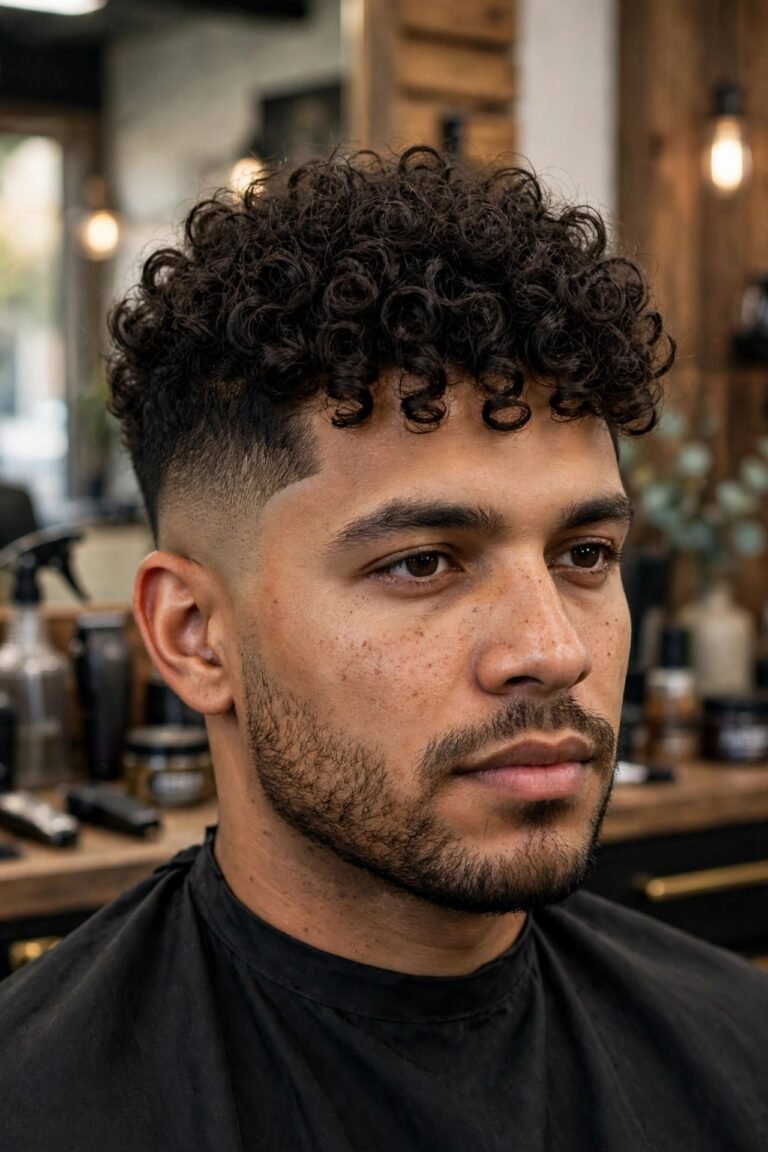
17. Curly Pompadour

The curly pompadour turns natural curls into the star of the cut, with the top left long enough for the curls to pile upward and backward in a tall, textured sweep. It suits men with tight or loose curls who want height without fighting their natural pattern, and it flatters oval and square faces by adding volume where it counts. The look works because the curls give the pompadour a texture that straight hair cannot copy, with each curl catching the light differently. It is the pompadour for men who have spent years straightening their curls and are ready to let them do the work. It also suits men with thick curly hair, since the density holds the tall shape all day.
Stylist script: ask for the top left four to five inches long, cut with scissors while the hair is dry or slightly damp so the barber can see the true curl pattern, and a low fade on the sides blending from a number 2 guard down to a number 0. Have the barber cut the curls in layers so they stack upward rather than outward, and avoid thinning shears, which make curly hair frizzy. Keep the sides short and neat, and ask the barber to check the shape from the front so the curls sit evenly on both sides.
Styling routine: wash with a moisturising shampoo, apply leave-in conditioner, then work a curl cream through the damp top and blow dry upward and back with a diffuser on low heat. Finish with a light-hold pomade to define the curls. Maintenance: every three to four weeks; curly hair grows outward as much as upward, so regular shaping keeps the tall sweep from turning into a round afro. A wide-tooth comb keeps the curls defined without breaking them apart. A little curl cream on the front pieces keeps the tall curls standing through a long working day.
18. Wavy Pompadour

The wavy pompadour is the most natural-looking version of the classic, because the wave does half the styling work, lifting the front upward and giving the sweep a soft, rolling shape. It suits men with natural waves who want height without a stiff, combed finish, and it flatters oval, square, and round faces alike. The wave works because it adds movement to the tall top, so the pompadour looks lived-in rather than sculpted, and it holds its shape longer than straight hair does. It is the pompadour for men who want the classic silhouette with a relaxed, modern feel. It also suits men with thick wavy hair, since the wave adds texture that keeps the dense top from looking heavy.
Stylist script: ask for the top left four inches long at the front, cut with scissors in long layers that follow the natural wave, and a taper fade on the sides blending from a number 2 guard down to a number 1 guard. Have the barber cut the top while the hair is slightly damp so the wave pattern is visible, and ask for a light texturising pass so the waves separate cleanly. Keep the sides neat and the neckline clean, and have the barber check the sweep from the side so the wave flows evenly backward.
Styling routine: wash, towel dry, then apply a sea-salt spray and blow dry the top upward and back with your fingers, letting the natural wave set as it dries. Work a small amount of matte clay through the top for hold, and let it air-dry for the last minute. Maintenance: every three weeks; the wavy top hides growth well, so the shape holds up between visits. A leave-in conditioner keeps the waves soft without weighing them down. A quick finger-comb in the morning resets the wave in seconds without flattening the tall sweep.
19. Pompadour for Round Faces
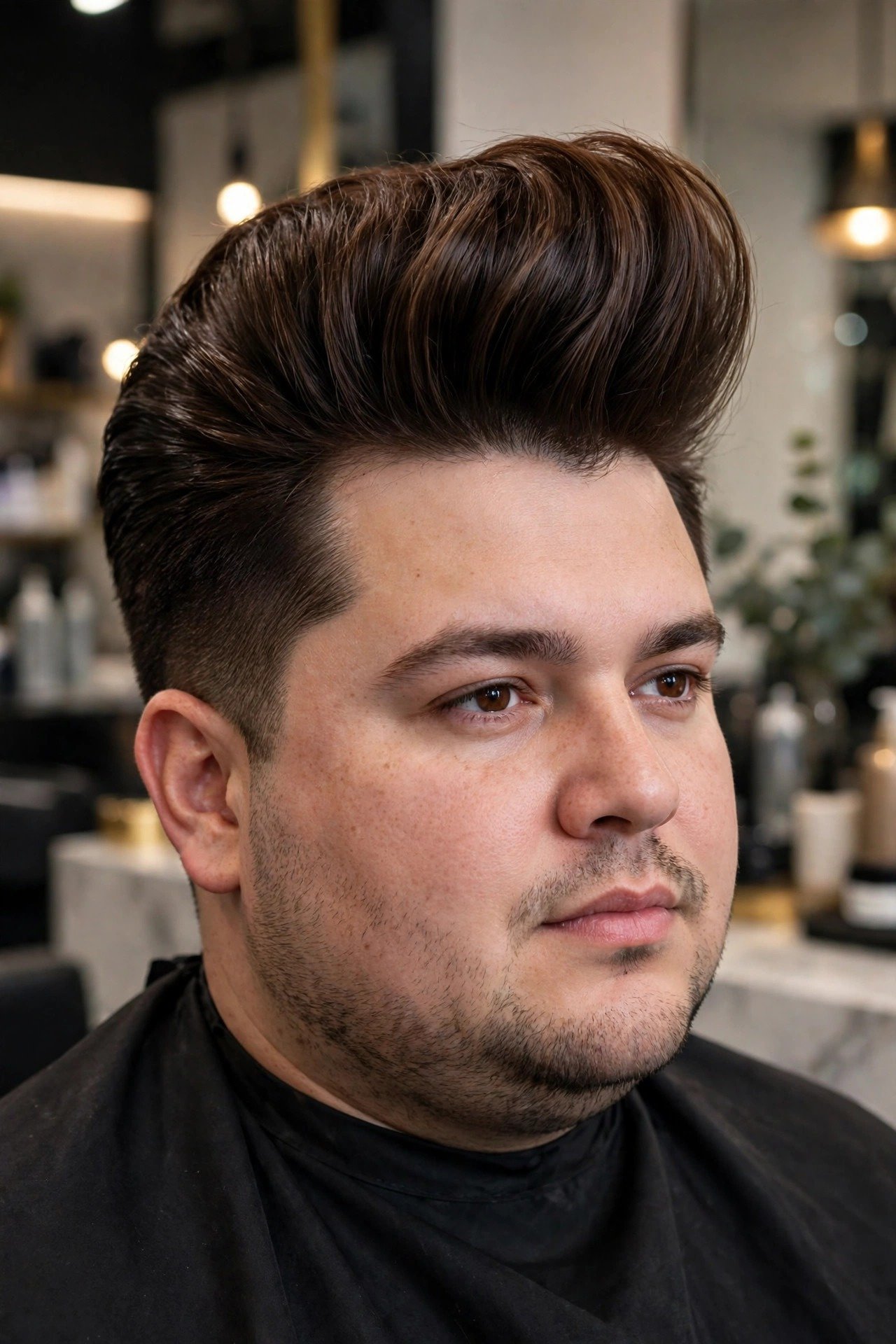
A pompadour is the single best haircut for a round face, because the tall front adds vertical length that makes the whole face look longer and leaner. This version pushes the height as high as the hair will hold, with short, tight sides that narrow the width, so the silhouette becomes tall and slim instead of wide and round. It suits men whose cheeks are full or whose jaw is soft, and it works on thick, straight, and wavy hair alike. The cut works because the eye follows the height upward, which balances the roundness below. It is the pompadour to ask for when every other cut has made your face look wider than it is.
Stylist script: ask for the top left four to five inches long at the front, with maximum height at the forehead, and tight tapered sides blending from a number 1 guard down to skin at the bottom. Have the barber keep the sides as short and close as you can tolerate, since width at the sides is the enemy of a round face, and ask for the top to be cut so it stands tall rather than falling to either side. Keep the hairline natural, and have the barber check the shape from the front so the height reads clearly.
Styling routine: wash, towel dry, then apply volumising mousse at the roots and blow dry the front straight upward with a round brush for maximum lift. Work a strong-hold clay through the top and finish with hairspray to lock the height. Maintenance: every two to three weeks; the tight sides grow out fast and the height needs the contrast to work. A root-lifting spray at the front gives extra lift that lasts through a long day. Avoid side-swept styling, since it adds width back to the face and undoes the lengthening effect.
20. Pompadour for Square Faces
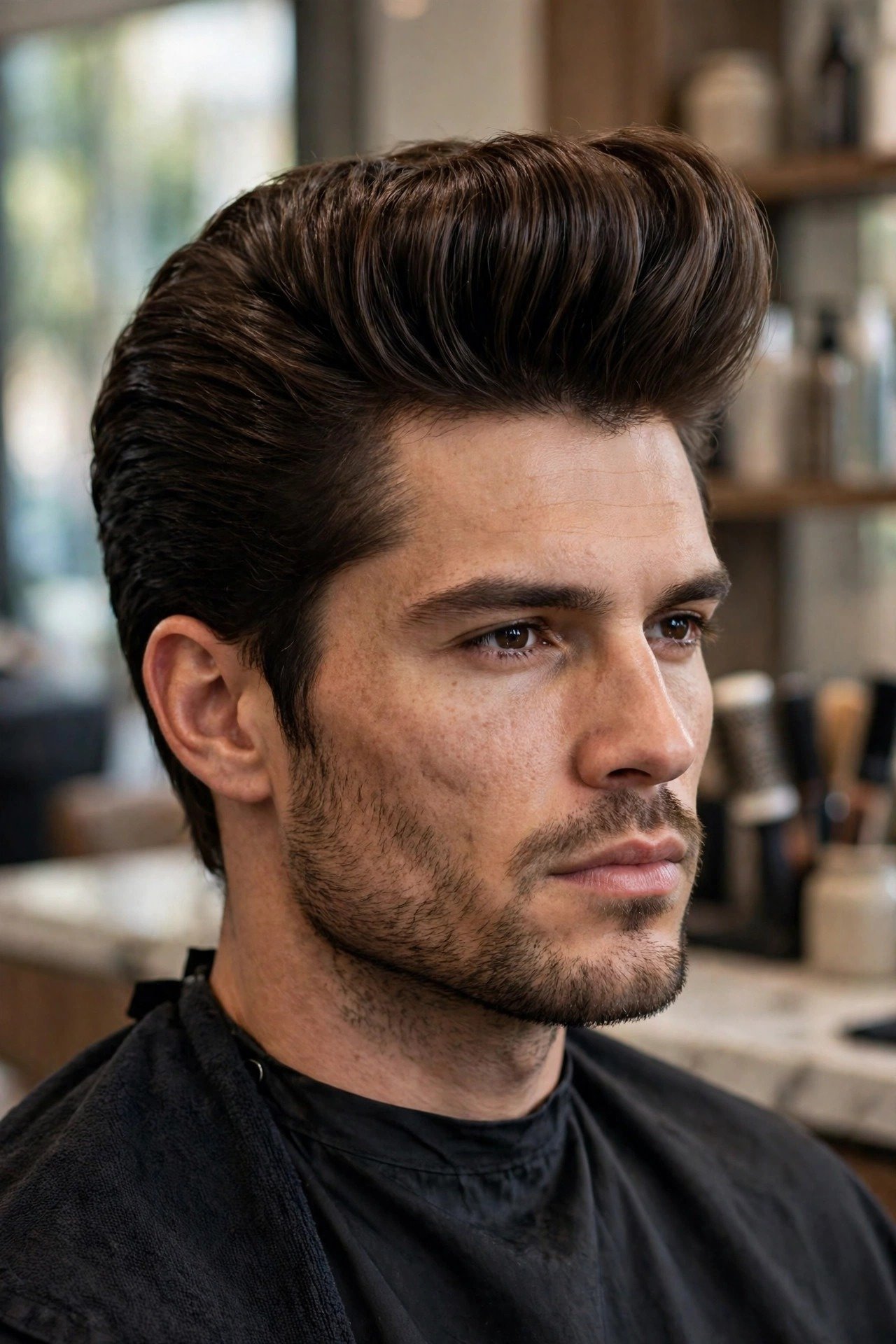
A pompadour suits a square face beautifully, because the tall, smooth sweep softens the strong jaw and wide forehead without hiding the features that make the face striking. This version keeps the top smooth and polished, with tapered sides that follow the jawline, so the whole silhouette feels balanced rather than boxy. It suits men with a defined jaw and broad forehead, and it works on thick and straight hair best, since the smooth top contrasts with the angular jaw. The cut works because the height draws the eye upward, which makes the face look longer and less wide. It is the pompadour for men whose jawline is their best feature and who want a cut that frames it.
Stylist script: ask for the top left four inches long at the front, cut with scissors for a smooth sweep, and a classic taper on the sides blending from a number 2 guard down to a number 1 guard. Have the barber soften the corners at the temples slightly, so the silhouette is not too square, and keep the top even and the hairline natural. Ask the barber to check the shape from the front, since a square face shows any unevenness in the sweep immediately. A light texturising pass on the ends keeps the smooth top from looking stiff.
Styling routine: wash, towel dry, and blow dry the top upward and back with a round brush, then work a water-based pomade through it and comb it back smoothly. Finish with a light mist of hairspray for a polished look. Maintenance: every three to four weeks; the smooth top holds its shape well, but the taper needs regular tidying. A comb in your pocket lets you reset the sweep during the day without re-washing. A boar-bristle brush once a week keeps the long top smooth and spreads the scalp’s natural oils through the hair.
21. Pompadour for Oval Faces

An oval face can wear almost any pompadour, because the balanced proportions suit every height, every fade, and every finish in this guide. This version is the classic balanced pompadour, with a tall but not extreme front, clean faded sides, and a smooth sweep that shows off the face’s natural symmetry. It suits men with oval faces perfectly, since the height adds interest without distorting the proportions, and it works on straight, wavy, and curly hair alike. The cut works because there is nothing to correct, just a great shape to show off. It is the pompadour to choose when you want the pure classic, with no compromises for face shape.
Stylist script: ask for the top left four inches long at the front, cut with scissors for a smooth, even sweep, and a low fade on the sides blending from a number 2 guard down to a number 0 at the neckline. Have the barber keep the proportions balanced, with the height roughly equal to the length of the forehead, and ask for the sides to be faded cleanly so the tall top stands out. Keep the hairline natural, and have the barber check the sweep from every angle, since an oval face shows the whole shape clearly.
Styling routine: wash, towel dry, then apply volumising mousse and blow dry the top upward and back with a round brush. Work a fingertip of pomade through the top, comb it back, and finish with a light mist of hairspray. Maintenance: every three weeks; the balanced shape holds well, but the faded sides need regular tidying to keep the contrast crisp. A quick blow dry each morning resets the height in minutes. A wide-tooth comb in the morning keeps the tall top tidy without flattening the sweep that gives it life.
22. Pompadour with Side Part

A side part gives the pompadour a classic, gentlemanly direction, with the tall top swept back and slightly to one side along a clean parting that frames the face. It suits men who want their pompadour to look smart and deliberate, and it flatters oval, square, and oblong faces by creating a clear line for the eye to follow. The part works because it breaks up the tall sweep with a single elegant detail, turning a bold cut into a styled look. It is the pompadour for the office, the wedding, and any day you want to look properly put together. It also suits men with grey hair, since the neat part and tidy sides look distinguished and smart.
Stylist script: ask for the top left four inches long at the front, cut with scissors so it can be swept back and to your natural part, then a taper fade on the sides that blends down to a number 1 guard at the neckline. Have the barber find your natural part line first, then cut the top so it falls cleanly back and to one side without fighting the growth pattern. Keep the part soft rather than shaved, the hairline natural, and the sideburns short and neat. A light texturising pass stops the top from looking stiff.
Styling routine: wash and towel dry, then work a pea-sized amount of light pomade through the top and blow dry it back and to the side along the part. Let it air-dry for a natural finish, or use a hairdryer for extra hold. Maintenance: every three to four weeks; the side part holds its shape well, but the taper needs regular tidying. A comb in your pocket lets you reset the part during the day without re-washing. A wooden comb spreads any product evenly through the top and keeps the neat side part looking sharp all day.
23. Pompadour with Hard Part

A hard part carves a shaved line into the pompadour, usually on one side, adding a classic barber-shop detail to the tallest cut in the book. It suits men who want their pompadour to carry a little personality, and it flatters oval and square faces by creating a clear direction for the eye to follow. The line works because it breaks up the tall sweep with a single bold stroke, turning a smooth cut into a styled look. It is a small detail with a big effect, and it pairs beautifully with a fade or a line-up for extra sharpness. It also suits men with thick hair, since the density makes the shaved line stand out clearly against the tall top.
Stylist script: ask for the top left four inches long at the front, then a hard part shaved with a trimmer or razor along your natural part line, usually above the left or right temple. Have the barber cut the line clean and straight, about two to three inches long, and keep it slightly wider than a natural part so it reads clearly. Ask the barber to blend the hair around the line so it does not look like a scar, and to keep the rest of the cut even, neat, and tidy. A low fade on the sides completes the sharp look.
Styling routine: wash and towel dry, then moisturise the scalp so the shaved line stays clean and visible. Blow dry the top upward and back, away from the part, and work a little matte paste through it for hold. Maintenance: every two weeks; the hard part grows over within days, so it needs regular re-cutting to stay visible. A trimmer lets you refresh the line at home, but go slowly, since a crooked part is worse than no part at all. Photograph the part on day one, since the crisp shaved line fades quickly and you will want the reference later.
24. Quiffed Pompadour
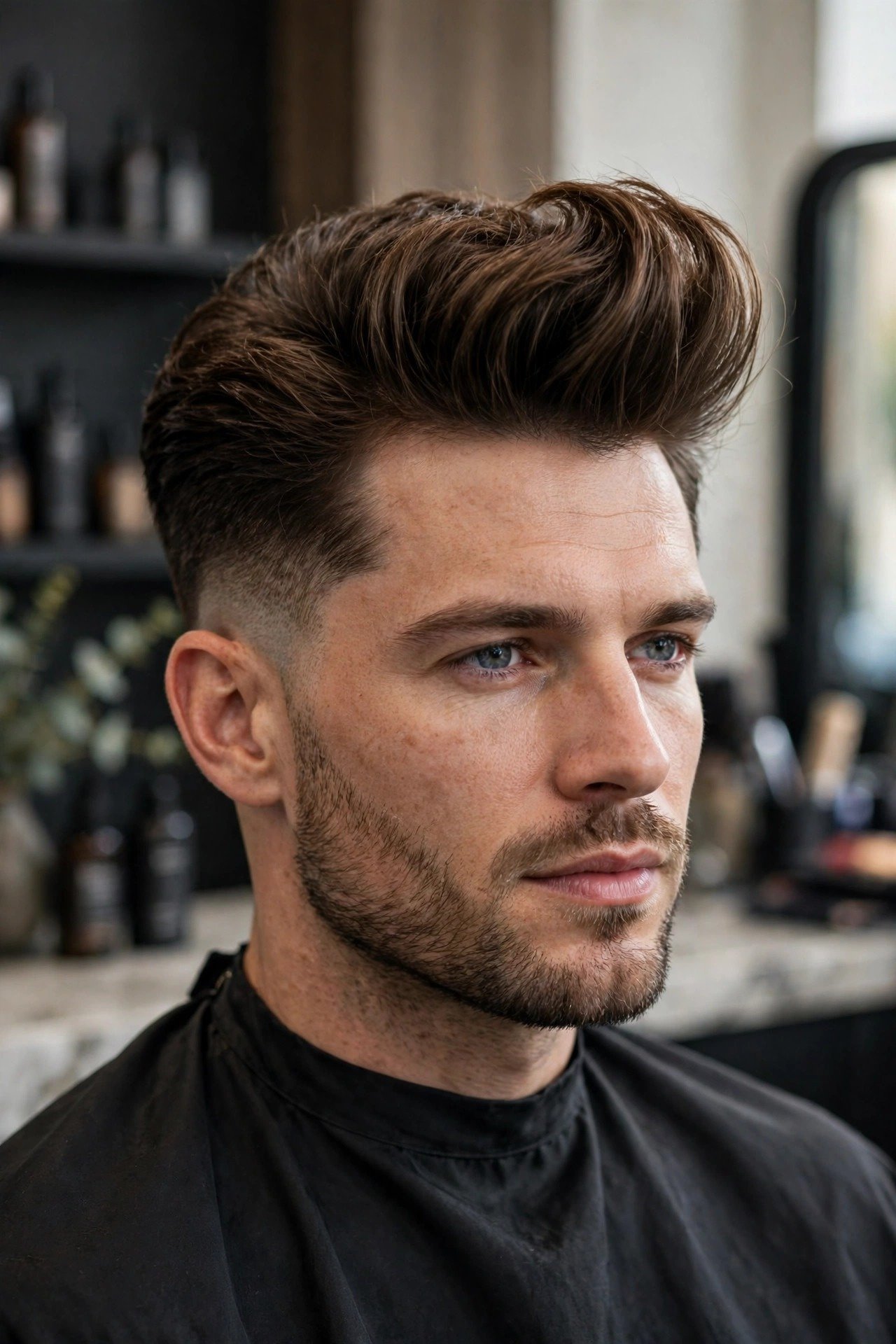
The quiffed pompadour blends two classics into one, with the front lifted into a loose quiff while the rest of the top sweeps back like a true pompadour. It suits men who love the pompadour’s height but want a softer, more casual front, and it flatters oval and round faces by adding height exactly where the face needs it. The blend works because the quiff gives the front a relaxed wave while the swept-back crown keeps the silhouette tall and polished. It is the pompadour for men who want the best of both worlds, and it works on straight, wavy, and thick hair alike. It also suits younger men, since the loose quiff front feels fresh and modern.
Stylist script: ask for the top left four inches long at the front and three inches at the crown, cut with scissors and point-cut for texture, and a mid fade on the sides blending from a number 2 guard down to a number 0. Have the barber leave extra length at the very front so it can lift into a quiff, and ask for the crown to be cut so it sweeps back smoothly. Keep the sides faded cleanly and the hairline natural, and have the barber check the front lift from the side profile.
Styling routine: wash, towel dry, then apply volumising mousse and blow dry the front upward with a round brush to form the quiff, then dry the crown backward. Work a small amount of matte clay through the top for texture and hold. Maintenance: every three weeks; the quiff front needs the length to stay lifted, so regular trims keep the shape. A little sea-salt spray on damp hair adds extra grip before the clay goes in. A quick finger-comb in the morning resets the quiff in seconds without flattening the tall front.
25. Pompadour with Fringe

The pompadour with a fringe softens the classic tall front by letting a few pieces fall forward at the forehead, which makes the cut feel younger and more relaxed. It suits men with a high forehead or a long face, since the fringe shortens the forehead visually, and it flatters oval and oblong faces best. The fringe works because it breaks up the tall sweep with a casual detail, so the pompadour reads less formal and more approachable. It is the pompadour for men who love the height but do not want the full exposed forehead of the classic. It also suits men with wavy hair, since the wave makes the fringe fall naturally without much styling.
Stylist script: ask for the top left four inches long, with the very front pieces left slightly longer so they can fall forward as a soft fringe, and a taper fade on the sides blending from a number 2 guard down to a number 1 guard. Have the barber cut the fringe with scissors, point-cutting the ends so it looks soft rather than blunt, and ask for the rest of the top to sweep back as usual. Keep the sides neat and the neckline clean, and have the barber check the fringe length from the front so it sits just above the eyebrows.
Styling routine: wash, towel dry, then blow dry the crown upward and back while drying the front pieces forward and down with your fingers. Work a small amount of matte clay through the top, keeping the fringe light and separate. Maintenance: every three weeks; the fringe grows fast and needs regular trimming to stay above the eyes. A quick comb-through in the morning resets the fringe in seconds. A leave-in conditioner on the front pieces stops the fringe from drying out or frizzing during the day.
26. Pompadour with Highlights

Highlights give the pompadour a sun-kissed dimension, with lighter strands woven through the tall top so the sweep catches the light from every angle. It suits men with dark or medium brown hair best, since the contrast shows clearly, and it flatters oval and square faces by adding depth to the tall shape. The highlights work because they break up the solid colour of the top, making the height look more textured and more expensive. It is the pompadour for summer, for holidays, and for men who want their classic cut to feel fresh. It also suits men with thick hair, since the density gives the colour plenty of strands to work with.
Stylist script: ask for the top left four inches long at the front, then ask for fine highlights through the top only, in a shade two levels lighter than your natural colour. Have the barber keep the sides short and natural, with a low fade blending from a number 2 guard down to a number 0, so the highlighted top stands out. Ask the colourist to place the lightest pieces at the front, where the sweep catches the most light, and to keep the colour soft rather than striped. A toner after colouring keeps the highlights from turning brassy.
Styling routine: wash with a colour-safe shampoo, towel dry, then blow dry the top upward and back and work a small amount of matte pomade through it. Use a purple-toning conditioner once a week if the highlights start to turn warm. Maintenance: every four to six weeks for the colour, every three weeks for the cut; the highlights grow out softly, so the upkeep is gentler than a full colour. A leave-in conditioner protects the highlighted hair from sun damage. Avoid hot water when washing, since it fades the highlights faster than lukewarm water does.
27. Silver Grey Pompadour
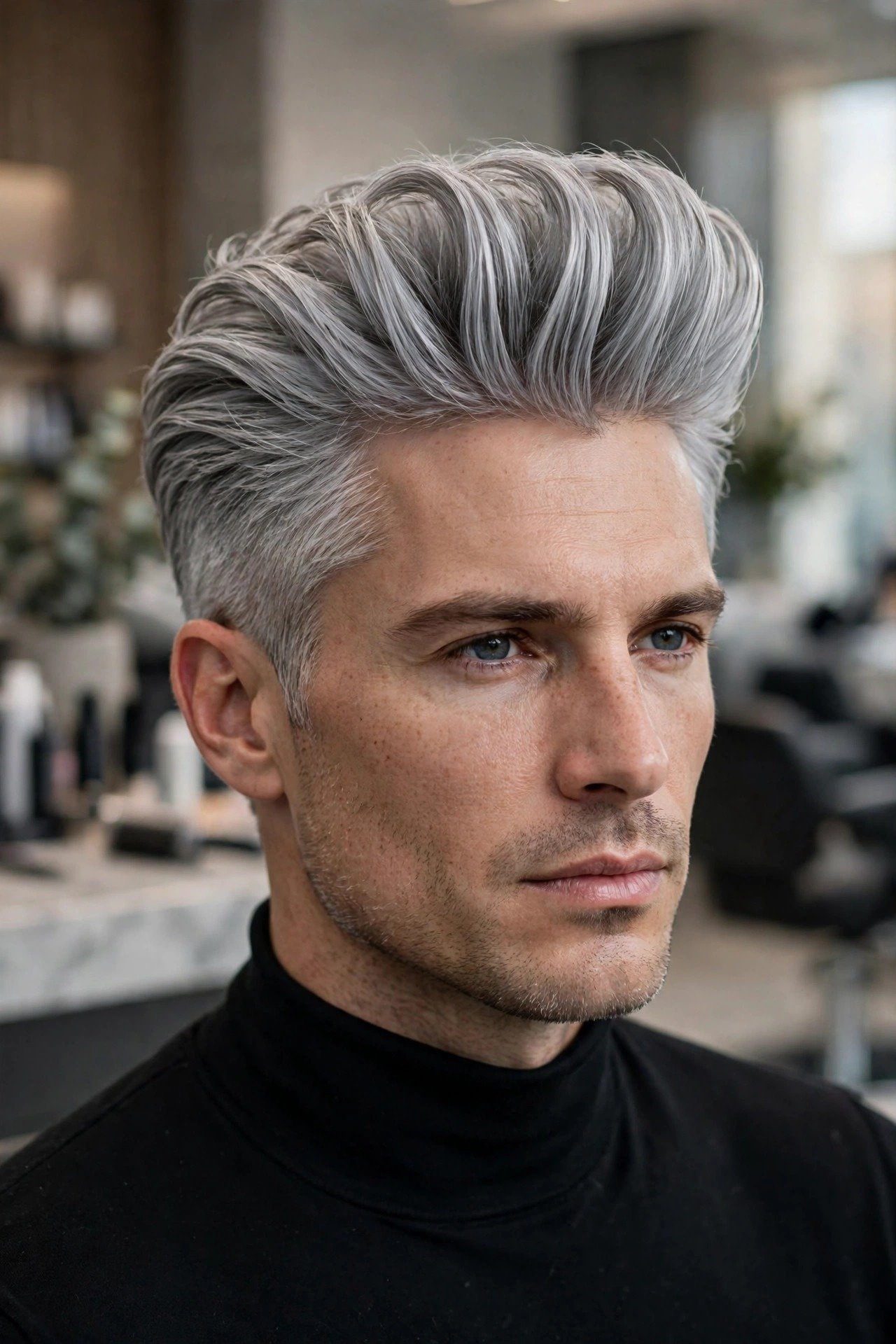
The silver grey pompadour turns natural grey into the star of the cut, with the tall sweep showing off the silver tones like polished metal. It suits men whose hair is going grey or is already fully silver, and it flatters oval and square faces by adding a distinguished, premium finish. The silver works because the light colour makes the tall shape look even more sculpted, with every strand visible against the darker sides. It is the pompadour for men who have earned their grey and want to wear it proudly, not hide it. It also suits men with thick grey hair, since the density holds the height and the silver shines beautifully in daylight.
Stylist script: ask for the top left four inches long at the front, cut with scissors for a smooth sweep, and a classic taper on the sides blending from a number 2 guard down to a number 1 guard. Have the barber keep the top even and the hairline natural, and ask for a silver toner if the grey looks yellow or dull. Keep the sides neat and the neckline clean, and have the barber check the sweep from the side so the silver height reads evenly from every angle.
Styling routine: wash with a silver or purple shampoo once or twice a week to keep the grey bright and free of yellow tones, and use a regular gentle shampoo on other days. Blow dry the top upward and back, then work a small amount of matte pomade through it for hold. Maintenance: every three to four weeks; the silver top holds its shape well, but the taper needs regular tidying. A leave-in conditioner keeps the silver hair soft and prevents it from looking wiry. A comb in your pocket lets you reset the sweep during the day without re-washing.
28. Pompadour for Mature Men

The mature pompadour is the distinguished version of the classic, with a slightly lower, smoother sweep and neat tapered sides that look elegant rather than rebellious. It suits men over fifty who want height and style without the drama of a rockabilly sweep, and it flatters oval and square faces by adding gentle length to the face. The cut works because the softer height looks intentional and refined, while the tidy sides keep the whole look smart. It is the pompadour for boardrooms, weddings, and men who want to look their best at any age. It also suits men with greying hair, since the smooth sweep shows off the silver beautifully.
Stylist script: ask for the top left three to four inches long at the front, cut with scissors for a smooth, controlled sweep, and a classic taper on the sides blending from a number 3 guard down to a number 1 guard. Have the barber keep the height moderate, about an inch above the forehead, so the look stays elegant rather than dramatic. Keep the hairline natural, the sideburns neat, and the neckline clean, and ask the barber to check the shape from the front so the sweep reads as polished, not overdone.
Styling routine: wash, towel dry, then apply a light volumising mousse and blow dry the top upward and back with a round brush. Work a small amount of light pomade through the top and comb it back smoothly. Maintenance: every three to four weeks; the moderate height holds its shape well, but the taper needs regular tidying. A daily scalp massage with your fingertips encourages healthy circulation and keeps the skin in good condition. A soft-bristle brush once a day keeps the tall top smooth and stops the sweep from looking flat by the evening.
29. Rockabilly Pompadour
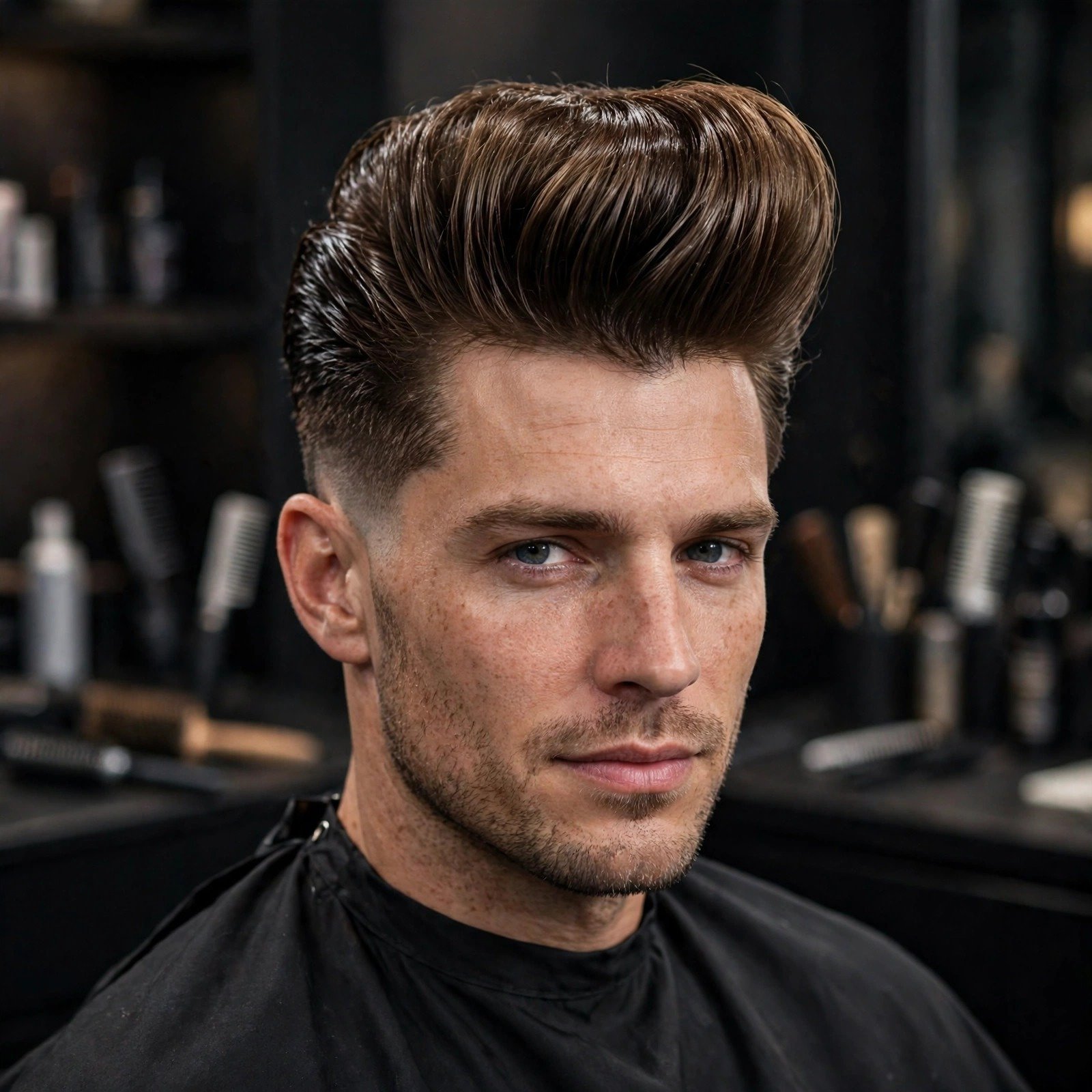
The rockabilly pompadour is the tallest, glossiest version of the classic, with the front swept up high and back in a dramatic roll, just like the 1950s greasers wore it. It suits men with thick, strong hair that can hold serious height, and it flatters oval and oblong faces by adding striking vertical drama. The look works because it is unapologetic: the tall, shiny sweep is the whole statement, and the short sides exist only to make it taller. It is the pompadour for concerts, classic car shows, and men who love vintage style. It also suits men with dark hair, since the glossy black sweep reads exactly like the original rockabilly icons.
Stylist script: ask for the top left five to six inches long at the front, cut with scissors in long layers, and short tapered sides clipped with a number 1 or number 2 guard, kept neat and close. Have the barber leave maximum weight at the front so the roll stands tall, and ask for the back to be tapered cleanly so the long top flows into it smoothly. Keep the hairline natural, and have the barber check the roll from the side profile, since the height must read evenly from every angle. A ducktail at the back is the authentic finishing touch if you want it.
Styling routine: wash, towel dry, then apply a strong-hold pomade and blow dry the front upward and back with a round brush, building the roll section by section. Comb it smooth, add a little more pomade at the front, and finish with strong-hold hairspray. Maintenance: every three weeks; the tall roll needs the sides kept short to hold its drama. A silk pillowcase reduces friction overnight, so the tall top stays smooth. A little extra pomade on the front pieces keeps the tall roll standing through a long evening.
30. Elvis Pompadour

The Elvis pompadour is the original icon, with the tall, glossy sweep, the curled front, and the sideburns that made Elvis Presley the most copied hairstyle in history. It suits men with thick, dark hair and a confident style, and it flatters oval and square faces by adding legendary height and drama. The look works because it is instantly recognisable: the tall front, the smooth sides, and the slight curl at the forehead are pure 1950s rock and roll. It is the pompadour for tribute nights, themed parties, and men who want the most famous haircut ever worn. It also suits men with a strong jawline, since the tall sweep balances the lower face perfectly.
Stylist script: ask for the top left five inches long at the front, with the front pieces left long enough to curl slightly forward at the forehead, and tapered sides blending from a number 2 guard down to a number 1 guard. Have the barber keep the sideburns long, down to the middle of the ear, as Elvis wore them, and ask for the top to be cut so it sweeps back in one smooth, glossy roll. Keep the hairline natural, and have the barber check the curl at the front from the side so it reads clearly.
Styling routine: wash, towel dry, then apply a generous amount of water-based pomade and blow dry the top upward and back, curling the very front pieces slightly forward with a round brush. Comb it smooth and finish with a strong-hold hairspray. Maintenance: every three weeks; the iconic shape needs regular trims to keep the front curl and the sideburns in place. A comb in your pocket lets you reset the sweep during the day. A boar-bristle brush once a week keeps the long top smooth and spreads the scalp’s natural oils through the hair.
31. Pompadour with Drop Fade

A drop fade gives the pompadour a curved, modern outline, with the fade dipping down behind the ear instead of running straight around the head. It suits men who want a fade with a little more shape and character, and it flatters oval and round faces by following the natural curve of the skull. The drop works because it keeps the fade tight at the back while leaving a little more length above the ear, which balances the tall top beautifully. It is the pompadour for men who like fades but want something less common than a straight mid fade. It also suits men with beards, since the dropping curve connects neatly into a groomed beard line.
Stylist script: ask for the top left four inches long at the front, then a drop fade on the sides that starts at the temple and curves down behind the ear before rising slightly at the back. Have the barber blend the fade from a number 2 guard down to a number 0, following the curve carefully so both sides match. Keep the top even and the neckline clean, and ask the barber to check the curve from behind with a hand mirror, since the back is where an uneven drop shows first.
Styling routine: wash, towel dry, and blow dry the top upward and back, then work a small amount of matte clay through it for hold. The drop fade needs no styling, just a quick check of the edges in the mirror. Maintenance: every two to three weeks; the curved fade grows out visibly, so regular tidying keeps the drop sharp. A trimmer around the ears between visits keeps the outline crisp without a full recut. A light moisturiser on the faded skin keeps it smooth rather than dry after washing.
32. Pompadour with Burst Fade
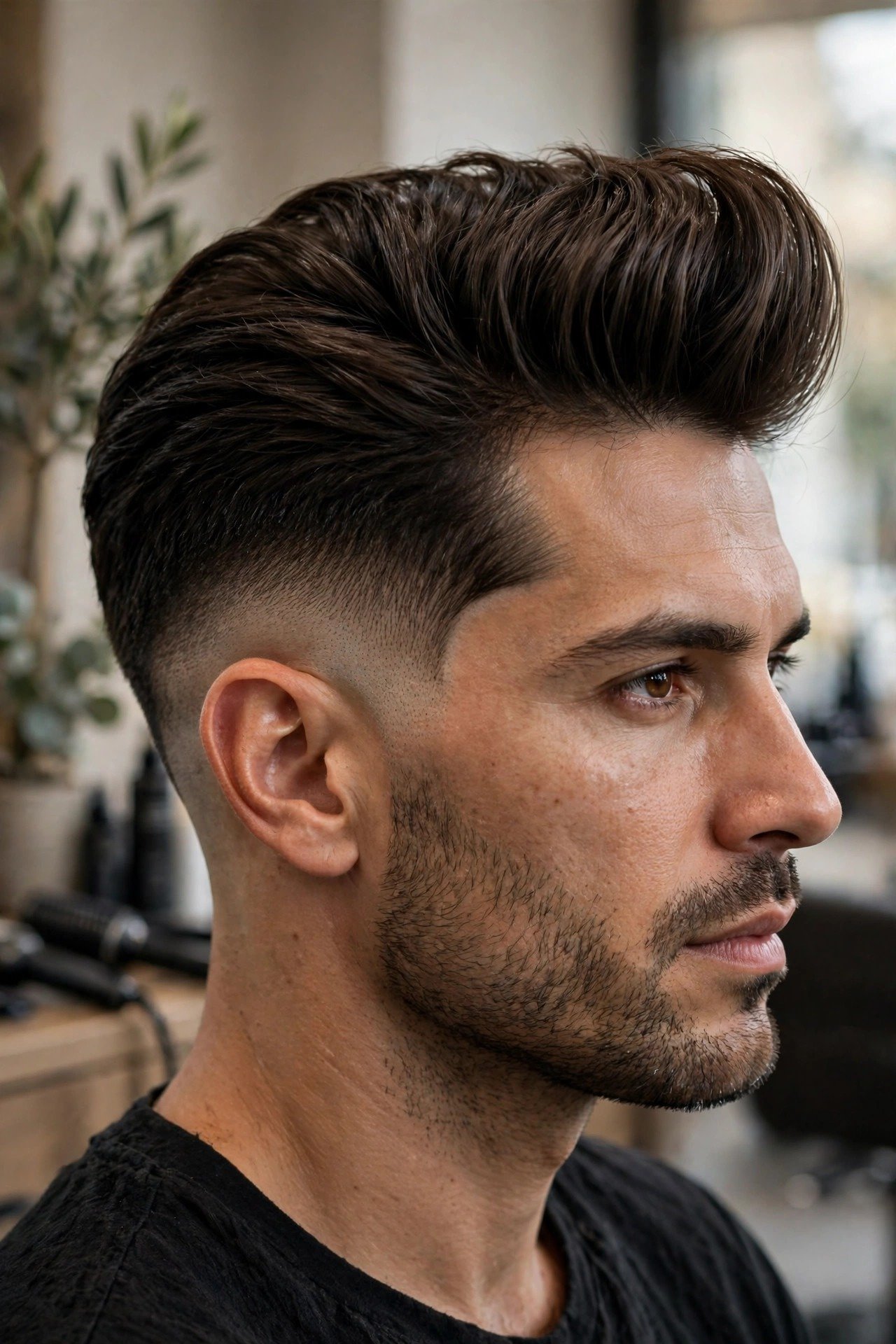
A burst fade gives the pompadour a rounded, sunburst outline around the ear, with the fade radiating outward while the back stays longer. It suits men who want a bold, modern fade that stands out from the usual straight lines, and it flatters oval and square faces by adding a circular frame around the ear. The burst works because it leaves length at the nape, which balances the tall top and gives the cut a softer back. It is the pompadour for men who like their fades with personality, and it pairs well with a textured top. It also suits men with thick hair, since the burst fade removes bulk around the ears without touching the tall top.
Stylist script: ask for the top left four inches long at the front, then a burst fade that curves around the ear in a semicircle, blending from a number 2 guard down to skin at the lowest point. Have the barber keep the back longer than a normal fade, tapering it gently, and ask for the burst curve to be smooth and even on both sides. Keep the top even and the hairline crisp, and have the barber check the burst from the side profile so the curve reads clearly.
Styling routine: wash, towel dry, and blow dry the top upward and back, then work a pea-sized amount of matte pomade through it for a textured finish. The burst fade needs no product, just clean edges and healthy skin. Maintenance: every two to three weeks; the burst curve grows out fast, so book the touch-up before it softens into a shadow. A foil shaver at home keeps the lowest part of the burst clean between visits. Exfoliate the faded skin once a week with a gentle scrub to prevent ingrown hairs.
33. Pompadour with Temple Fade
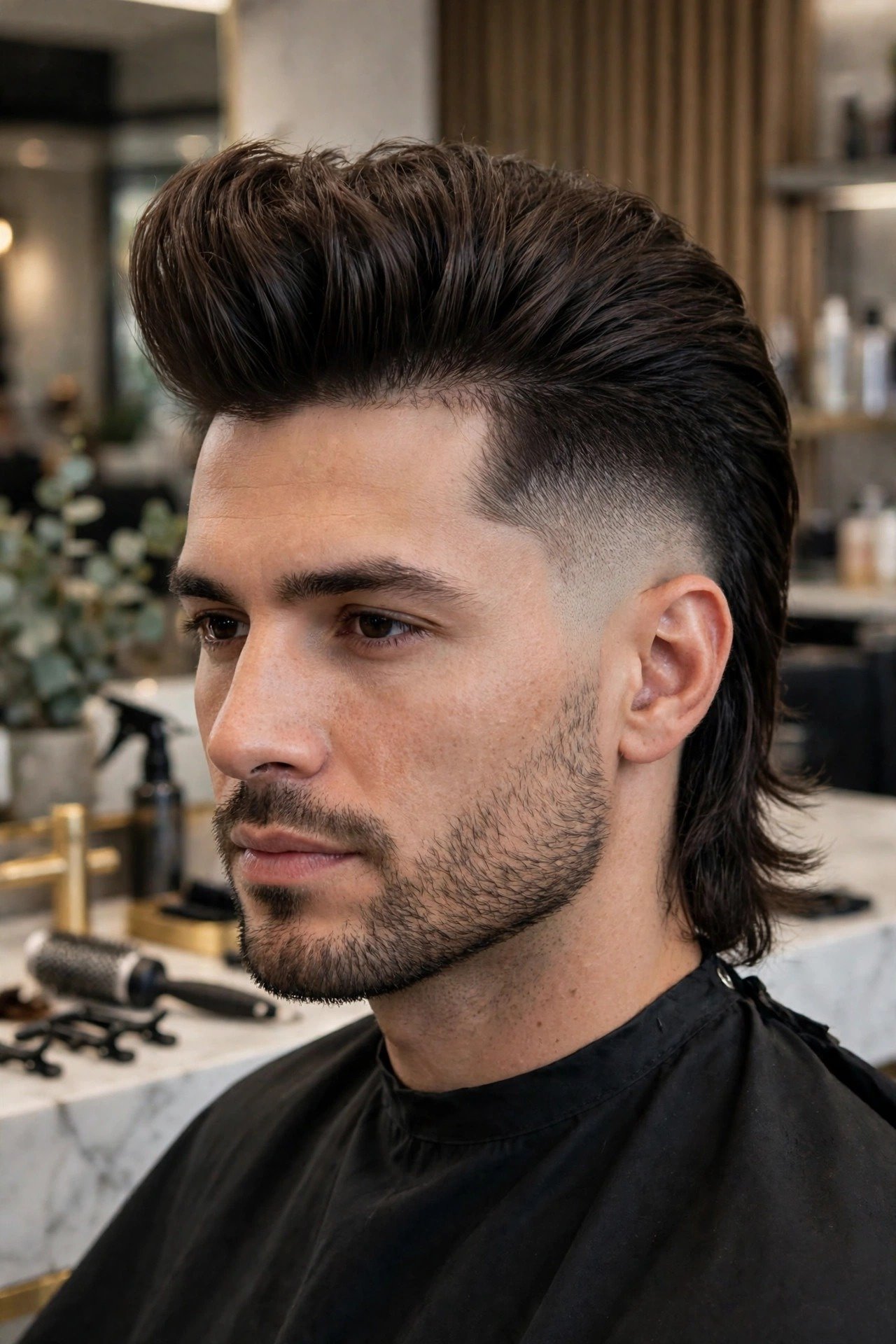
A temple fade, also called a Brooklyn fade, keeps the pompadour classic at the back while fading only the temples down to skin. It suits men who want a touch of fade without committing to a full faded side, and it flatters every face shape, especially square faces, because the faded temples sharpen the corners of the face. The temple fade works because it is subtle from the front and clean from the side, giving the tall top a sharp frame without removing much hair. It is the pompadour for men who want a modern detail on a classic cut, and it grows out more gracefully than any full fade. It also suits older men, since the subtle fade looks smart without ever trying too hard.
Stylist script: ask for the top left four inches long at the front, cut with scissors for a smooth sweep, and a temple fade that starts at the temples and blends down to skin, leaving the back and the rest of the sides tapered with a number 2 guard. Have the barber keep the fade tight and small, just around the temples, and blend it softly so there is no harsh line. Keep the top even, the hairline natural, and the neckline clean with a light taper.
Styling routine: wash, towel dry, and blow dry the top upward and back with a round brush, then work a pea-sized amount of pomade through it for a smooth finish. The temple fade needs no product, just a quick mirror check. Maintenance: every three weeks; the small fade grows out faster than the rest of the cut, so regular tidying keeps it sharp. A small trimmer at home keeps the temples neat between visits. A soft-bristle brush once a day keeps the tall top smooth and stops the sweep from looking flat by the evening.
34. Disconnected Pompadour
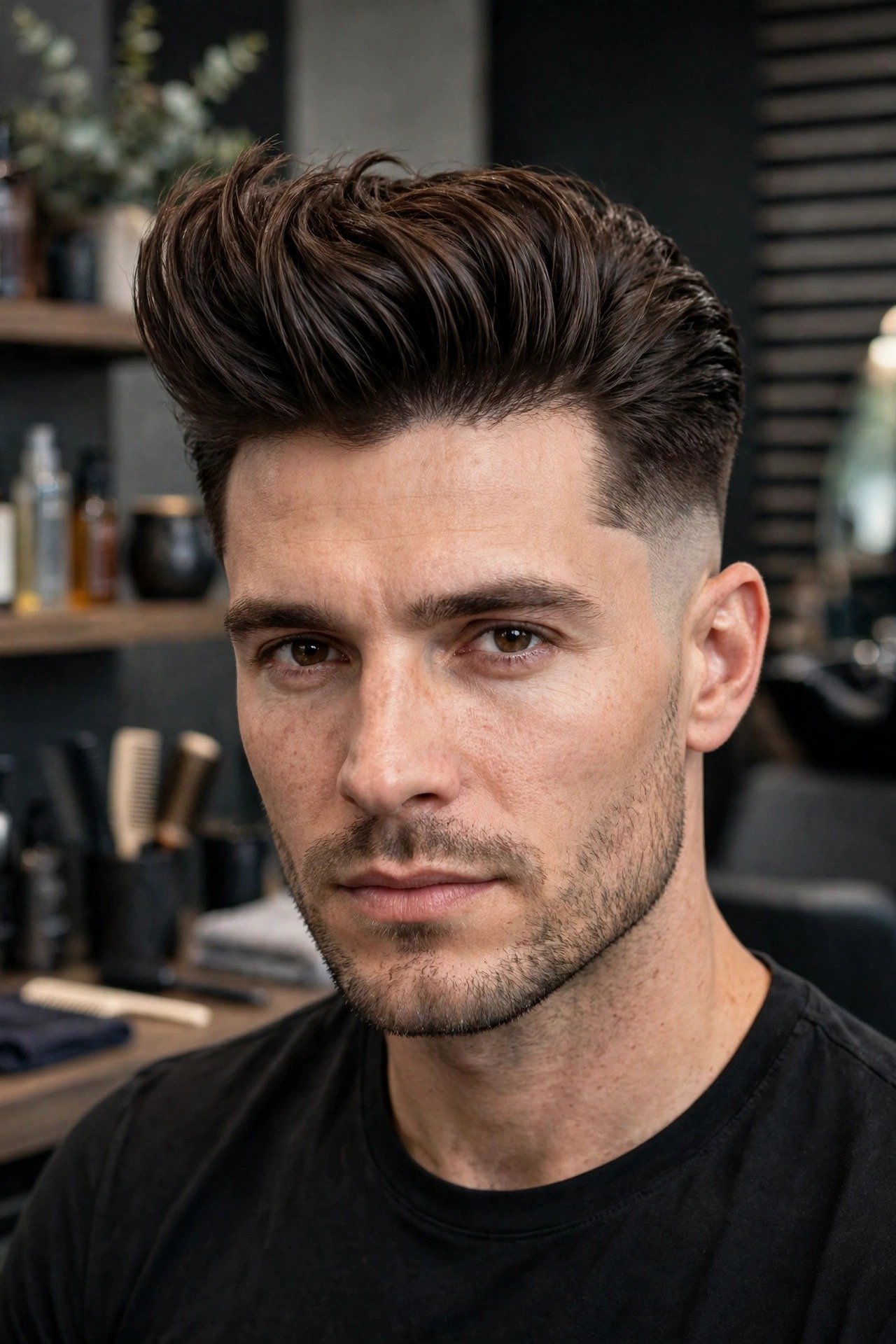
The disconnected pompadour is the sharpest, most fashion-forward version of the classic, with a hard line separating the tall top from the short sides and no blending at all. It suits confident men with thick hair and strong features, and it flatters oval and square faces by framing the tall top like a sculpture. The disconnect works because the clean step makes the height look even taller, and the sharp line gives the cut an editorial, runway feel. It is the pompadour for men who want a statement, not a subtle haircut, and it photographs strikingly. It also suits men with dark hair, since the contrast between the short sides and the tall top reads clearly from across a room.
Stylist script: ask for the top left four to five inches long at the front, then a disconnected cut on the sides clipped with a number 1 or number 2 guard, with a clean, level disconnect line and no blending into the top. Have the barber keep the line straight all the way around, and cut the top with scissors so it sweeps back in one smooth roll. Keep the hairline crisp, and ask the barber to check the disconnect from behind, since an uneven line shows immediately on a disconnected cut.
Styling routine: wash, towel dry, and blow dry the top upward and back with a round brush, then work a strong-hold pomade through it and comb it back smoothly. The disconnected sides need no product, just clean edges. Maintenance: every two to three weeks; the disconnect grows out visibly, so regular clipping keeps the step sharp. A trimmer at home keeps the sides neat between visits. A little extra pomade on the front pieces keeps the tall sweep standing through a long working day.
35. Pompadour with Line Up
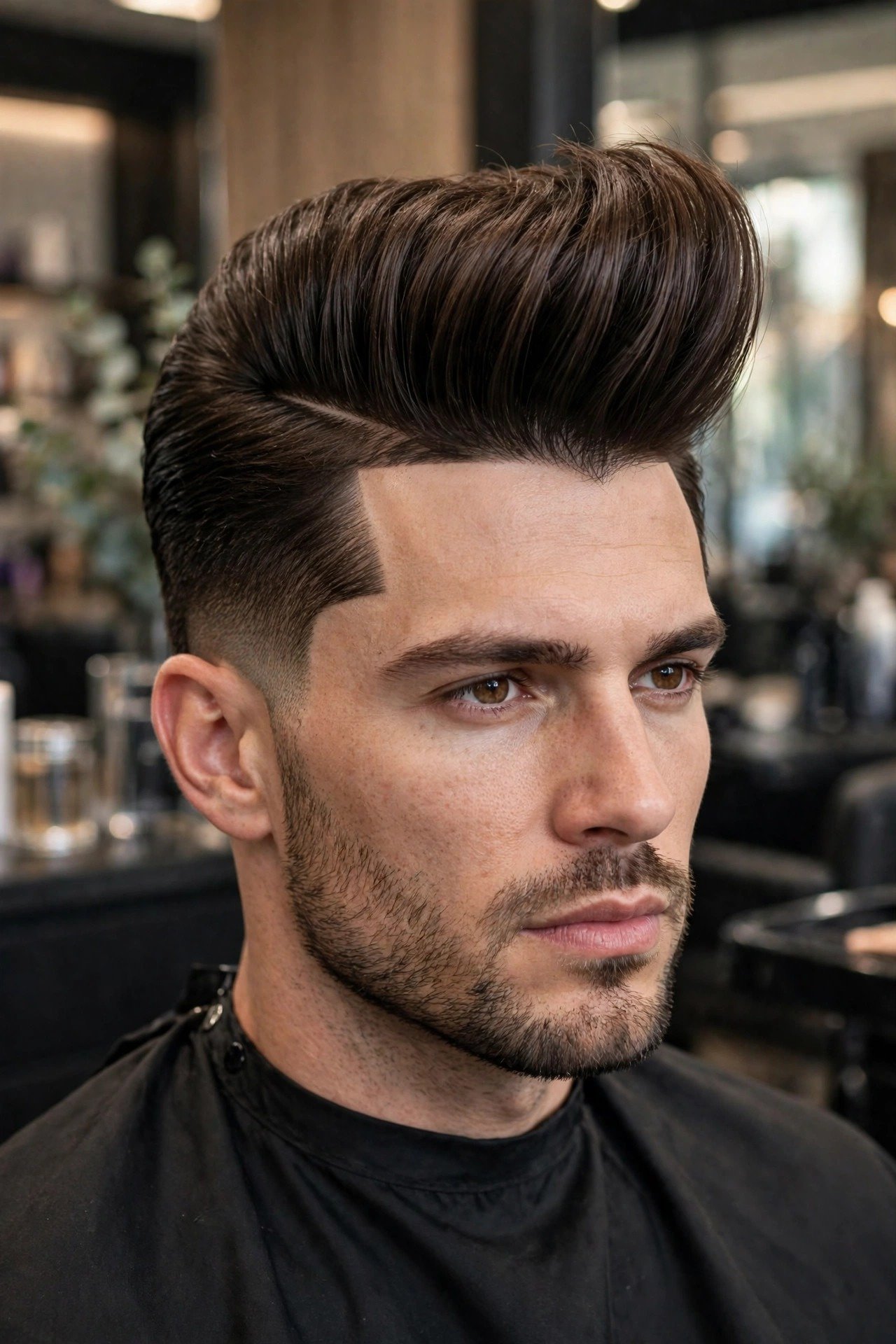
A sharp line-up gives the pompadour razor-clean geometry, with the hairline and forehead edges cut into straight, precise lines that frame the tall sweep like a picture. It suits men with straight, defined hairlines and strong features, and it flatters square and oval faces by adding clean, architectural angles. The look works because the crisp edges contrast beautifully with the smooth tall top, making the whole cut look deliberate and freshly done. It is the version to ask for when you want your pompadour to look like it was finished by an artist. Men with thick, dark hair get the sharpest result, since the dark hair makes the crisp lines stand out even more.
Stylist script: ask for the top left four inches long at the front, then a line-up with a trimmer along the forehead, temples, and sideburns. Have the barber cut the hairline straight across and square off the corners, keeping the lines symmetrical on both sides. Ask the barber to use a razor for the final pass so the edges are as sharp as possible, and to check the symmetry in a mirror before you leave. A light taper at the nape balances the sharp front, and the top should sweep back smoothly above the crisp line.
Styling routine: wash and towel dry, then apply a light moisturiser to the lined-up skin so the edges stay clean and free of irritation. Blow dry the top upward and back, then work a little matte clay through it and sweep it back. Maintenance: every one to two weeks; a line-up blurs within days as the hair grows, so this is the highest-maintenance edge in the guide. A trimmer at home keeps the lines sharp between barber visits if you have a steady hand. Avoid touching the lined edges with your hands during the day, since skin oils can blur the crisp lines quickly.
36. Wet Look Pompadour
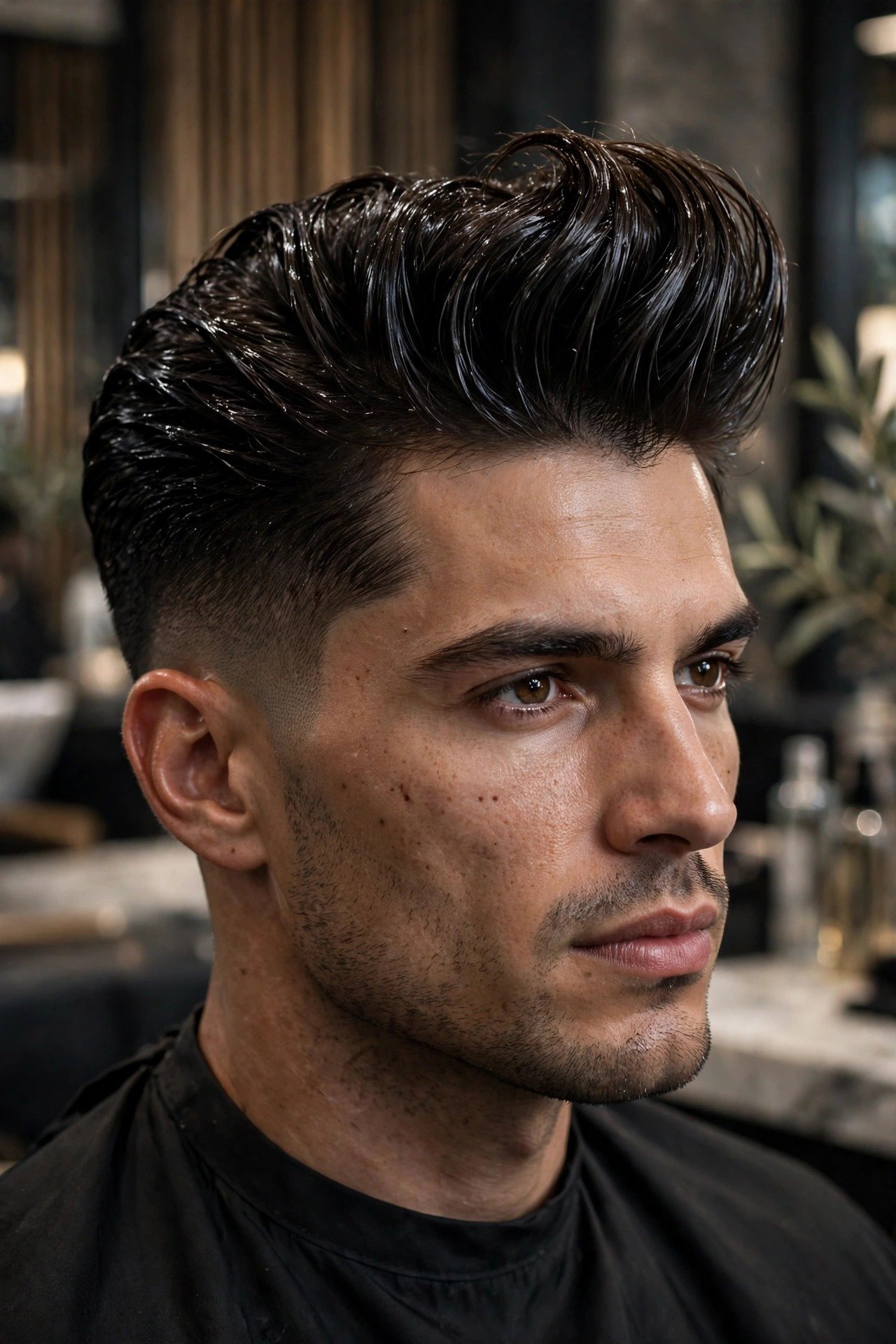
The wet look pompadour is the glossiest, most glamorous version of the classic, with the tall top finished with a high-shine product so it looks freshly washed and slick all day. It suits evening events, weddings, and photoshoots, and it flatters oval and square faces by creating one smooth, reflective surface from forehead to crown. The shine works because it makes the height look deliberate and luxurious, turning a tall sweep into a red-carpet statement. It is the pompadour for men who love the classic Hollywood finish and are happy to use a little more product. It also suits men with dark hair, since the shine reads deepest and richest on dark tones.
Stylist script: ask for the top left four to five inches long at the front, cut with scissors in even layers so it combs back smoothly, and a classic taper on the sides blending from a number 2 guard down to a number 1 guard. Have the barber keep the top long enough to sweep back without a part, and ask for the sides to be tapered neatly rather than faded to skin. Keep the hairline natural, and have the barber check the sweep from the side profile so the height reads evenly and the shine sits smoothly.
Styling routine: wash, towel dry until just damp, then apply a generous amount of high-shine pomade or gel and blow dry the top straight back with a comb, keeping it smooth and glossy. Finish with a shine spray and a light mist of hairspray to lock the wet finish. Maintenance: every three to four weeks; the wet look holds its line well, but the taper needs regular tidying. Wash the product out fully at night, since shine products build up fast and can make the scalp greasy. A clarifying shampoo once a week removes the buildup and keeps the tall top light and healthy.
How to Style and Maintain a Pompadour at Home
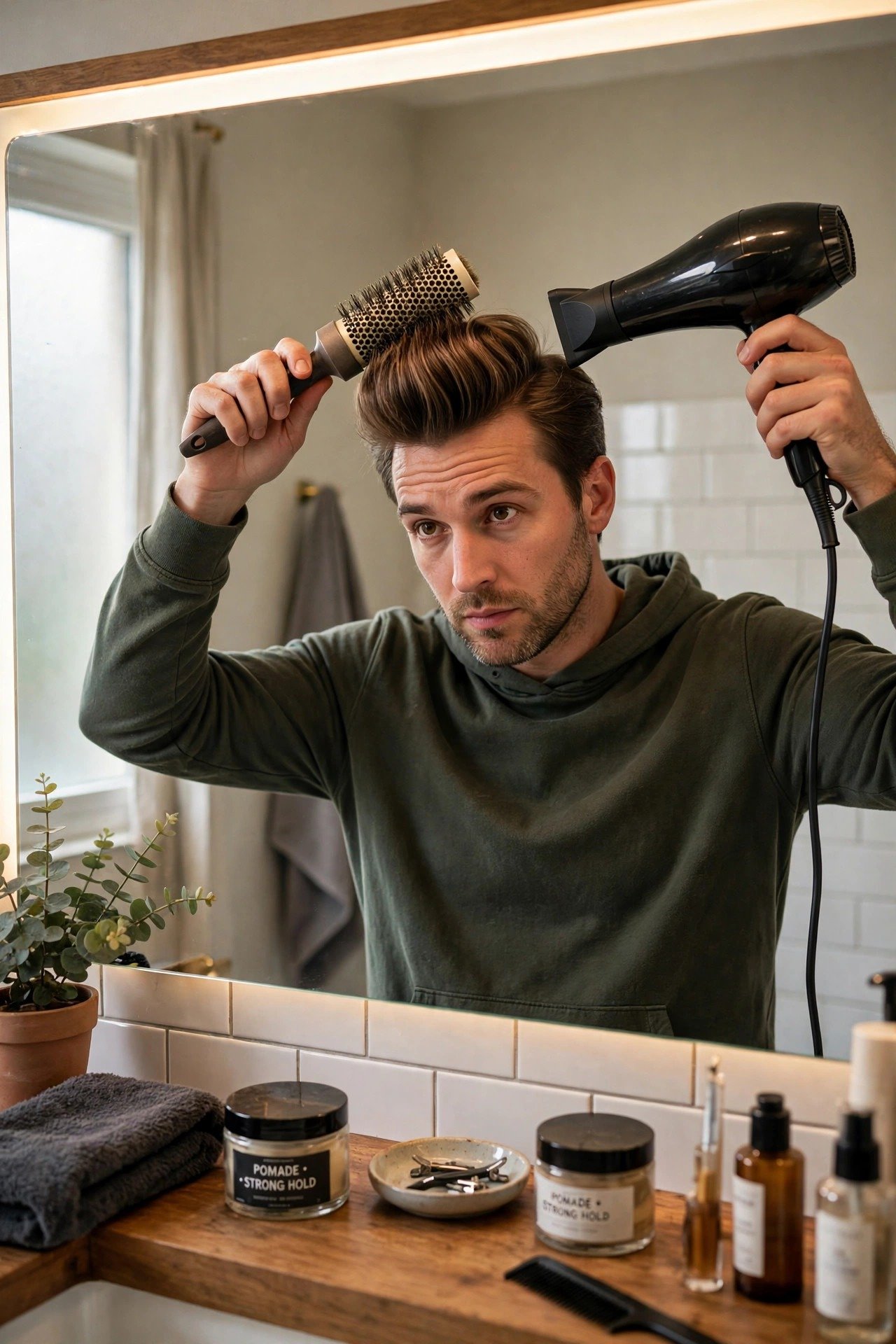
The daily styling routine for a pompadour takes about ten minutes, and it starts with damp hair. Wash with a gentle shampoo, towel dry until the hair is damp rather than wet, then work a small amount of heat protectant and volumising mousse through the top. Blow dry the front upward and backward with a round brush, lifting at the roots so the height sets as the hair dries, then finish the sides by drying them backward and flat. Once the shape is dry, work a fingertip of pomade or clay through the top, sweep it back with a comb, and lock it with a light mist of hairspray if you need it to survive a long day.
Choosing the right product matters more than using a lot of it. A water-based pomade gives the classic glossy, slicked finish and washes out easily, while a matte clay gives a modern textured pompadour with strong hold and no shine. For fine hair, a volumising powder or mousse at the roots adds lift before any pomade goes in, and for thick hair, a stronger-hold clay keeps the front from collapsing by lunchtime. Avoid heavy oils and shiny gels, which weigh the tall front down and make the pompadour look greasy. Start with less product than you think you need, since you can always add more, but you cannot take it out without washing.
Washing and scalp care keep the pompadour looking healthy between visits. Shampoo every two to three days, since daily washing strips the oils that keep longer hair and skin healthy, and rinse with water on the days in between. Use a conditioner on the top length only, never on the scalp, so the roots stay light and the height holds. Massage a light, non-greasy moisturiser into the scalp after washing, because the swept-back style exposes the hairline and a dry, flaky scalp shows immediately. Once a week, use a clarifying shampoo to remove pomade buildup, which is the most common reason a pompadour starts falling flat.
The last home-care rule is about the trim schedule. A pompadour needs refreshing every three to four weeks, since even a little growth on the sides softens the contrast that makes the tall top stand out. Faded and undercut versions need attention sooner, every two to three weeks, because the blend loses its sharpness fast. Book your next appointment before you leave the barbershop, and keep a small trimmer at home for the neckline and the edges around the ears between visits. Treat the pompadour like a tailored suit — light care, regular trims, and clean lines — and it will look as sharp on day twenty as it did on day one.
Frequently Asked Questions
How do I ask my barber for a pompadour?
Ask for the top left three to five inches long at the front, swept up and back, with the sides tapered, faded, or undercut to your taste. Bring a photo of the exact version you want, since the word pompadour covers everything from a short modern sweep to a tall rockabilly roll. Tell your barber how much height you want, which fade you prefer, and whether you want a matte or glossy finish. A good barber will check your hair thickness, your crown swirl, and your natural part before cutting, and will show you how to blow dry the front so you can repeat the style at home the next morning.
What is the difference between a pompadour and a quiff?
A pompadour sweeps the whole top up and back in one tall, continuous shape, while a quiff lifts only the front section and lets the rest fall more naturally. The pompadour is taller, smoother, and more sculpted, with the hair combed backward from the forehead to the crown, while the quiff is looser, shorter, and more casual at the front. A slick back is the other close cousin, but it lies flat against the head, while a pompadour deliberately builds height above the forehead. If you want maximum height and a polished finish, choose the pompadour; if you want a relaxed lift at the front only, choose the quiff.
Which face shape suits a pompadour best?
A pompadour suits almost every face shape, but it is especially powerful on round faces, where the tall front adds length and makes the face look leaner. Oval faces can wear any version, since their balanced proportions suit every height and fade, while square faces benefit from the smooth sweep softening a strong jaw. Oblong faces should keep the height moderate, since too much lift can make a long face look even longer, and men with a high forehead can soften it with a fringe version. The key is matching the height to your face: taller for round faces, moderate for long faces, and balanced for oval faces.
Can I get a pompadour with thin hair?
Yes, you can, but the technique matters more than the length. Keep the top at about three inches with plenty of texture, use a volumising mousse at the roots, and blow dry the front upward so the height comes from lift rather than weight. A matte clay or volumising powder adds grip without flattening the hair, and you should avoid heavy oils and shiny pomades, which make thin hair look greasy and flat. A textured or messy pompadour works best for thin hair, since the separated pieces create the illusion of density. Regular trims every two to three weeks keep the top looking full and even.
How long does my hair need to be for a pompadour?
You need at least three inches of hair on top at the front for a basic pompadour, and four to five inches for a classic or rockabilly version with real height. The sides can be any length, from a skin fade to a classic taper, since the pompadour is defined by the top. If your hair is currently short, expect three to four months of growing to reach three inches, and five to six months to reach five inches. During the growing phase, keep the sides tidy with regular trims while the top grows, and use a little matte clay to train the front upward so the hair learns to sweep back instead of falling forward.
What products do I need for a pompadour?
You need four products: a volumising mousse or sea-salt spray for lift, a pomade or matte clay for hold, a heat protectant for blow drying, and a light hairspray for long days. A water-based pomade gives the classic glossy finish and washes out easily, while a matte clay gives a modern textured finish with strong hold and no shine. Fine hair needs volumising powder at the roots, thick hair needs a stronger-hold clay, and curly hair needs a curl cream before the pomade. Start with a small amount of each product, since too much weighs the tall front down, and wash buildup out with a clarifying shampoo once a week.
How much maintenance does a pompadour need?
A pompadour needs more maintenance than a buzz cut or a crew cut, but less than most people expect. Plan on ten minutes of styling each morning with a blow dryer, a trim every three to four weeks, and a fade touch-up every two to three weeks if you have a skin fade or undercut. You will need to wash every two to three days, use conditioner on the top length, and remove pomade buildup with a clarifying shampoo once a week. The morning routine gets faster with practice, and most men find it takes five minutes once the hair is trained to sweep back. Book your next appointment before you leave the barbershop so the shape never grows out.
Which fade goes best with a pompadour?
The best fade depends on the look you want. A low fade is the safest and most classic choice, giving a tidy finish without drama, while a mid fade is the most versatile, balancing boldness and wearability for most men. A skin fade or high fade gives the boldest contrast and makes the tall top stand out, which suits confident dressers and younger men. A taper fade is the most professional option for offices and formal settings, while a drop fade or burst fade adds a modern curve for men who want something less common. If you are unsure, start with a low taper fade and go bolder next time.
Is a pompadour suitable for older men?
Yes, a pompadour is one of the best haircuts for mature men, because the height and the tidy sides look distinguished rather than dated. The mature pompadour keeps the sweep slightly lower and smoother, with a classic taper instead of a harsh skin fade, which reads elegant at any age. Silver and grey hair look superb in a pompadour, since the light colour shows off the tall shape beautifully, and a silver shampoo keeps the grey bright. The key is keeping the height moderate and the sides neat, so the cut looks intentional and refined. Many men over fifty wear a pompadour as their signature style for exactly that reason.
How long does it take to style a pompadour each morning?
A pompadour takes about ten minutes to style properly, including washing, blow drying, and applying product. The blow dry is the part that matters most: drying the front upward and backward with a round brush sets the height, and skipping it means the sweep will collapse by lunchtime. A short pompadour can be done in five minutes, while a long or rockabilly version may need fifteen minutes to build the roll section by section. With practice, the routine gets faster, and on days when you are in a rush, a little matte clay and a quick finger-dry will hold a casual version. Train the hair by blow drying it back every day for two weeks.
Conclusion
The pompadour is the rare haircut idea that improves everything it touches: the silhouette gets taller, the face gets longer, the styling gets more deliberate, and the look gets more confident, all from a single cut that keeps length where it counts and removes it where it does not. The 36 styles above cover every fade, every texture, every beard pairing, and every hair type, so the only real decision left is which version matches your face, your hair, and the amount of upkeep you want to do. Pick two or three favourites, screenshot them, and bring them to your barber.
Start with the modern pompadour if you are unsure: a modern pompadour with a low taper is the safest entry point, and you can go taller, bolder, or more faded next time once you know how the height feels on your head. Whatever you choose, keep the maintenance honest — a pompadour is a relationship with your barber and your blow dryer, not a twice-a-year event. Get both right, and the pompadour will do what the best haircuts always do: make you look like the most deliberate version of yourself, every single day of 2026. Your barber will thank you for arriving with a clear picture and a clear plan.