
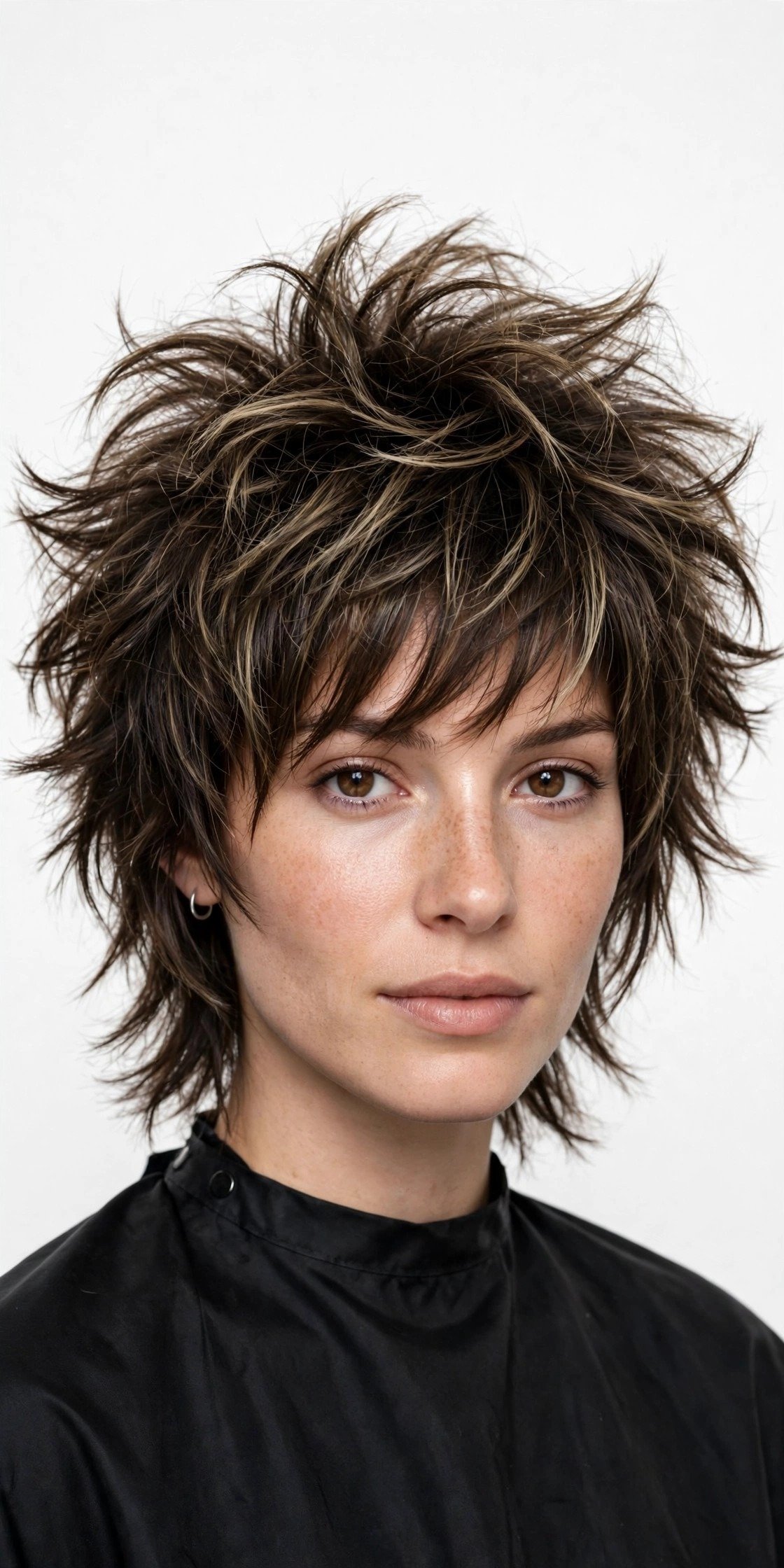
Wolf Cut Women 2026: 32 Wild, Layered Styles
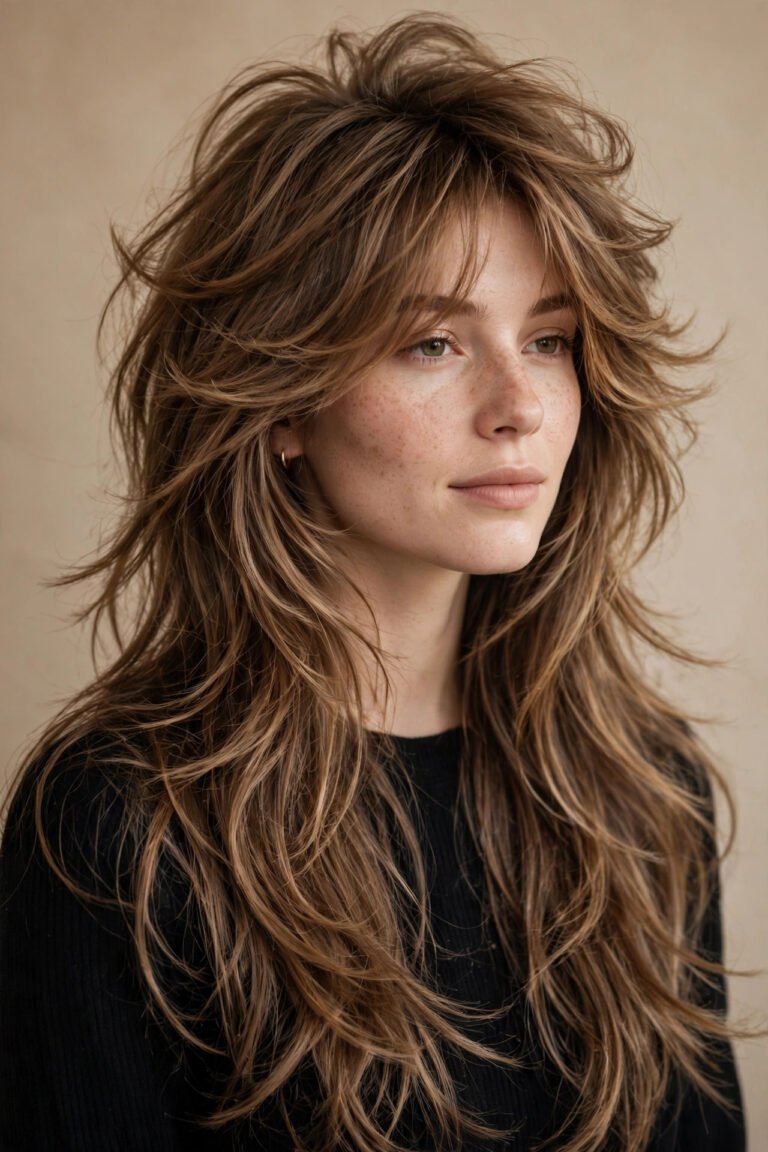
The wolf cut women are asking for in 2026 is the wildest, most liberating haircut of the year — a shaggy, choppy, layered cut with short, voluminous layers at the crown and long, wispy lengths falling past the shoulders, blending the best of the seventies shag and the modern mullet into one untamed shape. It is the cut that lets you keep your length while gaining all the texture and attitude of a short cut, and the one stylists now call the most searched haircut on the planet heading into 2026. In this guide you will find 32 wolf cut styles for 2026, each with a stylist-ready script, honest styling advice, and the maintenance truth nobody tells you at the salon.
Whether you wear pin-straight hair, soft waves, or natural curls, there is a wolf cut in this list built for you. We cover every length — short and bold, medium and shaggy, long and flowing — alongside every finish, from curtain bangs and feathered ends to pastel colour, two-tone dye, and voluminous blowouts. Every style below follows the same proven structure: who it suits, exactly what to tell your stylist (layer placement and lengths included), how to style it in under ten minutes, and how often you will need a trim. Let us find your version.
What Is a Wolf Cut
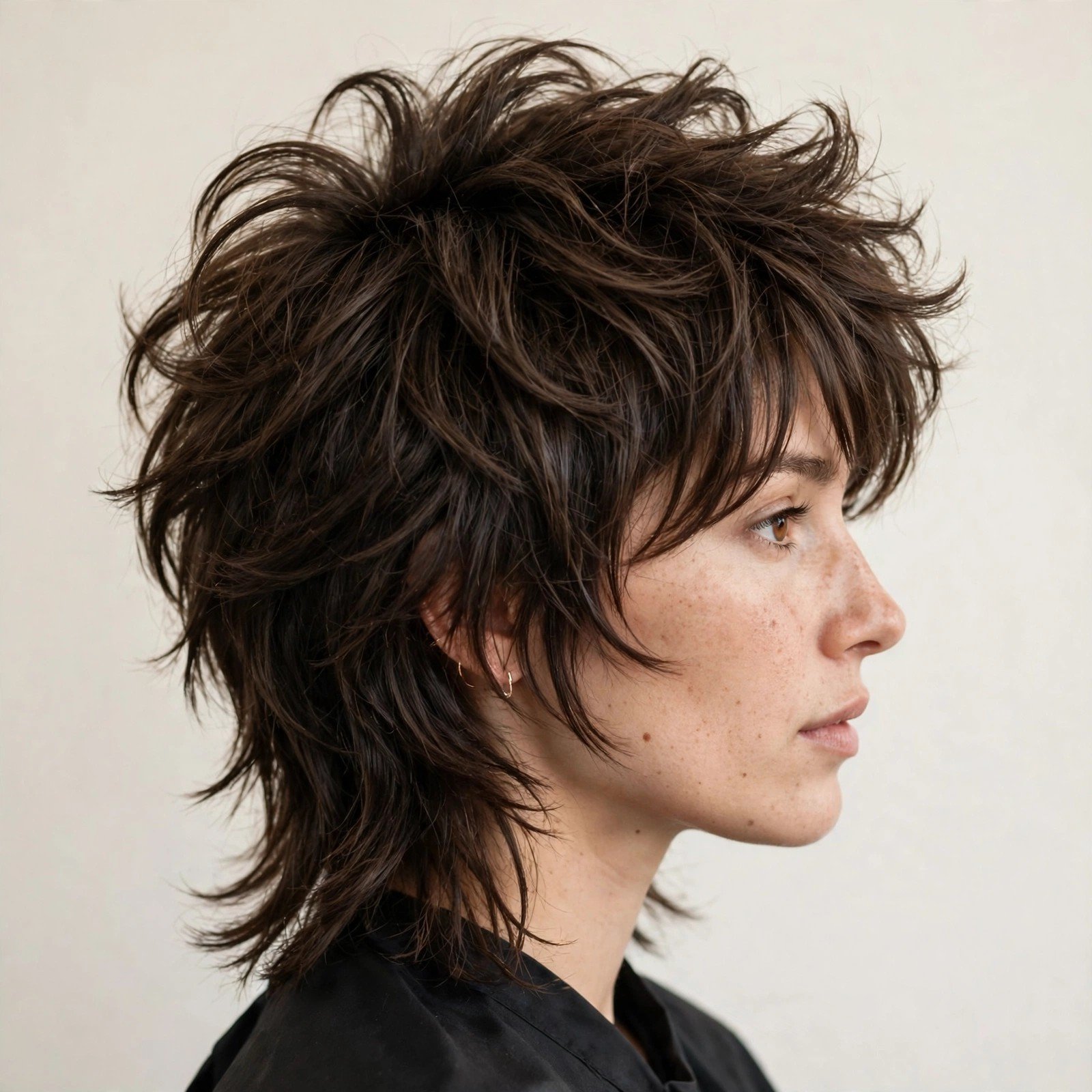
A wolf cut is a women’s haircut built around one wild idea: short, choppy layers on top with long lengths underneath, cut so the crown is full of volume and texture while the ends stay long, wispy, and free. The top layers are usually cut short — around the crown and cheekbones — and left deliberately disconnected from the longer back, which falls past the shoulders in tapered, feathered pieces. Unlike a butterfly cut, which blends two smooth lengths into a polished winged shape, the wolf cut keeps its edges choppy and piecey, with visible steps between the short crown and the long lengths. That contrast is the whole point: it looks untamed, lived-in, and full of movement.
The mechanics are simple once you see them. The stylist cuts the crown layers short and textured, often with a razor or point cutting, so the top of the head gains height and separation. The sides are layered to frame the face, usually starting at the cheekbones, and the back is left long, with the ends thinned and tapered so they flick outward instead of hanging heavy. The fringe — curtain, wispy, micro, or none at all — is chosen to match the face, and the part can sit in the middle or swept to one side. The perimeter is kept deliberately uneven, which is what gives the wolf cut its signature wild silhouette from every angle.
What makes the wolf cut so forgiving is that it is built around texture, not precision. The choppy layers remove the bulk that makes long hair lie flat, while the short crown adds lift exactly where most cuts go limp. Change the crown length and you change the entire haircut: a shorter crown reads bold and edgy, a longer crown reads soft and wearable, and a mullet-leaning back reads rebellious and dramatic. That is why this guide carries 32 versions of the same foundation. The wolf cut also photographs exceptionally well, since the piecey layers catch light differently from every angle, which is one reason it keeps going viral.
Why the Wolf Cut Is Dominating 2026
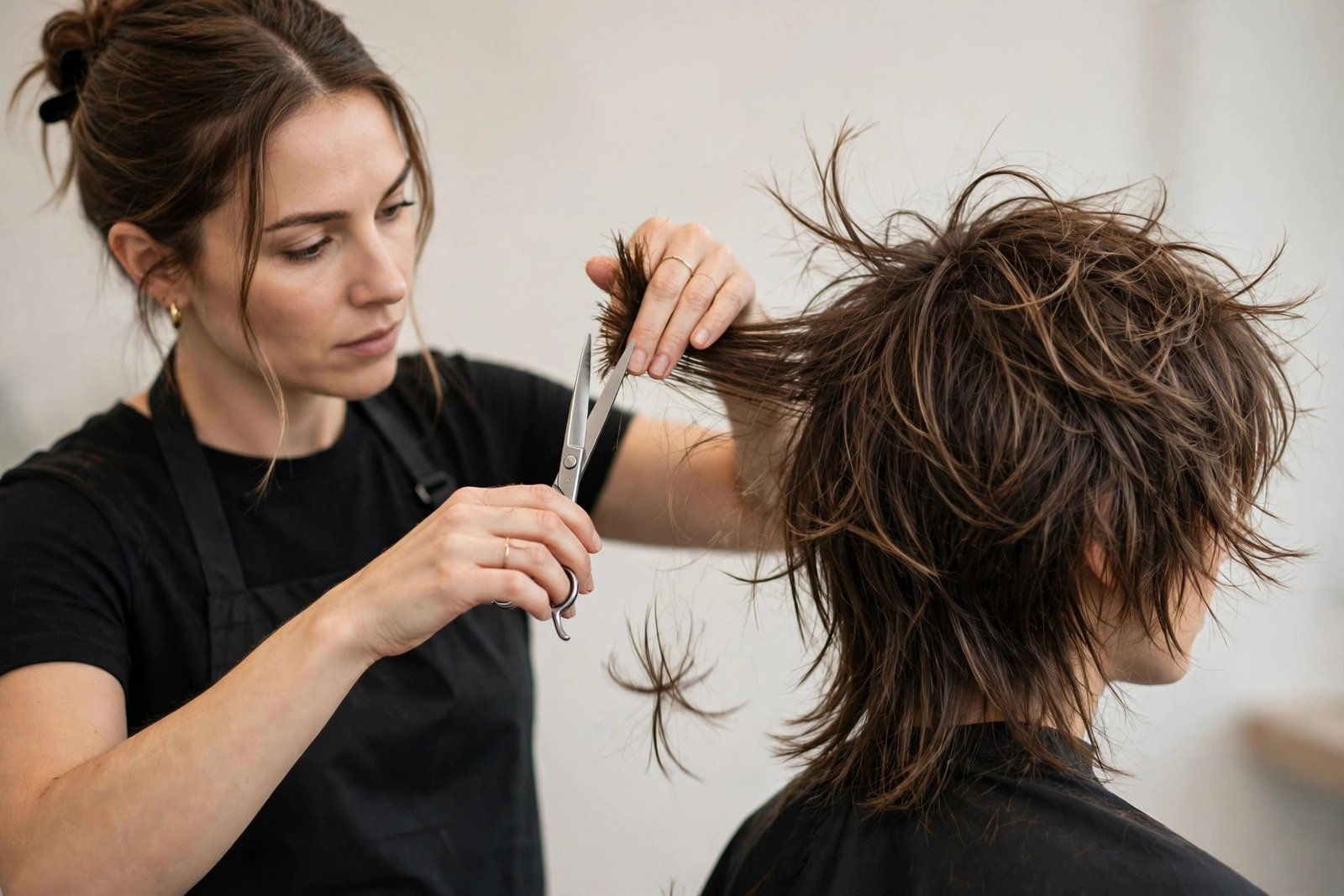
The wolf cut’s dominance in 2026 is no accident — the numbers behind it are extraordinary. The wolf cut now pulls about 2.24 million monthly Google searches worldwide, making it the most searched haircut on the planet heading into 2026, according to Grazia and Fresha reporting. No other cut comes close to that level of sustained global demand, and the search volume keeps climbing as more women discover the shape. The message is clear: women want texture, layers, and movement with an edge, and the wolf cut is the purest expression of that shift — a cut that looks deliberately wild, because it is.
The second force behind the surge is Pinterest, where the wolf family is exploding on both sides of the aisle. Pinterest’s 2026 Men’s Trend Report shows searches for “soft wolf cut men” up 1,154% and “modern wolf cut men” up 553%, proving the wolf shape has crossed from a niche trend into a mainstream movement — and the women’s side is riding the same wave. According to Chic Style Collective’s roundup of the 2026 hair trends, the year’s defining direction is shaggy, textured, layered shapes with effortless movement, while Perfect Corp’s 26 top hair trends for 2026 makes the same point from the styling side: choppy layers, natural texture, and personalisation rule the year. The wolf cut needs no heavy styling to look deliberate, and that is exactly what 2026 rewards.
The third reason is pure practicality. A wolf cut is one of the most forgiving cuts a woman can wear. It flatters round, square, oval, and heart-shaped faces because the shortest layer and the part can be adjusted to balance proportions. It handles straight, wavy, curly, thick, and fine hair alike, because the choppy structure works the same way whatever grows on top. It grows out gracefully, since shaggy layers always age better than a blunt line. And it scales from a five-minute air-dried morning to a voluminous blowout evening with nothing more than a product swap. When one cut serves that many needs, it stops being a trend and becomes the default.
1. The Classic Wolf Cut
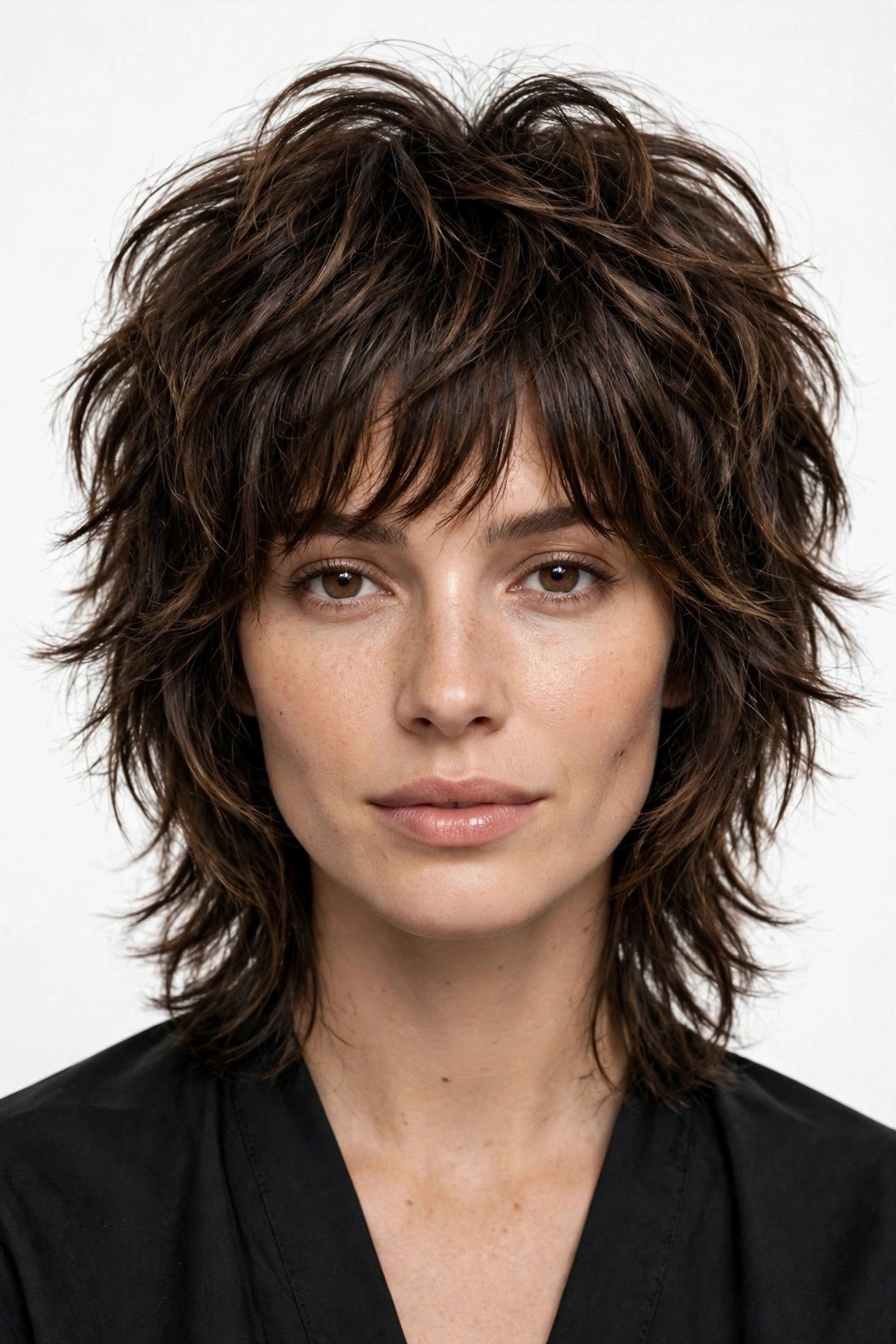
The classic wolf cut is the original wild child of the layered family, and it earns its reputation with pure attitude. Short, choppy layers pile up at the crown for height and separation, while long, tapered lengths fall past the shoulders in wispy, feathered pieces that flick and move with every step. It suits straight, wavy, and thick hair best, and flatters oval, heart, and long faces because the crown volume balances the face and the face-framing layers soften the jaw. It works beautifully for women who want a bold change without losing length, and it looks just as good air-dried as it does blow-dried.
Stylist script: Start with clean, damp hair parted in the middle and section the crown from ear to ear. Cut the crown layers short and disconnected, around two to three inches at the very top, then build the sides down through the cheekbones in choppy, point-cut steps. Keep the back length long, past the shoulders, thinning the ends with a razor so they taper to wispy points. Check the silhouette from the side to confirm the short crown and long back read as one wild shape. Dry with a diffuser, scrunching the crown upward, and finish by separating the ends with your fingers for piecey definition.
Styling routine: Apply a sea-salt spray or texturising spray to damp hair and scrunch the crown layers upward, then diffuse on low heat or let the hair air-dry. Once dry, pinch the ends with a tiny amount of pomade for separation and flick the face-framing pieces outward. A quick blast of dry shampoo at the roots restores lift on day two. Keep products light so the choppy layers do not collapse. Maintenance: every six to eight weeks; book a crown tidy and an end dusting to keep the contrast between short and long crisp.
2. Soft Wolf Cut
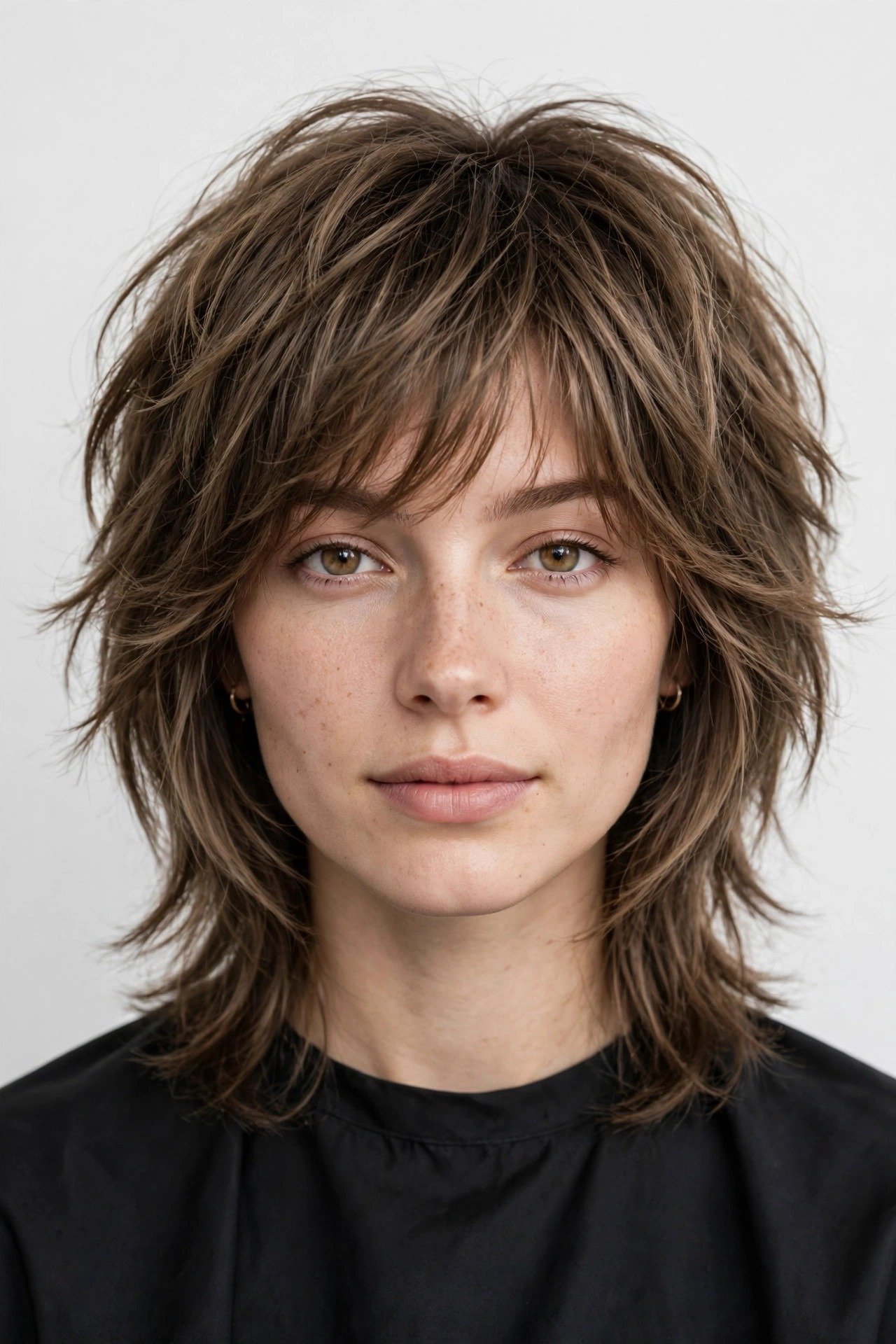
If the classic wolf cut feels too wild for your taste, the soft wolf cut keeps the shape but turns the volume down. The crown layers are longer and more blended, the steps between short and long are gentler, and the ends are feathered rather than razor-sharp, so the whole cut reads romantic instead of rebellious. It suits round, oval, and heart-shaped faces beautifully, and works on straight, wavy, and fine hair that needs movement without harsh lines. It is the perfect first wolf cut, giving you the texture and the trend with none of the shock, and it grows out more gracefully than any other version here.
Stylist script: Part the hair in the middle and cut the crown layers at four to five inches, longer than the classic version, blending each layer into the next with slide cutting rather than disconnected steps. Place the shortest face-framing layer at the cheekbones and build longer pieces through the jawline and shoulders. Keep the back long and full, removing weight only through the interior with long layers. Point-cut the ends lightly for softness and avoid razor work, which can make fine hair look thin. Dry with a round brush, lifting the crown and turning the front layers gently outward.
Styling routine: Apply a volumising mousse to damp roots and a light leave-in cream through the mid-lengths, then blow-dry with a medium round brush, lifting the crown and flicking the front layers outward. Finish with a flexible hairspray and a drop of shine serum on the ends only. The cut air-dries well too if you scrunch the crown while damp. Maintenance: every seven to nine weeks; soft layers blend as they grow, so trims focus on refreshing the crown and keeping the ends healthy.
3. Short Wolf Cut
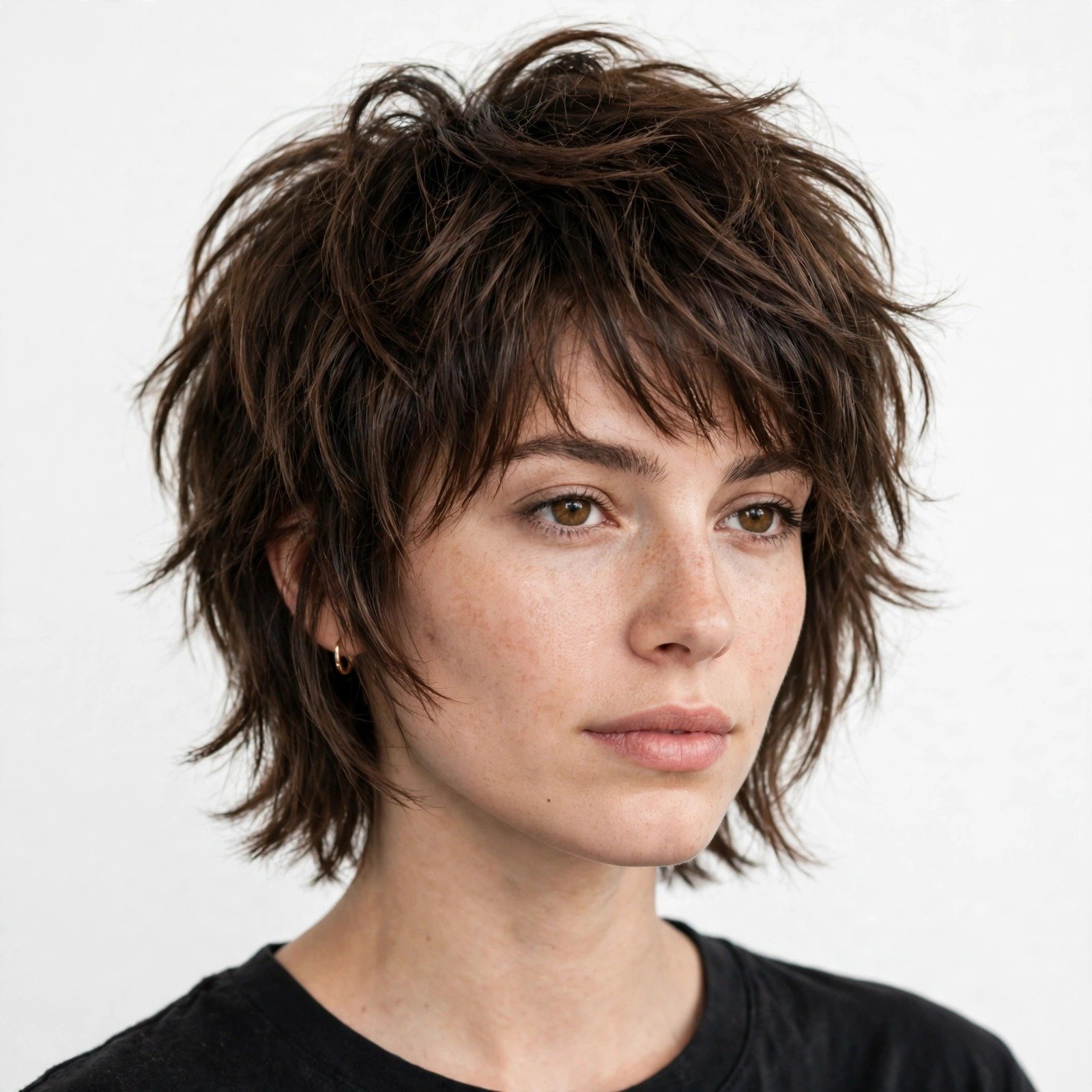
Short does not mean tame, and this chin-length wolf cut proves it with maximum attitude in minimum length. The crown layers sit high and choppy, the sides frame the face in piecey strands, and the back ends just at the jaw or collarbone with flicked, textured tips. It suits straight, wavy, and fine hair beautifully, and flatters oval, heart, and long faces because the cheekbone layers add width where the face needs balance. It is ideal if you want a low-maintenance cut that still looks styled, or if you are growing out a pixie and want wild movement. The shorter length makes the wolf shape read louder than any other version.
Stylist script: Cut the baseline at chin to collarbone length with a soft, textured perimeter rather than a blunt line. Place the crown layers very short, around two inches at the top, and connect them through the cheekbones so the front sweeps outward in piecey strands. Use point cutting and razor work on the ends to encourage flicked movement. Keep the back slightly fuller to balance the face. For a shorter voluminous alternative, read our Italian bob guide for comparison before your next appointment. Dry with a small round brush, turning the front layers outward and lifting the roots.
Styling routine: Apply a root-lifting mousse to damp hair and blow-dry with a small round brush, flicking the front layers outward and the crown upward. A flat iron can flip the ends in seconds if you want extra definition. For second-day hair, a spritz of dry shampoo at the roots restores lift instantly. Keep styling products light so short layers do not collapse. Maintenance: every five to six weeks; short wolf layers lose their wild shape quickly as they grow, so regular trims matter more at this length.
4. Long Wolf Cut
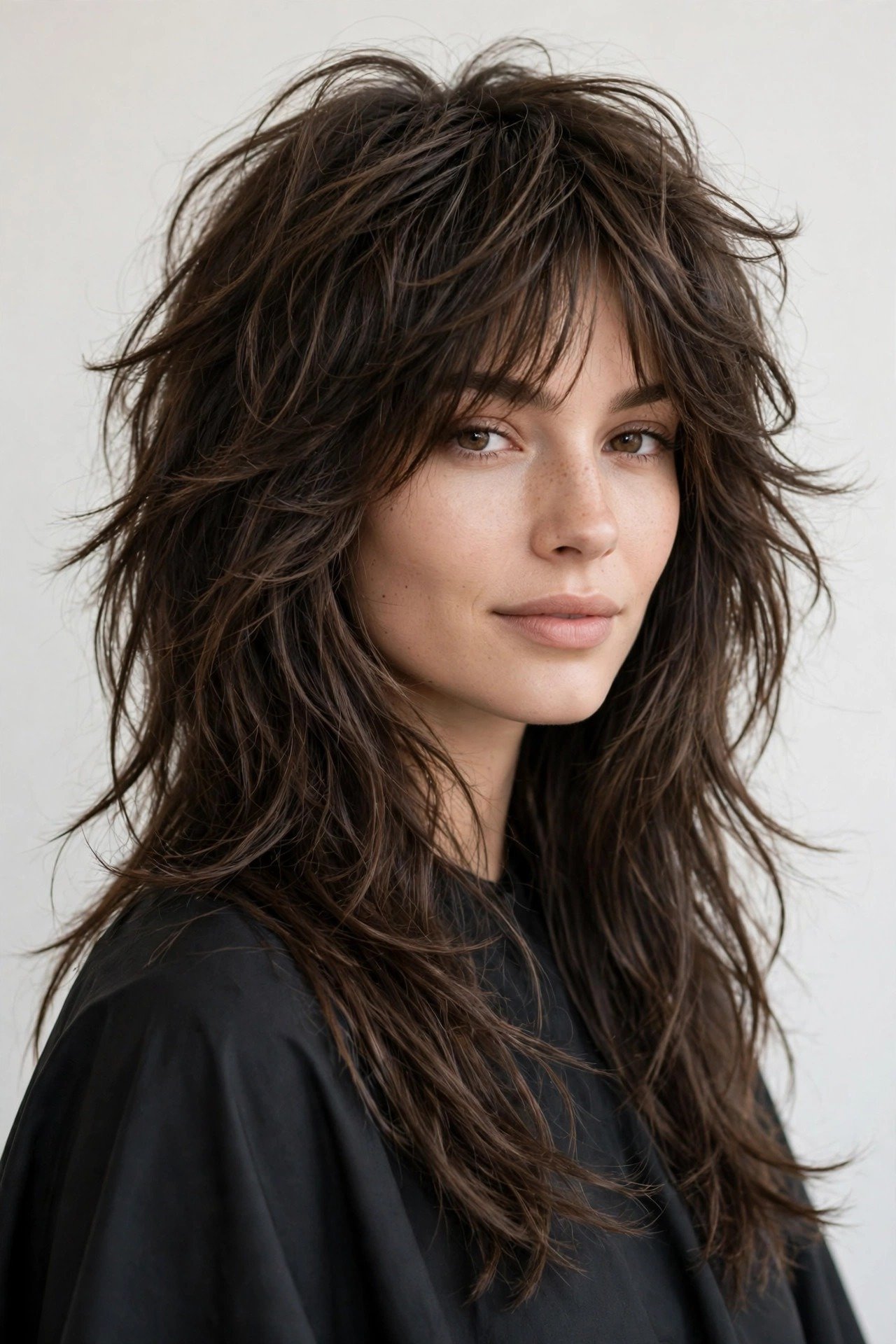
If you love long hair but hate how heavy and flat it can look, the long wolf cut is the answer. Choppy layers start high at the crown and cascade down past the shoulders, so the length stays dramatic while the top gains volume, air, and attitude. It suits straight, wavy, and thick hair especially well, and flatters oval, long, and heart-shaped faces because the shorter crown pieces break up the length around the face. The cut makes ponytails, braids, and half-up styles look fuller too, since the layers create natural texture. It is the most versatile wolf length, moving easily from wild everyday hair to a polished blowout.
Stylist script: Keep the overall length at mid-back or longer, working on dry or slightly damp hair so the true fall is visible. Cut the crown layers short and disconnected, then build descending face-framing pieces at the cheekbones, jawline, and collarbone so the front forms a shaggy cascade. Add long interior layers through the back, removing bulk without shortening the perimeter. Slide-cut the ends for a feathered finish and check the shape from behind to keep it even. For a smoother long-layered comparison, see our long layered bob guide before deciding how wild you want the crown. Blow-dry in sections, turning the front layers outward.
Styling routine: Apply a lightweight leave-in conditioner and a texturising spray to damp hair, then rough-dry until about eighty percent dry. Finish with a large round brush or a hot brush, rolling the crown upward and flicking the front layers outward. A large-barrel curling iron adds soft bends to the ends in under ten minutes. Use a weekly hydrating mask to keep long ends healthy. Maintenance: every eight to ten weeks; long wolf layers hold their shape well, so trims focus on split ends and refreshing the shortest crown pieces.
5. Wolf Cut with Curtain Bangs

This version pairs the wild wolf cut with curtain bangs that part in the middle and melt into the shaggy cheekbone layers. It suits women with oval, heart, and long faces who want forehead coverage without a heavy fringe, and works on straight, wavy, and fine to medium hair. The bangs shorten the look of a long forehead while the choppy crown keeps the attitude, and the longer lengths keep the look romantic and full. It is flattering if you like an effortless fringe that you can tuck behind the ears or sweep aside. The blend between bang and layer is what makes it feel modern rather than retro, and it photographs beautifully from every angle.
Stylist script: Part the hair down the middle and isolate a triangular bang section from the front hairline to the crown. Cut the curtain bangs longest at the outer edges and shortest near the centre, with the centre point sitting just below the eyebrows. Connect the bang corners directly into the cheekbone wolf layers so there is no visible step. Keep the crown short and choppy and the back long, with the shortest top layer starting at the chin. Dry the bangs forward over a round brush, then sweep each side outward and blend them into the shaggy front pieces.
Styling routine: Work a pea-sized amount of styling cream through the damp bangs, then blow-dry them forward with a small round brush, rolling each side away from the centre part. Dry the remaining layers with a large round brush for lift and outward flicks. A quick pass with a flat iron can smooth any kink at the parting. Finish with a light texturising spray for movement. Maintenance: every five to seven weeks; curtain bangs grow out fastest, so book a quick bang tidy between full cuts to hold the shape.
6. Wolf Cut with Wispy Bangs
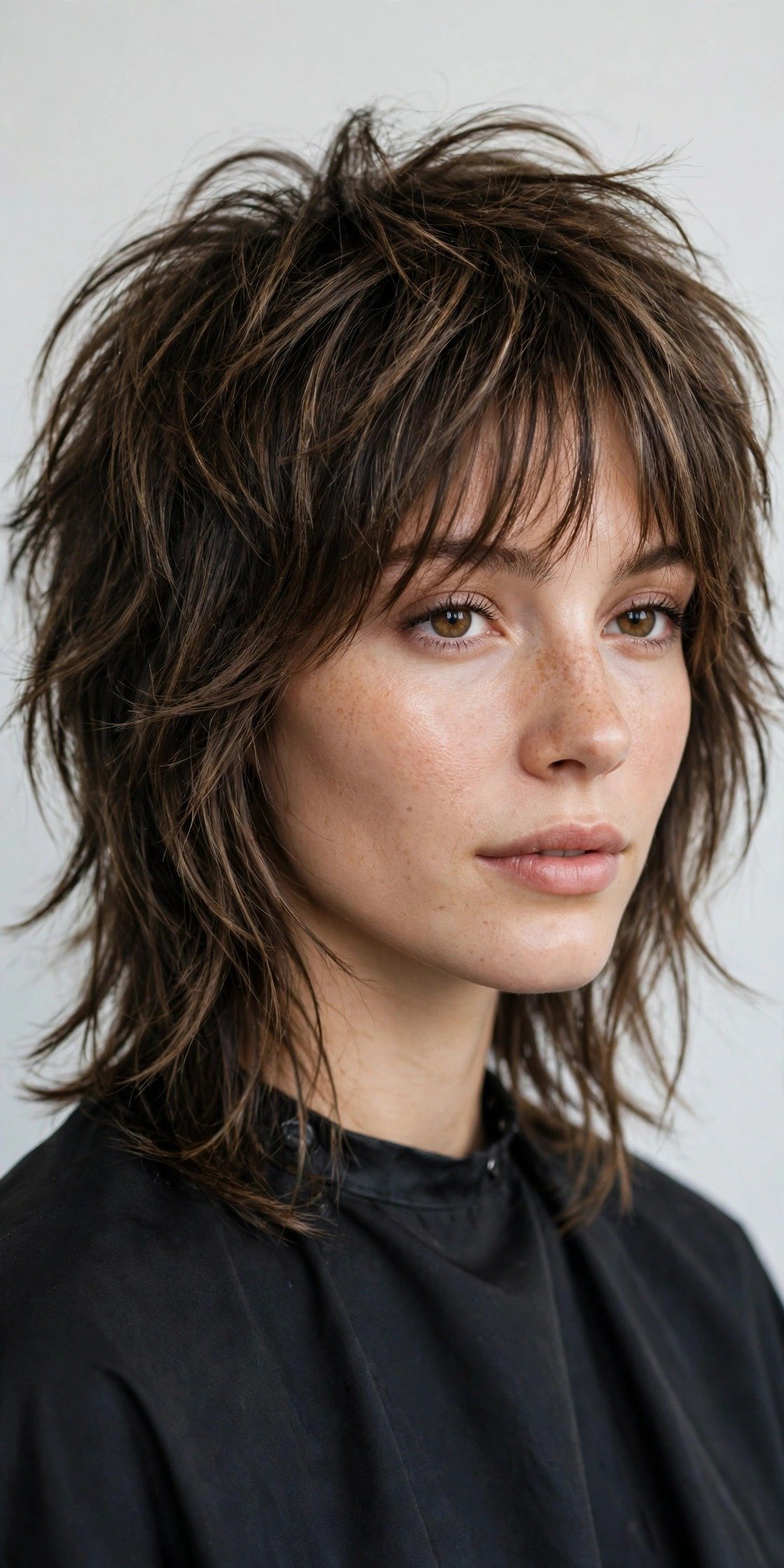
Wispy bangs soften the wolf cut with a light, airy fringe that never feels heavy or severe. The sheer bangs sit across the forehead and blend into the choppy crown layers, giving the face a gentle, youthful frame while the longer lengths keep the look wild and full. It suits oval, heart, and long faces especially well, and works on straight, wavy, and fine hair that can hold a delicate fringe. It is perfect if you want bangs without the commitment of a blunt cut, since wispy pieces grow out gracefully. The overall effect is soft, romantic, and effortlessly pretty, with just enough edge from the shaggy texture.
Stylist script: Cut the wolf layers first, with a short, choppy crown and longer lengths falling past the shoulders. Then create the wispy bangs by point-cutting a small front section into light, feathery pieces that end just above or at the eyebrows. Thin the bangs slightly at the ends so they stay sheer and blend into the cheekbone layers on each side. Avoid a straight heavy line. See our wispy bob guide for more wispy fringe inspiration before your appointment. Blow-dry the bangs forward with a small round brush, then sweep them gently to each side.
Styling routine: Apply a tiny amount of styling cream to the damp bangs and blow-dry them forward with a small round brush or your fingers, then part them softly in the middle. Dry the wolf layers with a large round brush for lift and outward movement. Use dry shampoo on the fringe between washes to stop it going flat. A light hairspray holds the shape. Maintenance: every five to seven weeks; wispy bangs need frequent tiny trims, so ask for a quick fringe tidy between full haircuts.
7. Wolf Cut with Micro Bangs
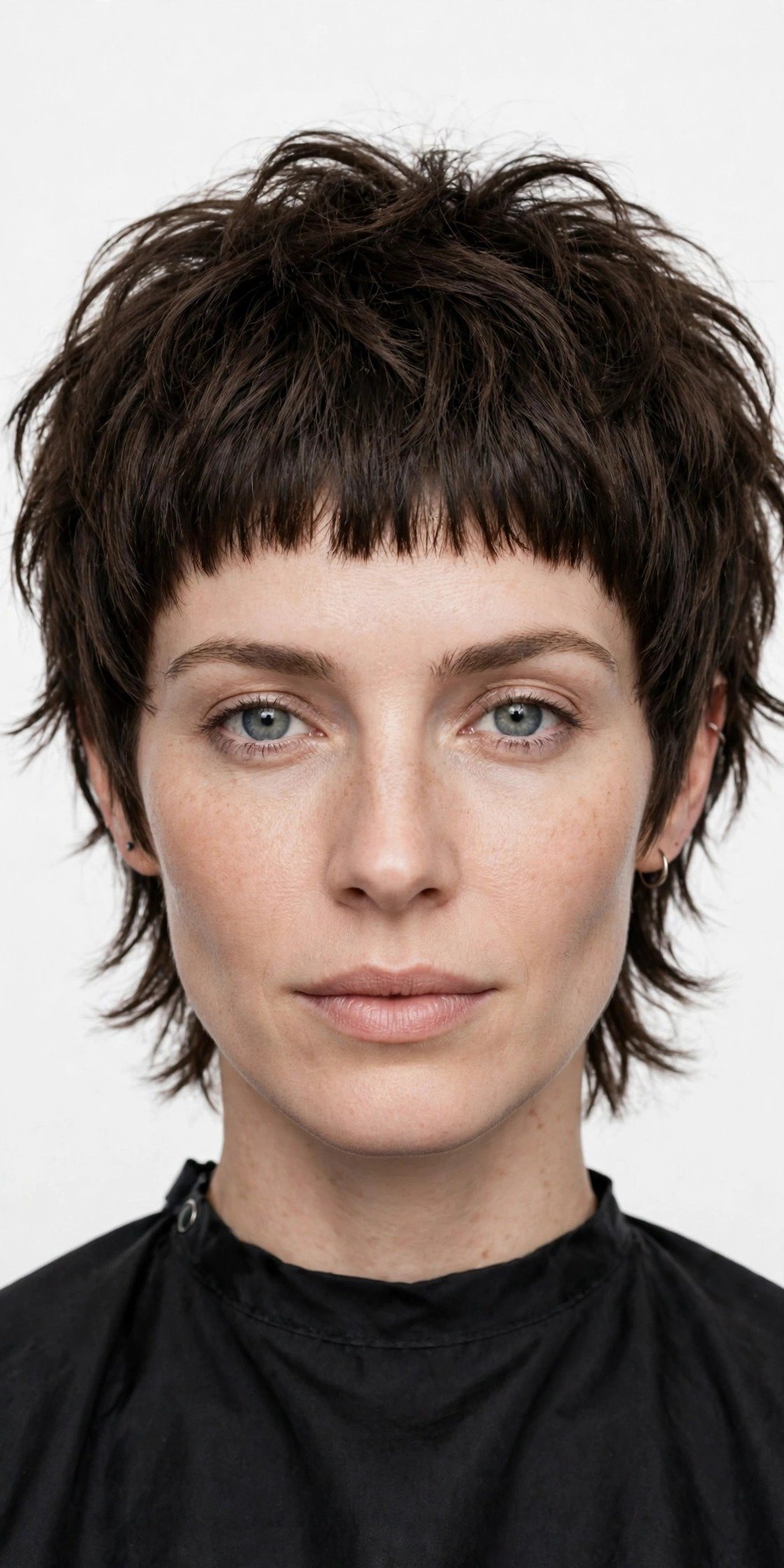
Micro bangs turn the wolf cut into a full editorial statement, with a short, bold fringe sitting high above the eyebrows against a wild, shaggy crown. The contrast is dramatic: the tiny fringe opens the whole face and shows off the cheekbones, while the choppy layers and long lengths keep the energy untamed. It suits oval and heart-shaped faces best, and works on straight and wavy hair that can hold a precise fringe line. It is the boldest bang choice in this guide, made for women who love fashion-forward hair and do not mind standing out. Paired with the wolf shape, it reads confident, artistic, and unforgettable.
Stylist script: Cut the wolf shape first, with a short textured crown and long tapered lengths. Then isolate a narrow front section and cut the micro bangs straight across, about an inch above the eyebrows, keeping the line slightly choppy with point cutting so it does not look severe. Blend the outer corners of the fringe into the cheekbone layers with short, wispy connectors. Keep the crown layers disconnected and piecey to match the fringe’s boldness. Dry the bangs forward with a small round brush, then style the crown upward for height.
Styling routine: Apply a pea-sized amount of pomade to the damp fringe and blow-dry it forward with your fingers or a small round brush, keeping it straight and neat. Style the wolf layers with texturising spray, scrunching the crown upward and flicking the ends outward. A flat iron can sharpen the fringe line in seconds. Finish with a light hairspray. Maintenance: every four to six weeks; micro bangs grow out faster than any other fringe, so book frequent tiny trims to keep the line bold and intentional.
8. Wolf Cut with Shag Layers
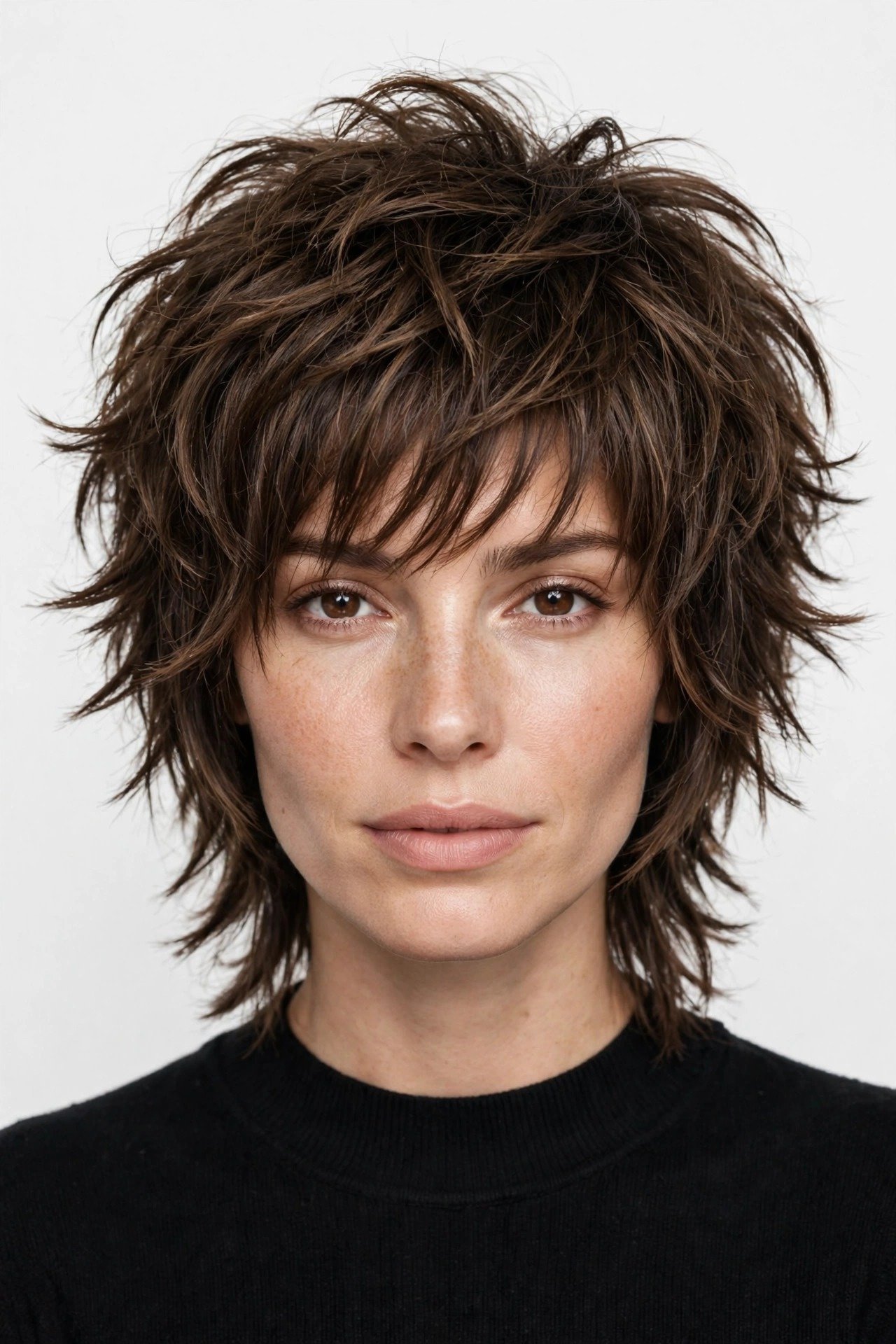
Shag layers double down on everything the wolf cut already does, with extra choppy texture and piecey movement throughout. The crown gets even shorter and more disconnected, the sides gain more steps, and the ends turn feathered and flicked, so the whole head reads wild from every angle. It suits wavy, curly, and thick hair best, and flatters oval, heart, and round faces because the texture breaks up the face shape. It is perfect if you like a lived-in, rock-and-roll look with plenty of personality. This is the most untamed version in the guide, and it styles itself more than you would expect.
Stylist script: Cut the wolf base with the crown layers very short, then add shorter, choppier shag layers through the crown and sides for extra texture. Use point cutting and slide cutting to create piecey, disconnected ends rather than smooth blends. Keep the perimeter textured and slightly uneven for a lived-in edge. Remove bulk carefully through the interior so the shag does not puff out or lose its shape. Dry the hair naturally or diffuse gently, scrunching the layers to encourage the piecey, tousled texture that defines this version.
Styling routine: Apply a texturising spray or sea-salt spray to damp hair, scrunch, and air-dry or diffuse on low heat for tousled texture. Once dry, separate the pieces with your fingers and add a little pomade to the ends for definition. Avoid over-brushing, which ruins the piecey finish. Dry shampoo adds grit on day two. Maintenance: every six to eight weeks; shag layers grow out into a softer wolf cut, so regular trims keep the edgy texture intentional rather than messy.
9. Wolf Cut with Mullet Edge
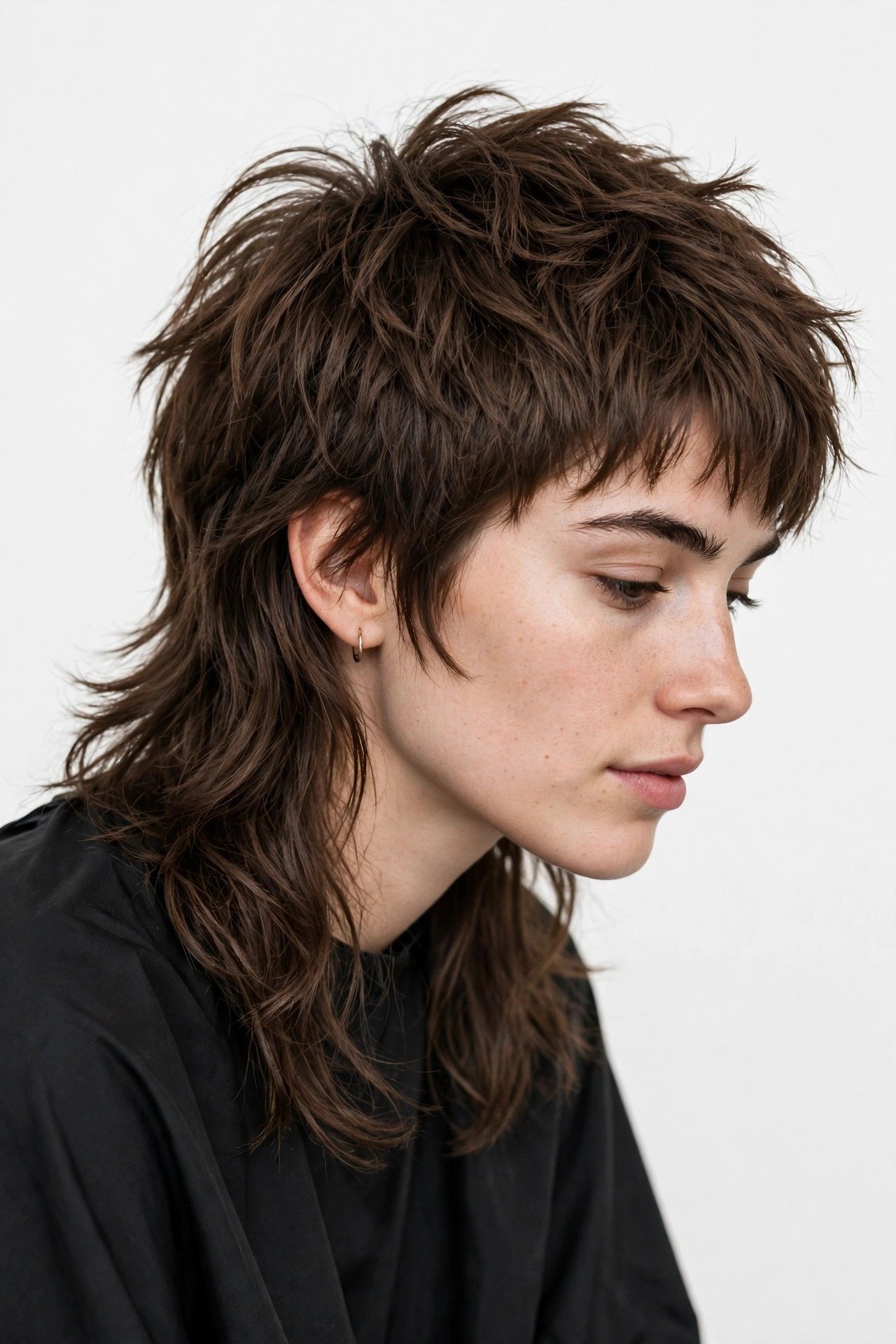
The mullet edge leans into the wolf cut’s rebellious side, pushing the back longer and the crown shorter for a bolder, more dramatic silhouette. The top stays short and textured, the sides stay tight and piecey, and the back falls long past the shoulders in tapered, flicked lengths. It suits oval, long, and heart-shaped faces, and works on straight, wavy, and thick hair that can hold the contrast. It is made for women who want the wolf cut’s wildest form and love standing out. This is not a subtle cut — it is a statement, and it wears its attitude proudly.
Stylist script: Cut the crown layers very short, around two inches, with heavy point cutting for separation. Keep the sides short and textured, tapering them into the cheekbone layers, and leave the back long, at least past the shoulders, with the ends thinned and tapered so they flick outward. Keep the contrast between the short top and the long back deliberately visible — that is the mullet edge. Check the silhouette from the side to confirm the shape reads bold but balanced. Dry with a diffuser, scrunching the crown upward and letting the back fall naturally.
Styling routine: Apply a texturising spray to damp hair and scrunch the crown upward, then diffuse or air-dry. Pinch the back ends with pomade for flicked definition and sweep the front pieces outward. A flat iron can add extra flick to the longest back pieces. Finish with a flexible hairspray. Maintenance: every six to eight weeks; the mullet edge depends on the contrast between short crown and long back, so trim the crown before it grows soft and loses its edge.
10. Wolf Cut for Curly Hair
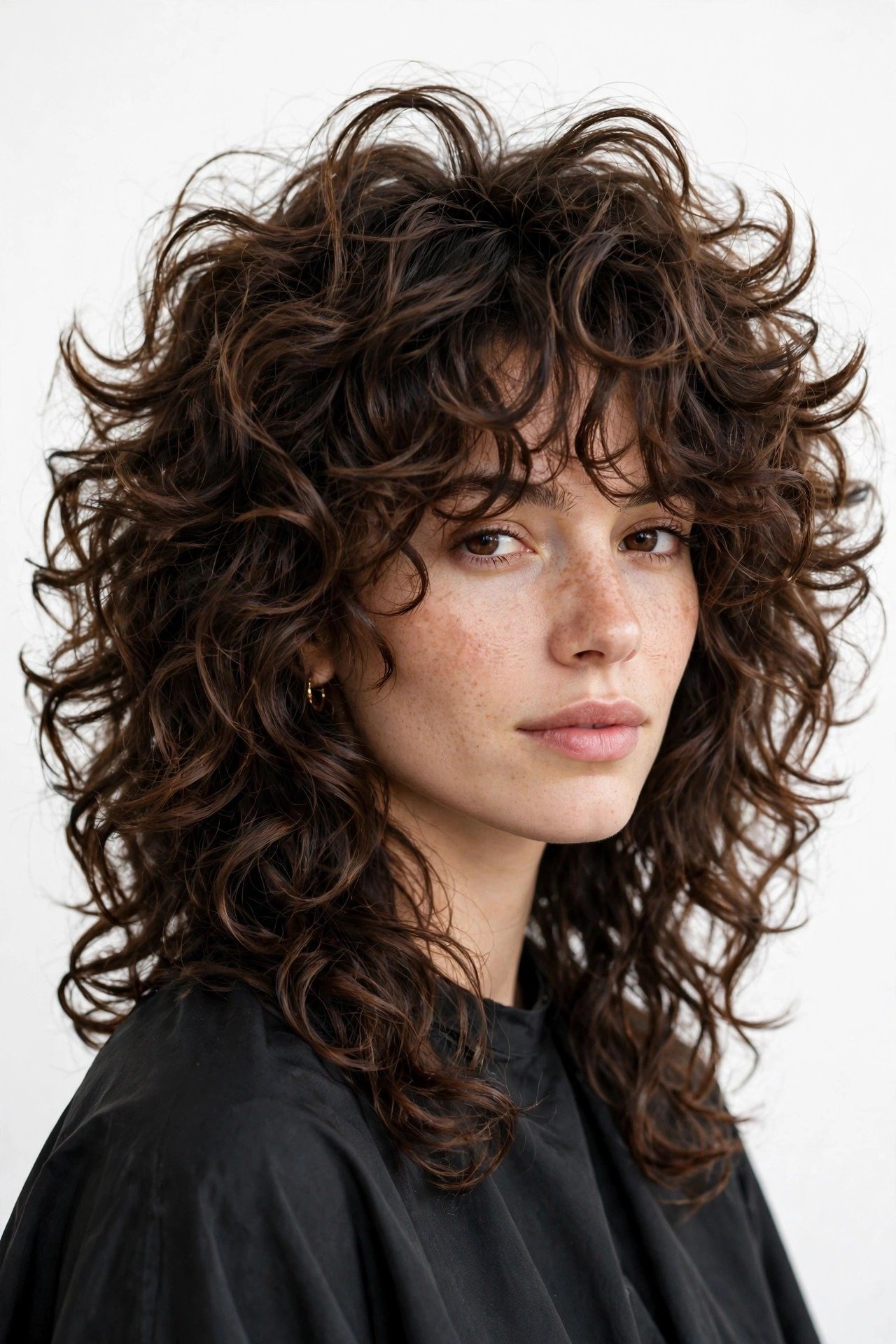
Curly hair gains shape, lift, and definition from the wolf cut, which stops curls from forming a heavy triangle. Shorter layers at the crown let the curls spring up, while the longer underneath length keeps the overall silhouette long and balanced. It suits round, oval, and heart-shaped faces, and works for loose waves through to tight curls when the layers are placed with the curl pattern in mind. The result is bouncy, defined, and full of movement, with the face beautifully framed by curls. It is one of the most requested curly variations right now, and the volume it creates photographs wonderfully.
Stylist script: Always cut curly hair dry, curl by curl, so each layer lands where the curl naturally falls. Place the crown layers short, choosing curls that frame the face without shrinking too short when dry. Build longer layers through the jawline and shoulders, removing bulk from the interior with careful curl-by-curl cutting. Never use thinning shears, which create frizz. Keep the overall length long underneath for balance. Diffuse on low heat with the head tilted, lifting the roots so the top layers spring into their wild shape.
Styling routine: Apply a leave-in conditioner and curl cream to soaking wet hair, then scrunch in a light gel for definition. Diffuse on low heat or air-dry without touching the curls until fully dry. Once dry, fluff the roots gently and arrange the front curls outward. Refresh second-day curls with a water and leave-in mist. Maintenance: every eight to twelve weeks; curly cuts hold their shape longer, but book a curl-by-curl tidy when the crown pieces lose definition.
11. Wolf Cut for Wavy Hair
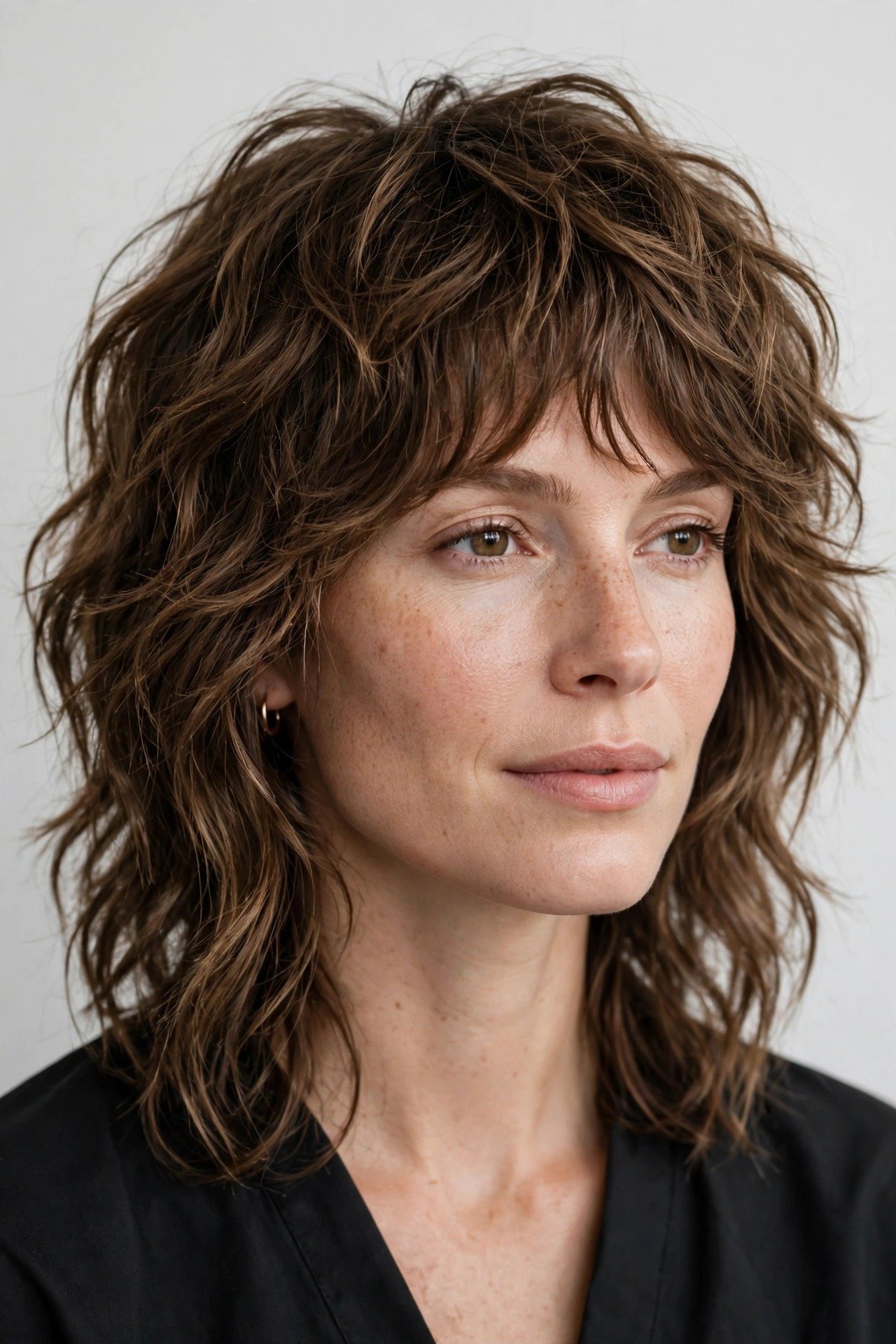
Wavy hair and the wolf cut are a natural match, because the choppy layers release the wave pattern instead of weighing it down. The crown pieces add lift while the longer layers let the natural bend move freely, creating soft, tousled volume without much styling. It suits oval, round, and heart-shaped faces, and works across fine, medium, and thick wavy hair. The cut enhances your natural texture rather than fighting it, so mornings get easier and the hair looks intentionally wild. It is perfect if you like an effortless, lived-in finish that still looks polished when you dress it up.
Stylist script: Cut wavy hair dry or barely damp so the natural wave pattern guides the layer placement. Cut the crown layers short and choppy, following the wave’s bend, and build longer pieces through the jawline and shoulders. Remove weight with long interior layers rather than short choppy ones, which can create unwanted puffiness. Keep the perimeter soft and slightly uneven to match the wave. Diffuse gently on low heat or let the hair air-dry, scrunching the crown layers upward so the wild shape forms naturally around the face.
Styling routine: Apply a curl-enhancing cream or sea-salt spray to damp hair, scrunch upward, and either diffuse on low heat or air-dry for soft waves. Once dry, shake the roots gently and separate the crown pieces with your fingers for the wolf shape. A little texturising spray adds hold without stiffness. Avoid brushing dry waves, which creates frizz. Maintenance: every seven to nine weeks; wavy hair hides growth well, so trims can stretch slightly, but refresh the crown layers to keep the shape.
12. Wolf Cut for Straight Hair
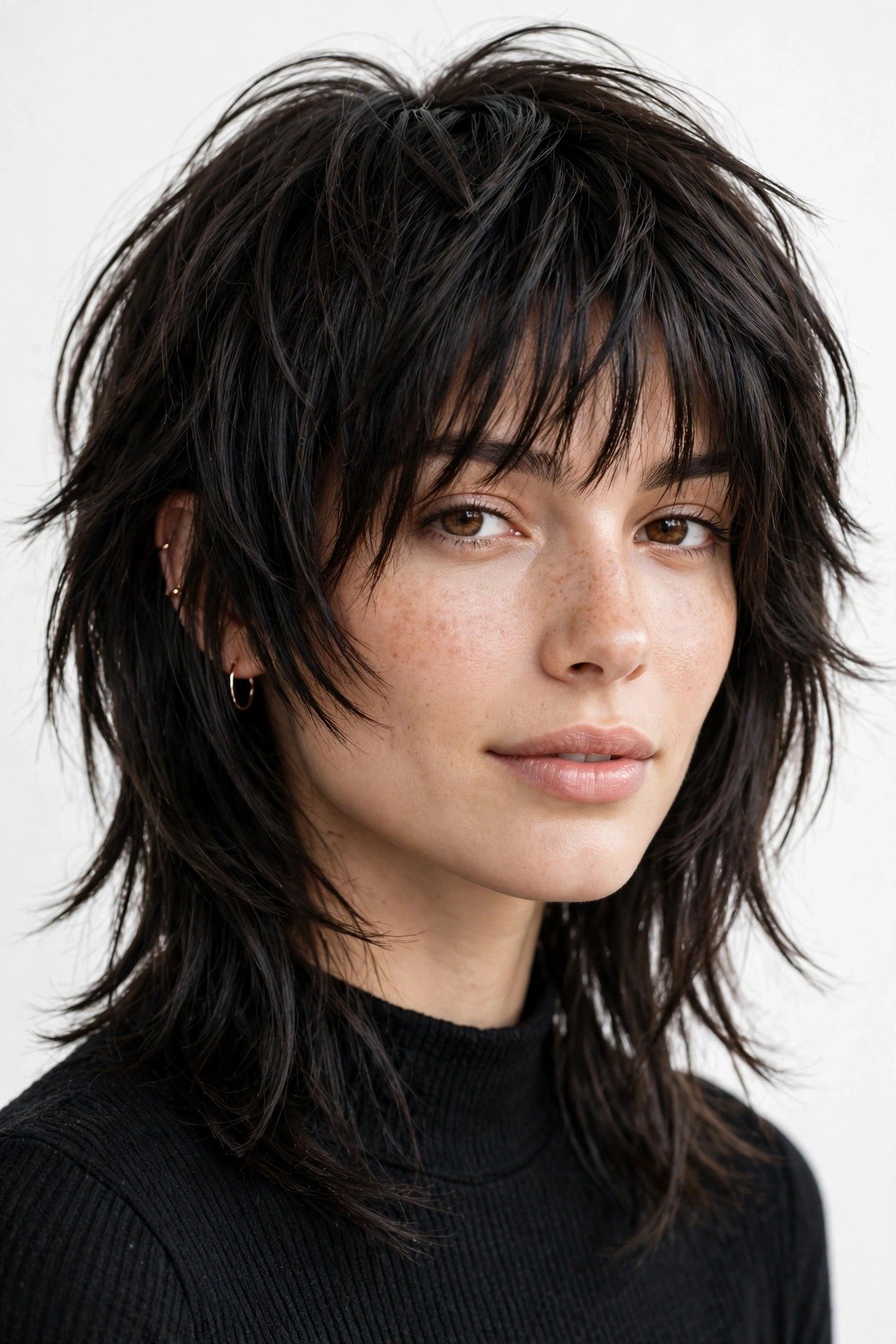
Straight hair shows off the wolf cut’s architecture better than any other texture, because every choppy layer line is visible. The short crown creates volume and the illusion of fullness in hair that can otherwise look flat and one-dimensional. It suits oval, long, and heart-shaped faces particularly well, since the face-framing pieces soften strong features and add width at the cheeks. Women with fine to medium straight hair benefit most, as the cut adds body without needing heavy styling. It also grows out gracefully, with the layers blending into longer lengths over time. If your straight hair feels lifeless, this cut gives it shape, edge, and a polished finish.
Stylist script: Cut on clean, straight, dry hair where possible so the layer placement is exact and nothing shrinks up later. Cut the crown layers short and disconnected, then build longer face-framing pieces at the cheekbones, jawline, and shoulders, keeping each transition deliberately visible. Add long, subtle interior layers through the back for movement, but avoid over-thinning, which can make straight ends look wispy. Point-cut the perimeter for a textured edge. Blow-dry with a round brush, lifting the crown and turning the front layers outward, then finish with a texturising spray.
Styling routine: Apply a heat protectant and a texturising spray to damp hair, then blow-dry in sections with a round brush for volume and outward movement. A flat iron can add flicked ends in a few minutes. Use a lightweight shine spray rather than heavy oils, which weigh straight layers down. A weekly clarifying wash keeps the cut looking fresh. Maintenance: every six to eight weeks; straight hair shows uneven growth quickly, so keep the crown layers and ends trimmed on schedule.
13. Wolf Cut for Thick Hair

Thick hair finally feels light in a wolf cut, because the choppy layers remove bulk exactly where it weighs the hair down. Shorter pieces at the crown create lift and movement, while the long underneath length keeps the hair looking full rather than thinned out. It suits oval, round, and square faces, since the face-framing layers break up the width and add shape around the cheeks. Women with thick straight or wavy hair benefit most, as the cut tames the bulk without sacrificing the natural fullness they love. The result is bouncy, manageable, and far easier to style every day.
Stylist script: Work in clean sections on thick hair, starting with the interior to remove weight before shaping the outline. Cut the crown layers short and disconnected and build longer face-framing pieces down to the chest. Use slide cutting and long layers through the back to debulk without creating short, spiky pieces. Keep the perimeter strong so the ends still look full. Check the balance by lifting sections and letting them fall. Blow-dry in sections with a large round brush, smoothing the top and flicking the front layers outward for the wild finish.
Styling routine: Apply a smoothing cream and a little leave-in conditioner to damp hair, then blow-dry in sections, starting underneath and working upward for control. A round brush gives lift at the crown and outward flicks at the front. Use a flat iron only on stubborn sections. A weekly deep-conditioning mask keeps thick ends healthy. Maintenance: every seven to nine weeks; thick hair holds the shape well, but regular debulking trims stop the cut from growing heavy and triangular.
14. Wolf Cut for Fine Hair
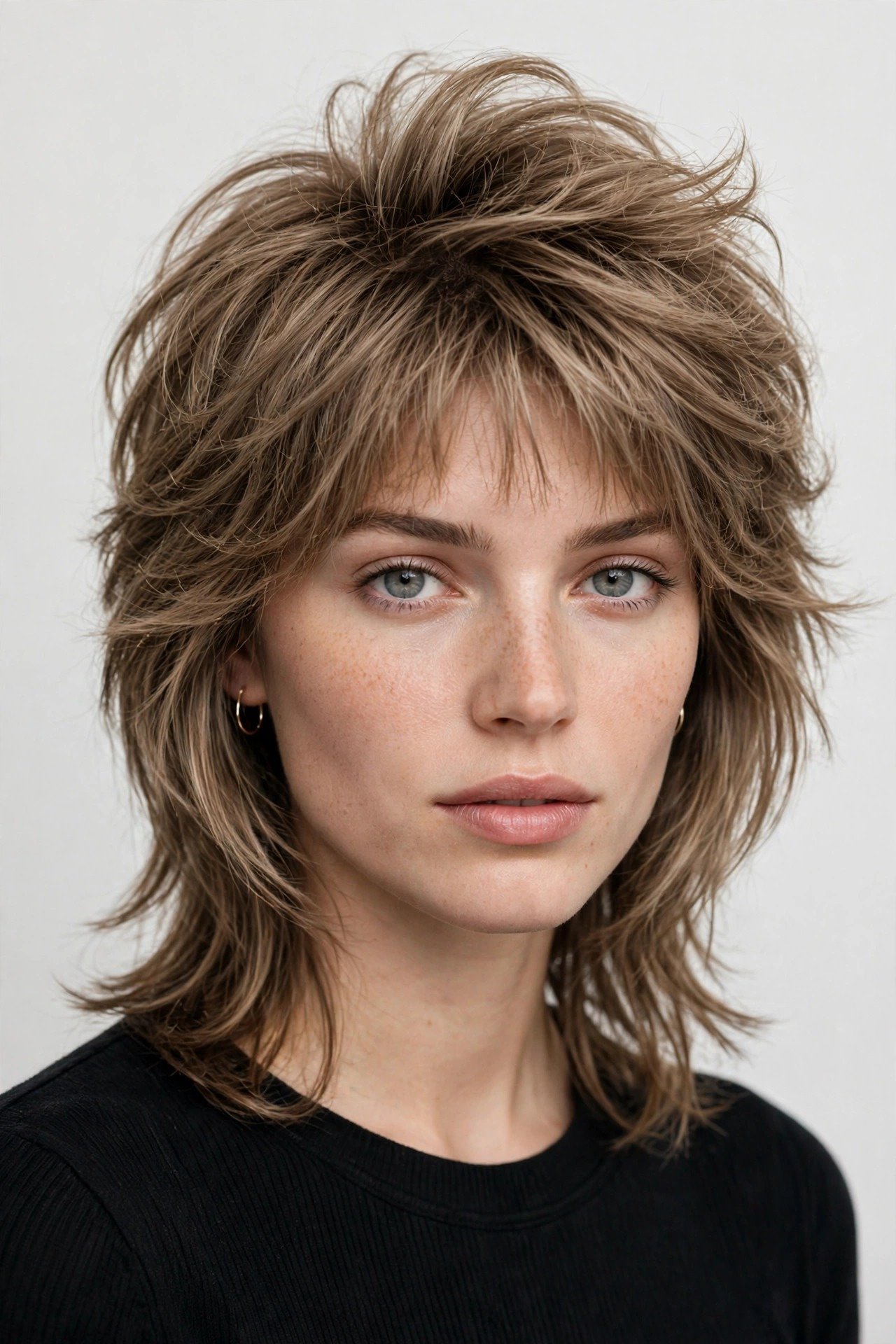
Fine hair looks instantly fuller in a wolf cut, because the shorter crown layers create lift and the illusion of density. The cheekbone pieces add width and movement around the face, while the longer layers underneath keep the ends from looking thin or wispy. It suits oval, heart, and long faces, and works best on straight to wavy fine hair that needs body. The cut is a clever optical trick, making the hair appear thicker without adding extensions or heavy products. It is ideal if your hair falls flat by midday or if you want volume that lasts from morning to evening.
Stylist script: Keep the layers long and the perimeter as blunt as possible to protect the appearance of thickness. Place the crown layers at four to five inches rather than very short, then add only two or three longer layers through the mid-lengths, avoiding over-layering, which thins fine ends. Use minimal thinning and point-cut very lightly. Add subtle texture at the crown for lift without removing weight. Blow-dry with a round brush, lifting the roots and turning the front layers outward, then finish with a volumising spray at the crown for lasting body.
Styling routine: Apply a lightweight volumising mousse to damp roots only, avoiding heavy creams that flatten fine hair. Blow-dry upside down for lift, then finish with a round brush, flicking the front layers outward. Dry shampoo on day two restores volume at the crown. Use a light texturising spray rather than oils. Maintenance: every six to seven weeks; fine hair shows split ends quickly, so regular small trims keep the perimeter looking thick and healthy.
15. Wolf Cut for Round Faces
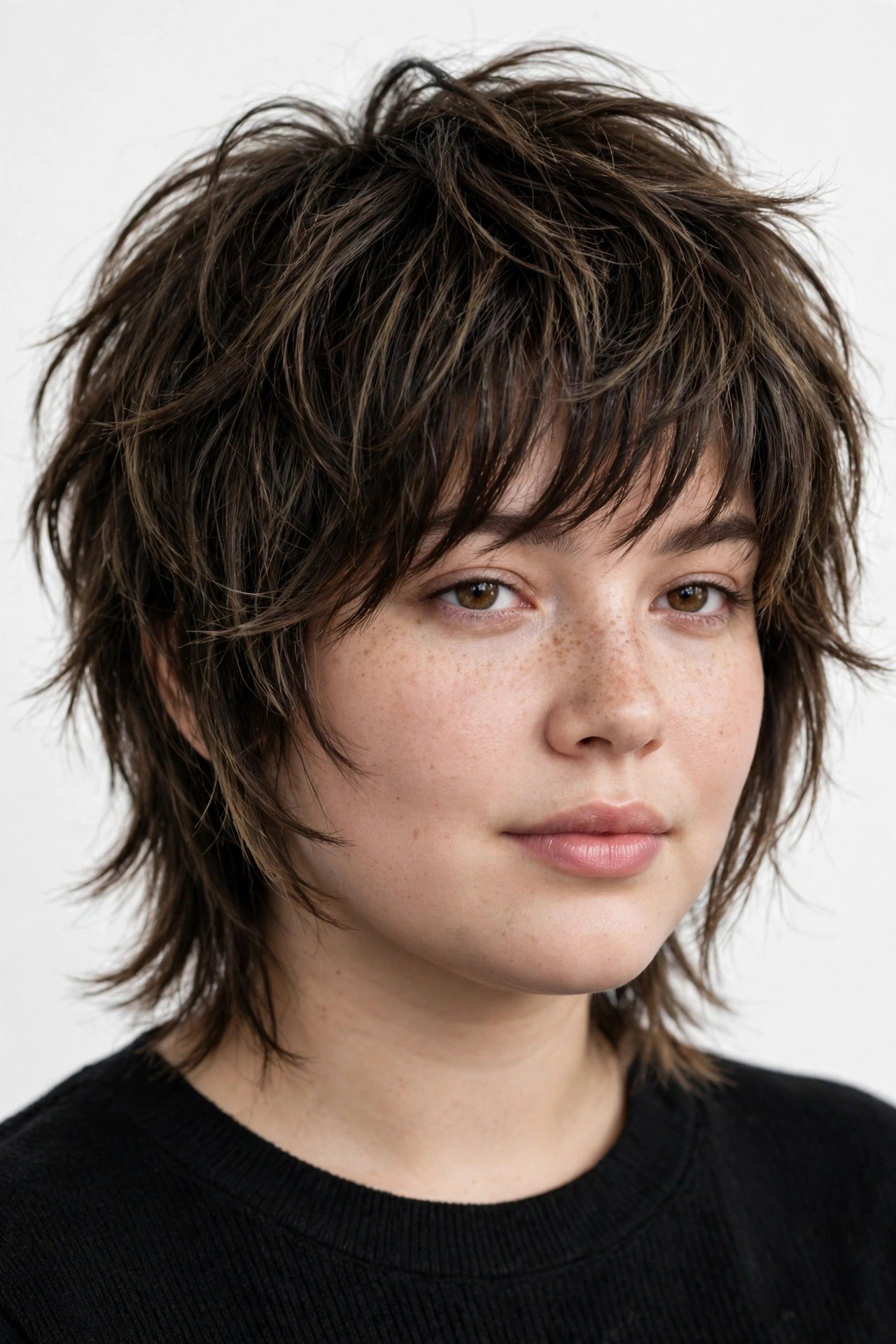
Round faces look longer and slimmer in a wolf cut, because the layers create vertical lines that draw the eye downward. Crown pieces that add height elongate the face, while face-framing pieces that fall past the jaw add length around the cheeks. It suits straight, wavy, and lightly curly hair, and works best when the shortest layer sits at or below the cheekbones rather than above them. The longer length underneath keeps the silhouette elegant and avoids adding width at the cheeks. It is a flattering, confidence-boosting choice if you want your face to look more oval and defined without losing your hair length.
Stylist script: Avoid short layers that end at the widest part of the cheeks, which would add width. Start the shortest face-framing layer at the jawline or just below the cheekbones, then build longer pieces through the collarbone and chest. Add height at the crown with short interior layers so the eye travels upward. Keep the sides sleek and the back long to elongate the silhouette. Blow-dry the front layers downward and outward, away from the cheeks, and lift the roots at the crown for length. Check the face shape from the front before finishing.
Styling routine: Apply a root-lifting mousse and blow-dry with a round brush, lifting the crown high and smoothing the front layers downward past the jaw. A flat iron can keep the sides sleek and elongated. Avoid adding volume at the sides near the cheeks. Finish with a light hairspray to hold the lift. Maintenance: every six to eight weeks; keep the face-framing layers at jaw length or longer, and trim the crown layers so the elongating height stays fresh.
16. Wolf Cut for Oval Faces
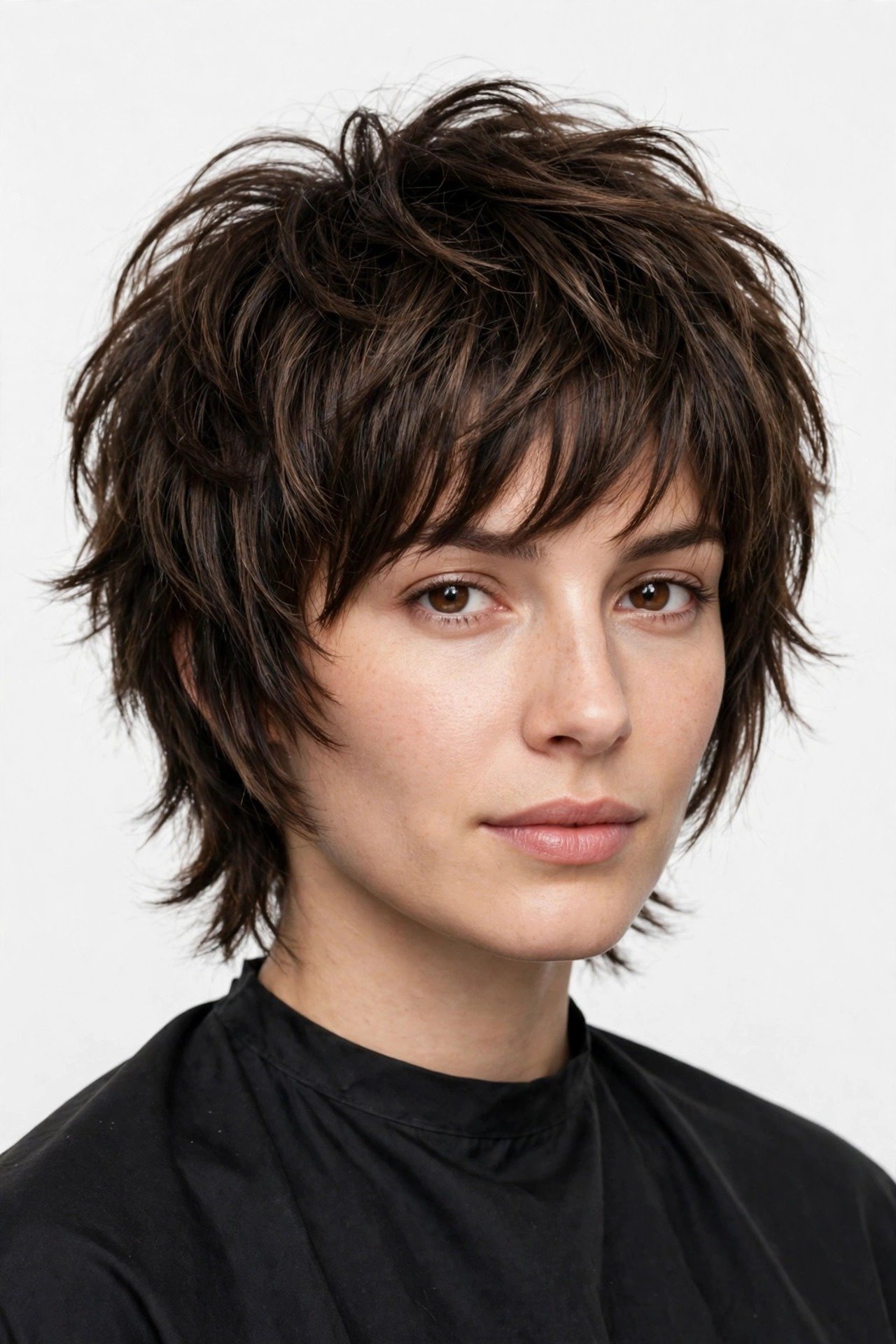
Oval faces can wear almost any wolf variation, because their balanced proportions suit every layer placement. The choppy crown highlights the natural symmetry, while the longer pieces add movement without disturbing the face shape. It suits straight, wavy, curly, and thick or fine hair equally well, which makes it the most versatile face-shape pairing in this guide. You can choose a shorter or longer wolf cut, bangs or no bangs, and the result will still look harmonious. It is the ideal face shape for experimenting, since the cut frames the features rather than correcting them. Pick the length you love most and let the layers do the rest.
Stylist script: With an oval face, focus on the hair texture and desired length rather than corrective shaping. Cut the crown layers short and choppy, then build even layers through the jawline and shoulders, keeping both sides perfectly symmetrical. Add interior layers at the crown for lift and through the back for movement. Keep the perimeter textured and slightly uneven for the wolf edge. Blow-dry with a large round brush, turning the front layers outward and the back under, then check the symmetry from the front and both sides before finishing.
Styling routine: Apply a volumising mousse to damp hair and blow-dry with a large round brush, flicking the front layers outward for the classic wild shape. A curling iron can add soft bends, or a flat iron can polish the look sleek. The cut is forgiving, so air-drying with a texturising spray also works beautifully. Finish with a shine serum. Maintenance: every six to eight weeks; oval faces suit every length, so trims are about keeping the layers fresh and the ends healthy rather than correcting the shape.
17. Wolf Cut for Square Faces
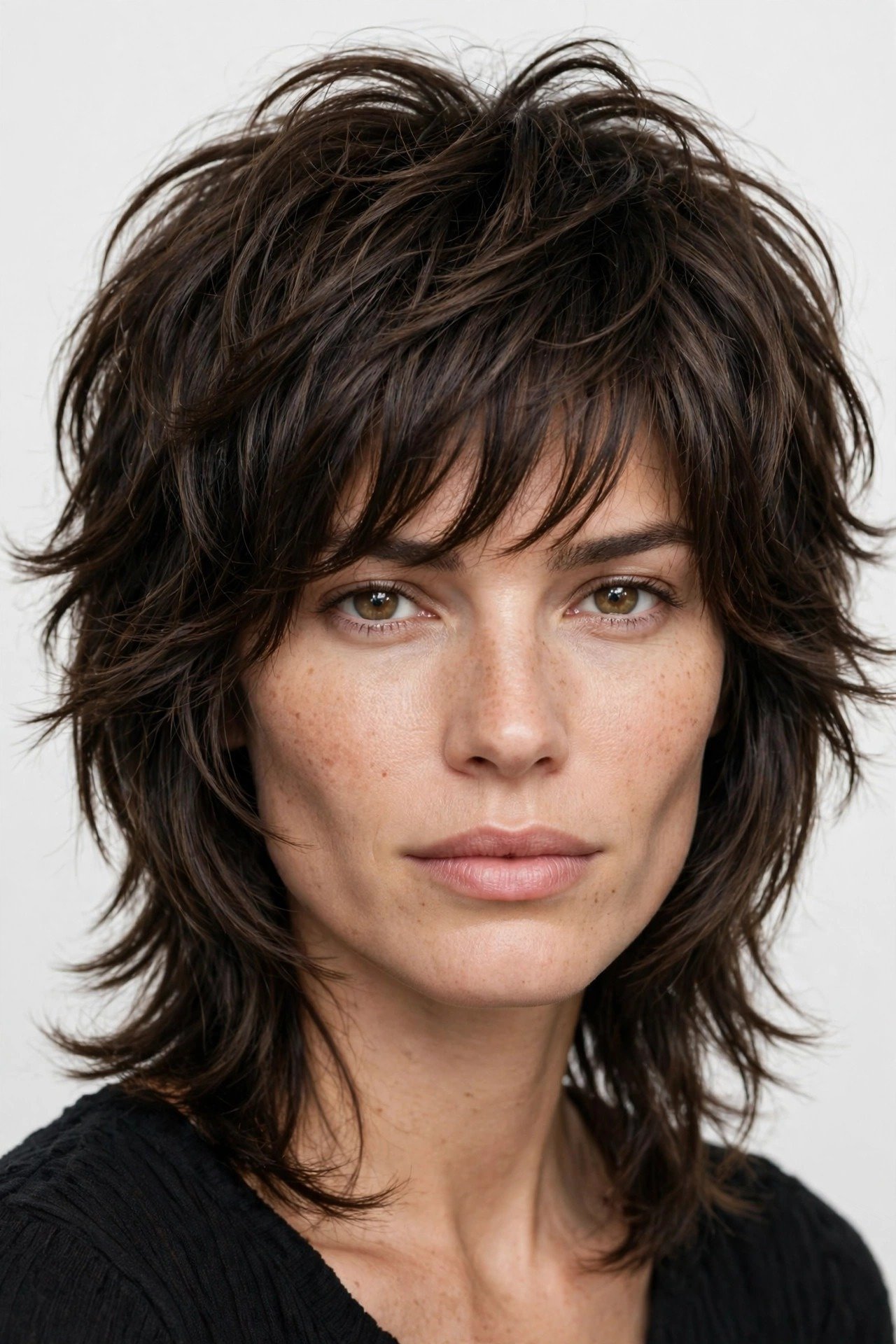
Square faces soften beautifully in a wolf cut, because the curved, sweeping layers balance a strong jawline. Cheekbone pieces that curve outward and down draw the eye away from angular corners, while the longer layers add softness around the jaw. It suits straight, wavy, and lightly textured hair, and works best with a middle or side part that breaks up the symmetry of the face. The movement in the layers makes the overall look feel gentle and feminine rather than severe. It is an excellent choice if you love your strong features but want the hair to soften them.
Stylist script: Place the shortest layer at the cheekbones and curve it outward and down, so it sweeps past the jaw rather than ending right at it. Build longer layers through the jawline and shoulders with soft, rounded ends, keeping the crown short and textured for lift. Avoid blunt, straight-across lines near the jaw, which emphasise angles. Add gentle interior layers for movement and keep the crown soft rather than flat. Blow-dry the front layers with a round brush, curving them outward and under in a soft C-shape that hugs the face without hugging the jaw.
Styling routine: Apply a smoothing cream to damp hair and blow-dry with a round brush, curving the front layers outward in a soft bend. A large-barrel curling iron can add gentle waves that further soften the jawline. Avoid pin-straight styling, which highlights angles. Finish with a flexible hairspray. Maintenance: every six to eight weeks; keep the cheekbone layers curved and soft, and trim the ends before they grow blunt and angular again.
18. Wolf Cut with Blonde Balayage
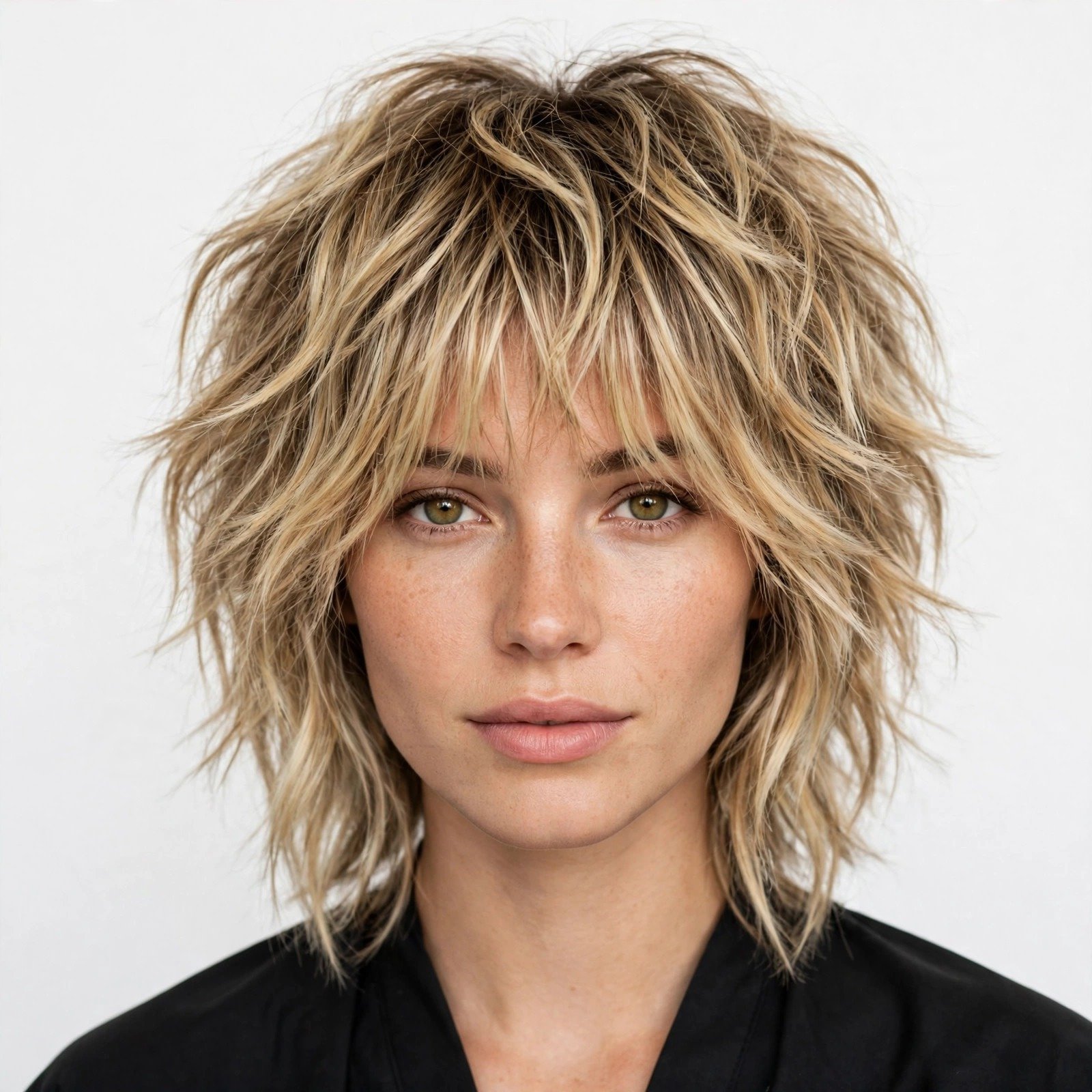
Blonde balayage makes every wolf layer visible, painting light exactly where the hair moves and turns. The hand-painted colour melts from a deeper root into bright ends, so the crown layers catch the light and the longer pieces show beautiful dimension. It suits straight, wavy, and lightly textured hair, and flatters oval, heart, and long faces because the brightness around the face opens the complexion. Women with medium to long hair get the most impact, since the colour has room to blend through the shaggy cascade. The combination feels sunny, expensive, and low-maintenance, with soft grow-out that needs fewer salon visits.
Stylist script: Cut the wolf shape first, with a short choppy crown and longer pieces flowing past the shoulders. Then paint the balayage freehand, concentrating lighter pieces on the crown layers and the face-framing pieces, and keeping the root deeper for a soft grow-out. Blend the colour through the interior layers so no harsh lines appear when the hair moves. Tone to a warm honey or cool ash blonde depending on skin tone. Blow-dry with a large round brush, turning the front layers outward so the lightest pieces frame the face.
Styling routine: Use a purple shampoo once a week to keep blonde tones bright and brass-free, plus a hydrating mask to protect lightened ends. Apply a heat protectant before blow-drying with a round brush, flicking the face layers outward. A shine spray adds gloss to the balayage dimension. Avoid overwashing, which fades the tone quickly. Maintenance: every eight to ten weeks for the cut; refresh the balayage every twelve to sixteen weeks, with a toner and gloss in between.
19. Wolf Cut with Highlights
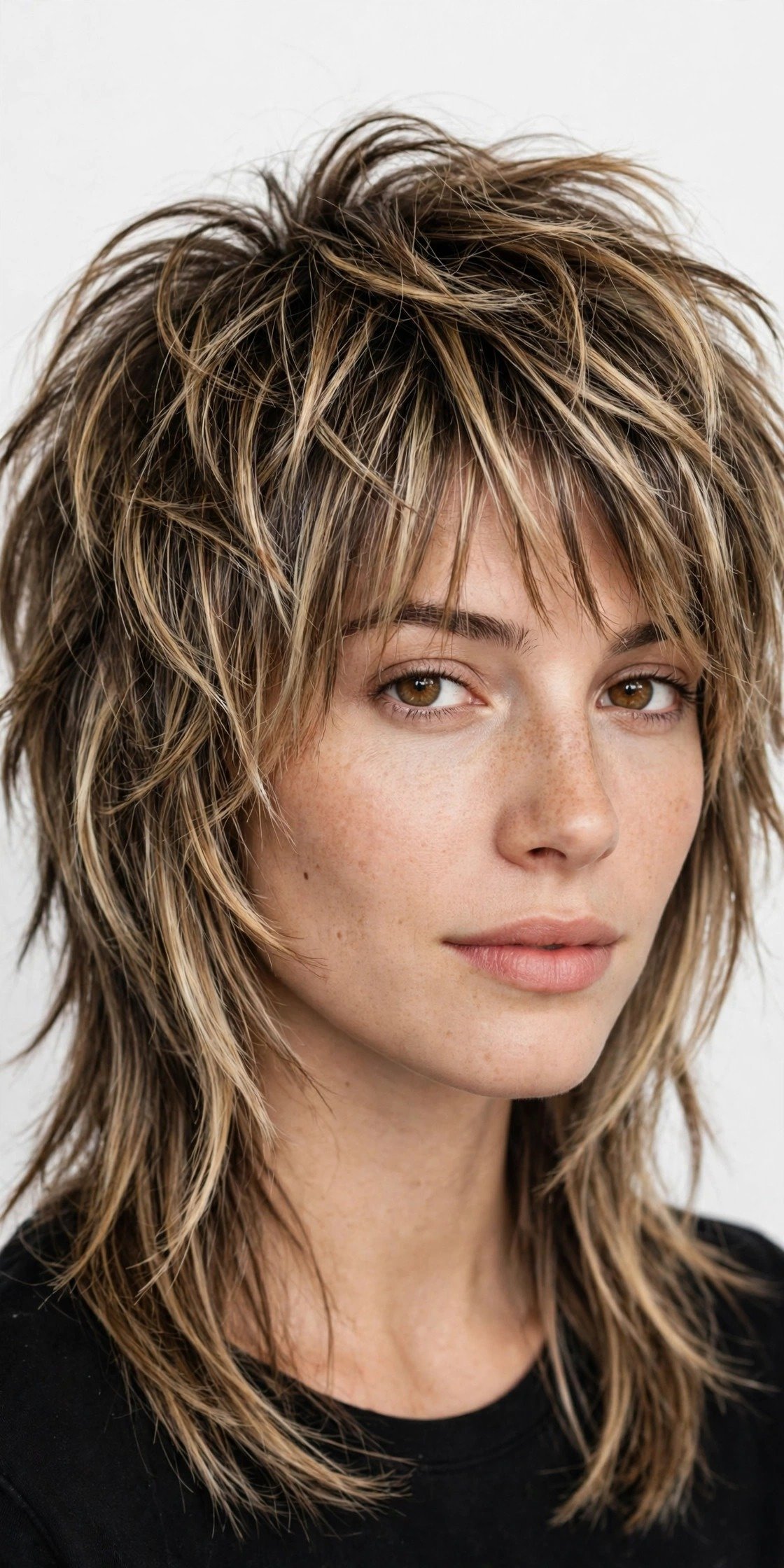
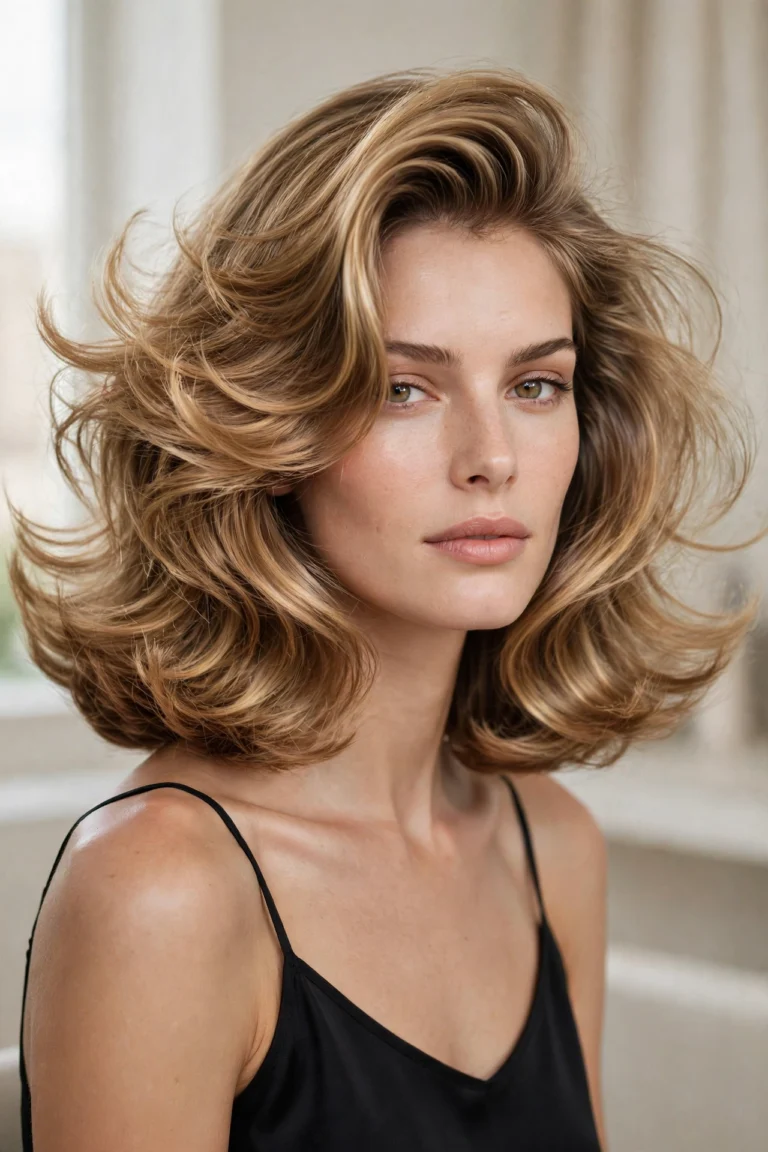
Highlights bring the wolf cut to life by tracing each choppy layer with light, so the texture reads even in photos. Fine ribbons of colour woven through the crown and cheekbone pieces brighten the face, while deeper lowlights underneath keep the colour looking natural and dimensional. It suits straight and wavy hair best, and flatters oval, round, and heart-shaped faces because the brightness is placed exactly where the layers turn. It works on blonde, brunette, and copper bases alike, and it is ideal if you want dimension without a full colour change. The result looks sunlit, polished, and full of depth.
Stylist script: Establish the wolf cut with a short choppy crown and cascading pieces down to the shoulders. Add fine highlights through the crown layers, the face-framing pieces, and the top section, using a mix of babylights and slightly bolder ribbons for dimension. Keep the underneath darker for contrast so the layers stand out. Tone the highlights carefully to suit the base colour, warm or cool. Blow-dry with a round brush, directing the highlighted front pieces outward so the light catches each layer as it moves.
Styling routine: Wash with a colour-safe shampoo and apply a leave-in conditioner to keep highlighted ends soft. Blow-dry with a large round brush, lifting the crown and flicking the front layers outward to show the dimension. A gloss spray boosts shine and makes the highlights glow. Limit heat styling to protect the colour. Maintenance: every six to eight weeks for the cut; refresh highlights every eight to twelve weeks, with a toner between appointments to keep the shade fresh.
20. Wolf Cut with Copper Tones
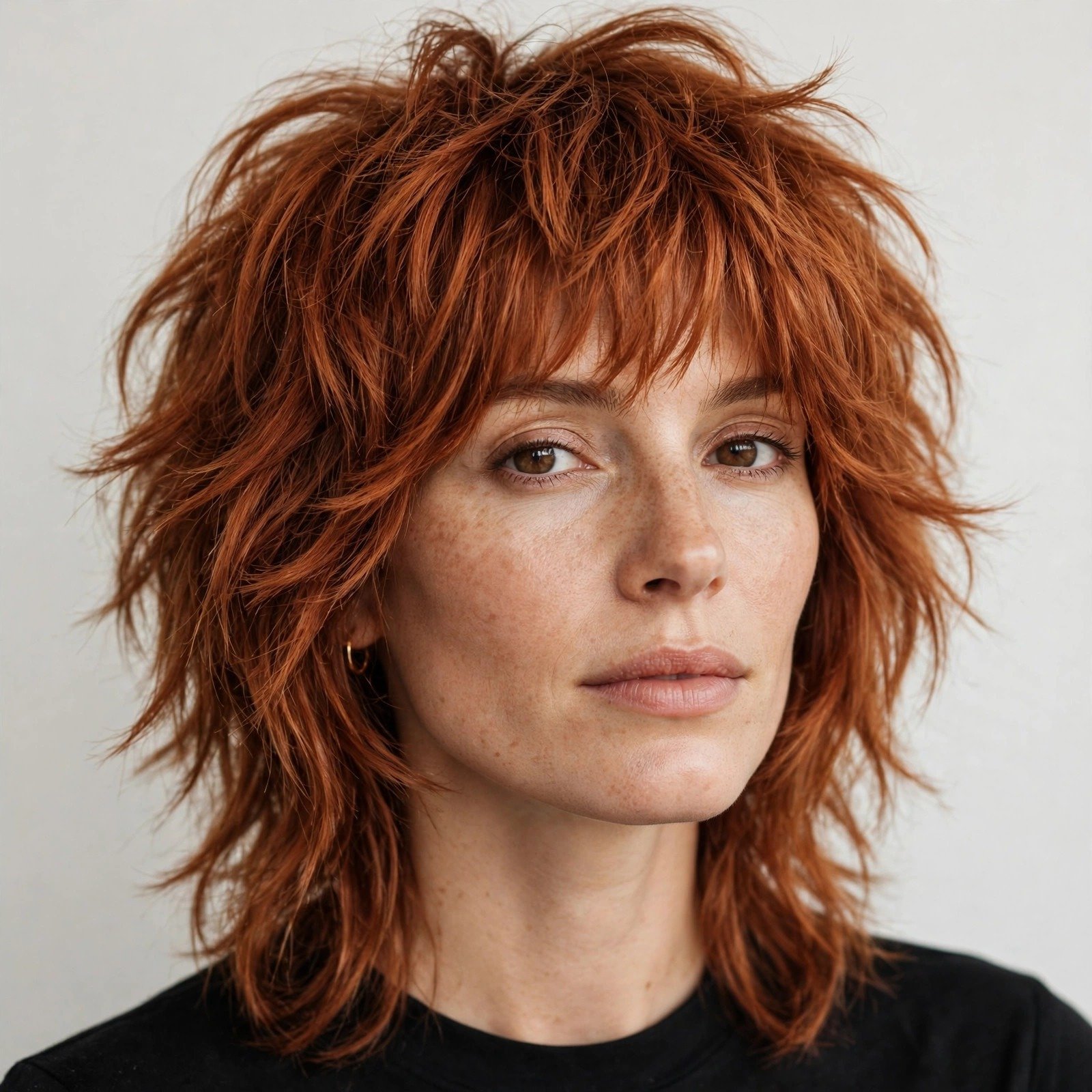
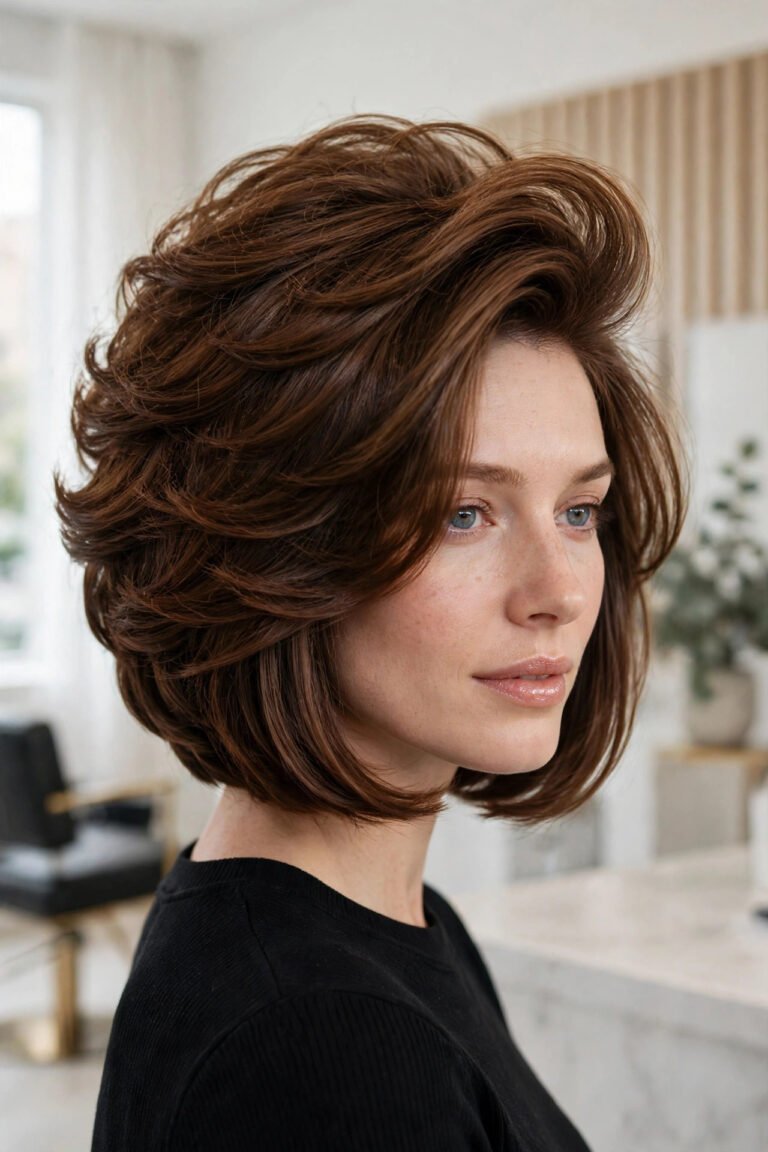
Copper tones make the wolf cut glow, adding warmth and richness that catches the light in every choppy layer. The fiery shade highlights the movement of the crown pieces and gives the longer layers a dimensional, sunlit depth. It suits straight, wavy, and lightly curly hair, and flatters warm skin tones and oval, heart, and long faces especially well. The colour feels bold yet wearable, and it pairs beautifully with the wild, textured shape of the cut. It is perfect if you want a statement colour that still looks natural and expensive, with the layers doing the styling work for you.
Stylist script: Cut the wolf shape first, with a short choppy crown and cascading pieces down to the shoulders. Apply the copper colour as a full tint or a rich balayage, keeping the crown and face-framing layers slightly brighter to highlight the movement. Choose a warm copper that suits the skin tone, from soft ginger to deep auburn. Gloss the colour for shine and seal the cuticle. Blow-dry with a round brush, turning the front layers outward so the brightest copper pieces frame the face and catch the light.
Styling routine: Wash with a colour-safe shampoo for red and copper tones and use a weekly colour-depositing mask to keep the shade rich. Apply a heat protectant before blow-drying with a round brush, flicking the front layers outward. A shine serum adds gloss to the copper dimension. Limit sun exposure, which fades copper quickly. Maintenance: every six to eight weeks for the cut; refresh the copper colour every six to eight weeks too, with a gloss between appointments.
21. Wolf Cut with Brunette Balayage
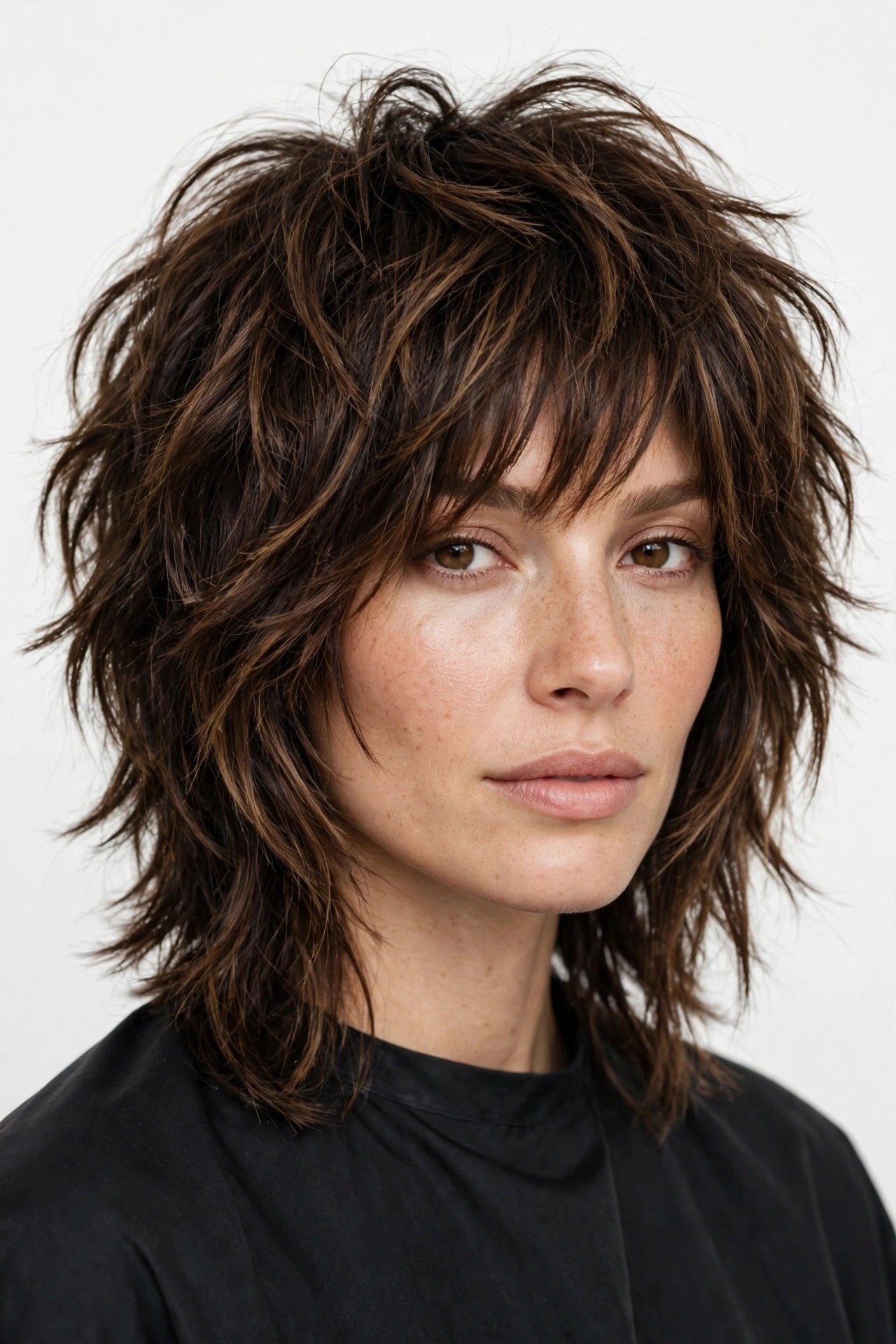
Brunette balayage gives the wolf cut quiet luxury, with ribbons of caramel and honey woven through rich brown layers. The colour adds depth and dimension without a harsh grow-out line, and the lighter pieces sit exactly where the layers turn, so the movement is beautifully highlighted. It suits straight, wavy, and thick hair, and flatters oval, round, and heart-shaped faces because the brightness around the face lifts the complexion. It is ideal if you want dimension that looks natural and grows out gracefully. The combination is polished, expensive-looking, and endlessly wearable.
Stylist script: Cut the wolf layers with a short choppy crown and longer pieces flowing past the shoulders. Paint the balayage freehand through the mid-lengths and ends, concentrating lighter caramel pieces on the crown and face-framing layers and keeping the root a rich brunette. Blend thoroughly so the colour melts with no visible lines. Tone to a warm caramel or cool mushroom brown depending on skin tone. Blow-dry with a large round brush, turning the front layers outward so the lightest pieces frame the face.
Styling routine: Use a colour-safe shampoo and a hydrating mask weekly to keep brunette tones rich and glossy. Apply a heat protectant and blow-dry with a round brush, flicking the face layers outward to show the balayage. A shine spray enhances the dimension. Avoid overwashing, which dulls the tone. Maintenance: every eight to ten weeks for the cut; refresh the balayage every twelve to sixteen weeks, with a toner and gloss in between to keep the caramel bright.
22. Wolf Cut with Pastel Colour
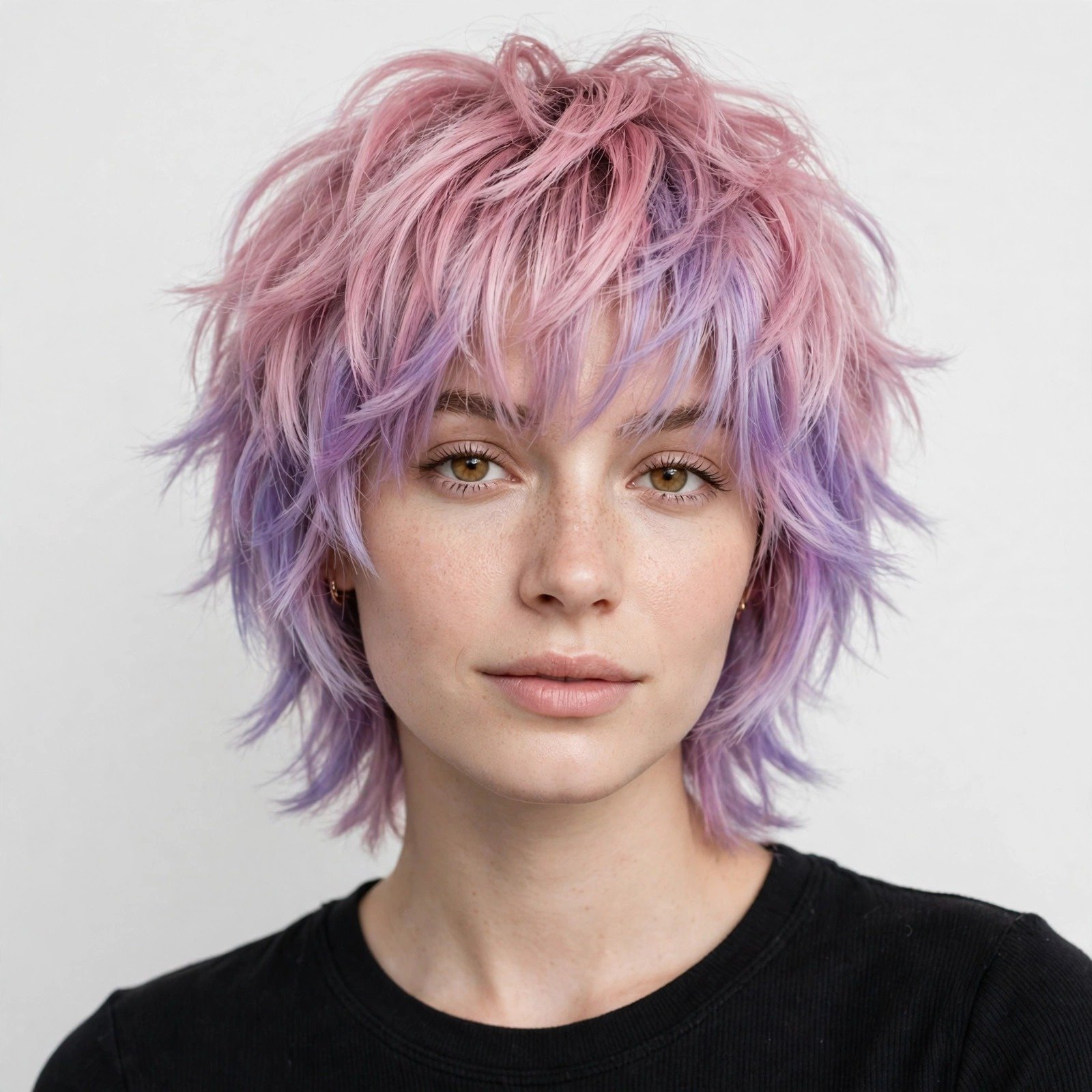
Pastel colour turns the wolf cut into wearable art, with soft pink, lavender, or lilac washing through the choppy layers like watercolour. The pale shades sit beautifully on the short crown pieces, where the light catches every step, and fade gently into the longer lengths for a dreamy, dimensional effect. It suits straight, wavy, and fine to medium hair, and flatters oval, heart, and long faces because the soft colour brightens the complexion. It is made for women who love playful, creative hair and do not mind the upkeep. On a wolf cut, pastel feels fresh, modern, and unmistakably bold.
Stylist script: Cut the wolf shape first, with a short textured crown and long tapered lengths. Pre-lighten the hair evenly to a pale blonde base, then apply the pastel shade as a gloss or direct dye, keeping the crown and face-framing pieces brightest and letting the colour soften toward the ends. Blend two pastel tones together, such as pink and lavender, for extra dimension. Seal with a gloss for shine. Blow-dry with a round brush, turning the front layers outward so the palest pieces frame the face.
Styling routine: Wash with a sulfate-free, colour-safe shampoo in cool water to slow fading, and use a pastel colour-depositing conditioner once a week. Apply a heat protectant before blow-drying with a round brush, flicking the front layers outward. Limit heat styling, which strips pastel fast. Maintenance: every six to eight weeks for the cut; refresh the pastel colour every four to six weeks, since pale shades fade quicker than any other colour.
23. Wolf Cut with Two-Tone Colour
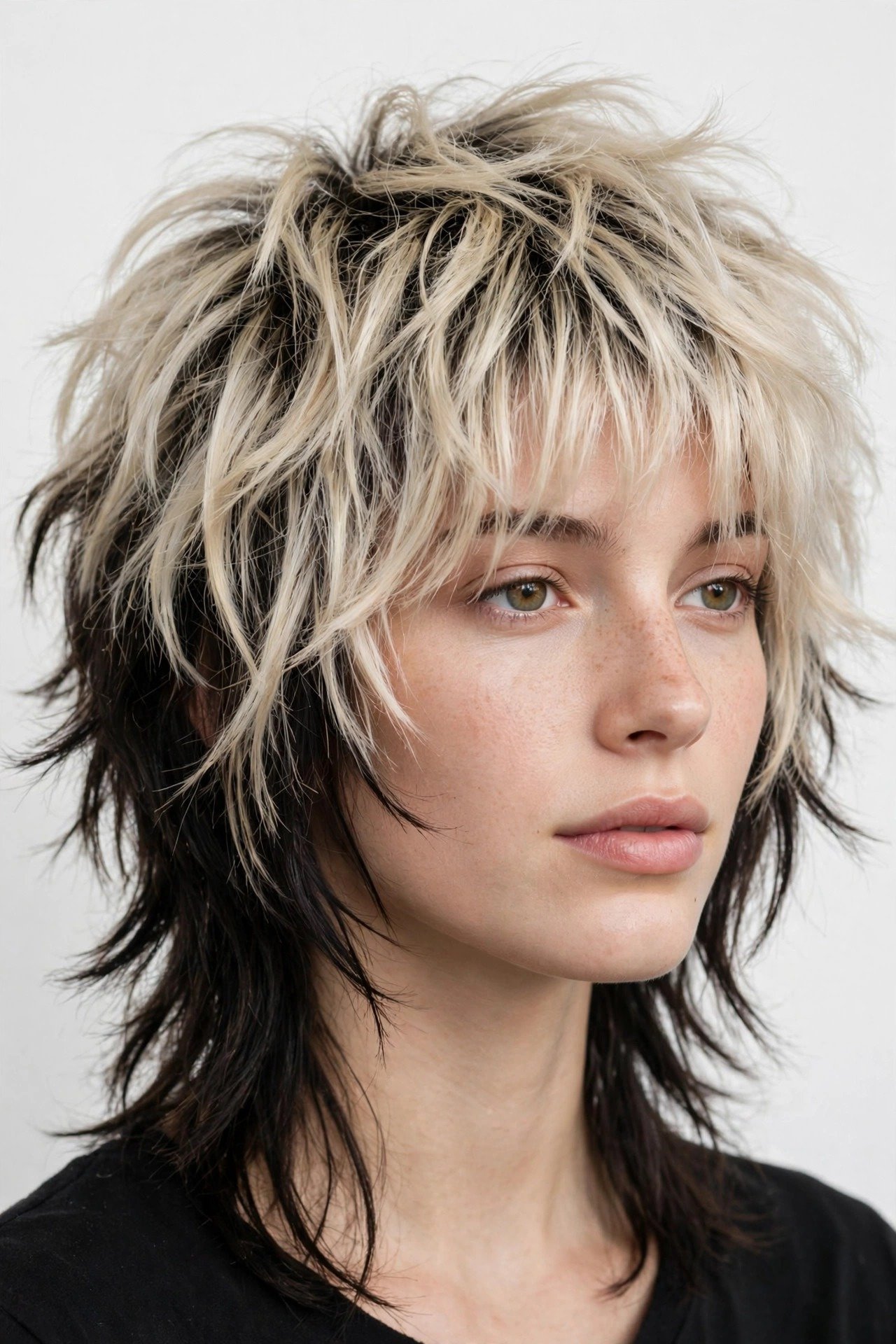
Two-tone colour gives the wolf cut a striking, graphic edge, with two contrasting shades split across the shaggy shape. A darker underlayer with a lighter crown, or a bold split down the middle, makes every choppy step visible and turns the cut into a piece of art. It suits straight and wavy hair best, and flatters oval, heart, and long faces because the contrast draws attention to the eyes and cheekbones. It is made for women who want their hair to start conversations. On the wolf cut’s wild silhouette, two-tone colour feels fearless, modern, and completely unforgettable.
Stylist script: Cut the wolf shape first, with a short choppy crown and long lengths underneath. Section the hair carefully for the two-tone placement: either a lighter crown with a darker underlayer, or a clean split down the middle. Apply the lighter shade to the top sections and the darker shade underneath, keeping the boundary crisp where the layers meet. Process each section separately so the colours do not bleed. Tone both shades to suit the skin tone. Blow-dry with a round brush, turning the front layers outward so both tones show around the face.
Styling routine: Wash with a colour-safe shampoo and use a weekly mask to keep both tones rich and glossy. Apply a heat protectant before blow-drying with a round brush, flicking the front layers outward to show the contrast. A shine spray makes the two tones glow. Avoid overwashing, which fades the lighter shade first. Maintenance: every six to eight weeks for the cut; refresh the two-tone colour every six to eight weeks, with a gloss between appointments to keep the boundary crisp.
24. Wolf Cut with Face-Framing Layers
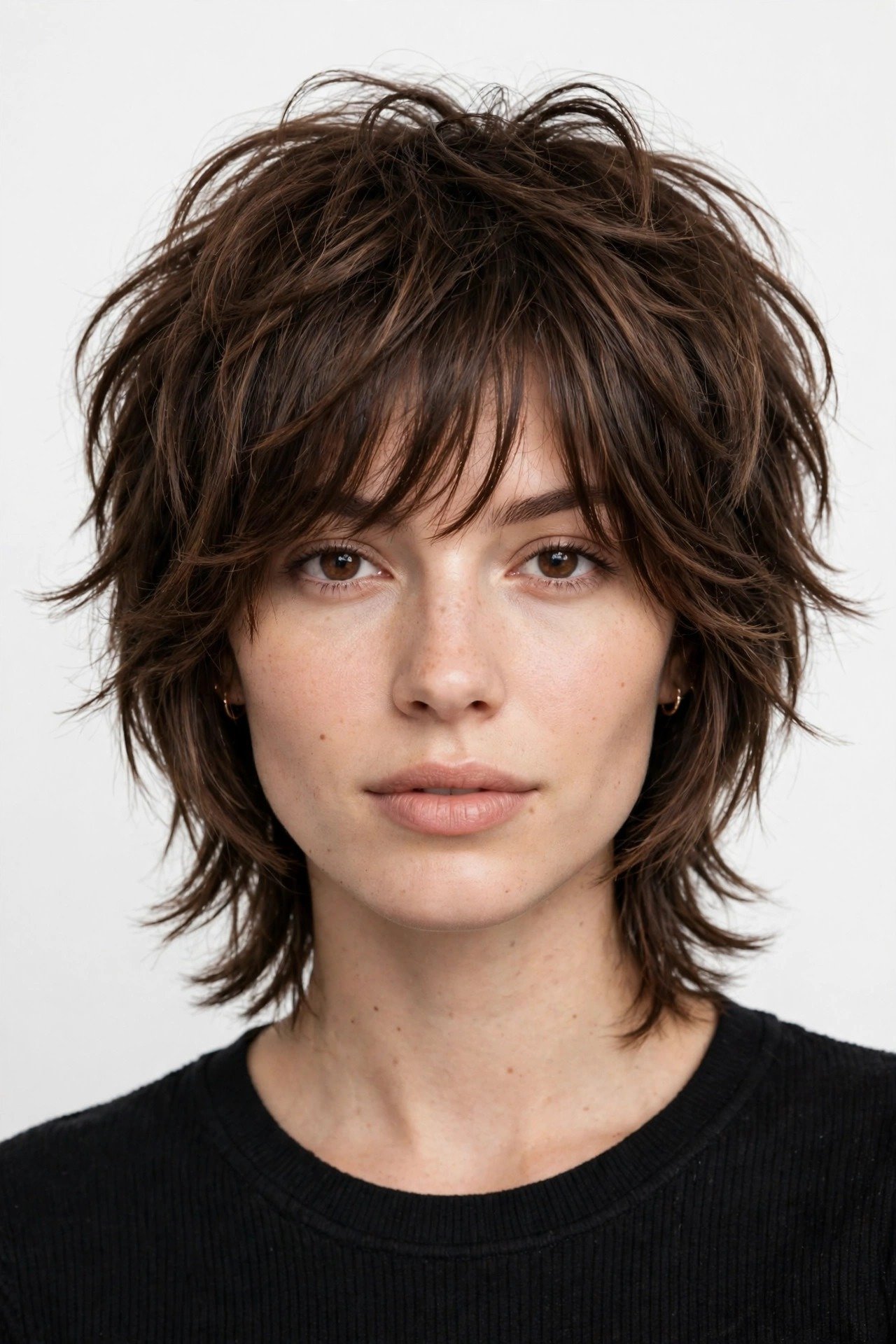
This is the wolf cut at its most flattering, with the face-framing layers doing the work. Shorter pieces begin at the cheekbones and sweep outward and down, drawing attention to the eyes and cheekbones while the hair falls long and wild behind. It suits almost every face shape, especially oval, long, and square faces that benefit from softness around the jaw. Straight, wavy, and lightly curly hair all take the shape well. It is the best choice if you want a noticeable change without losing length, or if you love hair that moves when you turn your head. The framing is flattering from every angle.
Stylist script: Focus the entire cut on the front, cutting the crown short and choppy, then starting the shortest face-framing layer precisely at the cheekbones. Cut a descending series of pieces at the chin, jawline, and collarbone, each one blending into the next with no visible steps. Keep the back layers long and light, with the overall length reaching past the shoulders. Slide-cut the front pieces for a feathered edge that moves freely. For a longer, smoother framing comparison, read our butterfly haircut guide before your appointment. Blow-dry the front outward with a round brush.
Styling routine: Apply a volumising mousse to damp roots and a smoothing cream to the face-framing pieces. Blow-dry the front layers with a round brush, rolling them outward and away from the face, then let the back fall naturally. A flat iron can add a gentle flick to the shortest pieces in under two minutes. Finish with a light hairspray. Maintenance: every six to eight weeks; the face-framing layers are the star here, so keep them trimmed and crisp or the whole cut loses its definition.
25. Wolf Cut with Side Part
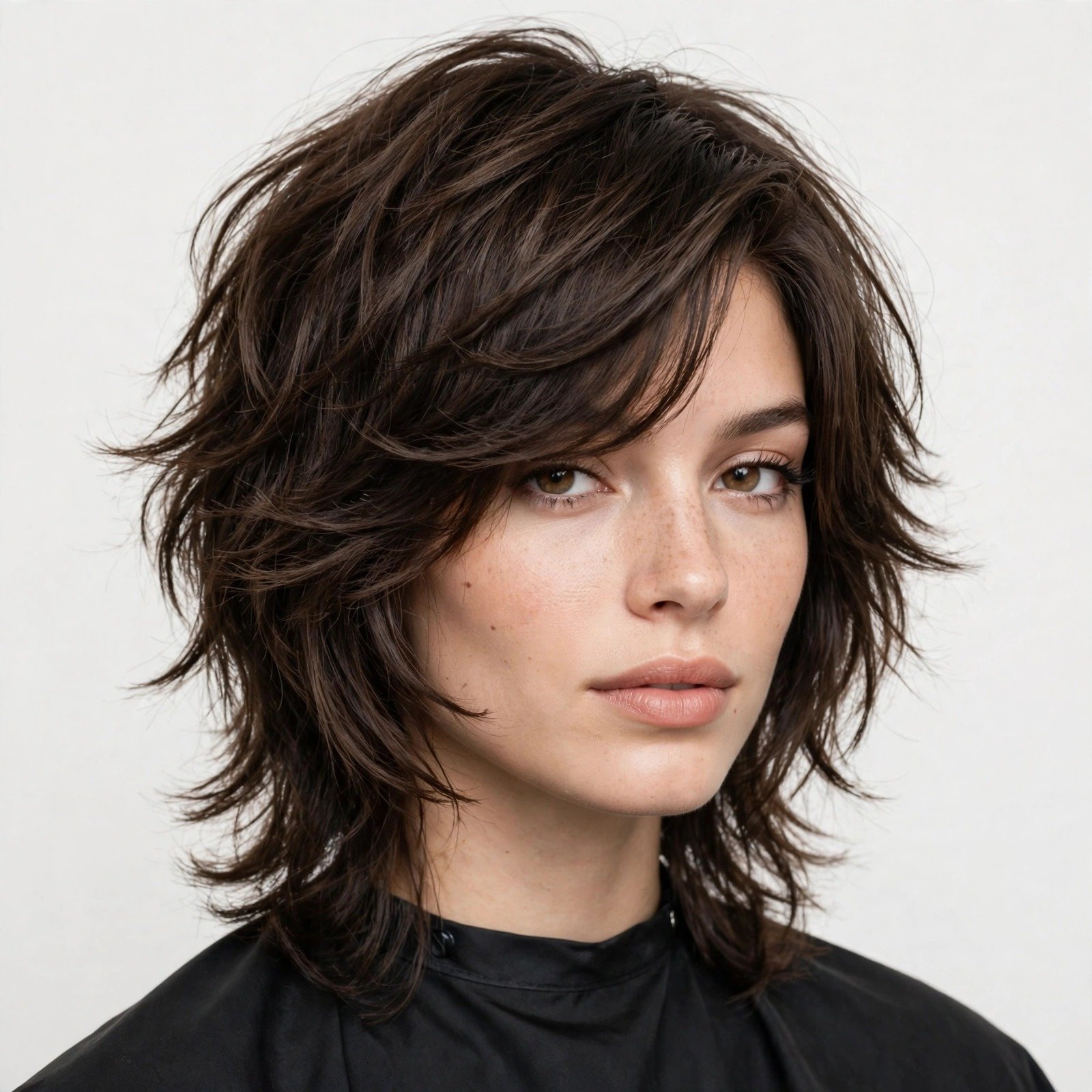
A deep side part gives the wolf cut instant drama, sweeping the choppy crown layers across the forehead in a glamorous cascade. The asymmetry adds volume on one side and creates a beautiful diagonal line that flatters the face, especially if you like a polished, red-carpet feel. It suits oval, round, and heart-shaped faces, and works on straight, wavy, and thick hair that can hold the sweep. The side part also helps if your hair naturally falls to one side, since the cut works with that tendency. It is a sophisticated twist on the wild shape, equally at home at work or at an evening event.
Stylist script: Part the hair deeply to one side before cutting so the layer placement matches the real fall. Cut the crown layers short and choppy, placing the shortest layer at the cheekbones on the heavier side and slightly longer on the lighter side for balance. Build cascading layers through the jawline and shoulders, keeping the back long and full. Add lift at the crown on the parted side so the sweep holds its height. Blow-dry the front layers across the forehead and outward, using a round brush to set the diagonal sweep, then finish with a flexible spray.
Styling routine: Apply mousse to damp roots, then blow-dry with a round brush, directing the front layers across the forehead toward the heavier side. A large-barrel curling iron can add a soft bend to the ends of the sweep. Set the part with a light hairspray and a tail comb for a clean line. Tuck the lighter side behind the ear for contrast. Maintenance: every six to eight weeks; keep the side-part layers even and the crown lift fresh, since the asymmetry shows growth sooner than a middle part.
26. Wolf Cut with Middle Part
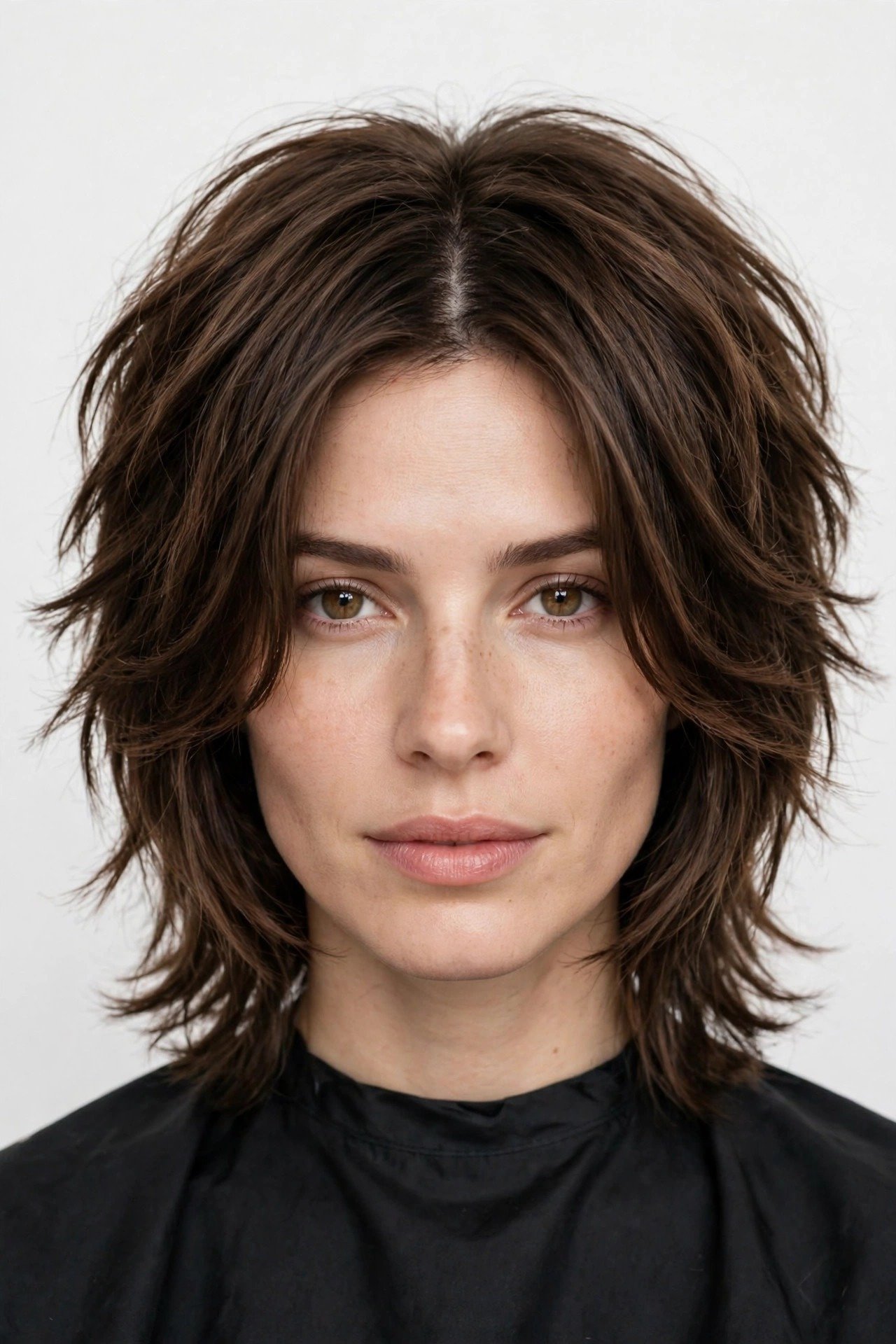
The middle part is the most symmetrical and modern way to wear the wolf cut, with matching wild wings falling evenly on both sides of the face. It creates a clean, balanced frame that highlights the cheekbones and eyes, and it suits oval, heart, and long faces beautifully. Straight, wavy, and lightly textured hair all hold the shape well, and the symmetry makes the cut look intentional even when it is simply air-dried. It is the version most often seen on social media, because the even layers photograph so well. If you like a bold, face-opening look with minimal fuss, this is the one to ask for.
Stylist script: Part the hair exactly down the middle before cutting and work symmetrically from the centre outward. Cut the crown layers short and choppy on both sides, checking the lengths match in the mirror. Build matching layers at the cheekbones, jawline, and collarbone, then add long interior layers through the back for fullness. Keep the perimeter textured and slightly uneven for the wolf edge. Blow-dry each side with a round brush, turning the front layers outward and away from the face so the wings mirror each other perfectly.
Styling routine: Apply a root-lifting spray to damp hair, then blow-dry with a large round brush, lifting at the crown and flicking both front sections outward symmetrically. A straightener can smooth the part line and add a gentle bend to the ends. Finish with a shine serum on the mid-lengths. The cut air-dries well if you scrunch the crown pieces while damp. Maintenance: every six to eight weeks; symmetry is the point here, so book regular trims and ask your stylist to check both sides match.
27. Wolf Cut with Flipped Ends

Flipped ends give the wolf cut a playful, retro kick that makes the layers impossible to miss. The ends turn outward in a bouncy flick, emphasising the wild shape and adding a fun, youthful energy to the whole look. It suits straight and wavy hair best, and flatters oval, heart, and long faces because the outward flick adds width at exactly the right place. It is a brilliant choice if you love vintage-inspired styling but want a modern, wearable cut. The flip works on medium and long lengths alike, and it photographs with a joyful, carefree feeling.
Stylist script: Cut the wolf layers with a short choppy crown and longer pieces flowing to the shoulders, keeping the ends light and tapered. To create the flip, blow-dry each section with a round brush, rolling the brush outward and away from the body so the ends kick up. A flat iron can reinforce the flip by turning the iron outward at the last inch. Keep the front layers flipped outward too, so the wings read clearly. Finish with a light spray, holding the ends in place without making them stiff or crunchy.
Styling routine: Apply a volumising mousse to damp hair and blow-dry with a round brush, rolling the ends outward in sections. Use a flat iron to flip any stubborn ends, turning the iron away from the face at the tips. A flexible hairspray holds the flick through the day. The look refreshes easily with a quick brush-through and re-flip. Maintenance: every six to eight weeks; flipped ends need a clean, tapered edge, so trim regularly before the tips grow heavy and stop flicking.
28. Wolf Cut with Feathered Ends
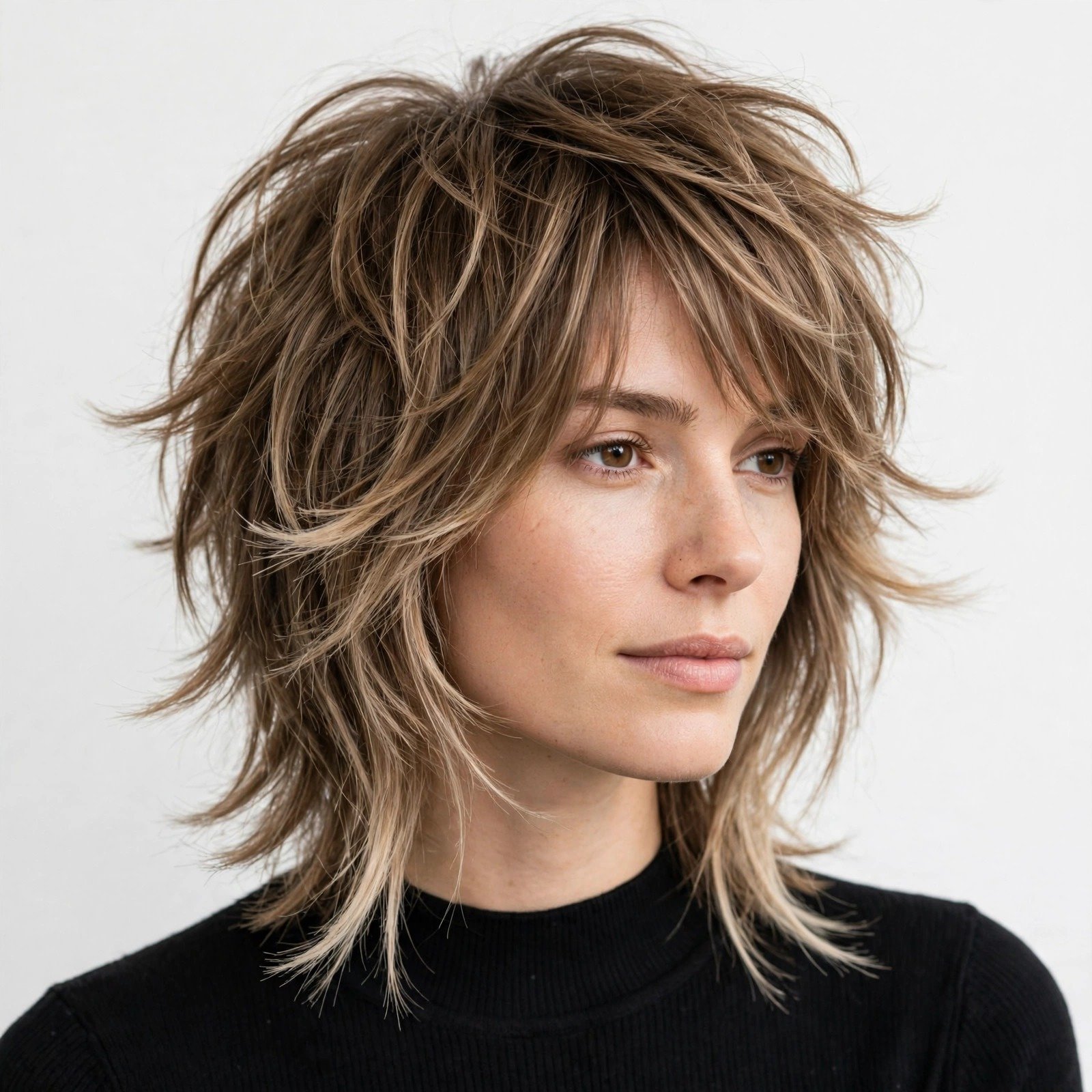
Feathered ends give the wolf cut a light, airy finish that feels straight out of a seventies salon in the best way. The ends are thinned and tapered so they flick and flutter with movement, rather than sitting in a heavy blunt line. It suits straight and wavy hair best, and flatters oval, long, and heart-shaped faces because the feathering softens the perimeter. Women with medium to thick hair love it most, since the feathering removes weight and adds swing. It is a romantic, vintage-inspired twist that still feels fresh and modern when paired with a middle part and soft face framing.
Stylist script: Cut the wolf layers with a short choppy crown and longer pieces flowing to the shoulders. Then feather the ends by slide-cutting downward at an angle, removing weight from the last two inches so the tips taper to soft points. Use a razor or slide-cutting technique on the perimeter for extra lightness, but keep the front framing strong. Blow-dry with a round brush, turning the ends outward and upward so the feathered tips flick and separate beautifully around the face and shoulders.
Styling routine: Apply a lightweight mousse to damp hair and blow-dry with a round brush, flicking the feathered ends outward and the front layers away from the face. A flat iron can flip the tips in seconds for extra definition. Use a light shine spray rather than heavy oils, which clump feathered ends together. Brush gently to keep the taper soft. Maintenance: every six to seven weeks; feathered ends split and lose their lightness quickly, so regular dusting keeps the airy finish intact.
29. Wolf Cut with Voluminous Blowout
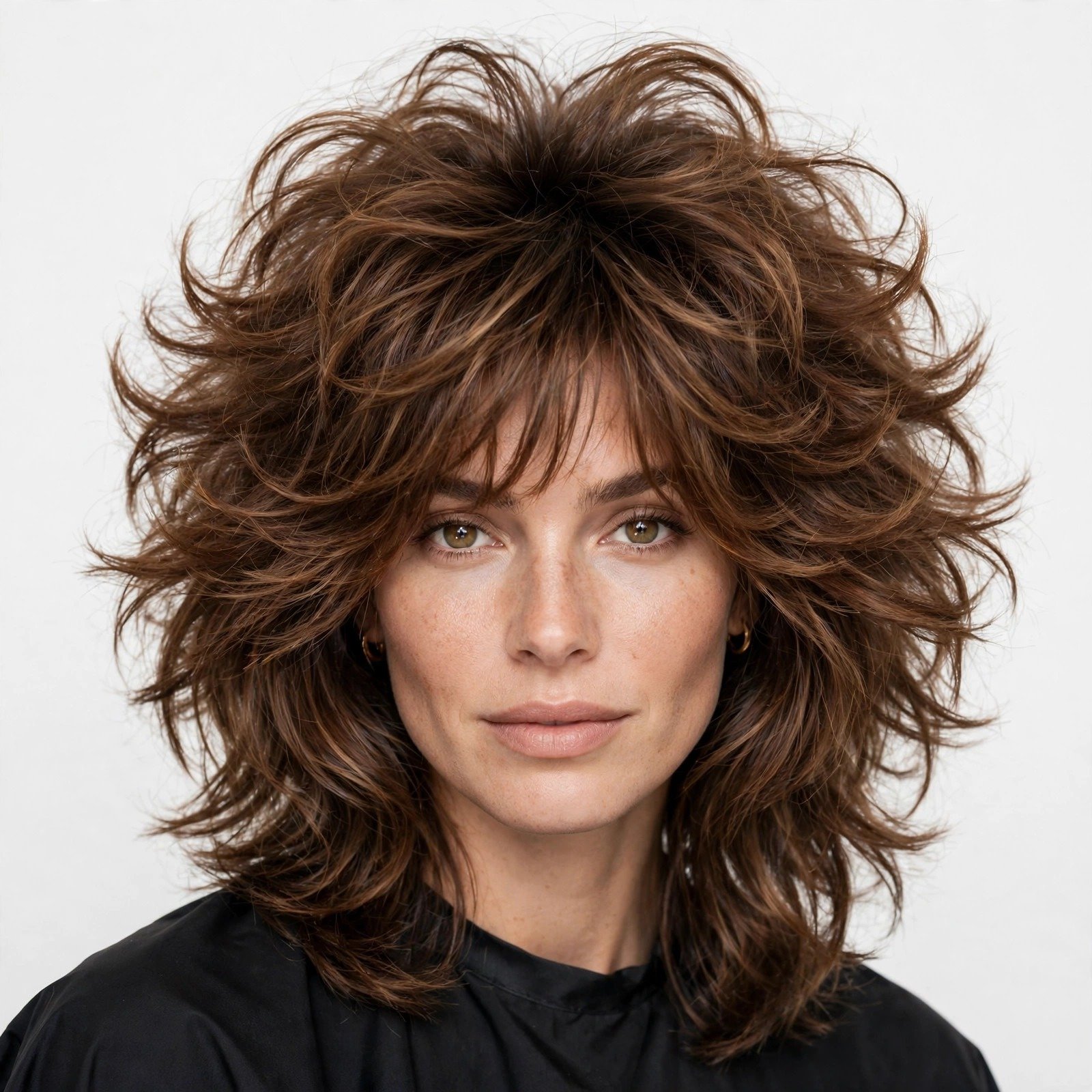
If big, bouncy hair is your goal, pair the wolf cut with a full voluminous blowout and the result is pure glamour. The layers are built to hold volume, with short pieces at the crown lifting the roots and longer pieces falling in soft, full waves. It suits straight, wavy, and thick hair, and flatters oval, round, and heart-shaped faces because the height elongates the face. It is the ultimate special-occasion style, but it also works as an everyday look if you love polished hair. The blowout makes the wolf wings dramatic, visible, and full of movement from every angle.
Stylist script: Cut the wolf shape with extra-short layers at the crown for lift, the shortest face piece at the cheekbones, and long layers through the shoulders. Blow-dry in sections on a round brush, over-directing the roots upward for maximum volume. Roll the front layers outward and the back layers under, then set each section with a velcro roller while it cools. Finish by brushing through gently for soft, bouncy fullness. Keep the shape big and soft, and check the crown height from the front before finishing.
Styling routine: Apply a root-lifting mousse and a volumising spray to damp hair, then blow-dry in sections with a large round brush, lifting at the roots. Use velcro rollers at the crown for ten minutes while you finish your makeup. Brush through gently and finish with a flexible hairspray. A hot brush can refresh the volume on day two. Maintenance: every six to eight weeks; the blowout depends on fresh layers, so keep the crown short and the face-framing pieces crisp for lasting lift.
30. Wolf Cut with Layers and Curls

Layers and curls together turn the wolf cut into a full, bouncy shape with movement in every direction. The shorter crown layers let the curls spring up and form, while the longer underneath layers keep the length and prevent the dreaded triangle shape. It suits oval, round, and heart-shaped faces, and works for natural curls, permed curls, and heat-styled curls alike. The combination is glamorous and full of life, with the face framed by soft curls that move as you do. It is perfect for special occasions, but it is also surprisingly easy to wear every day once the curl pattern is set.
Stylist script: Cut the wolf shape with a short choppy crown, then build longer layers through the shoulders so the curls have room to form at different levels. If curling with heat, wrap sections around a large-barrel iron in alternating directions, leaving the ends out for a modern finish. For natural curls, cut dry and curl by curl. Keep the crown layers light so the top does not flatten. Set the curls with a light spray, then gently separate them with your fingers for softness and volume.
Styling routine: For heat-styled curls, apply a heat protectant and mousse to damp hair, blow-dry smooth, then curl large sections with a one-and-a-quarter-inch iron. For natural curls, apply curl cream to wet hair and diffuse on low heat. Shake the roots and separate the curls gently once cool. Refresh with a curl mist on day two. Maintenance: every seven to nine weeks; keep the layers fresh so the curls spring evenly, and trim the ends before they lose their bounce.
31. Wolf Cut with Soft Waves
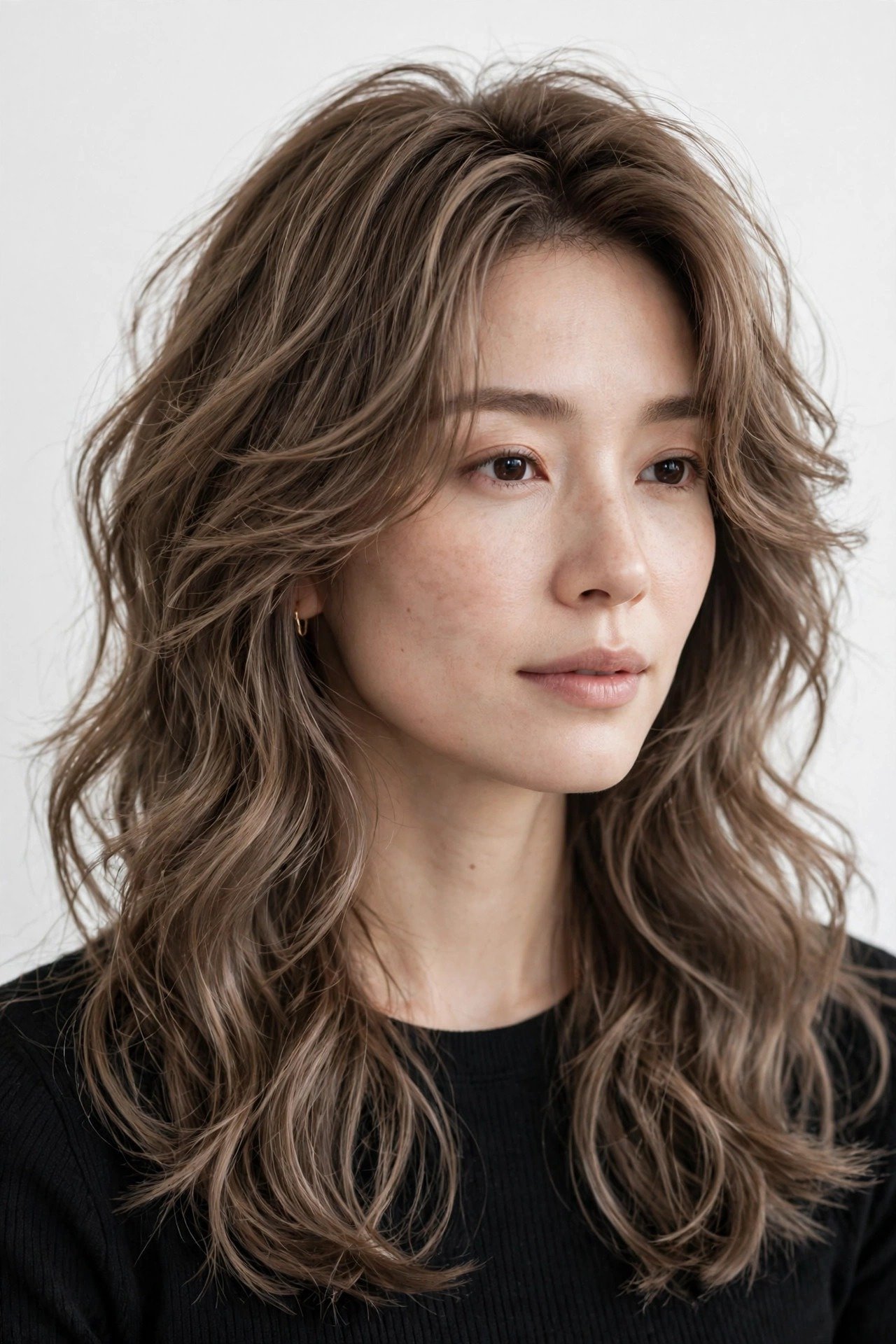
Soft waves are the wolf cut’s most romantic styling, with gentle bends that make the layers flow like water. The waves add volume and movement without looking overdone, and the face-framing pieces curl softly around the cheeks. It suits straight, wavy, and fine to medium hair, and flatters oval, round, and heart-shaped faces because the waves soften every feature. It is the perfect everyday glamour look, working for office days, weddings, and weekends alike. The waves also make the cut look thicker and fuller, which is a bonus for finer hair types.
Stylist script: Cut the wolf shape with a short choppy crown and longer layers falling to the shoulders or beyond. For soft waves, wrap large sections around a one-and-a-quarter-inch curling iron, leaving the ends out for a relaxed finish. Alternate the direction of each wave for a natural look. Let the waves cool completely before brushing through gently with a wide-tooth comb. Finish with a light texturising spray to hold the soft bend without stiffness. Keep the front layers waved outward for the winged effect.
Styling routine: Apply a heat protectant and mousse to damp hair, blow-dry smooth, then wave large sections with a curling iron, leaving the ends straight. Brush through gently once cool for soft, flowing waves. A texturising spray adds hold and movement. The waves last into day two with a quick refresh from a wave spray. Maintenance: every six to eight weeks; soft waves depend on healthy ends, so trim regularly and use a weekly mask to keep the hair smooth.
32. Wolf Cut with Sleek Finish
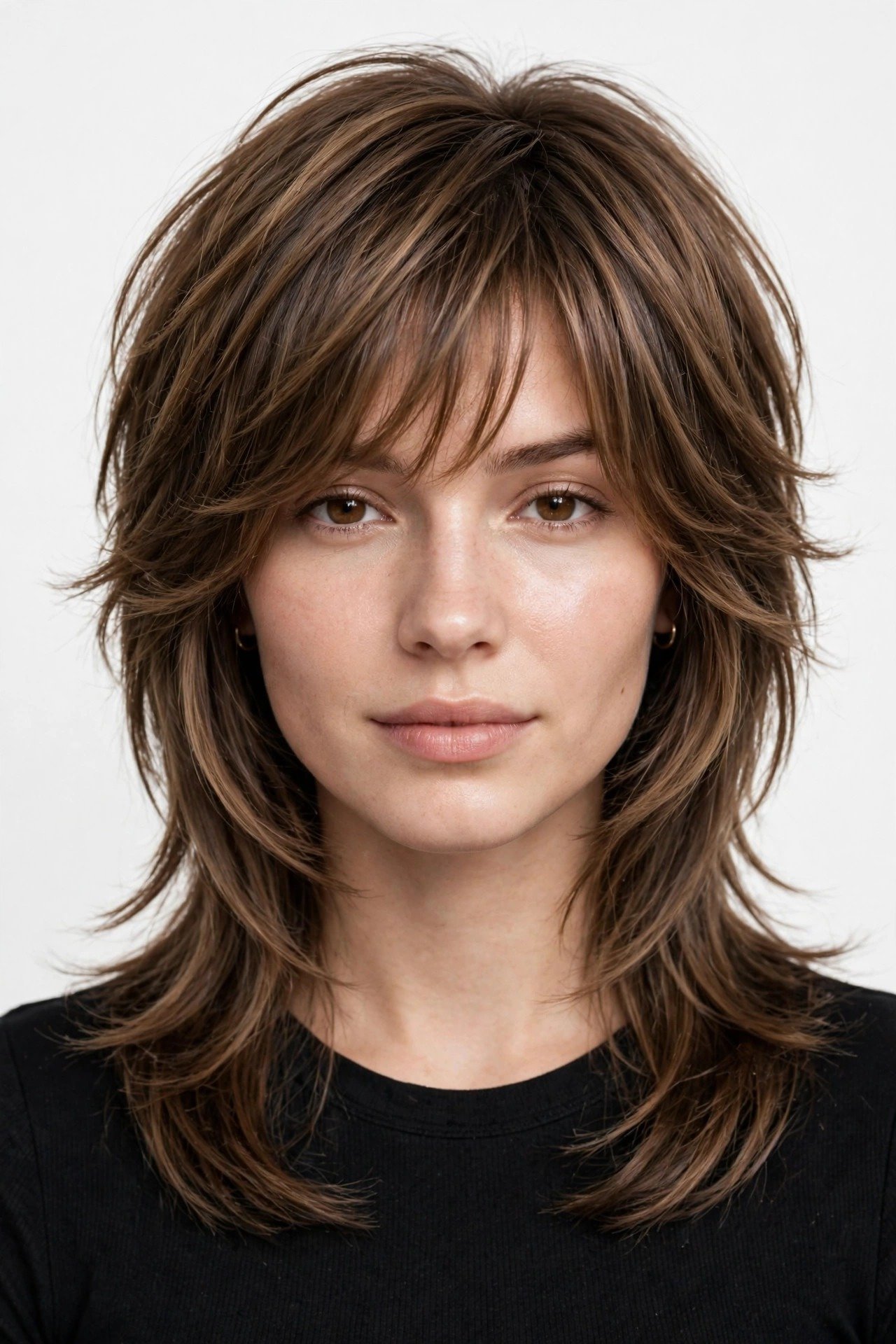
A sleek finish shows the wolf cut at its most polished, with smooth, glossy layers that fall in a perfect cascade. The choppy crown pieces frame the face with precision, while the longer layers lie flat and shine. It suits straight hair best, and flatters oval, long, and heart-shaped faces because the sleek lines elongate the face. It is ideal for formal events, office polish, or anyone who loves a high-shine, put-together look. The sleek version proves the wolf cut is not only about wild volume, since it looks equally stunning smooth, controlled, and refined.
Stylist script: Cut the wolf layers with a short choppy crown and longer pieces flowing to the shoulders, keeping the ends precise and the perimeter clean. Blow-dry the hair smooth in sections with a paddle brush, directing the front layers slightly outward. Follow with a flat iron on low to medium heat, straightening in thin sections for a glass-like finish. Apply a shine serum to the mid-lengths and ends only, avoiding the roots. Finish with a light spray to control flyaways without dulling the shine.
Styling routine: Apply a heat protectant and smoothing serum to damp hair, then blow-dry straight with a paddle brush. Flat-iron in thin sections for a sleek, glossy finish, turning the ends very slightly outward. Use an anti-frizz serum on the ends and a light hairspray for flyaways. A silk pillowcase helps the sleek look last overnight. Maintenance: every six to eight weeks; sleek hair shows split ends clearly, so keep the perimeter trimmed and the crown layers sharp.
How to Style and Maintain a Wolf Cut at Home

The morning routine for a wolf cut takes under ten minutes, and it starts with the texture. Apply a sea-salt spray or texturising spray to damp hair, scrunch the crown layers upward with your hands, and either diffuse on low heat or let the hair air-dry for a relaxed, lived-in finish. If you want volume, lift the roots with your fingers as you dry; if you want the wilder look, skip the dryer entirely and let the cut do the work. The long lengths need no styling — that is the point of paying a stylist for the choppy layers.
For the face-framing pieces and the ends, the routine is maintenance, not styling. Once a week, check the shortest crown layers in the mirror — wolf layers grow out fast, and a crown that drops too low stops giving lift and starts blending into the lengths. If your wolf cut is paired with colour, use a colour-safe shampoo and a weekly gloss or toner to keep the shade rich. The single most common mistake is over-applying product: a heavy, greasy finish weighs the choppy layers down and makes the wolf cut look flat, while a light texturising spray keeps the whole head reading as one wild design. Start with less product than you think you need.
At the salon, the consultation is where the cut is won or lost, so walk in with specifics. Name the structure first — wolf cut, soft wolf cut, or wolf cut with a mullet edge — then the crown length, then the length underneath, in that order. Bring a reference photo from the thirty-two styles above; “like number one but with a softer crown” is worth a thousand words of description. Mention your hair’s behaviour — “it flips out at the ends,” “it goes flat at the crown,” “my waves disappear by noon” — because a good stylist adjusts the layering and the weight removal to compensate. And book your next appointment before you leave: short crowns need reshaping every six to eight weeks, long wolf cuts every eight to ten. A wolf cut is a stylist-relationship haircut, not a twice-a-year one.
The last home-care rule is the simplest: wash less, condition more. A wolf cut’s choppy layers look best on second-day hair, when the natural oils give them grip and separation, so shampoo every two to three days and rinse with water in between. Use a light conditioner on the ends only, never heavy masks on the crown, and keep heat styling to the days you need real volume. Treat the layers like fabric — gentle handling, light product, and a trim before the texture collapses — and the cut will look as wild on day thirty as it did on day one.
Frequently Asked Questions
What is a wolf cut for women?
A wolf cut is a shaggy, layered haircut that blends the seventies shag with the modern mullet. It has short, choppy layers at the crown for volume and texture, with long, wispy lengths falling past the shoulders. The contrast between the short top and the long back gives it a wild, lived-in shape that moves with every step. It suits straight, wavy, and curly hair, and flatters most face shapes because the face-framing layers soften the jaw. With about 2.24 million monthly Google searches worldwide, it is the most searched haircut on the planet heading into 2026.
What is the difference between a wolf cut, a shag, and a mullet?
A wolf cut sits between a shag and a mullet, borrowing from both. A shag has choppy layers all over with a softer, more even shape, while a mullet has a sharp contrast between a short front and a very long back. The wolf cut keeps the shag’s textured crown and the mullet’s long back, but balances them so the shape reads wild yet wearable. The crown is shorter and more disconnected than a shag, and the back is softer and more blended than a true mullet. If you want edge without going full mullet, the wolf cut is the middle ground.
Which face shape suits a wolf cut?
A wolf cut suits almost every face shape, which is one reason it has become so popular. Oval faces can wear any variation, round faces benefit from crown height and longer face-framing layers that elongate the face, and square faces look softer when the layers curve past the jaw. Heart-shaped faces suit cheekbone layers that balance a wider forehead, while long faces gain width from the shaggy pieces at the cheeks. The key is adjusting the crown length and the shortest layer placement to your face, so ask your stylist to tailor the shape to your features.
Does a wolf cut work with curly hair?
Yes, a wolf cut works beautifully with curly hair when it is cut dry and curl by curl. The shorter crown layers let the curls spring up and create lift, while the longer underneath length keeps the shape balanced and prevents a heavy triangle silhouette. It suits loose waves through to tight curls, and it flatters round, oval, and heart-shaped faces by framing them with bouncy curls. Ask for a stylist experienced with curly cuts, since layer placement must follow your natural curl pattern rather than a straight-hair template.
How often do I need a wolf cut trimmed?
Most women need a wolf cut trimmed every six to eight weeks to keep the crown layers short and the shape wild. Shorter wolf cuts may need a trim every five to six weeks, since the choppy shape grows out faster at shorter lengths. Longer versions can stretch to eight to ten weeks, because the layers blend more gracefully as they grow. Curly wolf cuts often last eight to twelve weeks. Between trims, ask for a quick tidy of the crown layers if the lift starts to disappear and the cut begins to look like ordinary long layers.
Can I style a wolf cut at home?
Yes, a wolf cut is designed to be easy to style at home, which is part of its appeal. Apply a sea-salt spray or texturising spray to damp hair, scrunch the crown upward, and diffuse or air-dry for the signature wild shape in about ten minutes. A round brush can add extra lift and outward flicks, while a flat iron can flip the ends in seconds. The cut also air-dries well, especially on wavy hair, if you scrunch the front pieces outward while damp. With the right spray and a little practice, most women master the routine within a week.
What products do I need for a wolf cut?
You need only a few key products to style a wolf cut well at home. Start with a sea-salt spray or texturising spray for grit and separation, a volumising mousse for root lift, and a heat protectant to guard the layers during blow-drying. A lightweight leave-in conditioner keeps the ends soft, while a small amount of pomade defines the piecey tips. A round brush and a diffuser are the main tools, and a flat iron adds optional flicked ends. Finish with a flexible hairspray and a drop of shine serum on the ends only.
Will a wolf cut suit thin or fine hair?
Yes, a wolf cut can suit fine hair very well if the layers are placed carefully. The short crown layers create lift and the illusion of thickness, while a blunt perimeter protects the ends from looking wispy. Ask your stylist to keep the layers longer, avoid over-thinning, and use minimal razor work, since too much texture can make fine hair look thinner. Style with a lightweight mousse at the roots and dry shampoo on day two to hold the volume. With the right cut and light products, fine hair looks fuller and more textured in a wolf cut.
How do I grow out a wolf cut?
Growing out a wolf cut is easier than most people expect, because the layers blend gradually as they lengthen. Let the crown layers grow first, trimming only the very ends every eight to ten weeks to keep them healthy, and the shape will slowly soften into a shaggy layered cut. Once the crown reaches shoulder length, ask your stylist to blend the steps with long layers and reshape the perimeter into a butterfly or long layered cut. Avoid cutting the long back short during the grow-out, since the length is what carries you through the awkward stage.
Is the wolf cut still in style for 2026?
Yes, the wolf cut is still very much in style for 2026, and it is the most searched haircut on the planet heading into the year, with about 2.24 million monthly Google searches worldwide. Pinterest’s 2026 Men’s Trend Report shows searches for “soft wolf cut men” up 1,154% and “modern wolf cut men” up 553%, proving the wolf family is surging on both sides. The cut keeps evolving with new variations like soft wolf cuts, pastel colour, and two-tone dye, so it feels fresh rather than dated. If you want a fashionable cut with lasting appeal, the wolf cut is a safe and stylish choice.
Conclusion
The wolf cut is the rare hair idea that improves everything it touches: the hair looks lighter, the face looks more considered, and the morning looks shorter, all from a single shaggy shape that lets natural texture lead. The 32 styles above cover every length, every finish, and every hair type, so the only real decision left is which version matches your face, your hair, and the amount of time you want to spend in front of the mirror. Pick two or three favourites, screenshot them, and bring them to your stylist — a picture plus the vocabulary in this guide turns a vague request into a precise one.
Start with the classic if you are unsure: the classic wolf cut with a textured crown and long lengths is the safest entry point, and you can go shorter, softer, or bolder next time once you know how the layers feel on your head. Whatever you choose, keep the maintenance honest — a wolf cut is a relationship with your stylist, and the texture is a daily habit, not a weekend project. Get both right, and the wolf cut will do what the best haircuts always do: make you look like the most deliberate version of yourself, every single day of 2026.
2 Comments