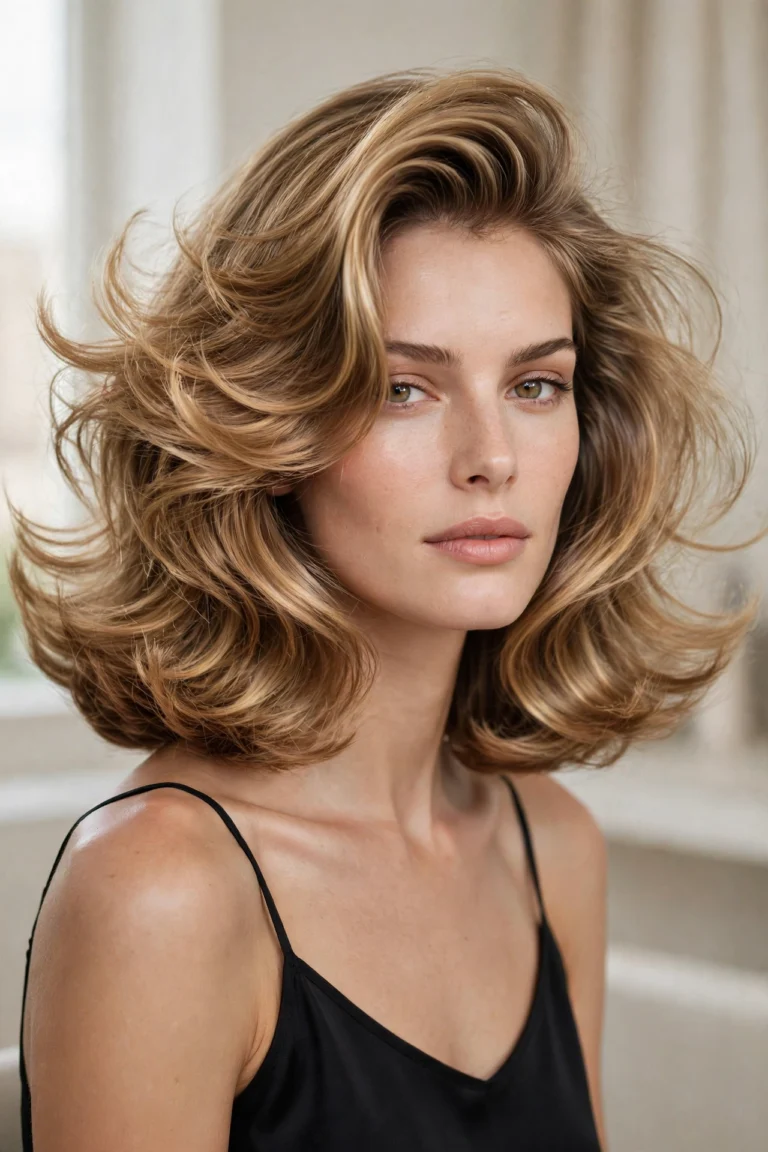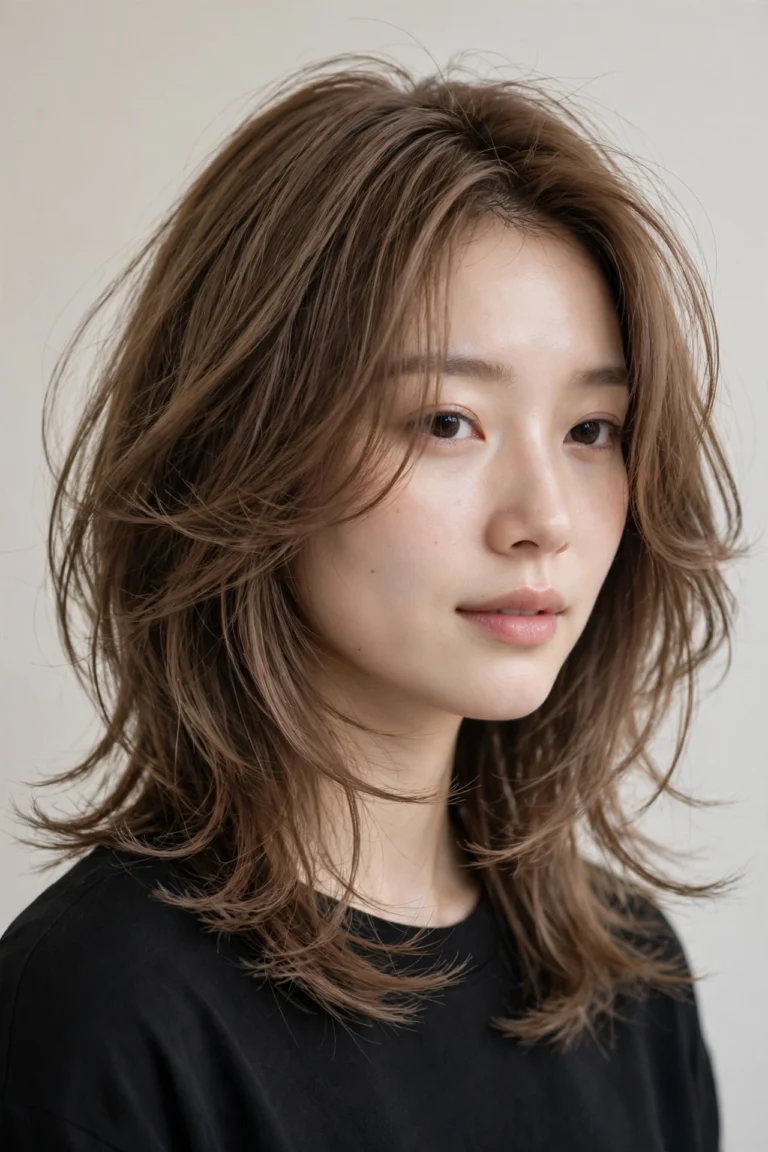
French Twist Women 2026: 32 Modern Styles, Variations & Step-by-Step Guide
The French Twist Is Back — Softer, Looser, and More Wearable Than Ever
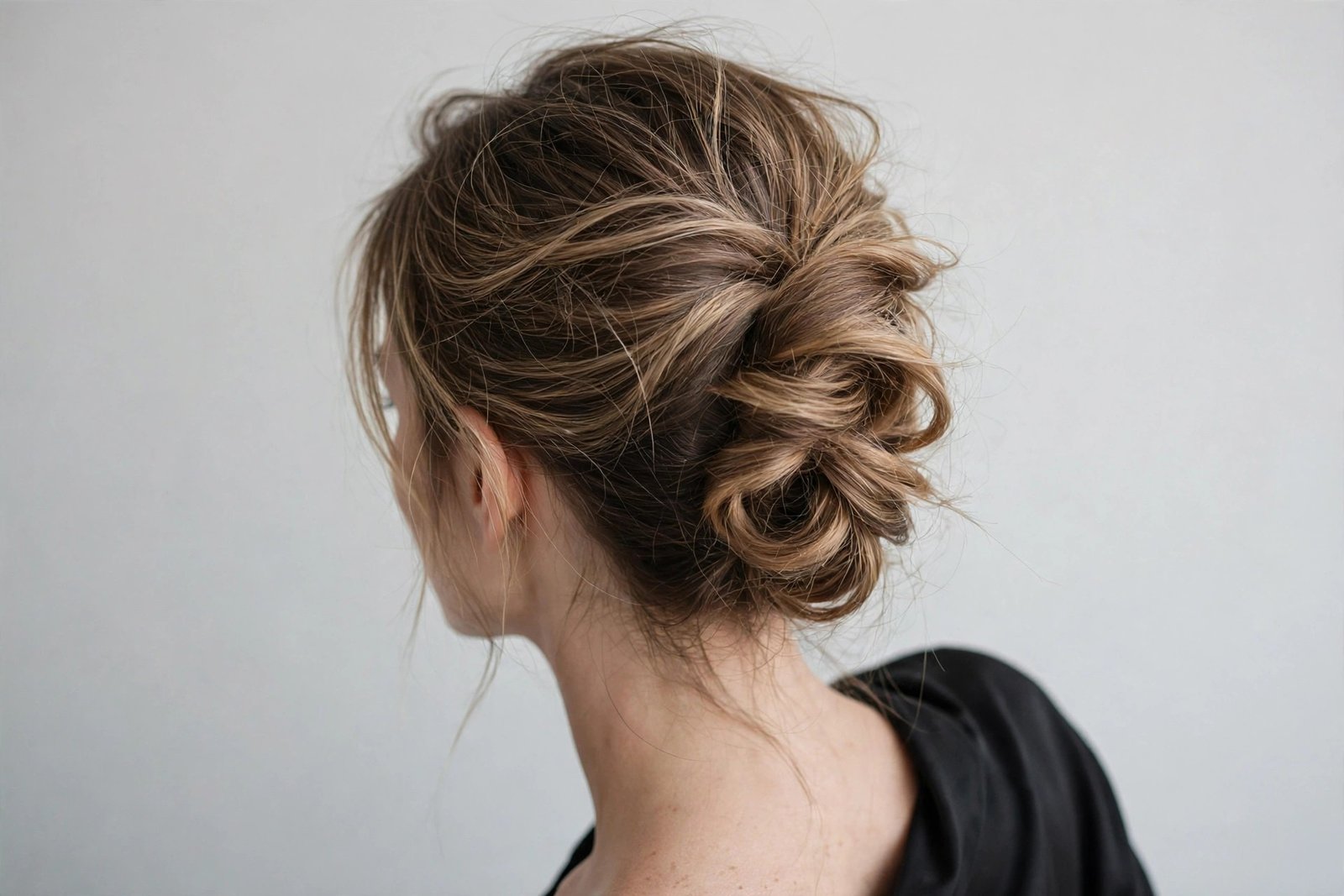
Some hairstyles never really leave — they just wait for the right moment to walk back into the room. The French twist for women is one of them. What was once the ultimate boardroom-and-ballroom updo, worn stiff and shellacked by every newsreader and bridesmaid of the nineties, has come back for fall 2026 in a completely different mood: relaxed, wispy, textured, and — dare I say it — fun. Stylists are calling it the Pinterest-viral updo of the season, and honestly? The hype is earned.
I’ll be honest with you: the old French twist scared a lot of us off. It looked like it required a professional, forty-five minutes, and a personality transplant. The 2026 version throws all of that out. This is the twist you do in five minutes on a Tuesday morning, with a couple of face-framing pieces falling loose, and it looks like you have your life together. It’s elegant without being rigid — polished enough for the office, soft enough for a wedding guest slot, and undone enough that nobody believes it took you an hour.
What makes this style such a survivor is pure mechanics. The French twist works with your hair’s own length and weight instead of fighting them, which means it flatters almost every face shape and hair texture. Straight hair gets a sleek architectural roll. Wavy hair gets a romantic, touchable twist. Curly hair gets the best deal of all — volume and grip built right in. Below, I’m walking you through 32 modern variations, from the timeless classic to the messy, braided, bridal, and everyday versions stylists are actually wearing right now, plus a full routine section so you can learn it once and wear it forever.
Before we dive in: if you’ve never done an updo in your life, start with style number 32, the five-minute version. It is the gateway twist. Once your hands learn the rolling motion — and they will, faster than you think — the rest of these 32 styles are just flavor on the same foundation.
Table of Contents
- The French Twist Comeback
- What Exactly Is a French Twist?
- 32 Modern French Twist Styles for 2026
- The French Twist Routine: Prep, How-To & Maintenance
- Frequently Asked Questions
- Conclusion
What Exactly Is a French Twist?
Strip away the glamour and the French twist is beautifully simple: you gather all your hair to one side, roll it upward and inward against the back of your head, and pin the resulting fold so it stands like a vertical shell. The ends disappear into the tuck. That is the whole trick. No donut, no extensions, no special tools — just your hands, some pins, and about five minutes once you’ve practiced twice.
The name promises Paris, but the style is genuinely democratic. It was the go-to of flight attendants, nurses, lawyers, and brides for one reason: it holds. A pinned twist distributes the hair’s weight along the fold instead of hanging it from one point the way a ponytail does, so it feels lighter than it looks. That is also why it survives humidity, dancing, and a full workday with your dignity intact — the physics are on your side.
What separates the 2026 French twist from the one your mother wore is intention. The old version aimed for perfection: every strand smoothed, every flyaway sprayed into submission. The new version aims for life. Wisps are welcome. Texture is the point. A little asymmetry reads as chic, not sloppy. Think of it this way — the classic was a sculpture, and the modern one is a gesture. Both are beautiful, but only one of them lets you look like yourself.
Why the French Twist Is Having a Moment in Fall 2026
Every few years, fashion gets tired of effort and swings back toward polish. Fall 2026 is that swing. After seasons of claw-clip chaos and heatless curls, there is a real appetite for hair that looks considered — and stylists answering that call reached straight for the twist. It showed up backstage at fashion weeks, on red carpets worn loose and low, and all over Pinterest boards with names like “old money hair” and “quiet luxury updos.” The algorithm, for once, has excellent taste.
Barbers and stylists I follow have been saying the same thing: clients are asking for the twist by name again, but they want the relaxed version. Not the helmet. The version with texture, with pieces out, with a ribbon or a scrunchie or nothing at all. It photographs beautifully from every angle, which matters in the age of the back-of-head selfie, and it transitions from day to night without a redo. That versatility is why it keeps winning — it is one style that genuinely covers the office, the wedding, and the dinner after.
There is also a practical reason for the timing. Fall weather — cooler air, less humidity, hat season approaching — is kinder to updos than summer. Hair behaves. A twist you set in October morning air stays set. If you have ever wanted to learn this style, this is the season to do it, while the air is cooperating and every stylist on your feed is posting tutorials.
Who the French Twist Suits Best
Short answer: almost everyone, with small tweaks. The twist is one of the rare updos that adapts to face shape rather than demanding a particular one. Round faces get lift and height from a higher twist with volume at the crown. Long faces look best with a lower, wider twist that adds width. Oval faces can wear it anywhere. If you have a strong jawline you love, keep the sides sleek to show it off; if you want softness, pull those face-framing pieces out and let them do the work.
Hair texture is where people talk themselves out of the twist, and they shouldn’t. Fine hair twists beautifully — it just needs texture spray and maybe a little teasing at the crown for grip, and the finished roll looks refined rather than skinny. Thick hair gives you a gloriously substantial roll, though you will want the bigger U-pins and a bit more patience. Curly and wavy hair is the twist’s secret favorite: the texture grips itself, the roll looks romantic with zero effort, and the style genuinely lasts longer on it.
Length-wise, you need enough hair to fold — roughly shoulder length or longer is the comfortable zone. Shorter than that, and you are in padding territory (see style 27, which is built exactly for bobs). Age-wise, forget the idea that the twist is “mature.” On a twenty-year-old worn messy with a scrunchie, it reads cool-girl. On a sixty-year-old worn sleek, it reads timeless. The style does not have an age; it has a mood, and you get to pick it.
32 Modern French Twist Styles for Women in 2026
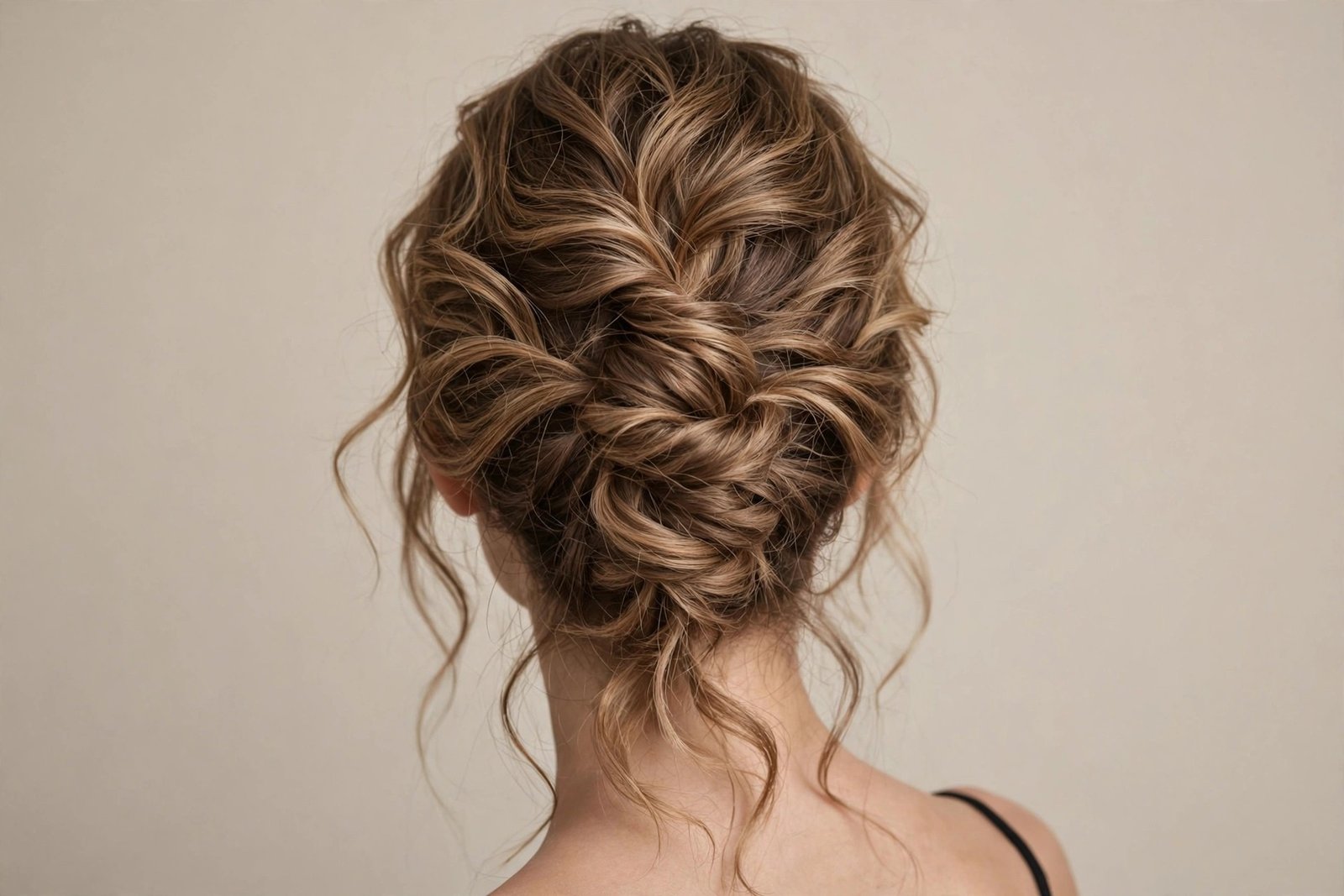
Here they are — thirty-two ways to wear the French twist this season, from the purist classic to the five-minute messy version you will actually wear on weekdays. Every style below uses the same rolling foundation, so learn one and you have learned them all. I have included who each version suits, how to style it, what to tell your stylist if you want it done professionally, and the honest downsides nobody mentions.
1. The Timeless Classic French Twist
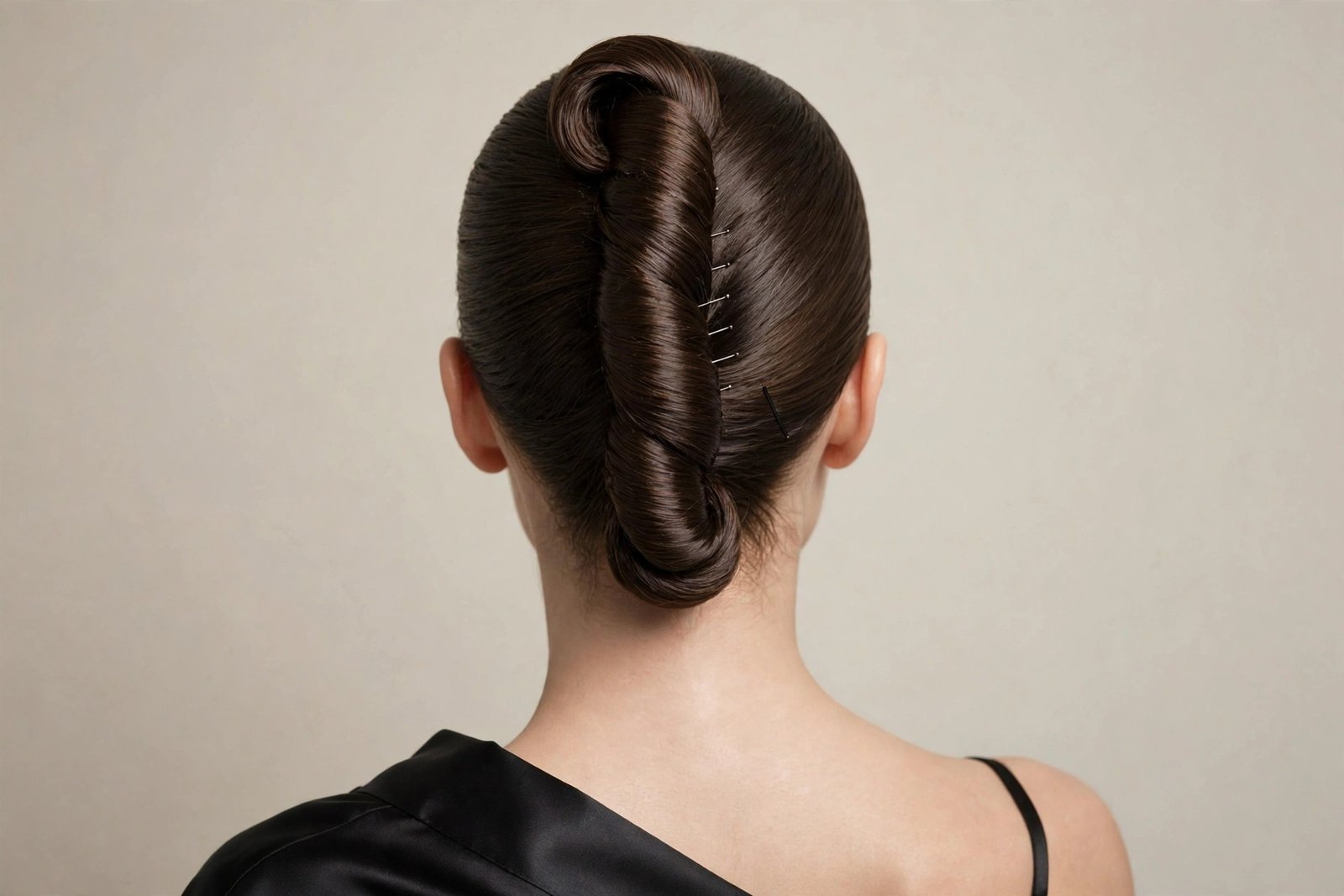
The original, and still the benchmark everything else is measured against. The timeless classic French twist is the smooth, perfectly rolled shell that sits vertically along the back of the head — every strand in place, the seam invisible, the silhouette clean. It is the updo equivalent of a tailored blazer: it never looks wrong, and it quietly makes everything around it look more expensive. If you only learn one version, make it this one, because every other style on this list is a variation of its mechanics.
Who it suits: genuinely everyone with enough length, but it is especially kind to oval and heart-shaped faces, where the vertical line elongates beautifully. On fine hair it looks refined and precise; on thick hair it becomes a substantial, sculptural roll. It is the safest choice for formal events — weddings as a guest, galas, job interviews — anywhere you want to look composed without looking like you tried too hard. Tell your stylist: “a classic smooth French twist, polished finish, medium height, no pieces out.” They will know exactly what you mean.
The honest downside: the classic demands patience. Your first attempt will take twenty minutes and look slightly lopsided, and that is normal. It also shows every flyaway, so if your hair is frizzy in humidity, you will need a smoothing product and a firm-hold spray. But once your hands learn the roll — usually by the third try — it becomes a ten-minute style that photographs like a salon visit. Maintenance is simple: pin it in the morning, mist with hairspray, and leave it alone. Touching it is what kills it.
2. The Modern Messy French Twist
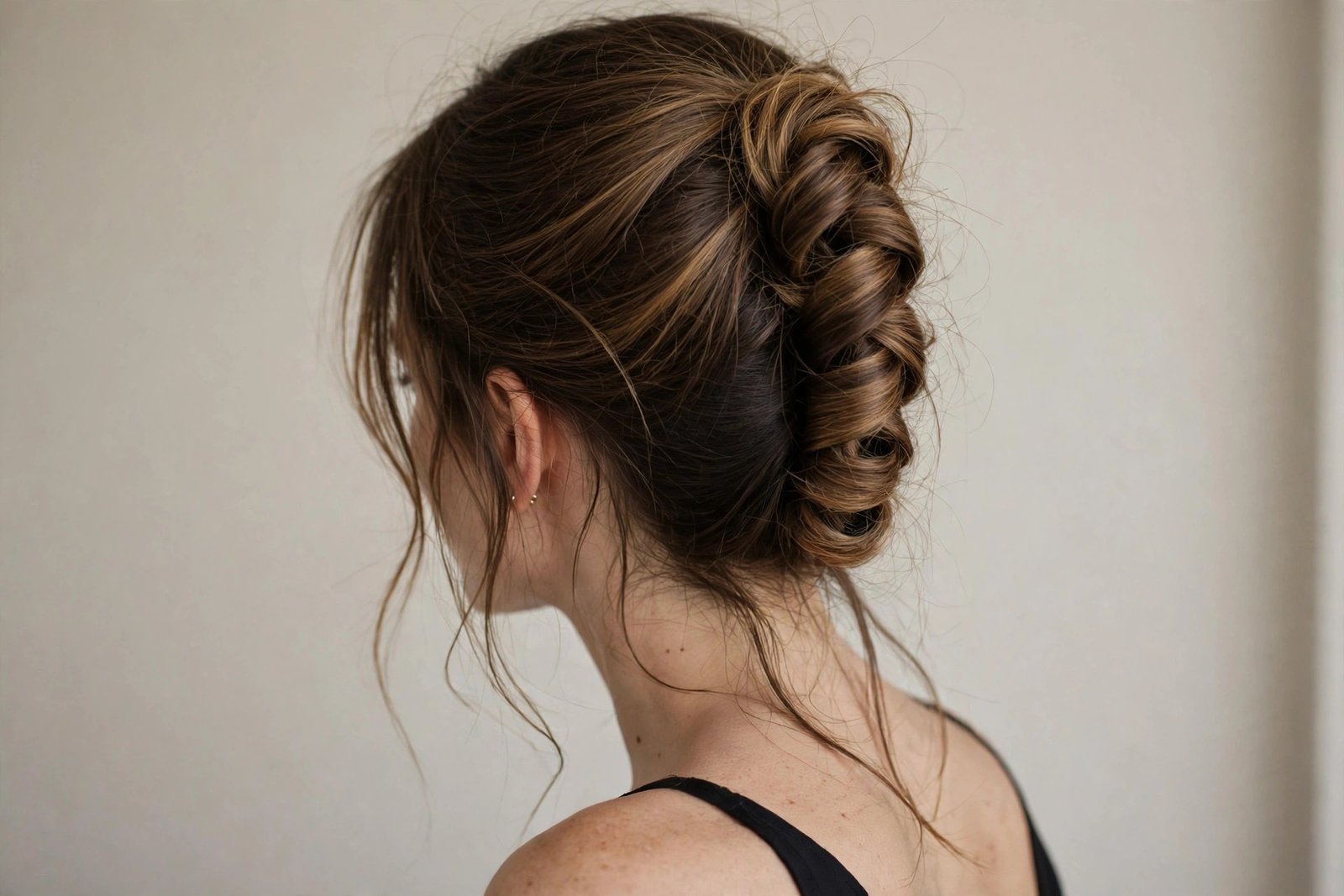
This is the 2026 version — the one all over Pinterest, the one stylists are actually wearing to work. The modern messy French twist keeps the classic roll but loosens everything: the fold is softer, the crown has air in it, wisps escape around the face and nape, and the whole thing looks like it happened beautifully by accident. It is the cool-girl answer to the updo, and it is far more forgiving to learn than the polished classic because imperfection is the entire aesthetic.
Who it suits: this is the universal crowd-pleaser. Round faces love it because the height and softness are flattering without severity. Wavy and curly textures were born for it — their natural texture does half the styling for you. It is the perfect everyday twist: office-appropriate, date-night ready, and it actually looks better at hour six than hour one, when it has relaxed into itself. For fine hair, tease the crown lightly before rolling and use texture spray; the “messy” needs grip to stay artful instead of collapsing.
Styling script: start with dry texture spray all over, gather loosely, twist upward without pulling tight, and pin with the fold slightly off-center for that effortless feel. Then — this is the key step — gently tug small sections at the crown and sides to loosen. Pull two thin pieces out at the front. Mist lightly. The honest downside: “messy” is a skill, not an accident, and beginners tend to overshoot into genuinely disheveled. Practice the loosening step in a mirror until you can feel the difference between undone and unfinished. When you nail it, though, this is the twist you will wear three times a week.
3. The Low Chignon Twist
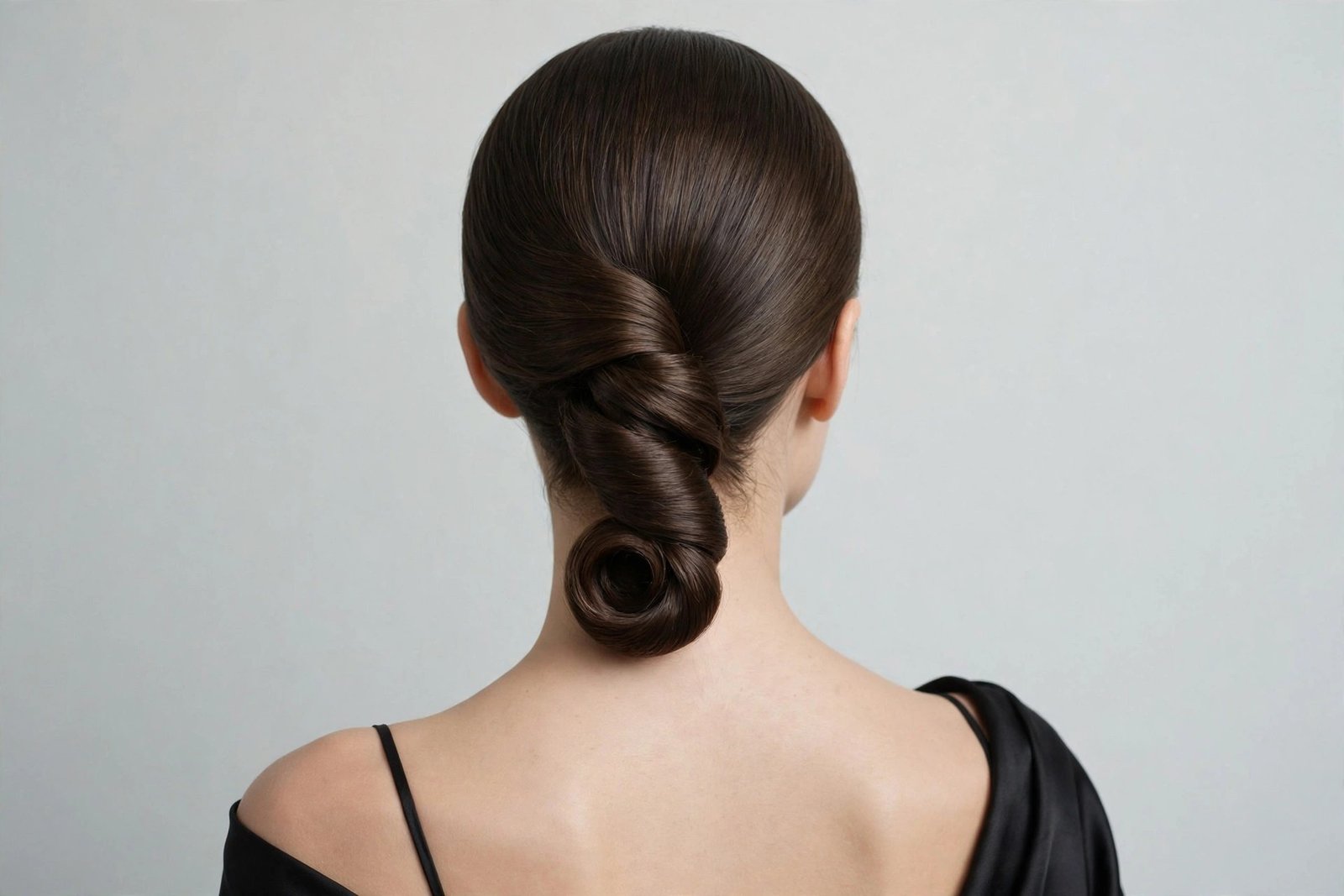
Take the French twist, slide it down to the nape, and you get the low chignon twist — the most romantic and evening-ready of the family. Instead of a tall vertical shell, the roll sits low and horizontal-ish, hugging the neckline like a folded ribbon. It is softer than the classic, more formal than the messy, and it has this old-Hollywood-meets-modern-minimalist quality that makes it a bridal favorite and a red-carpet staple.
Who it suits: long faces and long necks, especially — the low placement balances proportions beautifully. It is also wonderful for thick, heavy hair, because the low position means less weight pulling upward and a more comfortable wear all day. Brides love it because it sits perfectly under a veil or below a hairpiece, and it photographs like a dream from the side. If your hair is very long, this version is actually easier than the high twist, because you are working with gravity instead of against it.
To style it, gather everything low at the nape, twist upward only a short distance, and pin the fold flat against the head rather than standing tall. Tuck the ends deep — this is where most low twists fail, because short tucks unravel. Cross your U-pins for real security. The honest downside: because it sits at the neckline, it competes with necklaces and high collars, so plan your outfit around it, not the other way around. It also shows the back of the neck, so if that bothers you, leave a few nape pieces loose to soften it.
4. The High French Twist
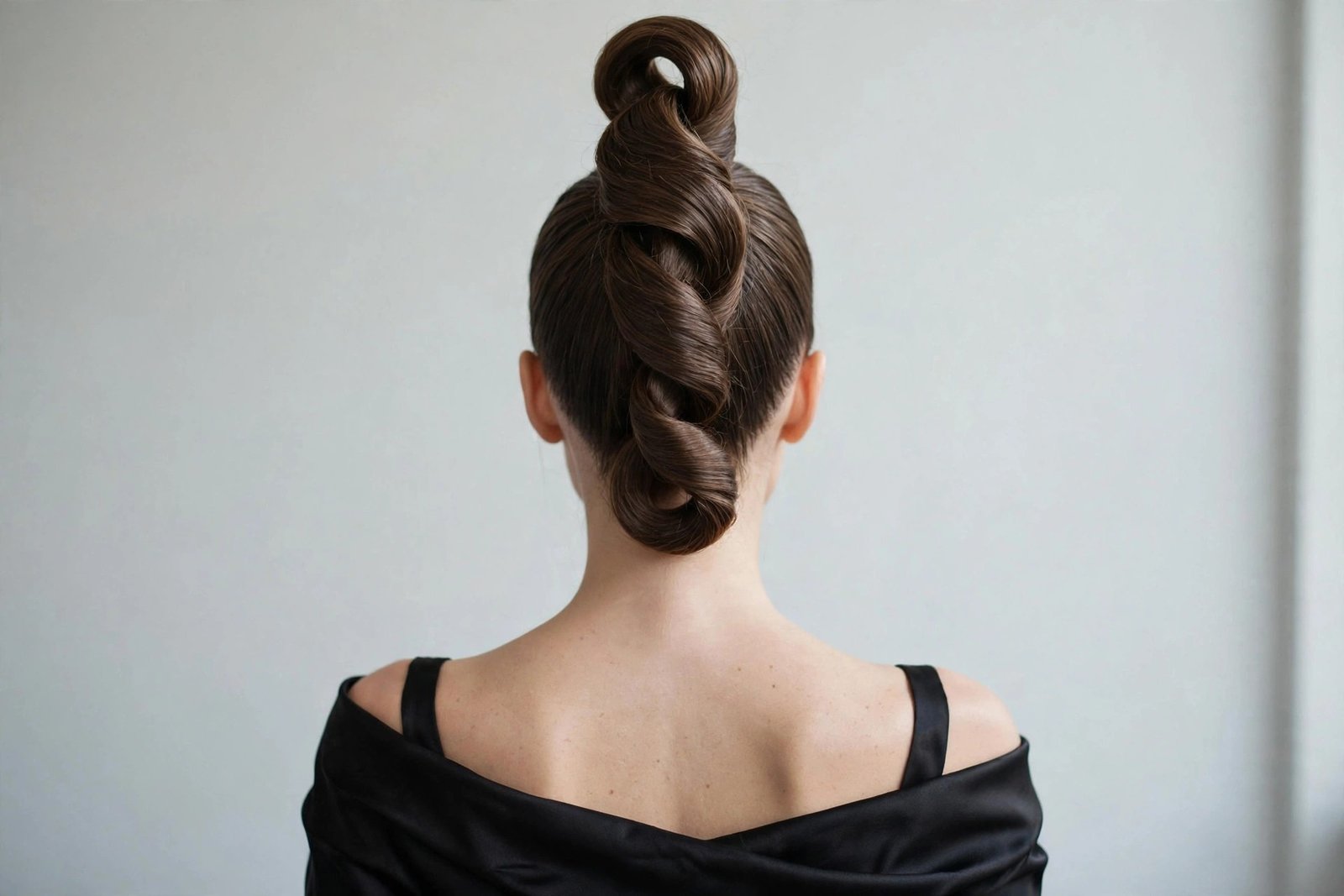
The high French twist is the drama queen of the family — a tall, vertical roll that climbs the back of the head and adds serious height. It is the most fashion-forward placement, the one that turns heads at galas and makes a simple dress look like an event. Where the low twist whispers, the high twist announces. It elongates the neck, lifts the whole face, and has a runway energy that the other versions only hint at.
Who it suits: round and square faces benefit most, because the vertical line is genuinely slimming and lengthening. Petite women should be careful — too much height can overwhelm a small frame, so keep the roll compact rather than towering. It needs decent length to reach high and still tuck, so this is a medium-to-long hair specialty. Tell your stylist: “high French twist, lots of height, sleek sides” — and expect them to use a bit of padding at the crown if your hair is fine.
The honest downside: physics. A high twist fights gravity all day, so it needs the most secure pinning of any version — U-pins crossed from both sides, bobby pins in the seam, and a real hold hairspray, not the flexible stuff. It is also the least comfortable for all-day wear if you pin it too tight; keep the tension firm but not headache-inducing. And it is unapologetically formal — this is not a groceries-and-errands twist. Save it for the nights that deserve it, and it will never disappoint you.
5. The Braided French Twist
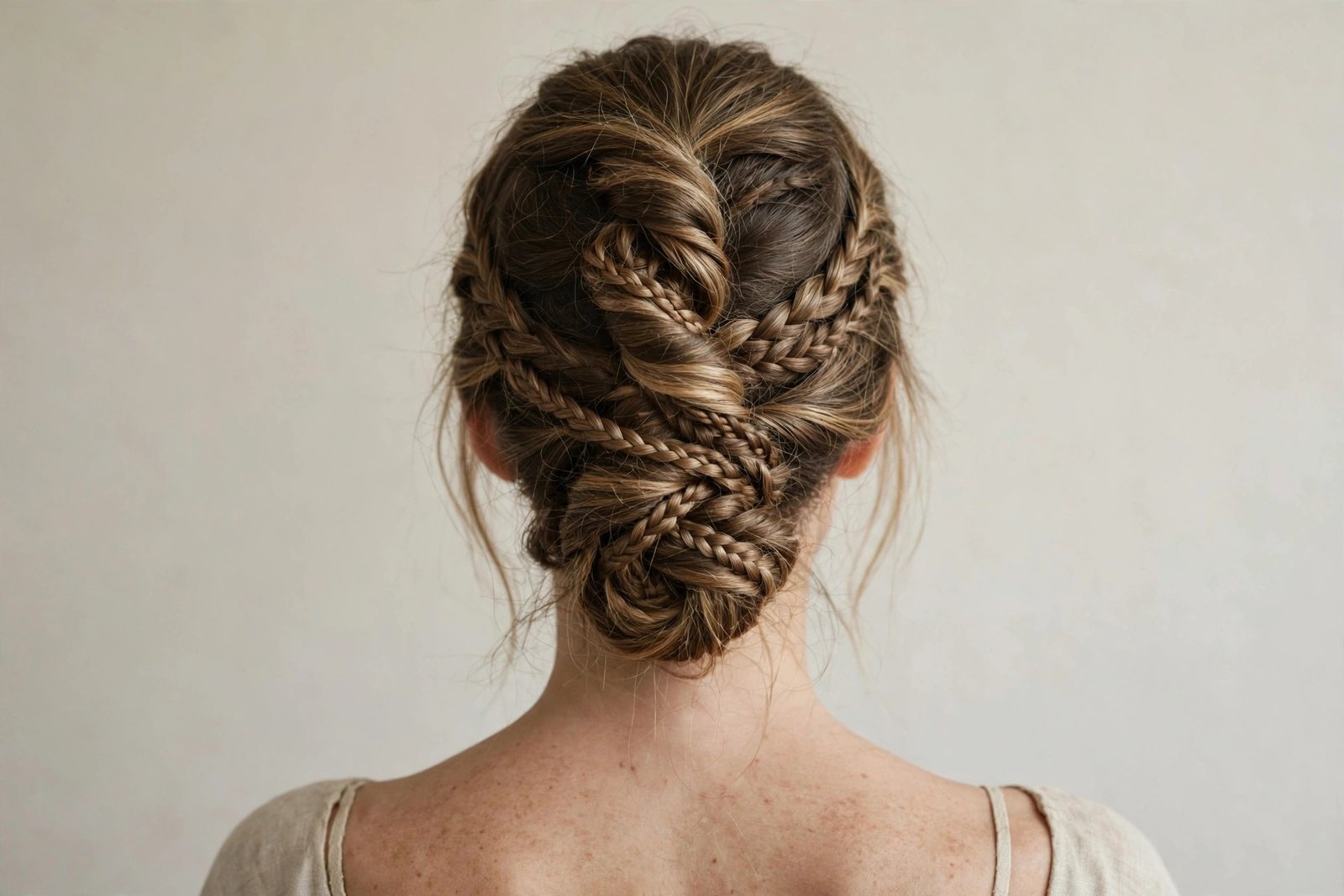
When the twist meets the braid, you get one of the most eye-catching versions on this list. The braided French twist weaves a braid — usually a Dutch or rope braid along one side, or braided texture worked into the roll itself — into the classic fold. The result has dimension, shadow, and detail that a smooth twist can’t touch. It is the version people stop you to ask about, and it is less difficult than it looks because the braid does the visual heavy lifting while the twist does the structural work.
Who it suits: this is a dream for medium to thick hair, which has the volume to show off the braid properly. It is a favorite for boho weddings, festivals, and anyone who loves the braided bun family of styles but wants something more distinctive. Oval and heart faces wear it beautifully. Tell your stylist: “French twist with a Dutch braid feeding into it from one side” — bring a photo, because “braided twist” means different things to different stylists.
The honest downside: this is not a beginner style. You need to be comfortable braiding your own hair before the twist part even starts, and the whole thing takes a solid twenty minutes. It also uses more pins than a plain twist, so take-down needs care. But as a special-occasion style, it is unmatched — intricate-looking, secure, and completely your own. Start by braiding one side loosely, then gather everything and roll as usual, letting the braid sit on top of the fold.
6. The Half-Up French Twist
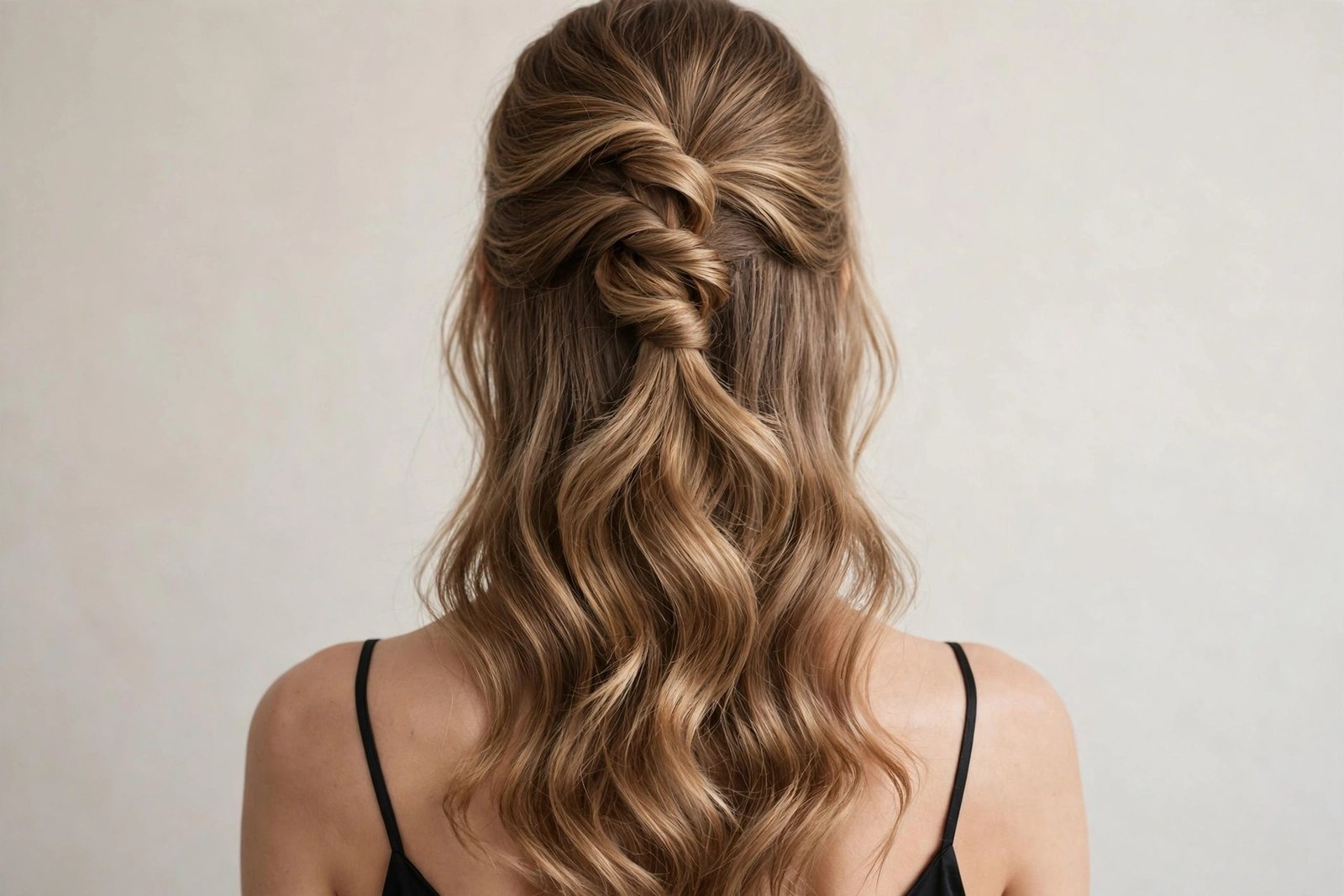
The half-up French twist is the compromise style that ends up being everyone’s favorite. You twist only the top half of your hair into a soft roll and leave the rest down — flowing, wavy, free. It gives you the polish of an updo with the romance of loose hair, and it is the easiest twist on this entire list because you are working with half the hair. If the full twist intimidates you, this is your training wheels — and plenty of women never graduate past it, because why would they?
Who it suits: long hair especially, where the loose half has room to move. It is gorgeous on wavy and curly textures, and it is the most youthful-feeling twist here — think bridesmaids, garden parties, date nights. Round faces get a lovely lift from the crown volume. It is also the best twist for showing off color: balayage and highlights read beautifully when half the hair is down and the twist sits above it like a frame.
Styling it is genuinely simple: section the top half from temple to temple, twist it up and pin, then style the loose half however you like — waves, straight, natural. The honest downside is hold: with only half the hair in the roll, there is less to anchor, so it can loosen faster than a full twist. Use more pins than you think you need, and texture spray is mandatory. But for ease-to-impact ratio, nothing on this list beats it.
7. The Curly French Twist

Here is a secret the natural-hair community has known forever: curly hair makes the best French twist. The texture gives you built-in grip and volume, so the roll forms faster, holds longer, and looks romantic with almost no effort. The curly French twist is fuller, softer, and more dimensional than the straight-hair version — the curls peek out of the fold in the most beautiful way, and the finished style has a lushness that no amount of teasing can fake.
Who it suits: anyone with natural curls, coils, or waves — this is your home turf. It works on all curl patterns, from loose waves to tight coils, and it is protective-adjacent: the ends are tucked away, which means less manipulation and less breakage than wearing it down. It is stunning for weddings, especially with a few curls left out around the face. The volume is real, so if you have fine curly hair, this twist will make it look twice as thick.
Work with dry, stretched hair rather than freshly defined wash-day curls — you want the texture, not the shrinkage. Gather gently without brushing it out, twist loosely, and pin. Do not fight the curls; let them be part of the design. The honest downside: very tight coils may need the hair stretched first (a blowout or banding method) to get enough length for the fold. And take-down must be gentle — pins can snag on curls, so slide them out along the direction of the hair, never yank.
8. The Bridal French Twist
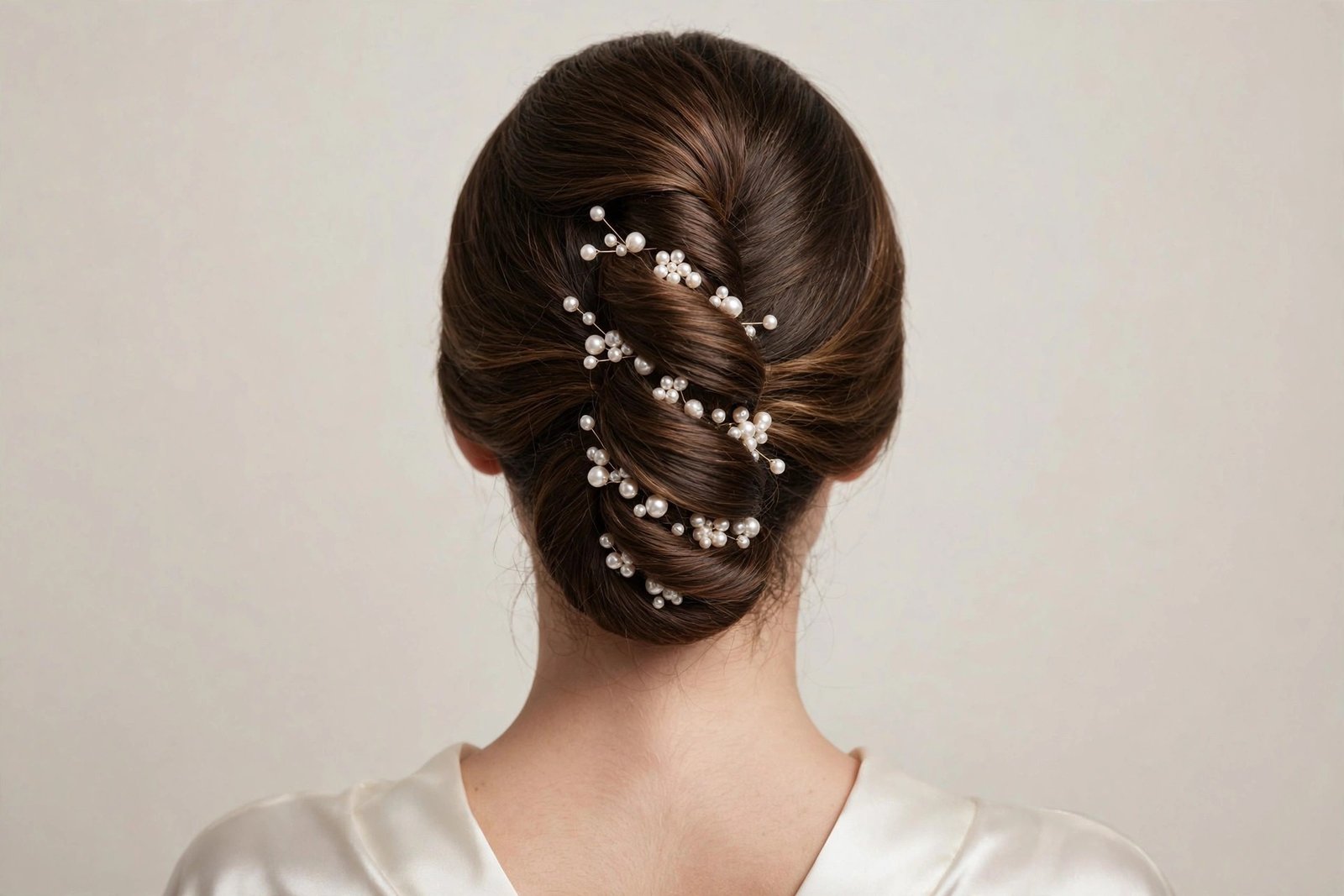
The bridal French twist is the classic elevated to ceremony level: the same flawless roll, but finished with the details that make it wedding-worthy — delicate pearl pins, a crystal comb, fresh flowers tucked along the seam, or a veil anchored just above the fold. It is timeless in the truest sense; bridal photos from every decade feature some version of this twist, and it never looks dated. There is a reason it is still the most requested wedding updo in salons.
Who it suits: brides who want elegance without stiffness, and honestly, mothers of the bride and bridesmaids too. It works with every neckline, sits beautifully under or above a veil, and stays put through tears, hugs, and hours of dancing — which is the real bridal test. It flatters every face shape because the stylist can customize the height, the softness, and the face-framing pieces to your features.
Book a trial. That is the whole advice. A bridal twist should be done by a professional who has done dozens, because the pinning needs to survive a twelve-hour day and the finish needs to photograph perfectly. Tell your stylist your dress neckline, your veil plans, and your accessories, and bring them to the trial. The honest downside is cost and time — a proper bridal twist with a trial run is an investment. But on the day, when your hair still looks perfect in the last dance photos, you will not regret a penny of it.
9. The Prom-Ready French Twist

Prom hair lives in a tricky middle ground: it needs to look special in photos but survive hours of dancing, hugging, and happy chaos. The prom-ready French twist nails it. It is a slightly softened classic — smooth enough to look formal, loose enough to look young, and pinned to withstand a night that will test every bobby pin you own. Add a sparkly pin or two and you have prom hair that looks expensive in every single photo.
Who it suits: anyone heading to prom, homecoming, or a formal dance — and honestly, anyone attending a wedding as a guest who wants that same polished-youthful balance. It works with strapless, halter, and off-shoulder necklines because the updo shows off the shoulders. For fine hair, a little padding at the crown gives the roll presence; for thick hair, the natural volume does the work.
Get it done professionally if you can — prom is not the night to practice a new skill. Tell the stylist you need it to last through dancing, and they will pin accordingly (more pins, stronger spray, and a trial run if you are smart). The honest downside: prom updos and weather are enemies, so if your venue involves outdoor photos in humidity, ask for extra-strong hold and keep a few emergency pins in your clutch. A well-done prom twist will still look good at midnight. That is the whole point.
10. The Everyday Office French Twist
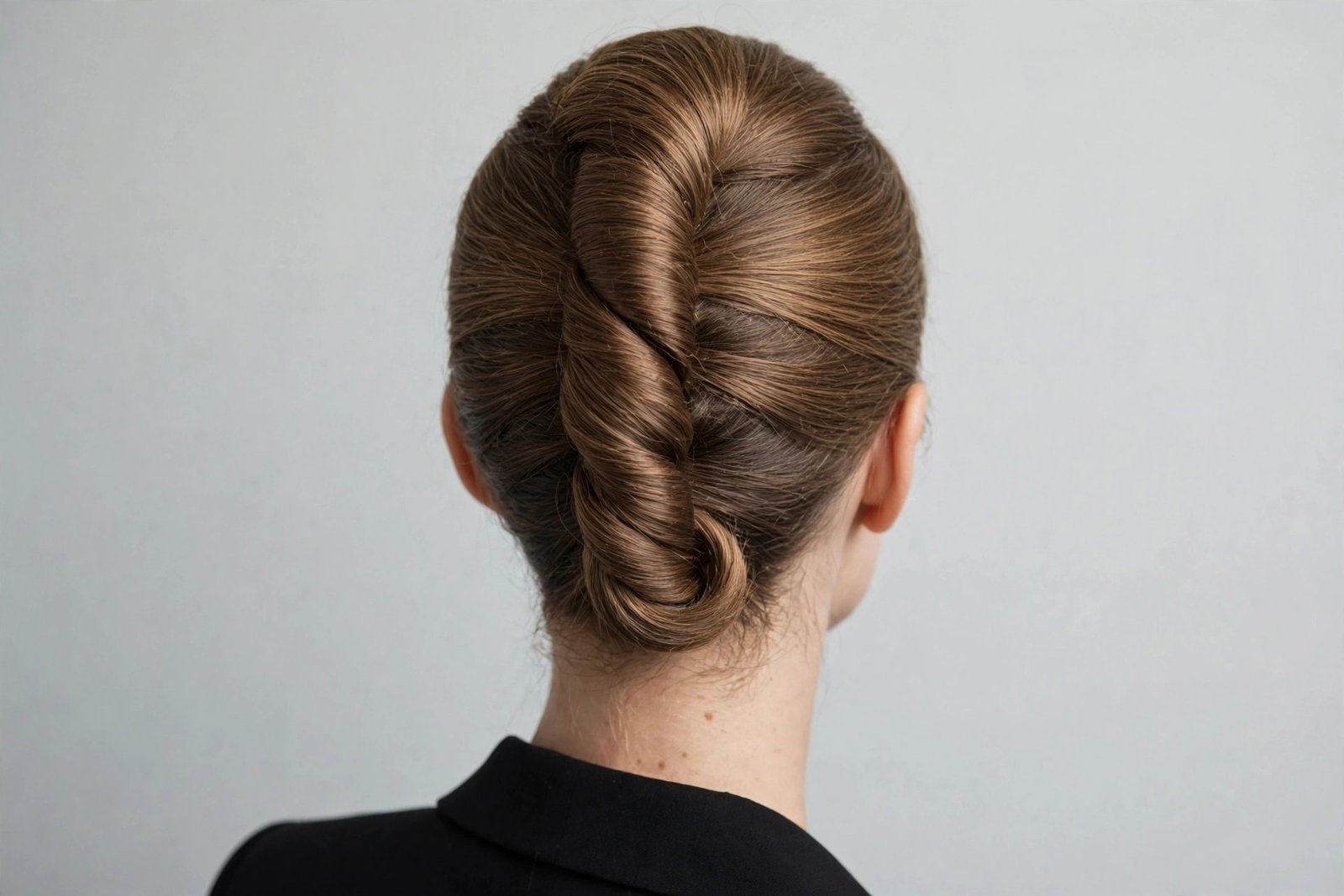
The office French twist is the workhorse of this list — the version you will actually wear on a random Wednesday. It is neat but not severe: a tidy roll, smooth sides, nothing fussy, done in under ten minutes once you know the motion. It says “I have my life together” in every meeting, keeps your hair out of your face at your desk, and transitions straight to after-work plans without a touch-up. This is the twist as a lifestyle, not an event.
Who it suits: working women who need reliable, professional hair — which is to say, most of us. It is kind to every face shape when worn at medium height with soft sides, and it works in conservative offices and creative ones alike. If your workplace has a dress code for hair (healthcare, food service, labs), this twist keeps everything contained and compliant while still looking good.
The routine version is simple: texture spray, gather, roll, pin, go. Do it on second-day hair for the best grip. The honest downside is repetition strain — wearing the same tight position daily can stress your hairline, so vary the height and looseness through the week, and never sleep in it. Give your hair one or two down-days a week. Your twist will look better for it, because healthy hair twists better than stressed hair.
11. The Face-Framing Pieces French Twist
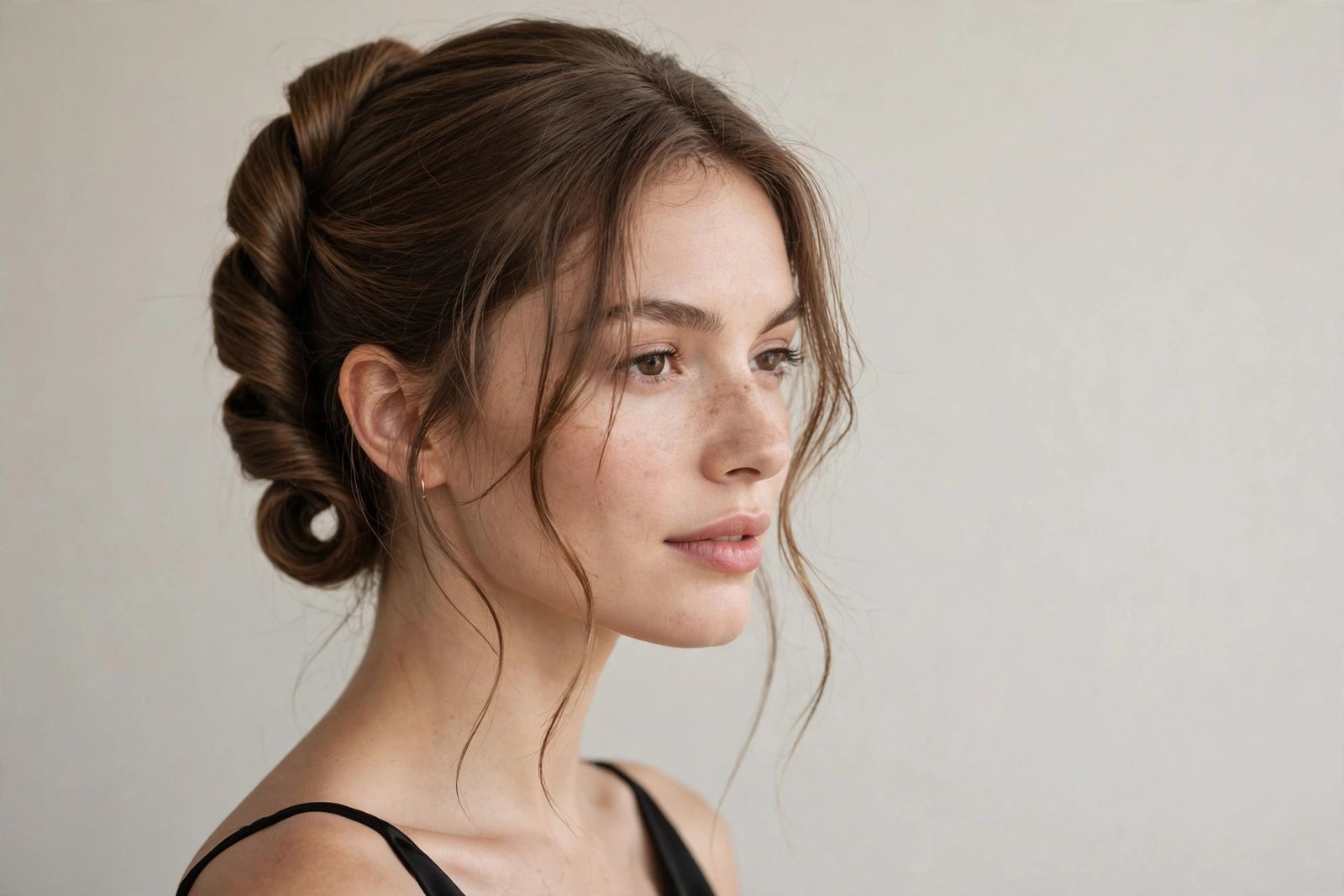
Sometimes the smallest detail changes everything. The face-framing pieces French twist is the classic roll with two soft strands left out at the front — and those two strands do an astonishing amount of work. They soften the hairline, slim the face, add movement, and instantly modernize the whole style. It is the difference between “beautiful updo” and “beautiful updo that looks like you.” Stylists call these pieces the money strands, and they earn the name.
Who it suits: everyone, but especially anyone who finds full updos a bit severe. Round and square faces get beautiful softening; long faces get width where it flatters. If you have curtain bangs, this version is basically made for you — the bangs become the face-framing pieces and the whole thing looks intentional and current. It is the most photographed twist on social media for a reason: those front pieces catch the light and the camera loves them.
Technique: section out two thin pieces at the front before you start twisting — about half an inch wide each. Style the twist as usual, then curl or wave the loose pieces lightly and let them fall. The honest downside: the pieces need occasional attention through the day, especially in wind or humidity. Keep a tiny bit of smoothing cream in your bag for touch-ups. But that is a small price for the style that makes the twist feel like yours.
12. The Sleek Glass-Hair French Twist
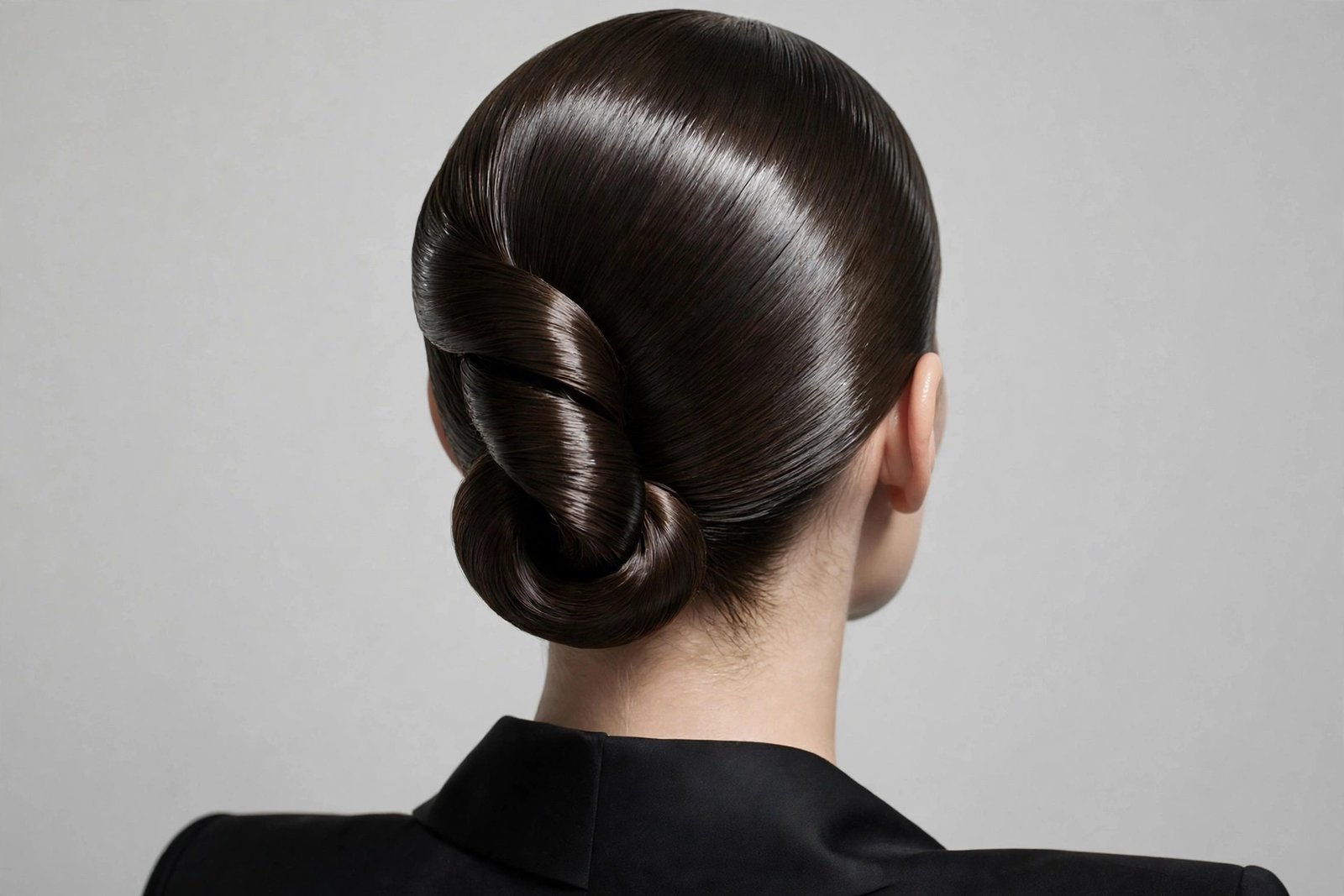
Glass hair — that mirror-shine, liquid-smooth finish — meets the French twist, and the result is pure luxury. The sleek glass-hair French twist is the most polished version on this list: every strand smoothed to a high shine, the roll immaculate, the surface reflective. It is the twist as a power statement, the one that looks like money and means business. If the messy twist is the cool girl, this is the CEO.
Who it suits: straight and straightened hair does this best — the glass finish needs a smooth canvas. It is stunning on dark hair, where the shine reads deepest, and on precise bobs-to-lobs grown out to twisting length. This is the version for galas, important presentations, and anywhere you want maximum impact. Pair it with the glass hair routine — smoothing treatments, shine serums, and a flat iron pass before you twist.
The honest downside: this is the highest-maintenance twist here. It demands freshly smoothed hair, quality shine products, and it shows every imperfection — a single flyaway ruins the effect. Humidity is its mortal enemy. It is also not a style you touch up casually; once the glass finish breaks, you are redoing it. But when the conditions are right and the shine is on, nothing on this list looks more expensive. This is special-occasion hair, and it knows it.
13. The Twisted Ponytail Hybrid

Not ready to commit to a full updo? The twisted ponytail hybrid gives you the best of both. The top half rolls into a proper French twist, and instead of tucking the ends away, they flow into a loose low ponytail. It is the twist for ponytail loyalists — all the elegance of the roll at the crown, all the ease and movement of a pony at the back. And it is genuinely one of the most-worn hybrid styles I see on the street right now.
Who it suits: long hair is ideal, since you need enough length for both the twist and a ponytail with presence. It is fantastic for active days — the twist keeps the top secure and polished while the pony moves freely. Athletes, moms, commuters: this is your twist. It also suits anyone growing out layers, because the twist contains the shorter top layers while the pony shows off the length.
Roll the top section into a twist and pin it, then gather the remaining hair — including the twist’s ends — into a low ponytail. Wrap a small section of the pony around the elastic to hide it. The honest downside: the ponytail half needs its own styling to look intentional, or the whole thing reads as “I gave up halfway.” A few waves or a sleek finish on the pony makes all the difference. Done right, it looks like a deliberate, expensive hybrid. Done lazily, it looks unfinished.
14. The Ribbon-Tied French Twist

A ribbon changes the entire personality of a French twist. The ribbon-tied version takes a classic or messy roll and finishes it with a silk or velvet ribbon — tied in a bow at the side of the twist, or wrapped around its base. Suddenly the updo has a story: a little vintage, a little romantic, a little ballet-core. It is the detail that makes people ask where you got your hair done, and the answer is “my bedroom, in six minutes.”
Who it suits: romantics, vintage lovers, and anyone dressing for an occasion with a feminine dress code — garden weddings, brunches, holiday parties. It is especially lovely on the low twist, where the ribbon sits at the nape like a gift bow. Choose your ribbon wisely: silk or satin for elegance, velvet for fall richness, grosgrain for a preppier feel. Black is timeless; deep burgundy and forest green are perfect for the season.
Style your twist first, then tie the ribbon around the base of the roll and knot it at the side — not the center, which can look costume-y. Tuck the ribbon ends so they don’t fly into your face. The honest downside: ribbons and wind are not friends, and a ribbon that comes untied mid-event is annoying. Tie it snugly, and consider a tiny stitch or a pin through the knot for security. But for pure charm-per-effort, the ribbon twist is unbeatable.
15. The Scrunchie French Twist

The scrunchie French twist is the 2026 mood in a single style: take something classic, add something playful, and refuse to take hair too seriously. Here the twist — usually a relaxed, slightly messy roll — gets a scrunchie wrapped at its base or around the tucked ends. It is retro without being costume, fun without being childish, and it is all over social media because it photographs with so much personality.
Who it suits: younger wearers especially, but honestly anyone with a playful streak. It is the perfect weekend twist — farmers markets, casual dinners, concerts. Match the scrunchie to your outfit for a styled look, or go classic black satin for something that reads more grown-up. Silk scrunchies are also genuinely better for your hair than elastics, so there is a practical win hiding in the cute.
Keep the twist itself relaxed — a severe roll with a scrunchie looks confused. The scrunchie should sit where the twist meets the head, covering the seam. The honest downside: context matters. This is not an office-boardroom or black-tie twist; wear it there and the scrunchie undermines the polish. But for everything casual and creative, it is delightful. It is also the most comfortable twist here, because the scrunchie distributes pressure softly.
16. The Double French Twist

Two twists are better than one — at least when you want to make an entrance. The double French twist runs two parallel rolls up the back of the head, side by side, like a pair of shells. It is architectural, striking, and unapologetically editorial. You will not see it at the grocery store, but you will see it in fashion editorials and on red carpets, where its symmetry photographs like sculpture.
Who it suits: the bold, the artistic, and anyone with thick hair that can support two substantial rolls. It needs length — medium to long — and it needs confidence, because this twist gets noticed. It is a phenomenal choice for fashion events, photoshoots, and performances. Tell your stylist: “two parallel French twists, symmetrical, sleek” — and definitely bring reference photos, because execution matters enormously here.
The honest downside: this is the hardest twist on the list. Parting the hair evenly, rolling two matching twists, and pinning them symmetrically takes real skill and a good chunk of time — this is professional territory for most people. It is also heavy; two rolls mean twice the pinning. But as a statement style, nothing else here competes. If you want hair that people remember, the double twist delivers.
17. The Side-Swept French Twist

Symmetry is safe; asymmetry is interesting. The side-swept French twist rolls the hair diagonally, so the twist sits off-center and the whole style sweeps to one side. It is the most dynamic version of the twist — it has movement, attitude, and a red-carpet quality that the centered versions don’t. If you want your updo to look like a choice rather than a default, sweep it sideways.
Who it suits: this is a fantastic option for anyone with a strong side part or an asymmetric cut growing out. It flatters oval and long faces, and it is gorgeous with statement earrings, because the sweep clears one side of the face completely. Bridesmaids love it because it looks different from the bride’s classic twist while staying in the same family — coordinated but not matching.
Gather everything to one side first — that is the key difference — then roll upward along a diagonal line and pin. The twist will naturally want to straighten out, so anchor it well with crossed U-pins. The honest downside: it is the least intuitive twist to learn, because your hands are used to working symmetrically. Practice in front of a mirror with a hand mirror for the back. But once it clicks, it is one of the most striking styles you can wear.
18. The Textured Wavy French Twist
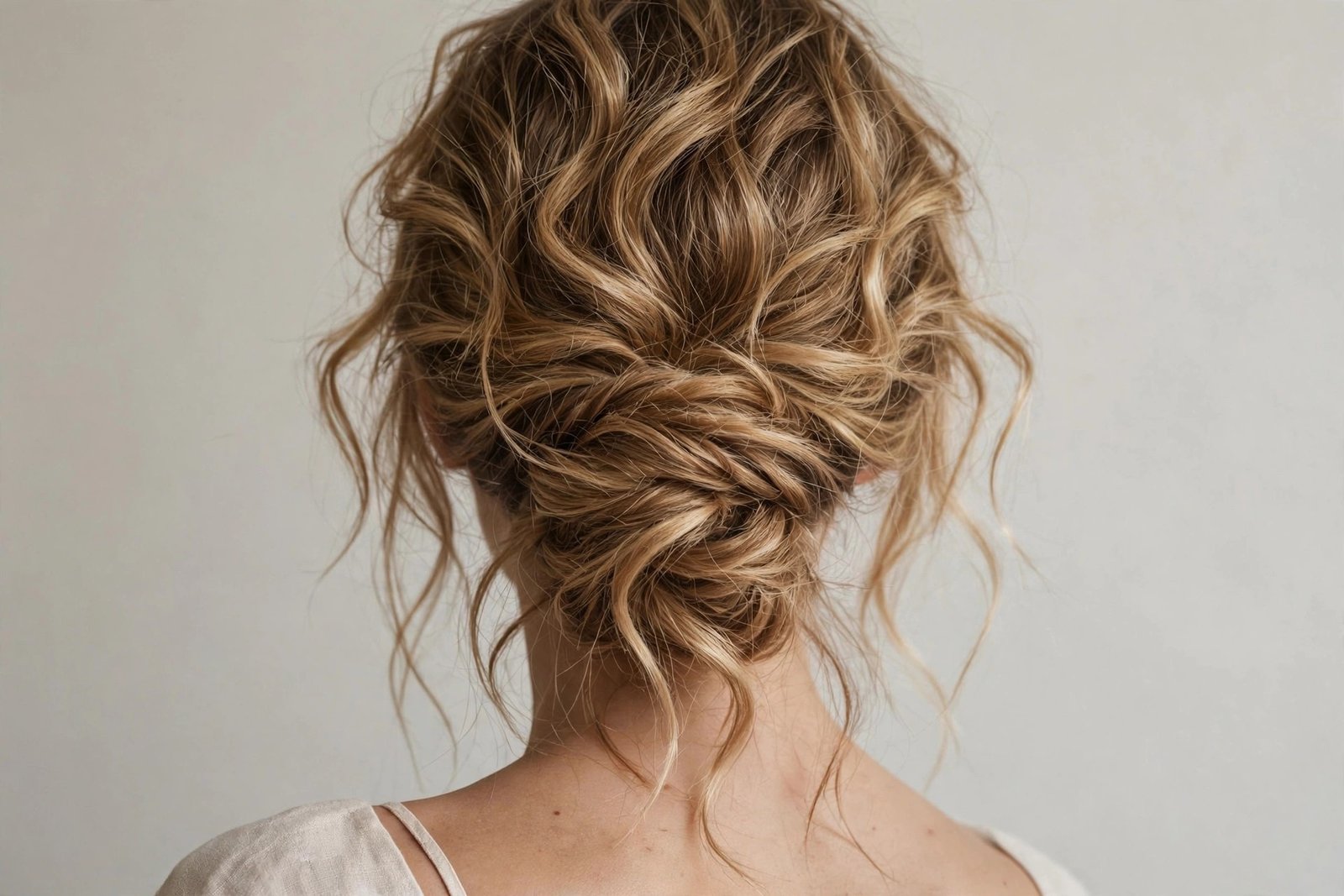
The textured wavy French twist is the 2026 sweet spot: a roll made from wavy, tousled hair, worn loose enough that the texture shows in every fold. It is the twist for people who love the idea of the updo but hate the idea of looking “done.” Beach waves go up, the roll comes out soft and touchable, and the whole thing reads effortless in the way that actually takes a little effort — but not much.
Who it suits: wavy-haired women, obviously — this is your texture’s moment. But straight-haired women can get here too: wave the hair first with a large iron or overnight braids, then twist. It is the ideal wedding-guest twist, the ideal date-night twist, and the ideal “I want to look polished but not corporate” twist. Fine hair gets beautiful airiness; thick hair gets romantic fullness.
Wave first, twist second — that order matters. Then roll loosely, pin, and gently pull at the folds to emphasize the wave pattern. A light texture spray before you start gives everything grip without stiffness. The honest downside: if your waves fall flat by afternoon, the twist loses its character and just looks like a loose roll. A good wave-setting product and a cool-shot from the dryer on the waves beforehand make the texture last as long as the twist does.
19. The Voluminous Top French Twist
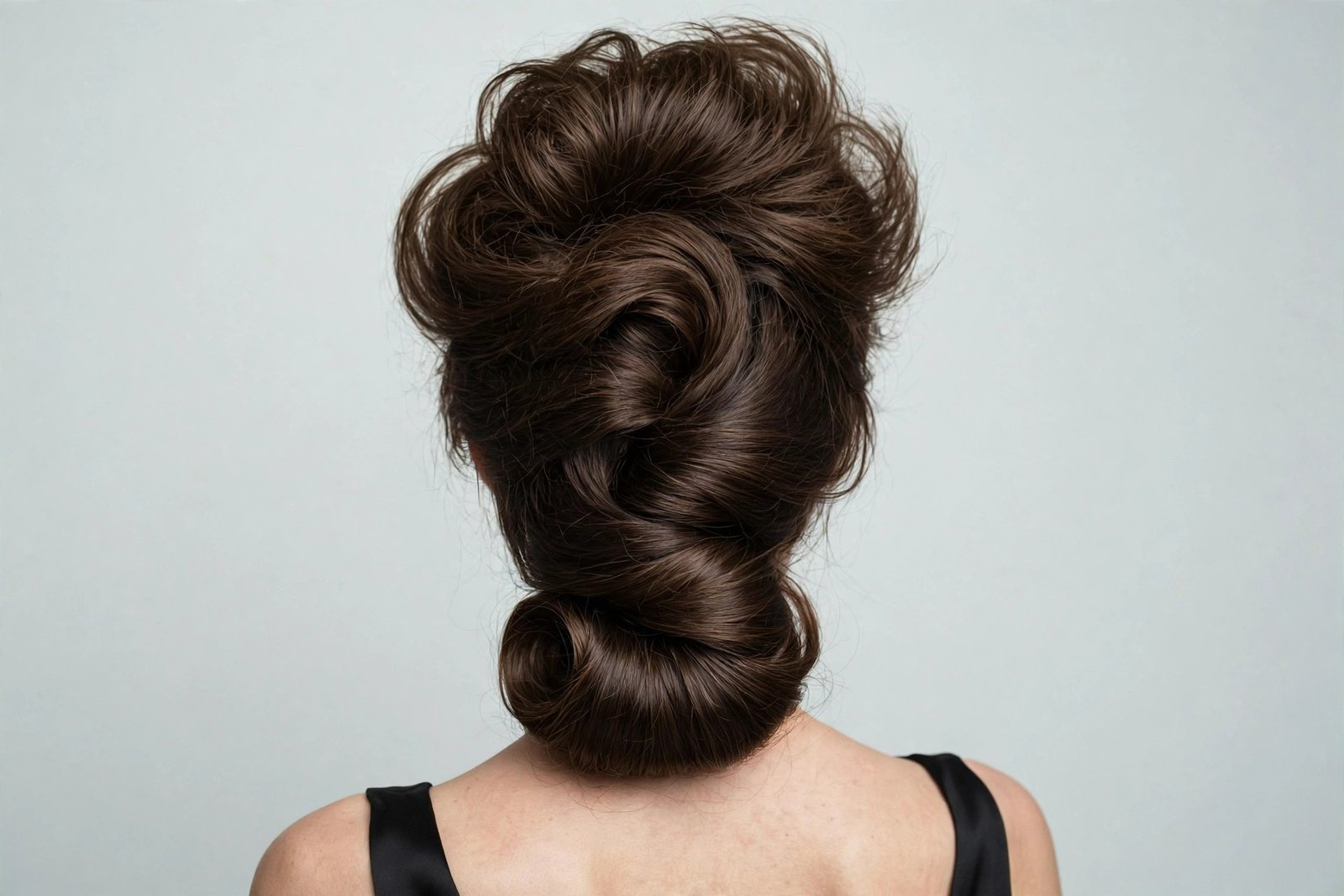
Volume at the crown changes everything about a twist. The voluminous top French twist pairs the classic roll with serious lift — teased, padded, or naturally full hair at the crown flowing into the fold. It is glamorous in a way the flat versions aren’t: think awards shows, think New Year’s Eve, think any night where your hair should have presence. Height is drama, and this twist has it.
Who it suits: round and square faces, where crown height is genuinely flattering, and fine-haired women who want their twist to look substantial. It is also wonderful for shorter necks, because the vertical line elongates. If you love vintage glamour — the sixties beehive energy — this is the modern, wearable version of it.
Tease the crown section before you gather, or use a small hair cushion for padding. Smooth the top layer over the volume, then roll as usual. The twist itself can be classic-smooth or slightly messy — both work with a lifted crown. The honest downside: teasing plus updo equals tangles at take-down, so be gentle removing it and use a detangling spray. And go easy on the height for daytime — this is an evening twist, and wearing it to brunch reads as a lot.
20. The Pin-Fastened French Twist
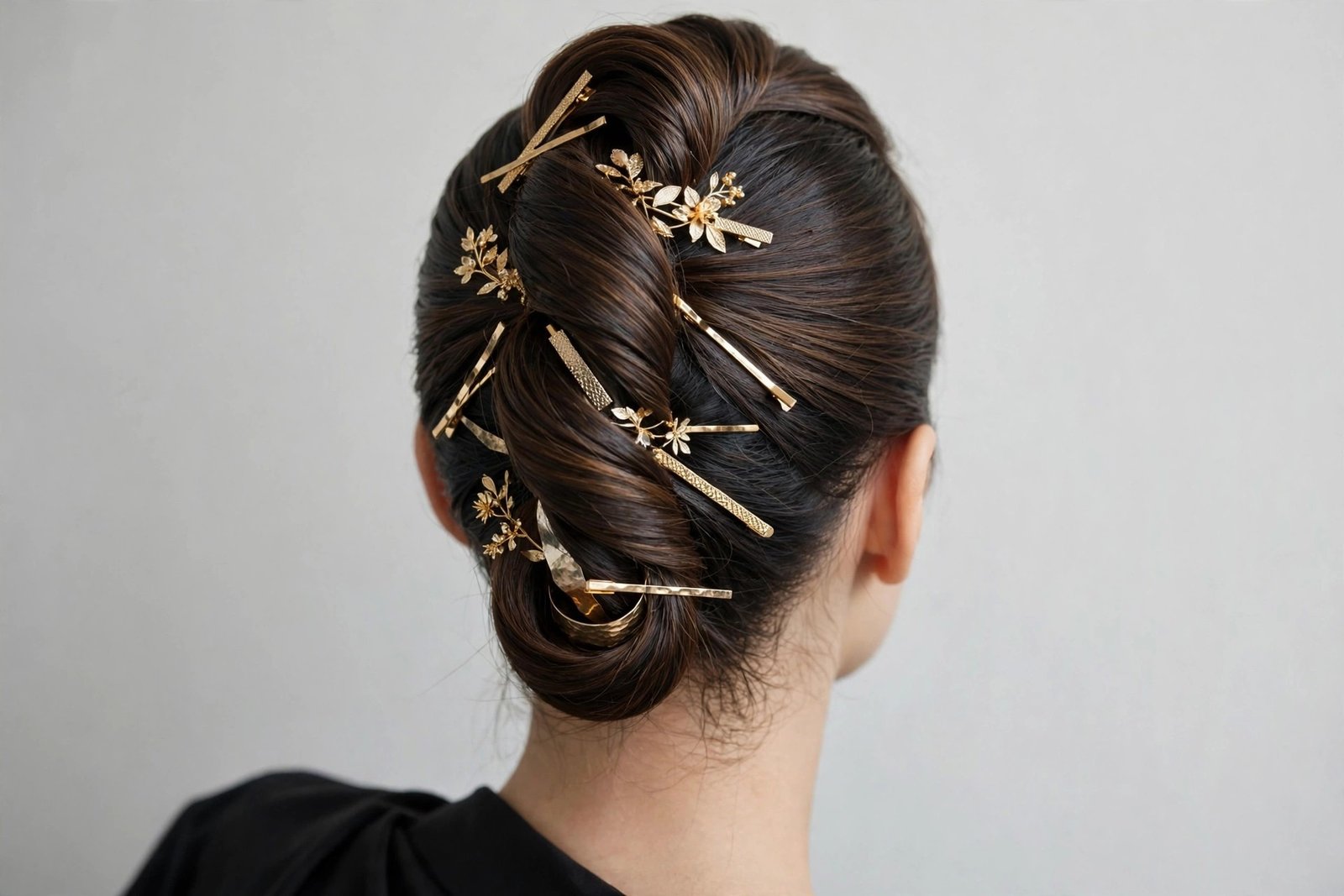
Hair accessories are having a renaissance, and the pin-fastened French twist rides that wave beautifully. This is a classic or relaxed roll finished with decorative pins — gold minimalist sticks, crystal slides, sculptural metal cuffs — placed deliberately along the seam or the base. The pins do double duty: they secure the style and decorate it. It is jewelry for your hair, and it turns a simple twist into a styled look.
Who it suits: minimalists who want one beautiful detail, and maximalists building a whole accessory story. It is perfect for evenings out, gallery openings, dinners — anywhere a little shine is welcome. Gold pins on dark hair and silver on blonde both photograph beautifully. This is also the easiest way to dress up the five-minute twist when plans change unexpectedly: keep decorative pins in your bag and you are always one minute from evening-ready.
Place functional pins first — get the structure secure — then add the decorative ones where they show best, usually along the visible seam or fanned at the base. The honest downside: decorative pins can be heavy, and heavy pins migrate. Choose quality pieces with real grip, and test them at home before an event. Cheap decorative pins look cheap up close and fall out at the worst moment. Invest in two or three good ones and they will serve every twist you ever wear.
21. The Claw-Clip French Twist
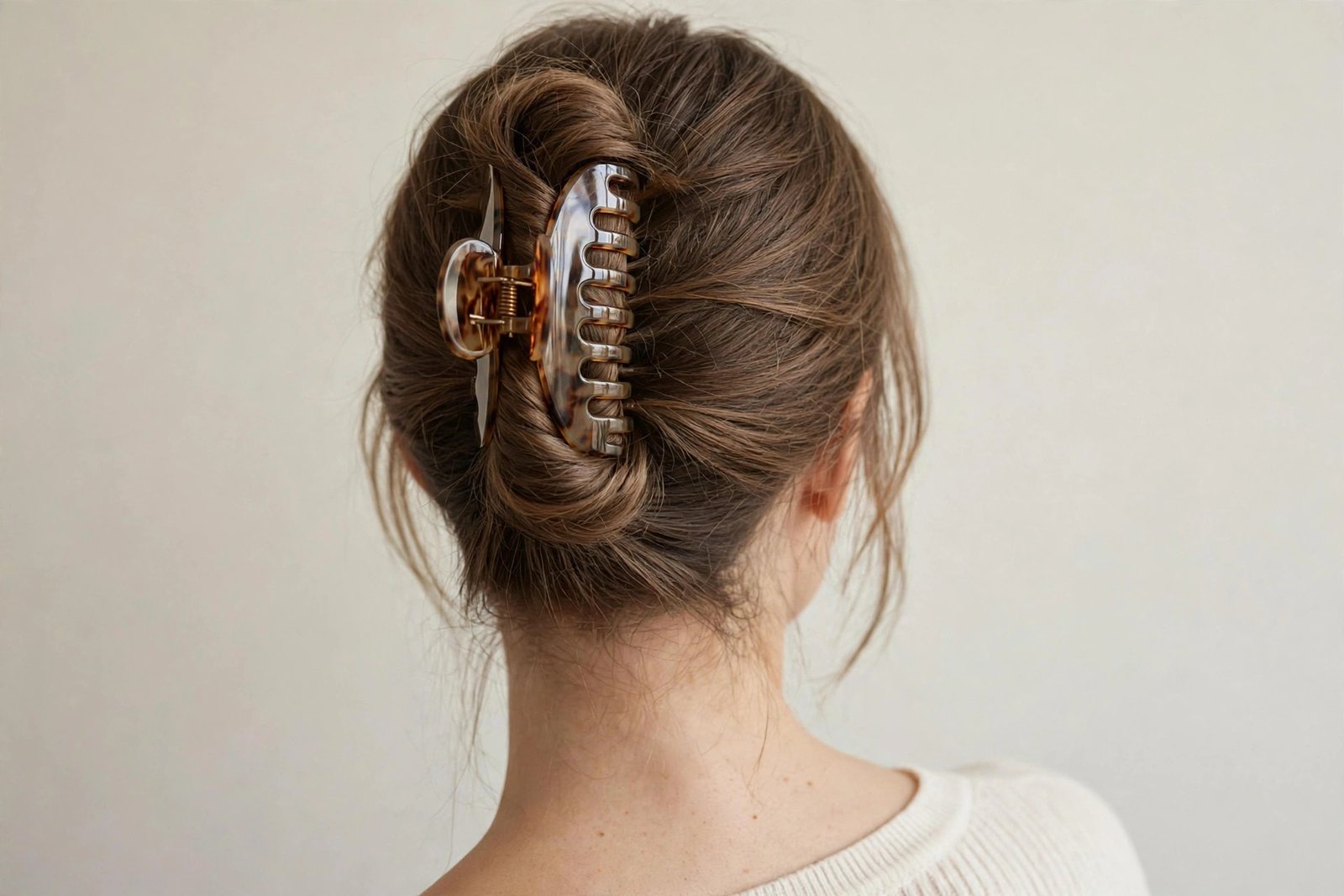
The claw clip is the people’s hair tool, and the claw-clip French twist is its most elegant application. Instead of pinning the roll, you twist the hair up and clamp it with a large claw clip — and it genuinely holds. It is the fastest secure twist on this list, the most comfortable for all-day wear, and it looks intentionally chic rather than lazy, especially with the beautiful oversized clips available now.
Who it suits: everyone, but especially thick-haired women who break bobby pins just by looking at them. The claw distributes pressure across the whole roll instead of concentrating it at pin points, which means no headaches and no dented hair. It is the perfect work-from-home twist, errand twist, and “I need to look put-together in ninety seconds” twist.
Twist the hair up as usual, hold the roll with one hand, and clamp the claw vertically over the seam. Choose a clip sized to your hair — too small and it pops open, too large and it overwhelms. The honest downside: it is visibly casual. A claw clip reads relaxed no matter how neat the twist, so this is not your black-tie option. But for real life — the life where you need your hair up and out of the way while still looking good — it is unbeatable.
22. The Pearl-Pinned Bridal French Twist
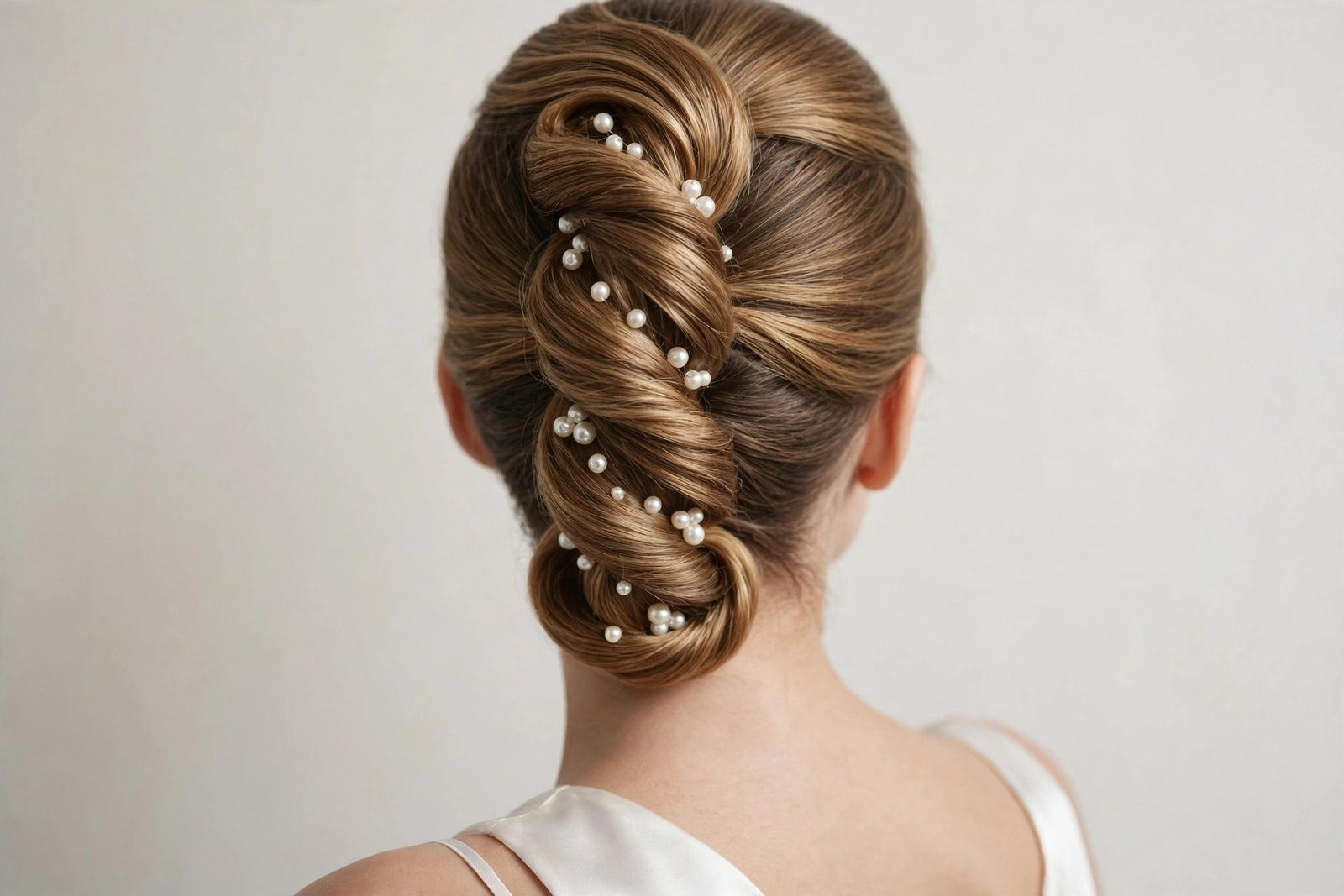
If the bridal twist is the classic in a wedding dress, the pearl-pinned version is the classic with the jewelry on. Small pearl pins scattered along the fold of the twist — sometimes in a deliberate line, sometimes artfully random — catch the light with every movement. It is the most romantic detail you can add to an updo, and it has been a bridal staple for generations because it photographs like moonlight.
Who it suits: brides, bridesmaids, and anyone attending a formal wedding. Pearls suit every hair color — they glow against dark hair and blend luminously into blonde. This version works best on a smooth or softly textured twist where the pearls sit cleanly against the roll. It pairs beautifully with pearl earrings and a simple neckline; let the hair be the accessory.
Have your stylist place the pearls at the trial so you can approve the arrangement — odd numbers usually look best, and asymmetry reads more modern than a perfect row. The honest downside: pearl pins are small and they wander. Your stylist should anchor each one properly, and you should keep two spares in your emergency kit. Also, this is unapologetically bridal — wear it to a non-wedding event and people will ask whose wedding it was. Save it for the aisle.
23. The Low Tousled Evening Twist
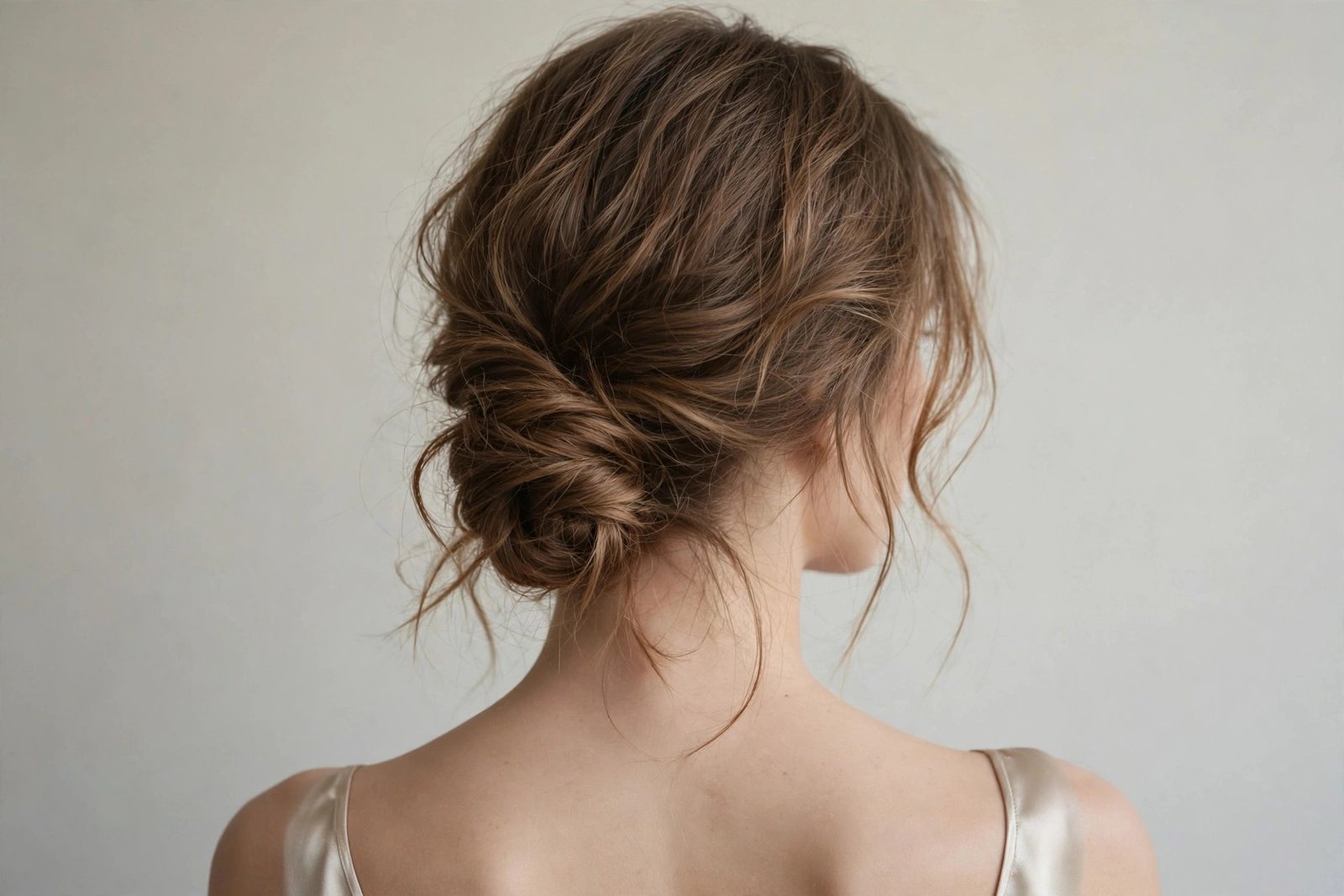
The low tousled evening twist is what you wear when the dress code says elegant but your personality says relaxed. It sits low at the nape, the roll is soft and slightly undone, pieces escape where they like, and the whole effect is candlelit-dinner romantic. It is the twist equivalent of a silk slip dress — simple, sensual, and confident enough not to try too hard.
Who it suits: date nights, anniversary dinners, evening weddings — anywhere romance is on the menu. It flatters long necks and bare shoulders, and it is kind to every face shape because the softness does the flattering for you. Wavy and curly textures are naturals here; straight hair should be waved first for the full effect.
Roll low and loose, pin securely but not tightly, then tousle — gently pull at the roll and the crown until it looks lived-in. Leave the nape pieces out; they are part of the design. The honest downside: “tousled evening” is a narrow target, and it is easy to miss into either too-neat (then it is just a low twist) or too-messy (then it looks accidental). The difference is in the pinning: secure underneath, soft on top. Practice it once before the night and you will own it.
24. The Sleek Vintage French Twist
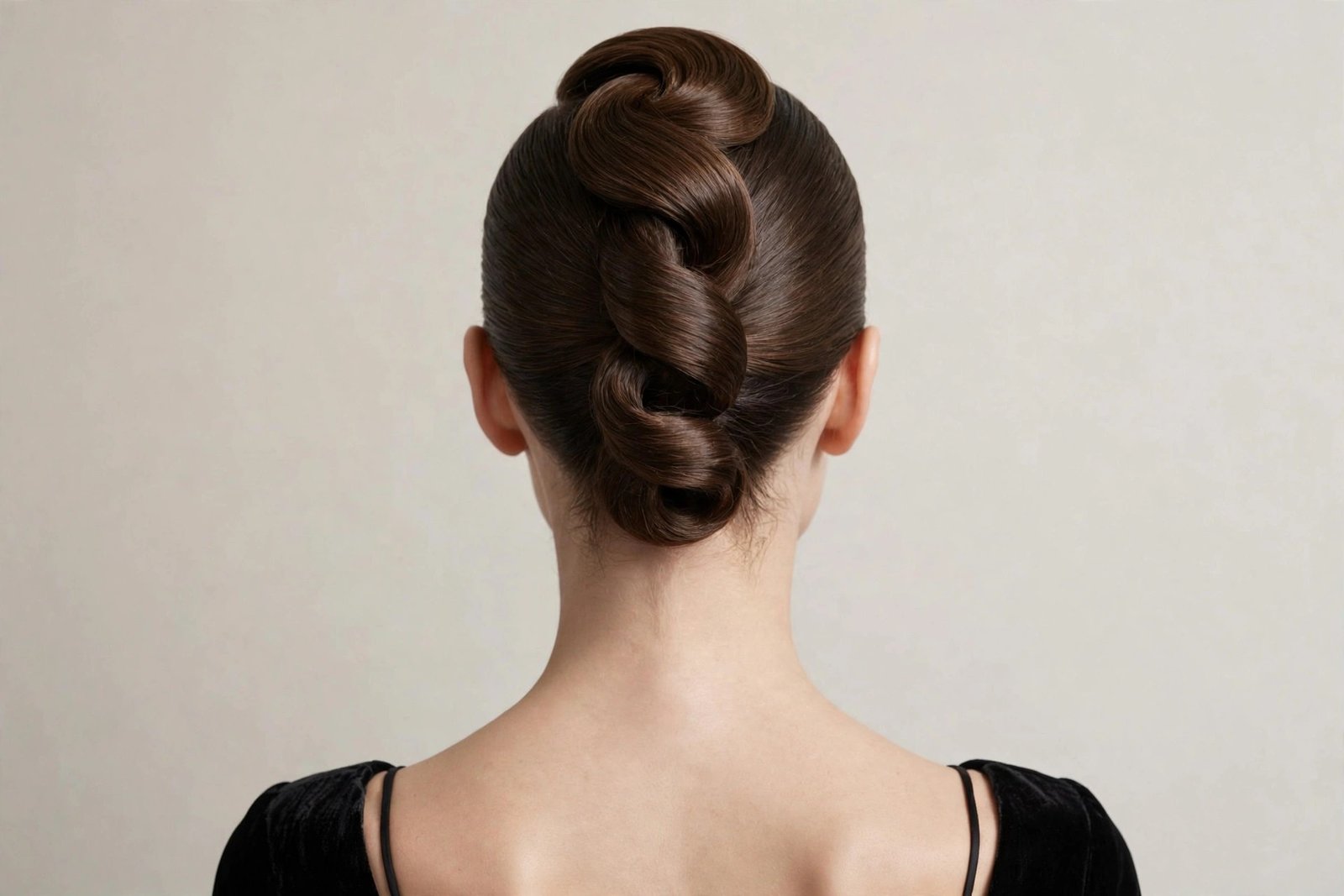
Before the messy modern era, there was the vintage twist — and it deserves its place on this list. The sleek vintage French twist is the mid-century version: immaculately smooth, precisely rolled, with that sculpted perfection that defined an era of glamour. Worn today, it reads as a deliberate retro statement — bold, confident, and utterly chic when the occasion calls for old-school polish.
Who it suits: vintage lovers, themed events, and anyone with the bone structure to carry a severe style — strong cheekbones and a defined jawline look incredible with this. It is also the twist for formal occasions with a classic dress code, where the modern messy versions would feel underdressed. Dark, glossy hair shows the sculptural quality best.
This one rewards preparation: blow the hair smooth first, use a smoothing serum, and roll with precision. Set with firm-hold spray. Tell your stylist “vintage French twist, sleek, precise” — older stylists will light up, because this is the twist they trained on. The honest downside: it is the least forgiving twist here. Every bump shows, humidity is the enemy, and it takes the longest to execute well. But as a statement of pure glamour, the vintage twist has no equal on this list.
25. The Wispy Curtain-Bang Twist

Two of the biggest hair trends of the decade meet in the wispy curtain-bang twist, and the combination is magic. The twist — any version, though the relaxed ones pair best — sits at the back while curtain bangs frame the forehead in soft, parted waves. It is the most current-looking twist on this list, the one that signals you know exactly what is happening in hair right now.
Who it suits: anyone with curtain bangs or growing-out bangs — this style makes them the star instead of an awkward phase. It is especially flattering on round and square faces, where the bangs add softness and the twist adds height. If you have been considering curtain bangs, this twist is a compelling reason to get them; the pairing is that good.
Style the bangs separately — blow them out with a round brush or bend them with a flat iron for that signature curve — then twist the rest back. Do not pull the bangs into the twist; they are the frame, not the picture. The honest downside: bangs need daily styling, so this twist inherits that maintenance. On days you skip the bangs, the twist still works — it just loses its signature. Keep a small round brush and dryer handy and it is a two-minute job.
26. The Braided Crown French Twist

The braided crown French twist is the fairytale version — a soft twist at the back encircled by a braid that wraps around the crown like a halo. It is intricate, romantic, and completely unforgettable. This is the twist for outdoor weddings, garden parties, and anyone who wants their hair to look like it belongs in a storybook. It is also, fairly, the most time-consuming style here.
Who it suits: long hair is almost a requirement — you need enough length for both a crown braid and a twist. It is a dream for boho brides and festival-goers, and it is stunning on wavy and curly textures where the braid has natural dimension. If you love the halo braid look but want something more distinctive, this is your upgrade.
Braid first — a Dutch braid from one temple, wrapping around to the other side — then gather everything including the braid’s tail into the twist. Pin the braid’s end into the roll so the transition disappears. The honest downside: this is advanced work, realistically a stylist job for most people, and it takes thirty to forty-five minutes even in skilled hands. It is also heavy. But for a once-in-a-lifetime event, the braided crown twist is worth every minute and every pin.
27. The French Twist for Short Hair
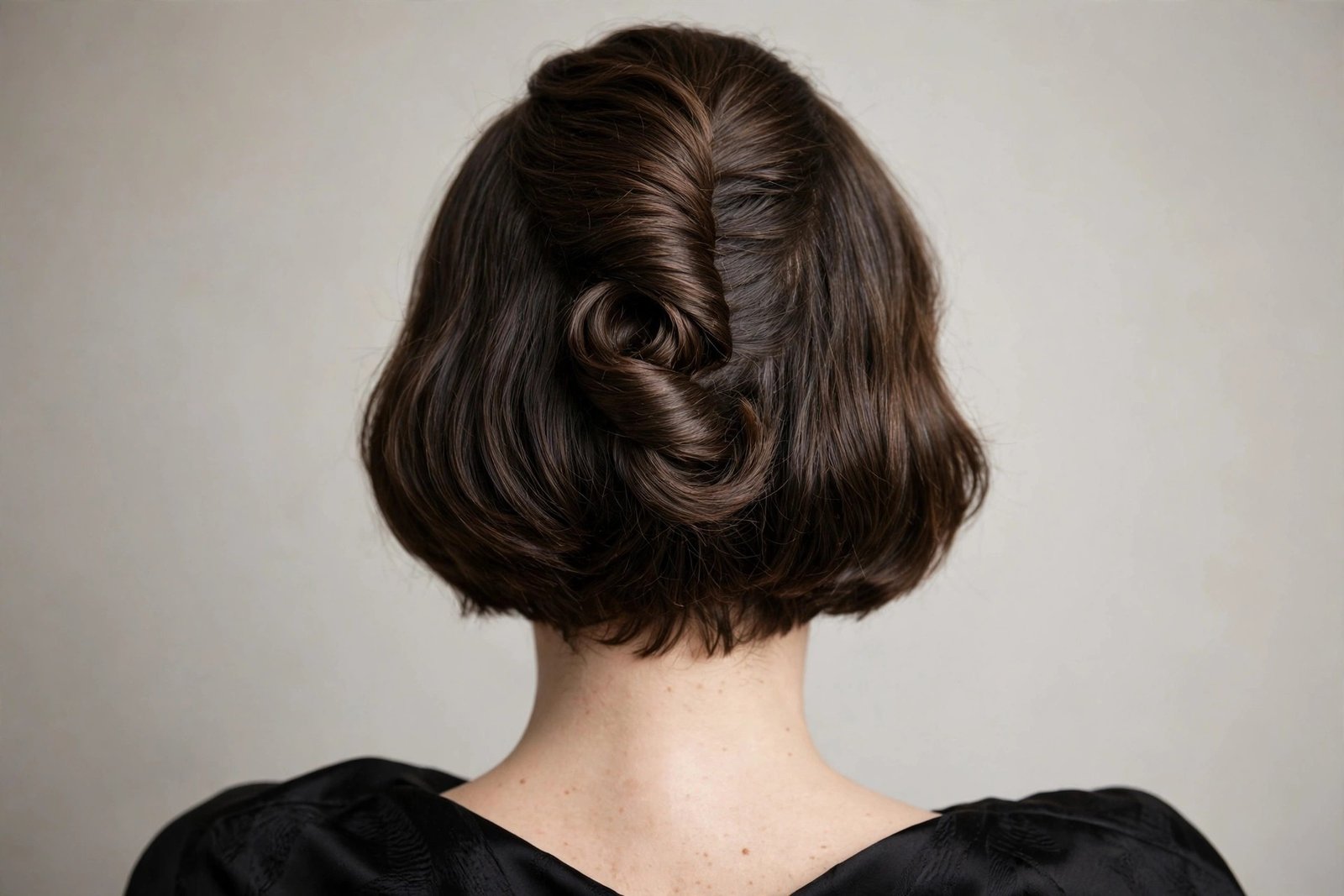
Think your bob is too short for a twist? Think again. The French twist for short hair is absolutely achievable at shoulder length and even at a long bob — it just needs a helper. A small hair cushion or bun filler gives the shorter layers something to wrap around, and the result is a petite, chic twist that looks completely intentional. Short-haired women deserve updos too, and this one delivers.
Who it suits: lob and bob wearers who thought updos were off the table — especially for weddings and formal events where you want your hair up. It is also a great transitional style if you are growing out a shorter cut. The petite scale of the twist is genuinely charming; it has a gamine elegance the big dramatic versions can’t touch.
Place a small hair cushion vertically at the back of your head, smooth your hair over it, and wrap and pin the layers around it, tucking ends underneath. Texture spray is essential — short layers slip without it. Use more pins than you think, and choose pins that match your hair color so they disappear. The honest downside: it will not be as secure as a long-hair twist, and very short layers at the nape may escape. A light mist of strong-hold spray and realistic expectations carry the day. For a bob, this twist is a triumph, not a compromise.
28. The Thick Hair French Twist
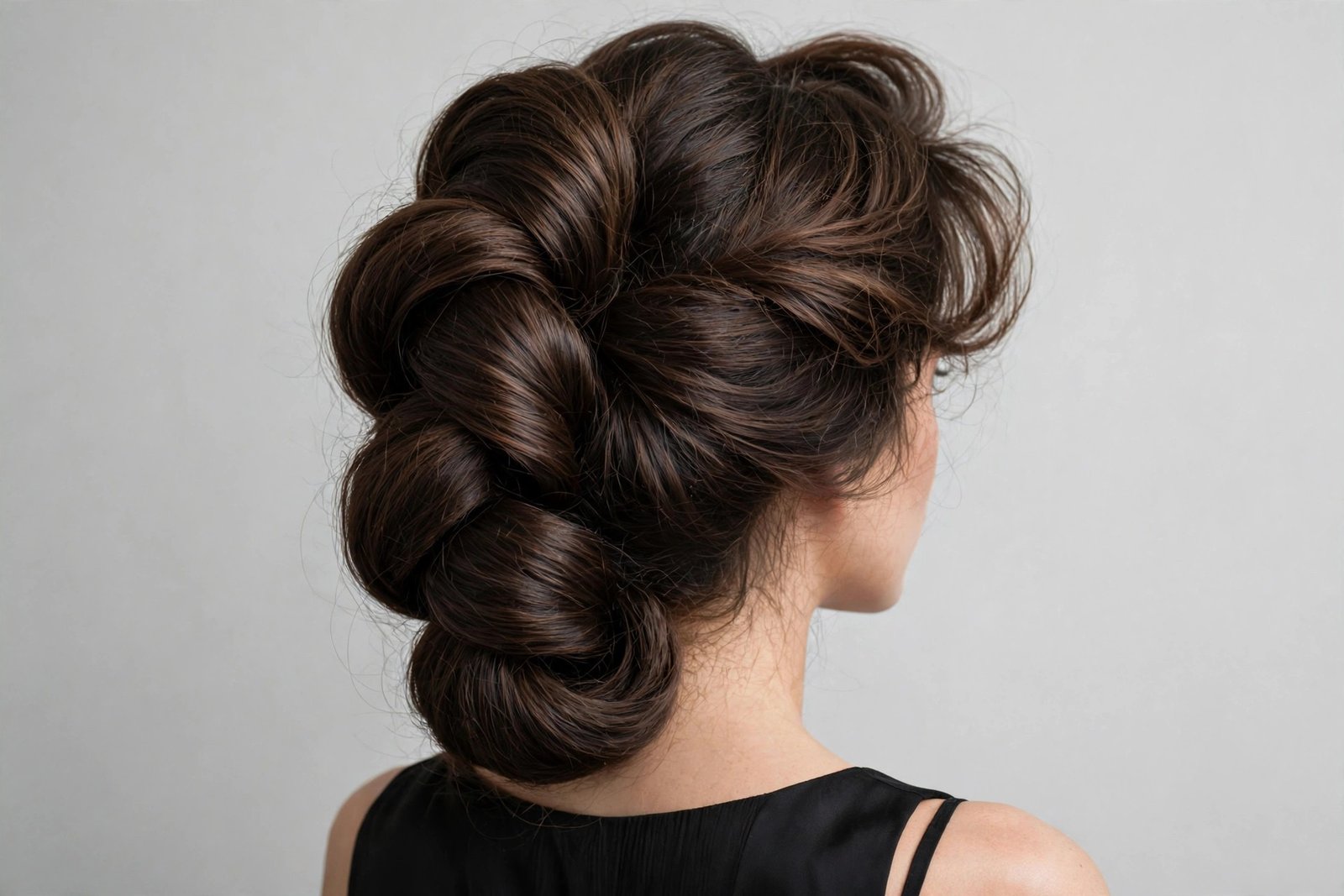
Thick hair and the French twist are a match made in heaven — all that volume becomes a substantial, luxurious roll that fine-haired women can only dream of. The thick hair French twist is big, bold, and beautiful: a proper statement roll with real presence. Your hair’s density is the feature here, not a problem to solve.
Who it suits: anyone blessed (and occasionally cursed) with thick, heavy hair. The twist contains the volume elegantly instead of fighting it, and it is one of the few updos that genuinely gets better with more hair. It is also practical — getting all that hair up and off your neck is a genuine relief, especially in warmer months.
Work in sections if your hair is very thick — twist the bulk first, then wrap and pin the remaining sections around it. Use the large U-pins, not just bobby pins; bobby pins alone will not hold this much hair. Distribute the pins evenly so no single point bears all the weight. The honest downside: it is heavy, and a full day in a thick-hair twist can mean a sore scalp by evening. Keep the tension comfortable, position the roll where your head carries weight best (usually medium height), and take it down the moment you get home. Your hair will thank you.
29. The Fine Hair French Twist

Fine hair twists beautifully — it just needs a little help getting there. The fine hair French twist uses texture, teasing, and smart pinning to build a roll with real presence from hair that would otherwise lie flat. The result is refined and elegant: a sleek, precise twist that looks expensive precisely because it is so neat. Fine hair’s smoothness is an asset here, not a limitation.
Who it suits: fine and thin-haired women who have been told updos “don’t work” for their hair — they do, with the right prep. This twist is lovely for the office and formal events, where its neatness reads as polish. It is also ideal for older women with thinning hair, because the twist’s structure creates the illusion of density.
Prep is everything: start with dry texture spray or even a light teasing at the crown, and consider a small padding piece if you want more volume. Twist a touch tighter than you would with thick hair — fine hair needs the tension for security. Pin generously; fine hair slips, so more pins at more angles is the answer. The honest downside: without prep, a fine-hair twist can look skinny and unravel by lunch. But with prep — five extra minutes of texture spray and teasing — it holds all day and looks impeccable. Never skip the prep.
30. The Holiday Party French Twist
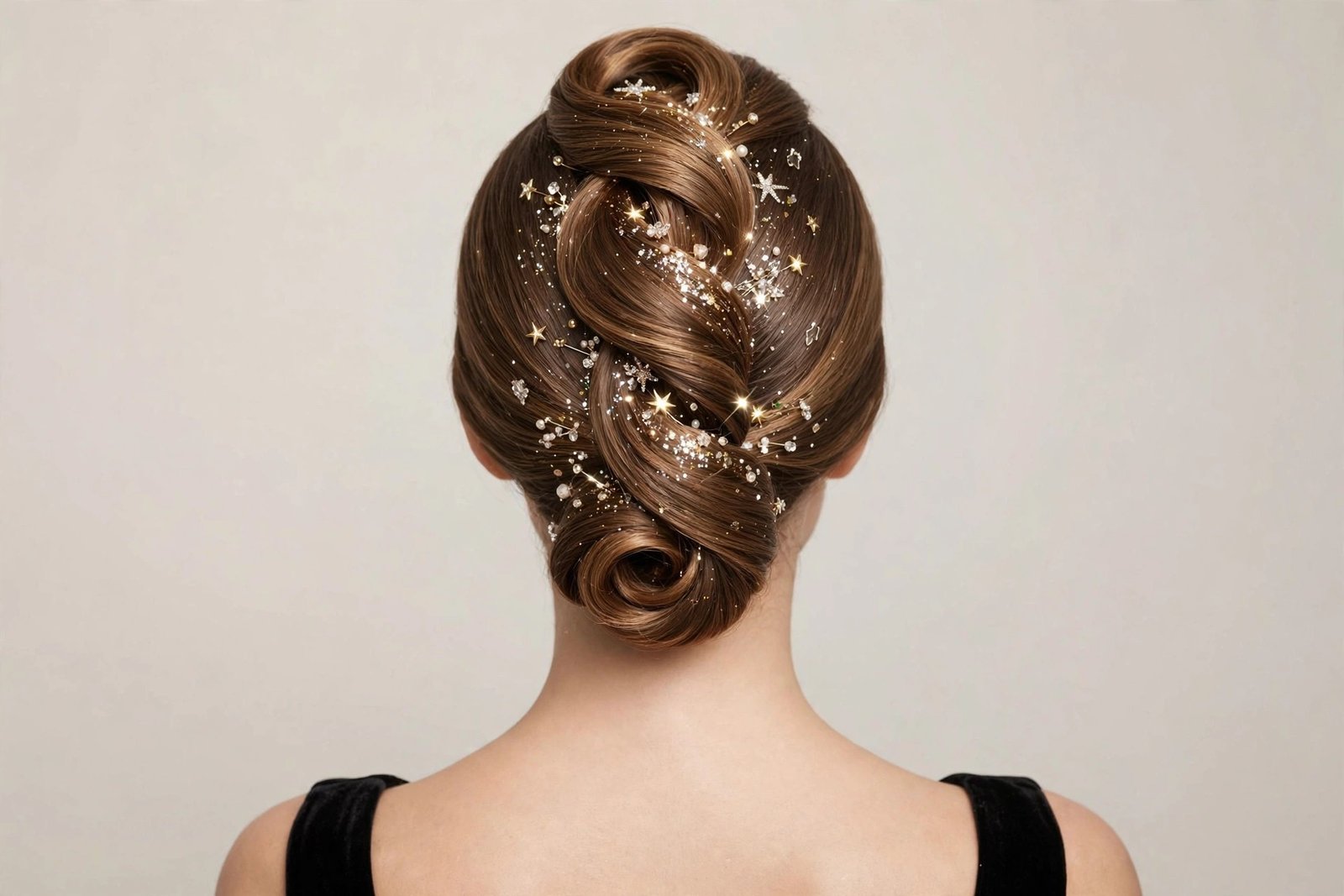
December calls for hair with sparkle, and the holiday party French twist answers. This is a polished twist — classic or slightly relaxed — finished with festive details: crystal pins, a glittering comb, or a deep jewel-toned ribbon. It is glamorous without being overdone, and it pairs with everything from velvet dresses to sequin tops. Holiday photos live forever; your hair should keep up.
Who it suits: anyone with a calendar full of December events — office parties, family gatherings, New Year’s Eve. It works on all hair types and lengths that can twist, and the festive accessories do the seasonal heavy lifting, so the twist itself can stay simple. This is also a great bridesmaid option for winter weddings.
Keep the twist itself classic and secure — holiday events are long, and you need staying power. Add the festive details last, and keep them to one statement: crystal pins or a ribbon, not both competing. The honest downside: glitter and sparkle shed, so choose quality accessories and check the back of your twist before photos. And if you are wearing the twist to multiple events, vary the accessory rather than redoing the whole style — same twist, different jewels, fresh look.
31. The Low Bun Hybrid Twist
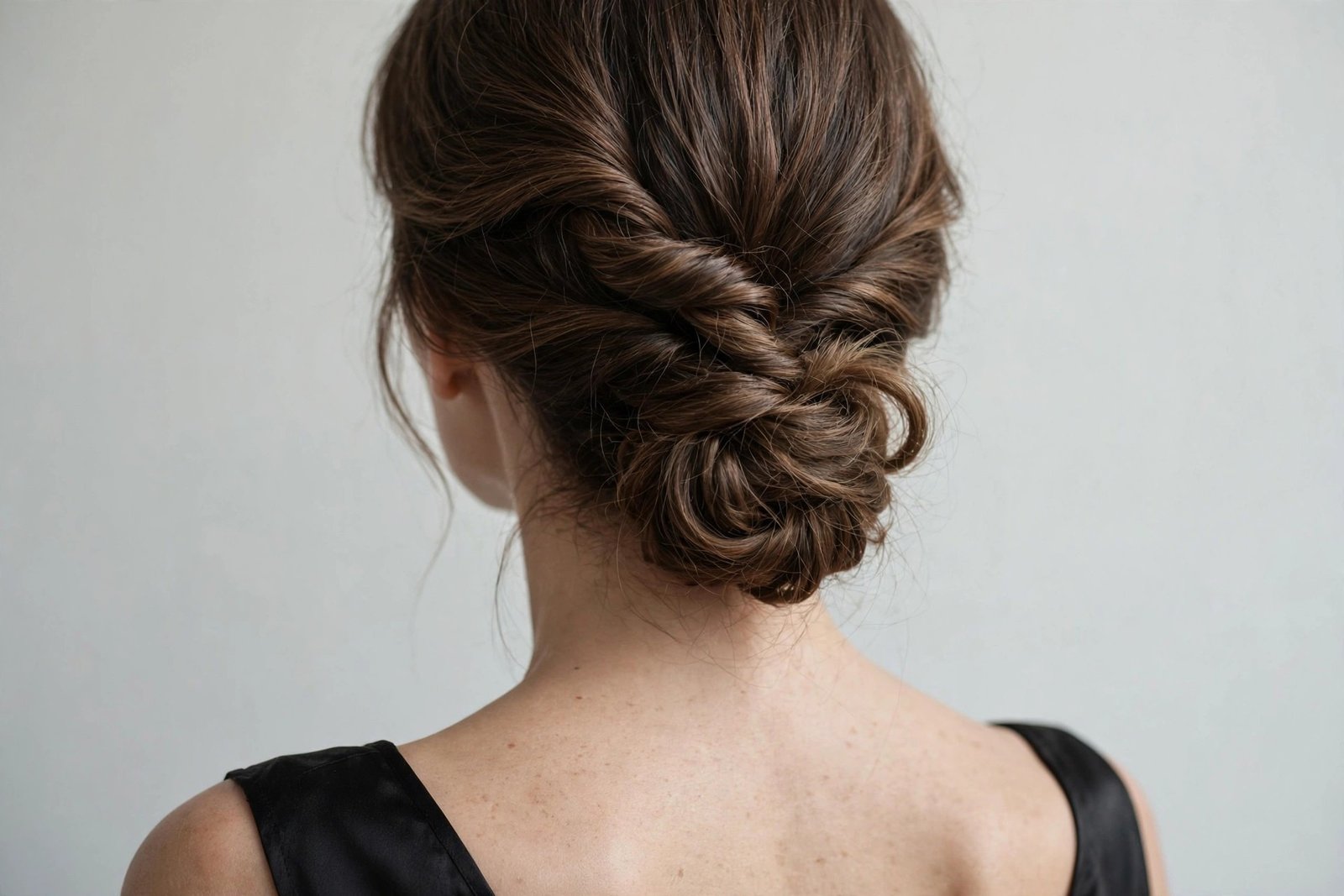
Can’t decide between a twist and a bun? Don’t. The low bun hybrid twist starts as a French twist and finishes as a soft low bun — the roll forms at the back, and instead of tucking everything away, the ends coil into a loose bun at the nape. It is the most forgiving style on this list, because the bun hides every imperfection in the twist. Beginners love it; stylists use it as a cheat for tricky hair.
Who it suits: anyone learning the twist — the bun is your safety net. It is also perfect for very long hair, where a full twist would be enormous; the hybrid keeps the scale manageable. Brides love it as a softer alternative to the structured bridal twist, and it is wonderful for second-day wedding events when you want something pretty but less formal.
Roll the twist as usual, but when you reach the ends, coil them into a loose bun and pin. Let the bun be soft — this is not a ballet bun. Pull a few pieces loose for romance. The honest downside: it can read as indecisive if the transition between twist and bun isn’t smooth. Make the roll flow into the bun rather than having two separate elements stuck together. When the blend is right, it looks like one continuous, beautiful shape — which is exactly what it is.
32. The Five-Minute French Twist
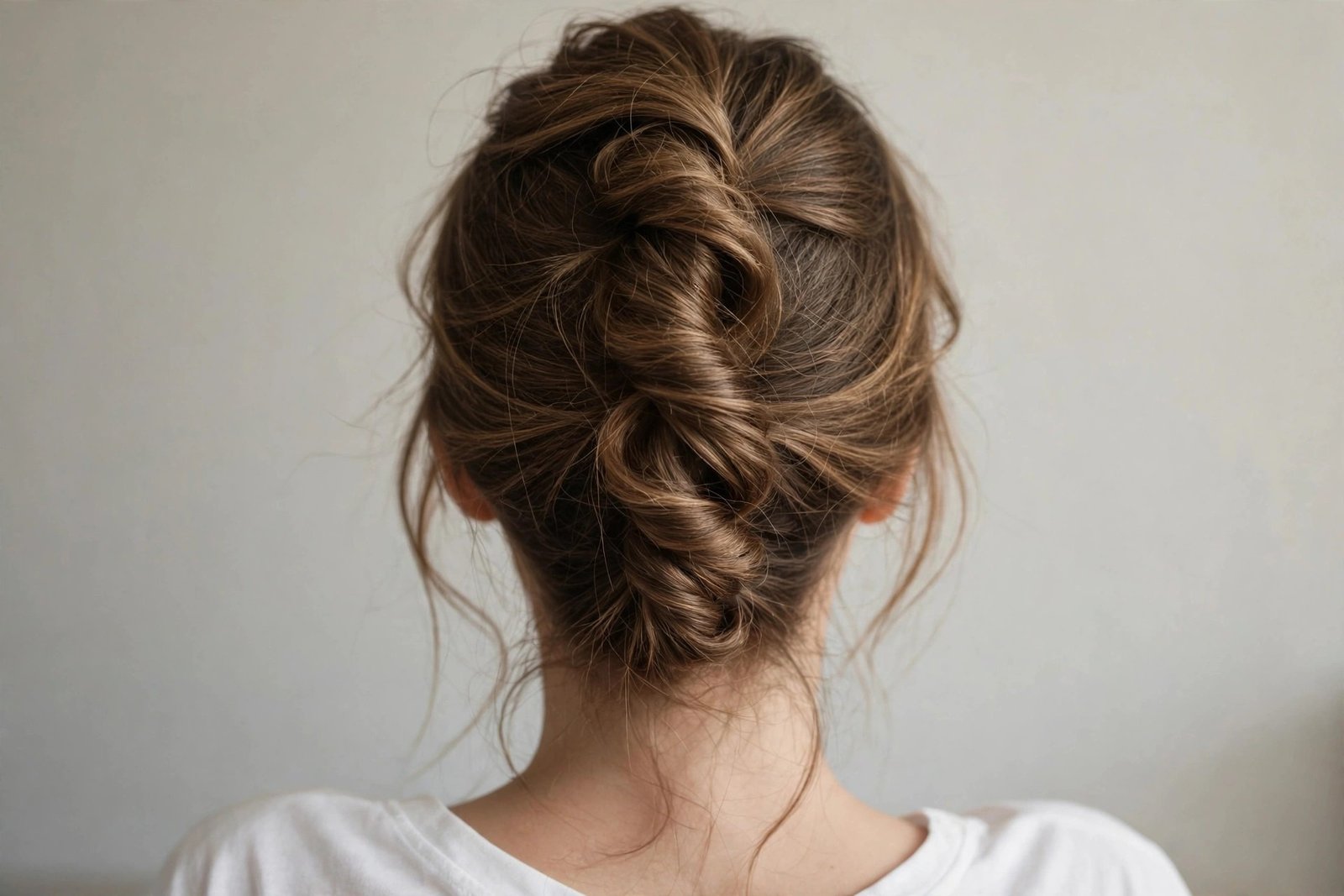
We saved the most useful for last. The five-minute French twist is the real-world version — the one you do on a busy morning with no mirror check of the back and still walk out looking polished. It is a relaxed roll, pinned quickly, with zero fuss about perfection. This is the twist that converts skeptics, because it proves the style belongs in everyday life, not just on special occasions.
Who it suits: everyone, every day. This is the gateway twist I mentioned at the start — learn this one first, and the other thirty-one become variations rather than challenges. It is perfect for work, school runs, video calls, and any morning when your hair needs to look intentional in the time it takes to brew coffee.
The method: texture spray, gather to one side, twist upward, tuck, pin with four to six bobby pins, go. Don’t aim for perfect — aim for secure. The back doesn’t need to be flawless; nobody sees it as closely as you fear. The honest downside: it won’t survive a hurricane, and by evening it will be softer and looser than it started. But here’s the thing — it still looks good. A five-minute twist at hour eight looks like an intentional messy twist, which is currently fashionable. This style fails gracefully, and that might be its best feature.
The French Twist Routine: Prep, Step-by-Step How-To & Maintenance
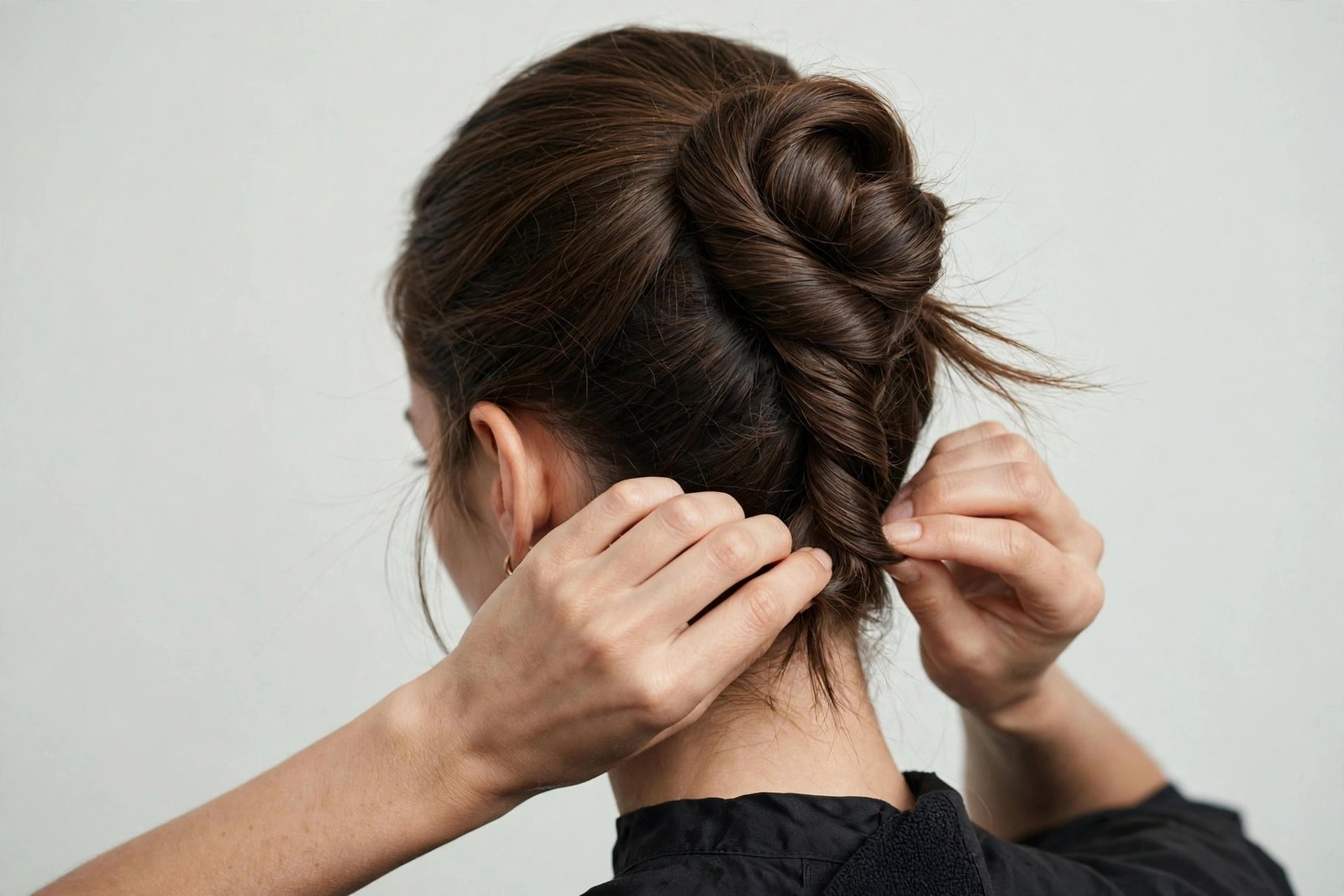
You have seen the thirty-two variations. Now here is the engine room: the complete routine for prepping your hair, executing the twist, choosing your tools, making it last all day, and taking it down without damage. Learn this section once and every style above becomes a ten-minute task. The French twist looks like skill, but it is really just a sequence — and sequences can be learned.
The Night-Before Prep Routine
The best French twist starts the night before, and the secret is gloriously lazy: don’t wash your hair. Second-day hair — or even third-day, if your scalp tolerates it — twists better than freshly washed hair because it has natural texture and grip. Clean hair is slippery; lived-in hair holds. If you must wash, do it the night before rather than the morning of, and skip heavy conditioners at the roots.
Before bed, brush your hair thoroughly to distribute oils from scalp to ends — this is old-school advice that works. If your hair is very straight and silky, sleep in one or two loose braids; you’ll wake up with the soft wave and texture that makes twisting dramatically easier. For curly hair, pineapple it or use a silk scarf to preserve the curl pattern without frizz.
Silk or satin pillowcases are the unsung heroes of updo prep. They reduce friction, which means less frizz and fewer tangles to fight in the morning. If you wake up with flat roots, a quick blast of dry shampoo at the crown restores lift and grip in sixty seconds. The goal of night-before prep is simple: wake up with hair that wants to cooperate. Everything after that is easier.
Step-by-Step: The Five-Minute French Twist
Here is the core technique, broken down so simply you can learn it tonight. Step one: brush everything smooth and pull it all to one side — say, the left — holding it like a low side ponytail without the elastic. Step two: with your free hand, start twisting the gathered hair upward and inward, rolling it against the back of your head. The hair will naturally start folding into a vertical roll.
Step three: as you roll upward, twist the ends into the fold — this is the move that takes practice, so go slowly the first few times. Use your fingers to feel the pocket forming along the seam and feed the ends into it. Step four: hold the roll firmly with one hand and start pinning with the other. Slide bobby pins into the seam — into the fold itself, not just on top of the hair — working from the bottom up. Four to six pins usually does it for medium hair; thick hair wants more.
Step five: check the back with a hand mirror and fix any lumps by gently adjusting, not by repinning everything. Step six: mist with hairspray, holding the can about a foot away for an even veil rather than a wet blast. That’s it. The first time takes fifteen minutes and looks imperfect. The fifth time takes five minutes and looks professional. Your hands learn faster than your brain believes.
Products and Pins That Actually Work
You need less than the beauty industry wants you to buy. The essentials: a dry texture spray for grip, bobby pins that match your hair color, large U-pins (also called hairpins) for structural anchoring, and a flexible-hold hairspray. That’s the complete kit. Everything else is optional enhancement.
Texture spray is the single most important product for twist success — it gives clean or fine hair the grip of second-day hair in seconds. Bobby pins should go in wavy-side-down against the scalp; the wavy side grips better. U-pins are the professional secret: push one in from each side of the roll so they cross inside like stitches, and the twist becomes dramatically more secure. For very thick hair, these are non-negotiable.
Optional but useful: a smoothing serum for the glass-hair versions, a light pomade for taming flyaways around the hairline, and a small hair cushion if your hair is fine or short. What you don’t need: special twist tools, foam forms (except for short hair), or expensive “updo kits.” Stylists have been doing this with pins and spray for a century. For deeper guidance on choosing quality styling products, Byrdie‘s hair section is a reliable reference I recommend to readers.
Making It Last All Day (and Into the Night)
A twist that falls apart by lunch is a technique problem, not a hair problem. The fixes are straightforward. First, anchor structurally: U-pins crossed from both sides hold exponentially better than bobby pins alone. Second, pin into the seam of the fold, where the pin disappears into the roll’s grip — pins sitting on top of smooth hair slide right out.
Third, respect the hairspray layering: a light mist before you start (on the gathered hair, for grip), and a proper veil after you finish (for hold). Fourth, stop touching it. Every touch loosens pins a fraction; by afternoon, those fractions add up. Put your hands in your pockets. Fifth, plan for your day: if you’re dancing, add extra pins and stronger spray. If it’s humid, choose a sleeker version and bring emergency pins.
The two-mirror check before you leave is non-negotiable — what looks fine from the front can be a disaster from the back, and you won’t know without looking. Keep three spare bobby pins and a travel hairspray in your bag; they weigh nothing and they save evenings. A well-built twist should last eight to twelve hours. If yours doesn’t, the answer is almost always more structural pinning, not more hairspray.
The Gentle Take-Down Routine
How you remove a twist matters as much as how you build it. Never yank pins out — slide each one out along the direction it went in, supporting the hair with your other hand. Work from the top down, removing decorative pins first and structural pins last. If a pin resists, don’t force it; wiggle gently and check for tangled strands.
Once the pins are out, let the hair fall and shake it gently rather than brushing immediately. If you teased the crown, use a detangling spray and work from the ends upward with a wide-tooth comb — never rip through teased sections with a brush. Your hair just held a style all day; treat it kindly on the way down.
After take-down, a light brush-through distributes the day’s products and oils, and your hair is ready for its normal nighttime routine. If you wore the twist tight, give your scalp a gentle massage — it improves circulation and feels wonderful. And vary your twist position day to day; wearing it in the exact same spot daily stresses the same follicles. Your hair will hold tomorrow’s twist better if today’s take-down was gentle.
Frequently Asked Questions
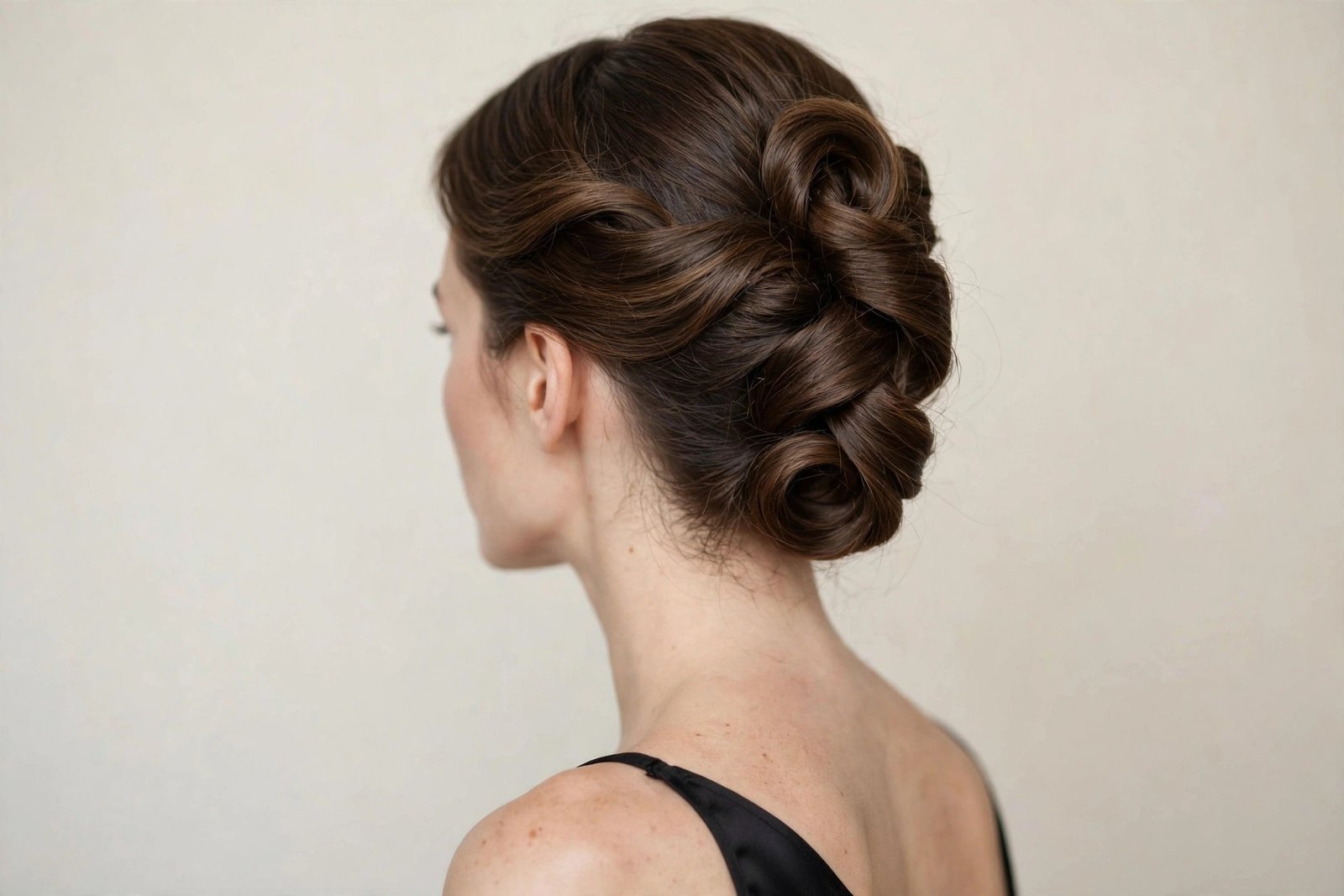
Everything readers ask most about the French twist, answered straight — no fluff, just what actually works.
What is a French twist?
A French twist is a classic updo where the hair is gathered, twisted upward along the back of the head, and pinned so the twist sits like a vertical shell. The ends tuck into the fold, creating a smooth, elegant roll. It has been worn for decades, but the 2026 version is softer, looser, and more textured than the stiff red-carpet rolls of the past.
Can you do a French twist on short hair?
Yes, if your hair is at least shoulder length, with the help of a little padding. Bob-length hair can be twisted successfully using a hair cushion or bun filler to support the roll, and generous texture spray to give the shorter layers grip. Very short pixie-length hair does not have enough length to fold, so aim for a lob or longer.
How long does a French twist last?
A well-pinned French twist lasts 8 to 12 hours, easily carrying you from morning to a late-night event. Second-day hair holds best because it has natural grip. Anchor with large U-pins rather than only bobby pins, mist with a light flexible-hold hairspray, and avoid touching it constantly. If you need it to survive dancing, criss-cross the pins and finish with a stronger hold spray.
Is the French twist still in style in 2026?
Absolutely. The French twist is one of fall 2026’s biggest hair stories. Stylists have revived it in a relaxed, wispy, undone form that feels modern rather than retro, and the style is everywhere on Pinterest and red carpets. It works for the office, weddings, and everyday wear, which is why it keeps coming back.
What products do I need for a French twist?
You need surprisingly little: a dry texture spray or sea-salt spray for grip, a handful of bobby pins and larger U-pins for anchoring, and a light flexible-hold hairspray to finish. If your hair is very silky or freshly washed, the texture spray is non-negotiable. A smoothing cream on the ends keeps the roll polished if you want a sleek version.
Does a French twist damage hair?
A French twist is no harder on hair than any other updo. The risk comes from pulling it too tight or wearing it in the exact same position every day, which can stress the same follicles. Keep it comfortable rather than drum-tight, vary the twist’s height from day to day, and take it down gently at night instead of ripping the pins out.
How do I keep my French twist from falling out?
Start with texture spray on second-day hair, which grips far better than clean hair. Tuck the ends firmly before you roll, then anchor with U-pins pushed in from both sides so they cross like stitches. Bobby pins should slide into the seam of the twist, not sit on top of it. Finish with hairspray, and do a two-mirror check of the back before you leave.
Can I do a French twist on curly hair?
Yes, curly and wavy hair makes a beautiful French twist. Curls give the roll natural volume and grip, so it often stays up with fewer pins than straight hair. Work with dry, stretched curls rather than freshly defined ringlets, gather gently without brushing the texture out, and let a few curls escape around the face for a romantic finish.
Conclusion
The French twist endures because it is that rare thing: a hairstyle that is both timeless and completely of the moment. The 2026 revival — relaxed, wispy, textured, wearable — has stripped away everything intimidating about the classic and left only the good parts: the elegance, the versatility, the way it makes you feel put-together in five minutes flat. Thirty-two variations is a lot of choice, but they all share one foundation, and now you know it.
So pick your starting point. If you’re new, begin with the five-minute twist and wear it until your hands know the motion by heart. If you’re experienced, try the version that scared you a little — the braided crown, the double twist, the glass-hair sleek. And when someone asks where you got your hair done, smile and tell them the truth: your bedroom, your hands, and a style that has been beautiful for decades and isn’t going anywhere. For more timeless updo inspiration, Allure‘s hairstyle galleries are worth a browse — and then come back here and twist.