
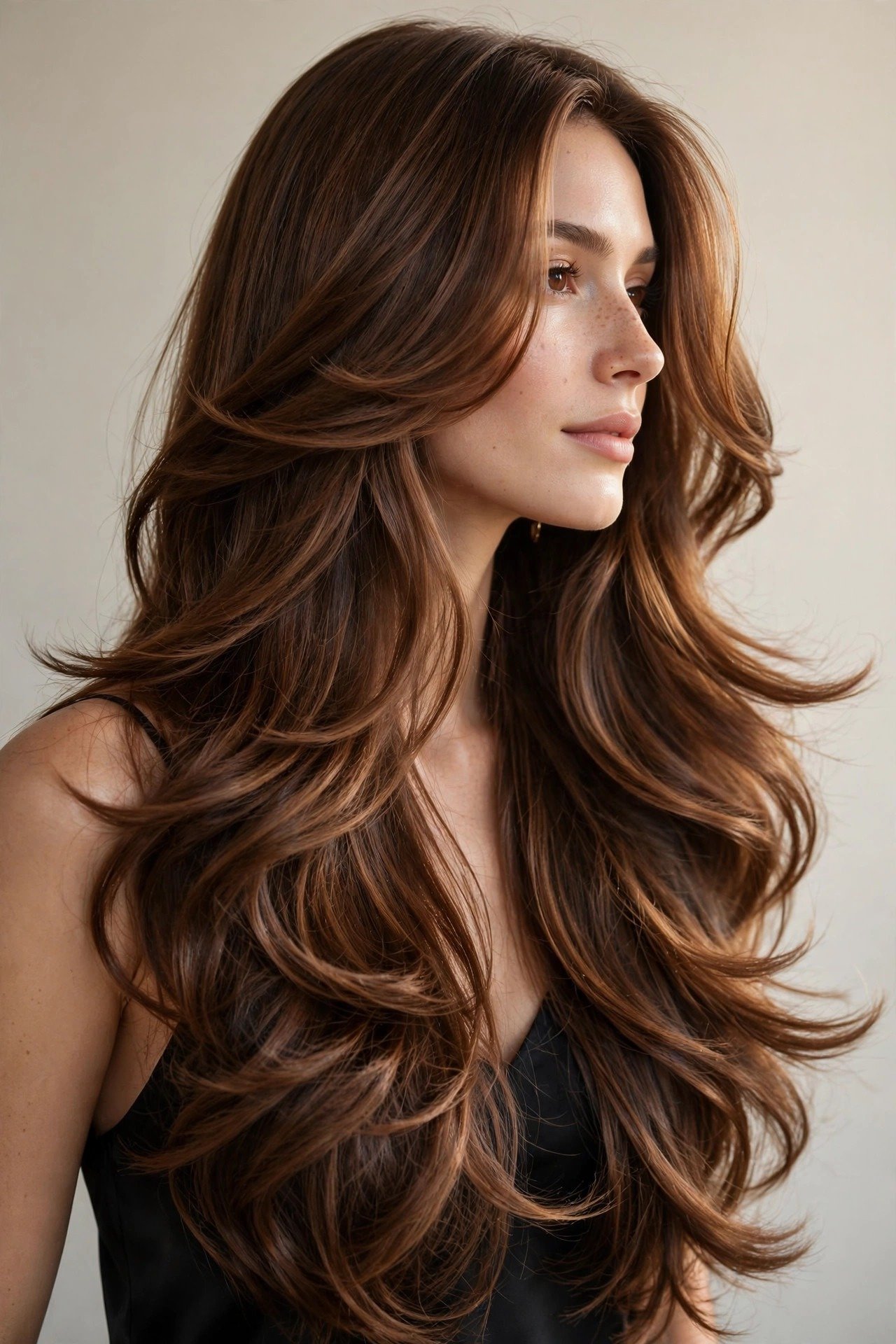
Waterfall Layers Women 2026: 32 Cascading Styles, Styling Tips & FAQs
Waterfall layers are the haircut that fall 2026 will be remembered for. Soft, cascading tiers of hair that pour from shorter face-framing pieces at the front into longer, flowing lengths at the back, this cut gives every length the kind of movement that photographs like a dream and feels even better. After seasons of blunt bobs and one-length looks, women are craving hair that moves, swishes and catches the light with every step, and waterfall layers deliver exactly that without asking anyone to sacrifice their hard-earned length.
In this guide, we break down everything you need to know about the trend: what waterfall layers actually are, why hairstylists are calling them the defining cut of the season, how to style them at home in minutes, and 32 cascading ideas to take to your salon. Whether your hair is long, medium or short, straight, wavy or curly, there is a waterfall-layered version waiting for you below.
What Are Waterfall Layers?
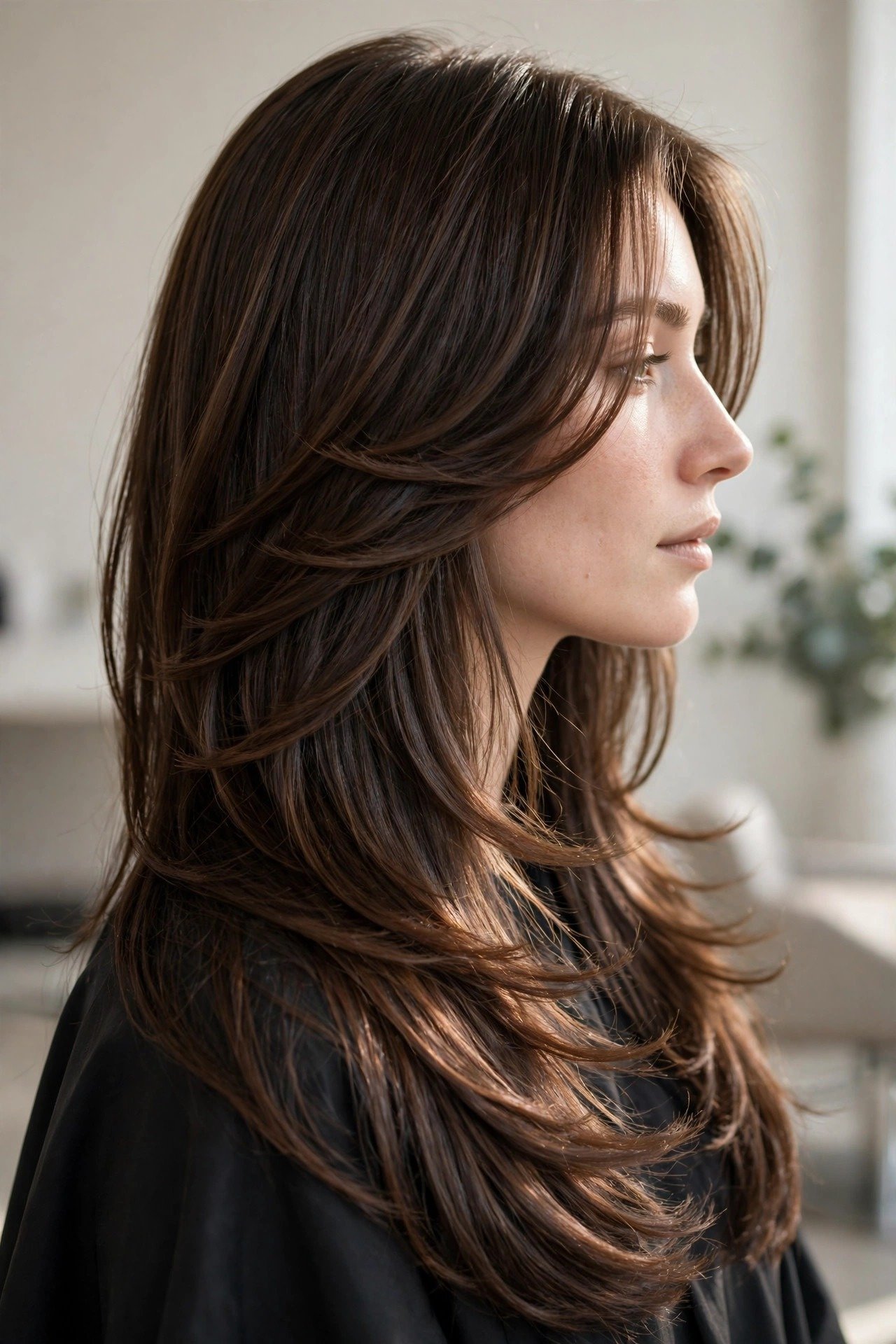
Waterfall layers are a long-layered haircut in which each layer melts seamlessly into the next, like water spilling over rock ledges. The shortest pieces sit around the cheekbones or chin, framing the face, and the layers grow progressively longer as they travel down the head, finishing in full, unbroken lengths at the bottom. The result is a haircut with no harsh lines and no visible steps — just one continuous, fluid cascade of movement.
What separates waterfall layers from ordinary long layers is the intention behind the graduation. A standard long-layered cut often keeps most of the length even, with layers added mainly at the very ends for texture. Waterfall layers, by contrast, start much higher and build movement gradually through the entire head. Your stylist maps the layers so the transition from short to long feels invisible, which is why the cut looks expensive and salon-fresh even weeks after the appointment.
The cut works on nearly every hair type and texture. On straight hair, the layers create swing and body that prevent long lengths from looking flat or curtain-like. On wavy hair, they remove weight exactly where it is needed so waves can spring up and hold their shape. On curly hair, waterfall layering takes bulk out of the mid-lengths while keeping the ends intact, giving curls room to stack into that coveted cascading shape. Thick hair gains lightness and mobility, while fine hair can keep density at the ends because the layering is graduated rather than thinned.
Another reason the cut has exploded is its flexibility with face shape. The shortest face-framing pieces can be placed anywhere from the cheekbone down to the collarbone, which means your stylist can tailor the exact starting point to your bone structure. A piece that hits at the cheekbone draws the eye outward and flatters rounder faces; a longer starting point at the chin or collarbone adds length visually for shorter or wider faces. No two waterfall cuts look the same, and that is the point — the cut is sculpted around the person wearing it.
Finally, waterfall layers are one of the few trendy cuts that grows out gracefully. Because there are no blunt lines or harsh disconnects, the layers simply elongate over time and blend into longer lengths. A trim every eight to twelve weeks keeps the cascade fresh, but you will never wake up with that awkward growing-out phase that makes so many trend haircuts a commitment. It is low-risk, high-reward hair, which is exactly why it has become the default salon request this season.
Why Waterfall Layers Are the Cut of Fall 2026
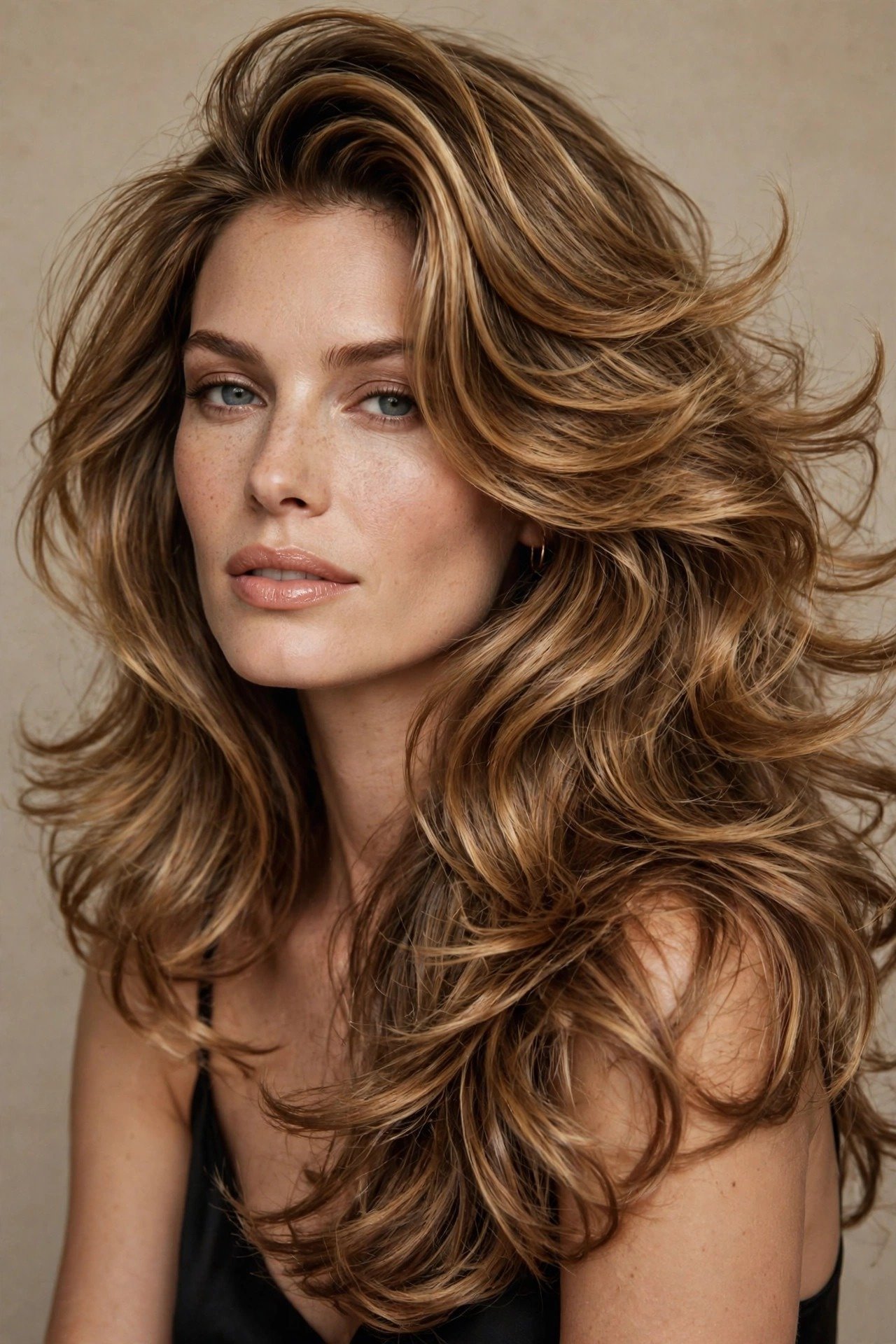
The stylist community has made its verdict, and it is unanimous. In Perfect Corp’s roundup of the 7 haircut trends hairstylists are loving for fall 2026, waterfall layers claim the spotlight as one of the season’s defining cuts — popularized by Hailey Bieber’s own hair evolution, with cascading face-framing pieces melting down into longer lengths so movement builds gradually instead of arriving all at once. When professional stylists across the industry converge on the same cut for the same season, it is no longer a guess. It is the look.
The trend has hard data behind it, too. Pinterest published its first-ever Beauty Trend Report on October 6, 2026, and its headline finding is that specificity is the new beauty flex: people no longer search for just a bob, they search for the exact bob — the textured French bob, the flipped bob. Hair searches are getting sharper and more personal, which is exactly the environment where a customizable cut like waterfall layers thrives. It is not one look; it is a formula your stylist adapts to your face, your texture and your life.
The layered movement itself is surging on Pinterest’s platform. As the Modems’ breakdown of the report notes, searches for the curly butterfly cut are up 464 percent year on year — proof that soft, face-framing, movement-heavy hair is what people want right now. Waterfall layers are the straight-hair and long-hair answer to that same craving: the same philosophy of cascading, airy tiers, built for every texture. If you love the butterfly philosophy but want your length untouched, our guide to curly butterfly cut ideas for 2026 shows the curled-up cousin of this look.
Culturally, the timing is perfect. After three years of the bob’s dominance, many women want change without commitment — and waterfall layers ask for none of the sacrifice a chop demands. You keep every inch of your length and still walk out looking completely different. The cut photographs beautifully, which matters in a season driven by hair that moves on camera, and it flatters the cozy textures of fall: sweaters, scarves and coats all sit better against hair that has shape and swing rather than a flat sheet falling straight down.
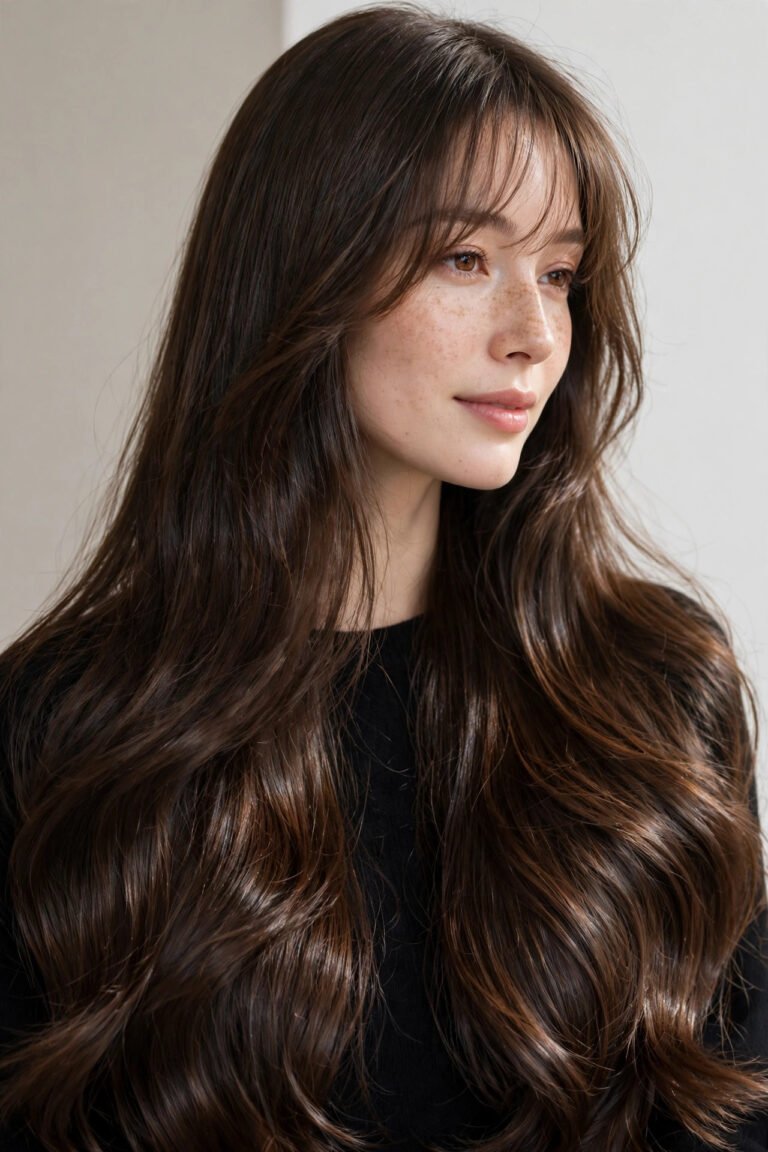
Finally, salons are pushing it because it is forgiving. A stylist can be slightly off on a layer’s exact length and the cut still works, because the whole philosophy is seamless blending rather than precision geometry. That makes it achievable in a standard appointment, grow-out friendly, and realistic for real life — the trifecta that turns a trend into a classic. This is not a look that peaks in October and disappears by Christmas. It is the foundation cut fall 2026 is built on.
How to Style Waterfall Layers at Home
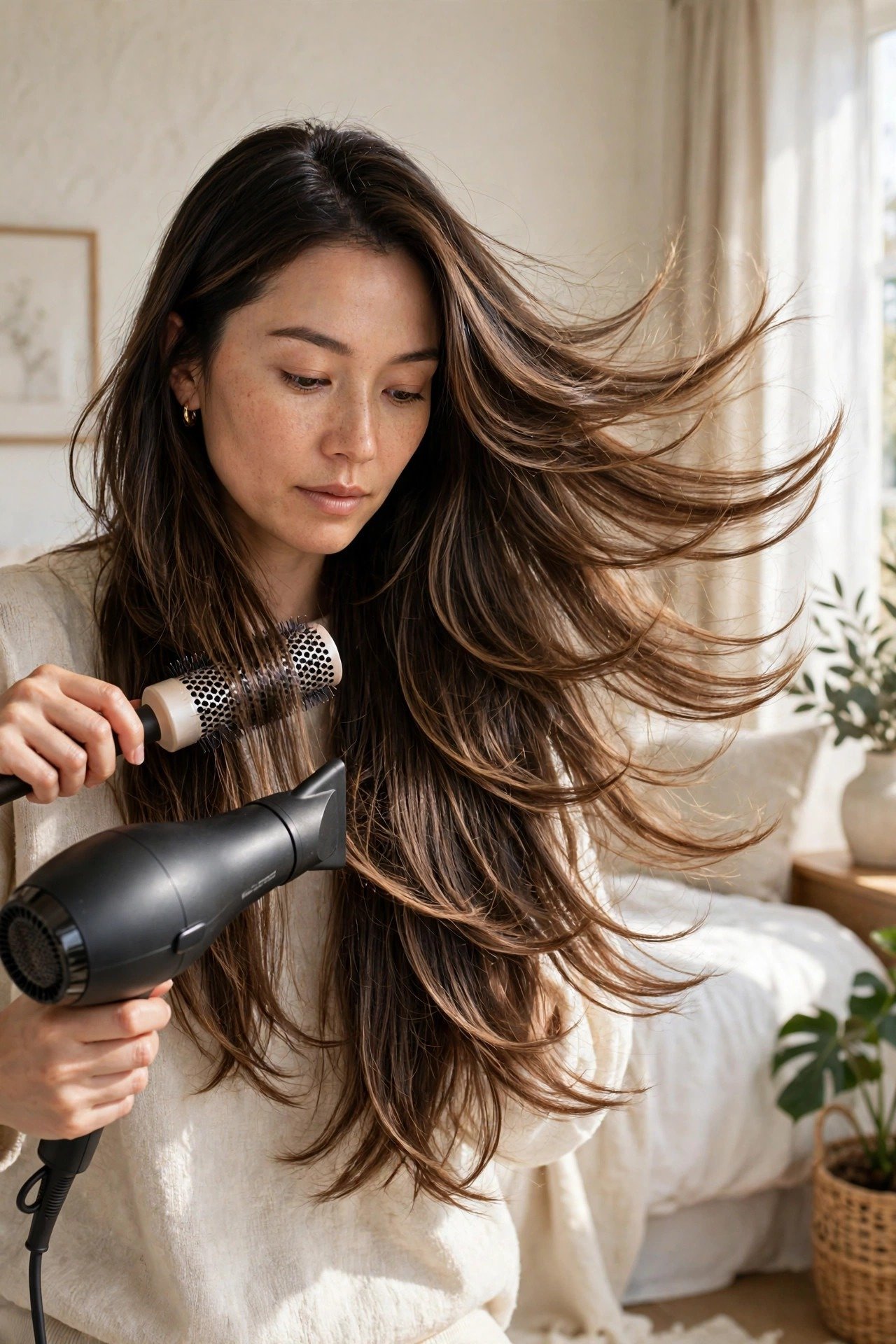
Waterfall layers are one of the easiest trendy cuts to style because the shape does most of the work for you. The golden rule is simple: style each tier in the direction you want it to fall. The shortest face-framing pieces want to sweep up and away from the face, the mid-lengths want lift and bend, and the ends want polish. Start every styling session on freshly washed, towel-dried hair with a heat protectant worked through the mid-lengths and ends, plus a golf-ball-sized amount of volumizing mousse at the roots — the layers cannot cascade if they are plastered flat to your scalp.
For the signature salon blowout, rough-dry your hair to about 80 percent with your head flipped upside down; this builds the root lift that makes the waterfall effect possible. Then work in horizontal sections with a large round brush and a dryer fitted with a nozzle. Take the two front face-framing sections and brush them upward and outward, rolling the brush away from your face so the pieces flare like curtains. For the remaining sections, roll the brush under at the ends for a bouncy finish, or alternate under-and-over for a more modern wave. Lock each section with a shot of cool air before you release it, and finish the ends with one drop of lightweight hair oil to keep the tiers glossy rather than frizzy.
On busy mornings, you do not need the full blowout. A flat iron can carve the waterfall shape into dry hair in under ten minutes: clamp mid-shaft on the face-framing pieces and bend the iron away from your face, then glide down the rest of the hair with a slight outward flick at the very ends. For wavy and curly textures, the fastest method is air-drying with a curl cream or mousse scrunched upward — the layers will settle into their tiers naturally, and a quick pineapple-up twist at the crown while you get dressed adds the lift that sells the cascade.
The product wardrobe for waterfall layers is small but specific. A texture spray misted through the mid-lengths separates the tiers and stops them from clumping together; a dry shampoo at the roots on day two or three keeps the crown from collapsing; and a flexible-hold hairspray, sprayed onto your hands and smoothed over the surface, tames flyaways without freezing the movement. Avoid heavy oils and butters near the roots — weight is the enemy of a waterfall, and one over-conditioned crown can flatten the entire effect.
The most common styling mistake is over-working the ends. Waterfall layers look best when each tier falls naturally, so resist the urge to curl every layer into ringlets or straighten them into submission. Instead, think direction, not definition: guide the hair where it wants to go, then leave it alone. If your layers look stringy rather than cascading, the culprit is usually too much product or sections that are too thin — go wider, go lighter, and let gravity do the styling for you.
32 Waterfall Layers Ideas for Women in 2026
1. Classic Long Waterfall
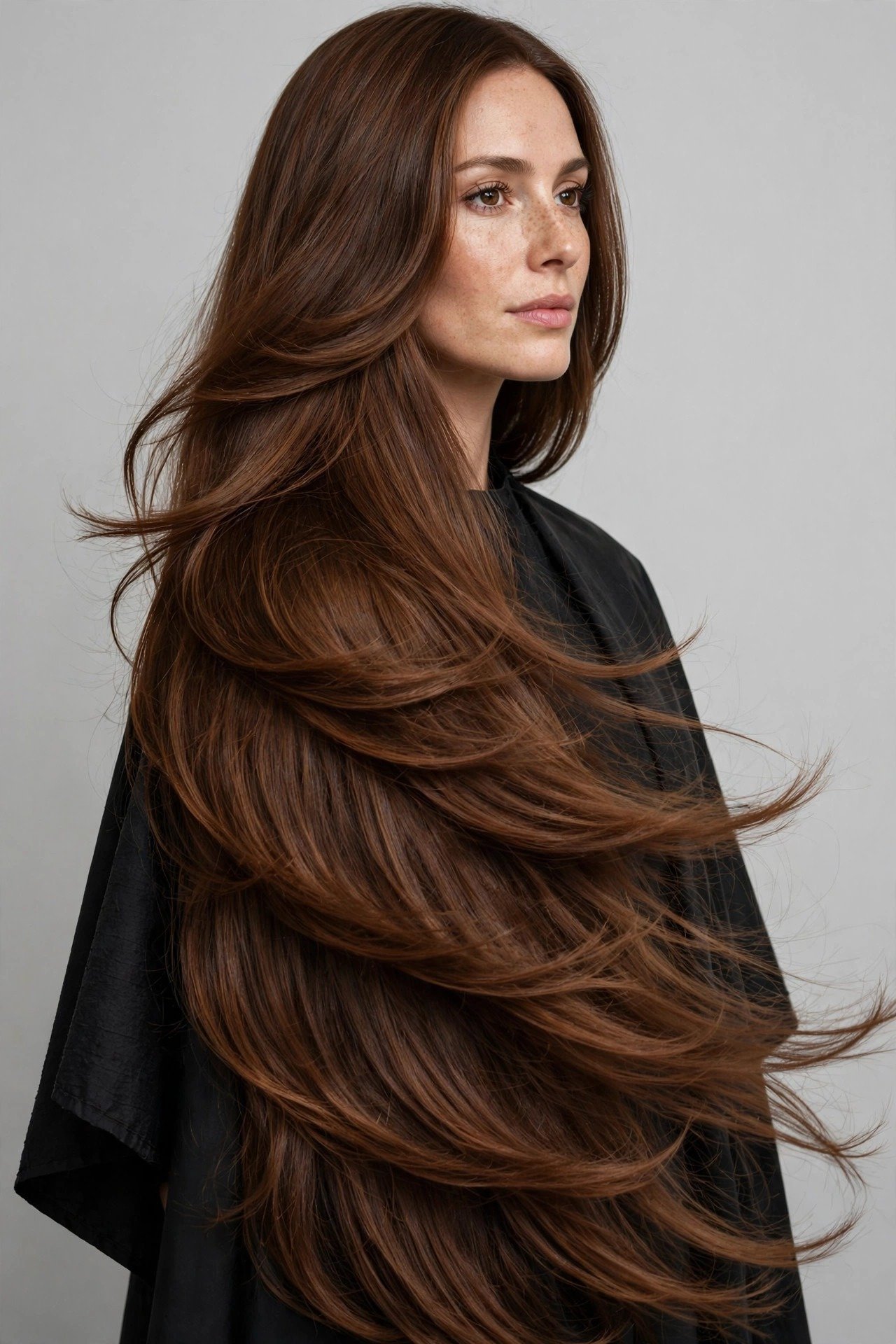
The classic long waterfall is the version that started it all: hair kept at full length, with seamless tiers beginning around the chin and cascading down past the waist. There are no shortcuts taken here — the shortest layer is still generous, and every tier melts into the next so the eye travels down the hair in one unbroken flow. This is the cut to ask for if you want maximum drama with minimum risk, because the shape is flattering on literally everyone and the length means you can wear it straight, wavy or curled without losing the effect.
It suits women who have been growing their hair for years and refuse to sacrifice it, yet feel their one-length ends have gone flat and lifeless. Thick and medium textures get the most from this version because the interior weight removal lets the hair actually move instead of hanging like a curtain. Fine-haired women can wear it too, provided the stylist keeps the ends blunt enough to preserve density — ask specifically for the layers to live above the last four inches so the perimeter stays strong.
Styling the classic version is gloriously simple. A big round-brush blowout turns it into a red-carpet moment, while air-drying with a light mousse gives a soft, romantic everyday finish. To keep the tiers visible rather than blended into one mass, work a pea-sized amount of texture cream through the mid-lengths with your fingers. This is the foundation waterfall — once you have it, every other variation on this list becomes a styling or coloring choice away.
2. Cheekbone Waterfall
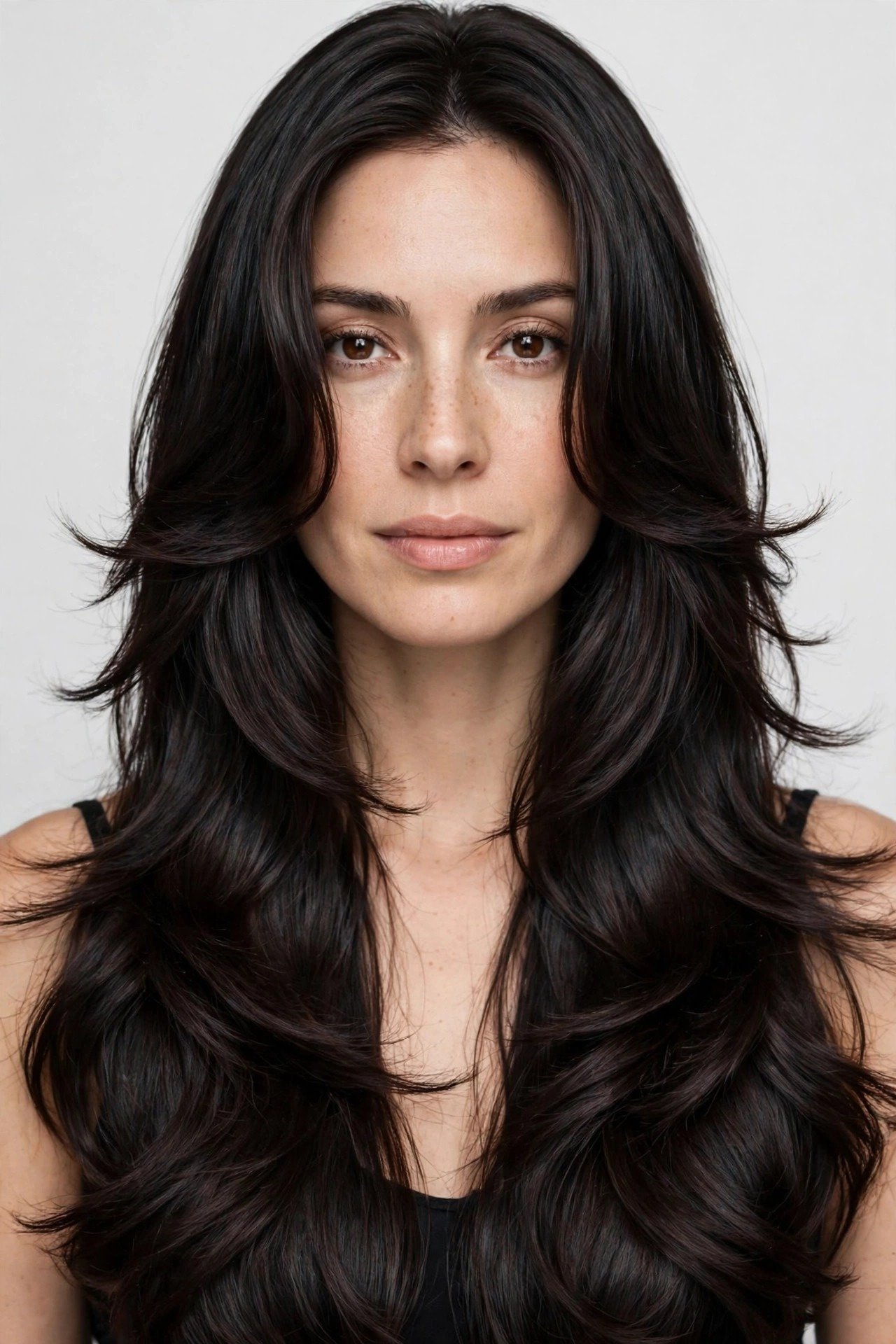
The cheekbone waterfall starts its shortest pieces right at the cheekbones, which makes it the most sculpting version of the cut. Those high, short face-framing tiers act like contour for your hair — they draw the eye outward and upward, lifting the whole face. From there, each layer lengthens progressively down to the full length, creating the steepest, most dramatic cascade of any version here. It is bold, editorial and unmistakably a statement.
This suits oval, long and heart-shaped faces beautifully, since the cheekbone pieces add width exactly where those face shapes need it. Rounder faces can wear it too, but should ask the stylist to start the shortest pieces a touch lower, at the chin, to avoid emphasizing width at the widest point. Hair-wise, medium to thick textures carry the short pieces best; on very fine hair, cheekbone-length pieces can look wispy, so a denser cutting technique at the front keeps them substantial.
Styling is all about those front pieces. Blow-dry them up and away from the face with a medium round brush to get the signature flick, or twist them back loosely for a softer take. A little volume powder at the roots of the short pieces keeps them from going flat against the scalp. Fair warning: this version shows regrowth fastest, so book a face-frame refresh every six to eight weeks to keep the cheekbone hit exactly where it belongs.
3. Collarbone Waterfall Layers
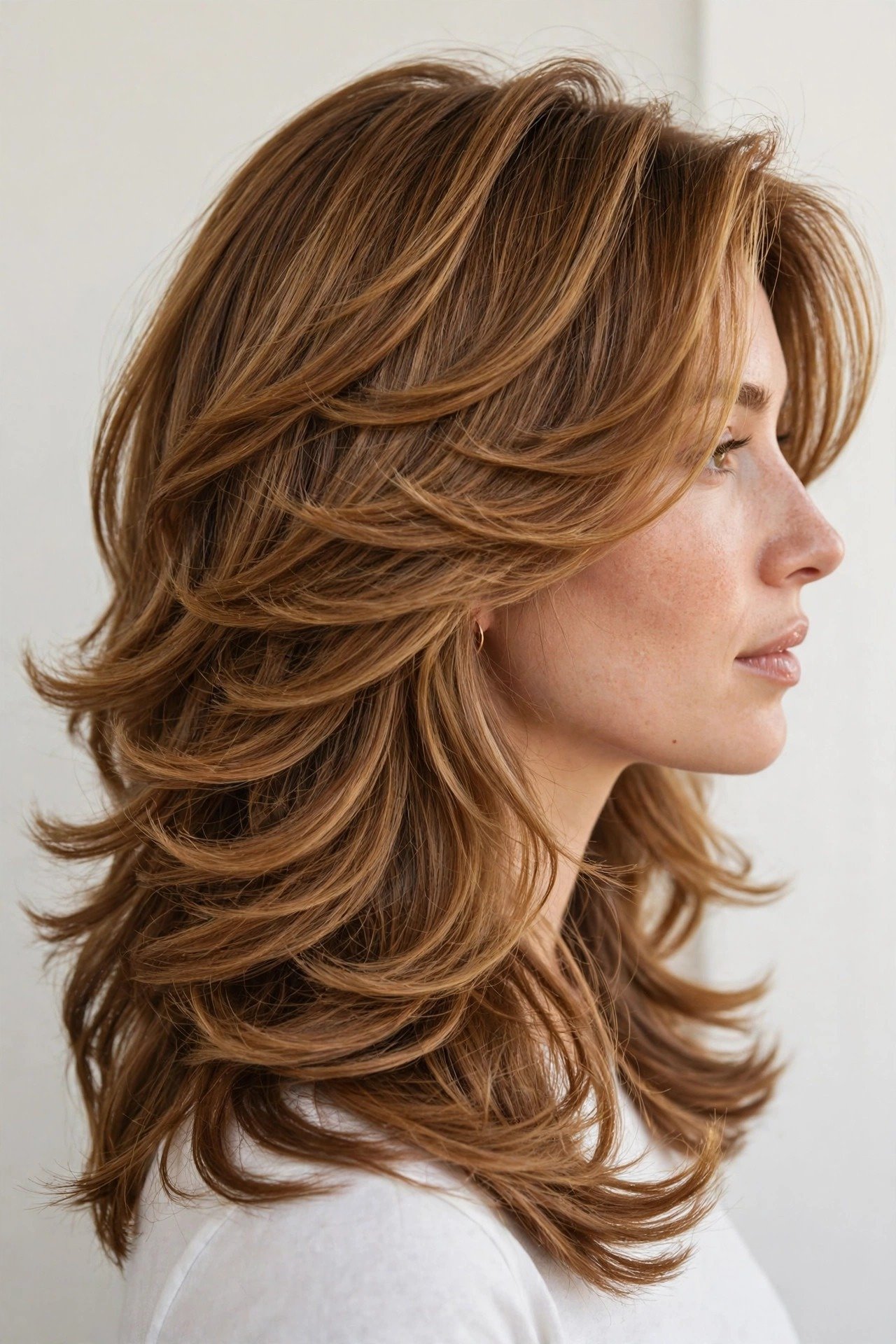
The collarbone waterfall is the sweet spot for women who want the cascade without committing to very long hair. The overall length grazes the collarbone, and the layers step down from a chin-length face frame through to the ends. Because there is less distance for the tiers to travel, the waterfall effect is tighter and bouncier — more swing, less pour. It reads fresh, modern and a little bit French, especially with a soft, undone finish.
This length is the most universally flattering on the list. It suits petite women who get swallowed by very long hair, works beautifully on fine to medium textures because the shorter perimeter keeps the ends looking full, and flatters every face shape since the stylist can tune the face-frame starting point precisely. It is also the best version for anyone transitioning from a bob to long hair — the waterfall shape makes the grow-out phase look intentional instead of awkward.
Styling the collarbone version takes minutes. A quick blow-dry with a paddle brush and a slight under-turn at the ends is all it needs; the layers do the rest. For evening, wrap the face-framing pieces around a large curling iron away from the face and the whole cut springs to life. Because the ends are closer to the roots, this version holds volume longer than very long waterfall cuts, so it is a strong pick for anyone whose hair goes flat by midday.
4. Waterfall Layers With Curtain Bangs
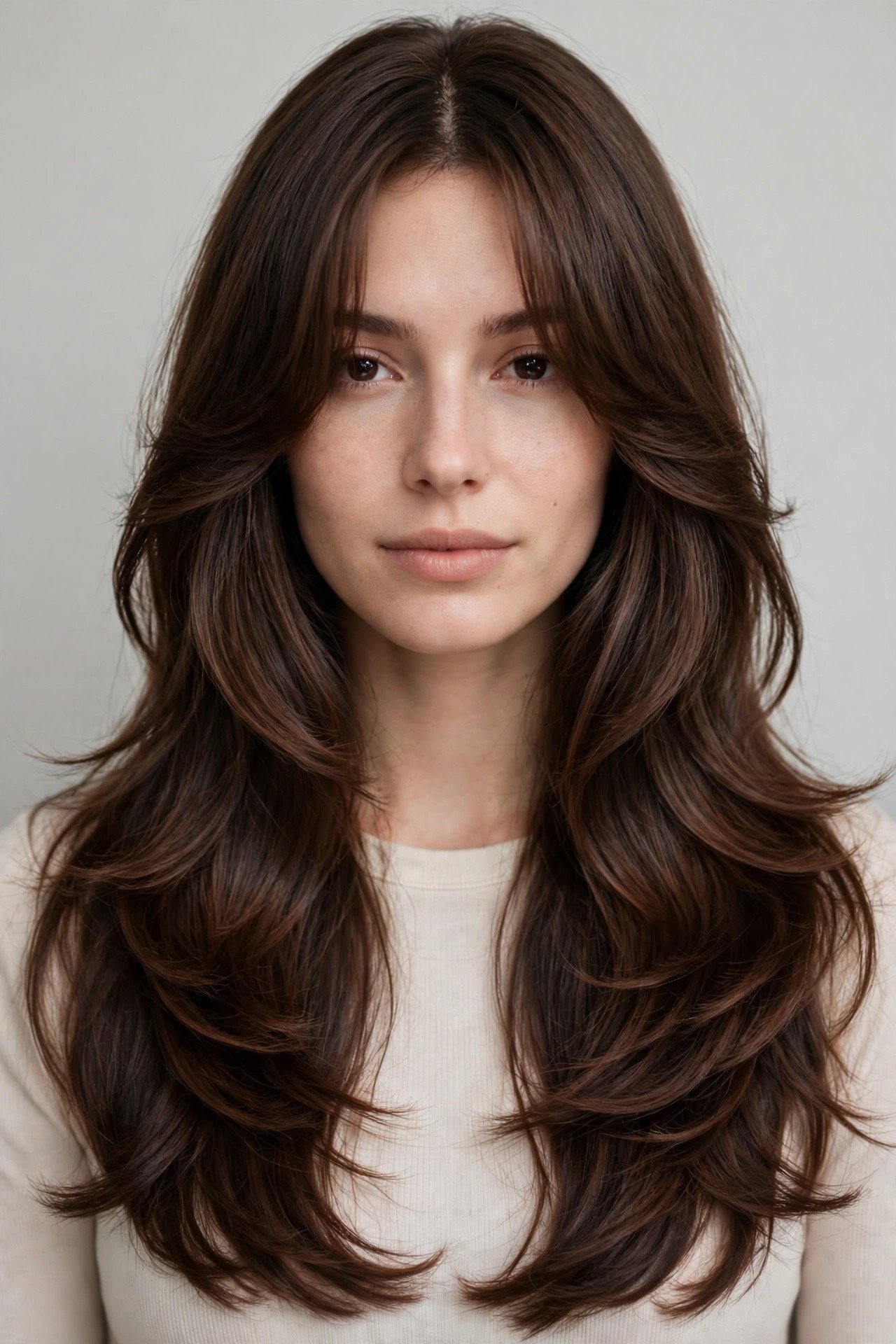
Curtain bangs and waterfall layers are a match made in hair heaven — the bangs act as the opening chapter of the cascade, parting in the middle and melting directly into the face-framing tiers. Instead of a hard line between fringe and length, you get one continuous flow from the forehead down to the ends. This is the most requested combination in salons right now, and it is easy to see why: it frames the entire face while keeping all the length you love. Our full guide to curtain bangs for 2026 covers the fringe side of this pairing in depth.
It suits nearly everyone, but especially women with high foreheads or long faces, since the bangs visually shorten the face while the layers add flattering width. The combination also works on a wide range of textures — the bangs can be blown smooth while the layers stay wavy, or everything can be worn soft and undone for a bohemian feel. Fine-haired women get particular benefit here because the curtain fringe adds the illusion of density across the front hairline.
Styling requires a little attention to the bangs, but nothing strenuous. Blow-dry the curtain pieces with a round brush, rolling them away from the face on each side, then let them fall naturally into the middle part. The rest of the hair can be styled with your usual routine — the bangs and layers will blend on their own. Keep a mini straightener handy for second-day touch-ups on the fringe, and ask your stylist to connect the longest bang pieces into the shortest layers so the blend stays seamless as it grows.
5. Shaggy Waterfall Layers
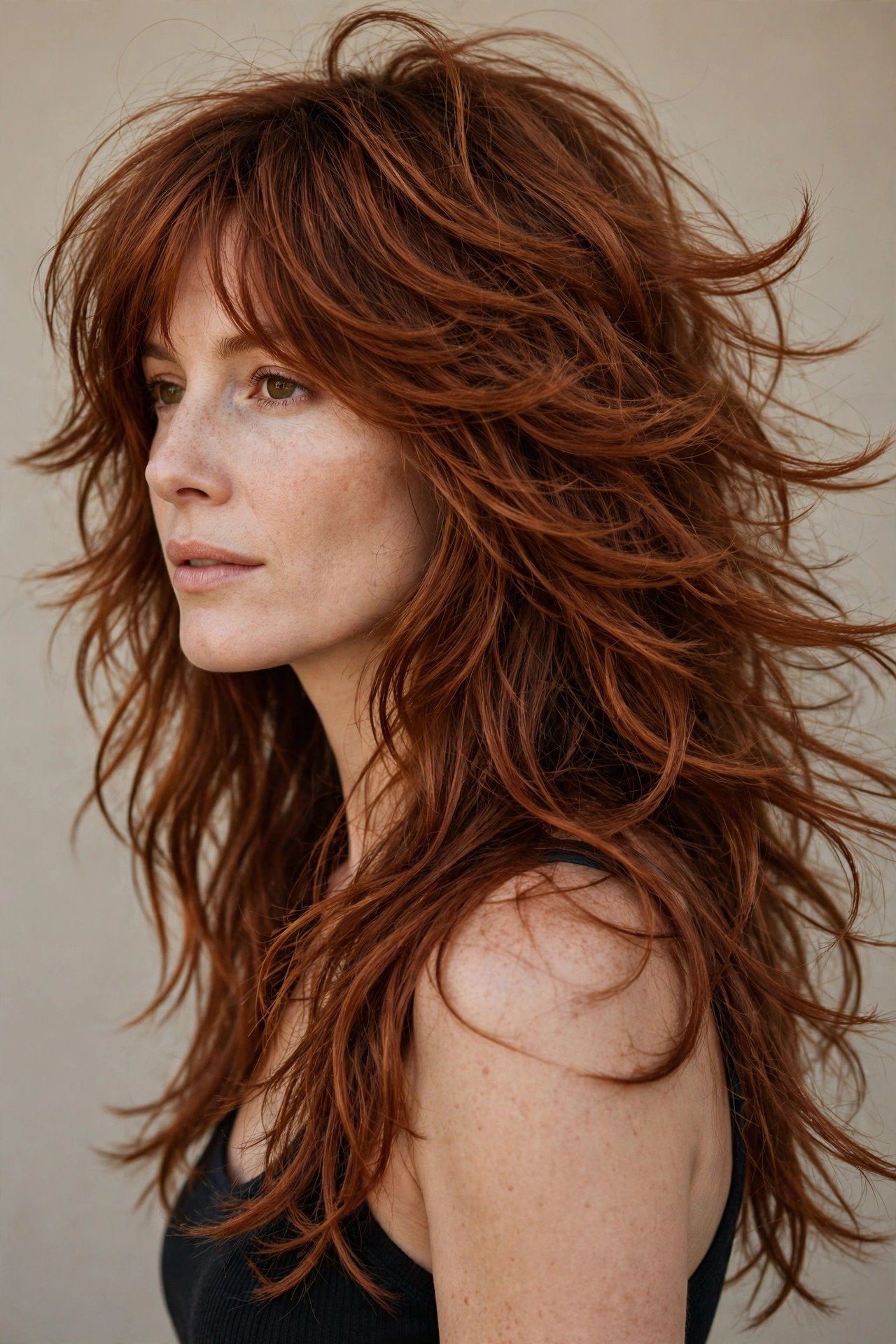
The shaggy waterfall takes the smooth cascade and roughs it up — the tiers are cut with more texture, the ends are point-cut for a piecey finish, and the whole cut has an undone, lived-in energy. Think of it as waterfall layers with a rock-and-roll streak. The silhouette is the same gradual pour from short to long, but the texture inside each tier is shattered rather than polished, giving tons of movement and a cool-girl edge.
This version is made for wavy and curly textures, where the shaggy interior lets natural texture spring up instead of being weighed down. It also suits thick hair brilliantly, since the shattered layers remove bulk invisibly. If you prefer a softer shaggy look, our roundup of soft wolf cut ideas for 2026 explores the gentler end of the textured-layer family. Fine or very straight hair can wear the shaggy waterfall too, but it needs styling product to hold the piecey separation — otherwise the texture falls flat and reads as just messy.
Styling the shaggy version is deliberately low-effort: scrunch in a salt spray or texture mousse, diffuse or air-dry, and shake it out. The whole point is that it should not look done. Refresh second-day hair by misting with water and re-scrunching rather than re-washing. The shaggy waterfall is also the most forgiving version for at-home trims between appointments — a little dusting of the ends keeps the piecey texture alive without disturbing the shape.
6. Waterfall Layers With Face-Framing Highlights
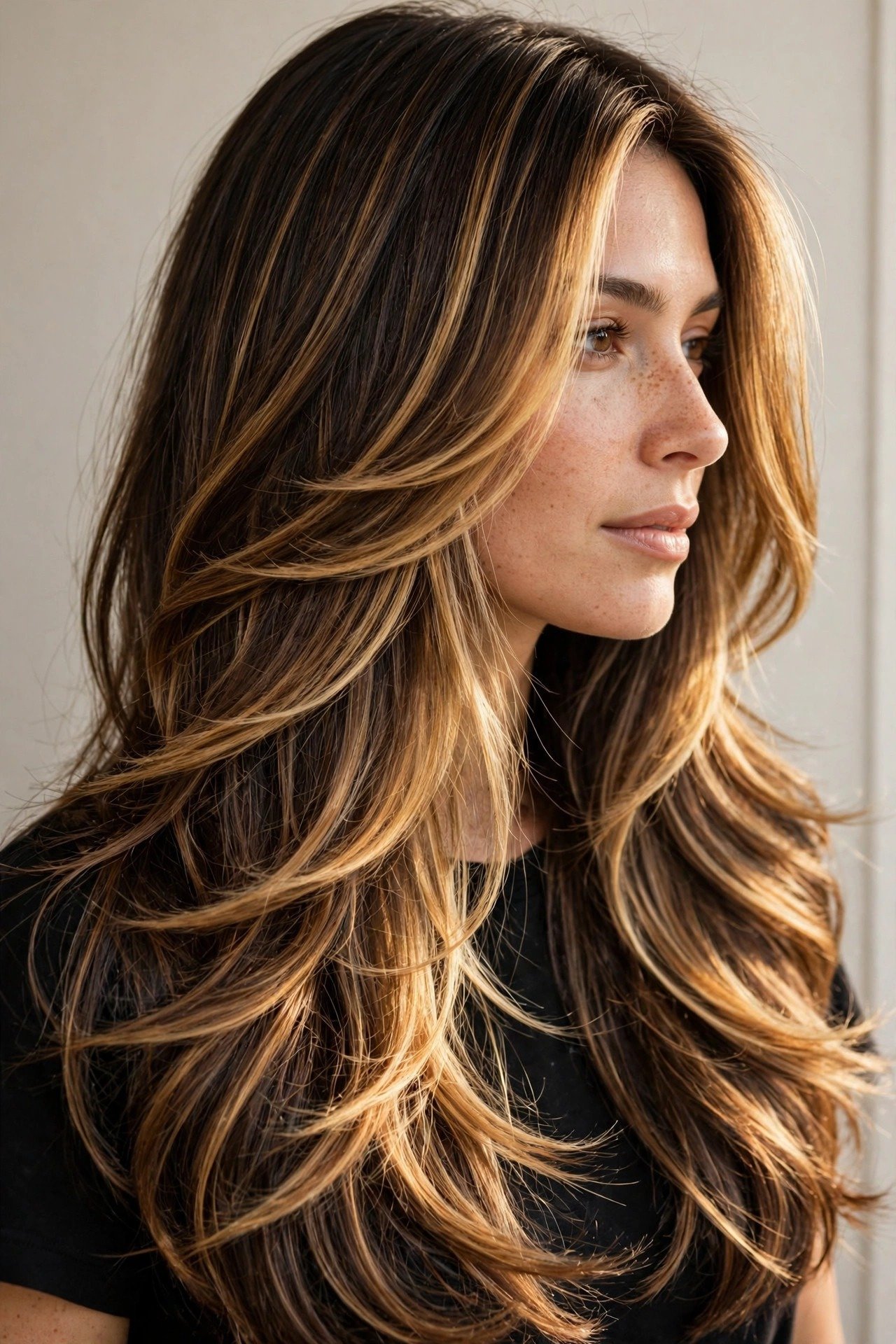
Face-framing highlights turn waterfall layers into a light show. By painting brightness — a money piece, a soft balayage halo, or fine babylights — onto the shortest tiers around the face, the color traces the exact path of the cascade and makes every layer visible. The tiers that would otherwise blend quietly into dark hair suddenly have definition, depth and glow. It is the fastest way to make a waterfall cut look three-dimensional.
This suits anyone whose base color is medium to dark brown or black, where the contrast between the highlight and the base makes the layering pop. Warm caramel and honey tones flatter warm skin, while ash and champagne tones suit cooler complexions. The placement can be tuned to your face shape too — brightness at the cheekbones lifts, while brightness lower down near the chin adds softness. Color-treated hair needs a little extra moisture care, but the visual payoff is enormous.
Styling is about showing off the color placement. Blow the face-framing pieces smooth and slightly outward so the highlighted tiers catch the light, and keep the rest of the hair polished but not pin-straight — a little bend in the mid-lengths makes the color ribbon through the hair. Use a color-safe shampoo and a weekly gloss treatment to keep the highlights luminous. This version photographs spectacularly, which is half the reason it dominates hair social media right now.
7. Waterfall Layers for Thick Hair
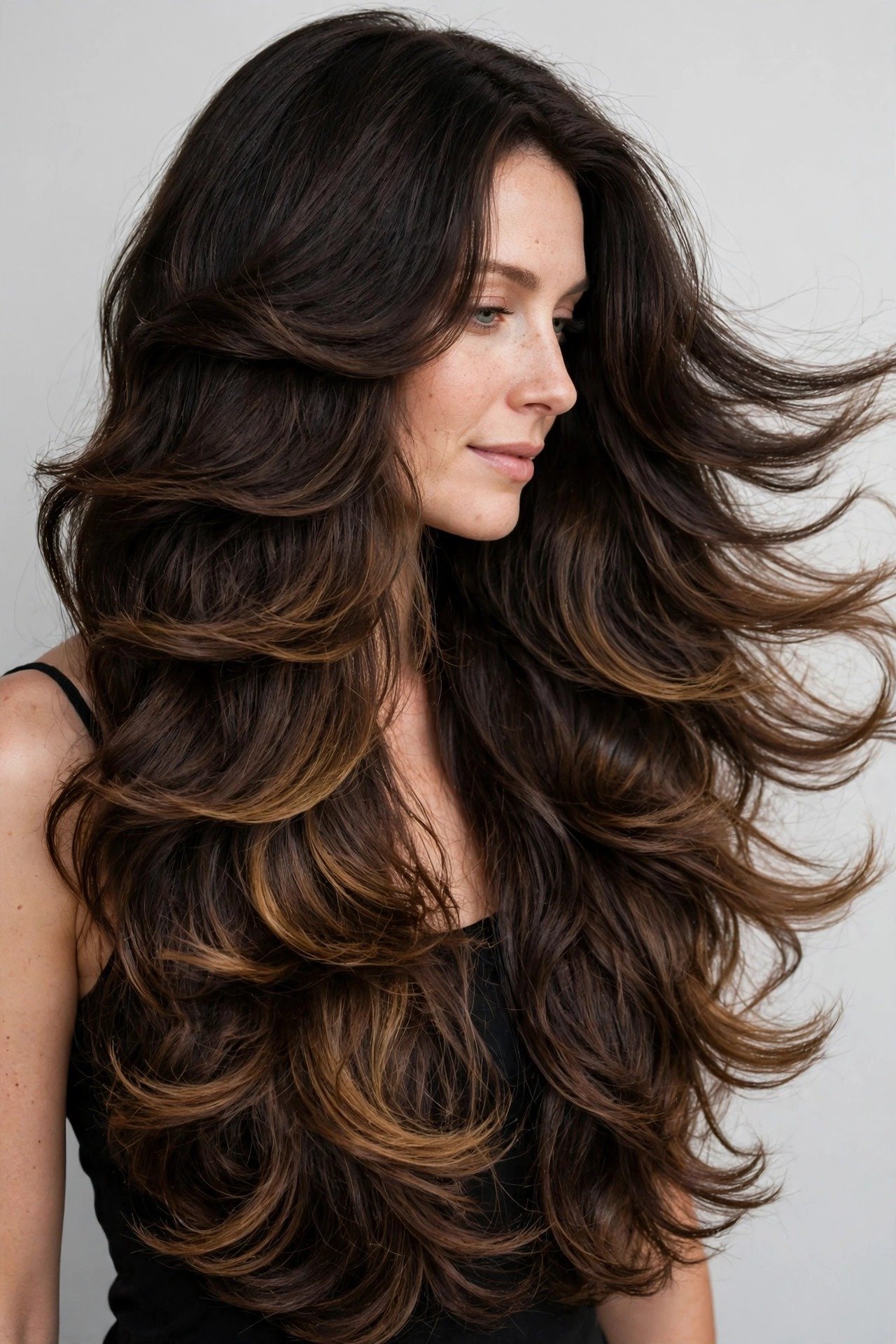
Thick hair and waterfall layers were made for each other. Density is the one thing that can turn long hair into a heavy, immovable mass, and graduated layering is the precise tool for removing that weight without sacrificing the fullness everyone envies. The stylist carves interior layers through the mid-lengths so the hair can actually move, while the strong perimeter keeps the ends looking lush rather than thinned out.
This suits anyone with coarse, dense or heavy hair that takes forever to dry and resists styling. The layers cut drying time noticeably because there is simply less bulk to dry, and they make the hair respond to a brush instead of fighting it. It also suits women whose thick hair forms a triangle shape — wide at the bottom, flat at the top — because the waterfall graduation redistributes volume upward and creates a balanced silhouette.
Styling thick waterfall hair is about control, not volume — you already have volume. Blow-dry in sections with tension to smooth the cuticle, and finish with a lightweight smoothing cream rather than heavy serums that can make dense hair look greasy. A large-barrel curling iron creates the kind of bouncy, expensive waves thick hair was born for. Get the layers refreshed every ten weeks; on thick hair, grown-out layers start to stack and puff rather than cascade.
8. Waterfall Layers for Fine Hair
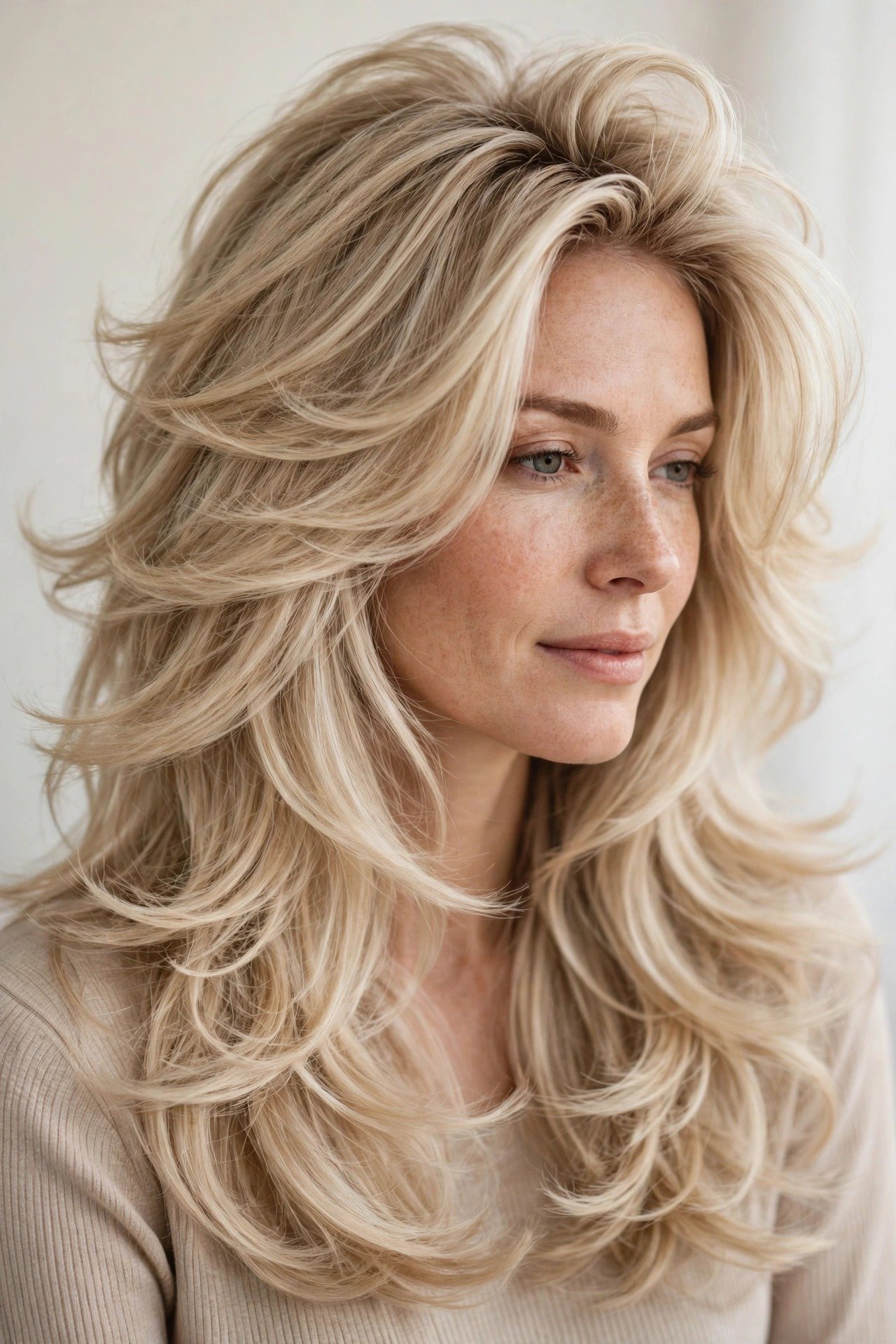
Fine hair can absolutely wear waterfall layers — the secret is in the execution. On fine textures, the stylist keeps the layering long and the ends blunt, so the cascade creates movement and the illusion of volume without removing the density fine hair cannot afford to lose. The result is hair that looks fuller than it is, because each tier catches light and air separately instead of lying in one flat sheet.
This suits women with fine, silky or low-density hair who have been told their whole lives to avoid layers. The waterfall approach is the exception to that rule: because the graduation is gradual rather than choppy, and because the shortest pieces still fall well below the chin, the cut adds shape without wispy, see-through ends. It also suits anyone whose fine hair goes limp by afternoon — the layers give the style somewhere to go instead of collapsing.
Styling fine waterfall hair is all about root lift. Apply volumizing mousse to damp roots, blow-dry upside down, and finish with a light texturizing spray rather than heavy creams. Velcro rollers at the crown for ten minutes while you do your makeup will set the lift that makes the cascade visible. Wash frequency matters more on fine hair — clean roots are voluminous roots — so a good dry shampoo is this version’s best friend.
9. Wavy Waterfall Layers
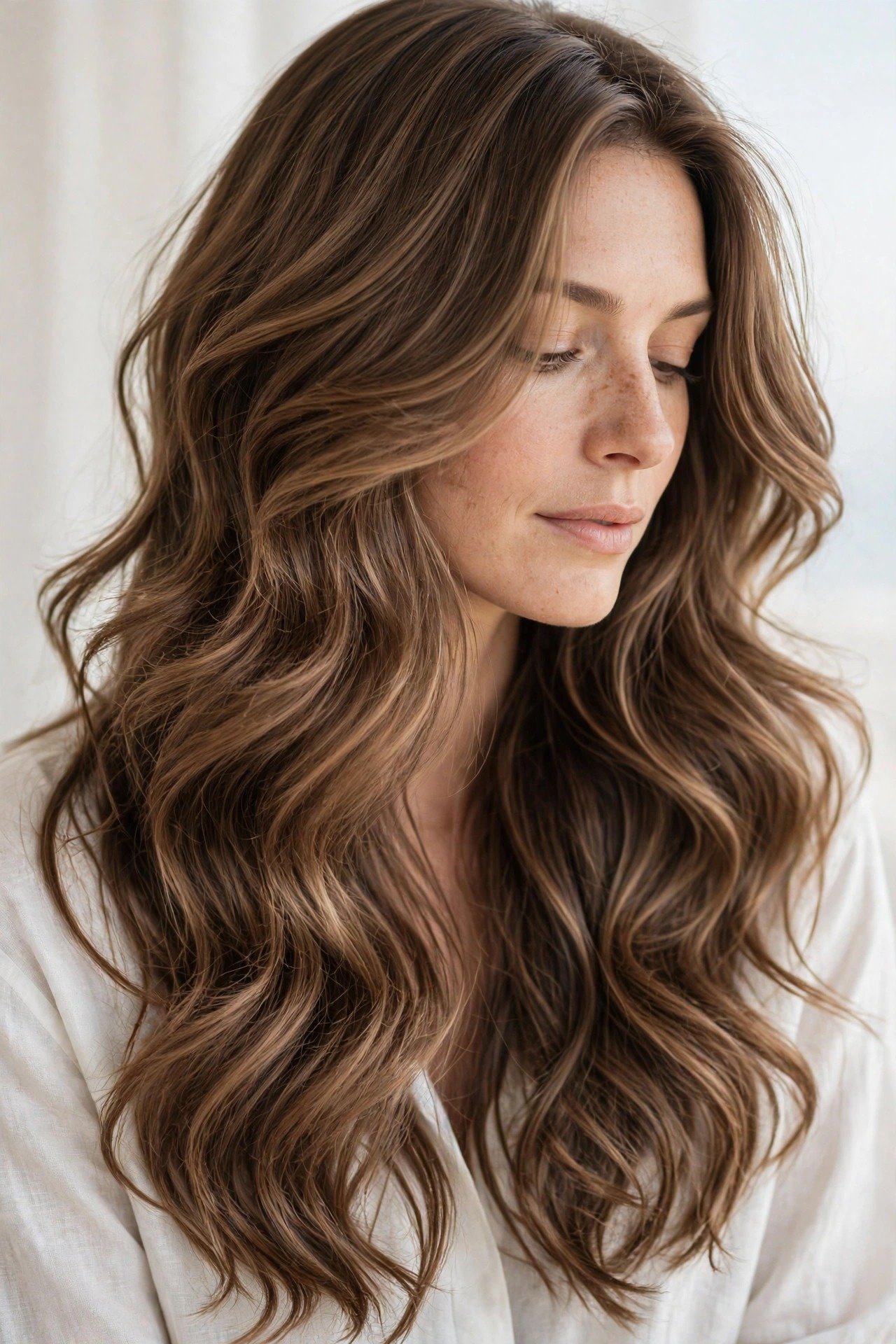
Wavy hair is arguably the ideal canvas for waterfall layers, because waves naturally emphasize each tier of the cascade. The layers remove just enough weight to let waves form fully, and every wave sits on its own level, creating a waterfall that is visible even from across the room. This version has an effortless, romantic quality that looks styled even when you have done almost nothing.
It suits natural wavies of every density, from loose 2A bends to defined 2C S-waves. Women with straight hair who curl or wave their hair regularly also love this version, because the layers hold a wave far longer than one-length hair — each tier supports the next instead of pulling it straight. Face-shape-wise it is neutral: the waves add softness everywhere, which flatters angular faces, while the vertical cascade adds length for rounder ones.
Styling is minimal by design. On wash day, scrunch a curl-enhancing mousse into damp hair and diffuse on medium heat, or braid damp hair loosely overnight for heatless waves. Refresh with a water mist and a dab of curl cream rather than full re-styling. The one rule: do not brush dry wavy waterfall hair, or the tiers frizz into one cloud. A wide-tooth comb on damp hair, or fingers only, keeps the cascade defined.
10. Curly Waterfall Layers
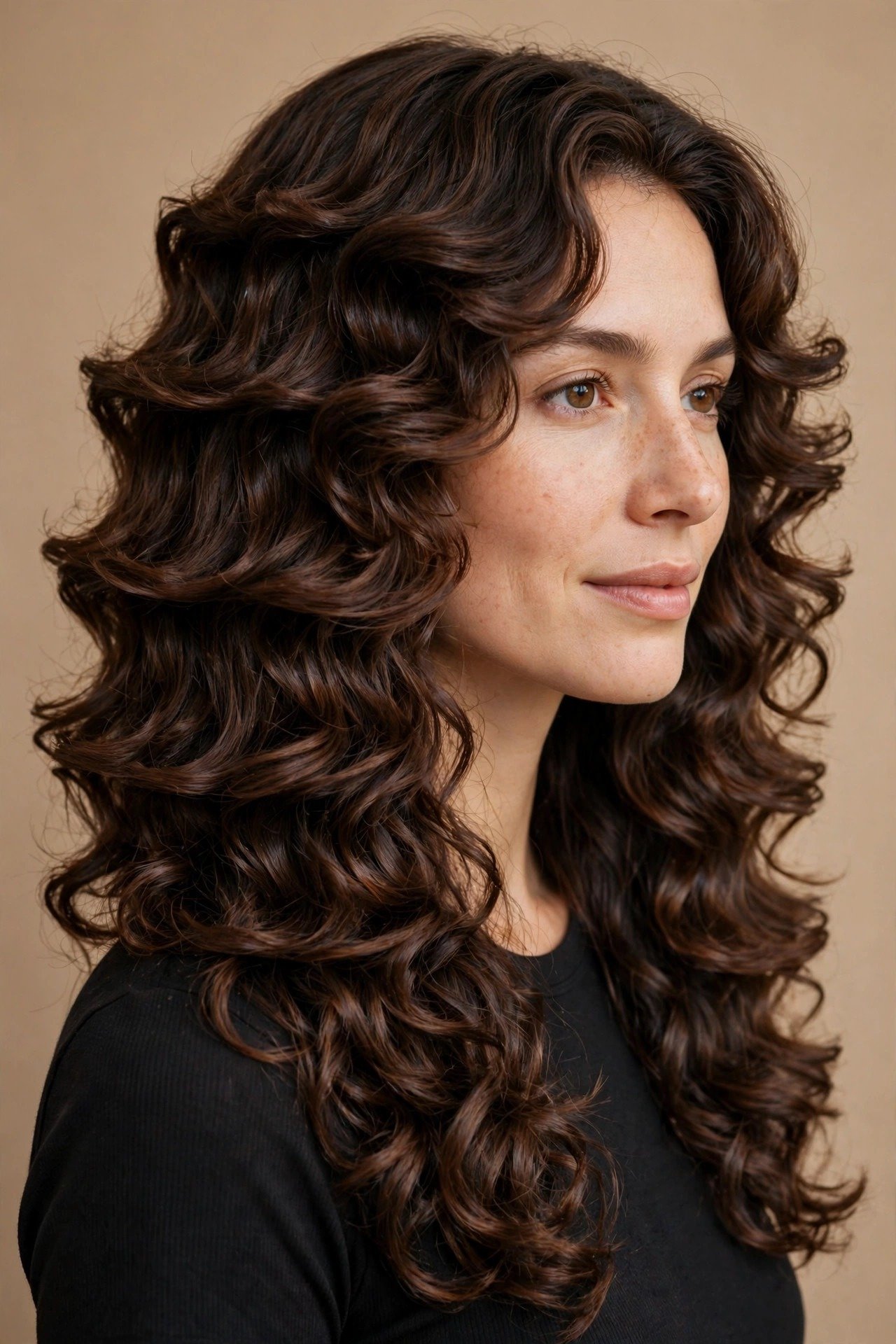
On curly hair, waterfall layering is transformative. Curls have natural volume that can stack into a pyramid if cut bluntly; graduated layers instead shape that volume into a cascade, with tighter, shorter curls at the crown melting into longer, looser curls at the ends. The result is the coveted rounded-yet-flowing curly silhouette — full but never triangular, defined but never stiff.
This suits curl types from 3A ringlets to 4A coils, with the layering adjusted to the curl’s spring factor. It is especially good for women whose curls have been looking weighed down or shapeless, and for anyone growing out curly hair who wants shape during the awkward phases. Because the cut is done to enhance the curl pattern rather than fight it, it suits anyone willing to embrace their natural texture instead of straightening it away.
Styling curly waterfall layers follows the curly-girl playbook: leave-in conditioner, curl cream, gel cast, diffuse or air-dry, then scrunch out the crunch. The layers make wash-and-go genuinely work, because the shape is cut in rather than styled in. Pineapple the hair at night to protect the crown tiers, and refresh with a spray bottle instead of re-wetting fully. Trim every ten to twelve weeks — curly ends show damage fast, and fresh ends keep the cascade bouncing.
11. Straight Sleek Waterfall
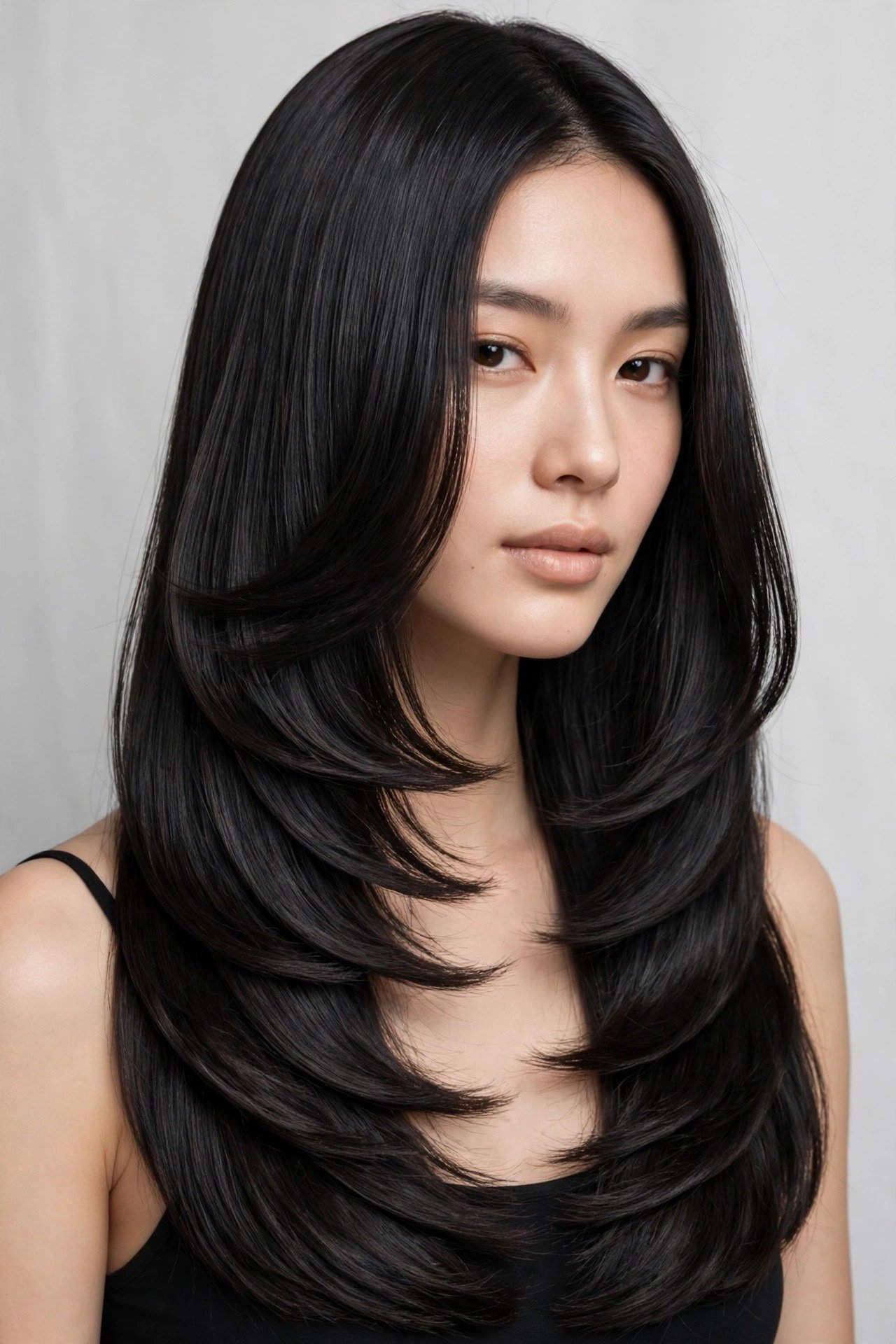
The sleek waterfall proves that layers are not just for texture — on pin-straight hair, the graduated tiers create a liquid, glass-like flow that one-length hair simply cannot match. Each layer falls a fraction shorter than the one beneath it, so the hair moves in sheets with visible dimension. It is polished, expensive-looking and quietly dramatic, the boardroom-to-evening version of the trend.
This suits women with naturally straight hair who want movement without waves or curls. It flatters long and oval faces particularly well, since the sleek vertical lines elongate, and it is a strong choice for fine straight hair because the blunt-ish ends keep density while the layers add swing. Thick straight hair works too, but needs thorough interior layering or the sleek finish can look heavy.
Styling is about smoothness. Blow-dry with a paddle brush using downward tension, then pass a flat iron over the lengths in one smooth motion per section — the layers will fall into their tiers on their own. A silicone-free smoothing serum on the ends adds the glassy finish. This version shows damage and split ends more than textured versions, so regular trims and a weekly deep-conditioning mask are non-negotiable for keeping the sleek effect intact.
12. Waterfall Layers With Side Part
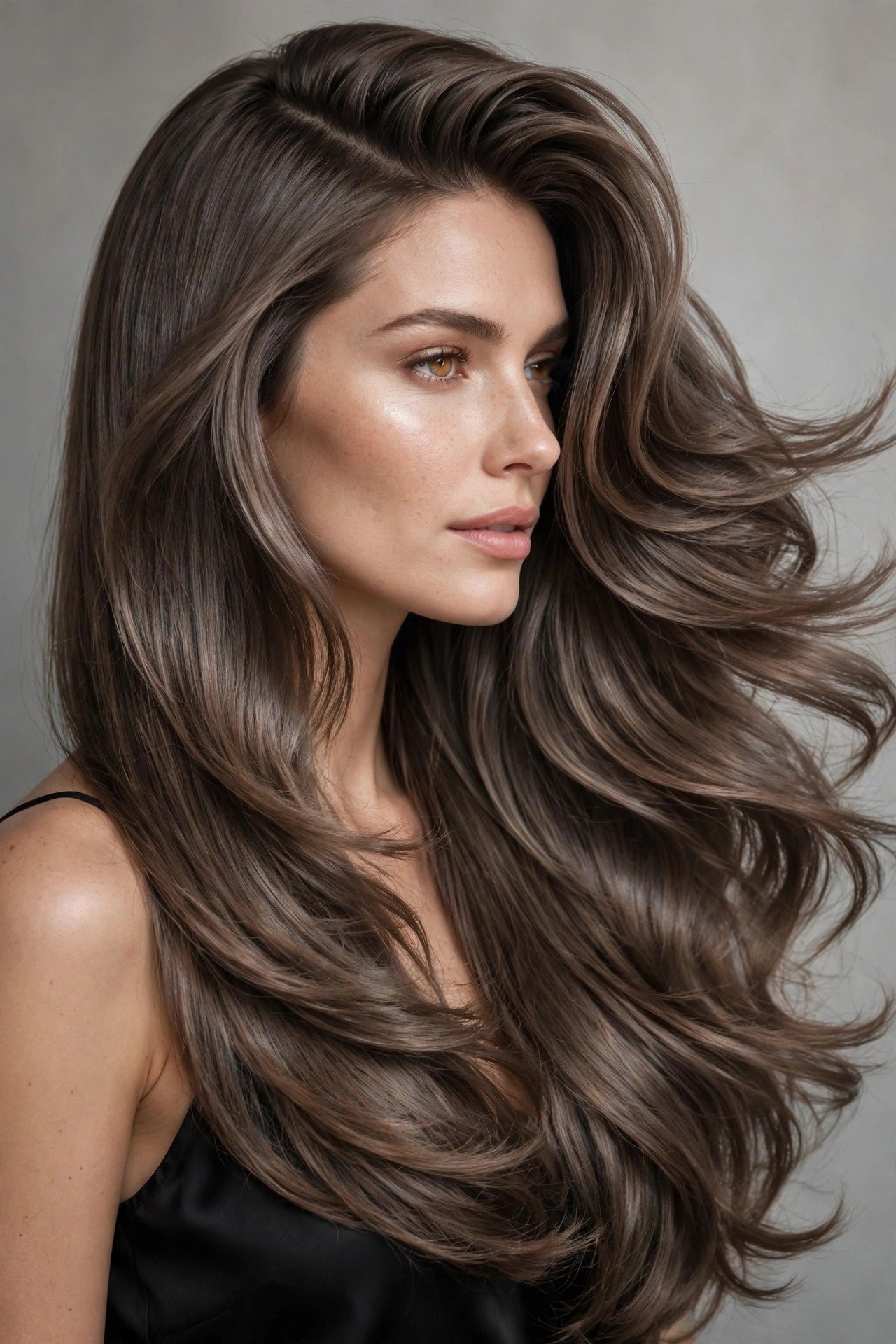
A deep side part gives waterfall layers instant old-Hollywood glamour. Sweeping the hair to one side piles the cascading tiers into a dramatic diagonal flow, with the short face-framing pieces falling across the forehead on the heavy side. It is the most red-carpet-ready way to wear the cut, and it takes about thirty seconds to switch from your everyday part.
This suits anyone who wants extra volume at the crown — the side part automatically lifts the roots on the heavy side — and it flatters square and round faces by breaking up symmetry with a strong diagonal line. Women with a prominent forehead often prefer it to a middle part, since the sweep covers more. It works on all lengths and textures, though the effect is most striking on medium to long hair where the diagonal cascade has room to travel.
Styling is simple: part deeply while the hair is damp, blow-dry the roots in the direction of the part to train them, and let the lengths fall. For extra drama, tuck the lighter side behind the ear and add a statement earring — the asymmetry does the rest. On second-day hair, a spritz of dry shampoo at the part line refreshes the lift. Flip the part occasionally to avoid a permanent flat spot at the crown.
13. Waterfall Layers With Middle Part
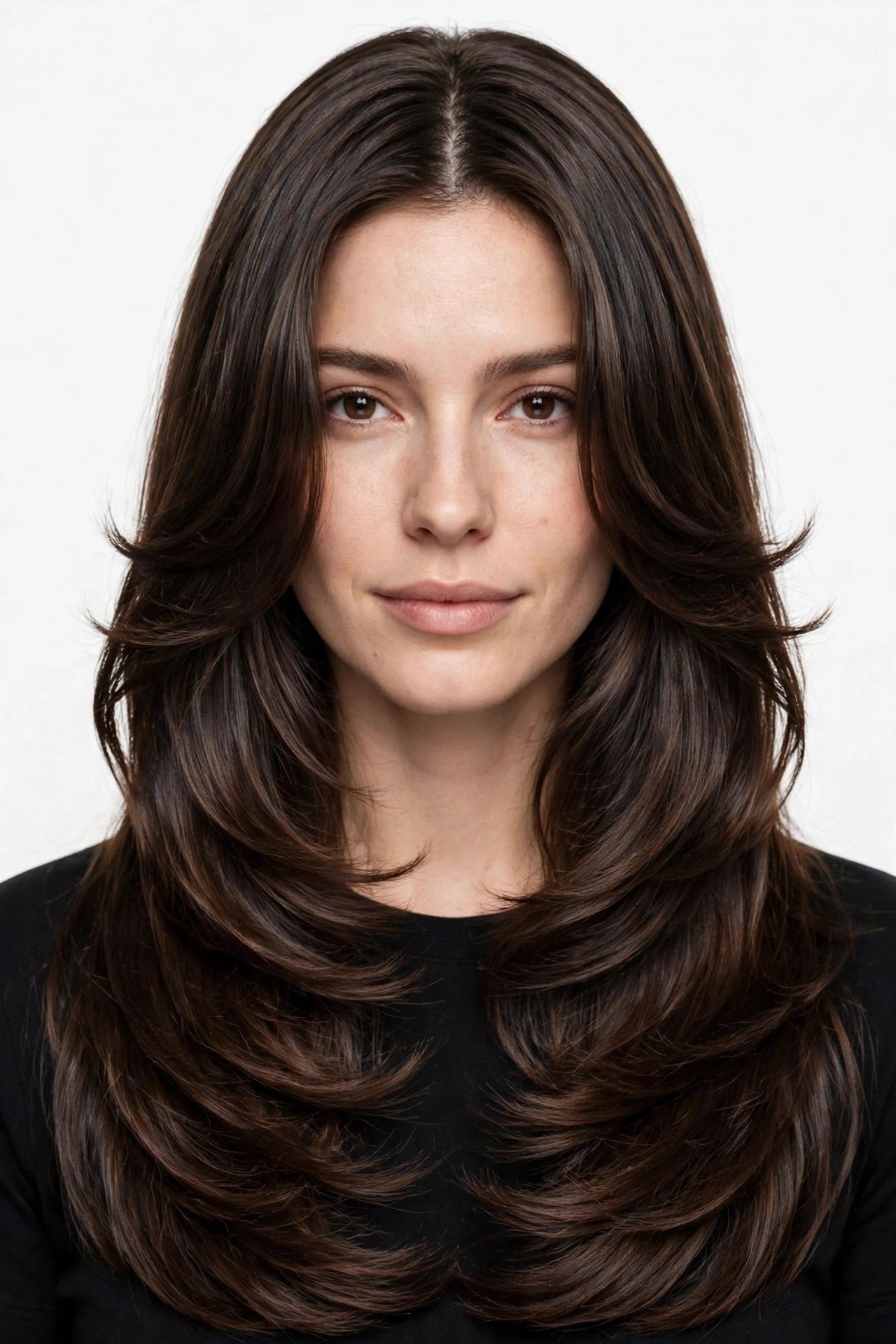
The middle part is waterfall layers in their most symmetrical, balanced form. With the hair divided evenly down the center, the cascading tiers fall identically on both sides, framing the face like curtains of water. It is clean, modern and slightly minimalist — the version that looks most intentional and editorial, and the one that shows off the precision of the cut itself.
This suits oval and heart-shaped faces best, since symmetry emphasizes balance, and it works beautifully on straight to wavy textures where the even fall reads clearly. Women with very round or very square faces sometimes prefer a slightly off-center part to break the symmetry, which is an easy adjustment your stylist can make. It also suits anyone who wears their hair up often — a middle part gives the cleanest base for ponytails and buns.
Styling is straightforward: establish the part on damp hair with a tail comb, blow-dry each side smooth and slightly outward, and finish with a shine spray for that glassy, symmetrical fall. The middle part shows an uneven cut mercilessly, so this is the version where a skilled stylist matters most. Keep the part trained by always parting the hair the same way when damp; a stubborn cowlick may need a few weeks of consistent training.
14. Brunette Waterfall Layers
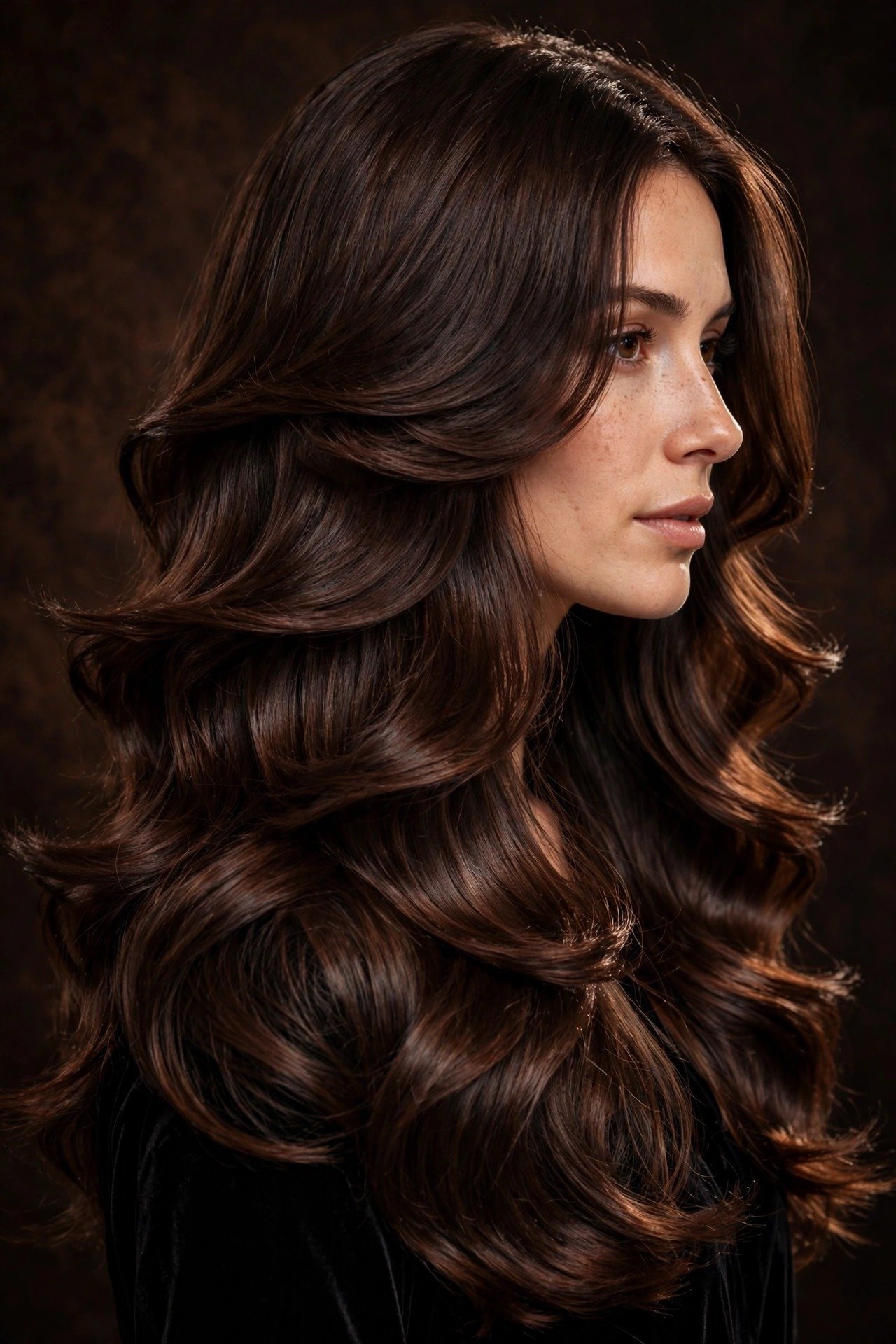
Rich brunette tones and waterfall layers are a power combination. Dark hair shows the tiered structure of the cut more clearly than any other color, because light catches each layer’s edge and creates visible ribbons of shine down the cascade. Add a gloss treatment and the layers look almost liquid — this is the version that makes people stop you to ask about your hair.
It suits all skin tones, with the shade tuned accordingly: warm chocolate and chestnut for warm complexions, cool espresso and ash brown for cool ones. Brunette waterfall layers are also the lowest-maintenance color pairing on this list — no roots to touch up, no brassiness to fight, just rich color that deepens beautifully. It suits every face shape and hair texture, which is why it is the default recommendation for first-time waterfall wearers.
Styling brunette layers is about maximizing shine, since shine is what reveals the tiers. A glossing serum on the ends, a cool-shot finish after blow-drying, and a weekly shine mask will keep the cascade luminous. Brunette hair can look flat in harsh overhead light, so ask your stylist about a demi-permanent gloss in a tone slightly richer than your base — it adds the depth that makes the layers pop without any commitment to permanent color.
15. Balayage Waterfall Layers
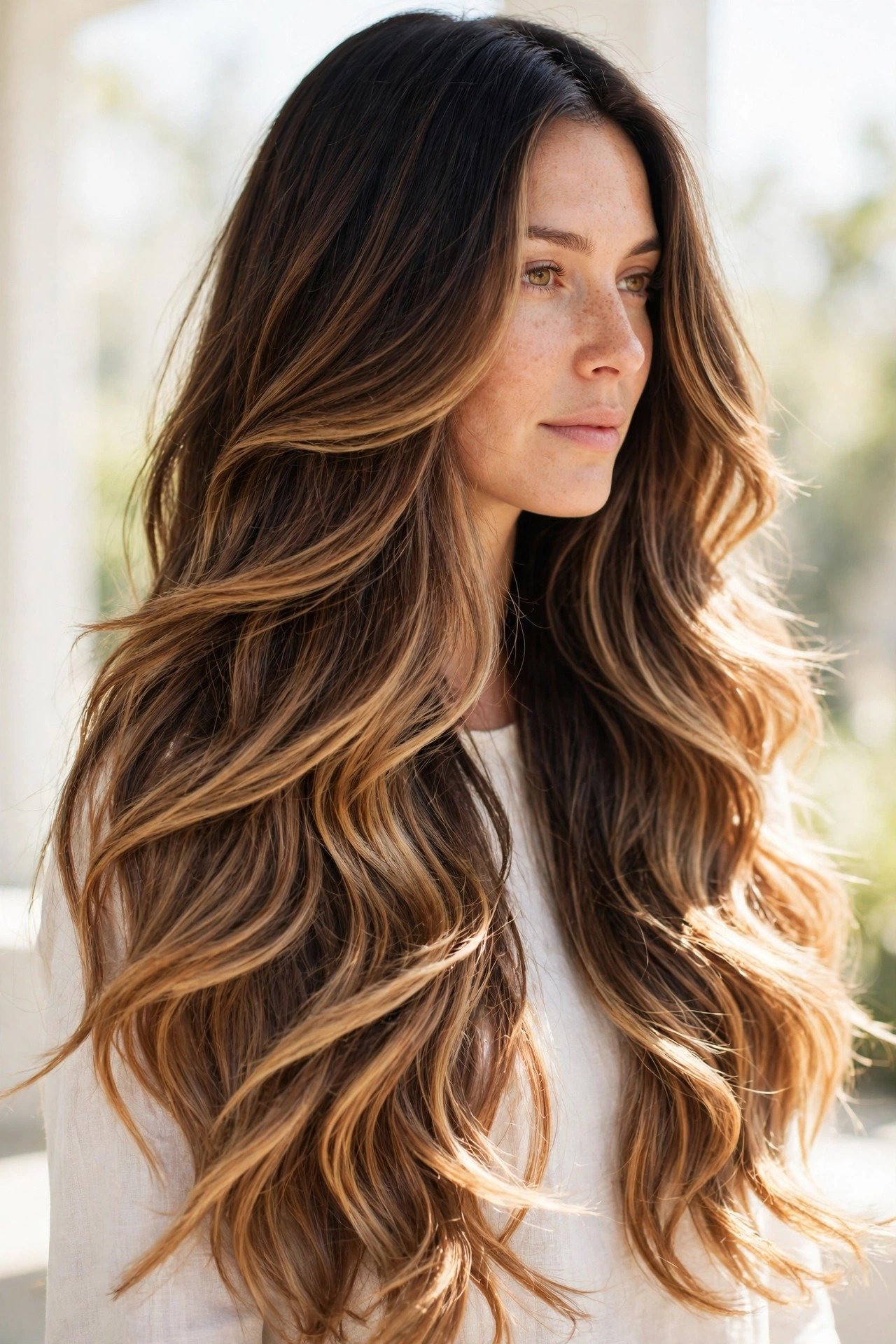
Balayage was practically invented for waterfall layers — the hand-painted color transition follows the exact path of the cascade, getting lighter as the tiers get longer. Each layer catches a different intensity of the balayage, so the cut and the color amplify each other: the layers give the color dimension to live in, and the color makes every tier visible. It is the most dimensional, sun-kissed version of the trend.
This suits anyone who wants brightness without the upkeep of full highlights, since balayage grows out softly with no harsh line. It flatters warm and neutral skin tones especially, with caramel, honey and golden tones doing the heavy lifting. All textures work, though wavy hair shows off balayage dimension best — the bends in the hair catch light at every angle. It also suits women transitioning from darker color who want lightness gradually.
Styling is about enhancing the color movement: loose waves, whether from a curling iron or overnight braids, break up the balayage into ribbons that trace the layers. A purple or blue toning mask every couple of weeks keeps the lightened pieces from going brassy. Because balayage lightens the ends — the oldest, most fragile hair — a bond-building treatment in your routine protects the cascade from breakage that would ruin the tiered effect.
16. Blonde Waterfall Layers
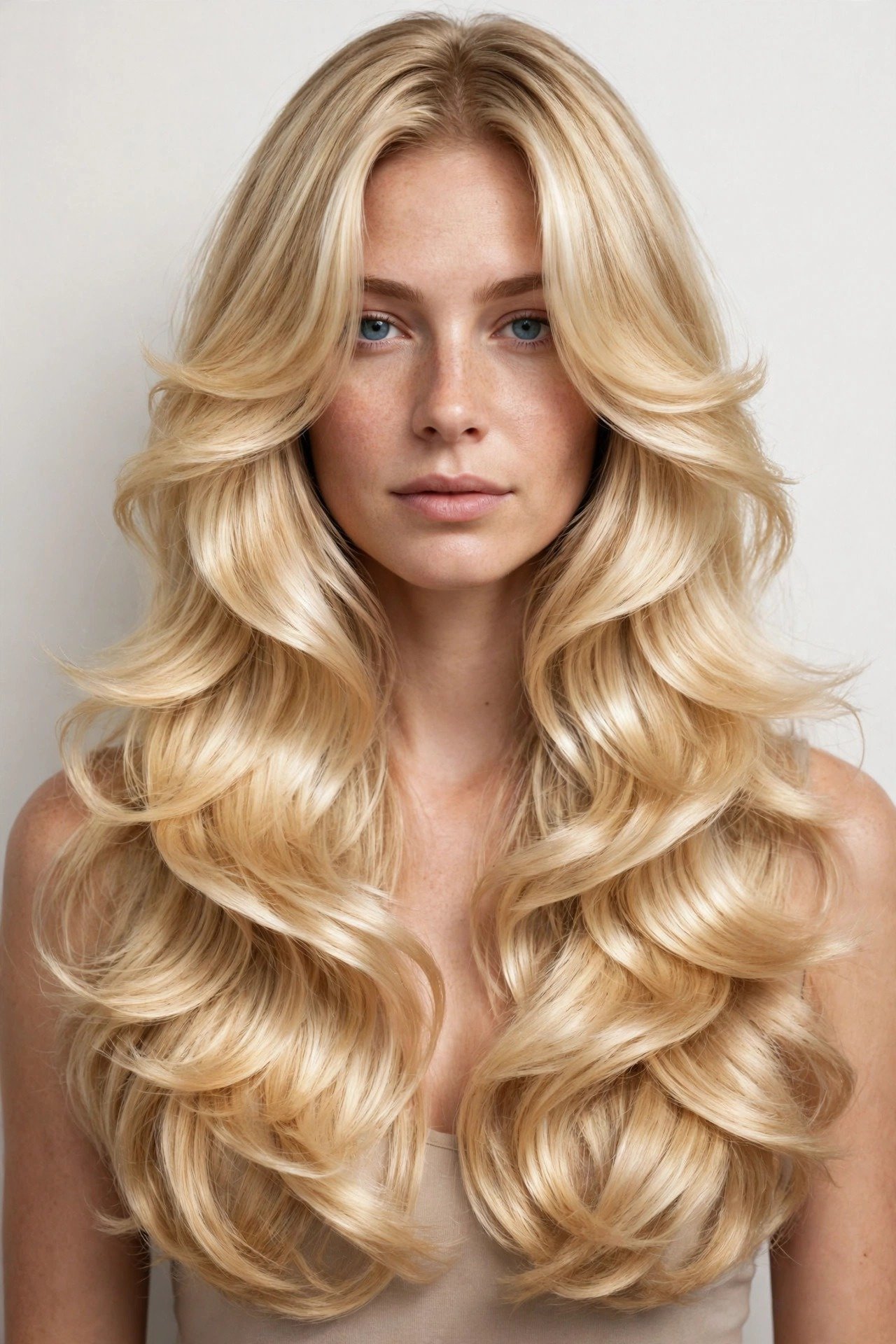
Blonde waterfall layers are pure luminosity. Light hair reflects more light at every tier, so the cascade reads as a glowing, almost halo-like flow of hair. Whether you go icy platinum, golden honey or lived-in bronde, the graduated layering gives blonde hair the structure it often lacks — instead of one flat sheet of light color, you get depth, shadow and movement woven through the brightness.
This suits fair to medium skin tones most naturally, though deeper skin tones look stunning with golden and honey blondes. Fine blonde hair gets the biggest benefit, since the layers create the volume blonde often lacks. It suits straight and wavy textures best; very curly blonde hair needs extra moisture care because lightening and curls are both thirsty. Anyone considering going blonde should know this version demands the most upkeep on the list.
Styling blonde layers means protecting the investment: always use heat protectant, keep hot tools at moderate temperatures, and tone regularly to prevent brassiness from dulling the cascade’s glow. A purple shampoo once a week and a deep-repair mask keep blonde tiers bouncy instead of brittle. The payoff for the maintenance is enormous — healthy blonde waterfall hair is the single most head-turning version of this cut.
17. Copper Waterfall Layers
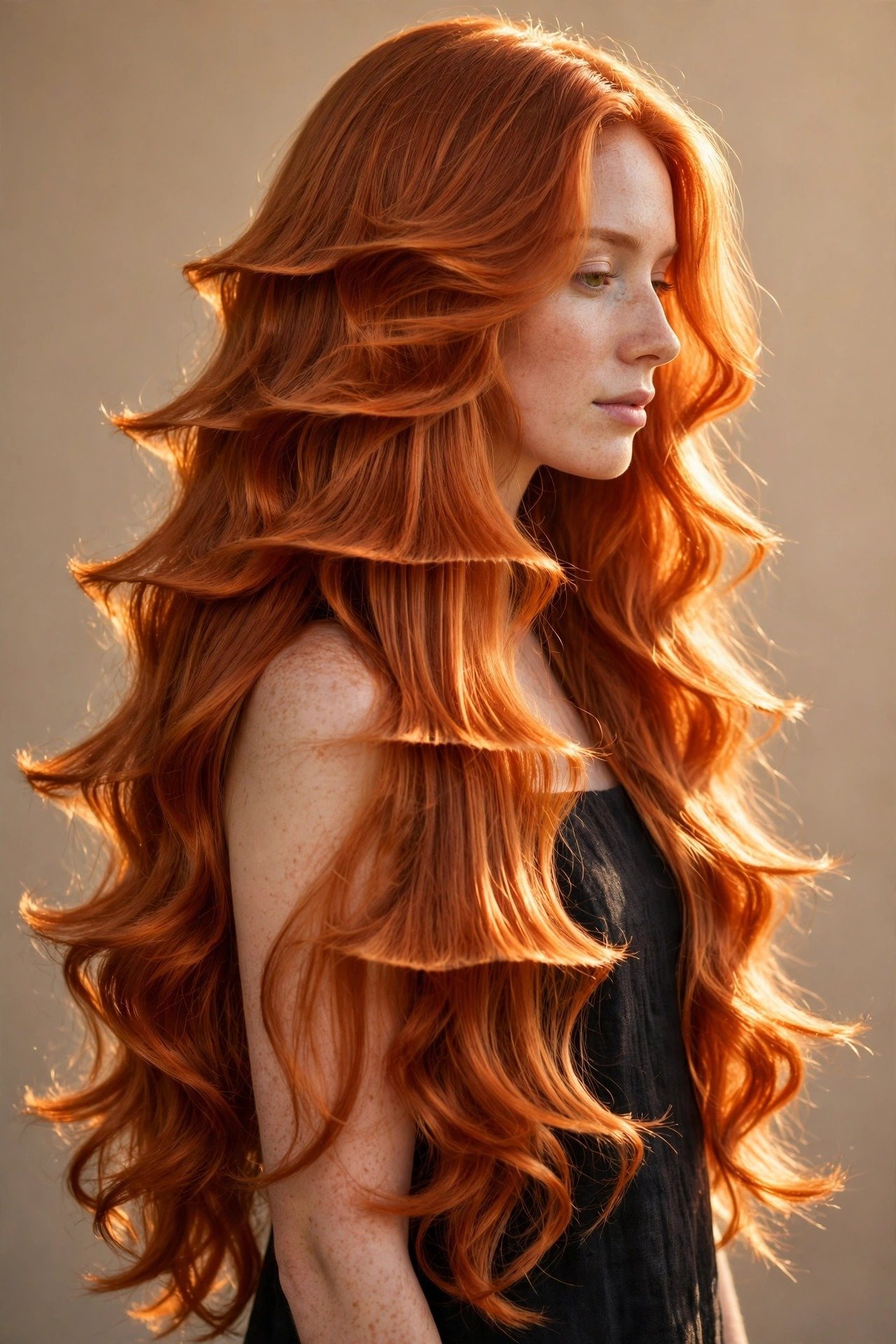
Copper is fall 2026’s statement color, and waterfall layers are its perfect vehicle. The warm, reflective tones catch light differently at every tier, turning the cascade into a flickering gradient of auburn, penny and flame. It is bold without being unnatural — copper has a richness that reads expensive and seasonal, especially against autumn wardrobes of camel, cream and chocolate.
This suits fair and warm skin tones most harmoniously, though deeper complexions glow with rich auburn-copper shades. It flatters green and hazel eyes spectacularly, since copper’s warmth makes eye color pop. All textures work, but straight to wavy hair shows the color dimension best. Be honest about maintenance before committing: copper fades faster than any shade here, so this version is for someone who enjoys the salon ritual.
Styling copper layers is about preserving the color’s fire. Wash in cool water with color-safe shampoo, use a copper-depositing conditioner weekly to top up the tone, and minimize heat styling or always use protectant. The color does so much visual work that styling can stay simple — a smooth blowout lets the tiers and the tone speak. Expect compliments from strangers; this is the highest-impact version on the list.
18. Espresso Waterfall Layers
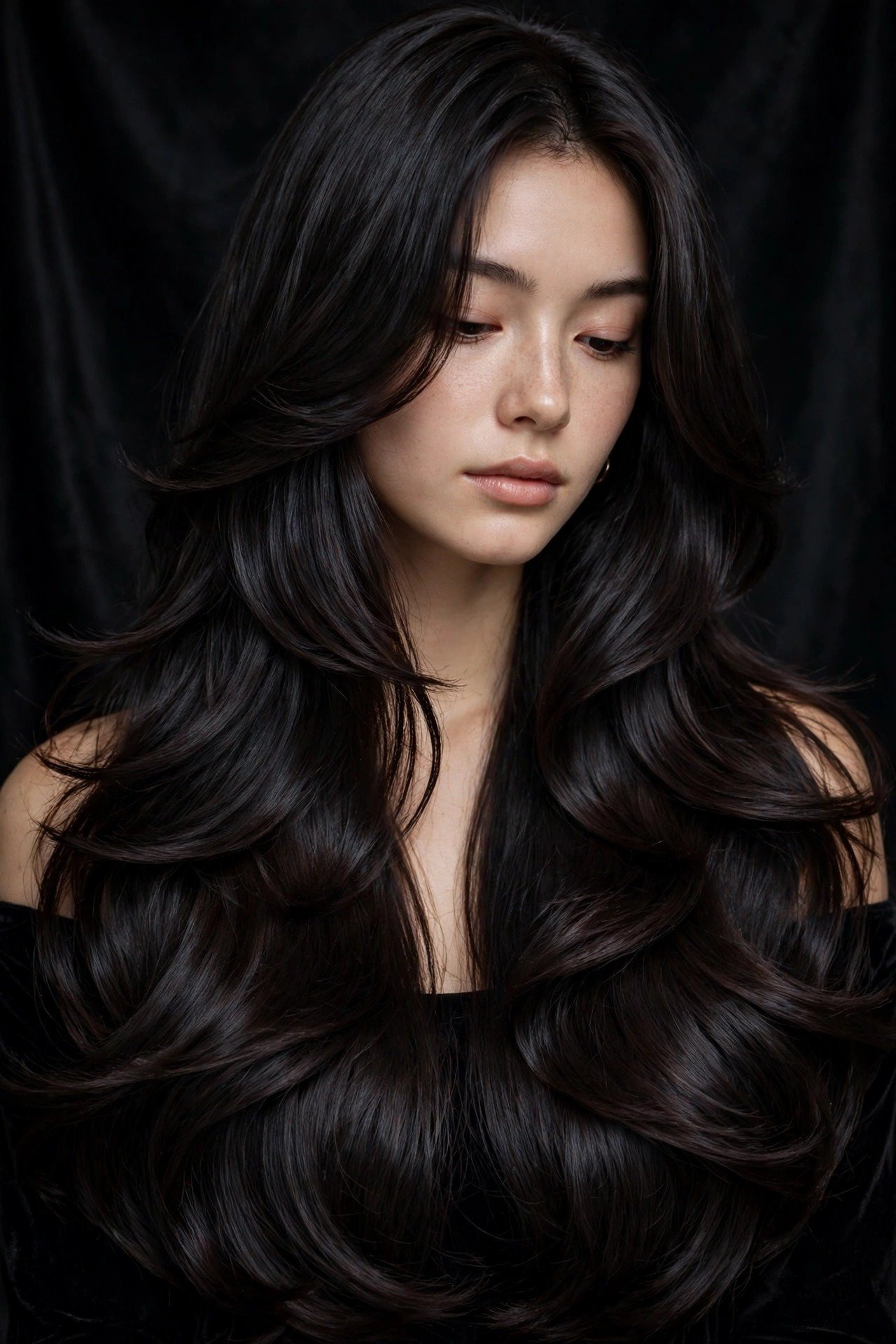
Espresso — that deep, near-black brown — gives waterfall layers a sleek, mysterious depth. On dark hair the tiers read as ribbons of shadow and shine rather than distinct levels, which makes the cascade look seamless and almost liquid. It is the most sophisticated, grown-up version of the trend: quiet luxury in haircut form, with all the movement and none of the flash.
This suits medium to deep skin tones beautifully, and creates striking contrast on fair skin for a Snow-White effect. It flatters all face shapes and every texture, and it is the best color choice for anyone who wants the cut to look polished in professional settings. Espresso also camouflages damage better than lighter shades, since the depth hides dry ends — though healthy hair still shows the tiers far better.
Styling espresso layers is about mirror shine: a smoothing blowout, a drop of shine serum, and the cascade looks like poured silk. Dark hair shows oil faster, so keep serums to the ends and use dry shampoo at the roots between washes. A clear gloss treatment every six weeks keeps espresso from going flat or ashy. This is the version to choose when you want the trend’s shape with timeless, low-drama color.
19. Waterfall Layers for Round Faces
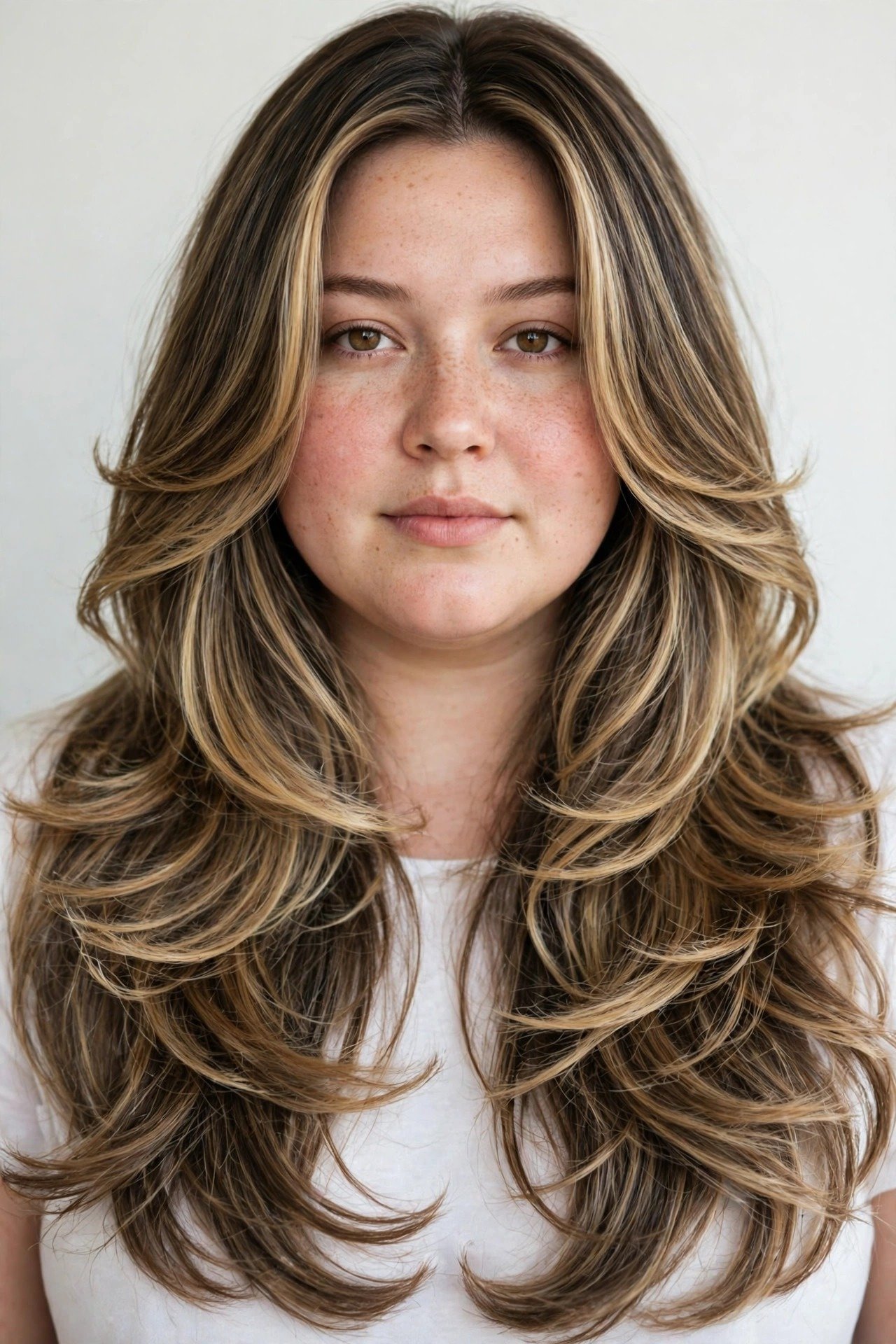
For round faces, waterfall layers are a secret weapon — if the shortest pieces start at or below the chin. Long, vertical tiers draw the eye downward and create the illusion of length, while the face-framing pieces slim the cheeks by breaking up the face’s widest point. The key adjustment is simply placement: keep everything long, keep everything vertical, and let the cascade do the elongating.
This suits anyone with a round or full face who has been wary of layers, because the waterfall technique avoids the short, wide pieces that can emphasize roundness. It works on all textures, though straighter finishes elongate most effectively. Pair it with a middle or slightly off-center part for maximum lengthening effect, and consider keeping the crown smooth rather than teased — height at the crown can widen rather than lengthen a round face.
Styling for round faces means directing everything downward and slightly inward at the ends. Blow-dry the face-framing pieces with the brush rolling under and toward the chin, not outward. Avoid chin-length bobs of volume at the sides — that means skipping the big outward flick on the front pieces. Long, sleek or softly waved finishes both work; the non-negotiable is that the shortest layer clears the chin.
20. Waterfall Layers for Oval Faces
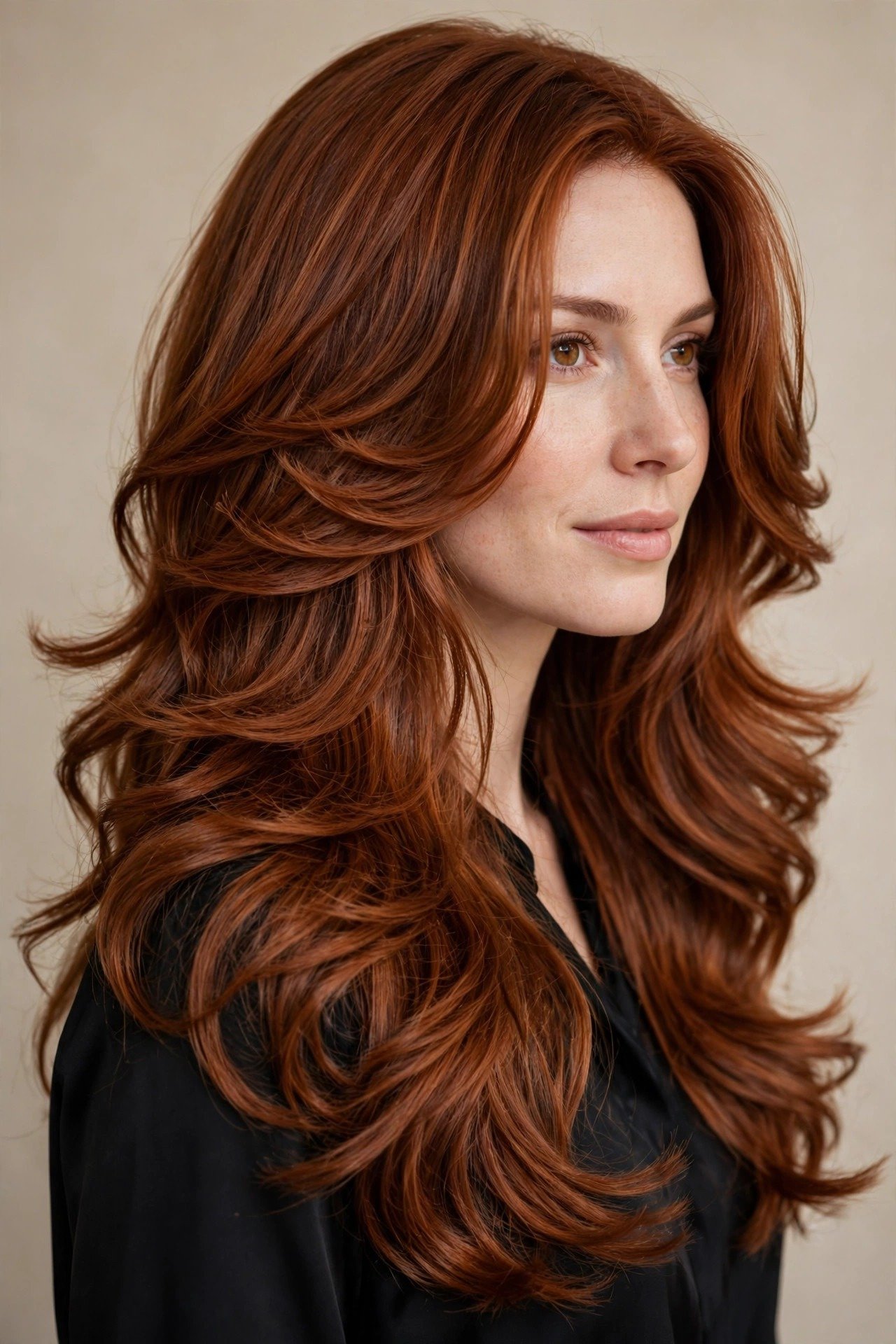
Oval faces hit the waterfall jackpot: the balanced proportions can carry every version of this cut, from cheekbone-grazing short tiers to waist-length pours. With no extreme width or length to correct, the stylist’s only job is to enhance — and the cheekbone-starting cascade does exactly that, adding sculpted dimension to a face that can sometimes look plain in one-length hair.
This suits oval-faced women who want to experiment freely, because placement mistakes are nearly impossible here. Try the dramatic cheekbone version for maximum sculpting, or the classic long version for pure romance — both flatter equally. All textures and colors work; the oval face is the universal donor of the face-shape world. If you have ever wanted to try bangs with your layers, the oval face carries curtain bangs plus waterfall tiers better than any other shape.
Styling is a playground: middle parts, side parts, big blowouts, sleek finishes — everything works. The one guideline is not to hide the face entirely behind the tiers; oval faces look best with the face-framing pieces swept slightly back or outward so the bone structure shows. Rotate your part every few weeks to keep the roots lifted and the look fresh. Honestly, this is the version where you can simply show your stylist any photo on this list and say yes.
21. Waterfall Layers for Long Faces
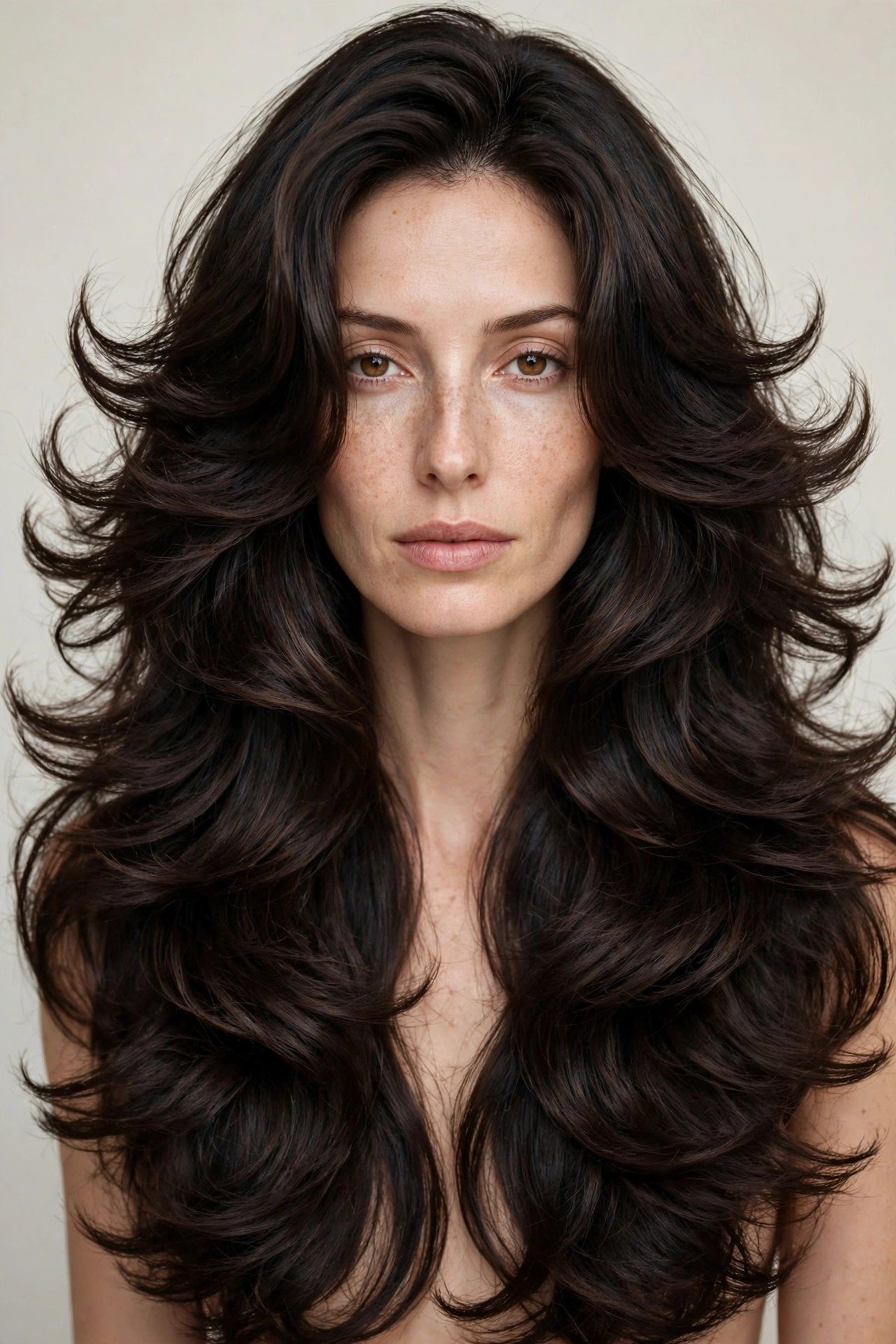
Long faces need width, and waterfall layers deliver it precisely where it counts. By starting the shortest tiers at the cheekbones, the cut adds horizontal volume across the mid-face, visually shortening the face’s length. The tiers fan outward rather than falling straight down, which breaks up the vertical line that makes long faces look longer.
This suits oblong and rectangular face shapes, and anyone who feels their face looks drawn or narrow in one-length hair. The adjustment is simple but crucial: the shortest layer must start no lower than the cheekbone, and the stylist should cut the tiers to kick outward rather than hug inward. Bangs of any kind — curtain, bottleneck or wispy — amplify the shortening effect beautifully with this version.
Styling for long faces means encouraging sideways volume. Blow-dry the face-framing tiers outward and away from the face, use a volumizing mousse at the sides rather than just the crown, and avoid super-sleek finishes that emphasize length. Waves and curls are your best friends here — every bend in the hair adds the illusion of width. Keep the overall silhouette full at the sides and the face will look perfectly balanced.
22. Waterfall Layers for Square Faces
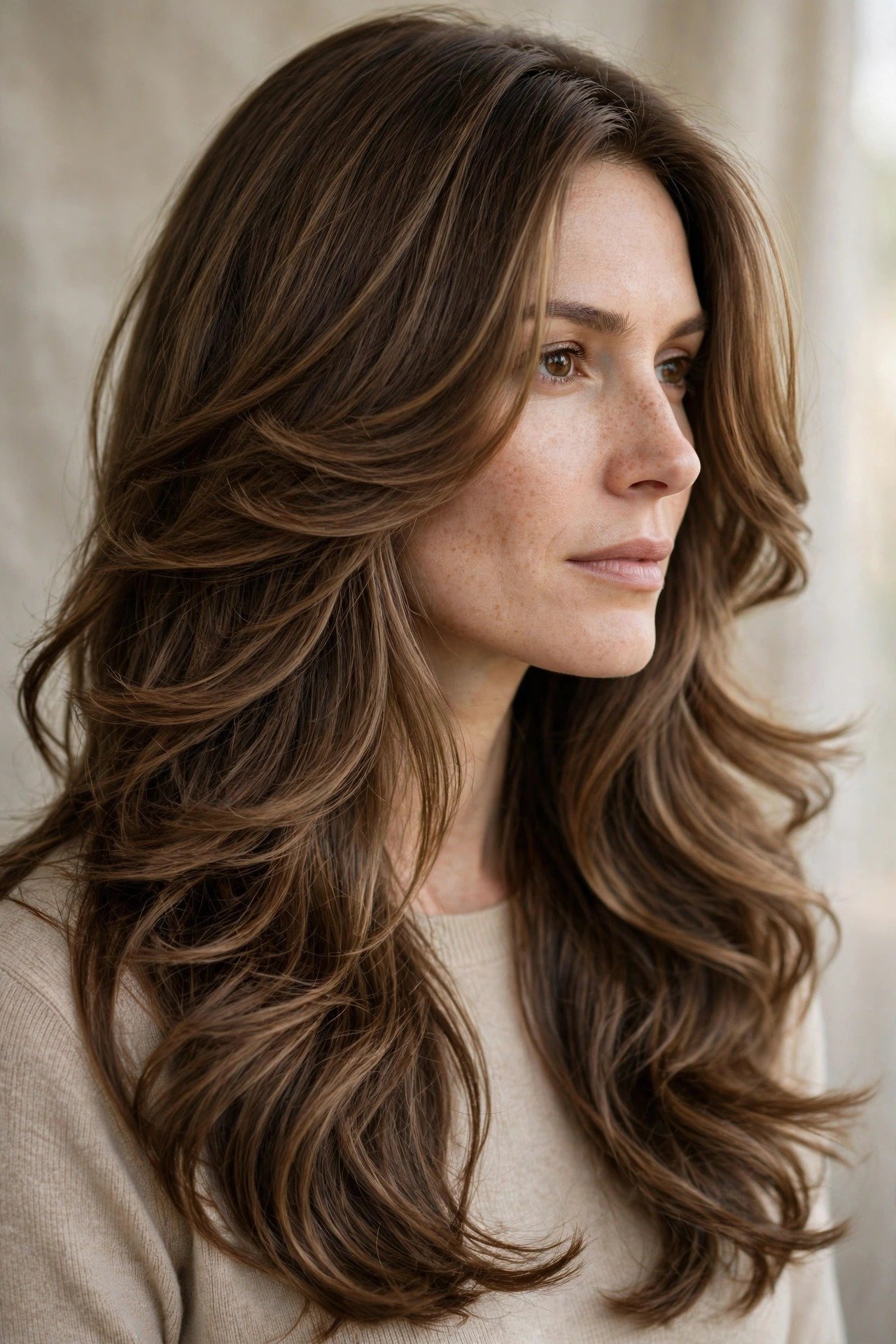
Square faces have strong, beautiful jawlines — and waterfall layers soften them with curved, face-framing tiers that fall past the jaw rather than ending at it. The cascading pieces create diagonal lines across the face’s angles, which visually rounds the jaw without hiding it. It is contouring through haircutting: structure where you want it, softness where you need it.
This suits square and strong-jawed face shapes, and anyone whose jaw looks harsh in blunt cuts. The critical detail is that the tiers must fall below the jawline — layers ending exactly at the jaw emphasize it, while layers flowing past it soften it. Soft waves or rounded blowout ends work better than pin-straight finishes here, since curves counteract angles.
Styling means keeping everything soft around the jaw. Blow-dry the face-framing pieces with an inward curve, add gentle waves through the mid-lengths, and avoid tucking the hair behind the ears — that exposes the jawline fully and defeats the purpose. A side part also helps by creating asymmetry that distracts from the face’s angular symmetry. The result is a jawline that looks sculpted, not sharp.
23. Short Waterfall Layers
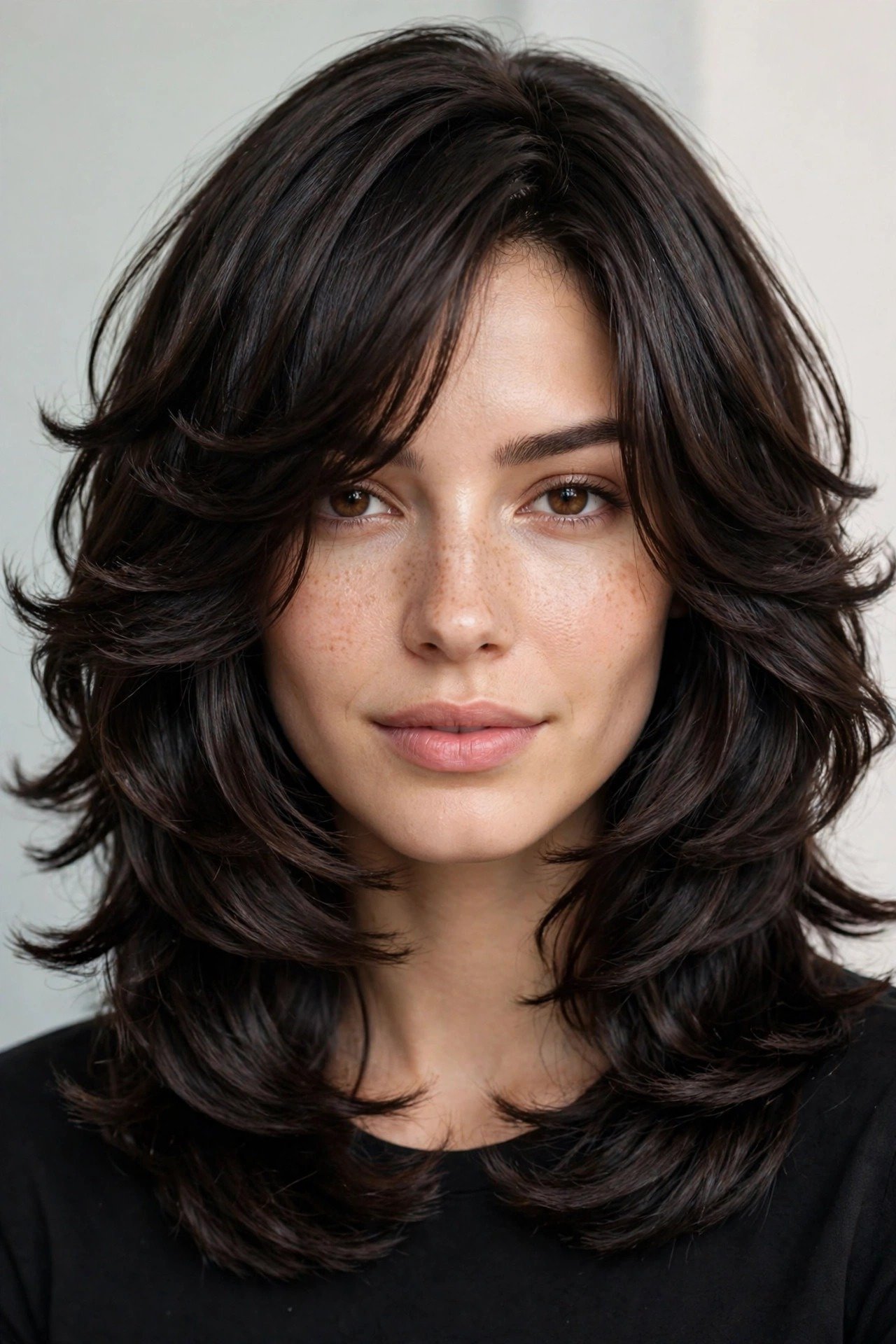
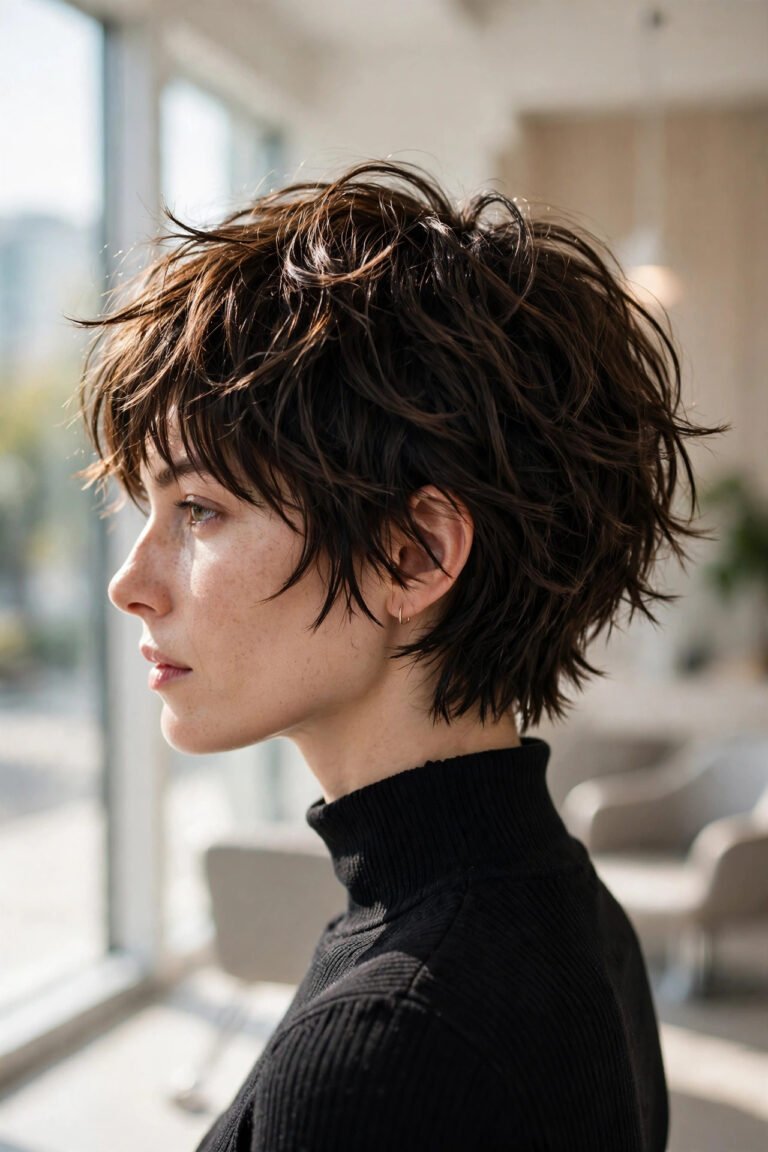
Waterfall layers are not just for long hair — the short version packs the entire cascade into a chin-to-shoulder bob, and the effect is punchy and modern. The tiers step down rapidly over a short distance, creating a bouncy, swingy shape with tons of movement. It is the waterfall for women who love the philosophy but live in shorter hair.
This suits petite women, anyone with a graceful neck they want to show off, and fine-haired women who get the most volume from shorter lengths. It flatters oval, heart and long faces especially, since the shorter perimeter keeps the face open. If you are growing out a bob, this version turns the awkward in-between stage into a deliberate, stylish cut — the layers make every length look intentional.
Styling the short waterfall is quick: a round-brush blowout gives it bounce, while air-drying with texture spray gives it edge. The shorter tiers need refreshing more often — every six to eight weeks — or the shape loses its step-down structure and goes shaggy. This is also the easiest version to dress up: the bouncy ends take rollers and hot tools beautifully, making it a strong choice for anyone who styles their hair for events often.
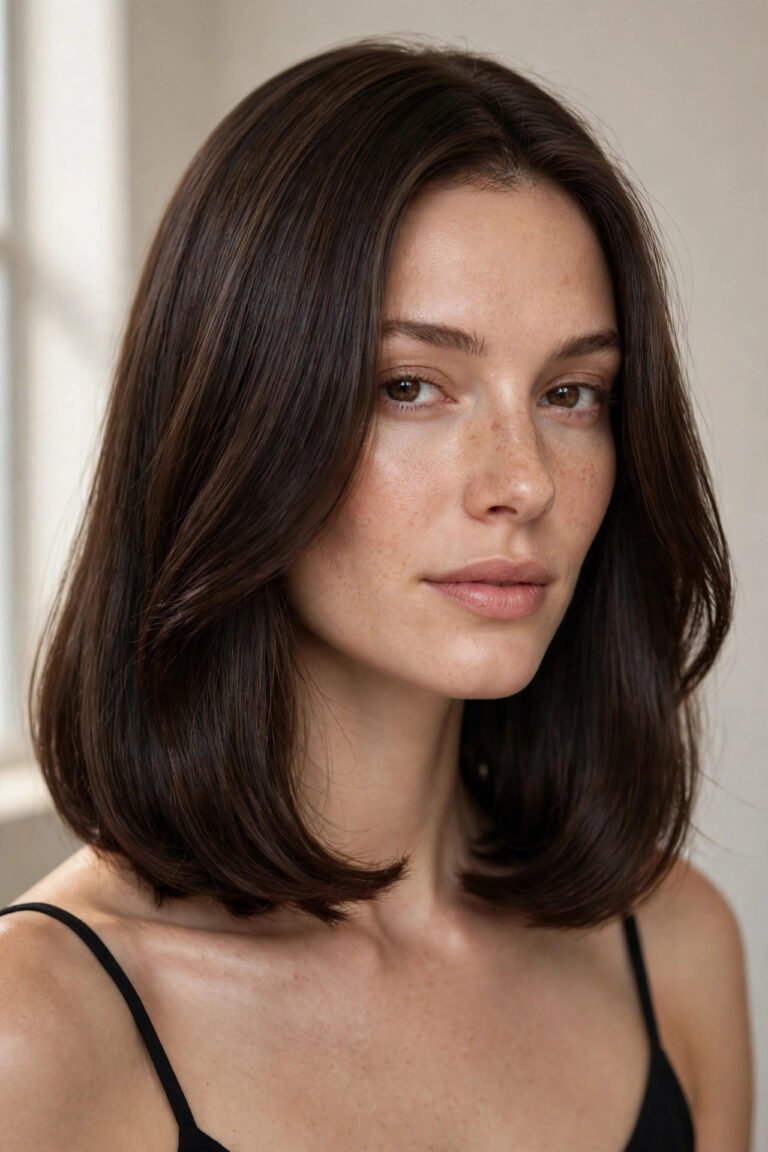
24. Medium Waterfall Layers
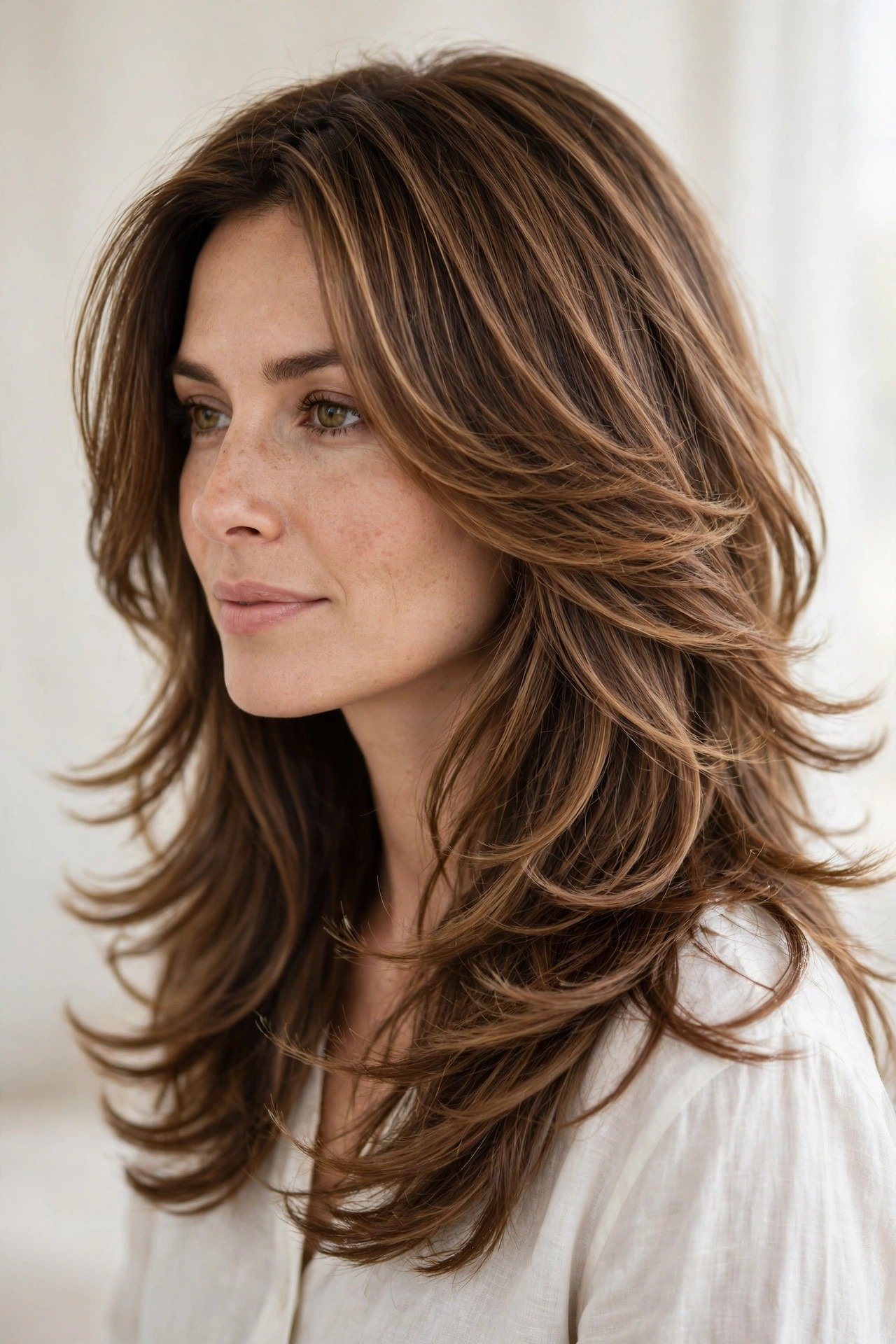
The medium waterfall — landing somewhere between the shoulders and the collarbone — is the most wearable length on this list. It has enough length for the cascade to read clearly, but it is short enough to style in minutes and never gets in the way. For many women, this is the Goldilocks version: not too long, not too short, endlessly versatile.
This suits busy women who want the trend without the styling commitment of very long hair, and it suits every face shape since the stylist has full freedom with the face-frame placement. Medium textures shine here, and it is the best version for anyone who wears their hair up regularly — there is enough length for ponytails and buns, but the layers keep updos from looking severe. It also suits first-time layer wearers who want to test the waters.
Styling is the definition of easy: wash, rough-dry, and the layers fall into place. A ten-minute blowout with a round brush elevates it for the office; a loose wave with a curling iron dresses it up for evening. Because the ends are not too far from the roots, this version holds its shape between trims longer than long versions — ten to twelve weeks is comfortable. If you can only pick one, pick this one.
25. Feathered Waterfall Layers
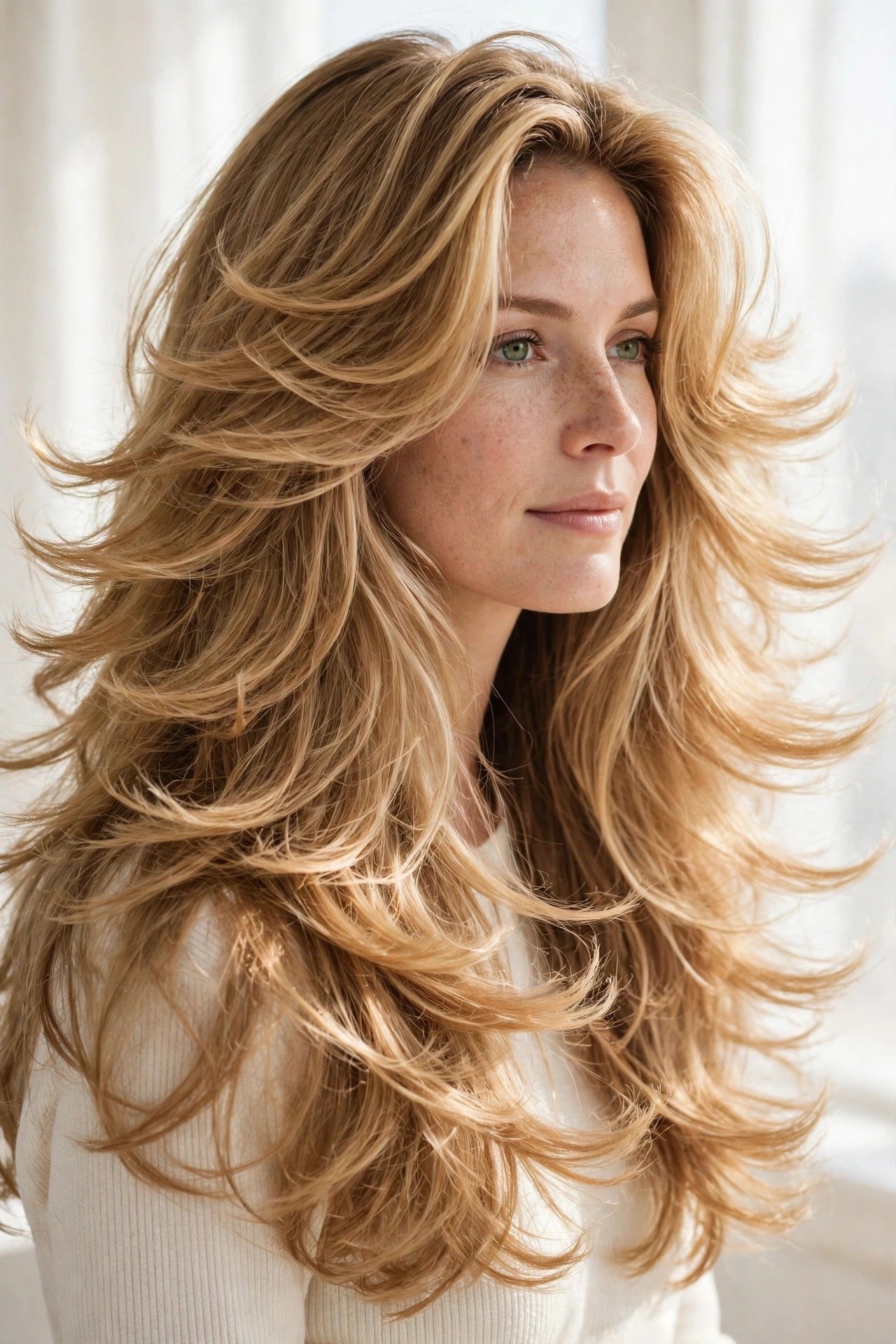
The feathered waterfall is the 90s revival done right. The tiers are cut and styled to flick outward at the ends, creating that iconic feathered silhouette — but the waterfall graduation underneath keeps it modern and seamless instead of choppy. It is nostalgic without being costume, and it brings a playful, bouncy energy no other version quite matches.
This suits women who love retro references and have the styling patience to maintain the flick — the feathered finish needs a round brush or rollers to hold. It flatters oval, long and heart-shaped faces, since the outward flick adds width at the sides. Medium to thick hair holds the feathered shape best; very fine hair can struggle to keep the flick from falling flat by afternoon.
Styling is the whole game here: blow-dry each tier with a round brush, rolling outward at the ends, or set the ends in large Velcro rollers while you finish getting ready. A flexible hairspray locks the flick without stiffness. This version looks incredible in motion — every turn of the head sends the feathered tiers flying — which is why it is a favorite for events and photoshoots.
26. Textured Waterfall Layers
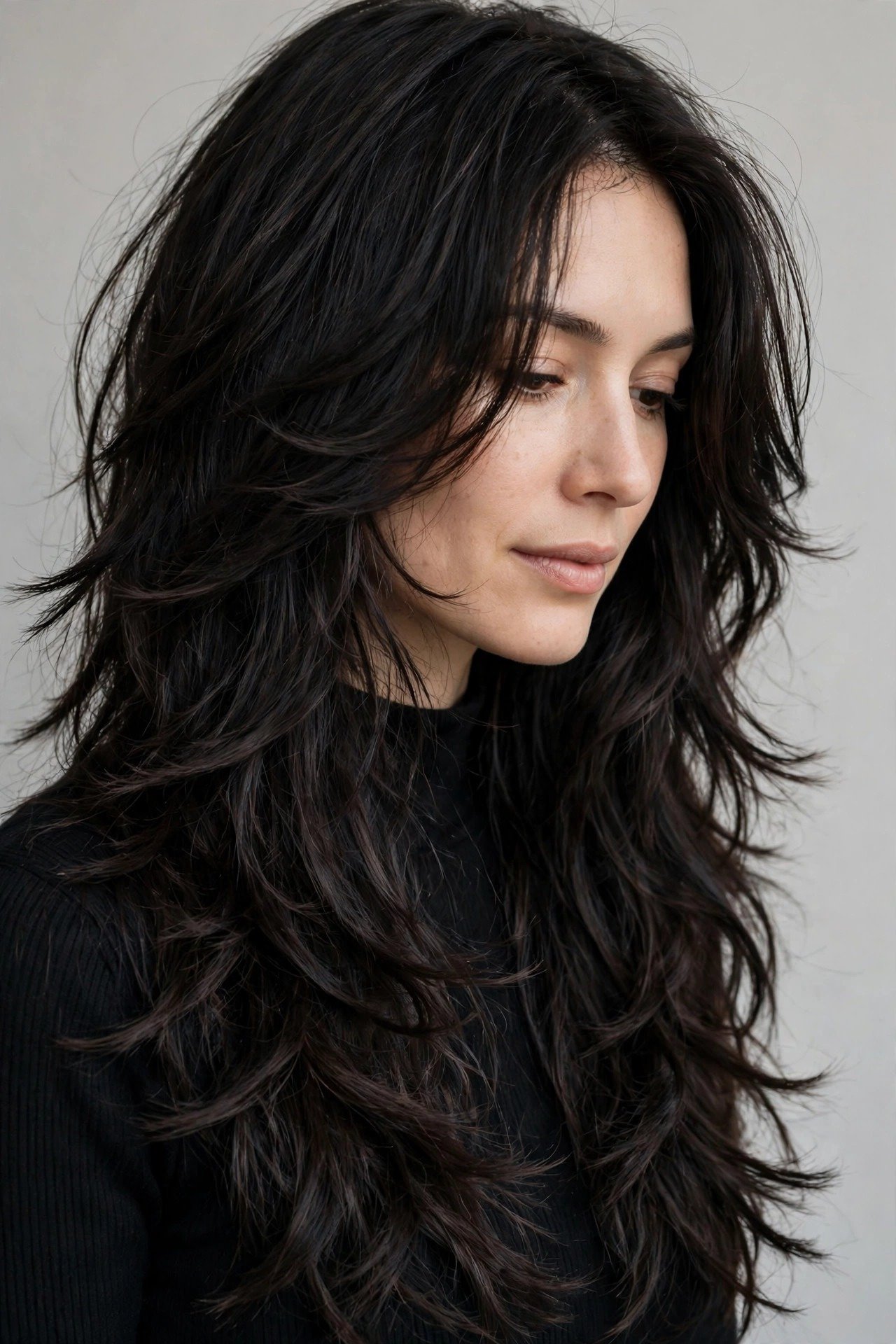
The textured waterfall keeps the silhouette smooth but breaks up the ends with deliberate pieceyness. The top of the cascade stays polished and blended, while the last few inches of each tier are point-cut and separated so the ends look lived-in rather than blunt. It is the modern, editorial take — less precious, more cool.
This suits women who find fully polished hair too formal, and anyone with thick hair where textured ends prevent the bottom from looking like a heavy shelf. It flatters all face shapes and works on straight to wavy textures. If your style leans minimalist or streetwear rather than romantic, the textured ends keep the waterfall from feeling too sweet.
Styling the textured version is about controlled separation: work a small amount of texture paste or wax through the ends only, pinching small sections to define the pieces. The roots and mid-lengths stay smooth — the contrast between polished top and piecey ends is the whole point. Refresh by re-pinching the ends with a dab of product rather than re-styling the whole head. This version hides grown-out layers better than any other, so it stretches time between trims.
27. Waterfall Layers With Bottleneck Bangs
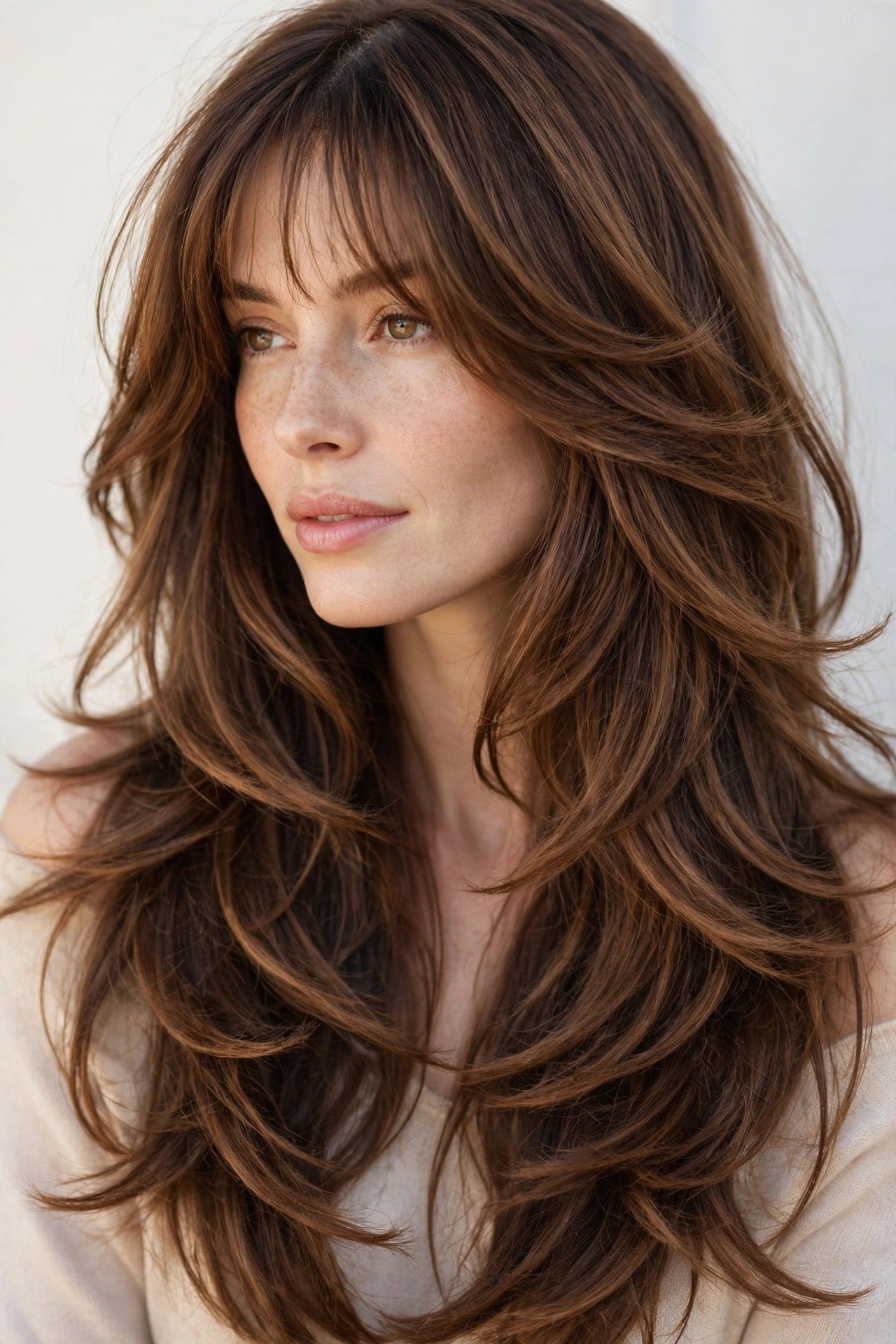
Bottleneck bangs — narrow at the top, widening toward the cheekbones — are the fringe that was designed for waterfall layers. The bangs start slim at the forehead and flare outward, flowing directly into the shortest waterfall tiers at the sides. The blend is so seamless that you cannot tell where the bangs end and the layers begin, which is exactly the effect you want.
This suits women who want bangs without the commitment of a heavy fringe, since bottleneck pieces grow out into face-framing layers gracefully. It flatters high foreheads, long faces and heart-shaped faces especially, and it suits fine to medium hair best — the wispy nature of the fringe needs less density to look intentional. Anyone who found curtain bangs too wide or blunt bangs too severe will find bottleneck the perfect middle ground.
Styling bottleneck bangs takes one minute: blow-dry them forward and down with a small round brush, then split them loosely down the middle with your fingers. They should look soft and piecey, never stiff. Trim the very center pieces every three to four weeks to keep them out of your eyes, and let the sides grow into the layers. This is the lowest-maintenance bang option to pair with a waterfall cut.
28. Low-Maintenance Waterfall Layers
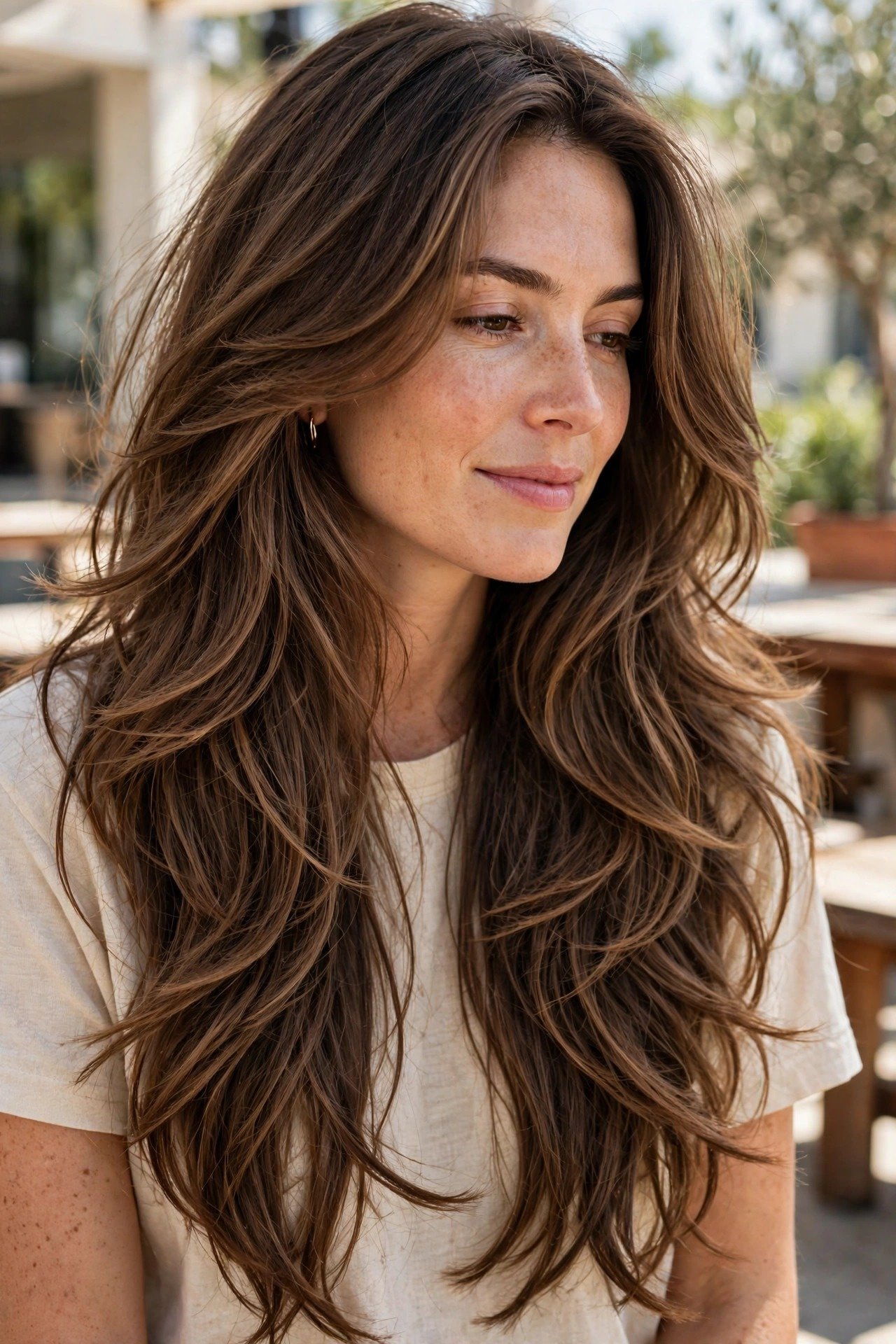
The low-maintenance waterfall is cut to look good with almost no styling at all. The layers are kept long and the graduation gentle, so the hair falls into its cascade naturally whether you blow-dry it or let it air-dry. This is the version for real life — the one that still looks like a waterfall on a Tuesday morning when you have ten minutes and zero patience.
This suits busy professionals, new mothers, students — anyone whose hair routine needs to be wash-and-go. It suits all textures because the cut works with the hair’s natural fall rather than against it, and it suits every face shape since the gentle graduation is universally flattering. If you have ever loved a haircut in the salon and hated it at home, this version closes that gap.
Styling is genuinely minimal: apply a leave-in conditioner or light mousse to damp hair, and either rough-dry or air-dry. That is the whole routine. The cut does the work — the tiers separate and fall on their own. A silk pillowcase and a weekly mask keep it healthy, and trims every twelve weeks are plenty. This version proves that the best haircut is the one you will actually wear.
29. Waterfall Layers With Crown Volume
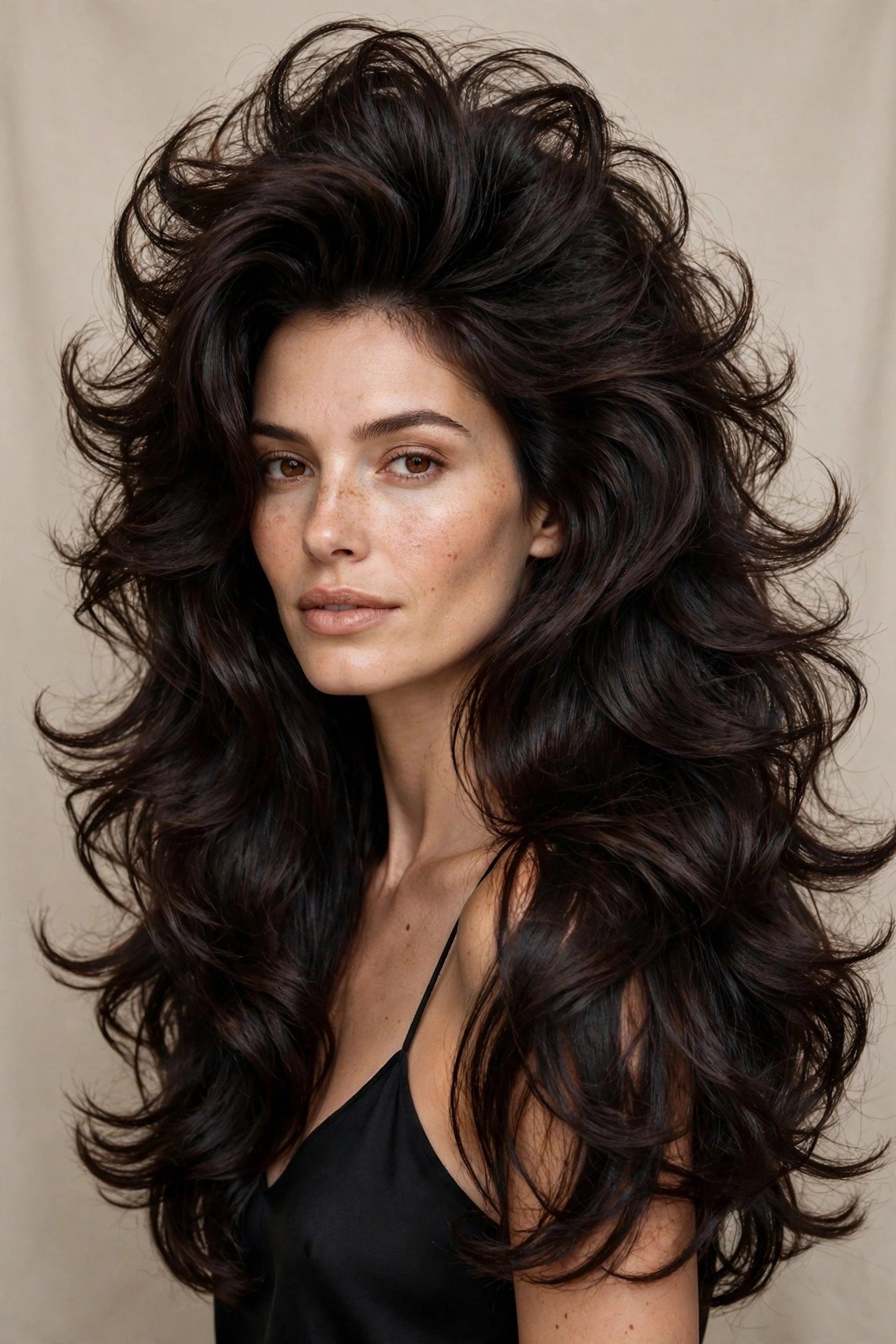
Crown volume turns waterfall layers into a full glamour moment. The cut itself stays classic, but the styling builds serious lift at the roots so the cascade starts from a cloud of volume rather than a flat base. The contrast between the lifted crown and the flowing tiers is what makes this version look expensive and red-carpet ready.
This suits women with flat or fine hair at the crown who need help creating height, and anyone dressing for an event where the hair needs to hold its shape for hours. It flatters round and square faces by adding vertical length, and it suits medium to long lengths best — very short hair cannot build the same dramatic crown-to-cascade contrast. If your everyday hair falls flat by noon, this styling approach will change your relationship with your cut.
Styling is all about the roots: apply volumizing mousse to damp roots, blow-dry with a round brush lifting straight up at the crown, and set the top sections in large Velcro rollers while they cool. Backcomb gently at the very crown for extra staying power, then smooth the surface. A strong-hold but flexible hairspray keeps the volume alive without crunch. The layers below need only a smooth blowout — the crown is the star here.
30. Retro Supermodel Waterfall
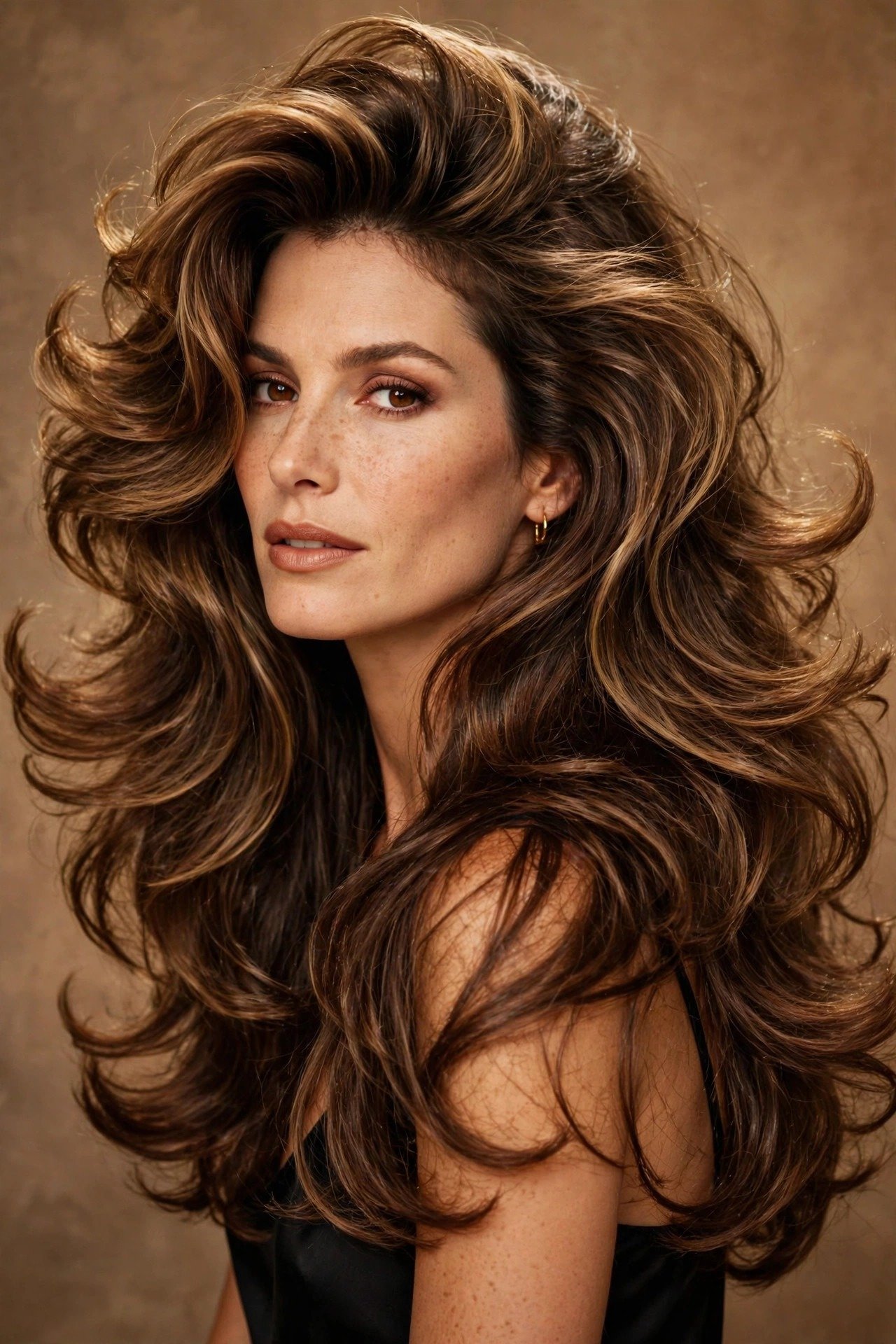
The retro supermodel waterfall channels the 90s icons — big, bouncy, unapologetically glamorous. The layers are cut to support maximum volume and movement, with ends that flip and bounce like a shampoo commercial. This is waterfall layers at their most extroverted: hair that enters the room before you do.
This suits anyone who loves vintage glamour and has the hair density to support big styling — medium to thick textures hold the bounce best. It flatters all face shapes because the volume can be directed wherever it is needed: outward for long faces, upward for round ones. It is the ultimate event hair, but confident wearers pull it off as an everyday statement too.
Styling the supermodel version is a production, and it is worth it: blow-dry with a large round brush, set everything in hot rollers or Velcro rollers, let them cool completely, then brush out for that soft, bouncy finish. This is not a wash-and-go look — it is a once-a-week ritual that delivers days of big hair. Dry shampoo at the roots extends it beautifully. When you want to feel like the main character, this is the version.
31. Modern Butterfly Waterfall Blend
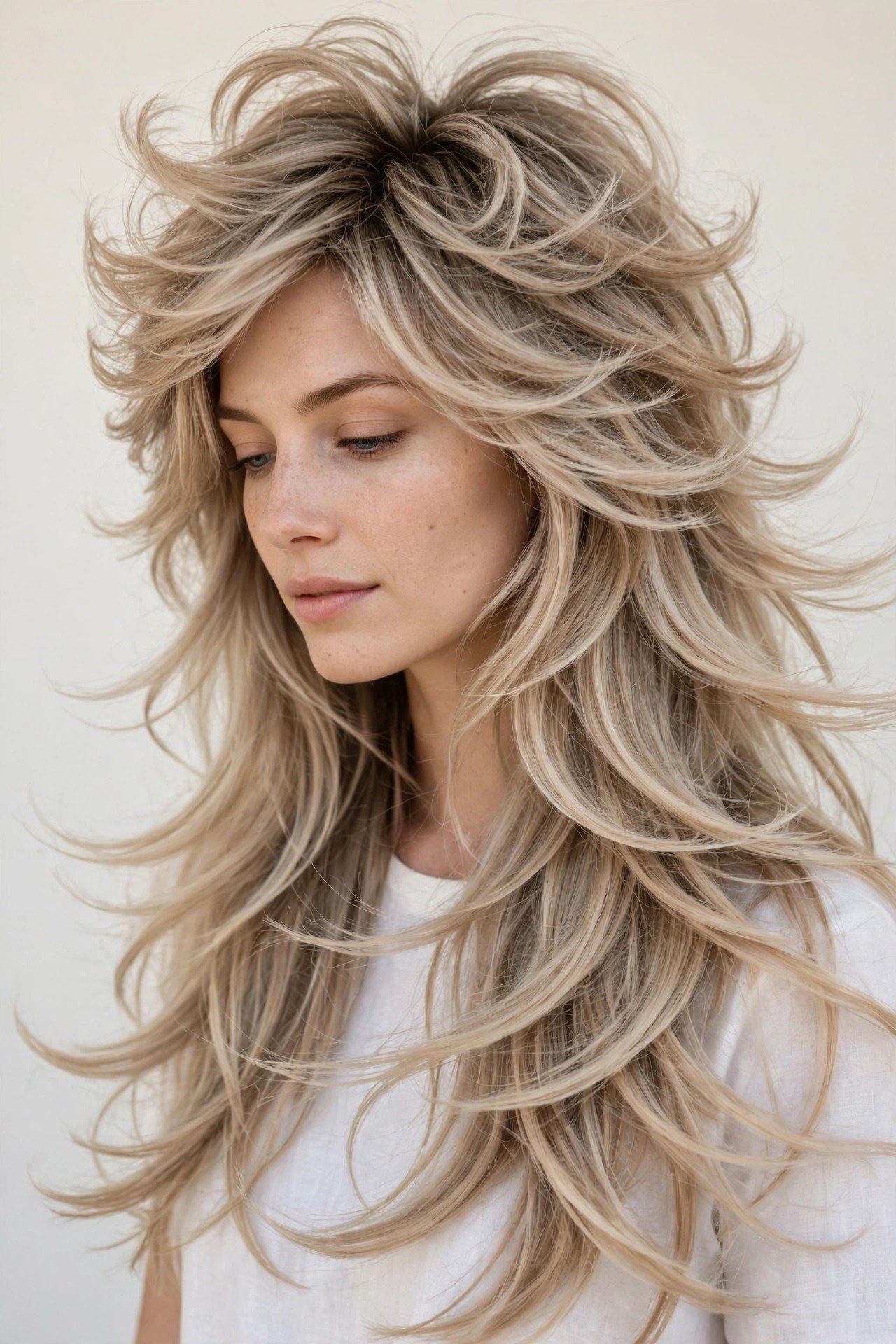
The butterfly-waterfall blend merges two of 2026’s biggest layer trends into one cut. Short, voluminous layers through the crown — the butterfly’s signature — transition into long, flowing waterfall tiers below. The top gives you the airy, face-framing fullness; the bottom keeps the length and the pour. It is the best of both worlds for women who cannot choose between the two trends.
This suits women who want serious volume and movement but refuse to lose length — the classic butterfly client who also loves the waterfall philosophy. It flatters oval, heart and long faces, since the crown layers add width up top while the waterfall tiers elongate below. Medium to thick hair carries the dual structure best; very fine hair may find the short crown layers too wispy. Fans of the viral layered cuts should also look at the kitty cut, 2026’s softer take on the same family.
Styling needs to honor both halves: blow-dry the crown layers with lift and outward flick for the butterfly effect, then smooth the waterfall tiers below with a slight bend. A round brush is essential — paddle brushes flatten the crown layers this cut depends on. This is the most technical version to style daily, but it is also the most rewarding: two trends, one head, endless compliments.
32. Waist-Length Waterfall Layers
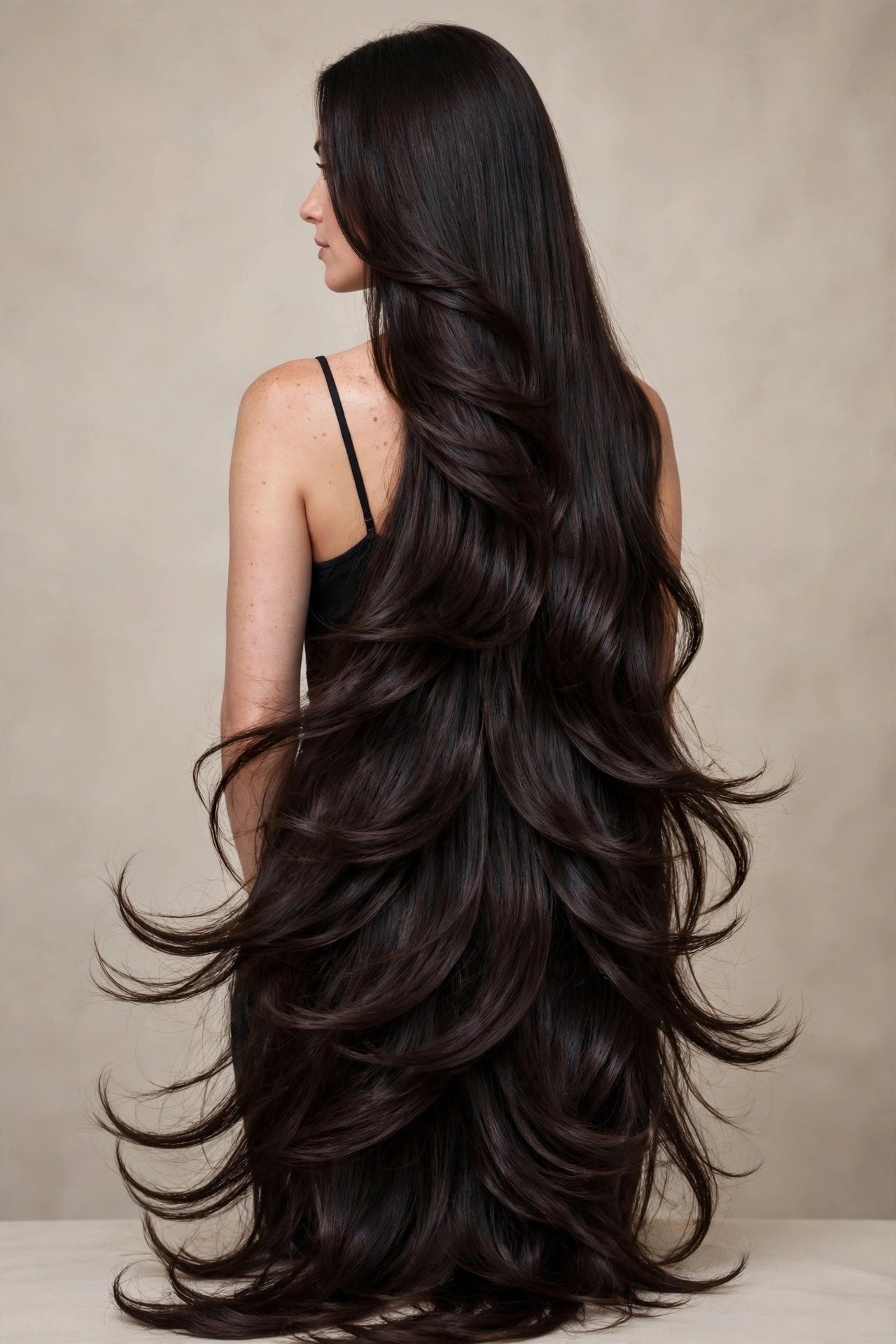
The waist-length waterfall is the ultimate expression of the trend — a full, uninterrupted cascade from the face frame all the way down past the waist. At this length the waterfall effect is at its most literal: the tiers pour down like actual falling water, and the movement is hypnotic. This is the version that stops traffic and fills camera rolls.
This suits women who have invested years in growing their hair and want it to look like the achievement it is. It suits thick and medium textures best, since very long fine hair can look stringy without careful density management at the ends. Tall women carry it most proportionally, but anyone can wear it with the right styling. Be realistic about the commitment: very long hair needs more product, more drying time and more trims to stay healthy.
Styling very long waterfall hair is about keeping the tiers defined rather than tangled into one mass. Detangle gently from ends to roots, blow-dry in sections, and use a lightweight oil on the ends to keep them from catching. Loose braids at night prevent the morning tangle that long hair is famous for. Trim every eight weeks without fail — at this length, even slightly damaged ends ruin the entire cascade effect. The maintenance is real, but so is the payoff.
Waterfall Layers Maintenance
Waterfall layers are refreshingly low-maintenance as trendy cuts go, but they do have a rhythm. Book a trim every eight to twelve weeks depending on your length — shorter versions need the six-to-eight-week cycle to keep their step-down structure, while long versions can stretch to twelve. Between appointments, the cut’s seamless graduation means grow-out looks intentional rather than messy, so you will never have that panicked in-between phase. Ask your stylist for a face-frame dusting between full trims if the shortest pieces start falling past their ideal point; it is a ten-minute appointment that keeps the whole cut looking fresh.
Product-wise, the maintenance routine is about protecting the ends, since the tiered structure shows damage more than one-length hair. A weekly deep-conditioning mask, a heat protectant before every hot-tool session, and a lightweight oil on the ends will keep the cascade glossy. Sleep on a silk or satin pillowcase to reduce the friction that roughs up layered ends overnight, and detangle with a wide-tooth comb starting from the bottom. If you color your hair, schedule gloss treatments between color appointments — shine is what makes the tiers visible, and dull hair flattens the entire effect.
The biggest maintenance mistake is over-washing. Waterfall layers look best with a little natural texture and root lift, both of which disappear with daily shampooing. Most wearers do best washing two to three times a week, using dry shampoo at the roots on off days to maintain the crown volume the cascade depends on. When the layers start looking stringy or the ends feel rough, that is your hair asking for a trim, not more product — no serum can substitute for healthy ends on a cut built entirely around how the ends fall.
Waterfall Layers FAQs
What exactly are waterfall layers?
Waterfall layers are a long-layered haircut where each layer melts seamlessly into the next, like water cascading over rocks. The shortest pieces frame the face — typically starting at the cheekbones, chin or collarbone — and every layer grows progressively longer down to the full length at the bottom. Unlike choppy or disconnected layers, there are no visible steps; the graduation is smooth and continuous, which creates constant movement and a soft, flowing silhouette that works on straight, wavy and curly hair alike.
Are waterfall layers good for fine or thin hair?
Yes, when they are cut correctly. The key for fine hair is keeping the layers long and the ends relatively blunt, so the cut adds movement and the illusion of volume without removing density. The graduated tiers catch light separately, which makes fine hair look fuller than a flat one-length cut. What fine-haired wearers should avoid is over-layering or thinning shears through the ends — that creates the wispy, see-through finish that gives layers a bad name. Ask your stylist specifically for long waterfall layers with a strong perimeter.
How do I ask my stylist for waterfall layers?
Use the salon lingo that gets results: ask for “seamless cascading layers with face-framing pieces starting at [cheekbone/chin/collarbone], graduating down to my full length, with no harsh lines or disconnect.” Bring reference photos — ideally three showing the cut on hair similar to yours in texture and length. Specify whether you want the polished version or the textured/shaggy version, and be clear about how much length you want to keep. A good consultation question is: “Where should my shortest layer start for my face shape?” — it invites the stylist to customize rather than copy.
What is the difference between waterfall layers and the butterfly cut?
Both are layered, face-framing cuts, but they distribute the layering differently. The butterfly cut concentrates short, voluminous layers through the crown and top — it is top-heavy by design, giving that airy, winged fullness around the face. Waterfall layers distribute the graduation evenly from the face frame all the way down to the ends, creating a continuous pour rather than a concentrated burst. The butterfly is bolder and more voluminous up top; the waterfall is smoother, longer and more fluid throughout. Many women now blend the two, as shown in style 31 above.
How often do waterfall layers need to be trimmed?
Every eight to twelve weeks for most lengths. Long waterfall cuts can go the full twelve weeks because the seamless graduation grows out gracefully. Shorter and medium versions — collarbone and above — need trimming every six to eight weeks to maintain their step-down structure before the tiers blur together. The face-framing pieces show regrowth fastest, so a quick bang-and-frame dusting between full appointments keeps the cut looking intentional. If the ends start feeling rough or the layers look stringy instead of cascading, you have waited too long.
Can I get waterfall layers with short hair?
Absolutely — the waterfall philosophy scales down beautifully to chin-to-shoulder lengths. On a bob-length cut, the tiers step down rapidly over a short distance, creating a bouncy, swingy shape with tons of movement. The face-framing pieces still start high and the layers still graduate smoothly; the cascade is simply more compact. Short waterfall layers are actually easier to style than long ones and need less product. They are also the perfect transitional cut for anyone growing out a bob who wants every stage to look deliberate.
Do waterfall layers work on curly hair?
They are one of the best cuts for curly hair. Graduated layering shapes curl volume into a cascade instead of a triangle, with shorter curls at the crown melting into longer ones at the ends. The layers remove the interior weight that drags curls down while keeping the ends intact, so curls spring up and hold their pattern better. The cut should be done on dry, styled curls whenever possible so the stylist can see each curl’s true spring. With the right products — leave-in, curl cream, gel cast — curly waterfall layers are a genuine wash-and-go haircut.
Will waterfall layers make my hair look thinner?
Not when they are cut for your density. Waterfall layering removes weight from the interior while preserving the perimeter, which actually makes hair look fuller and more dynamic than one-length hair lying flat. The fear of “thinning” comes from over-layered or razor-thinned cuts that remove too much from the ends. A proper waterfall cut keeps the bottom two to four inches relatively solid, so the ends look lush. If your stylist reaches for thinning shears aggressively, speak up — seamless graduation should come from the cutting technique, not from thinning everything out.
How can I style waterfall layers without heat?
The cut is naturally heatless-friendly because the shape is built into the layers. On damp hair, apply a light mousse or curl cream, then either braid loosely for waves, twist into two buns for soft bends, or simply scrunch and air-dry for natural texture. Pineappling the crown while hair dries adds the root lift that sells the cascade. For straight hair, wrapping damp hair around the head (the classic wrap method) smooths it without a flat iron. The layers will fall into their tiers on their own — that is the entire point of the cut.
Are waterfall layers a passing trend or here to stay?
All signs point to staying power. Unlike extreme trend cuts, waterfall layers are a technique rather than a gimmick — seamless graduated layering has existed in various forms for decades, from the 70s shag to the 90s supermodel blowout. What is new for 2026 is the name, the salon demand and the cultural moment: Pinterest’s first Beauty Trend Report confirms that personalized, movement-heavy hair is what people are searching for, and stylists name waterfall layers among fall’s defining cuts. Because it flatters everyone and grows out gracefully, it has the makings of a modern classic rather than a seasonal fad.
Conclusion
Waterfall layers earned their place as fall 2026’s defining haircut the honest way: by flattering everyone. The seamless cascade works on long hair and short, on pin-straight strands and tight coils, on thick manes and fine wisps — all it asks is that a skilled stylist place the tiers where your face and texture need them. In a season when beauty is getting more personal and more specific, a cut that is custom-built around the wearer was always going to win.
If you take one thing from this guide, let it be the consultation. The difference between waterfall layers you love and layers you regret is almost never the cut itself — it is the communication. Bring photos, name your starting point, say how you actually style your hair on a normal morning, and let your stylist calibrate the cascade to your real life. Do that, and you will walk out with hair that moves like water and photographs like a dream.
Ready for the chair? Save your three favorite styles from the 32 ideas above, book that trim, and ask for the waterfall by name — your stylist will know exactly what you mean. Fall 2026 is the season of the cascade. Make it yours.
One Comment