Curtain Haircut Men 2026: 36 Effortless, Face-Framing Styles
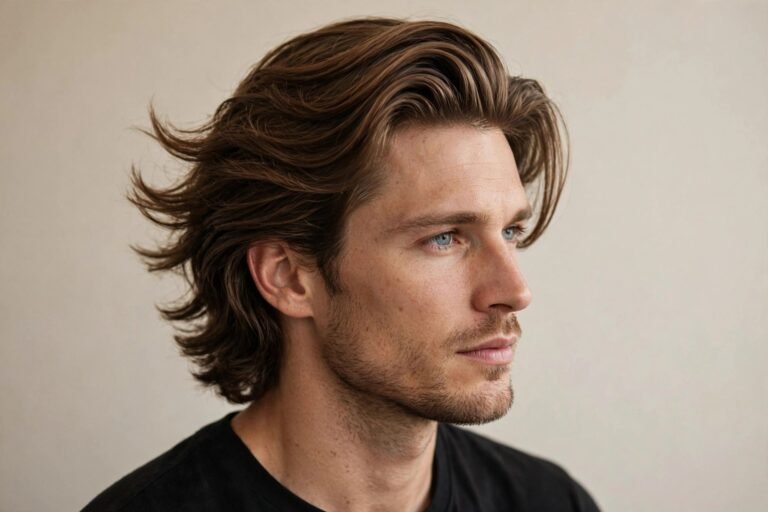
The curtain haircut men everywhere are asking for in 2026 is the relaxed, face-framing style that first ruled the nineties and has now come back sharper, softer, and far more versatile than before. It is defined by a centre or slightly off-centre parting, with the front falling in two soft panels that frame the forehead and cheekbones like curtains. Unlike stiff, heavily styled cuts, the curtain grows out gracefully, works with natural texture, and suits almost every face shape. Whether your hair is straight, wavy, or curly, thick or fine, there is a curtain variation that will flatter you. This guide breaks down thirty-six of the best curtain styles for 2026.
The reason the curtain works so well in 2026 is that it asks very little of you in the morning while still looking deliberate. A quick blow dry, a finger part, and a little matte cream is often all it takes, and the style survives wind, hats, and long days far better than a stiff quiff or a slicked back crop. It also bridges the gap between short and long hair, so men who are growing their hair out can look sharp at every stage instead of hiding under a cap. If you like volume with structure, the textured quiff is a strong alternative to compare before you commit.
What Is a Curtain Haircut
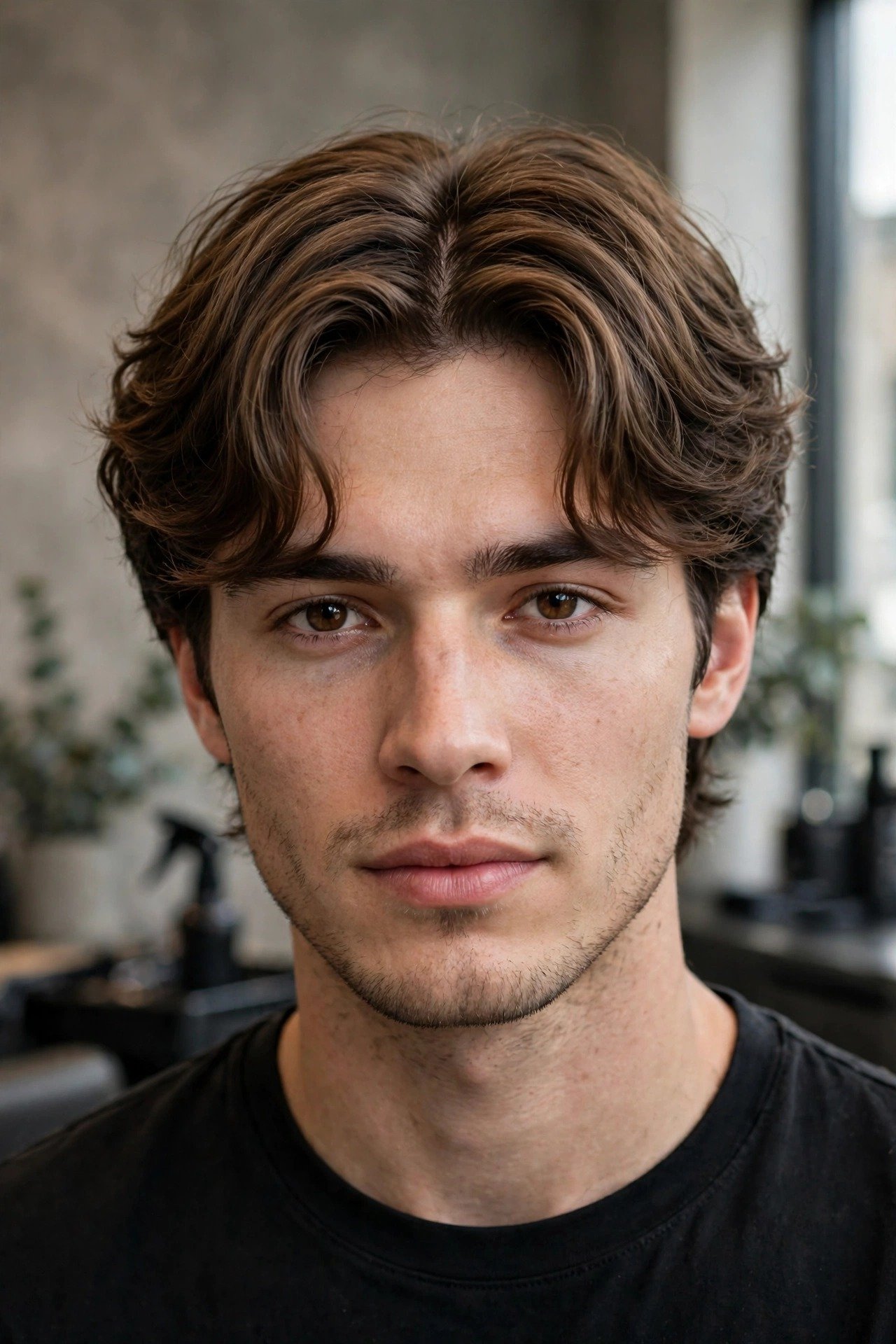
A curtain haircut is a men’s style built around a centre or off-centre parting, with the fringe grown long enough to fall on both sides of the forehead in two soft panels. The top is usually kept at three to six inches, while the back and sides can be anything from scissor cut and natural to faded or undercut, depending on how bold you want the contrast. The name comes from the way the two panels hang like curtains, framing the face and drawing attention to the eyes and cheekbones. It first became famous in the nineties, worn by pop stars and actors, and it has returned in 2026 with softer texture and far more variations.
The key detail is the parting, because it decides where the fringe falls and how the face is framed. A centre part gives a balanced, symmetrical look, while an off-centre part adds movement and suits men whose hair naturally falls to one side. The fringe itself should be point cut rather than cut blunt, so the ends feather softly and the panels move naturally instead of sitting like a solid block. Length matters too, since a fringe that is too short looks like a crop, while one that is too long falls into the eyes all day. For a shorter take on the same idea, the messy fringe keeps the forehead covered with a more relaxed, tousled finish.
What makes the curtain different from other fringe styles is how forgiving it is. It works with straight, wavy, and curly hair, and it grows out gracefully, so the awkward in-between stage that ruins most haircuts barely exists here. The cut also suits almost every face shape, because the parting and the length of the panels can be adjusted to add height, width, or softness wherever your face needs it. Barbers like it because it is a scissor-led cut that shows off real skill, and clients like it because it needs so little effort at home. Once you find your parting, the curtain mostly styles itself, which is why so many men never go back to shorter cuts.
Why the Curtain Haircut Is Dominating 2026
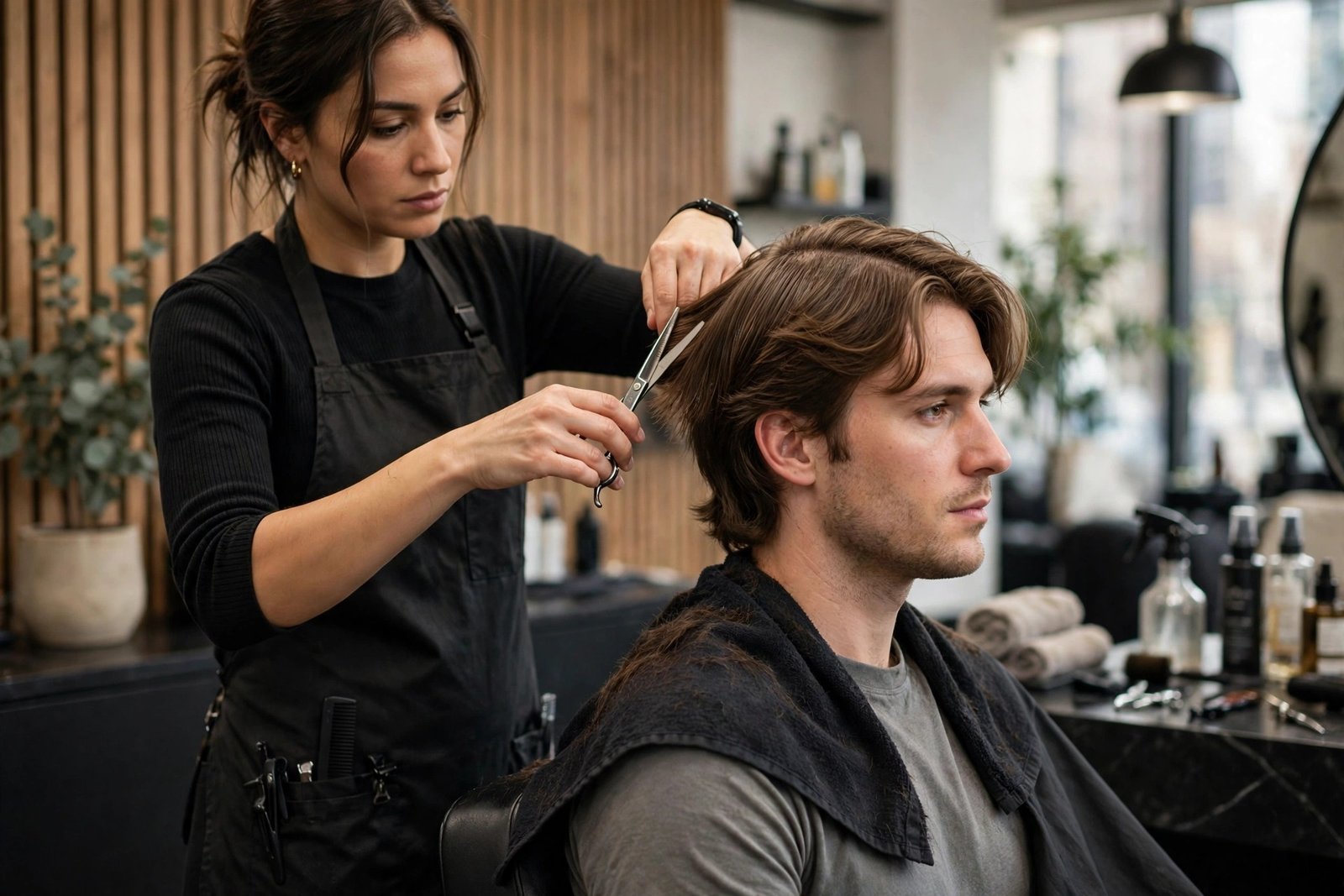
The curtain haircut is dominating 2026 because it sits exactly where men’s hair is heading: softer, longer, and more natural than the sharp fades that ruled the last decade. Men are moving away from high-maintenance crops and towards styles that work with their natural texture instead of fighting it, and the curtain is the easiest way to make that change. It also fits the wider nineties revival in fashion and grooming, where relaxed silhouettes and softer finishes have replaced the severe, sculpted looks of recent years. The result is a cut that feels current without feeling like a trend that will embarrass you in photos next year.
The demand is visible in barbershops as well as on social media. The soft curtain fringe is now one of the two most-requested men’s styles of 2026, and barbers report that a curtain fringe is requested in 35 to 45 percent of bookings, often by clients who bring a photo on their phone. That kind of demand changes what barbers practise, so more of them are now trained to cut soft, textured fringes rather than only fades and crops. The style has also spread because it photographs so well, with the face-framing panels giving every selfie a clean, flattering shape that shorter cuts cannot match.
Pinterest data tells the same story from the other side, with the layered long bob up 622 percent as searches for face-framing, layered hair explode across the platform. The curtain is the men’s version of that same trend, offering the same soft layers and face-framing shape in a cut that suits shorter hair. Celebrities and creators have pushed it further, wearing the curtain on red carpets, in music videos, and in everyday street style, which keeps the look in front of new audiences every week. Barbers explain the classic fringe shapes well in this guide to fringe haircuts for men, which is worth a read before your appointment.
1. The Classic Curtain
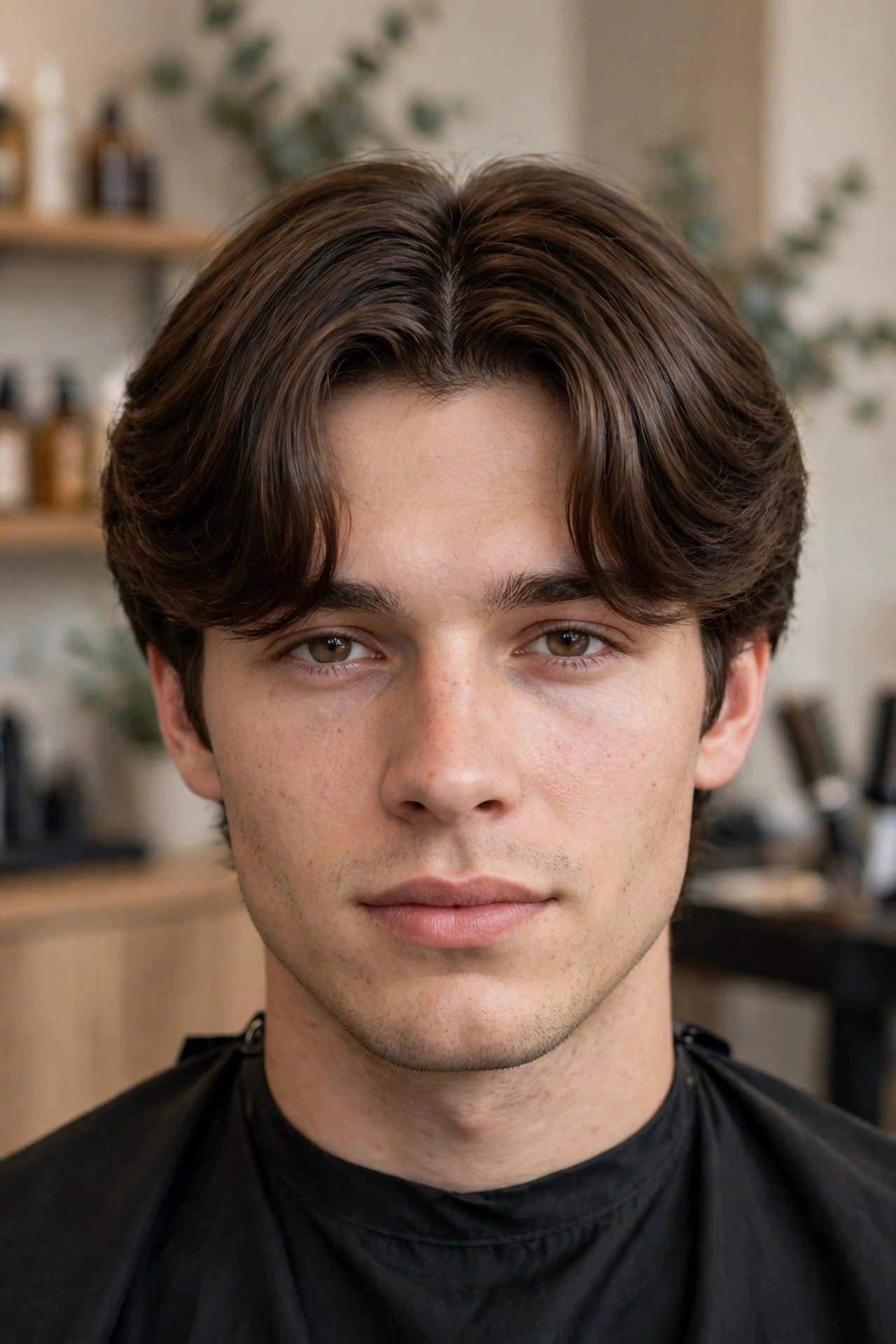
The classic curtain is the original nineties centre-part style, with the fringe grown long enough to fall on either side of the forehead in two even panels. It keeps the top at roughly four to five inches, the sides slightly shorter, and the parting dead centre for that instantly recognisable retro silhouette. Soft, feathered ends stop the fringe looking heavy and help it sit flat against the forehead.
It flatters oval and oblong faces best, and it works beautifully on straight or gently wavy hair with medium density. Ask your barber for a centre part with four to five inches left on top, light point cutting through the ends, and the sides scissor cut rather than clippered. Bring a photo to your appointment, because curtain lengths and partings vary more than most men expect.
Blow dry the fringe forwards first, then split it at the centre and sweep each side back with a round brush. A pea sized amount of matte cream adds light hold without stiffness, and the style should take under five minutes. Book a tidy up every four to five weeks to keep the panels sitting evenly on both sides. Finish with a light mist of sea salt spray when you want extra texture and movement.
2. The Short Curtain Fringe
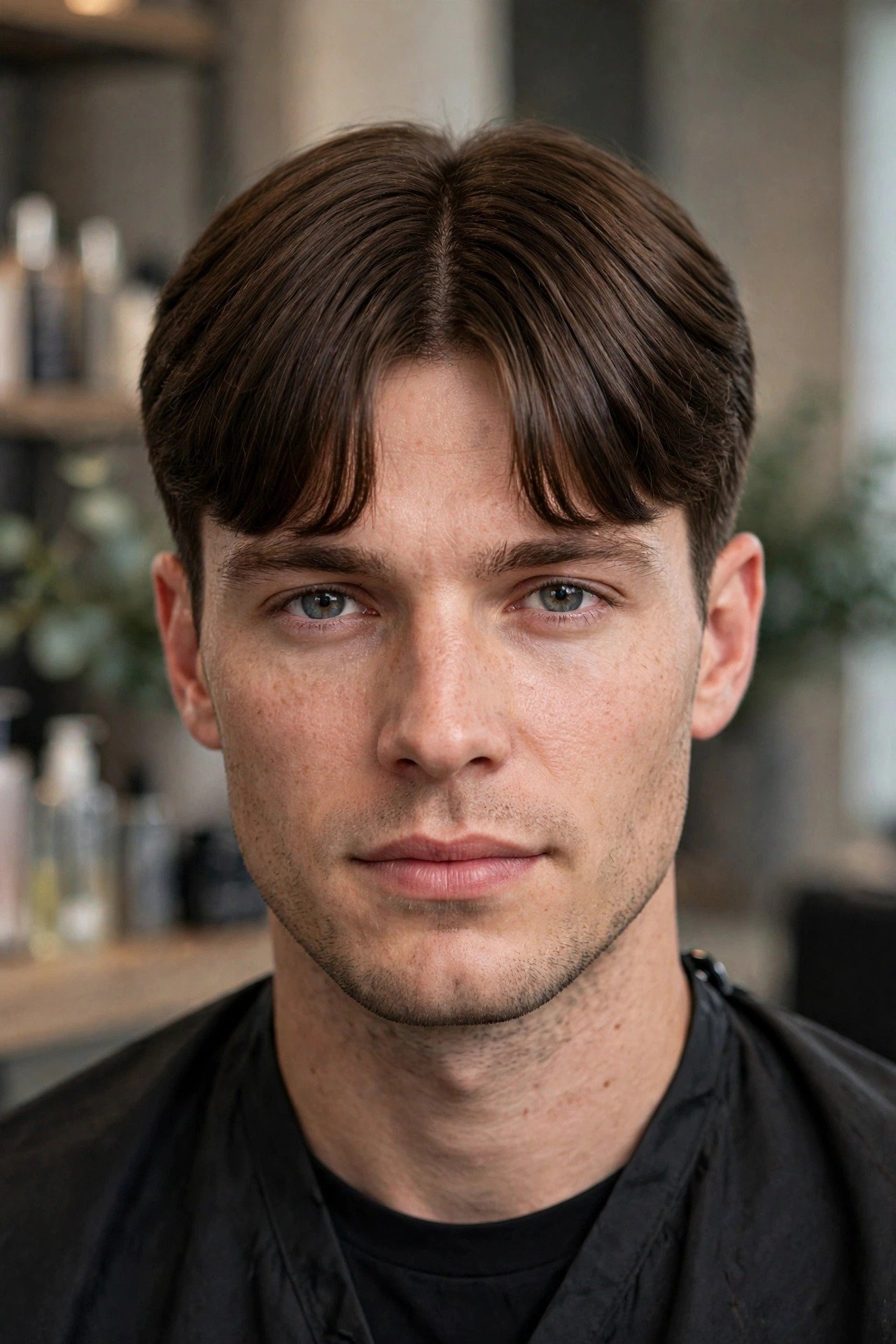
The short curtain fringe keeps the nineties spirit but trims the front to around two to three inches, so the panels sit just above the eyebrows. It is the easiest curtain to live with, because the shorter length dries fast, stays out of the eyes, and needs almost no styling in the morning. Soft, feathered ends stop the fringe looking heavy and help it sit flat against the forehead.
It suits men with straight hair and rounder faces, since the shorter fringe opens the face up instead of closing it in. Ask for a two to three inch fringe with a soft centre part, textured ends, and the sides blended short with scissors or a number four guard. Bring a photo to your appointment, because curtain lengths and partings vary more than most men expect.
Towel dry the hair, push the fringe into its part with your fingers, and let it air dry for a relaxed finish. A tiny amount of light paste keeps flyaways down, and the cut holds its shape for three to four weeks. Trim every three to four weeks, because the short length loses its shape faster than longer curtains. Finish with a light mist of sea salt spray when you want extra texture and movement.
3. The Long Curtain Fringe
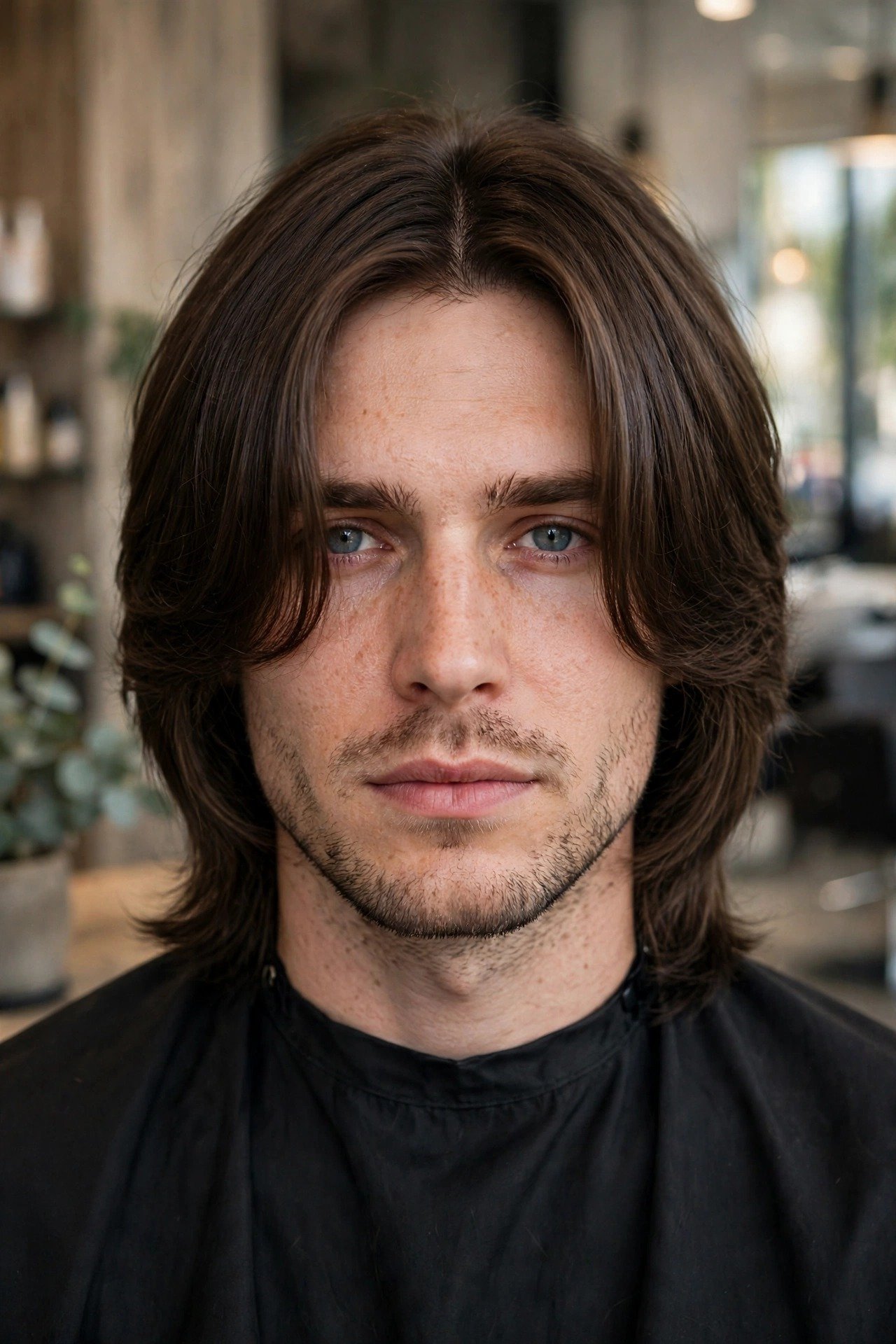
The long curtain fringe lets the front grow to five or six inches, so the panels fall past the eyebrows and frame the cheekbones and jaw. It has a softer, more romantic feel than shorter versions, and the extra length gives you room to tuck the fringe behind the ears. The parting is the heart of the look, so keep it clean and let the fringe fall naturally rather than forcing it into place.
It suits oval and heart shaped faces, and it works best on straight or wavy hair with enough density to hold the weight. Ask your barber for five to six inches on top, long curtain layers through the fringe, and the sides kept long enough to blend without a harsh line. Bring a photo to your appointment, because curtain lengths and partings vary more than most men expect.
Blow dry the fringe away from the face with a round brush, then let it fall naturally into the part for soft movement. Use a light cream to control the ends, and avoid heavy products that drag the longer panels flat against the forehead. Get the ends dusted every five to six weeks so the long fringe keeps its shape and the split ends stay away.
4. The Wavy Curtain
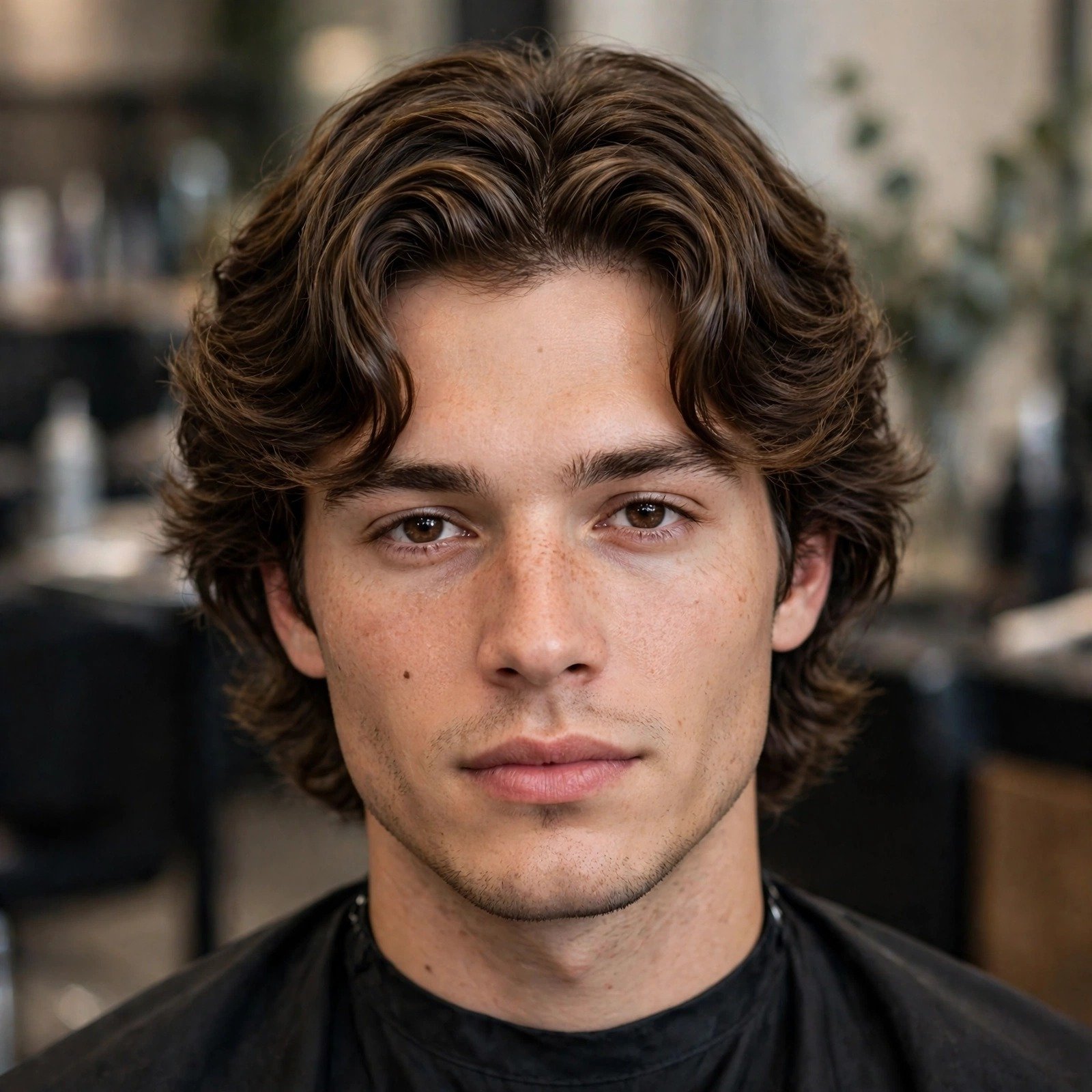
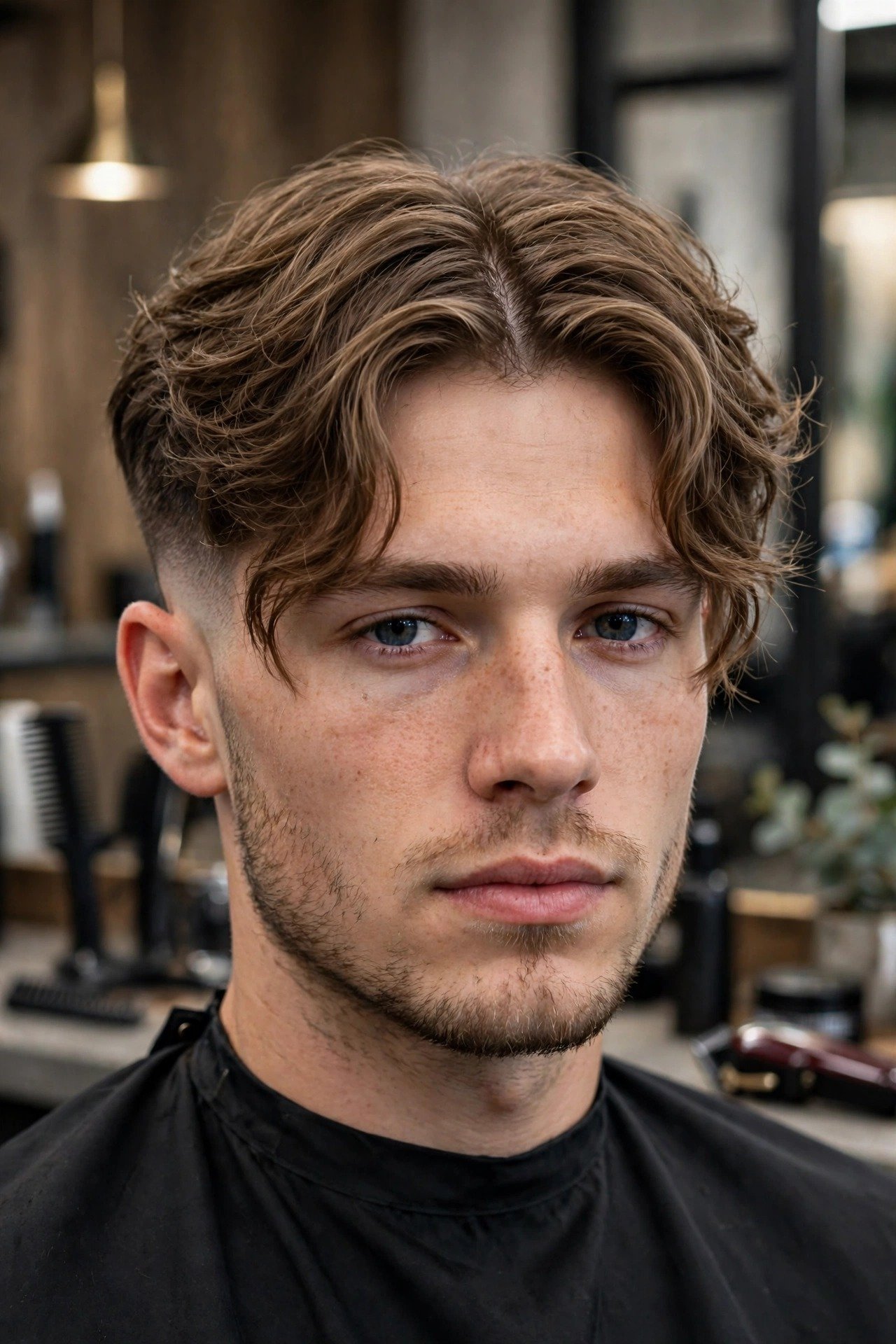
The wavy curtain lets natural texture lead the style, with the fringe falling in loose waves that break up the parting and soften the whole shape. It looks deliberately undone in the best way, and the waves give the cut movement that straight hair simply cannot copy. The parting is the heart of the look, so keep it clean and let the fringe fall naturally rather than forcing it into place.
It suits almost every face shape, and it is ideal for men with natural wave who want a style that works with their hair instead of against it. Ask your barber for a centre or off-centre part with four to five inches on top, and for the waves to be point cut so they fall in soft pieces. Bring a photo to your appointment, because curtain lengths and partings vary more than most men expect.
Scrunch a little sea salt spray into damp hair, then let it air dry so the waves set in their natural pattern. A diffuser on low heat adds definition on flat days, and you should avoid brushing the fringe once it is dry. Trim every five weeks to keep the waves from growing heavy, and ask for the weight to be thinned from underneath.
5. The Curly Curtain
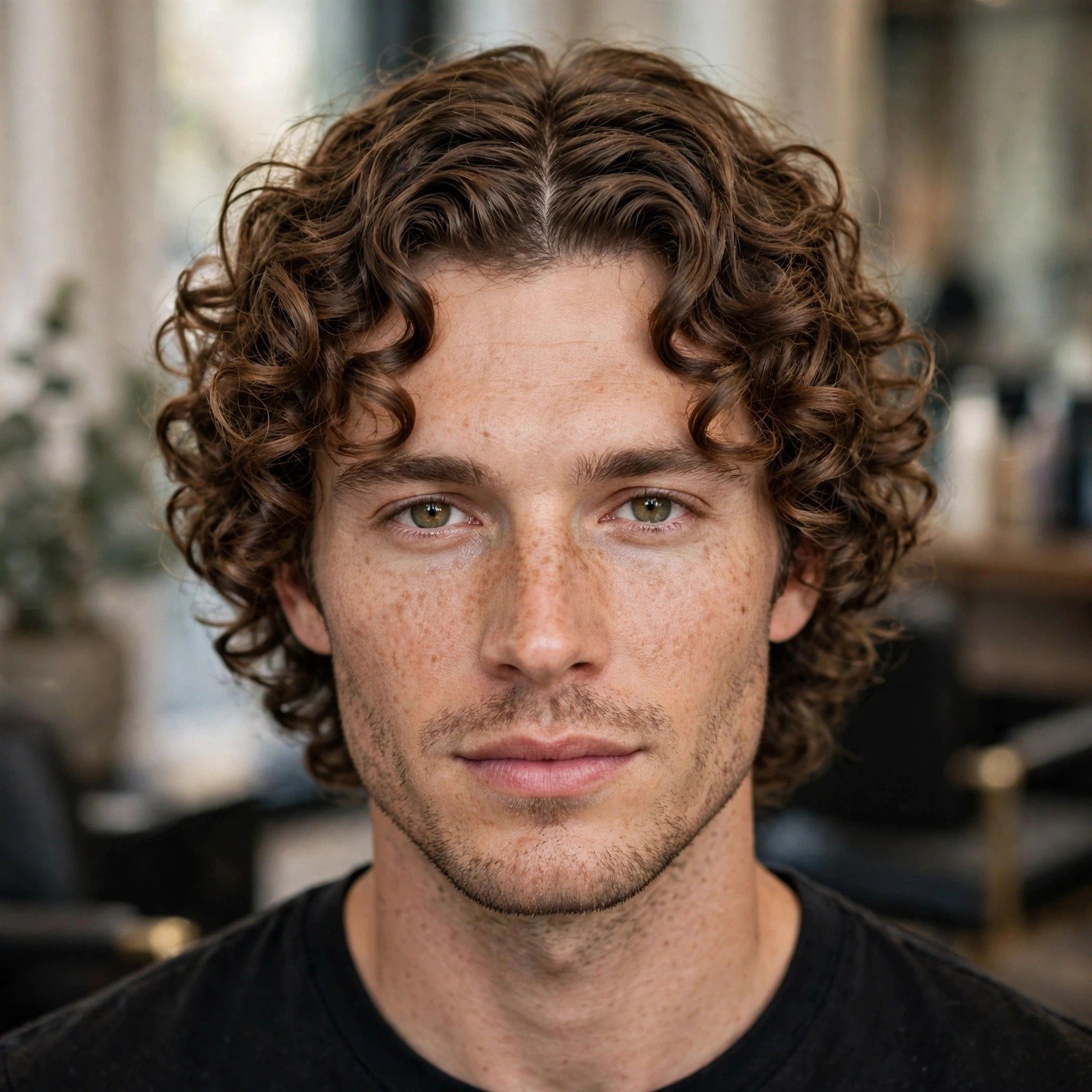
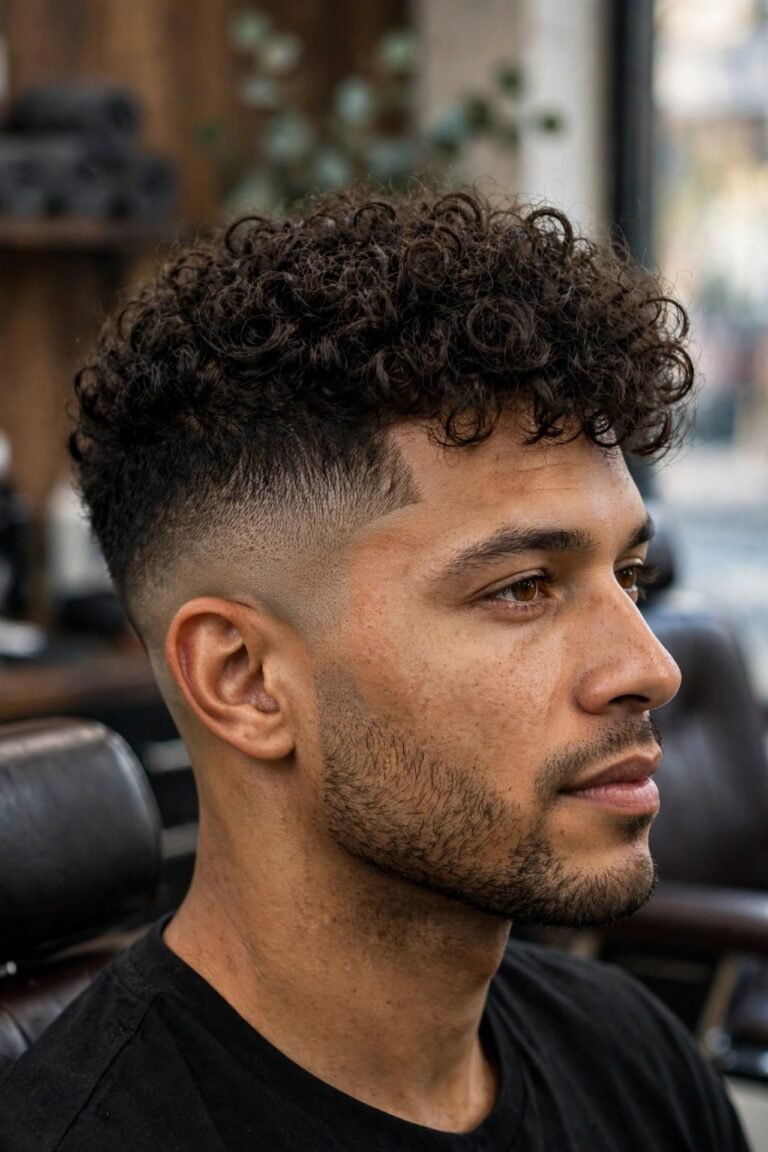
The curly curtain adapts the classic shape to natural curls, with the fringe parted in the middle so the curls fall in two soft, face-framing groups. It keeps the curls long enough to show their pattern, usually four to six inches, while the sides stay short enough to stop the cut looking round. Soft, feathered ends stop the fringe looking heavy and help it sit flat against the forehead.
It suits men with type two or three curls, and it flatters square and round faces by adding height and breaking up the width. Ask for a dry cut with four to six inches on top, the curls shaped curl by curl, and the sides tapered lightly so the top keeps its volume. Bring a photo to your appointment, because curtain lengths and partings vary more than most men expect.
Apply a curl cream to soaking wet hair, scrunch gently, and let the curls air dry or use a diffuser on the lowest heat. Once the curls are dry, do not touch them, because handling breaks the pattern and creates frizz around the parting. Visit the barber every six weeks for a shape up, and always book a curl specialist if your barber is not confident with texture.
6. The Curtain with Low Taper Fade
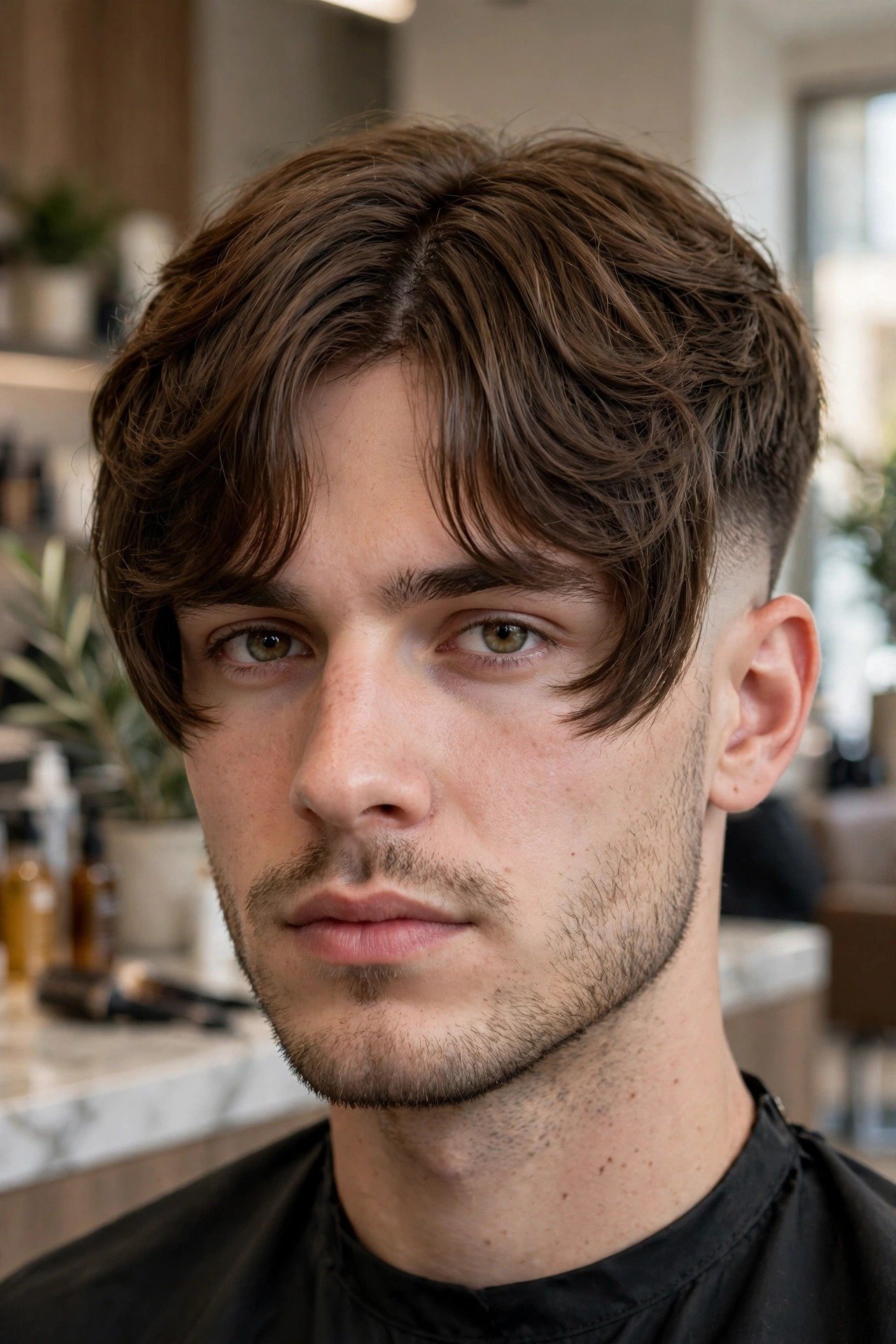
This version pairs the classic curtain top with a low taper fade, where the sides and back gradually shorten down toward the neckline and sideburns. The low taper keeps the cut looking clean and smart without the harsh contrast of a skin fade, so the curtain stays the star of the show. Soft, feathered ends stop the fringe looking heavy and help it sit flat against the forehead.
It suits most face shapes, and it is a great choice for men who want a tidy finish for work while keeping the relaxed curtain fringe. Ask your barber for four to five inches on top with a centre part, and a low taper that starts just above the ears and blends down to the skin at the edges. The result is effortless and easy to wear.
Style the fringe as usual with a round brush, and keep the tapered sides neat by smoothing them down with a little cream. The fade needs attention every two to three weeks, while the curtain top can be left for four to five weeks between cuts. Book a fade tidy up between full cuts if you want the neckline to stay sharp without shortening the fringe.
7. The Curtain with Mid Skin Fade
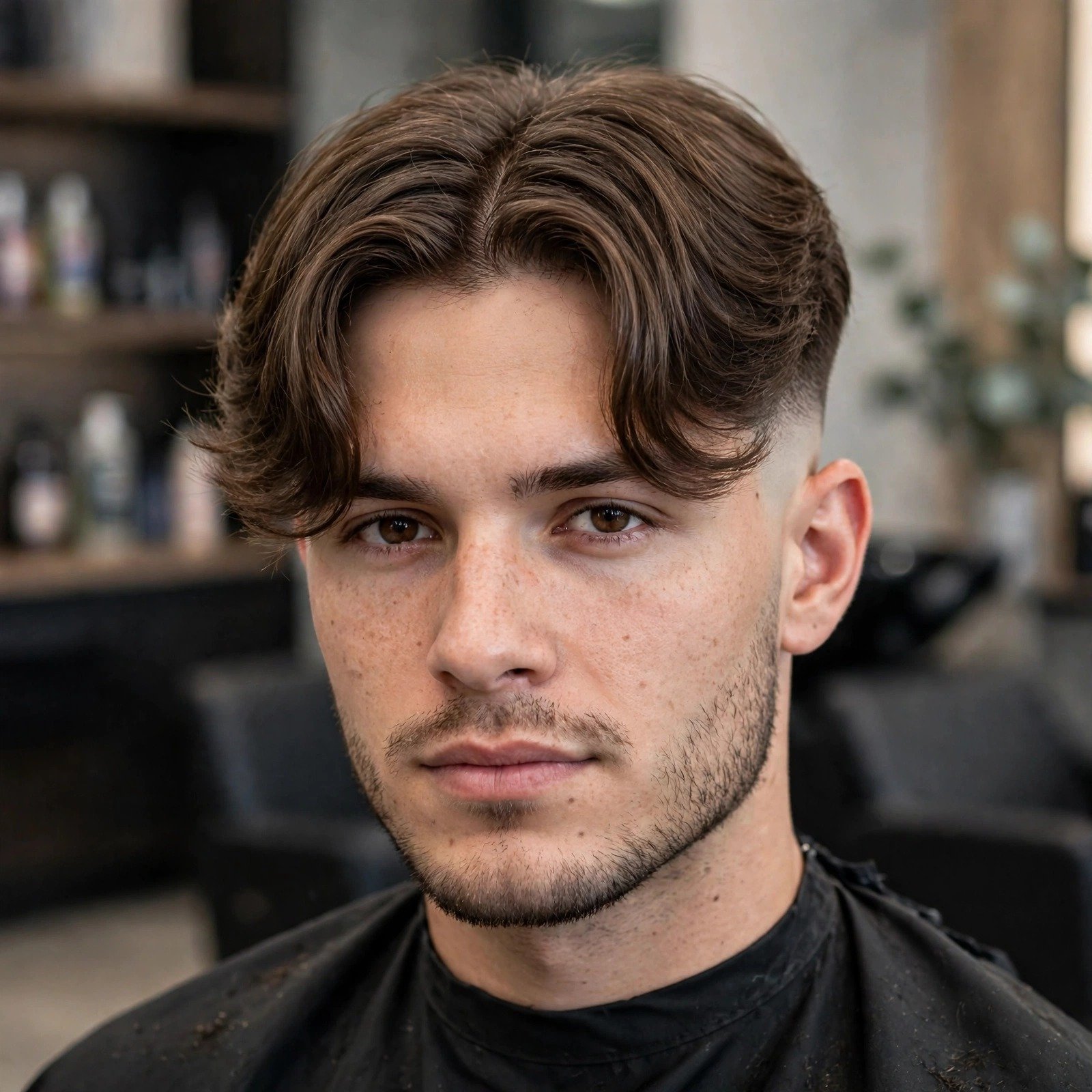
The mid skin fade takes the fade up to the middle of the head, creating a bold contrast between the sharp, skin-tight sides and the soft curtain top. It gives the relaxed nineties fringe a modern, high-contrast edge, and the clean sides make the longer top look even more deliberate. The parting is the heart of the look, so keep it clean and let the fringe fall naturally rather than forcing it into place.
It suits oval, square, and heart shaped faces, and it works best on men with thick hair, since the weight on top balances the bare sides. Ask for four to six inches on top with a defined part, and a mid skin fade blended with a number one guard at the transition. Bring a photo to your appointment, because curtain lengths and partings vary more than most men expect.
Blow dry the fringe with volume at the roots, then sweep it into the part so the height on top matches the sharpness of the sides. A matte paste gives the top hold without shine, and the fade will stay crisp for about two weeks before it starts to soften. Book a fade refresh every two weeks, because a skin fade grows out visibly faster than the curtain top does.
8. The Curtain with Burst Fade
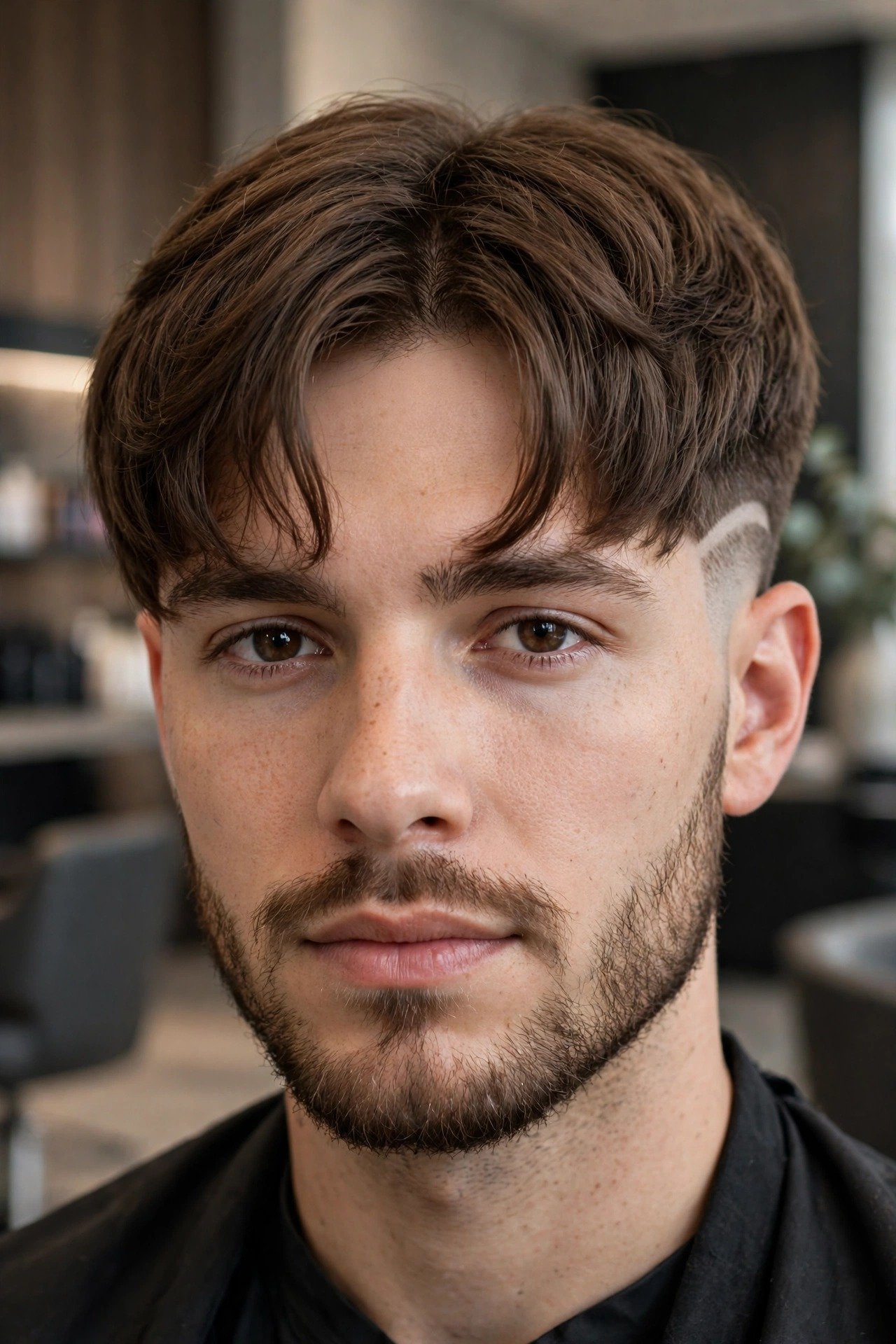
The burst fade curves around the ear in a semicircle, fading the hair down to the skin behind the ear while leaving length at the back. Paired with a curtain fringe, it creates a modern shape that feels fresh from every angle, with the curved fade echoing the curve of the fringe. Soft, feathered ends stop the fringe looking heavy and help it sit flat against the forehead.
It suits men with wavy or straight hair, and it flatters round faces because the curved fade adds structure around the ears and jaw. Ask your barber for a curtain top of four to five inches, and a burst fade that follows the natural curve of the ear down to the skin. Bring a photo to your appointment, because curtain lengths and partings vary more than most men expect.
Style the fringe forward and out to the sides, and keep the back tidy by brushing it down so the burst shape stays visible. Use a light cream on the top and nothing heavy on the sides, so the fade line stays clean and easy to see. The burst fade needs a refresh every two to three weeks to keep its curved shape crisp around the ear.
9. The Curtain with Undercut
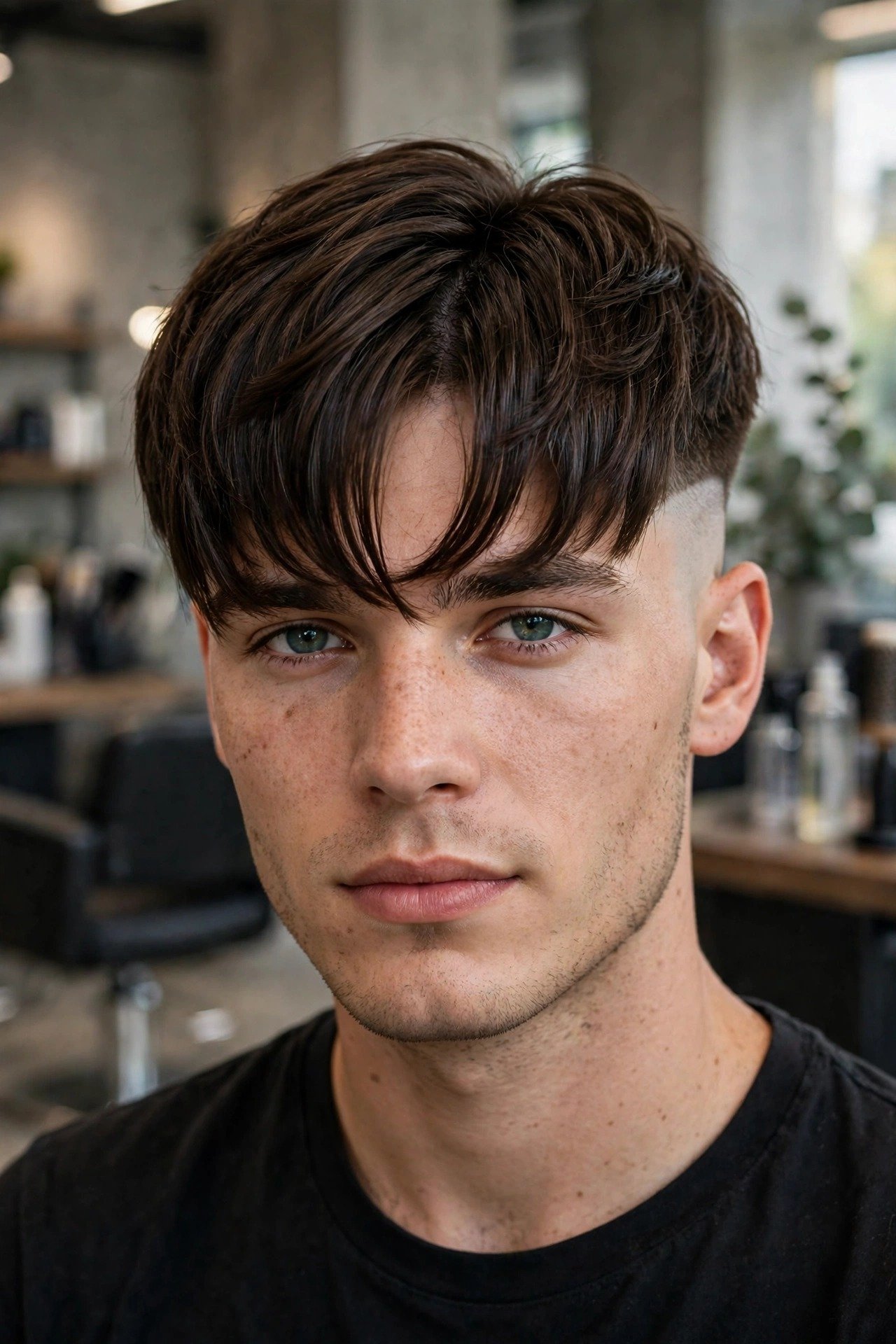
The undercut disconnects the long curtain top from very short sides, with no blending between them, so the fringe stands out in sharp contrast. It is one of the boldest curtain variations, and the disconnection makes the top look longer, fuller, and more dramatic than a blended cut. The parting is the heart of the look, so keep it clean and let the fringe fall naturally rather than forcing it into place.
It suits men with thick, straight hair and strong jawlines, and it flatters oval and square faces by adding height and edge. Ask for four to six inches on top with a centre part, and an undercut taken down with a number one or two guard with no blending at all. Bring a photo to your appointment, because curtain lengths and partings vary more than most men expect.
Slick the fringe back slightly with a round brush, then let it fall into the part for a clean, high-contrast finish. A strong matte paste holds the longer top in place, and the undercut itself needs no product at all. Keep the undercut tight with a tidy up every two weeks, since regrowth shows quickly against the disconnected top. Finish with a light mist of sea salt spray when you want extra texture and movement.
10. The Curtain Mullet
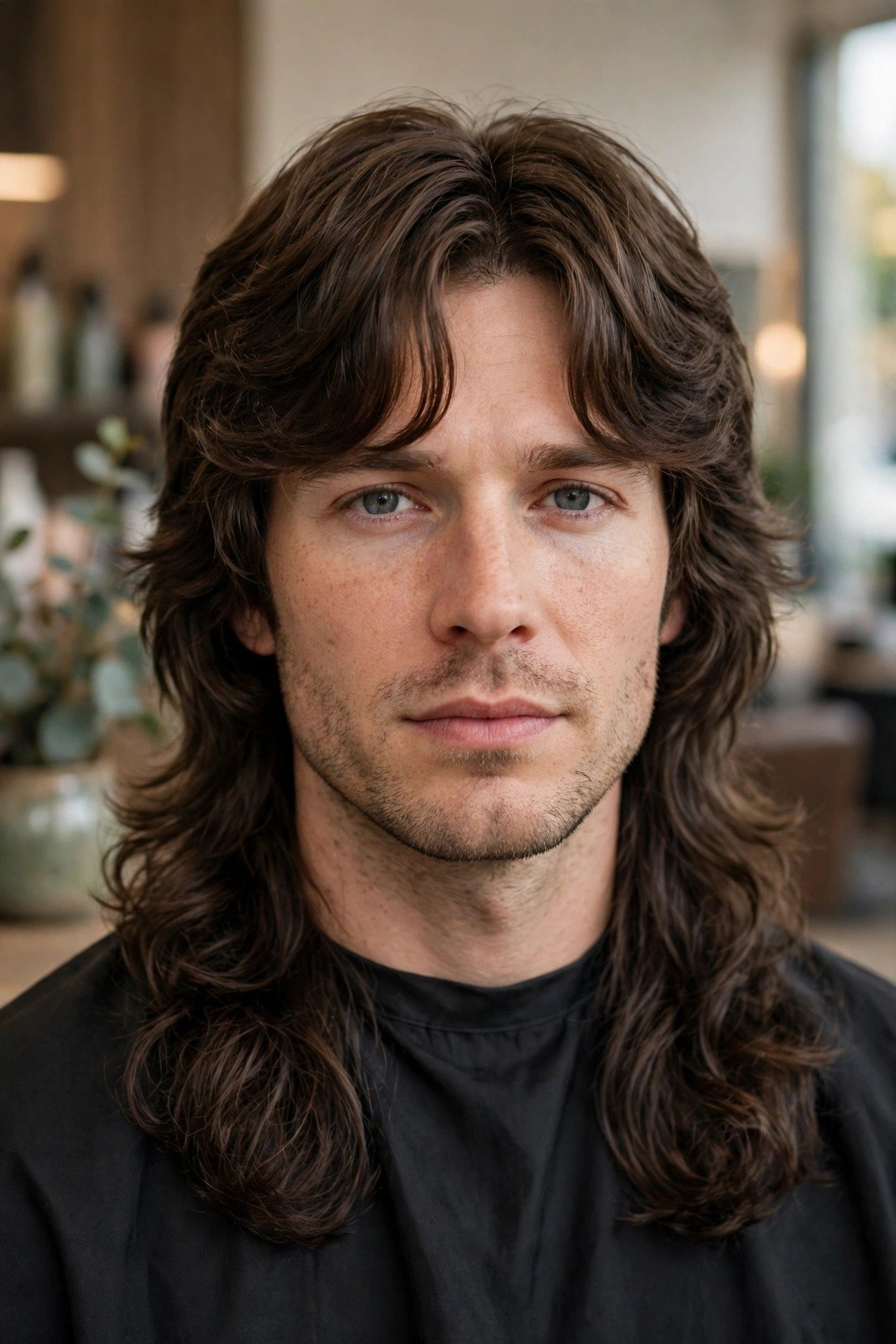
The curtain mullet combines the face-framing fringe with a longer back, blending the nineties curtain into a modern, textured mullet shape. The front keeps the soft curtain parting while the back grows past the collar, giving the cut a rebellious edge that still looks intentional. The parting is the heart of the look, so keep it clean and let the fringe fall naturally rather than forcing it into place.
It suits men with wavy or straight hair who like a bold look, and it flatters long and oval faces by adding width at the sides. Ask your barber for a four to five inch curtain fringe, textured layers through the crown, and the back left long with the ends thinned out. Bring a photo to your appointment, because curtain lengths and partings vary more than most men expect.
Blow dry the fringe into its part, then scrunch sea salt spray through the back to bring out the texture and movement. Let the back air dry whenever you can, because heat styling can make the mullet length look too neat and lose its edge. Trim the fringe every four weeks but let the back grow, and ask the barber to keep the mullet shape balanced at each visit.
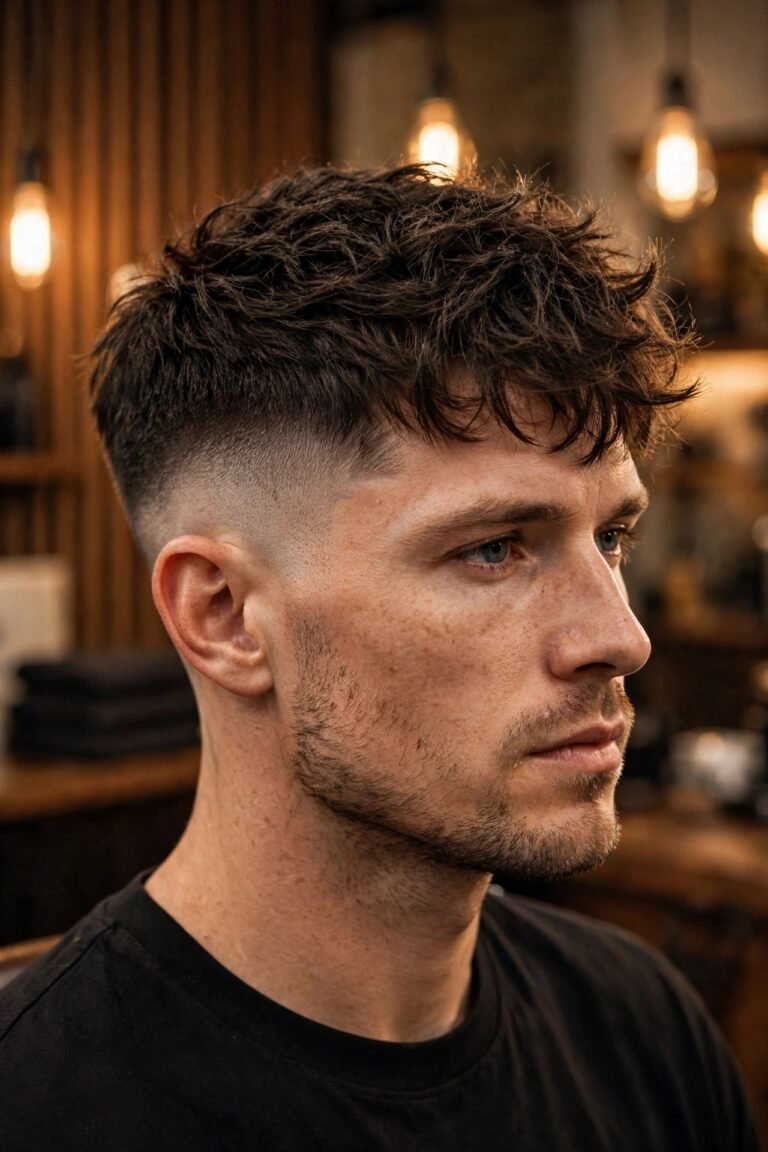
11. The Curtain with Textured Crop Top
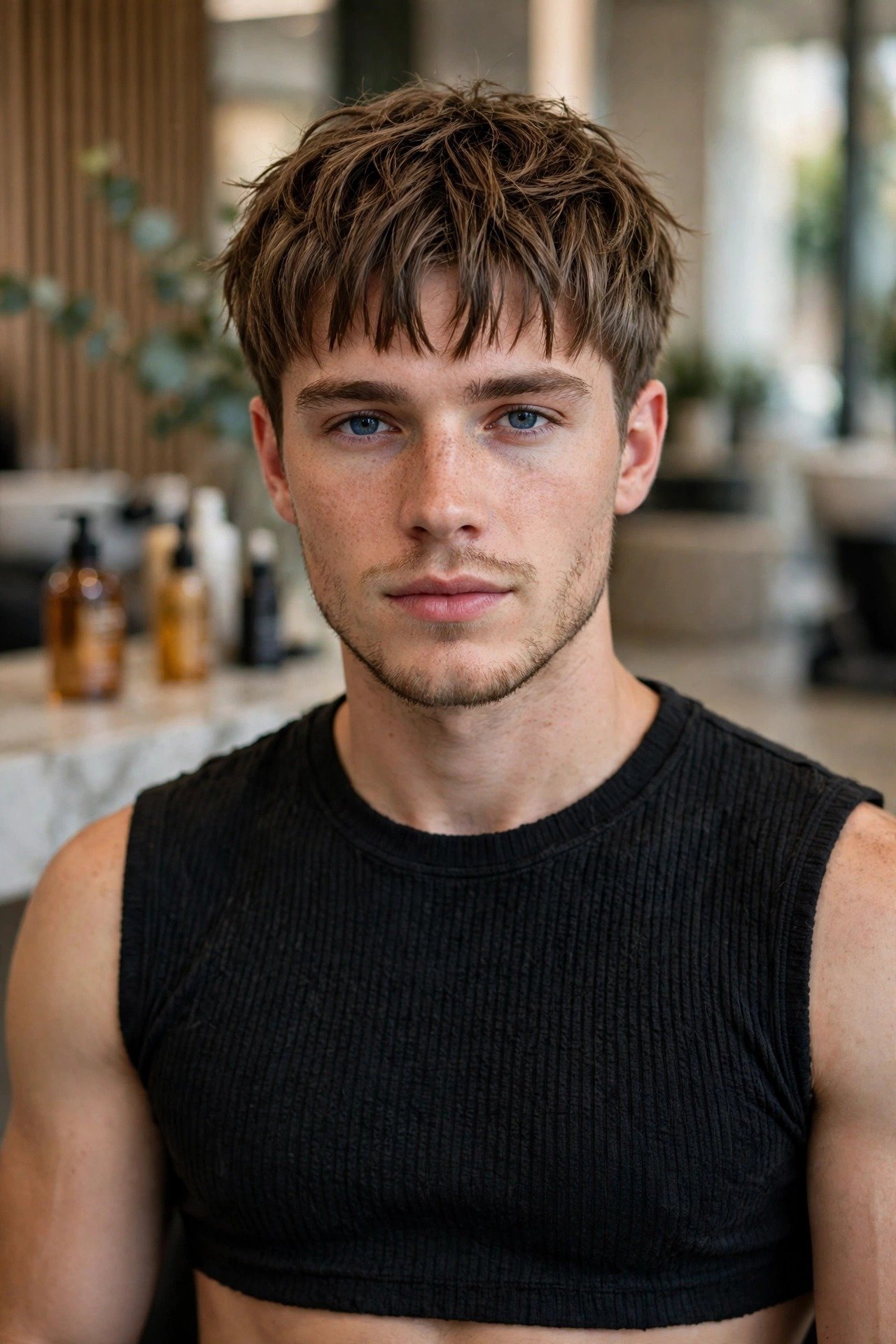
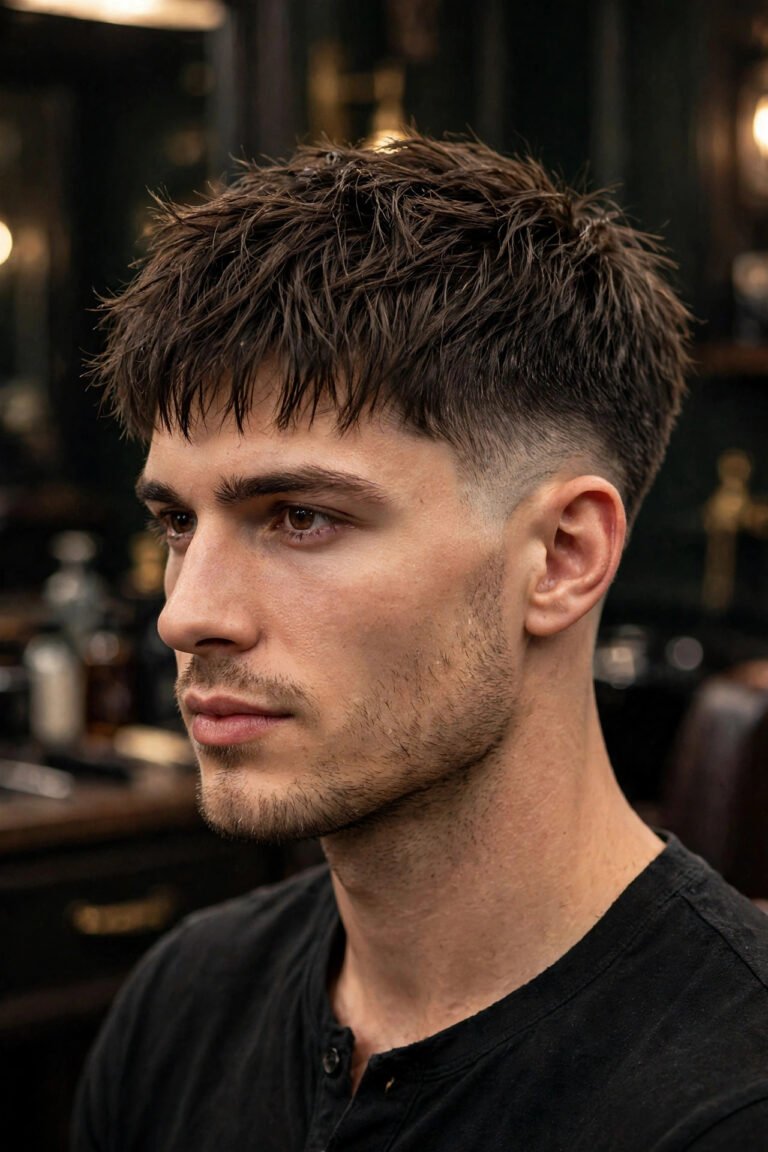
This style mixes the curtain parting with a choppy, textured crop on top, so the fringe falls in short, piecey sections instead of smooth panels. It feels younger and more lived in than the classic curtain, and the texture stops the fringe from sitting flat or looking too polished. The parting is the heart of the look, so keep it clean and let the fringe fall naturally rather than forcing it into place.
It suits men with thick or wavy hair, and it flatters square and round faces because the choppy texture breaks up the width of the forehead. Ask for a three to four inch fringe with heavy point cutting and texturising through the top, keeping the part soft rather than razor sharp. Bring a photo to your appointment, because curtain lengths and partings vary more than most men expect.
Work a small amount of matte paste through damp hair, then pinch the fringe into pieces with your fingers as it dries. A quick blast with the dryer on low heat adds lift at the roots, and the piecey finish should look deliberately messy. Get the texture refreshed every three to four weeks, because the choppy ends grow out and start to look blunt.
12. The Curtain with Side Sweep
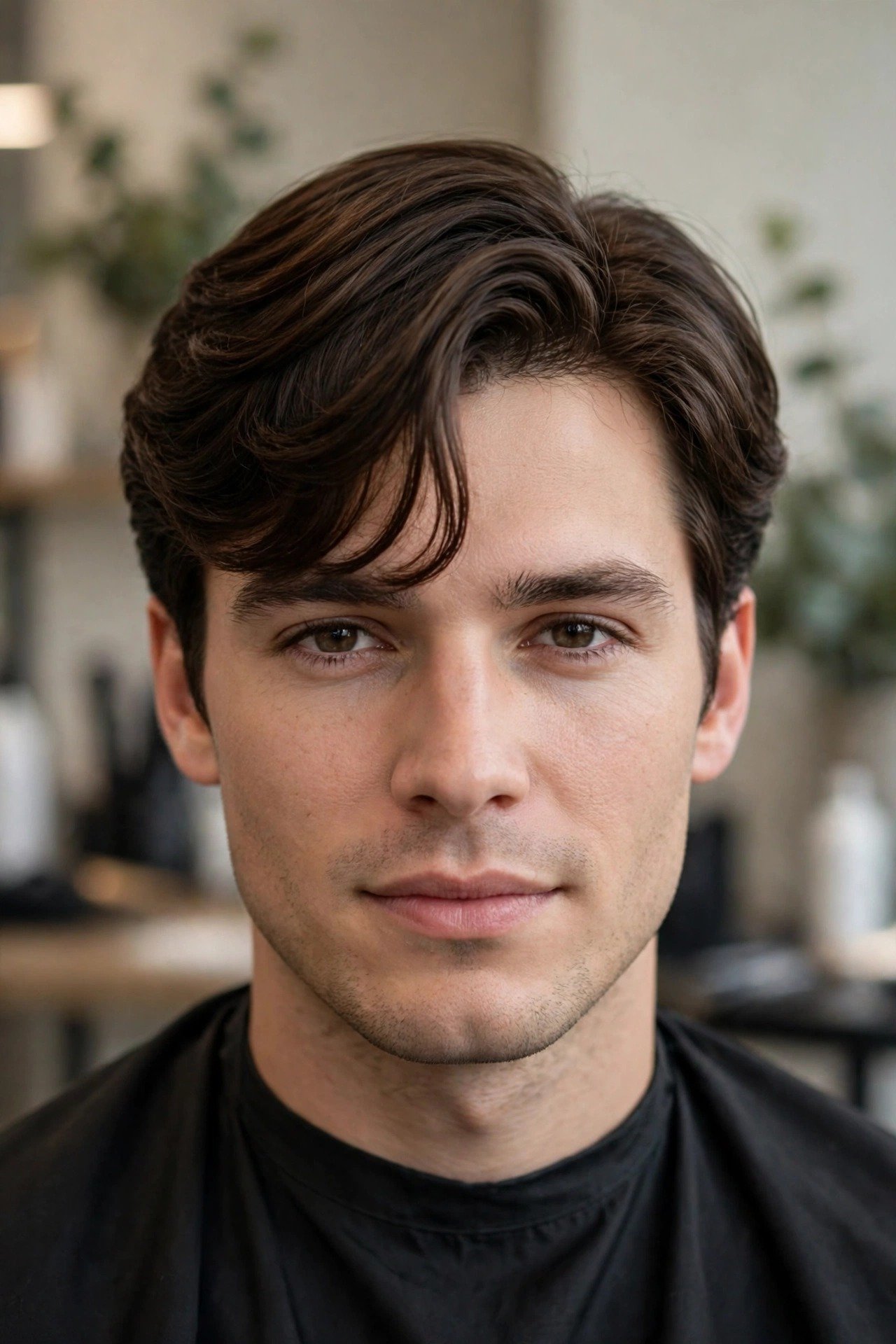
The side sweep curtain pushes most of the fringe to one side, creating a deep, soft sweep across the forehead instead of an even centre split. It keeps the curtain softness but feels more grown up and versatile, and it works well when your hair naturally falls to one side anyway. The parting is the heart of the look, so keep it clean and let the fringe fall naturally rather than forcing it into place.
It suits men with a strong cowlick or a natural side fall, and it flatters long faces by adding width across the forehead. Ask your barber for four to five inches on top with an off-centre part, and for the longer side to be point cut so it sweeps cleanly. Bring a photo to your appointment, because curtain lengths and partings vary more than most men expect.
Blow dry the fringe across the forehead from the part, using a round brush to curve the ends slightly away from the face. A light cream keeps the sweep in place without stiffness, and the style should hold all day with minimal touch ups. Trim every four to five weeks, and ask the barber to check the sweep still falls naturally when the hair is dry.
13. The Curtain with Middle Part
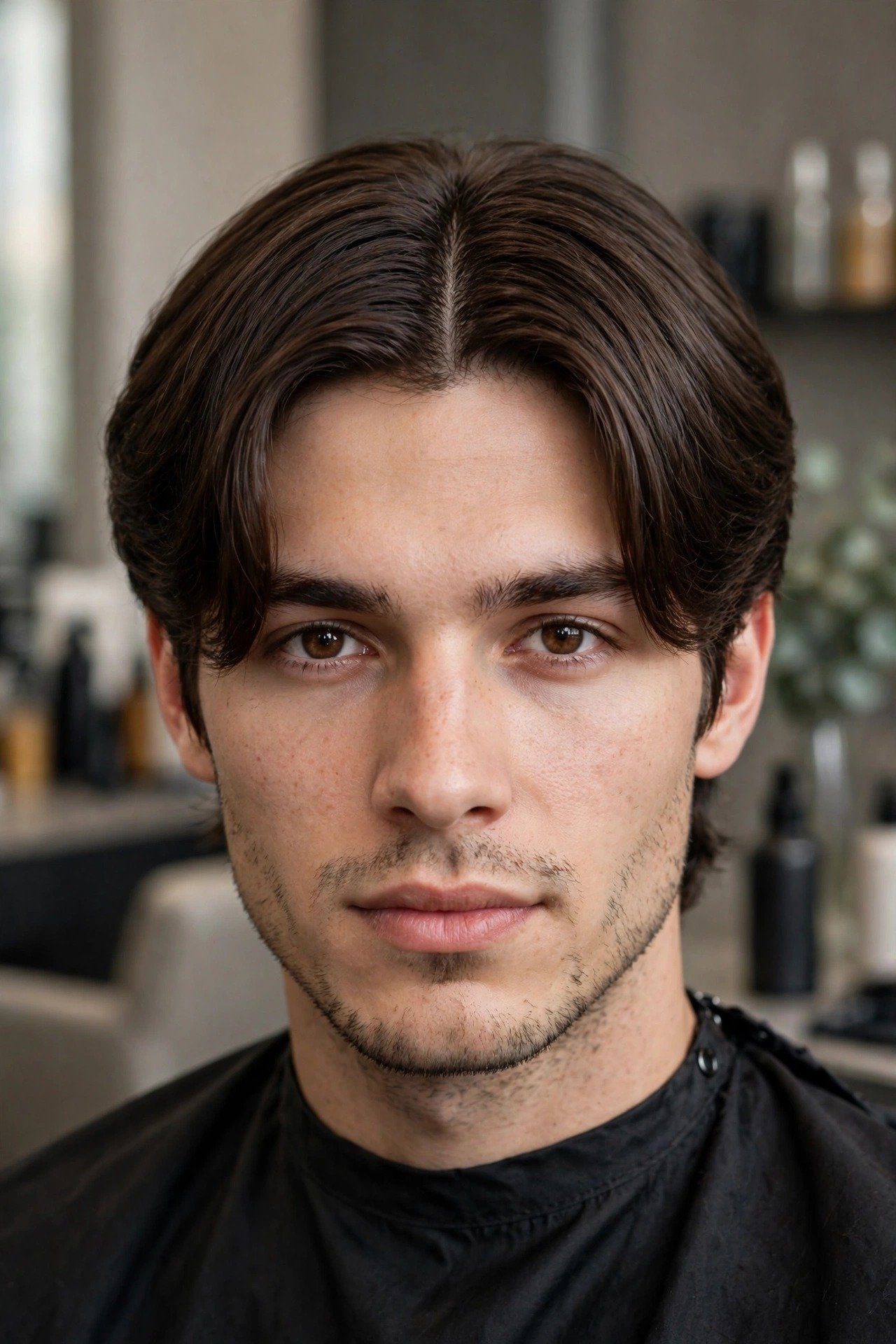
The middle part curtain is the purest form of the style, with a clean centre parting and two symmetrical panels falling on either side. It is the look most people picture when they hear curtain haircut, and the symmetry gives it a calm, balanced, almost editorial feel. The parting is the heart of the look, so keep it clean and let the fringe fall naturally rather than forcing it into place.
It suits oval and symmetrical faces best, and it works on straight or slightly wavy hair with enough length to hold the split. Ask your barber for a precise centre part with four to five inches on top, and for the fringe to be cut so both sides fall at the same length. Bring a photo to your appointment, because curtain lengths and partings vary more than most men expect.
Find your part with the end of a comb while the hair is damp, then blow dry each side away from the part with a round brush. A drop of light paste on each panel keeps the split clean, and you should avoid touching the part once it is set. Keep the parting sharp by trimming every four weeks, and re-check the centre line in the mirror each morning.
14. The Curtain with Off-Centre Part
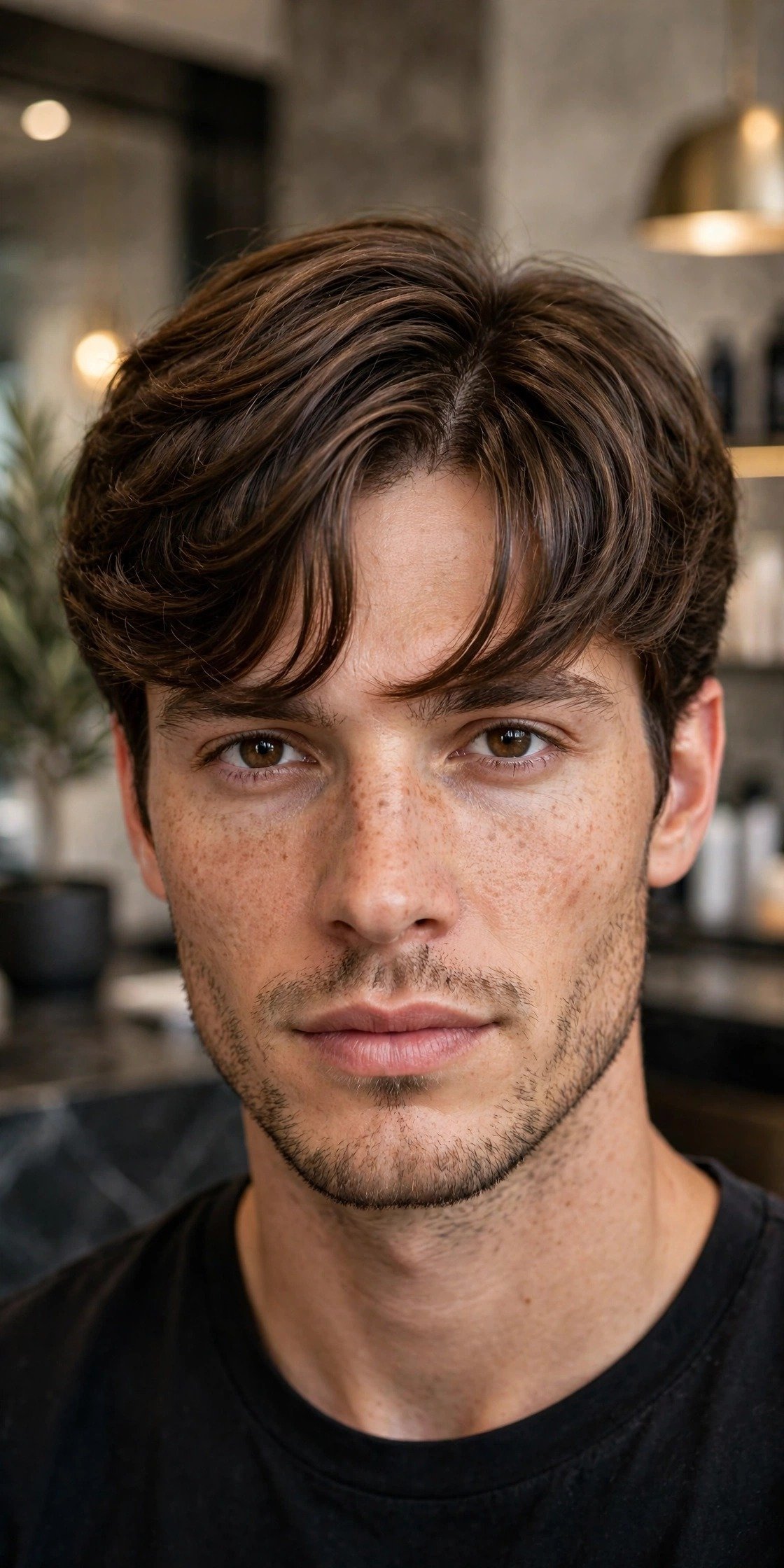
The off-centre part shifts the curtain split a couple of inches to one side, giving the style a relaxed, less formal feel than the dead-centre version. It suits men whose hair naturally falls to one side, and the asymmetry adds movement and stops the cut looking too perfect. The parting is the heart of the look, so keep it clean and let the fringe fall naturally rather than forcing it into place.
It flatters most face shapes, especially round and square faces, because the uneven split breaks up the width of the forehead. Ask your barber for a part set about an inch off centre, with four to five inches on top and the longer side slightly heavier. Bring a photo to your appointment, because curtain lengths and partings vary more than most men expect.
Part the hair while it is damp, blow dry the longer side across the forehead, and let the shorter side fall naturally into place. A matte cream gives the longer panel enough hold to stay put, and the style should take no more than five minutes. Trim every four to five weeks, and ask the barber to keep the off-centre split in mind so the balance stays right.
15. The Curtain for Thick Hair
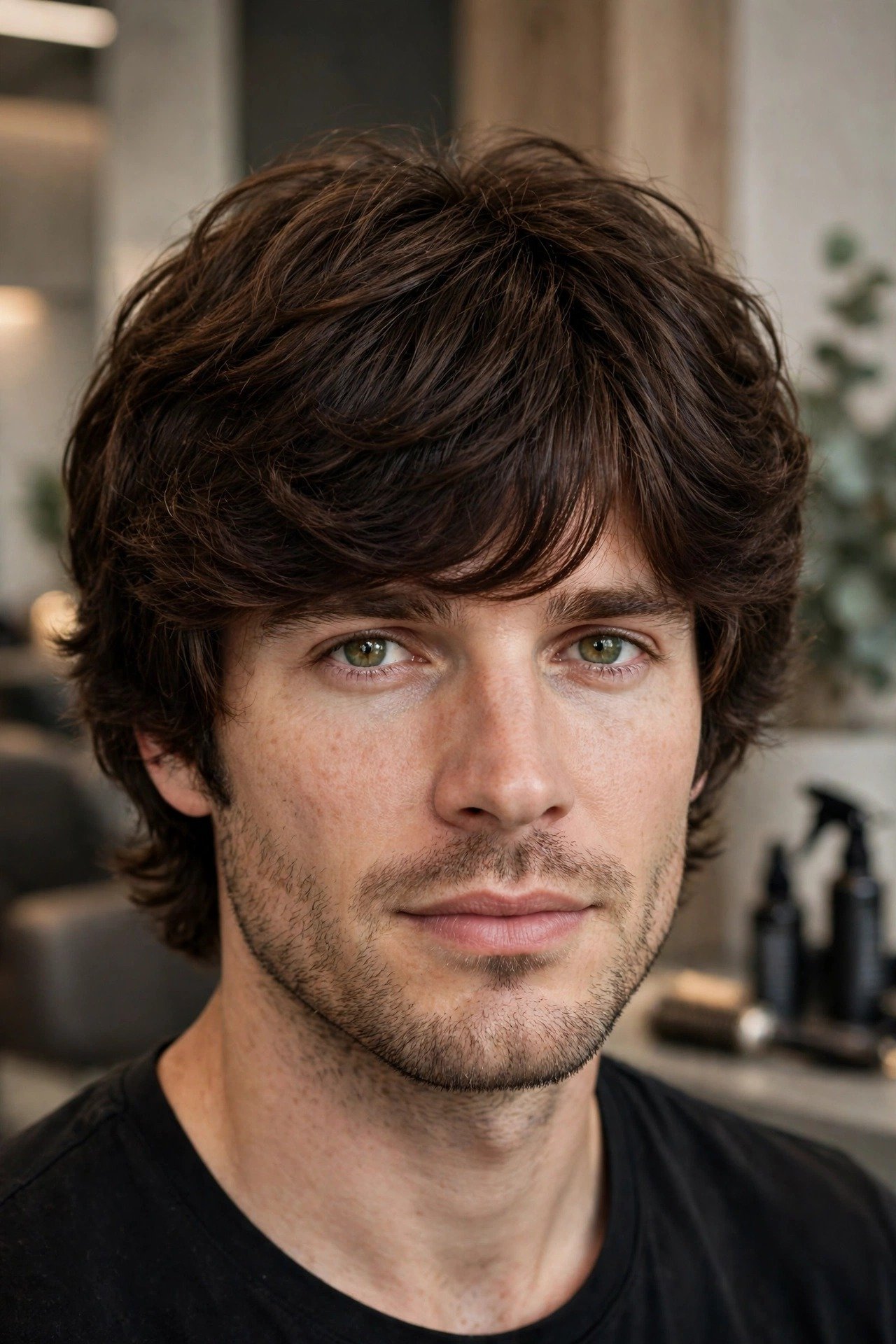
The thick hair curtain uses the natural weight of dense hair to build a full, substantial fringe that holds its shape all day. It keeps the top long and layered, with weight removed from underneath so the panels fall cleanly instead of puffing outwards. The parting is the heart of the look, so keep it clean and let the fringe fall naturally rather than forcing it into place.
It suits men with naturally thick, straight or wavy hair, and it flatters square and oval faces by balancing a strong jawline. Ask your barber for four to six inches on top with internal layering and thinning shears underneath, so the bulk is controlled without losing length. Bring a photo to your appointment, because curtain lengths and partings vary more than most men expect.
Blow dry the fringe downwards first to flatten the roots, then split the part and let the panels fall into place. A light cream is enough for hold, and heavy wax will only add weight to hair that is already dense. Book a tidy up every four to five weeks, and ask for the under layers to be thinned again at each visit.
16. The Curtain for Fine Hair
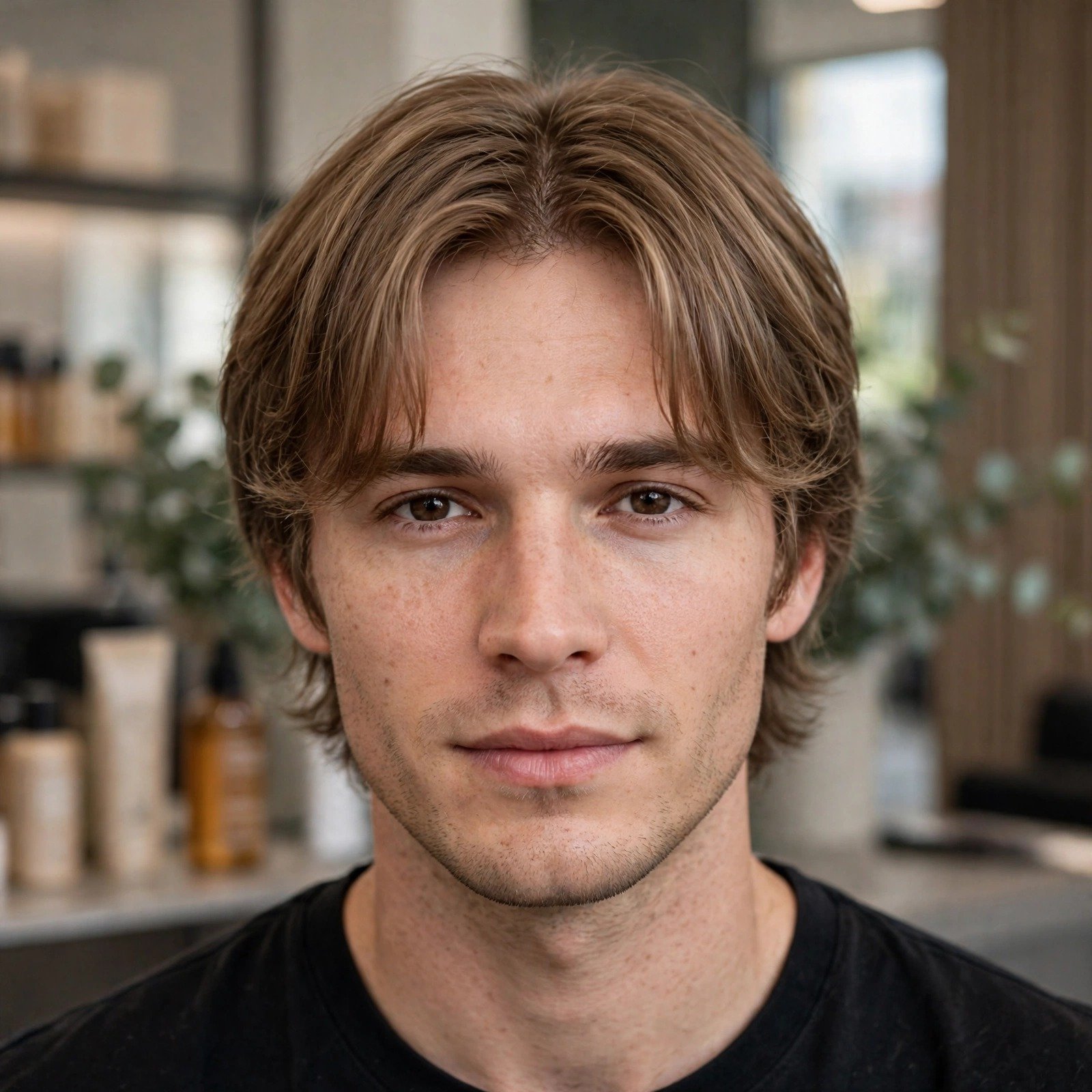
The fine hair curtain is cut to create the illusion of fullness, with blunt ends and light layering that stop the fringe looking wispy. It keeps the length moderate, around three to four inches, so the hair does not get weighed down and the panels keep their shape. The parting is the heart of the look, so keep it clean and let the fringe fall naturally rather than forcing it into place.
It suits men with fine or thinning hair, and it flatters oval and heart shaped faces by adding softness around the forehead. Ask your barber for a three to four inch fringe with blunt, point cut ends, minimal thinning, and a soft part that suits your growth pattern. Bring a photo to your appointment, because curtain lengths and partings vary more than most men expect.
Blow dry the fringe with a round brush, lifting at the roots to build volume, and finish with a volumising powder at the parting. A sea salt spray adds texture without weight, and you should avoid oils or heavy creams that flatten fine hair. Trim every four weeks to keep the blunt ends fresh, because fine hair shows split ends and straggly growth quickly.
17. The Curtain for Straight Hair
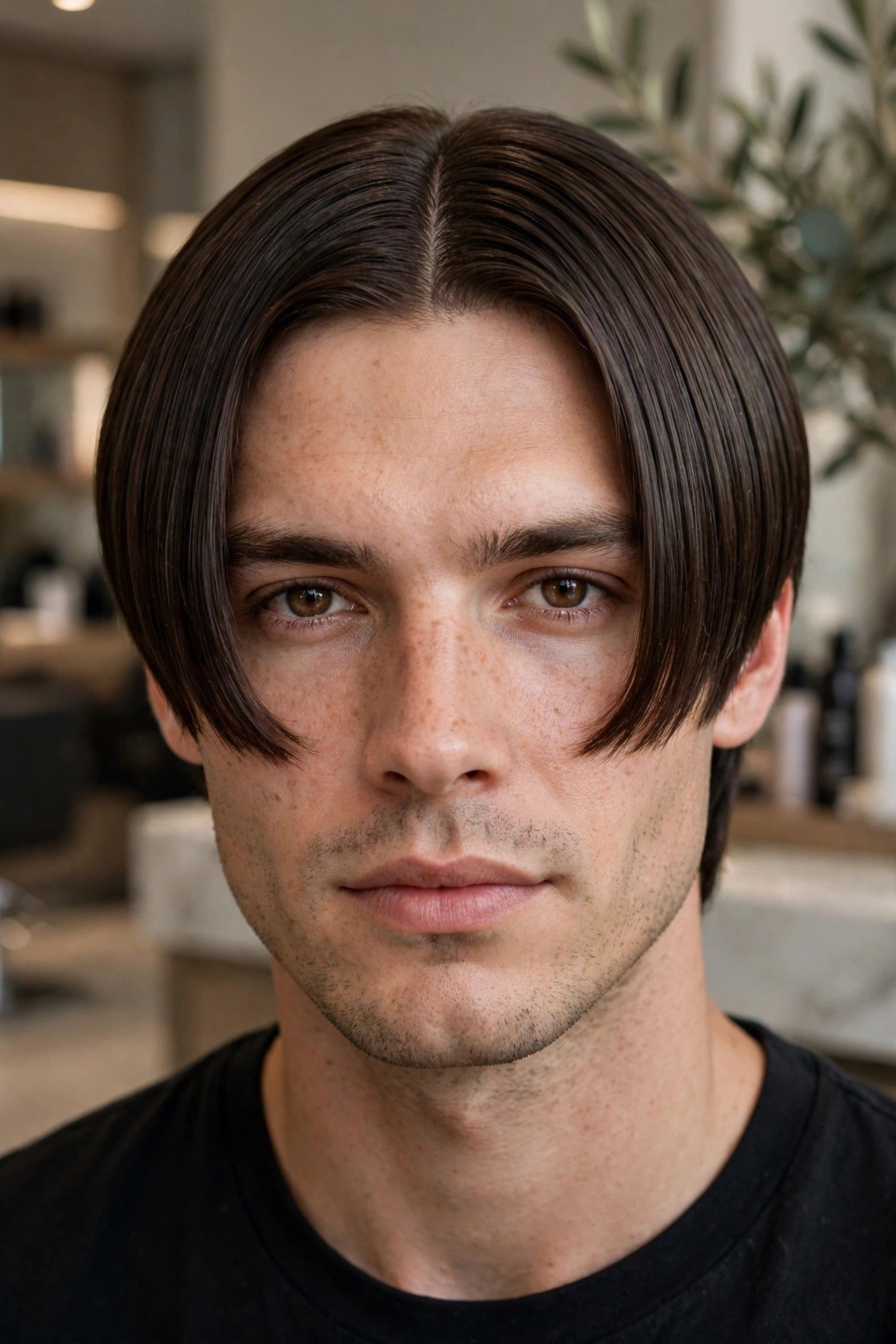
The straight hair curtain is the cleanest version of the style, with smooth panels that fall in a neat line from the part to the cheekbones. It looks sharp and deliberate, and the natural straightness of the hair means the parting stays visible and the shape holds all day. The parting is the heart of the look, so keep it clean and let the fringe fall naturally rather than forcing it into place.
It suits men with naturally straight hair of any density, and it flatters oval and long faces by adding softness at the sides. Ask your barber for four to five inches on top with a centre or off-centre part, and for the ends to be point cut so they do not look blunt. Bring a photo to your appointment, because curtain lengths and partings vary more than most men expect.
Blow dry the fringe with a round brush, curving the ends slightly under so the panels hug the face instead of sticking out. A pea sized amount of light paste smooths flyaways, and a shine spray adds a healthy finish without making the hair look greasy. Trim every four to five weeks, because straight hair shows uneven growth more clearly than wavy or curly hair does.
18. The Curtain for Round Face
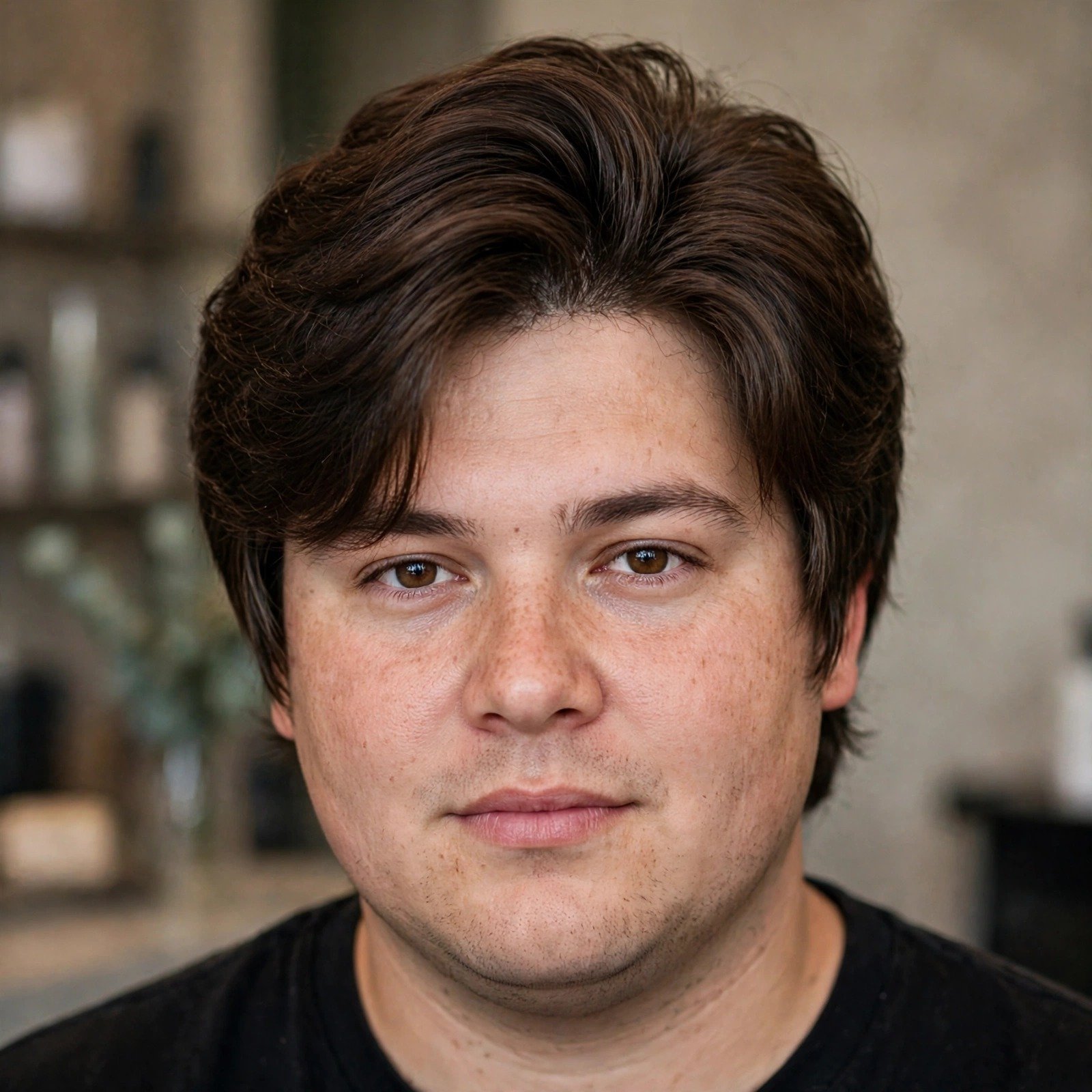
The round face curtain is designed to add height on top and length at the sides, which makes a round face look longer and more balanced. It keeps the fringe at four to five inches with the sides kept shorter, so the eye is drawn upwards instead of outwards. The parting is the heart of the look, so keep it clean and let the fringe fall naturally rather than forcing it into place.
It suits men with round or full faces, and it works best on straight or wavy hair that can hold volume at the crown. Ask your barber for height through the crown, a four to five inch fringe, and tapered sides that stay close to the head. Bring a photo to your appointment, because curtain lengths and partings vary more than most men expect.
Blow dry the fringe upwards and away from the face to build height, then let the panels fall so they frame the cheekbones. A volumising powder at the roots keeps the height all day, and you should avoid flat, heavy products that drag the top down. Trim the sides every three weeks to keep them close, while the top can be left for four to five weeks.
19. The Curtain for Long Face
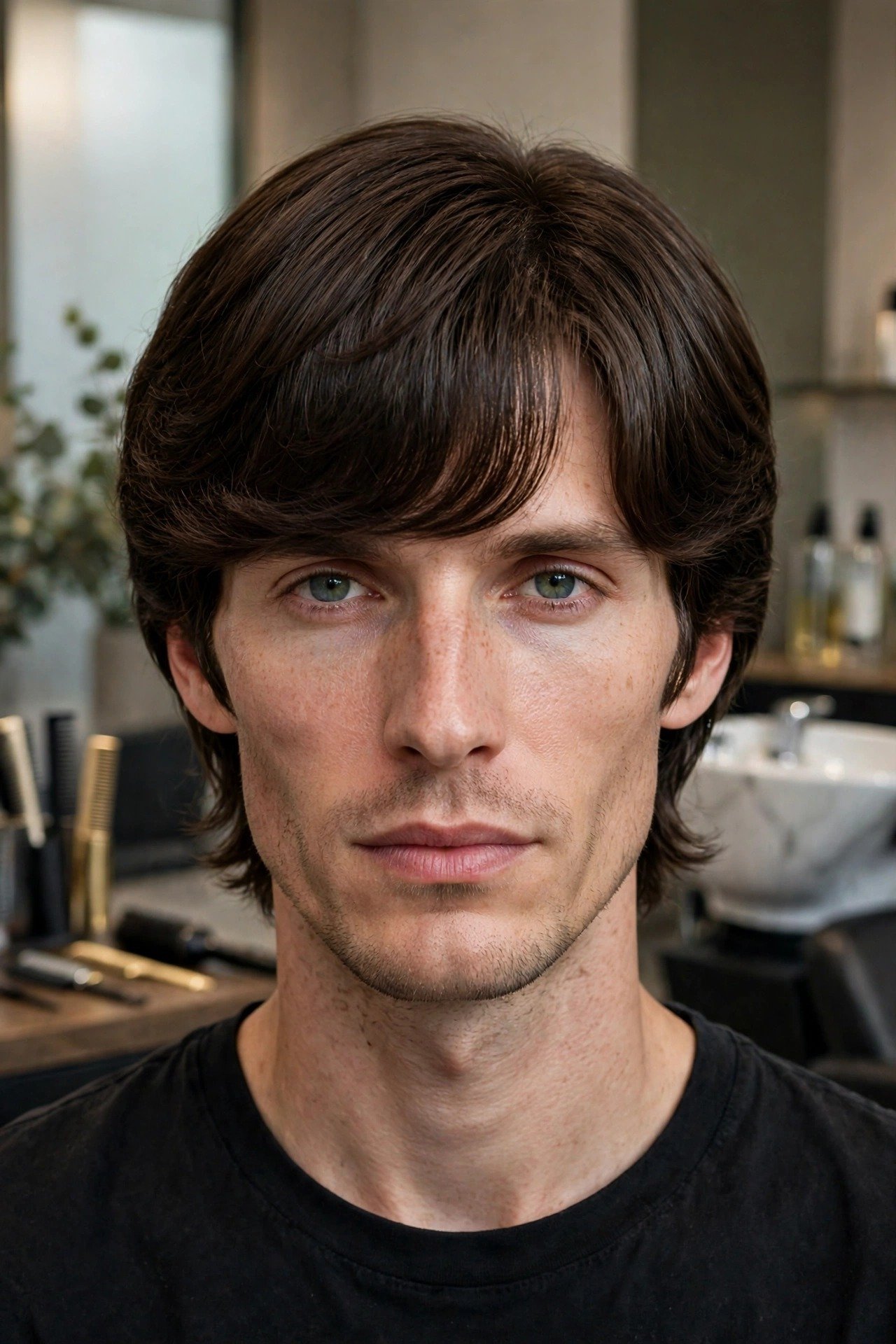
The long face curtain adds width across the forehead and softness at the sides, which balances out a longer face shape beautifully. It keeps the fringe slightly shorter, around three to four inches, with the panels falling wider across the face instead of hanging straight down. The parting is the heart of the look, so keep it clean and let the fringe fall naturally rather than forcing it into place.
It suits men with oblong or long faces, and it works on straight, wavy, or curly hair with medium density. Ask your barber for a three to four inch fringe with a wider part, and for the sides to keep some fullness instead of being faded tight. Bring a photo to your appointment, because curtain lengths and partings vary more than most men expect.
Style the fringe outwards to the sides rather than down, so it creates width across the forehead and shortens the look of the face. A light cream holds the side sweep in place, and you should avoid adding too much height at the crown. Trim every four to five weeks, and ask the barber to keep the sides full enough to balance the length of your face.
20. The Curtain for Square Face
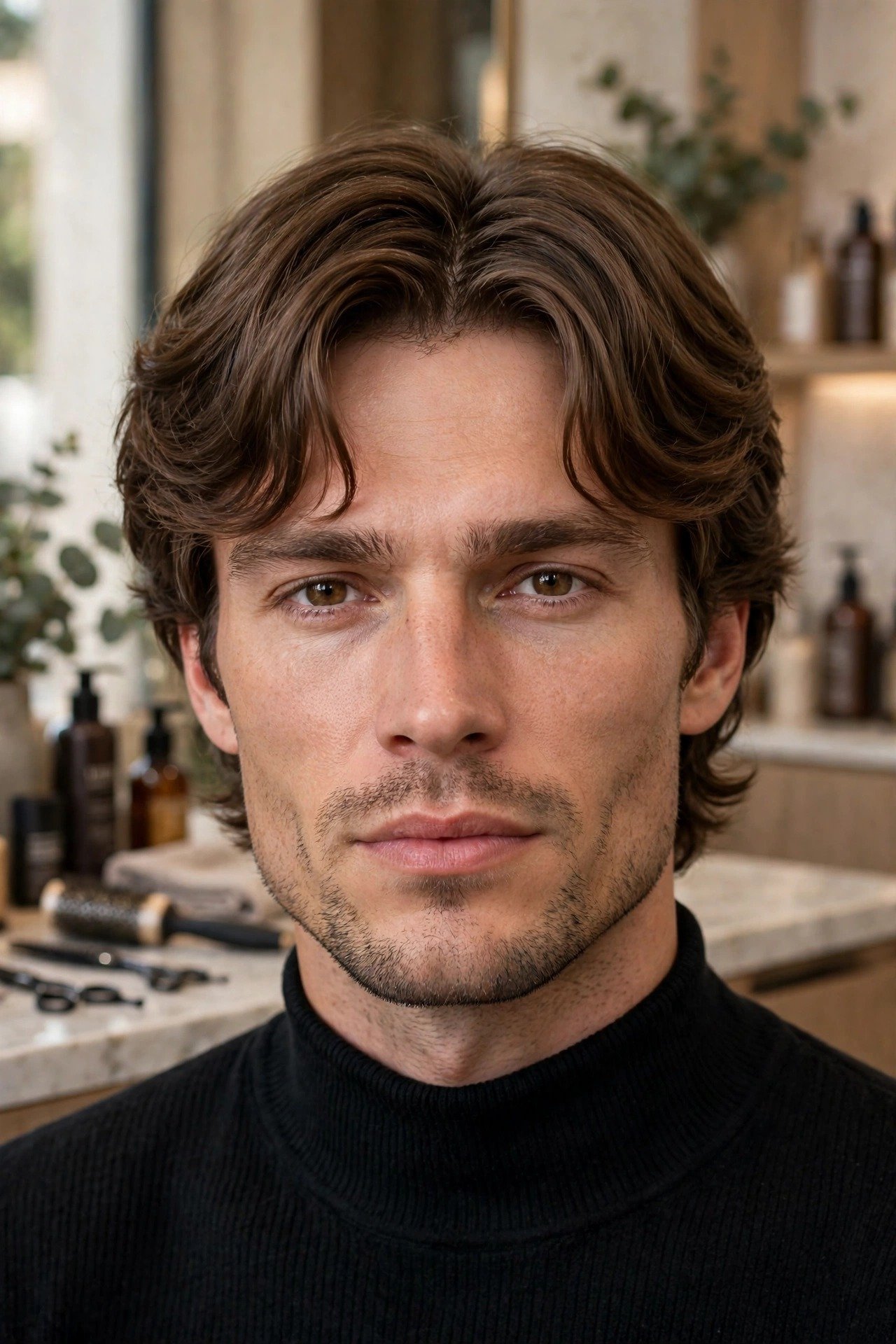
The square face curtain softens a strong jawline with a gentle, textured fringe that falls in soft panels across the forehead. It keeps the top at four to five inches with light texture through the ends, so the fringe looks relaxed rather than sharp and angular. The parting is the heart of the look, so keep it clean and let the fringe fall naturally rather than forcing it into place.
It suits men with square or strong jawlines, and it works well on straight or wavy hair with medium to thick density. Ask your barber for a four to five inch fringe with soft, textured ends, and for the sides to be blended rather than faded hard. Bring a photo to your appointment, because curtain lengths and partings vary more than most men expect.
Blow dry the fringe with a round brush, curving the ends slightly inwards so the panels soften the corners of the forehead. A matte cream gives the fringe a soft hold, and the finish should look natural rather than sculpted or stiff. Trim every four to five weeks to keep the texture fresh, and ask the barber to keep the ends soft at each visit.
21. The Curtain for Heart Face
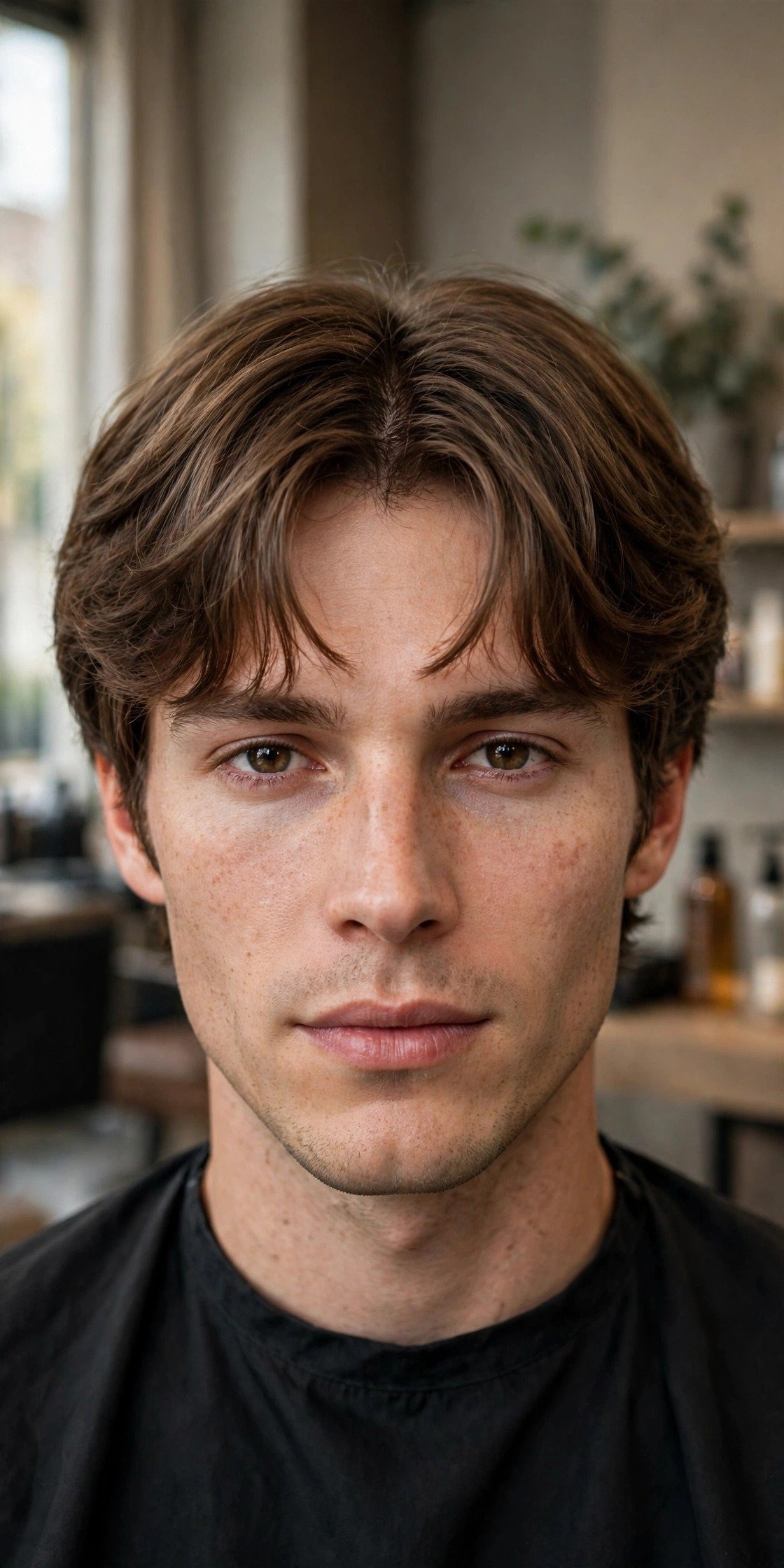
The heart face curtain balances a wider forehead and narrower chin by keeping the fringe full across the top and the sides slightly longer. It draws attention to the eyes and cheekbones while softening the forehead, and the longer side panels balance the narrower jaw below. The parting is the heart of the look, so keep it clean and let the fringe fall naturally rather than forcing it into place.
It suits men with heart shaped faces, and it works best on straight or wavy hair with enough density to fill out the fringe. Ask your barber for a four to five inch fringe with a soft centre part, and for the sides to be left a little longer to balance the chin. Bring a photo to your appointment, because curtain lengths and partings vary more than most men expect.
Blow dry the fringe forward and out to the sides, so the panels sit wide across the forehead and frame the cheekbones. A light paste keeps the fringe in place, and you should avoid tight fades that make the forehead look even wider. Trim every four to five weeks, and ask the barber to check the balance between the top and the sides at each visit.
22. The Curtain with Flow
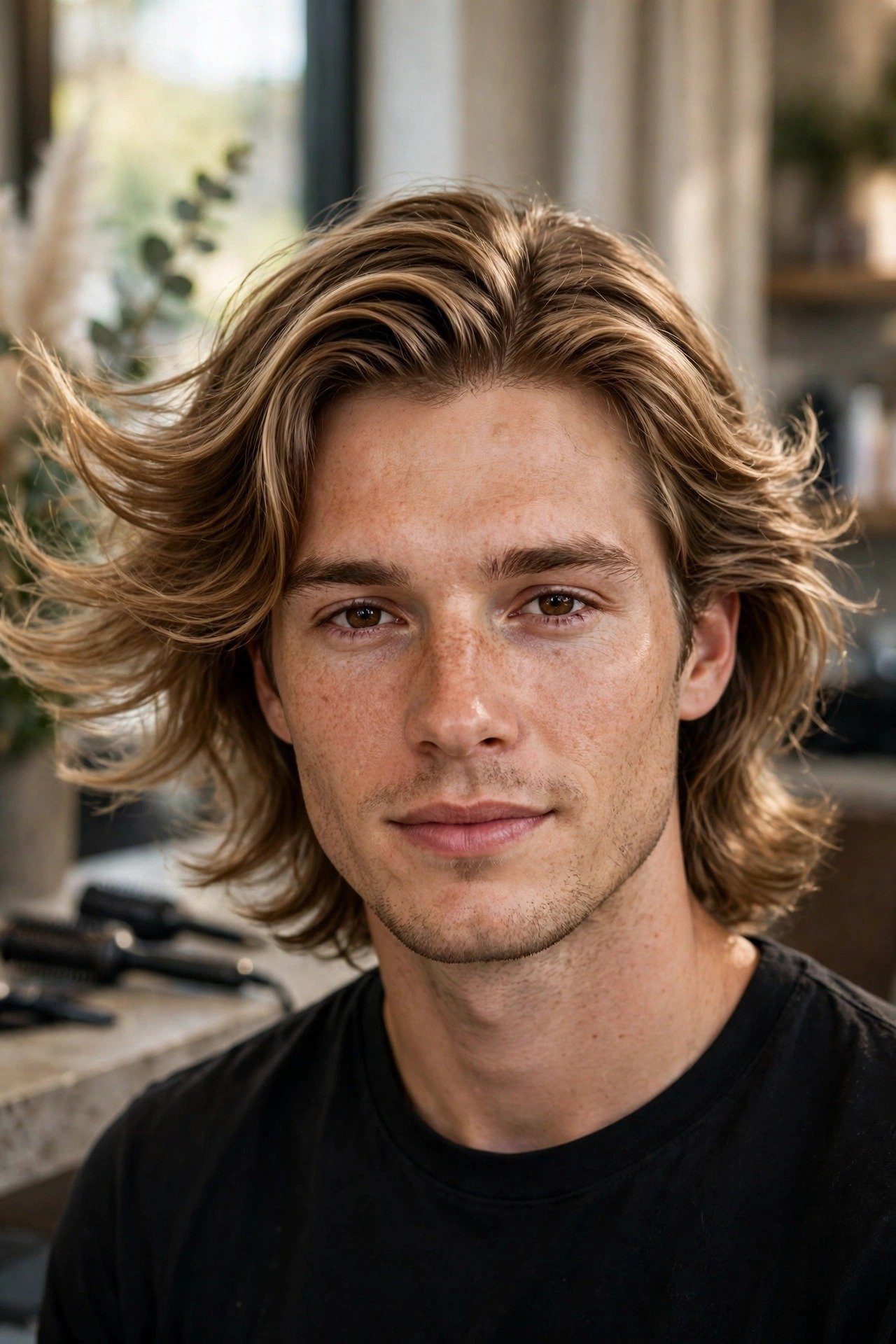
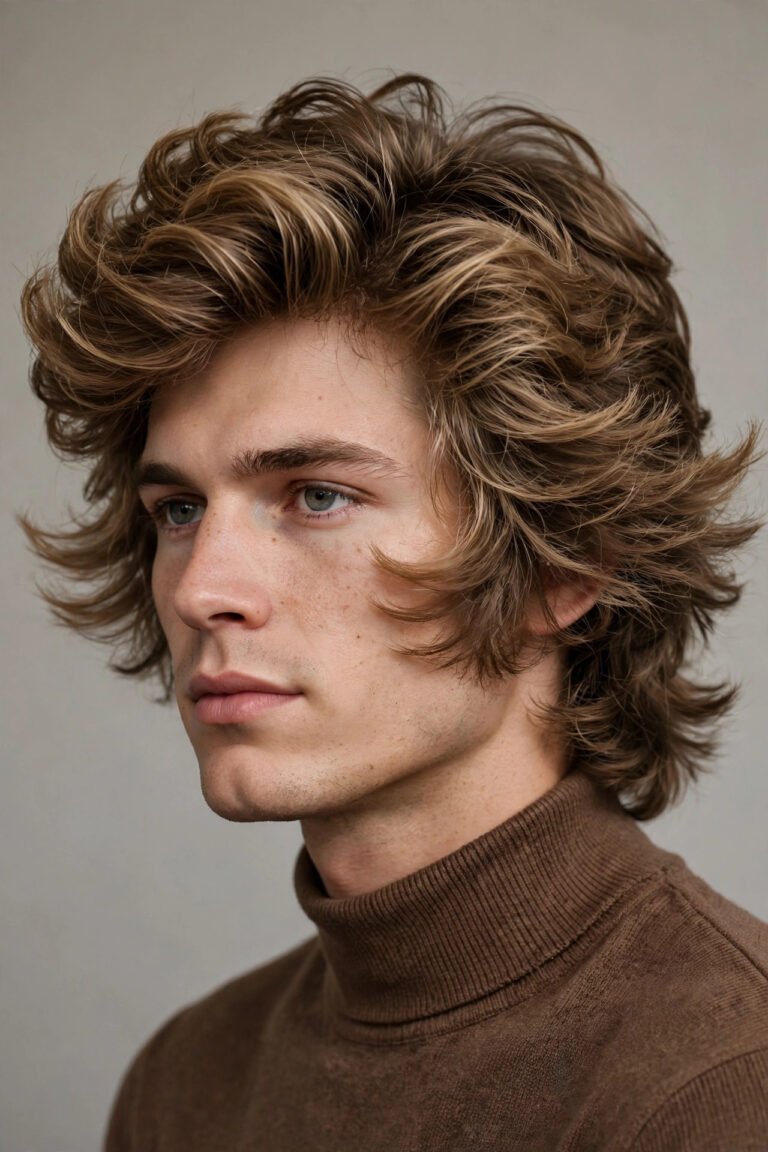
The curtain with flow lets the fringe grow past the usual length and sweep backwards, blending the nineties curtain into the classic hockey flow shape. It keeps the front at five to six inches with long layers through the back, so the hair moves freely and looks effortless from every angle. If you want the fringe to keep growing, the flow haircut is the natural next step once the curtain passes collar length.
It suits men with straight or wavy hair who like length, and it flatters oval and long faces by adding movement around the jaw. Ask your barber for five to six inches on top with long layers, a soft centre part, and the back left long enough to flow past the collar. Bring a photo to your appointment, because curtain lengths and partings vary more than most men expect.
Blow dry the fringe back and away from the face, then let it fall naturally so the flow builds through the lengths. A sea salt spray adds texture to the flow, and you should avoid heavy products that stop the hair moving freely. Trim the ends every six weeks to keep the flow healthy, and ask the barber to keep the layers long at each visit.
23. The Curtain with Eboy Styling
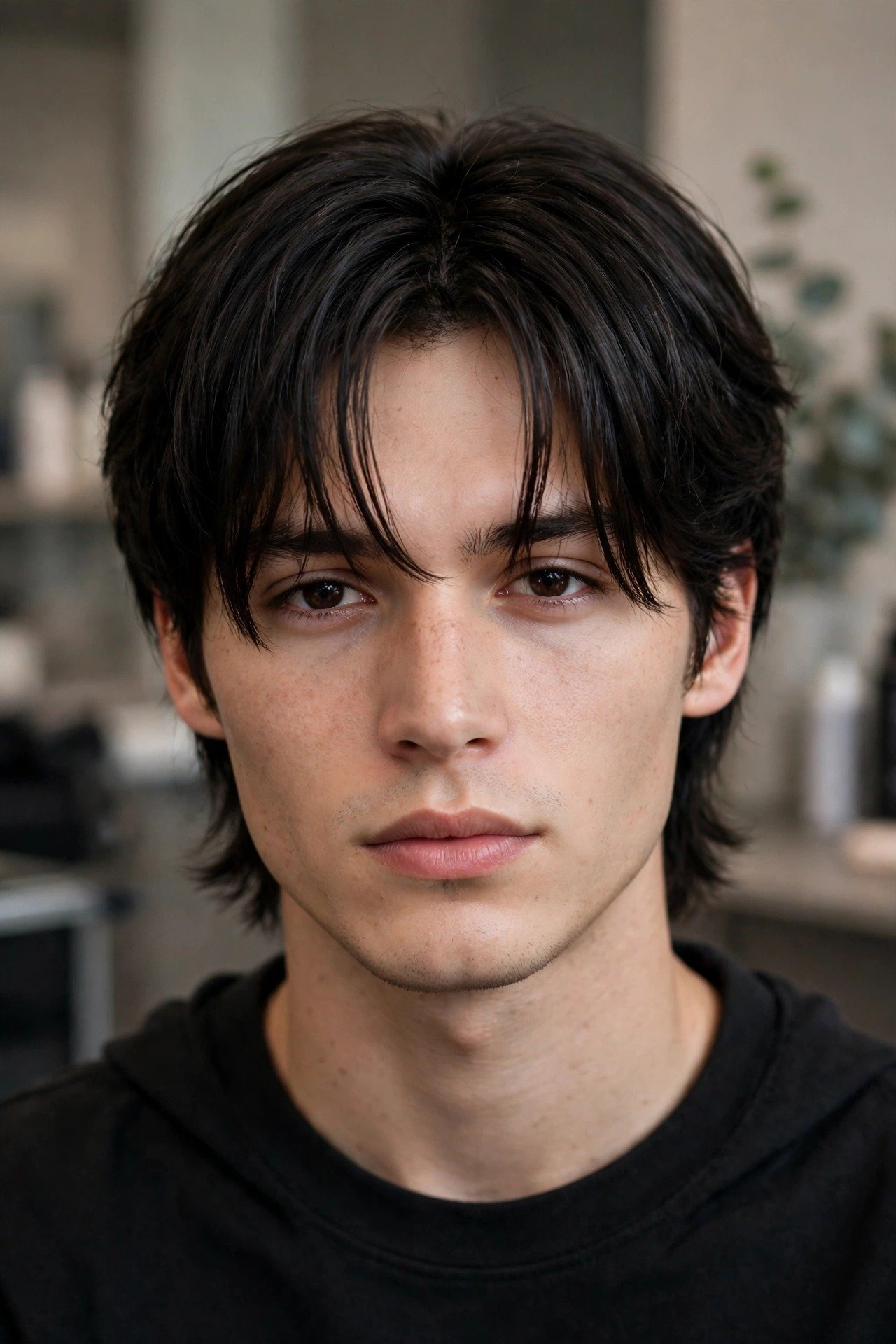
The eboy curtain is the internet era version of the style, with a centre part, a longer fringe that brushes the eyebrows, and a soft, slightly messy finish. It takes the classic curtain and gives it a younger, moodier edge, often paired with dark hair and a middle part that sits low on the forehead. Soft, feathered ends stop the fringe looking heavy and help it sit flat against the forehead.
It suits teenagers and young men with straight or wavy hair, and it flatters oval and heart shaped faces with its soft, face-framing panels. Ask your barber for a four to five inch fringe with a low centre part, textured ends, and the sides kept medium length rather than faded short. Bring a photo to your appointment, because curtain lengths and partings vary more than most men expect.
Blow dry the fringe forward and down, then split the part low so the panels fall just above the eyebrows. A light cream or sea salt spray gives the eboy finish its soft texture, and the look should feel relaxed rather than overstyled. Trim every four weeks to keep the fringe at eyebrow length, because the eboy shape loses its edge once it grows past the eyes.
24. The Curtain with Fringe Layers
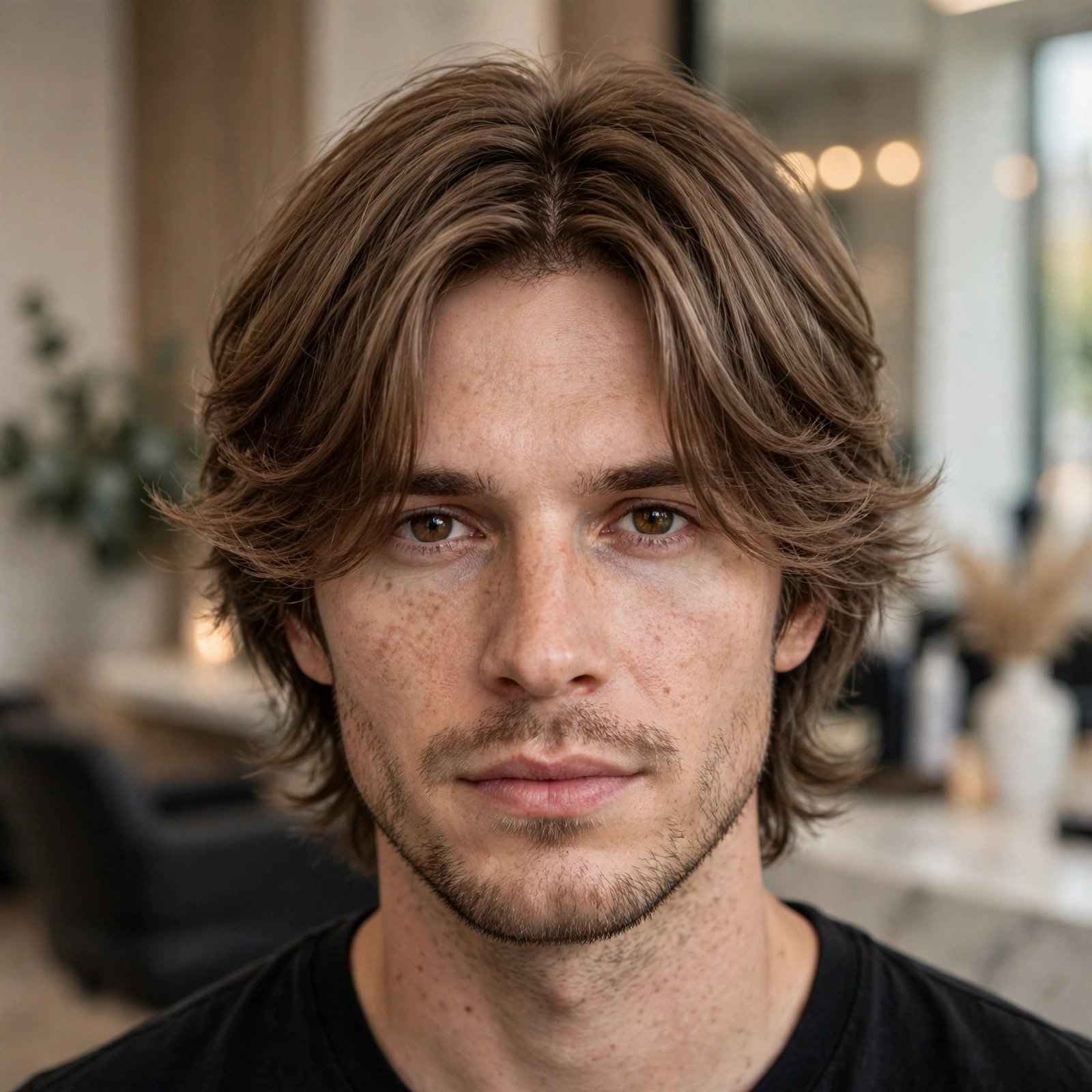
The layered curtain fringe builds the style through graduated layers, with the shortest pieces at the front and longer layers falling behind them. It gives the fringe depth and movement, and the layers stop the curtain looking flat by creating soft, overlapping panels around the face. The parting is the heart of the look, so keep it clean and let the fringe fall naturally rather than forcing it into place.
It suits men with thick or wavy hair, and it flatters round and square faces because the layers break up the width of the forehead. Ask your barber for layered fringe work with the shortest layer at three inches and the longest at five, point cut to blend the steps. Bring a photo to your appointment, because curtain lengths and partings vary more than most men expect.
Blow dry each layer separately with a round brush, starting at the shortest pieces and working backwards through the longer ones. A light cream defines the layers without clumping them together, and the finish should show each layer sitting separately. Trim every four to five weeks, and ask the barber to refresh the layering so the steps stay visible and do not grow into one length.
25. The Curtain with Disconnected Sides
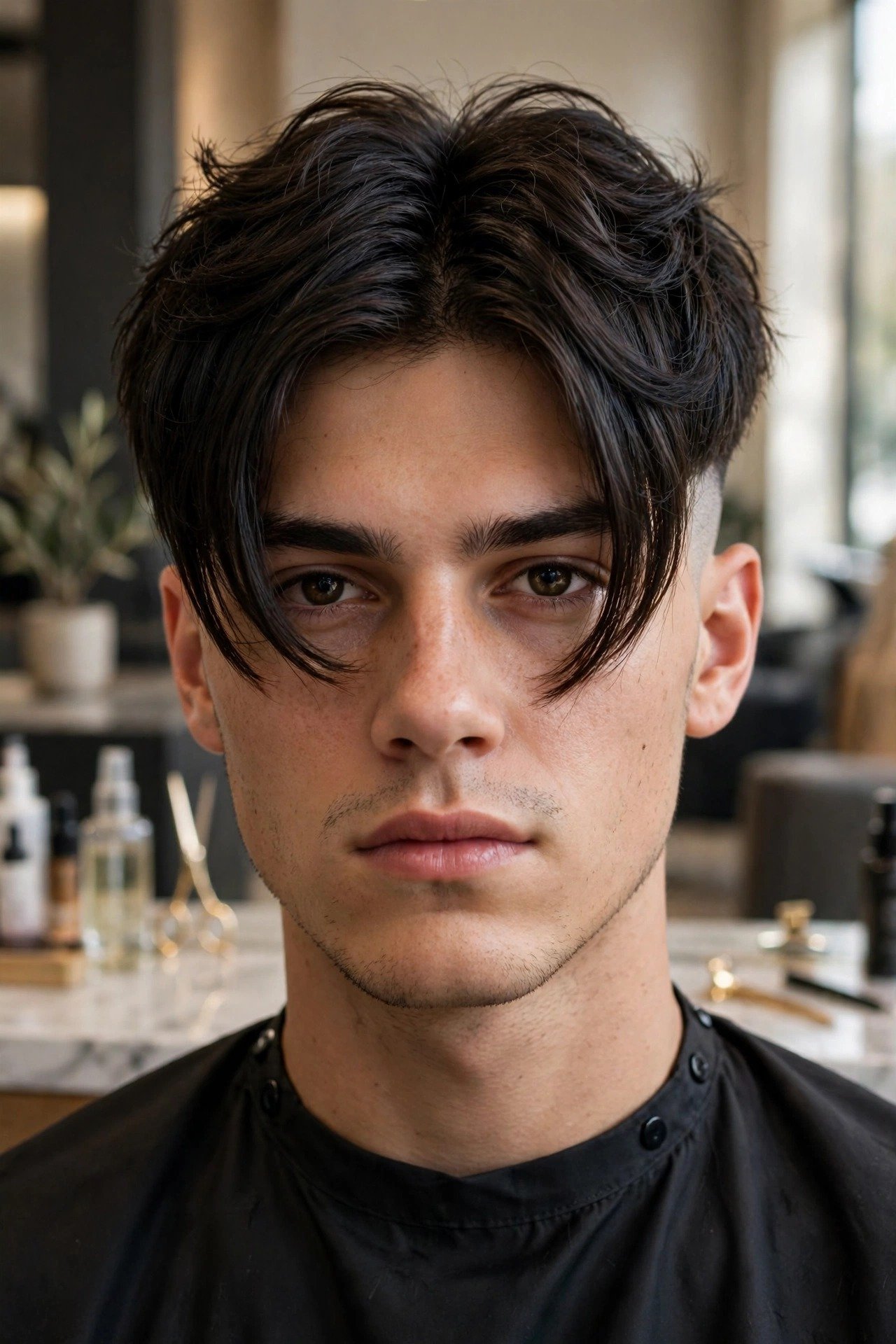
The disconnected curtain keeps the long fringe on top and cuts the sides very short with a visible line where the two lengths meet. It is a bold, high-contrast take on the curtain, and the sharp disconnection makes the top look even longer and more dramatic. The parting is the heart of the look, so keep it clean and let the fringe fall naturally rather than forcing it into place.
It suits men with thick, straight hair and strong features, and it flatters oval and square faces by adding height and edge. Ask your barber for four to six inches on top with a centre part, and for the sides to be disconnected with a number one or two guard. Bring a photo to your appointment, because curtain lengths and partings vary more than most men expect.
Style the fringe up and back with a round brush, then let it fall into the part so the contrast with the short sides stays clear. A matte paste holds the top in place, and the short sides need no product at all to look sharp. Keep the sides tight with a tidy up every two weeks, because regrowth softens the disconnection line quickly.
26. The Curtain with Temple Fade
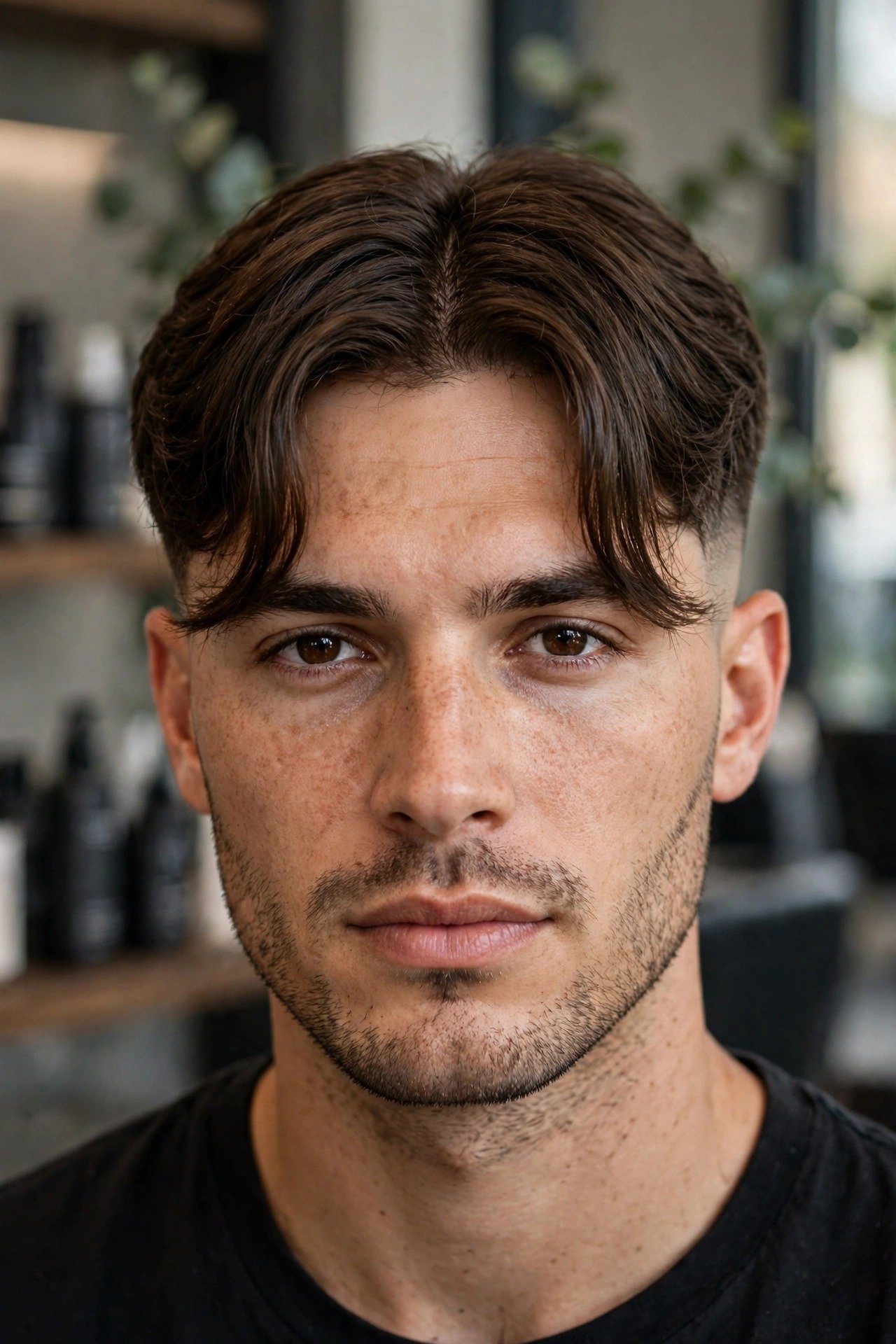
The temple fade sharpens just the area around the temples, fading the hair down to the skin in a small, neat patch on each side. Paired with a curtain fringe, it adds a clean, modern detail without taking the fade up the whole side of the head. The parting is the heart of the look, so keep it clean and let the fringe fall naturally rather than forcing it into place.
It suits men who want a tidy finish with minimal commitment, and it flatters most face shapes by cleaning up the hairline. Ask your barber for a four to five inch curtain top, and a temple fade that blends from a number one guard down to the skin at the temples. Bring a photo to your appointment, because curtain lengths and partings vary more than most men expect.
Style the fringe as usual, and smooth the faded temples down with a little cream so the blend stays neat. The temple fade is low maintenance for a fade, and it only needs a refresh every three weeks to stay sharp. Book a temple tidy up between full cuts if you want the fade to stay crisp without shortening the fringe.
27. The Curtain with Blowout Volume
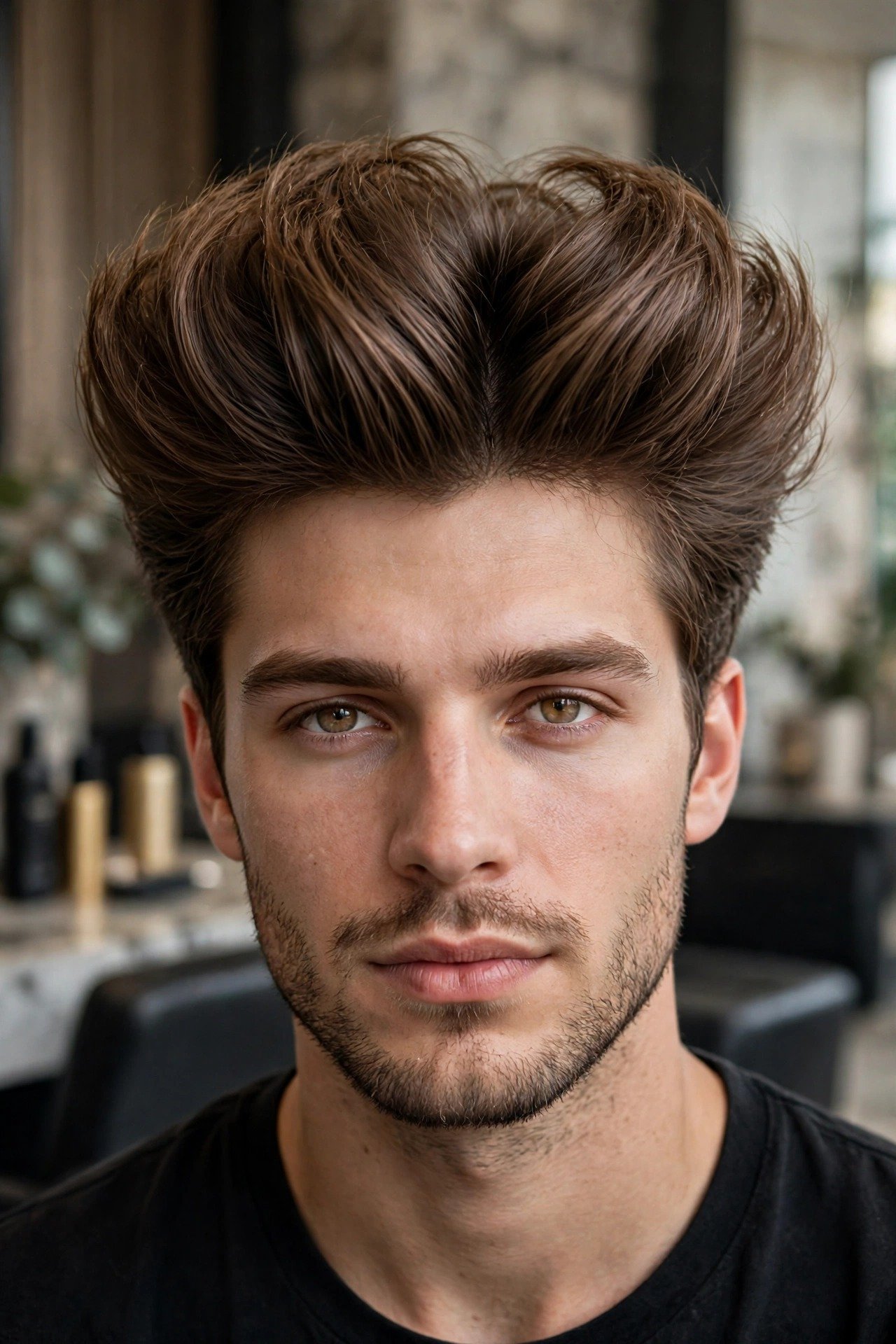
The blowout curtain builds serious volume through the fringe, with the hair blow dried up and back so the panels sit high and full. It turns the relaxed curtain into a statement style, and the height at the front gives the whole cut a bold, confident presence. The parting is the heart of the look, so keep it clean and let the fringe fall naturally rather than forcing it into place.
It suits men with medium to thick hair, and it flatters round and square faces by adding height and lengthening the face. Ask your barber for five to six inches on top with long layers, and for the fringe to be cut so it supports volume at the roots. Bring a photo to your appointment, because curtain lengths and partings vary more than most men expect.
Blow dry the fringe upwards with a large round brush, then split the part and let the panels fall with the volume intact. A volumising powder at the roots and a light paste on the ends will hold the blowout shape for most of the day. Trim every four to five weeks to keep the layers fresh, because grown out layers lose their ability to hold volume.
28. The Curtain with Messy Texture
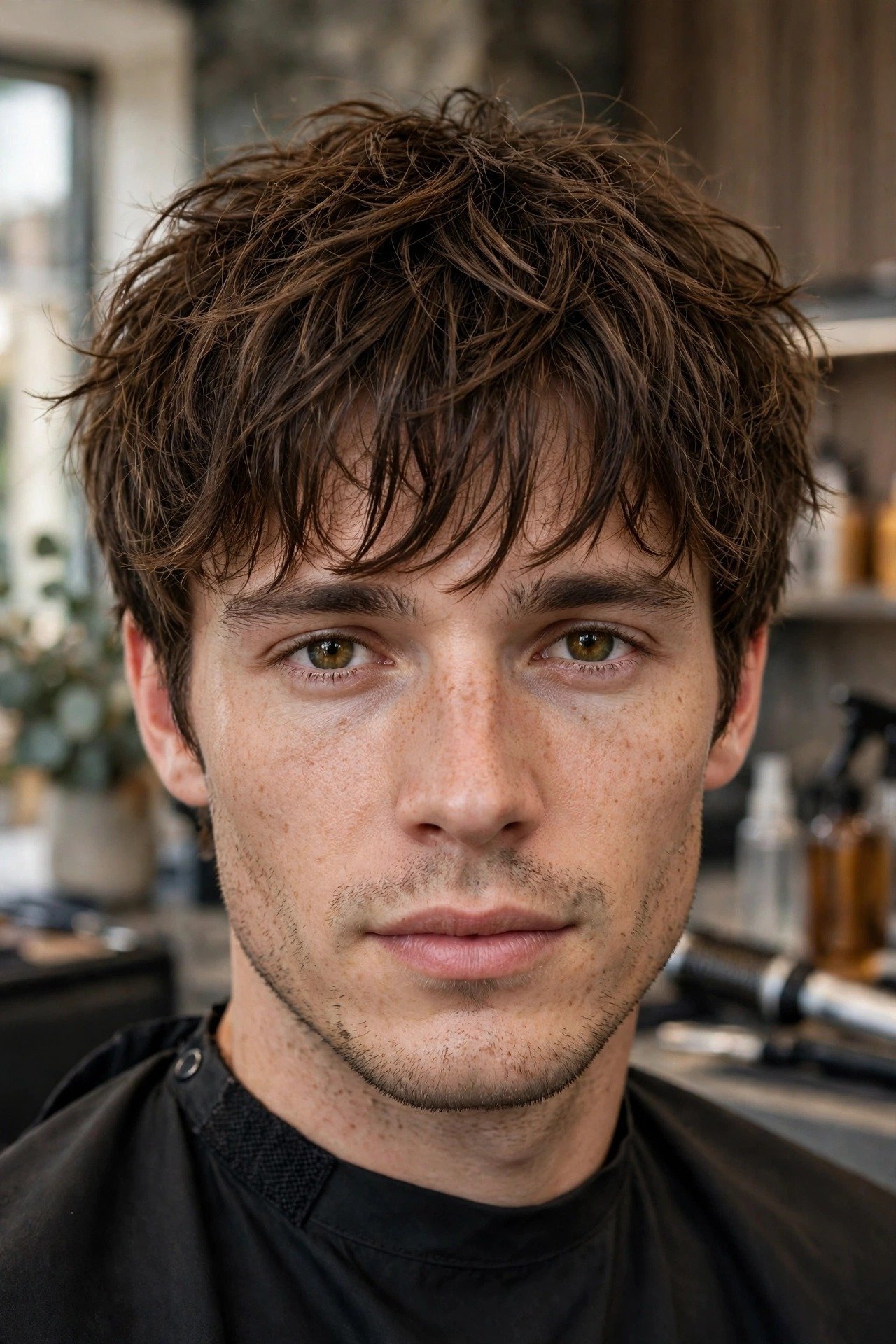
The messy curtain is the curtain at its most relaxed, with the fringe point cut and tousled so it falls in uneven, lived-in pieces. It looks like you just woke up with great hair, and the messy texture means the style actually gets better as the day goes on. The parting is the heart of the look, so keep it clean and let the fringe fall naturally rather than forcing it into place.
It suits men with wavy or thick hair, and it flatters most face shapes because the uneven texture softens strong features. Ask your barber for a four to five inch fringe with heavy texturising and point cutting, and for the part to be kept soft and undefined. Bring a photo to your appointment, because curtain lengths and partings vary more than most men expect.
Scrunch sea salt spray into damp hair, then let it air dry and pinch the fringe into pieces with your fingers. A matte paste adds definition to the tousled pieces, and you should avoid brushing the fringe once it is dry. Trim every four weeks to refresh the texture, because the point cut ends grow out and start to look heavy.
29. The Curtain with Sleek Finish
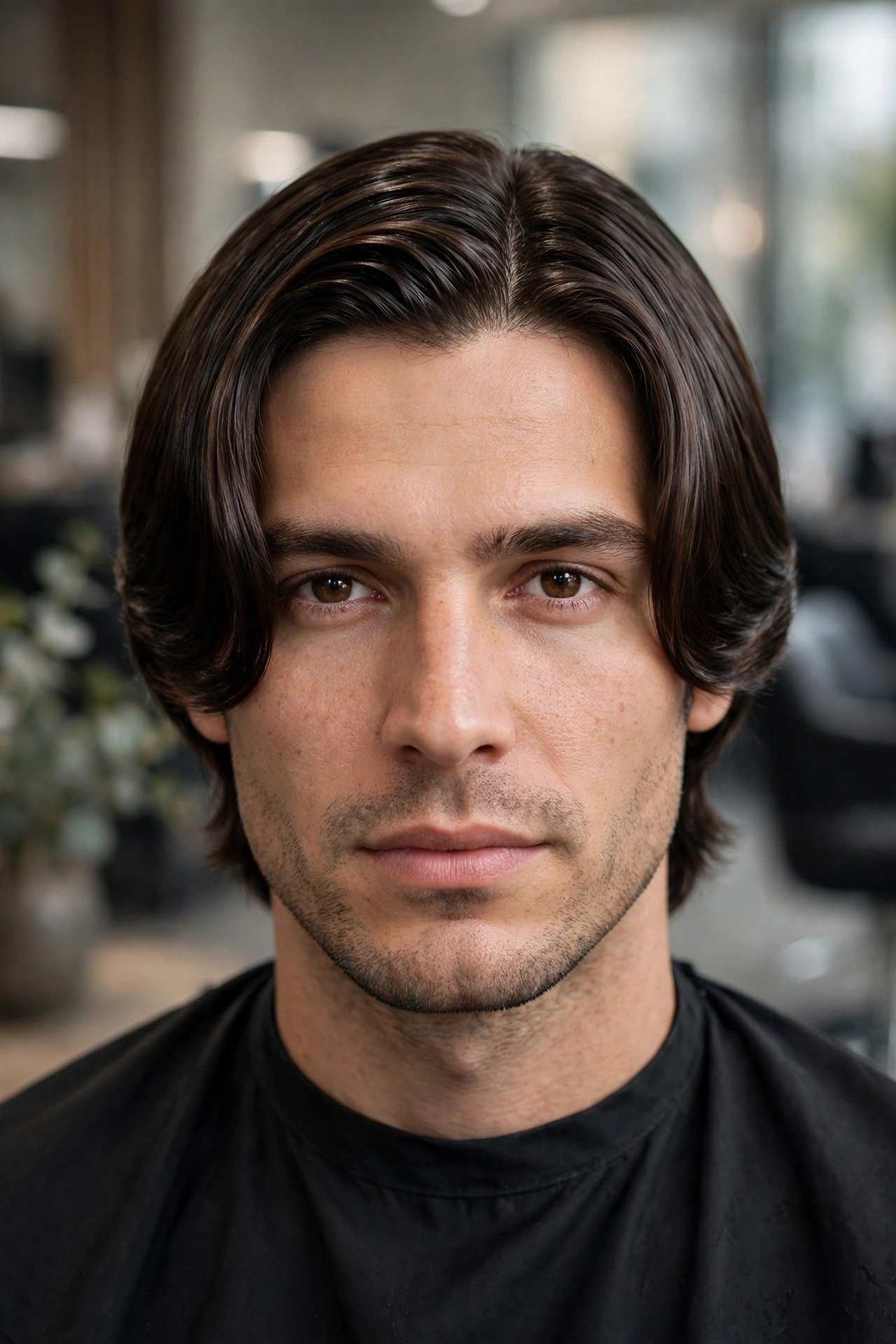
The sleek curtain is the polished, grown-up version of the style, with smooth panels that fall in a clean line from the part to the cheekbones. It looks refined and deliberate, and the sleek finish makes it a strong choice for formal occasions and smart settings. The parting is the heart of the look, so keep it clean and let the fringe fall naturally rather than forcing it into place.
It suits men with straight hair and oval or long faces, and it works best when the hair is healthy enough to hold a shine. Ask your barber for a four to five inch fringe with a clean centre part, and for the ends to be cut blunt so the panels sit smoothly. Bring a photo to your appointment, because curtain lengths and partings vary more than most men expect.
Blow dry the fringe with a round brush, then smooth a shine serum through the panels and tuck the ends slightly under. A light pomade gives the sleek finish its polish, and you should avoid matte products that dull the shine. Trim every four weeks to keep the blunt ends sharp, and use a weekly conditioning mask to keep the sleek shine.
30. The Curtain with Curtain Bangs
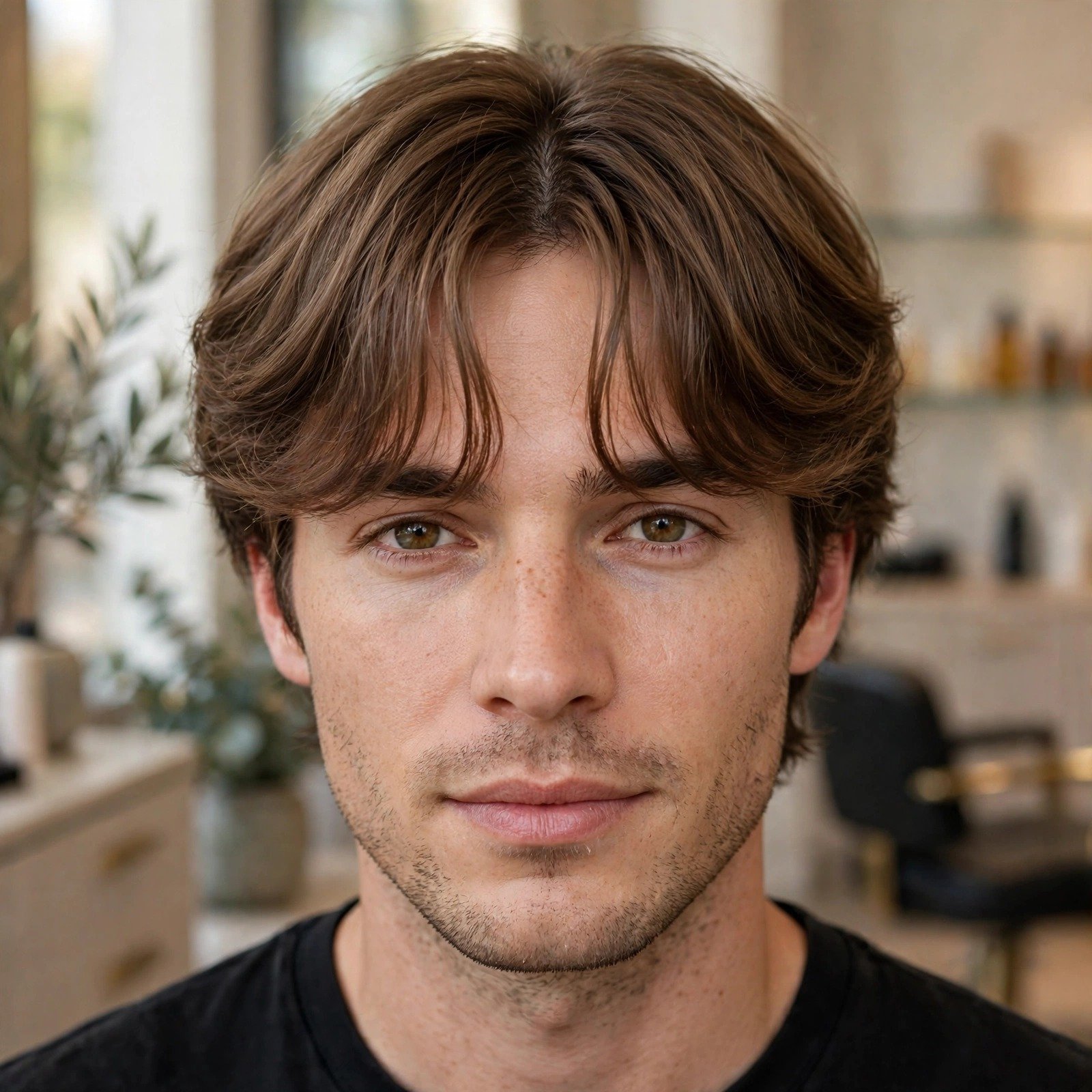
Curtain bangs are the shorter, softer cousin of the full curtain, with the fringe kept at eyebrow length and split gently in the middle. They frame the eyes beautifully without covering them, and the shorter length makes them the easiest curtain variation to manage daily. The parting is the heart of the look, so keep it clean and let the fringe fall naturally rather than forcing it into place.
It suits men with straight or wavy hair, and it flatters oval and heart shaped faces by softening the forehead. Ask your barber for a three inch fringe with a soft centre split, and for the bangs to be point cut so they fall in light pieces. Bring a photo to your appointment, because curtain lengths and partings vary more than most men expect.
Blow dry the bangs forward, then split them with your fingers and let them fall naturally on either side of the part. A tiny amount of light cream keeps the bangs in place, and the style should take less than three minutes each morning. Trim every three to four weeks, because curtain bangs lose their shape fast once they grow past the eyebrows.
31. The Curtain with Long Layers
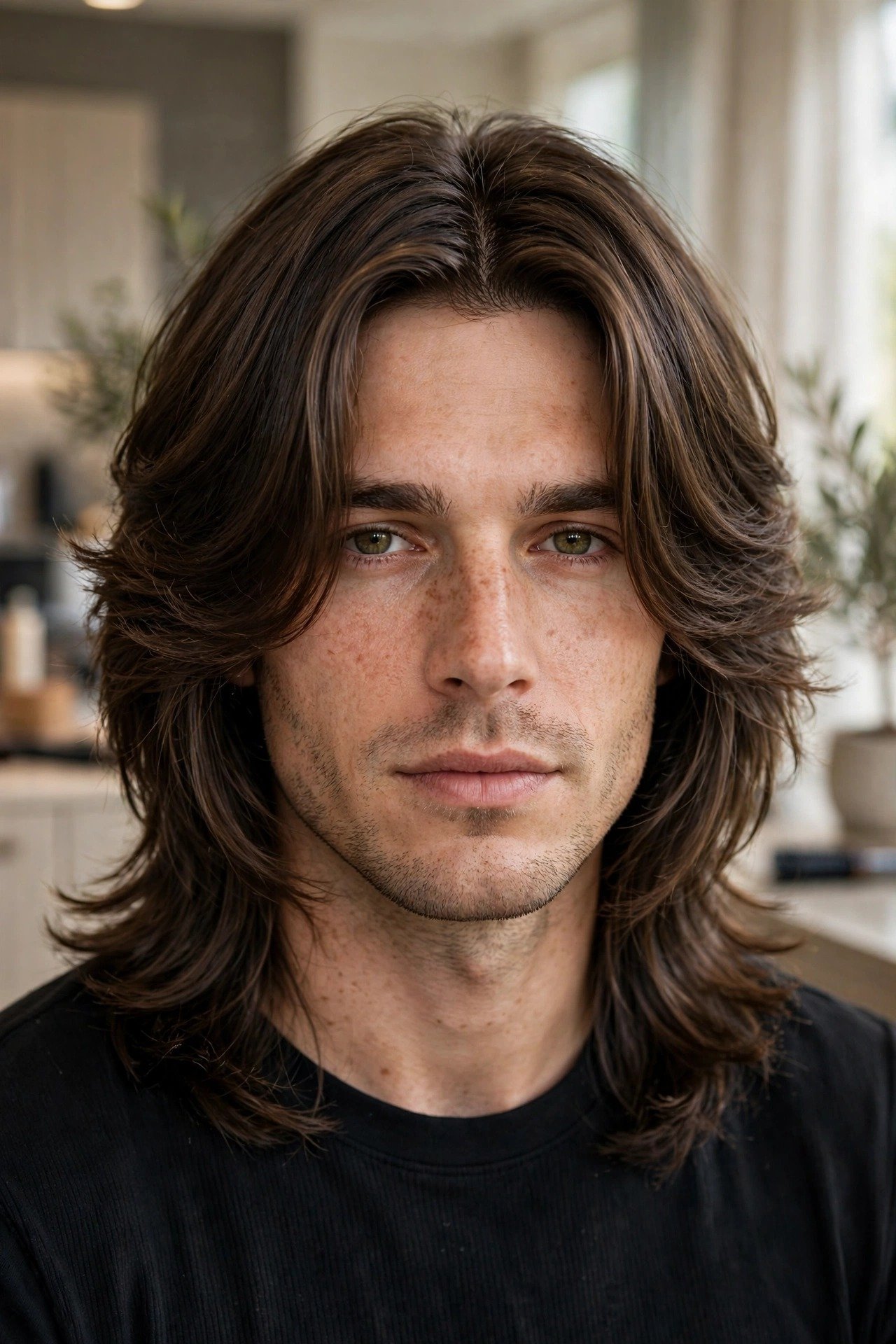
The long layered curtain extends the fringe into flowing layers that fall past the cheekbones and blend into the lengths behind them. It gives the curtain a softer, more romantic feel, and the long layers create movement that makes the whole cut look effortless. The parting is the heart of the look, so keep it clean and let the fringe fall naturally rather than forcing it into place.
It suits men with straight or wavy hair who like length, and it flatters oval and long faces by adding softness around the jaw. Ask your barber for a five to six inch fringe with long layers cut through the sides and back, all blended so no harsh steps show. Bring a photo to your appointment, because curtain lengths and partings vary more than most men expect.
Blow dry the layers with a round brush, curving the ends away from the face so the panels open up around the cheekbones. A sea salt spray adds texture to the layers, and you should avoid heavy creams that weigh the longer lengths down. Trim the ends every six weeks to keep the layers healthy, and ask the barber to keep the layering long at each visit.
32. The Curtain with Short Back and Sides
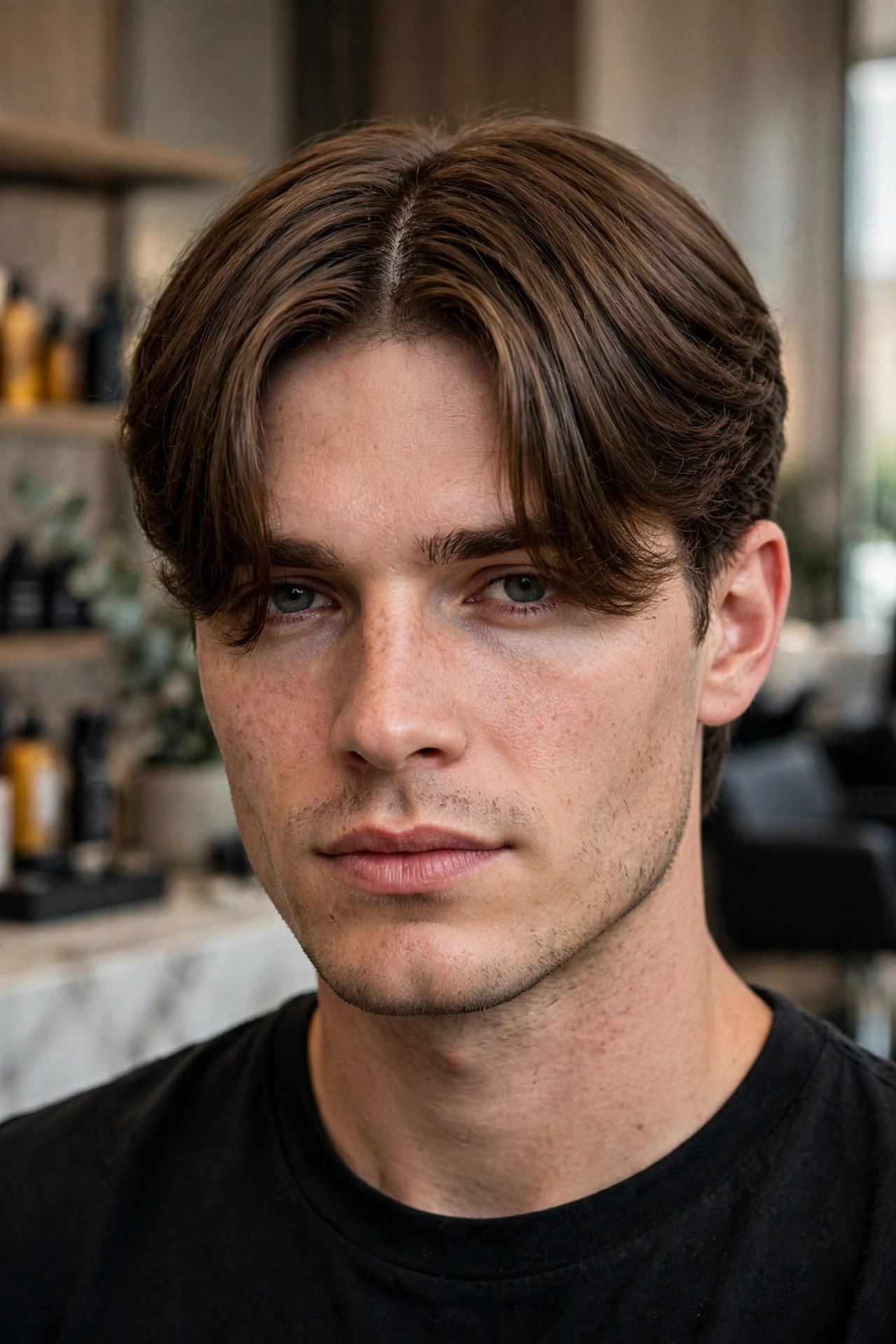
This version keeps the curtain fringe long on top while the back and sides are cut short and neat, giving the style a clean, practical finish. It is the most wearable curtain for everyday life, because the short sides stay tidy for weeks while the fringe keeps its nineties charm. The parting is the heart of the look, so keep it clean and let the fringe fall naturally rather than forcing it into place.
It suits most face shapes and hair types, and it is a great first curtain for men who are trying the style for the first time. Ask your barber for four to five inches on top with a centre part, and a number three or four guard on the back and sides. Bring a photo to your appointment, because curtain lengths and partings vary more than most men expect.
Style the fringe with a round brush as usual, and smooth the short sides down with a little cream so they sit flat. The short sides need a trim every three weeks, while the curtain top can be left for four to five weeks between cuts. Book a sides tidy up between full cuts if you want the back and sides to stay neat without shortening the fringe.
33. The Curtain with Natural Wave
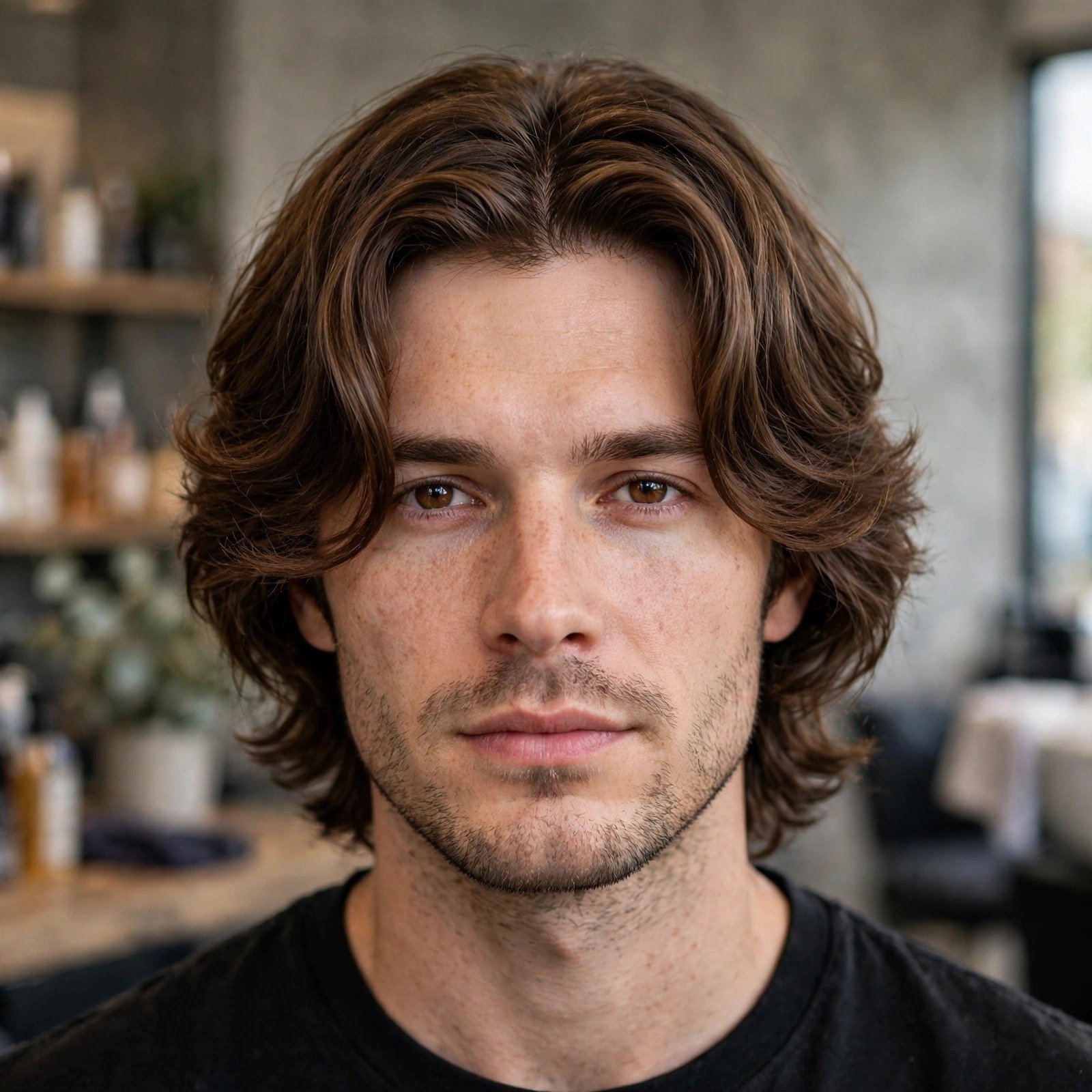
The natural wave curtain lets the hair do the work, with the fringe falling in soft, effortless waves that need almost no styling. It is one of the most low maintenance curtain variations, because the wave gives the fringe its shape without heat or product. The parting is the heart of the look, so keep it clean and let the fringe fall naturally rather than forcing it into place.
It suits men with naturally wavy hair of any density, and it flatters most face shapes by adding soft movement around the forehead. Ask your barber for a four to five inch fringe with a soft part, and for the waves to be point cut so they fall in natural pieces. Bring a photo to your appointment, because curtain lengths and partings vary more than most men expect.
Scrunch a little sea salt spray into damp hair, then let it air dry so the waves set in their own pattern. A curl cream can add definition on flat days, and you should avoid brushing the fringe once it has dried. Trim every five weeks to keep the waves from growing heavy, and ask for the weight to be thinned from underneath.
34. The Curtain Fringe with Beard
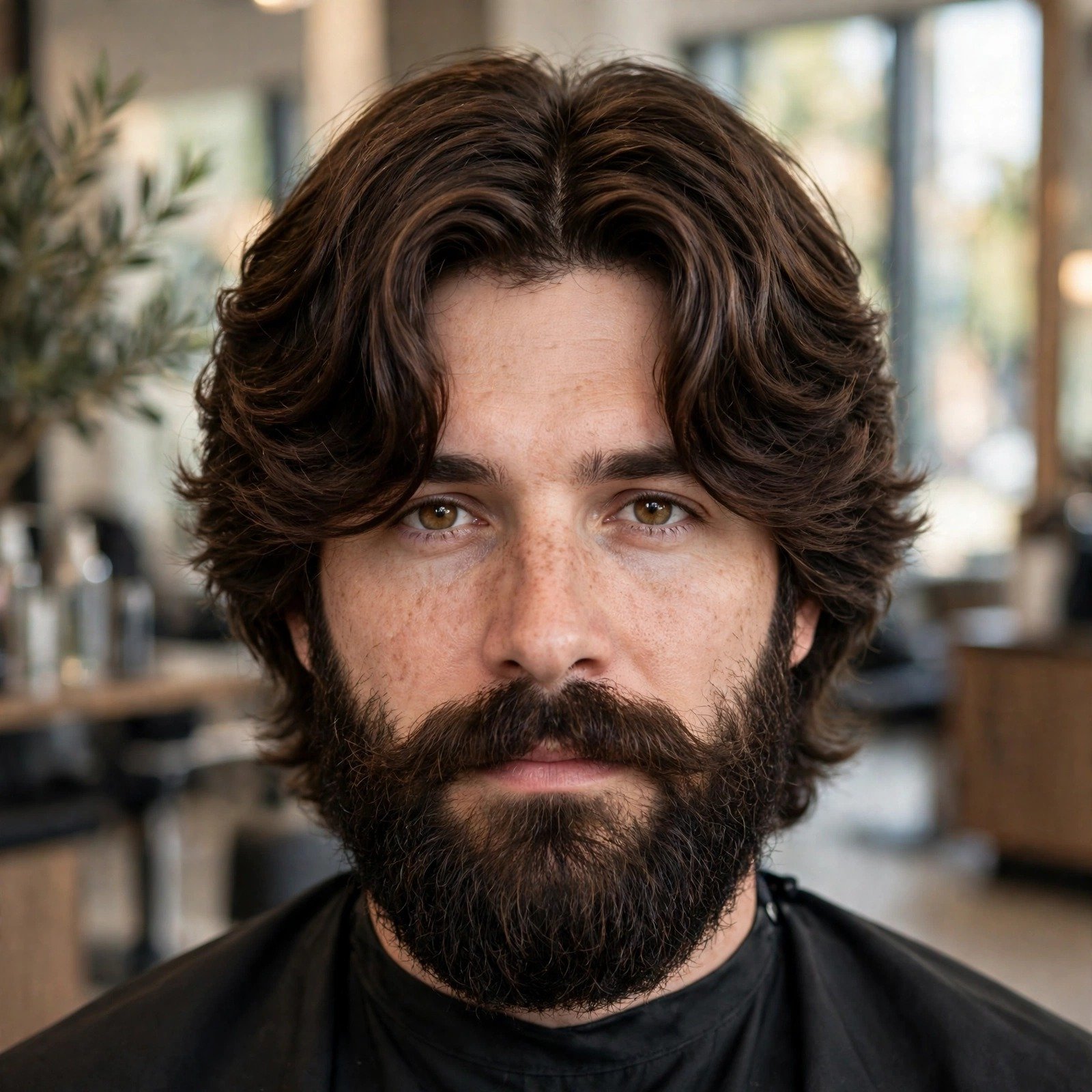
The curtain fringe with beard pairs the soft, face-framing fringe with a full beard, creating a balanced look where the hair and beard work together. It is a strong, masculine combination, and the curtain softens the top while the beard adds structure and definition to the lower face. The parting is the heart of the look, so keep it clean and let the fringe fall naturally rather than forcing it into place.
It suits men who can grow a full beard, and it flatters square and oval faces by balancing the length of the beard with the fringe. Ask your barber for a four to five inch curtain fringe, and for the beard to be shaped so it connects cleanly with the sideburns. Bring a photo to your appointment, because curtain lengths and partings vary more than most men expect.
Style the fringe as usual with a round brush, then apply beard oil and comb the beard downwards so it sits neatly below the fringe. A beard balm keeps the beard shaped through the day, and the fringe should be kept light so it does not compete with the beard. Trim the fringe every four weeks and shape the beard every two weeks, so the two elements stay balanced as they grow.
35. The Curtain with Highlights
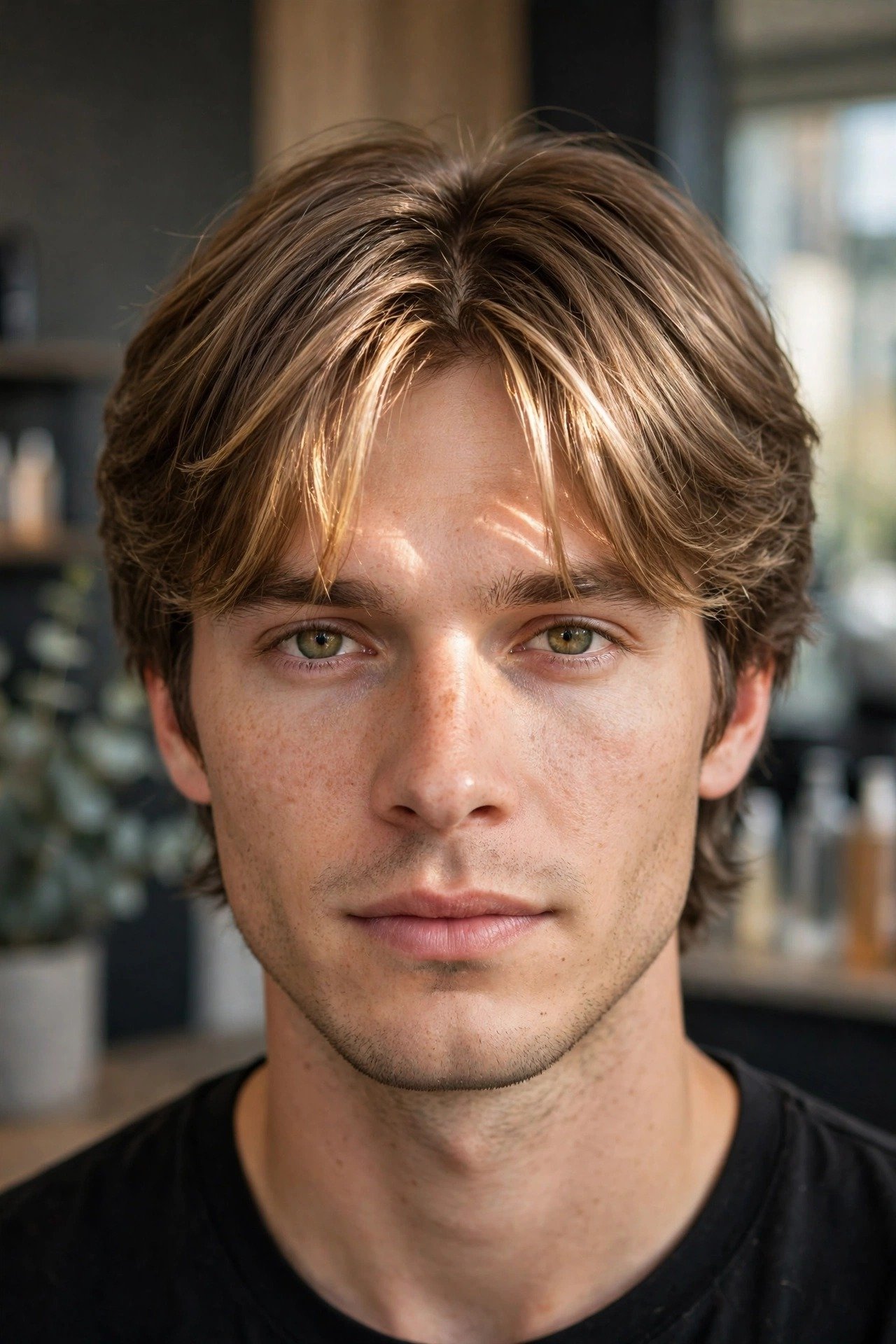
The highlighted curtain adds soft, sun-kissed strands through the fringe, which brings out the texture and makes the parting stand out. It gives the classic curtain a fresh, summery feel, and the highlights add dimension that makes even a simple cut look more expensive. The parting is the heart of the look, so keep it clean and let the fringe fall naturally rather than forcing it into place.
It suits men with light brown or dark blonde hair, and it flatters most face shapes by drawing attention to the eyes and cheekbones. Ask your barber for a four to five inch curtain fringe, and for subtle balayage or foil highlights placed through the front panels. Bring a photo to your appointment, because curtain lengths and partings vary more than most men expect.
Style the fringe as usual, and let the highlights catch the light by keeping the panels smooth and separated. A colour safe shampoo protects the highlights, and a weekly purple shampoo stops blonde tones turning brassy. Refresh the highlights every eight to ten weeks, and trim the fringe every four weeks to keep the shape fresh. Finish with a light mist of sea salt spray when you want extra texture and movement.
36. The Curtain for Teenagers
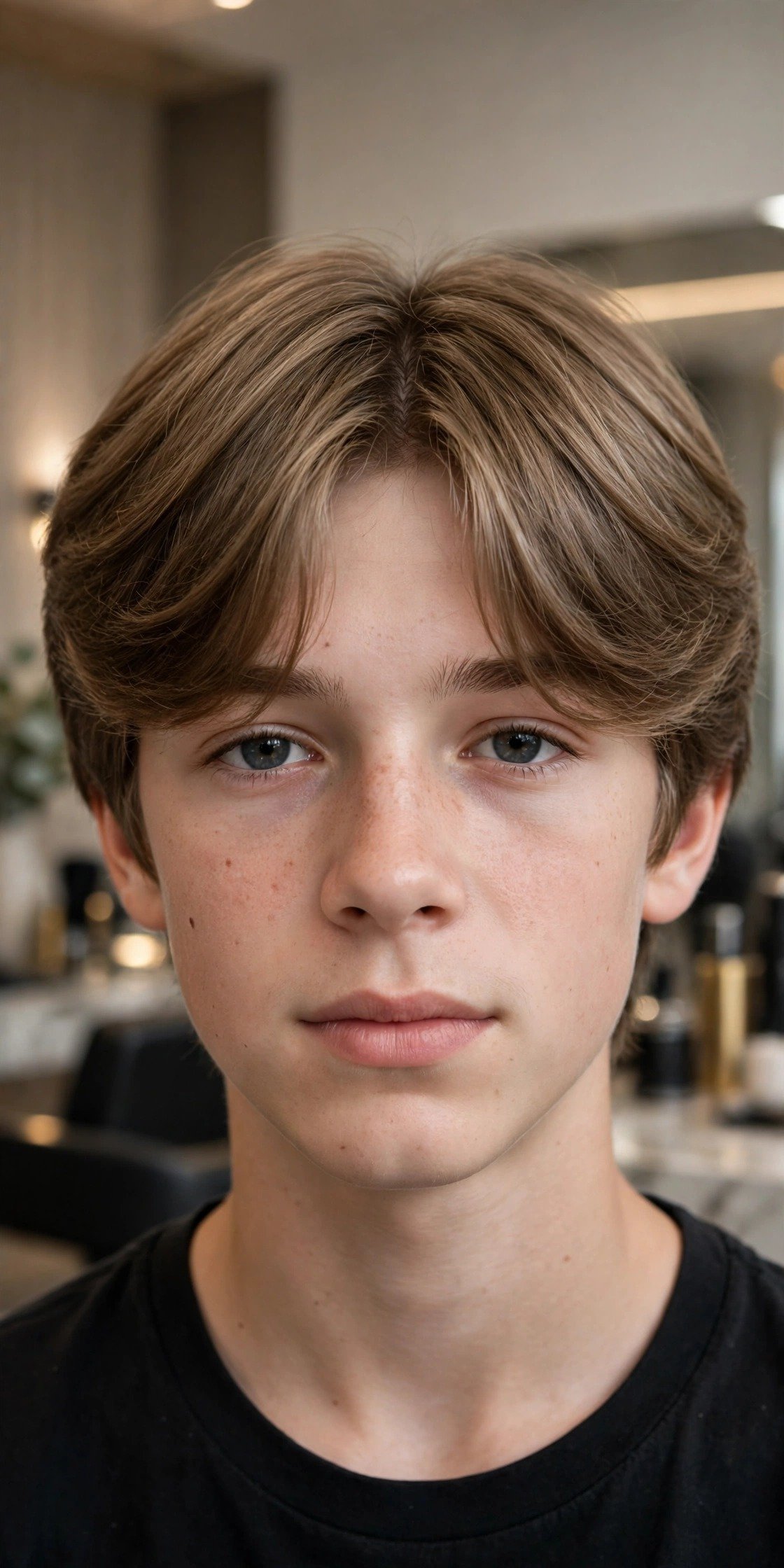
The teenage curtain is the classic style adapted for younger hair, with a soft centre part and a fringe that sits just above the eyebrows. It is easy to manage, school friendly, and it grows out gracefully, which makes it a great first proper haircut for teenagers. The parting is the heart of the look, so keep it clean and let the fringe fall naturally rather than forcing it into place.
It suits teenagers with straight or wavy hair, and it flatters most young face shapes because the soft fringe suits a youthful look. Ask the barber for a three to four inch fringe with a soft centre part, and for the sides to be kept neat but not faded too short. Bring a photo to your appointment, because curtain lengths and partings vary more than most men expect.
Towel dry the hair, push the fringe into its part with your fingers, and let it air dry for a relaxed, natural finish. A tiny amount of light cream is all the product a teenager needs, and the style should take less than three minutes. Trim every four weeks to keep the fringe out of the eyes, and let the teenager choose the parting so they actually enjoy wearing it.
How to Style and Maintain a Curtain Haircut at Home
Start with clean hair, because the curtain only falls properly when the hair is free of heavy product and oil. Wash with a lightweight shampoo two or three times a week, and use conditioner mainly on the mid lengths and ends rather than the roots, so the fringe does not go flat. On days you do not wash, a rinse with warm water and a little dry shampoo at the roots is enough to refresh the shape. Avoid washing every day if your hair is dry, since it strips the natural oils that give the curtain its soft movement.
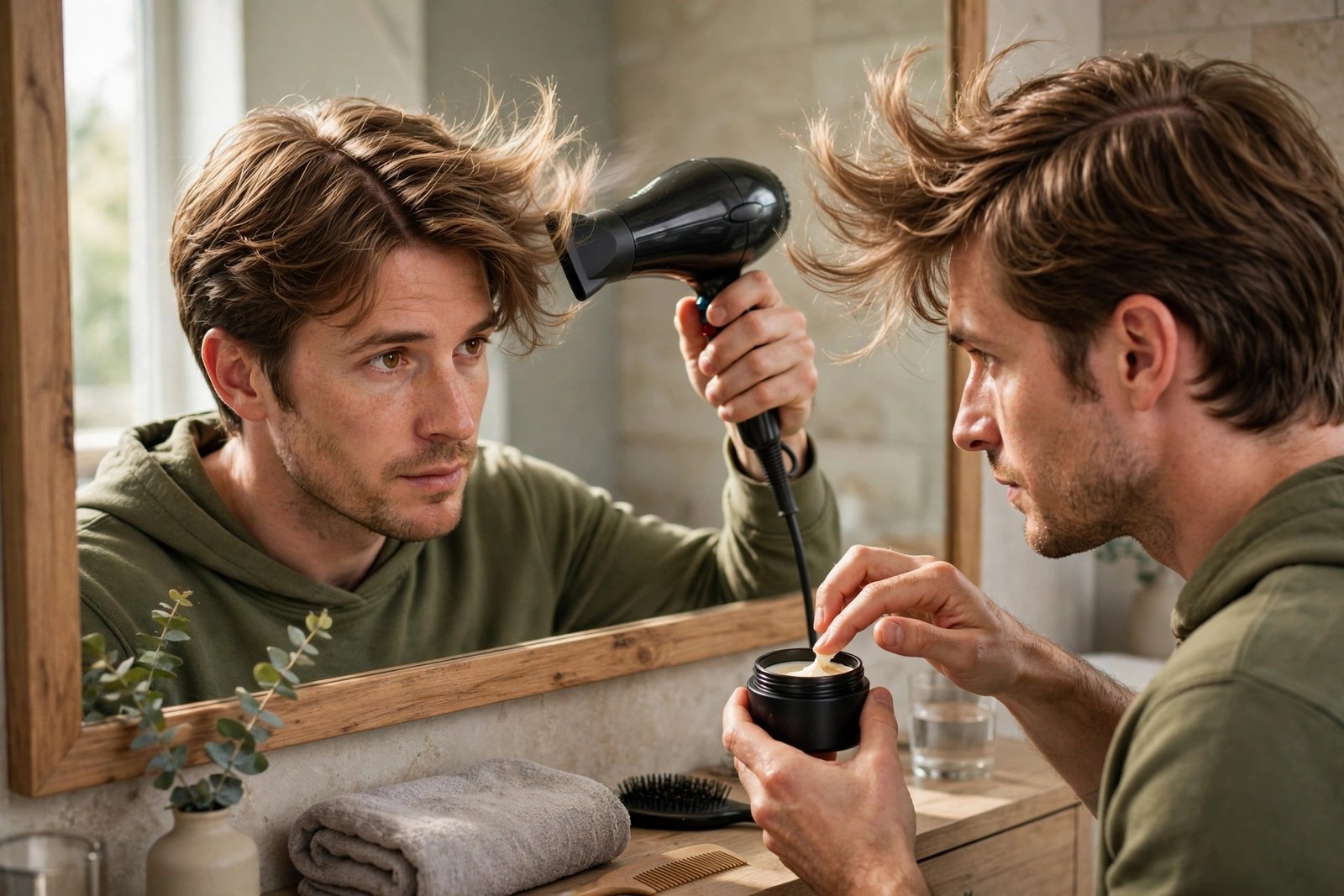
Blow drying is where the curtain is made, so take two minutes to do it properly. Start with the hair about eighty percent dry, then use a round brush to blow the fringe forwards and down, which sets the roots in the right direction. Next, split the part with your fingers or the end of a comb, and blow each side away from the part so the panels curve softly around the face. Keep the dryer on medium heat and hold it about fifteen centimetres from the hair, moving it constantly so you never scorch one spot.
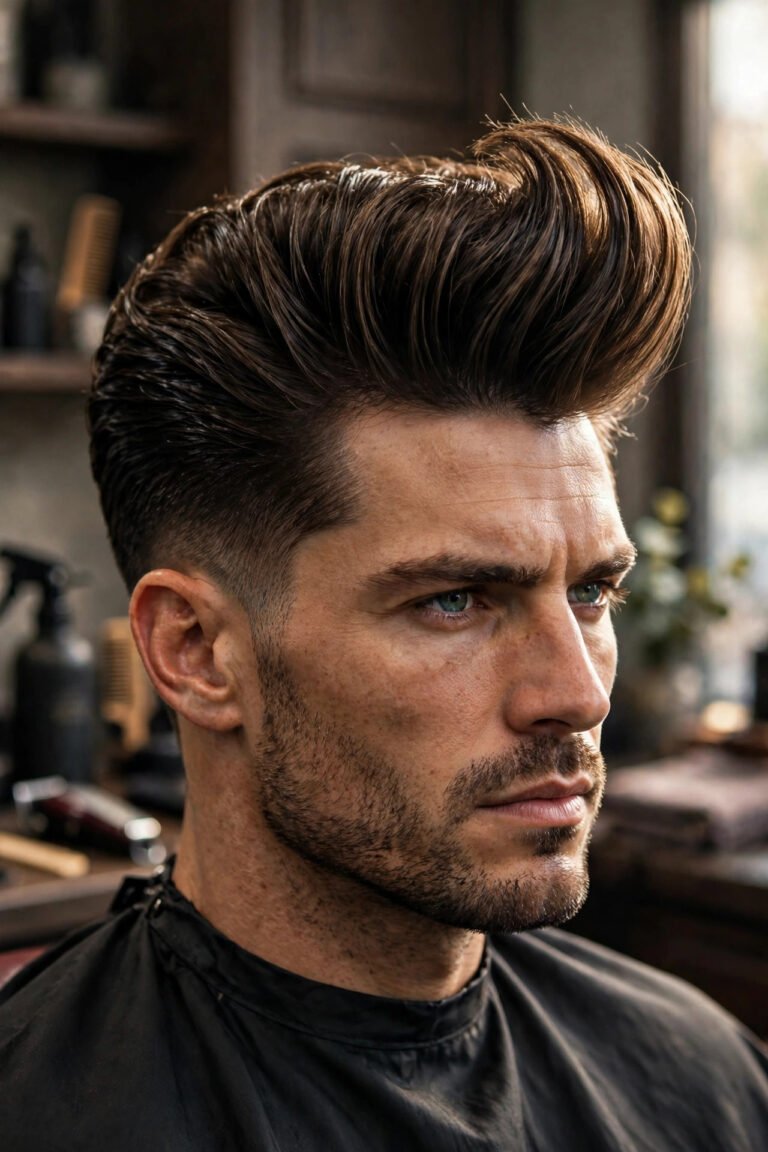
The right products make the curtain look effortless, while the wrong ones flatten it in an hour. A matte cream is the best everyday choice, because it gives light hold and a natural finish without shine or stiffness. Sea salt spray is ideal for wavy or textured curtains, since it adds grip and movement. A light paste works well when you need stronger hold, but use only a tiny amount and warm it between your palms first so it spreads evenly. For a more polished night out, the pompadour uses the same blow drying skills with a very different finish.
Trimming keeps the curtain looking intentional instead of overgrown, so book a tidy up every four to five weeks. The fringe is the first part to lose its shape, so ask your barber to dust the ends and re-check the parting at each visit, even if the sides still look fine. Fades and tapers grow out faster, so if your curtain has a fade, book a shorter tidy up every two to three weeks just for the sides. Between cuts, resist the urge to trim the fringe yourself with kitchen scissors, because one uneven snip can ruin the balance of both panels.
On a normal morning the whole routine should take five minutes: dampen the fringe, blow dry it into the part, and finish with a little cream. If one side keeps falling forwards, work a tiny amount of paste into that panel only, and check the part is still where you set it. If the fringe looks flat by lunchtime, a quick shake at the roots and a pinch of volumising powder will bring it back without a full restyle. On windy days, a light hold spray is worth using, since it keeps the panels in place without making the hair stiff.
Frequently Asked Questions
What face shape suits a curtain haircut best?
The curtain suits almost every face shape, which is one of the reasons it has become so popular. Oval faces can wear any version, since the balanced proportions suit both centre and off-centre parts. Round faces benefit from a longer fringe with height at the crown, which makes the face look longer. Square faces suit a softer, textured curtain that takes the edge off a strong jawline. Long faces do best with a slightly shorter fringe worn wider across the forehead. The real trick is adjusting the parting and the length of the panels, so tell your barber your face shape and let them shape the curtain around it.
How long does my hair need to be for a curtain haircut?
You need at least three to four inches on top before a curtain starts to work properly, since the fringe has to be long enough to fall on either side of the parting. Shorter than that, and the hair will stick up or fall forwards instead of framing the face. If your hair is currently short, expect to grow it for two to three months, and ask your barber for tidy ups that keep the sides neat while the top grows. The classic curtain looks best at four to six inches, which gives the panels enough weight to sit naturally. Growing it out is worth the wait, because the curtain grows gracefully and looks good at every stage.
Is the curtain haircut good for curly hair?
Yes, the curtain works beautifully on curly hair, and curls give the style a natural volume that straight hair cannot copy. The key is length, because the curls need to be long enough to fall on either side of the parting, usually four to six inches when stretched. Ask your barber to cut the curls dry and shape them curl by curl, since wet cutting can leave the fringe much shorter than expected once it dries. Use a curl cream on soaking wet hair and let the curls air dry, so the pattern sets naturally around the parting. Avoid brushing dry curls, because it breaks the pattern and creates frizz that hides the curtain shape.
How do I ask my barber for a curtain haircut?
The easiest way is to bring a photo of the exact curtain you want, because the style has so many variations that words alone can be misunderstood. Tell your barber the length you want on top, usually four to five inches, and where you want the parting, centre or off-centre. Mention the sides too, since the curtain can be paired with anything from natural scissor cut sides to a mid skin fade. Style guides like this roundup of curtain hairstyles for men show how the same cut changes with different lengths and textures. Finally, tell your barber how you style your hair at home, so the cut is built around your real routine.
How often should I get a curtain haircut trimmed?
Most men need a curtain tidy up every four to five weeks, which keeps the fringe at the right length and the parting sitting cleanly. The fringe is the first part to lose its shape, so even a small dusting of the ends makes a big difference to how the whole cut looks. If your curtain has a fade or an undercut, the sides will need attention every two to three weeks, since regrowth shows quickly against the sharp contrast. Between full cuts, a quick tidy up of just the sides is cheaper and faster than a full restyle. Never wait until the fringe is falling into your eyes, because by then the balance has already gone.
Can I wear a curtain haircut with a fade?
Yes, the curtain pairs very well with a fade, and it is one of the most popular combinations in 2026. A low taper fade keeps the look smart and subtle, while a mid skin fade adds bold contrast that makes the longer top stand out. A burst fade curves around the ear and suits men who want something a little different. The key is telling your barber how high you want the fade, since that decides how much contrast there is with the curtain top. Keep the fade tidy with a refresh every two weeks, because a grown out fade softens the whole look.
What products work best for a curtain haircut?
A matte cream is the best everyday product for a curtain, because it gives light hold and a natural finish without shine or stiffness. Sea salt spray is ideal for wavy or textured curtains, since it adds grip and movement and helps the panels hold their shape. A light paste works well when you need stronger hold, but use only a tiny amount and warm it between your palms first. A volumising powder at the roots is useful for fine hair, because it adds lift without weight. Avoid heavy waxes and gels, because they weigh the fringe down, kill the soft shape, and make the hair look greasy by lunchtime.
Does the curtain haircut work for fine or thinning hair?
Yes, the curtain can work well on fine hair if it is cut the right way, with blunt ends and light layering that create the illusion of fullness. Keep the fringe at three to four inches, since longer lengths get weighed down and make fine hair look thinner. Blow dry with a round brush, lifting at the roots, and finish with a volumising powder or a sea salt spray for texture without weight. Avoid heavy creams, oils, and waxes, because they flatten fine hair and expose the scalp. If your hair is actively thinning at the crown, talk to your barber honestly, because the curtain needs enough density on top to hold the parting.
How do I style a curtain haircut without a blow dryer?
You can style a curtain without a blow dryer, and many men do it every day with just their fingers and a little product. Start with damp hair, part it with your fingers while it is still wet, and push each side into place so the panels fall naturally. Work a pea sized amount of matte cream or a little sea salt spray through the fringe, then leave the hair alone and let it air dry. The finish will be softer and more relaxed than a blow dried curtain, which suits the messy and wavy versions perfectly. If one side keeps falling forwards, a tiny drop of paste on that panel will hold it until the hair dries.
Is the curtain haircut still in style in 2026?
Yes, the curtain is not just still in style in 2026, it is one of the defining men’s cuts of the year. The soft curtain fringe is one of the two most-requested men’s styles of 2026, and barbers report it being requested in 35 to 45 percent of bookings. Pinterest searches for face-framing layered hair are up sharply, with the layered long bob rising 622 percent, which shows the same trend driving demand on the men’s side. The style has also evolved, with fades, texture, and modern finishes keeping it fresh rather than a straight nineties copy. With demand this strong, the curtain will stay relevant well beyond 2026.
Conclusion
The curtain haircut has earned its place as the defining men’s style of 2026 because it does something few cuts manage: it looks deliberate while asking almost nothing of you in the morning. Across the thirty-six styles in this guide, there is a curtain for every hair type, every face shape, and every level of commitment, from the short fringe that takes three minutes to the long layered flow that turns heads. The secret is finding your parting, keeping the length that suits your face, and letting the cut work with your natural texture. Once you find the right version, the curtain stops feeling like a hairstyle you maintain and starts feeling like your hair.
Your next step is simple: save the styles you like, book a barber who is confident with scissor work and textured fringes, and take a photo to your appointment. Tell them your face shape, your hair type, and how much time you honestly want to spend styling each morning, because those three answers decide which curtain will work for you. Give the cut a week to settle, since the fringe often sits better once you have washed and styled it yourself a few times. If the curtain clicks, you will understand why so many men never go back, and if it does not, the length grows out gracefully into your next style.