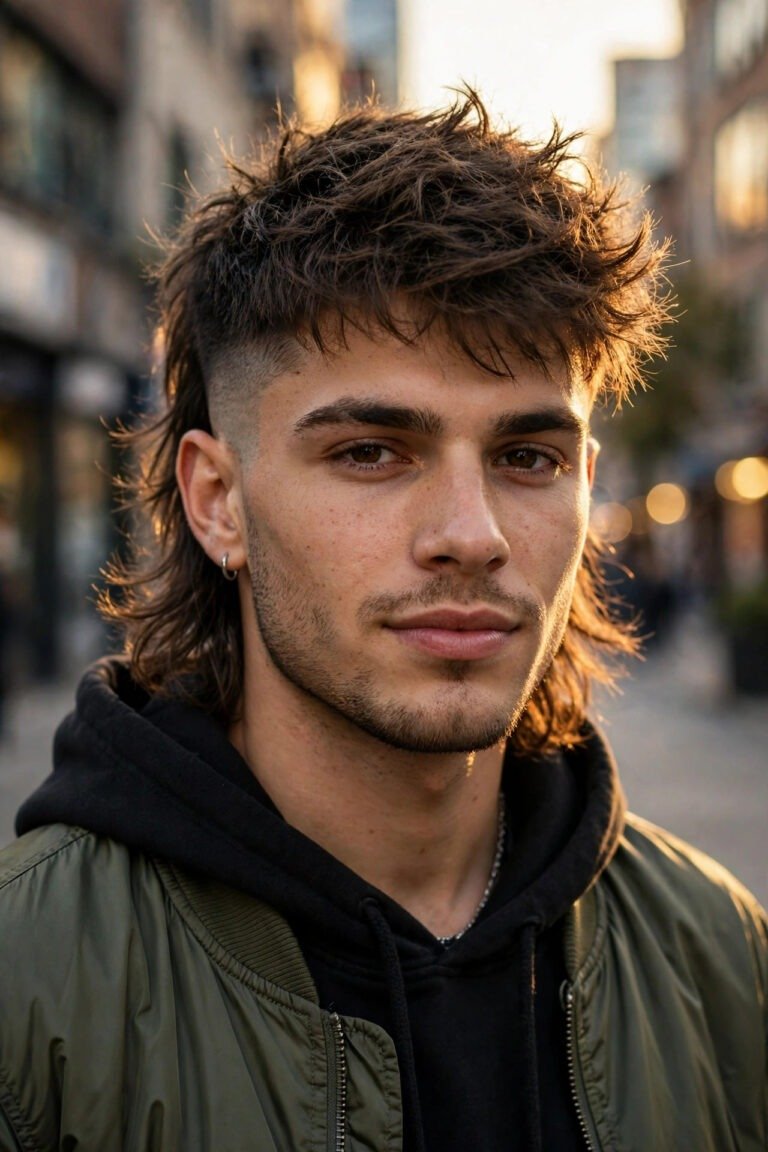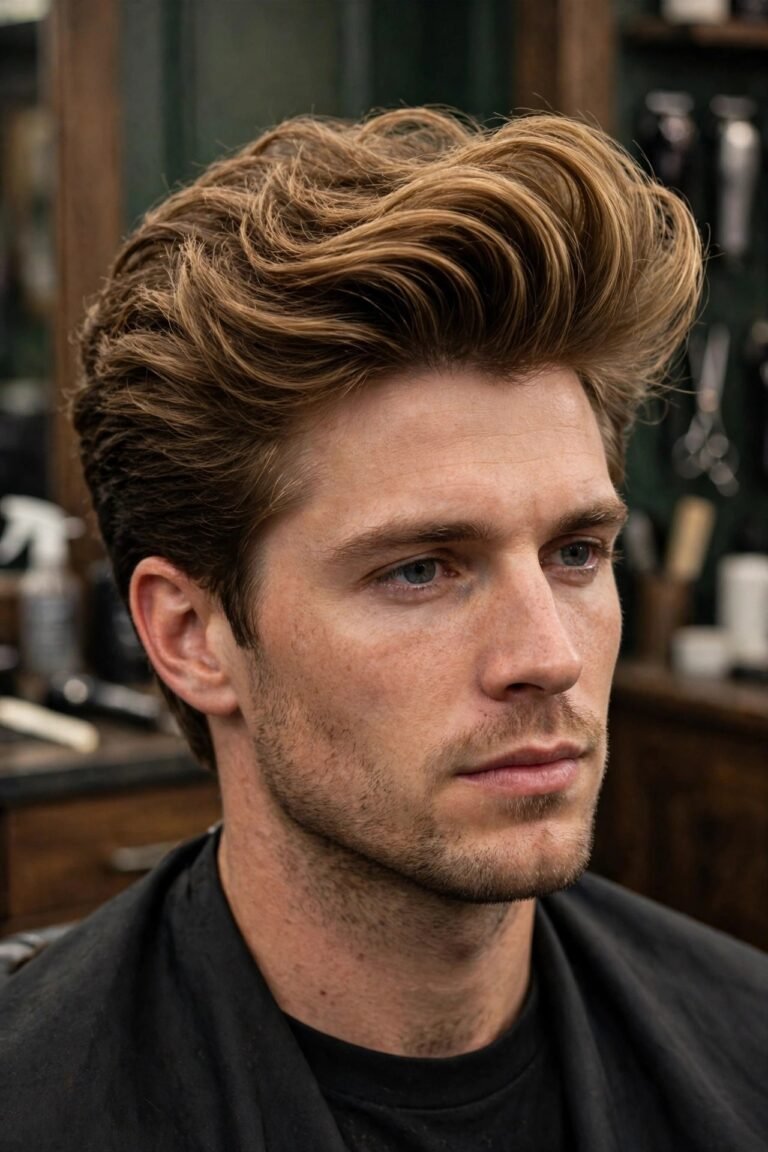
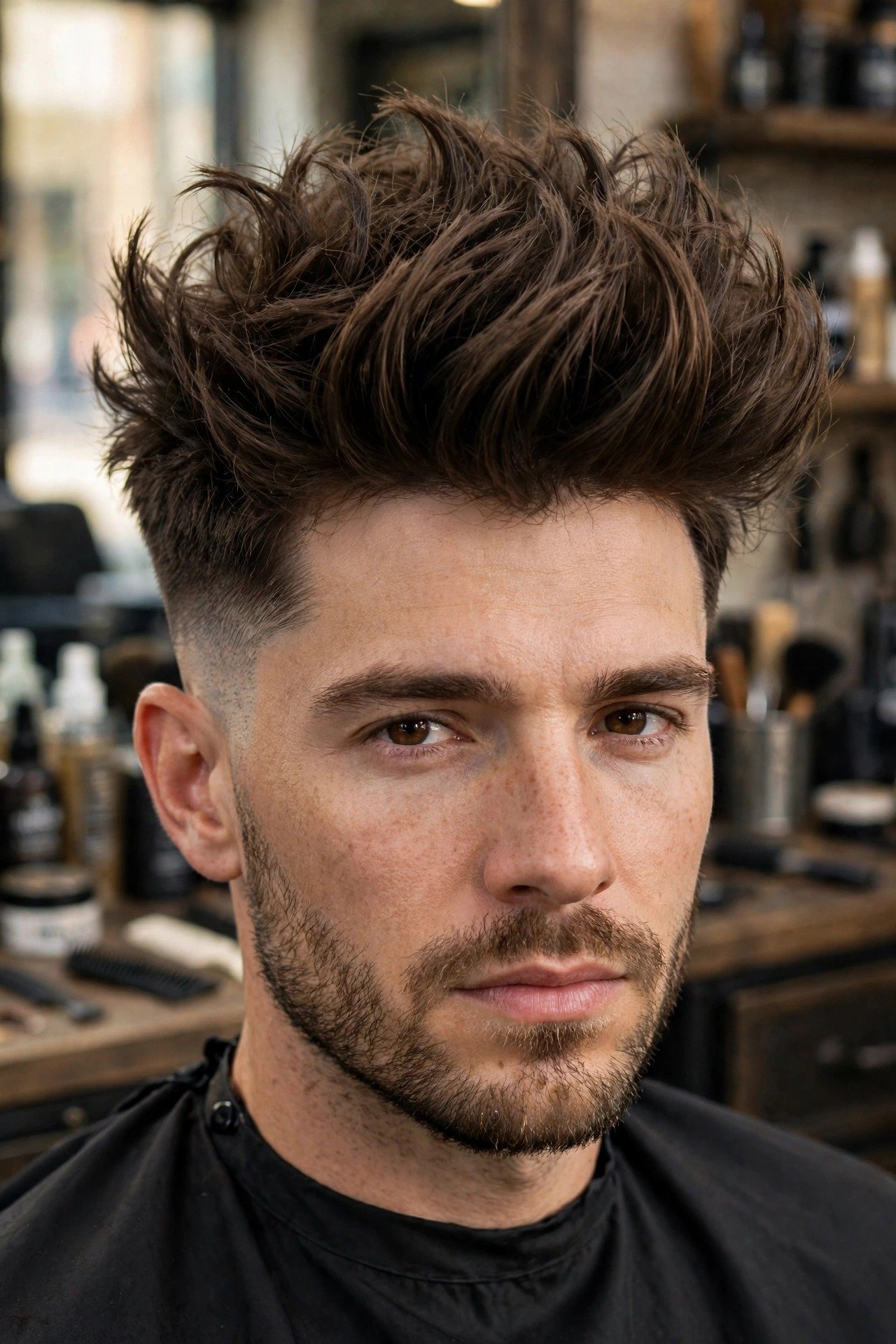
Textured Quiff Men 2026: 36 Voluminous, Modern Styles
The textured quiff men are choosing most in 2026 is not the stiff, helmet-like pompadour of a decade ago. It is softer, taller, deliberately imperfect, and built to move. A modern textured quiff lifts the front hair up and back with visible separation, matte texture, and natural flow, so it looks styled without looking frozen. It works on straight, wavy, and curly hair, it flatters almost every face shape, and it bridges the gap between a sharp office haircut and a relaxed weekend look. That versatility is exactly why barbers report it as one of the most requested styles of the year.
This guide breaks down thirty-six distinct textured quiff variations, from short and low-maintenance to long, blown-out, and red-carpet ready. You will learn what each version looks like, who it suits best, exactly what to ask your barber for, and how to style it at home in under five minutes. Whether you have thick hair that needs weight removed, fine hair that needs lift, a round face that needs height, or a beard that needs balance, there is a quiff here designed for you. Read through the styles, save your favourites, and take the wording straight to your next appointment.
What Is a Textured Quiff
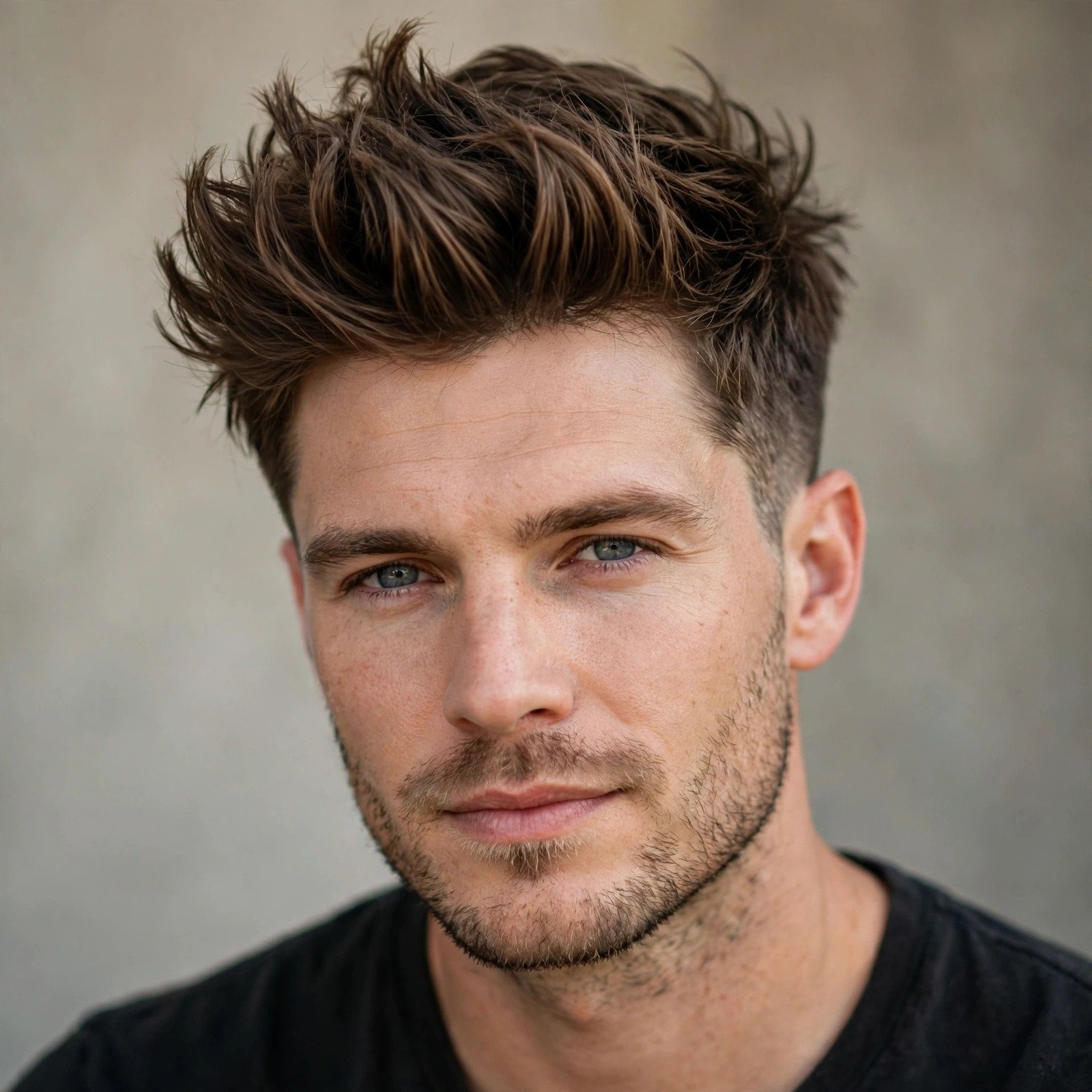
A textured quiff is a men’s haircut where the front section is left long enough to sweep upward and backward, while the sides and back are kept shorter through a taper, fade, or undercut. The word textured is the key difference from a classic quiff. Instead of one smooth, solid wave, the top is point-cut, thinned, or razor-textured so individual strands and clumps separate visibly. That separation creates volume, movement, and a lived-in finish that photographs beautifully and survives a long day far better than a slick, product-heavy style.
The length on top usually ranges from three to six inches, depending on the variation. Shorter versions sit closer to the head and need only a fingertip of product, while longer versions can be blown out into dramatic height or swept to one side for a softer, romantic shape. The sides define the character of the cut. A low taper keeps it conservative and grown-up, a skin fade makes it bold and modern, and a disconnected undercut gives it an edgy, editorial contrast. Your barber will shape the quiff to your hair density, growth direction, and cowlicks, which is why the same cut can look subtly different on every man.
Styling a textured quiff is refreshingly simple once the cut is right. Most versions start with towel-dried, slightly damp hair, a pea-sized amount of matte clay or sea-salt spray, and a quick blow-dry upward from the roots. Fingers do most of the work; a comb is optional and often makes the finish too neat. The goal is controlled messiness, with the front lifted, the sides clean, and a few strands falling naturally. It is a style that rewards good hair health too, so regular trims every three to four weeks keep the shape crisp and the texture visible.
Why the Textured Quiff Is Dominating 2026
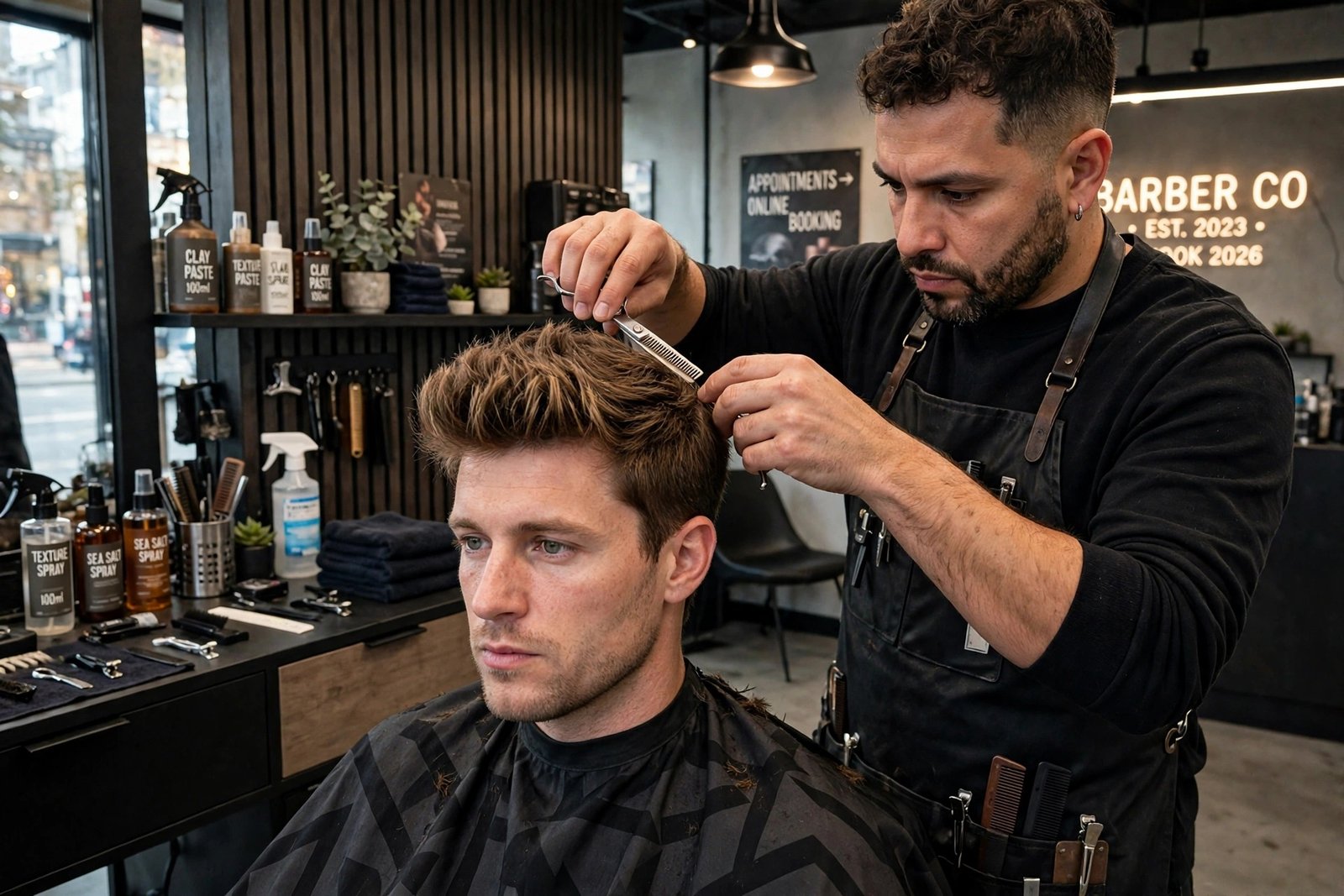
The textured quiff is dominating 2026 because it solves the problem most modern men have with their hair: they want to look polished without spending twenty minutes in front of a mirror. It is one of the few styles that genuinely looks better slightly undone, which means it survives wind, hats, gym sessions, and long workdays. It also photographs well from every angle, a real advantage in an era when most men see their haircut first on a phone screen. Barbers love it because it adapts to almost any hair type, and clients love it because it grows out gracefully instead of collapsing into shapeless bulk.
Fashion and grooming trends in 2026 have moved firmly toward natural texture, matte finishes, and individuality, and the textured quiff sits at the centre of all three. The stiff, high-shine looks of the past feel dated next to it. Men are pairing the quiff with faded temples, sharp line-ups, beards, and even longer fringe elements, creating a style that feels personal rather than copied from a poster. It works equally well with streetwear, a suit, or smart-casual layers, which makes it the rare haircut that needs no outfit change to fit the occasion. That flexibility is driving its popularity across age groups, from teenagers to men in their fifties.
Celebrity influence has pushed the style even further this year. Actors, athletes, and musicians are wearing looser, taller, more textured versions on red carpets and in music videos, often with a skin fade or a disconnected side that adds drama. Social media has amplified the effect, with barbers posting transformation videos that show how a textured quiff can add height to a round face, structure to fine hair, and confidence to a man who thought his hair was unmanageable. The result is a cut that feels both classic and completely current, familiar enough to trust and fresh enough to feel like an upgrade.
1. Classic Textured Quiff
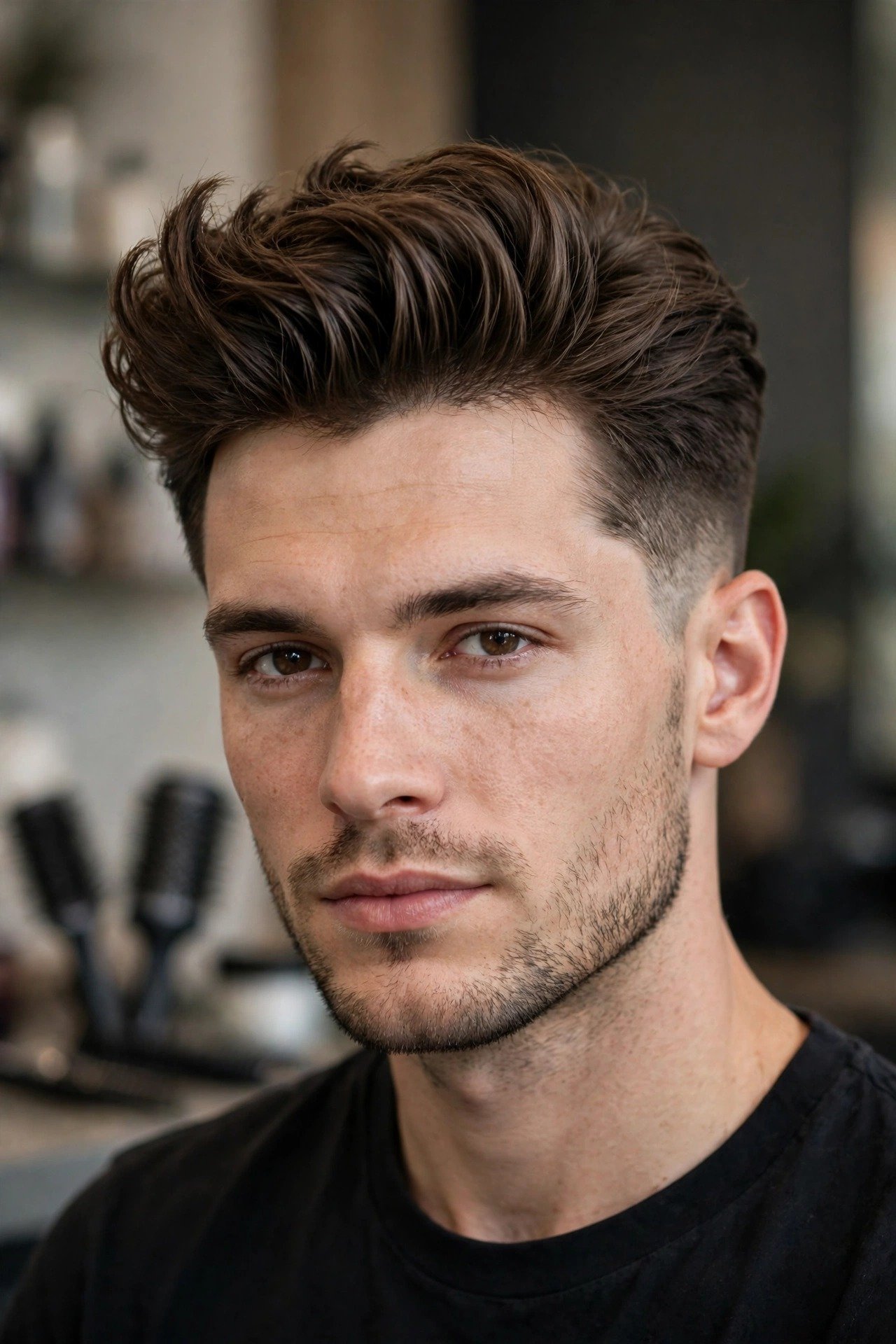
The classic textured quiff is the timeless foundation every other version builds on. The top is left around four inches long, point-cut for separation, and swept up and back with a gentle curve, while the sides are tapered neatly without a harsh fade line. It has height without drama, texture without mess, and polish without stiffness. This is the version to choose if you want a quiff that works everywhere, from a job interview to a wedding, and never looks like you are trying too hard.
This style suits almost every face shape, but it is especially flattering on oval and square faces, where the lift lengthens the face and the clean sides sharpen the jawline. It works best on straight to slightly wavy hair with medium density, though barbers can adapt it for thicker hair by removing weight underneath. Ask your barber for a four-inch textured top with a classic taper on the sides, scissors on top, and a natural finish that keeps the front soft rather than squared off.
Style it on damp hair with a small amount of matte clay warmed between your palms. Blow-dry the front upward and backward using your fingers, then pinch small sections at the ends to define the texture. Avoid heavy pomade, which kills the separation and makes the style look wet and dated. A trim every three to four weeks keeps the taper crisp and the top from growing heavy, and a light sea-salt spray on second-day hair refreshes the volume without a full wash.
2. Messy Textured Quiff
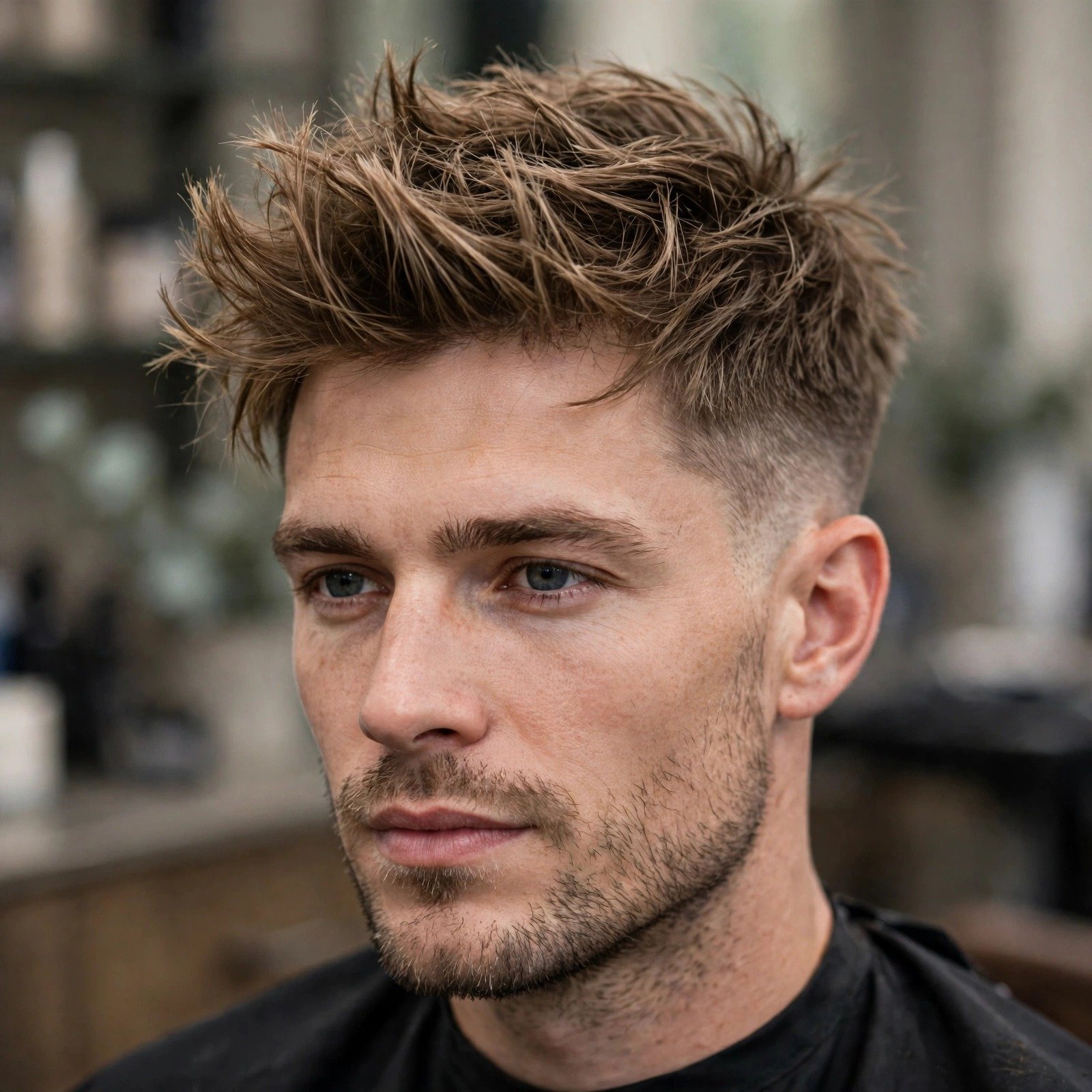
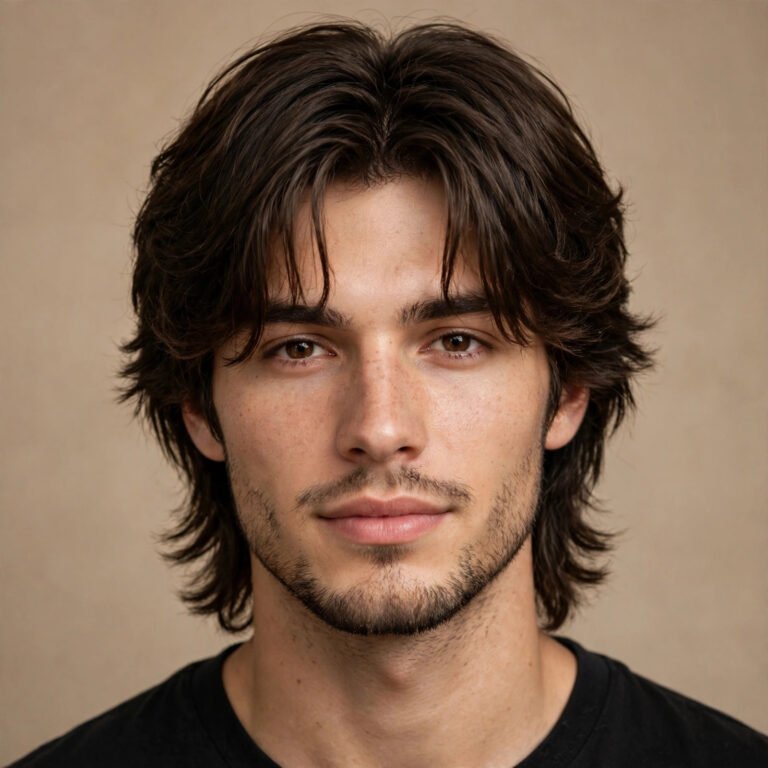
The messy textured quiff takes the classic shape and loosens it on purpose. The top is cut with extra point-cutting and slide-cutting so strands fall in different directions, creating a deliberately undone, just-rolled-out-of-bed energy that still looks intentional. The front is lifted but not perfectly aligned, with a few pieces falling forward over the forehead. It is the most relaxed quiff in this guide, and it hides cowlicks and uneven growth better than any neat style.
This version suits men with wavy or slightly unruly hair, and it is a gift for anyone whose hair refuses to sit neatly. It flatters round and oval faces by adding height and asymmetry, and it works beautifully for younger men and creative professionals. Ask your barber for a heavily textured top with choppy ends, a mid taper or low fade, and no blunt lines anywhere. Tell them you want it to look messy on purpose, so they cut movement into the hair rather than trying to make it sit flat.
Styling is gloriously low-effort. Work sea-salt spray into damp hair, scrunch the top upward with your fingers, and let it air-dry or hit it with a diffuser for thirty seconds. Add a tiny amount of texture paste only at the ends to separate the pieces, and do not brush it afterward. Skip the comb entirely. This cut thrives on second-day hair, so dry shampoo is your best friend, and a trim every four weeks is enough to keep the mess looking deliberate rather than neglected.
3. Short Textured Quiff
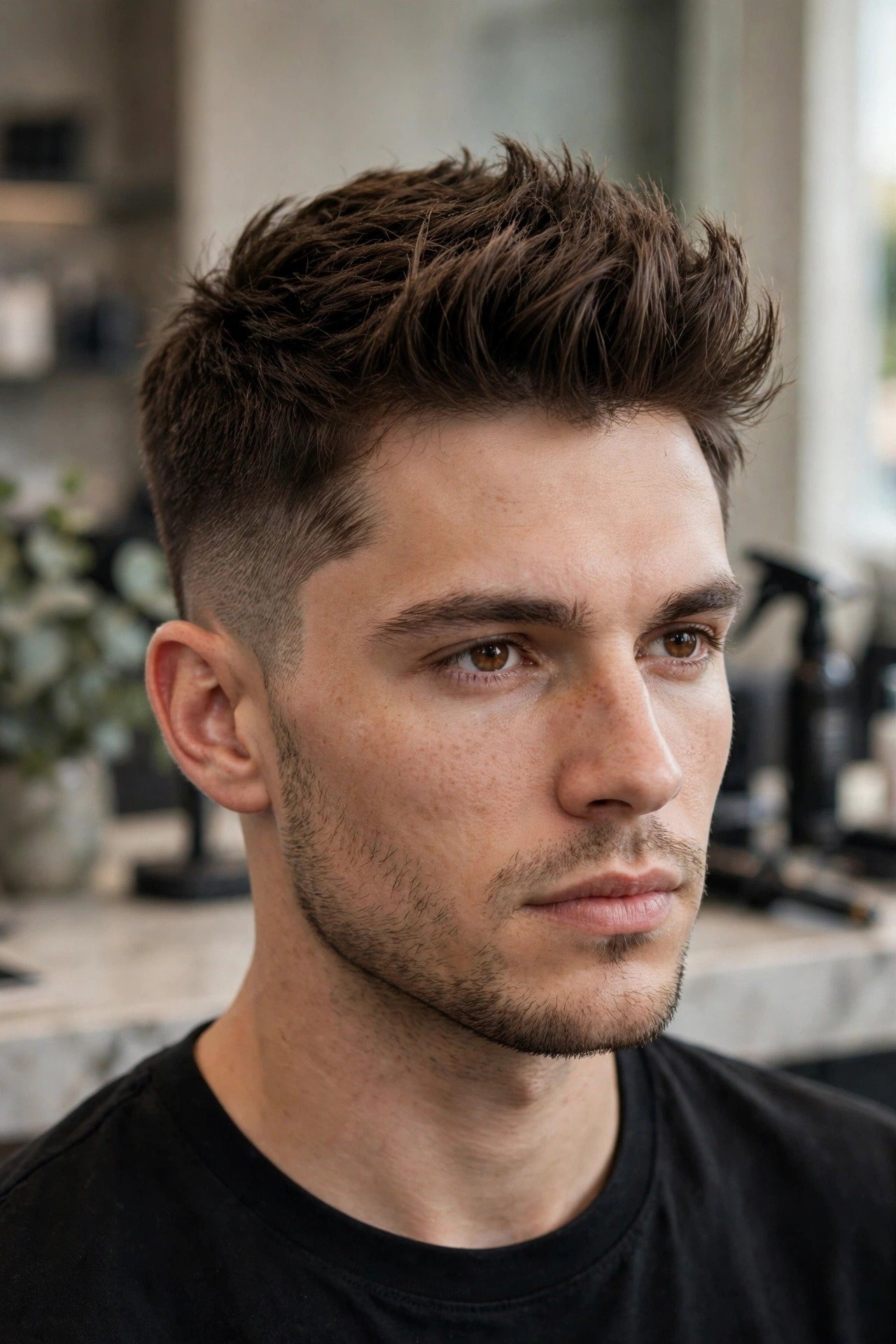
The short textured quiff proves you do not need long hair to get real height. The top is kept around two to three inches, cut short enough to stand up with minimal effort but long enough to show texture and direction. The sides are taken tight, usually a low or mid fade, which makes the short top look taller by contrast. It is sharp, athletic, and practical, with all the character of a full quiff in a shape that survives hats, helmets, and humidity.
This is the best quiff for men with fine hair, because shorter lengths are lighter and hold volume far more easily than long, heavy sections. It also suits men with strong jawlines and square faces, and anyone who wants a low-maintenance style that still looks styled. Ask your barber for a two-and-a-half-inch textured top, a mid fade on the sides, and a slightly longer front section so the quiff has a clear focal point. Keep the fringe area textured, not blunt.
Style it in under two minutes. Apply a fingertip of matte clay to towel-dried hair, push the front up and slightly back with your fingers, and leave it alone. A quick blast with a hairdryer on medium heat sets the lift, but many men can skip the dryer entirely. Because the cut is short, it grows out fast, so book a trim every two to three weeks to keep the fade sharp and the top from turning into a flat crop.
4. Long Textured Quiff
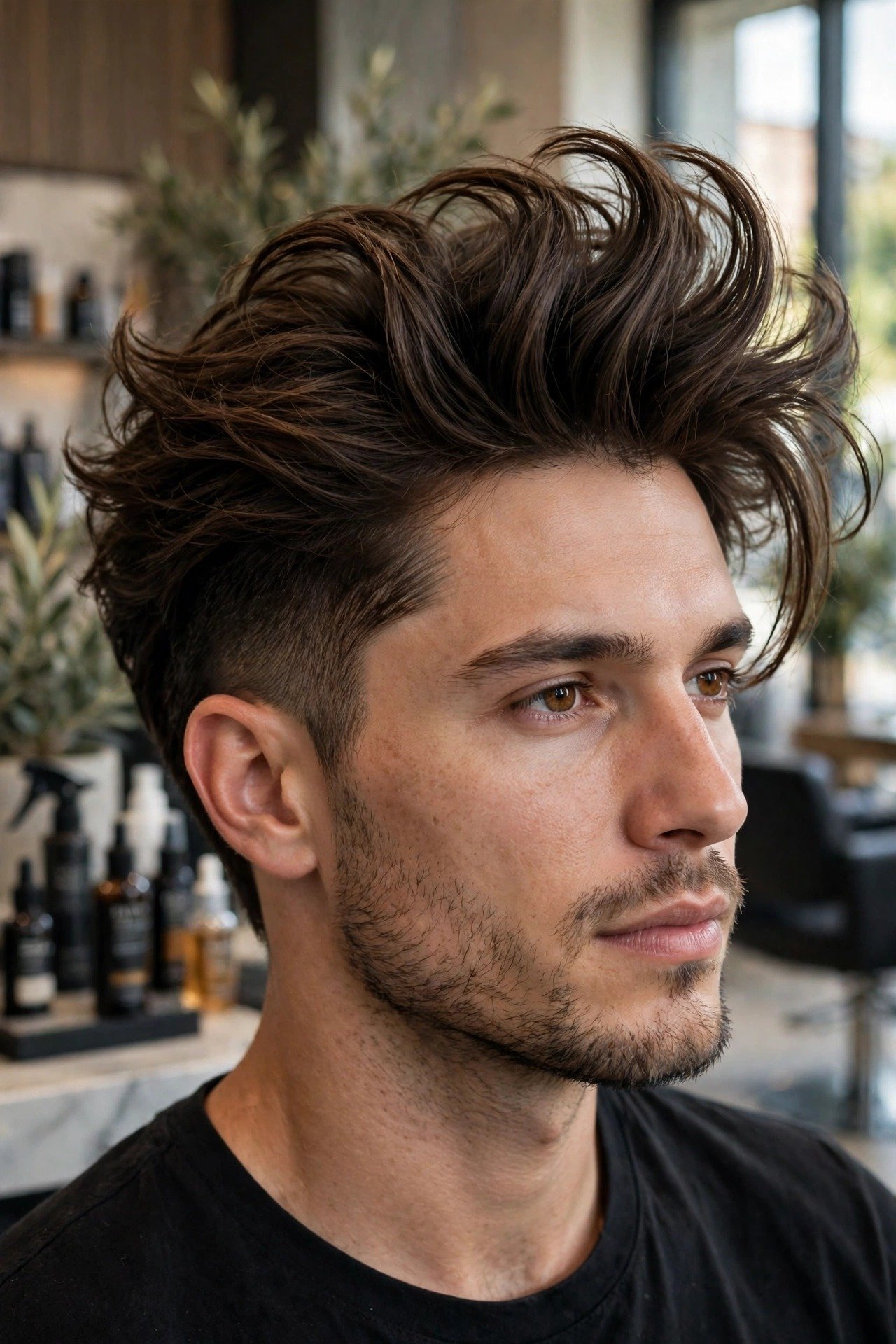
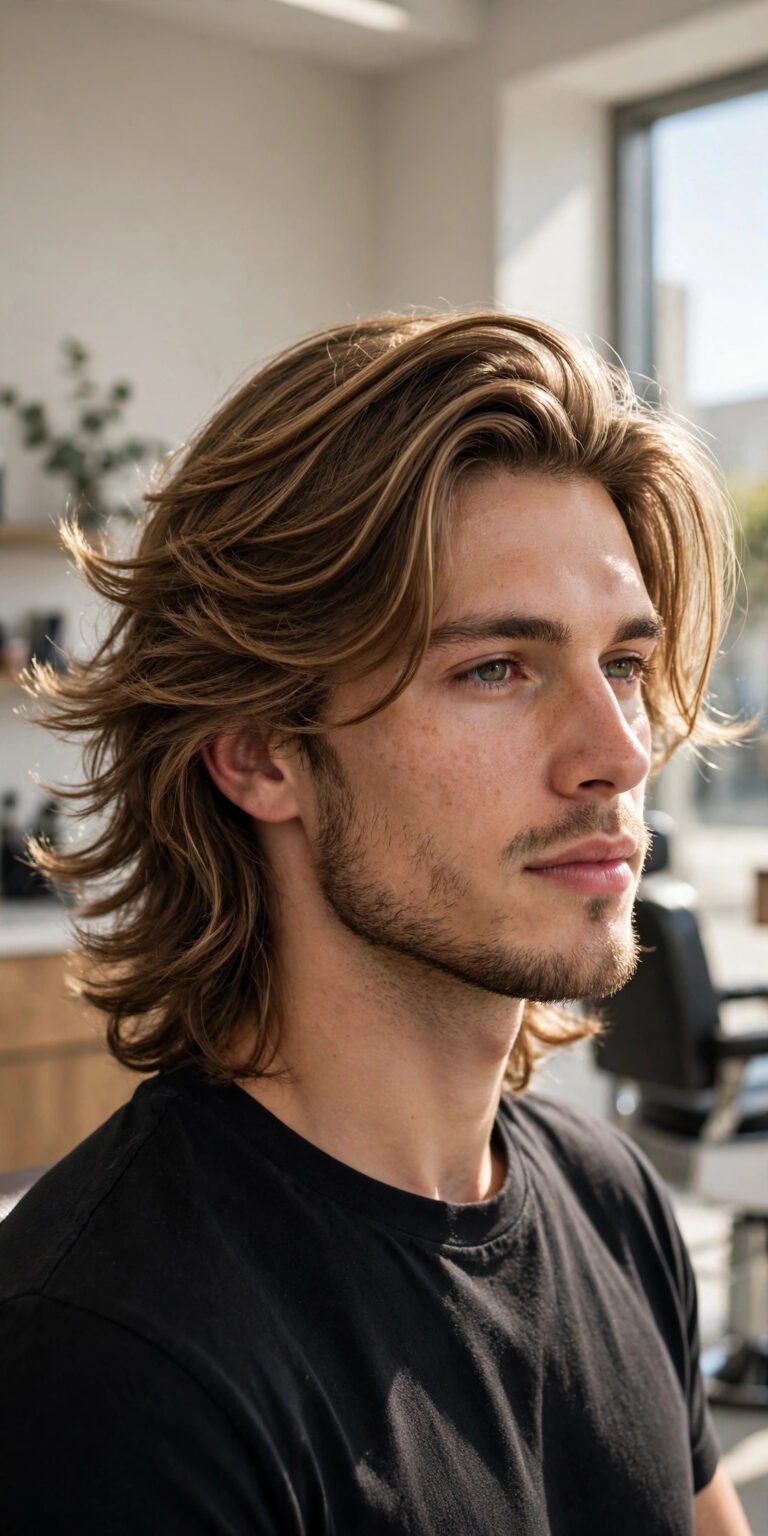
The long textured quiff is the most dramatic version in this guide, with five to six inches on top swept into a tall, flowing shape. The length allows for real movement, with the hair curving back from the forehead in a wave that catches light and draws the eye upward. Layers are cut through the top so the weight does not drag the style down, and the ends are textured to keep the silhouette soft. It is a statement cut, confident and romantic, and it turns heads in a way short styles cannot.
This style suits men with thick, straight, or wavy hair that can support length without collapsing, and it is especially striking on oval and oblong faces. It also works for men who like to change their look, since the same length can be worn swept back, to the side, or tousled forward. Ask your barber for five to six inches on top with long layers, heavy texture through the mid-lengths, and a taper or low fade that keeps the sides from competing with the top.
Styling takes a little more time but rewards the effort. Blow-dry the top upward with a round brush or your fingers, directing the roots back and the ends slightly forward for that classic curve. Use a volumising mousse or sea-salt spray before drying, then finish with matte clay on the ends only. Avoid overloading product at the roots, which weighs the length down. Trim the ends every four to five weeks and use a light conditioner to keep long textured hair soft and manageable.
5. Textured Quiff with Low Taper
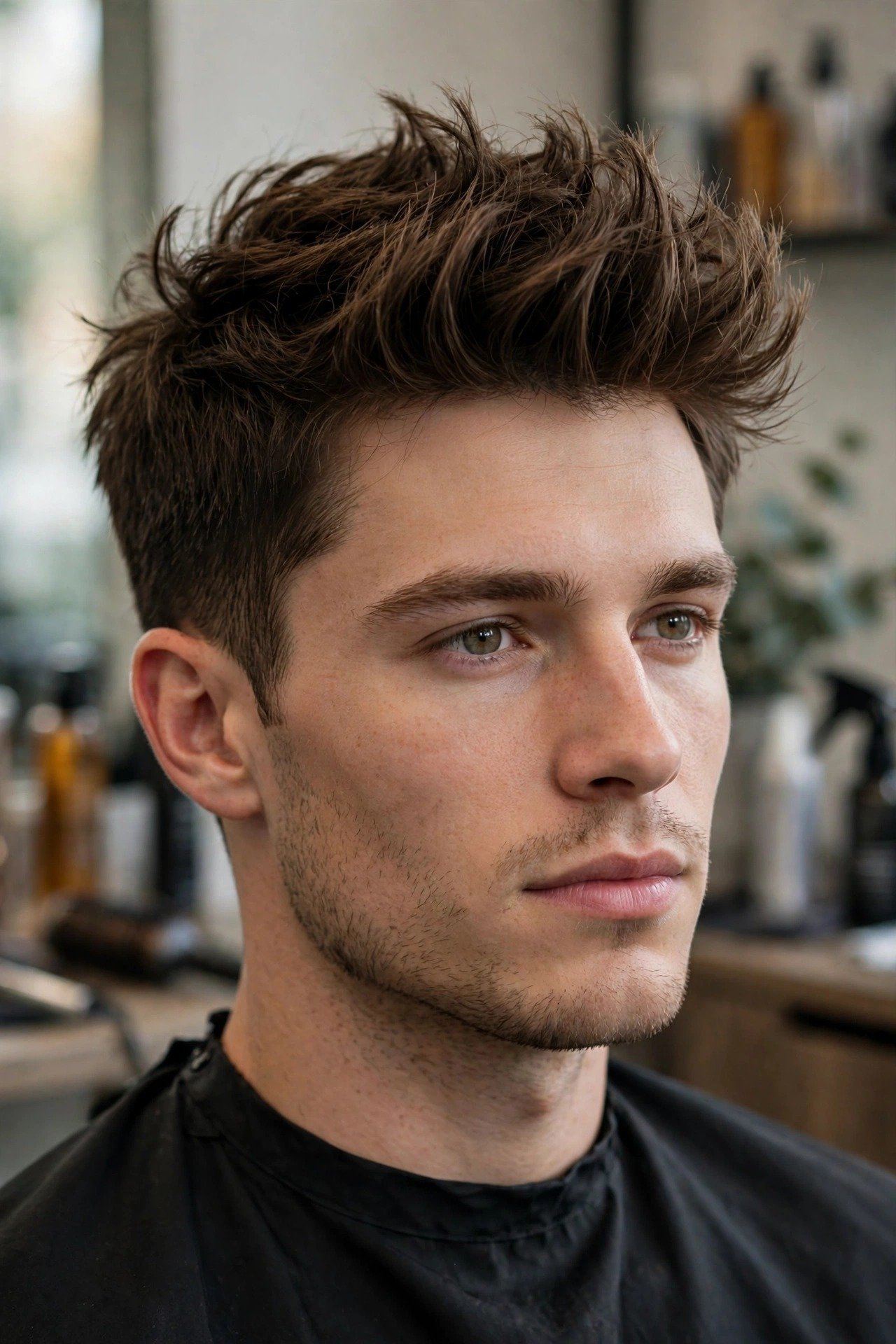
The textured quiff with a low taper is the most understated and grown-up combination in this guide. The taper starts low, just above the ears and neckline, and blends gradually into the longer top, leaving plenty of natural hair on the sides. There is no stark contrast and no skin showing, just a clean, gradual transition that looks like a classic gentleman’s haircut with a modern textured top. It is quiet confidence rather than loud contrast.
This version suits older men, professionals, and anyone who needs a haircut that passes in conservative workplaces. It flatters round faces by adding height without widening the sides, and it works on most hair types, including hair that is starting to thin at the temples. Ask your barber for a low taper with scissors or a number four guard blending down, and a textured top of three to four inches. Request a natural neckline rather than a squared-off one for the softest finish.
Style it with a small amount of matte paste or light cream, blow-drying the front upward for gentle lift. Because the sides are longer, you can brush them back neatly or leave them natural, depending on the occasion. The low taper grows out very gracefully, so you can stretch trims to four or five weeks without the cut looking messy. A little grooming cream on the sides keeps flyaways down without making the top look greasy.
6. Textured Quiff with Mid Taper
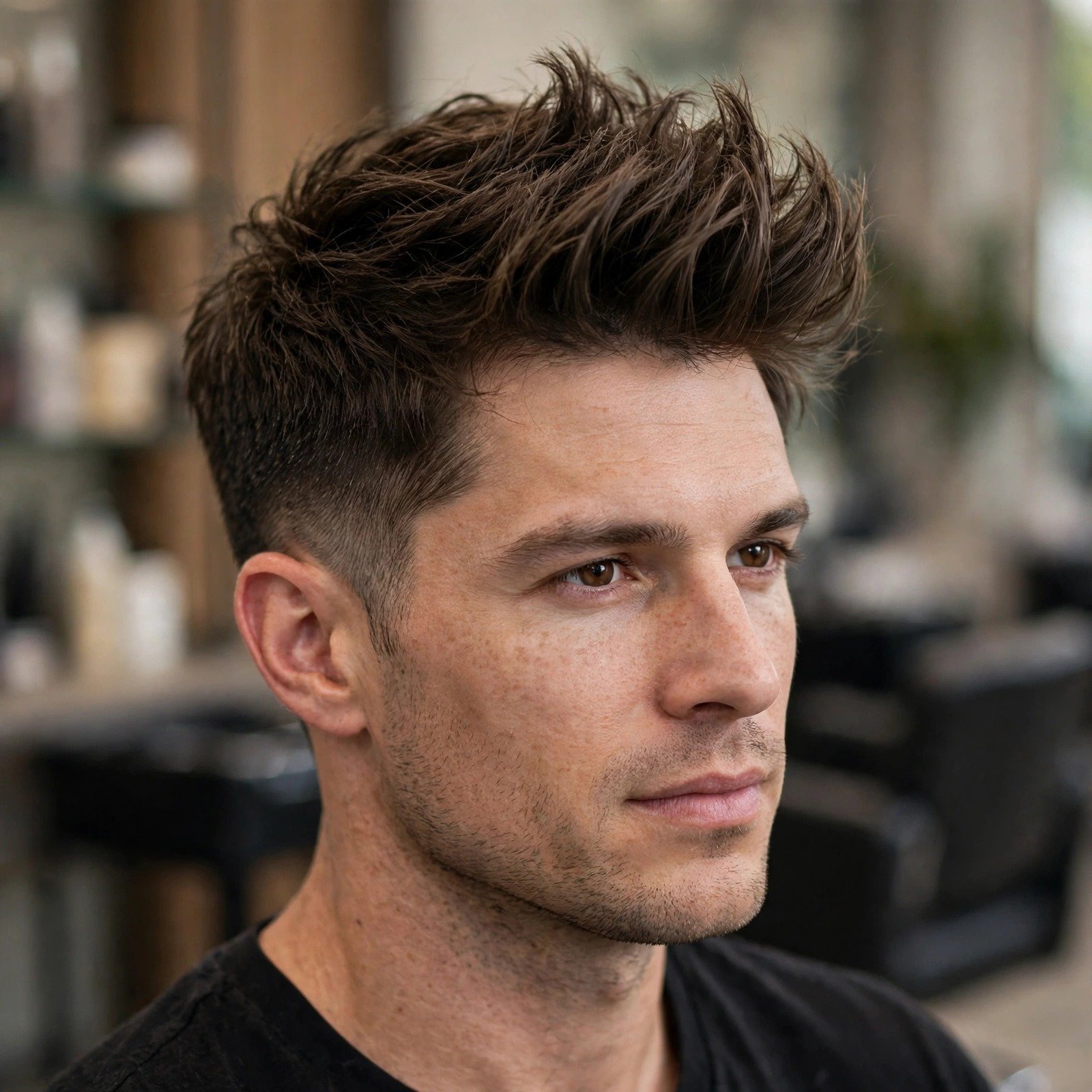
The textured quiff with a mid taper strikes the perfect middle ground between conservative and bold. The taper begins around the middle of the head, creating a visible but not extreme contrast between the textured top and the shorter sides. It gives the cut structure and definition while keeping enough hair on the sides to look substantial. This is the version barbers recommend most often, because it suits the widest range of men and occasions without committing to a skin fade.
This style suits nearly every face shape and hair type, which is why it is such a safe first quiff. It adds height to round faces, balance to long faces, and definition to soft jawlines. Ask your barber for a mid taper starting at the temple level, blended smoothly into a three-to-four-inch textured top. Mention whether you want the taper faded to skin at the very bottom or kept slightly longer, since that small choice changes how sharp the finish looks.
Blow-dry the top upward with a vent brush, then work matte clay through the front and pinch the ends for separation. The mid taper needs a little upkeep to stay crisp, so a trim every three weeks keeps the blend clean. Between cuts, a dab of styling cream on the sides tames any puffiness as the taper grows out. This is a genuinely wash-and-go style for most men, needing only two minutes of styling each morning.
7. Textured Quiff with High Taper
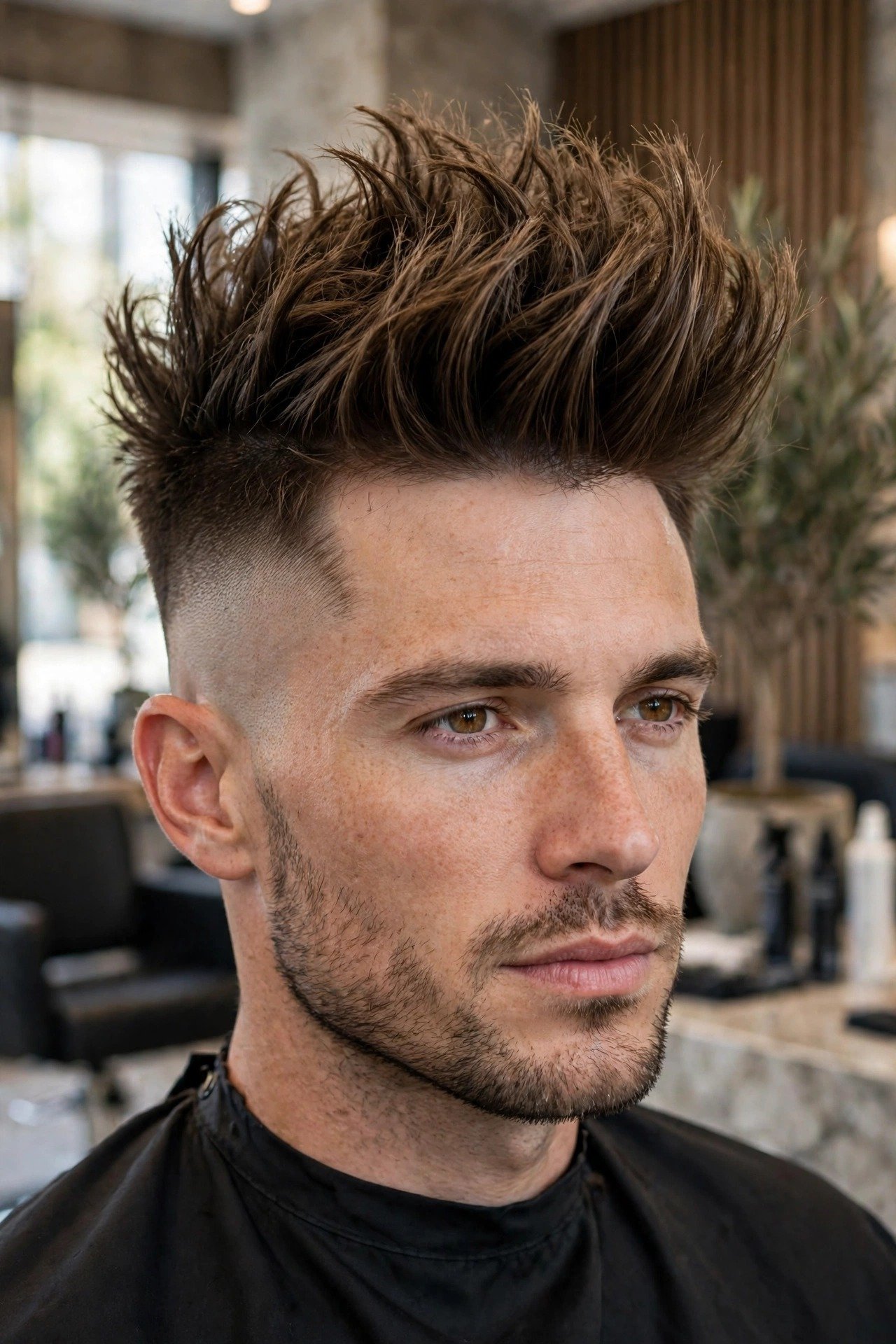
The textured quiff with a high taper turns up the contrast dramatically. The taper climbs high on the sides, close to the crown, leaving the textured top isolated and prominent against closely cropped sides. The result is a bold, modern silhouette with maximum height and maximum definition. It reads as confident and fashion-forward, and it photographs extremely well because the shape is so clean and graphic from every angle.
This version suits men with strong bone structure, square or oval faces, and thick hair that can hold height. It is less forgiving on very round faces, where the high sides can widen the look, so ask your barber for advice if you are unsure. Ask for a high taper fading to a one or zero guard at the bottom, with a three-to-five-inch textured top left long enough to create real contrast. A crisp lineup around the forehead sharpens the finish further.
Styling focuses entirely on the top, since the sides need almost nothing. Blow-dry upward with a round brush for maximum lift, then lock the shape with matte clay or a strong-hold paste. Because the taper is high, it grows out visibly within two weeks, so plan on a tidy-up every two to three weeks to keep the contrast sharp. A little scalp moisturiser prevents dryness on the closely tapered sides.
8. Textured Quiff with Skin Fade
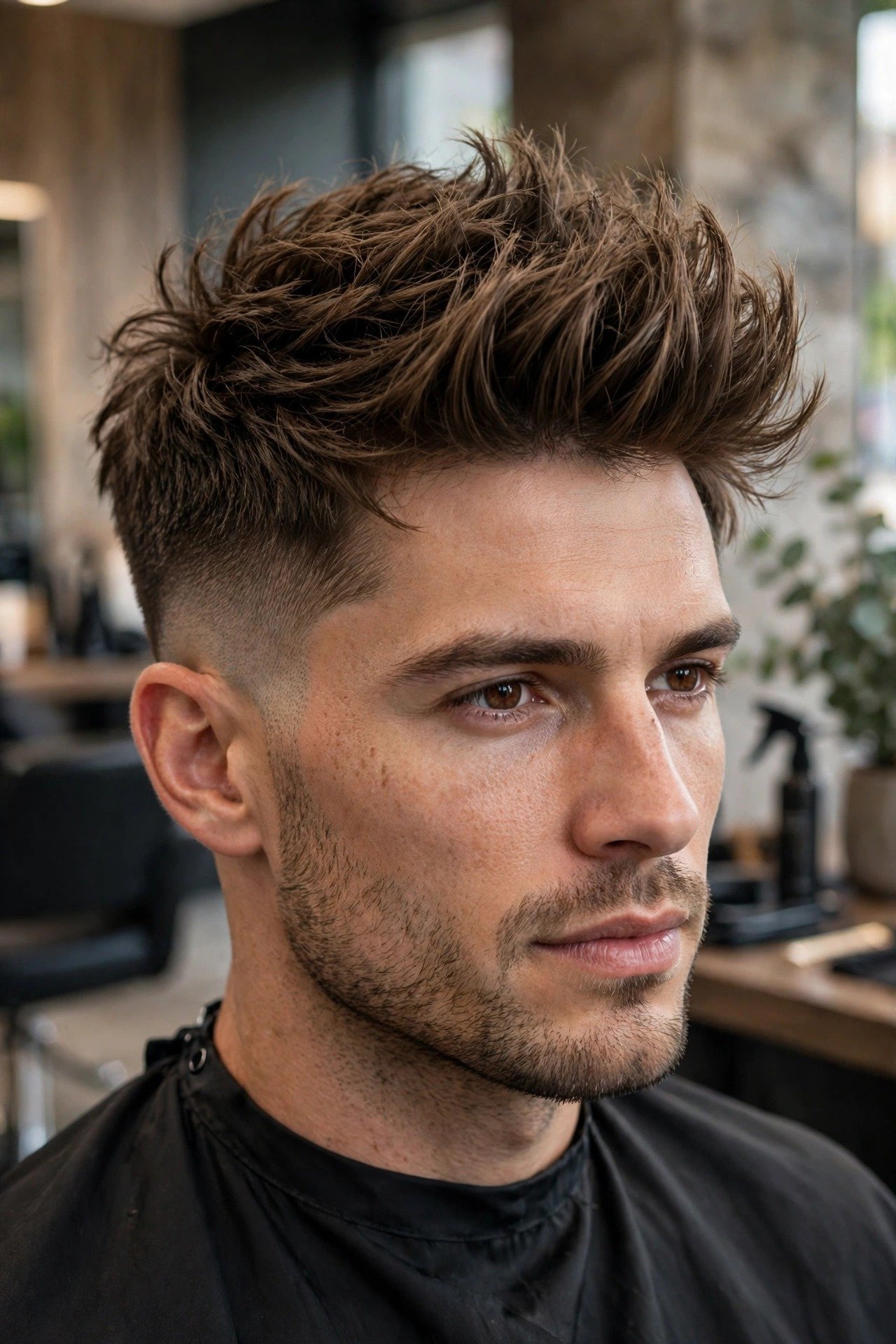
The textured quiff with a skin fade is the boldest and most popular combination of 2026. The sides are faded all the way down to bare skin, creating a razor-sharp gradient that makes the textured top look even taller and fuller by contrast. It is a high-impact, editorial look that feels modern, athletic, and confident. When the fade is done well, the blend is seamless, with no visible lines, and the top appears to float above the clean sides.
This style suits men who like a sharp, defined look and do not mind frequent barber visits. It flatters square and oval faces beautifully and works on thick, wavy, and curly hair alike. Ask your barber for a mid or high skin fade, specifying how high you want the fade to start, and a textured top of three to five inches. A foil shaver finish at the bottom gives the cleanest skin effect, and a lineup can add extra sharpness around the hairline.
Blow-dry the top upward and back, then apply matte clay for hold and texture. The skin fade itself needs no styling, but it does need maintenance: a fade tidy-up every one to two weeks keeps the gradient crisp, since even a few millimetres of growth softens the effect. Moisturise the faded skin to prevent irritation, and avoid heavy, shiny products on top, which clash with the clean matte sides.
9. Textured Quiff with Drop Fade
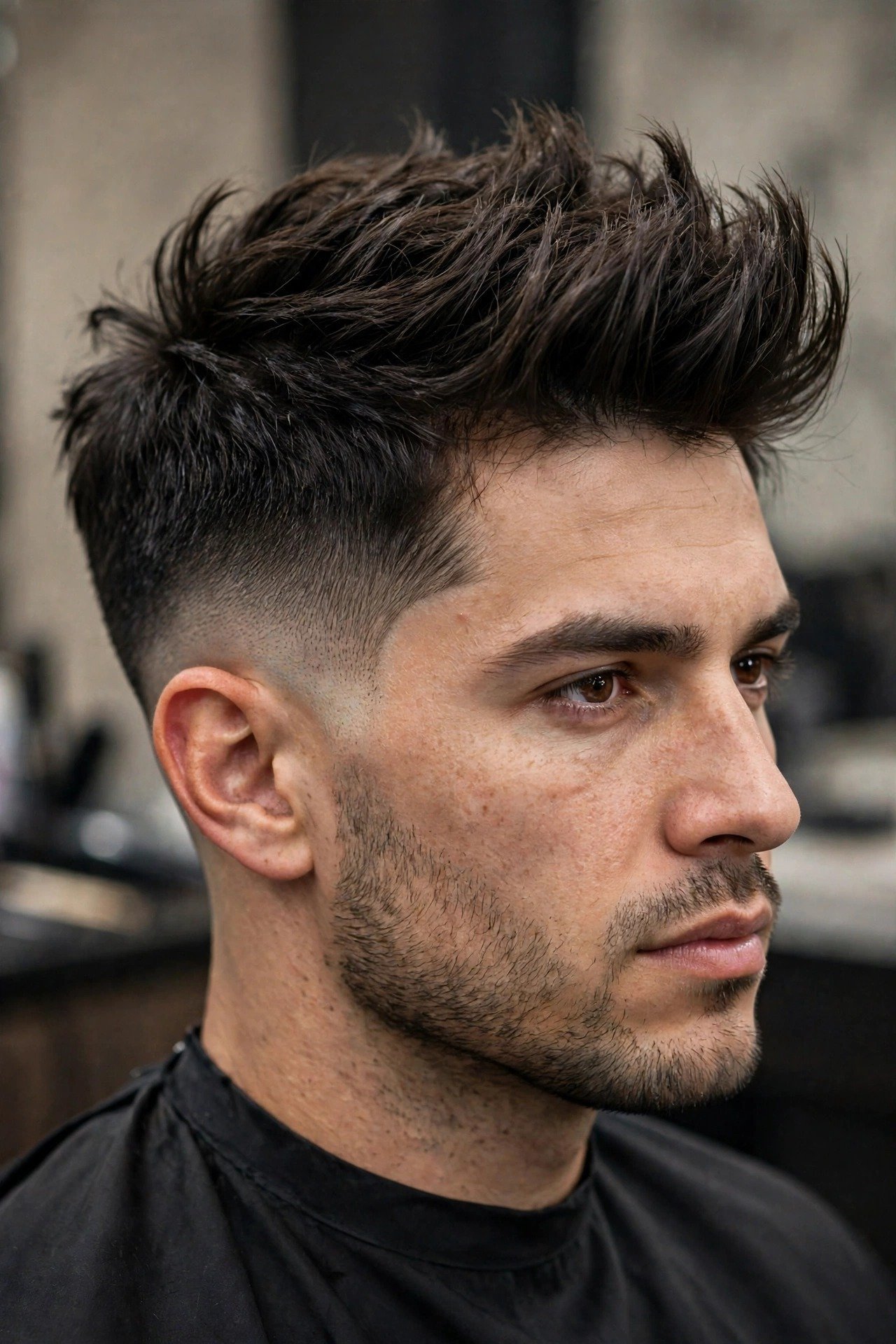
The textured quiff with a drop fade adds a subtle architectural twist to the classic fade. Instead of fading in a straight line around the head, the fade drops down behind the ear, following the natural curve of the skull. This creates a curved, almost sculpted blend that looks custom-made and adds depth to the back of the head. From the front it looks like a clean fade, but from the side and back the drop gives it a distinctive, premium finish.
This version suits men who want a fade with extra detail and craftsmanship. It works on most face shapes and is especially good for men with a strong head shape, since the curved fade highlights it. Ask your barber specifically for a drop fade, showing a reference photo if possible, because the curve must follow your head shape precisely. Pair it with a three-to-four-inch textured top and a slightly longer fringe for balance.
Style the top as you would a classic quiff, with matte clay and an upward blow-dry. The drop fade needs a skilled barber to maintain, so book a tidy-up every two to three weeks and avoid trying to blend it yourself at home. A light hold product keeps the top in place without weighing it down, and the curved fade looks best when the hair on top is kept textured rather than slicked flat.
10. Textured Quiff with Undercut
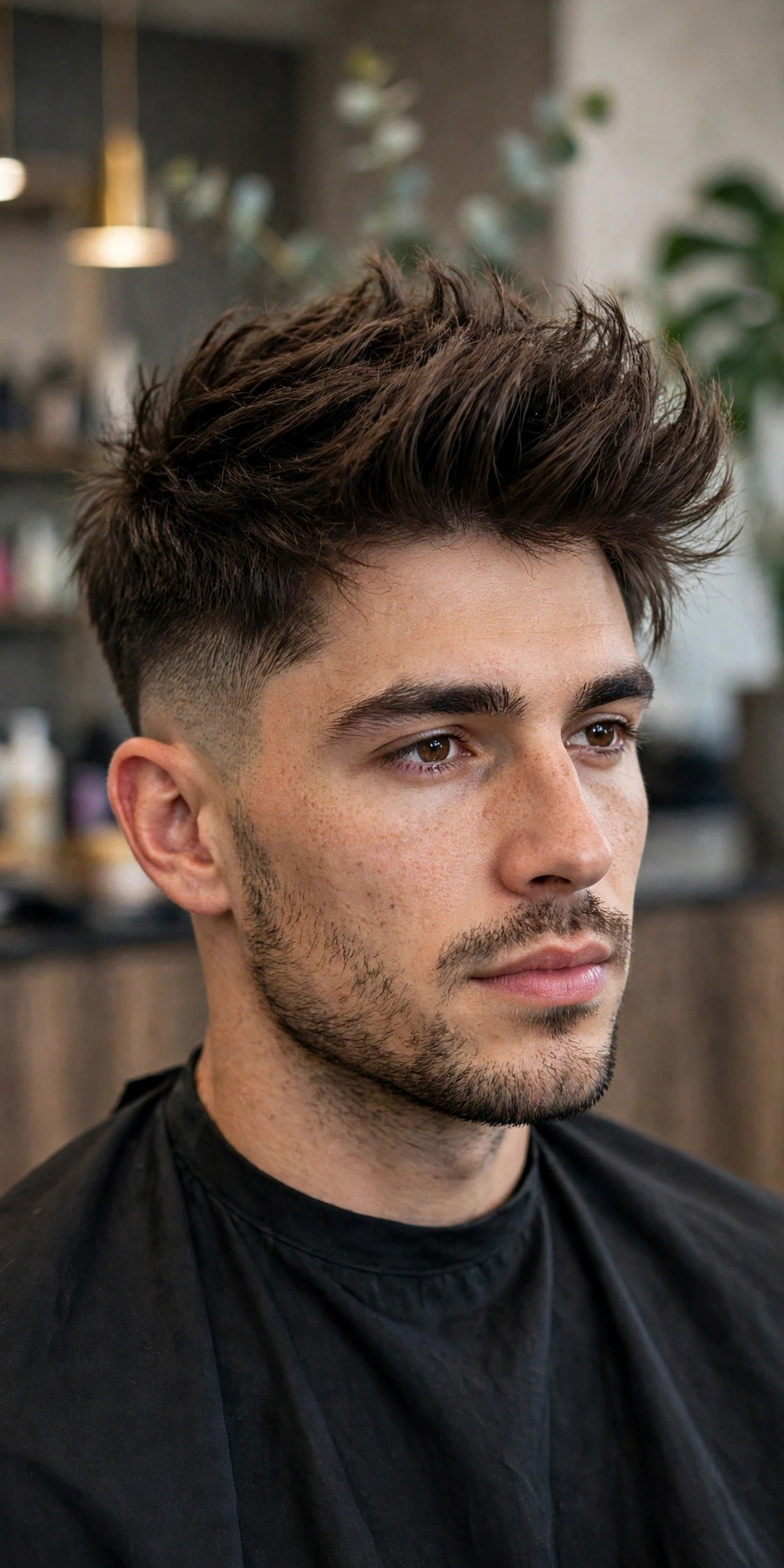
The textured quiff with an undercut is all about contrast. The sides are cut short to one uniform length with no blending into the top, creating a sharp disconnected line where the long textured hair meets the short sides. The top can be worn swept back, to the side, or up in a tall quiff, and the disconnect makes every version look more dramatic. It is an edgy, fashion-forward style that feels at home in creative industries and nightlife.
This style suits men with thick hair, since the undercut removes bulk from the sides and lets the top dominate. It flatters oval, square, and heart-shaped faces, and it pairs well with beards and tattoos. Ask your barber for a disconnected undercut, usually a number two or three guard on the sides, with the top left at four to five inches and heavily textured. Be clear about where you want the disconnect line to sit, since a higher line is bolder than a lower one.
Styling depends on your mood. For a swept-back look, blow-dry the top backward with a vent brush and finish with matte paste. For a side-swept version, part the hair slightly off-centre and let the length fall naturally. The undercut grows out quickly into an awkward in-between stage, so plan a trim every two to three weeks, or grow the sides out deliberately if you want to transition to a taper later.
11. Textured Quiff with Fringe
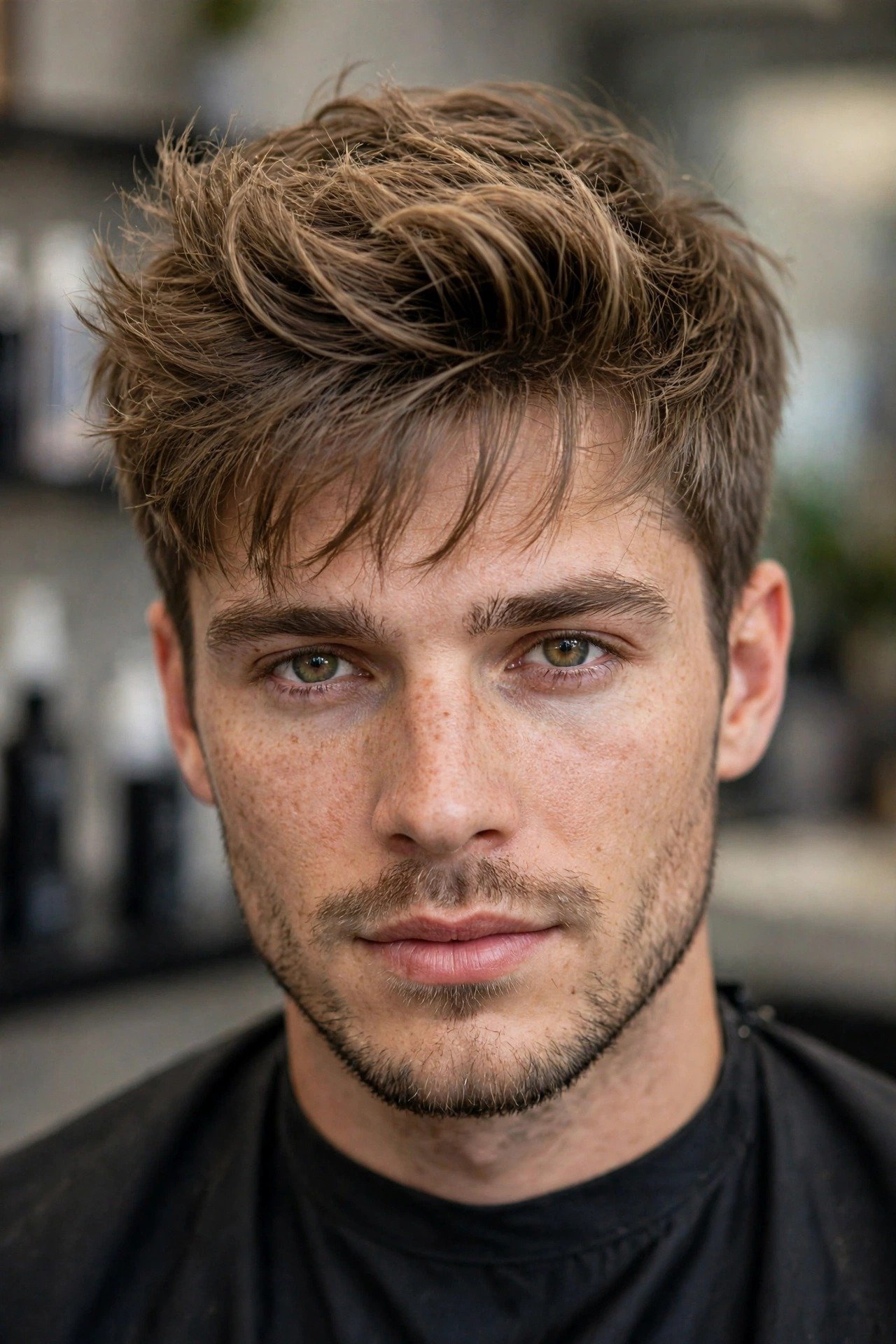
The textured quiff with a fringe softens the classic shape by letting the front fall slightly forward instead of sweeping fully back. The top is still lifted and textured, but the very front edge breaks forward into a piecey, feathered fringe that frames the forehead. It is a younger, more relaxed interpretation that feels less formal than a fully swept-back quiff, and it is excellent at disguising a high hairline or a large forehead without looking like a cover-up.
This version suits men with high foreheads, long faces, and anyone who wants a softer, more approachable look. It works on straight and wavy hair and is a strong choice for teenagers and men in their twenties. Ask your barber for a textured quiff with a forward fringe, keeping the front around three inches so it can fall naturally, and a mid taper on the sides. Request point-cut ends so the fringe looks feathered, not blunt.
Style it by blow-drying the top upward at the crown, then letting the front fall forward with your fingers. Use a light texture paste to separate the fringe pieces, and avoid pulling everything straight back. The fringe needs a trim every three weeks to keep it out of your eyes, and a little dry shampoo at the roots keeps the lift alive on days when you skip washing.
12. Textured Quiff with Side Part
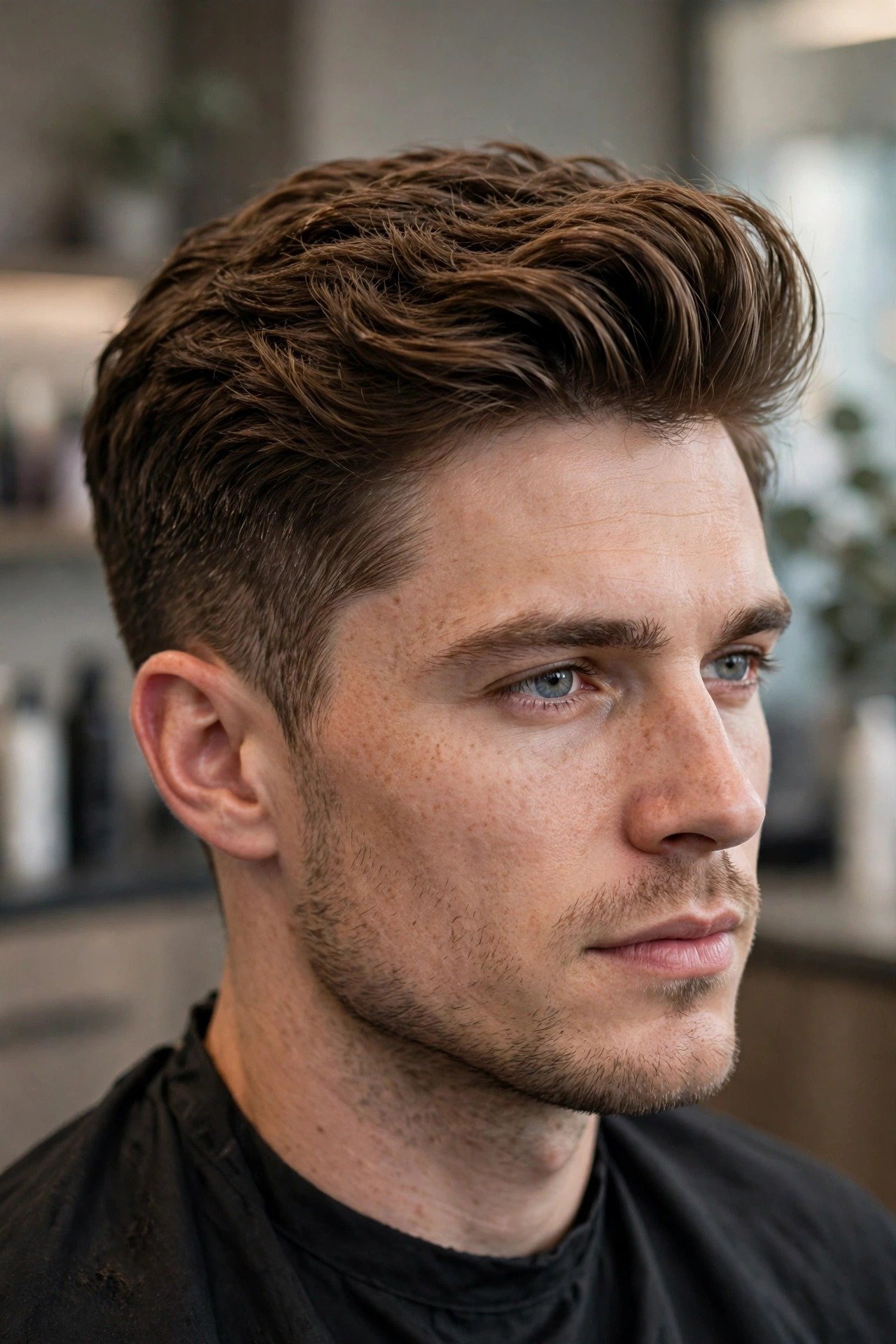
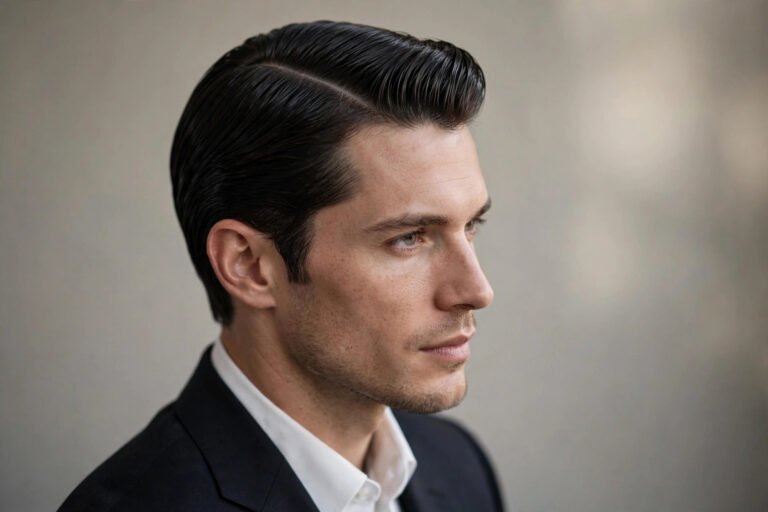
The textured quiff with a side part combines old-school structure with modern texture. A soft side part, usually just off-centre, gives the quiff a clear direction, with the bulk of the hair sweeping up and across to one side. The texture keeps it from looking like a stiff 1950s side part, while the part itself adds polish and makes the style look deliberate. It is the quiff for men who like a little order in their hair.
This style suits men with a natural part or a cowlick that already pushes hair to one side, and it flatters square and oval faces by adding asymmetry. It is a strong office and wedding choice. Ask your barber for a textured top with a soft side part, cut so the hair naturally falls to your preferred side, and a low or mid taper. Tell them whether you want the part defined with a comb or left soft and natural.
Find your part on damp hair, then blow-dry the hair away from the part for volume. Use matte clay to hold the sweep, and a comb for the first pass if you want a cleaner line, finishing with your fingers to break up the texture. The part grows out invisibly, so trims every three to four weeks are enough, and a little grooming cream keeps the part looking intentional on windy days.
13. Textured Quiff with Hard Part
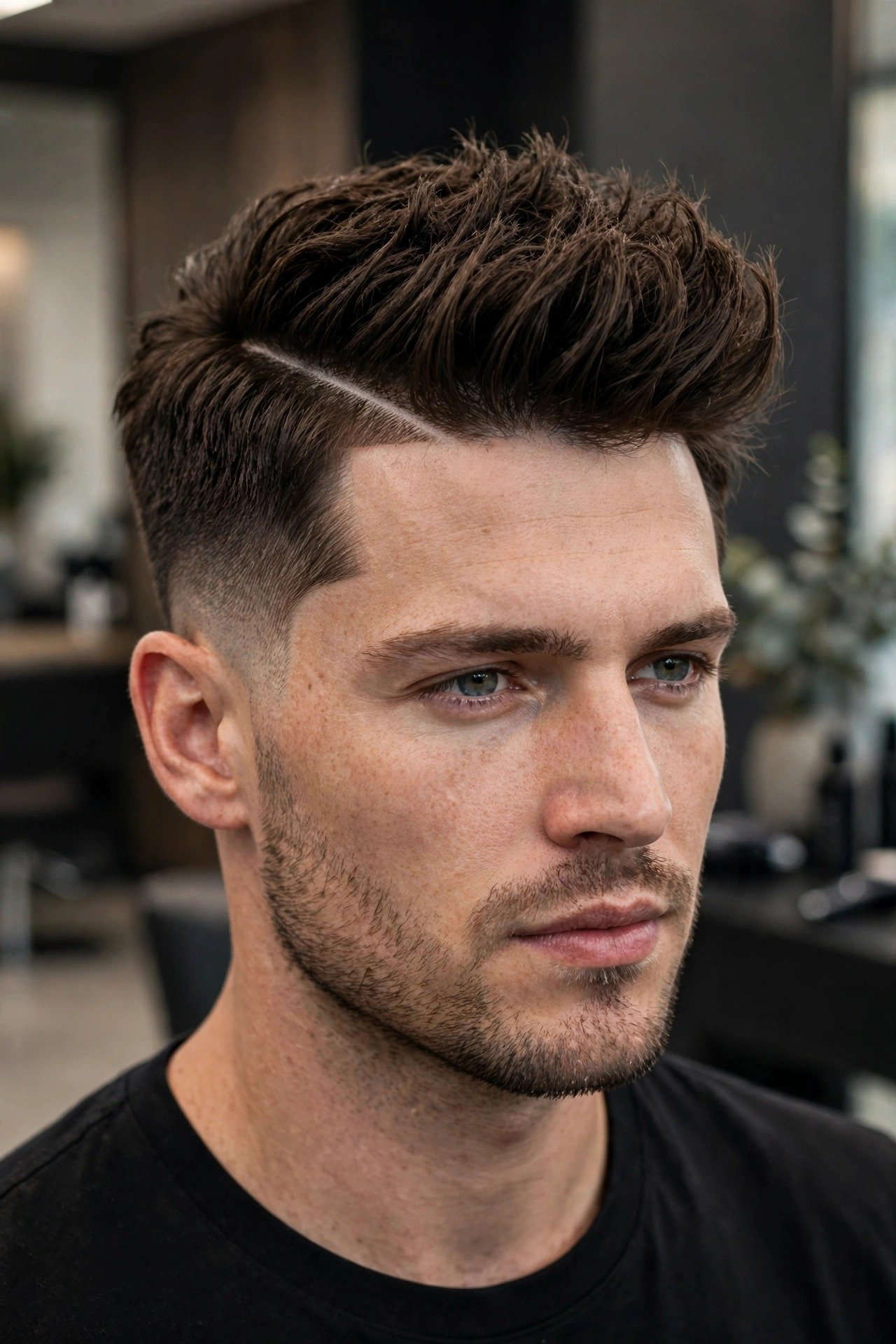
The textured quiff with a hard part takes the side part and sharpens it into a statement. A hard part is a thin line shaved or razor-cut into the hair, creating a crisp, unmistakable separation between the top and the side. Paired with a tall textured quiff, it looks precise, bold, and barbershop-perfect. It is a detail that elevates the whole haircut and makes the quiff look intentional from across the room.
This version suits men who like sharp details and do not mind the upkeep a shaved line requires. It works best on straight and wavy hair where the line stays visible, and it flatters square faces particularly well. Ask your barber for a hard part on your natural part line, a skin fade or high taper below it, and a three-to-four-inch textured top. Discuss the width of the line, since a wider line is bolder and a thinner line is subtler.
Style the top upward and away from the part, using matte clay for hold. Keep the hard part clean by brushing the hair on either side away from the line each morning. The line grows in within a week to ten days, so you will need a barber visit every one to two weeks if you want it razor-sharp, or you can let it soften into a natural part between appointments.
14. Wavy Textured Quiff
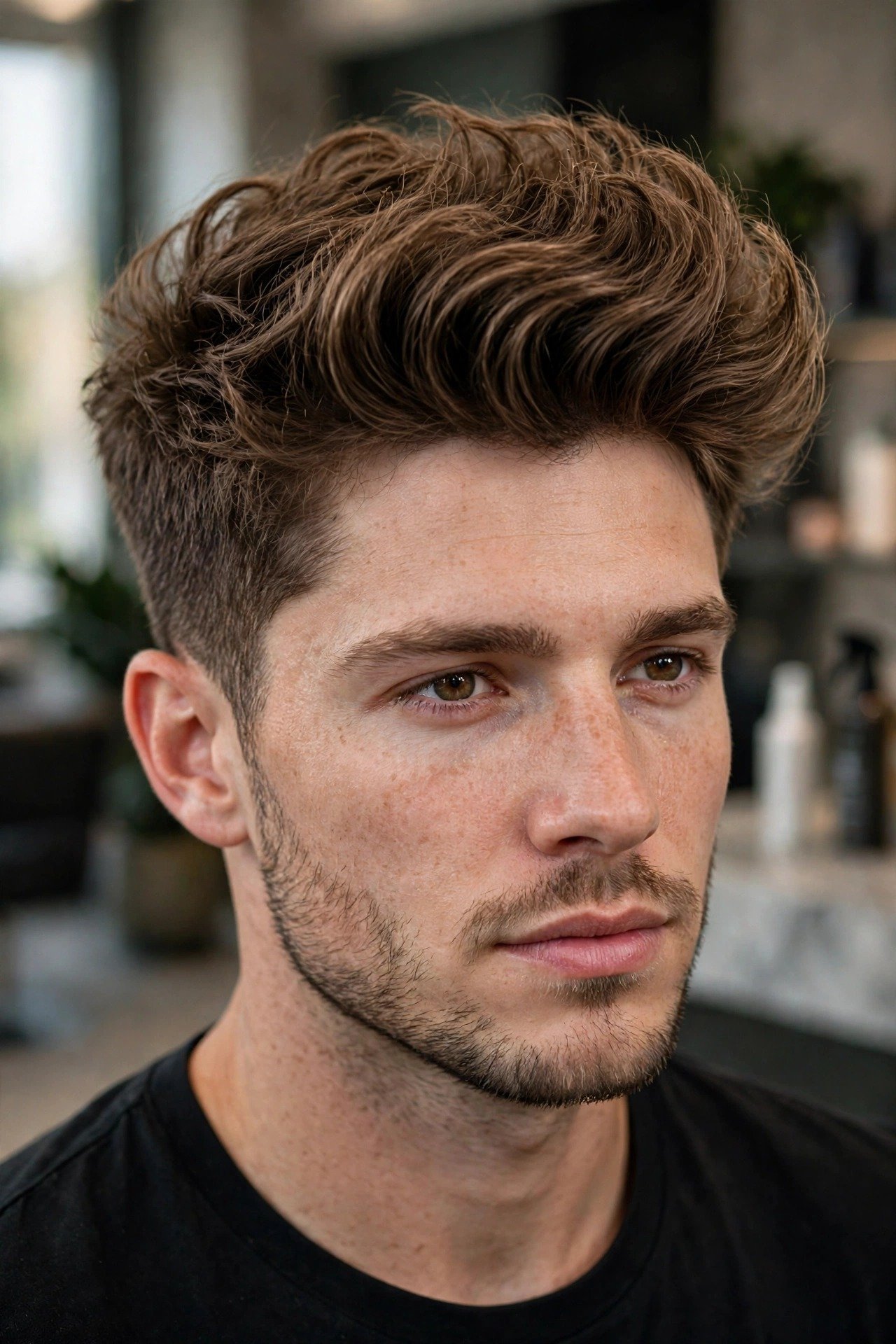
The wavy textured quiff lets your natural wave do most of the styling work. Instead of fighting the wave, the cut enhances it, with layers that allow the hair to curl and bend as it lifts up and back. The result is a quiff with organic movement, soft curves, and a beachy, effortless quality that straight hair cannot replicate. It looks relaxed and romantic, and it holds its shape surprisingly well because the wave itself provides structure.
This style is made for men with naturally wavy hair, and it suits oval, square, and heart-shaped faces. It is ideal if you have always struggled to make your hair sit flat, because this cut works with the wave rather than against it. Ask your barber for a layered textured top that follows your wave pattern, with a mid taper or low fade. Avoid over-thinning, which can make wavy hair frizzy, and ask for the ends to be point-cut rather than blunt.
Apply sea-salt spray or a light curl cream to damp hair, then scrunch upward and let it air-dry or diffuse on low heat. Do not brush wavy hair when dry, since brushing breaks the wave into frizz. A tiny amount of matte paste on the ends defines the pieces. Trim every four weeks to keep the layers fresh, and use a moisturising conditioner to keep waves soft and defined rather than dry and puffy.
15. Curly Textured Quiff
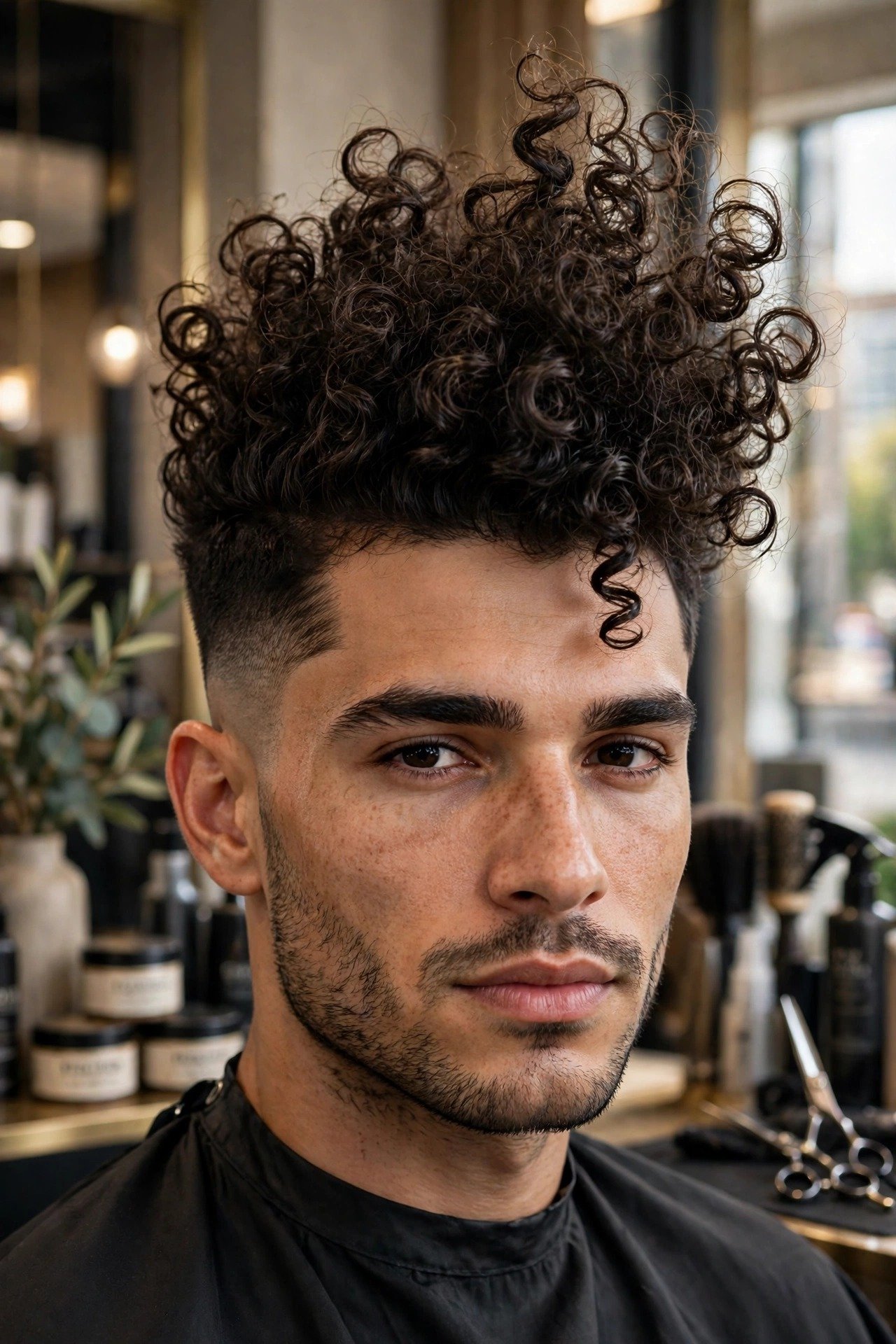
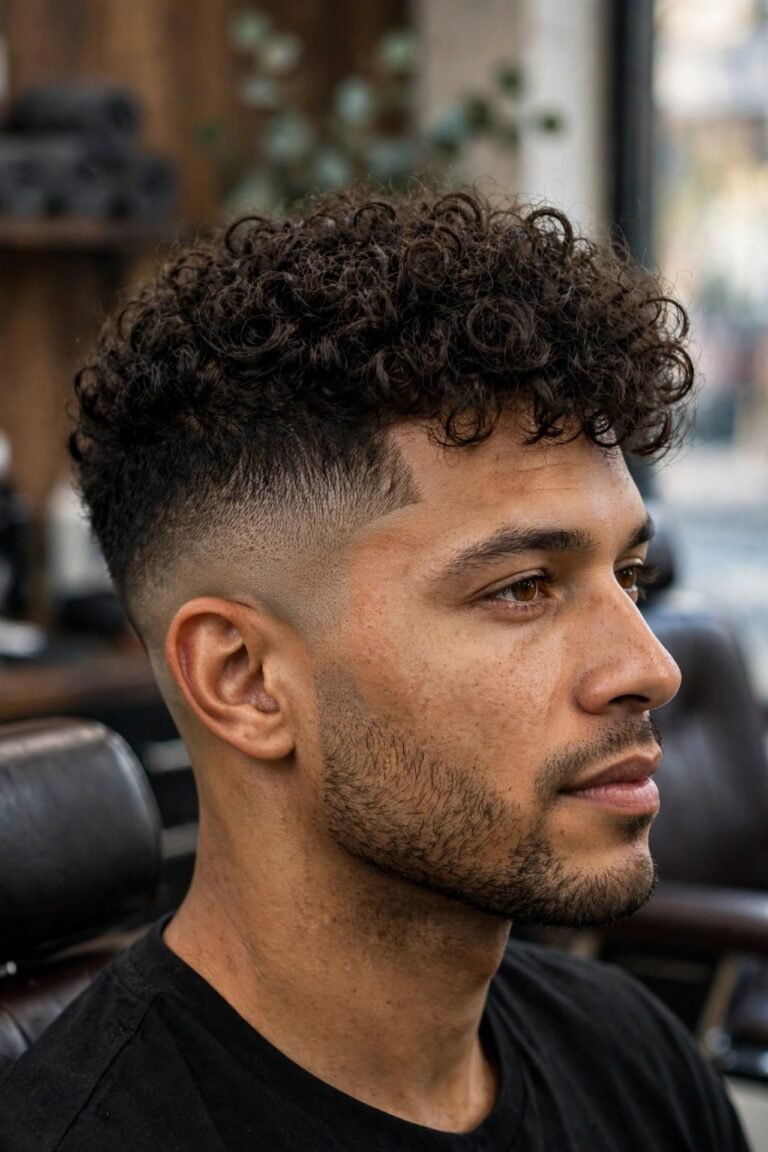
The curly textured quiff is one of the most striking versions in this guide, turning curls into height and drama. The top is left long enough for curls to form and lift, while the sides are tapered or faded to keep the shape controlled. The curls themselves create the texture, so the quiff has a wild, voluminous energy that looks incredible in photos and in person. It is a bold choice that celebrates curly hair instead of trying to tame it.
This style suits men with naturally curly or coily hair who want volume and presence. It flatters round and oval faces by adding height, and it works beautifully with a beard. Ask your barber for a curly top cut dry or with the curl pattern in mind, since cutting curly hair wet can lead to unexpected shrinkage. Request a taper or low fade on the sides and enough length on top for the curls to lift without collapsing.
Style it with curl cream or a light leave-in conditioner on damp hair, scrunching upward to encourage the curls to lift. Diffuse on low heat or air-dry, and avoid touching the curls while they dry to prevent frizz. A small amount of matte clay can be scrunched into the roots for extra lift. Trim every four to five weeks, and never brush curly hair dry, since brushing destroys the curl pattern and creates a puffball effect.
16. Thick Hair Textured Quiff
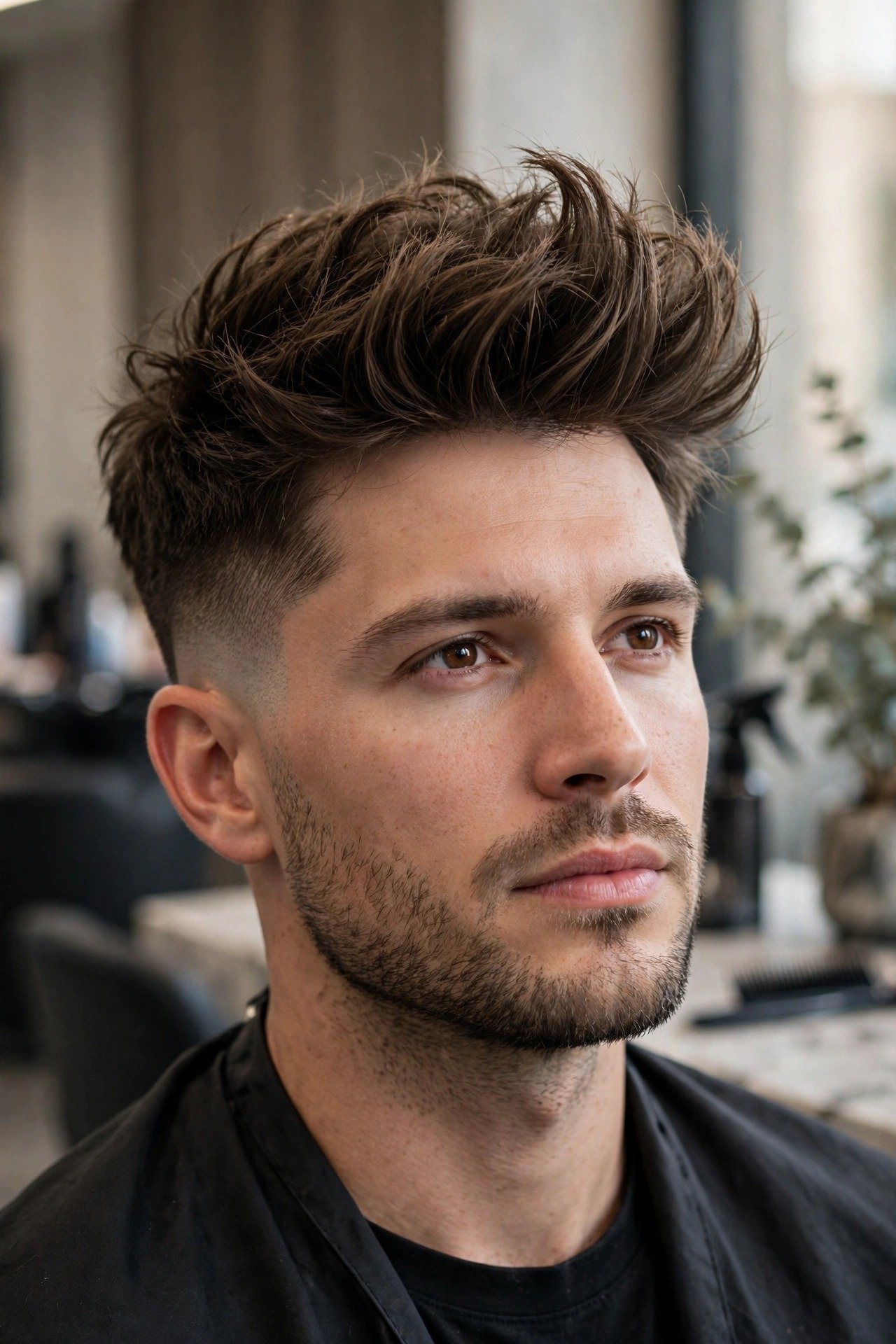
The thick hair textured quiff is engineered to manage volume rather than create it. Thick hair naturally wants to stand up, so the barber removes weight from underneath with thinning shears and deep point-cutting, allowing the top to lift without turning into a heavy block. The result is a quiff with real presence that still moves and separates, instead of sitting like a solid helmet. It is the version that finally makes thick hair feel light and controllable.
This style suits men with dense, heavy hair that overwhelms most cuts. It flatters most face shapes, and it is particularly good for square faces where the volume balances a strong jaw. Ask your barber for weight removal through the interior, not just at the ends, and a textured top of three to four inches. A mid fade or taper keeps the sides from puffing out, and regular thinning at each appointment prevents the cut from growing bulky.
Blow-dry the top upward with a vent brush to direct the volume, then use matte clay sparingly, since thick hair needs less product than you think. A sea-salt spray before drying adds separation without extra weight. Avoid heavy waxes and pomades, which make thick hair look greasy and flat. Trim every three weeks, with thinning at each visit, to keep the shape light and the texture visible.
17. Fine Hair Textured Quiff
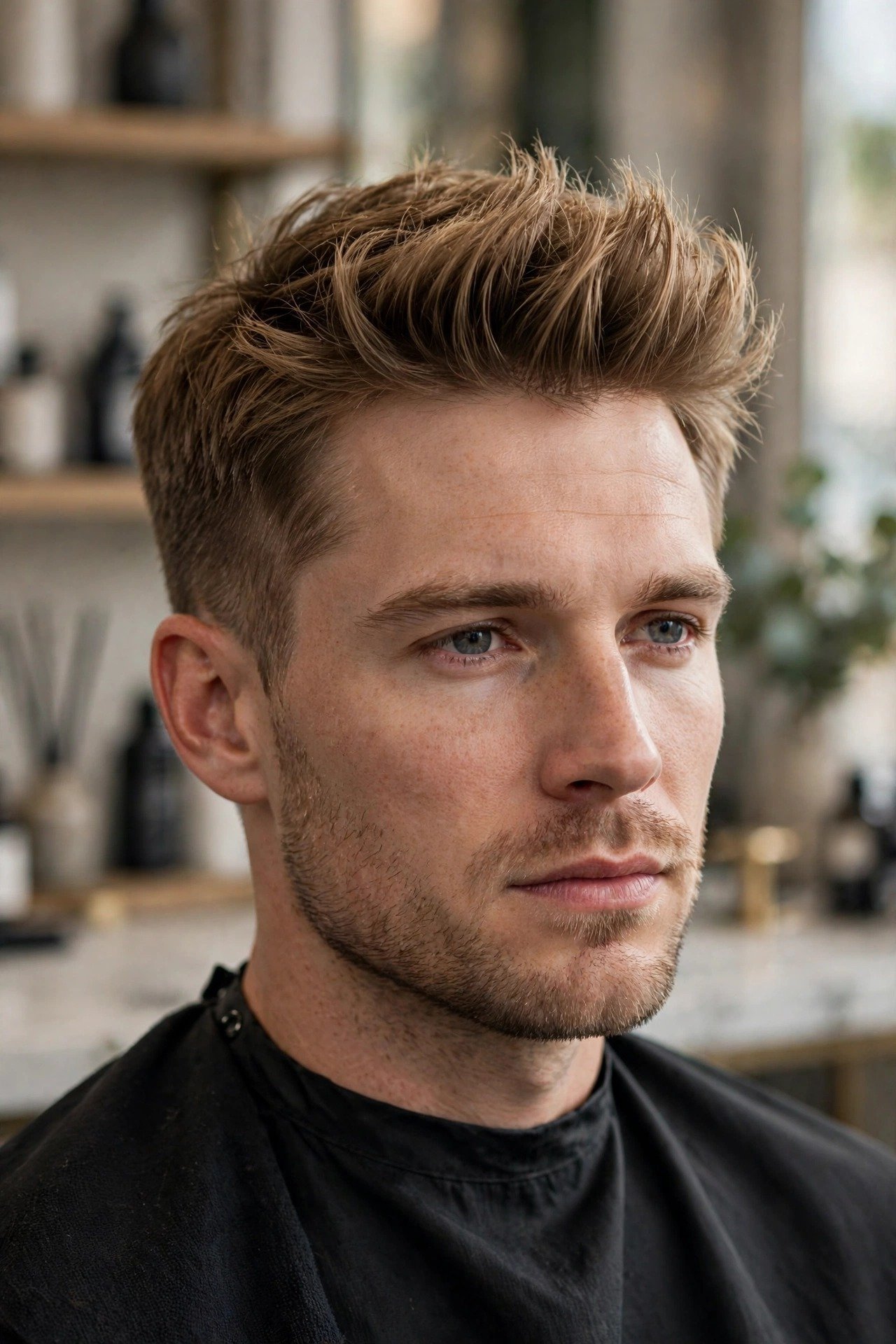
The fine hair textured quiff is designed to create the illusion of thickness where nature provided less. Shorter layers, choppy texture, and a matte finish all work together to make each strand look fuller, while an upward blow-dry lifts the roots away from the scalp. The quiff shape itself helps, since the height draws the eye up and the textured ends disguise any sparseness. Done well, fine hair can look surprisingly full in this cut.
This style suits men with fine or thinning hair, especially at the crown and front. It flatters oval and square faces and is a smart choice for men noticing early thinning, since the texture camouflages the scalp. Ask your barber for a shorter textured top, around two to three inches, with lots of point-cutting and no heavy layering that removes density. A low taper keeps the sides looking full rather than faded to nothing.
Use a volumising mousse or root-lift spray on damp hair, then blow-dry upward with your fingers, lifting each section at the roots. Finish with a light matte powder or clay, using far less product than you think you need, since heavy product collapses fine hair. Avoid oil-based products entirely. A trim every three weeks keeps the ends looking thick, and a thickening shampoo adds a little extra body between cuts.
18. Straight Hair Textured Quiff
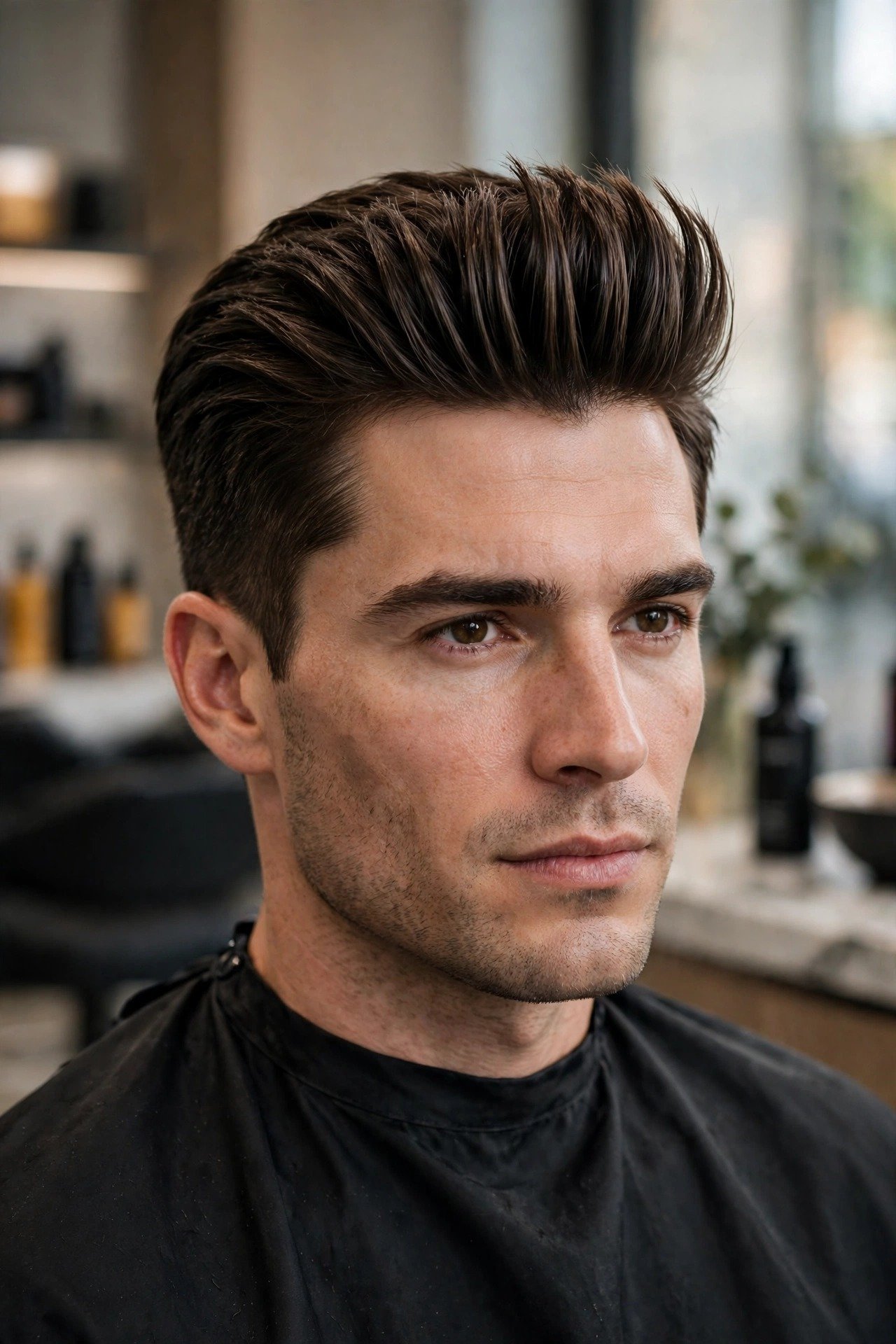
The straight hair textured quiff relies on cutting technique to create texture that straight hair does not naturally have. Deep point-cutting, slide-cutting, and razor work break the solid surface of straight hair into separate pieces, so the quiff looks textured rather than like a smooth sheet. The result is clean, sharp, and architectural, with a modern edge that suits men who like a precise, intentional look.
This style suits men with straight hair of medium density, and it flatters oval, square, and heart-shaped faces. It is a strong choice for professionals who want a quiff that still looks neat at the end of the day. Ask your barber for aggressive texturising through the top, with a three-to-four-inch length and a mid taper or fade. Mention that you want visible separation, so they cut texture in rather than leaving the top blunt.
Blow-dry upward with a round brush to create bend and lift, since straight hair needs heat to hold a curve. Apply matte clay and pinch the ends to define the pieces, then finish with a light-hold hairspray if you need all-day hold. Straight hair shows product buildup quickly, so use a clarifying shampoo once a week. Trim every three to four weeks to keep the texture sharp and the ends from looking wispy.
19. Matte Finish Textured Quiff
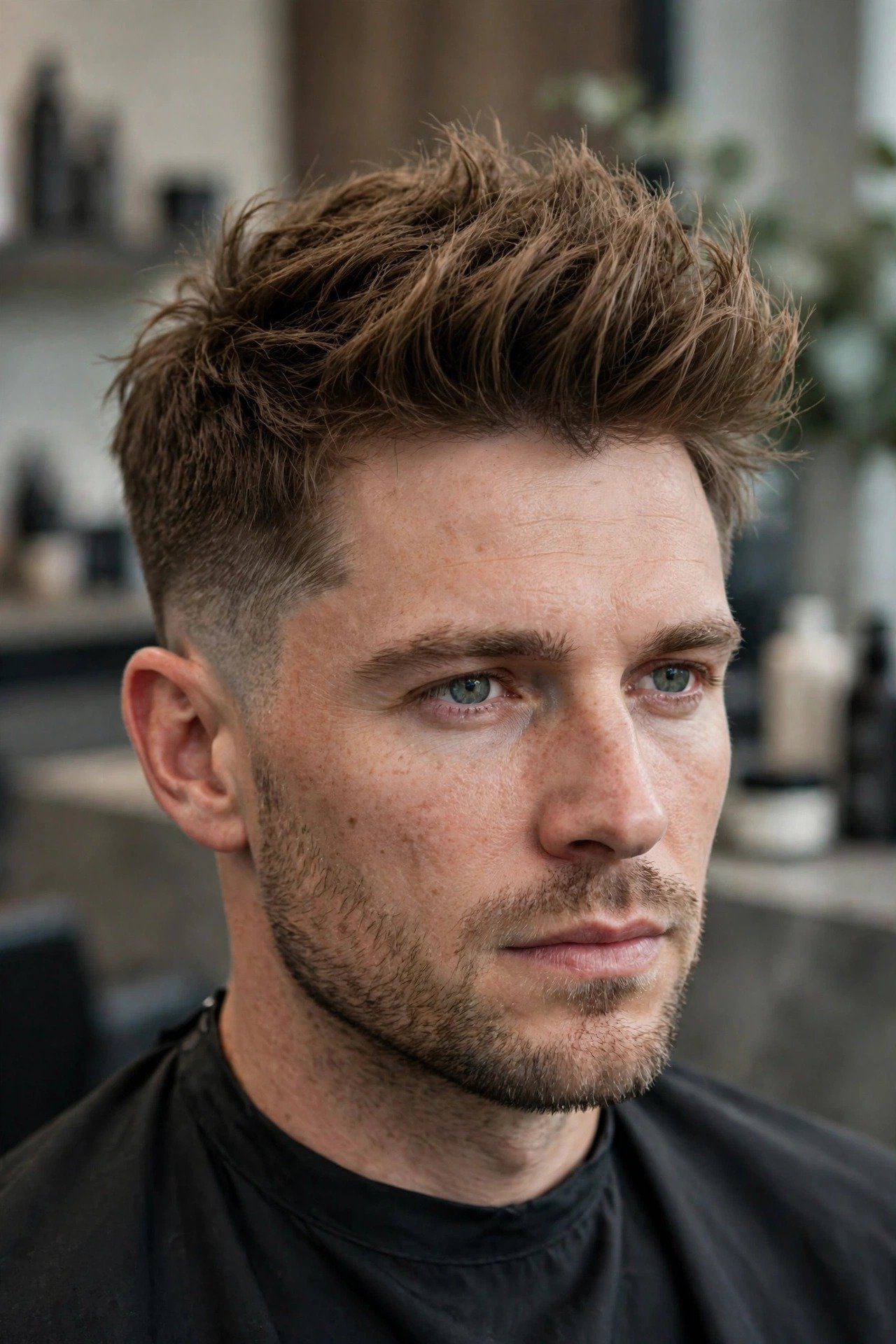
The matte finish textured quiff is defined by what it is not: shiny, wet, or greasy. Every element, from the cut to the product, is chosen to create a dry, natural, touchable finish that looks like your hair simply grows that way. The texture is the star, with piecey ends and visible separation, and the absence of shine makes the volume look even bigger. It is the most modern finish in this guide and the one most barbers recommend for 2026.
This finish suits every hair type and face shape, but it is especially good for men with oily hair, since matte products absorb oil rather than adding shine. It flatters men who want a natural, effortless look. Ask your barber for a textured top with a matte cut, meaning point-cut ends and no heavy layering that needs shine to look finished. Pair it with any fade or taper you like, since the matte top works with every side length.
Use only matte products: matte clay, matte paste, or texture powder. Apply to dry or nearly dry hair for the strongest matte effect, and avoid pomades, gels, and shine sprays entirely. A sea-salt spray before blow-drying adds grip and dryness. Wash with a volumising shampoo and skip heavy conditioners on the top, since they add unwanted softness and shine. A trim every three to four weeks keeps the dry texture looking fresh.
20. Textured Quiff for Round Face

The textured quiff for a round face is all about adding height and creating angles. The top is lifted as tall as your hair allows, with the sides kept tight and close to the head, which lengthens the face visually and breaks up its roundness. A slight asymmetry, with the quiff leaning to one side, adds further structure. The goal is a silhouette that is taller than it is wide, with clean lines that define the jaw.
This version suits men with round or full faces who want a slimmer, more defined look. It works on most hair types, though thicker hair holds the height more easily. Ask your barber for maximum height on top, three to five inches, with a high taper or skin fade on the sides to keep them narrow. Request a slightly squared front hairline and texture that sweeps upward rather than outward, since width at the sides defeats the purpose.
Blow-dry the front straight up, not to the sides, using a round brush to maximise height. Apply matte clay at the roots for lift, and keep the sides flat with a little grooming cream if they tend to puff out. Avoid wide, horizontal styling that adds width to the face. A beard with sharp lines can enhance the slimming effect, and a trim every two to three weeks keeps the sides tight and the height prominent.
21. Textured Quiff for Square Face
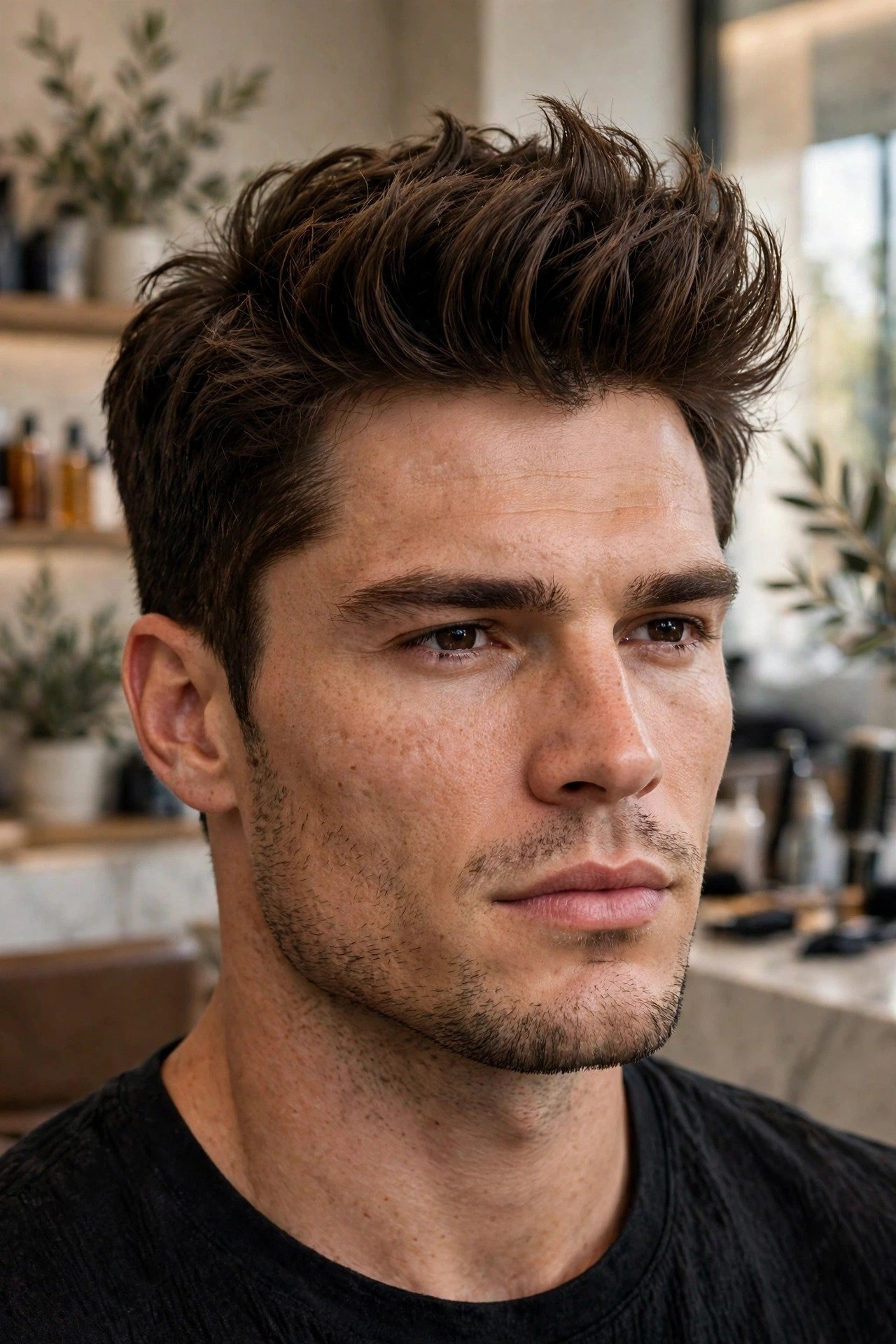
The textured quiff for a square face softens strong angles without hiding them. A square jaw is a great asset, but a very sharp, boxy haircut can make the whole head look severe. This version keeps the quiff textured and slightly tousled, with soft, broken ends that contrast with the jawline and add a touch of ease. The sides are tapered rather than faded to skin, which keeps the overall shape balanced and avoids too much harsh geometry.
This style suits men with square faces, strong jaws, and prominent cheekbones. It works on straight, wavy, and thick hair, and it is a natural fit for men who already have a defined jaw. Ask your barber for a textured top of three to four inches with soft, piecey ends, and a mid taper on the sides. Request that the front hairline be kept slightly rounded rather than squared off, which softens the forehead line.
Style it with a relaxed upward blow-dry, letting a few strands fall naturally instead of forcing everything into a rigid shape. Matte clay gives hold without stiffness, and a little texture spray adds the soft separation this look needs. Avoid heavy gels and sharp side parts that add more angles. A trim every three to four weeks keeps the taper soft and the top from growing too heavy over the forehead.
22. Textured Quiff for Oval Face

The textured quiff for an oval face is the easiest version to wear, because oval faces suit almost any proportion. The quiff can be worn tall, short, messy, or neat, and it will look balanced, since the face itself is already well-proportioned. This version leans into that freedom with a medium-height quiff, textured ends, and a clean mid taper that frames the face without overwhelming it. It is the classic, do-anything quiff.
This style suits men with oval faces of any age, and it works on every hair type from fine to thick. It is the best starting point if you have never tried a quiff before, since the risk of it looking wrong is very low. Ask your barber for a three-to-four-inch textured top with a mid taper, and tell them you want a versatile cut you can style several ways. That brief gives them room to shape the quiff to your hair’s natural movement.
Style it tall for evenings, messy for weekends, or neat for work, using the same products in different amounts. A blow-dry upward gives the tallest version, while finger-styling with matte clay gives the most relaxed one. Because the cut is so versatile, you can experiment freely without a bad result. Trim every three to four weeks to keep the shape balanced and the taper clean.
23. Textured Quiff for Older Men
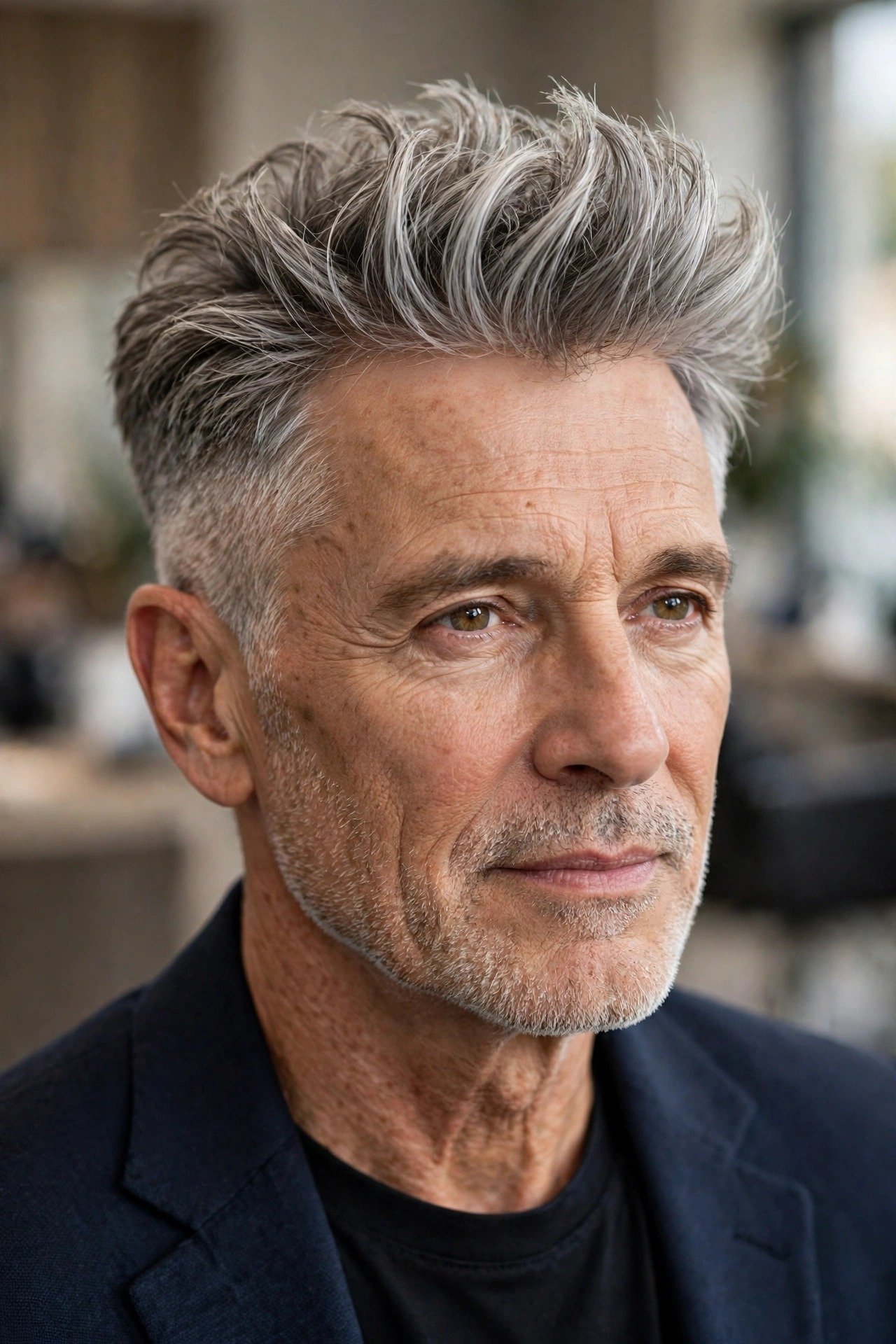
The textured quiff for older men proves this style has no age limit. With a little grey or silver mixed in, the texture looks even more distinguished, and the lift adds energy and youthfulness without looking like a young man’s haircut forced onto an older face. The sides are kept neat and tapered, the top is textured but not messy, and the overall effect is polished, confident, and modern. It is a superb alternative to the short back-and-sides many older men default to.
This style suits men in their forties, fifties, and beyond, especially those with salt-and-pepper or silver hair. It flatters most face shapes and works well with glasses and beards. Ask your barber for a textured top of three inches with a low or mid taper, and a natural finish that respects your hairline. If your hair is thinning, ask for texture that camouflages the scalp rather than a heavy, flat top.
Use a light matte paste or grooming cream rather than strong-hold products, since older hair is often finer and drier. Blow-dry upward gently, and finish with your fingers for a natural look. A silver-enhancing shampoo keeps grey hair bright rather than yellow, and a trim every three to four weeks maintains the shape. This is a low-effort, high-reward style that looks better the more naturally it is worn.
24. Textured Quiff for Teenagers

The textured quiff for teenagers is the fun, high-energy version of the cut. It is taller, messier, and more playful than the adult versions, with choppy texture, a bold fade, and plenty of movement. It suits school, sports, and social media equally well, and it is easy enough for a teenager to style alone in a few minutes before school. It is also forgiving, since the messy finish hides the cowlicks and growth patterns common in younger hair.
This style suits teenagers with straight, wavy, or thick hair, and it flatters most young face shapes. It is a great first quiff because it looks good even when styled imperfectly. Ask your barber for a heavily textured top of three to four inches, a mid or high fade, and a fringe that can be worn up or forward. Avoid a hard part or a very sharp lineup, which can look too grown-up on a younger face.
Style it with sea-salt spray and a quick finger-tousle, letting it air-dry for the most natural finish. A small amount of matte clay adds hold for school or events. Teenagers should avoid heavy waxes that make hair look greasy in photos. A trim every three weeks keeps the fade fresh, and the style grows out well enough to survive a missed appointment without looking untidy.
25. Office Professional Textured Quiff
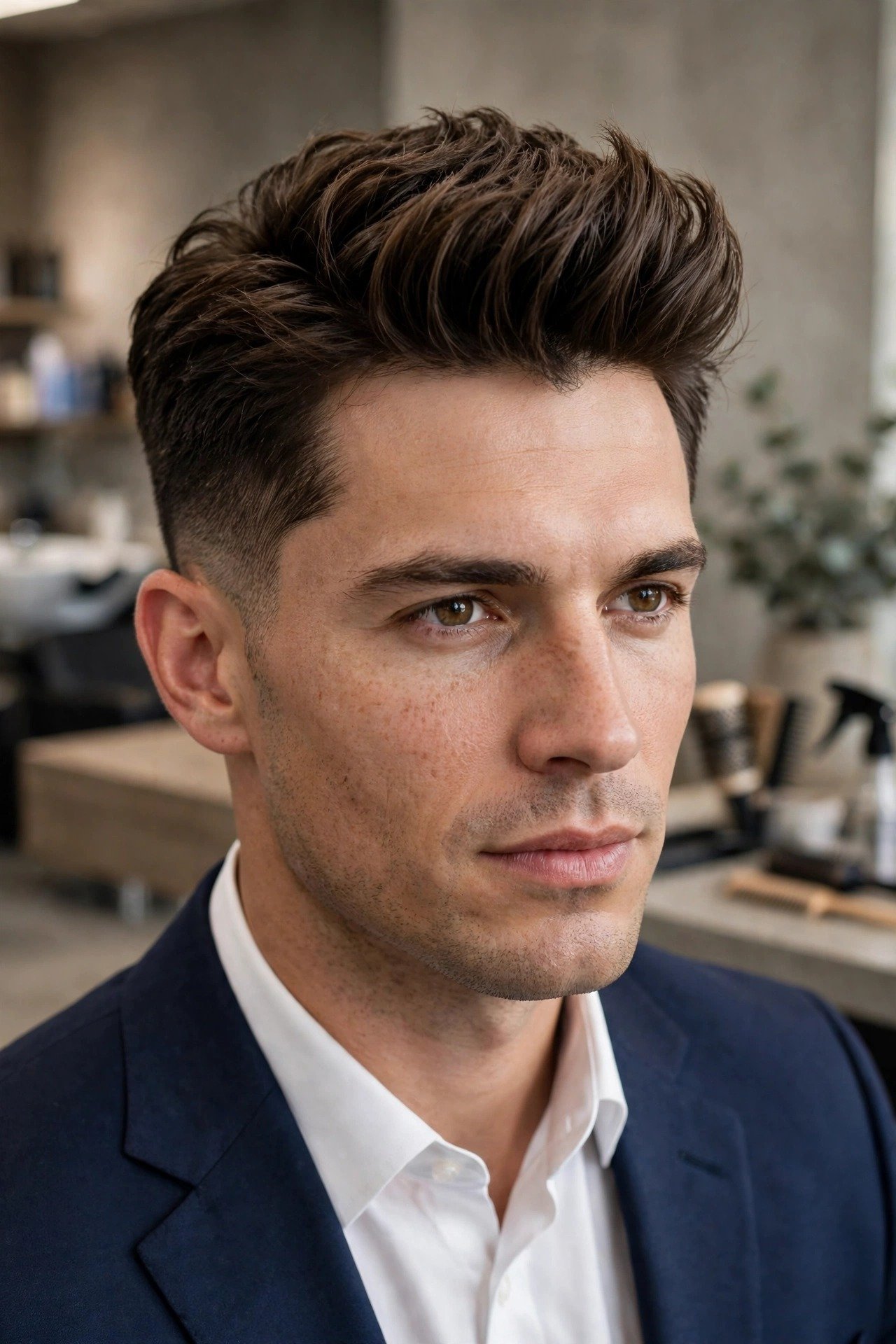
The office professional textured quiff is the boardroom-ready version of the style. It keeps the volume and texture that make a quiff attractive, but reins them in with a neater silhouette, a lower height, and clean, well-blended sides. Nothing about it is extreme: no skin fade, no disconnected line, no messy fringe. It looks intentional, groomed, and confident, and it pairs perfectly with a suit, a shirt, and a tie without ever looking like you spent an hour on your hair.
This style suits professionals, managers, and anyone whose workplace expects a polished appearance. It flatters most face shapes and works on straight and wavy hair. Ask your barber for a textured top of three inches with a low taper, a natural side part if you like one, and a finish that can be worn neat. Tell them it needs to look good after eight hours at a desk, so they cut it to hold its shape rather than relying on heavy product.
Blow-dry the top upward and slightly back, then smooth it with a small amount of matte paste or light grooming cream. A comb can be used for the first pass to keep it neat, with fingers to finish the texture. Keep a small tin of matte clay in your desk drawer for a midday refresh. A trim every three weeks keeps the taper sharp and the top from looking overgrown in meetings.
26. Wedding Textured Quiff
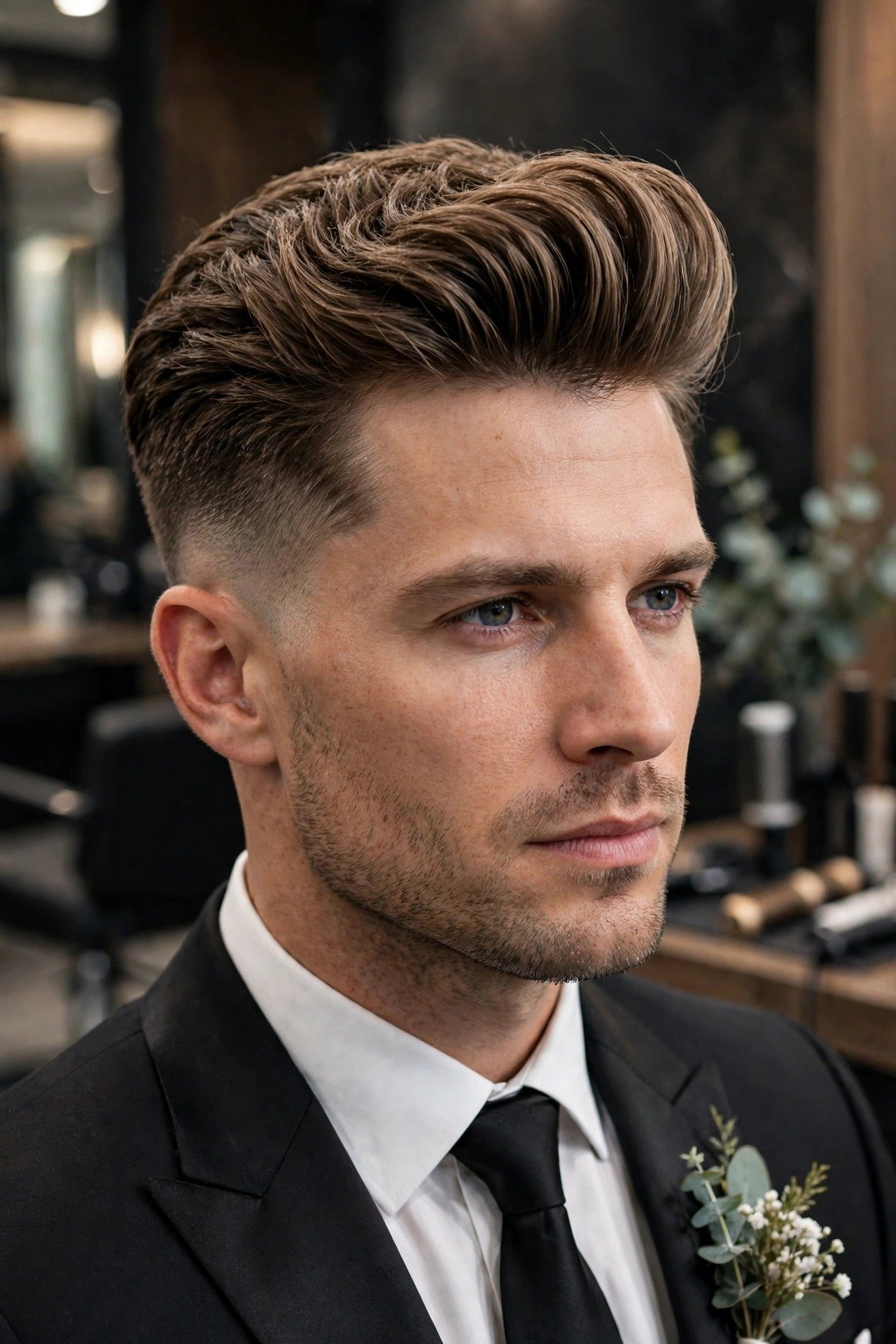
The wedding textured quiff is designed to look flawless in photographs from every angle, all day long. It is taller and more polished than an everyday quiff, with carefully shaped volume, defined texture, and a finish that holds through a ceremony, photographs, dancing, and a long reception. The sides are immaculately tapered, the hairline is crisp, and the top has a romantic sweep that looks both masculine and elegant next to formalwear.
This style suits grooms and groomsmen, and it flatters most face shapes in photographs. It works best on hair that can hold a blow-dry, so a trial run with your barber a week before the wedding is wise. Ask for a three-to-five-inch textured top with a mid taper or low fade, a clean neckline, and a shape that photographs well from the side as well as the front. Bring a photo of your suit so the barber can match the formality.
On the day, have your barber style it or follow a careful routine: blow-dry upward with a round brush, apply matte clay, and finish with a light-hold hairspray for all-day hold. Avoid trying a new product on the wedding day. Book a fresh cut two to three days before the event, not on the day itself, so the taper settles naturally. Keep a pocket comb and a little matte paste handy for touch-ups between photographs.
27. Textured Quiff with Beard
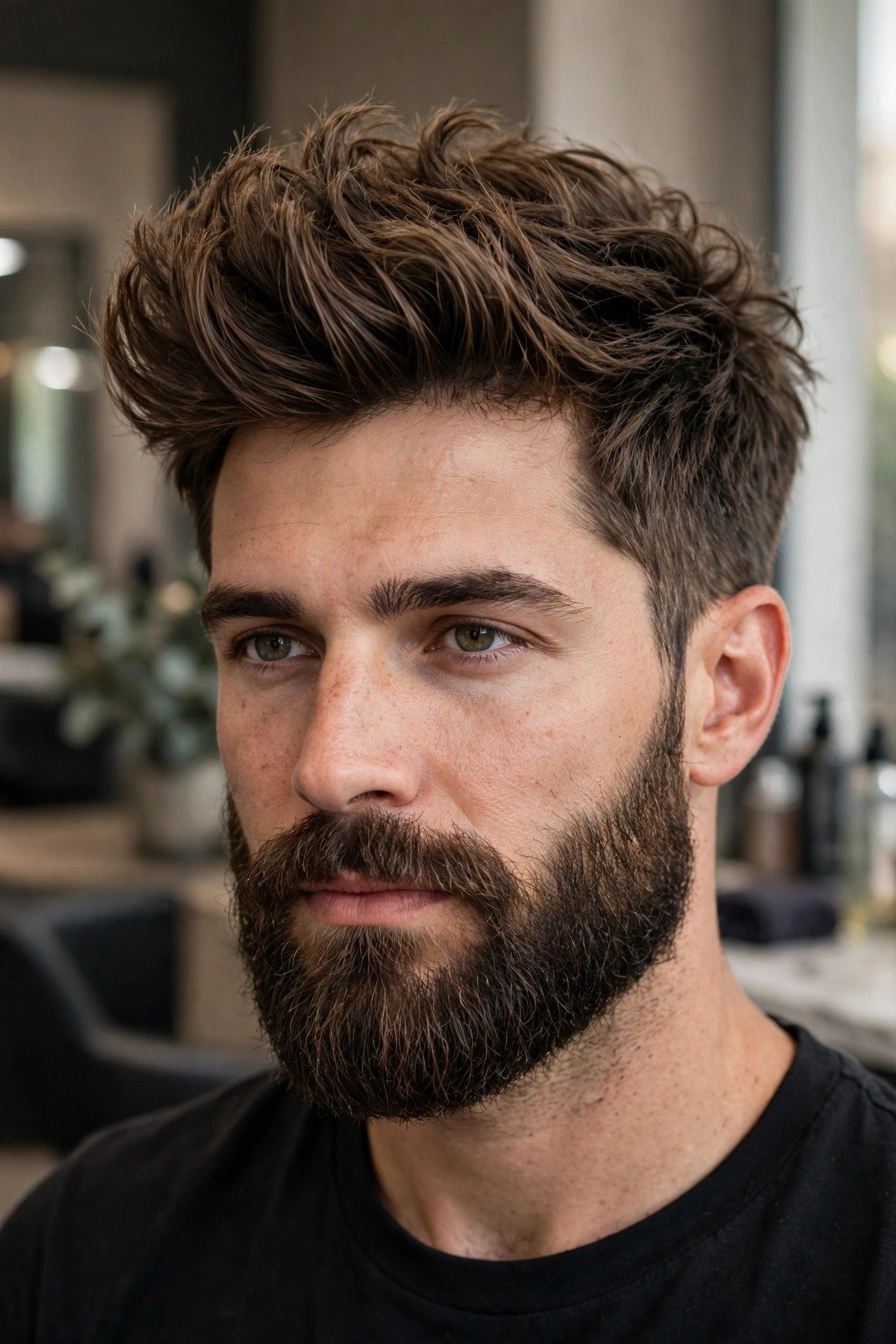
The textured quiff with a beard is a masterclass in balance. The tall, textured top and the full beard frame the face from above and below, creating a strong, masculine silhouette that looks intentional rather than accidental. The key is proportion: the quiff adds height, the beard adds weight at the jaw, and the faded or tapered sides connect the two without a harsh break. When the balance is right, the whole look feels rugged, groomed, and complete.
This style suits men with full, even beards and the hair density to support a tall quiff. It flatters square, oval, and round faces, since the beard and quiff together reshape the face. Ask your barber for a textured top of three to five inches, a fade that blends into the beard rather than stopping abruptly, and a beard shape that connects cleanly at the sideburns. Discuss beard length, since a very long beard needs a taller quiff to balance it.
Style the quiff with matte clay and an upward blow-dry, and keep the beard groomed with beard oil and a regular trim. The connection between the fade and the beard is the detail that makes or breaks this look, so a barber visit every two to three weeks is essential. Use a beard brush to keep the beard neat, and avoid heavy, shiny hair products that clash with the natural texture of the beard.
28. Textured Quiff with Line-Up
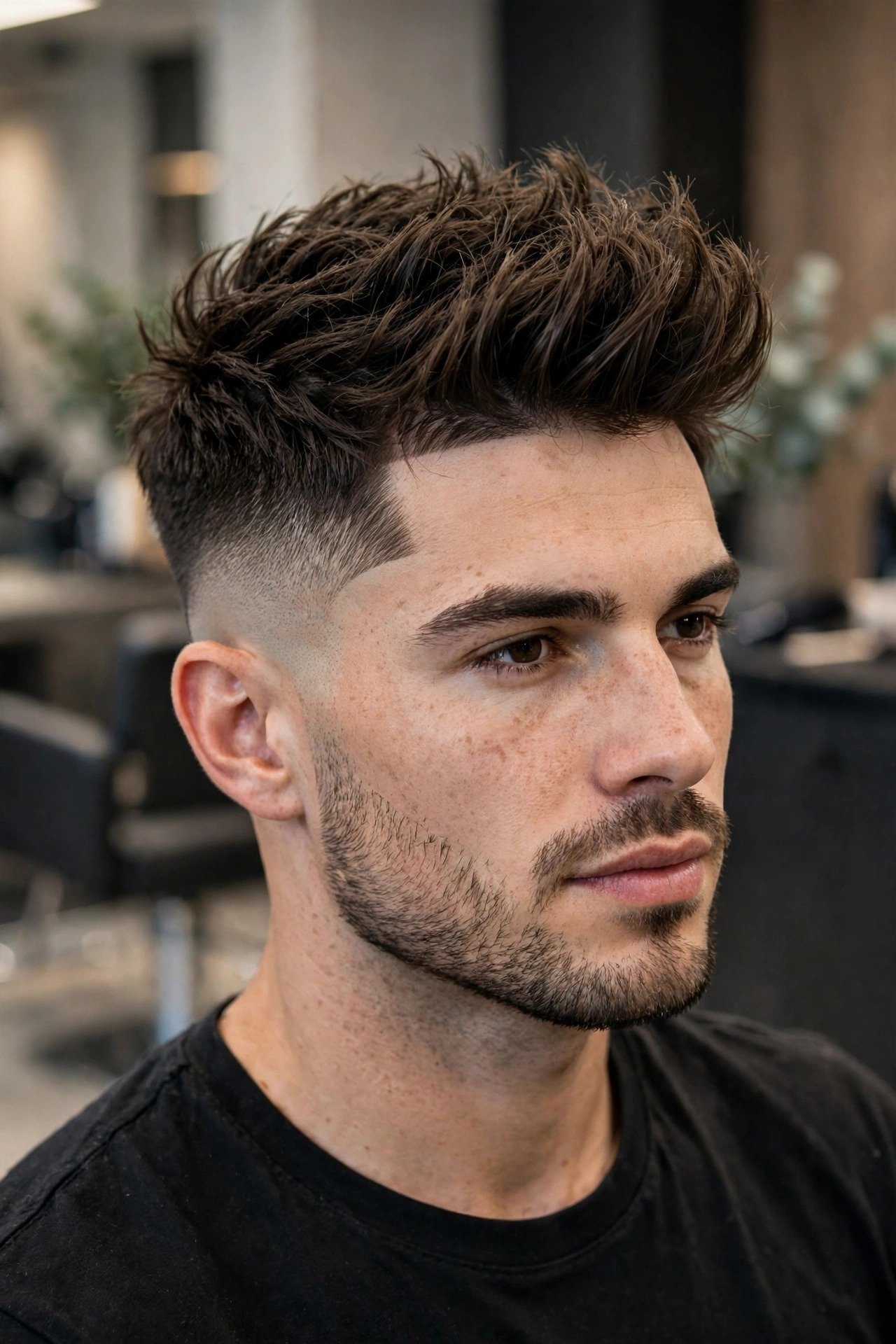
The textured quiff with a line-up adds razor-sharp precision to the front of the cut. The hairline is shaped into clean, straight edges with a razor or trimmer, creating a crisp frame around the forehead that contrasts beautifully with the soft, textured top. It is a detail borrowed from barbershop culture that makes the quiff look freshly cut even days after the appointment, and it photographs with striking definition.
This style suits men with a strong, even hairline and straight or wavy hair, and it flatters square and oval faces. It is less suitable if your hairline is receding unevenly, since the line-up draws attention to it. Ask your barber for a sharp line-up across the forehead and temples, a textured top of three to four inches, and a mid or high fade. Be clear about how sharp you want the corners, since very square corners are bolder than slightly rounded ones.
Style the top as usual with matte clay and an upward blow-dry. Keep the line-up looking fresh by avoiding hats that press on the hairline, and moisturise the forehead skin to prevent irritation from the razor. The line-up softens within a week as hair grows, so a tidy-up every one to two weeks keeps it crisp. Do not attempt to re-shape the line-up yourself unless you are confident with a trimmer.
29. Textured Quiff with Disconnected Sides
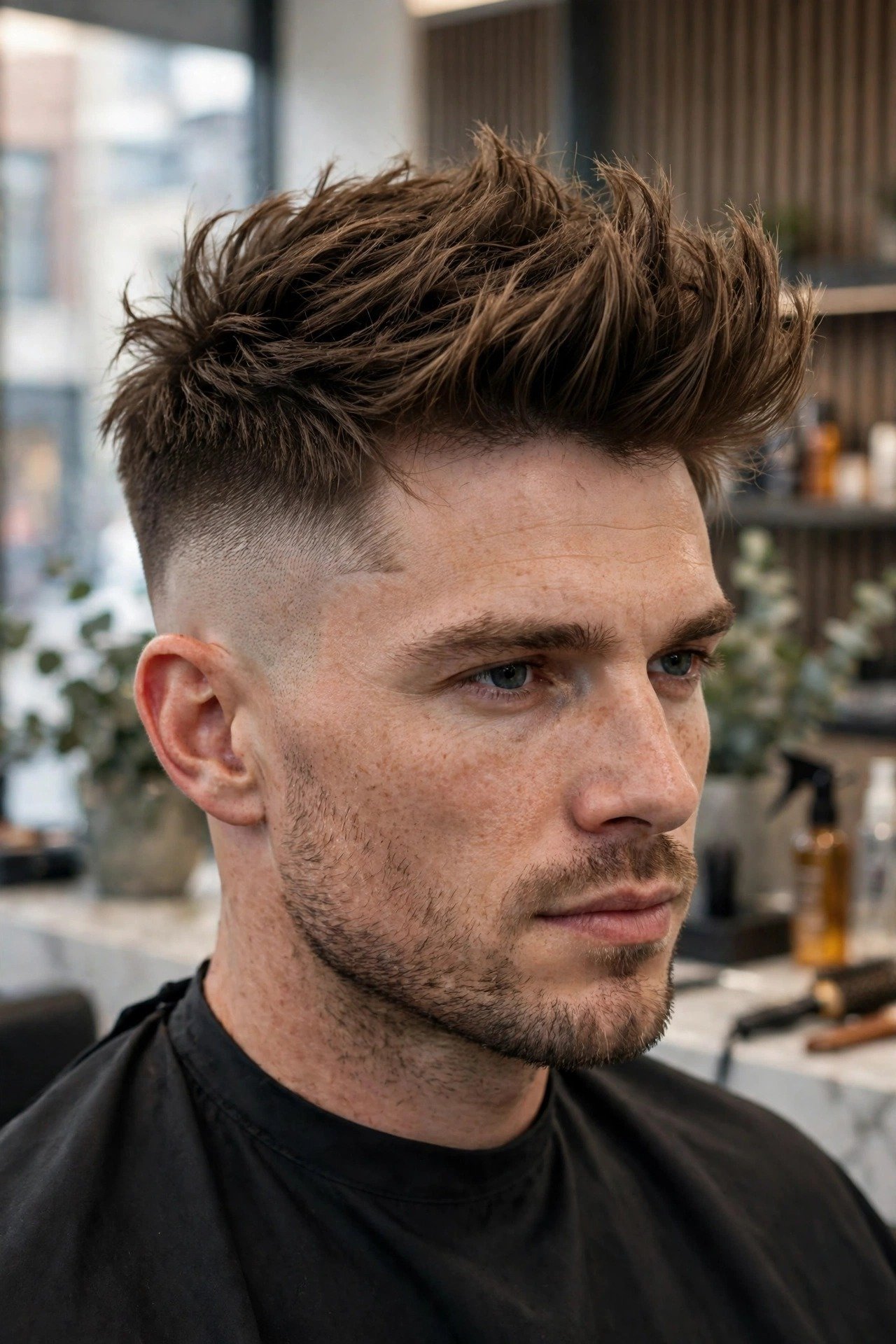
The textured quiff with disconnected sides is the most architectural version in this guide. A clear, unblended line separates the long textured top from the short sides, creating a dramatic step that makes the quiff look like it sits on top of the head as a separate element. It is bold, editorial, and unmistakably modern, and it gives the wearer a striking profile that stands out in any crowd. This is a haircut with confidence built in.
This style suits men with thick hair and a taste for bold, fashion-forward looks. It flatters oval and square faces and pairs well with beards, tattoos, and statement style. Ask your barber for a hard disconnect, with the sides clipped to a number one or two and the top left at four to five inches with heavy texture. Discuss where the disconnect should sit, since a higher line is more dramatic and a lower line is easier to grow out.
Blow-dry the top upward and back for maximum drama, or sweep it to one side for a softer take on the disconnect. Matte clay holds the shape without shine. The disconnect grows out awkwardly, so commit to a trim every two weeks, or plan a grow-out strategy with your barber if you want to transition to a blended taper later. A little texture spray keeps the top piecey and prevents it from looking like a solid block.
30. Textured Quiff with Faded Temples
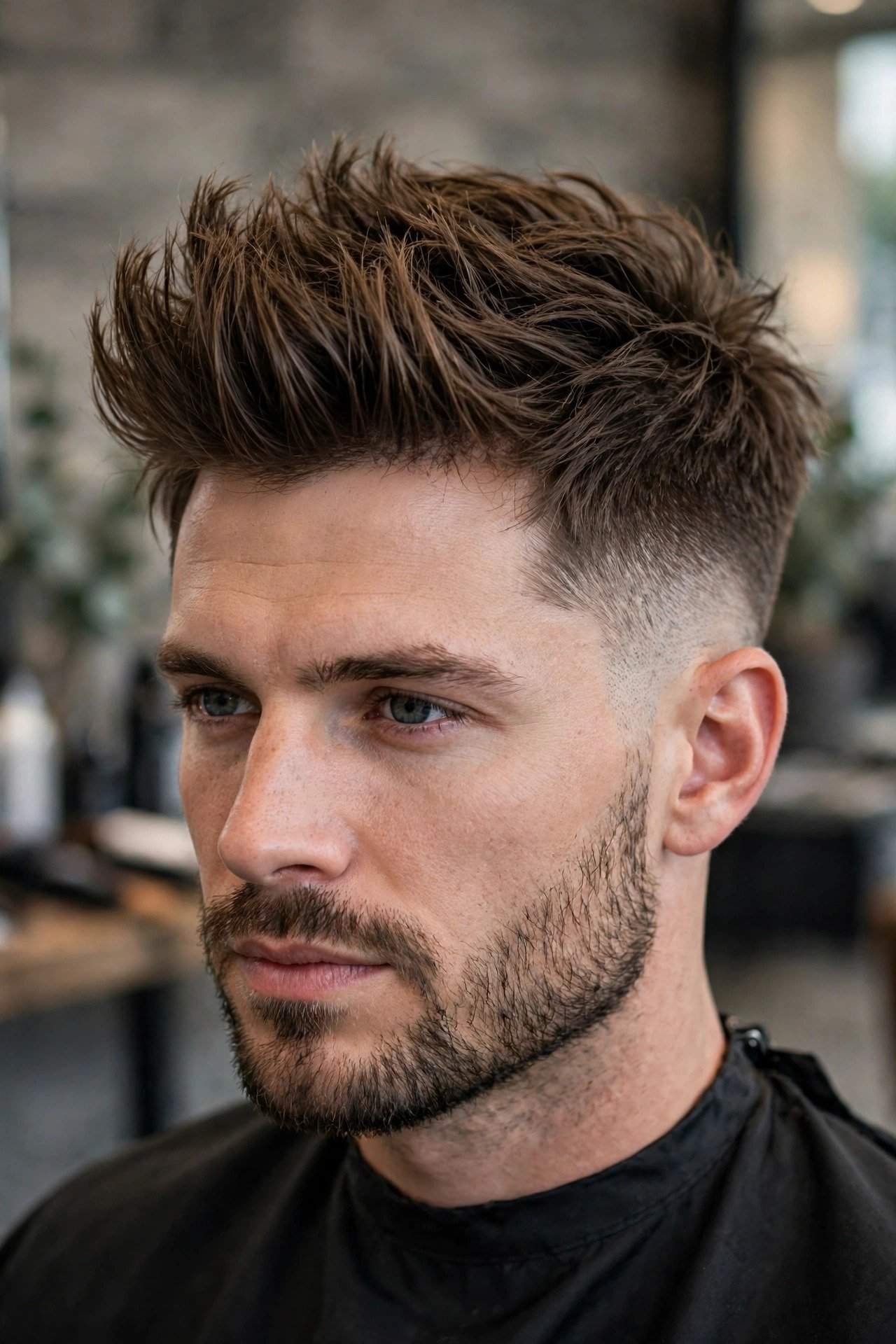
The textured quiff with faded temples is a subtle, refined variation that focuses the fade exactly where it matters most. Instead of fading the whole side, only the temple area is faded close, while the rest of the sides keep a little more length. This creates a clean, sharp look around the face without the drama of a full skin fade. It is a quiet detail that makes the quiff look more expensive and more considered.
This style suits men who want a clean finish without committing to a full fade, and it flatters most face shapes. It is particularly good for men with glasses, since the faded temples keep the area around the frames neat. Ask your barber for a temple fade, sometimes called a Brooklyn fade, with a textured top of three to four inches and a low taper at the back. The temples should blend smoothly, with no harsh line.
Style the top with matte clay and an upward blow-dry, and keep the temples tidy with a quick trim every two to three weeks. Because the fade is small, it grows out less noticeably than a full fade, so maintenance is easier. A little grooming cream on the sides keeps the longer hair neat, and the temple fade looks best when the top is kept textured rather than slicked flat.
31. Blown-Out Textured Quiff
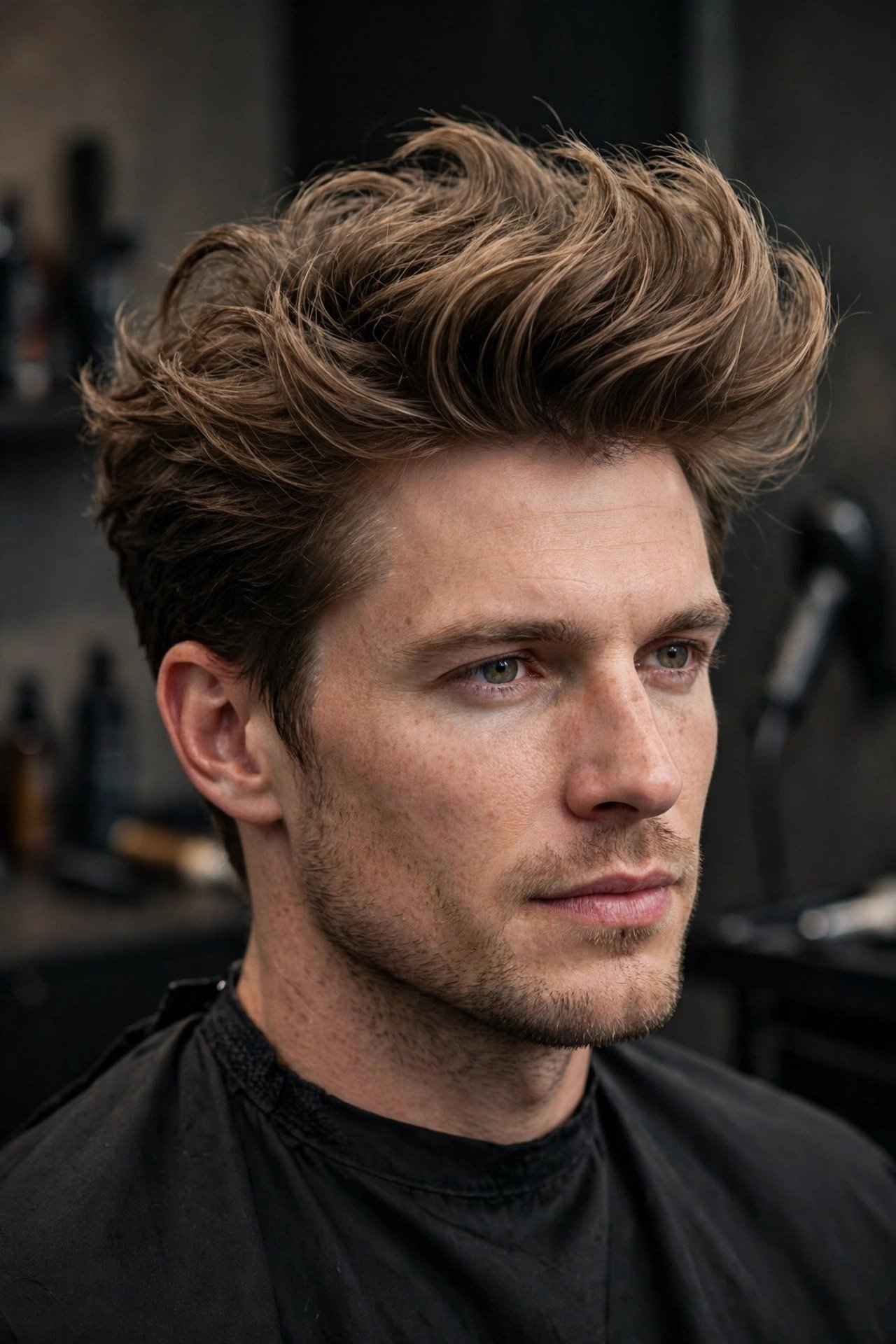
The blown-out textured quiff is the most voluminous, salon-polished version in this guide. The hair is blow-dried with a round brush to create airy, flowing volume that looks soft and full rather than spiky or piecey. The texture is still visible, but it is smoother and more refined, with the hair curving back in a single graceful wave. It is the quiff for special occasions, photoshoots, and anyone who loves a big, confident silhouette.
This style suits men with medium to thick hair that can hold a blow-dry, and it flatters oval, square, and heart-shaped faces. It is a strong choice for weddings, parties, and formal events. Ask your barber for a long-layered textured top of four to five inches, with a taper or low fade, and a cut that supports a round-brush blow-dry. If you love this airy volume, a blowout taper offers a similar lifted finish with a different side profile worth exploring.
Blow-dry the hair upward with a large round brush, lifting at the roots and rolling the ends back. Use a volumising mousse before drying and finish with a light-hold hairspray to lock the shape without stiffness. This style takes five to ten minutes, so it is best saved for days when you have time. A trim every four weeks keeps the layers light enough to blow out easily, and a heat protectant spray prevents damage from regular blow-drying.
32. Finger-Styled Textured Quiff

The finger-styled textured quiff is the most natural and effortless version in this guide. No brushes, no combs, no elaborate blow-drying: the style is shaped entirely with fingers, which creates an organic, slightly irregular texture that looks like your hair naturally grows upward. It is relaxed, touchable, and honest, and it is the version most men actually wear day to day, even if they do not realise it has a name.
This style suits men who dislike tools and want a five-second routine, and it flatters most face shapes. It works best on hair with some natural wave or bend, though straight hair can be finger-styled with a little product. Ask your barber for a textured top of three inches with choppy, finger-friendly ends, and a mid taper. Tell them you style with fingers only, so they cut the hair to fall naturally without needing a brush to shape it.
Apply matte clay to damp or dry hair, then push the front up and back with your fingers, pinching small sections to create separation. That is the entire routine. Add a little more product at the ends if you want extra definition, and leave the sides alone. This cut thrives on minimal effort, so resist the urge to over-style it. A trim every three to four weeks keeps the finger-styled texture looking intentional rather than overgrown.
33. Sea-Salt Textured Quiff
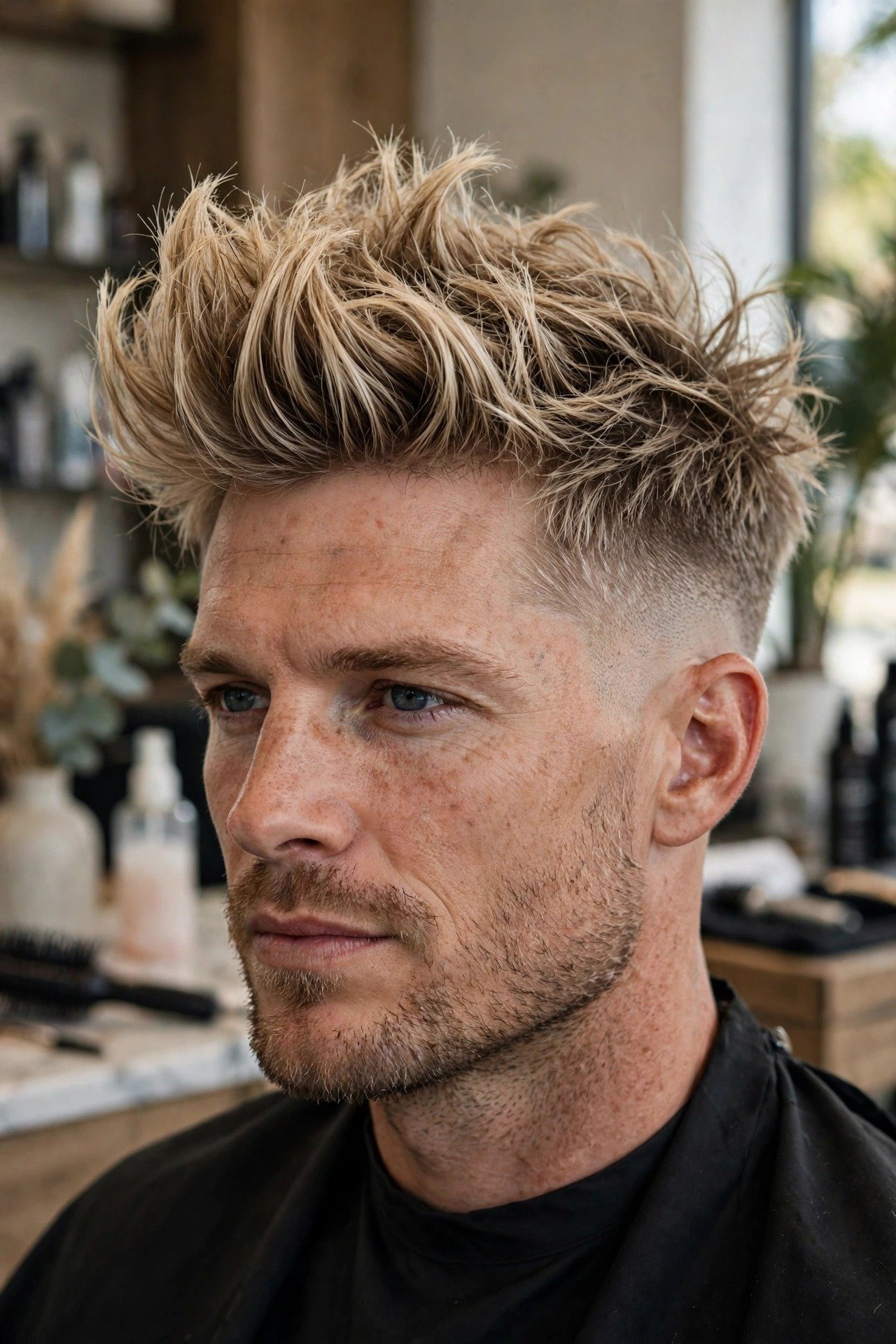
The sea-salt textured quiff brings a beachy, sun-kissed energy to the classic shape. Sea-salt spray adds grit, grip, and a slightly dry, windswept texture that makes the quiff look like it was shaped by the ocean rather than a bathroom mirror. The top is tousled and piecey, with a relaxed lift that feels summery and carefree. It is the quiff for holidays, weekends, and anyone who loves a laid-back, surfer-inspired finish.
This style suits men with wavy or straight hair who want extra texture without heavy product, and it flatters oval and square faces. It is ideal for summer and for men with finer hair, since the salt adds volume and grip. Ask your barber for a textured top of three to four inches with plenty of point-cutting, and a mid taper or low fade. Mention that you use sea-salt spray, so they cut enough texture for the product to grip.
Spray sea-salt spray generously into damp hair, scrunch upward, and let it air-dry or diffuse briefly. Finish with a tiny amount of matte clay on the ends if you need extra hold. Do not overuse salt spray daily, since it can dry the hair out; use a moisturising conditioner twice a week to balance it. A trim every four weeks keeps the beachy texture fresh, and the style looks even better with a little sun-lightened colour.
34. Pompadour-Blend Textured Quiff
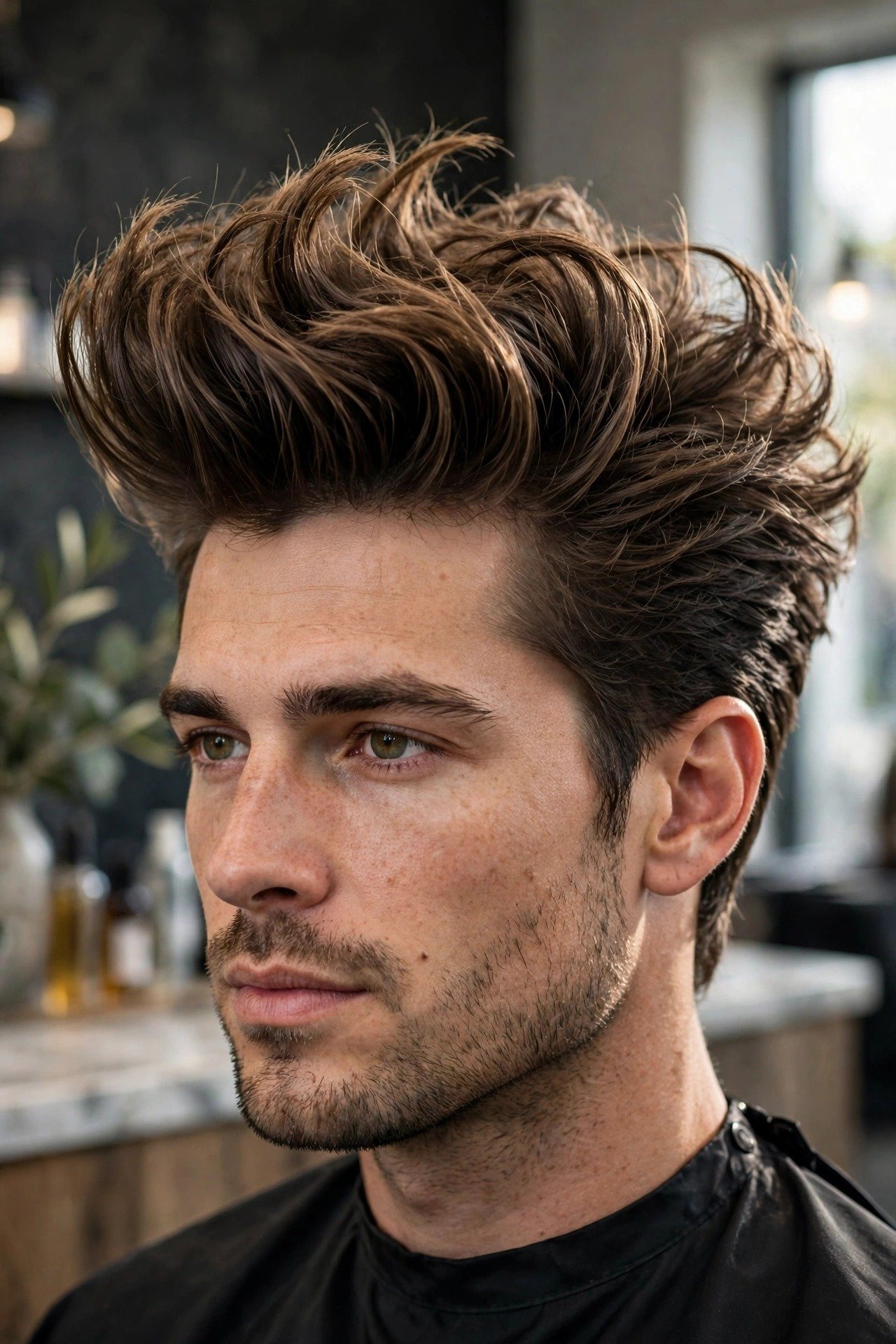
The pompadour-blend textured quiff merges two iconic styles into one. It takes the height and backward sweep of a pompadour and softens it with the piecey, broken texture of a modern quiff. The result is taller and more sculpted than a standard quiff, but looser and more natural than a traditional pompadour. It is a show-stopping style for men who want maximum presence without the stiff, vintage feel of a full pompadour.
This style suits men with thick hair that can support real height, and it flatters oval, square, and oblong faces. It is a strong choice for formal events, performances, and nights out. Ask your barber for a long textured top of five inches, with the front left longest and the back layered to support the sweep. Request a taper or low fade that keeps the focus on the height, and a shape that can be worn slightly to one side as well as straight back.
Blow-dry the top upward and back with a round brush, building height section by section from the front. Use a strong-hold matte clay or pomade with a matte finish, and finish with hairspray for all-day hold. This style takes time and practice, so try it a few times before an important event. Trim every three to four weeks to keep the length manageable, and use a clarifying shampoo weekly to remove product buildup.
35. Modern Pompadour-Quiff Hybrid
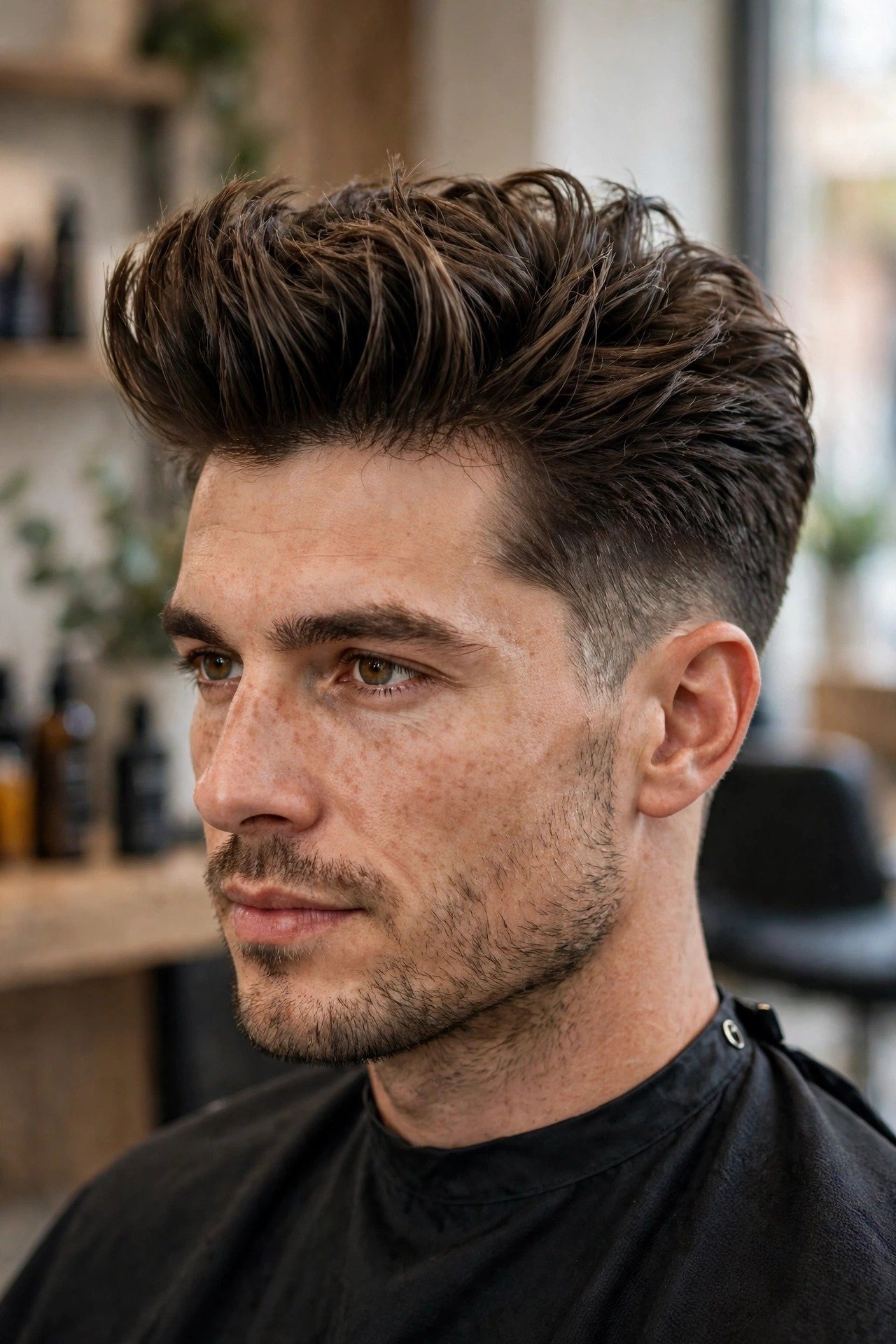
The modern pompadour-quiff hybrid is the most fashion-forward blend in this guide, designed for men who cannot choose between two classics. It keeps the pompadour’s dramatic height and backward flow, but breaks the surface into textured, separated pieces like a quiff, so it never looks like a solid wall of hair. The sides are faded or tapered for a contemporary edge, and the overall silhouette is bold, sculptural, and unmistakably 2026.
This style suits confident men with thick, straight, or wavy hair and the patience to style it properly. It flatters oval and square faces, and it works beautifully for creative professionals and performers. Ask your barber for a hybrid cut with five inches on top, heavy texture through the front, and a mid skin fade on the sides. Show a reference photo, since the balance between pompadour height and quiff texture is a matter of personal taste.
Style it by blow-drying the front up and back with a vent brush, then defining the pieces with matte clay. Work in small sections to build the height gradually, rather than trying to lift everything at once. A light hairspray locks the shape without making it crunchy. This is a high-maintenance style that rewards effort, so book a trim every three weeks and practise the blow-dry technique until it becomes second nature.
36. Low-Maintenance Textured Quiff

The low-maintenance textured quiff is the practical hero of this guide. It is cut so cleverly that it looks good with almost no styling at all: the texture is built into the cut, the length is short enough to fall into place, and the taper is forgiving as it grows out. You can wash it, towel-dry it, add a fingertip of product or nothing at all, and walk out the door looking deliberately styled. It is the quiff for busy men, new dads, travellers, and anyone who values sleep over styling.
This style suits every face shape and hair type, but it is especially valuable for men with busy mornings or unpredictable schedules. It works on fine, thick, straight, and wavy hair alike. Ask your barber for a short textured top of two to three inches, a low taper, and a cut that follows your natural growth direction. Tell them you want a wash-and-go quiff, so they avoid lengths and layers that need a blow-dry to look right.
Wash, towel-dry, and either leave it alone or work a pea-sized amount of matte clay through the front with your fingers. That is the whole routine. On lazy days, even the clay is optional. Because the cut is so forgiving, you can stretch trims to four or five weeks without it looking messy. Use a light shampoo and avoid heavy styling products, which defeat the purpose of a cut designed to look good with minimal effort.
How to Style and Maintain a Textured Quiff at Home
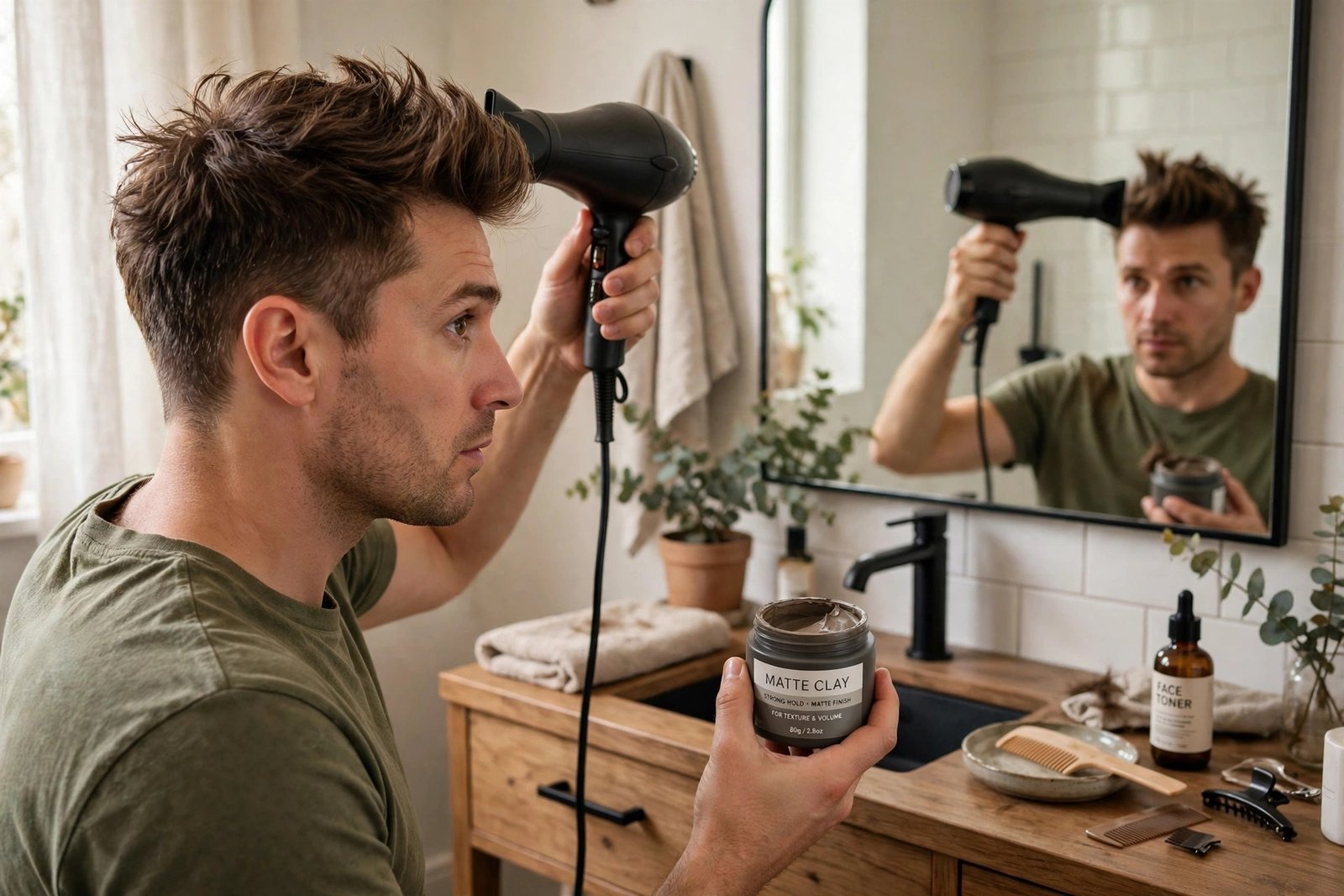
Start with clean, towel-dried hair that is damp but not dripping. Apply your chosen prep product first, usually a volumising mousse, sea-salt spray, or heat protectant, working it evenly through the top from roots to ends. This prep step is what gives the quiff its lift and staying power, so do not skip it even if you are in a hurry. Comb the hair roughly into place, then begin blow-drying with your fingers or a vent brush, always directing the airflow upward and backward from the roots.
Blow-dry in sections for the best lift. Lift the front section straight up with your fingers or a round brush, hold the dryer underneath for a few seconds, then release and let it fall back naturally. Repeat across the top, working from front to back, until the hair is about ninety percent dry. This root-lifting technique is the secret to a quiff that stays up all day instead of collapsing by lunchtime. Keep the dryer on medium heat and finish with a cool shot to set the shape.
Once the shape is dry, apply your styling product. Warm a pea-sized amount of matte clay or paste between your palms until it is almost invisible, then work it through the top from back to front, pinching the ends to define the texture. Less is more: you can always add a little more, but too much product weighs the quiff down and makes it look greasy. For a softer, more flowing finish, a flow haircut uses similar finger-styling techniques, and the same light touch applies here. For inspiration on how modern men’s cuts are evolving this year, see this guide to modern haircuts for men.
Maintain the style between washes by refreshing rather than restyling from scratch. On second-day hair, a spritz of water or dry shampoo at the roots revives the volume, and a tiny amount of product on the ends restores the separation. Avoid brushing the quiff when dry, since brushing flattens the texture and creates frizz. Sleep with your hair loosely in place rather than pressed flat under a tight hat, and use a silk or satin pillowcase if you want the morning refresh to be even easier.
Keep the cut in shape with regular trims and good hair care. Visit your barber every three to four weeks for most quiff variations, or every two weeks if you wear a skin fade or a hard part. Between visits, use a shampoo suited to your hair type, condition the ends lightly, and avoid over-washing, which strips natural oils and makes textured hair look dry and brittle. A healthy scalp and well-conditioned hair are the foundation of every great quiff, so treat your hair kindly and the style will repay you.
Frequently Asked Questions
What is a textured quiff?
A textured quiff is a men’s haircut where the front hair is lifted up and back with visible separation and piecey texture, while the sides are tapered, faded, or undercut. Unlike a classic quiff, which is smooth and solid, the textured version is point-cut so individual strands show. It looks natural, modern, and slightly undone, and it works on straight, wavy, and curly hair with the right cutting technique.
How long does my hair need to be for a textured quiff?
You need at least two to three inches on top for a short textured quiff, and four to six inches for a long or blown-out version. The front should be the longest section, since that is where the height comes from. If your hair is currently very short, allow six to eight weeks of growth before your appointment, and ask your barber to keep the sides tidy while the top grows out.
Is a textured quiff good for fine hair?
Yes, a textured quiff is one of the best styles for fine hair, because the short layers, choppy texture, and upward styling create the illusion of thickness. Keep the top shorter, around two to three inches, use a volumising mousse and matte clay sparingly, and blow-dry upward from the roots. Avoid heavy waxes and oils, which weigh fine hair down and expose the scalp.
How do I ask my barber for a textured quiff?
Ask for a textured top of your chosen length with point-cut ends, and specify the sides you want, such as a low taper, mid fade, skin fade, or undercut. Bring a reference photo showing the exact height and texture you like, and mention your hair type and how much time you will spend styling it. A good barber will adapt the cut to your growth patterns and face shape.
How do I style a textured quiff at home?
Start with damp hair, apply sea-salt spray or volumising mousse, and blow-dry the top upward and back with your fingers or a vent brush. Once dry, warm a pea-sized amount of matte clay in your palms, work it through the top, and pinch the ends to define the texture. The whole routine takes three to five minutes, and a pompadour guide uses a similar blow-dry method if you want extra height. Avoid combs for the most natural finish.
How often should I get a textured quiff trimmed?
Most textured quiffs need a trim every three to four weeks to keep the shape and texture sharp. Skin fades, high tapers, and hard parts grow out faster and need a tidy-up every one to two weeks. Low tapers and longer tops are more forgiving and can stretch to four or five weeks. Regular trims also let your barber remove weight and refresh the texture before the cut turns bulky.
Can older men wear a textured quiff?
Absolutely. A textured quiff suits men of every age, and it looks particularly distinguished with grey or silver hair, where the texture highlights the colour beautifully. Older men should choose a neater version with a low or mid taper, a moderate height, and a light matte product. It adds energy and modern polish without looking like a young man’s cut, and it pairs well with glasses and a groomed beard.
What products work best for a textured quiff?
Matte clay is the best all-rounder, giving hold and texture without shine. Sea-salt spray adds grit and volume before blow-drying, volumising mousse lifts fine hair, and texture powder boosts roots instantly. Avoid shiny pomades and heavy gels, which flatten the texture. For seasonal styling ideas and current trends, this roundup of trendy men’s hairstyles for winter 2026 shows how matte texture is leading the year.
Does a textured quiff suit a round face?
Yes, it is one of the most flattering styles for a round face, because the height lengthens the face and the tight sides keep it from looking wider. Ask for maximum lift on top, a high taper or skin fade, and a slightly asymmetrical sweep. Avoid wide, flat styling that adds bulk at the sides, and consider a sharp beard line to add further definition to the jaw and cheekbones.
Can I wear a textured quiff to work or a wedding?
Yes, the textured quiff is versatile enough for both. For work, choose a neater version with a low taper, moderate height, and a light matte product. For a wedding, go taller and more polished, with a fresh trim two to three days before the event and a light-hold hairspray for all-day staying power. The same cut can be styled messy for weekends and neat for formal occasions.
Conclusion
The textured quiff has earned its place as the defining men’s haircut of 2026 because it does what few styles can: it looks polished and effortless at the same time. Across these thirty-six variations, there is a version for every hair type, every face shape, every age, and every occasion, from the low-maintenance short quiff to the dramatic blown-out and pompadour-blend styles. The common thread is texture, volume, and a natural matte finish that feels modern without trying too hard. Choose the version that fits your hair and your life, take the wording to your barber, and enjoy a cut that grows out gracefully and styles in minutes.
Your next step is simple. Save the styles you love, book a barber who is confident with textured cutting and fading, and bring reference photos to your appointment so nothing is lost in translation. Experiment with matte clay, sea-salt spray, and a quick upward blow-dry until you find the routine that works for your hair. If you prefer a sleeker, swept-back alternative for formal days, a classic slick back pairs beautifully with the same wardrobe. Whichever quiff you choose, wear it with confidence, keep it trimmed, and let the texture do the talking.