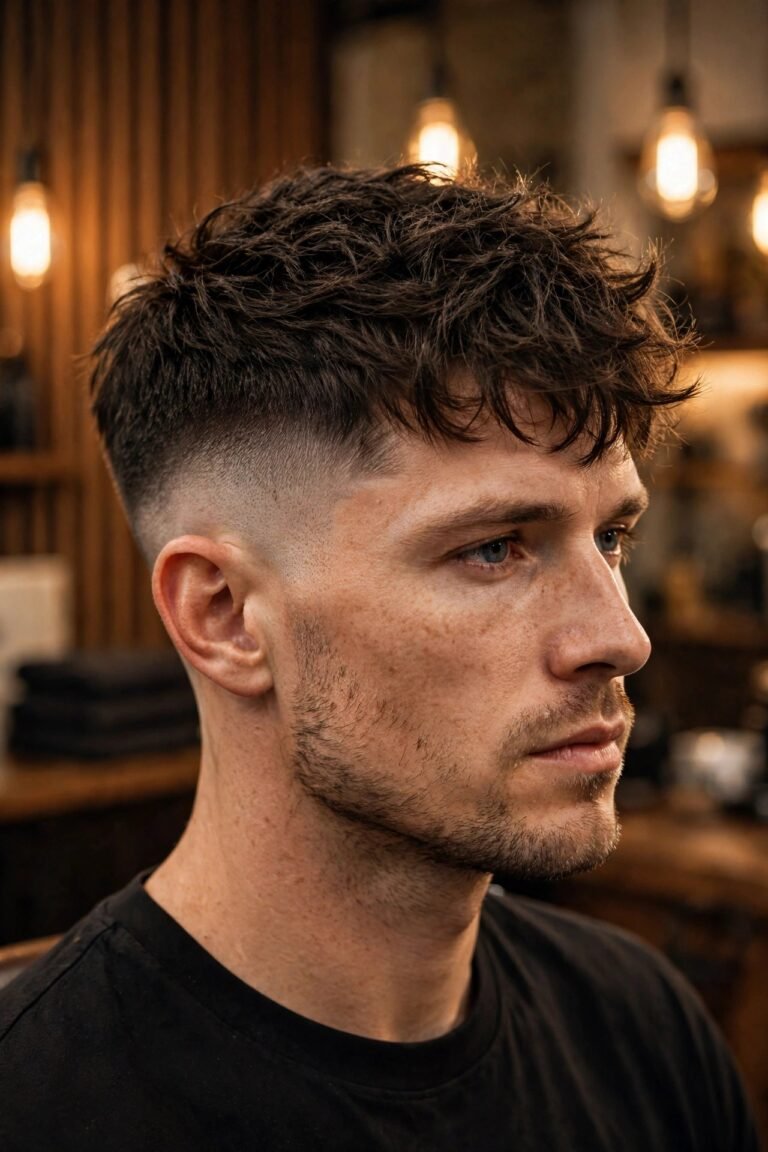
Feathered Hair Men 2026: 14 Retro 70s-Inspired Styles
Feathered Hair Men 2026: The 70s Revival Guide
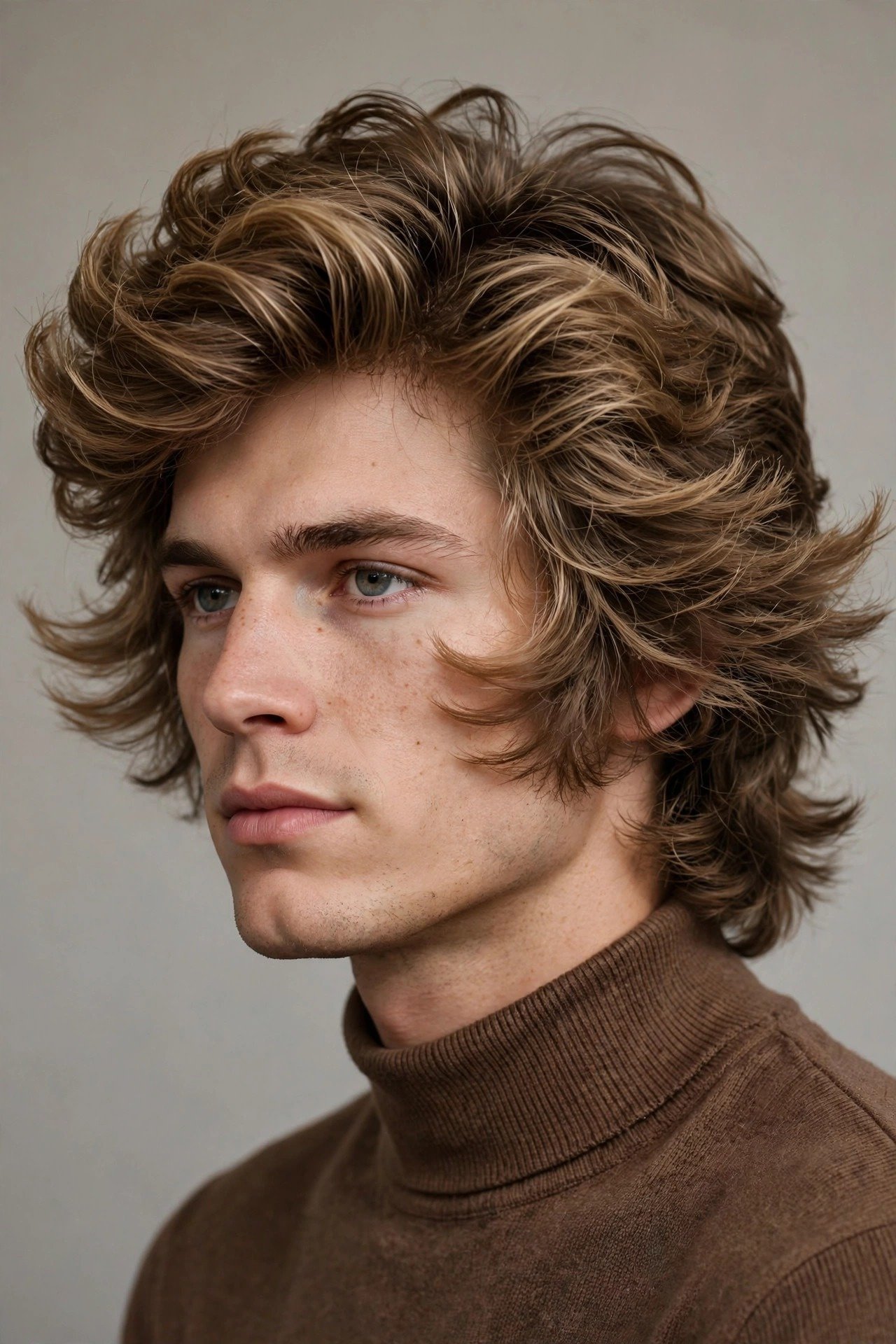
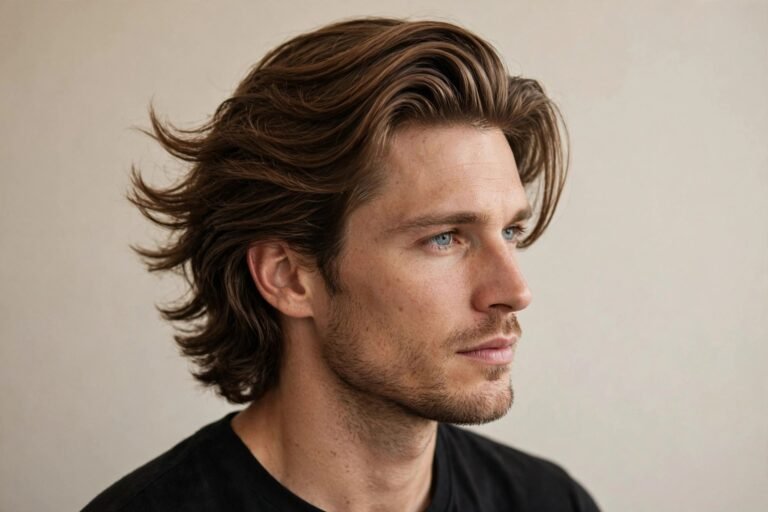
Feathered hair men are wearing in 2026 would make a 1976 barber smile with recognition — the layered wings, the flipped ends, the blowout bounce are all back, refined for the modern era. Feathering is a cutting technique, not just a look: hair is cut at an angle so the ends taper into soft, wing-like layers that flick outward instead of lying flat. Done right, it creates movement, lightness, and that unmistakable retro silhouette — without looking like a costume. This guide covers 14 feathered styles for men, the blowout technique that makes feathering sing, exact barber scripts, and how to wear the 70s revival without irony.
Inside: what feathering actually is (technique breakdown), who it suits, the blowout method step-by-step, all 14 styles with routines, products for flick and hold, and answers to the questions men ask about the revival.
Why now? Because the 2026 revival isn’t nostalgia — it’s correction. The 2010s flattened men’s hair into fades and crops; the 2020s brought texture back; and feathering is texture’s most expressive form. But this isn’t your father’s feathered hair: the revival keeps the wings and the movement while discarding the excess — shorter lengths, cleaner perimeters, better conditioning, and blowout technique that’s actually learnable. What remains is the essential insight the 70s got right: hair looks best when it moves. Fourteen styles below, each with the barber script that gets the cut right the first time and the blowout technique that makes the wings fly.
Table of Contents
- Feathered Hair Men 2026: The 70s Revival Guide
- 14 Retro 70s-Inspired Feathered Styles
- Blowout Technique, Products & Maintenance
- Frequently Asked Questions
- Conclusion
What Is Feathered Hair? The Technique
Feathering is created with a specific cutting motion: the barber holds sections at an angle and cuts into the hair with the shears gliding outward, creating ends that taper to soft points rather than blunt edges. Layered on top of each other, these tapered ends “wing” outward — each layer flicking away from the one beneath it. The classic 70s version (think Farrah Fawcett, adapted for men) used long layers and a round-brush blowout to maximize the flip. The 2026 revival keeps the wing but tightens everything: shorter lengths, cleaner perimeters, more texture.
Feathering differs from regular layering in one key way: layers create internal shape, but feathering specifically shapes the ends to flick outward. A layered cut can lie flat; a feathered cut is engineered to move. That’s why the blowout matters so much — more on the technique below.
In the chair, you’ll see the difference in the barber’s hands: regular layering uses straight scissor cuts across sections, while feathering uses a gliding motion — the shears slide along the hair as they cut, tapering each strand to a soft point. The barber works the perimeter (the outline) most heavily, because the wings live at the edges. If you want to verify you’re getting real feathering, watch the ends: they should come to soft, wispy points that separate naturally, not blunt edges. And the cut should take noticeably longer than a standard layered cut — the gliding technique is precise, section-by-section work that can’t be rushed.
Who Does Feathered Hair Suit?
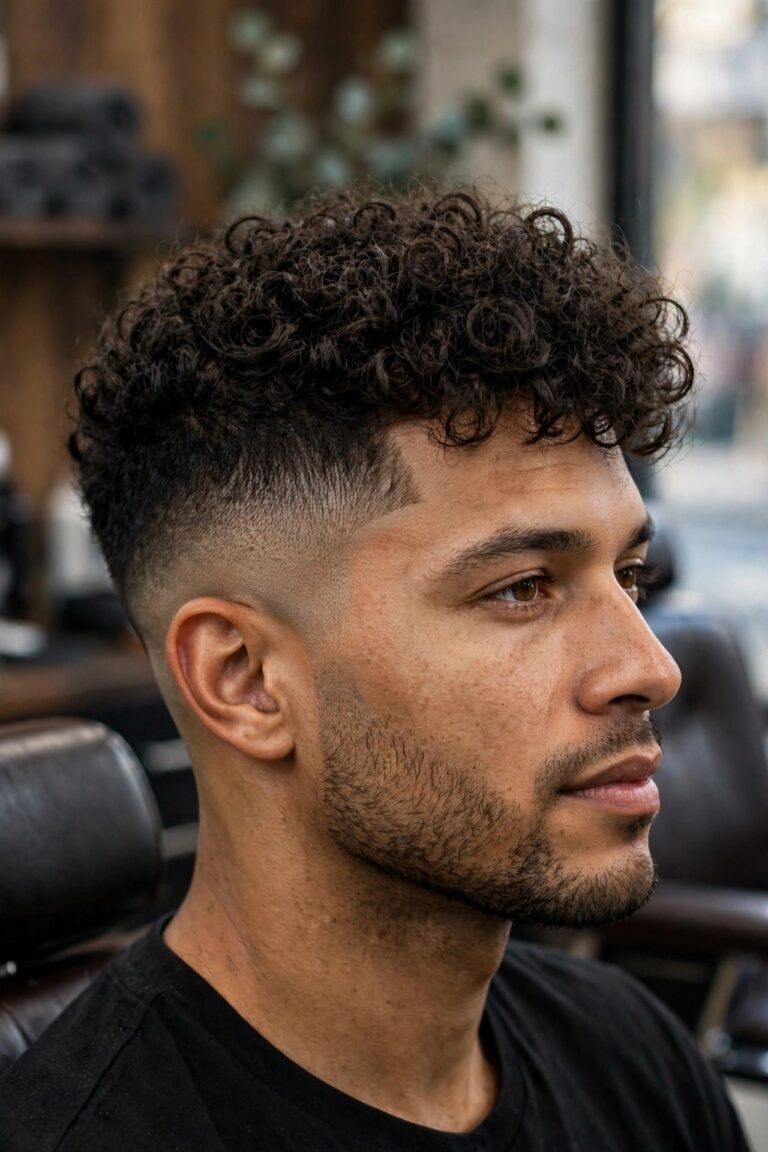
Hair type: straight to wavy hair with medium density is the sweet spot — the flick needs enough weight to swing but not so much it won’t lift. Very fine hair can feather beautifully (the technique adds the illusion of volume); very thick hair needs interior thinning first or the wings become shelves. Curly hair doesn’t feather in the classic sense — the curl pattern overrides the flick.
Face shapes: the outward wings add width at the cheekbones, which flatters oblong and oval faces beautifully and softens long faces. On round faces, keep the wings higher (cheekbone level, not jaw) and maintain crown height. Square faces get a nice softening of the jawline from the flick.
Length needed: true feathering needs 4+ inches — the wings need length to wing. Below that, you get “textured” but not “feathered.” Commit to the grow-out or pick a shorter style from another guide.
Two more suitability notes: cowlicks and growth patterns matter more for feathered styles than most cuts, because the wings need to fall in predictable directions — a strong crown whorl can redirect a wing no matter how you blow-dry it. Work with your natural growth direction when choosing the style’s sweep. And density changes the recipe: very thick hair needs interior thinning before feathering (otherwise the wings become heavy shelves), while fine hair should skip aggressive thinning entirely and let the blowout create the volume. When in doubt, the modern feathered blowout (style 2) is the diagnostic cut — it reveals how your hair responds to the technique with the least commitment.
What to Tell Your Barber: The Feathering Script
“I want a feathered cut — 70s-inspired but modern. Keep 4 to 6 inches with long layers, and feather the ends so they flick outward — use the gliding cut on the perimeter, not blunt ends. Blow it out with a round brush so I can see the wings. Keep the shape clean and wearable, not a costume 70s look.”
Ask specifically for the feathering technique by name — if the barber looks blank, they don’t do it; find one who does, because regular layering won’t produce the flick. The cut takes 40–55 minutes with the blowout; a rushed 20-minute cut cannot create real feathering.
14 Retro 70s-Inspired Feathered Styles for Men in 2026
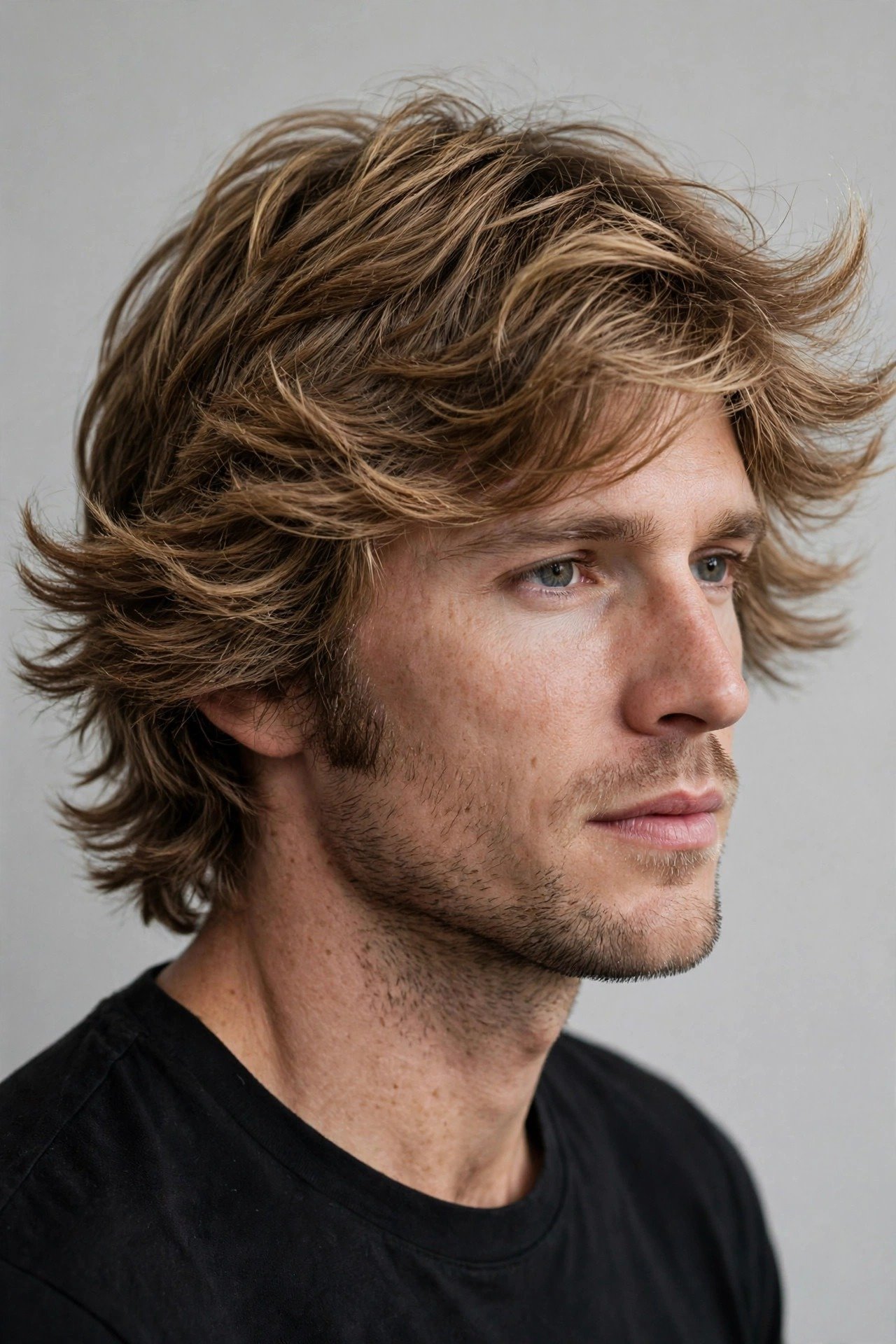
All 14 styles use genuine feathering technique — each includes who it suits, the barber script, styling steps, products, maintenance, and the mistake to avoid.
1. Classic 70s Feathered Wings
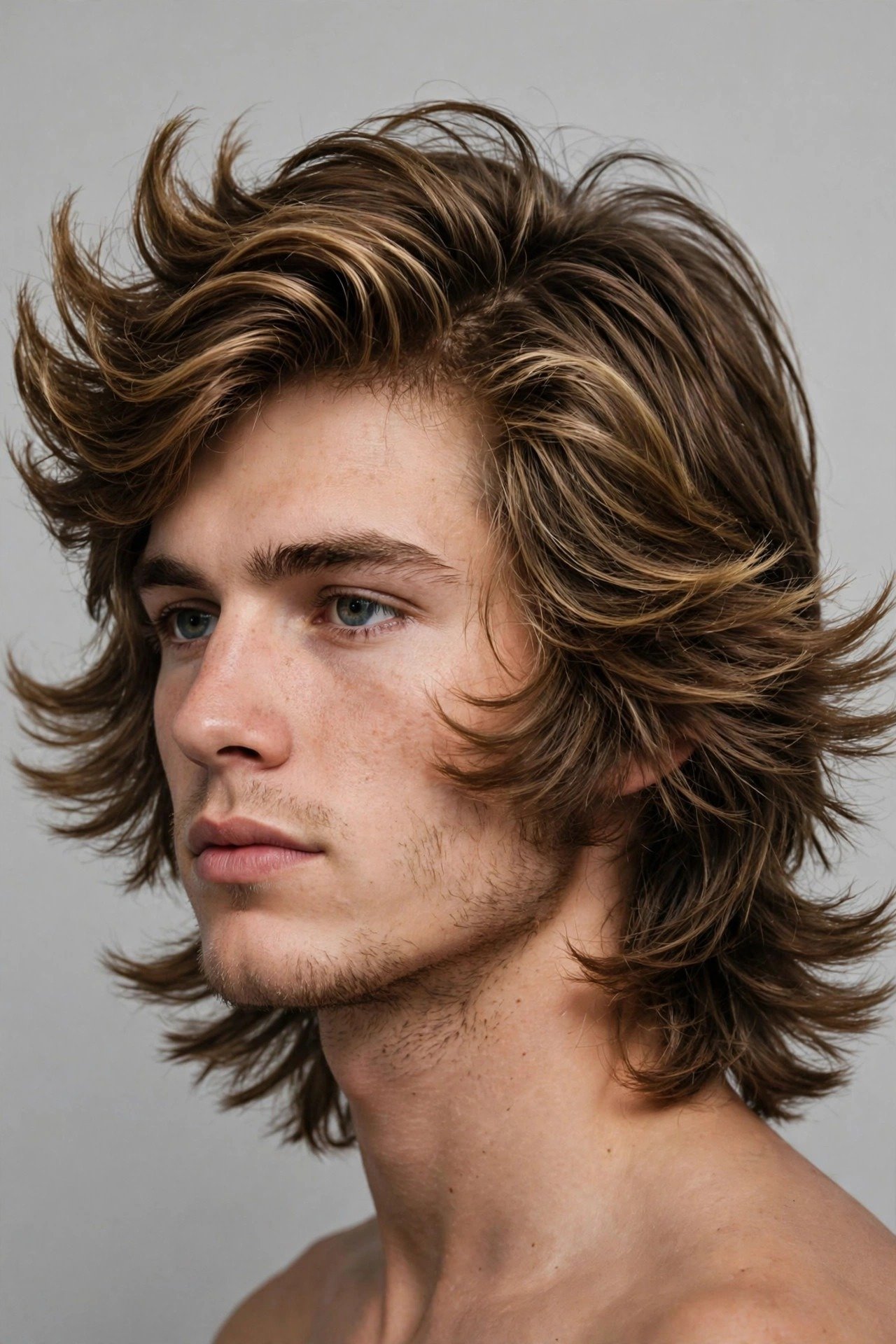
The original, faithfully revived: 5–6 inches of long layers with the ends feathered to flick outward at the cheekbones and nape. Unmistakable, glorious, and — worn with modern clothes — surprisingly current.
Who it suits: Straight to wavy medium-density hair; oval and oblong faces; men who commit to the aesthetic. The full retro statement.
Barber script: “Classic feathered wings: 6 inches, long layers, feather the perimeter so the ends flick out. Round-brush blowout to show the wings. Keep it clean — modernized 70s, not Halloween.”
Styling (12 minutes): Mousse on damp hair, round-brush blowout rolling sections outward at the ends (the flick is created here, not in the cut alone). Light hairspray to hold the wings.
Products: mousse, round brush, light hairspray. Maintenance: trim every 6–8 weeks; the feathered ends split faster than blunt ends.
Mistake to avoid: air-drying — un-blown feathering just looks like long layers. The blowout IS the style.
Pro tips & variations: This is the full commitment — and it rewards it. The classic wings need the complete routine (mousse, section-by-section blowout, cool shot, light hairspray) to look intentional rather than accidental. Variation: wear the wings more tucked for daytime and let them fly for evenings — the same cut flexes both ways. Maintenance note: feathered ends are the oldest hair on your head and split faster than blunt ends, so the 6–8 week trim isn’t about shape, it’s about end health. Split wings look damaged, not retro — there’s no faking healthy ends at this length.
2. Modern Feathered Blowout
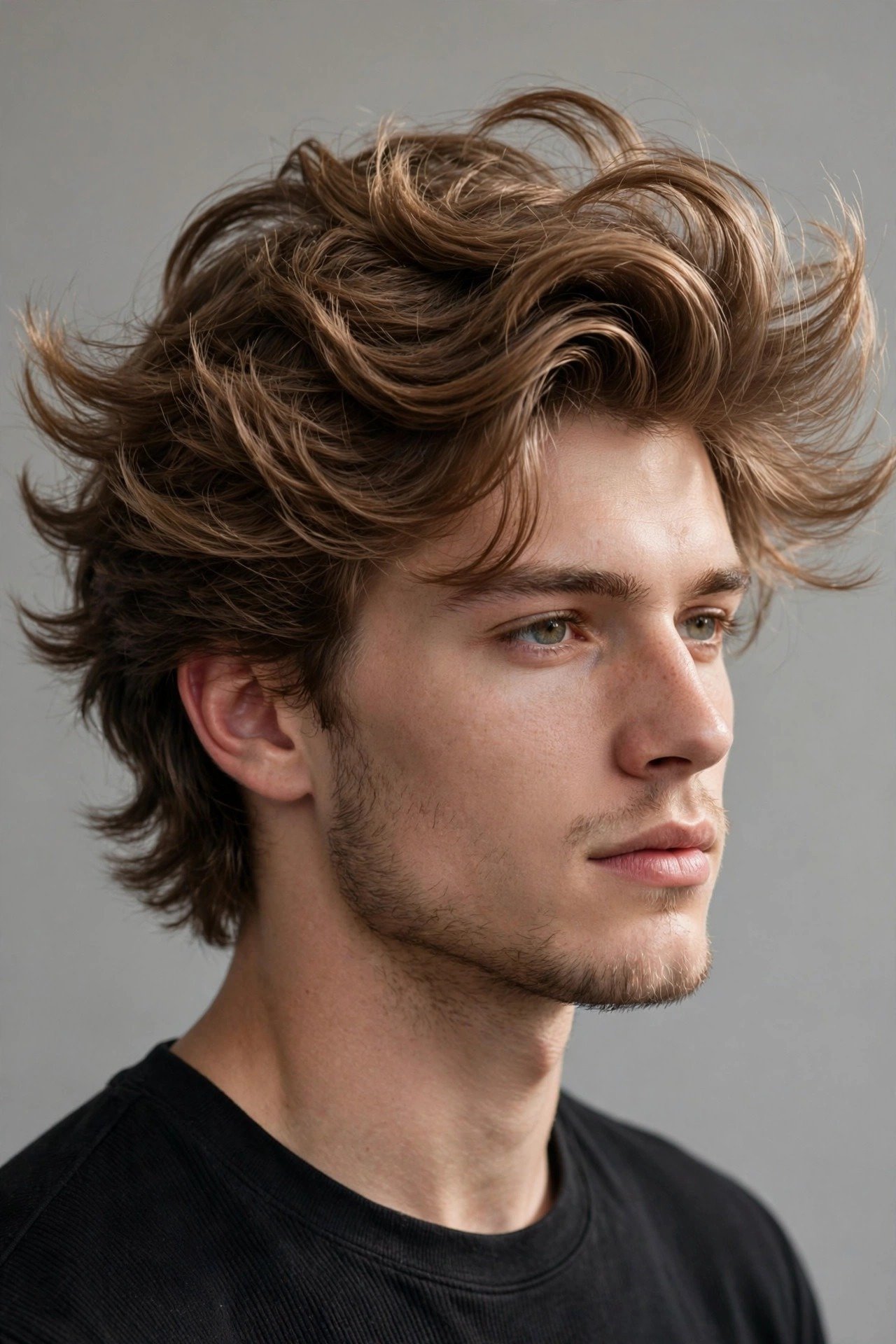
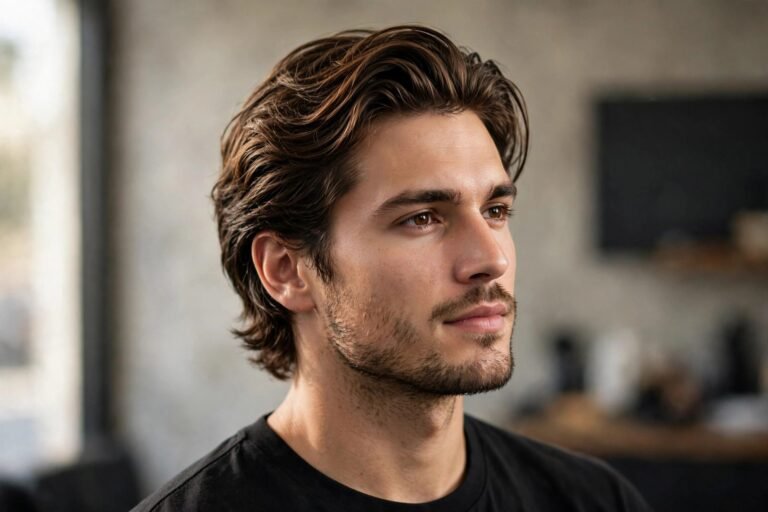
The everyday version: 4–5 inches of feathered layers with a big, bouncy blowout. All the movement of the classic with half the length and twice the wearability — the gateway feathered cut.
Who it suits: The widest audience — straight to wavy hair, most face shapes, any age. The safest entry to feathering.
Barber script: “Feathered blowout cut: 4–5 inches, feathered layers, textured ends. Cut it to blow out big — I want volume with the flick.”
Styling (10 minutes): Heat protectant + mousse, round-brush blowout with outward flick at the ends, cool shot to set. Flexible hairspray.
Products: heat protectant, mousse, round brush. Maintenance: trim every 5–6 weeks. For blowout technique depth, ghdhair.com’s styling guides are excellent.
Mistake to avoid: using a paddle brush — it straightens out the flick. Round brush only for feathered styles.
Pro tips & variations: The gateway feathered cut — if you’re curious about the revival but not ready for full wings, start here. It teaches you the round-brush flick technique on a manageable length before you commit to longer styles. Variation: a deeper side part gives the blowout a more dramatic sweep; a center part keeps it balanced. This is also the best feathered cut for fine hair — the blowout creates volume that the cut alone can’t, and the shorter length keeps fine hair from going stringy.
3. Feathered Middle Part
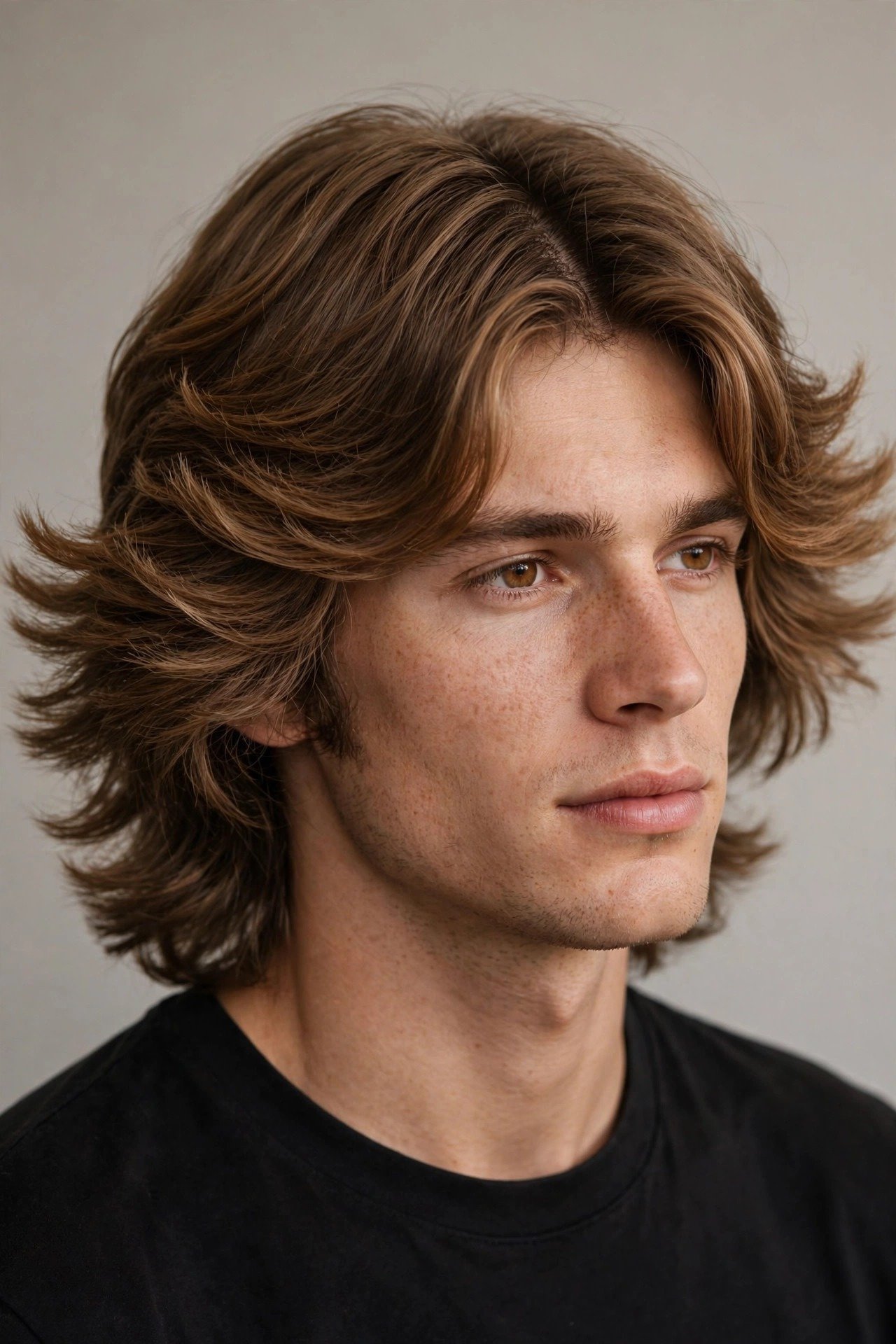
Symmetry with swing: a center part with feathered layers winging outward on both sides. The 70s heartthrob silhouette, cleaned up for 2026 — think vintage album cover, wearable daily.
Who it suits: Symmetrical oval faces; 5–6 inches; straight to wavy hair. The part must be trained — give it two weeks.
Barber script: “Feathered middle part: 5–6 inches, face-framing feathered layers from the cheekbones, soft center part. Feather the ends to wing outward symmetrically.”
Styling (10 minutes): Center-part damp hair, blow-dry each side outward with a round brush, flicking the ends away from the face. Light cream on the face-framing pieces.
Products: mousse, light cream, round brush. Maintenance: trim every 6–8 weeks. Pairs with the middle part guide for part-training tips.
Mistake to avoid: an off-center part — asymmetry kills the mirrored-wing effect. Train it centered.
Pro tips & variations: Symmetry is the whole game — the mirrored wings only work when both sides match, so train the center part religiously for the first two weeks (part wet daily, even on non-style days). Variation: tuck one side behind the ear for an asymmetric editorial twist that still reads 70s. If your face is very round, keep the wings at cheekbone level rather than lower — higher wings add width where round faces can handle it, lower wings widen the jaw area.
4. Feathered Shag
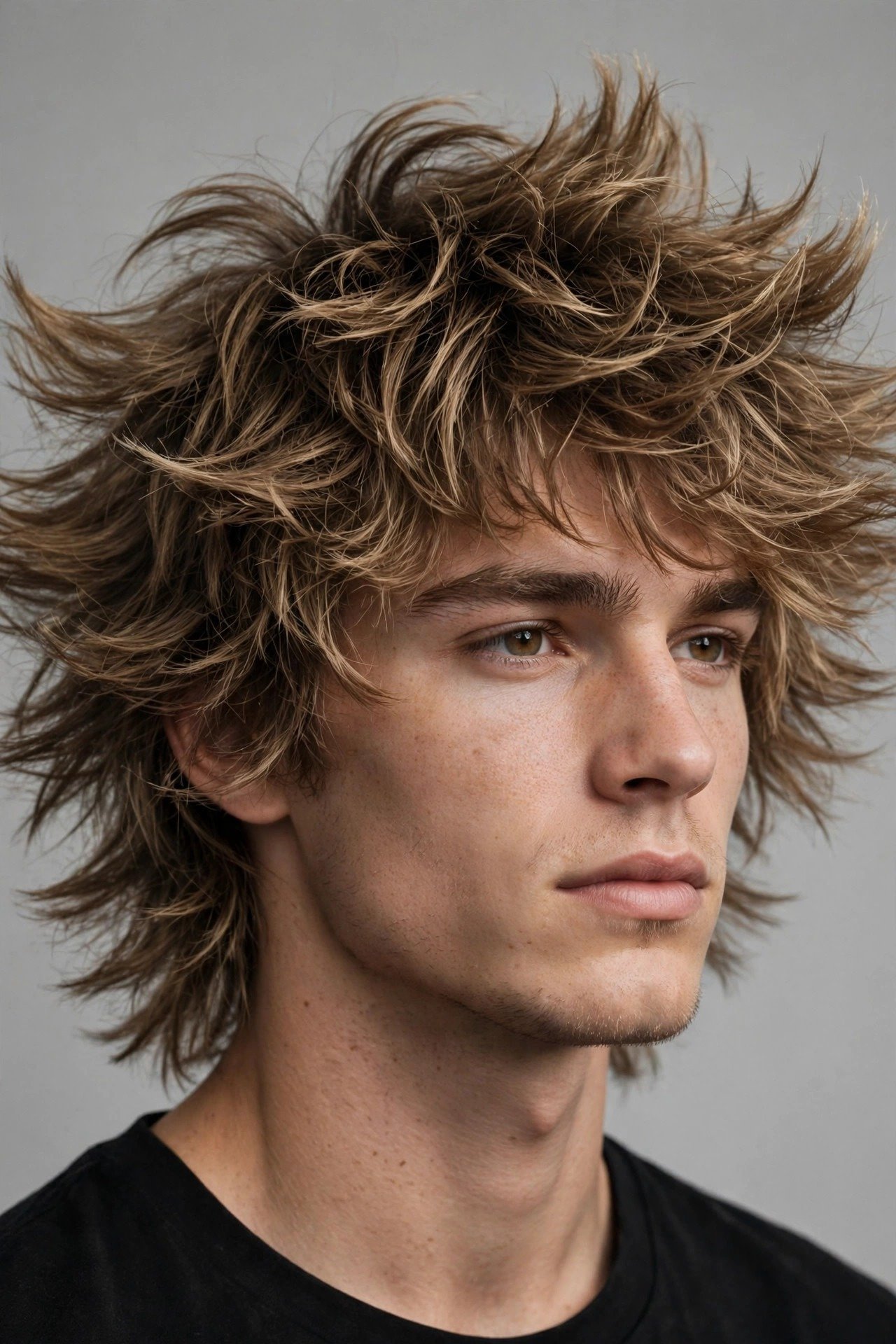
Where feathering meets the shag: choppy crown layers exploding into feathered wings at the perimeter. The rock-and-roll end of the feathering spectrum — big, wild, and full of movement.
Who it suits: Thick wavy to straight hair; oval and heart faces; the bold. Fine hair goes stringy — this needs density.
Barber script: “Feathered shag: short choppy crown layers, long feathered perimeter to the nape, wispy flicked ends. Big texture — don’t hold back on the layers.”
Styling (8 minutes): Sea salt spray, rough-dry while scrunching, then round-brush just the ends outward for the flick. Texture powder at the crown.
Products: sea salt spray, texture powder. Maintenance: reshape every 6 weeks. The modern shag guide covers the non-feathered cousin.
Mistake to avoid: over-conditioning — silky-soft hair won’t hold the flick. Keep some grit in it.
Pro tips & variations: The shag and feathering are natural partners — the shag’s choppy layers create the volume, the feathering creates the flick, and together they’re the wildest texture on this list. This cut needs density; fine hair goes stringy under this much layering. Variation: a curtain fringe amps up the face-framing; skipping it keeps the silhouette wilder. Product note: this is the one feathered style where sea salt spray outranks mousse — the shag wants grit and air, not polish.
5. Feathered Flow
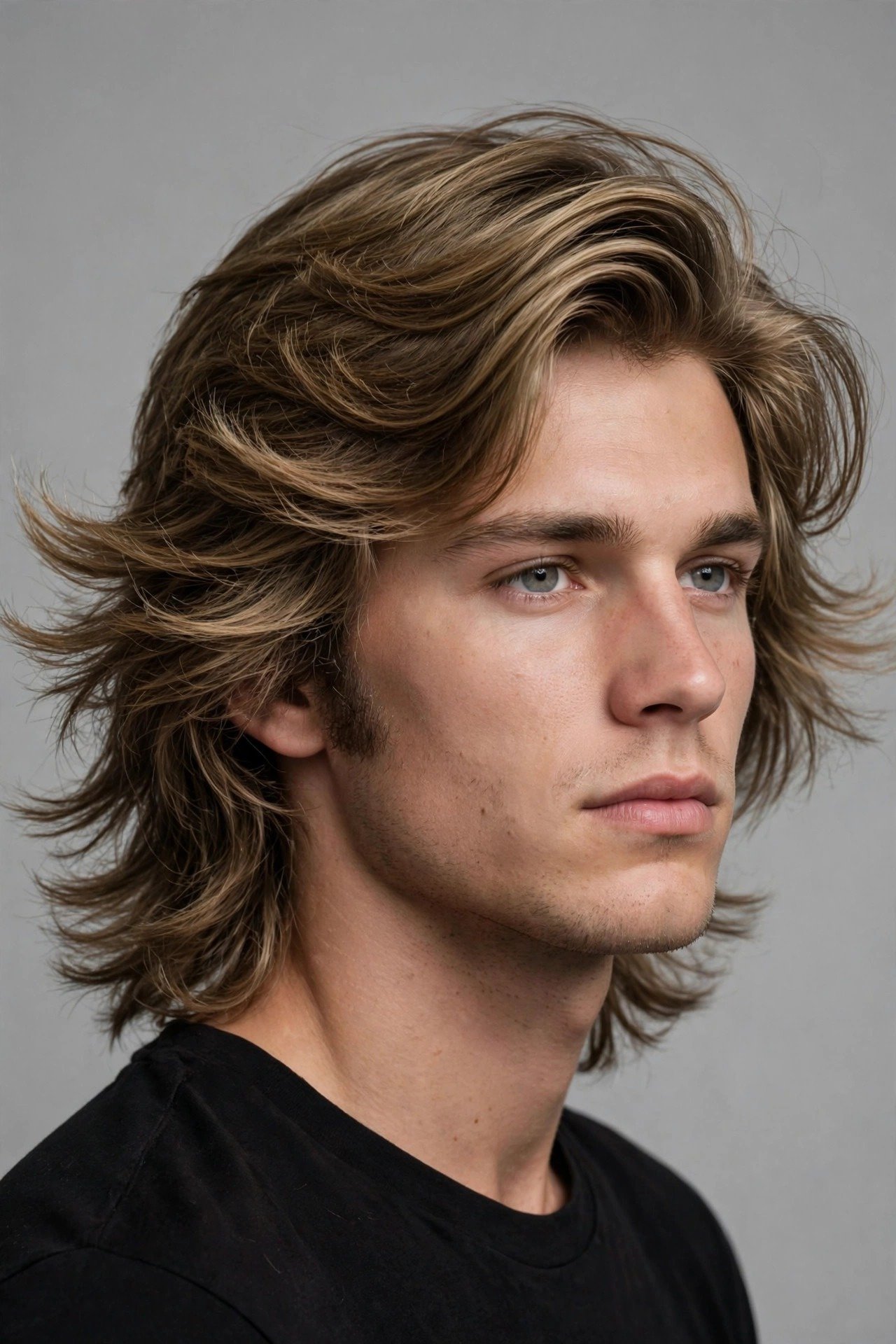
The flow, winged: 6–7 inches of layered flow with feathered ends that kick outward instead of lying flat. It takes the beloved flow silhouette and gives it 70s movement — familiar but fresh.
Who it suits: Straight to wavy hair at 6+ inches; oval and oblong faces; the grow-out committed. The length does half the work.
Barber script: “Feathered flow: 6–7 inches, long layers, feather the ends to flick out. I wear it swept back — keep the wings at the perimeter.”
Styling (9 minutes): Leave-in conditioner, blow-dry back with a round brush flicking ends outward, cream to settle. The flow hairstyle guide has the foundation.
Products: leave-in conditioner, styling cream. Maintenance: trim every 8–10 weeks.
Mistake to avoid: letting the ends go untrimmed past 10 weeks — feathered ends split visibly, and split wings look damaged, not retro.
Pro tips & variations: The flow’s length does half the styling work — at 6–7 inches, gravity and the feathered ends create movement with less daily effort than shorter feathered cuts. But the ends are the style, so protect them: heat protectant every blowout, leave-in conditioner daily, trims every 8–10 weeks without fail. Variation: a middle part maximizes the wing symmetry; a side sweep gives a more relaxed, less ‘done’ feel. This is the feathered style that transitions best into non-feathered life — skip the flick for a week and it’s just a great layered flow.
6. Feathered Taper
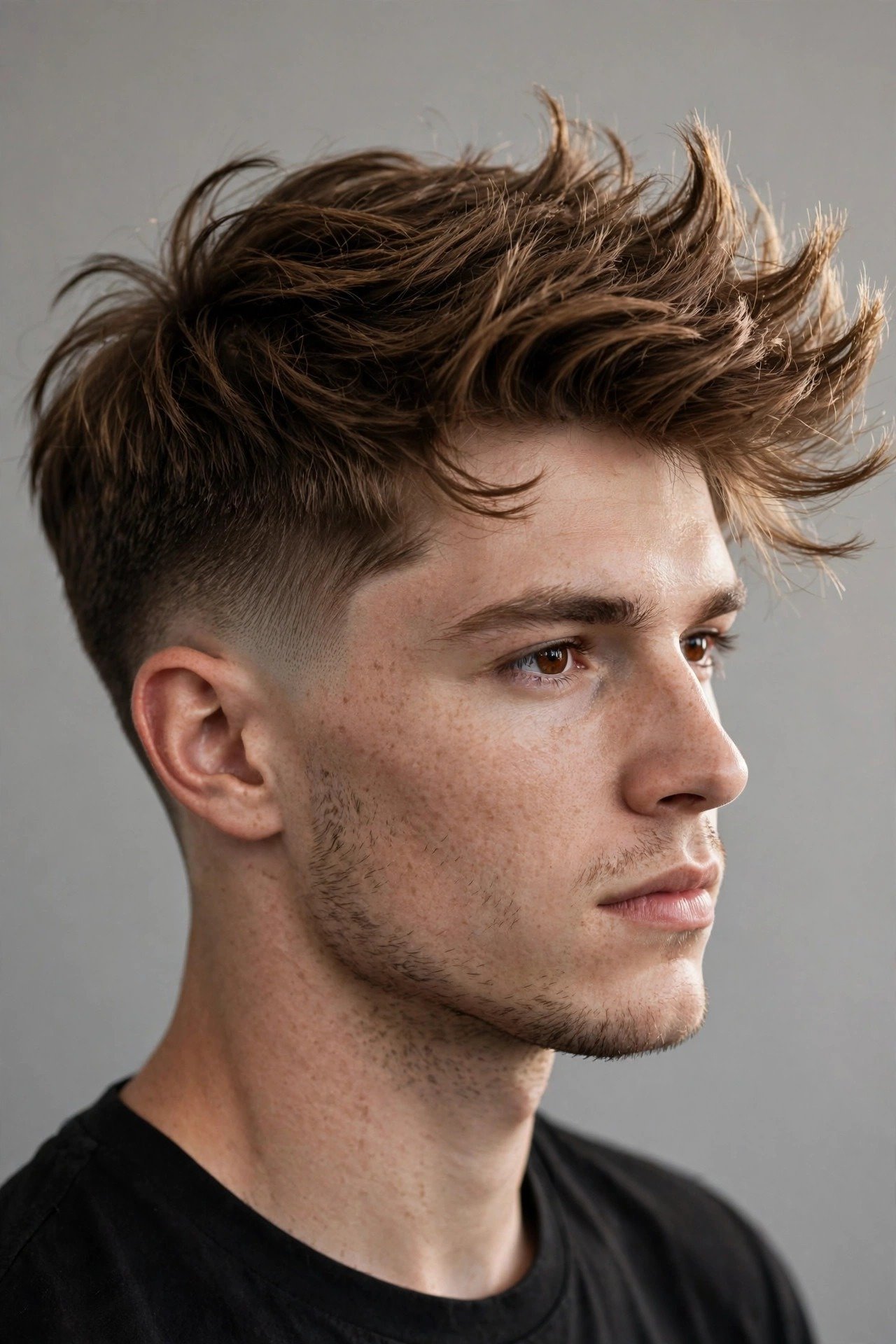
Retro top, modern edges: 4 inches of feathered texture up top against a clean low taper. The taper keeps it 2026; the feathering keeps it 70s — the best balance on this list for skeptics.
Who it suits: Every face shape; the office-safe feathered cut. Straight to wavy hair.
Barber script: “Feathered top, 4 inches, with a low taper on the sides — soft blend, not skin. Feather the top’s ends to flick, keep the taper clean.”
Styling (8 minutes): Mousse, round-brush blowout with outward flick on top, texture at the crown. The taper needs no styling.
Products: mousse, round brush. Maintenance: taper cleanup every 2–3 weeks; top trim every 5–6 weeks. The blowout taper guide is the close cousin.
Mistake to avoid: a high skin fade — the harsh disconnect fights the soft wings. Low and soft only.
Pro tips & variations: The taper is what makes this the office-safe feathered cut — the clean edges signal ‘groomed’ while the top signals ‘personality.’ Keep the taper low and soft; a high skin fade creates a harsh disconnect that fights the wings’ softness. Variation: push the feathered top forward for a fringe effect, or sweep it back for the classic blowout line. The maintenance split is real: taper cleanups every 2–3 weeks, top trims every 5–6 — budget for both before committing.
7. Short Feathered Crop
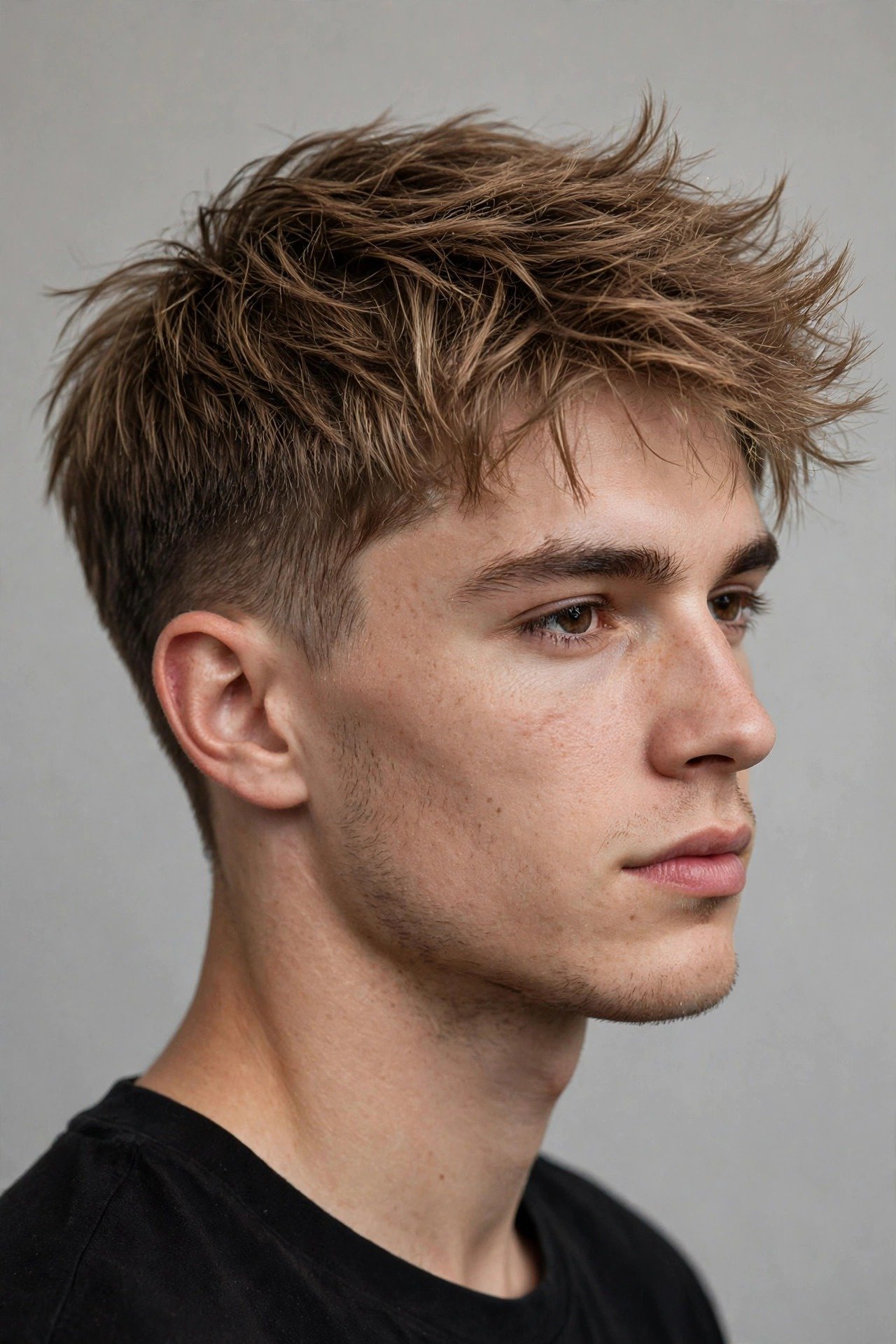
Feathering, distilled: 2.5–3 inches with feathered ends and subtle outward flick. It’s the shortest cut where the technique still reads — proof feathering isn’t just for long hair.
Who it suits: Guys who want the texture without the length; all face shapes; low-maintenance feathering.
Barber script: “Short feathered crop: 2.5 inches, feather the ends with the gliding cut, textured fringe, tapered sides. I want the flick visible even at this length.”
Styling (5 minutes): Small round brush or even fingers + dryer, flicking ends outward. Light cream to define.
Products: light cream, heat protectant. Maintenance: trim every 4 weeks.
Mistake to avoid: cutting under 2.5 inches — the feathering needs minimum length to flick. Shorter is just a textured crop.
Pro tips & variations: The shortest true feathered cut — below 2.5 inches the ends can’t flick, so respect the minimum length or you’re just getting a textured crop (which is fine, but it’s not this). The gliding cut technique matters most at this length because there’s less hair to create the effect. Variation: a slightly longer fringe (3 inches) shows the feathering best; the uniform 2.5-inch version is cleaner. This is the lowest-maintenance feathered style — 5 minutes with a small round brush — making it the practical entry point.
8. Feathered Curtain Layers
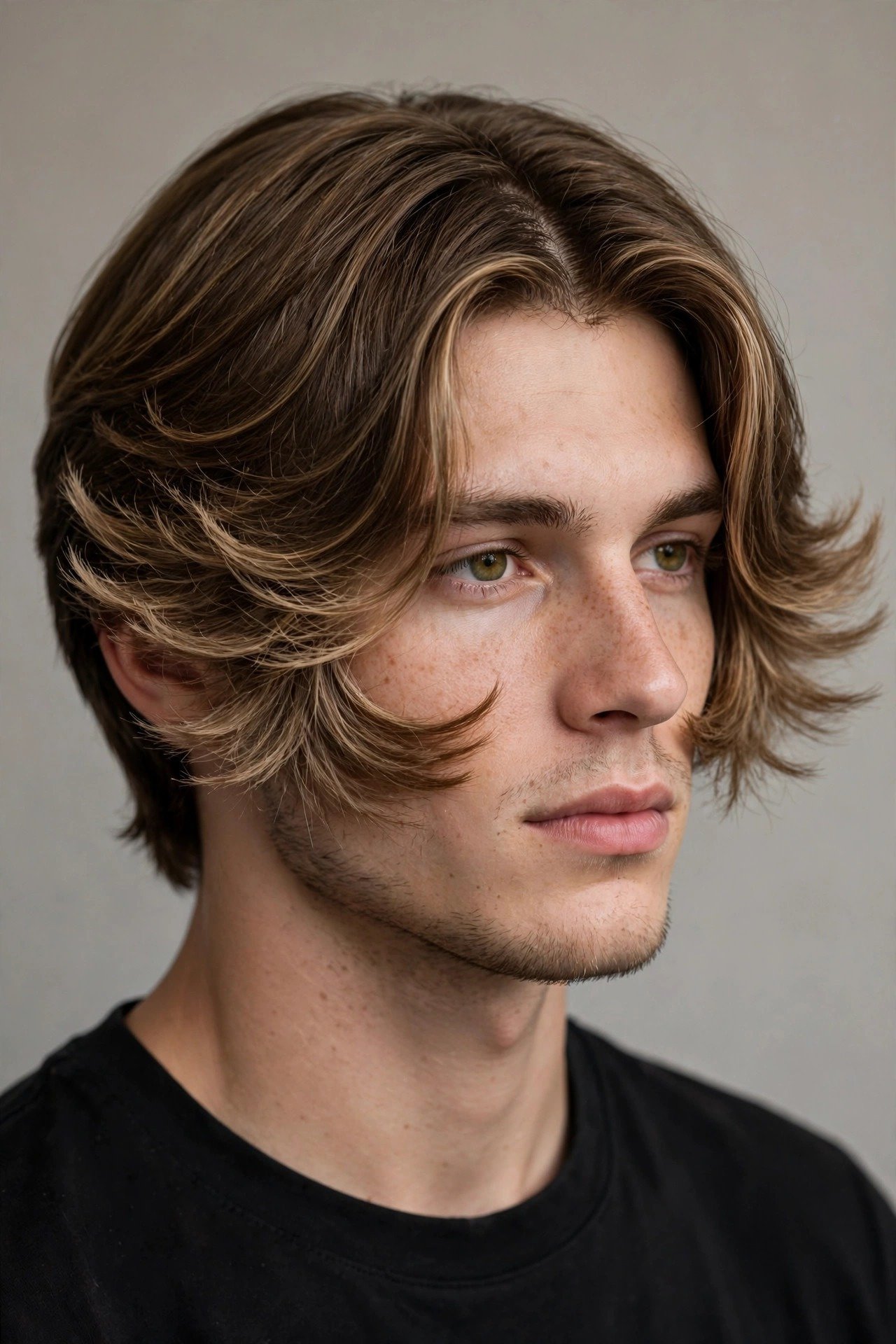
Face-framing wings: curtain layers with feathered ends that flick outward at the cheekbones. The most flattering feathered style for most faces — the wings sculpt the cheekbones.
Who it suits: Oval, oblong, and diamond faces; 4–6 inches in front; straight to wavy hair. Universally photogenic.
Barber script: “Feathered curtains: 5 inches in front, face-framing layers feathered to wing outward at the cheekbones, soft center part. Sculpt the wings — they’re the feature.”
Styling (9 minutes): Center-part, round-brush blowout rolling the face-framing sections outward. The wings should frame, not hide, the face.
Products: mousse, light cream, round brush. Maintenance: trim the face-framing layers every 6–8 weeks.
Mistake to avoid: wings that flick inward — inward flick closes the face off. Always roll outward.
Pro tips & variations: The wings are the feature — ask the barber to ‘sculpt’ them, not just cut them, because the cheekbone flick needs deliberate shaping to frame rather than overwhelm the face. Always roll the round brush outward; inward flick closes the face off and ruins the effect. Variation: longer wings (jaw level) for drama, shorter wings (cheekbone) for wearability. This is the most photogenic feathered style — the face-framing wings sculpt cheekbones in photos — which is why it leads so many 70s revival editorials.
9. Feathered Side Sweep
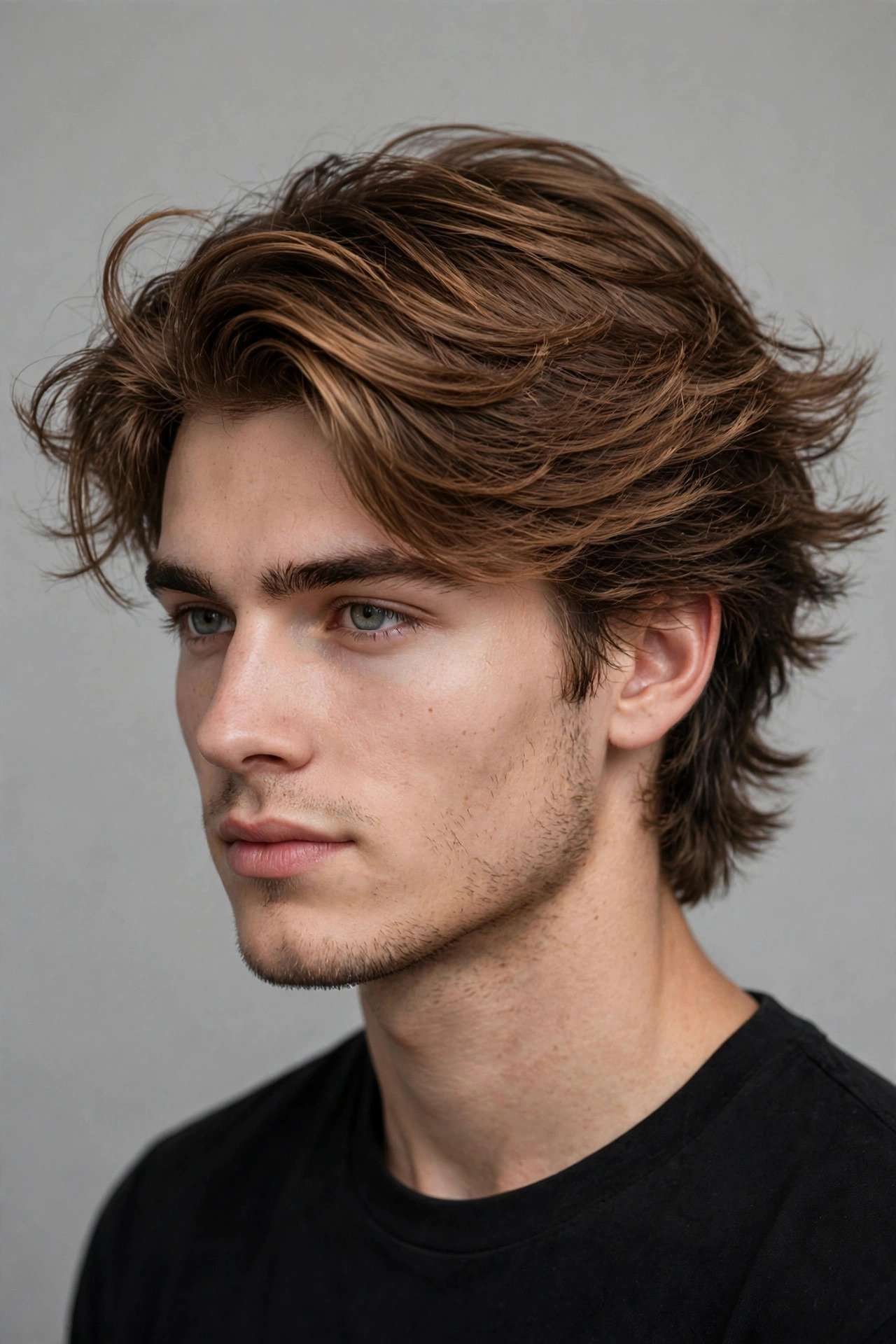
Asymmetric wings: 5 inches swept across with feathered ends flicking at the sweep’s edge. Dynamic, modern, and the feathered style that hides a multitude of cowlicks.
Who it suits: Side-part wearers; oval and square faces; straight to wavy hair. Great for stubborn growth patterns — the sweep works with them.
Barber script: “Feathered side sweep: 5 inches swept across, feathered ends, tapered sides. Cut it to fall in the sweep direction — work with my natural part.”
Styling (8 minutes): Blow-dry in the sweep direction with a round brush, flicking the ends outward at the perimeter. Matte paste to hold the direction.
Products: mousse, matte paste. Maintenance: trim every 5–6 weeks.
Mistake to avoid: fighting your natural part — the sweep must follow your growth direction or it collapses by noon.
Pro tips & variations: Work with your growth patterns, not against them — the sweep must follow your natural part direction or it collapses by noon regardless of product. Find your natural part by pushing everything forward and seeing where it splits. Variation: a deep side sweep (from near the temple) is more dramatic; a soft diagonal sweep is more wearable. This is also the best feathered style for cowlicks — the sweep direction can be chosen to cooperate with a stubborn crown instead of fighting it daily.
10. Modern Feathered Mullet
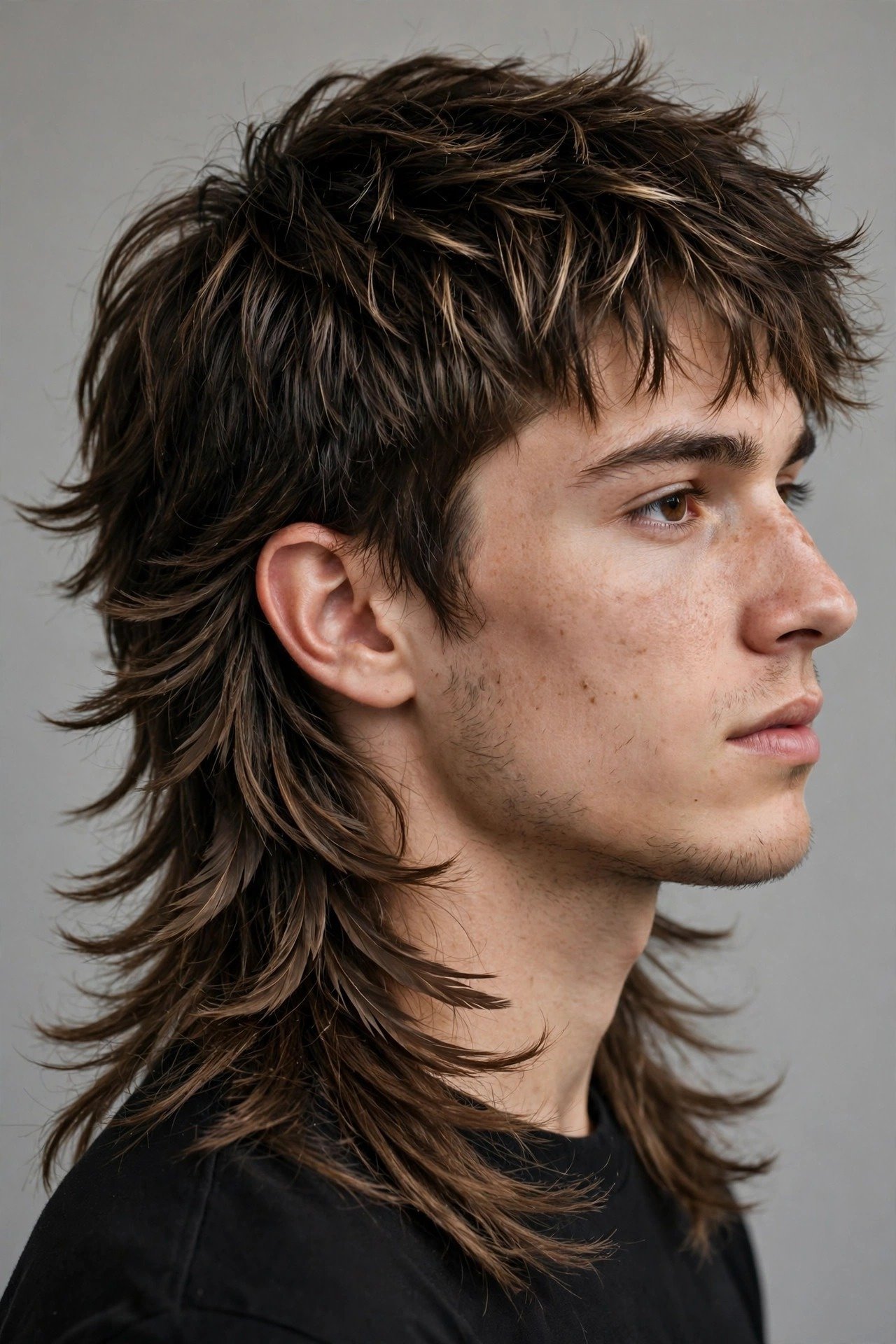
The mullet’s redemption, feathered: short textured front, long feathered wings at the back and sides. The feathering is what separates the 2026 mullet from every bad one before it — wings, not a tail.
Who it suits: The committed; thick straight to wavy hair; oval faces. Not for the cautious — but the most 70s-authentic cut here.
Barber script: “Modern feathered mullet: short front, long back to the nape with feathered wings — not a straight tail, layered wings. Keep the transition soft.”
Styling (10 minutes): Mousse throughout, round-brush blowout with the back wings flicking outward. The wings are the whole point — style them deliberately.
Products: mousse, round brush, light hairspray. Maintenance: reshape every 6 weeks — mullets go feral fast.
Mistake to avoid: a rattail instead of wings — the back must be layered and feathered, not one thin tail. That’s the 1987 version.
Pro tips & variations: The feathering is what separates the 2026 mullet from every bad mullet before it — layered wings, not a single rattail. Insist on this distinction in the chair: ‘wings, not a tail.’ The back must be layered and feathered throughout. Variation: a softer version keeps the back at collar length; the full version goes to the nape. Maintenance is non-negotiable — mullets go feral in 6 weeks without reshaping, and a feral mullet loses the feathering that justifies it. This is the most 70s-authentic cut here; wear it with modern clothes to keep it revival, not costume.
11. Feathered Long Layers
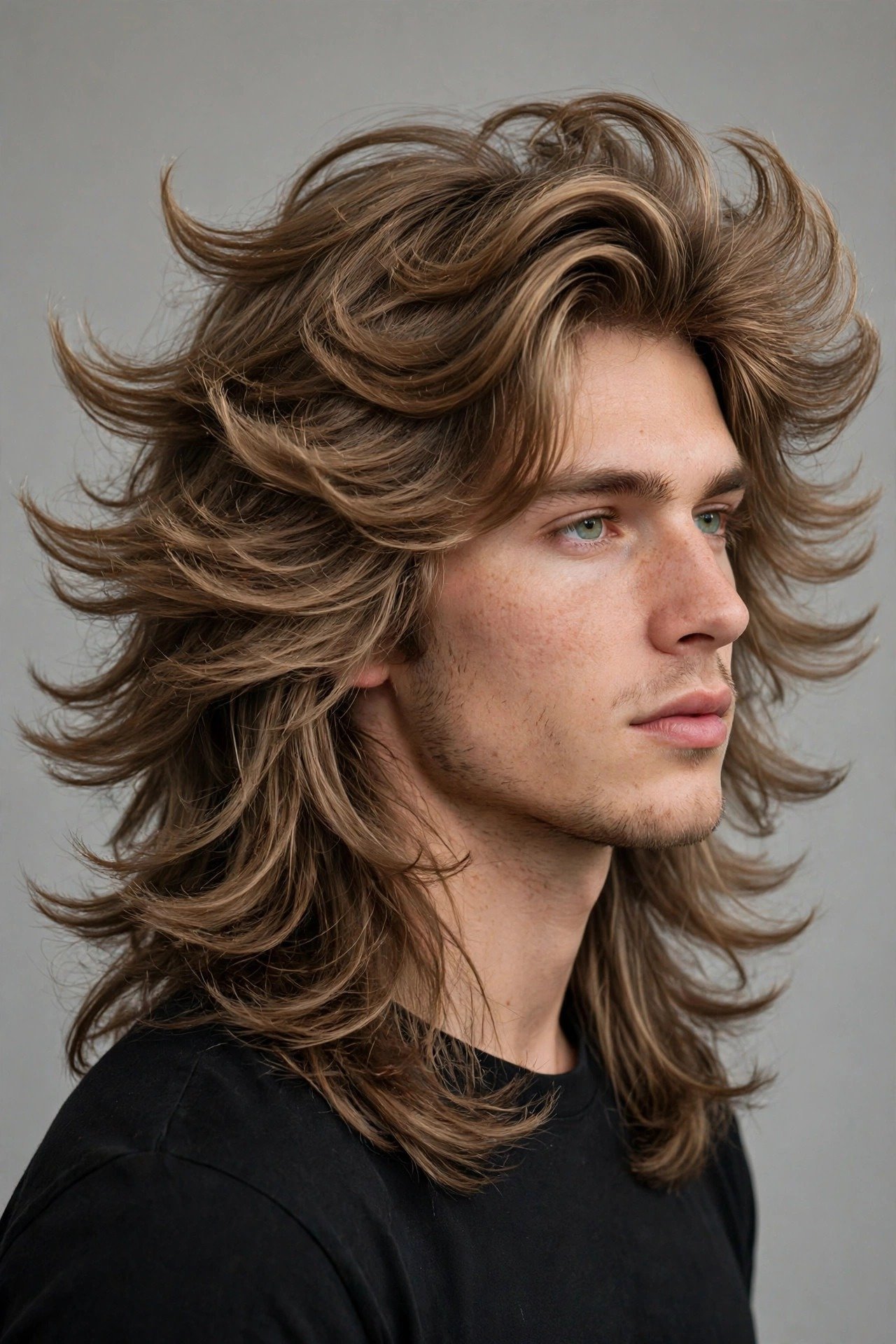
Maximum wingspan: 7+ inches of long feathered layers with wings at every level. The most dramatic feathering possible — for the man who wants the full 70s effect with modern grooming.
Who it suits: Straight to wavy hair with the density to support length; oval and oblong faces; the patient (12+ month grow-out).
Barber script: “Long feathered layers: 7–8 inches, feather every layer’s ends, wings throughout. Maintain the length — feather it, don’t chop it.”
Styling (14 minutes): The full routine: mousse, section-by-section round-brush blowout with outward flick, cool shot, light hairspray. The longest routine here — the payoff matches.
Products: mousse, round brush, light hairspray, heat protectant. Maintenance: trim every 8–10 weeks; deep-condition weekly.
Mistake to avoid: skipping heat protectant — this much blow-drying without protection destroys the ends you’re trying to show off.
Pro tips & variations: Maximum wingspan demands maximum maintenance — the full routine (14 minutes), weekly deep-conditioning, and heat protectant every single time. There’s no low-effort version of 7-inch feathered layers. The payoff: this is the most dramatic, most authentically 70s silhouette possible in 2026, and on the right person it’s unforgettable. Commit fully or choose a shorter style — half-maintained long feathering looks neglected, not retro.
12. Feathered Quiff
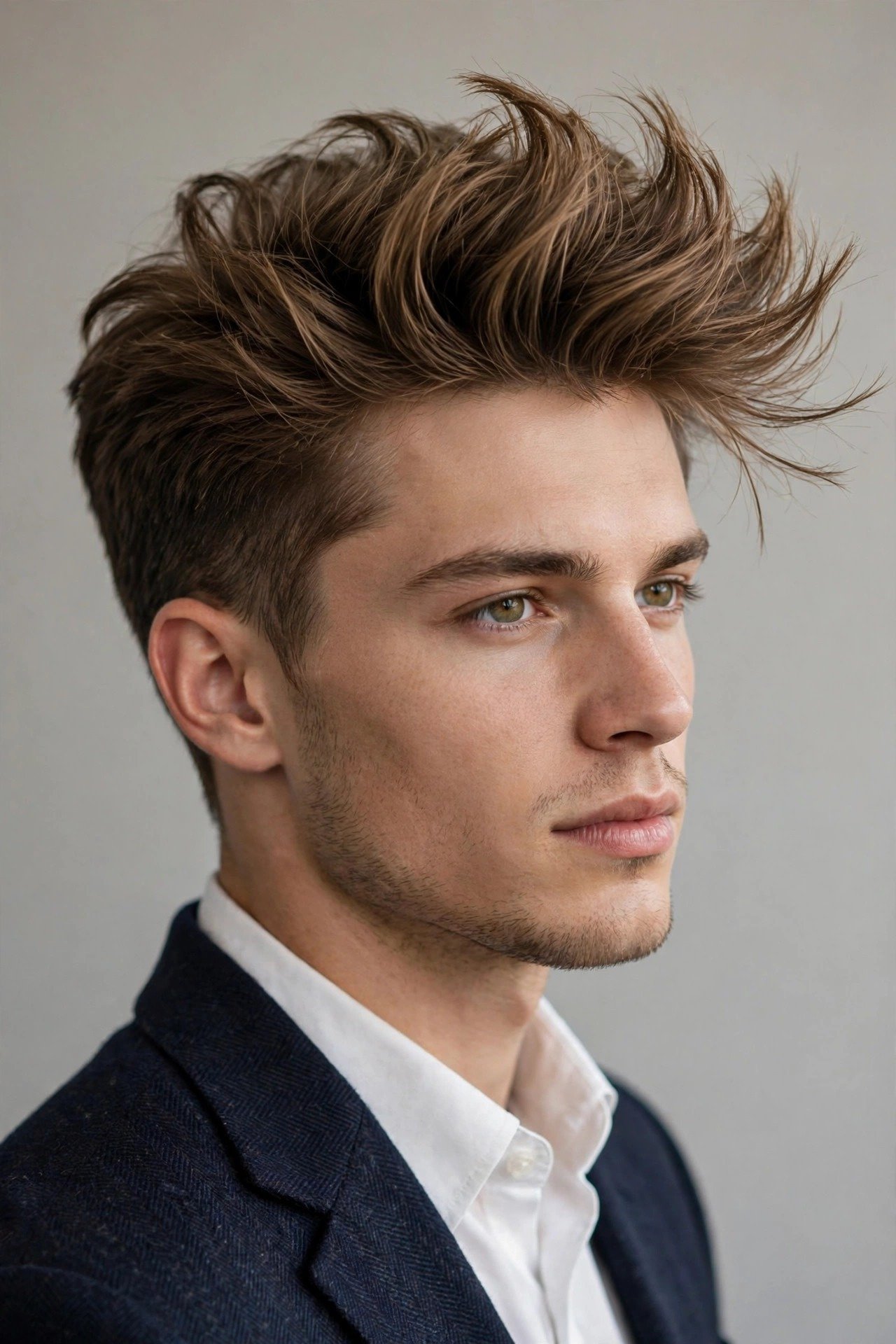
Height meets wings: a quiff’s lifted front with feathered ends that flick instead of lying stiff. It takes the classic quiff and gives it 70s movement — structure with soul.
Who it suits: Round faces (the lift slims); straight to wavy hair; 3.5–4 inches in front. The dressier feathered option.
Barber script: “Feathered quiff: 4 inches in front, feathered ends, tapered sides. Lift in front, flick at the ends — combine the quiff shape with feathered ends.”
Styling (10 minutes): Mousse at roots, round-brush blowout lifting the front up and flicking ends outward. Medium paste for hold without stiffness.
Products: mousse, medium paste, round brush. Maintenance: trim every 4–5 weeks.
Mistake to avoid: strong-hold gel — it glues the feathered ends into a solid wall. The flick must stay free.
Pro tips & variations: The quiff gives feathering a dressier frame — the lifted front reads polished while the feathered ends keep it from looking stiff. Build the lift with the round brush (up at the roots) and the flick with the same brush (outward at the ends) — one tool, two motions. Variation: a higher, more sculpted quiff for evenings; a looser, lower one for daytime. Product warning: strong-hold gel is the enemy — it glues the feathered ends into a solid wall and kills the flick that defines the style. Medium paste maximum.
13. Feathered Fringe
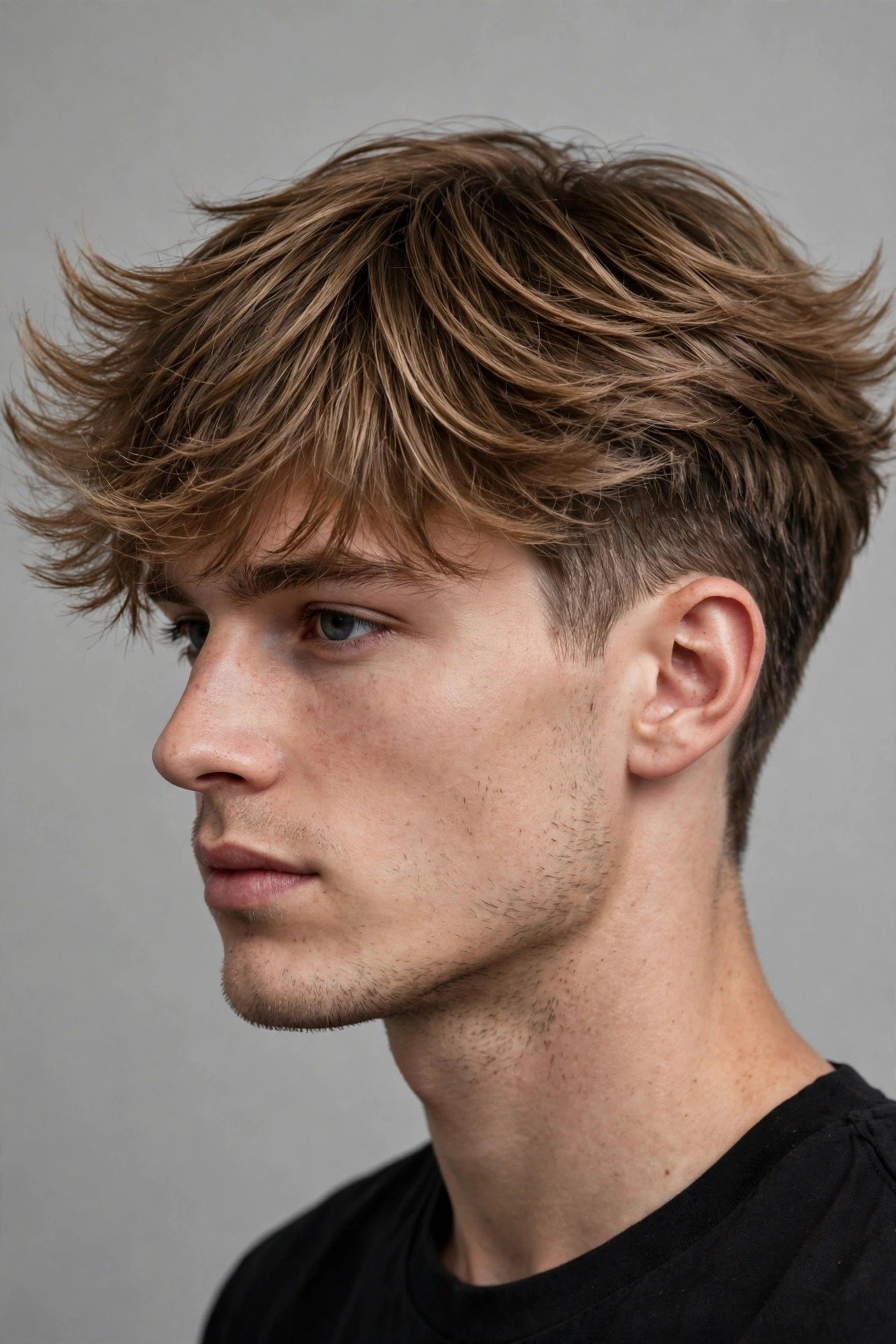
Forward wings: a feathered fringe that flicks outward at the edges instead of hanging straight. Youthful, textured, and the feathered style that suits the most face shapes.
Who it suits: High foreheads; oval and heart faces; straight to wavy hair. The most forgiving feathered cut.
Barber script: “Feathered fringe: 3 inches falling forward, feather the ends to flick outward at the edges, tapered sides. Soft wings, not a blunt fringe.”
Styling (6 minutes): Mousse, blow-dry forward with a round brush flicking the edges outward. Pinch for separation.
Products: mousse, light cream. Maintenance: fringe trim every 4 weeks.
Mistake to avoid: a blunt straight fringe — without the feathering it’s just a fringe, and the 70s magic is gone.
Pro tips & variations: The most forgiving feathered cut — the forward fringe suits the widest range of faces and needs the least length to work. The feathering keeps it from reading as a plain fringe: the outward flick at the edges is what makes it 70s. Variation: a longer fringe (3.5 inches) worn across the forehead for softness; a shorter one (3 inches) for sharpness. This is also the best feathered style for high foreheads — the fringe does its classic camouflage work while the wings add the retro character.
14. Feathered Wolf Cut
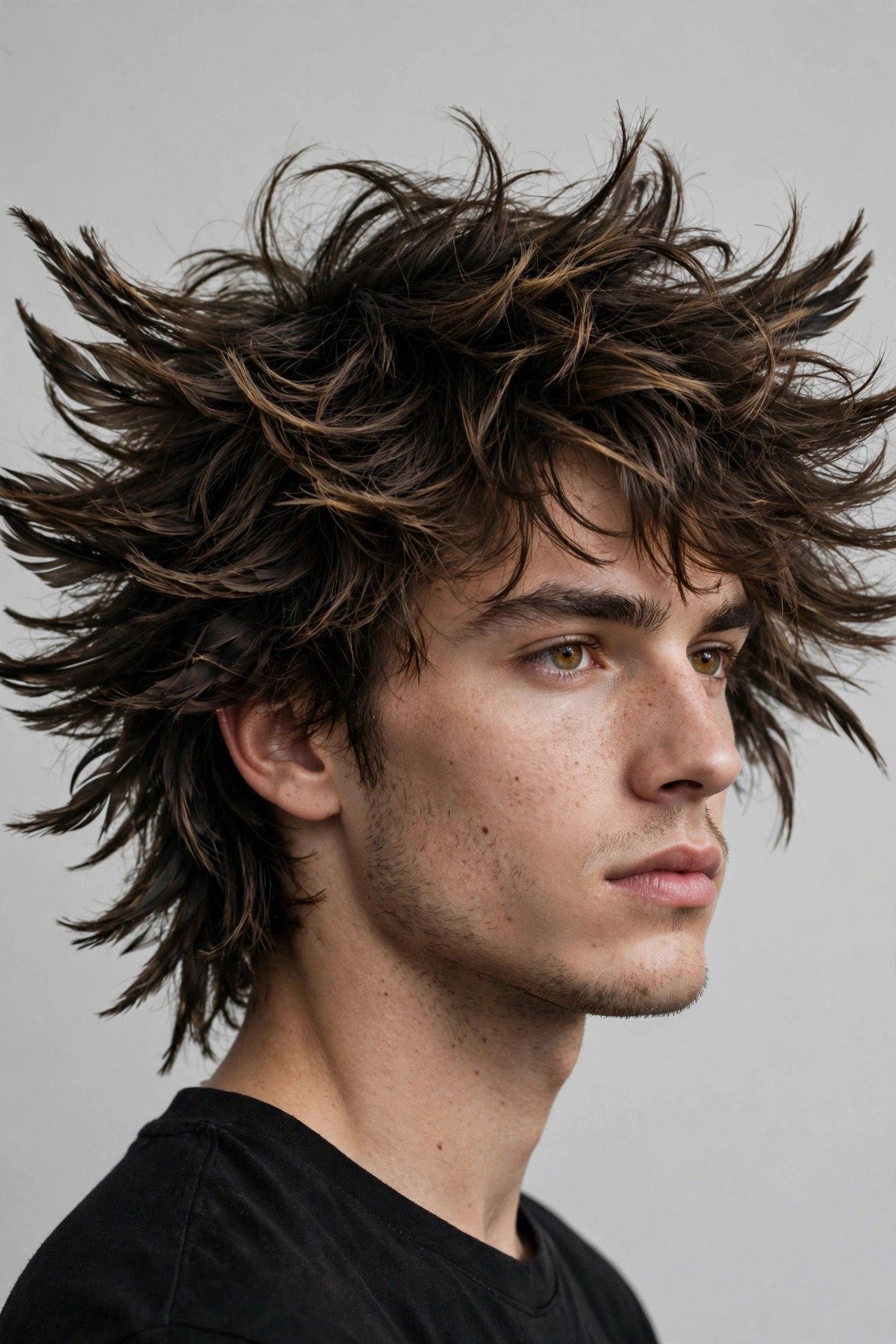
The wild wing: wolf-cut shagginess meets feathered flick — choppy crown volume exploding into feathered wings. The most editorial, fashion-forward style here.
Who it suits: Thick straight to wavy hair; oval and heart faces; the fashion-bold. Maximum texture needs maximum density.
Barber script: “Feathered wolf cut: short choppy crown, long feathered perimeter with real wings, wispy flicked ends. Go big on texture — this one’s supposed to be wild.”
Styling (9 minutes): Sea salt spray + mousse, rough-dry the crown for volume, round-brush the wings outward. Texture powder to finish.
Products: sea salt spray, mousse, texture powder. Maintenance: reshape every 6 weeks.
Mistake to avoid: taming it — a neat wolf cut is a contradiction. Let it be wild.
Pro tips & variations: The wildest combination here — wolf-cut shagginess plus feathered flick — and it only works with density and commitment. Fine hair can’t support this much texture; thick straight-to-wavy hair is the canvas. Variation: lean into the wolf (shorter crown, wilder) or into the feathering (longer wings, more blowout) depending on your mood — the cut supports both. Styling rule: don’t tame it. A neat wolf cut is a contradiction, and over-styling kills the editorial wildness that makes this style work. Let it be big.
Blowout Technique, Products & Maintenance
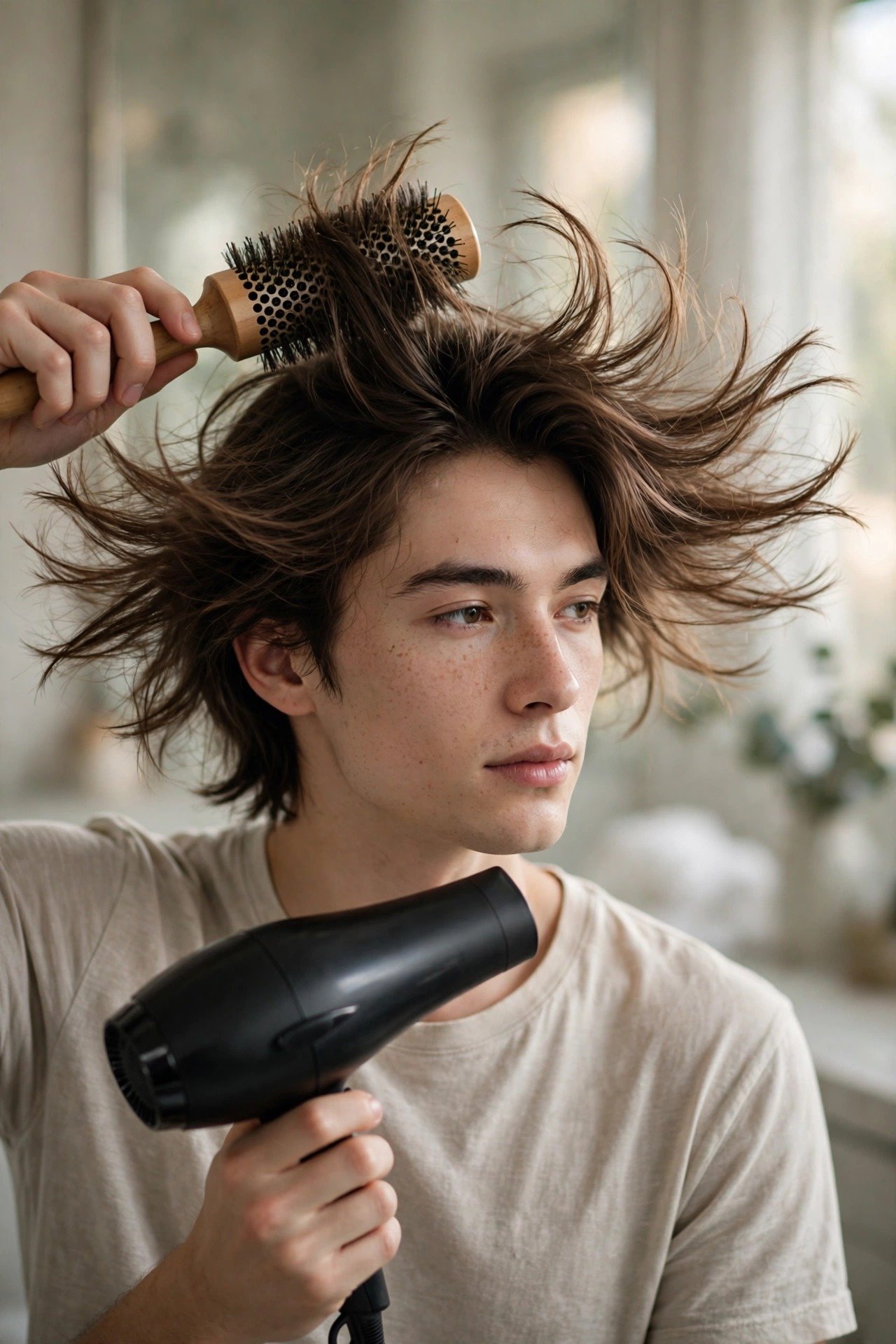
The Feathered Blowout: Step by Step
The cut creates the potential for wings; the blowout creates the wings. Master this and every style above works:
- Heat protectant first. Feathered ends are the oldest, most fragile hair — protect them every time. Non-negotiable.
- Mousse on damp hair. A golf-ball through the lengths (not just roots — feathering needs body through the ends).
- Section the hair. Clip the top up; work the bottom layers first. Feathering is built layer by layer.
- Round brush, outward roll. Place the brush under each section and roll outward as you dry — the outward roll creates the flick. This is the entire technique in one motion.
- Medium heat, constant motion. Keep the dryer moving along the brush; park it and you get hot spots and frizz.
- Cool shot per section. Blast each finished section cool for 5 seconds — it locks the flick in place.
- Top layers last. Release the clipped top, blow it with volume at the roots and flick at the ends.
- Light hairspray from distance. 10 inches away, one pass. You’re preserving the wings, not shellacking them.
Products for Flick and Hold
Essentials: heat protectant spray, volumizing mousse, round brush (medium barrel — the tool that makes the wings), blow dryer with cool shot, light flexible hairspray, light cream for the face-framing pieces. Avoid: heavy waxes and pomades (they drag the wings down), strong-hold gels (they freeze the flick into spikes), paddle brushes (they straighten out everything you’re building), and over-conditioning (too-silky hair won’t hold a flick — keep some texture).
The feathered haircut itself has a documented history — the feathered hair article traces the technique from its 70s peak through its revivals.
Maintenance: Keeping the Wings Alive
Trims: every 6–8 weeks for most feathered styles; the feathered ends split faster than blunt ends, and split wings look damaged, not retro. Short feathered cuts: every 4–5 weeks. Washing: 2–3x per week — the blowout lasts 2–3 days with dry shampoo at the roots, so daily washing is unnecessary. Night: loose topknot or silk pillowcase preserves the blowout; in the morning, re-flick just the ends with a round brush (3 minutes) rather than redoing the whole head.
Troubleshooting Feathered Hair
No flick: you’re either air-drying (the blowout creates the wings — no heat, no flick) or using a paddle brush (it straightens everything out). Switch to a round brush and roll outward. Wings fall flat by noon: skip the cool shot and the flick never sets — 5 seconds of cool air per section locks it in. Also check product weight: heavy waxes drag wings down; switch to mousse and light hairspray. Split ends: feathered ends are fragile by design — heat protectant every time, trims every 6–8 weeks, no exceptions. Looks like a costume: the line between revival and costume is grooming — clean perimeter, healthy ends, and modern clothes keep it 2026. If it still feels too much, drop to the feathered taper (style 6) or short feathered crop (style 7) — same technique, half the drama. Too much volume: you’re over-directing — dry the sections closer to the head with less lift, and use cream instead of mousse to calm it down.
Modernizing the 70s Look: Styling Beyond Hair
The haircut is half the revival — the rest is presentation. Wardrobe: pair feathered hair with modern, fitted clothes, not vintage costumes — the contrast between 70s hair and 2026 clothing is what makes it fashion instead of fancy dress. Grooming: keep the rest sharp — clean neckline, groomed brows, maintained facial hair (or clean shave). Sharp details signal that the retro hair is a choice, not neglect. When to go subtle: job interviews, formal weddings, conservative workplaces — the feathered taper or short feathered crop reads as ‘great textured hair’ without announcing the decade. When to go full: creative fields, music, fashion, weekends — the classic wings and long layers are conversation starters. Confidence: the unspoken requirement — feathered hair draws eyes, so wear it like you meant it. Hesitation reads as costume; conviction reads as style. The 70s guys understood this: the wings were never just hair, they were attitude.
A Brief History of Feathered Hair
Feathering was born in the early 1970s, when stylists began cutting hair at angles to create soft, winged ends — a rebellion against the blunt, geometric cuts of the 1960s. It exploded through the decade on both women (Farrah Fawcett’s iconic wings) and men, becoming the defining texture of the era’s rock stars, actors, and athletes. The 1980s kept it alive in softer forms before the 1990s’ grunge and minimalism pushed it aside. It flickered back in the early 2000s, then returned properly in the 2020s as part of the broader 70s revival in fashion — longer men’s hair, curtain layers, and blowouts all came back together. The 2026 version is the most refined yet: the wings remain, but the lengths are more wearable, the perimeters cleaner, and the conditioning science decades better. Understanding the history helps in the chair — when you say ’70s feathered but modern,’ a good barber knows exactly which parts to keep and which to update.
Product Deep-Dive: Building the Perfect Feathered Kit
Heat protectant: the non-negotiable foundation — feathered ends are the oldest, most fragile hair, and this much blow-drying without protection destroys them. Spray mid-lengths to ends before every heat session. Volumizing mousse: the body builder — a golf-ball through damp lengths (not just roots, since feathering needs body through the ends). Round brush: the actual styling tool — medium barrel for most lengths; the outward roll creates the flick. This single tool matters more than any product. Blow dryer with cool shot: the cool blast per section locks the flick; without it, wings fall flat within hours. Light flexible hairspray: wing preservation — one pass from 10 inches away, never close-up shellac. Light cream: for the face-framing pieces that need calming without losing the flick. What to skip: heavy waxes and pomades (they drag wings down), strong gels (they freeze the flick into spikes), paddle brushes (they straighten out the wings you’re building), and over-conditioning (too-silky hair won’t hold a flick — keep some grit). Total kit cost is modest; technique is the real investment.
Feathered Hair at Every Age
20s: the full playground — classic wings, feathered mullet, wolf cut. This is the decade for maximum expression; the bolder styles read as fashion, not midlife crisis. 30s: the sweet spot — modern feathered blowout, feathered taper, feathered curtains. Keep the technique, refine the lengths; the wings signal style without demanding attention. 40s: the distinguished version — feathered side sweep, short feathered crop, feathered quiff. Shorter, cleaner, with the flick as an accent rather than the headline. The key adjustment is polish: sharper perimeters, healthier ends, less volume. 50s+: absolutely viable — a short feathered crop or feathered taper with natural grey looks distinguished and modern. The wings soften the face in a way that flatters mature features. The through-line at every age: match the drama to the decade, keep the ends healthy, and wear it with conviction. Feathering isn’t young men’s hair or old men’s hair — it’s anyone’s hair, calibrated.
Frequently Asked Questions
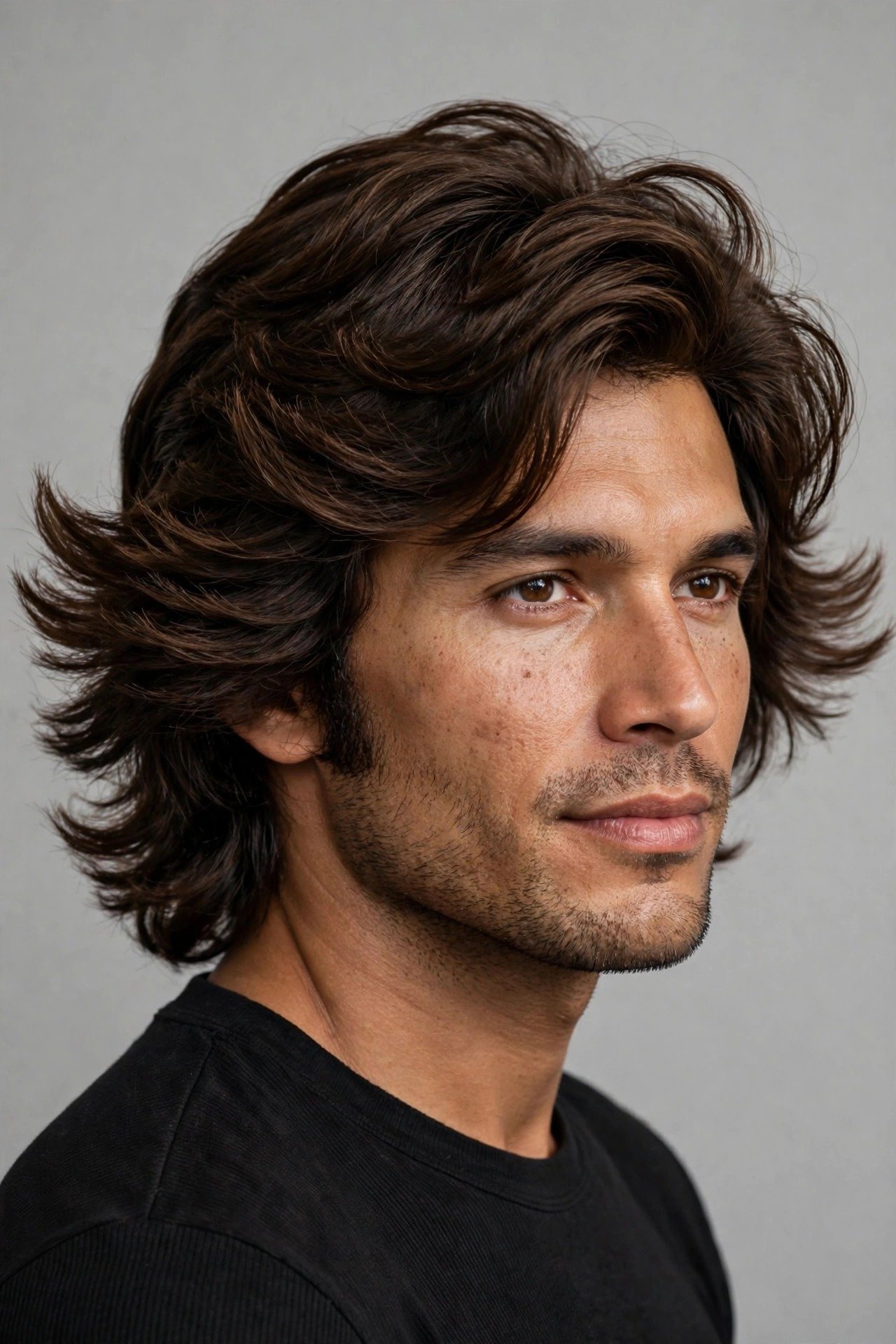
What is a feathered haircut for men?
It’s a cutting technique where the ends are cut at an angle to taper into soft, wing-like layers that flick outward. Unlike regular layers that can lie flat, feathering is engineered for movement — paired with a round-brush blowout, it creates the signature 70s wings. The key distinction: layers create internal shape, but feathering specifically shapes the ends to flick. That’s why the blowout matters so much — the cut creates the potential for wings, and the round-brush technique (rolling outward as you dry) creates the wings themselves.
How long does hair need to be for feathering?
At least 4 inches for true feathered wings — the ends need length to flick outward. Below 3 inches you get texture but not the wing effect. The classic 70s feathered looks run 5–7 inches. If you’re growing into it, the short feathered crop (style 7) works from 2.5 inches and teaches you the technique while you grow — by the time you hit 4 inches, you’ll already know how to style the wings. Don’t rush the grow-out with impatience; feathering on too-short hair just looks like a textured crop, which is fine but isn’t the goal.
Can I get feathered hair without a blowout every day?
The cut still looks good air-dried (like long layers), but the signature wings need heat styling. Compromise: blow out fully 2–3x per week and refresh just the ends on other days — a 3-minute re-flick with a round brush revives the wings. The blowout actually lasts: with dry shampoo at the roots, a good feathered blowout holds for 2–3 days, so you’re not doing the full 12-minute routine daily. Night preservation helps too — a loose topknot or silk pillowcase keeps the wings alive overnight, cutting the morning refresh to minutes.
Does feathered hair work for thin hair?
Yes — feathering is actually excellent for fine hair because the technique creates the illusion of volume and movement. Keep the layers moderate (heavy layering thins fine hair visually) and use volumizing mousse. Avoid over-thinning, which defeats the purpose. The blowout does the heavy lifting for fine hair: round-brush volume plus the outward flick creates fullness that the cut alone can’t. Fine-haired guys should favor the shorter feathered styles (the blowout, the taper, the short crop) over the very long ones — length without density goes stringy, but 4–5 inches of feathered fine hair looks fantastic.
How is feathering different from layering?
Layering creates internal shape and removes weight; feathering specifically shapes the ends to flick outward using an angled gliding cut. A layered cut can lie flat — a feathered cut is designed to move. Most 70s revival styles use both: layers for shape, feathering for the wings. When briefing your barber, name the technique explicitly — ‘feather the ends with the gliding cut’ — because a barber who only layers won’t produce the flick. If the barber doesn’t know the feathering technique, find one who does; it’s a specific skill, and regular layering is not a substitute.
Conclusion
The 70s are back because the 70s understood something timeless: hair should move. Feathering is a technique, not a costume — angled ends, outward wings, and a blowout that turns a haircut into motion. The 2026 revival works because it keeps the soul of the original (the flick, the freedom) while discarding the excess (the length, the fuss).
Start with the modern feathered blowout or the feathered taper — the wearable end of the spectrum — and learn the round-brush flick until it’s muscle memory. Bring the barber script, invest in heat protectant, and give the wings three weeks to become habit. The deeper lesson of the revival: the 70s understood that hair should move, and every era since has been relearning it in its own way. Feathering is simply the most deliberate expression of that idea — ends cut to fly, styled to soar. Fifty years later, the feather still flies. Now it’s your turn.