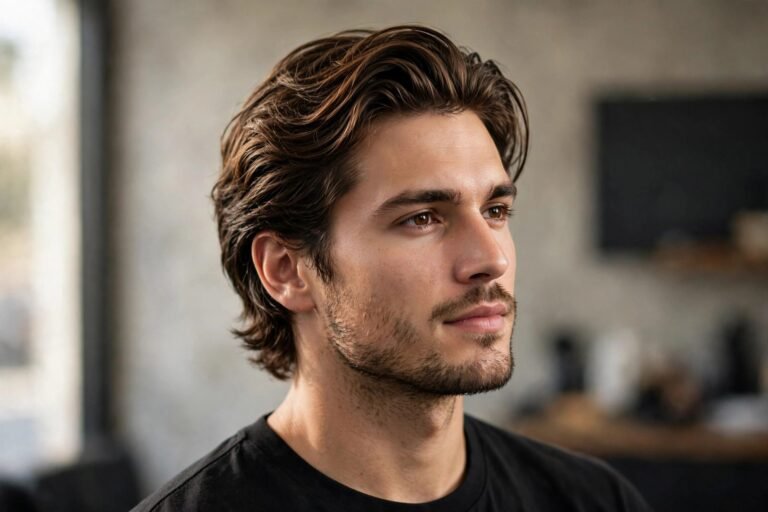
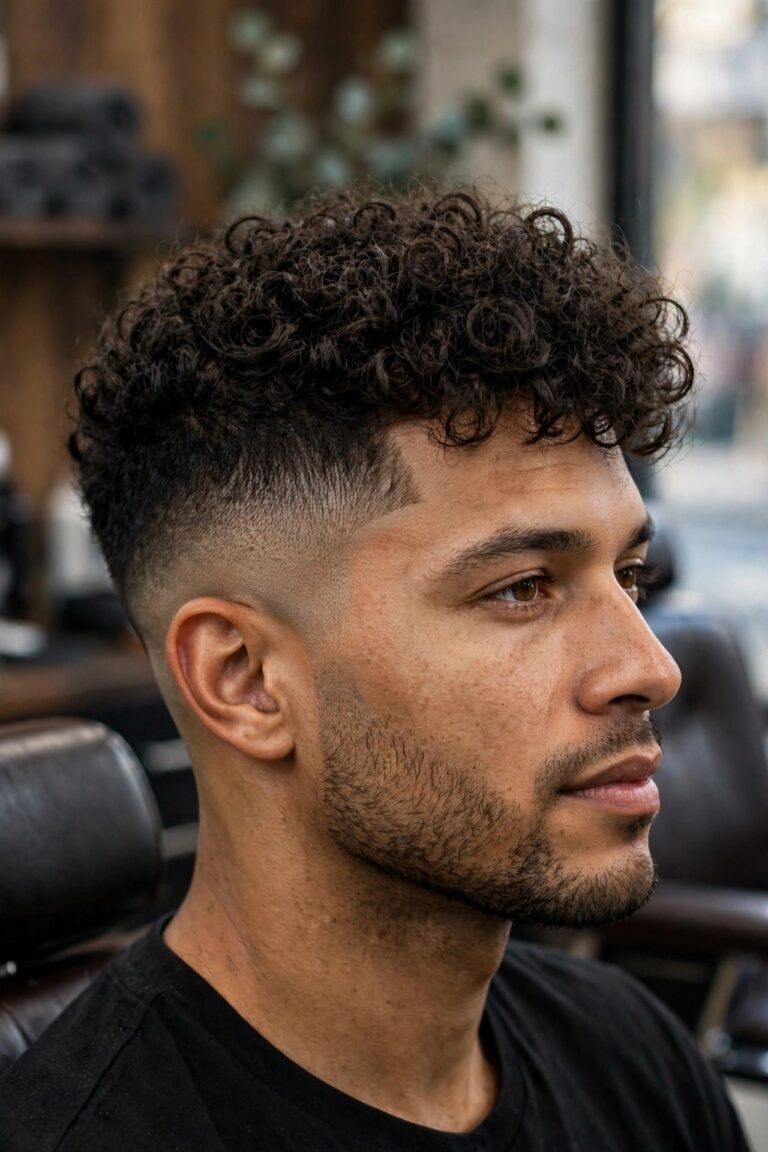
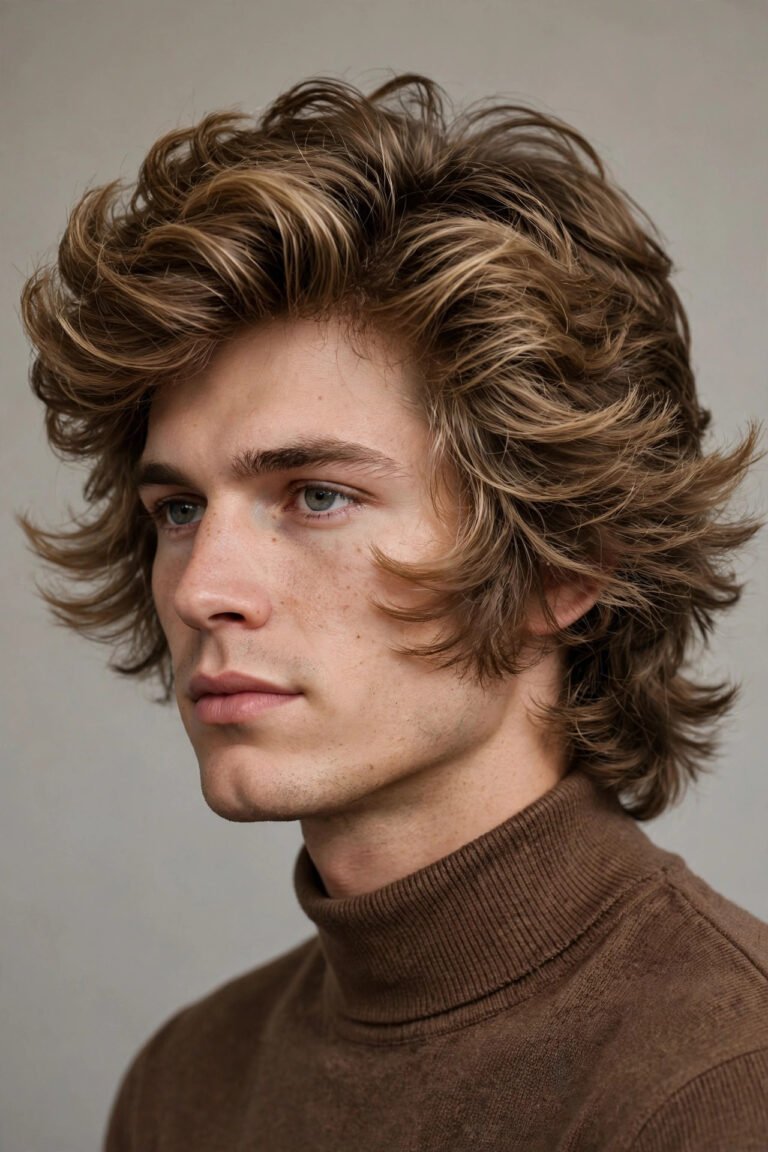
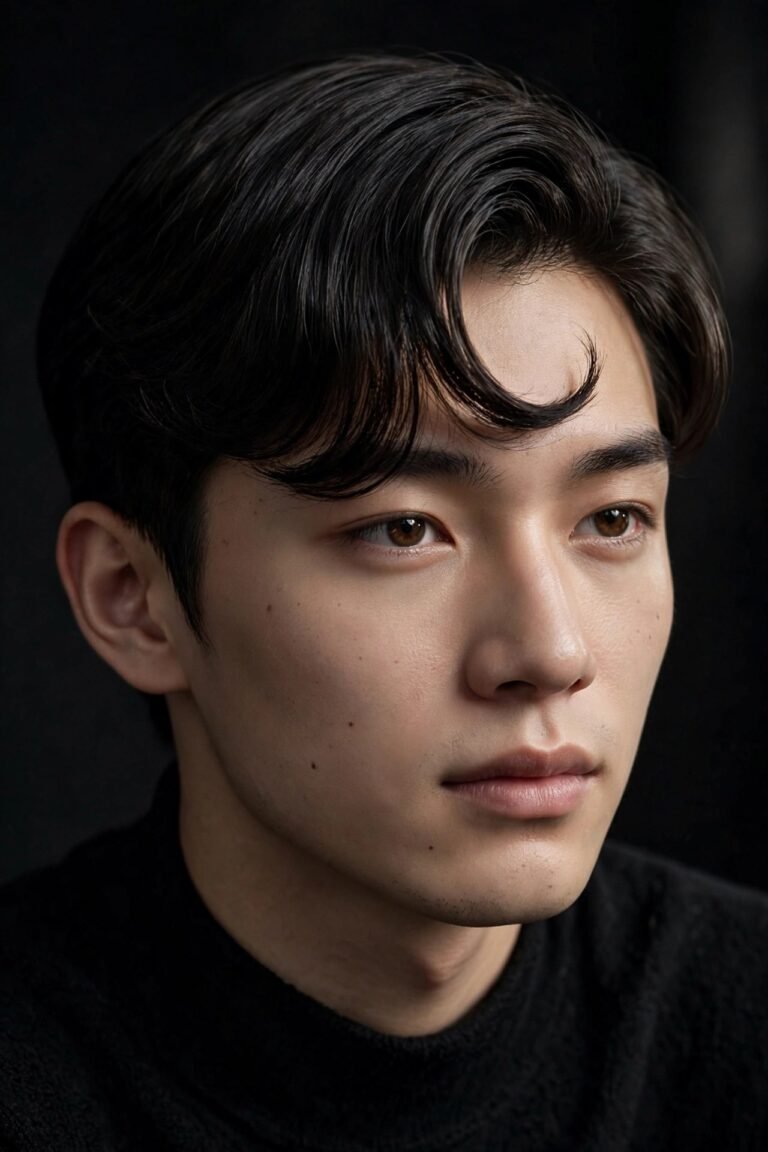
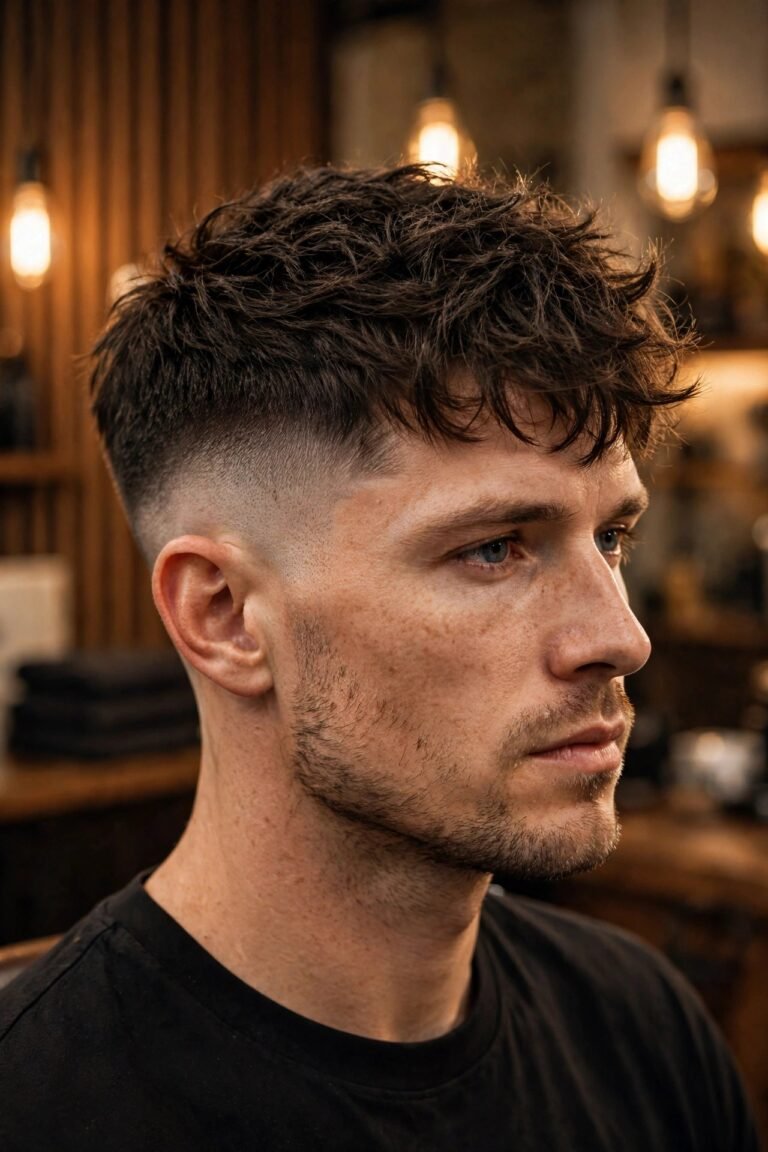
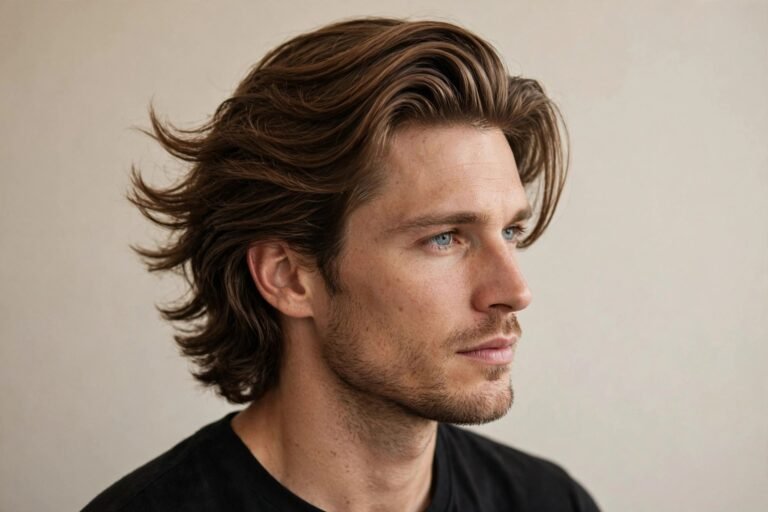
Fluffy Hair Men 2026: 16 Voluminous Textured Styles
Fluffy Hair Men 2026: The Complete Volume Guide
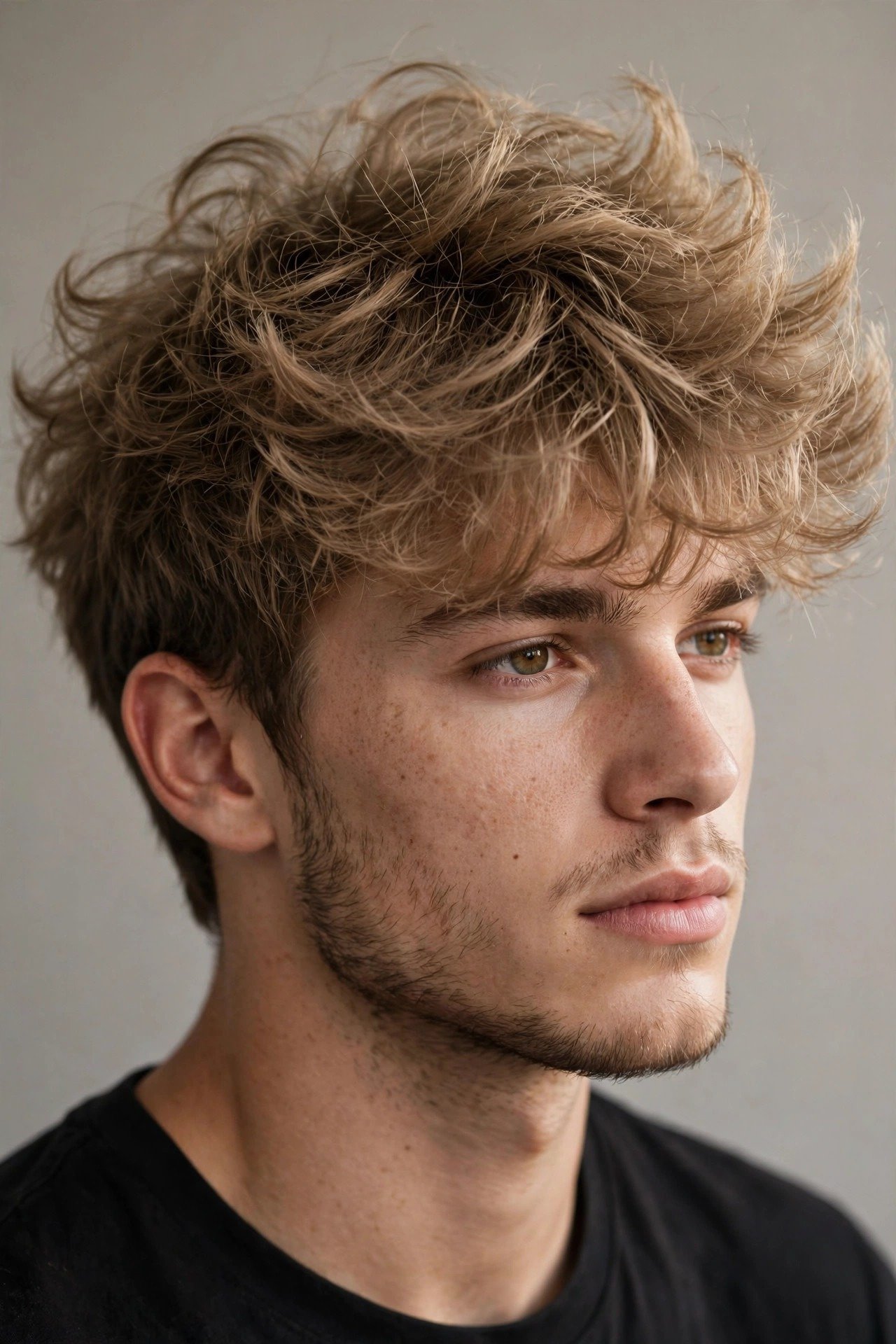
Fluffy hair men are wearing in 2026 is not an accident of genetics — it is a deliberate, engineered texture. That soft, airy, cloud-like volume you see all over TikTok and Pinterest starts with the right cut: grown-out tops, weight removed through the interior, and edges left soft instead of crisp. In this guide, a master barber breaks down 16 fluffy hair styles for men, with the exact barber script, styling routine, and products for each one, so you can walk out of the shop and recreate the volume at home every single morning.
You’ll find everything here: what fluffy hair actually is, which face shapes and hair types it suits, the exact words to use in the barber chair, all 16 styles with step-by-step styling instructions, the products that build airy volume (and the ones that kill it), plus answers to the questions men ask most about fluffy hair.
The 2026 version of fluffy hair is the trend grown up. The stringy e-boy curtains of 2020 have evolved into something barbers actually respect: real layering, healthy ends, and cuts engineered for volume rather than accidents of bedhead. What hasn’t changed is the appeal — soft, touchable texture with movement reads confident and modern in a way stiff, sculpted styles can’t. This guide treats fluffy hair as a technical skill: the right cut first, then a repeatable routine, then the discipline to avoid the five mistakes that kill volume. Master those three and the ‘effortless’ look becomes genuinely effortless.
Table of Contents
- Fluffy Hair Men 2026: The Complete Volume Guide
- 16 Fluffy Hair Styles for Men in 2026
- Styling Routine, Products & Maintenance
- Frequently Asked Questions
- Conclusion
What Is Fluffy Hair for Men?
Fluffy hair is a texture-first style defined by soft, separated volume rather than sharp structure. Think of it as the opposite of a slick-back or a skin fade with a hard part: instead of hair pressed flat and controlled, fluffy hair is lifted at the root, airy through the mid-lengths, and finishes in soft, feathery ends that move when you do. The silhouette is rounded and cloud-like — typically 2 to 4 inches of length on top with tapered or softly faded sides that blend instead of disconnecting.
The look exploded with Gen-Z on TikTok around 2022–2023 (the e-boy curtains era) and has matured in 2026 into something more wearable: less stringy, more groomed, with real barbering underneath the texture. What makes it different from simply “messy hair” is intention — a fluffy cut has internal layering and weight removal built in, so the volume happens naturally instead of requiring 20 minutes of teasing.
Who Does Fluffy Hair Suit — and Who Should Skip It?
Who it suits: Fluffy hair flatters oval, oblong, square, and heart face shapes especially well, because the width at the sides visually balances longer faces and softens strong jawlines. On round faces it works if you keep extra height on top and keep the sides tight — never let the sides puff out to the width of your cheeks. Hair-wise, it is easiest on straight to wavy hair with medium density; very fine hair can do it with the right pre-styler, and very thick hair needs serious thinning or the “fluff” becomes a helmet.
Who should skip it: If your hair is extremely curly (3C and above), chasing the fluffy silhouette usually means fighting your natural curl pattern — you will get better results from styles built for coils, like a curly top cut designed for your texture. If your hairline is receding aggressively, the forward-falling fringe of most fluffy styles will draw attention to it rather than hide it.
What to Tell Your Barber: The Fluffy Cut Script
Walk in with a photo — always — but back it up with precise language so any good barber can execute it even without the reference. Here is the script:
“I want to grow the top out to about 3 to 4 inches with soft, textured layers — no blunt lines. Take the weight out through the interior with thinning shears or point cutting so it sits airy, not bulky. On the sides, give me a low taper or a soft scissor-tapered blend — nothing skin-tight, I want the transition to melt. Keep the fringe long enough to fall forward with texture, and texturize the ends so nothing looks heavy or shelf-like.”
Key technical terms your barber should hear: point cutting (cutting into the ends vertically for softness), interior weight removal (thinning the bulk underneath, not the surface), and soft graduation on the sides. Red flags: a barber who reaches for the clippers to “clean it up” with a hard line, or who cuts the top blunt and straight across — both kill the fluff instantly. Expect to sit in the chair 30–45 minutes; a proper textured cut cannot be rushed in 15.
16 Fluffy Hair Styles for Men in 2026
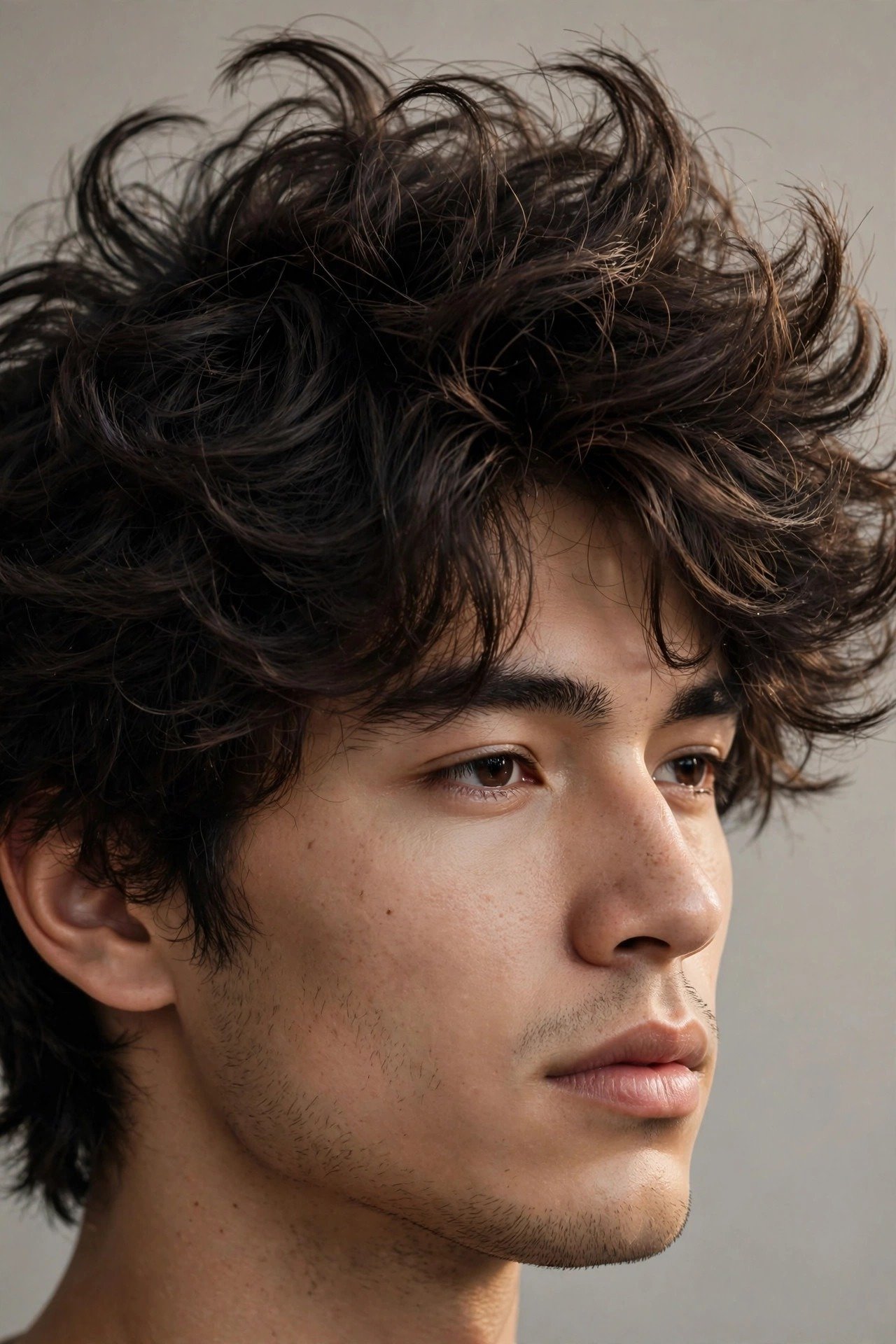
Every style below includes who it suits, the exact barber script, a step-by-step morning routine, product picks, maintenance timing, and the number-one mistake to avoid. Pick the silhouette that matches your hair type and lifestyle.
1. The Classic Fluffy Fringe
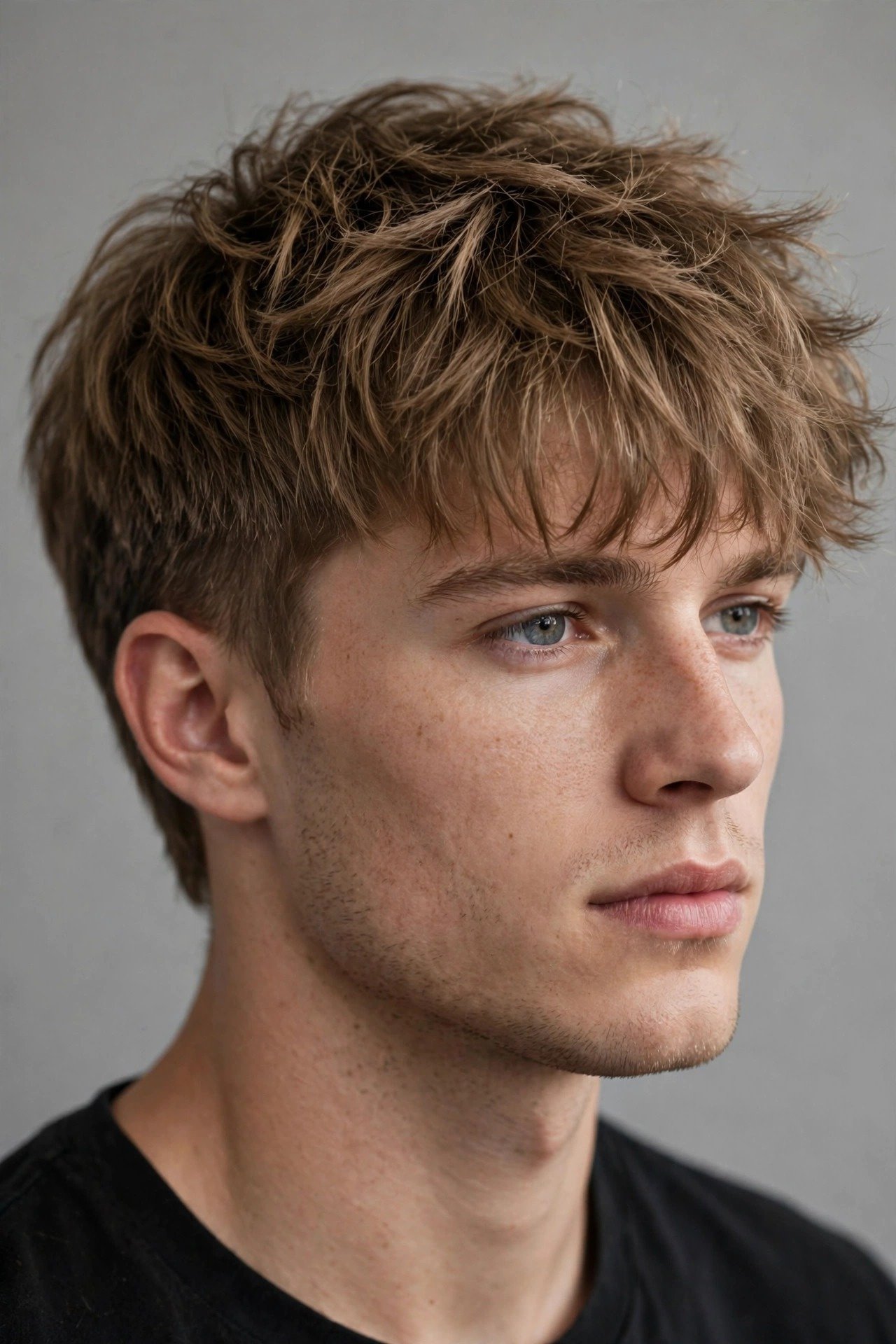
The blueprint everything else is built on: 3–4 inches on top, fringe falling forward with piece-y texture, sides softly tapered. This is the highest-success-rate fluffy style because it works on the widest range of hair types and the grow-out is forgiving.
Who it suits: Oval, square, and heart faces; straight to wavy hair with medium density. Excellent for guys growing out a shorter cut, since the awkward stage basically looks like this on purpose.
Barber script: “Three and a half inches on top, point-cut throughout, fringe textured to sit just above the eyebrows, low taper on the sides blended with scissors — no hard weight line at the parietal ridge.”
Styling (7 minutes): On towel-dried hair, work a pea-sized amount of volumizing mousse through the roots. Blow-dry on medium heat with your fingers (not a brush), lifting at the roots and directing the fringe forward. Finish with a light puff of texture powder at the crown and pinch random pieces for separation.
Products: volumizing mousse (root lift), texture powder (separation), light matte paste for touch-ups. Maintenance: trim every 4–5 weeks to keep the fringe out of your eyes; the taper needs cleaning every 2–3 weeks if you want it crisp.
Mistake to avoid: using heavy wax or oil-based pomade — it collapses the airiness and turns “fluffy” into “greasy” by noon.
Pro tips & variations: If your fringe collapses by afternoon, layer your products: mousse at the roots before drying, then texture powder after — the powder absorbs the oil that would otherwise drag the fringe down. Variation: ask for the fringe a half-inch longer and wear it swept slightly to one side for a softer, less uniform look. Grow-out note: at 6–8 weeks the fringe reaches curtain length — instead of trimming, try pushing it into a middle part for a free second style while you decide whether to commit to the length.
2. Fluffy Two-Block Cut
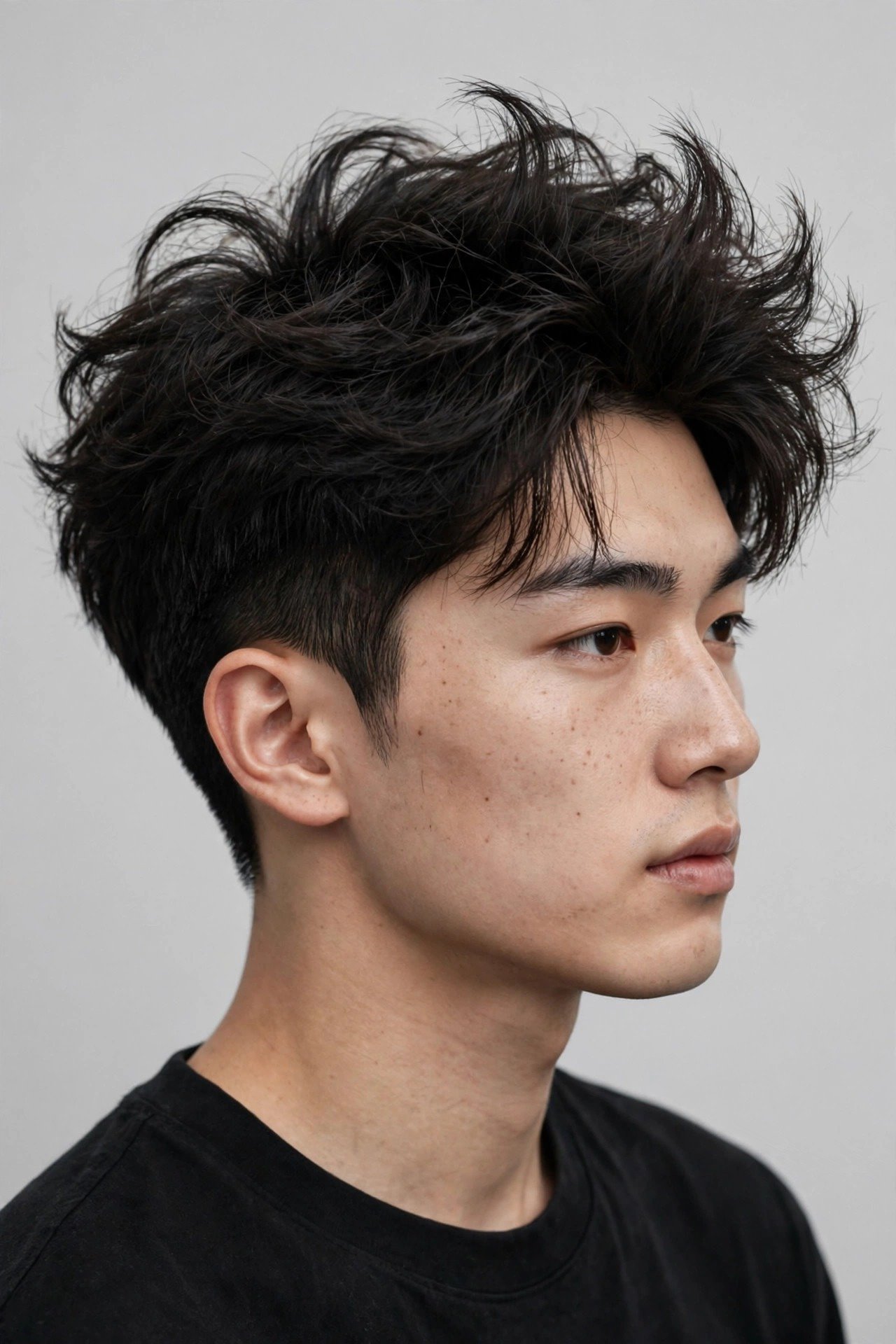
Borrowed from Korean barbering, the two-block keeps serious length and volume on top (the “block”) while the sides and back are cut short underneath. The contrast makes the fluff look even bigger — the most dramatic volume of any style on this list.
Who it suits: Guys with thick, dense hair who want maximum volume; oval and oblong faces benefit most from the added width on top. Less ideal for very fine hair, which can look stringy at this length.
Barber script: “Two-block: leave 4–5 inches on top with heavy interior texturizing, disconnect underneath with a #2 to #4 on the sides, blend the disconnection point so it grows out soft.”
Styling (10 minutes): Apply sea salt spray to damp hair, then blow-dry upside down for maximum root lift. Once 90% dry, flip upright and arrange with fingers. A pinch of matte clay on the ends adds piece-y definition without weight.
Products: sea salt spray, matte clay, heat protectant. Maintenance: the undercut section needs re-cutting every 3 weeks or the grow-out gets bulky; top trim every 6 weeks.
Mistake to avoid: letting the sides grow past 3 weeks — the “block” loses its contrast and the whole thing reads as an overgrown bowl.
Pro tips & variations: The two-block lives or dies on undercut maintenance — book the undercut re-cut every 3 weeks as a standalone 15-minute appointment; most barbershops do it cheap. Variation: a faded (not disconnected) two-block grows out far more gracefully if you hate frequent visits. Pro tip for very thick hair: ask the barber to thin the top’s underlayer where it meets the disconnect — it removes the shelf that can form at the transition line and keeps the silhouette smooth.
3. Fluffy Middle-Part Flow
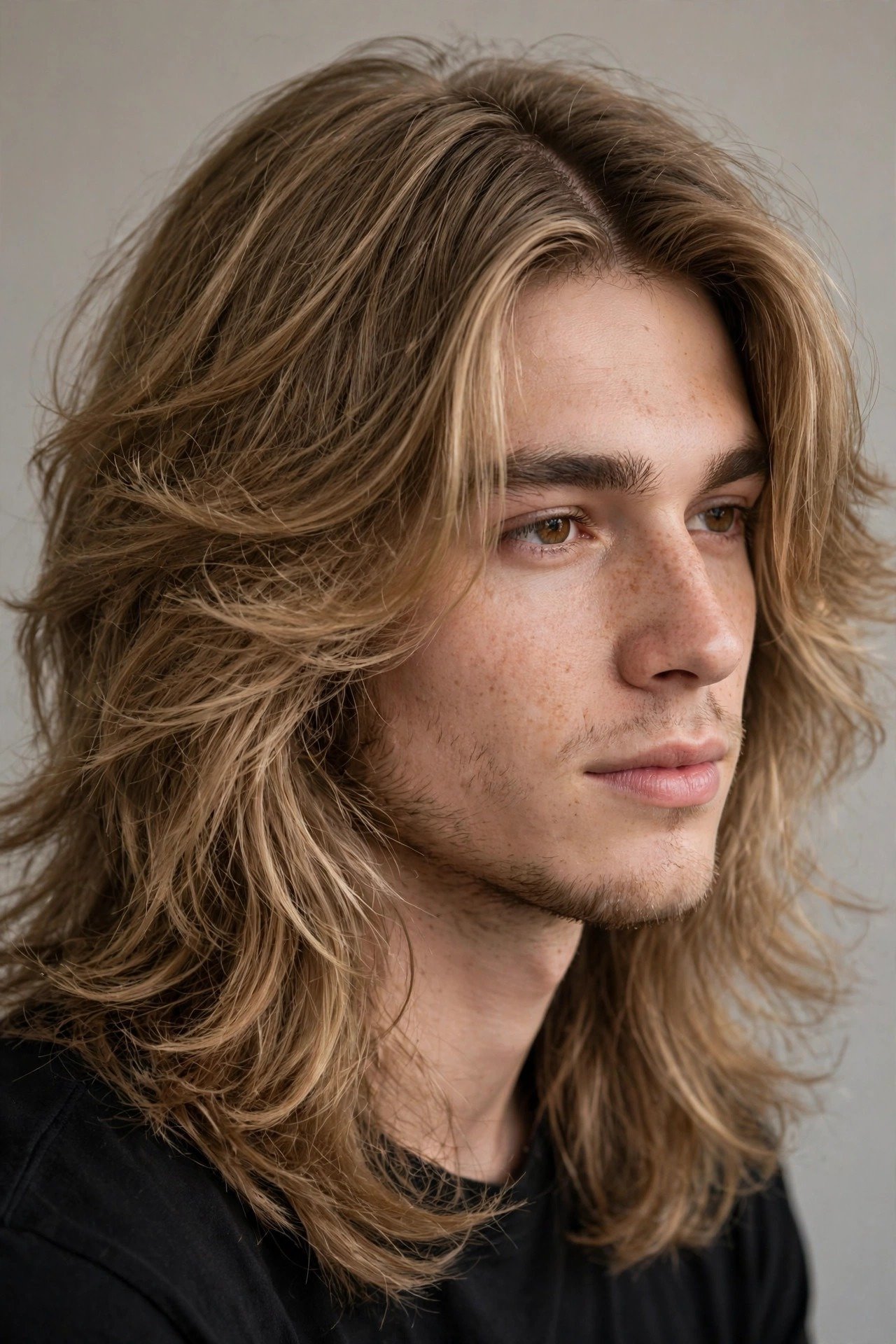
The grown-up evolution of e-boy curtains: a center part with long, airy layers that fall to either side of the face. In 2026 the version that works keeps the part soft and the layers blended — no harsh 90s wings.
Who it suits: Symmetrical oval and oblong faces; medium to long hair (5–7 inches on top). Fantastic for wavy hair, where the natural bend does half the styling for you. Avoid if your face is very round — the side fall can widen it.
Barber script: “Grow the top to 5–6 inches, long layers starting at the cheekbones, center-part-friendly with no hard part line cut in, texturized ends, sides blended long — not faded.”
Styling (8 minutes): Part damp hair in the center with a comb. Apply a golf-ball of mousse, then blow-dry each side away from the part using a round brush or your fingers, rolling the ends under slightly. Tuck the front pieces behind the ears once dry for that effortless finish.
Products: mousse, light cream, flexible hairspray. Maintenance: dust the ends every 8–10 weeks; this is a grow-out-friendly style, so trims are about health, not shape.
Mistake to avoid: parting wet hair off-center out of habit — a crooked part ruins the symmetry this style depends on. Train the part for two weeks and it will fall naturally.
Pro tips & variations: Train a stubborn part by parting it wet, then placing two bobby pins flat along the part line while it air-dries — 30 minutes sets the memory. Variation: tucking one side behind the ear while leaving the other loose gives an asymmetric, editorial feel that photographs well. If your face is oblong, ask for the layers to start higher — at the cheekbones rather than the jaw — because the extra width at the sides visually shortens a long face.
4. Fluffy Taper Fade
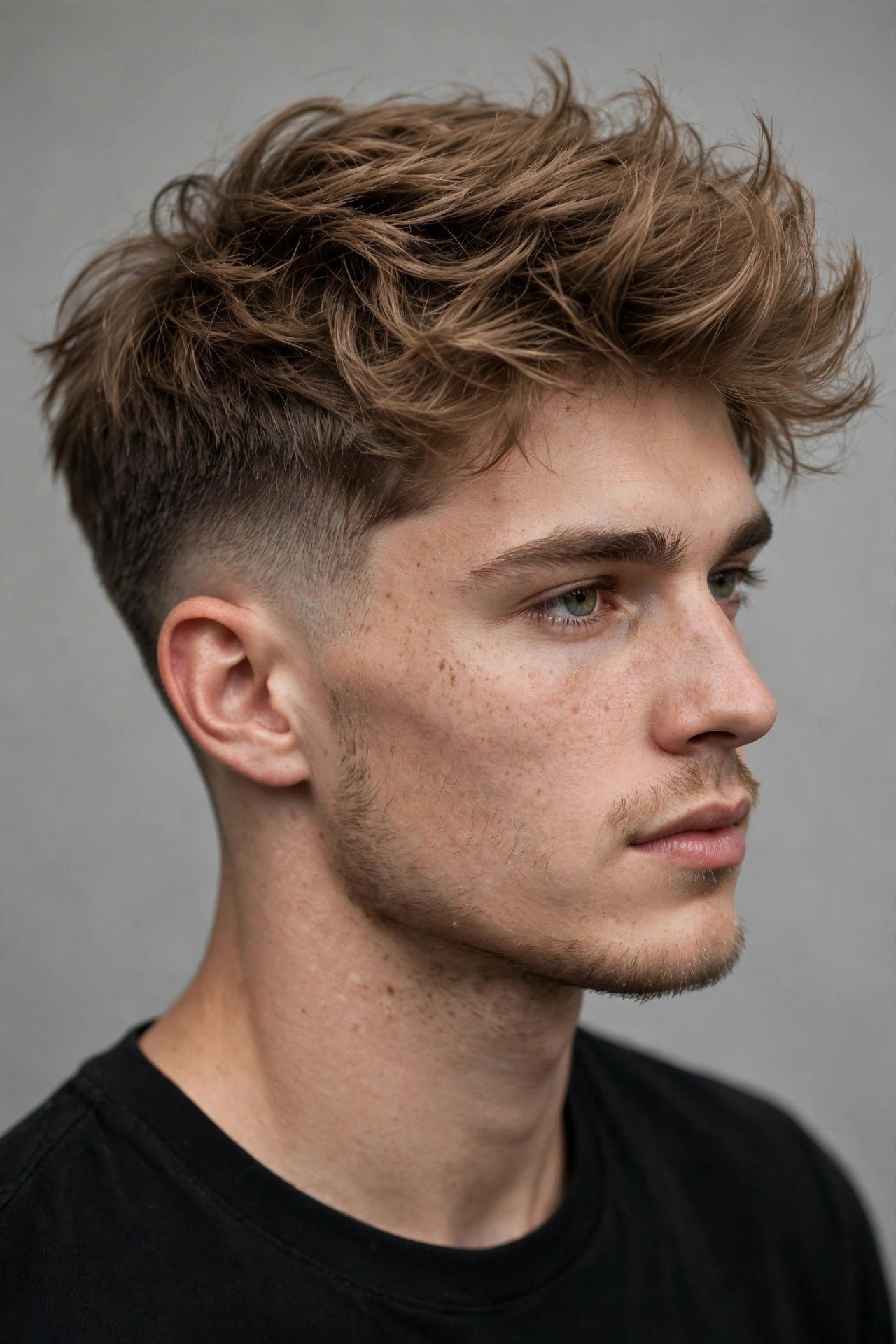
The office-safe fluffy: all the airy volume on top, with a clean low taper keeping the neckline and sideburns sharp. It reads polished from the side and soft from the front — the best of both worlds for guys who need to look groomed at work.
Who it suits: Every face shape; the taper slims round faces while the volume adds height. Ideal first fluffy cut for skeptics, because the tidy sides make the top feel less risky.
Barber script: “Low taper fade — keep it soft, not skin — with 3–4 inches of textured length on top, point-cut ends, fringe forward. Blend the taper into the top with no visible line.”
Styling (6 minutes): The fastest routine here: mousse at the roots, rough-dry with fingers directing everything forward, texture powder at the crown. The taper does the “clean” work, so the top can stay deliberately undone.
Products: mousse, texture powder. Maintenance: taper touch-up every 2 weeks (many barbers offer a discounted neckline cleanup); top trim every 5 weeks. Compare with a broccoli cut if you want the same idea pushed to maximum volume.
Mistake to avoid: asking for the taper too high or too skin-tight — a mid or high skin fade against a fluffy top creates a harsh disconnect that fights the soft aesthetic.
Pro tips & variations: Language matters: say ‘taper’ not ‘fade’ if you want it soft — many barbers hear ‘fade’ and go skin-tight by default. Variation: keep the top at 4 inches and wear it swept to the side for a smarter finish, or forward and textured for weekends — same cut, two personalities. Between appointments, a neckline cleanup (often $10–15) keeps the taper looking fresh for an extra two weeks without paying for a full cut.
5. Fluffy Curly Top
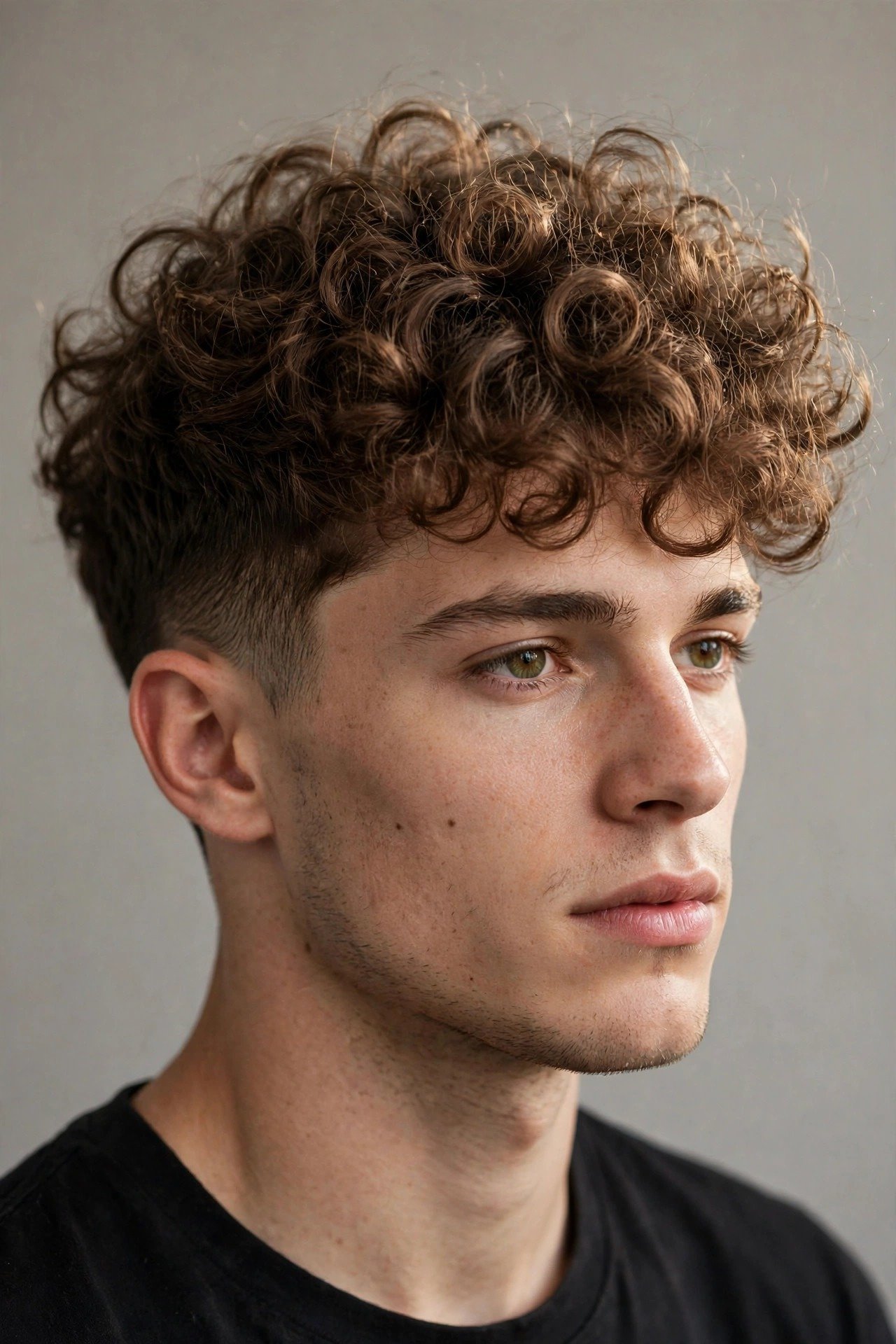
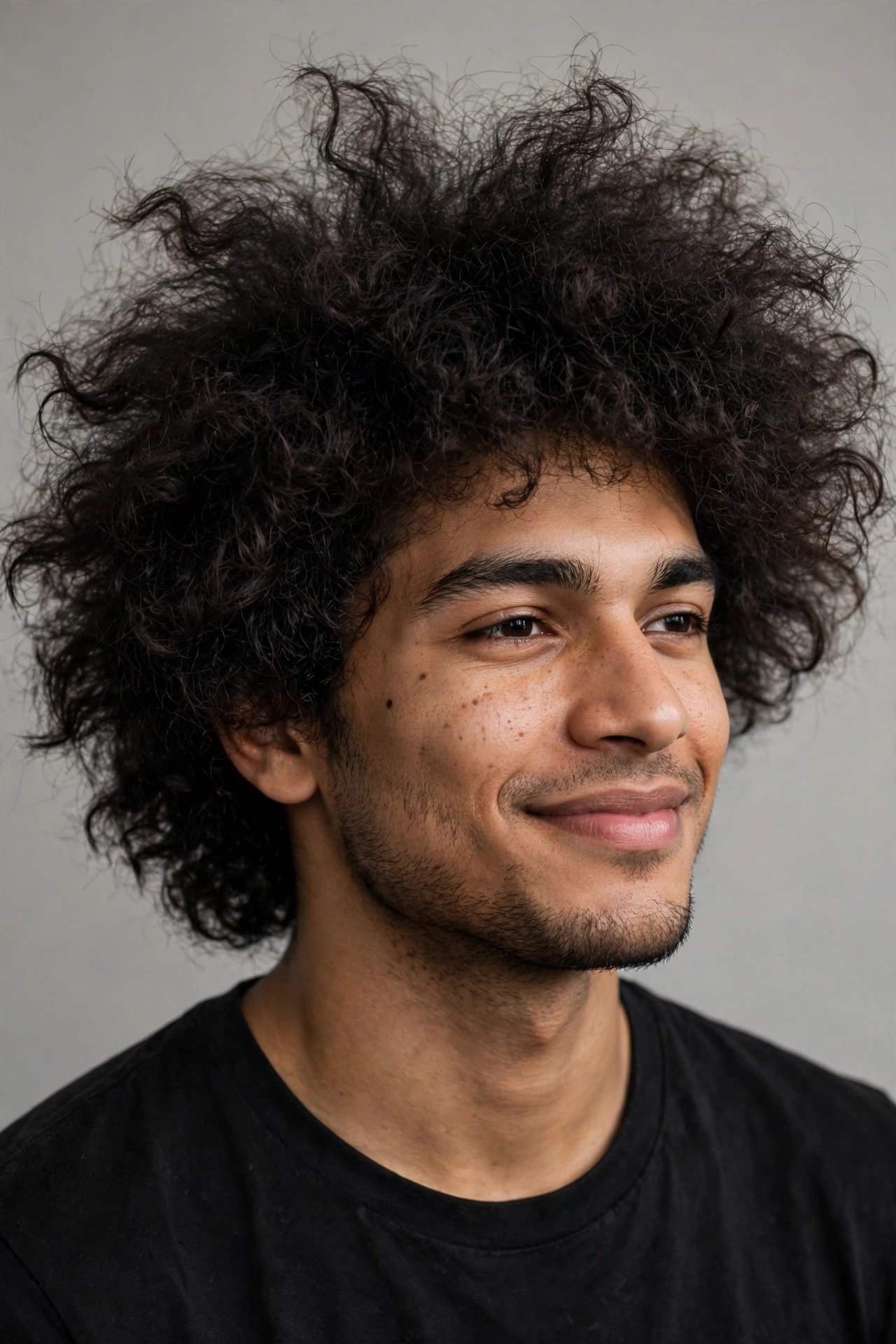
For natural curls and waves (2B–3A), “fluffy” means defined, separated curls with air between them instead of a solid curly mass. The cut removes interior bulk so each curl can spring independently — the difference between a helmet and a halo.
Who it suits: Wavy to curly hair types; the curl pattern does the volumizing work. Works on most face shapes — keep sides tight on round faces, let them breathe on narrow ones.
Barber script: “I want to keep my curls but remove the bulk — thin the interior, shape the silhouette round, keep 3–4 inches of curl on top, taper the sides. Cut it dry or stretched so you see the true spring.”
Styling (10 minutes): On soaking-wet hair, apply curl cream then a light gel using the “praying hands” method. Diffuse on low heat, hovering rather than scrunching aggressively. Once fully dry, fluff the roots with an afro pick — this is the step that creates the airy separation.
Products: curl cream, light hold gel, diffuser attachment. Maintenance: trim every 6–8 weeks; deep-condition weekly because thinned curly hair dries faster.
Mistake to avoid: brushing dry curls — it destroys definition and creates frizz instead of fluff. Finger-fluff only, and only at the roots.
Pro tips & variations: ‘Squish to condish’ — scrunching conditioner into soaking-wet curls — pushes moisture into the hair shaft and is the single biggest upgrade for fluffy curls. Variation: for maximum volume, pick the roots out with an afro pick once fully dry; for definition, skip the pick and let the curls clump naturally. Schedule a deep-conditioning mask weekly — thinned curly hair loses moisture faster than unthinned hair, and dry curls frizz instead of fluff.
6. The Fluffy Blowout
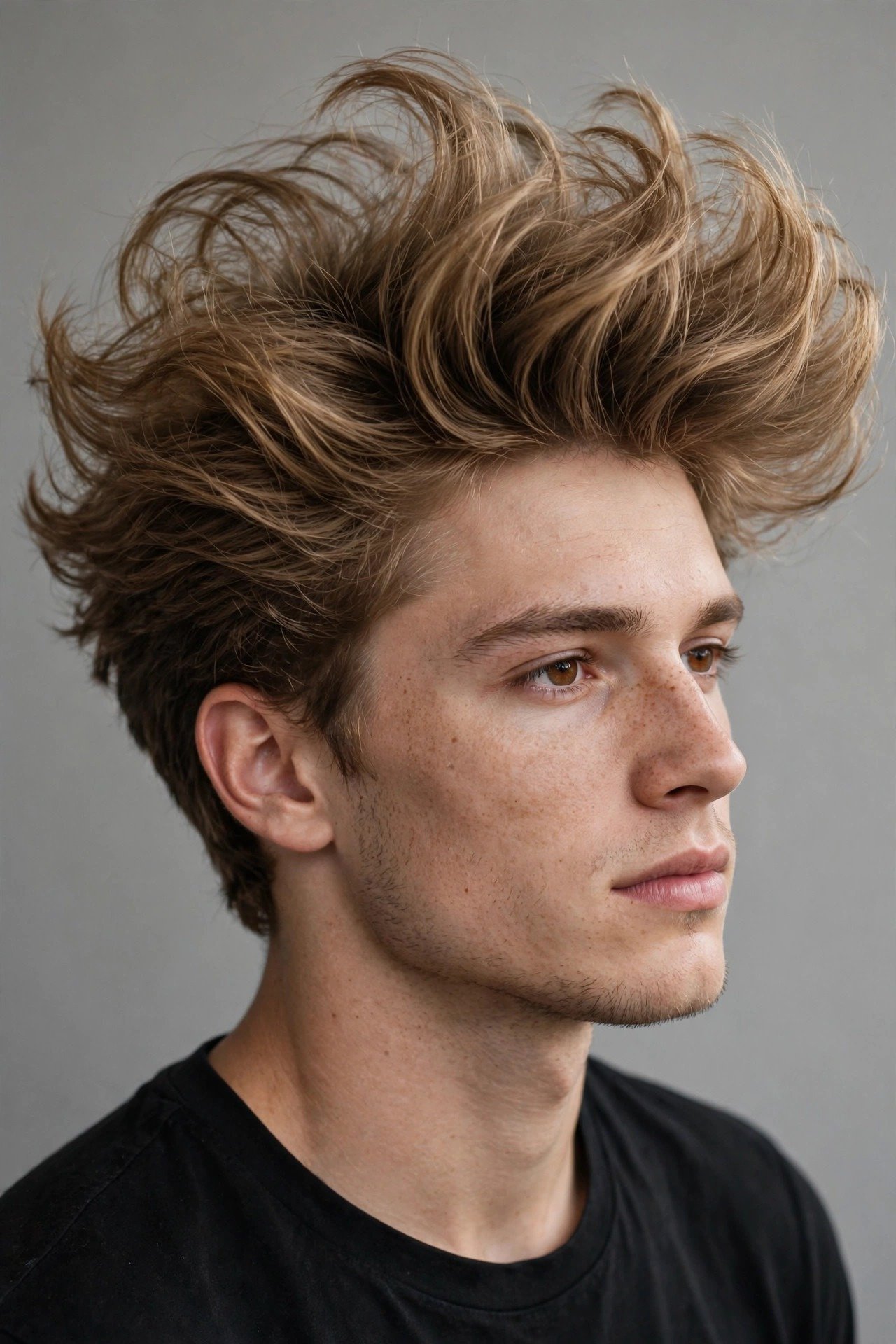
This is a styling achievement more than a specific cut — any 3–5 inch textured top can become a fluffy blowout with the right dryer technique. Hair is lifted to maximum root volume and swept back and up, giving that fresh-from-the-salon fullness that photographs incredibly well.
Who it suits: Medium to thick straight or wavy hair; oval, oblong, and square faces. The height elongates round faces beautifully. Fine hair can pull it off but needs a strong pre-styler and will not hold past the afternoon without hairspray.
Barber script: “Four to five inches on top with long layers, weight removed at the crown so it lifts, sides scissor-cut to blend — I want to blow it back, not forward.”
Styling (12 minutes): Apply heat protectant and a volumizing mousse to damp hair. Using a round brush, blow-dry sections upward and backward, rolling the brush at the roots for lift. Over-direct everything — dry it bigger than you want it, because it settles 20%. Finish with flexible hairspray from 10 inches away.
Products: heat protectant, volumizing mousse, round brush, flexible hairspray. Maintenance: trims every 5–6 weeks; a blowout-friendly cut grows out well since length is the point.
Mistake to avoid: blow-drying without a pre-styler — naked hair goes flat in an hour, while mousse-treated hair holds the lift all day.
Pro tips & variations: Over-direct everything: dry each section 20% bigger and higher than your target, because hair settles as it cools — what looks perfect at 8am looks flat by 10. Variation: a deep side-part blowout gives a more dramatic, swept silhouette for evenings out. Second-day refresh: flip your head upside down, blast the roots with the dryer for 60 seconds, add texture powder — three minutes back to full volume without a full restyle.
7. Fluffy Wolf Cut
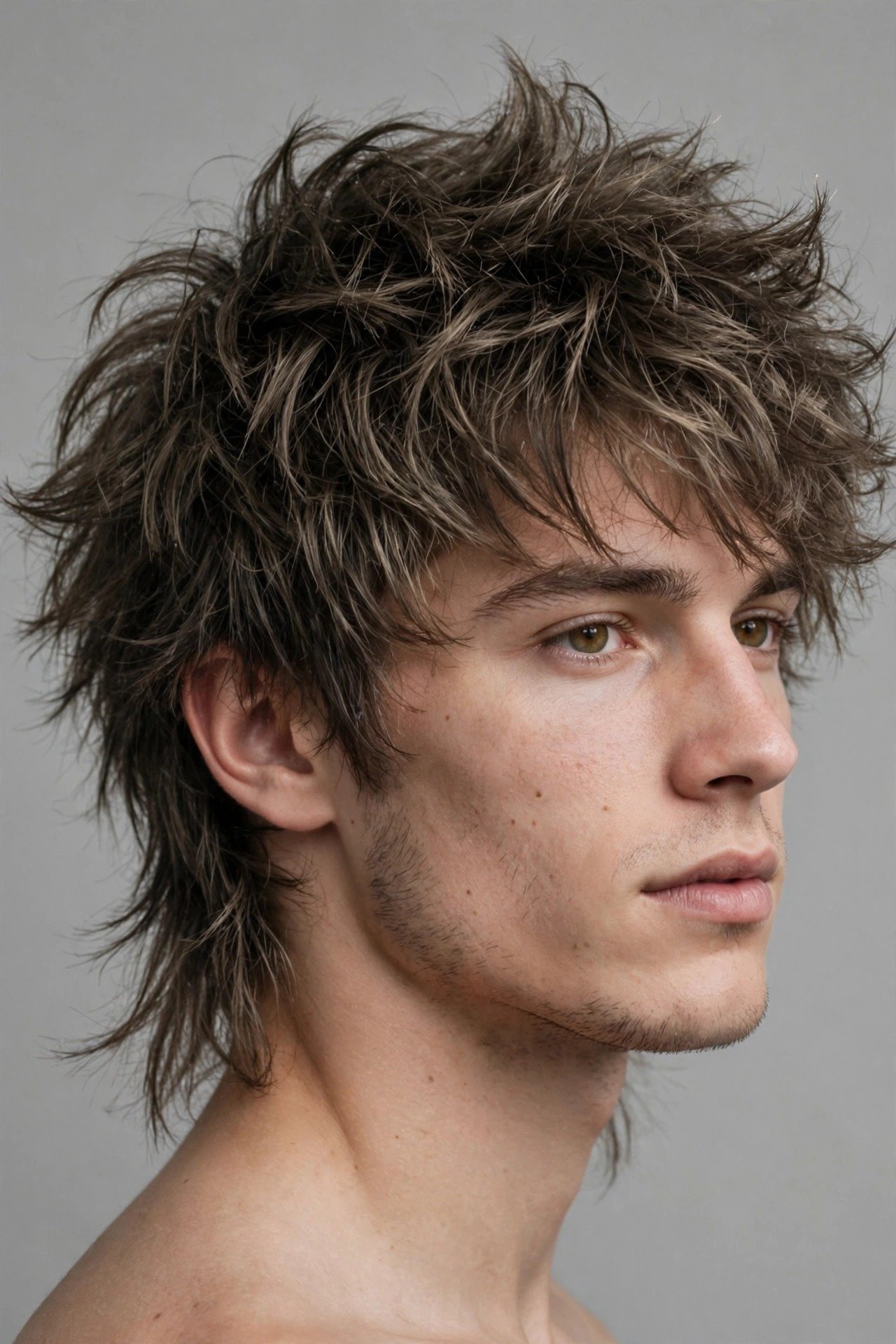
The wolf cut’s choppy, rockstar layers are a natural fluffy vehicle: short, voluminous crown layers exploding into longer, wispy ends. In 2026 the men’s version is tamer than the TikTok extreme — think “expensive shag” rather than costume.
Who it suits: Thick, wavy to straight hair with natural body; oval and heart faces. The crown volume adds width where narrow faces need it. Avoid on very fine hair — the heavy layering can make it look sparse.
Barber script: “Wolf cut: short disconnected layers through the crown for volume, longer perimeter length to the nape, heavily texturized ends, curtain-ish fringe. Keep it wearable — not a mullet.”
Styling (8 minutes): Sea salt spray on damp hair, then diffuse or rough-dry while scrunching. The layers create the shape; your job is just to encourage separation. A tiny amount of matte paste on the crown pieces adds deliberate piece-iness.
Products: sea salt spray, matte paste, diffuser. Maintenance: reshape every 6 weeks — wolf cuts grow out shaggy-fast and cross into mullet territory without trims. See also the modern shag for men for a less extreme take on the same idea.
Mistake to avoid: over-layering fine hair — ask the barber to keep the layers long and blended rather than short and choppy if your density is below average.
Pro tips & variations: The crown layers are the engine of this cut — if they grow out, the whole silhouette collapses toward a mullet, so book reshaping every 6 weeks religiously. Variation: the ‘soft wolf’ keeps the perimeter a length longer and the crown layers less disconnected — same energy, half the drama, and it grows out far more gracefully. If your hair is fine, ask for the layers to be cut longer and blended rather than short and choppy, which can expose the scalp.
8. Fluffy Side Part
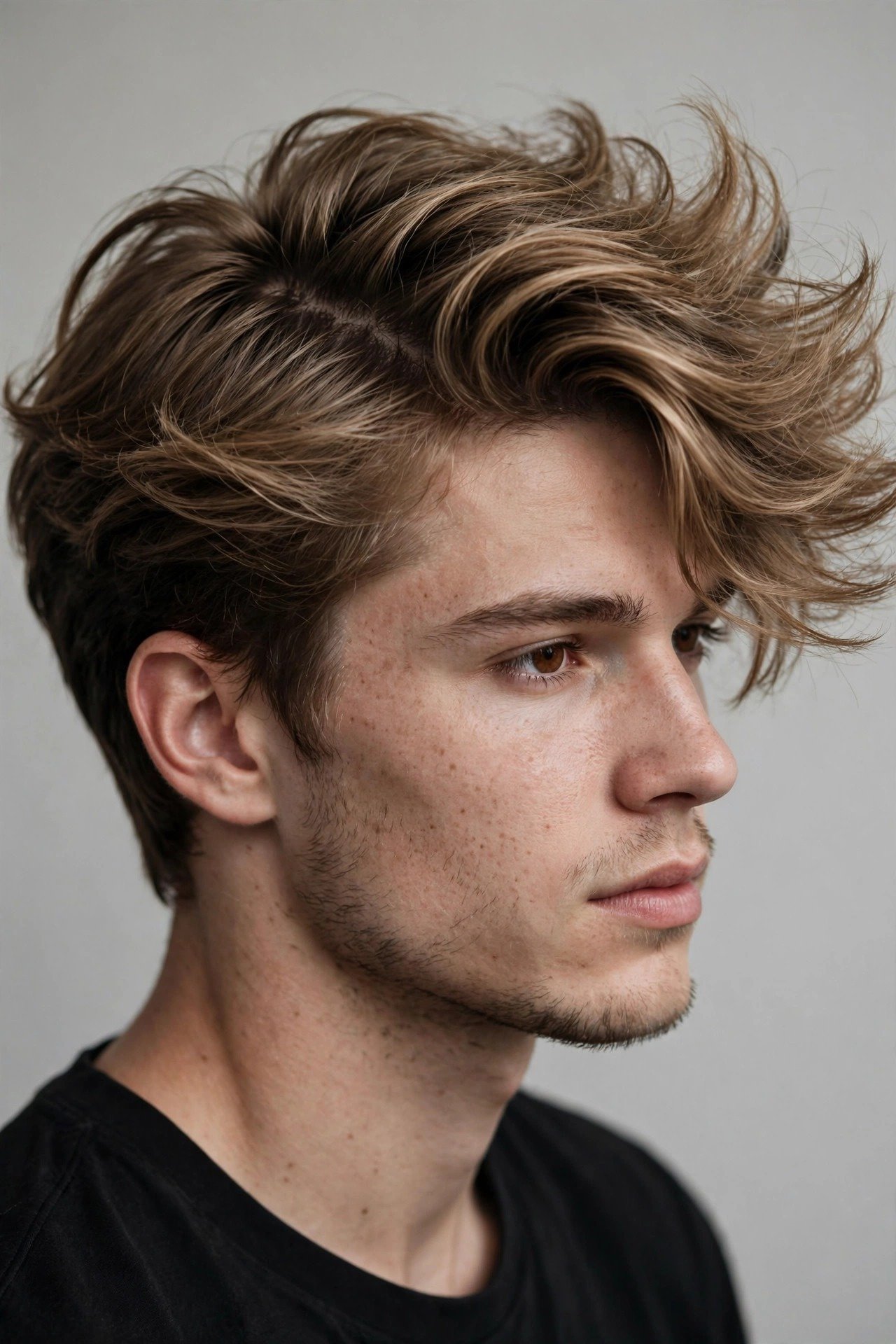
Proof that “classic” and “fluffy” are not opposites: a soft side part with lifted, airy volume instead of the plastered-down Mad Men version. The part is finger-made, not razor-sharp, and the top has real movement.
Who it suits: The most universally flattering style here — works on every face shape and looks appropriate in any setting from weddings to job interviews. Great for straight and wavy hair.
Barber script: “Classic side part length — 3 to 4 inches on top — but cut with texture and soft layers, tapered sides, no hard part shaved in. I want to wear it soft and voluminous.”
Styling (7 minutes): Create the part with your fingers on damp hair. Blow-dry the top up and over to the side for volume, then let it fall naturally. A pea of matte paste smooths the part line without gluing it down.
Products: mousse or volumizing spray, matte paste. Maintenance: trim every 4 weeks to keep the part area tidy; this style shows overgrowth fastest around the ears.
Mistake to avoid: combing it wet and flat — the whole point is airiness, so fingers and dryer, never a fine-tooth comb.
Pro tips & variations: Place the part above the arch of your eyebrow, not at the temple — too far to the side looks severe, too central reads as a failed middle part. Variation: a looser, finger-made part looks modern; a comb-defined part looks classic — switch between them with the same cut depending on the occasion. Product cocktail: mousse for the blow-dry to build the airiness, then a pea of matte paste just along the part line to keep it defined without stiffness.
9. Fluffy Messy Bedhead
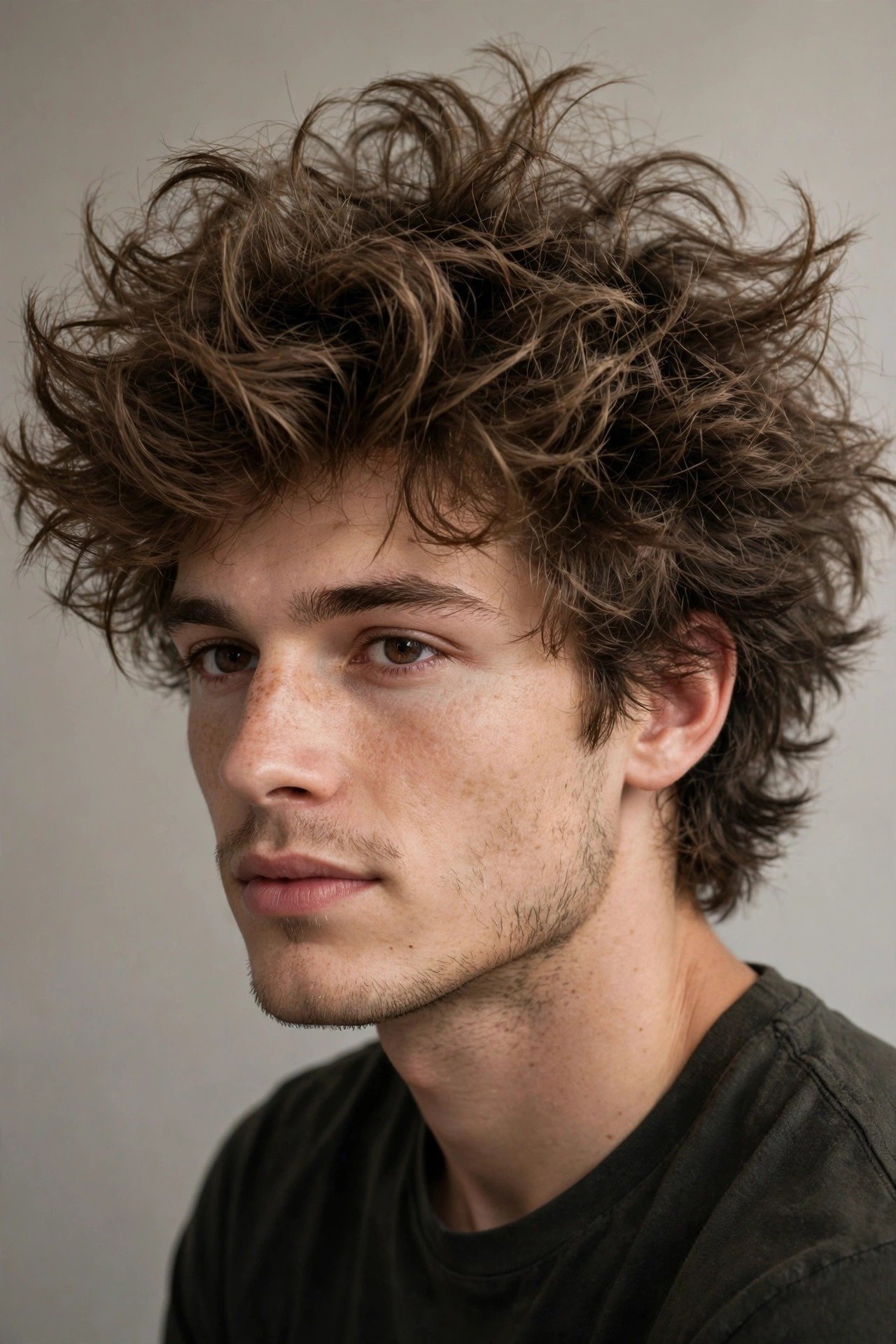
The “I woke up like this” style that actually takes 8 minutes: deliberately undone texture with volume in every direction. The cut underneath is a uniform textured crop — the messiness is 100% styling, which means it is also the most forgiving grow-out on this list.
Who it suits: Guys who hate fussy routines; straight to wavy hair. Works best on oval and square faces. If your hair is stick-straight and refuses to hold texture, this one will frustrate you — pick the blowout instead.
Barber script: “Uniform 3 inches on top, heavily point-cut, messy texture throughout, faded or tapered sides — cut it so it looks good pushed in any direction.”
Styling (8 minutes): Sleep is the pre-styler — seriously, second-day hair works best. Add texture powder at the roots, then push hair in alternating directions with your fingers. Twist a few random pieces for definition. Done; do not overthink it.
Products: texture powder, sea salt spray (for wash days). Maintenance: trim every 5 weeks; the style hides grow-out better than any other here.
Mistake to avoid: using too much product trying to “create” the mess — bedhead needs friction and dryness, not grease. Less is more.
Pro tips & variations: This style genuinely works better on second-day hair — freshly washed hair is too slippery to hold messy texture, so on wash days add extra texture powder to compensate. Variation: sea salt spray gives a beachier, separated mess; texture powder gives a drier, more matte bedhead — try both finishes and pick yours. If it ever starts looking ‘done,’ you’ve overworked it — the fix is messing it up more, not reaching for more product.
10. Fluffy Long Top, Short Sides
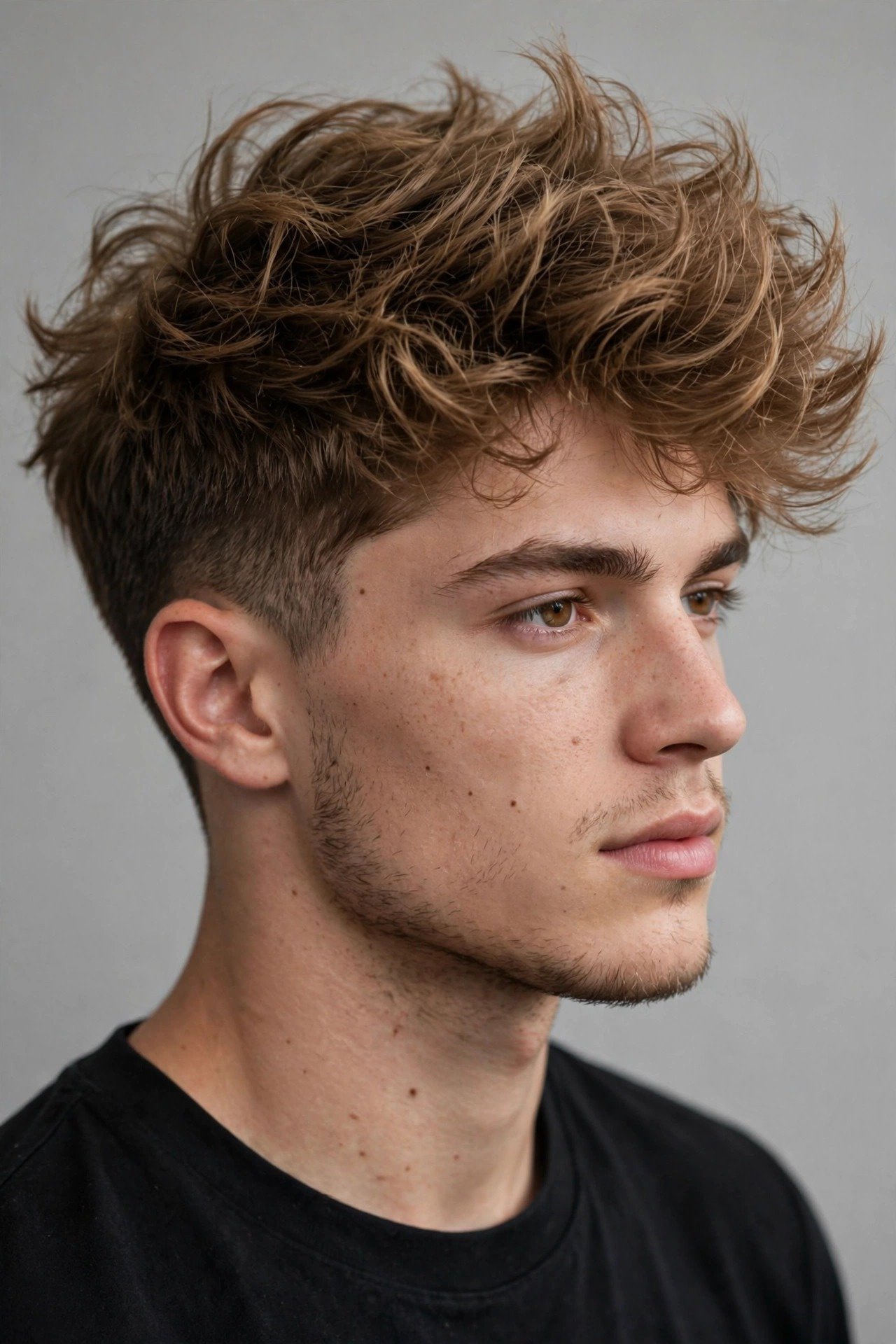
Maximum contrast, minimum fuss: 4–6 inches of fluffy length up top against clean, short sides. The sides do the “groomed” talking while the top does the “personality” talking — a combination that works in every room.
Who it suits: Thick hair that needs the sides controlled; square and oval faces. The vertical emphasis flatters shorter faces. Fine-haired guys should keep the top at 4 inches max or the contrast looks unbalanced.
Barber script: “Leave 5 inches on top with interior layers for movement, take the sides to a #3–#4 with a soft blend — not a skin fade. Texturize the top heavily so it sits fluffy, not flat.”
Styling (8 minutes): Mousse through damp roots, blow-dry upward with fingers for lift, then let the length fall naturally forward and to the side. Finish with a light cream to tame flyaways without killing volume.
Products: mousse, light styling cream. Maintenance: sides need cutting every 2–3 weeks to maintain the contrast; top trim every 6–8 weeks.
Mistake to avoid: growing the sides out past a month — without the contrast, it stops being a style and starts being “needs a haircut.”
Pro tips & variations: The magic ratio is roughly 2:1 — a 5-inch top against a #3–#4 side keeps the contrast sharp without disconnecting. Variation: wear the length swept to the side for a smarter look, or forward and textured for edge — the cut supports both. Grow-out plan: when the sides hit the one-month mark, either re-cut them or commit to growing everything into a flow — the in-between stage flatters no one, so decide early.
11. Fluffy E-Boy Curtains (2026 Refresh)
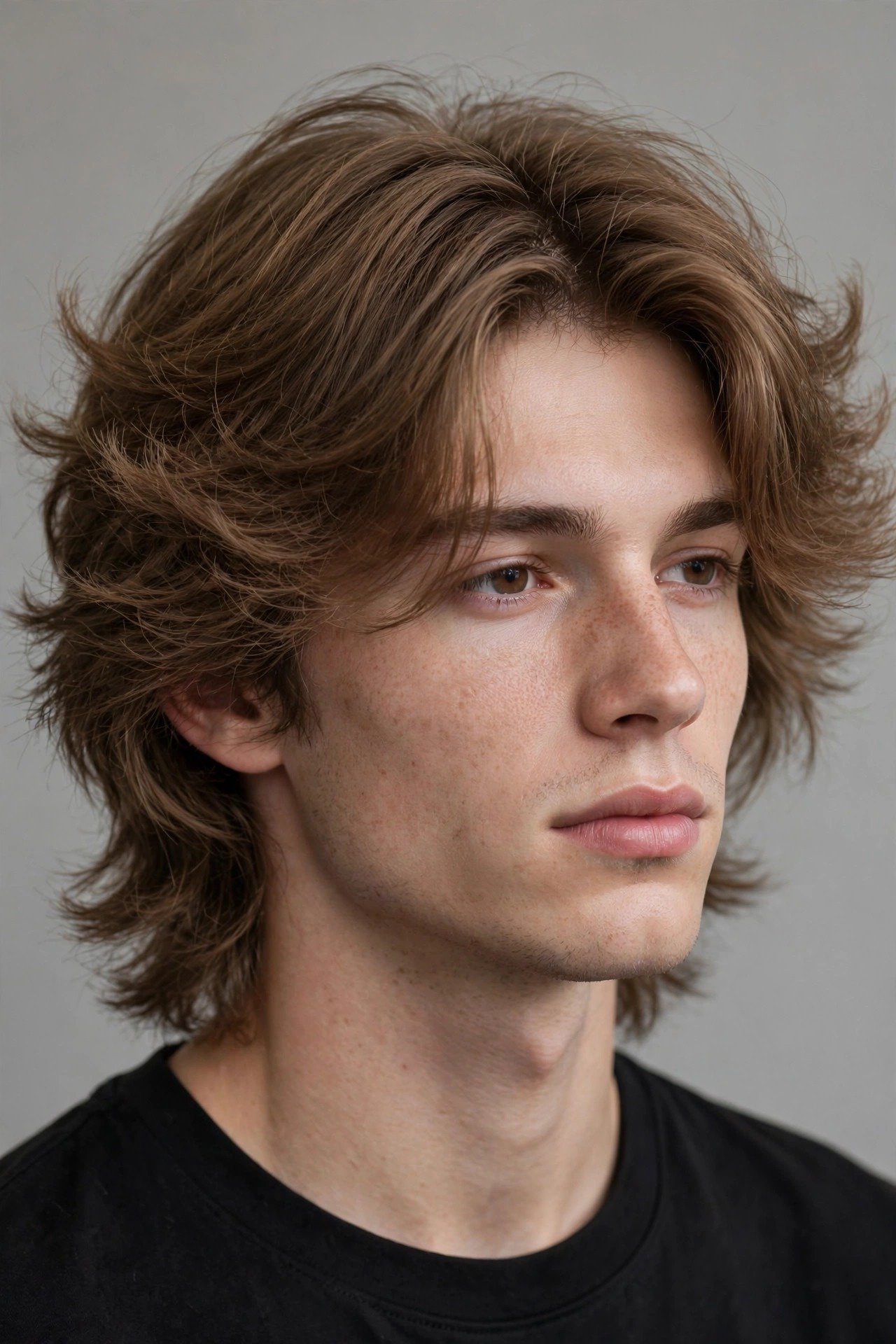
The 2020 TikTok phenomenon, redeemed: the 2026 version keeps the face-framing curtains but adds real layering, healthier ends, and softer texture — less “stringy middle part,” more “expensive curtain layers.” It remains the defining fluffy haircut of the Gen-Z era.
Who it suits: Under-30s primarily, though the refreshed version works at any age with the layers kept neat; oval, oblong, and diamond faces. Needs at least 4–6 inches of front length.
Barber script: “Curtain layers: 5–6 inches in front, face-framing layers from the cheekbones down, soft center part, textured ends, back and sides blended to support the front — no disconnection.”
Styling (9 minutes): Center-part damp hair. Blow-dry the front sections forward and down with a round brush, then sweep each side outward so the curtains frame the face. A touch of cream keeps the face-framing pieces from frizzing.
Products: heat protectant, light cream, round brush. Maintenance: trim the face-framing layers every 6–8 weeks; they lose their shape fastest. For the beachier cousin of this look, check surfer hair for men.
Mistake to avoid: flat-ironing the curtains pin-straight — the 2026 version lives on soft bend and air, not glassy flatness.
Pro tips & variations: Curtain training takes about two weeks: part wet, blow-dry the fronts forward-then-out, and the hair starts falling into place on its own. Variation: an off-center part (just an inch off dead center) looks more natural and less ‘2020’ than a razor-center part. The face-framing layers lose their shape fastest — a 10-minute curtain trim between full cuts keeps them sharp without resetting the whole style.
12. Fluffy Wavy Crop
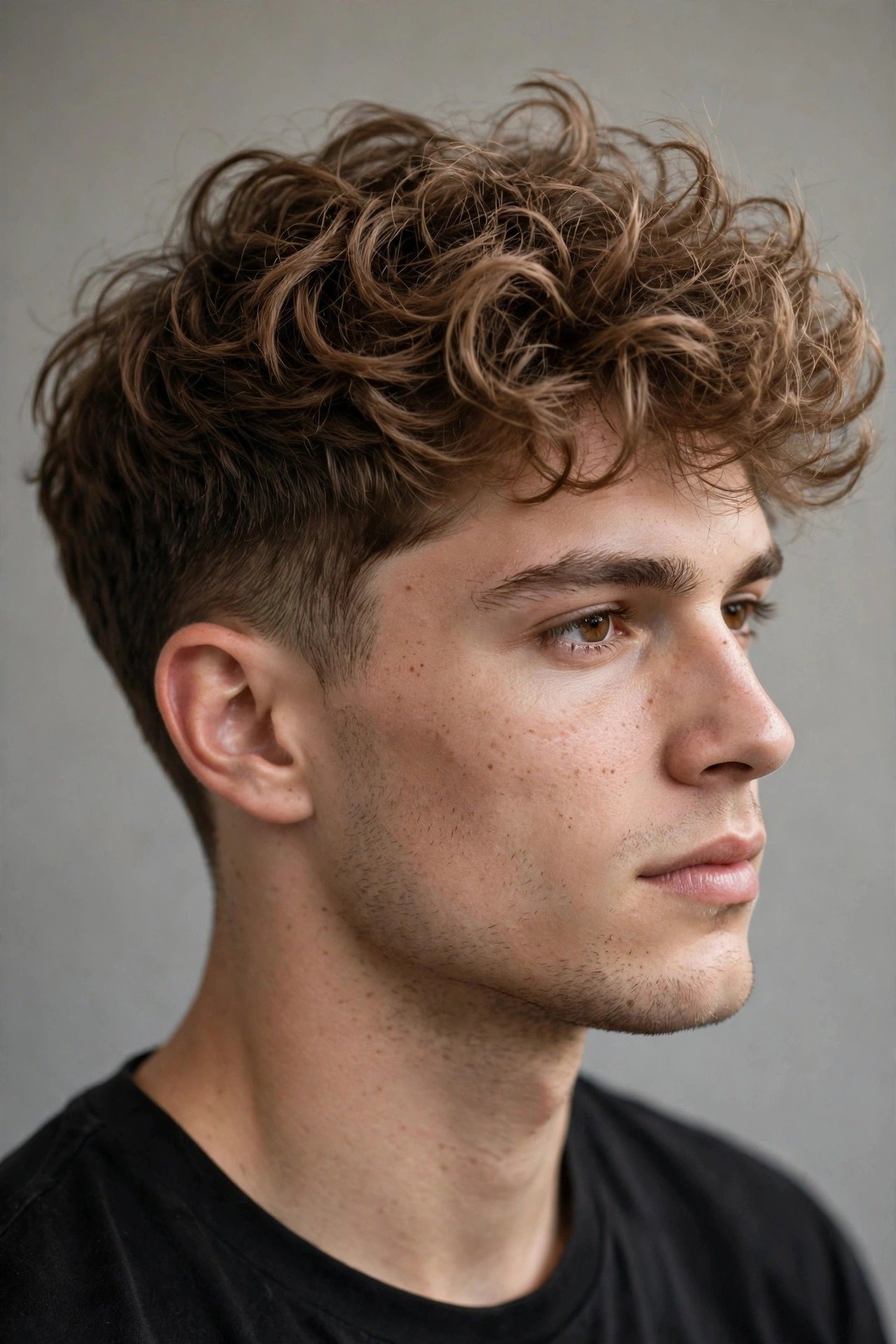
A shorter, sharper take on fluff: 2–3 inches of wavy texture on top with the natural wave doing the volumizing. It delivers the airy aesthetic with half the styling time of the longer styles — the low-maintenance entry point to fluffy hair.
Who it suits: Naturally wavy hair (the wave is non-negotiable here); oval, square, and diamond faces. Great for athletes and guys who want the look without a 10-minute routine.
Barber script: “Textured crop, 2.5 inches on top, point-cut to enhance the natural wave, mid taper on the sides. Cut the top with the wave pattern, not against it.”
Styling (4 minutes): Sea salt spray on damp hair, scrunch, and air-dry or diffuse for 2 minutes. That is genuinely the whole routine — the cut carries it.
Products: sea salt spray. Maintenance: trim every 3–4 weeks; short textured cuts lose their shape fastest.
Mistake to avoid: combing it neat — a wavy crop styled flat looks like a completely different (and much more boring) haircut.
Pro tips & variations: Enhance what nature gave you: scrunch sea salt spray into damp hair and let the waves form — combing them out defeats the cut. Variation: a slightly longer fringe (3 inches) worn forward gives a softer look; a shorter one (2 inches) reads sharper and more minimal. Choose this over the longer fluffy styles if your mornings are rushed — it’s the same airy aesthetic at half the styling time and a quarter of the maintenance.
13. Fluffy Textured Quiff
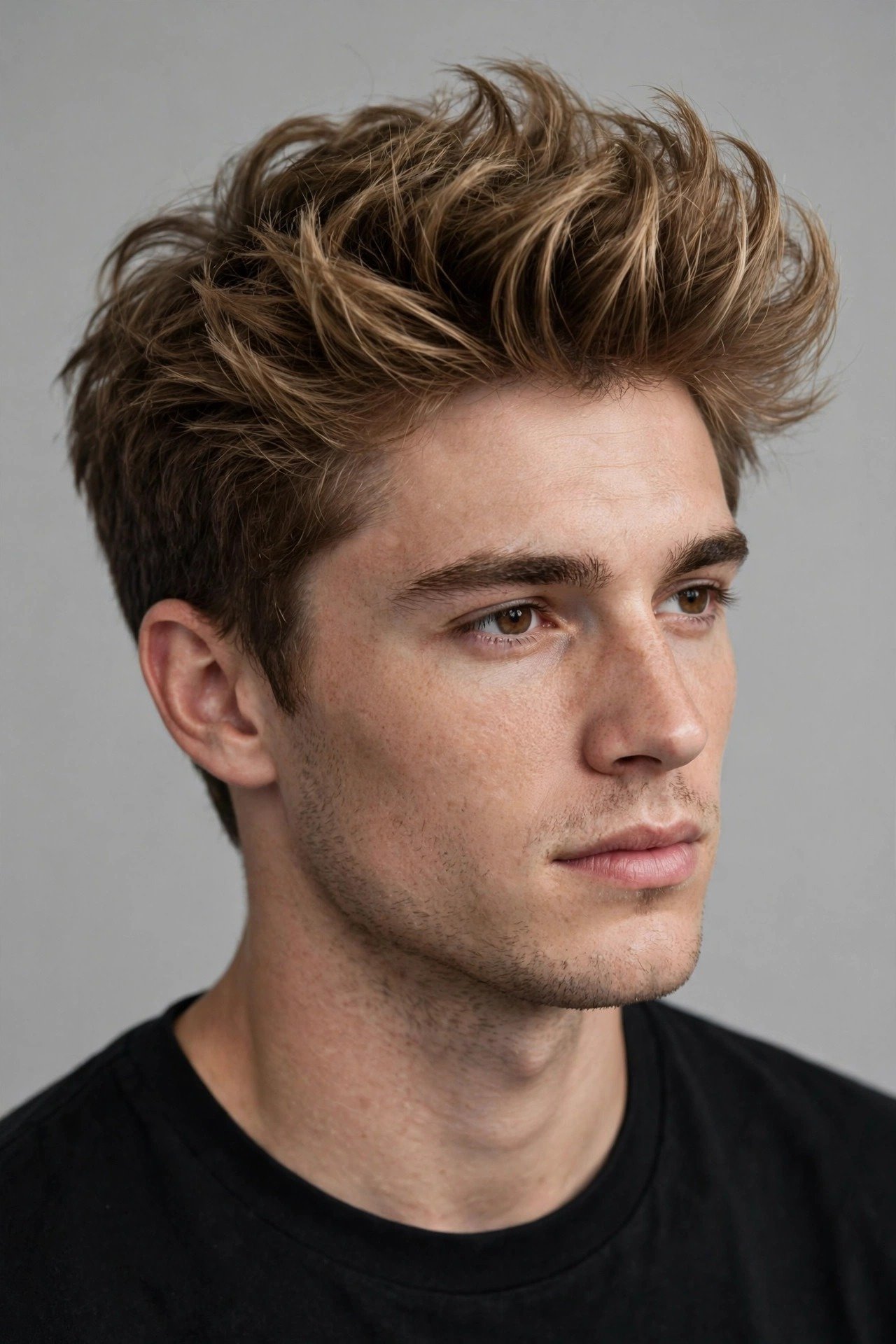
The quiff, deconstructed: instead of the stiff, sculpted 2015 quiff, the 2026 version is lifted, airy, and touchable, with visible separation through the front. All the height, none of the helmet.
Who it suits: Round and square faces gain flattering vertical lines; straight to wavy hair with medium density. Needs 3–4 inches of front length minimum.
Barber script: “Textured quiff: 4 inches in front graduating shorter toward the crown, interior weight removed so it lifts, sides tapered. I want it soft and piece-y, not a solid wall.”
Styling (9 minutes): Apply mousse to damp roots. Blow-dry the front up and back with fingers, over-directing for height. Once dry, pinch the front into 4–5 defined pieces with a tiny amount of matte paste.
Products: mousse, matte paste, heat protectant. Maintenance: trim every 4 weeks; the graduation grows out visibly. For the classic polished take, compare messy quiff variations.
Mistake to avoid: using strong-hold gel — it kills the airiness that separates this from the dated stiff quiff.
Pro tips & variations: Dry the roots in the opposite direction of the final style first — forward, then back — because double-direction drying builds twice the root lift of a single pass. Variation: a forward-leaning quiff looks more modern and casual; a classic back-swept quiff looks dressier. In humidity, swap the matte paste for a humidity-resistant cream — paste alone surrenders to moisture by afternoon, while a resistant formula holds the lift through the day.
14. Fluffy Shaggy Layers
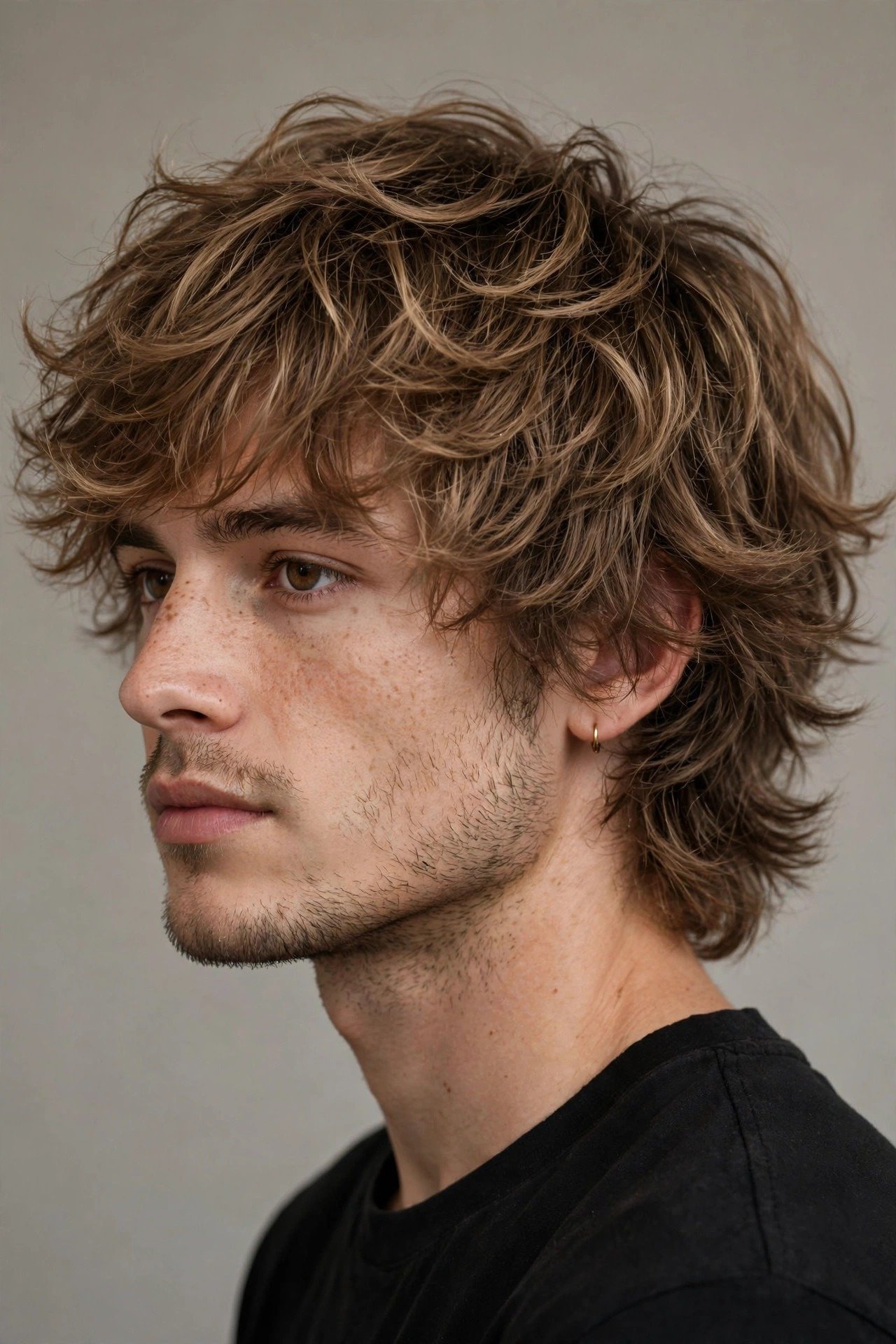
Longer, looser, rock-and-roll: 4–6 inches of soft shaggy layers all over, with the fluffy volume concentrated through the mid-lengths rather than just the crown. The most “effortless musician” silhouette on this list.
Who it suits: Thick, wavy hair with natural body; oval, oblong, and heart faces. The layering removes the bulk that makes long thick hair unmanageable.
Barber script: “Long shaggy layers, 5–6 inches overall, layers starting at the cheekbones, heavily texturized ends, natural perimeter — no fade, just cleaned-up edges.”
Styling (8 minutes): Leave-in conditioner on damp hair, sea salt spray, then rough-dry while shaking the roots. The layers fall where they want — let them.
Products: leave-in conditioner, sea salt spray. Maintenance: trim every 8–10 weeks; this style is designed to grow out gracefully.
Mistake to avoid: one-length growing without layers — without the layering, long thick hair goes triangular instead of fluffy.
Pro tips & variations: Ask for the layers to start at the cheekbones: higher layers create more movement, lower layers keep more weight — cheekbone is the sweet spot for most faces. Variation: add a curtain fringe to the shag for a face-framing upgrade without changing the cut’s character. Because this style lives on healthy ends, a leave-in conditioner is mandatory — shaggy layers with split ends look neglected rather than rock-and-roll.
15. Fluffy Broccoli Cut (2026 Update)
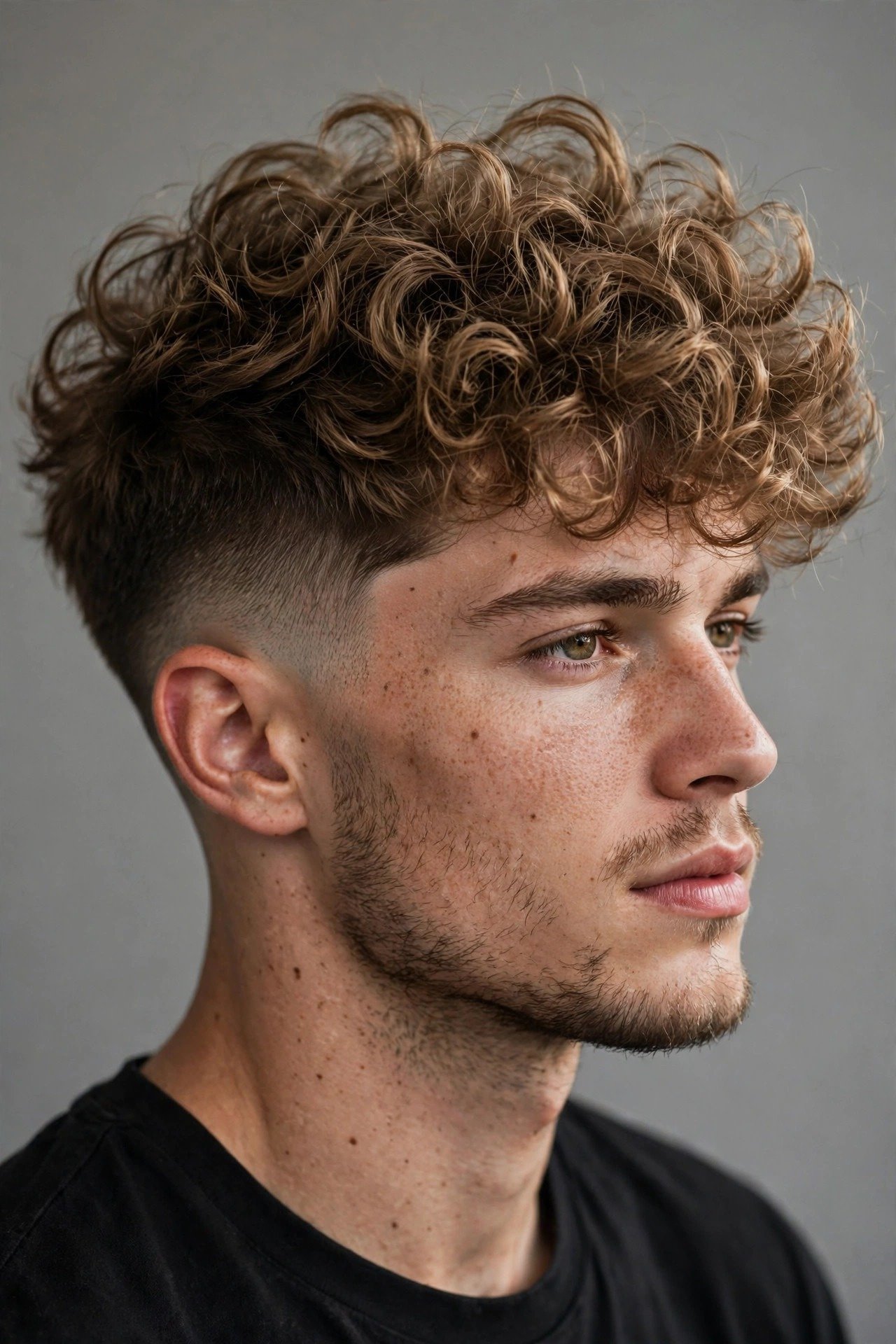
The meme cut, matured: the 2026 broccoli keeps the signature voluminous permed top but with a cleaner fade, better shape, and actual barbering. Done right, it is simply maximum fluff — the highest volume-to-effort ratio here if you perm it.
Who it suits: Straight hair that won’t hold texture on its own (the perm solves that); under-30s; round and square faces where the top volume adds balance.
Barber script: “Broccoli cut: perm the top for volume, keep 3–4 inches of permed texture, mid fade on the sides with a soft blend — I want the 2026 clean version, not the 2022 meme.”
Styling (5 minutes): The perm does 80% of the work: curl cream on damp hair, scrunch, air-dry or diffuse. Refresh curls on non-wash days with a water + leave-in spray mix.
Products: curl cream, leave-in conditioner spray, diffuser. Maintenance: perm refresh every 8–12 weeks; fade touch-up every 2–3 weeks.
Mistake to avoid: getting the perm too tight — ask for large rods and a loose perm; tight curls read dated, loose texture reads 2026.
Pro tips & variations: Rod size is everything: ask for the largest rods the stylist has and a loose, root-focused perm — tight curls read 2022, loose texture reads 2026. Variation: as the perm grows out (months 2–3), the texture relaxes into a wavy fluffy top that many guys prefer to the fresh perm. Between perms, a curl-refresh spray on non-wash days reactivates the pattern without a full re-wet, extending the style for weeks.
16. Fluffy Grown-Out Taper
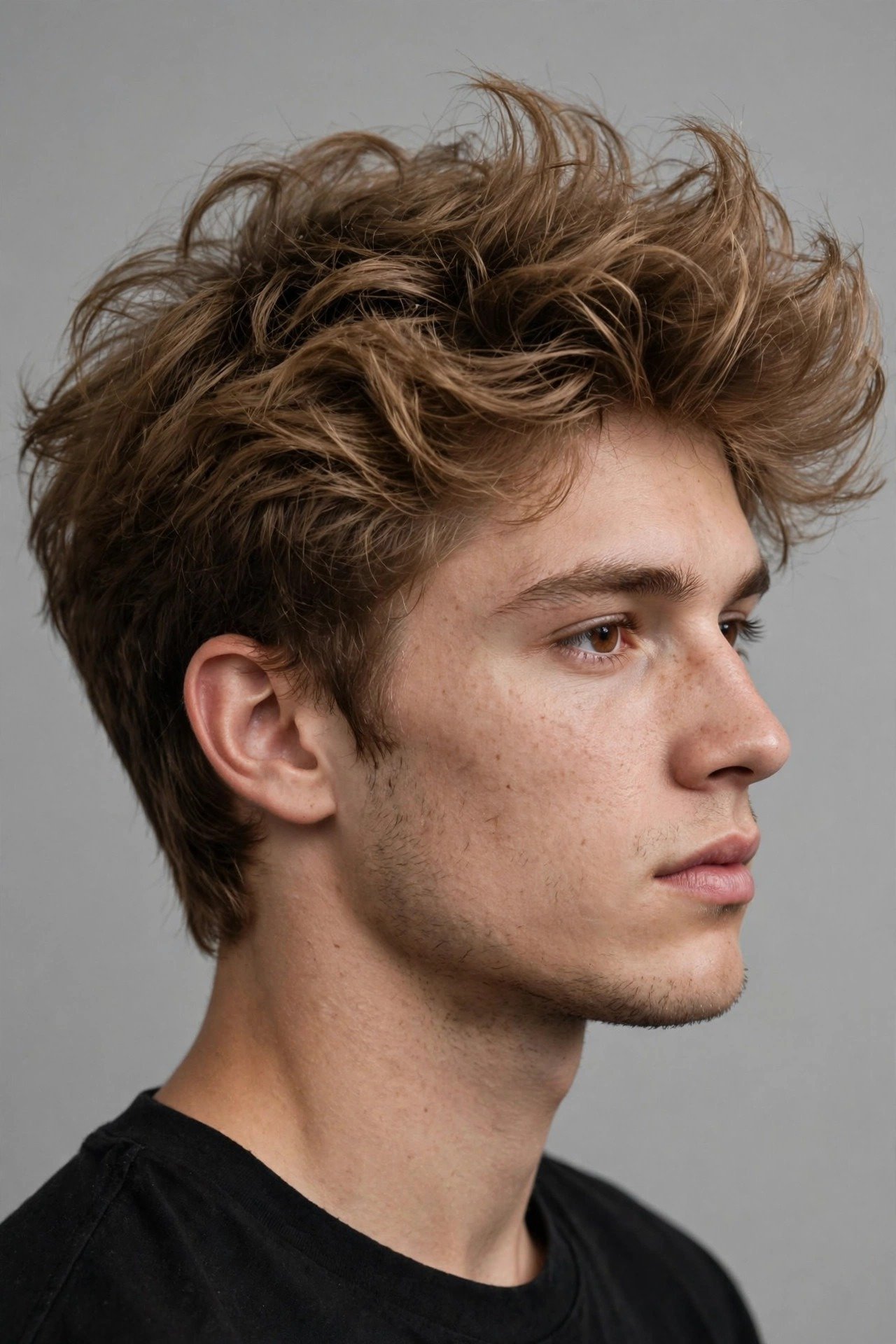
The intentional grow-out: a taper cut left to grow for 3–4 months becomes a soft, fluffy silhouette with natural weight and movement. This is the style for guys who started with a taper fade and decided to let it ride — proof that grow-outs can be a look, not a phase.
Who it suits: Anyone mid-grow-out with 4–6 inches on top; all face shapes. The grown taper keeps the neckline manageable while the top goes big.
Barber script: “I’m growing out my taper — clean up the neckline and edges only, dust the ends, thin the interior if it’s getting bulky. Don’t touch the length or the shape.”
Styling (8 minutes): Mousse at the roots, blow-dry with fingers for lift, arrange the length forward or to the side. Longer hair needs the root lift even more — length pulls volume down.
Products: mousse, light cream for ends. Maintenance: “dust and tidy” appointments every 6–8 weeks — neckline, ends, interior thinning, no reshaping.
Mistake to avoid: getting impatient and cutting it all off at month two — the fluffy grow-out hits its stride at months 3–4, right when most guys quit.
Pro tips & variations: The ‘dust and tidy’ appointment is your best friend: neckline cleaned, ends dusted, interior thinned — shape untouched. Book it every 6–8 weeks. Variation: change your styling direction (forward one month, swept the next) to make the same length feel like a new cut. The danger zone is month 2 — it looks awkward right before it looks great at month 3–4. Photograph it monthly; visible progress keeps you committed through the ugly phase.
Styling Routine, Products & Maintenance

The 10-Minute Fluffy Styling Routine
Every fluffy style on this list runs on the same foundation. Master this once and you can style any of the 16 cuts:
- Start damp, not wet. Towel-dry until hair is 60–70% dry. Sopping hair dilutes product; fully dry hair won’t take shape.
- Root product first. A golf-ball of volumizing mousse or a few sprays of thickening tonic, worked into the roots — never the ends. Roots create lift; ends just get weighed down.
- Heat protectant. Non-negotiable if you blow-dry daily. Spray from 6 inches away, mid-lengths to ends.
- Blow-dry with fingers. Medium heat, high airflow. Lift sections at the root and dry them standing up. Direct the fringe forward, the crown up. No brush — brushes smooth out the texture you’re building.
- Cool shot. Hit the finished shape with the dryer’s cool button for 15 seconds. Cool air “sets” the hydrogen bonds; this single step doubles how long the volume lasts.
- Texture powder at the crown. A small shake directly at the roots, then massage in. Instant grip and separation.
- Pinch and arrange. Fingers only: pinch random 1-inch sections for piece-y definition. Stop before it looks “done” — fluffy should look one step short of finished.
Best Products for Fluffy Hair (and What to Avoid)
Buy these: volumizing mousse (the single most important fluffy product — root lift without weight); sea salt spray (grit and separation for wash-day styling); texture powder (dry volume and oil absorption in seconds); matte clay or paste in pea-sized amounts (definition on the ends only); heat protectant spray; a light leave-in conditioner for the ends.
Avoid these: heavy waxes and oil-based pomades (they collapse airiness within hours); strong-hold gels (they create the stiff helmet look); silicone-heavy serums applied at the roots (they flatten volume — ends only, if at all); 2-in-1 shampoo-conditioners as your only wash (they coat hair and kill lift — use a proper volumizing shampoo).
For blow-drying technique that protects hair while building volume, hair-care fundamentals apply: moderate heat, keep the dryer moving, and never blast soaking-wet hair on high. Quality tools matter too — a dryer with adjustable heat and a cool-shot button, like the guides at ghdhair.com, makes the routine faster and less damaging.
Maintenance: Trims, Washing & Night Routine
Trims: textured tops every 4–6 weeks; tapers and fades need edge cleanups every 2–3 weeks; long shaggy styles can go 8–10 weeks. Book the next appointment when you leave the chair — fluffy cuts have a narrow “perfect” window.
Washing: 2–3 times per week max for most guys. Daily washing strips the natural oils that give fluffy hair its grip; second-day hair almost always styles better. On non-wash days, a rinse with water or a dry shampoo at the roots is enough.
Night routine: sleep on a satin or silk pillowcase (cotton creates friction and flattens volume overnight). For longer fluffy styles, a loose topknot or “pineapple” keeps the crown lifted while you sleep — take it down in the morning, shake, add texture powder, and you’re halfway styled.
Troubleshooting: When Fluffy Hair Goes Wrong
Flat by noon: the usual suspects are no mousse (naked hair can’t hold lift), too much conditioner at the roots (it weighs them down — condition mid-lengths to ends only), or touching your hair all day (every touch transfers oil and collapses volume). Fix the routine before buying new products. Greasy by 3pm: you’re either using too much product or the wrong product — switch heavy paste for texture powder, and keep a travel dry shampoo for a midday root refresh. Frizzy halo: add a pea of leave-in conditioner to the mid-lengths and always finish with the dryer’s cool shot — frizz is usually a moisture and heat-setting problem, not a product problem. One side flat: you sleep on it — switch sides, or loosely pineapple longer styles overnight. Hat hair: wear the beanie looser and further back, then revive with texture powder and a 30-second finger fluff. Every fluffy problem has a mechanical cause; find the cause and the fix is usually free.
Adapting the Routine: Fine, Thick & Curly Hair
Fine hair: use less of everything — half the mousse, a dusting of powder — and wash with a volumizing shampoo, because fine hair gets oily faster and oily roots murder volume. Keep the top at 3 inches max; longer fine hair goes stringy regardless of technique. Thick hair: the cut must include real interior thinning or no routine saves it — and budget extra drying time, because thick hair holds water and damp roots collapse. A leave-in conditioner keeps dense hair soft enough to style. Curly/wavy hair: swap the mousse-first routine for curl cream on soaking-wet hair, scrunch, diffuse, then pick the roots for the fluffy finish — the order matters because curls need moisture before lift. The universal truth across all three: the cut does 70% of the work, so match the barber script to your density before optimizing the routine.
Frequently Asked Questions
How do I get fluffy hair as a guy with straight hair?
Get a textured cut with interior weight removal first — product alone can’t create fluff on a blunt cut. The cut matters more than the products: without point-cut ends and thinned interiors, even the best mousse gives you volume that collapses within the hour. Then use volumizing mousse at the roots and blow-dry with your fingers, lifting as you go. If your hair is pin-straight and refuses to hold texture, a loose perm (large rods, root-focused) gives you the foundation permanently, and daily styling drops to 5 minutes. Many guys find the perm pays for itself in saved morning time within a month.
What products make men’s hair fluffy?
Volumizing mousse at the roots is the single most effective product, followed by sea salt spray for grit and texture powder for dry separation. Finish with a pea-sized amount of matte clay on the ends only. Avoid heavy waxes, oils, and strong gels — they collapse the airiness that defines fluffy hair. Application order matters as much as the products themselves: mousse on damp roots first, heat protectant before any dryer heat, texture powder only on fully dry hair (it clumps on damp hair). And use less than you think — most fluffy failures are product overload, not product choice.
How long does fluffy hair take to style each morning?
Most fluffy styles take 6–10 minutes once you know the routine: mousse, finger blow-dry, cool shot, texture powder. Shorter textured crops can be done in 4 minutes; blowout-style volume takes up to 12. Second-day hair usually styles faster than freshly washed hair. The learning curve is real — week one takes 15 minutes, week three takes 7 — because the routine becomes muscle memory fast. Pro tip for rushed days: style loosely the night before and do a 3-minute refresh in the morning rather than a full 10-minute routine.
Does fluffy hair work for thin or fine hair?
Yes, with the right approach: keep the length moderate (3 inches max on top), use a volumizing pre-styler every time, and ask your barber for texture without aggressive thinning. Texture powder is a fine-hair secret weapon — it creates grip and the illusion of density. Avoid heavy layering, which can make fine hair look sparse. The barber conversation is critical: say ‘texture without aggressive thinning’ explicitly, because many barbers thin fine hair by default, which is exactly wrong. And wash smart — fine hair gets oily faster, and oily roots kill volume, so a volumizing shampoo plus second-day texture powder is your foundation.
How often should I trim fluffy hair?
Every 4–6 weeks for the textured top; every 2–3 weeks for taper/fade edge cleanups. Fluffy cuts show overgrowth quickly because the shape depends on internal weight distribution — a month overdue and the volume turns into bulk. Long shaggy fluffy styles are the exception at 8–10 weeks. The taper or fade edge is the canary in the coal mine: when the neckline looks fuzzy, the cut is overdue even if the top still looks fine — book a standalone neckline cleanup between full cuts to extend the style’s life by weeks.
Conclusion
Fluffy hair in 2026 is not about chasing a TikTok trend — it is about understanding that volume is engineered, not accidental. The cut does 70% of the work: soft layers, interior weight removal, and textured ends. Your morning routine does the other 30%: mousse at the roots, a finger blow-dry, and the discipline to keep heavy products far away from your crown.
Start with the style that matches your hair type rather than the one that looks coolest in photos — a classic fluffy fringe on wavy hair will always beat a forced wolf cut on pin-straight hair. Bring the barber script from this guide, commit to the 10-minute routine for two weeks until it becomes muscle memory, and the “effortless” volume stops being effortful. The fluff is a skill now. Go build it.