
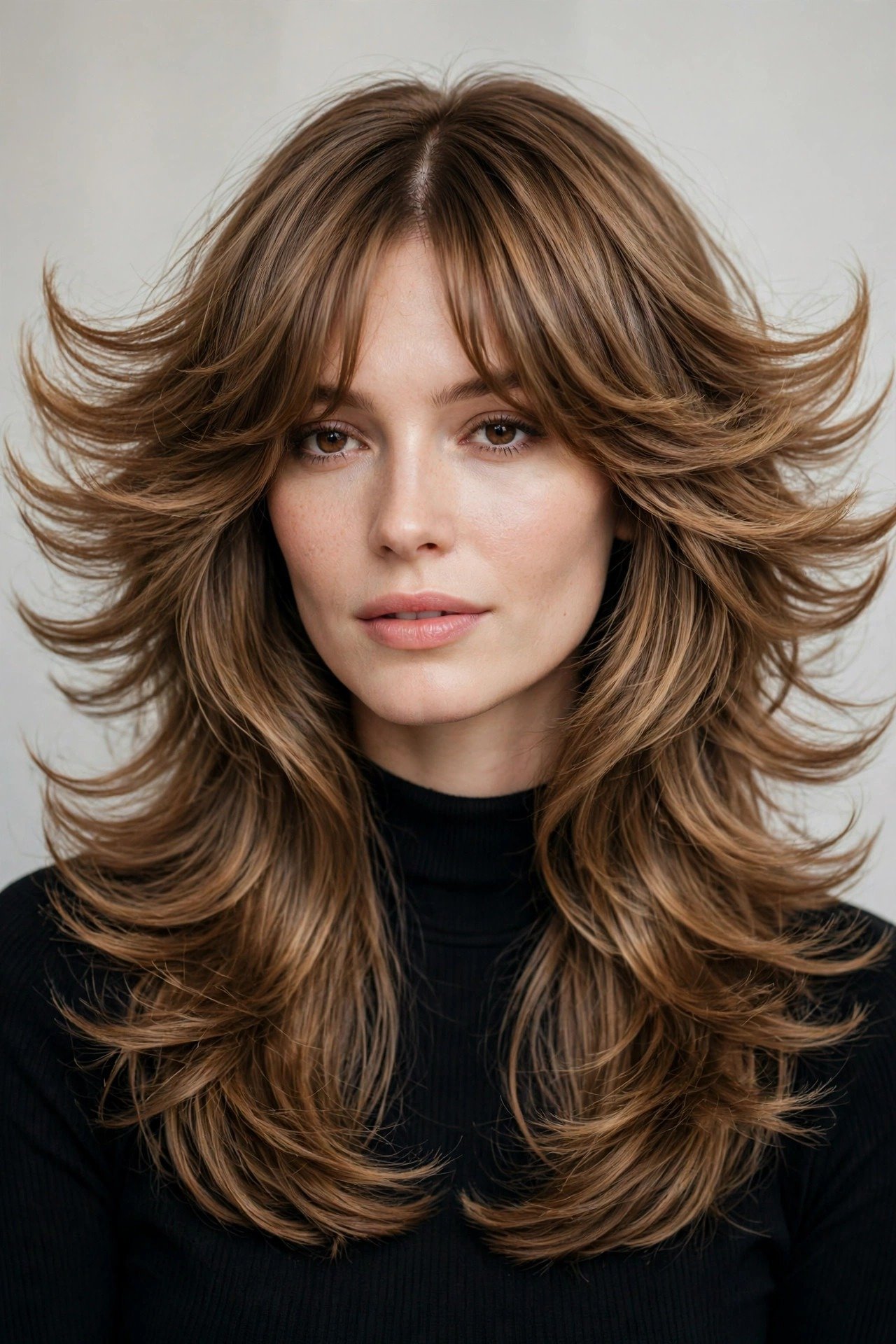
Butterfly Haircut With Bangs Women 2026: 32 Voluminous Styles, Styling Tips & FAQs
The butterfly haircut with bangs is the pairing 2026 belongs to. Long, wing-shaped layers that fan out from the crown like a butterfly in flight, melting into a fringe that frames the face, this cut is the single most requested layered haircut in salons this year — and the bangs are the detail that turns it from pretty to unforgettable. After seasons of one-length hair and blunt finishes, women are asking for movement, airiness and face-framing softness all at once, and this combination delivers every one of them without forcing you to give up your length.
In this guide, we break down everything you need to know about the trend: what a butterfly haircut with bangs actually is, why hairstylists are calling it the defining cut of 2026, how to style it at home in minutes, and 32 voluminous ideas to take to your salon. Whether your hair is fine or thick, straight, wavy or curly, long or medium, there is a butterfly-and-bangs version below that was made for you.
What Is the Butterfly Haircut With Bangs?

The butterfly haircut with bangs is a long-layered cut built around two ideas working together. The first is the butterfly layering itself: the hair is cut in shorter layers through the crown and top, which flip and curve outward like butterfly wings, while the longer lengths underneath are kept full and flowing. The second is the fringe: instead of leaving the front open, a set of bangs — curtain, wispy, blunt, or any of a dozen other styles — is cut into the front and blended into those top layers. Together they create a haircut that is short-feeling around the face and long-feeling everywhere else, which is exactly why it photographs so beautifully.
The bangs are not an afterthought. In a classic butterfly cut, the face-framing starts at the cheekbones or chin; adding bangs extends that framing all the way up to the forehead, which draws the eye toward the face and balances the whole silhouette. A curtain bang opens the face like drapes, a blunt fringe adds structure and drama, and a wispy fringe keeps everything light and airy. Because the fringe is cut to blend into the shortest butterfly layers, there is no hard line where the bangs end and the layers begin — it reads as one continuous, flowing shape, which is the hallmark of a well-executed cut.
What makes this cut different from simply getting layers and bangs at the same appointment is the architecture underneath. A butterfly cut is deliberately built in two zones: the shorter crown zone gives lift, bounce and that winged flip, while the longer under-zone preserves length and density. The stylist cuts the bangs while considering both zones, so the fringe connects to the top layers rather than sitting on the face like a separate piece. Ask your stylist for the butterfly structure by name — most stylists in 2026 know exactly what you mean — and then discuss which bang style suits your face shape, hair texture and styling patience, because the bangs are the part of this haircut you will live with every morning.
This cut works on far more hair types than people expect. On straight hair, the layers create swing and the flipped-out wings show off the shaping. On wavy hair, the layers give waves a pattern to follow so they clump into soft ribbons instead of frizzing apart. On curly hair, a longer, rounder version of the butterfly keeps curls full while the bangs are cut longer and dry to account for shrinkage. And on fine hair, the shorter crown layers create the illusion of density exactly where it matters, around the face, while the longer lengths keep whatever fullness you have. The key in every case is customisation: the butterfly is a framework, and your stylist should tune the layer depth, the wing flip and the fringe to your hair, not the other way round.
Why the Butterfly Haircut With Bangs Is Trending in 2026
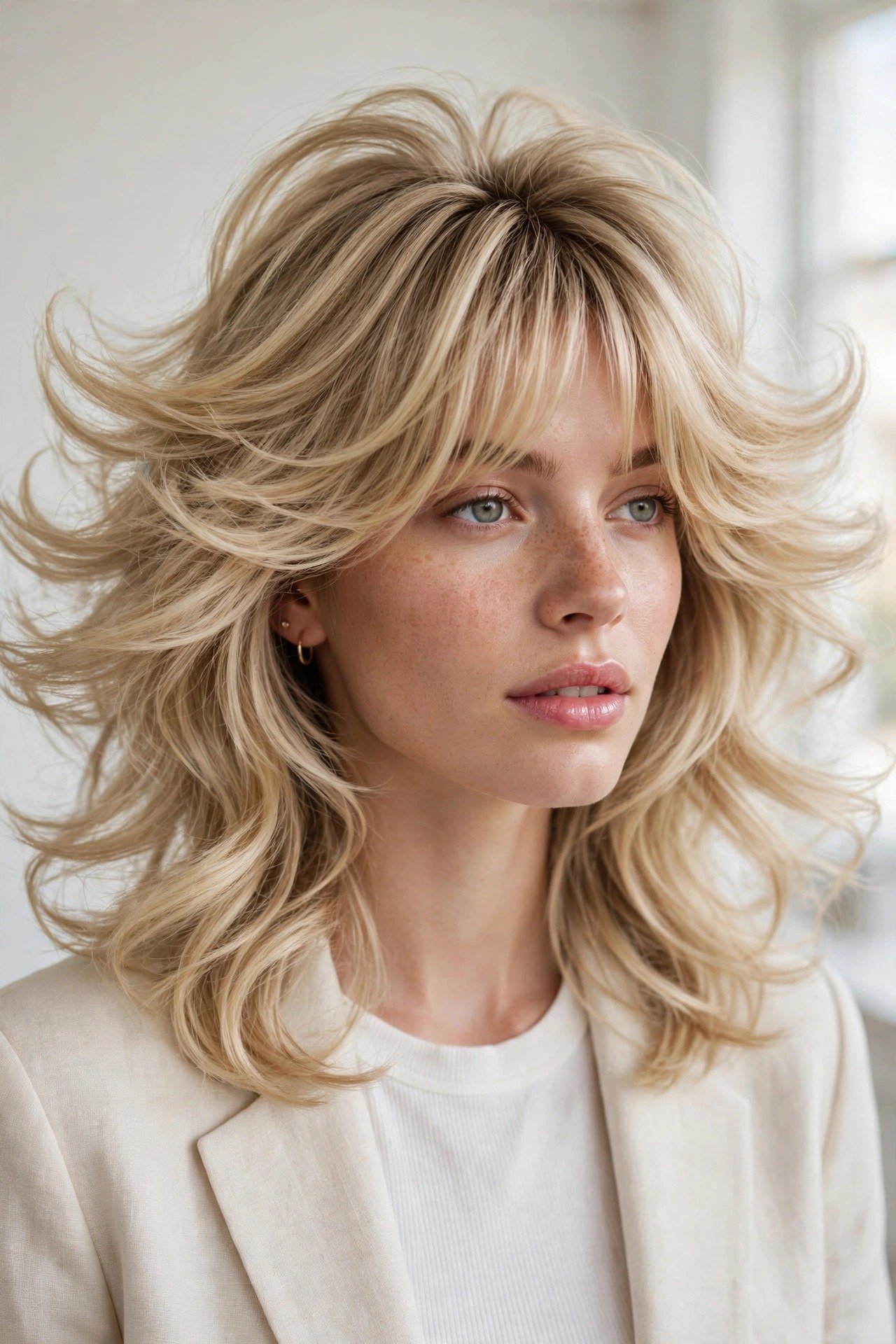
The butterfly haircut with bangs did not arrive out of nowhere — it is riding one of the biggest beauty waves of the year. Pinterest published its first-ever Beauty Trend Report for 2026, and among the headline hair findings is the curly butterfly cut, up 464% in searches, sitting inside a broader movement toward soft, layered, face-framing shapes. The report’s hair story is all about movement and personalisation: not one identical bob, but a hundred variations tuned to the individual. The butterfly with bangs fits that story perfectly, because it is endlessly adjustable — the same underlying cut can wear a blunt fringe, a curtain fringe or barely-there wisps, and each version looks like a different haircut. You can read the full breakdown of the report’s hair trends at themodems.com’s coverage of Pinterest’s 2026 Beauty Trend Report, where the butterfly surge sits alongside the layered-bob movement the report calls “Bob Behaviour”.
Beyond the data, there is a simpler reason this pairing keeps winning: it solves the two complaints women voice most about long hair. The first complaint is flatness — long hair that hangs like a curtain and does nothing. The butterfly’s short crown layers manufacture volume exactly where flat hair needs it, and because the layers flip outward, the volume looks intentional and salon-styled rather than frizzy. The second complaint is boredom — long hair that looks the same every day. Bangs fix that instantly, because a fringe changes the whole frame of the face; many women report that adding bangs to their butterfly cut felt like a bigger transformation than the layers themselves. Put together, you get a cut that looks styled when it is barely styled, and stylists are recommending the pairing constantly — as hairaide.com’s 2026 guide to butterfly cuts with bangs puts it, the exact bang style should match your hair texture and face shape, not just the trend photo, and that matching process is part of what makes the appointment fun.
The trend also has cultural staying power because it sits at the intersection of several long-running movements rather than depending on one. The 70s revival keeps feeding it — the flipped wings and heavy fringes echo the Farrah-era blowout that never quite leaves the salon conversation. The soft-layer movement keeps feeding it too, as women choose cuts that work with their natural texture instead of fighting it. And the low-maintenance beauty wave feeds it from another direction: the butterfly with bangs grows out gracefully, with no awkward ledge stage, so it respects real life between appointments. A cut that borrows strength from three different directions does not fade when one of them does, which is why this pairing is positioned as a modern classic rather than a one-season spike.
There is one more, quieter reason, and it matters: this haircut photographs in motion. Stiff, over-styled hair looks frozen in photos, but butterfly layers flip and flutter, and bangs catch the light around the face, so every picture — wedding photos, selfies, candid shots — has built-in movement. In an era when so much of how we experience our hair happens through a camera, that matters enormously. It is also why the cut does so well on social platforms, which in turn keeps the demand cycle spinning. When a haircut looks good in real life and in photographs, survives a grow-out, and flatters nearly every face shape, it stops being a trend and starts being a default. That is where the butterfly haircut with bangs is heading in 2026.
How to Style a Butterfly Haircut With Bangs
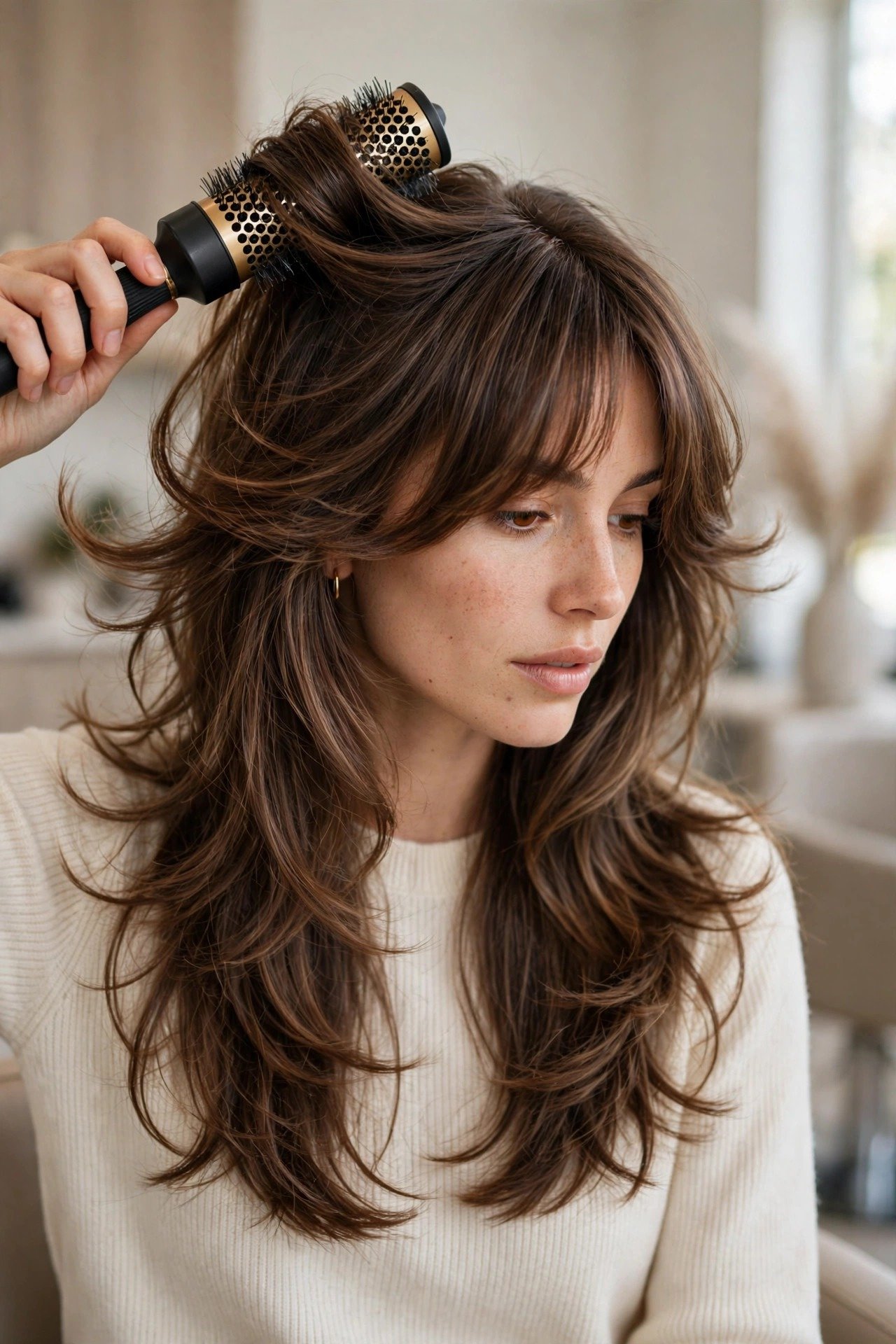
The signature butterfly finish — those outward-flipping wings plus a fringe that sits exactly right — is easier to recreate at home than it looks, and it starts with how you dry the hair. After washing, apply a volumising mousse to damp roots and a light heat protectant through the lengths. Rough-dry the hair until it is about 80% dry, head flipped upside down for the first minute to build root lift. Then take a large round brush and work section by section, rolling the brush outward at the ends to create the winged flip, and directing the face-framing layers away from the face. The bangs get their own treatment: blow-dry them first, while they are dampest, using a small round brush or a flat paddle brush depending on the fringe style — curtain bangs are brushed outward and back, blunt fringes are brushed straight down with a slight under-turn. A full styling routine like this takes ten to fifteen minutes once you have done it twice, and it is what gives the cut its salon-fresh look.
Heatless styling works beautifully on this cut too, and it is worth learning because the layers do half the work for you. On wash night, braid damp hair into two loose braids or twist it into a loose top bun, and in the morning the layers fall into soft wings with almost no effort. For the bangs, a velcro roller placed on the fringe while you do your makeup gives curtain and wispy styles their lift and curve; for a blunt fringe, one quick pass with a straightener on dry hair keeps the line sharp. If you have natural wave or curl, skip the heat entirely some days — scrunch a curl cream through the layers, diffuse the bangs briefly so they set in the right direction, and let the cut’s texture be the style. The butterfly is one of the few trendy cuts that genuinely rewards air-drying, because the layers are cut to move.
A few product rules keep the whole thing looking intentional. Keep oils and heavy serums off the bangs — they are the fastest way to make a fringe look flat and separated — and use a dry shampoo at the roots on day two to keep the crown lift alive. A flexible-hold hairspray misted over the finished style (not sprayed directly at the bangs) locks the wings without making the hair crunchy. And if your butterfly cut is a close cousin of other layered family members, the care routines overlap: our guides to the curly butterfly cut and curtain bangs cover texture-specific tips that transfer directly, while the soft wolf cut and waterfall layers guides are useful if you are deciding between layered shapes before your appointment. Finally, book a fringe trim every three to four weeks — the bangs are the highest-maintenance part of this cut, and keeping their shape fresh is what keeps the whole haircut looking expensive.
1. Classic Curtain Bang Butterfly Cut

This is the version most women picture when they hear the words “butterfly haircut with bangs,” and it remains the safest, most flattering entry point into the trend. Soft, parted curtain bangs graze the cheekbones and melt seamlessly into the butterfly cut’s face-framing wing layers, so the whole front of the haircut reads as one flowing, continuous shape. The center part keeps the look symmetrical and calm, and because the shortest layers sit at or just below the cheekbones, the face opens up rather than closing in. Ask your stylist to point-cut the ends of the bangs and the top layers for extra softness — blunt scissor lines have no place in this version.
What makes the classic work across so many face shapes is that it avoids harsh geometry. Round faces get elongation from the long vertical lines of the parted bangs; square faces get softening from the way the layers curve inward past the jaw; long faces get balance from the horizontal line the bangs create across the forehead. It suits straight to slightly wavy hair best, in medium to long lengths, because the wings need enough length to flip. Style it with a round brush, directing the bangs outward and back, and finish with a light flexible hairspray. The honest trade-off is that it is also the most-seen version of the cut — if you want something nobody else in the room has, keep scrolling. But if you want the version with the highest success rate in the salon chair, this is it.
2. Wispy Fringe Butterfly Layers
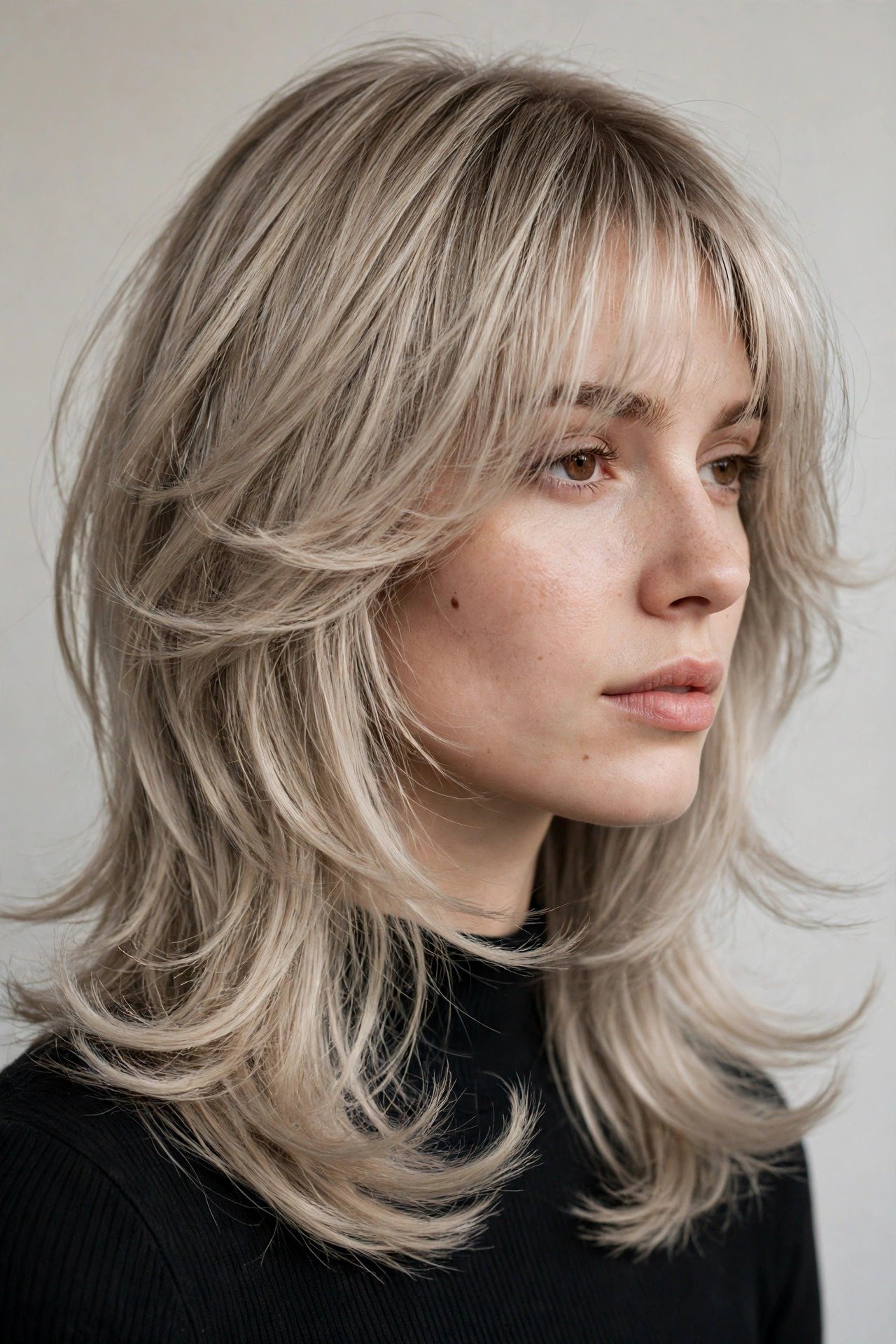
Wispy fringe is the lightest, airiest bang you can pair with a butterfly cut, and the combination is pure 2026. The fringe is cut thin and feathered so it barely covers the forehead — more of a suggestion of bangs than a solid curtain — while the butterfly layers flip and flutter beneath it. The effect is romantic and low-maintenance: because the fringe is so light, it never looks heavy or blunt, and it grows out more gracefully than any other bang style on this list. This is the version to choose if you love the idea of bangs but fear the commitment, because wispy bangs are the easiest fringe to grow into the layers if you change your mind.
This pairing is especially kind to fine and thin hair. A heavy fringe can make fine hair look thinner by using up density in one spot, but a wispy fringe adds movement and interest without spending your hair’s limited fullness. Keep the butterfly layers longer and less aggressive than the classic version for the same reason — the goal is airiness, not stringiness. Style with a volumising mousse at the root, blow-dry with a large round brush turning the ends outward, and keep oils away from the fringe. A dry shampoo at the roots on day two keeps the sheer bangs from going flat. Women who wash their hair every day or two will find this the most forgiving version to maintain.
3. Blunt Micro-Fringe Butterfly Cut
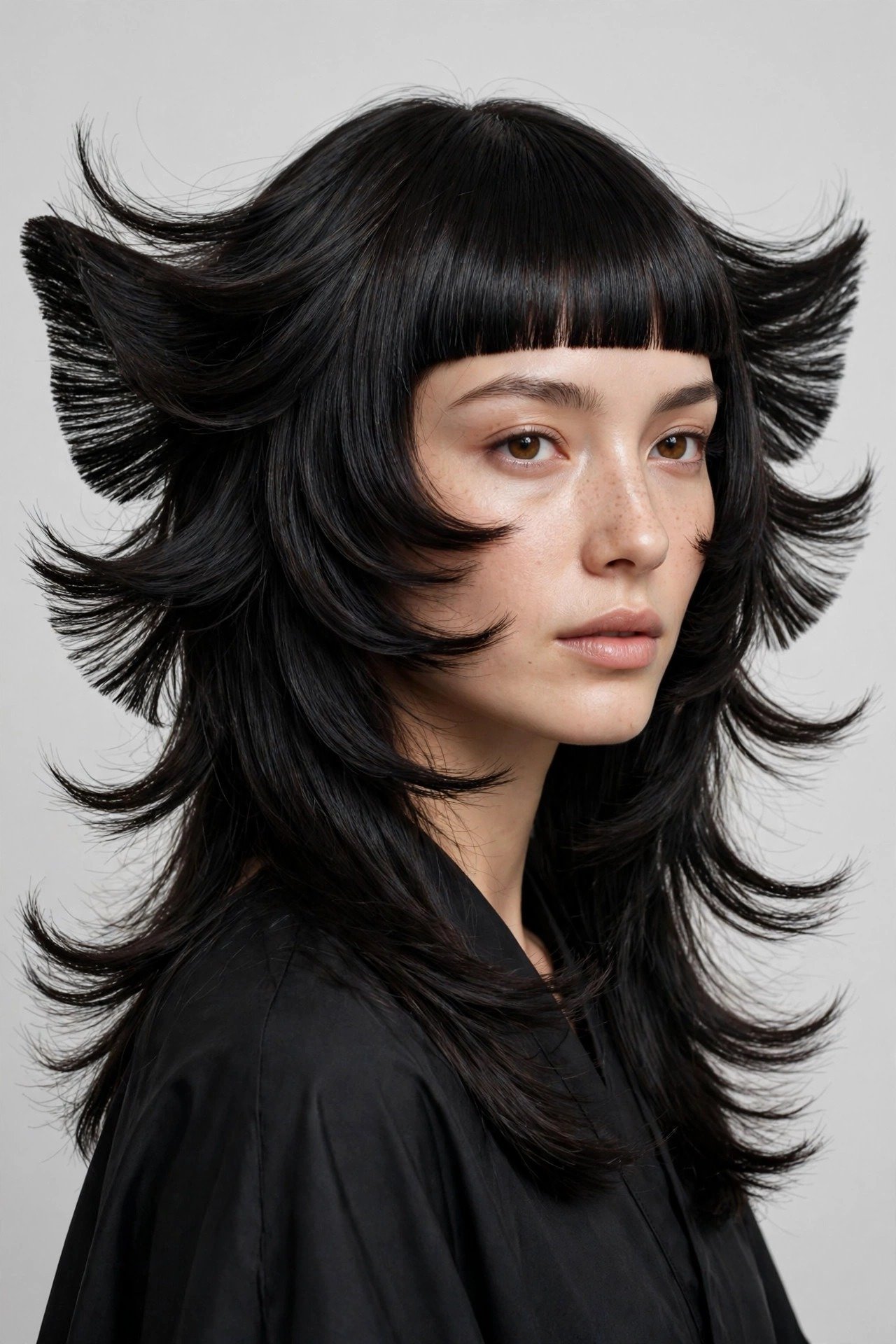
A short, straight-across micro-fringe paired with the butterfly’s soft, feathered wings is the boldest contrast on this list — and one of the most striking. The geometric line of the fringe sits just above or at the brows, a deliberate graphic statement, while below it the layers do everything soft: flipping, curving, moving. That tension between sharp and soft is what makes the combination editorial rather than merely pretty. It draws attention straight to the eyes, and it gives the whole haircut a fashion-forward edge that the classic curtain version deliberately avoids.
This is the highest-commitment bang on the list, so go in with open eyes. A blunt fringe shortens the forehead visually, which flatters oval and long face shapes beautifully but can make round faces look rounder — if your face is round, ask your stylist to keep the micro-fringe slightly longer and add angle at the temples. Fine to medium hair holds this bang shape best without daily wrestling. Trim every three weeks to keep the geometric line sharp; a grown-out blunt fringe loses the whole point of the look. Style the fringe with a paddle brush for a smooth uniform line, and let the butterfly wings flip outward with a round brush. This is the version for the woman who wants her haircut noticed across the room.
4. Side-Swept Bangs Butterfly Cut
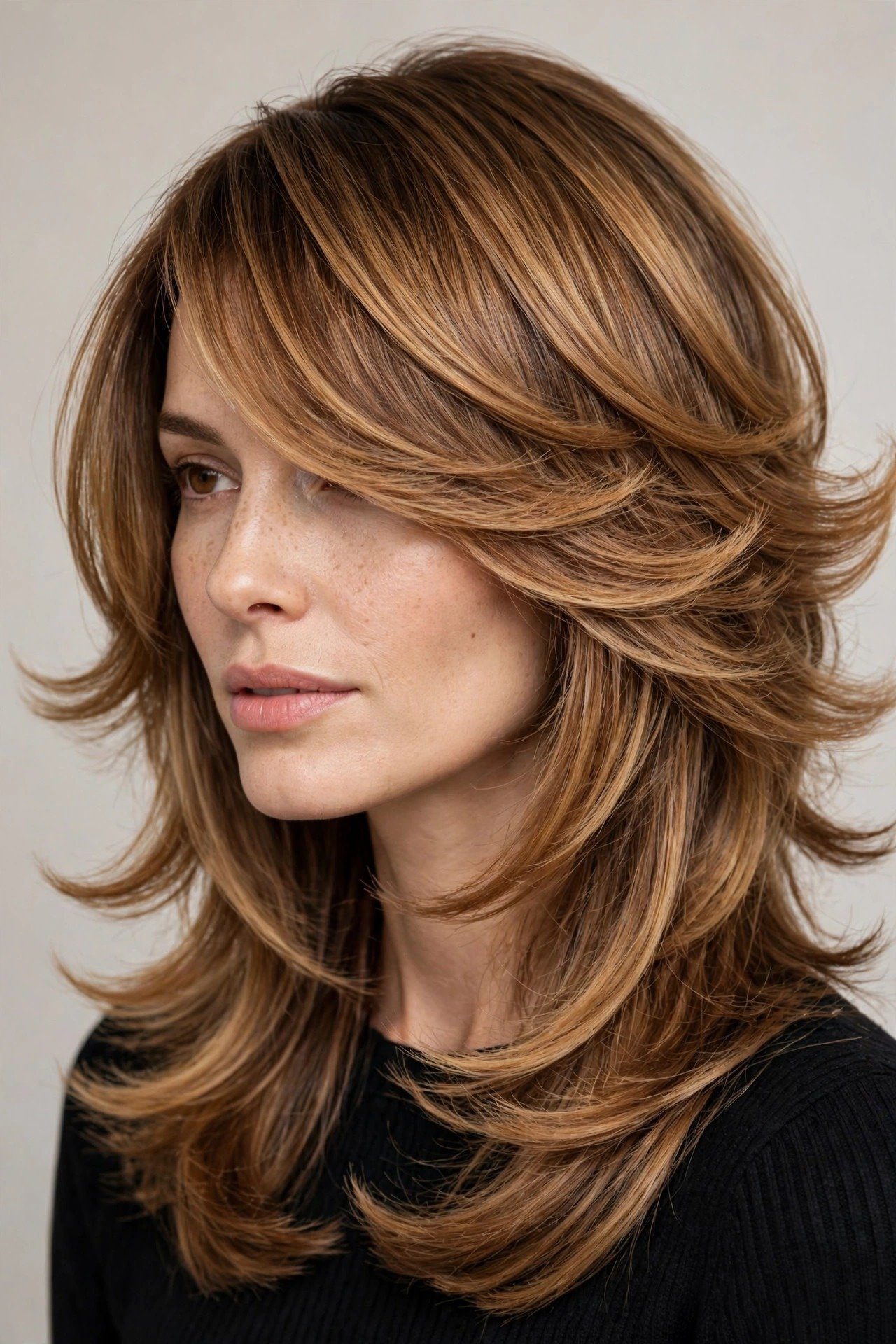
Long, deep side-swept bangs sweep diagonally across the forehead and merge into the top layer of the butterfly cut, and the result is pure elongation. The diagonal line breaks up width across the face, which is why this version is the stylist’s first recommendation for round and square faces — it does for the face what vertical stripes do for an outfit. Because the bangs are essentially grown-out layers styled to one side, this version works on any hair texture, from pin-straight to wavy to curly, and it is the easiest fringe to maintain: there is no blunt line to keep sharp and no center part to keep even.
The side sweep also brings a glamorous, slightly grown-up feeling that the center-parted versions don’t. It suits women whose natural part refuses to sit in the middle, women with a cowlick at the hairline (the sweep can be directed to work with it instead of against it), and anyone who wants asymmetry without committing to an asymmetric cut. Style it by blow-drying the fringe to one side with a round brush, directing the airflow across the forehead rather than straight down — that cross-drying is what sets the sweep. A flat-iron pass at the root on dry hair keeps it in place all day. If you are nervous about bangs, start here: the side sweep is the most forgiving fringe in existence.
5. Bardot Bang Butterfly Cut

Bardot bangs are the glamour bomb of the fringe world: voluminous, parted in the middle, sweeping up and back off the forehead rather than falling flat against it. Paired with the butterfly cut’s high-volume crown layers, the two sources of lift amplify each other, and the whole front of the haircut reads as one glorious, bouncy, 60s-inspired frame. The fringe exposes more of the forehead than a traditional bang, which keeps the look open and face-forward instead of heavy — you get the drama of a statement fringe without daily forehead coverage.
This version loves volume and needs it. It works best on hair with natural body or on hair you are willing to give a little root lift to — a volumising spray at the roots while the hair is damp, or a light backcombing at the crown on dry hair, sets the stage. Oval, heart and long face shapes wear it best, since the lifted fringe adds flattering width across the forehead. Style with a large round brush, lifting the bangs up and back, and secure with a light-hold hairspray so they don’t fall forward by midday. If your personal style runs retro, romantic or red-carpet, the Bardot butterfly is your match.
6. Bottleneck Bang Butterfly Cut

Bottleneck bangs are the insider’s fringe of 2026: cut shorter and fuller at the center part, then tapering longer toward the temples, they form a bottleneck-shaped silhouette that pours directly into the butterfly cut’s face-framing pieces. The shape draws attention to the eyes while softening a wider forehead, and the tapered ends mean the fringe never sits as a harsh block across the face. Worn with a deep center part, it is one of the most flattering fringe geometries for straight to wavy medium-length hair.
Ask your stylist to point-cut the tapered ends so the transition from bang to layer doesn’t look stepped — the whole point of the bottleneck is a smooth pour. This fringe works on most face shapes but is especially good for heart-shaped faces, where the longer temple pieces balance a narrower chin, and for anyone who wants bangs without losing the openness of a center part. Style by blow-drying with a round brush, curving the center pieces slightly under and the temple pieces outward to echo the butterfly wings. It needs a trim every four weeks to keep the bottleneck shape from blurring into ordinary layers.
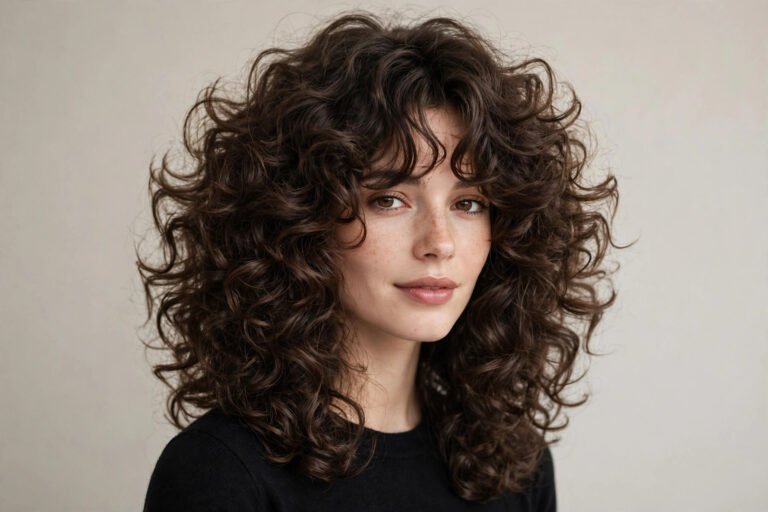
7. Curly Butterfly Cut with Curl-Adapted Bangs

Curly hair and bangs used to be treated as a risky combination, but the curl-adapted butterfly proves the fear is outdated. The bangs are cut longer and dry — never wet — to account for shrinkage, so they land exactly where they should instead of springing up into a stubby fringe. The butterfly layering removes bulk through the mid-lengths while keeping curl definition intact, and the fringe is diffused so the curls spiral in sync with the wing layers rather than fighting them. On 3A to 3C curl patterns especially, this version is a revelation: volume where you want it, definition where you need it.
The non-negotiable here is the right salon. This cut must be done by a stylist who specialises in dry cutting curly hair — if your stylist wants to cut your curls wet and straight, find a different stylist. Between washes, refresh with a light curl cream rather than re-wetting the whole head, and sleep in a loose pineapple or silk bonnet to keep the fringe curls from flattening. The honest trade-off is maintenance knowledge: curly bangs behave differently in humidity and need a learning curve. But for curls that have always been told “no bangs,” this version is the yes you have been waiting for.
8. Fine Hair Butterfly Cut with Wispy Bangs

Fine hair needs a butterfly cut tuned like a precision instrument, and the wispy-bang version is that tuning. The layers are kept longer and less aggressive than a standard butterfly to avoid stringiness, the crown layers are just short enough to create lift without exposing scalp, and the fringe is feather-light — movement without spending density. The result looks airy and full rather than thin, which is the whole battle with fine hair. A volumising mousse at the root before blow-drying is the single most important styling step for this version.
What to avoid matters as much as what to ask for: heavy oils on the bangs will make fine hair look flat within hours, so keep serums to the mid-lengths and ends only. Skip razor texturising through the ends — point-cutting gives softness without the wispy breakage razors can cause on fine hair. This version grows out beautifully, since there are no blunt lines to maintain, and a trim every eight to ten weeks keeps the shape fresh. If your hair is fine and you have always assumed layered cuts with bangs would make it look thinner, this is the version that proves the opposite — when the layers are placed correctly, they manufacture the illusion of density.
9. Thick Wavy Butterfly Cut with Heavy Bangs

Thick, wavy hair is the butterfly cut’s natural habitat — the cut was practically invented to give heavy hair shape — and the heavy-bang version goes all in. Substantial internal layering removes bulk from the crown so the hair stops sitting like a helmet, while a full-coverage fringe balances the volume at the front so the silhouette stays even. Without that balance, thick wavy hair with butterfly layers can go triangular: flat at the top, wide at the bottom. The heavy bangs prevent exactly that, giving the eye something to land on at the front.
Maintenance here is about preserving the wave pattern in both the bangs and the layers. Diffuse rather than rough-dry, scrunch a lightweight mousse through damp hair, and resist the urge to brush the bangs when dry — a wide-tooth comb on damp fringe is all you need. The bangs need a trim every three to four weeks since heavy fringe shows growth fastest. The payoff is a cut with genuine presence: big, touchable, dimensional hair that looks expensive because of the shaping, not the styling time. If your hair has always been “too much,” this version finally gives it architecture.
10. Feathered Bang Butterfly Cut for Long Hair
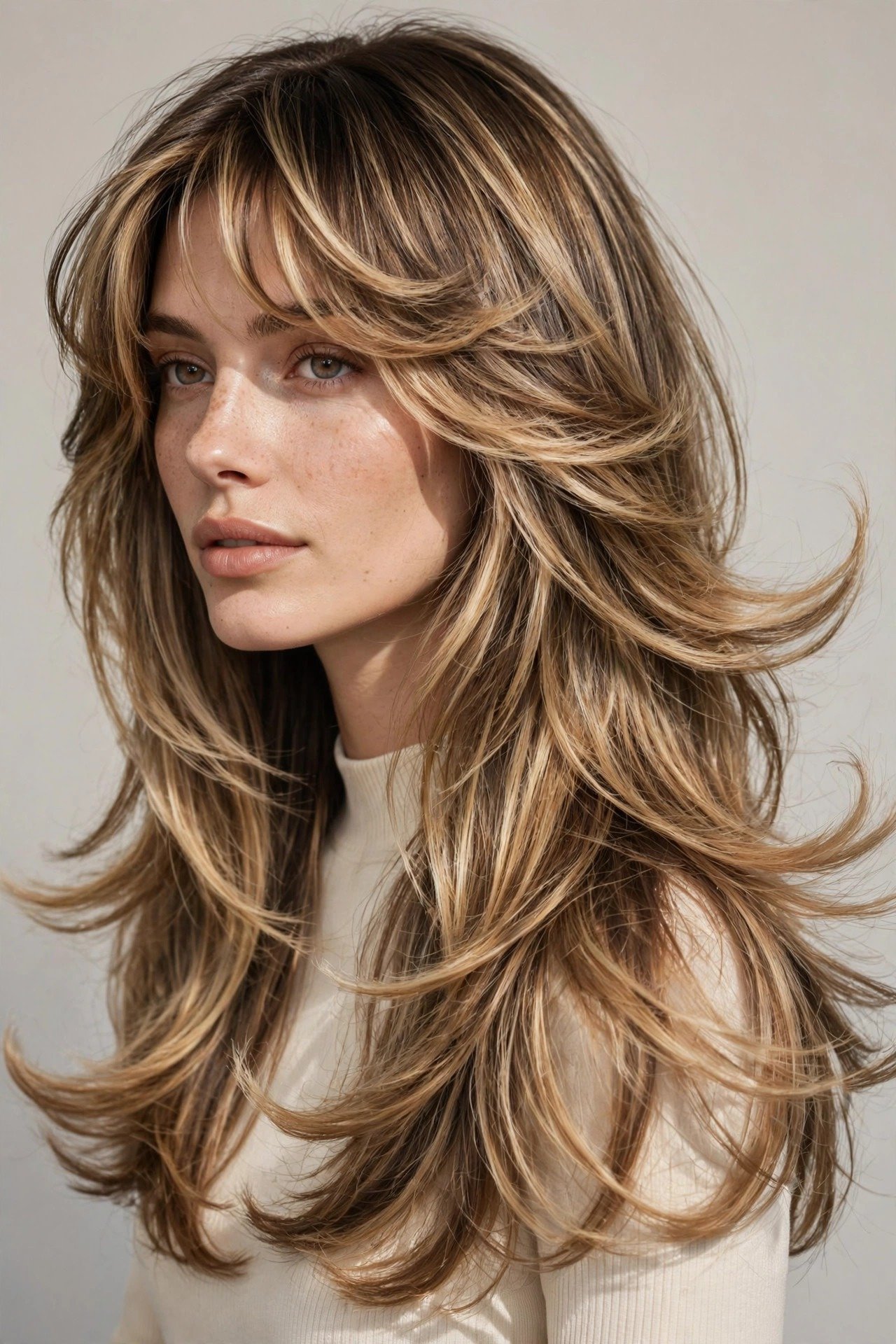
For women keeping serious length, the feathered-bang butterfly is the most elegant version on this list. The bangs are cut with a slight arch and heavily point-cut so they blend almost invisibly into the longest, most dramatic version of the butterfly’s wing layers — from the front you see softness, from the side you see length for days. The extra length keeps the overall silhouette graceful rather than choppy, which is why this version is a favourite for weddings, formal events and photographs where the hair needs to look both styled and timeless.
This version demands healthy hair to carry it — split ends will show immediately in long feathered layers, so keep up with trims every eight weeks and a regular deep-conditioning routine. Thick, healthy hair carries the length best without looking stringy. Style with a round-brush blowout, curving the feathered ends inward, and finish with a shine serum through the lengths only. The bangs, being arched and feathered, need minimal daily work: a quick brush-through and they fall into place. If your goal is long hair that still has a shape — not just length — this is the blueprint.
11. Butterfly Bob with Full Bangs

The butterfly bob proves the cut isn’t only for long hair. Taken to chin or jaw length, the butterfly’s two-zone structure — short crown layers flipping outward over a fuller under-layer — becomes a bouncy, swingy bob, and pairing it with a full, eyebrow-length fringe gives it a retro-modern feel that reads younger and fresher than a classic bob. The full bang shortens visual length dramatically, which makes this version particularly flattering on longer face shapes, and the whole cut has a Parisian polish that works as well in the office as on the weekend.
At bob length the layers behave differently: they need to be cut with extra precision, because there is less length to hide behind, and the flip of the wings becomes the whole personality of the cut. It works best on straight to lightly wavy hair — very curly textures can go frizzy at this length without careful shaping. Style the bangs with a paddle brush for a smooth uniform line, and flick the bob’s ends outward with a round brush or flat iron for that signature wing. A trim every six weeks keeps the outline crisp. This is the butterfly for the woman who wants the trend’s energy without the long-hair commitment.
12. Asymmetric Butterfly Cut with Angled Bangs

One side of the bangs sits longer and angles back into the layers while the other side stays shorter, and suddenly the classic butterfly has an editorial, undone edge. The asymmetry gives you a signature look — a cut people remember — without going short overall or doing anything that can’t be evened out later. It suits medium to thick hair with natural texture best, because the angle reads most clearly when the hair has some body and movement to show it off.
Ask your stylist to freehand the angle rather than cutting to a fixed guide; a hand-cut angle blends into the butterfly layers far more naturally than a measured one. The longer side can be tucked behind the ear on days you want it quieter, which gives you two looks from one cut. Style with a texturising spray scrunched through damp hair to activate the piecey finish, and blow-dry the bangs in the direction of the angle. This is the lowest-commitment way to try an avant-garde cut: all the personality, none of the grow-out drama.
13. Money-Piece Bang Butterfly Cut
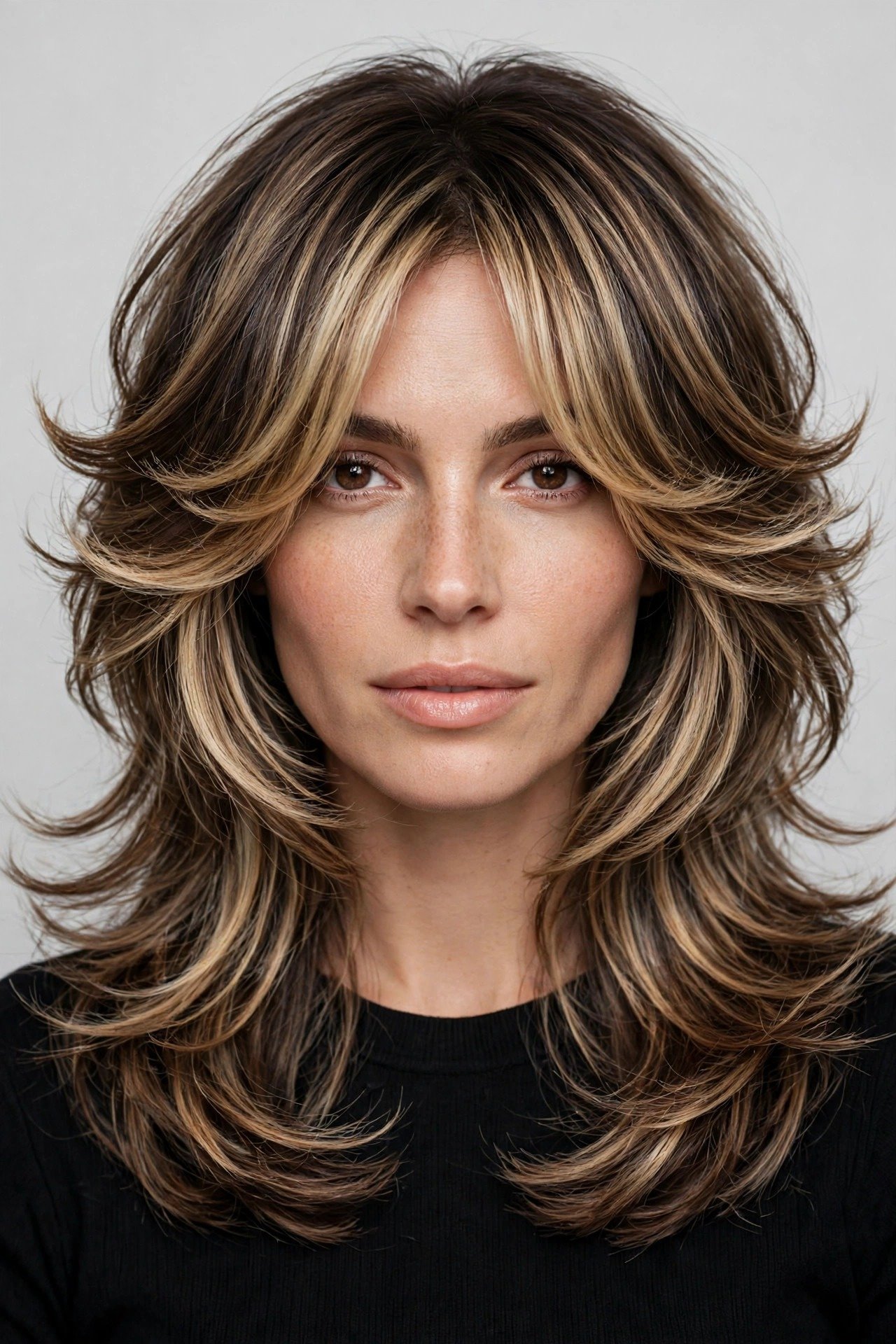
Here the bangs do double duty as a colour statement: face-framing pieces are cut to bang length and painted with bronde or platinum balayage, so brightened strands pop against the butterfly cut’s darker base layers. The money piece draws the eye straight to the face and the eyes, adds dimension without a full head of colour, and makes the wings look even more dimensional as the light catches the contrast between the bright front and the deeper lengths. It is the favourite version for women who want their colour and their cut working as one idea.
Best suited to hair that has already had some colour processing, since the highlighted bangs need upkeep on a different schedule from the base — plan on toning every six to eight weeks to keep brassiness at bay, and a colour-safe, sulphate-free shampoo to keep the balayage bright. The cut itself is the classic butterfly with a face-framing bang, so the styling routine is the standard round-brush blowout. The honest cost is maintenance: two colour schedules instead of one. The payoff is a haircut that looks lit from within in every photo.
14. Choppy Baby Bang Butterfly Cut

Ultra-short, razor-textured baby bangs sit just above the brow bone and contrast hard against the butterfly’s long, flowing wing layers — the shortest possible fringe with the longest possible layers, and the tension is electric. This is the boldest, most fashion-forward pairing on the list, the one stylists post on their own portfolios. It draws every eye to the eyes and cheekbones, and it gives the whole haircut an undone, artistic confidence that the softer versions deliberately avoid.
Go in knowing this fringe needs the most frequent trims of any version here — roughly every two to three weeks — because baby bangs lose their shape the moment they grow. It suits oval and heart face shapes best, and confident personal style is practically a requirement; this fringe is a statement, not a background detail. A matte styling paste keeps the choppy pieces separated without shine, and the wings get the standard outward round-brush treatment. If you have ever wanted bangs that feel like an accessory, this is them.
15. Silver-Blended Butterfly Cut with Soft Bangs

This version pairs a soft, breathable curtain fringe with a butterfly cut colour-melted into silver and grey tones, and it is one of the most elegant interpretations of the trend. The layering removes the bulk that can make greying hair look coarse and heavy, while the soft bangs keep the front light and modern. For women embracing their grey transition, the butterfly’s graduated layers are genuinely strategic: the lighter, silvered ends blend the line of demarcation so there is no harsh grow-out line to hide.
A purple-toning shampoo once a week keeps the silver tones from turning brassy, and a deep-conditioning mask matters more here than for most versions, because grey and silver-processed hair tends toward dryness. The bangs should be kept soft and sheer rather than blunt — heaviness at the front fights the airy quality that makes this version work. Style with a round brush for polish, or let the natural texture air-dry for a softer finish. Proof that the butterfly with bangs has no age limit: this may be the most sophisticated version on the list.
16. 70s-Inspired Butterfly Cut with Heavy Fringe

This is the full disco-glamour version: a longer, heavier, slightly curved fringe paired with voluminous, blown-out wing layers that flip outward in unmistakable Farrah style. It leans all the way into the 70s revival that has been feeding hair trends for seasons now, and it makes no apology for the drama — big hair, big fringe, big finish. The heavy fringe shortens the forehead noticeably, which is why it works best on oval and long face shapes, and the whole look demands hair that holds a round-brush blowout well, meaning medium to thick textures.
Recreating the finish at home takes the right tools: a large-barrel round brush, a proper blow-dryer with a nozzle, and a flexible hairspray to set the flips. Section the hair, roll each section outward on the brush, and let each section cool before releasing it — the cooling is what locks the wing shape. The fringe gets dried with a curve, under at the ends, so it hugs the forehead instead of sitting flat. This is the highest-effort version on the list, honestly. But on the nights you want to look like the main character, no other version delivers like this one.
17. Butterfly Shag with Textured Bangs

Where the butterfly meets the shag: a cropped, shoulder-skimming take on the cut merges with shag-style texturising and a shorter, piecey fringe for a bold, rock-and-roll silhouette. The layers here are more visible and broken up than in the classic butterfly — you can see the texture — but the butterfly’s DNA is still there in the winged flip and the face-framing graduation. It suits anyone with an oval or heart face wanting a dramatic but still face-framing change, and it performs best on hair with natural texture, because shag layers rely on movement to read correctly.
Styling is refreshingly low-effort for how edgy it looks: a texturising spray scrunched through damp hair, then air-dry or diffuse, and the piecey finish activates on its own. The fringe needs a trim every four weeks to keep its texture from growing into a solid curtain. Fine hair can wear this, but with fewer layers and a lighter hand on product — the shag needs density to hold its texture. If the classic butterfly feels too polished for you but the full wolf cut feels too wild, this middle ground is exactly your cut.
18. Piecey Bang Butterfly Cut for Round Faces

This version is engineered for round faces: longer, piecey bangs that split slightly at the center and angle outward, echoing the butterfly’s wing movement while elongating the face. The gap at the center part is the clever bit — it keeps the fringe from adding width across the cheeks, which is the classic mistake bangs make on round faces. Instead, the eye follows the outward angles down and out, and the face reads longer and more sculpted. It works on medium-to-thick straight or wavy hair, where the pieces have enough body to hold their separation.
A texturising wax on dry bangs keeps the piecey separation intact through the day — this is one fringe where a little product is essential, not optional. Ask your stylist to cut the bangs with the center split in place, so the two sides mirror each other, and to keep the shortest pieces at or below the cheekbone. Blow-dry the fringe outward, away from the face, to set the angles. Round faces are so often told to avoid bangs entirely; this version is the counter-argument, cut with intention instead of fear.
19. Glam Swept-Back Bang Butterfly Cut

Bardot bangs taken to full glamour: voluminous and swept up and back off the forehead, exposing the face while still visually connecting to the butterfly’s high-volume crown layers. This is the bang style for the woman who wants the framing and lift of a fringe without daily forehead coverage — the fringe reads as height and sweep rather than as a curtain. It is red-carpet hair made wearable, and on dark, glossy hair the contrast between the lifted front and the flowing wings is genuinely striking.
It works best on hair with natural volume or hair you are willing to prep with a volumising spray and a light backcombing at the roots. Style by blow-drying the bangs up and back with a round brush, then secure with a light-hold hairspray so they don’t fall forward by midday — gravity is the enemy of this fringe. Oval and long faces wear it best. Keep the wings polished with a smoothing pass of the brush. This is the version for evenings, events and days when the hair needs to do the talking.
20. Extra-Long Butterfly Cut with Minimal Bangs

For the bang-curious who aren’t ready to commit, this version keeps the butterfly’s dramatic long layers intact and adds only a few barely-there wispy pieces around the face as a minimal bang. It’s the lowest-commitment entry point into the trend: the wisps soften the hairline and hint at a fringe, but if you change your mind, they grow into the layers with zero awkward stage. Best on very long, healthy hair, where the layering has the room to create real movement and the wisps have length to play against.
A texturising mist adds definition to the minimal face-framing pieces without any extra cutting, and the styling routine is simply the standard butterfly blowout with a little extra attention to curving the wisps toward the face. This is also the smartest version for first-timers to request at the consultation: tell your stylist you want to “try the idea of bangs,” and these wisps are what that looks like. If you love them, your next appointment can go shorter and fuller. The butterfly rewards this kind of gradual exploration.
21. Korean-Inspired See-Through Bang Butterfly Cut

The Korean see-through bang — thin, wispy, deliberately sheer so the forehead shows through — meets the butterfly’s airy layering, and the result is the lightest-feeling version on this list. Everything floats: the fringe barely touches the forehead, the layers are feathered to near-weightlessness, and the whole haircut has an ethereal quality that heavier versions can’t touch. On dark, silky hair the contrast between the sheer fringe and the glossy lengths is especially beautiful. This is the version for the woman whose style runs soft, minimal and romantic.
It requires the least daily styling of any fringe here — see-through bangs often look best air-dried, since heat can make them piece together too neatly. A dry shampoo at the roots keeps the sheer bangs from looking flat by day two. The cut suits straight to slightly wavy hair best; tight curls will fill in the sheerness. Ask your stylist to thin the fringe rather than layer it — the see-through effect comes from density removal, not length graduation. If you love the idea of bangs but hate the feeling of hair on your forehead, this is your answer.
22. Polished Curtain Bang Butterfly Cut

Same curtain-bang butterfly architecture as the classic, but finished to a high polish: sleek, glossy, every wing in place. Where the classic version is soft and romantic, this one is sharp and expensive-looking — the difference is entirely in the finish. A smoothing blowout with a round brush, a pass of shine serum through the lengths, and the bangs dried smooth with a slight under-turn. On rich, dimensional colour like mahogany or espresso, the polished finish turns the hair into the outfit’s main accessory.
This is the boardroom butterfly: professional enough for the most conservative office, but with the movement and modernity that keep it from reading dated. It needs the most styling discipline of the curtain versions — the polish is the point, so air-drying won’t deliver it — but the routine is straightforward once learned. A silk pillowcase helps the smooth finish survive the night, and a light smoothing cream on dry ends tames next-day frizz. If your life runs on polish, this version keeps the trend without compromising it.
23. Beachy Wavy Bang Butterfly Cut

Loose, beachy waves meet soft, barely-there bangs in the most relaxed version of the trend. The butterfly’s layers give natural waves a pattern to follow, so they clump into soft ribbons instead of frizzing apart, and the fringe — cut long and wavy to move with the texture — never fights the rest of the hair. The whole thing reads as effortless in the way that actually takes some intention: salt spray scrunched through damp hair, a diffuser or air-dry, and the cut does the rest. This is vacation hair made permanent.
It suits wavy to curly textures best, on medium to long lengths where the waves have room to form. The bangs need to be cut longer than a straight-hair fringe to account for wave shrinkage, and they should be styled with the same wave pattern as the rest — never straightened separately, or they’ll look disconnected. A curl-enhancing cream defines the waves without crunch, and a weekly deep-condition keeps the texture soft. For the woman who lives in air-dry mode, this is the butterfly at its most honest.
24. Medium-Length Butterfly Cut with Grown-Out Bangs

Collarbone length, butterfly wings, and bangs that have been grown past the awkward stage into long, face-framing curtains: this is the lived-in, low-drama version of the trend. The grown-out bangs blend so completely into the butterfly’s top layers that the fringe barely reads as bangs at all — it’s more of a face-framing suggestion, which makes this the easiest version to maintain and the most forgiving grow-out on the list. Medium length keeps the styling time short while still giving the wings room to flip.
This version is ideal for the woman who had bangs, loved them, and doesn’t want the trim cycle anymore — or for anyone growing a fringe out without losing the face-framing benefit. Style with a quick round-brush blowout or even a straightener bent outward at the ends; the layers are doing the structural work, so the finish can be casual. A trim every ten to twelve weeks keeps the ends healthy. Proof that the butterfly with bangs doesn’t have to be high-maintenance to be high-impact.
25. Elegant Ponytail Butterfly Cut with Bangs

Some haircuts disappear in a ponytail; this one gets better. Pulled back, the butterfly’s layered wings create natural volume and texture in the tail itself, while the bangs stay forward to frame the face — so the ponytail looks styled rather than merely practical. The face-framing pieces that fall around the temples soften the pulled-back look, which is why this version is a favourite for weddings, work events and gym-to-dinner days alike. It’s the rare trendy cut that actively improves your updos.
To style it, secure the ponytail at the crown or nape, then gently tug at the crown layers for lift and let the wings do their thing in the tail — a little texturising spray adds grip and piece-iness. The bangs get their normal routine: curtain bangs swept back, blunt fringe smoothed. This is also the version that proves the cut’s versatility to sceptics: down it’s the full butterfly drama, up it’s polished and practical. If your lifestyle demands hair that works tied back as well as worn down, start your butterfly journey here.
26. Windswept Bohemian Butterfly Cut with Bangs

Deliberately undone: the windswept bohemian butterfly is styled to look like the wings caught a breeze, with texture, separation and movement as the whole point. The bangs are worn piecey and natural, the layers are scrunched rather than smoothed, and the finish has that lived-in quality that takes confidence to wear on purpose. On sun-kissed, highlighted hair the texture catches the light in a way that makes the whole cut glow. This is festival hair, creative-workspace hair, artist hair.
Styling is anti-styling: sea-salt spray or texturising mist on damp hair, scrunch, air-dry, done. The one rule is that the texture has to look intentional — the difference between windswept and messy is healthy ends and a good cut underneath, so keep up with trims. The bangs need only a finger-comb and a touch of wax if they separate too much. If your personal style runs free-spirited and you hate hair that looks “done,” this version lets the butterfly be wild.
27. Deep Side Part Butterfly Cut with Long Bangs

A deep side part changes the butterfly’s whole geometry: the bangs become one long, dramatic sweep, the crown gains instant asymmetrical volume, and the wings fall heavier on one side for a glamorous, old-Hollywood-meets-modern feel. This is the most dramatic parting you can give the cut without changing the cut itself, and it’s a favourite for evening looks and photographs, where the asymmetry creates visual interest from every angle. On rich copper or brunette tones, the deep sweep shows off colour dimension beautifully.
Style by blow-drying with the deep part in place from the very start — parts set while the hair is damp, not after. Direct the bangs across the forehead with a round brush, and build volume at the crown on the heavier side with a volumising spray. The sweep can be pinned for extra hold on event days. This version suits oval, heart and square faces especially well, since the diagonal sweep softens and elongates. When you want the butterfly to feel like an occasion, change the part, not the appointment.
28. Playful Flipped-Out Bang Butterfly Cut

The wings flip out, and so do the bangs: in this version the fringe is styled with an outward flick that mirrors the butterfly layers, doubling down on the bounce. It’s playful, youthful and full of movement — the haircut equivalent of laughing. The flipped fringe works best on curtain or long bang styles, where there’s enough length to curve, and it gives the whole front of the haircut a cohesive, dancing energy. On light, bright colours like champagne blonde, the flips catch the light with every turn of the head.
The technique is simple but specific: with a round brush or a straightener, curve the bangs outward at the ends instead of under, and do the same to the face-framing layers so the whole front moves in one direction. A light flexible hairspray holds the flips without stiffening them. This is a daytime, weekend, feel-good version — less boardroom, more brunch. If your butterfly ever feels too serious, flip the bangs out and watch the whole haircut change personality.
29. Bridal Butterfly Cut with Soft Bangs

Wedding-day hair needs to look perfect for twelve hours and in a hundred photographs, and the bridal butterfly delivers both. Soft, polished waves through the wings, a gentle face-framing fringe that photographs beautifully from every angle, and enough structure to hold through the ceremony, the dancing and the happy crying. The bangs are the strategic choice here: they keep the face framed even as the style settles through the day, so the 10pm photos look as good as the getting-ready ones. Luminous brunette or highlighted tones show off the dimension best under photography lighting.
For the wedding itself, have it styled professionally — a trial run is worth every penny — but the cut is designed so the at-home version still looks lovely for the rehearsal dinner and honeymoon. Ask your stylist for the butterfly with soft curtain bangs, and discuss whether you want the wings curled under or flipped out for the day. A flexible-hold hairspray, not a helmet of extra hold, keeps the movement alive in photos. This is the version for the biggest day, and the cut you’ll still love in the album decades later.
30. Pastel Micro Bang Butterfly Cut

Pastel colour meets the boldest fringe: a micro bang on pink-tinted blonde hair, paired with the butterfly’s edgy flipped layers. This is the Gen-Z, trend-forward extreme of the cut — playful, unmistakable, and completely uninterested in blending in. The pastel tint softens the micro bang’s graphic edge just enough to keep it sweet rather than severe, and the butterfly wings give the colour dimension to play across. It’s the version for the woman whose hair is her creative outlet.
Pastel colour is the maintenance story here: it fades fastest of any colour service, so plan on colour-safe shampoo, cool water washes and a tinted conditioner to refresh the tone between appointments. The micro bang needs its three-week trim cycle regardless of colour. But if you want a haircut that gets photographed by strangers, this is the one. Pair it with confidence and minimal makeup — the hair is doing all the work.
31. Office-Polished Butterfly Cut with Curtain Bangs
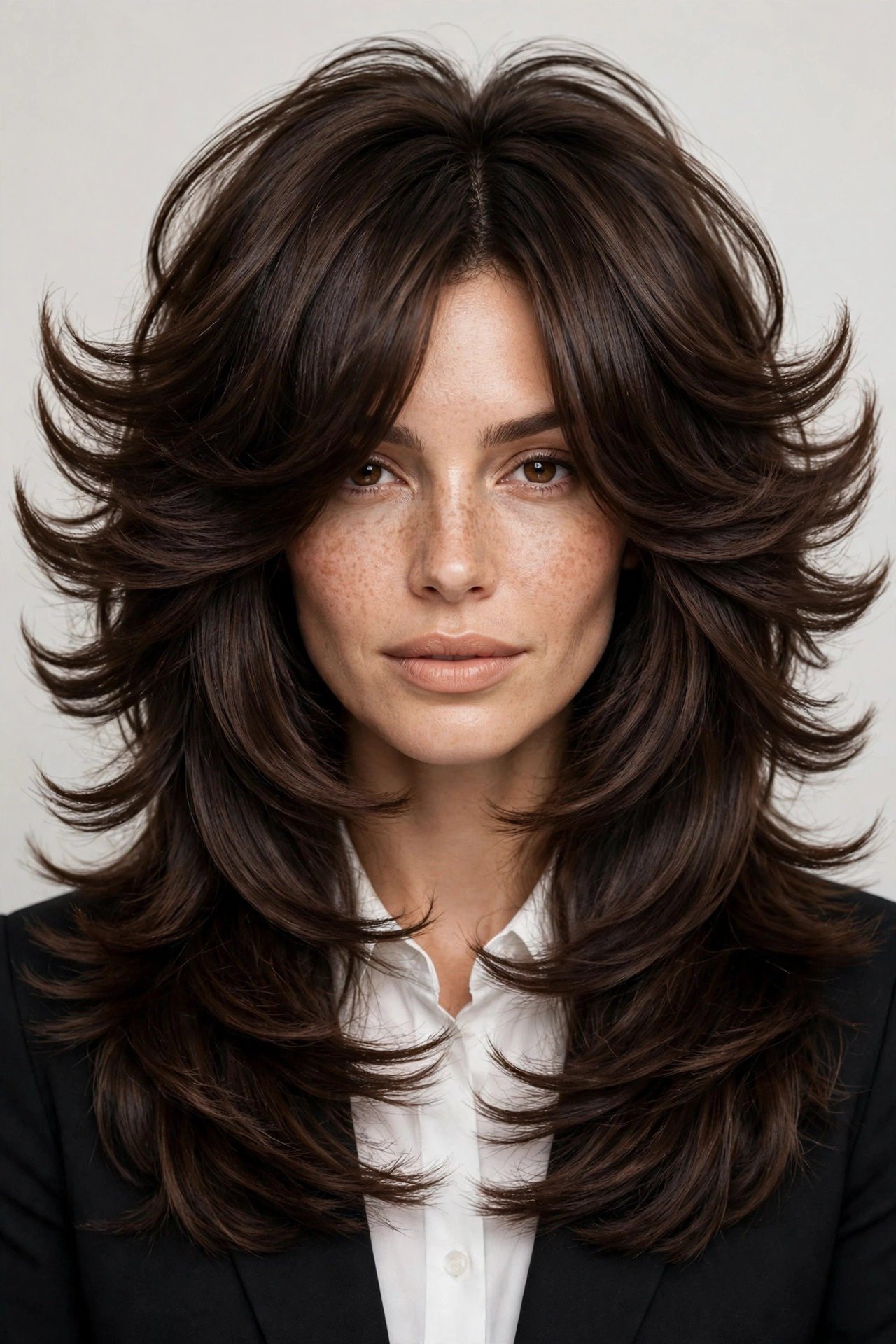
The nine-to-five butterfly: curtain bangs kept neat and controlled, wings smoothed and glossy, everything in its place. This version takes the trend’s architecture — the face-framing layers, the flattering fringe — and finishes it with the discipline a professional setting rewards. On sleek espresso or dark brown hair, the polished finish reads as quiet luxury: expensive, intentional, completely in control. It’s proof that trendy and professional aren’t opposites when the cut is this well-constructed.
The routine is the smoothing blowout: round brush, shine serum, bangs dried with a slight under-turn, and a silk pillowcase to protect the finish overnight. Keep the bangs at a length that stays out of your eyes during the workday — just at or below the brow is the sweet spot. A trim every six to eight weeks keeps the outline sharp. If you’ve been holding off on the butterfly because your workplace feels too conservative for trends, this version is your permission slip.
32. Honey Balayage Butterfly Cut with Bangs

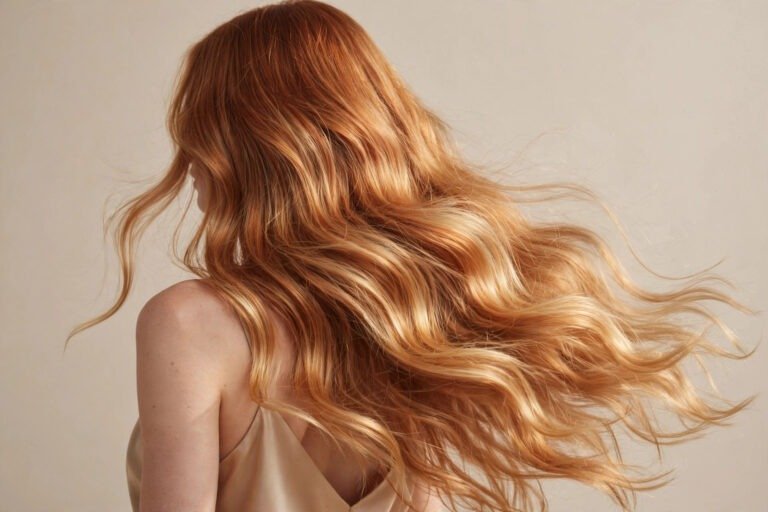
The showpiece: the full butterfly drama — cascading flipped wings, perfectly styled curtain fringe — painted in a glossy honey-caramel balayage that makes every layer visible. This is the version that stops the scroll, the one stylists use as the portfolio shot, because the colour and the cut amplify each other: the balayage traces each wing so the layering reads even in a still photo, and the bangs frame the face in the brightest pieces. It’s the ultimate expression of everything this trend is about.
The balayage grows out softly with no harsh root line, so the colour maintenance is gentler than it looks — toning every eight weeks and colour-safe shampoo keep the honey bright. The cut needs its standard care: round-brush blowout, fringe trims every month. If you’re going to commit to the butterfly with bangs fully — the appointment, the styling, the upkeep — this is the version that rewards the commitment most visibly. Screenshot it, take it to your stylist, and enjoy the best hair of your year.
Frequently Asked Questions
What is a butterfly haircut with bangs?
A butterfly haircut with bangs combines the butterfly cut’s signature two-zone layering — shorter, outward-flipping layers through the crown like butterfly wings over longer, full lengths — with a fringe cut into the front and blended into those top layers. The bangs extend the cut’s face-framing all the way to the forehead, and the fringe style (curtain, wispy, blunt, side-swept and more) can be customised to your face shape and hair texture.
Which bang style suits a butterfly cut best for my face shape?
Curtain bangs flatter nearly every face shape and are the safest default. Round faces do best with side-swept or piecey bangs that angle outward to elongate; square faces soften with curved, inward-flipping layers and a curtain or side-swept fringe; long faces balance with a fuller or blunt fringe that shortens the forehead visually; heart-shaped faces love bottleneck or temple-tapering bangs. Bring reference photos and let your stylist confirm the choice against your hairline and growth patterns.
Does the butterfly haircut with bangs work on fine hair?
Yes, with the right tuning. The layers should be kept longer and less aggressive to avoid stringiness, the crown layers just short enough to create lift, and the fringe wispy and feather-light rather than heavy — a heavy fringe spends fine hair’s limited density in one spot. A volumising mousse at the root before blow-drying is the most important styling step, and oils should stay off the bangs. Done correctly, the layers manufacture the illusion of density around the face.
How do I style a butterfly haircut with bangs at home?
Rough-dry to 80% with volumising mousse at the roots, then use a large round brush section by section, rolling outward at the ends for the winged flip. Dry the bangs first while dampest — curtain bangs brushed outward and back, blunt fringes straight down with a slight under-turn. Heatless options work too: loose braids overnight for waves, or a velcro roller on the fringe while you do your makeup. Keep oils off the bangs and use dry shampoo at the roots on day two.
How often do butterfly bangs need trimming?
Most fringe styles need a trim every three to four weeks to keep their shape — blunt micro-fringes and baby bangs every two to three weeks, since they show growth fastest. Wispy, curtain and grown-out bangs are more forgiving and can stretch to five or six weeks. The butterfly layers themselves need a trim every eight to ten weeks. Many salons offer free or low-cost fringe trims between full appointments, so ask at your visit.
Can I get a butterfly haircut with bangs on curly hair?
Absolutely — the curl-adapted version is one of the most loved on this list. The bangs must be cut longer and dry (never wet) to account for shrinkage, then diffused so they curl in sync with the butterfly’s spiral layers. The layering removes bulk while keeping curl definition, especially on 3A to 3C patterns. The key is finding a stylist who specialises in dry cutting curly hair; if yours wants to cut your curls wet and straight, find a different stylist.
Will a butterfly cut with bangs make my face look rounder?
Only if the fringe is cut wrong for your face. A heavy, straight-across fringe on a round face can add width — but curtain bangs, side-swept bangs and piecey center-split bangs all elongate rather than widen, because their lines travel vertically or diagonally. Keep the shortest layers at or below the cheekbone and let the lengths fall past the jaw. Discuss your face shape openly at the consultation; a good stylist adjusts the fringe geometry rather than refusing you bangs.
How long does a butterfly haircut with bangs take to grow out?
One of this cut’s biggest strengths is its graceful grow-out. The butterfly layers blend into longer lengths with no awkward ledge stage, and most bang styles — especially curtain, wispy and side-swept — grow directly into the face-framing layers. A blunt or baby bang takes longer to grow out and may need a few months of pinning back or blending trims. Overall, expect the cut to look good for three to four months between full appointments with only fringe trims in between.
What should I ask my stylist for at the appointment?
Ask for the butterfly structure by name — shorter crown layers with an outward flip over longer, full lengths — then specify your bang style: curtain, wispy, blunt, side-swept, bottleneck or whichever version from this guide matches your face. Mention your styling routine honestly (air-dry vs. blowout), your grow-out tolerance, and show reference photos of both the layers and the fringe. Ask for point-cutting on the ends for softness, and confirm the fringe trim schedule before you leave.
Is the butterfly haircut with bangs still trending in 2026?
Yes — it’s one of the defining hair trends of the year. Pinterest’s first-ever Beauty Trend Report for 2026 shows the curly butterfly cut up 464% in searches, part of a wider movement toward soft, layered, face-framing shapes, and stylists consistently name the butterfly-and-bangs pairing as their most requested combination. Because the cut is endlessly customisable and grows out gracefully, it’s positioned as a modern classic rather than a one-season spike.
Conclusion
The butterfly haircut with bangs earned its place as 2026’s defining layered cut the honest way: not through a single viral moment, but by solving real problems for real hair. It gives flat hair volume exactly where flat hair needs it. It gives long hair movement without sacrificing length. It gives every face a frame, tuned by a fringe that can be soft or bold, sheer or solid, polished or undone. And it does all of this while growing out more gracefully than almost any trendy cut before it — which is why women don’t just get it once, they book it again.
If you’re ready, the path is simple. Pick the version from these 32 that matches your hair texture, your face shape and your honest styling routine — not the one that looks best in a photograph, but the one you’ll still love on a rushed Tuesday morning. Screenshot your favourites, take them to a stylist you trust, and have the conversation about fringe geometry before the scissors come out. The bangs are the part you’ll live with every day, so they’re worth the extra five minutes of discussion.
However you wear it — classic curtain, bold micro-fringe, soft wisps or full 70s glamour — the butterfly haircut with bangs is a cut that works as hard as you do. Here’s to the year of the wings.

One Comment