
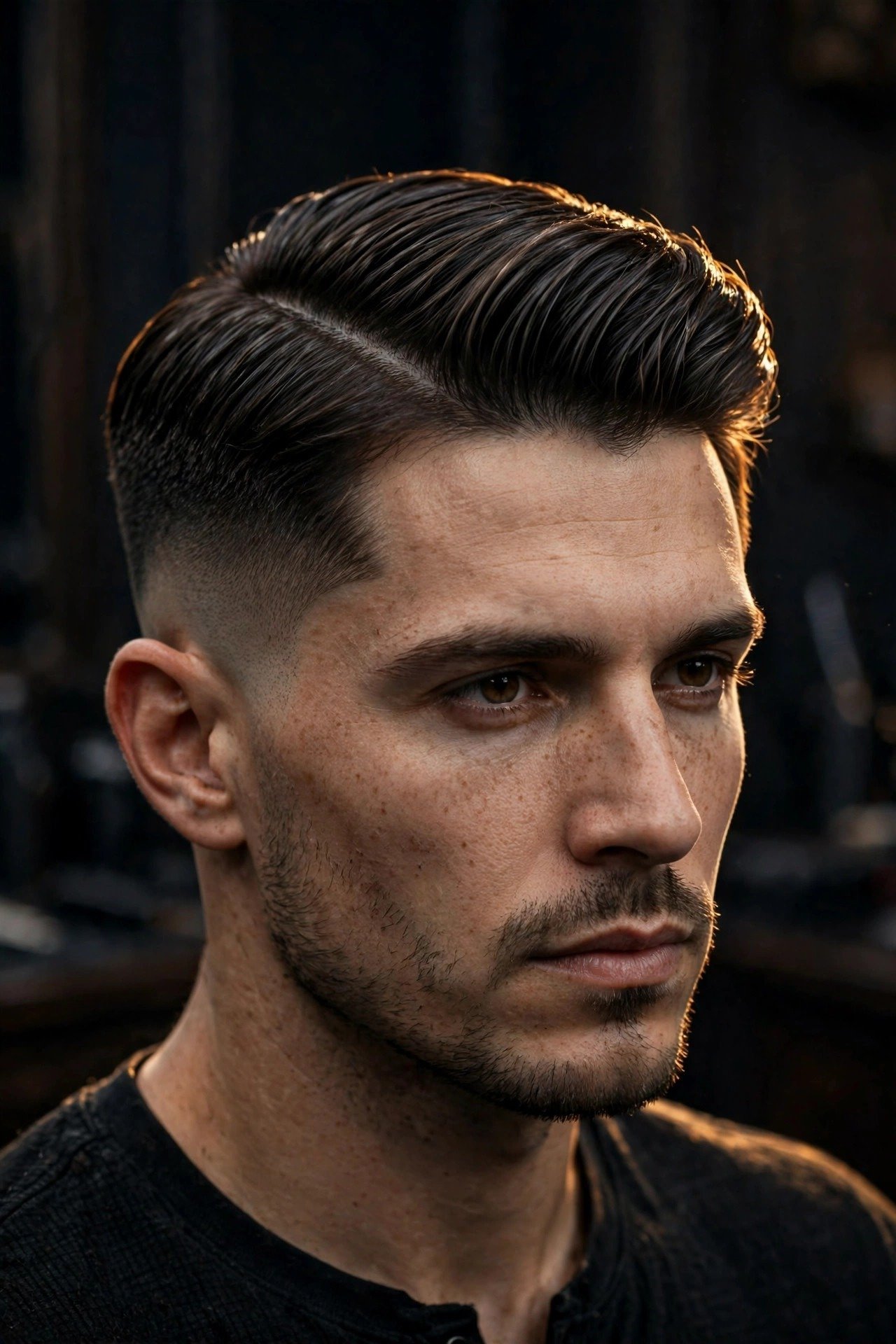
Comb Over Fade Men 2026: 36 Sharp, Polished Styles
The comb over fade men are asking for in 2026 is not your grandfather’s comb over. It is a sharp, modern barbershop staple: hair swept cleanly from a defined side part over a precise fade that melts the sides into skin. Ask any barber what the most requested version of the comb over is, and you will hear the same answer — the fade version wins because it pairs timeless neatness with the crisp contrast today’s cuts demand. In this guide you will find 36 polished comb over fade styles for 2026, each with a barber-ready script, honest styling advice, and the maintenance truth nobody tells you at the chair.
Whether you have thick hair, fine hair, curls, or a hairline that has started its slow retreat, there is a comb over fade in this list built for you. We cover every fade level — low, mid, high, skin, taper, drop, burst, and temple — alongside finishes from boardroom matte to evening wet-look gloss. Every style below follows the same proven structure: who it suits, exactly what to tell your barber (guard numbers and fade placement included), how to style it in under five minutes, and how often you will need a cleanup. Let’s find your version.
What Is a Comb Over Fade
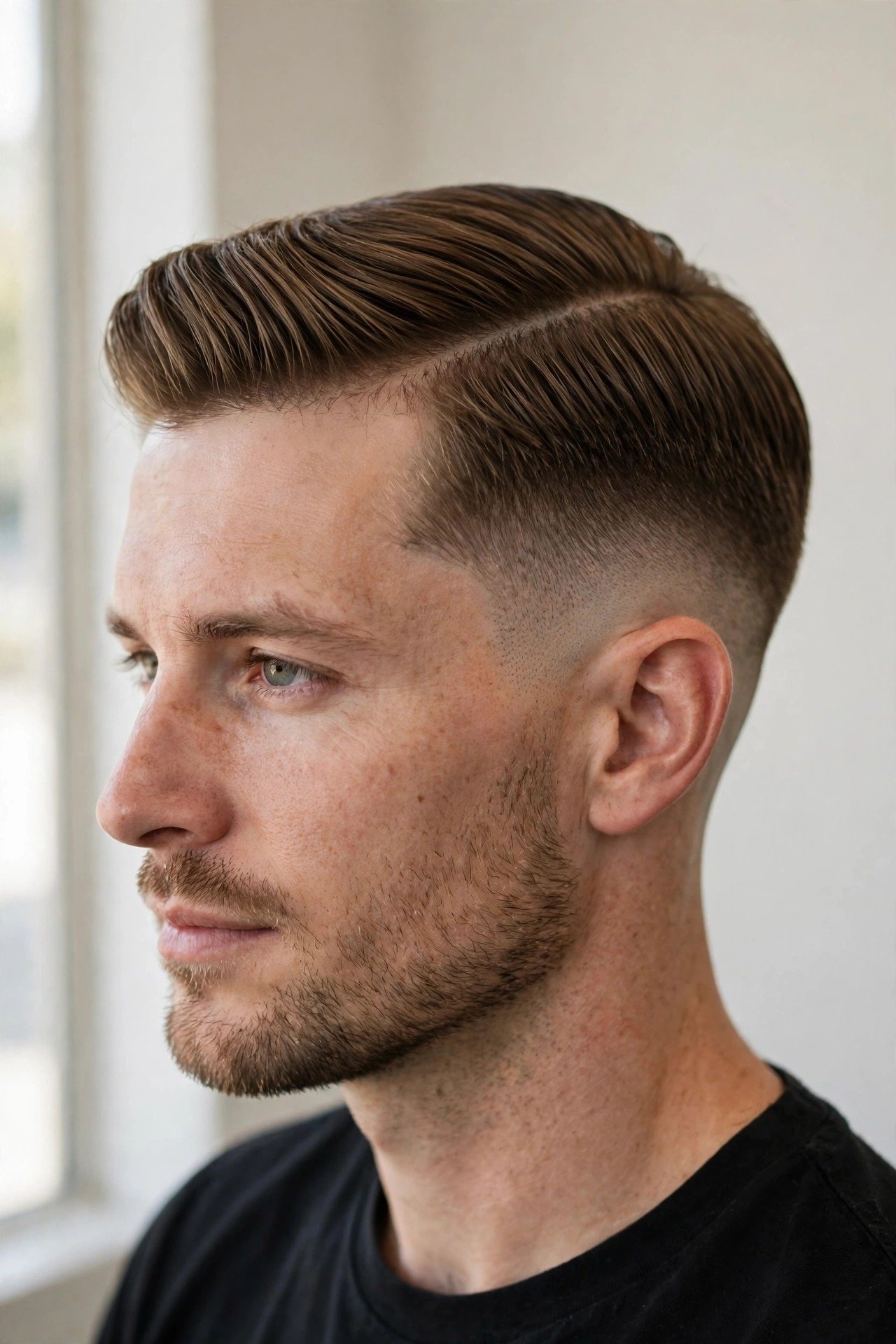
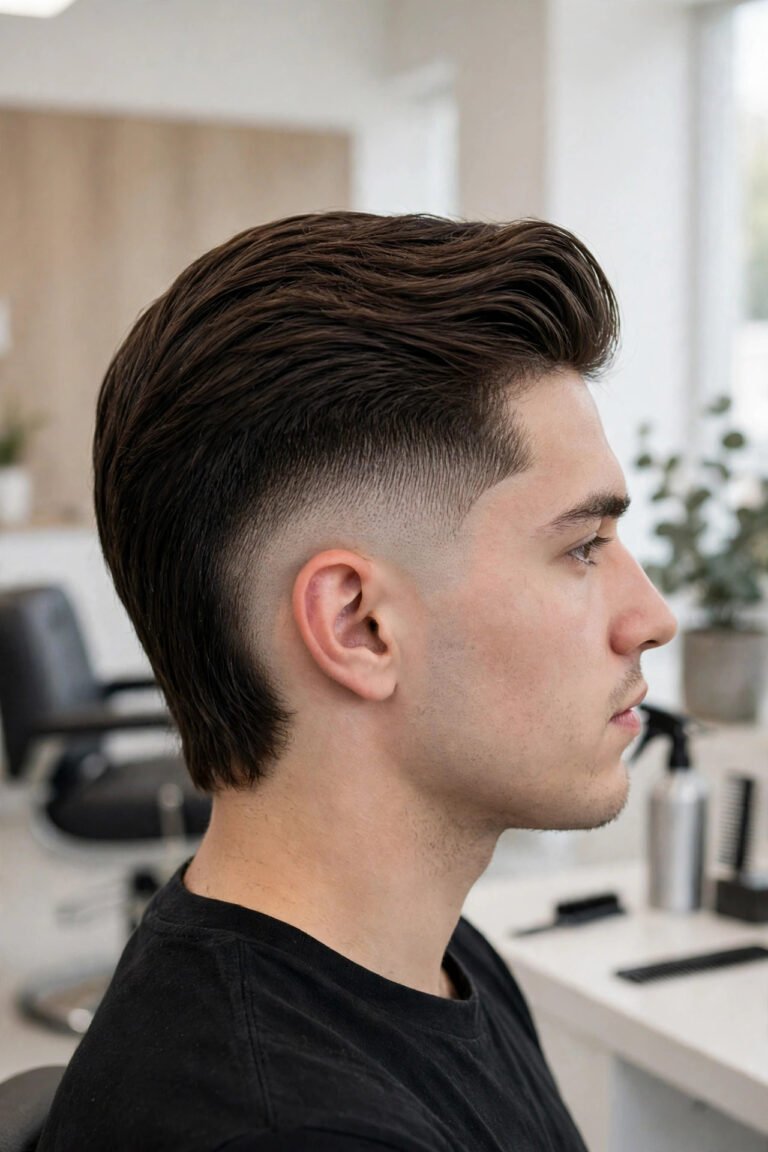
A comb over fade is a men’s haircut that combines two timeless elements into one modern shape. The top is grown long enough to be swept to one side from a clear part line, while the sides and back are faded — clipped so the hair gradually shortens from the top down toward the skin. The result is a haircut with a polished, structured top and clean, tapered edges. The fade is what separates the modern version from the old-school comb over: instead of a heavy block of hair sitting over long sides, the fade creates contrast, sharpness, and a silhouette that reads fresh from every angle.
The defined side part is the spine of the cut. It can be a natural part your barber locates by following your hair’s growth pattern, or a hard part — a razor-shaved line that makes the part permanent and razor-crisp. On top of that foundation, you choose your fade level. A low fade keeps the blend concentrated around the ears and neckline for a conservative look. A mid fade starts higher and shows more skin, hitting the modern sweet spot. A high or skin fade pushes the blend up toward the temple for maximum contrast and edge. Specialty fades like the drop fade (which arcs down behind the ear), the burst fade (a rounded halo around the ear), and the temple fade (concentrated at the sideburns) give you even more ways to tune the silhouette.
What makes the comb over fade so versatile is that the top can be anything: short and neat, long and sweeping, textured and messy, curly, wavy, or slicked back. The fade simply provides the clean frame. That flexibility is why barbers reach for it with clients of every age, hair type, and face shape — the same cut, dialed differently, serves a college student, a finance executive, and a groom on his wedding day.
Why the Comb Over Fade Is Dominating 2026
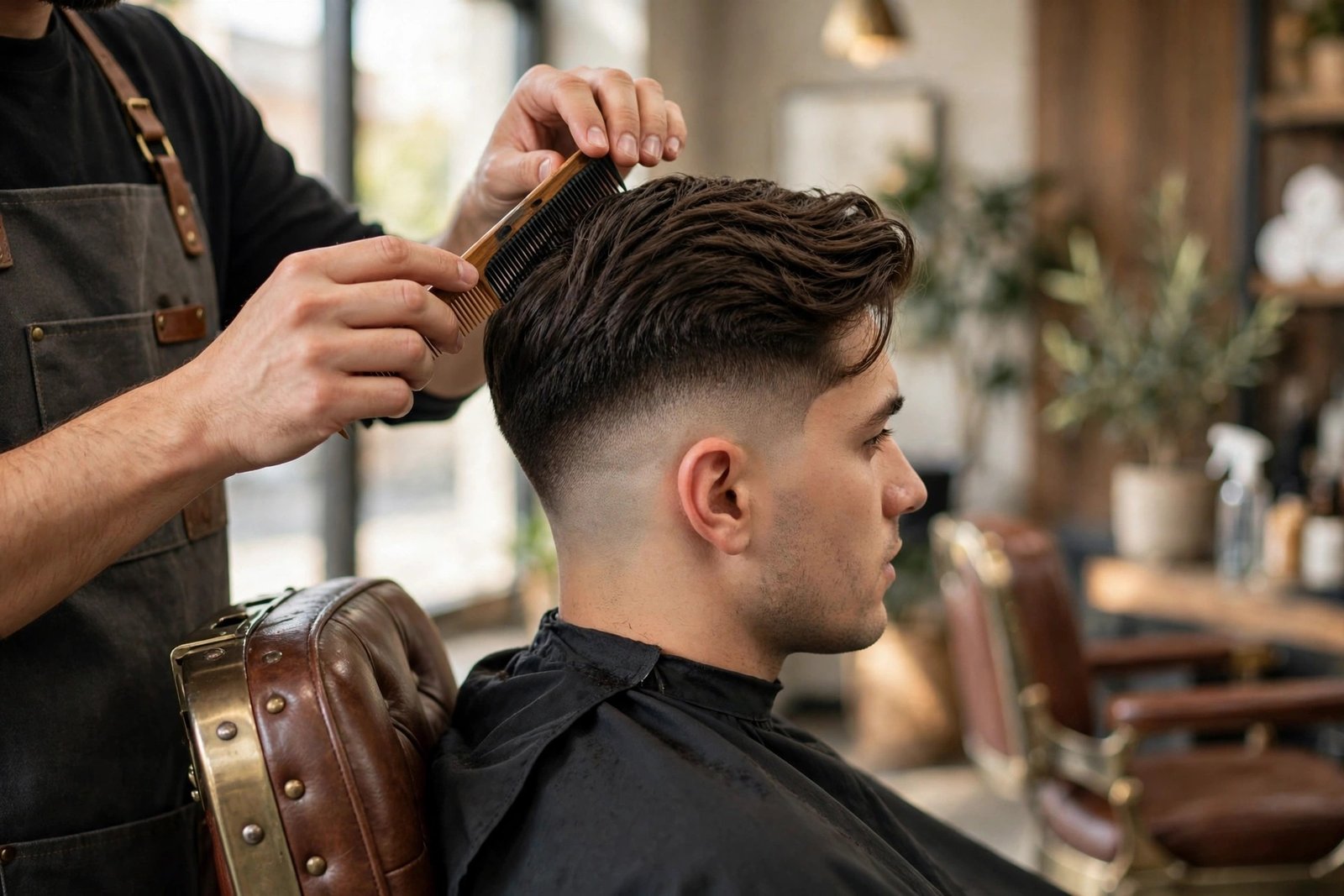
The comb over fade’s dominance in 2026 is no accident. According to StyleX Magazine, the comb over fade is the most requested version of the comb over haircut in most barbershops — and the reason is simple: it fixes the one flaw of the classic comb over, which was its heavy, dated sides. The fade lightens the whole silhouette, so the cut photographs well, grows out gracefully, and works with the texture-first styling that defines men’s hair in 2026.
Haircut Inspiration notes that the modern comb over has evolved far beyond its old-school reputation into one of the most popular men’s hairstyles in barbershops around the world. The 2026 version is defined by movement: matte pastes, sea-salt texture, and blow-dried volume have replaced the flat, greasy sweep of decades past. The cut now belongs as much to the textured-crop generation as it does to the suit-and-tie crowd — which is why you will find the same haircut styled ten different ways on any barbershop feed.
The third reason is pure practicality. A comb over fade is one of the most forgiving cuts in the barber’s arsenal. It flatters round, square, oval, and oblong faces because the height on top and the fade’s vertical lines can be adjusted to balance proportions. It handles cowlicks, whorls, and thinning crowns better than most short cuts. And it scales from a five-minute office routine to a high-gloss evening finish with nothing more than a product swap. When one cut serves that many needs, it stops being a trend and becomes the default.
1. Classic Low Fade Comb Over
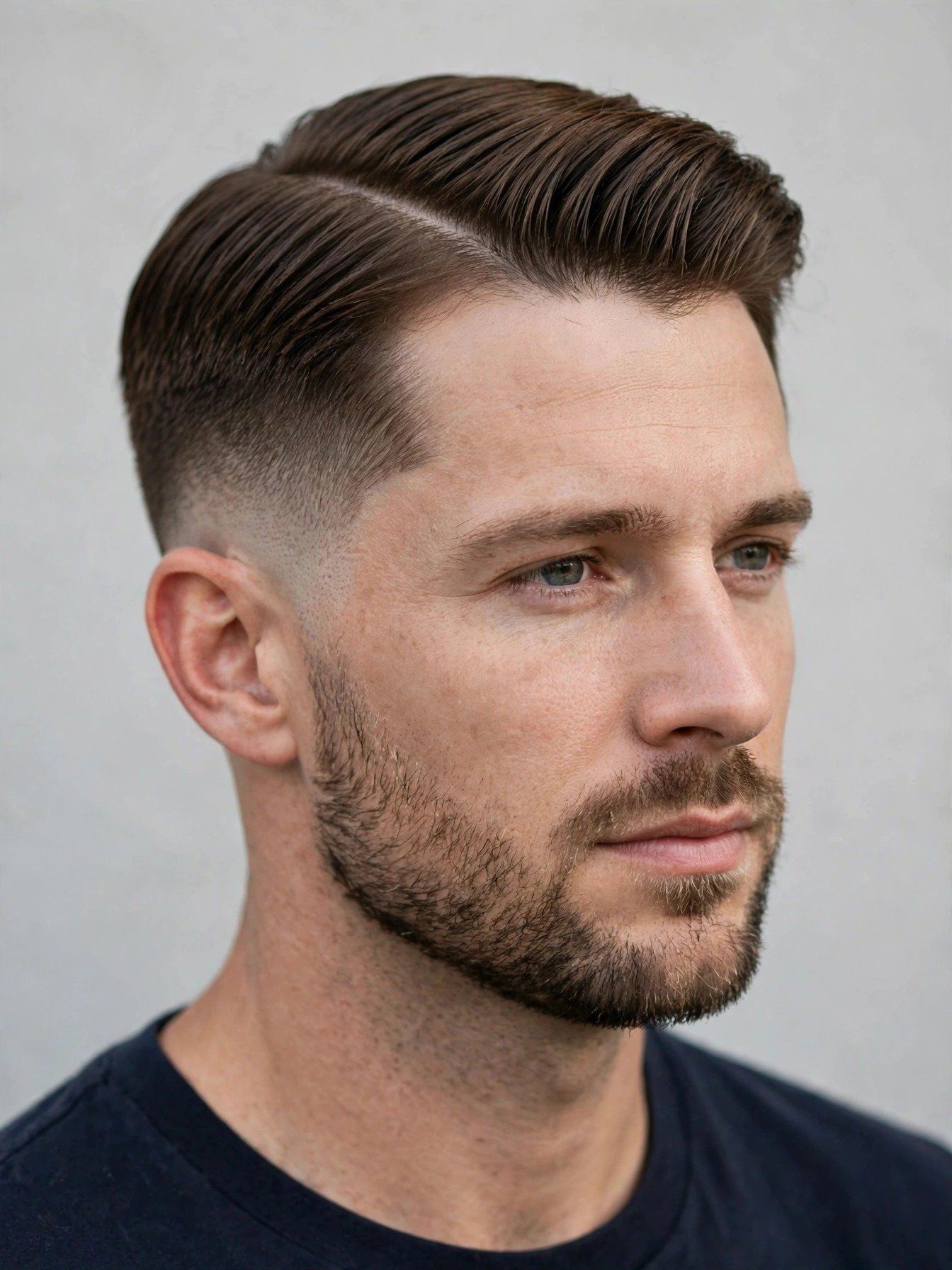
The classic low fade comb over is the purest form of the cut and the safest first choice. The top is kept at a medium length — usually two to four inches — combed neatly from a soft natural part, while the fade stays low, blending out just above the ears and around the neckline. This is the version your barber recommends when you say “clean it up but keep it classic.” It suits every face shape and every profession, and it is the most forgiving of the 36 styles here if you are trying the comb over for the first time.
Barber script: ask for a number 1 or 2 guard blended low into scissor-cut sides, with the top left two to four inches and point-cut for a soft edge. Request a natural part located by following your crown’s growth pattern. Tell your barber you want a low fade — the blend should sit no higher than an inch above the ear. If you want it even more conservative, a number 2 guard at the bottom keeps a shadow of hair instead of skin.
Styling routine: towel-dry until damp, work a pea-sized amount of medium-hold cream through from roots to tips, then comb everything over from the part in long, smooth strokes. A quick blast with the dryer on medium heat locks the direction. Maintenance: trim every three to four weeks; the low fade grows out gracefully, so you can stretch appointments without looking unkempt.
2. Mid Fade Comb Over with Texture

The mid fade comb over with texture is the 2026 default for guys who want the comb over’s polish without its stiffness. The top is point-cut or razor-cut to create separation and movement, then swept over in a relaxed, piecey way rather than combed flat. The mid fade starts at the temple and shows a clean band of skin, giving the cut its modern contrast. This version suits straight to wavy hair best and flatters oval and square faces, because the textured top softens strong jawlines while the fade keeps the edges crisp.
Barber script: ask for a mid skin fade — number 0 or 1 at the bottom blended up to the temple — with the top left three to five inches and heavily textured. Request point-cutting or slide-cutting through the ends to remove bulk and create movement. The part can stay natural and soft; tell your barber you want it to look styled but not “done,” which signals them to keep the texture visible.
Styling routine: apply matte clay or paste to dry hair, working it in with your fingers rather than a comb. Push the hair over from the part and twist small sections for separation. Five minutes, no dryer required — the texture does the work. Maintenance: trim every three weeks to keep the mid fade sharp; the textured top tolerates an extra week of growth. If you like this direction, our textured crop guide pairs naturally with it.
3. High Skin Fade Comb Over
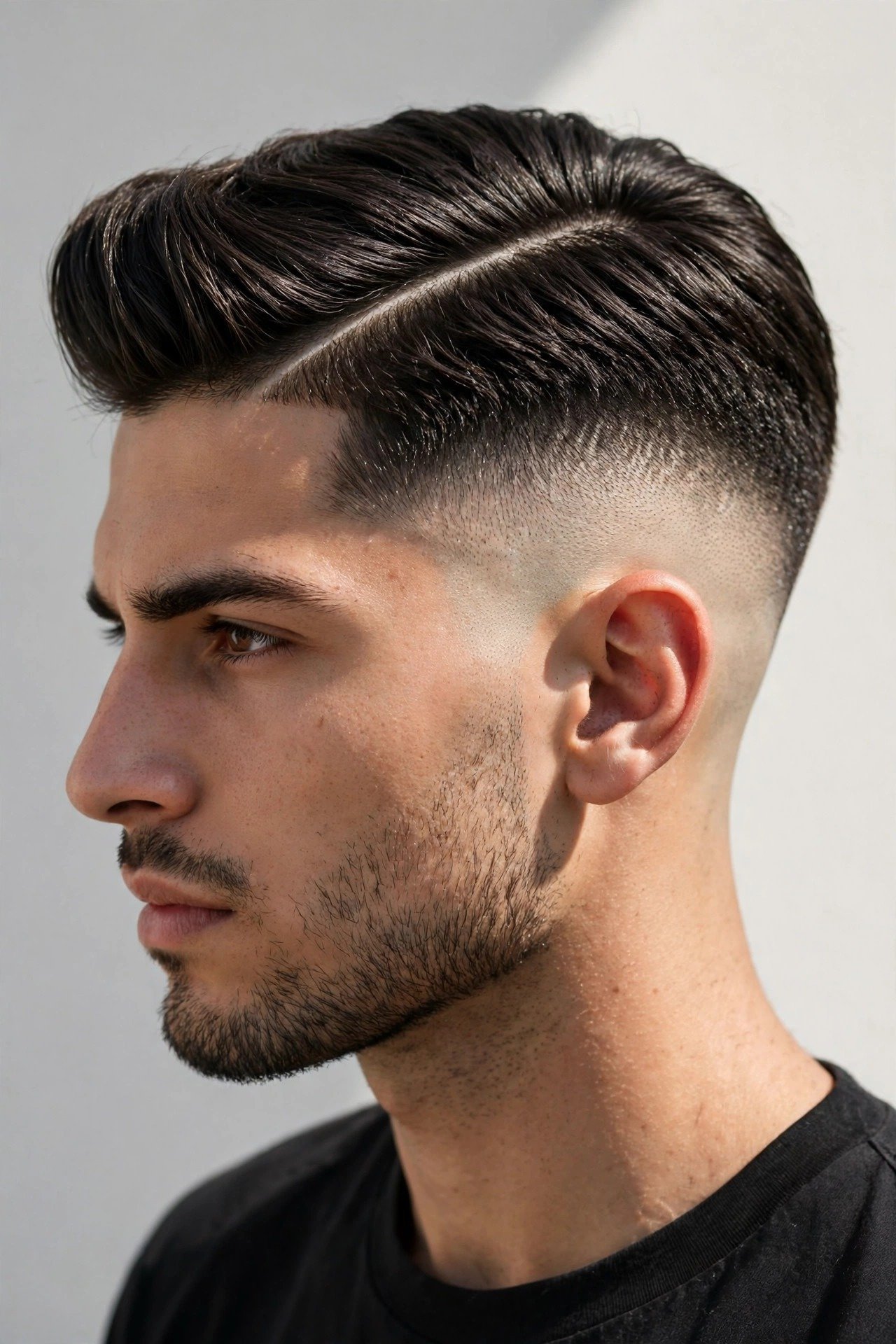
The high skin fade comb over is for guys who want maximum contrast. The fade starts high — near the temple — and blends straight down to bare skin, so the long top looks even longer and more dramatic by comparison. This is the boldest of the mainstream options here, and it reads modern and athletic. It suits thicker hair especially well, because dense hair on top against skin on the sides creates the striking two-tone effect the cut is famous for. Round faces benefit too, since the vertical lift on top adds the illusion of length.
Barber script: ask for a high skin fade with a zero or foil-shaver finish at the bottom, blended up quickly. Keep three to five inches on top with a clean part line — natural or hard, your choice. Specify that you want the fade’s transition zone kept tight and high so the contrast stays dramatic. Ask for the neckline to be tapered and cleaned with a razor for a razor-sharp finish.
Styling routine: this cut rewards a blow-dryer. Dry the top up and over from the part with a vent brush for volume, then lock it with a firm-hold matte product. The high skin fade is a high-maintenance fade — it looks best in its first week, so budget a cleanup every two to three weeks if you want it perpetually sharp.
4. Hard Part Comb Over Fade
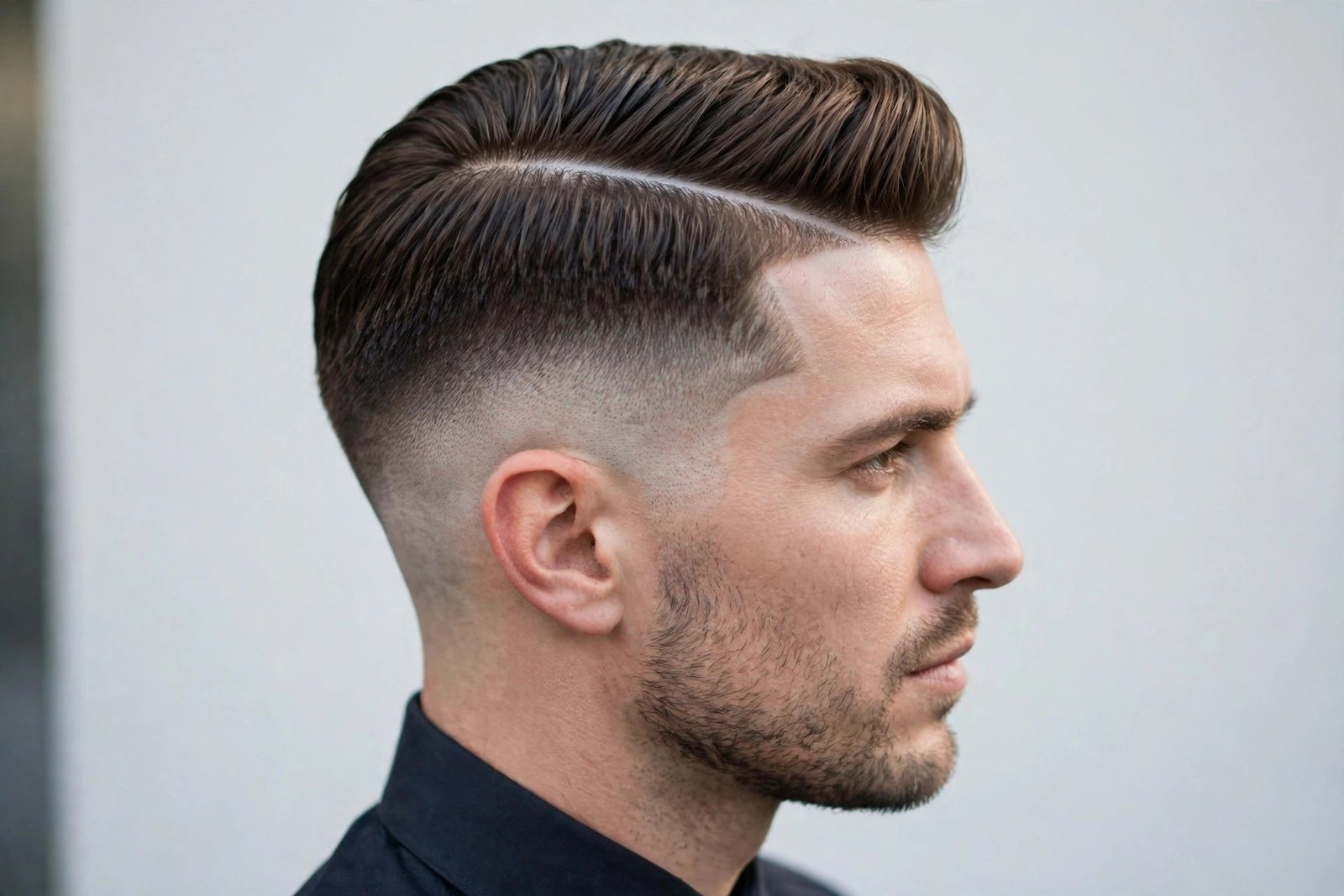
The hard part is a shaved line — cut with a straight razor or trimmer — that makes your part permanent and impossibly crisp. Paired with a comb over fade, it delivers the sharpest, most architectural version of the cut. This is the groom’s haircut, the interview haircut, the “I mean business” haircut. It suits straight and wavy hair of medium thickness, and it flatters square and oval faces by adding a strong horizontal line that balances facial proportions.
Barber script: ask for a hard part shaved in at your natural part location, with the fade level of your choice below it — low for conservative, mid for modern. The top should be two to four inches, combed away from the hard part. Tell your barber how thick you want the shaved line; a thinner line looks refined, a thicker one reads bolder. Ask them to refresh the line at every visit, since it softens within a week.
Styling routine: the hard part does half the work — your hair naturally falls into place along it. Comb over from the line with a medium-hold pomade for a polished finish, or matte paste for a modern take. Maintenance: the shaved line needs a touch-up every two weeks if you want it razor-sharp; many barbers offer a quick line-up service between full cuts. For a subtler fade pairing, our low taper fade guide shows the conservative alternative.
5. Textured Comb Over with Drop Fade
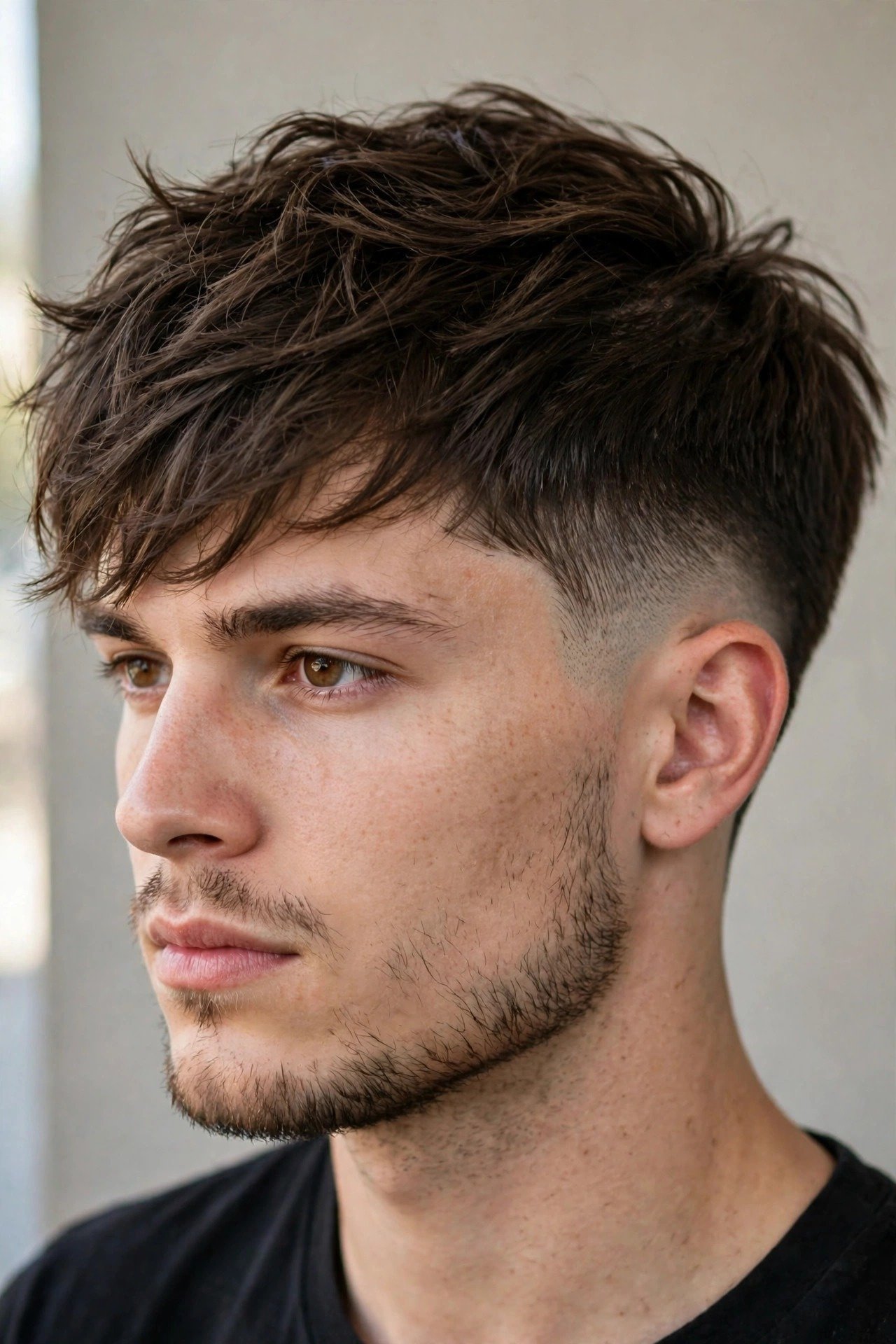
The drop fade is the connoisseur’s choice: instead of fading straight across, the blend arcs downward behind the ear, following the head’s natural curve. Paired with a textured comb over top, it creates a rounded, sculpted silhouette that looks custom-cut rather than template-cut. This combination suits wavy and straight hair with medium density, and it is one of the best options for guys with a prominent crown whorl, because the drop fade’s arc camouflages awkward growth patterns beautifully.
Barber script: ask for a drop fade starting at a mid level near the temple and dipping to a low level behind the ear. The top stays three to five inches with heavy texture through the ends. Request that the blend follow your head shape — a good drop fade is mapped to the individual, not cut to a template. Keep the fringe slightly longer than the crown so it sweeps over with weight.
Styling routine: work sea-salt spray into damp hair, rough-dry with your fingers, then finish with a small amount of matte paste pushed diagonally from the part. The drop fade’s curve keeps the back looking tidy as it grows, so this cut ages better than a standard mid fade. Maintenance: full cut every three to four weeks, with the fade’s arc holding its shape well between visits.
6. Curly Top Comb Over Fade
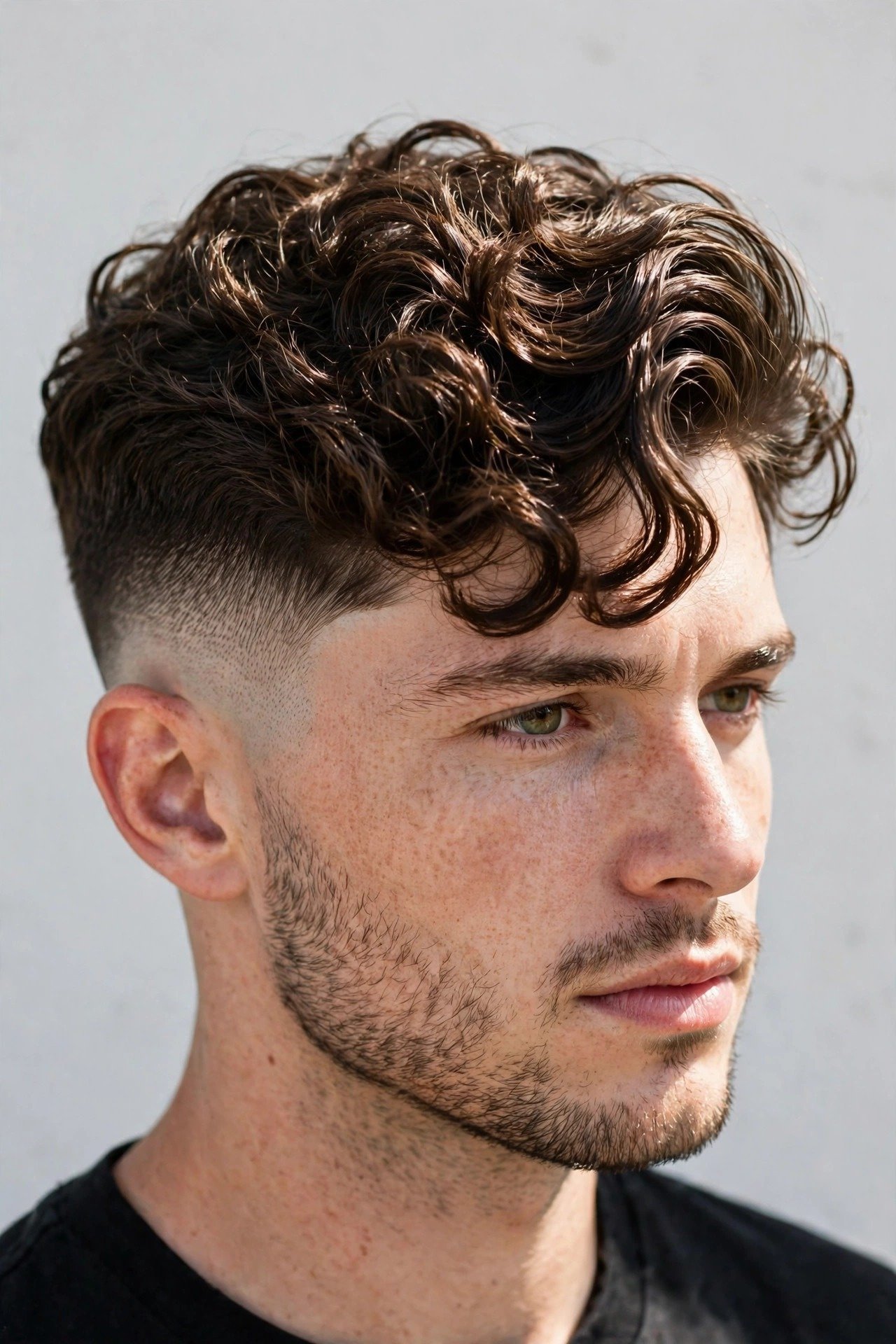
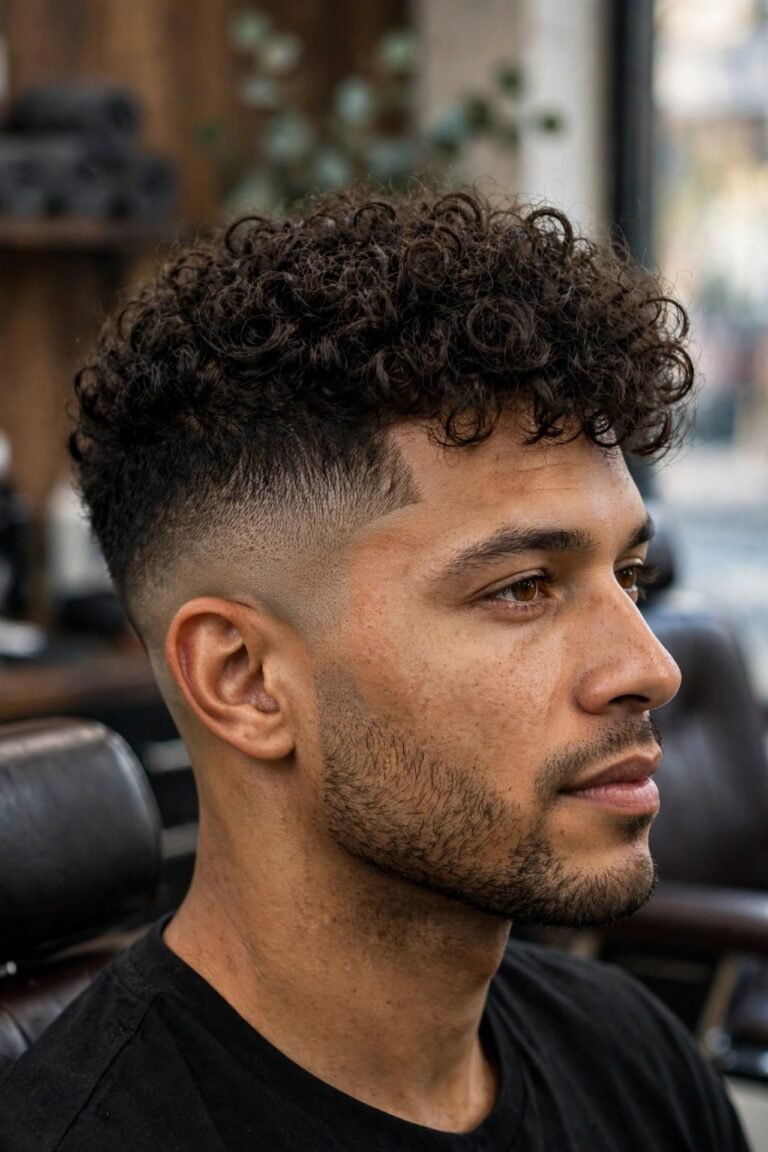
Curly hair and the comb over fade are a better match than most people assume. Keeping curls longer on top while fading the sides does two things: it removes the triangle-shaped bulk that makes curly cuts look heavy, and it gives the curls a defined direction to fall. The key is length — four to six inches on top lets curls form proper ringlets that sweep over in a deliberate direction, while the fade keeps the whole thing sharp and intentional.
Barber script: ask for a mid fade with the top left long — four to six inches — and cut curl-by-curl with scissors, never thinned with a razor. Tell your barber the curls should be shaped to fall toward your part side. Request a soft, natural part rather than a hard line, since curls do not respect razor lines the way straight hair does. If your curls are tight, ask for slightly more length than you think you need — curls shrink when dry.
Styling routine: apply curl cream to soaking-wet hair, scrunch to encourage definition, then let it air-dry or diffuse on low heat. Arrange the curls over from the part while damp and do not touch them again. Maintenance: trims every four to six weeks to reshape; the fade can be cleaned up every two to three weeks independently. Never brush curly hair dry — it destroys the definition this cut depends on.
7. Wavy Comb Over Mid Fade

Wavy hair is the comb over fade’s best friend. Natural waves give the sweep effortless movement that straight hair can only fake with product, and the mid fade frames the waves with clean structure so the cut never looks messy. This is the low-effort, high-reward version of the comb over — the waves do the styling for you. It suits medium-density wavy hair and flatters every face shape, because the soft movement balances both round and angular features.
Barber script: ask for a mid fade with three to five inches on top, cut to follow your natural wave pattern. Tell your barber to remove weight from underneath the waves rather than shortening them — this preserves the movement. A natural part works best; a hard part can fight the wave direction. Ask for the ends to be lightly textured so the waves sit over the part instead of flipping under it.
Styling routine: sea-salt spray on damp hair, scrunch, and air-dry or diffuse. That is genuinely it for most wavy guys — add a dab of cream on humid days to control frizz. Maintenance: every three to four weeks. This is one of the few comb over fades that looks better slightly grown out, since extra length means extra wave.
8. Long Top Comb Over Fade
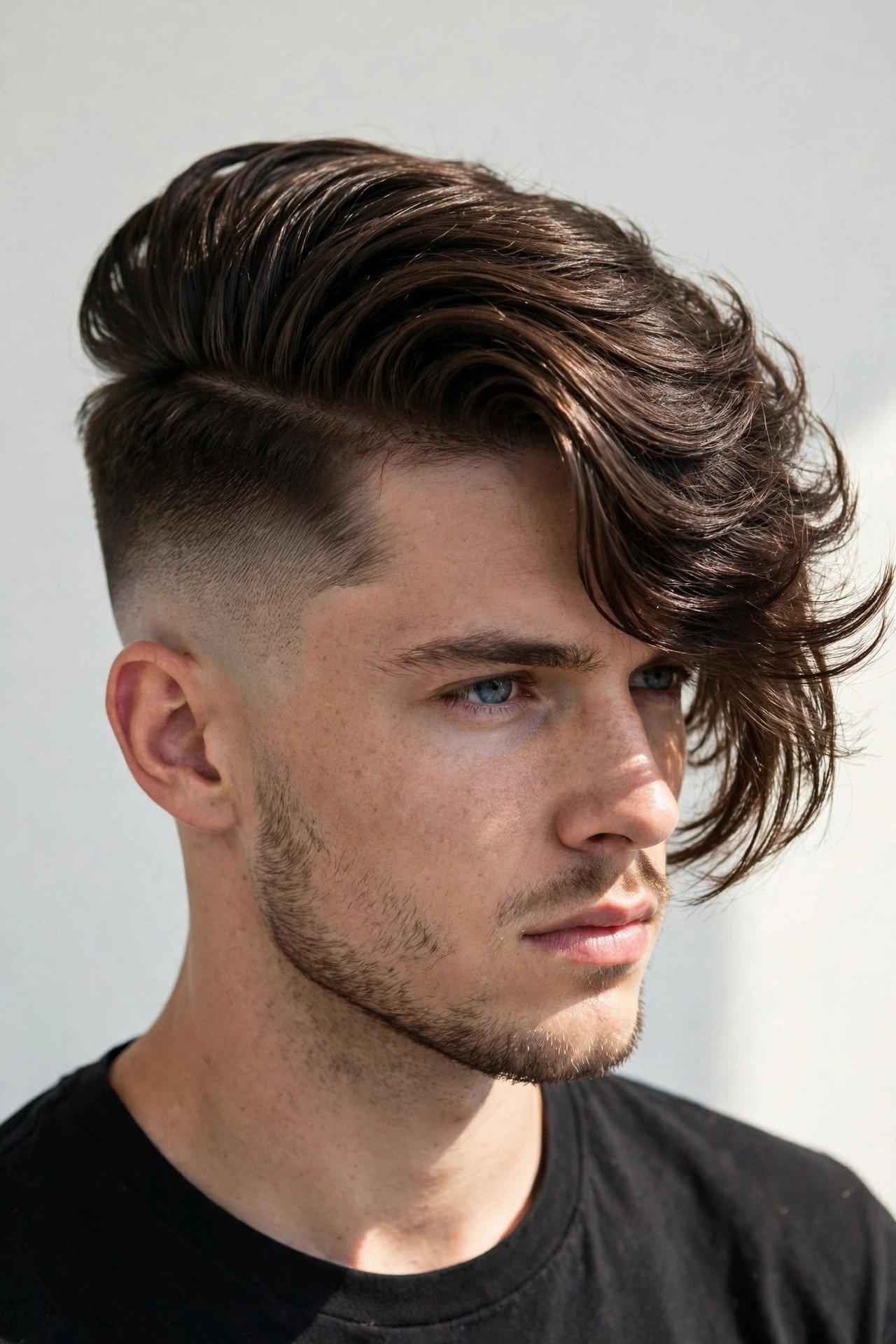
The long top comb over fade is the editorial version of the cut: five to seven inches of hair swept dramatically to one side over tightly faded sides. The contrast between the flowing top and the skin-tight sides is the whole point — it is bold, fashion-forward, and unmistakable. This suits thick, straight to wavy hair that can hold a sweep without collapsing, and it flatters longer faces because the horizontal sweep adds width where it is needed.
Barber script: ask to keep five to seven inches on top with long layers for movement, faded sides up to a mid or high level. Tell your barber the top must be long enough to reach past the part line when swept — bring a photo, because “long” means different things to different barbers. Request the fringe area be left heaviest so the sweep has weight to fall with.
Styling routine: blow-dry the top up and over with a round brush for root lift, then smooth the sweep with a medium-hold cream. A light-hold hairspray keeps the long top in place through the day without stiffness. Maintenance: the fade needs refreshing every two to three weeks to preserve the contrast; the long top can go six to eight weeks between trims. This is a commitment cut — but the payoff is a silhouette nobody forgets.
9. Short Crop Comb Over Fade
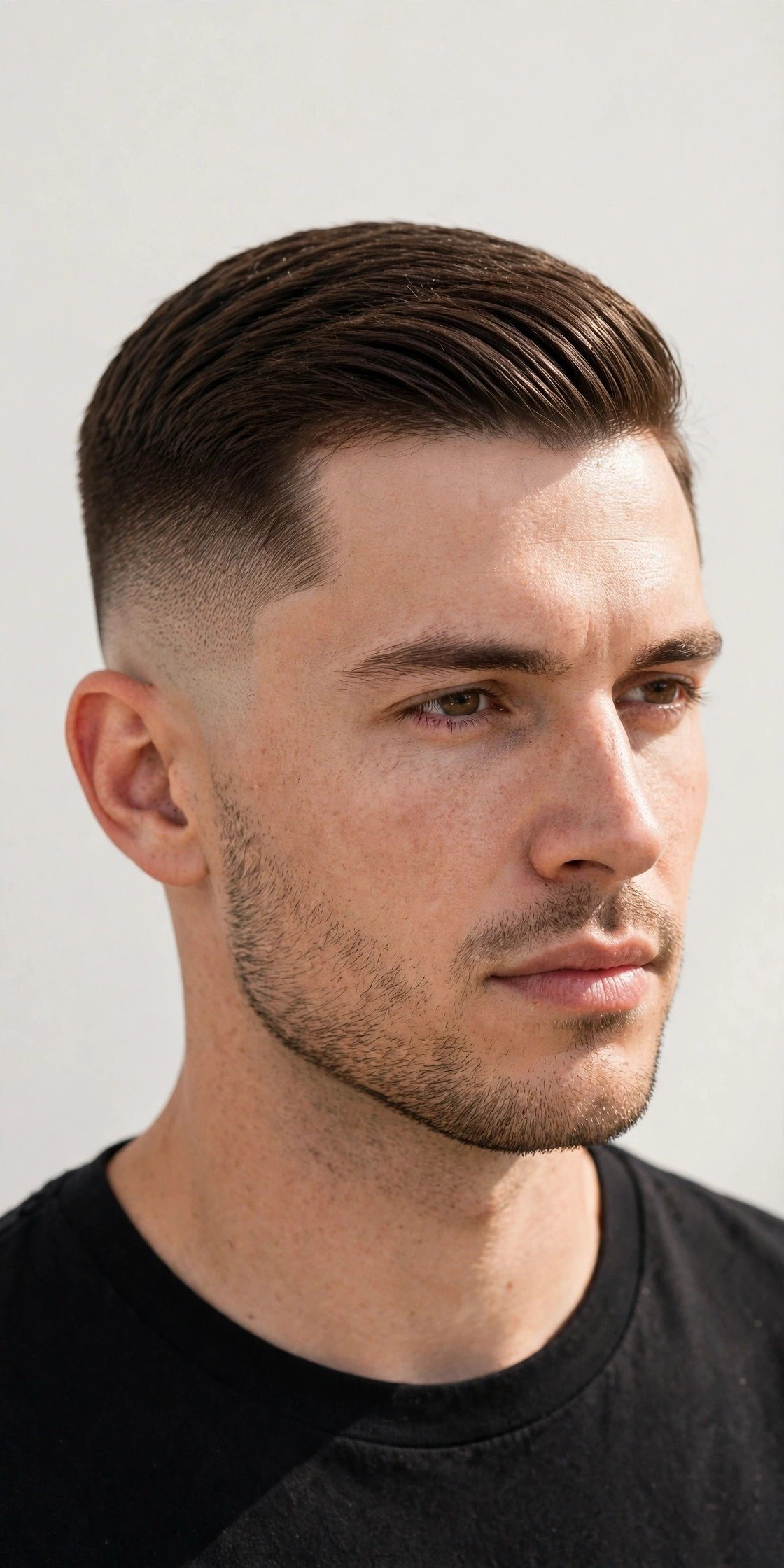
The short crop comb over fade is the minimalist’s answer: one to two inches on top, combed over with military precision, fading tight on the sides. It keeps the comb over’s structure but strips away the styling time — this is a wash-and-go cut with a part. It suits fine to medium hair and guys with active lifestyles, and it flatters strong jawlines because nothing distracts from facial structure. If you like the comb over’s neatness but hate morning routines, this is your cut.
Barber script: ask for a tight fade — number 0 or 1 blended up to a low or mid level — with the top scissor-cut to one to two inches. Request a clean natural part; at this length the part is subtle but still organizes the cut. Tell your barber you want the top textured just enough to lie in the sweep direction without sticking up.
Styling routine: a pea-sized amount of light cream on damp hair, combed over — done in sixty seconds. No dryer, no fuss. Maintenance: every two to three weeks, because short cuts show growth fast. The upside is that each appointment is quick and cheap.
10. Pompadour Comb Over Fade
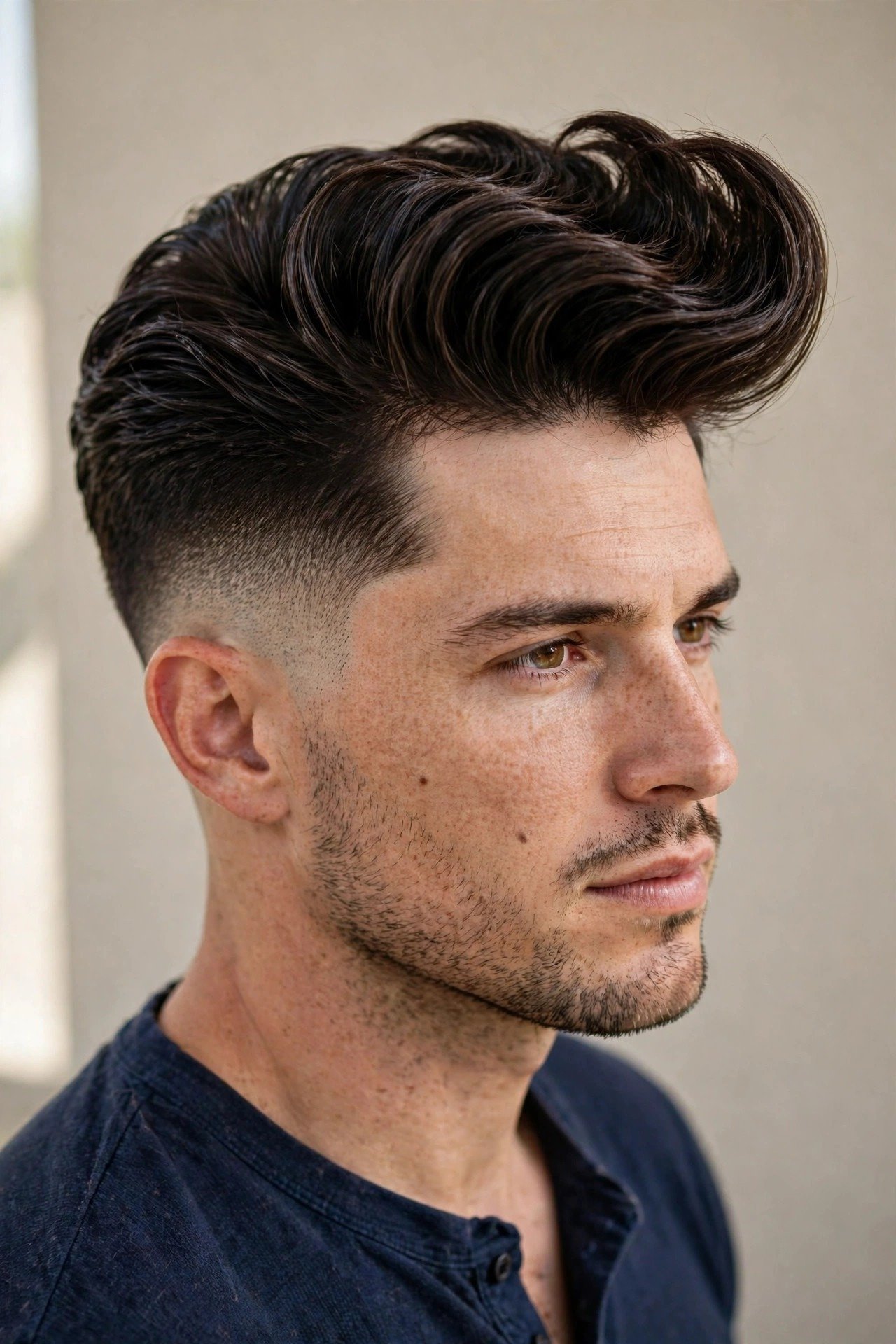
The pompadour comb over fade merges two icons: the pompadour’s front lift with the comb over’s side sweep. Hair is lifted high at the front and swept back-and-over, creating dramatic height that fades cleanly at the sides. This is a statement cut — it suits confident dressers, creative professionals, and anyone who wants their haircut noticed. It flatters round and square faces by adding serious vertical length, and it works best on thick hair that can hold height.
Barber script: ask for a mid or high fade with four to six inches on top, longest at the front. Tell your barber you want pompadour height at the front flowing into a comb over sweep toward the back. The sides of the top should be scissor-cut to blend into the fade without losing the top’s volume. Bring reference photos — the pompadour-to-comb-over ratio is personal.
Styling routine: blow-dry the front upward and back with a round brush, building height. Work a strong-hold pomade through the top and sweep it over, keeping the front lift intact. Finish with hairspray. Maintenance: every three weeks to keep the fade and the front length balanced. For more height-focused inspiration, our modern mullet guide explores dramatic length contrast too.
11. Slick Back Comb Over Taper Fade
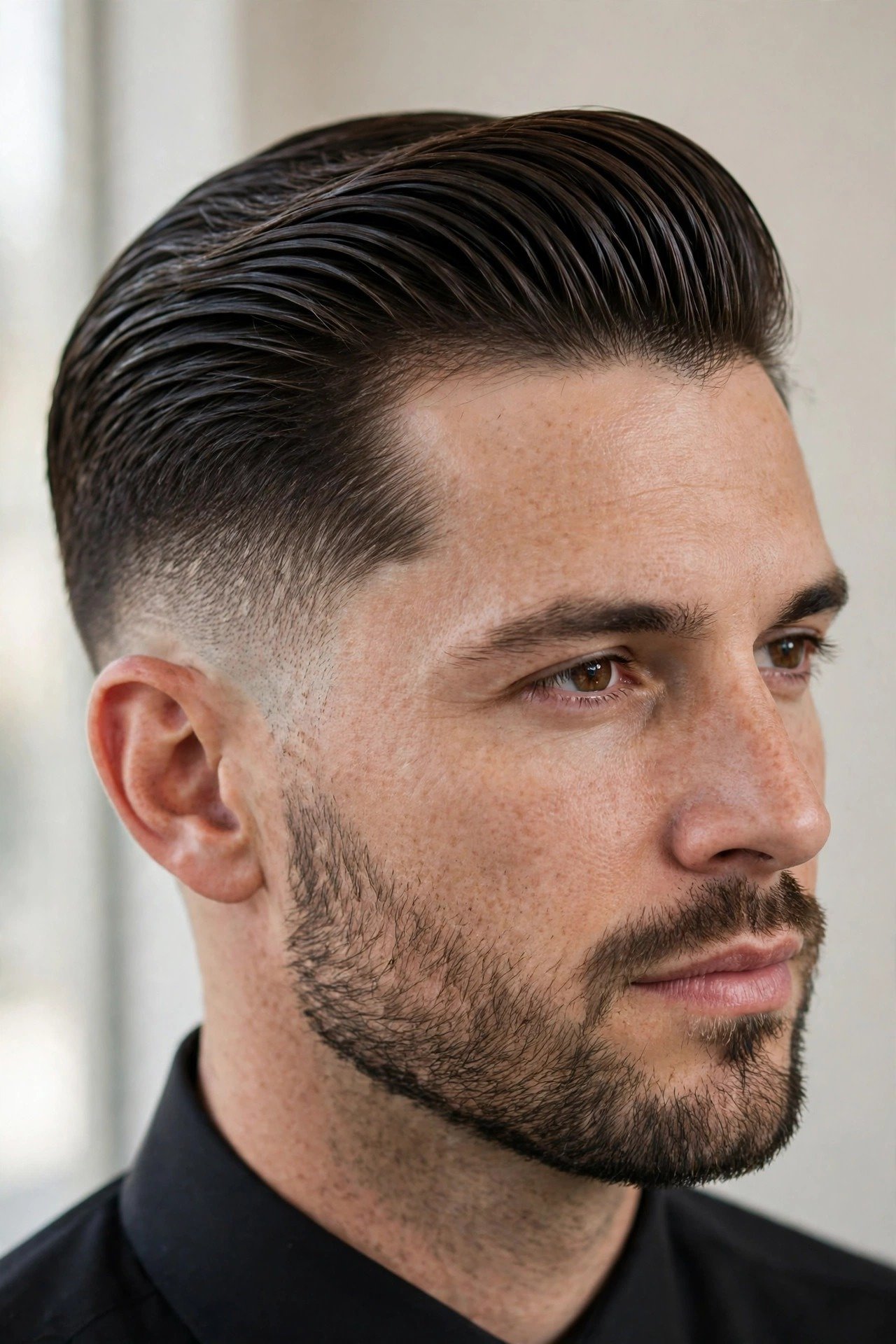
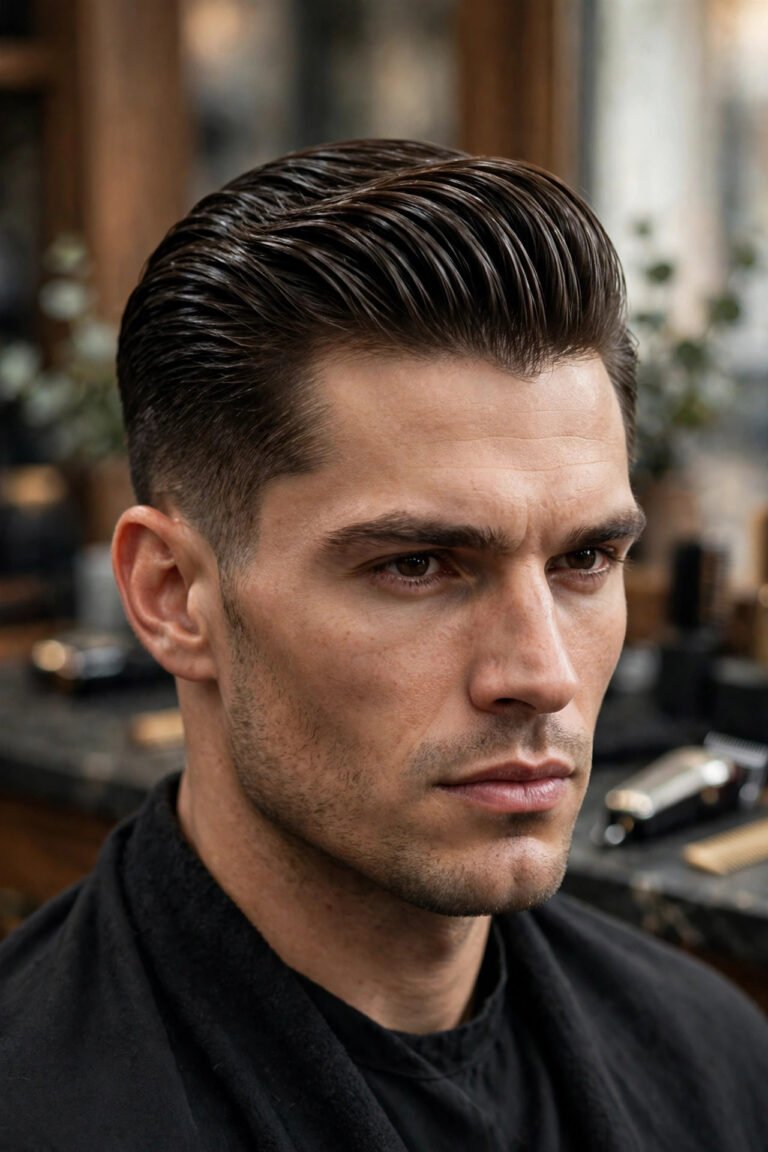
The slick back comb over taper fade is the boardroom assassin of this list. The top is slicked back and slightly over with a glossy finish, while a subtle taper — not a full fade — keeps the sides neat without showing skin. It reads power, control, and old-money polish. This suits straight, medium-to-thick hair and flatters oval and rectangular faces, because the backward sweep elongates without adding unwanted width.
Barber script: ask for a taper (not a skin fade) — the sides should graduate down but keep length, especially around the sideburns and nape. Keep three to five inches on top, scissor-cut for a smooth, layer-free surface that slicks cleanly. Specify a natural part; the slick should flow back and slightly over rather than straight back.
Styling routine: apply pomade with shine to damp hair and comb straight back, then nudge the top slightly toward your part side for the comb-over angle. A fine-tooth comb gives the sleekest result. Maintenance: every three to four weeks; tapers grow out more gracefully than skin fades. Reapply a small amount of pomade midday to refresh the gloss.
12. Side Part Low Taper Comb Over
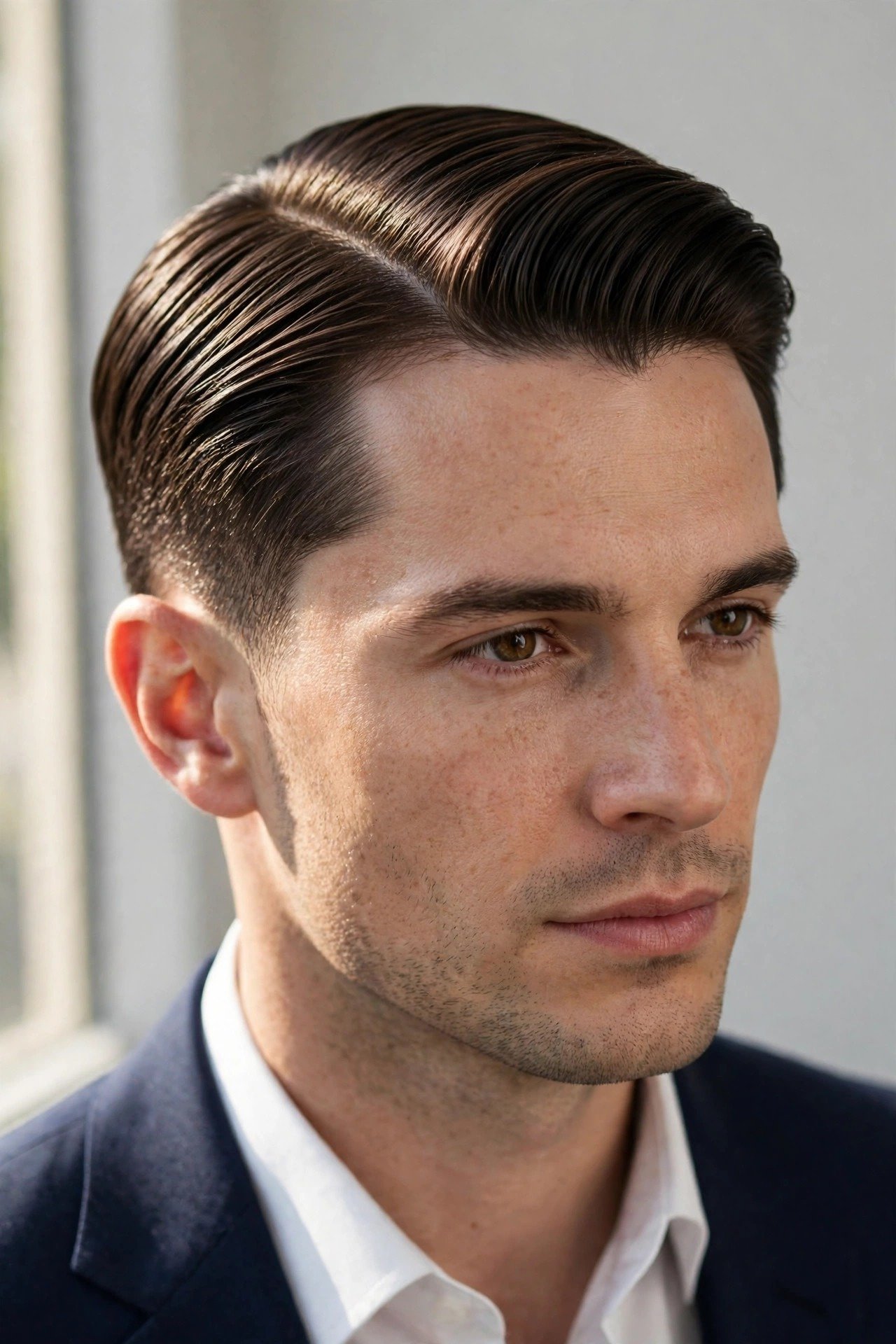
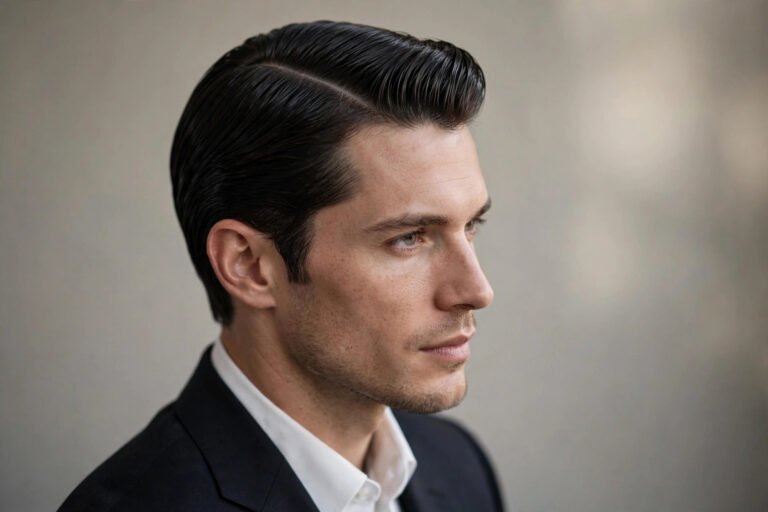
The side part low taper comb over is the gentleman’s default — a deep, classic part, hair combed over smoothly, and a low taper that keeps everything tidy without any skin showing. It is the least aggressive cut on this list and the most universally appropriate: weddings, funerals, job interviews, first dates. It suits all hair types except very curly, and it is the best choice for guys who need a haircut that never raises eyebrows.
Barber script: ask for a low taper with scissor-over-comb blending — no clippers high on the head. The top stays two to four inches with a deep side part placed where your hair naturally divides. Request clean, even ends rather than texture; this cut’s elegance comes from its smoothness. Tell your barber you want the taper to keep the sideburns and neckline crisp.
Styling routine: classic and simple — damp hair, a touch of medium-hold cream or light pomade, comb from the deep part in smooth strokes. Maintenance: every three to four weeks. This cut’s simplicity is its strength: it always looks intentional, never over-styled.
13. Burst Fade Comb Over
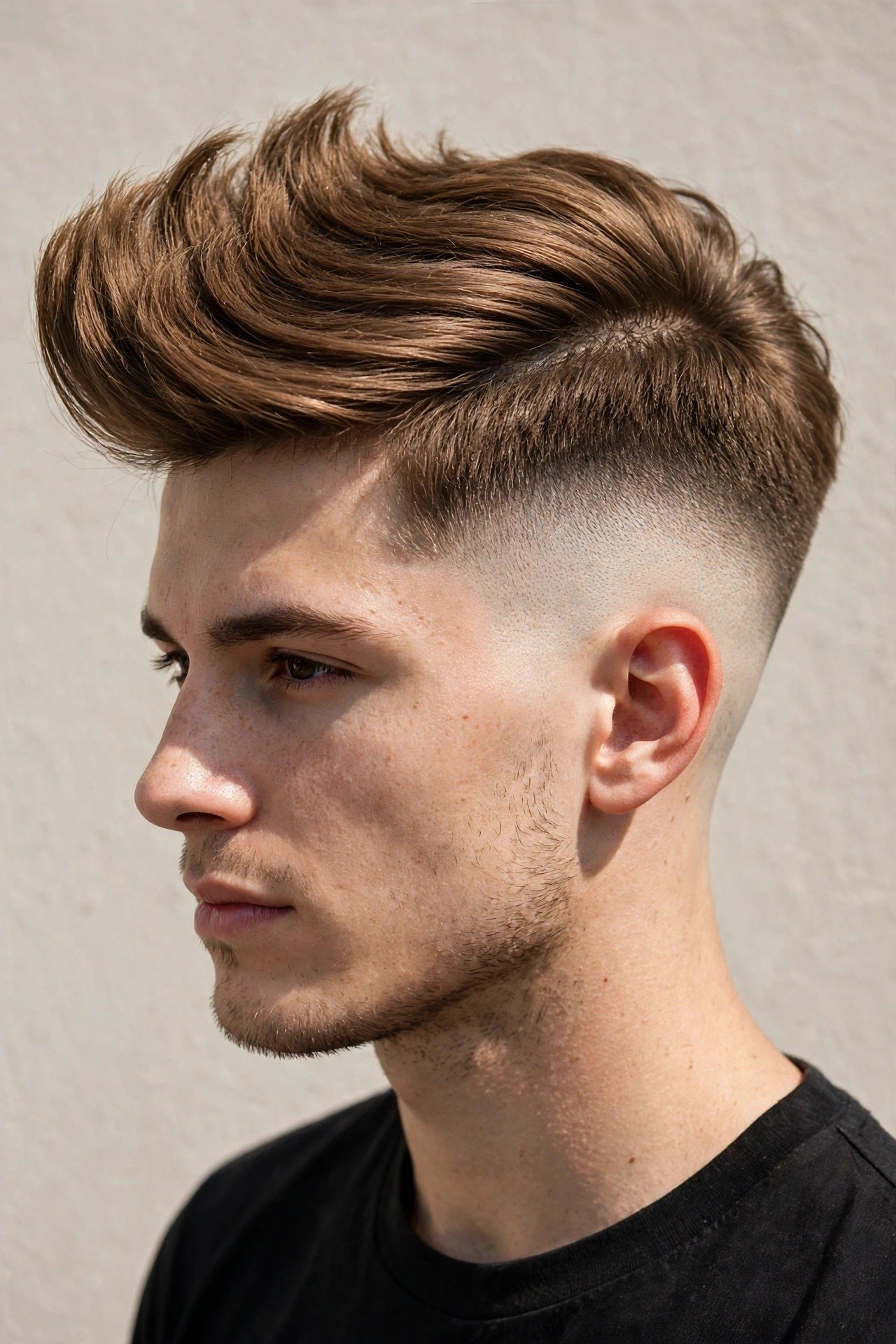
The burst fade comb over brings streetwear energy to the classic sweep. The fade bursts in a rounded halo around the ear while the hair behind and above stays full, creating a mohawk-inspired silhouette that frames a long top. It is a favorite among younger guys and athletes — bold, modern, and photogenic. It suits thick hair best and flatters oval and oblong faces, because the rounded burst adds width at the sides.
Barber script: ask for a burst fade — the blend should arc around the ear in a semicircle — with three to five inches on top combed over. The neckline behind the ear stays longer than in a standard fade; make sure your barber understands the burst shape, because it is easy to cut as a regular fade by mistake. Keep the top’s fringe long enough to sweep with weight.
Styling routine: matte paste worked through dry hair, swept over with your fingers for a natural finish. The burst fade’s shape keeps the sides looking intentional as it grows. Maintenance: every two to three weeks — the burst’s curved line blurs faster than a straight fade, so stay on schedule.
14. Temple Fade Comb Over
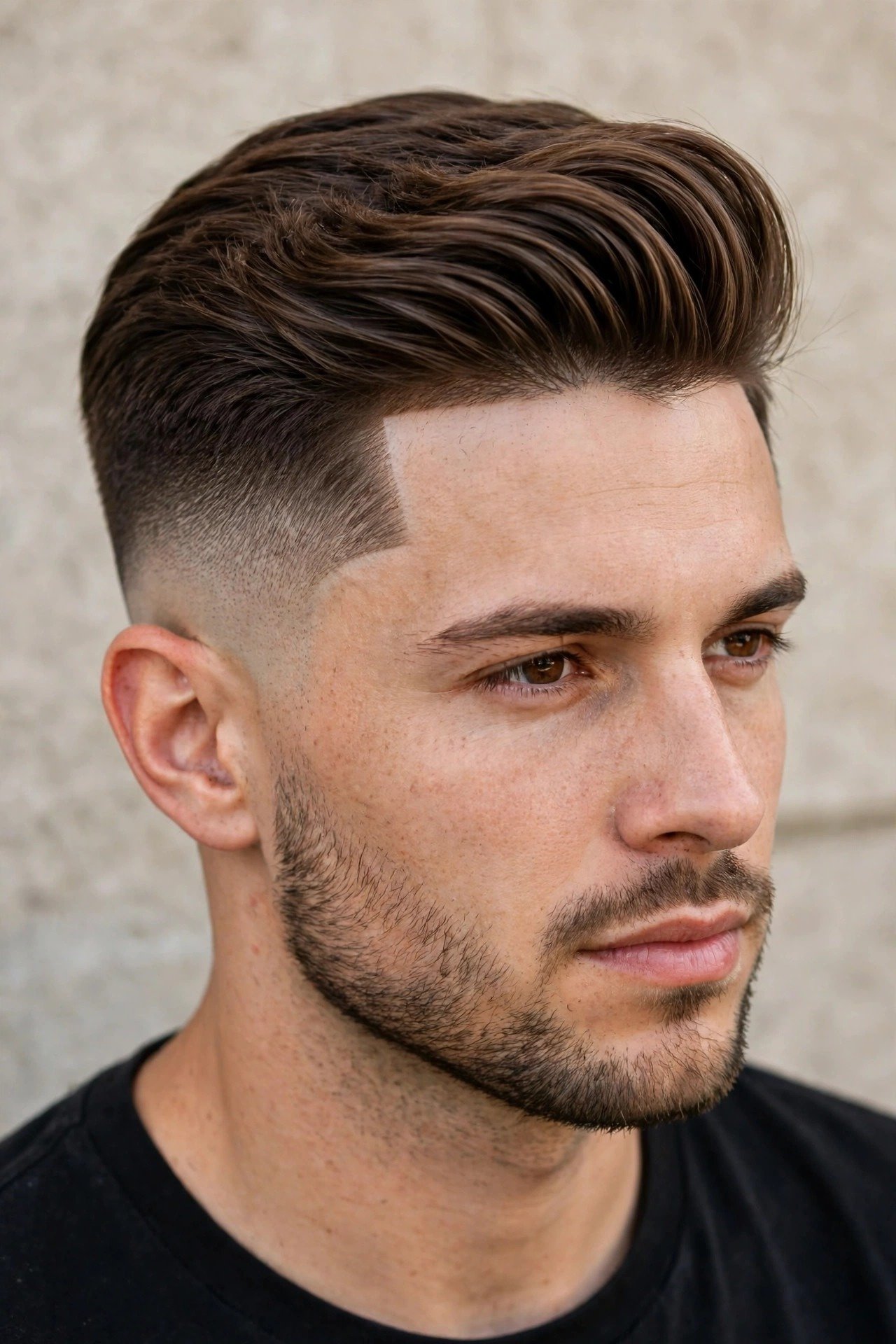
The temple fade — also called the temp fade — concentrates the fade at the temples and sideburns, leaving the rest of the sides relatively full. Paired with a comb over, it creates a sharp, angular detail right at the hairline that frames the face beautifully. This is a subtle-modern choice: from the front it looks like a classic comb over, but the crisp temples reveal the craft. It suits all hair types and is excellent for guys with strong hairlines who want to show them off.
Barber script: ask for a temple fade with the sides otherwise scissor-cut or lightly tapered. The top stays two to four inches, combed over from a natural or hard part. Specify that the fade should be tight and clean at the temples — this detail is the whole point. Ask for the lineup to be razor-sharp.
Styling routine: standard comb over routine — cream or pomade, comb over from the part. The temple fade needs no special styling; it is a barber detail, not a styling one. Maintenance: the temples blur quickly, so book a lineup every two weeks if you want the sharpness constant. Full cuts can stretch to four weeks.
15. Comb Over Fade with Beard
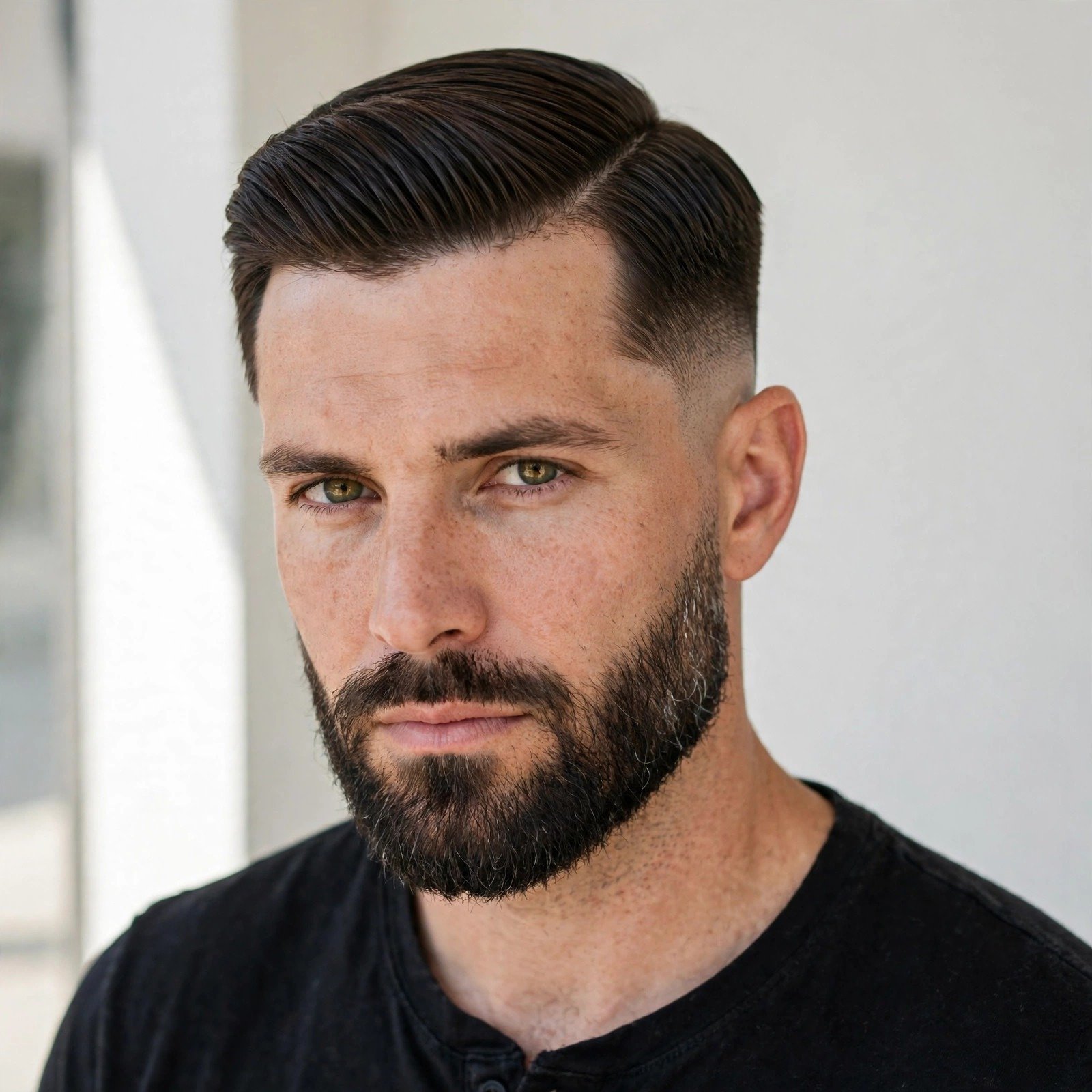
A comb over fade paired with a well-kept beard is one of the most complete looks a man can wear — sharp on top, rugged below, with the fade acting as the bridge between them. The key is balance: the beard’s fullness should echo the top’s length so the two feel intentional together. This combination suits guys with strong beard growth and flatters longer faces, because the beard adds width at the jaw while the fade keeps the sides clean.
Barber script: ask for your chosen fade level with a comb over top, then have your barber shape the beard in the same session. The critical detail is the transition: the fade should blend down into the beard’s cheek line so there is no harsh disconnect. Tell your barber you want the beard’s cheek line carved clean and the neckline defined — an unkempt beard ruins a precise haircut.
Styling routine: style the hair as usual, then apply beard oil and brush the beard downward into shape. Keep a beard trimmer at home for weekly cheek-line touch-ups. Maintenance: haircut every three weeks, beard shaping every two. The two grow at different rates, so they need independent schedules.
16. Bald Fade Comb Over
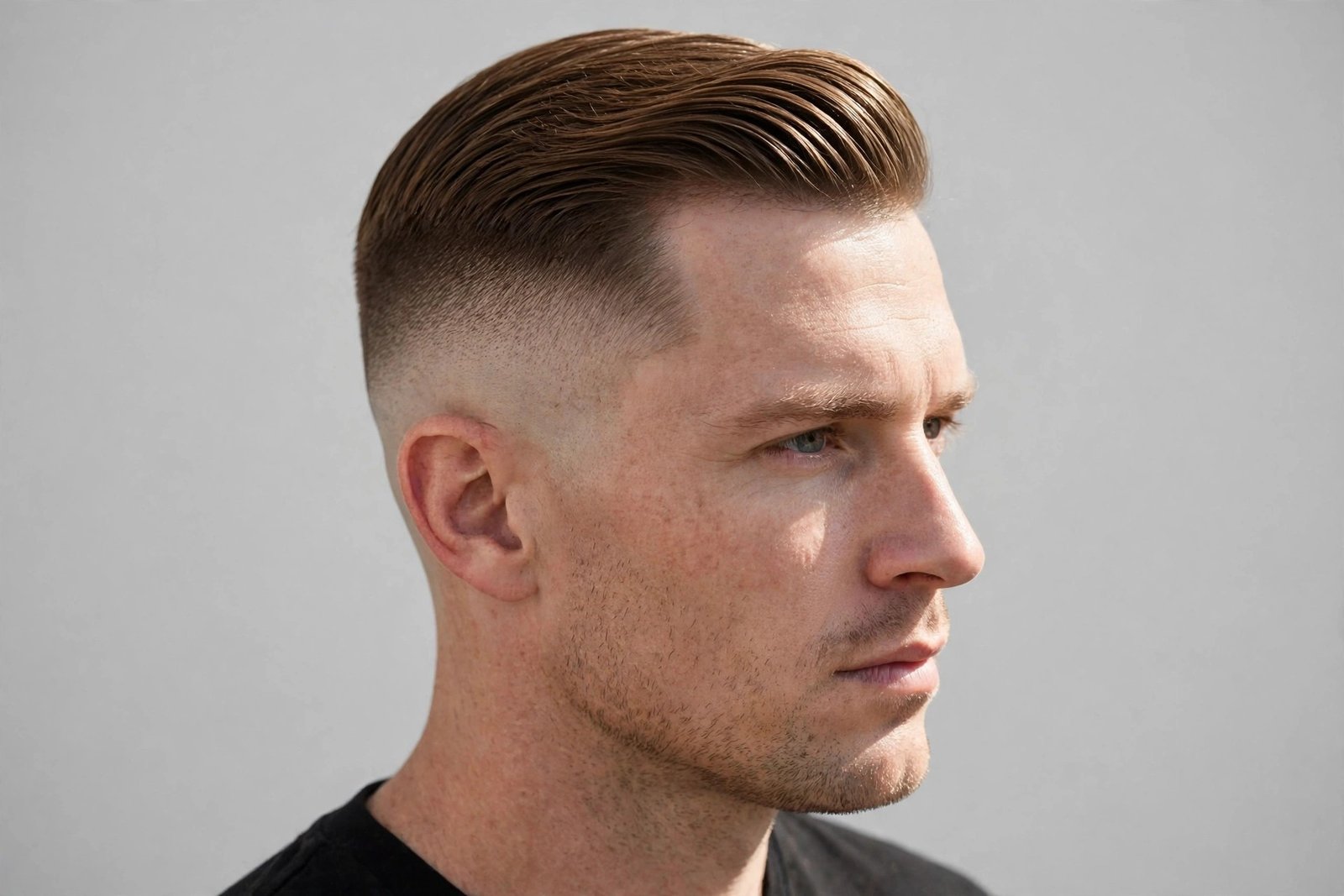
The bald fade — also called the skin fade — takes the sides all the way down to bare skin, creating the maximum possible contrast with the combed-over top. It is crisp, clean, and unapologetically modern. This suits thick, dark hair best, where the pale-to-dark contrast is most dramatic, and it flatters guys with defined bone structure because nothing hides the face. Fair warning: it is the highest-maintenance fade on this list.
Barber script: ask for a bald fade to your preferred height — low, mid, or high — finished with a foil shaver or straight razor for a truly skin-tight blend. Keep two to five inches on top with a defined part. Specify a razor-clean neckline and lineup; at this contrast level, any fuzz shows. Ask your barber to show you the blend in a hand mirror before you leave — bald fades have nowhere to hide mistakes.
Styling routine: the top styles like any comb over — blow-dry for volume, finish with matte product. The bald fade itself needs no styling. Maintenance: every two weeks, no exceptions. A bald fade starts looking grown-out at day ten, so this cut commits you to the barber’s chair.
17. Office-Ready Subtle Comb Over Fade
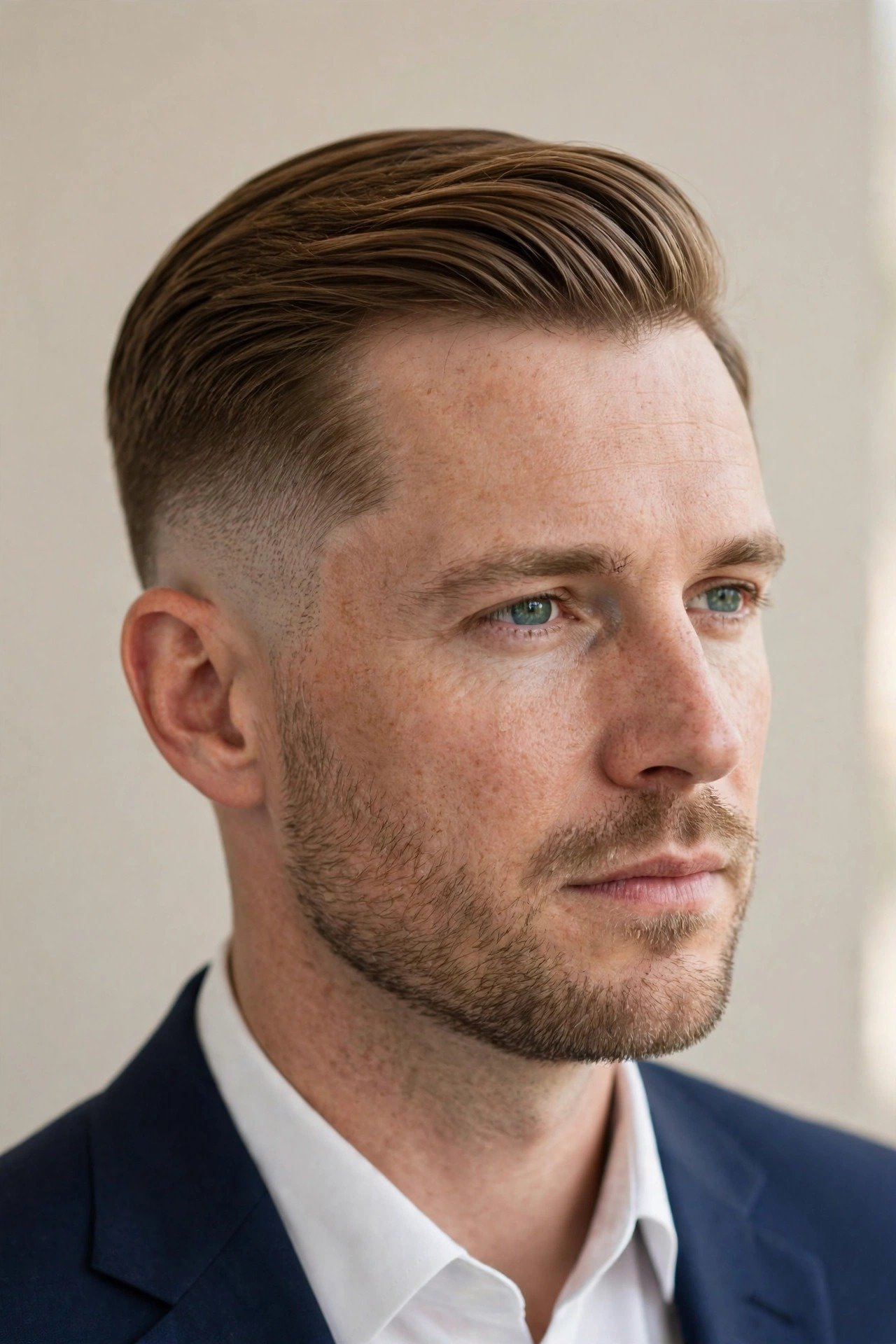
The office-ready comb over fade is engineered for conservative workplaces: a neat, medium-length top combed over smoothly, with a low fade that reads as “tidy” rather than “trendy.” No skin, no hard part, no drama — just a haircut that looks expensive and appropriate in every meeting. It suits all hair types and face shapes, and it is the right choice for finance, law, consulting, and any client-facing role where your haircut should never be the topic.
Barber script: ask for a low fade using a number 1 or 2 guard at the shortest — no skin. The top stays two to three inches, combed over from a natural part. Tell your barber you want it conservative and clean; the magic words are “I’d wear this to a board meeting.” Request scissor work on top for a soft, natural finish rather than choppy texture.
Styling routine: light cream on damp hair, combed over — the simplest routine on this list. A matte finish keeps it modern; avoid high-shine products that can read dated in conservative offices. Maintenance: every three to four weeks. This cut’s low fade grows out so gracefully that you can push appointments without worry.
18. Disconnected Comb Over Fade

The disconnected comb over fade removes the blend between the top and sides entirely — the long top ends in a visible line where the short fade begins. It is a bold, editorial choice that turns the comb over into a statement. This suits thick, straight hair that can hold the dramatic length difference, and it flatters angular faces because the hard disconnect echoes strong bone structure. It is not subtle, and that is the point.
Barber script: ask for a disconnect — explicitly tell your barber you want no blend between the top and the faded sides. Keep four to six inches on top with a hard part or deep natural part. The fade can be any level; a high skin fade maximizes the drama. Bring photos, because the disconnect’s placement changes the whole look.
Styling routine: the disconnect only works if the top is styled deliberately — blow-dry it over with volume and finish with a strong-hold product. A lazy disconnect looks like a growing-out mistake. Maintenance: every two to three weeks; the disconnect line blurs fast and must be re-cut crisply. Our Edgar cut guide covers another bold disconnect-adjacent style if this direction appeals to you.
19. Comb Over Fade with Design Line

A shaved design line — a single razor-etched line running through the fade — turns a clean comb over into wearable barber art. The line usually arcs along the part or through the fade’s transition zone, adding a graphic detail that catches the eye. This is a young, creative, confident choice: it suits guys who treat their haircut as self-expression. It works with any hair type on top and flatters faces that can carry a bold detail without it overwhelming them.
Barber script: ask for your base comb over fade first, then have your barber add the design line with a trimmer or razor. Discuss placement — along the part line, through the fade, or behind the ear — and thickness before they cut. Tell them whether you want it subtle (thin, single line) or bold (thick, geometric). Designs grow out in about two weeks, so this is a low-commitment experiment.
Styling routine: style the top normally; the design is a barber detail that needs no daily work. Keep the line crisp by avoiding heavy products near it. Maintenance: the design needs refreshing every one to two weeks — many barbers will touch it up free between cuts. When it grows out, it simply fades away.
20. Messy Textured Comb Over Fade
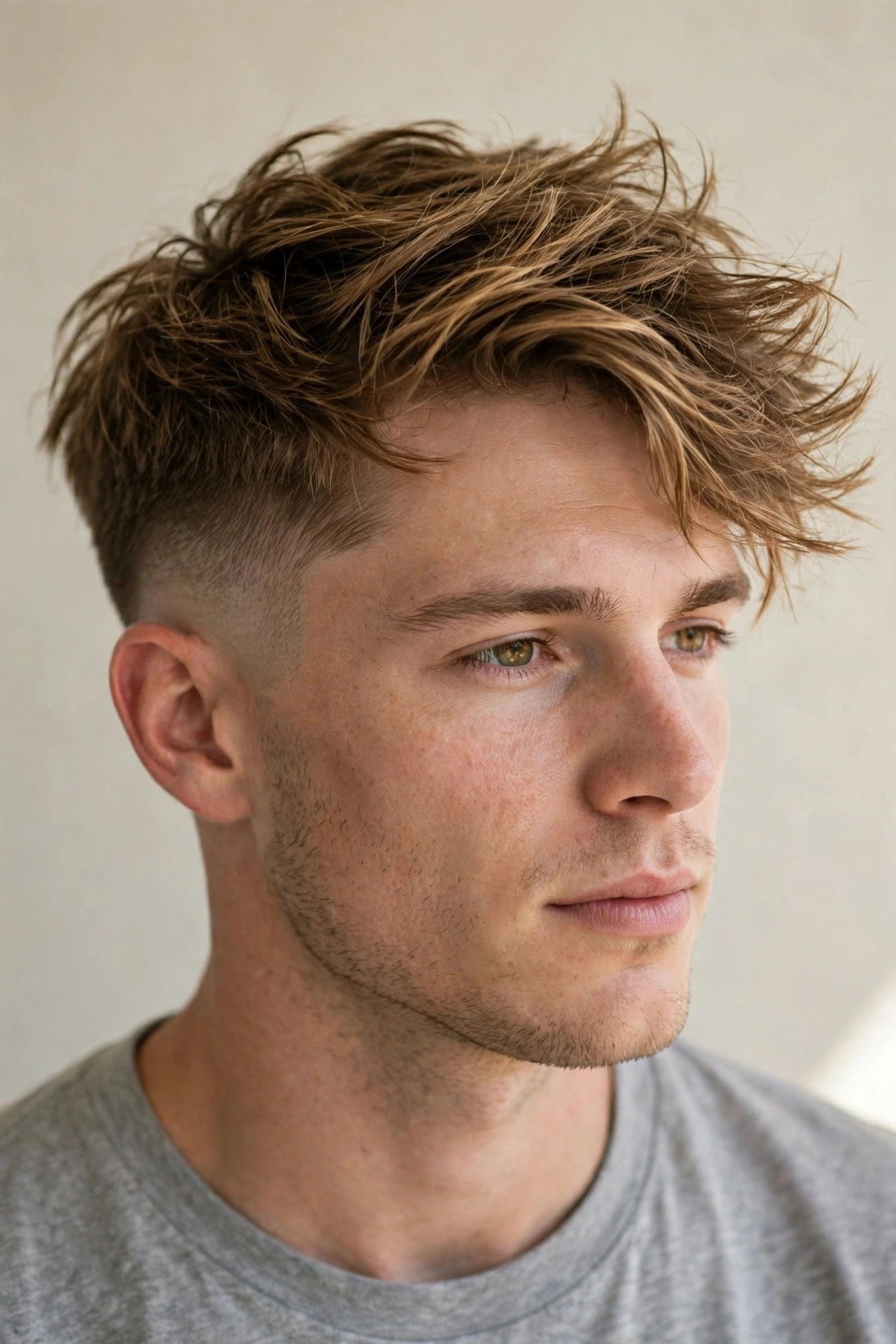
The messy textured comb over fade is the anti-corporate comb over: piecey, tousled, deliberately imperfect — but the fade keeps it from ever looking sloppy. The top is cut with heavy texture and styled with fingers instead of a comb, so the “comb over” direction is loose and organic. This suits wavy to straight hair with medium density and flatters younger faces and creative workplaces. It is the comb over for guys who hate looking “done.”
Barber script: ask for a low or mid fade with three to five inches on top, cut with aggressive texture — point-cutting, slide-cutting, or razor work. Tell your barber you want it to look effortless and piecey, and that you will style it with your fingers. Request a soft natural part; precision is the enemy of this style.
Styling routine: matte paste or clay on dry hair, worked through with fingers, pushing everything loosely toward your part side. Twist random pieces for extra separation. The messier, the better — this cut forgives bedhead. Maintenance: every three to four weeks; the textured top hides growth beautifully. For more texture-first ideas, see our textured crop breakdown.
21. Classic Taper Fade Comb Over
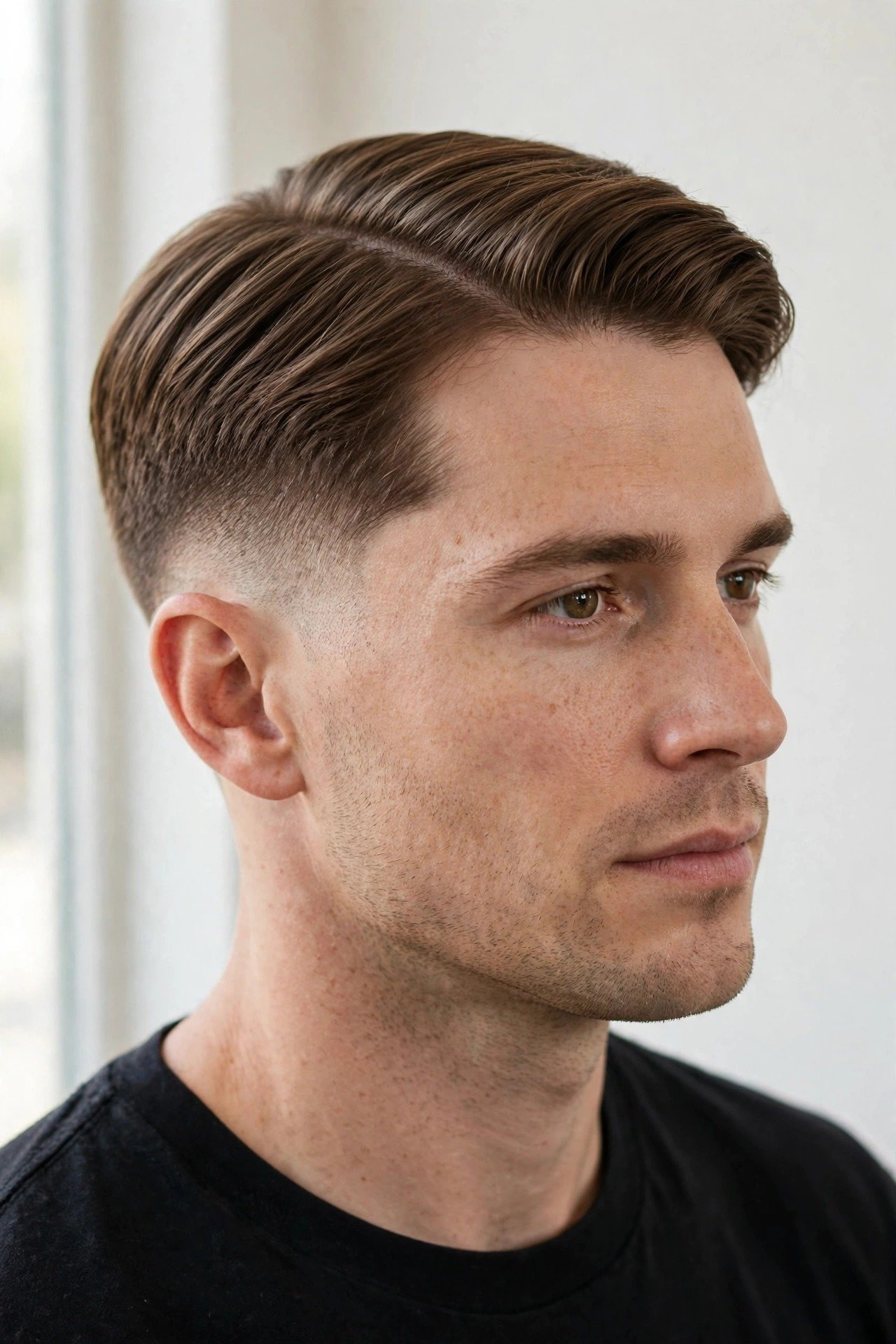
The classic taper fade comb over is the distinguished older brother of the skin fade versions — the sides graduate down gradually but never reach skin, keeping a refined, mature finish. It is the choice of men who want the comb over’s structure with a softer, more timeless edge. This suits all hair types and ages, and it is particularly flattering on mature faces because the softer transition reads elegant rather than edgy.
Barber script: ask for a taper — not a fade to skin — with the shortest length around a number 2 or 3 guard. The top stays two to four inches, combed over from a natural part. Tell your barber you want a classic, gradual taper; the key phrase is “keep it soft.” Request scissor-over-comb blending on the sides for the smoothest transition.
Styling routine: medium-hold cream on damp hair, combed over smoothly. The taper’s softness pairs best with a natural or satin finish rather than high gloss. Maintenance: every three to four weeks. Tapers are the lowest-maintenance fade family — they grow out invisibly.
22. Thick Hair Comb Over Fade
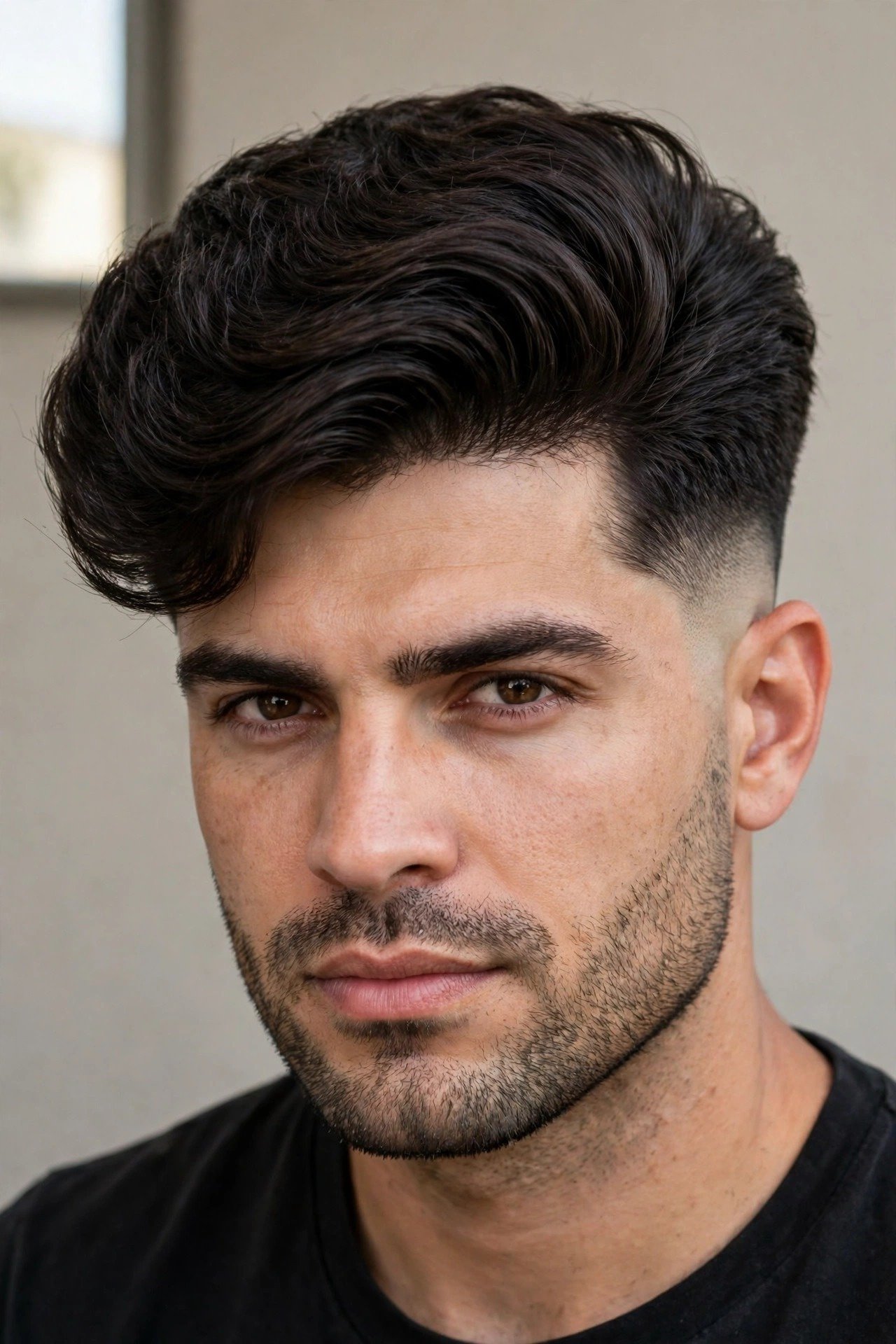
Thick hair is both a gift and a challenge for the comb over fade: the gift is natural volume and presence; the challenge is bulk that can make the top look like a helmet. The solution is strategic weight removal — thinning shears and deep point-cutting underneath — so the thick top sweeps over with structure instead of puffing up. Done right, thick hair produces the most impressive comb over fades on this list, with a full, rich top that thinner hair simply cannot replicate.
Barber script: tell your barber your hair is thick and ask them to remove weight from underneath while keeping length on top — three to five inches. Request thinning shears through the interior and point-cutting on the ends. A mid or high fade works best for thick hair because it removes the most side bulk. Ask them to check the silhouette from the front; thick hair can hide unevenness.
Styling routine: strong-hold matte product is non-negotiable for thick hair — lighter products surrender by noon. Blow-dry the top over from the part to set the direction, then lock it with paste. Maintenance: every three weeks; thick hair shows growth fast. Consider a mid-cycle thinning appointment if your hair grows aggressively.
23. Fine Hair Comb Over Fade
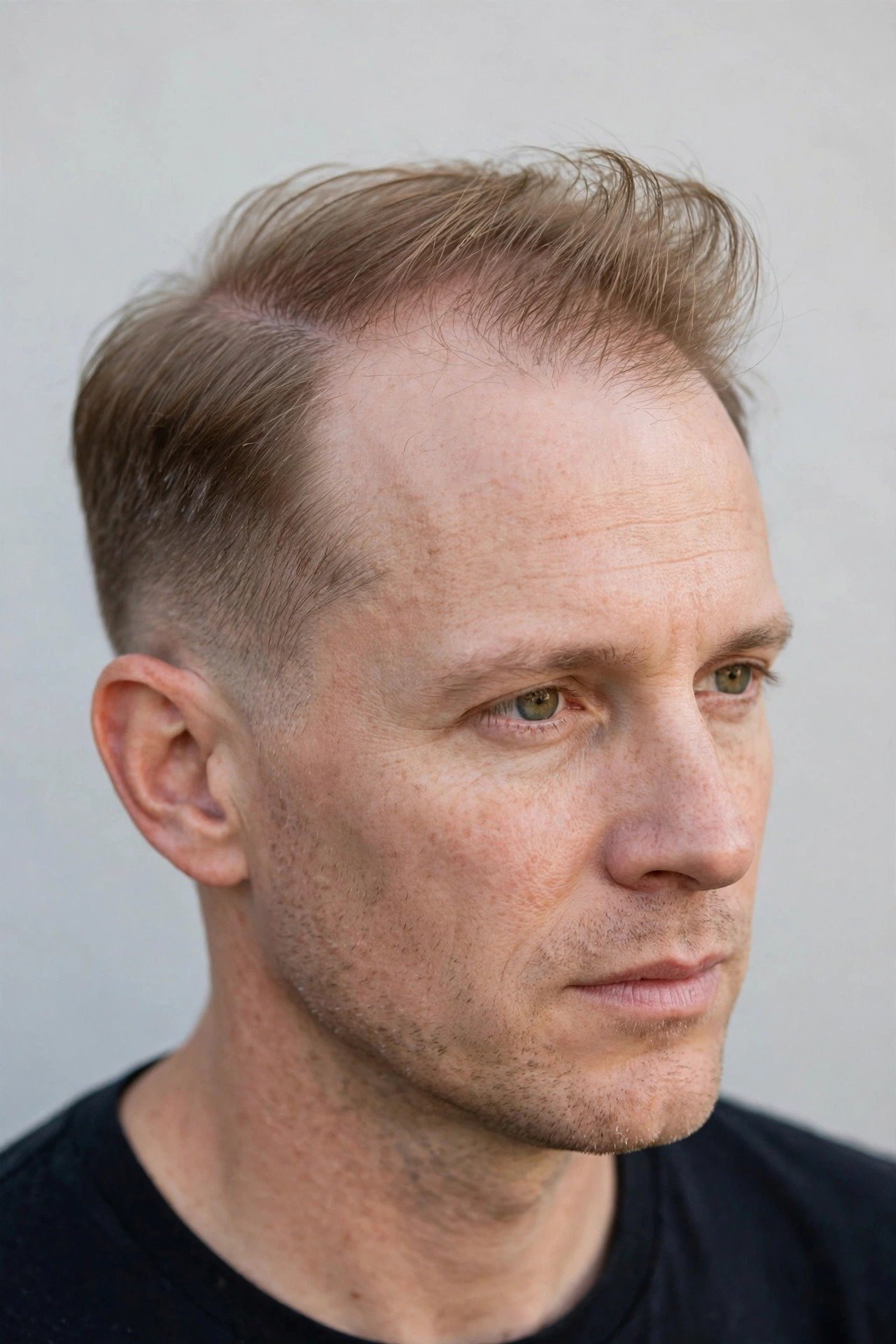
Fine hair needs a different strategy: instead of removing weight, the comb over fade for fine hair is about creating the illusion of density. A shorter top — two to three inches — with a matte, volumizing product at the roots makes fine hair look thicker than it is, while the fade draws the eye to the clean edges rather than the scalp. This is also an excellent approach for guys noticing early thinning, because the sweep direction can be aimed to cover sparse areas.
Barber script: ask for a low or mid fade with two to three inches on top — shorter than you might expect, because long fine hair goes limp. Request blunt ends rather than texture; blunt cutting makes fine hair look denser. Tell your barber you want root lift, and ask them to keep the fringe slightly longer so it can be swept for coverage. Avoid thinning shears completely.
Styling routine: volumizing mousse or pre-styler on damp roots, blow-dried upward and over for lift, finished with matte clay. Never use heavy pomades on fine hair — they flatten everything. Maintenance: every three weeks. Fine hair loses its shape faster than thick hair, so stay on schedule.
24. Afro Textured Comb Over Fade

Coily and afro-textured hair brings incredible natural volume to the comb over fade — the top can be shaped into a sculpted side sweep with real architectural presence while the fade keeps the sides immaculate. The key is moisture and definition: well-conditioned coils clump into defined sections that sweep with intention. This suits type 3C to 4C hair and flatters strong facial features, because the sculpted top balances bold bone structure.
Barber script: ask for a mid or high fade with three to five inches on top, cut dry or stretched so the true length is visible. Tell your barber the top should be shaped to sweep toward your part side — this usually means more length on the sweep side. Request a lineup with the trimmer for crisp edges. Find a barber experienced with textured hair; the cutting technique is completely different from straight hair.
Styling routine: leave-in conditioner and curl-defining cream on damp hair, then use a pick or wide-tooth comb to direct the coils over from the part. A sponge can add extra definition. Maintenance: every two to three weeks for the fade and lineup; the top can go longer. Moisturize daily — dry coils break and frizz, which ruins the sweep.
25. Straight Dark Hair Comb Over Fade
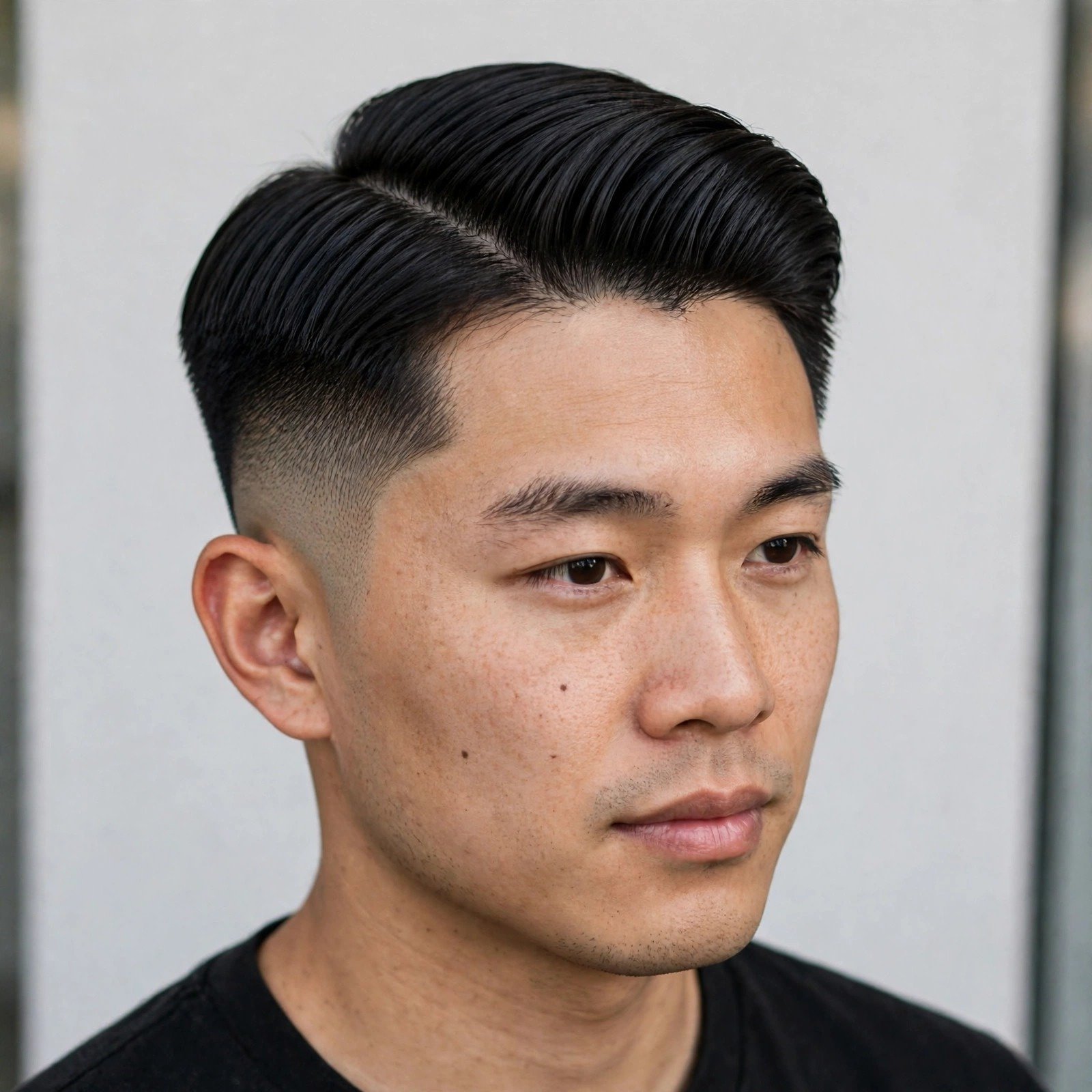
Straight, dark, thick hair — common across South and East Asian hair types — produces the sleekest, most precise comb over fades imaginable. The hair’s natural weight and shine make the sweep look almost liquid, and the contrast against a skin fade is razor-sharp. The challenge is that straight hair shows every cutting imperfection, so the barber’s precision matters more here than anywhere else on this list.
Barber script: ask for a mid skin fade with three to four inches on top, cut with clean, even ends — straight hair needs precision, not texture. A hard part works beautifully on straight hair because the line stays crisp. Tell your barber you want the top heavy enough to lie flat in the sweep; too much thinning makes straight hair fly away. Request a razor-sharp lineup.
Styling routine: a small amount of medium-hold pomade on damp hair, combed over in long strokes — straight hair cooperates easily. For extra sleekness, blow-dry with a paddle brush following the sweep direction. Maintenance: every two to three weeks; straight hair shows growth lines clearly, so the fade needs regular refreshing.
26. Receding Hairline Comb Over Fade

A receding hairline does not disqualify you from the comb over fade — in fact, this cut is one of the best tools for managing it. The strategy is honest, not deceptive: keep the top at a medium length and sweep it in the direction that provides the most natural coverage, while the fade keeps the overall look sharp and intentional. The worst approach is growing the top too long to “hide” the recession; a confident medium length always looks better than a desperate long one.
Barber script: be upfront with your barber about the recession and ask them to cut the top — two to three inches — to maximize natural coverage. A low or mid fade keeps attention on the clean sides. Ask them to keep the hairline natural rather than carving it aggressively; an overly sharp lineup on a receding hairline draws the wrong kind of attention. A textured top works better than a slicked one for camouflage.
Styling routine: matte product with texture, swept in the coverage direction — never slicked flat, which exposes the scalp. A little root lift at the front creates shadow that softens the hairline. Maintenance: every three weeks. Confidence matters more than coverage: own the cut and nobody studies your hairline.
27. Silver Fox Comb Over Fade

Grey hair and the comb over fade are a power combination — the silver tones catch light in a way that makes the sweep look almost metallic, and the fade’s clean edges keep the whole thing distinguished rather than aging. This is the cut for men who have earned their grey and want to wear it with authority. It suits salt-and-pepper through fully silver hair and flatters mature faces by adding polish without trying to look young.
Barber script: ask for a mid fade with two to four inches on top, combed over from a natural part. Tell your barber to keep the grey’s natural variation — over-thinning can make grey hair look wispy. If your grey is yellowing, ask about a silver-toning treatment; many barbershops now offer it. A clean, natural hairline suits this look better than an aggressive lineup.
Styling routine: grey hair tends to be coarser and drier, so start with a moisturizing cream. Comb over smoothly and finish with a light-hold product — heavy products dull the silver shine. Purple shampoo once a week keeps the grey bright instead of brassy. Maintenance: every three to four weeks.
28. Campus Casual Comb Over Fade

The campus casual comb over fade is the student-friendly version: relaxed, affordable, and easy to maintain between irregular barber visits. The top is a medium length swept over loosely, the fade is a simple low or mid blend, and the whole thing is designed to look good with minimal effort and minimal product. It suits younger guys and anyone whose mornings are too rushed for a real styling routine.
Barber script: ask for a straightforward low or mid fade with three to four inches on top — nothing fancy. Tell your barber you want it low-maintenance and that you will mostly finger-style it. A natural part is fine; skip the hard part to save money and upkeep. This is a great first fade for guys new to the barbershop.
Styling routine: a dab of whatever product you own, pushed over with your fingers — genuinely a thirty-second routine. On lazy days, even water and a comb will do. Maintenance: every four to five weeks; this cut is designed to survive neglect. When it grows out, it just becomes a longer casual cut.
29. Evening Polished Comb Over Fade

The evening polished comb over fade is the red-carpet version: immaculate sweep, high-shine finish, razor-sharp fade — a haircut engineered to look perfect under camera flashes and restaurant lighting. This is the wedding-day, gala-night, big-presentation version of the cut. It suits all hair types and is less about the cut itself than the finish: the same base cut becomes “evening” through gloss, precision, and a fresh fade.
Barber script: get this cut two to three days before your event, not the day of — a fade looks best after forty-eight hours of settling. Ask for your preferred fade level with a defined part, and tell your barber it is for an event so they take extra care with the blend and lineup. Request the top be cut for a smooth, sleek sweep.
Styling routine: blow-dry the top smooth in the sweep direction, then apply a shine pomade and comb through with a fine-tooth comb for a glassy finish. A light mist of shine spray adds camera-ready gloss. Maintenance: this is an occasion style, not a daily one — enjoy it for the night, then return to your normal matte routine.
30. Comb Over Fade with Quiff Lift
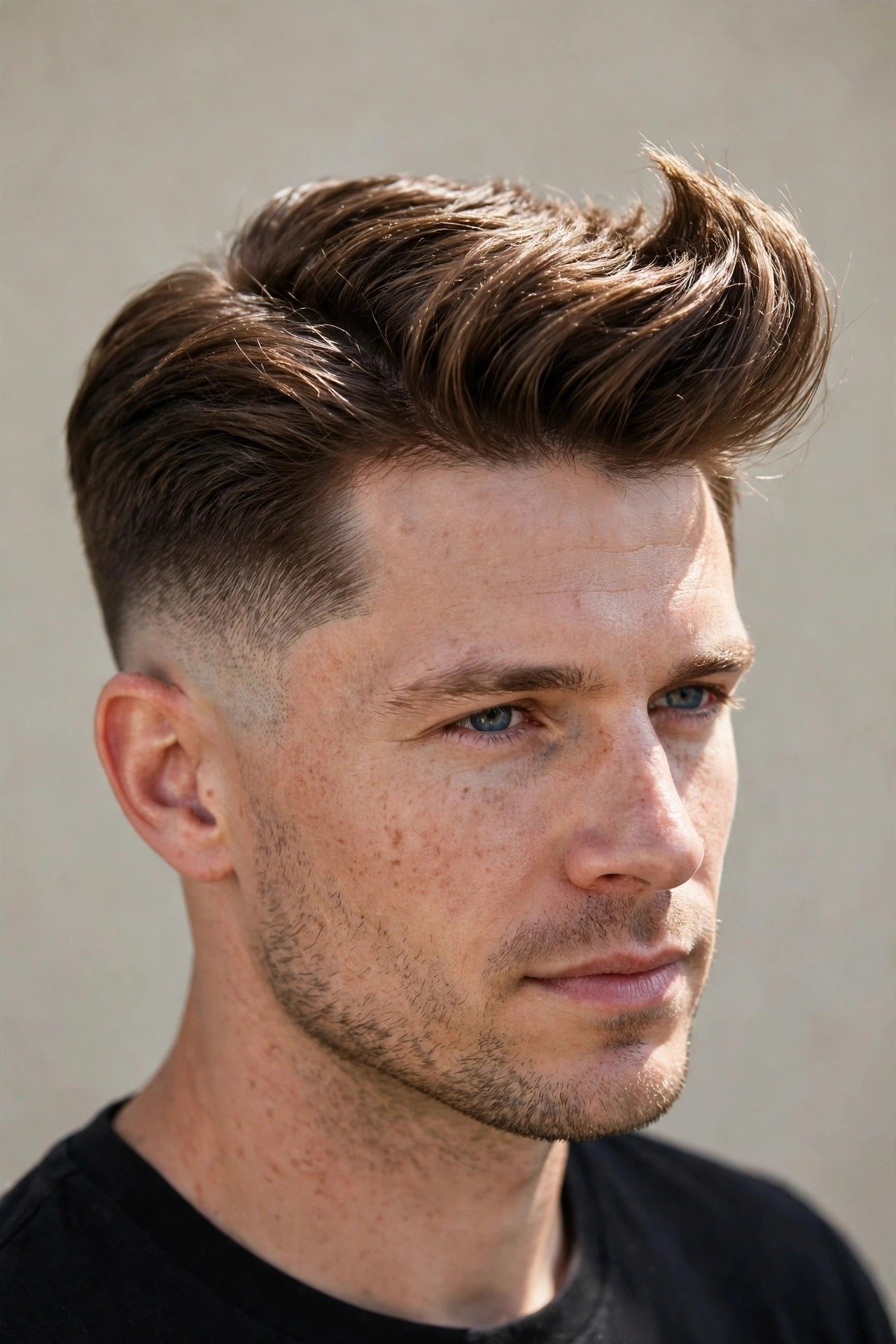
The quiff lift adds front volume to the comb over’s side sweep — hair rises at the forehead before flowing over, creating a dynamic wave-like silhouette. It is the best of both worlds for guys torn between a quiff and a comb over. This suits medium to thick hair with some natural lift and flatters round faces especially well, because the front height adds the vertical length round faces need.
Barber script: ask for a mid fade with four to five inches on top, longest at the front. Tell your barber you want quiff-style lift at the front flowing into a comb over sweep. The front needs enough length to stand up — at least four inches. Request texture through the front section so the lift looks natural rather than stiff.
Styling routine: blow-dry the front upward with a round brush, then sweep it over while keeping the lift. A strong-hold matte product locks the height; finish with hairspray aimed at the roots. Maintenance: every three weeks. The quiff section loses its shape as it grows, so this cut punishes procrastination.
31. Low Maintenance Buzz Comb Over Fade
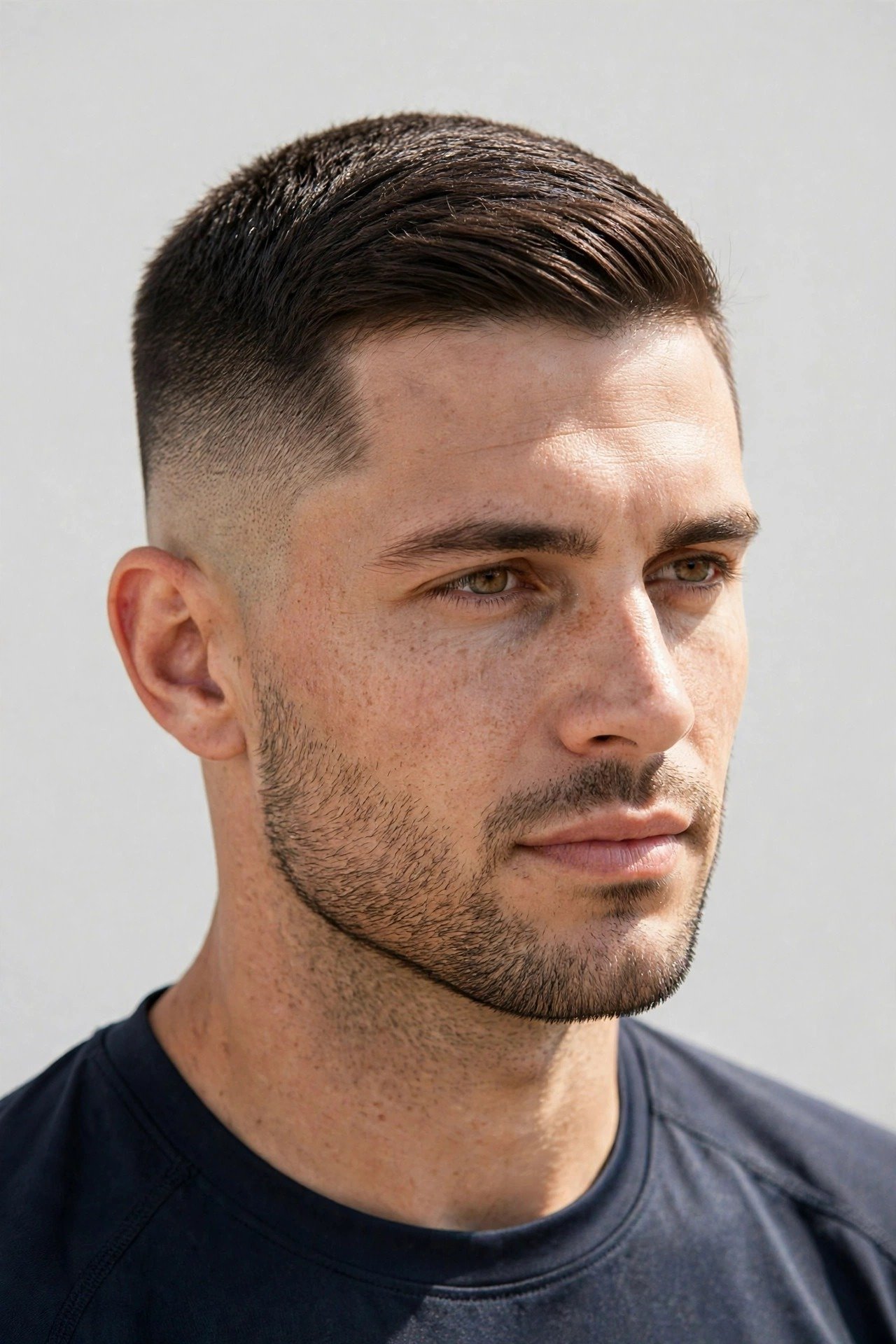
The low maintenance buzz comb over fade is for guys who want the comb over’s direction with a buzz cut’s simplicity. The top is kept very short — under an inch — but still cut with a discernible sweep direction and part, over a tight fade. It is the most practical cut on this list: no styling, no bad hair days, no product. It suits athletic builds and strong features, and it is ideal for hot climates and hard workouts.
Barber script: ask for a tight fade with the top clippered to a number 2 or 3 guard, cut in the sweep direction. Request a subtle part line — at this length it is more of a suggestion than a line, but it organizes the cut. Tell your barber you want it as short as possible while keeping the comb-over direction visible.
Styling routine: none. Towel-dry and go — the cut’s direction does everything. If your scalp shows through, a matte scalp powder can even the tone. Maintenance: every two weeks; buzz-length cuts show growth immediately. The appointments are fast and inexpensive, which is the trade-off.
32. Comb Over Fade with Full Beard
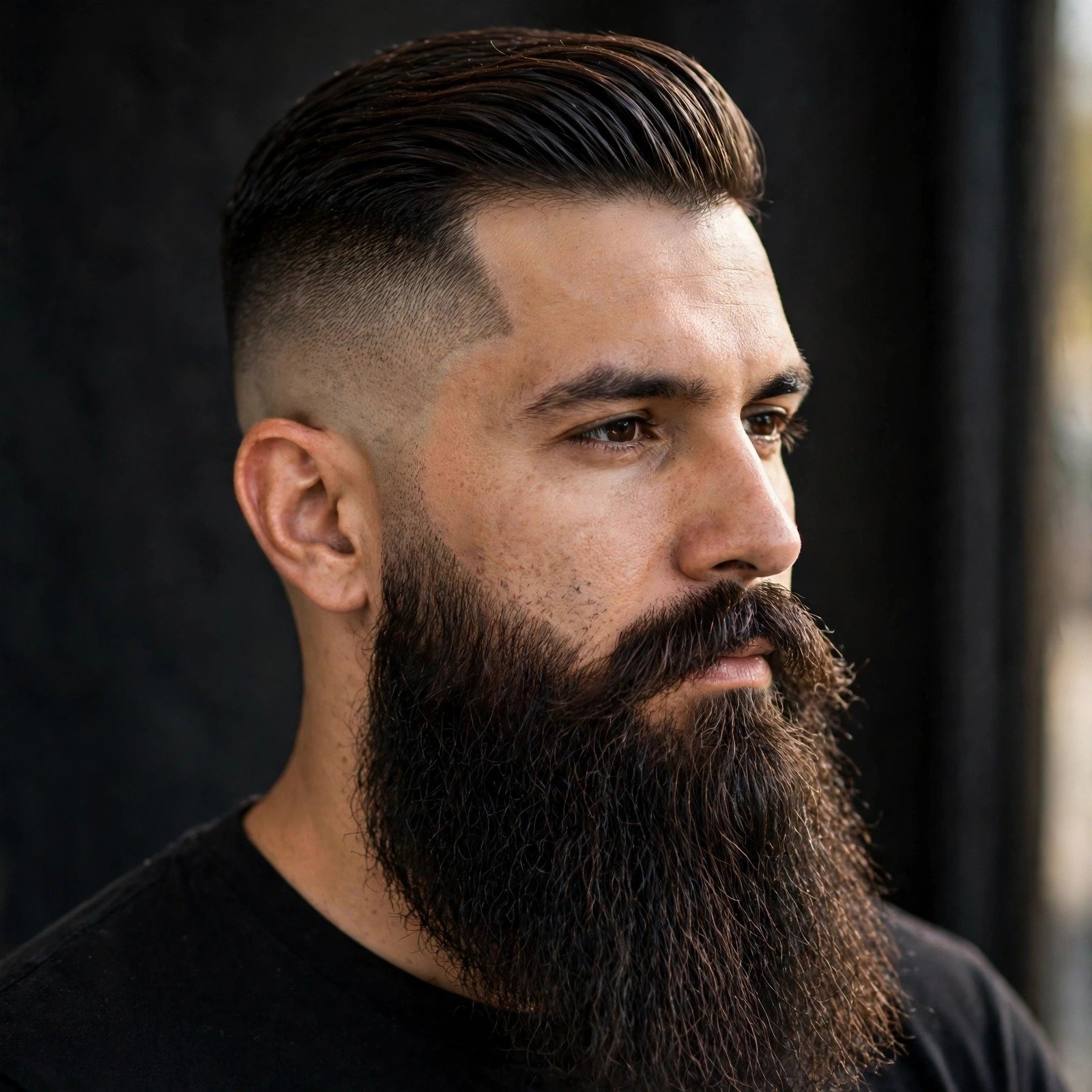
Where style 15 paired the comb over with a groomed short beard, this version goes full: a long, substantial beard matched with a sharp high fade and sleek comb over. The contrast between the manicured top and the wild-below is deliberate and masculine — lumberjack polish. This suits guys with genuinely full beard growth and flatters longer faces by adding commanding presence at the jaw.
Barber script: ask for a high fade with a sleek comb over top, then have your barber shape the full beard with clean cheek and neck lines. The fade-to-beard transition is critical — it should blend seamlessly, not collide. Tell your barber the beard’s length goals so they shape it toward that future, not just its current state.
Styling routine: style the hair with pomade for a sleek finish, then oil and brush the beard into shape. A beard balm adds control for longer lengths. Maintenance: haircut every three weeks, beard trims every two to shape the growth. A full beard is a second haircut — budget time and money accordingly.
33. Wet Look Comb Over Fade

The wet look comb over fade uses high-shine product to create a slick, just-stepped-out-of-the-shower finish — dramatic, evening-ready, and unapologetically glamorous. The gloss makes the sweep look sculpted and the fade look even sharper by contrast. This is an occasion finish rather than a daily one: it suits nights out, events, and photoshoots, and it works on all hair types because the shine does the visual work.
Barber script: the cut underneath can be any comb over fade — tell your barber you plan to wear it wet-look so they cut the top smooth rather than textured. Texture fights the wet finish; clean, even ends enhance it. A mid or high fade gives the best contrast against the glossy top.
Styling routine: apply a generous amount of high-shine gel or wet-look pomade to damp hair and comb through in the sweep direction. Do not blow-dry — air-dry or leave damp for the true wet effect. Re-wet and recomb midday to refresh. Maintenance: like any comb over fade, every three weeks; the wet finish itself washes out nightly.
34. Matte Finish Comb Over Fade
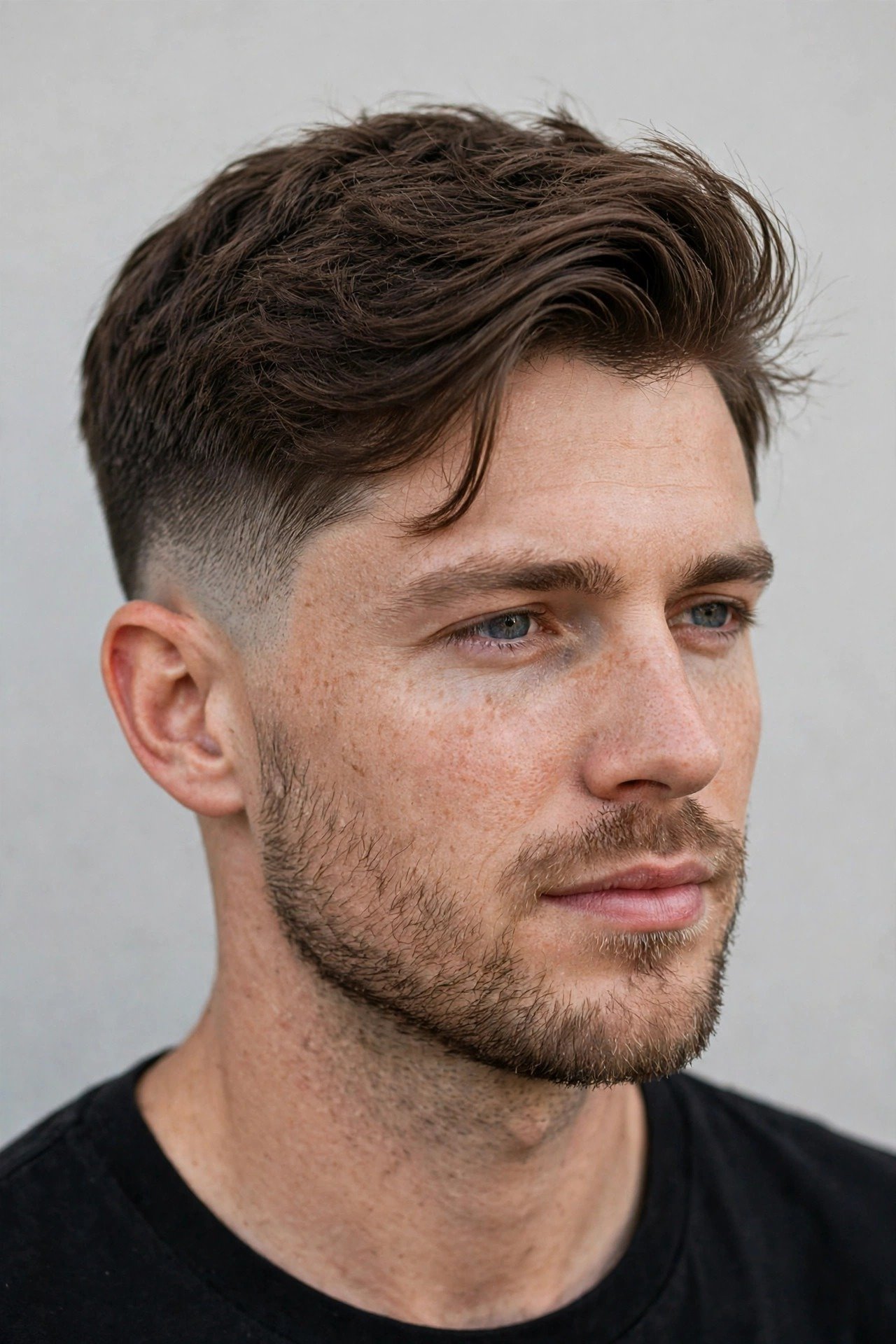
The matte finish comb over fade is the 2026 mainstream: natural-looking, touchable, zero shine — the anti-greaser. Matte clay or paste gives the sweep structure without any wet look, so the cut reads modern and effortless. This is the default finish most barbers now assume you want, and it suits every hair type and every setting from office to weekend. If you only learn one finish, make it this one.
Barber script: ask for your preferred fade with a textured top — matte finishes need texture to grip. Tell your barber you will style it matte so they point-cut the ends for separation. A natural part keeps the matte look soft; a hard part adds edge if you want it.
Styling routine: matte clay or paste on dry hair, worked through with fingers, swept over loosely. Less is more — too much matte product looks dusty. Maintenance: every three weeks. The matte finish is forgiving of second-day hair, which makes this the easiest daily driver on the list.
35. Comb Over Fade with Undercut Sides

The undercut version replaces the gradual fade with a single-length buzzed undercut beneath the long swept top — one clean length on the sides instead of a blend. The effect is bolder and more graphic than a fade: a hard line where long meets short. This suits thick, straight hair that can carry the dramatic disconnect, and it flatters guys who want an edgier take on the comb over without going full disconnected.
Barber script: ask for an undercut — one guard length (usually a 1 or 2) on the sides and back — with four to six inches on top. Specify whether you want the undercut’s top edge sharp (disconnected) or slightly softened. The top should be heavy enough to cover the undercut’s edge when swept. Bring photos; “undercut” varies wildly between barbers.
Styling routine: blow-dry the top over with volume and finish with a medium-hold product. The undercut needs no styling — it is clipper work. Maintenance: every two to three weeks; the undercut’s single length shows growth as a visible shelf, so it needs regular re-cutting.
36. Modern Gentleman Comb Over Fade

The modern gentleman comb over fade is the culmination of this list: a perfect side part, an immaculate fade, a sweep with just enough texture to feel current — the haircut equivalent of a tailored suit. It borrows the classic’s manners and the modern cut’s edge, and it works everywhere: the office, the wedding, the restaurant, the photograph that will hang on a wall for decades. This suits all hair types and is the safest “one cut forever” choice in the guide.
Barber script: ask for a mid fade with a clean part — natural or hard, your preference — and two to four inches on top with light texture. Tell your barber you want it timeless: sharp but not trendy. Request extra attention to the blend and the neckline; this cut’s power is in its flawless execution. Find a barber whose own work you admire — precision matters here.
Styling routine: medium-hold cream on damp hair, combed over from the part, finished with a light pass of the dryer for polish. Keep the finish natural — this cut should look like great hair, not great product. Maintenance: every three weeks. The modern gentleman never looks grown-out, because he never lets it get there.
How to Style a Comb Over Fade at Home

Styling a comb over fade at home is simpler than it looks — the barber does the hard work, and your job is just to reinforce the direction they cut. Start with clean, towel-dried hair: damp, not dripping. Find your part by combing everything straight back, then pushing it to one side — where it naturally splits is your part. Most guys’ parts sit about two inches off-center, following the crown’s growth pattern. Once you know it, styling takes minutes.
The full routine: apply your product to damp hair — a pea-sized amount of cream or pomade for classic finishes, matte clay for modern texture — and distribute it evenly from roots to tips. Comb from the part in long, smooth strokes, following the sweep direction. Then blow-dry on medium heat with the airflow pointing in the sweep direction; this “sets” the hair so it holds all day. Finish with a cool shot from the dryer to lock the shape. Total time: five to seven minutes for a polished result.
The five-minute version skips the dryer: product on damp hair, comb over, done. It will not last as long or look as sharp, but it gets you out the door presentable. For second-day hair, a little water from a spray bottle reactivates yesterday’s product — no need to rewash. Keep a comb in your bag for midday touch-ups, and remember the golden rule: less product is more. You can always add; removing requires a shower.
Frequently Asked Questions
What is the difference between a comb over and a comb over fade?
A classic comb over keeps the sides long and simply sweeps the top to one side, which can look heavy and dated. A comb over fade adds a faded cut on the sides and back — the hair gradually shortens toward the skin — which lightens the silhouette and adds modern contrast. The fade is what makes the 2026 version look sharp instead of old-fashioned. Everything else — the side part, the sweep direction, the top length — works the same way in both cuts.
How long should the top be for a comb over fade?
Most comb over fades work best with two to five inches on top. Two to three inches gives a neat, corporate-friendly sweep that styles in minutes. Three to five inches allows texture, volume, and dramatic movement for the trendier versions. Below two inches the sweep direction barely reads; above five inches the top gets heavy and needs serious styling. Your barber can adjust within this range based on your hair’s thickness and how much morning effort you want to invest.
Which fade level suits a comb over best?
There is no single best level — it depends on your style and maintenance tolerance. A low fade is the most conservative and grows out gracefully. A mid fade is the modern sweet spot with clean contrast. A high or skin fade is the boldest and needs refreshing every two weeks. Tapers are softer and more mature. If you are unsure, start with a mid fade: it suits almost everyone and gives you room to go higher or lower next time.
Can I get a comb over fade with curly or wavy hair?
Absolutely — curly and wavy hair make excellent comb over fades. The key is keeping enough length on top (four to six inches for curls, three to five for waves) so the texture can form a deliberate sweep. Ask your barber to cut curls dry or stretched and to shape them toward your part side. Use curl cream or sea-salt spray rather than heavy pomades, and never brush curly hair dry. The fade keeps the sides sharp while the texture does the talking on top.
What products do I need for a comb over fade?
Three products cover every version: a matte clay or paste for modern textured finishes, a medium-hold cream or pomade for classic polished looks, and a blow-dryer for volume and staying power. Fine hair benefits from a volumizing mousse at the roots; curly hair needs curl cream; the wet look requires a shine gel. Start with one matte product and one classic product — you can expand once you know which finish you wear daily.
How often do I need a haircut to maintain a comb over fade?
Skin and high fades need refreshing every two weeks to stay sharp. Mid fades last two to three weeks. Low fades and tapers stretch to three or four weeks. The top can usually go four to six weeks between trims, depending on length. Many barbers offer quick fade cleanups between full cuts — ask yours. The honest truth: a comb over fade is a barber-relationship haircut, not a twice-a-year one.
Does a comb over fade work for a receding hairline?
Yes, when done honestly. A medium-length top swept in the direction of best natural coverage, paired with a clean fade, looks confident and intentional. The mistakes to avoid are growing the top too long to hide the recession and slicking it flat, which exposes the scalp. A textured, matte finish with some root lift camouflages far better than a glossy slick-back. Discuss it openly with your barber — they handle this every day.
What is a hard part, and should I get one?
A hard part is a shaved line that makes your part permanent and razor-crisp. It looks incredibly sharp and makes daily styling easier, since your hair falls into place along the line. The trade-off is maintenance: the line softens within two weeks and needs refreshing. Get one if you want maximum polish for events, interviews, or a bold look. Skip it if you prefer versatility or want to stretch time between barber visits.
Can I style a comb over fade without a blow dryer?
Yes. Apply product to damp hair, comb it over from the part, and let it air-dry — this works fine for the classic, campus casual, and messy textured versions. The blow-dryer mainly adds volume and longevity, so skipping it gives a flatter, more relaxed result. On humid days or for fine hair, the dryer makes a bigger difference. For a five-minute routine, product plus comb is genuinely enough.
Is the comb over fade still in style for 2026?
More than ever. Barbers report it as the most requested comb over variation, and the 2026 versions — textured tops, matte finishes, drop and burst fades — keep it firmly current. Unlike novelty cuts that age in months, the comb over fade has classic bones: it has survived decades because the underlying shape is simply flattering. As long as barbers keep evolving the fade and the finish, this cut is not going anywhere.
Conclusion
The comb over fade earned its place as 2026’s defining men’s haircut by doing something rare: it made a classic modern without losing what made the classic work. The side part, the sweep, the polish — all intact. The fade simply stripped away the weight and added the contrast that today’s eyes expect. Whether you choose the boardroom subtlety of a low taper, the streetwear edge of a burst fade, or the timeless confidence of the modern gentleman, you are wearing a cut with decades of proof behind it.
Your next step is simple: pick the version that matches your hair, your lifestyle, and your maintenance honesty — then take its barber script to a chair you trust. Bring a photo, speak up about what you want, and give the cut two weeks to settle before you judge it. The right comb over fade does not just change how you look; it changes how deliberately you walk into a room. In 2026, that is worth five minutes every morning.
One Comment