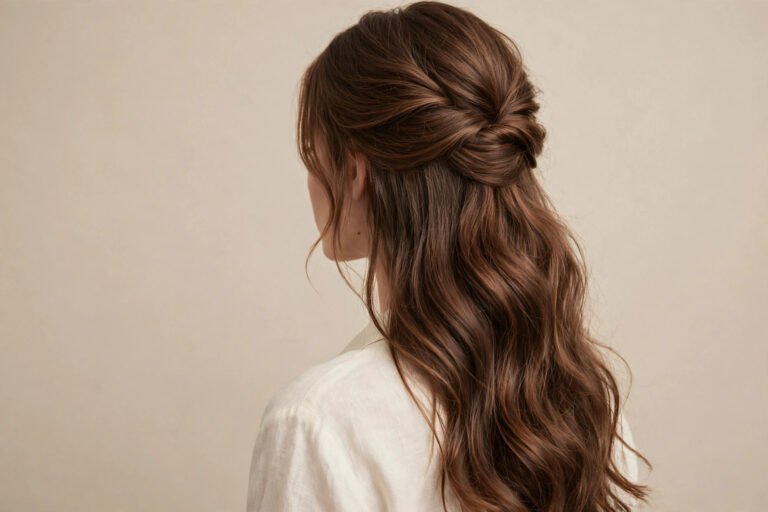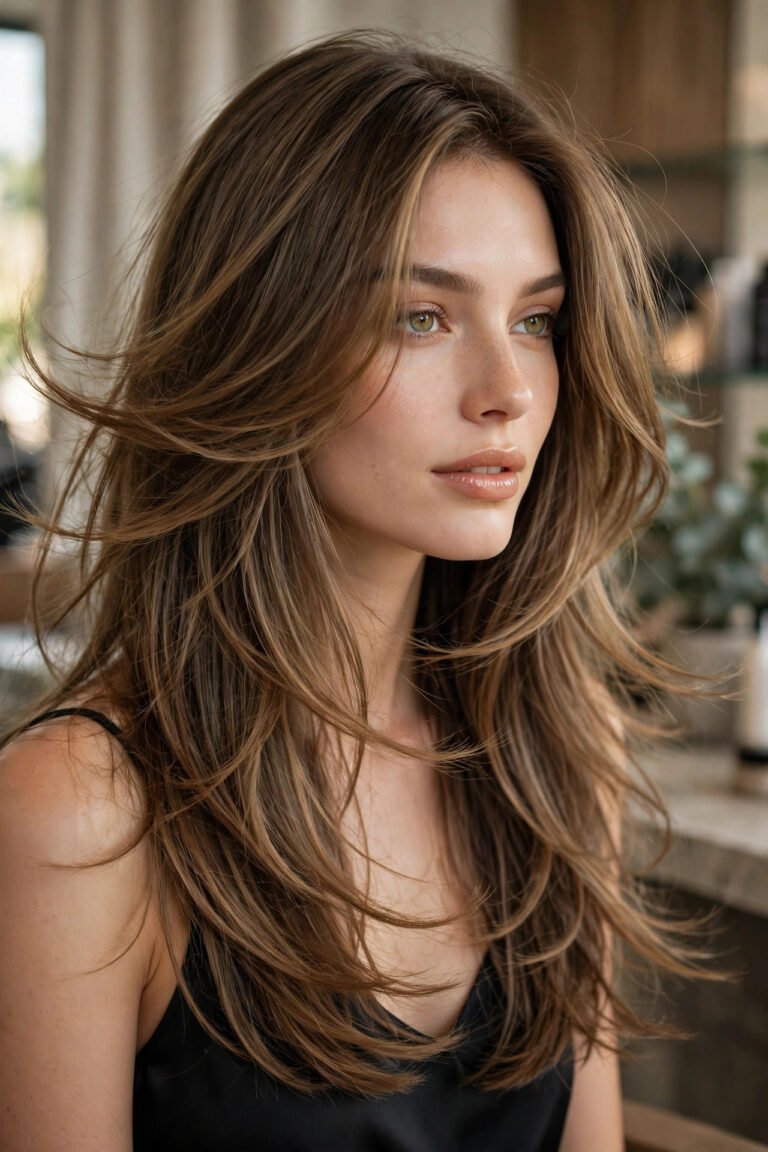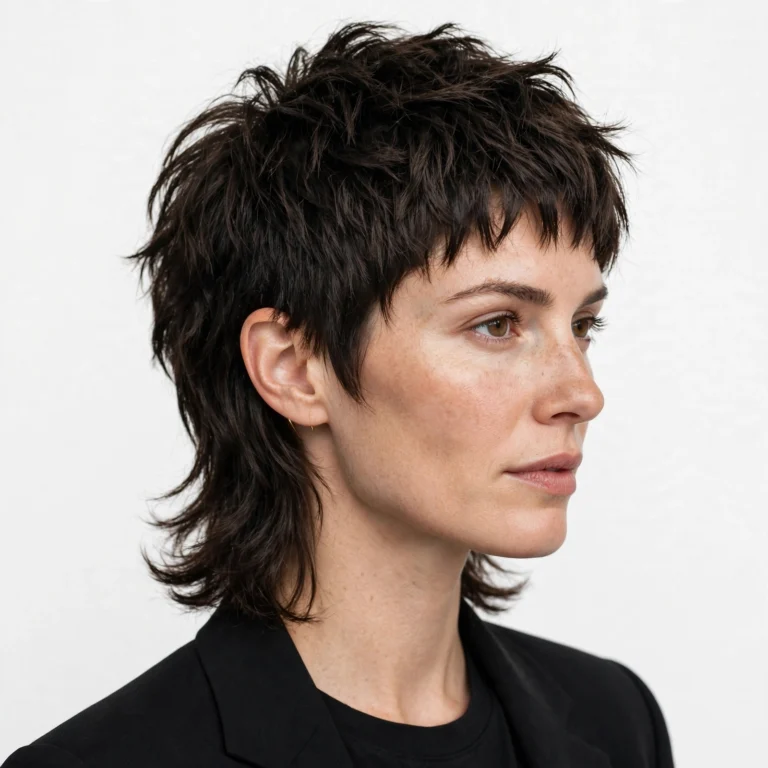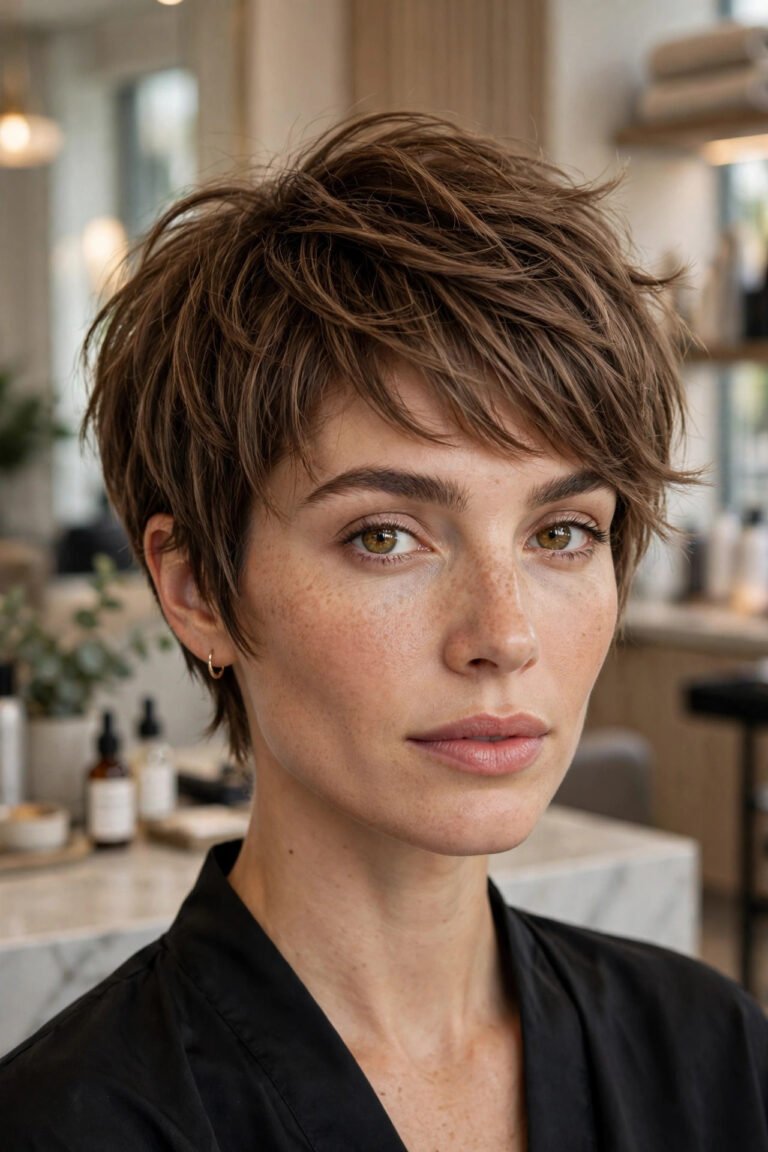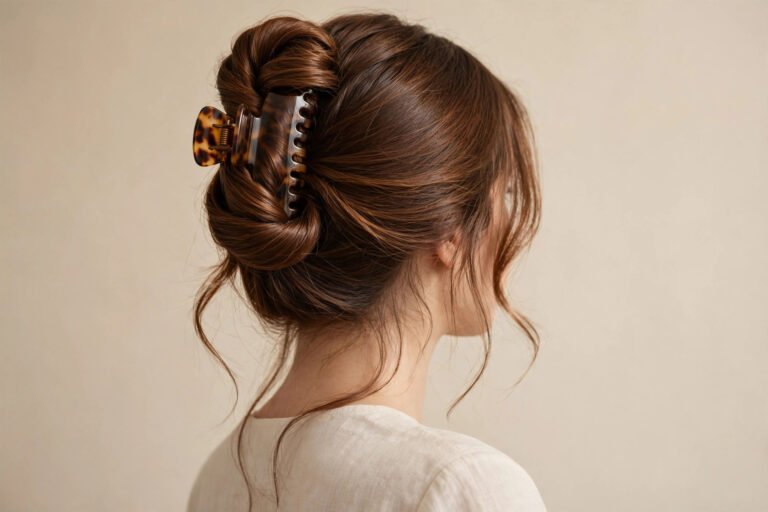
32 Soft Wolf Cut Ideas for Women in 2026
32 Soft Wolf Cut Ideas That Give You Movement Without the Edge
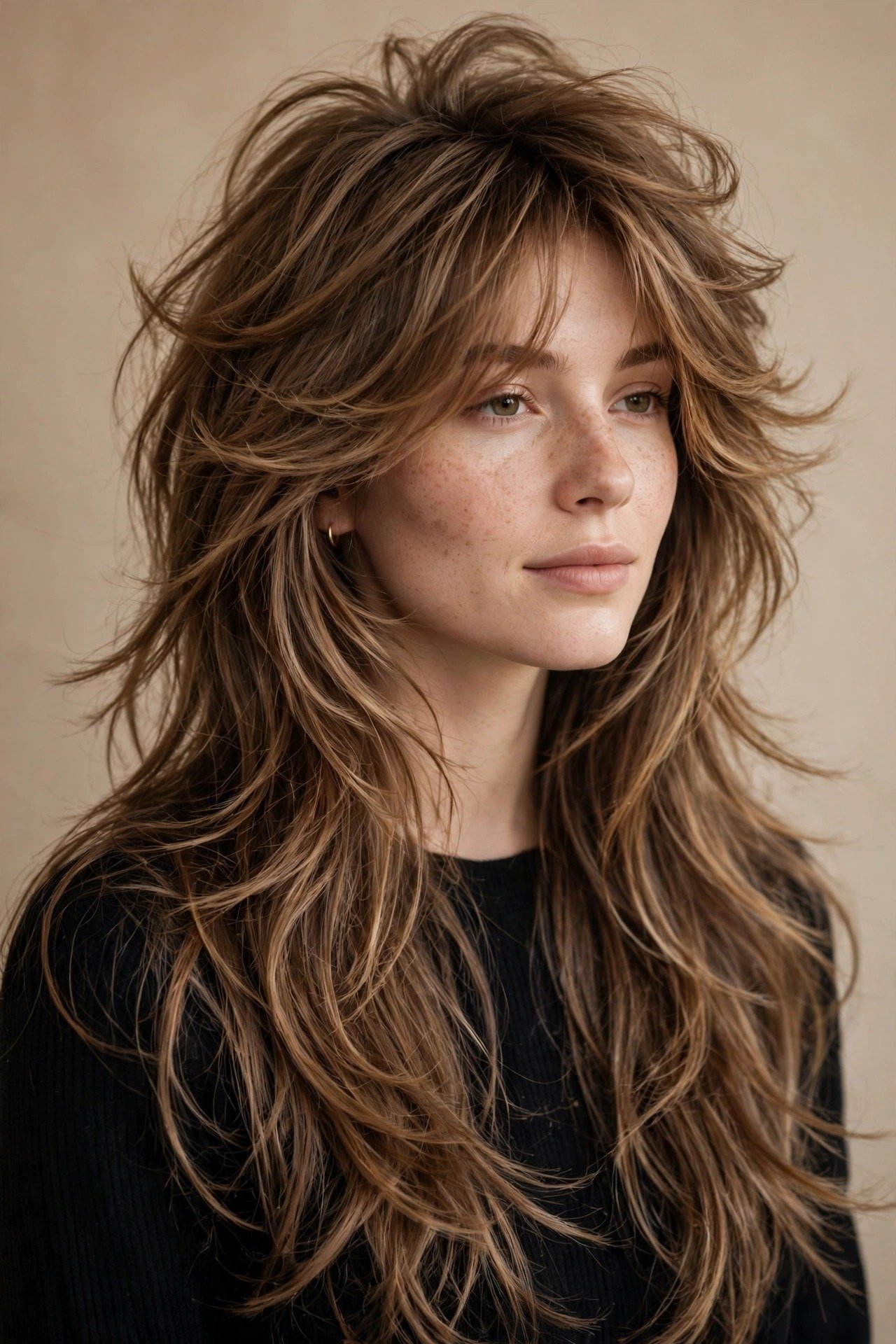
Let me be completely clear before we go any further, because this distinction is the whole point of this article. A soft wolf cut women are asking for in 2026 is not the same haircut as the edgy, choppy wolf cut that went viral a few years ago, and it is not a duplicate of the trendy wolf cut already on this site. Our earlier article, trendy wolf cut hairstyles for women, covers that bolder, wilder version with disconnected layers and a deliberately undone finish. This article is its softer sister. The soft wolf cut keeps the wolf cut’s best ideas, the volume at the crown, the face-framing layers, the movement through the ends, but it blends everything together, rounds off the harsh edges, and makes the whole shape wearable for work, for family occasions, and for ordinary Tuesday mornings when you have ten minutes and no patience for a complicated routine.
If you loved the idea of a wolf cut but worried it would look too wild for your life, this is the version made for you. The layers are graduated rather than disconnected, so there is no sudden jump from very short on top to very long underneath. The ends are feathered and point-cut rather than razored into sharp spikes, so they fall softly instead of sticking out in every direction. The fringe, if you have one, is a soft curtain or a wispy side-swept piece rather than a heavy, choppy block. The result still has that lovely lived-in movement that made the wolf cut famous, but it reads as polished, feminine, and grown-up. You can wear it to the office, to a wedding, or to the school gate, and it will look intentional in all three places. That versatility is exactly why salons are seeing so many requests for it this year, and why it suits far more women than the original version ever did.
I have spent a long time thinking about who this cut is really for, and the honest answer is that it is for women who want their hair to look like it has a shape even when they have done almost nothing to it. If your hair currently hangs in one flat sheet, if your layers have grown out into nothing, or if every trendy cut you have tried has felt either too boring or too extreme, the soft wolf cut sits right in the middle. It gives fine hair the illusion of fullness, it takes weight out of thick hair without making it look thin, and it gives wavy hair a shape to follow instead of leaving it to frizz into a shapeless cloud. It is also a genuinely kind cut for women growing their hair out, because the layers keep the shape looking deliberate while the length catches up, and for women cutting long hair shorter, because it keeps enough length to feel safe while still delivering a real change.
There is one more thing worth saying plainly. A soft wolf cut is only as good as the stylist cutting it, and the words you use in the chair matter more than the name of the cut. Say the word soft, say blended, say no disconnection, and say you want to be able to wear it smooth as well as tousled. Bring photos of soft versions, not edgy ones, because a stylist shown a choppy reference will cut a choppy shape. Tell them how much time you realistically spend on your hair each morning, and be honest about it, because a cut designed for twenty minutes of styling will disappoint you if you only have five. Every idea below comes with that same honesty: who it suits, what to ask for, how to style it, and what will annoy you about it. Read the downsides as carefully as the pretty parts, and you will walk out of the salon with a cut you actually love living with.
Table of Contents
- 32 Soft Wolf Cut Ideas That Give You Movement Without the Edge
- What Makes a Soft Wolf Cut Different
- Why the Soft Wolf Cut Is Everywhere in 2026
- Who Suits It Best
- 32 Soft Wolf Cut Ideas for Women in 2026
- Styling Routine and Care Guide for Your Soft Wolf Cut
- Frequently Asked Questions
- Conclusion
What Makes a Soft Wolf Cut Different
The difference between a soft wolf cut and a regular wolf cut is not one big thing, it is a dozen small decisions that add up to a completely different feeling. In a classic wolf cut, the crown layers are cut short and choppy, the back is left long, and the gap between the two is deliberate and visible. That contrast is the whole look, and it is what gives the original its wild, rock-and-roll energy. In a soft wolf cut, the stylist bridges that gap with intermediate layers, so the eye travels smoothly from the shortest piece around the face down to the longest ends. The crown still has lift, because the layers there are still shorter, but there is no shelf, no ledge, and no moment where the hair suddenly changes length. When you run your fingers through it, it feels like one haircut, not two haircuts stacked on top of each other.
The cutting technique changes too. A soft wolf cut is usually point-cut or slide-cut, which means the ends are snipped into soft, tapered points rather than cut straight across or razored into sharp texture. That matters enormously for how the hair behaves day to day. Point-cut ends fall into each other, they do not poke out, and they are far more forgiving as the cut grows out. A razor can be wonderful for creating texture, but in inexperienced hands it can also create frizz and wispy ends that refuse to sit down, especially on fine or wavy hair. If your stylist reaches for a razor, ask them to use it lightly and only through the very ends, or ask for scissors only. You are not being difficult, you are being specific, and specific clients get better haircuts. The soft wolf cut also keeps more weight through the perimeter, so the outline looks full and healthy rather than thin and straggly, which is the single biggest complaint women have about edgy wolf cuts once the novelty wears off.
Styling is where the soft version really earns its keep. An edgy wolf cut almost demands a tousled, piecey finish, and if you try to wear it smooth it can look flat and confused, because the disconnected layers have nothing to blend into. A soft wolf cut can do both. Wear it tousled with a little texturising spray for a relaxed weekend look, or blow-dry it smooth with a round brush for a polished work look, and both will look like they were supposed to happen. That flexibility is worth more than any single styling trick, because real life is not one look. You need a cut that can go from a morning meeting to an evening dinner without a second wash, and the soft wolf cut is built for exactly that. As guides to the wolf cut family note, the shape is defined by crown volume, tapered ends and face-framing layers, and the soft version simply makes those three elements gentler and more blended.
Why the Soft Wolf Cut Is Everywhere in 2026
Every few years a haircut arrives that perfectly matches the mood of the moment, and in 2026 that haircut is the soft wolf cut. Women are tired of hair that needs an hour and a drawer full of tools, but they are equally tired of one-length hair that does nothing on its own. The soft wolf cut answers both frustrations at once. It looks styled when it is barely styled, because the layers do the work, and it still looks like you, not like a costume. Social media helped, of course, because soft, blended layers photograph beautifully in motion, in a way that stiff, over-styled hair never does. But a haircut does not stay popular for a whole year on photographs alone. It stays popular because women get it, live with it, and then book it again, and that repeat booking is the real test any cut has to pass.
There is also a quieter shift behind the trend that I think matters. More women are choosing cuts that work with their natural texture instead of fighting it, and the soft wolf cut is one of the few trendy shapes that genuinely does that across textures. On straight hair it adds bend and movement that was never there before. On wavy hair it gives the waves a pattern to follow, so they clump into soft ribbons instead of frizzing apart. On curly hair it can be adapted with longer, rounder layers that keep the curls full. No single version does all three jobs, which is why this article has 32 of them, but the principle holds across the board: blended layers, soft ends, and a shape that flatters the face rather than overwhelming it. Add in the fact that it grows out gracefully, with no awkward in-between stage that makes you hide under a hat for a month, and you have a cut that respects real life.
Finally, the soft wolf cut flatters a wider age range than most trendy cuts, and that matters more than fashion writers admit. A teenager can wear a soft, shaggy version and look effortlessly cool. A woman in her thirties can wear a polished, medium-length version to work and look completely professional. A woman in her fifties or sixties can wear a soft wolf bob with gentle layers and look fresh without looking like she is trying to look twenty again. The cut adapts because the variables, length, layer depth, fringe style, and finish, can all be tuned without changing the essential shape. When a cut can do that, it stops being a trend and starts being a modern classic, and I suspect the soft wolf cut is heading exactly there.
Who Suits It Best
Almost every woman can wear some version of a soft wolf cut, but the version that will love you back depends on your hair type, your face shape, and your patience in the morning, and I would rather you pick honestly than pick prettily. Fine hair needs longer, gentler layers and a cut that protects density, because too many short layers will make fine hair look wispy. Thick hair is the opposite: it needs more internal layering to remove weight, or the shape will sit like a helmet no matter how good the outline is. Wavy hair is the natural home of this cut, because the layers and the wave enhance each other. Straight hair needs a little more styling help, a round brush or a few bends with a straightener, to show the layers off, but the shape is still there underneath. Curly hair needs the layers kept longer and rounder, cut with curl shrinkage in mind, and if your stylist wants to cut your curls wet and straight, find a different stylist.
Face shape is the second filter, and I will flag it under every idea, but here is the short version to carry into the salon. Round faces do best when the shortest layer starts at or below the cheekbone and the length falls past the jaw, so the eye travels down and the face looks longer. Oval faces can wear almost anything, so choose by lifestyle instead of by rules. Heart-shaped faces love fullness around the jaw and chin, which balances a wider forehead and a narrower chin. Square faces soften beautifully when the face-framing layers curve inward and round off a strong jawline. Long faces need width at the sides and a fringe to break up length, rather than extra height on top. And if you wear glasses, mention them, because the shortest layer should sit above or below your frames, never right across them. These are small adjustments, but they are the difference between a cut that suits you and a cut that merely suits a photograph.
32 Soft Wolf Cut Ideas for Women in 2026
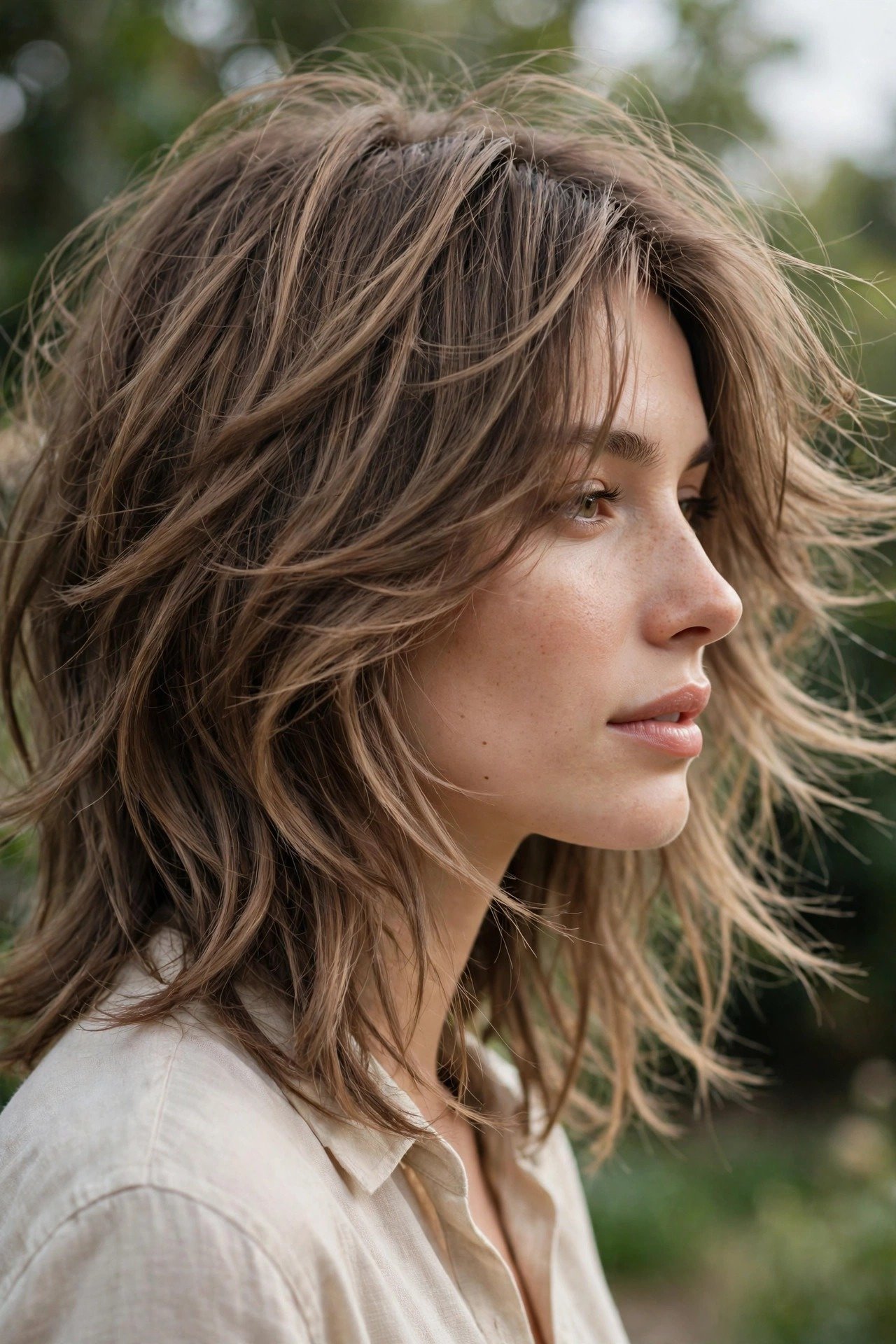
Here are all 32 ideas, grouped so you can find your length, your texture, or your lifestyle quickly. Every style includes what to ask your stylist for, who it suits, and the honest downside, because a haircut you cannot live with is not a good haircut no matter how lovely the photograph looks. Screenshot the ones that feel like you, and take them to your appointment.
1. The Classic Soft Wolf Cut
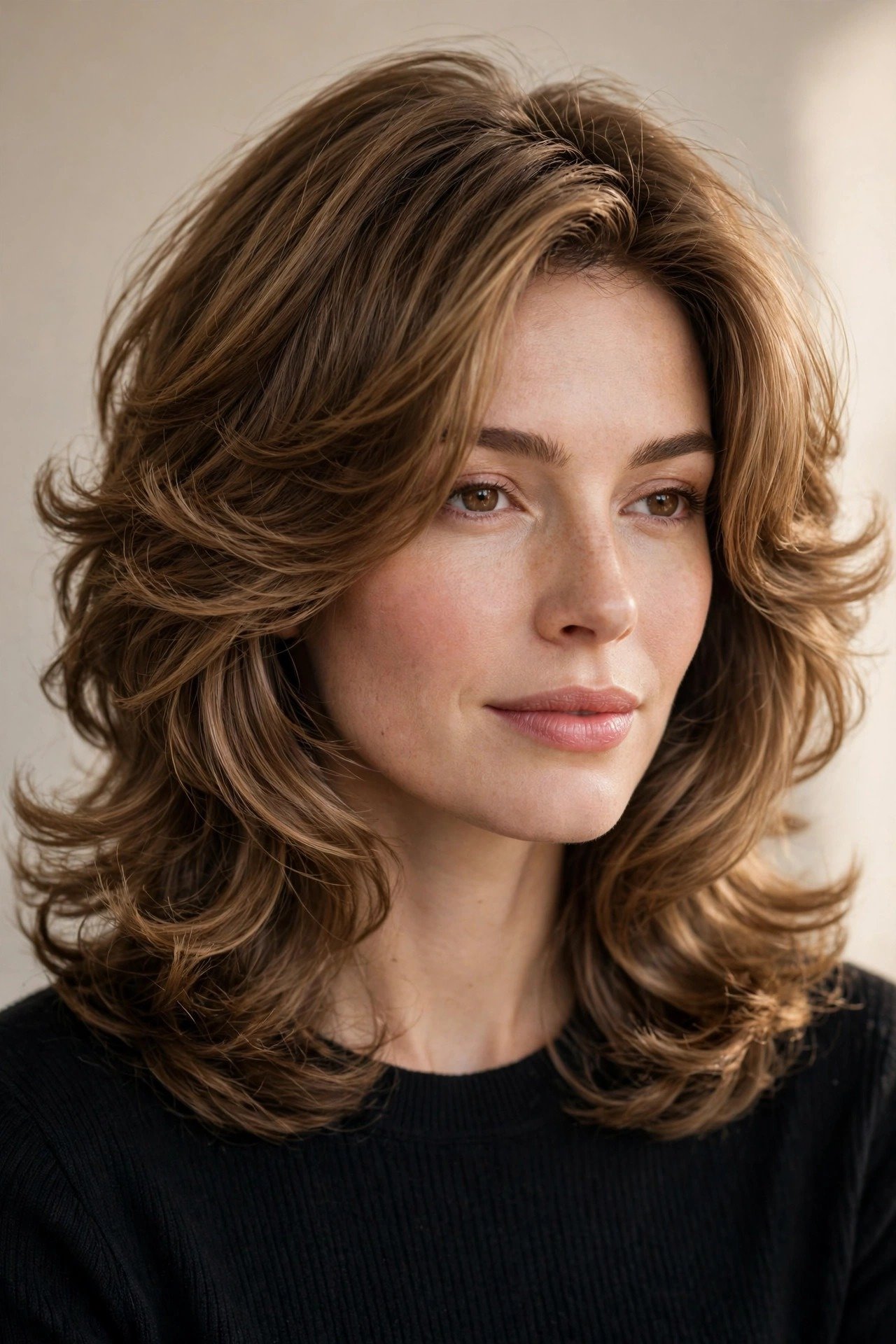
This is the version to start with if you have never had a wolf cut before, and it is still the one stylists reach for most often. The shortest layer sits around the cheekbone, the layers graduate gently down through the shoulders, and the ends are feathered so softly that the whole outline looks full rather than wispy. On straight to wavy hair it creates lift at the crown, movement around the face, and ends that flick just enough to look alive without looking messy. Ask your stylist for blended layers, point-cut ends, and no disconnection between the crown and the lengths, and tell them you want to be able to wear it smooth as well as tousled. Style it by blow-drying with a round brush, turning the ends under or out in alternate sections, or simply by scrunching in a little mousse and letting it air-dry for a softer finish.
The honest downside is that the classic version is not dramatic, and if you were hoping for a big, visible transformation, it can feel almost too sensible on day one. Give it a week, because blended layers settle as your hair learns its new shape, and what looks quiet at first often looks completely different once you have styled it a few times. It suits oval, round, and heart-shaped faces especially well, and it works on fine to thick hair as long as the layer depth is adjusted to your density. A trim every eight to ten weeks keeps the feathering fresh, and a lightweight leave-in conditioner will keep the ends soft without weighing the crown down. If you only try one idea from this list, try this one, because it is the safest way to find out whether the soft wolf life suits you.
2. Soft Wolf Cut with Curtain Bangs
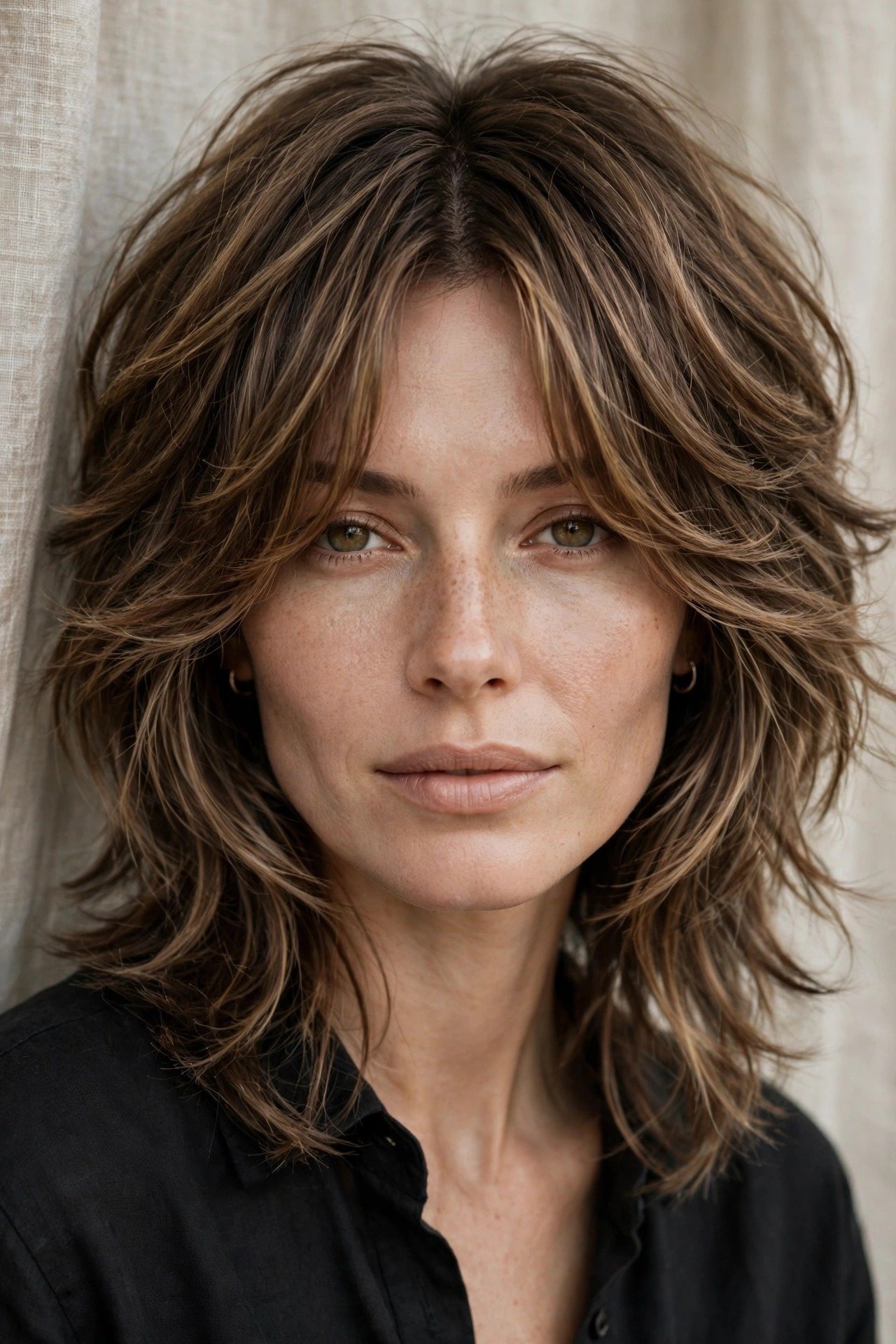
Pairing a soft wolf cut with curtain bangs is like adding a frame to a picture you already love, because the bangs draw the eye exactly where you want it. The fringe parts softly in the middle, curves away from the face at cheekbone level, and blends straight into the face-framing layers, so there is no harsh line where the bangs end and the rest of the cut begins. This is a wonderful choice if you have a high forehead you want to soften, if you want your eyes to be the first thing people notice, or if you simply love the romantic, face-framing feeling that curtain bangs give. On wavy hair the bangs fall naturally into soft waves, and on straight hair a quick round-brush blow-dry gives them that gentle outward sweep. Ask for the bangs to be cut a little longer than you think you want them, because short bangs are unforgiving and long bangs can always be shortened.
The commitment here is small but real, because curtain bangs sit right on your forehead and show oil and frizz before the rest of your hair does. A quick refresh with dry shampoo at the roots, or a damp-and-redry of just the bang section, takes under two minutes and keeps them looking intentional. It suits oval, oblong, and heart-shaped faces beautifully, and it is especially flattering if you wear your hair up a lot, because the curtain pieces fall out softly and make a simple ponytail look styled rather than scraped back. Similar face-framing inspiration can be found in our guide to curtain bangs for women, which shows how the fringe behaves across different lengths. If framing your face is your priority, this is the version that does it best.
3. Shoulder-Length Soft Wolf Cut
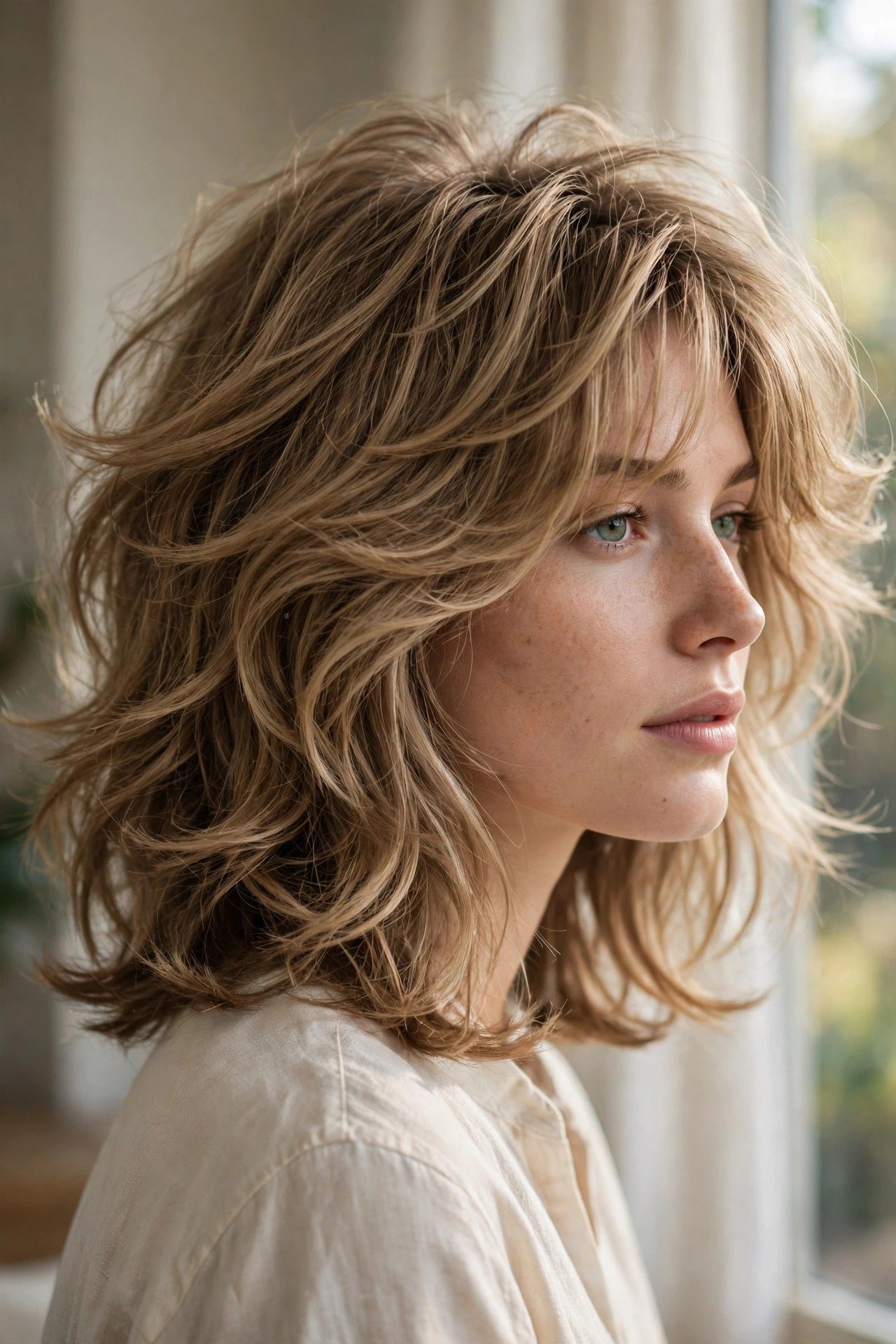
Shoulder length is the sweet spot for a soft wolf cut, long enough to feel feminine and versatile, short enough to dry quickly and hold its shape. The layers sit between the chin and the shoulders, the crown has gentle lift, and the ends flick softly without needing a lot of styling help. This is a brilliant choice if you work out, if you hate hair sticking to your neck in summer, or if you are cutting long hair shorter and want a safe landing place that still feels like a real change. It works on straight, wavy, and lightly curly hair, and it is one of the easiest lengths to grow out, because it simply becomes a longer soft wolf cut over a few months, with no awkward stage in between. Style it with a mousse scrunched through damp hair and a diffuser, or with a round brush for a smoother, more polished finish.
What to watch is the balance between volume and width, because at shoulder length a very layered crown can make the sides look wide, especially on round faces. Ask your stylist to keep the layers through the sides a little longer and to concentrate the lift at the crown rather than at the ears, and the shape will stay flattering. It suits round, oval, and square faces, and it is a kind choice for women with fine hair, because the shorter length makes fine hair look thicker and bouncier. Trims every eight weeks keep the shape from going shapeless, which is the main risk at this length. If you are torn between short and long, start here, because you can always grow it out or cut it shorter later, and shoulder-length soft wolf hair photographs beautifully from every angle.
4. Long Soft Wolf Cut
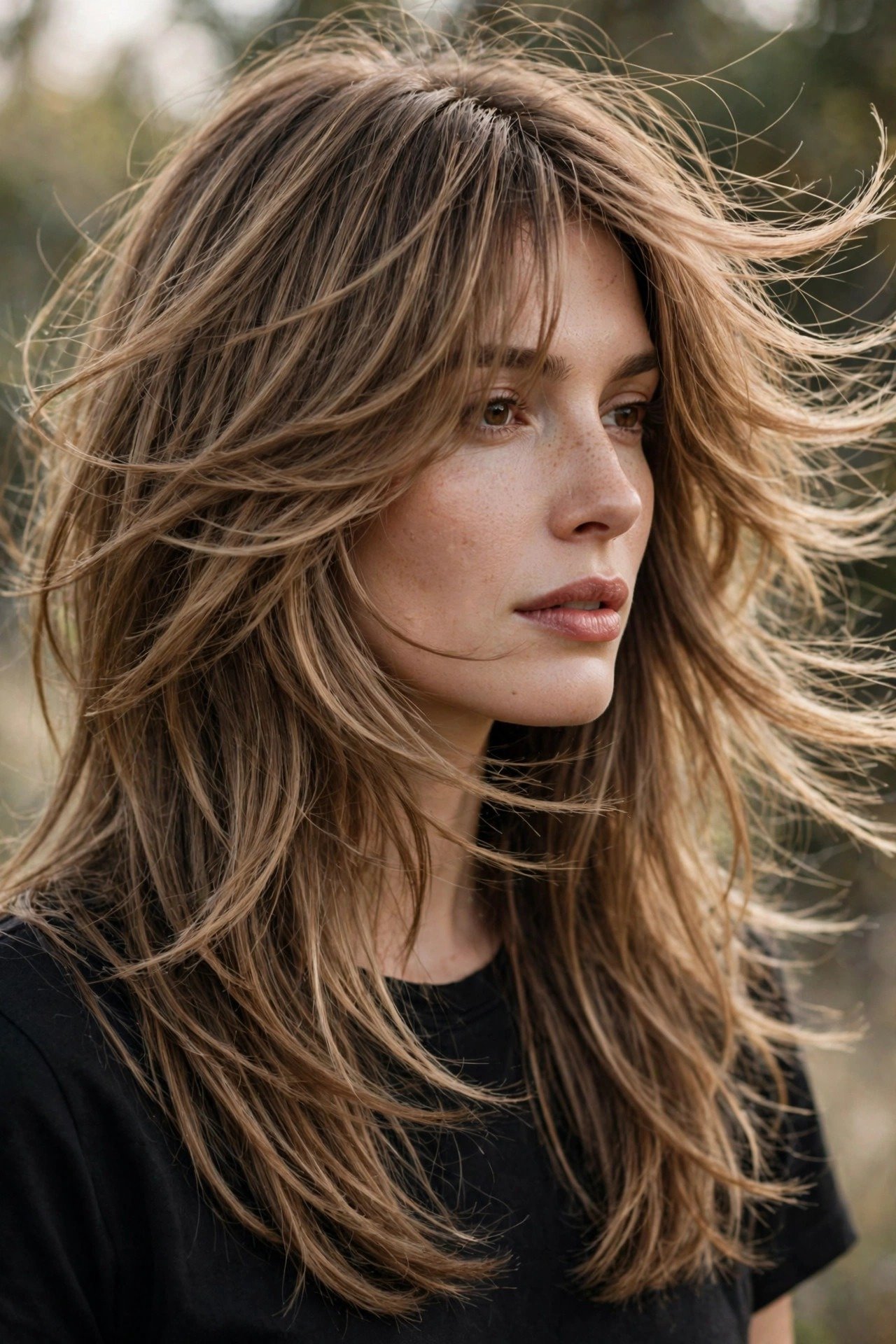
For women who have spent years growing their hair and refuse to give up a single inch, the long soft wolf cut is the answer. The face-framing layers start at the cheekbone and cascade all the way down past the shoulders, sometimes to the mid-back, so you keep every bit of your length while gaining movement that one-length long hair simply cannot offer. Long hair has a habit of going flat on top and heavy at the bottom, and this cut fixes both problems at once: the top layers lift, the lower layers swing, and the whole thing moves when you move instead of hanging like a curtain. It is especially gorgeous on wavy hair, where each layer catches the light differently and gives you dimension that no colour treatment can fake. Ask for long, blended layers rather than short, choppy ones, because at this length choppy layers can look messy instead of intentional.
The trade-off is honest and worth knowing. Long hair takes longer to wash, longer to dry, and longer to detangle, and no haircut changes that, so if you are short on time, this is not the lowest-maintenance option on the list. On the plus side, it is incredibly versatile. You can wear it down, half-up, in a loose braid, or clipped back, and the layers make every style look more interesting than it would on one-length hair. It suits oval and oblong faces particularly well, because the length balances the face, and it is a wonderful choice if you are growing your hair out, since trims just refresh the layers without touching your length goals. If length is part of your identity, this cut lets you keep it and still feel like you had a real change.
5. Soft Wolf Bob
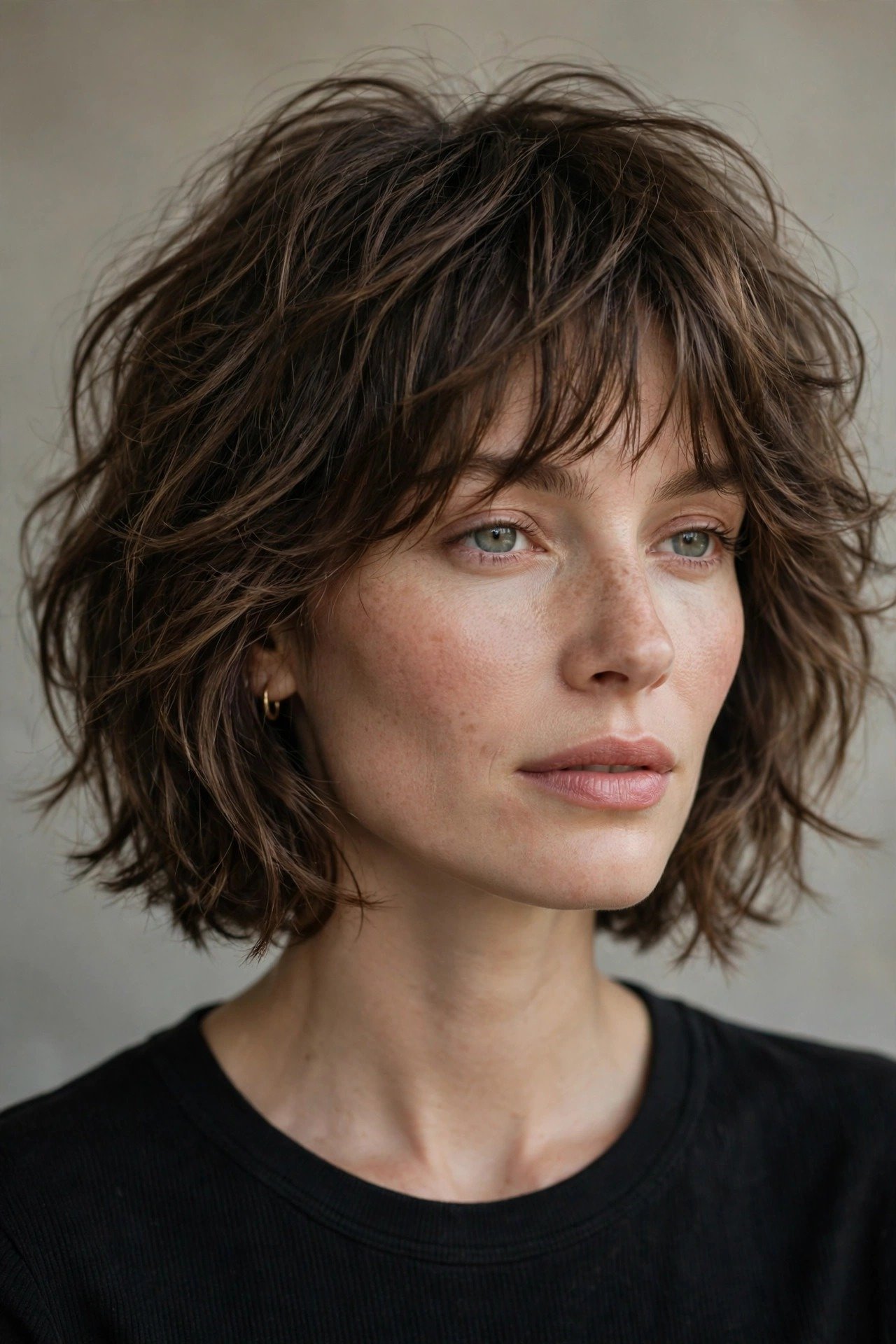
Take the soft wolf idea, shrink it to bob length, and you get one of the chicest short cuts around. The soft wolf bob sits around the jaw or just below it, with gentle crown layers that give lift and face-framing pieces that curve softly around the cheeks. Unlike an edgy wolf bob, which can look deliberately undone, this version looks polished and intentional, with a rounded silhouette that flatters the neck and jawline. It suits women who love short hair, who are tired of long-hair maintenance, or who want a dramatic change that still feels feminine and soft. Ask for it to be cut with the layers blended into the bob shape, not sitting on top of it like a separate idea, and be clear about whether you want it to tuck behind your ears, because that changes where the shortest layer should sit.
Styling a soft wolf bob is delightfully fast, with a wash, a little mousse, and a quick round-brush dry or a diffuser session taking ten minutes at most. The trade-off is that short hair needs more frequent trims, every six to eight weeks, to keep its shape, because grow-out shows quickly at this length. It suits oval, heart-shaped, and square faces, and it is a wonderful choice if you have a long neck or love statement earrings, because the shorter length puts your features front and centre. If you have always worn your hair long out of habit rather than love, this version might be the change that reminds you how much fun short hair can be. It is confident, it is chic, and it is far easier to live with than most people expect.
6. Soft Wolf Cut for Fine Hair
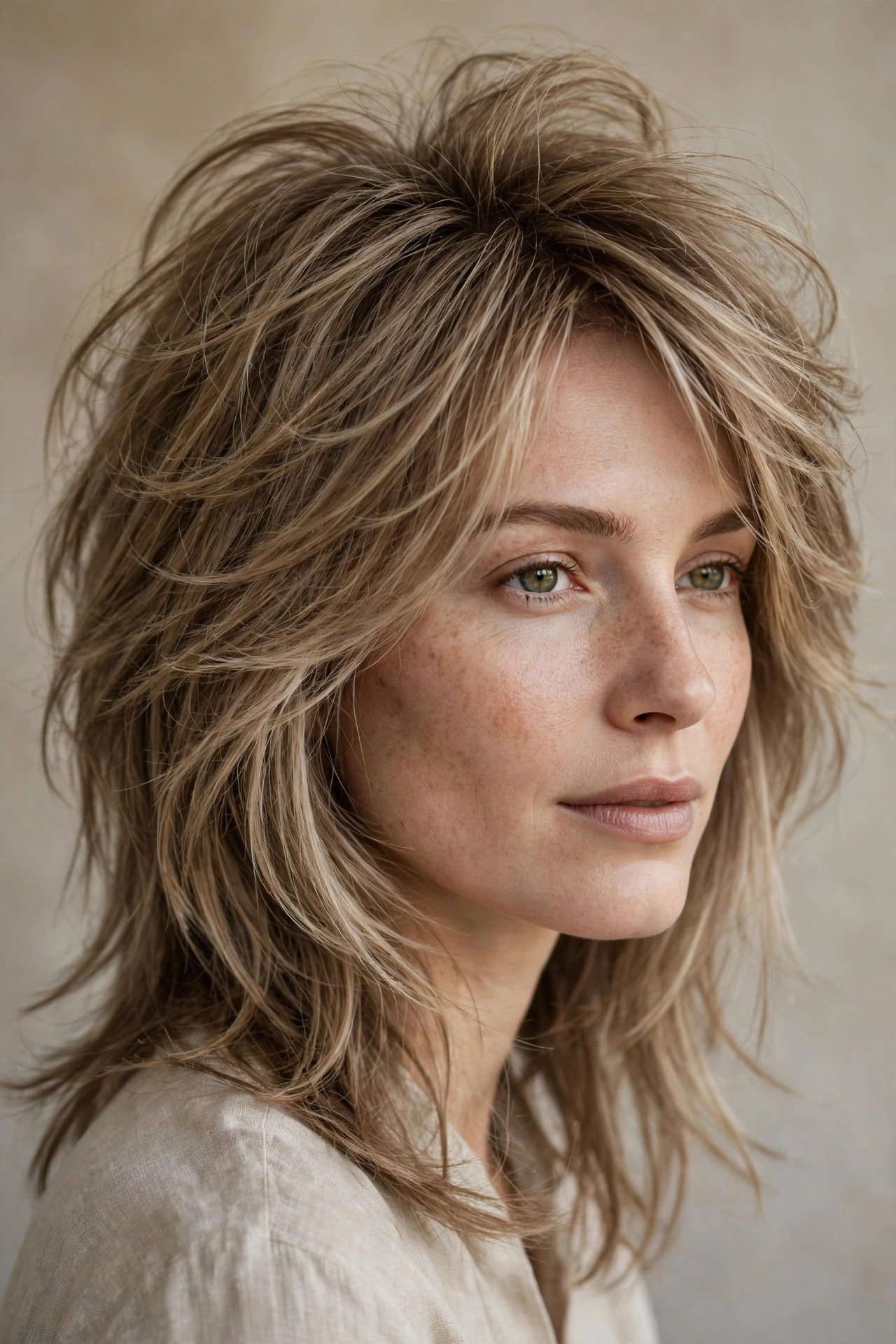
Fine hair needs a gentler hand than thick hair, and the soft wolf cut for fine hair is all about restraint. Fewer layers, longer graduation, and no aggressive thinning, because every strand counts when your hair is fine, and over-layering is how fine hair ends up looking wispy and sparse. The layers here are placed strategically: a soft face-framing layer to open the face, a couple of long layers through the length to create movement, and the bulk of the hair left intact so the ends look full rather than see-through. Done right, this version makes fine hair look thicker, because the layers create the illusion of volume and the hair moves as one full piece instead of hanging flat. Ask your stylist to cut it dry or to show you the layers as they go, so you can stop them before they take too much.
Product choice matters enormously for fine hair. Heavy creams and oils will weigh it down and make it look greasy by midday, so reach for light mousses, volumising sprays at the roots, and a light leave-in rather than a heavy mask. Blow-dry upside down for the first minute to lift the roots, then finish with a round brush for smoothness. The honest downside is that fine soft wolf hair will not hold volume as long as thick hair does, so you may need a root refresh on day two, but a quick blast of dry shampoo and a shake at the roots will bring it back. This version suits oval, heart-shaped, and oblong faces, and it is a kind choice if you have ever left a salon feeling like your hair looked thinner than when you walked in. With the right layers, fine hair can absolutely wear a soft wolf cut, and wear it beautifully.
7. Soft Wolf Cut for Thick Hair
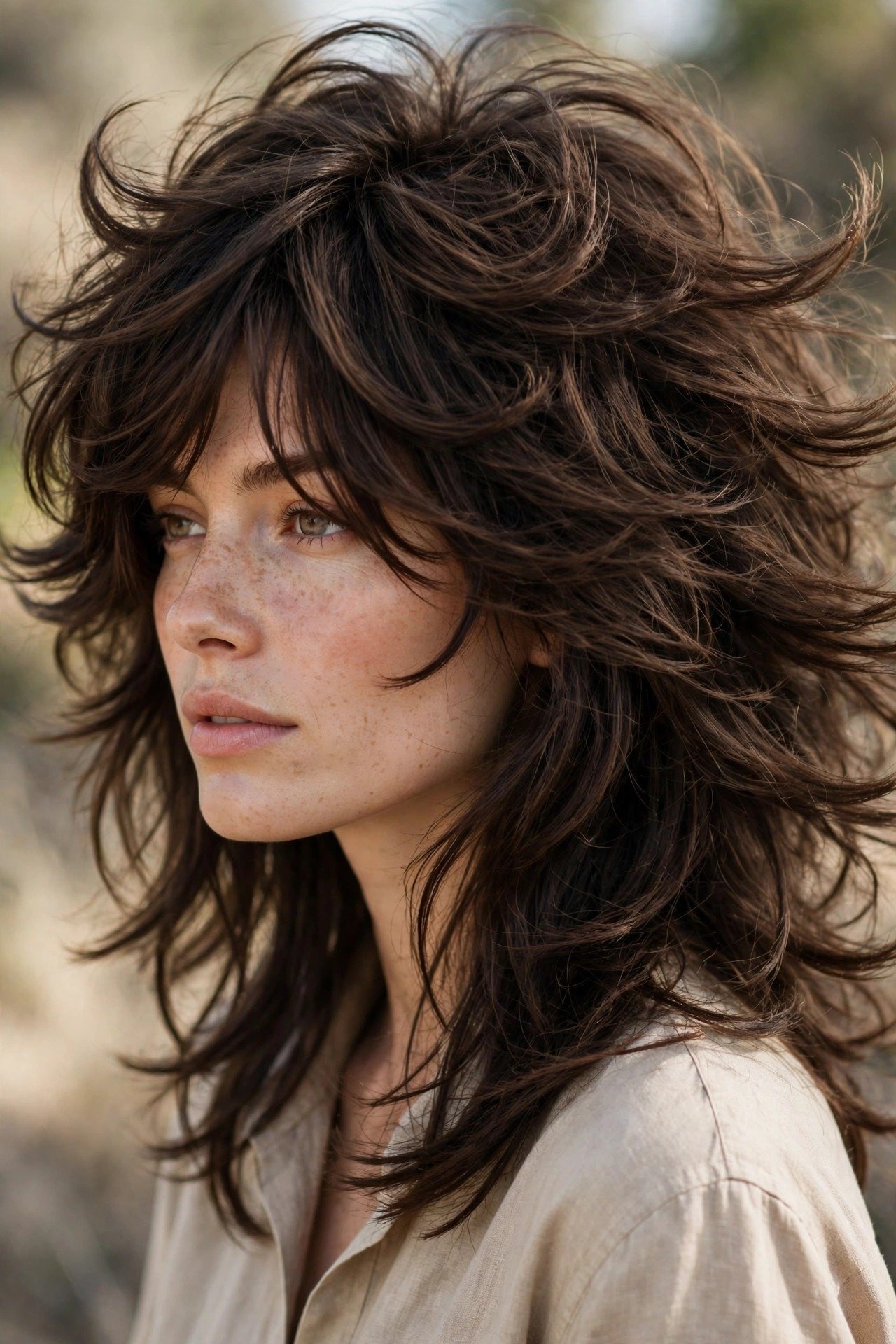
Thick hair is a blessing and a workout, and the soft wolf cut is one of the few cuts that genuinely makes it easier to live with. The whole point of layering thick hair is to remove weight from the inside of the shape without removing the density that makes it look lush, and a skilled stylist does this with internal layers and long graduation rather than by thinning the ends to nothing. The result is hair that dries faster, moves more freely, and holds a shape instead of collapsing into a heavy mass by lunchtime. Ask for internal layering, tell your stylist you do not want thinning shears used all over, and be very clear that you want to keep your thickness and just give it a shape to live in. Work your styling products through in sections rather than trying to scrunch everything at once, because there is simply more hair to cover.
Styling thick soft wolf hair takes a little more product and a little more drying time than fine hair, but the payoff is hair that holds its shape for days, because thick hair has natural staying power once it is shaped well. A volumising mousse at the roots and a smoothing cream through the lengths is usually enough, and a round-brush blow-dry will give you a polished finish that lasts. This version suits every face shape, since the layers can be adjusted to frame any face, and it is especially good for women who have always felt their hair was too much. It is not too much, it just needed a shape. Regular trims matter more for thick hair than for fine hair, because split ends travel faster through dense hair, so keep your eight-week appointments even when the cut still looks fine. Done well, this is the version that makes thick hair feel like a gift rather than a chore.
8. Soft Wavy Wolf Cut
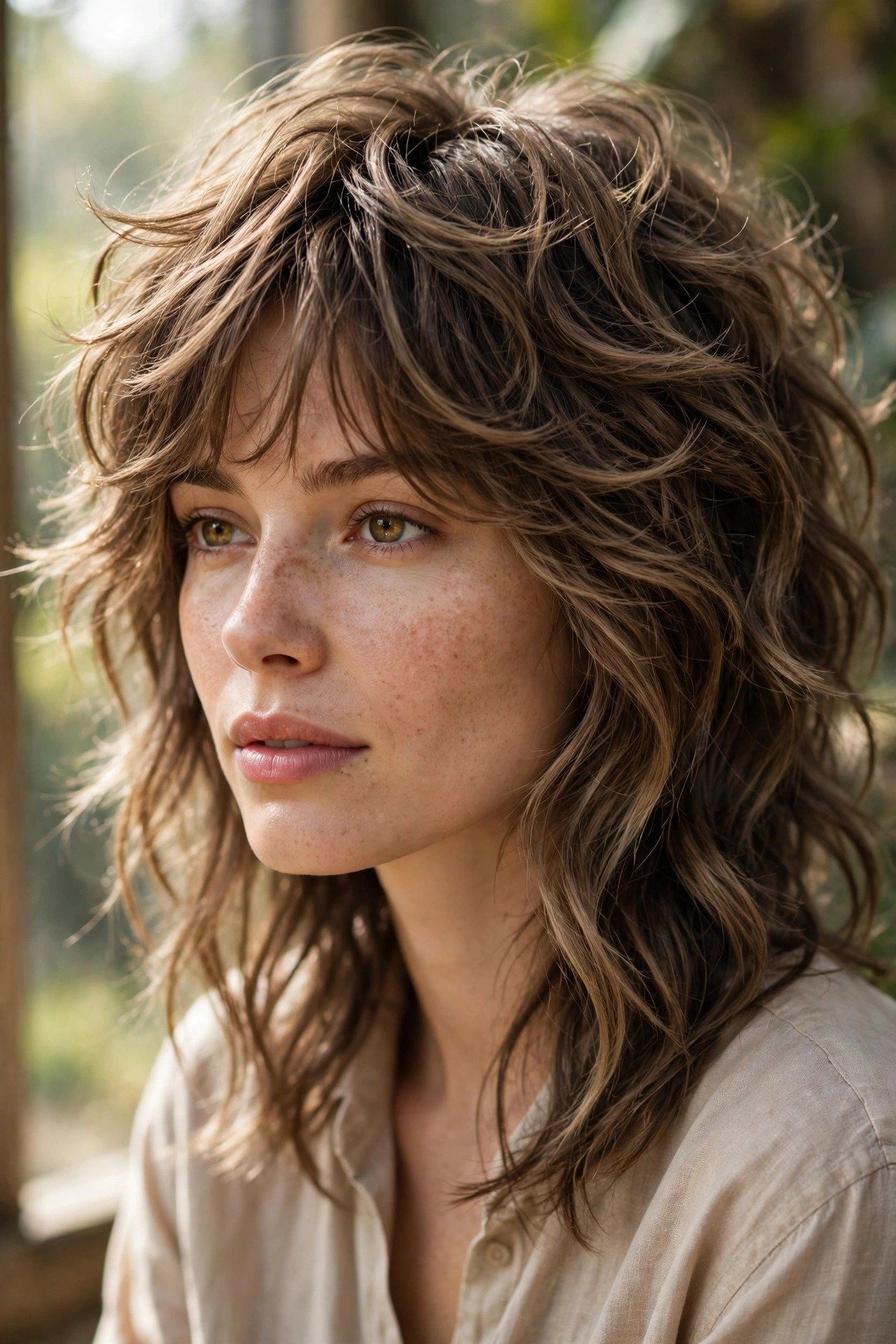
Wavy hair is the natural home of the soft wolf cut, because the layers and the wave enhance each other instead of fighting. The cut gives your waves a pattern to follow, so they clump into soft ribbons rather than frizzing apart, and the face-framing layers mean your waves open around your face instead of falling across it. The layers should be longer and softer than they would be for straight hair, because short layers on wavy hair can flip out and look disconnected, so the trick is gentle graduation: the shortest layer around the cheekbone, then long flowing layers below, so the waves stack into each other and build body. Style it with a light mousse or a curl cream scrunched into damp hair, diffuse briefly or even air-dry, and let the waves do what they already want to do. A sea-salt spray on day two will wake the texture back up without a full wash.
The honest truth about wavy soft wolf cuts is that they are lower maintenance than curly ones in some ways and higher in others. You will not need as much product or as much diffusing time, but your waves can fall flat by day two if you sleep on them wrong, so a loose braid or a silk scrunchie at night helps a lot. Humidity is both friend and enemy here: it encourages wave, but it can also encourage frizz, so a light anti-frizz serum through the ends is worth having in your bag. This version suits oval, oblong, and square faces, and it grows out gracefully into longer layers. If your waves have always felt a bit shapeless, this cut gives them a shape to follow, and that structure makes every morning a little easier. It is the version I recommend most often to women who say they want effortless hair, because on wavy hair it genuinely is.
9. Soft Wolf Cut for Straight Hair
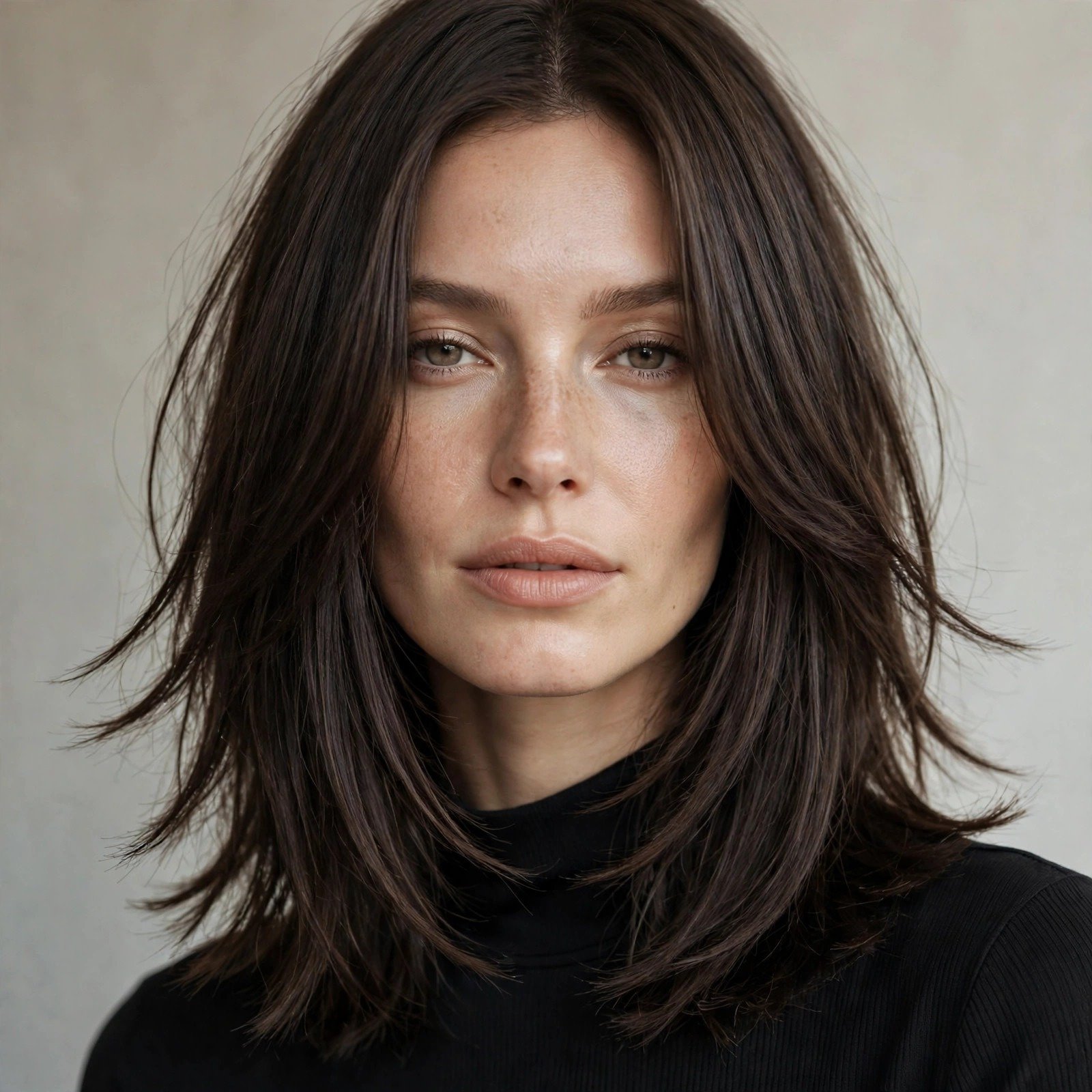
Straight hair can look flat in a soft wolf cut if the layers are not given a little help, but with the right styling it is one of the most polished versions on this list. The cut itself adds the structure: crown layers for lift, face-framing layers for softness, and feathered ends that stop straight hair from looking like a blunt sheet. The styling is where the magic happens, and it does not need to be complicated. Blow-dry with a round brush, turning alternate sections under and out, and you will get soft bends that show every layer off. Or use a straightener to add a gentle bend through the mid-lengths, leaving the ends slightly flicked, for a modern, lived-in finish that takes ten minutes once you have practised it twice. A texturising spray through the ends will keep the bends from falling flat by lunchtime.
The downside is real: on very straight, very slippery hair, the layers will need that styling help most days, because the hair will not hold a bend on its own. If you are someone who air-dries and walks out the door, a wavy or layered cut on naturally textured hair will be easier for you than this one. But if you enjoy a quick blow-dry, or if you already own a round brush and use it, this version rewards you beautifully. It suits oval and long faces especially well, because the bends add width where long faces need it, and it is a wonderful choice for work, because it looks neat, intentional, and professional without looking stiff. Ask your stylist to keep the layers long and blended, because short layers on straight hair show every mistake, and softness is the whole point here.
10. Soft Curly Wolf Cut
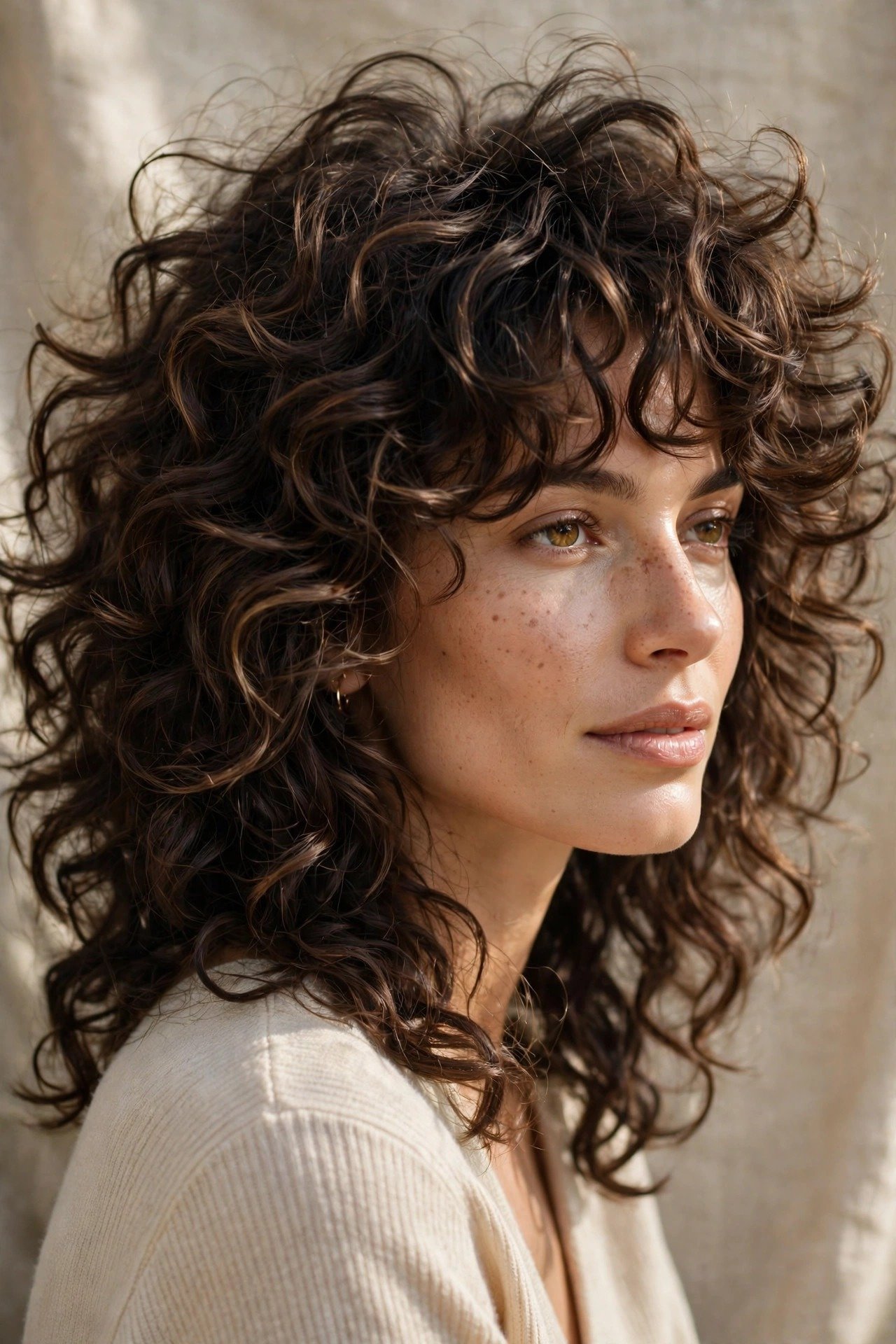
Curly hair and wolf cuts need careful handling, because the original wolf cut’s choppy layers can turn curls into frizz, but the soft version, done properly, is a different story. The key is longer, rounder layers cut with curl shrinkage in mind, so the finished shape is full and balanced rather than triangular or wispy. The face-framing layers open up the face, the crown layers give height without creating a shelf, and the longer layers underneath keep the silhouette generous. Ask for your curls to be cut dry or curl-aware, curl by curl, and be wary of any stylist who wants to blow your hair straight first and cut it like straight hair, because that approach ignores shrinkage entirely and the layers will land in the wrong places once your curls spring back. A curl cream scrunched into soaking wet hair, followed by diffusing, will define the layers beautifully.
Maintenance for curly soft wolf hair is mostly about moisture. Curls drink conditioner, and a weekly deep-conditioning treatment is not optional if you want them to stay soft rather than crunchy or frizzy. Refresh days are easy: mist with water, smooth a little leave-in over the canopy, scrunch, and go. The downside is that curly layers can behave differently on different days, depending on humidity and how you slept, so this version asks for a little more patience than a straight version does. It suits every face shape, because the volume and framing can be adjusted so easily, and it is a powerful choice if you want a cut that celebrates your curls instead of taming them. If your curls are looser, our guide to curly butterfly cut ideas may also help you compare layered shapes, but the soft wolf version here is rounder at the crown and more textured through the ends.
11. Soft Wolf Cut with Side-Swept Fringe
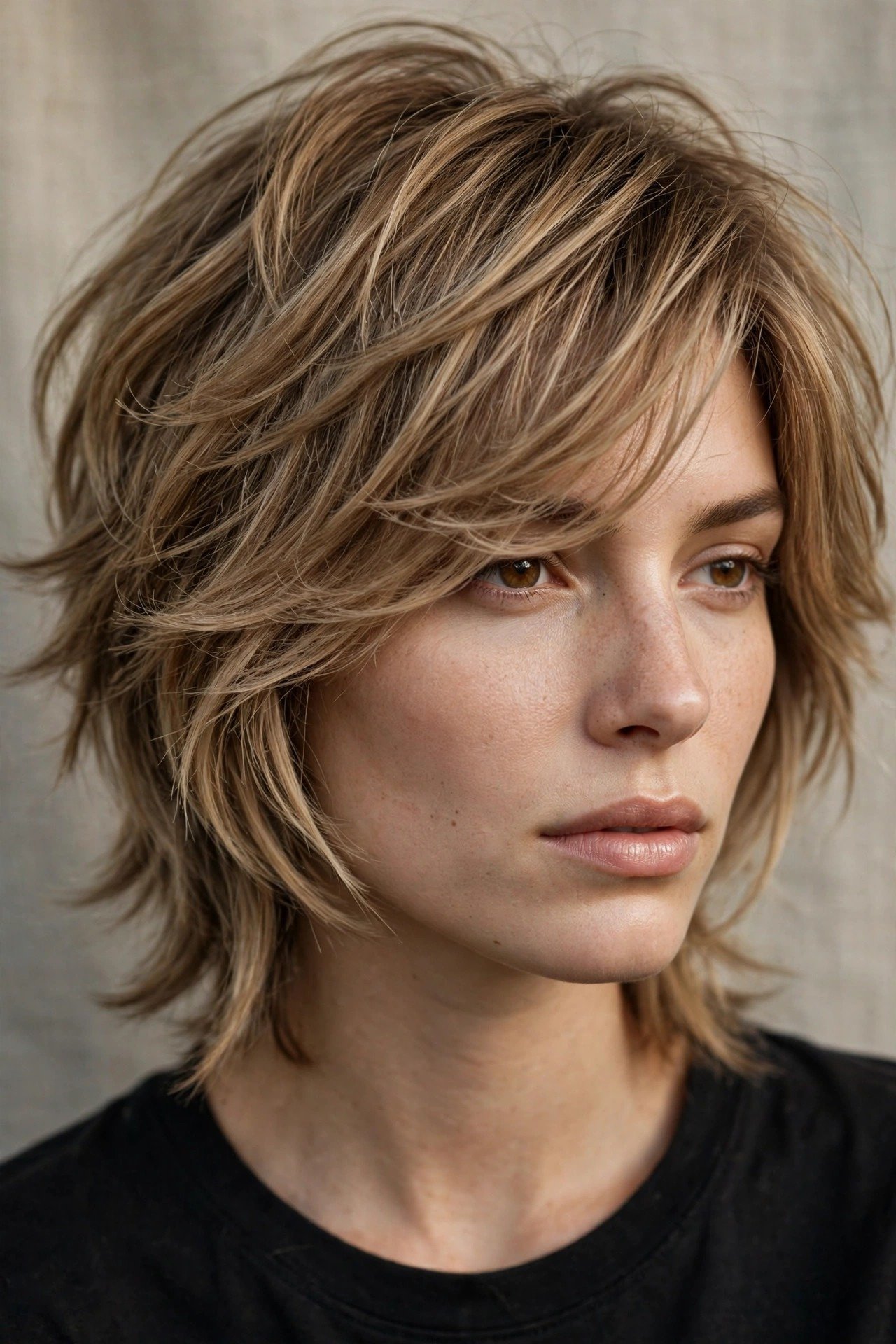
A side-swept fringe changes a soft wolf cut more than most people expect, and it does it in the best way. Sweeping the fringe diagonally across the forehead instantly creates asymmetry, softens a strong forehead, and gives the whole cut a glamorous, slightly grown-up feeling that a middle part never quite delivers. The fringe should be cut long enough to tuck behind the ear on days when you do not want it in your face, and it should blend into the face-framing layers rather than sitting apart from them like a separate block. This is a wonderful choice for women with a cowlick or a natural part that refuses to sit in the middle, for women who want to soften a square jawline, and for anyone whose face feels a little too symmetrical and could use some gentle drama. Style it by blow-drying the fringe to one side with a round brush, directing the airflow across the forehead rather than down.
One thing to know is that a side-swept fringe needs a little daily direction, because it will try to fall back to its natural part if you ignore it. A quick blow-dry while it is damp, or a pin for the first ten minutes while you get dressed, will train it to sit where you want it. It suits round, square, and heart-shaped faces especially well, because the diagonal line across the forehead breaks up width and softens angles. It also hides a multitude of sins on days when your hair is not cooperating, because sweeping the fringe to the other side is the fastest refresh trick in existence. If you want a soft wolf cut that feels a little more polished and a little more deliberate, start with the fringe. It costs nothing extra and changes everything about how the cut reads.
12. Middle-Part Soft Wolf Cut
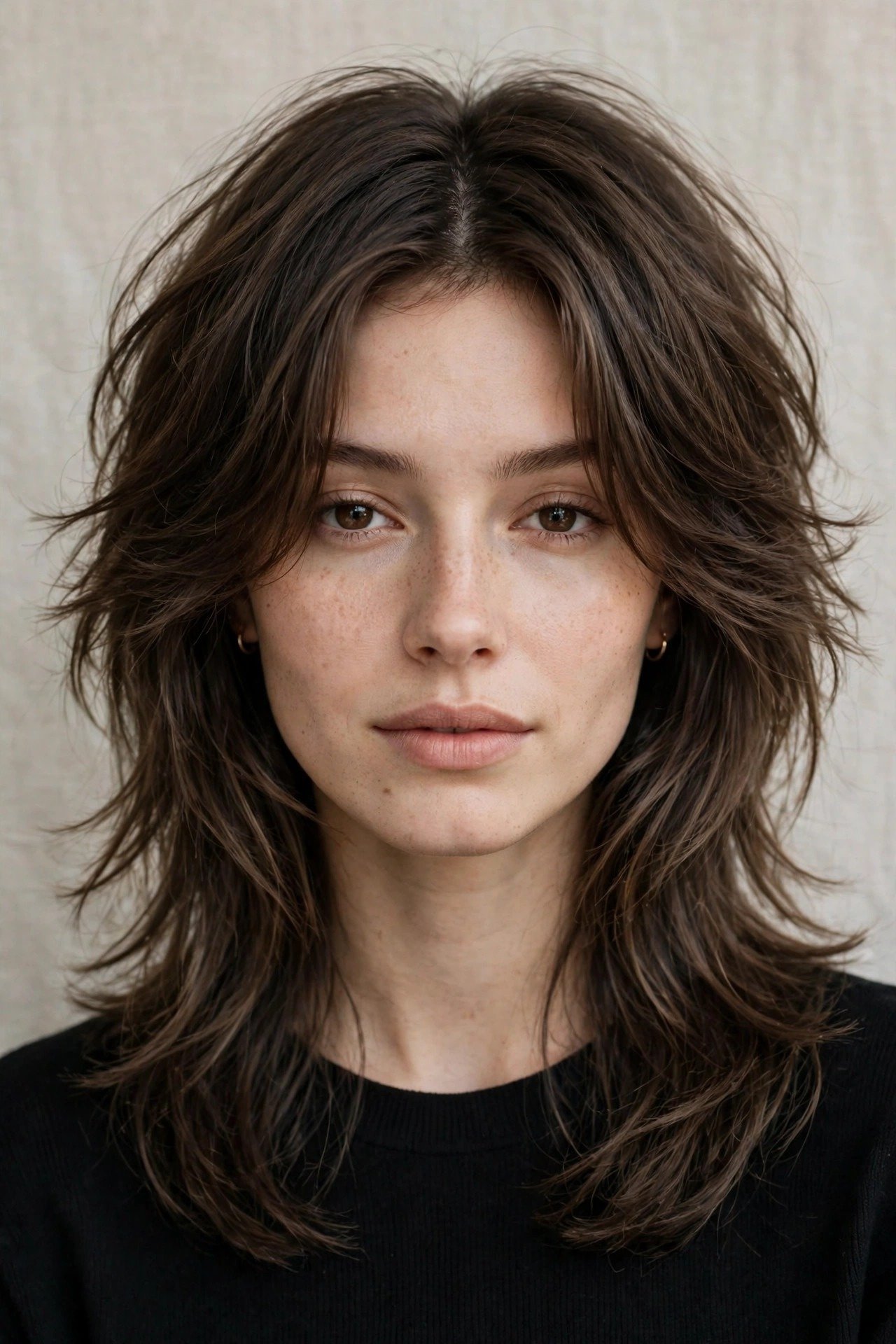
The middle part is the classic soft wolf pairing, and it gives you symmetry, balance, and a clean frame for your whole face. With the hair falling evenly on both sides, the layers mirror each other, the face-framing pieces open like curtains, and the overall shape is calm, polished, and very flattering. This version is ideal if you like a neat, put-together look, if you have a symmetrical face you want to show off, or if you simply part your hair in the middle out of habit and never think about it. The layers should be cut with the middle part in place, and the shortest layer should sit at the cheekbone or just below, so the face opens up rather than closing in. A middle part also makes it easy to check that your layers are even, which is a useful check when you leave the salon.
The only real risk with a middle part is flatness at the crown, because the hair is pulled evenly to both sides and there is no natural lift from a flip. Fix it with a volumising spray at the roots while your hair dries, or by blow-drying upside down for the first minute, which gives the roots volume that lasts all day. This version suits oval and heart-shaped faces best, though it works on most face shapes as long as the layers are placed well. It is also the easiest soft wolf version to style consistently, because there is no decision to make in the morning: part, style, done. If you love routine and you love symmetry, the middle-part soft wolf is your cut, and it is the version that looks most like the soft wolf cuts you see in photographs, just made for real life instead of a studio.
13. Soft Wolf Shag
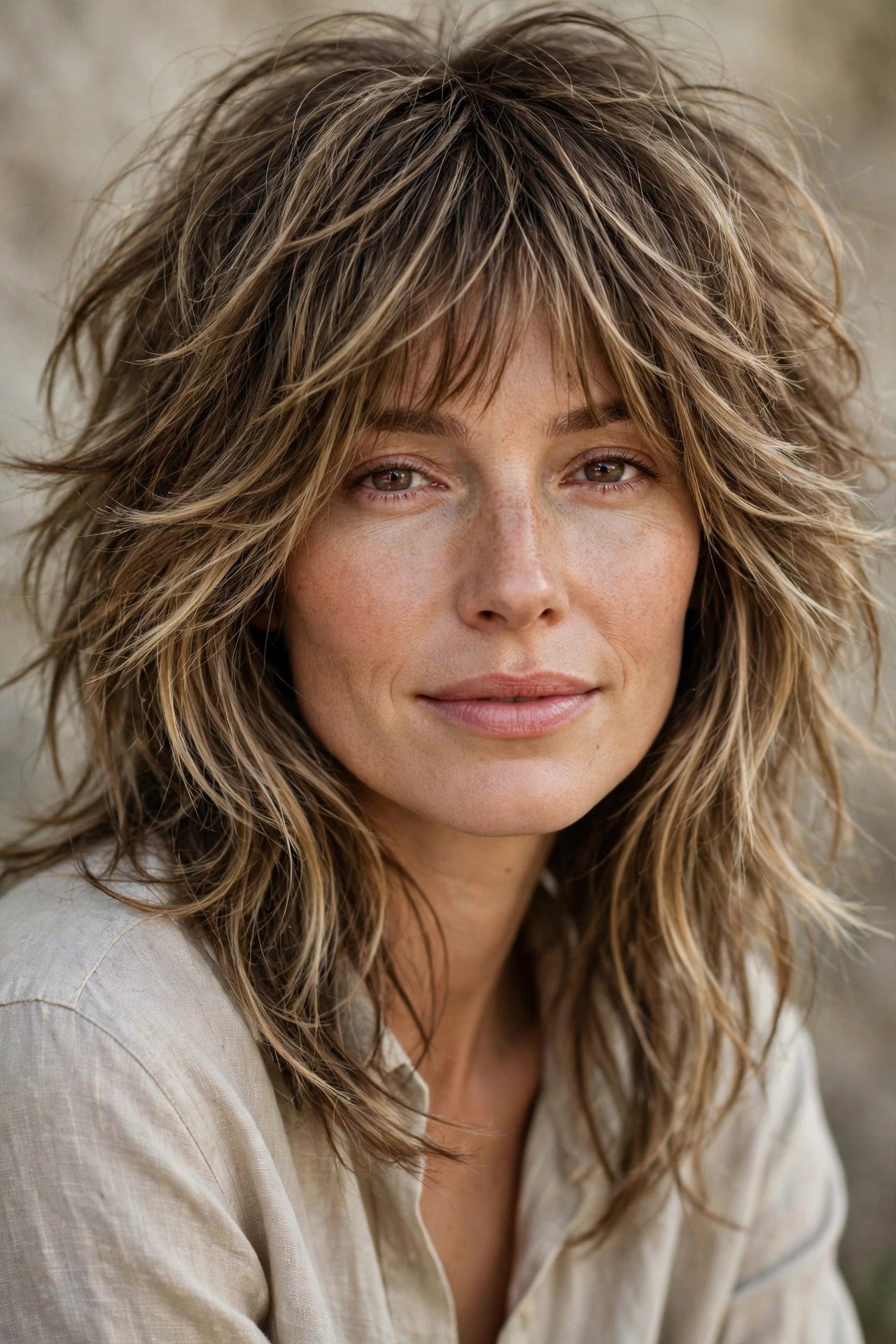
The soft wolf shag sits right where the wolf cut and the classic shag overlap, but it leans gentle rather than wild. The layers are a little more visible than in the classic soft wolf cut, with a bit more texture through the crown and the ends, but everything is still blended, and nothing is disconnected or razored into spikes. Think of it as the classic soft wolf cut with the volume turned up slightly and the finish a little more relaxed. It is a wonderful choice if you love texture, if your hair is naturally wavy and you want to encourage that wave, or if you found the classic version a little too neat for your taste but the edgy wolf cut far too wild. A texturising spray scrunched through damp hair, followed by air-drying or diffusing, gives you that relaxed, lived-in finish without any real effort.
The catch is that a shaggier finish shows frizz more readily than a smooth finish, so if you live somewhere humid or your hair frizzes easily, you will need a light smoothing serum through the ends to keep it looking intentional rather than accidental. It suits oval, round, and square faces, and it is especially good for women with medium to thick hair, because the texture needs some density to hold it. Fine hair can wear it too, but with fewer layers and a lighter hand on the texturising products. If you want a soft wolf cut that looks like you just came back from a beach holiday, even in February, this is the one. It is relaxed, it is modern, and it never looks like you tried too hard, which is a rare and valuable quality in a haircut.
14. Korean-Inspired Soft Wolf Cut
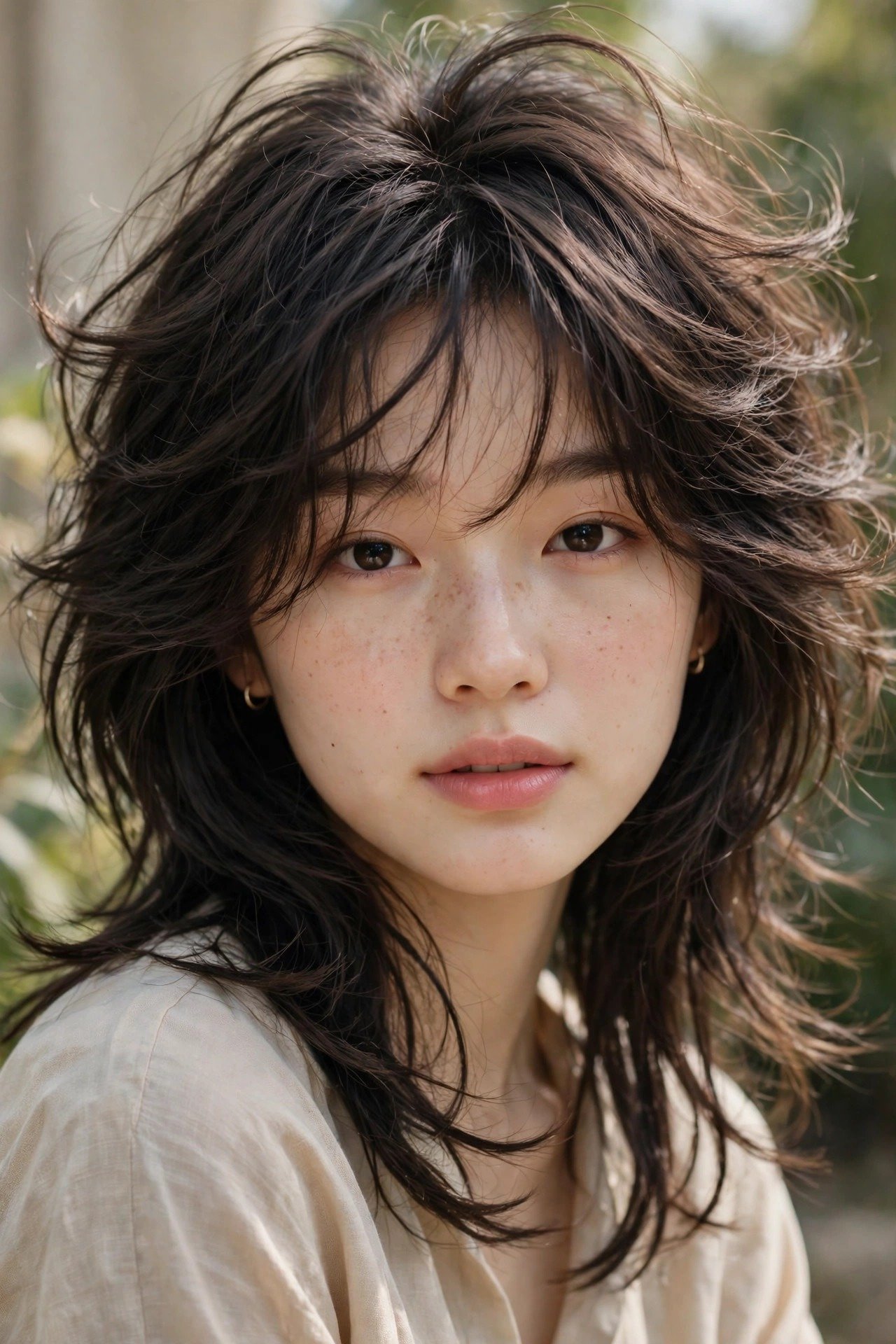
The Korean-inspired soft wolf cut is the airiest, lightest version on this list, and it has a huge following for good reason. The layers are wispy and feather-light, the ends are tapered into soft points, and the overall feeling is of hair that floats rather than sits. A soft, see-through fringe or wispy curtain bangs usually completes the look, framing the face without any heaviness. This version works beautifully on straight to wavy hair, especially fine to medium hair, because the lightness of the cut makes fine hair look airy rather than thin, and it gives straight hair movement it never had before. Style it by blow-drying with a large round brush, turning the ends gently outward, and finishing with a light texturising spray that you can barely feel. The whole point is that it should look effortless, almost as if you did nothing at all.
The honest limitation is that this airy lightness needs some density to work, and on very thick, very curly, or very coarse hair it can look either too wispy or too bulky, depending on how it is cut. If your hair is thick, ask your stylist to keep the layers a little longer and to remove weight internally rather than thinning the ends, so you keep the airy feeling without losing the shape. It suits oval, heart-shaped, and small, delicate face shapes especially well, and it is a lovely choice for younger women or for anyone who loves a soft, romantic, K-beauty aesthetic. If you love the idea of a wolf cut but you want it to whisper rather than shout, this is your version, and it is one of the prettiest ways to wear layered hair in 2026.
15. Soft Wolf Cut with Wispy Bangs
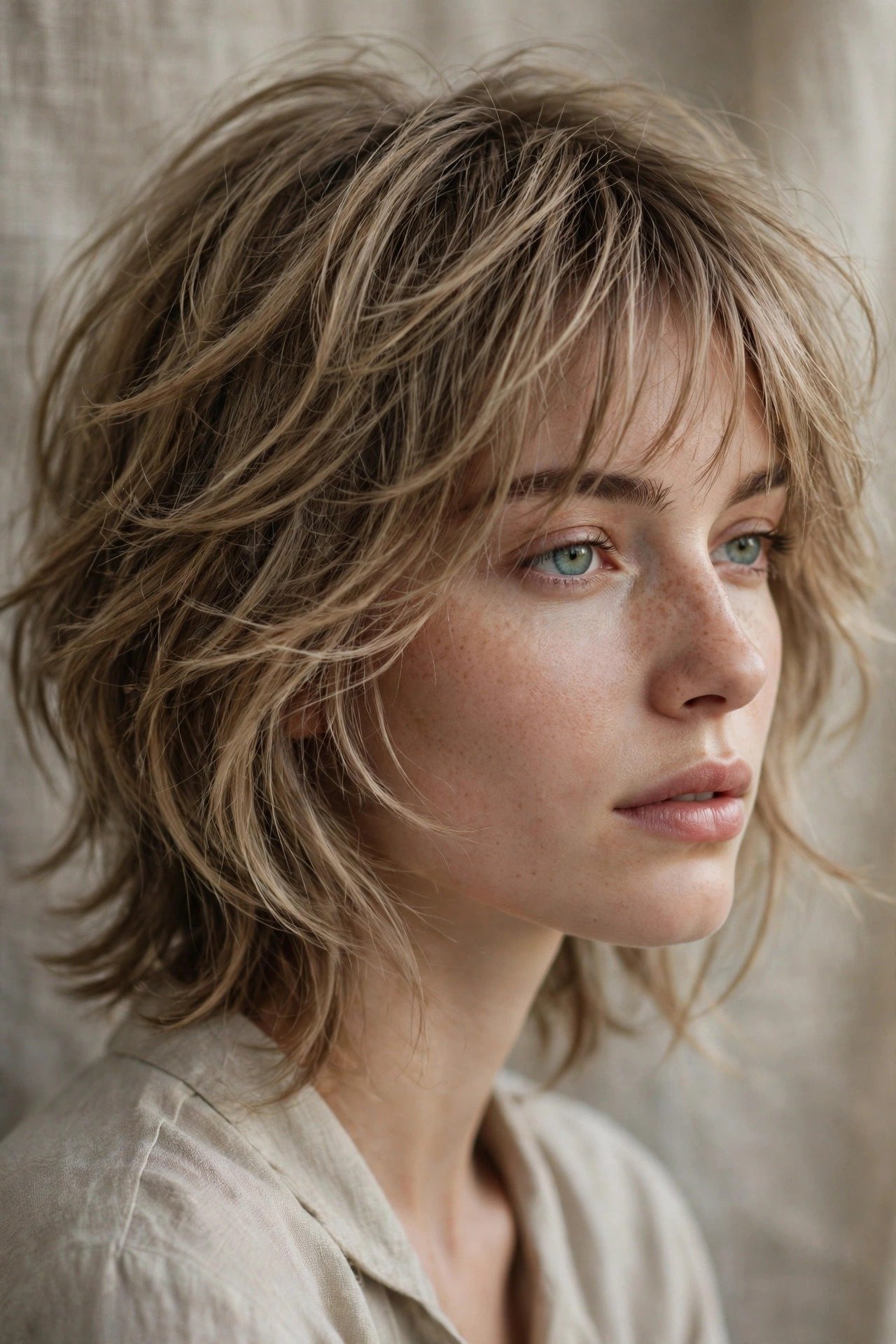
Wispy bangs are the gentlest fringe you can pair with a soft wolf cut, and they are a wonderful choice if you are nervous about bangs. Unlike a heavy fringe, which commits you to a bold line across your forehead, wispy bangs are light, see-through, and forgiving. They soften the forehead, draw attention to the eyes, and blend into the face-framing layers so naturally that on a bad hair day you can sweep them to one side and forget they are there. They work on straight and wavy hair best, because the wisps need to fall in soft, separate strands rather than clumping together, and they are especially flattering on women with longer faces or high foreheads. Ask your stylist to cut them dry, a little longer than you think, and to point-cut the ends so they taper rather than ending in a blunt line.
Maintenance is refreshingly low for a fringe. Wispy bangs do not need daily styling in the way a blunt fringe does, because their whole charm is that they are a little imperfect. A quick finger-comb in the morning is usually enough, though you will want to wash them separately on very oily days, because bangs sit on skin and pick up oil faster than the rest of your hair. It suits oval, oblong, and heart-shaped faces, and it is a kind first step if you have never had bangs before. The only real risk is cutting them too short in enthusiasm, so start long. You can always go shorter at your next appointment, but you cannot glue hair back on, and a wispy fringe that is too short is surprisingly hard to hide. Start long, live with it for two weeks, and then decide.
16. Feathered Soft Wolf Cut
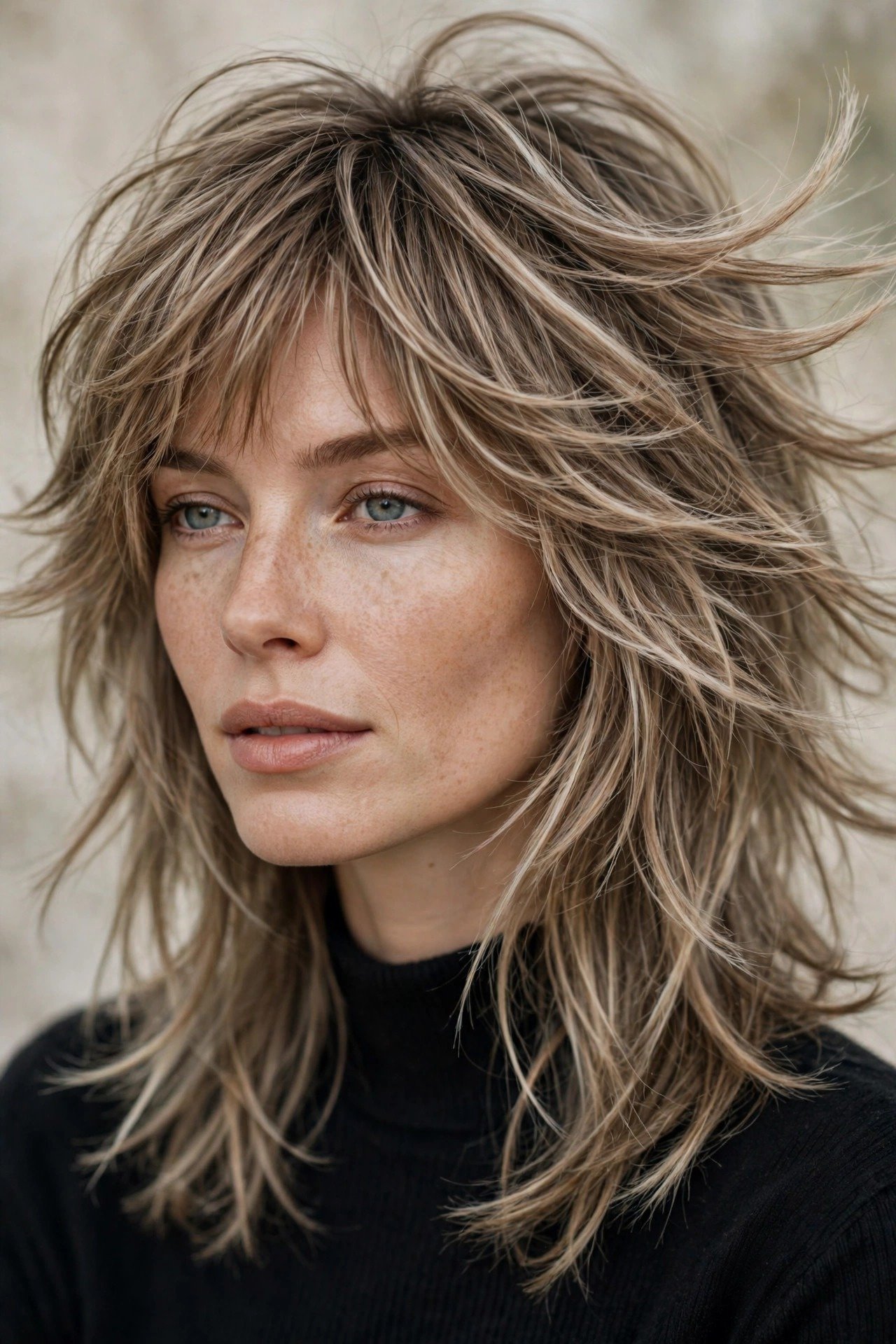
Feathering is a cutting technique, not just a look, and the feathered soft wolf cut leans into it fully. The ends of every layer are cut into soft, tapered feathers that fall over each other like the pages of a book, so the whole cut looks light, airy, and full of movement even when you have done nothing to it. This is a beautiful choice for women with medium to thick hair who want lightness without losing fullness, and for women with straight hair who want their layers to be visible rather than blending into one flat sheet. Blow-drying with a round brush, flicking the feathered ends outward in alternate sections, shows the technique off beautifully, and a light smoothing serum will keep the feathers soft rather than flyaway. It is the version that looks most like a salon blow-dry even on days when you have only air-dried.
The thing to be careful about is over-feathering, because if every layer is feathered too aggressively, the ends can start to look thin and wispy, especially on fine hair. Ask your stylist to feather the ends but to keep weight through the mid-lengths, so the cut stays full. It suits round, oval, and square faces, and it is especially flattering on women who love a polished, put-together finish, because feathered layers look intentional in a way that choppy layers never do. Trims every eight weeks keep the feathering crisp, because feathered ends show split ends sooner than blunt ends do. If you love the feeling of hair that moves when you turn your head, and you want that movement to look soft rather than wild, the feathered soft wolf cut is the version to screenshot.
17. Soft Wolf Cut with Balayage
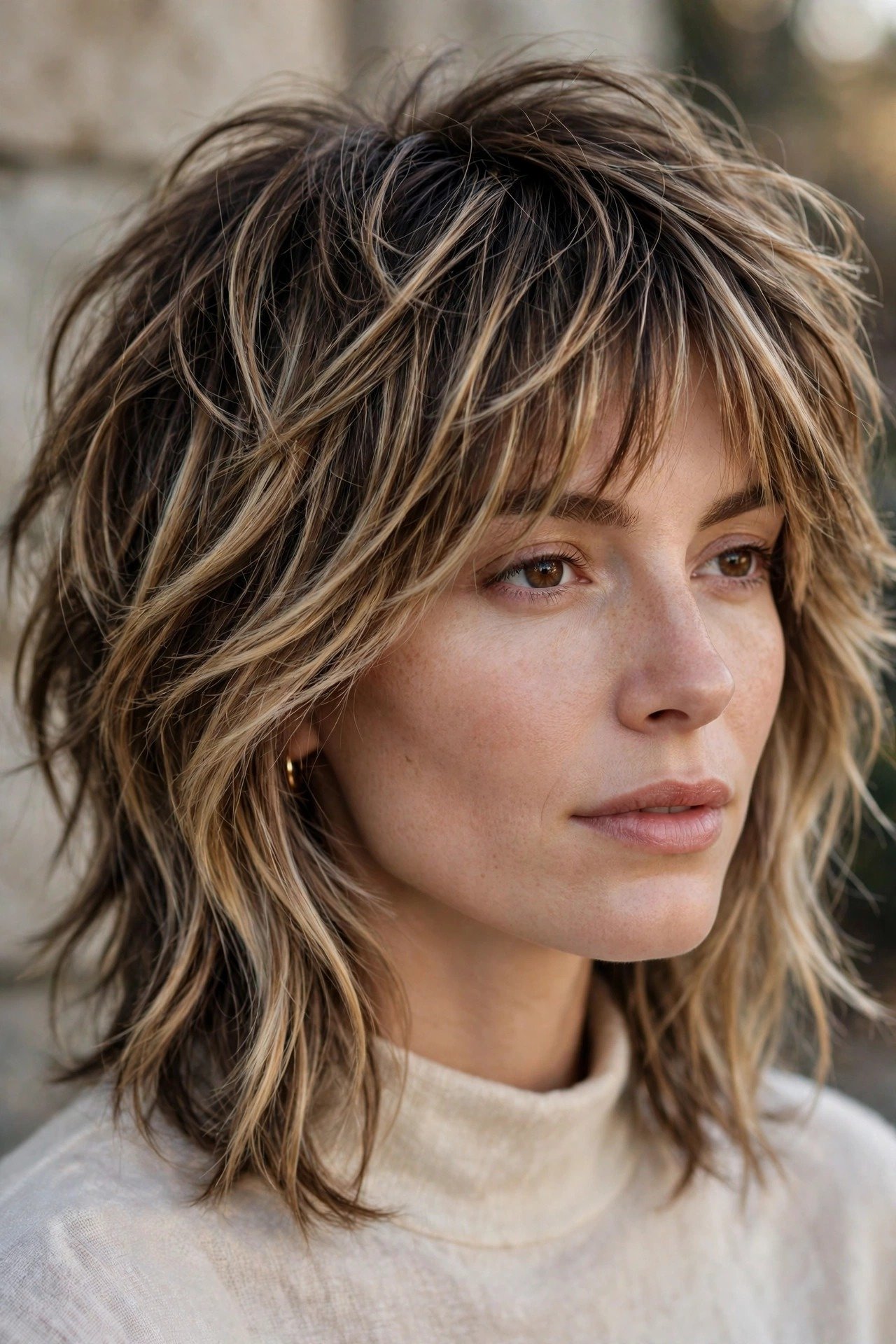
Colour and cut are partners, and balayage on a soft wolf cut is one of the happiest partnerships in hair. Because the layers sit at different lengths, the balayage catches the light at every level, so your hair looks dimensional and sun-kissed even indoors. The lighter pieces are usually painted onto the face-framing layers and the ends, which means the soft wolf shape itself gets highlighted: the short layers glow around your face, the long layers carry ribbons of lightness through the length, and the whole cut looks more expensive than it is. This is a gorgeous choice on medium to dark brown bases, where the contrast is visible but not harsh, and it works on straight to wavy hair where the layers show the colour off. Ask your colourist for a soft, blended balayage rather than harsh highlights, because layered hair shows lines more obviously than one-length hair does.
The honest cost here is maintenance and hair health. Balayage needs toning every six to eight weeks to keep it from going brassy, and lightened hair needs extra moisture, so a deep-conditioning mask becomes non-negotiable rather than nice to have. If your hair is already dry or damaged, get it healthy first and add colour second, because bleached dry hair will frizz no matter how good the cut is. Done well, though, this combination is stunning, and it suits warm and neutral skin tones beautifully. It also makes the soft wolf layers easier to see in photographs, which matters if you love documenting your hair. Think of the balayage as lighting for the cut: the shape does the work, the colour just makes sure everyone notices it.
18. Chocolate Brunette Soft Wolf Cut
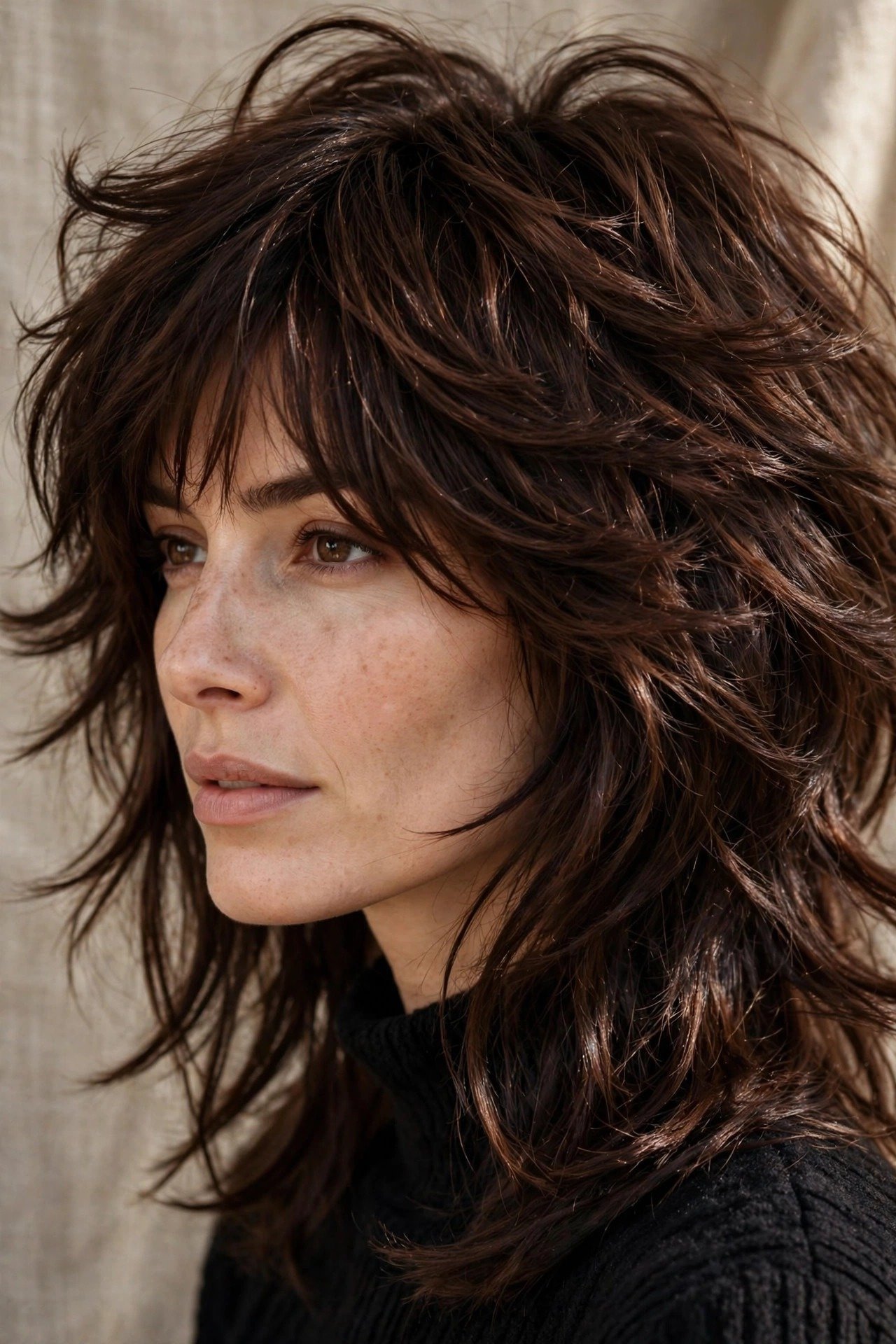
Not every statement needs colour, and the chocolate brunette soft wolf cut proves that rich, glossy, single-tone hair can be just as striking as any balayage. Deep chocolate brown gives layered hair a luxurious depth that lighter colours sometimes lose, because the layers catch the light and create natural dimension through shadow and shine rather than through dye. The soft wolf layers look especially polished in this shade, with the face-framing pieces framing the face in a soft dark frame and the longer layers falling like silk. This is a wonderful choice if you have naturally dark hair and you want to enhance it rather than change it, or if you are growing out colour and want a healthy, low-maintenance shade. A gloss treatment every few months will keep the chocolate rich and shiny without any real upkeep.
The maintenance story here is the best on this list, which is part of the appeal. No toning appointments, no brassiness, no root regrowth line to panic about, just a great cut and healthy hair. The cut itself needs the same care as any soft wolf version, with trims every eight weeks and good moisture, but the colour asks almost nothing of you. It suits every skin tone, because chocolate brown is one of those rare shades that flatters warm, cool, and neutral undertones alike, and it suits every face shape because the cut does the shaping, not the colour. If you have ever felt pressure to lighten your hair to be on trend, this version is your permission slip to skip it. Rich, dark, healthy hair in a soft wolf shape is timeless, and it photographs like a dream.
19. Honey Blonde Soft Wolf Cut
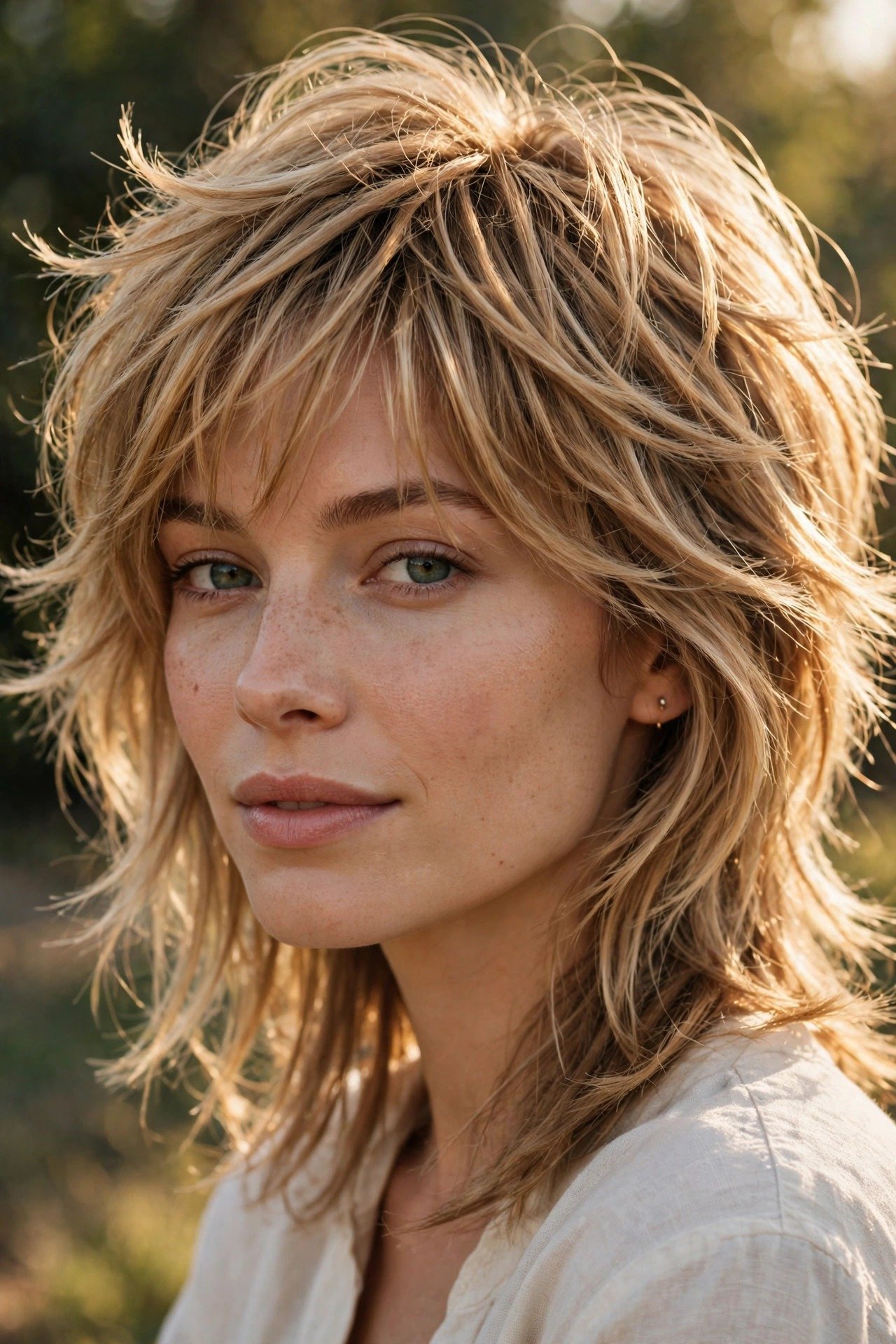
Honey blonde is the gentle middle ground between all-over colour and natural hair, and it is perfect for a soft wolf cut because it follows the layers so naturally. Warm honey tones woven through the face-framing layers and the ends mean that when your hair moves, the colour moves with it, creating a shimmering, dimensional effect that looks like sunlight rather than dye. This is a lovely choice if you want to brighten your hair without a dramatic change, if you are trying lighter colour for the first time, or if you want a look that grows out so gracefully you barely notice it. It works beautifully on light to medium brown bases and on straight to wavy hair, where the layers show the honey tones off without needing a lot of them. A gloss or a toner every eight weeks will keep the honey warm rather than brassy.
Maintenance is moderate: a toning appointment every eight to ten weeks, colour-safe products, and a good mask to keep lightened hair moisturised. The grow-out is the real selling point, because honey tones blend into most brown bases as they grow, so you will not have a harsh line or an emergency salon visit. It suits warm and neutral skin tones, and it suits every face shape, because the colour is placed to frame the face regardless of its shape. If you love the idea of dimension but you hate high-maintenance colour, honey blonde on a soft wolf cut is the compromise that does not feel like a compromise. Your hair will look sun-kissed, your layers will look intentional, and your salon visits will stay refreshingly infrequent.
20. Copper Soft Wolf Cut
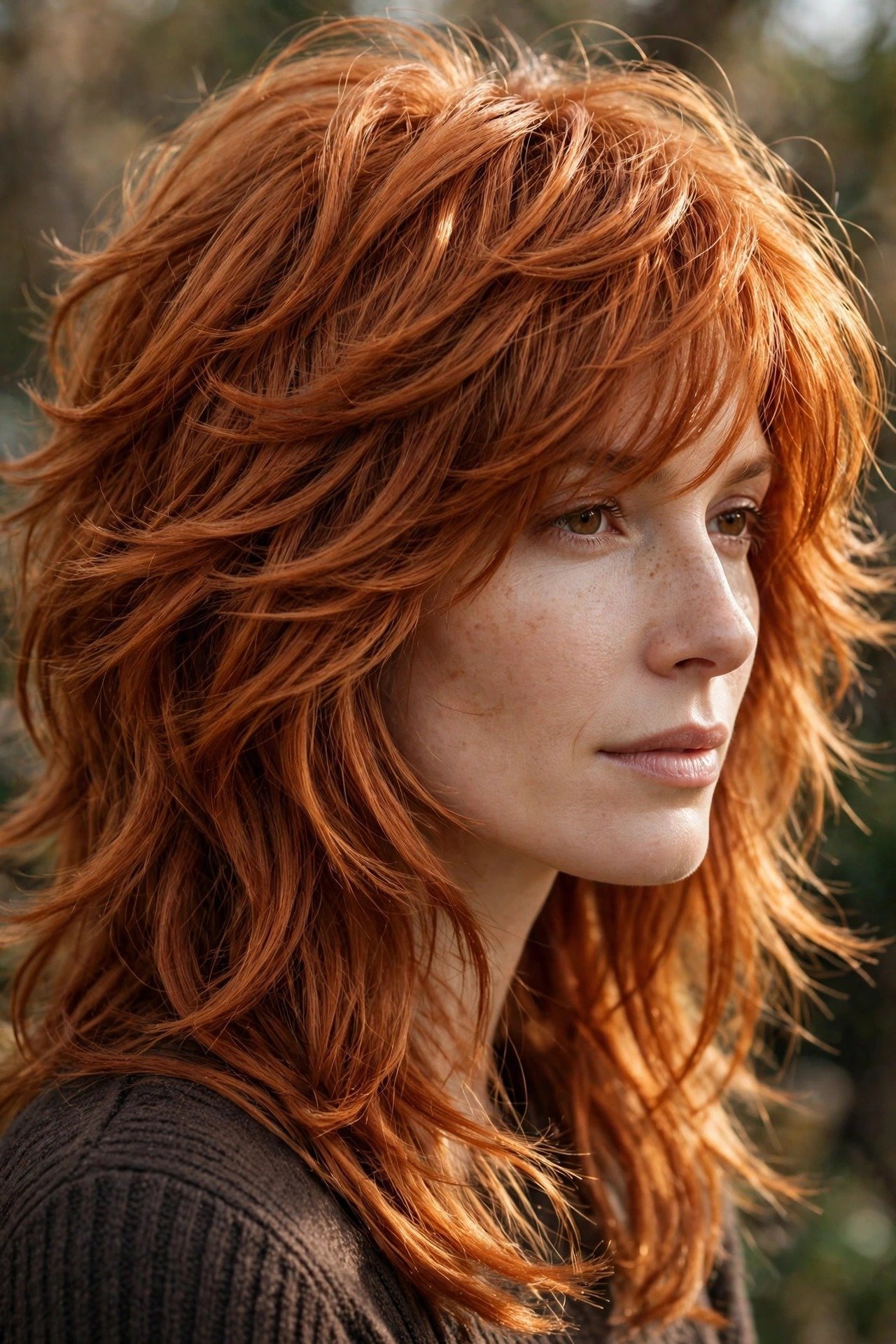
Copper is having a real moment, and on a soft wolf cut it looks like it was invented for the combination. The warm, fiery tones catch the light in every layer, so the cut reads as even more dimensional, and the whole shape glows in a way that cooler shades never quite manage. Copper works on a huge range of bases, from a soft copper gloss over brown hair to a vivid copper that turns heads from across the street, so you can go as bold or as subtle as your life allows. The soft wolf shape is ideal for copper because the face-framing layers put the warmest tones right around your face, where they brighten your skin and make your eyes pop. Ask your colourist about a copper gloss first if you are nervous, because a gloss gives you the warmth without the commitment of permanent colour.
Fair warning, and I will not sugarcoat it: copper fades faster than almost any other shade, because the colour molecules are large and wash out quickly. You will need colour-safe shampoo, cool water washes, and a copper-depositing conditioner or a gloss refresh every four to six weeks to keep it vivid. If that sounds like too much upkeep, a deeper, more muted copper will last longer and fade more gracefully. It suits fair to medium skin tones with warm undertones best, though a deep copper can be gorgeous on deeper skin too. The cut underneath needs the usual soft wolf care, but the colour is the star here, and it is worth the effort if you love warm tones. Copper hair in a soft wolf shape is not quiet hair, and that is exactly the point.
21. Soft Wolf Cut for Round Faces
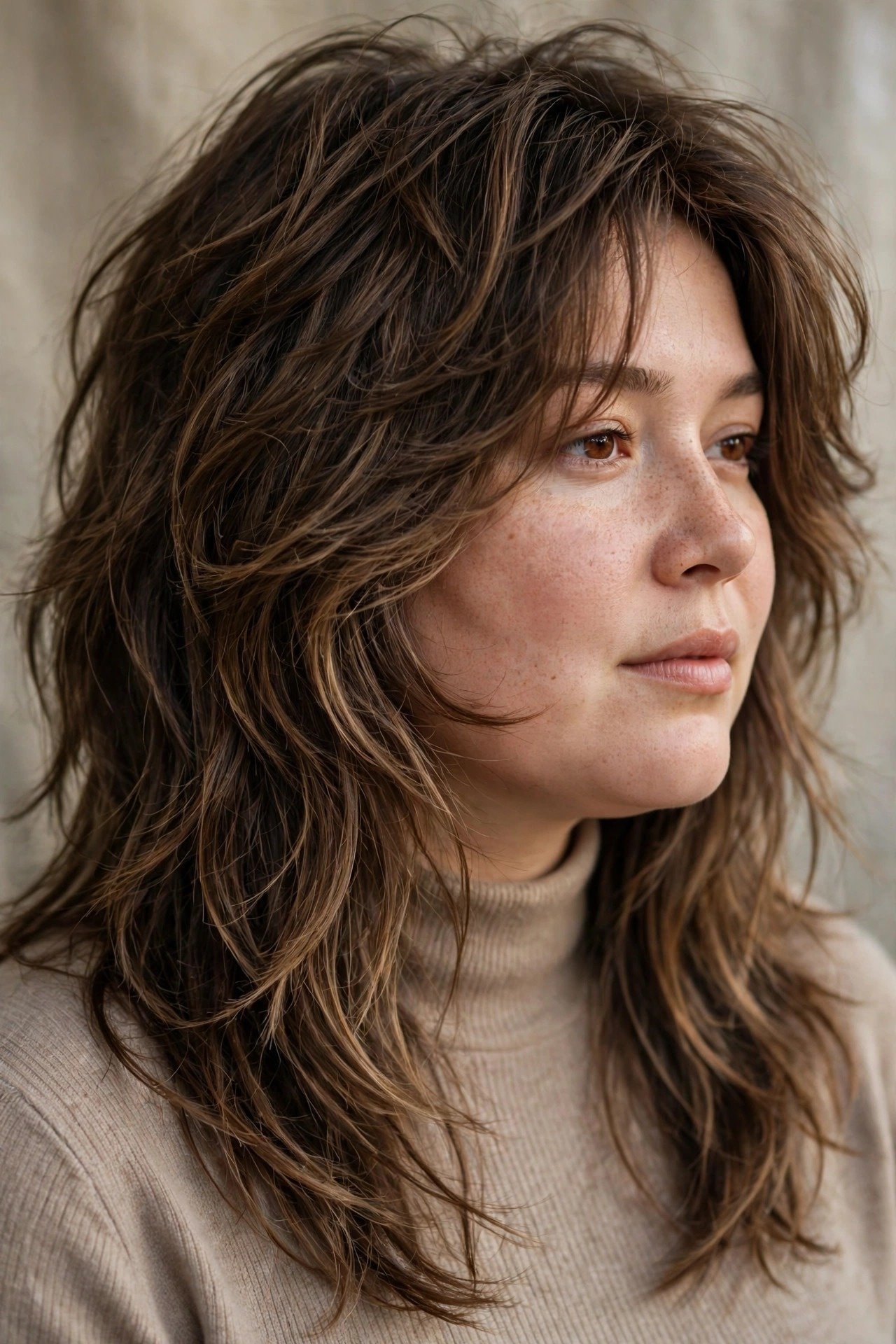
Round faces and soft wolf cuts are a genuinely happy pairing, as long as the layer placement is right. The trick is to start the shortest layer at or below the cheekbone, never above it, and to keep length past the jaw, so the eye travels down rather than stopping at the widest point of the face. The crown should have lift, because height on top lengthens the look of the face, but the sides should stay longer and softer, rather than puffing out at the ears. When those two rules are followed, the soft wolf cut slims and lengthens a round face beautifully, giving it definition without any harsh lines. Ask your stylist specifically for cheekbone-or-below layers and for length past the jaw, and show them a photograph of a round-faced woman wearing the cut, because face shape changes everything about how the layers fall.
The version to avoid is a very short, very round soft wolf bob with a lot of volume at the ears, because that width at the sides will emphasise roundness rather than balancing it. If you love short hair, choose a longer bob that sits below the jaw, with the volume at the crown rather than at the sides, and you will get the short feeling without the widening effect. Styling is simple: blow-dry with a round brush, directing the face-framing layers forward and slightly inward, which creates a slimming frame. A middle or slightly off-centre part also helps, because it breaks up the symmetry of a round face. This is one of the most flattering versions on the list when it is cut correctly, and one of the least flattering when it is not, so the conversation with your stylist matters more here than for almost any other face shape.
22. Soft Wolf Cut for Oval Faces
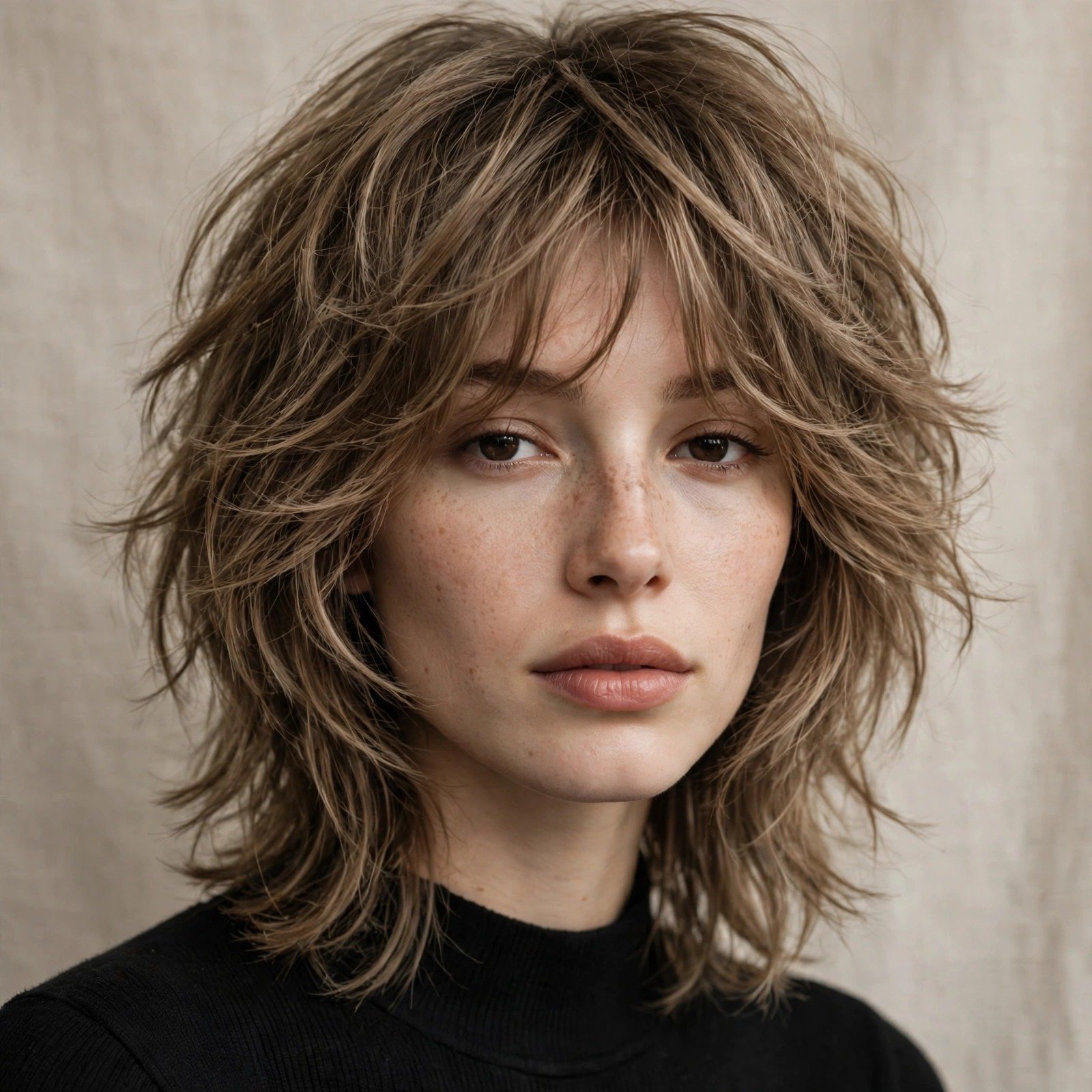
Oval faces have the easiest job on this list, because they can wear almost any soft wolf version and look wonderful. The face is already balanced, longer than it is wide, with a gently rounded jawline, so the cut does not need to correct anything, it just needs to enhance what is already there. That freedom means you should choose by lifestyle instead of by rules. If you are busy, choose a medium-length version that air-dries well. If you love styling, choose a version with a fringe or with more visible layers that you can play with. If you want drama, choose a shorter or more textured version. The cut will follow your lead, because an oval face does not fight any of these choices. Ask your stylist to keep the proportions balanced, with the shortest layer around the cheekbone and the length wherever you feel most like yourself.
The only real pitfall for oval faces is going too long and too flat, because a very long, very one-length cut can drag an oval face down and make it look longer than it is. The soft wolf cut solves that problem on its own, because the layers add lift and movement, but it is still worth mentioning, because it is the one mistake oval-faced women make most often. Keep some layering through the crown, even if you love long hair, and the shape will stay lively. A fringe is also a wonderful option for oval faces, because it breaks up the length of the face without needing to change the rest of the cut. In short, if you have an oval face, this list is your playground. Pick the version that makes you smile when you look at the photograph, and trust that it will suit you, because it almost certainly will.
23. Soft Wolf Cut for Square Faces
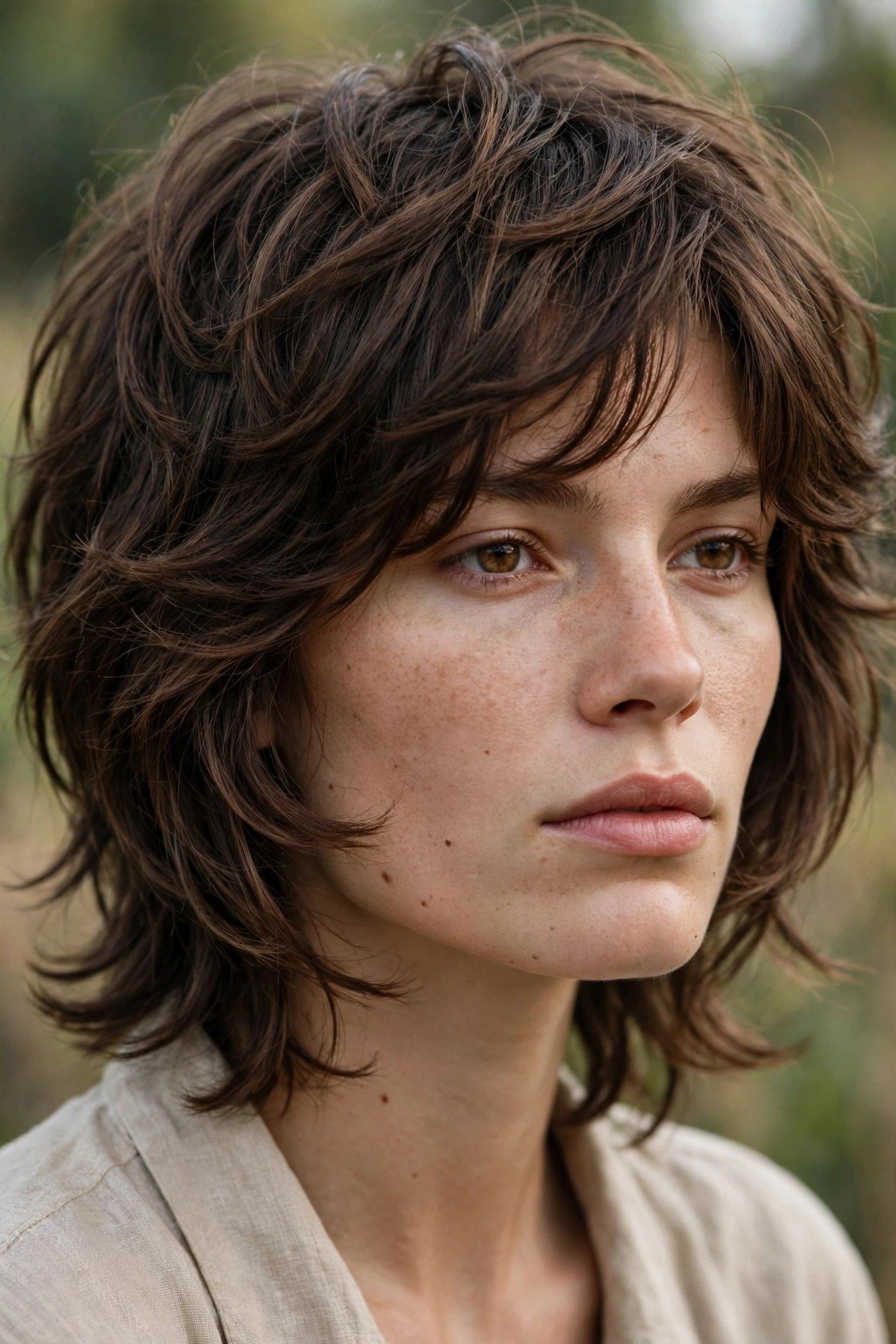
Square faces have a strong, beautiful jawline, and the soft wolf cut is one of the best ways to soften it without hiding it. The key is curved, face-framing layers that round off the angles, rather than blunt, straight layers that emphasise them. The shortest layer should curve inward around the cheekbone and jaw, creating a soft frame that gentles the whole face, and the ends should be feathered rather than blunt, so there is no hard line competing with the jaw. A side-swept fringe or soft curtain bangs also help enormously, because they break up the forehead and add a diagonal line that softens the overall geometry. Ask your stylist for curved layers, not straight ones, and show them exactly where your jawline sits, because layer placement relative to the jaw is everything here.
What to avoid is a very blunt, very short bob with a hard line at the jaw, because that line will sit right on top of your jawline and emphasise it rather than softening it. If you love short hair, choose a soft wolf bob with curved, feathered ends that sit below the jaw, and you will get the short feeling with a much softer result. Styling helps too: blow-dry the face-framing layers with a round brush, turning them slightly inward, which creates a curved frame that flatters a square face beautifully. This version suits women who love their strong features but want their hair to soften rather than sharpen them, and when it is cut well, it is one of the most elegant versions on the list. Strength and softness are not opposites, and this cut proves it.
24. Soft Wolf Cut for Heart-Shaped Faces
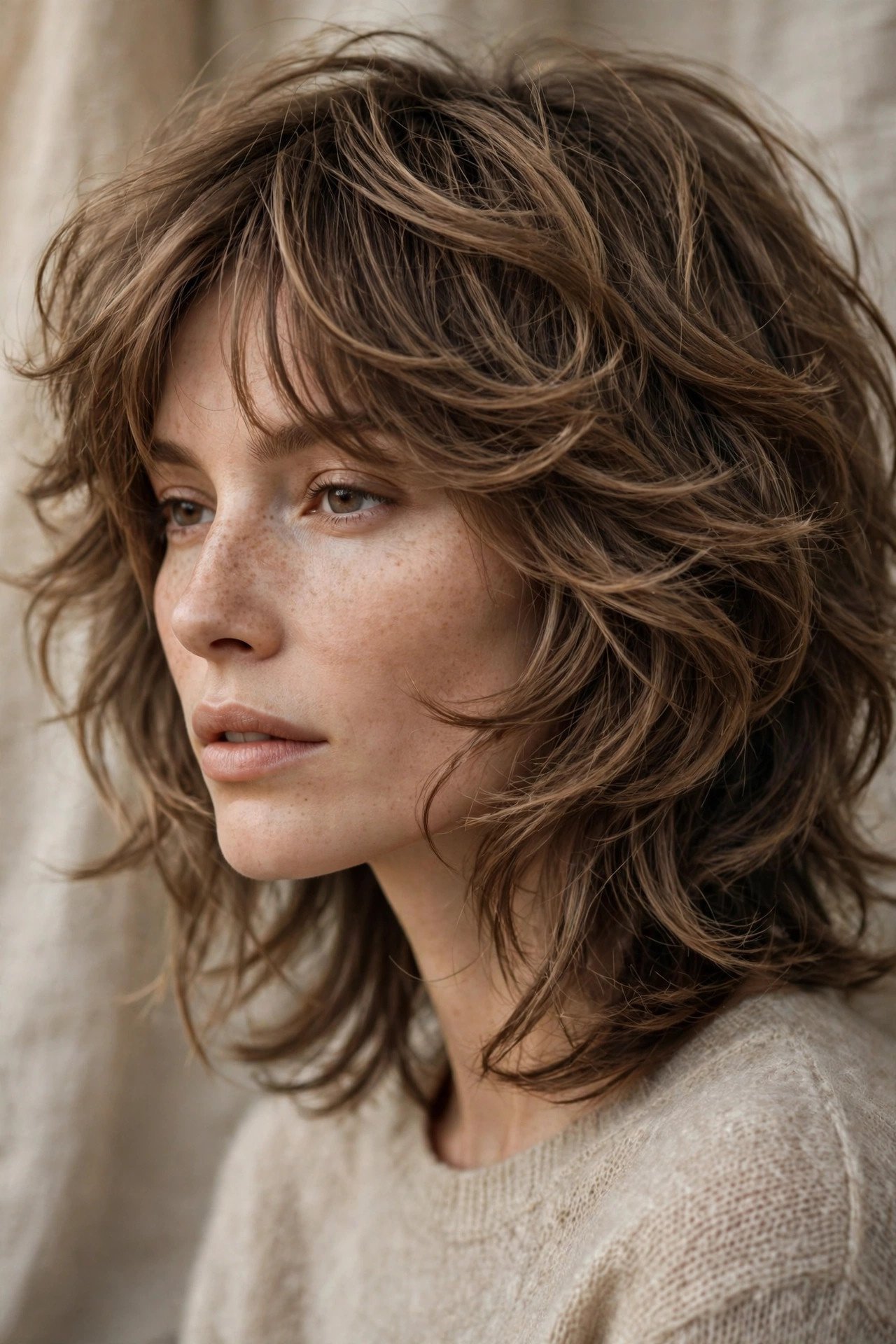
Heart-shaped faces, wider at the forehead and narrower at the chin, love a soft wolf cut that adds fullness around the jaw and chin, because that fullness balances the whole face. The layers through the lower half of the cut should be full and soft, with the ends flicking gently outward around the jawline, so the eye is drawn down and the face looks balanced rather than top-heavy. A fringe also helps enormously for heart-shaped faces, because it softens a wider forehead, and curtain bangs or a side-swept fringe both work beautifully here. Ask your stylist to keep weight through the ends rather than thinning them out, because thin, wispy ends will make the chin look even narrower, and fullness at the jaw is exactly what you want. A medium to long length is usually the most flattering, because it gives the lower layers room to do their balancing work.
The version to be careful with is a very short, very voluminous crown with thin ends, because that combination emphasises the forehead and narrows the chin even further, which is the opposite of what a heart-shaped face needs. If you love short hair, choose a soft wolf bob with full, curved ends that sit at or below the jaw, and keep the crown lift gentle rather than dramatic. Styling is straightforward: blow-dry the lower layers with a round brush, flicking them slightly outward, and let the fringe fall naturally. This is a kind, flattering version that works on straight, wavy, and lightly curly hair, and it is one of the easiest face-shape matches on the list, because the soft wolf cut’s natural shape, full at the jaw when it is cut correctly, is already doing half the work for you.
25. Everyday Wash-and-Go Soft Wolf Cut
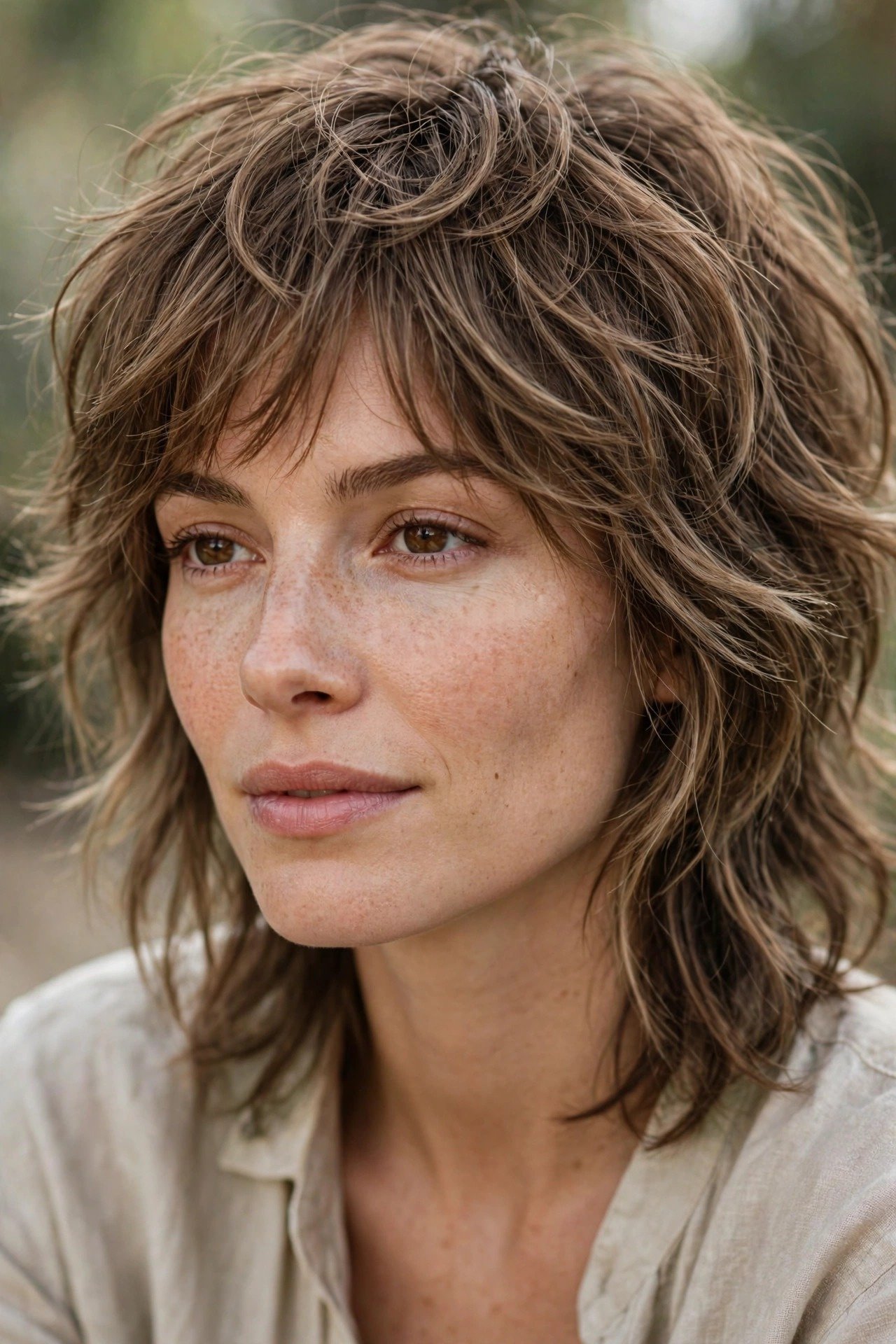
If you have five minutes in the morning and no more, this is the soft wolf cut built for you. The layers are kept long and gentle, the fringe is either absent or long enough to sweep to one side without styling, and the whole cut is designed to look good air-dried. The secret is in the layer placement: because the layers are blended and the ends are point-cut, the hair falls into a soft shape on its own, without needing a round brush or a straightener to coax it there. Wash, scrunch in a little leave-in conditioner or a light mousse, and walk out the door, and the cut will do the rest. This version works best on wavy or lightly textured hair, because the natural texture gives the layers something to work with, but straight hair can wear it too if you are happy with a softer, flatter finish on busy days and a blow-dry on days when you have more time.
The honest trade-off is that a wash-and-go cut will never look as polished as a blow-dried cut, and if your life needs polish every day, you will need to add a quick blow-dry to this routine. But for school runs, gym days, work-from-home days, and weekends, it is unbeatable, and it is the version that most women actually live in, even if they photograph a more polished version for special occasions. Ask your stylist to cut it with air-drying in mind, and to show you how it falls when it is left alone, not just how it looks after a salon blow-dry. That one request will save you months of frustration. A trim every ten weeks keeps the shape from going shapeless, and a silk pillowcase will help your second-day hair behave. Low effort, high reward, and no guilt about not styling it perfectly, because it was never meant to be perfect.
26. Polished Office Soft Wolf Cut
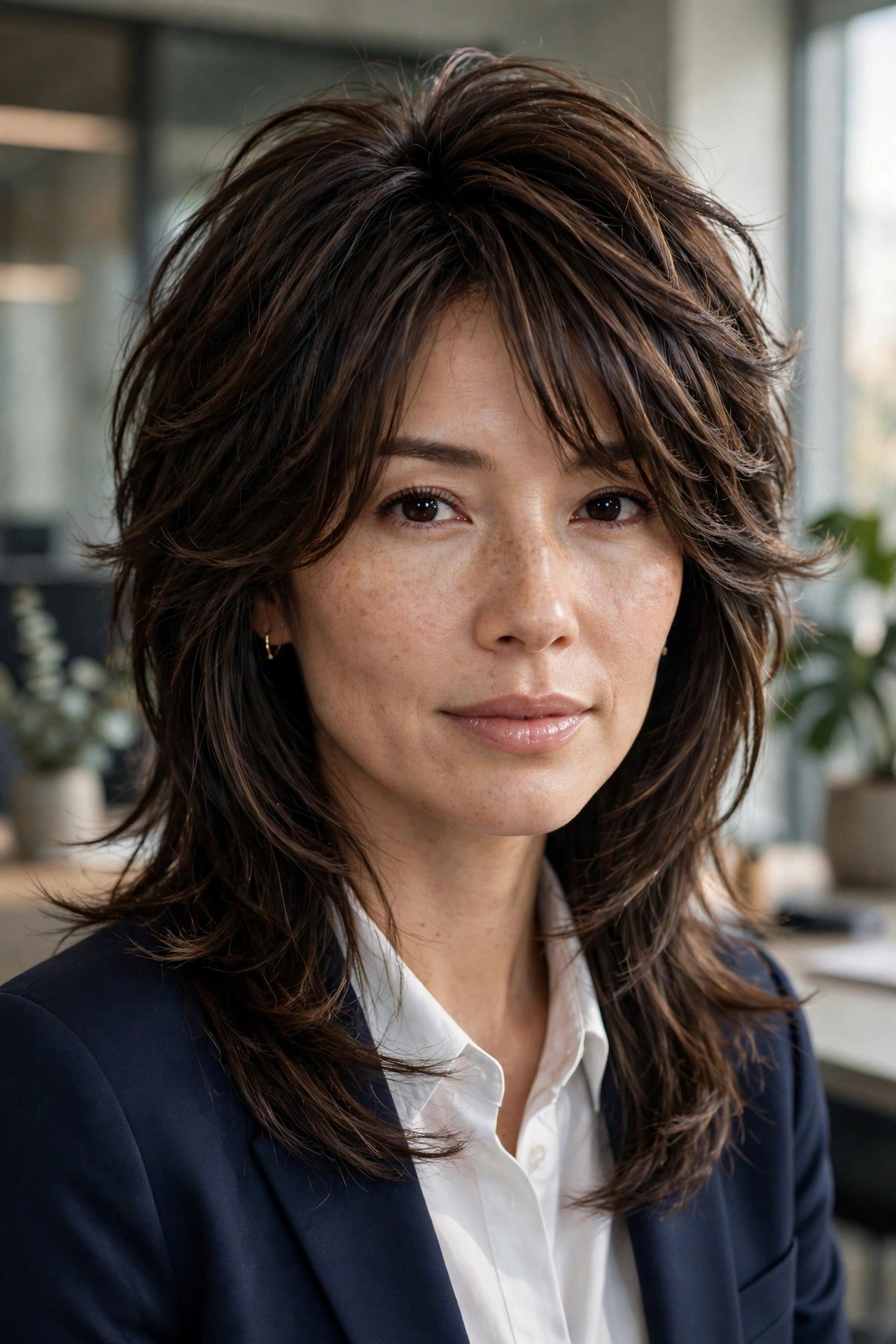
The polished office soft wolf cut proves that layered hair can be completely professional, as long as the finish is smooth. The cut itself is a classic soft wolf, with blended layers and a soft fringe or face-framing pieces, but the styling is what makes it office-ready: a round-brush blow-dry that smooths every layer into place, ends turned under for neatness, and a light smoothing serum to keep flyaways down all day. The result looks intentional, groomed, and completely appropriate for a boardroom, a classroom, or a client meeting, while still having more movement and personality than a blunt, one-length cut ever could. This is the version for women who love the soft wolf shape but need their hair to look polished from nine to five, and it is a wonderful rebuttal to anyone who thinks layered cuts cannot be professional.
Styling takes a little longer than a wash-and-go version, around fifteen minutes with a round brush, but the finish lasts, because smooth, layered hair holds its shape well once it has been blow-dried. A good heat protectant is essential, because daily blow-drying without protection will dry the ends out over time, and a weekly mask will keep the hair healthy. The downside is that humidity can undo a smooth finish, so on very humid days you may need to accept a softer, more textured version of the same cut, which is still perfectly presentable. It suits oval, round, and heart-shaped faces, and it works on straight to wavy hair best, because very curly hair will need more work to achieve a smooth finish. If your work life demands polish, this version gives you the soft wolf shape without asking you to compromise on professionalism.
27. Soft Wolf Cut with Highlights
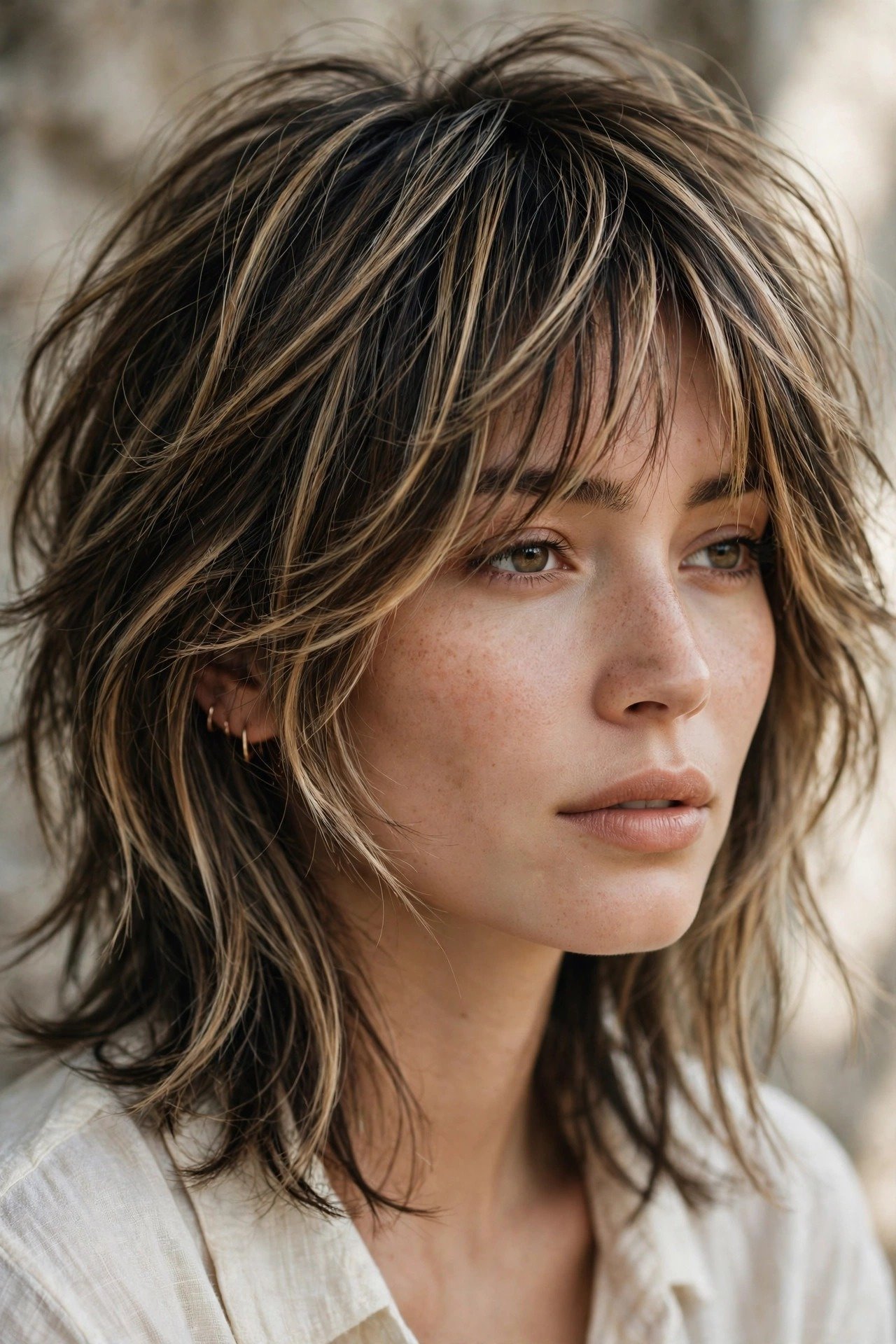
Highlights on a soft wolf cut work like lighting in a good photograph: they do not change the shape, they just make sure you can see it properly. Thin ribbons of lighter colour woven through the face-framing layers and the ends mean that when your hair moves, the highlights move with it, creating dimension that flat, single-tone hair cannot match. This is a lovely choice if you want to brighten your hair without a dramatic change, if you are trying highlights for the first time, or if you want a look that grows out gracefully. It works beautifully on light to medium brown bases and on straight to wavy hair, where the layers show the highlights off without needing a lot of them. Ask your colourist to place the highlights to follow the layers, with more lightness around the face and less through the back, so the cut itself is what gets highlighted.
Maintenance is moderate: a toning appointment every eight to ten weeks, colour-safe products, and a good mask to keep highlighted hair moisturised. The grow-out is the real selling point, because highlights placed to follow layers blend into most bases as they grow, so you will not have a harsh line. It suits warm and neutral skin tones, and it suits every face shape, because the highlights are placed to frame the face regardless of its shape. If you love the idea of dimension but you hate high-maintenance colour, highlights on a soft wolf cut are the compromise that does not feel like a compromise. Your hair will look sun-kissed, your layers will look intentional, and your salon visits will stay refreshingly infrequent, which is exactly what most women want from colour.
28. Short Shaggy Soft Wolf Cut
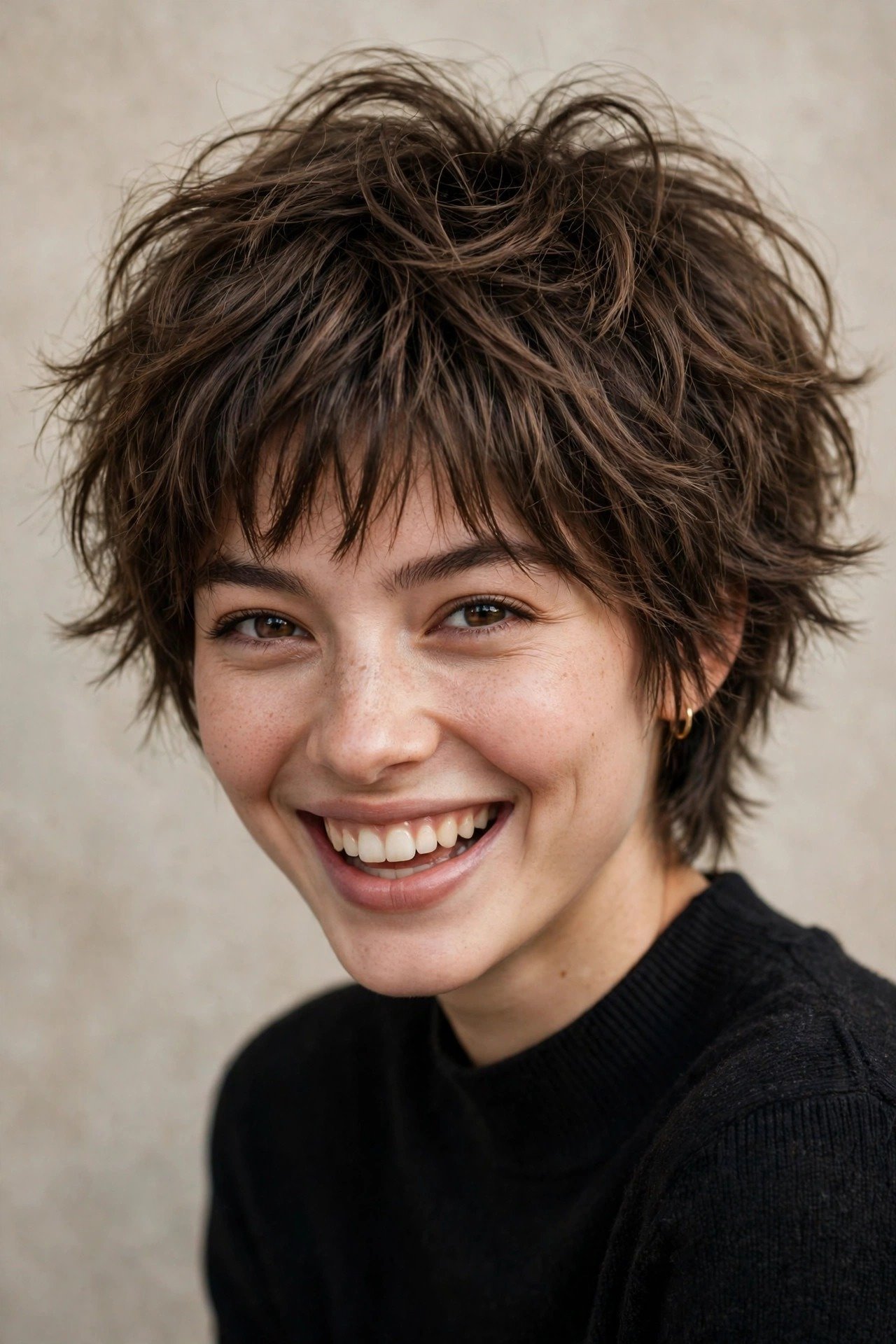
The short shaggy soft wolf cut is the playful younger sister of the soft wolf bob, with a little more texture and a little less polish. The length sits around the ears to the jaw, the layers are slightly more visible, and the finish is deliberately relaxed, with ends that flick and separate rather than sitting in a neat line. It is a wonderful choice if you love short hair, if you want a cut with personality, or if you are tired of neat bobs and want something with a bit more life in it. On wavy hair it is almost effortless, because the natural wave gives the texture for free, and on straight hair a little texturising spray and a scrunch will get you there. Ask your stylist to keep the texture soft and blended, not choppy, because the whole point of this version is that it is shaggy but still soft, playful but still wearable.
The trade-off is the same as for any short cut: it needs trims every six weeks to keep its shape, because grow-out shows quickly at this length, and it will not suit you if you love tying your hair up, because there is simply not enough length to gather. It suits oval, heart-shaped, and small faces especially well, and it is a wonderful choice if you have a long neck or love bold earrings, because the short length puts your features front and centre. Styling is fast, with a wash, a scrunch, and a diffuser or a quick air-dry taking under ten minutes. If you have ever thought short hair might be too serious or too severe for you, this version might change your mind, because it is short hair with a sense of humour, and that is a rare and lovely thing.
29. Soft Wolf Cut with Long Layers
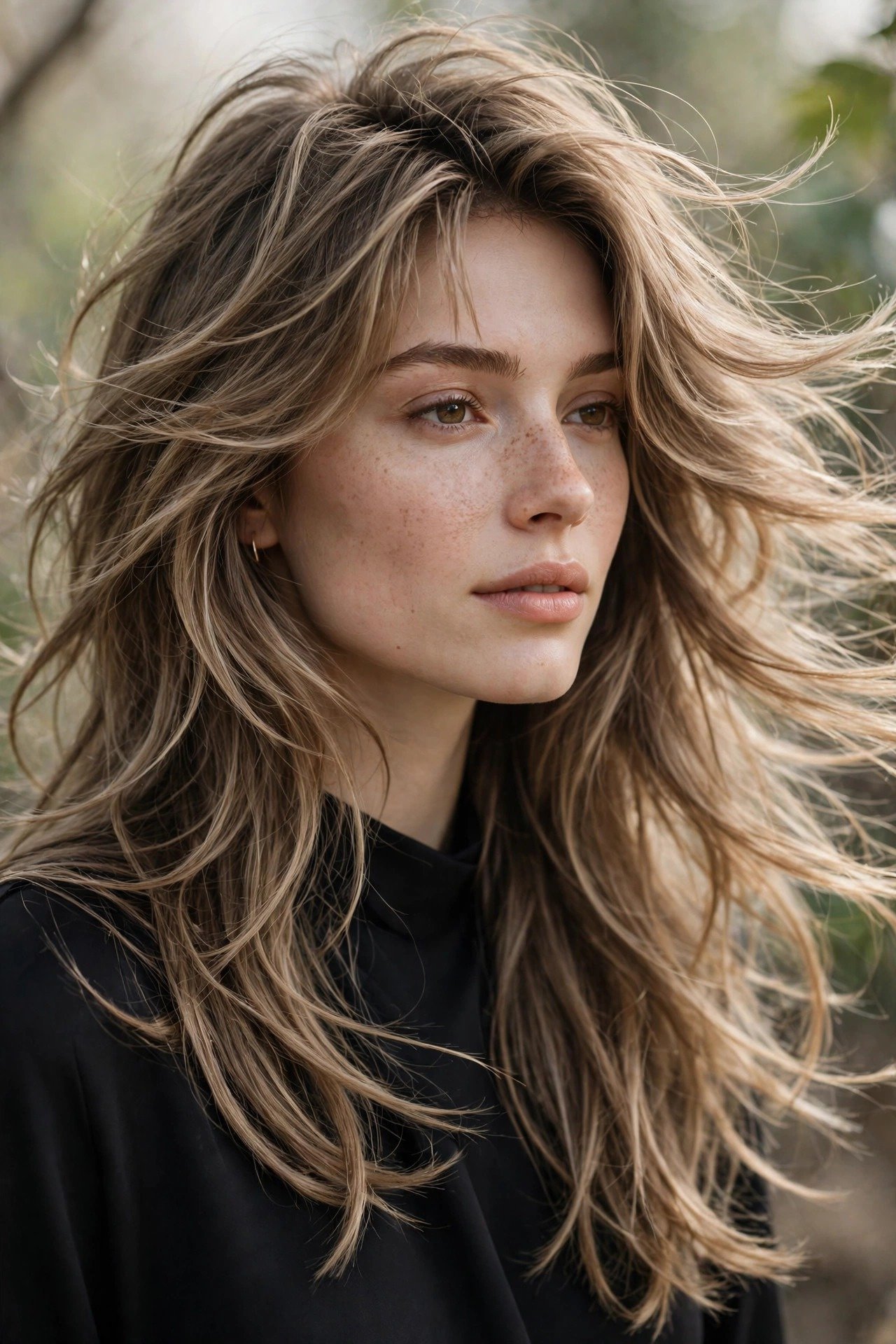
Long layers are the gentlest way to wear a soft wolf cut, and they are perfect for women who want movement without giving up length or committing to a lot of visible layering. The layers here are long and subtle, with the shortest piece around the cheekbone and the rest graduating slowly down through the length, so the cut looks almost one-length from a distance but moves beautifully up close. This is a wonderful choice if you are growing your hair out, if you have fine hair and you want to protect your density, or if you simply prefer a subtler, more classic look. It works on straight, wavy, and lightly curly hair, and it is one of the easiest versions to style, because the long layers do not need much help. A round-brush blow-dry will show them off, but air-drying will still look good, which is not true of every version on this list.
The downside is that long layers are subtle, and if you were hoping for a dramatic change, they can feel almost too quiet. But quiet is not the same as pointless, because the movement and the face-framing are still there, just gentler, and many women prefer that subtlety, especially for work or for family occasions where a dramatic cut might feel out of place. It suits every face shape, because the layers can be adjusted to frame any face, and it is a kind choice for women who are nervous about layers in general. Think of it as a soft wolf cut with the volume turned down to a whisper, and if a whisper is what you want, it is perfect. You can always ask for shorter layers next time, once you have lived with the long version and you know you love the shape.
30. Textured Soft Wolf Cut for Wavy Hair
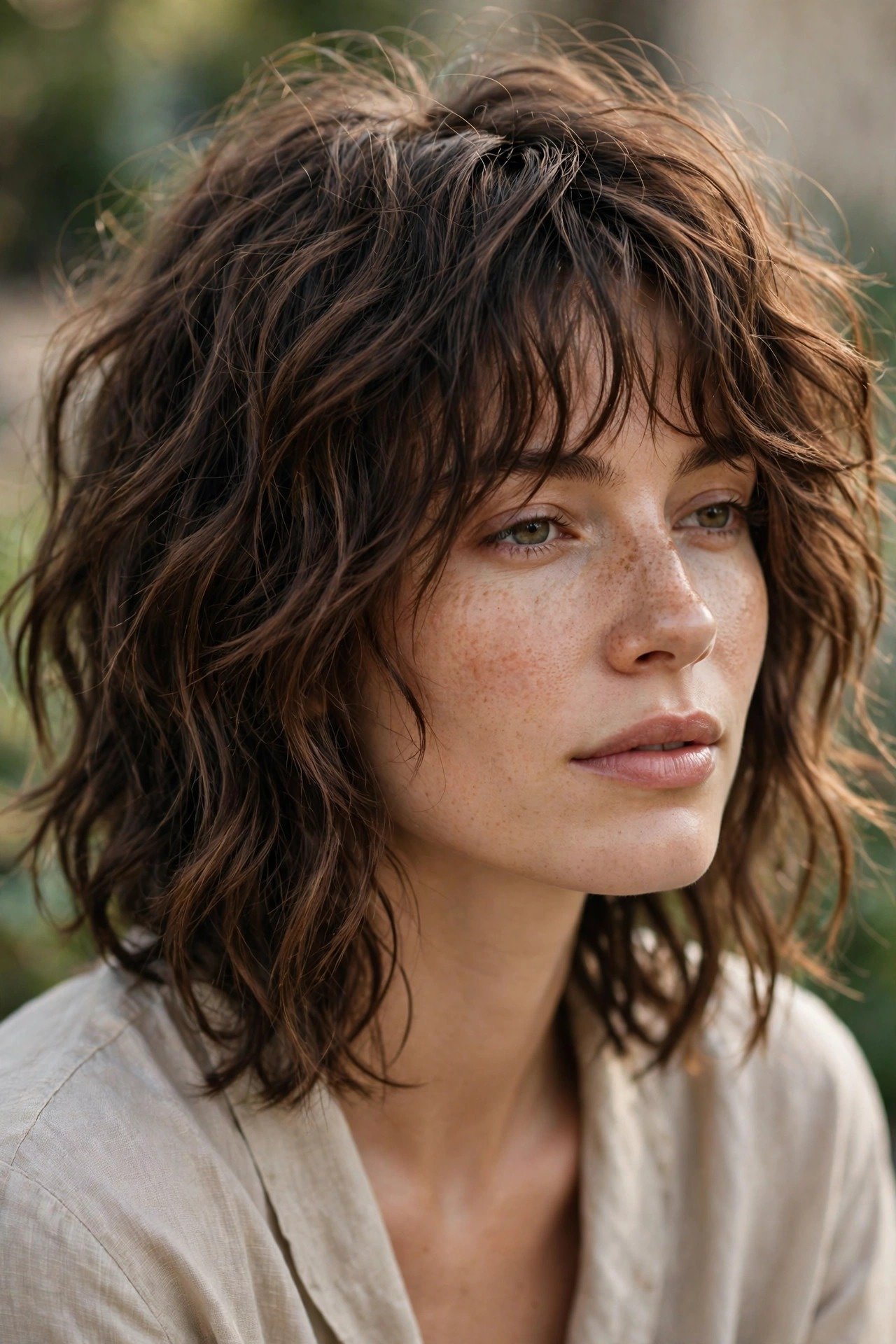
Textured soft wolf cuts for wavy hair lean into the wave rather than smoothing it away, and the result is hair with real character. The layers are cut to encourage the waves to clump into soft, defined ribbons, with a little more texture through the ends so the waves do not blend into one shapeless mass. A curl cream or a wave-enhancing mousse scrunched into damp hair, followed by diffusing or air-drying, will define the texture beautifully, and a sea-salt spray on day two will wake it back up. This version is for women who love their waves, who are done straightening them into submission, and who want a cut that makes their natural texture the star. It suits oval, round, and square faces, and it is especially good for women with medium to thick wavy hair, because the texture needs some density to hold it.
The thing to be honest about is that textured hair shows frizz more readily than smooth hair, so you will need a light anti-frizz serum or a curl cream that controls frizz without weighing the waves down. Humidity will also affect this version more than a smooth version, so on very humid days you may need to embrace a little extra volume, which is not a bad thing if you love texture. Trims every eight to ten weeks keep the texture fresh, because textured ends show split ends sooner than blunt ends do. If you want a soft wolf cut that celebrates your waves instead of taming them, this is the one, and it is one of the most joyful versions on the list, because it is hair that looks like it is having fun.
31. Soft Wolf Cut for Women Over 50
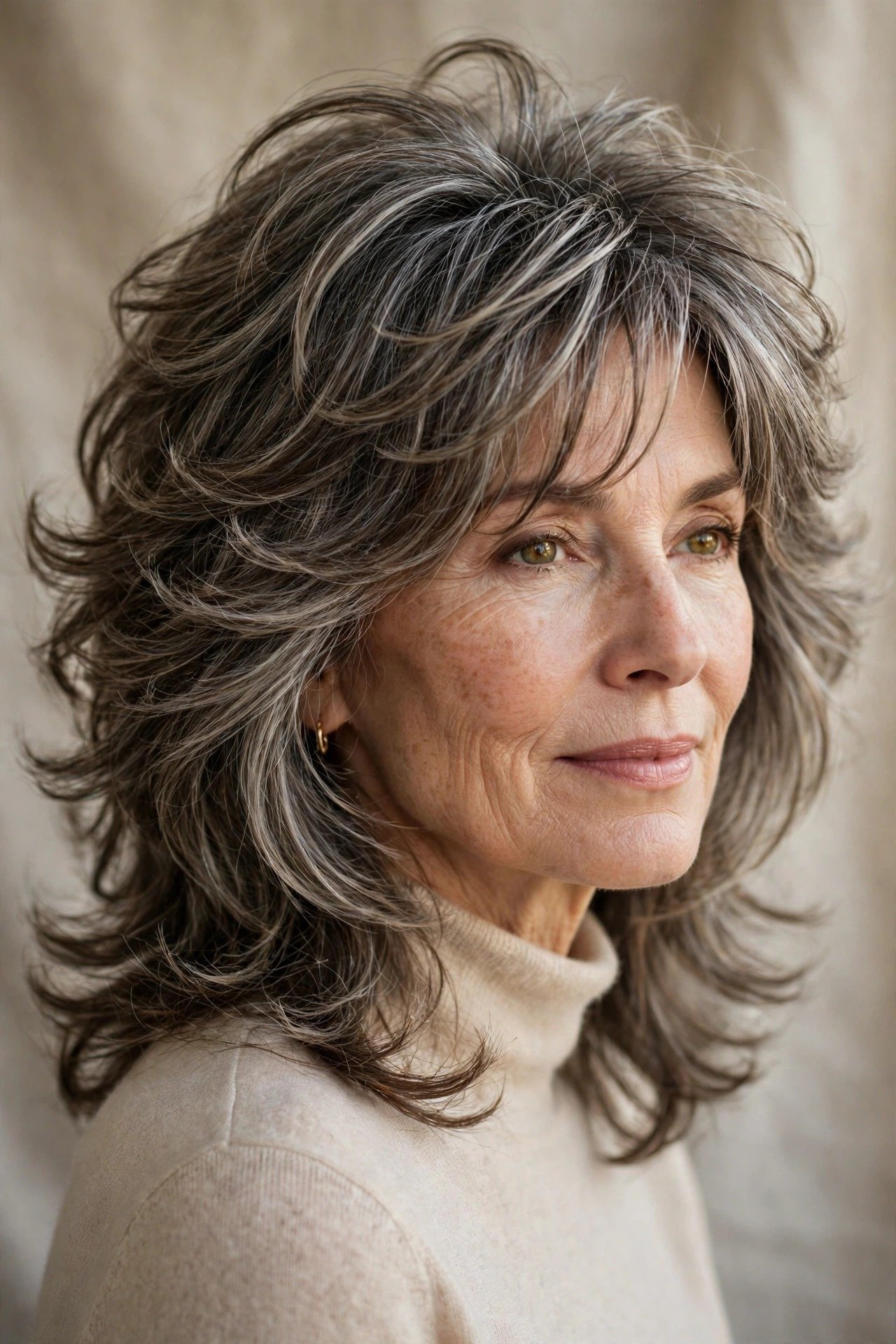
A soft wolf cut for women over 50 is not about trying to look younger, it is about looking fresh, modern, and completely yourself, and the soft version does that beautifully. The layers are gentle and elegant, the length is usually medium, sitting around the shoulders or just below the jaw, and the fringe, if there is one, is soft and face-framing rather than heavy or severe. This version lifts the crown, which is flattering at any age, softens the jawline and neck area, and gives hair that may have become finer or thinner with age the illusion of fullness. Ask your stylist for soft, blended layers, a length that feels comfortable rather than fashionable for its own sake, and a colour that enhances your natural tone, whether that is your natural grey, a soft brunette, or a gentle blonde. The goal is hair that looks like you on your best day, not hair that looks like someone else.
Maintenance is refreshingly straightforward. A trim every eight weeks, a good conditioner to keep maturing hair soft, and a styling routine that takes ten minutes with a round brush or a diffuser is usually enough. The version to avoid is a very short, very choppy wolf cut with a lot of harsh texture, because that can look severe rather than fresh, and severity is the opposite of what most women over 50 want from their hair. Softness is the key word here, in the layers, in the fringe, and in the finish, and when that softness is there, the cut is timeless. It suits every face shape, because the layers can be tuned to any face, and it is a wonderful choice if you want a modern cut that does not ask you to pretend to be twenty again. You are not twenty, and you do not need to be, because this cut looks wonderful on the woman you actually are.
32. Glossy Blow-Dry Soft Wolf Cut
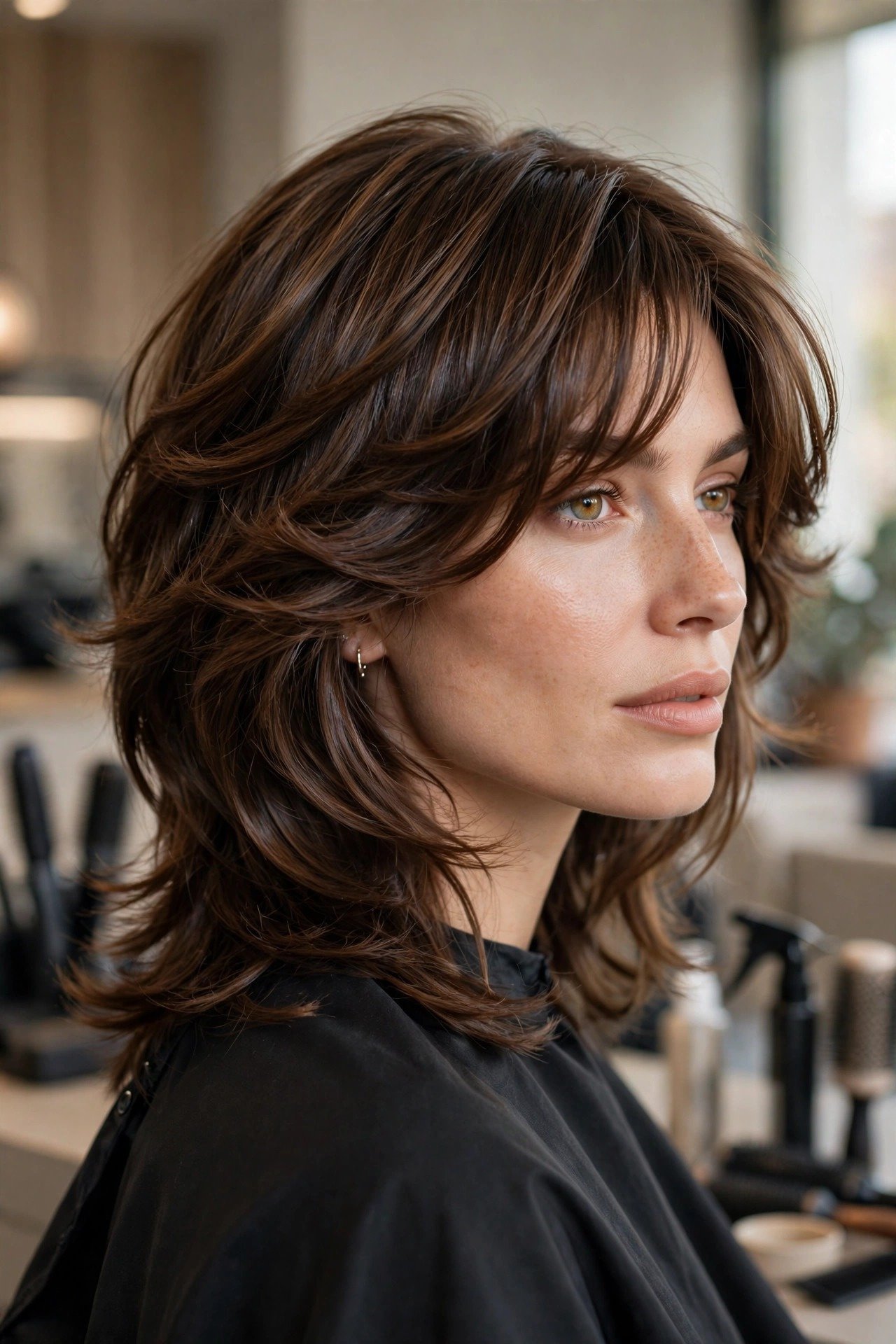
We finish with the most polished version on the list, the glossy blow-dry soft wolf cut, which is the one to choose if you love a salon finish and you want your hair to look like it every day. The cut itself is a classic soft wolf, with blended layers and soft face-framing pieces, but the styling is the star: a full round-brush blow-dry that smooths every layer, turns the ends under or out in a deliberate pattern, and finishes with a shine serum or a gloss spray that makes the whole cut gleam. The result is hair that looks expensive, healthy, and completely intentional, with layers that catch the light as you move. This is the version for special occasions, for work presentations, for weddings, and for any day when you want your hair to be the best version of itself. It takes longer than a wash-and-go version, around twenty minutes, but the finish is worth it.
The practical side is that a glossy blow-dry needs healthy hair to look its best, so a weekly mask, a heat protectant every time you blow-dry, and regular trims to keep the ends from splitting are all essential. If your hair is damaged or very dry, get it healthy first, because no amount of serum will make damaged ends look glossy. It suits oval, round, and heart-shaped faces, and it works on straight to wavy hair best, because very curly hair will need more work to achieve a smooth, glossy finish. Think of this version as the soft wolf cut dressed up for a party, and keep a simpler version in your back pocket for ordinary days. Together, they cover every occasion, and that versatility is exactly why the soft wolf cut has earned its place as a modern classic. For more layered inspiration, our butterfly haircut for women guide shows how another blended layered shape compares.
Styling Routine and Care Guide for Your Soft Wolf Cut
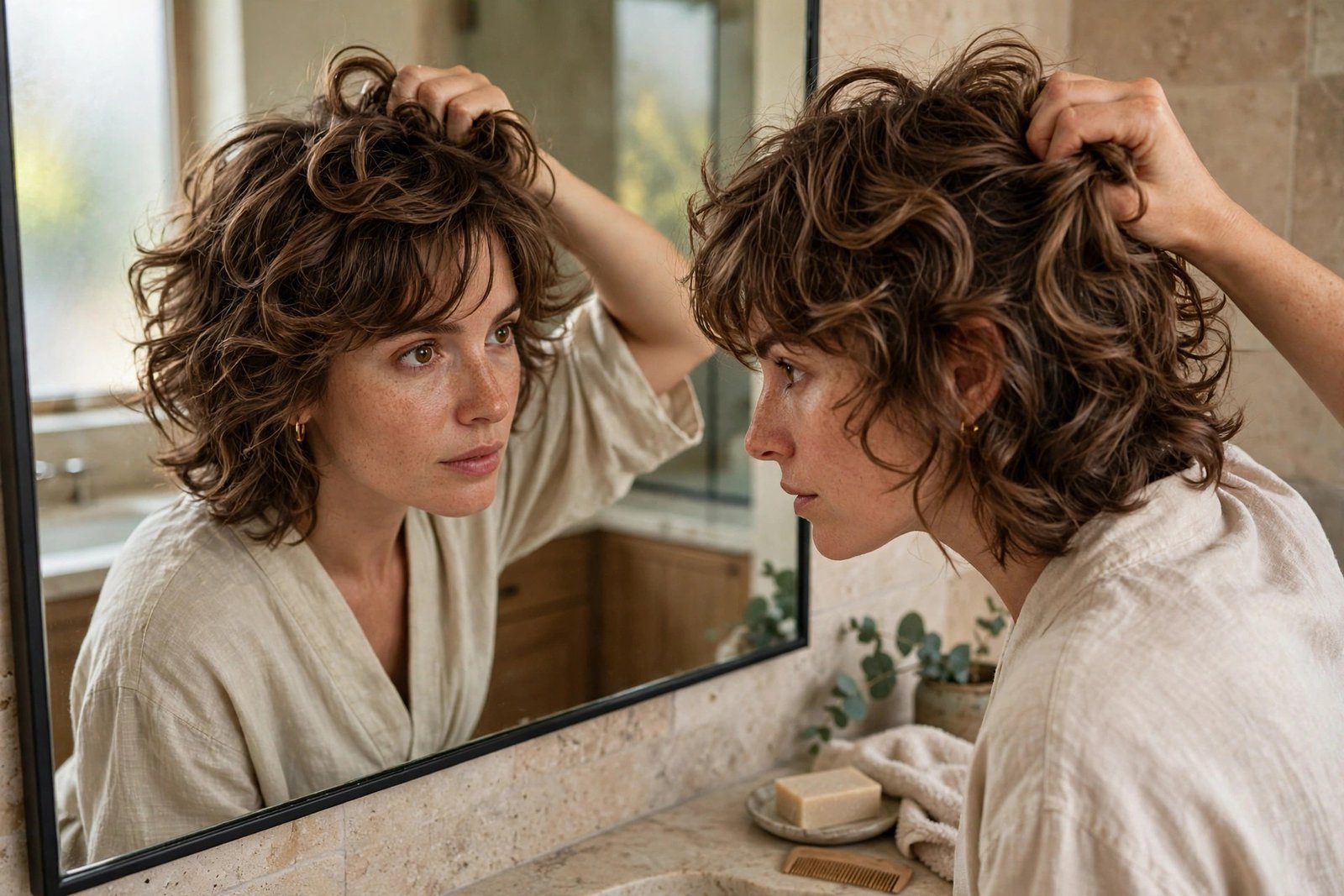
A good cut deserves a routine that is honest about time, because a routine you will not follow is worse than no routine at all. The routine below is built for real mornings: five minutes on busy days, fifteen minutes when you have time to blow-dry, and a weekly reset that keeps the cut healthy. Follow it loosely, adapt it to your hair type, and do not buy every product on the shelf. Two or three products that suit your hair, used consistently, will beat ten random bottles every time.
Your Five-Minute Morning Routine
On busy days, the soft wolf cut is designed to need almost nothing. Start by shaking your hair out at the roots with your fingers, which wakes up the crown layers and gives you lift without any heat. If your hair is flat, mist the roots lightly with water or dry shampoo, then blow-dry just the roots for sixty seconds with your head upside down. That single minute does more for volume than any product will. Next, smooth a pea-sized amount of leave-in conditioner or smoothing cream through the ends only, never through the roots, because roots do not need moisture and ends always do. Finally, finger-comb the face-framing layers into place, turning them slightly inward or outward depending on the version you have, and leave everything else alone. Touching your hair less is the single best styling advice for layered cuts, because every touch breaks up the layers and invites frizz.
If your fringe or face-framing pieces are misbehaving, dampen just that section, blow-dry it quickly with a small round brush, and pin it for a minute while you get dressed. That is the whole refresh, and it takes less time than making coffee. On second or third-day hair, a light mist of water through the lengths, followed by a scrunch, will wake the layers back up without a full wash. Do not brush a soft wolf cut when it is dry, because brushing breaks the layers apart and turns soft movement into fluff. Finger-comb only, and if you must detangle, do it in the shower with conditioner and a wide-tooth comb. Five minutes, no drama, and hair that looks like you meant it.
Washing, Conditioning and Weekly Care
How often you wash depends on your hair type and your scalp, not on a rule, but most soft wolf cuts look best washed two to three times a week, with refresh days in between. Washing every day strips natural oils and makes layered ends dry and flyaway, while washing too rarely lets oil build up at the roots and flatten the crown layers that give the cut its shape. Use a shampoo suited to your hair type, a volumising shampoo for fine hair, a moisturising shampoo for thick or dry hair, and concentrate the shampoo on the scalp, letting the suds run through the lengths rather than scrubbing the ends. Conditioner goes on the mid-lengths and ends only, never on the roots, and a weekly deep-conditioning mask, left on for ten minutes, will keep layered ends soft and healthy, especially if your hair is coloured or heat-styled regularly.
Heat protection is non-negotiable if you blow-dry or use a straightener, because layered ends are more exposed than blunt ends and they show heat damage sooner. Apply a heat protectant to damp hair before every blow-dry, keep the dryer moving rather than holding it in one spot, and use a medium heat setting rather than the hottest one. Your hair will thank you with fewer split ends and a longer-lasting shape. For a broader guide to how the wolf cut family is defined and styled, the Davines guide to the wolf cut explains the crown volume, tapered ends and face-framing layers that the soft version makes gentler, and The Right Hairstyles wolf haircut guide shows how the soft wolf sits alongside the classic, edgy versions. Both are useful reading before your appointment, because they help you explain exactly which version you want.
Products That Actually Help
You do not need a shelf full of products, and buying more will not make your cut better. You need a shampoo and conditioner that suit your hair type, a leave-in conditioner or light smoothing cream for the ends, a volumising mousse or spray for the roots if your hair is fine or flat, and a texturising spray if you like a tousled finish. That is it. A round brush in a medium size is the one tool worth buying, because it is what turns a soft wolf cut from air-dried to salon-polished, and a diffuser attachment is worth having if your hair is wavy or curly. A straightener can add bends to straight hair, but it is optional, not essential, and a curling wand is only needed if you want to add waves that are not already there.
What to avoid is just as important. Heavy oils and butters will weigh down the crown layers and flatten the very volume the cut was designed to create, so use them sparingly and only on the very ends. Strong-hold gels and waxes can make layered hair look stiff and piecey in the wrong way, unless you are deliberately going for a textured finish, in which case a tiny amount, warmed between your palms and smoothed over the ends, is enough. Dry shampoo is a friend, but use it at the roots only and brush it through after a minute, or it will build up and dull your hair. The best product routine is the simplest one you will actually follow, so start with three products, live with them for a month, and only add something new if you have a specific problem it solves.
Trims, Grow-Out and When to Change It
A soft wolf cut holds its shape for eight to ten weeks, which is longer than many edgy cuts, because blended layers grow out gracefully rather than turning into a shelf. Book a trim when the face-framing layers start falling into your eyes, when the ends feel dry and tangled despite conditioning, or when the crown has lost its lift and no amount of root spray brings it back. Small dusting trims, where the stylist takes off only the very ends and refreshes the layers, keep the shape fresh without losing length, and they are the best option if you are growing your hair out. Do not wait until the cut has completely lost its shape, because by then the stylist will need to take off more length to restore it, and you will lose the progress you made.
Grow-out is one of the soft wolf cut’s greatest strengths. Because the layers are blended, the cut simply becomes a longer soft wolf cut over a few months, with no awkward stage where you need to hide under a hat or pin everything back. If you decide you want a change, the soft wolf cut is also an excellent starting point for other layered cuts, because the shape is already there and a stylist can adapt it into a longer layered cut, a shag, or a butterfly shape without starting from scratch. And if you decide the wolf life is not for you after all, growing it out is painless, which is more than can be said for many trendy cuts. That low-risk grow-out is part of why I recommend the soft version so warmly: it is a cut you can try without fear, and a cut you can leave without regret.
Frequently Asked Questions

Is a soft wolf cut the same as a regular wolf cut?
No, and the difference matters. A regular wolf cut has short, choppy, disconnected layers on top with a long back, which gives it a wild, edgy finish. A soft wolf cut keeps the crown volume and face-framing layers but blends every layer together, feathers the ends, and removes the harsh disconnect, so the shape looks polished and wearable for work and everyday life. Same family, completely different feeling.
Will a soft wolf cut suit fine hair?
Yes, as long as the layers are kept long and gentle. Fine hair needs fewer layers and no aggressive thinning, because over-layering makes fine hair look wispy. With a soft face-framing layer, a couple of long layers through the length, and the bulk of the hair left intact, a soft wolf cut makes fine hair look fuller and more mobile. Use light mousses and root sprays, and avoid heavy creams that weigh it down.
How often should I trim a soft wolf cut?
Most soft wolf cuts hold their shape for eight to ten weeks, which is longer than edgy wolf cuts because blended layers grow out gracefully. Book a trim when the face-framing layers start falling into your eyes, the ends feel dry despite conditioning, or the crown loses its lift. Small dusting trims refresh the layers without losing length, which is ideal if you are growing your hair out.
Can I wear a soft wolf cut to work?
Yes, absolutely, and that is one of its biggest advantages over the edgy wolf cut. Blow-dried smooth with a round brush, with the ends turned under and a light smoothing serum, a soft wolf cut looks polished, groomed and completely professional. The layers give it movement and personality, but the blended finish means it never looks wild or unfinished in a meeting or an office.
Does a soft wolf cut work on straight hair?
Yes, but straight hair needs a little styling help to show the layers off. Blow-dry with a round brush, turning alternate sections under and out, or add gentle bends with a straightener through the mid-lengths, and the layers will be clearly visible. Air-dried straight hair will still have the shape underneath, but it will look softer and flatter, so if you never style your hair, a wavy or textured version may suit your routine better.
What should I ask my stylist for?
Say the words soft, blended and no disconnection, and say you want to wear it smooth as well as tousled. Ask for point-cut, feathered ends, a face-framing layer starting at or below the cheekbone, and intermediate layers that bridge the crown and the lengths. Bring photographs of soft versions, not edgy ones, and tell your stylist honestly how many minutes you spend on your hair each morning, because the cut should be designed around your real routine.
Will a soft wolf cut grow out badly?
No, grow-out is one of the soft wolf cut’s greatest strengths. Because the layers are blended rather than disconnected, the cut simply becomes a longer soft wolf cut over a few months, with no awkward shelf or ledge stage. Regular dusting trims keep it fresh, and if you later want a different layered cut, a stylist can adapt the existing shape without starting from scratch.
Conclusion
If you take one thing from this article, let it be this: the soft wolf cut is not a watered-down compromise, it is a better-designed haircut for real life. It keeps everything women loved about the wolf cut, the volume, the movement, the face-framing layers, and it removes everything that made the original hard to live with, the harsh disconnect, the wispy ends, and the feeling that you could only wear it tousled. In its place you get a shape that works smooth or textured, short or long, at work or at the weekend, and that grows out gracefully instead of falling apart. That is not a lesser wolf cut, it is a smarter one, and it is why so many women who try it book it again.
So screenshot the version that felt like you while you were reading, whether that was the classic, the curtain-banged, the shoulder-length, or the glossy blow-dry version, and take it to a stylist you trust. Use the words from this article, soft, blended, no disconnection, and be honest about your morning routine, because a cut designed around your real life will always beat a cut designed around a photograph. Give it a week to settle, style it twice before you judge it, and keep your first trim booked before you leave the salon. Your hair does not need to be wild to have personality, and it does not need to be boring to be wearable. The soft wolf cut proves that movement and polish can live in the same haircut, and once you have lived with that combination, you will wonder why you ever thought you had to choose between them.