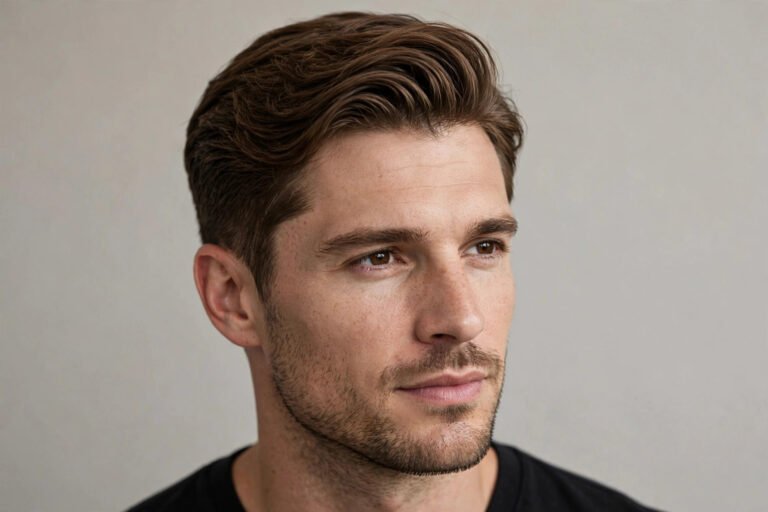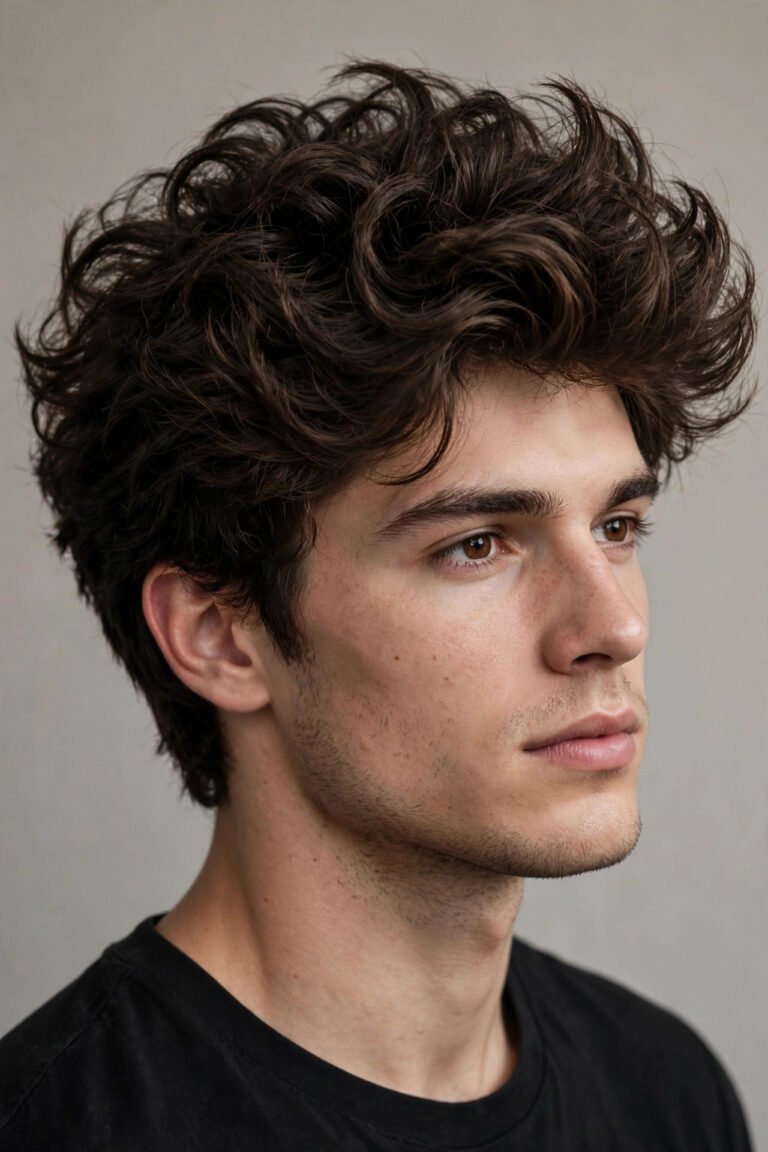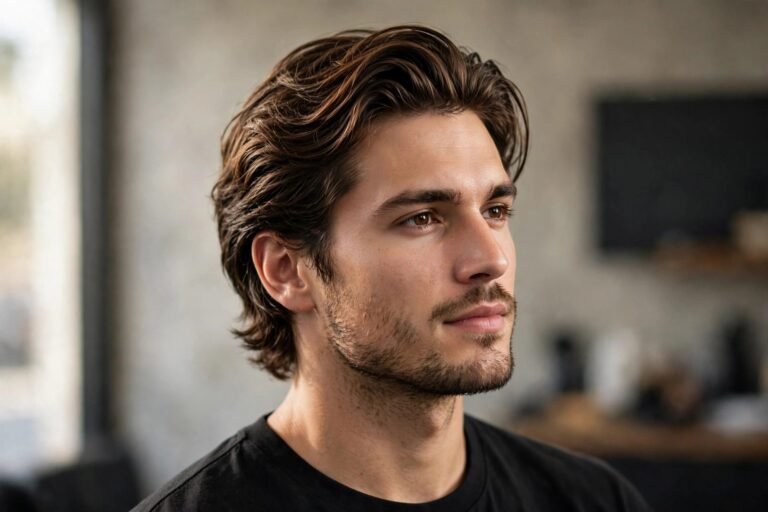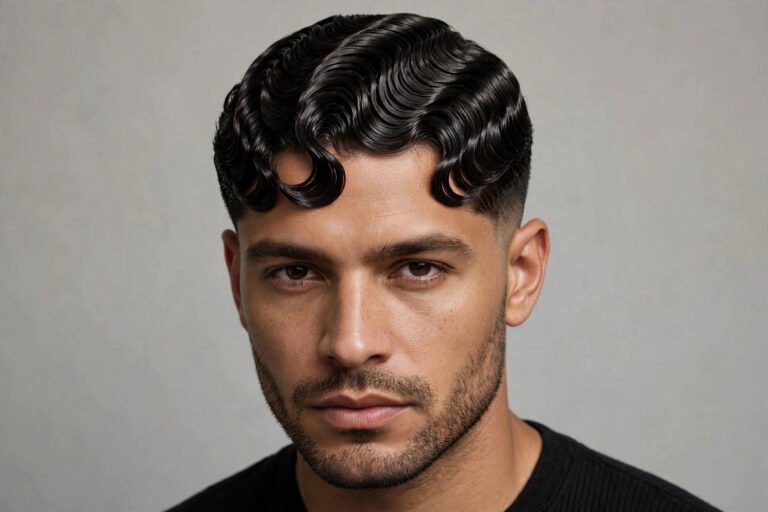
High Top Fade Men 2026: 16 Sharp High-Top Looks That Never Miss
The High Top Fade Is Back — And 2026 Took It Somewhere New
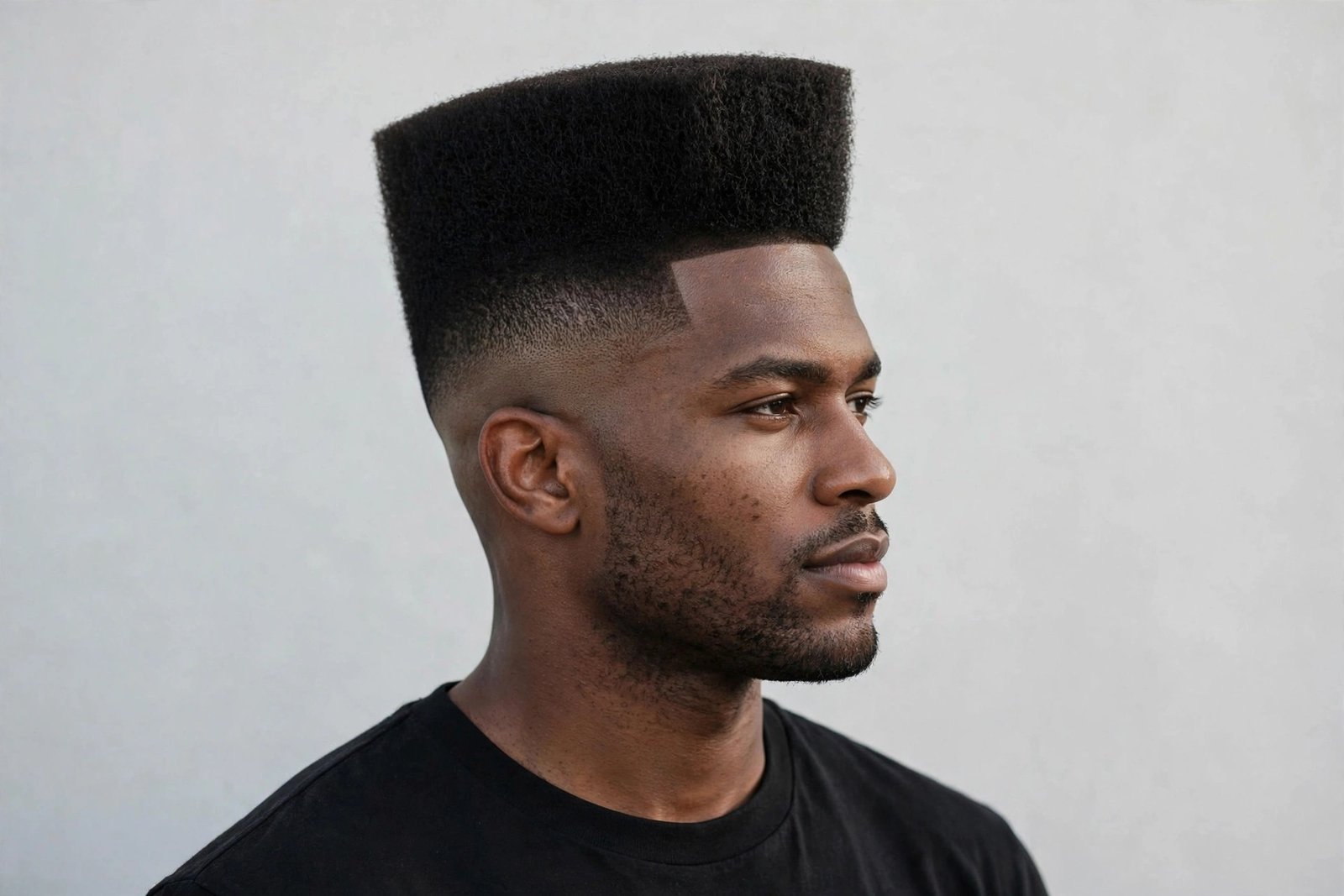
Let me tell you something that would have sounded crazy five years ago: the high top fade is not just back — it is arguably the most confident haircut a man can walk into a barbershop and ask for in 2026. Not the safe side part. Not another tired messy crop. A proper high top fade stands tall, sits proud, and tells the room you meant to look this good before anyone even says hello.
I have watched this cut come full circle. It ruled the late eighties and nineties — think Will Smith in The Fresh Prince, the whole hip-hop golden era, basketball courts where the hair sat higher than the backboard seemed reachable. Then it cooled off for a while, filed away as a “throwback” look. But trends have a funny habit of returning once people get bored of playing it safe, and right now barbershops from Atlanta to London to Karachi are cutting high top fades at a pace I have not seen in decades. The twist? This is not a costume version of the nineties cut. The 2026 high top fade is sharper, more blended, more personal — and honestly, better executed than the original ever was.
Here is the honest truth most style articles will not give you: the high top fade is not an easy haircut. It demands a good barber, a committed grow-out period on top, and daily styling that takes longer than your shower. But when it lands — when the lines are crisp, the height is right, and the fade melts into the top — there is genuinely no other haircut that commands a room quite like it. I have seen men walk out of the chair standing two inches taller, and I am not talking about the hair. That confidence is the real product here.
So this is the complete 2026 guide: what the cut actually is, who it genuinely suits (and who should think twice), sixteen distinct high top fade styles with real talk on each one, the exact barber script so you stop getting something you did not ask for, and a maintenance routine that keeps the shape sharp for weeks instead of days. No filler, no recycled clichés — just everything I know about this haircut, laid out straight.
Table of Contents
- The High Top Fade Is Back — And 2026 Took It Somewhere New
- 16 High Top Fade Styles for 2026
- How to Style, Cut, and Maintain Your High Top Fade
- Frequently Asked Questions
- Conclusion
What Exactly Is a High Top Fade?
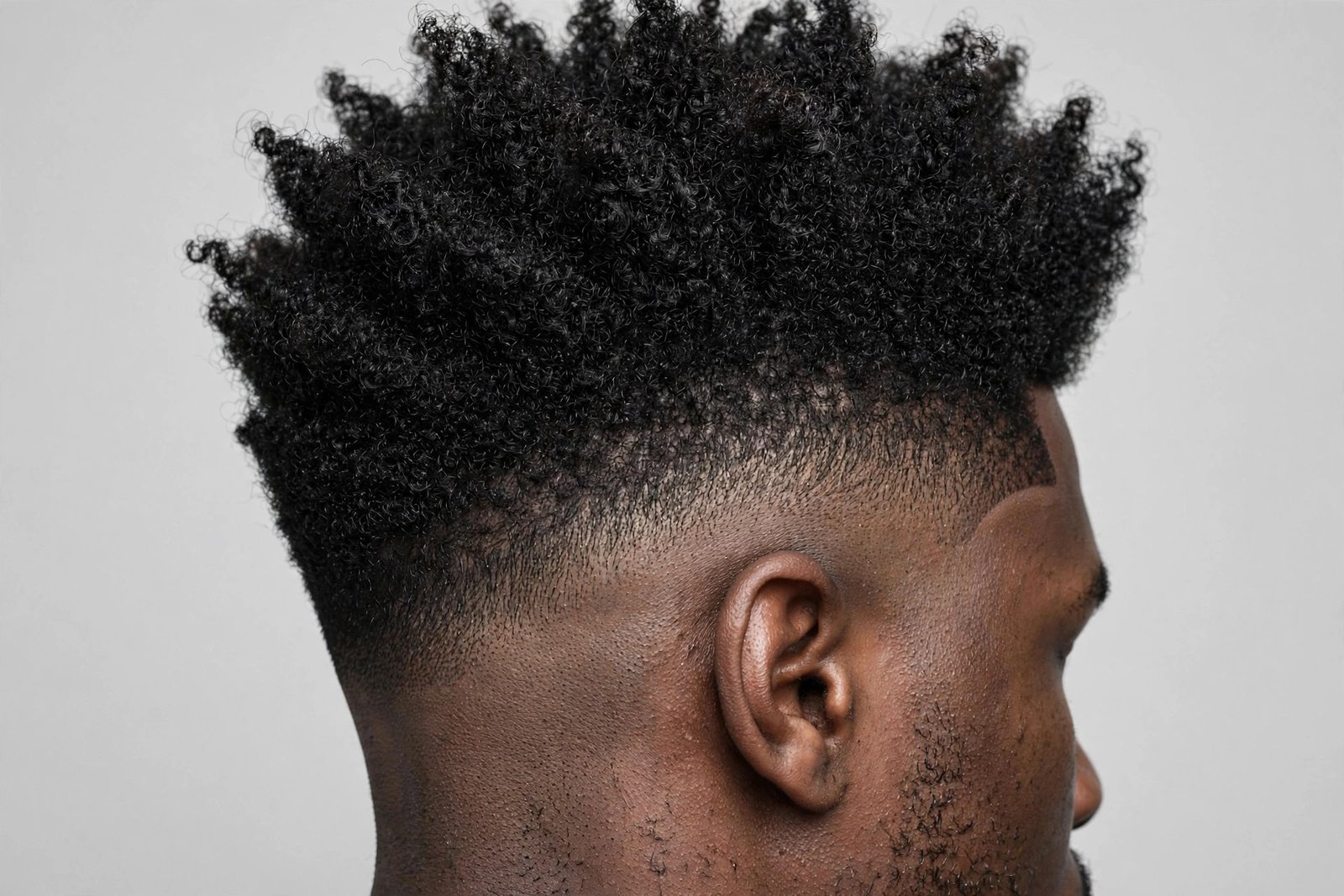
Strip it down to basics: a high top fade keeps the hair on top long and tall — usually two to five inches, sometimes more — while the sides and back fade up to a high point on the head. That “high” part matters. A regular fade blends around the temples and ears; a high top fade pushes the fade line up toward the crown, so the contrast between the tall top and the tight sides is dramatic and unmistakable. The top is typically cut flat across or shaped with clippers to create that signature squared, boxy silhouette.
Now here is where people get confused, and barbers quietly roll their eyes: a high top fade is not a flat top, though the two are cousins. A flat top is cut perfectly level, like a tabletop. A high top fade can have texture, curls, waves, or a rounded finish — the “fade” part is doing as much work as the “high top” part. Some versions lean boxy and sharp; others let natural texture do the talking. Both are legitimate. What makes it a high top fade is the combination of real height on top plus that high, blended fade on the sides.
And do not mix it up with a mid or low fade either. Those keep things subtle. The high top fade is a statement cut — it has always been. You are not wearing it to disappear. You are wearing it because you want the shape, the lines, and the height to do the talking before you open your mouth.
Why 2026 Is the Year of the High Top Fade
Every haircut has a moment, and the high top fade is having a long one right now. A big part of it is the nostalgia cycle — the kids who grew up seeing their uncles and fathers rock this cut are now old enough to wear it themselves, and they want the version with 2026 precision. Social media did the rest. One viral shape-up video, one NBA player stepping out with a immaculate high top, and suddenly every barber’s DMs are full of screenshots.
But I think the deeper reason is that men are tired of haircuts that all look the same. The last few years were ruled by the safe zone: textured crops, middle parts, the same four haircuts on every explore page. The high top fade is the opposite of safe. It takes commitment, it takes personality, and it photographs like nothing else. In an era where your haircut shows up in every selfie, Zoom call, and group photo, a cut with real architecture is worth the effort. Barbers I talk to say clients are specifically asking for “something with shape” — and nothing has shape like a high top fade.
The 2026 versions also fixed the old complaints. Better blending techniques mean the fade no longer has that harsh shelf where the top meets the sides. Texturizing shears and smarter product mean the top does not have to be a helmet — it can move, breathe, and look natural. And the range has exploded: curly versions, skin-fade versions, versions with color, versions that connect to a beard. This is a grown-up, refined cut now, not a costume.
Who Can Actually Pull This Off? (Honest Talk)
Here is the part where I stop selling and start being real with you. The high top fade looks incredible on a lot of men, but it is not universal — and knowing that before you commit saves you months of regret. The single biggest factor is hair texture and density on top. Thick, coarse, or tightly coiled hair is the natural home of this cut; it holds height without fighting you. Wavy and curly hair works beautifully too, especially with the textured versions. Fine, thin, or very straight hair can absolutely work, but it takes more product, more styling time, and honest expectations — gravity is not on your side, and no amount of hairspray changes that.
Face shape matters more than people admit. The height on top elongates the face, which is fantastic for round and square faces — it balances width with vertical length. If your face is already very long and narrow, you want a more controlled, moderate-height version rather than the skyscraper; the extra-tall styles can push things out of proportion. Oval faces? You have got the universal donor of face shapes — nearly every version works.
Then there is the lifestyle question, and I wish more articles led with this. This cut needs a barber every two to three weeks to stay sharp. It needs ten minutes of styling most mornings. If your life runs on “wake up and go,” the high top fade will punish you — it shows neglect fast, because the whole point is crisp lines and deliberate shape. But if you enjoy the ritual of looking sharp, if you actually like the barbershop experience, this cut rewards you more than almost any other. Commitment in, confidence out.
16 High Top Fade Styles for 2026
Sixteen versions, sixteen different personalities. Some of these are timeless, some are brand new, and at least one of them is the cut you have been looking for without knowing it. Read through all of them before you book the chair — the right high top fade is the one that fits your hair, your face, and your life, not the one that looked coolest on someone else’s head.
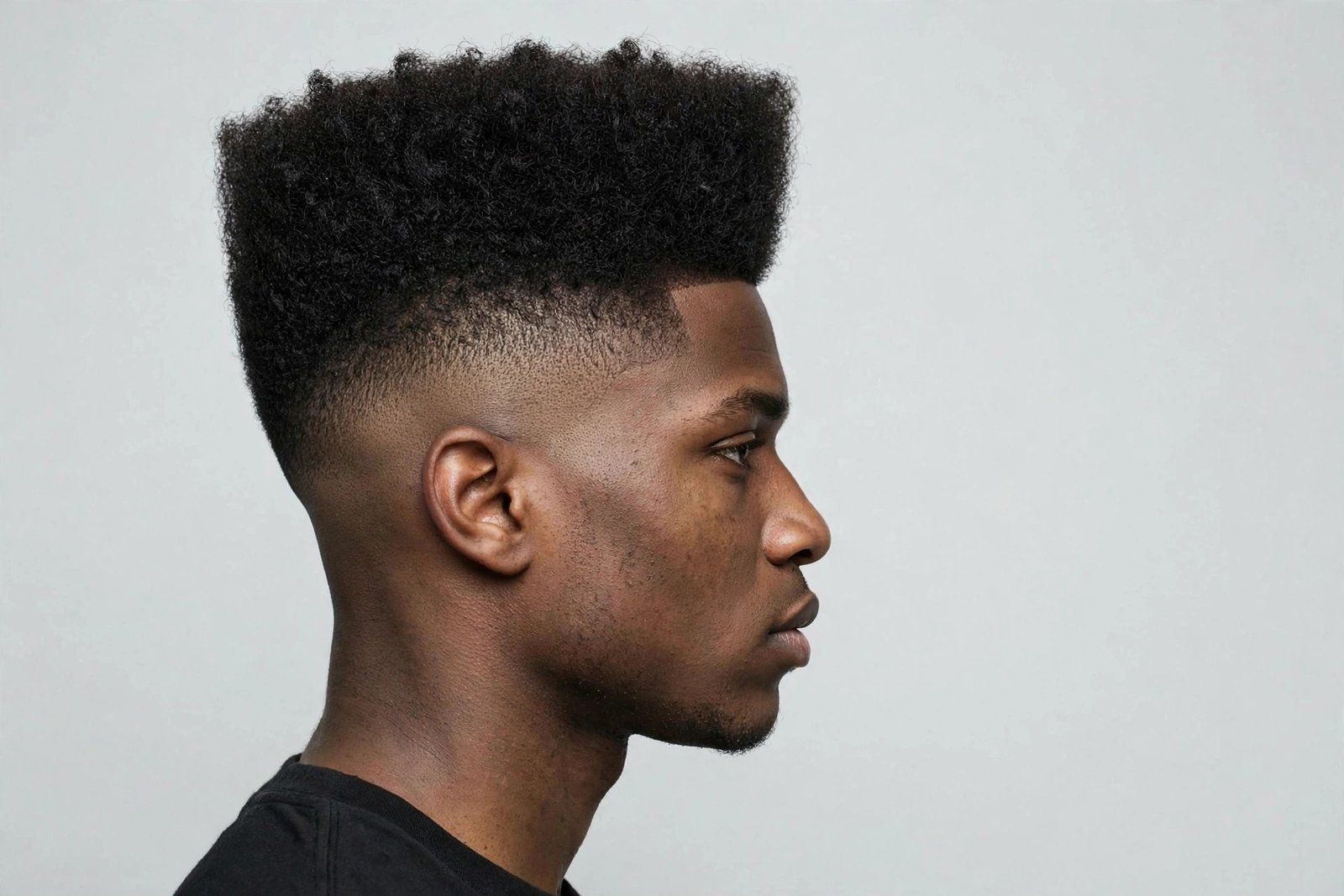
1. The Classic Clean High Top Fade
This is where it all started, and honestly, it is still the one to beat. The classic clean high top fade keeps the top squared and even — roughly three to four inches — with a smooth fade climbing high on the sides and back. No designs, no color tricks, no gimmicks. Just geometry done right. What separates a good one from a great one is the blend: the transition from the short faded sides into the tall top should be seamless, not a visible shelf. Ask your barber to “take the weight out” at the corners — those little parietal ridge corners where the head curves are where amateur high tops go wrong, and a skilled barber rounds them just enough to keep the silhouette boxy without looking like a LEGO head.
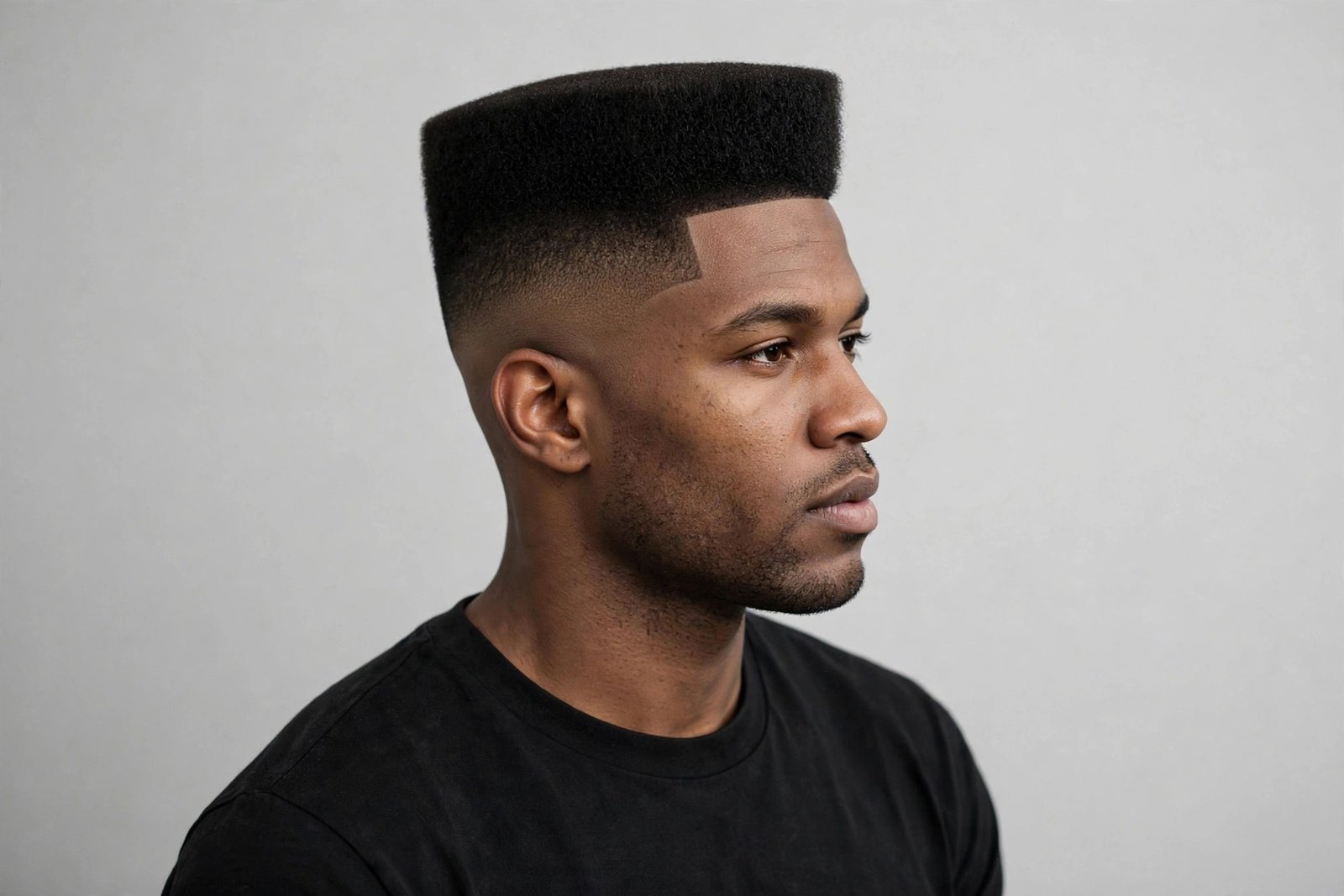
Who suits it? Men with thick, coarse, or coily hair and round or square faces get the most out of this cut — the height balances the width, and dense hair holds the shape with minimal fuss. Your barber script is simple: “High top fade, keep the top three to four inches and squared off, fade it high on the sides, blend the transition.” Bring a photo anyway, because “classic” means different things to different barbers. Styling is straightforward: a little leave-in conditioner on damp hair, a pick to lift the top evenly, and you are done. Maintenance-wise, this one needs a touch-up every two weeks to keep the fade crisp — the sides grow out fast and blur the lines. The honest downside? It is the most “expected” version of this cut. If you want to stand out even among high top fade wearers, keep reading — but if you want the proven, timeless version that has worked for forty years, this is it.
2. The High Top Fade with Line-Up
The line-up — also called a shape-up or edge-up — is the frame around the painting, and on a high top fade it is what turns a good cut into a razor-sharp one. Your barber uses a trimmer (and often a straight razor) to carve perfectly straight lines across the forehead, around the temples, and down the sideburns. The result is surgical. Every photo of a great high top fade you have ever admired had an immaculate line-up doing half the work.
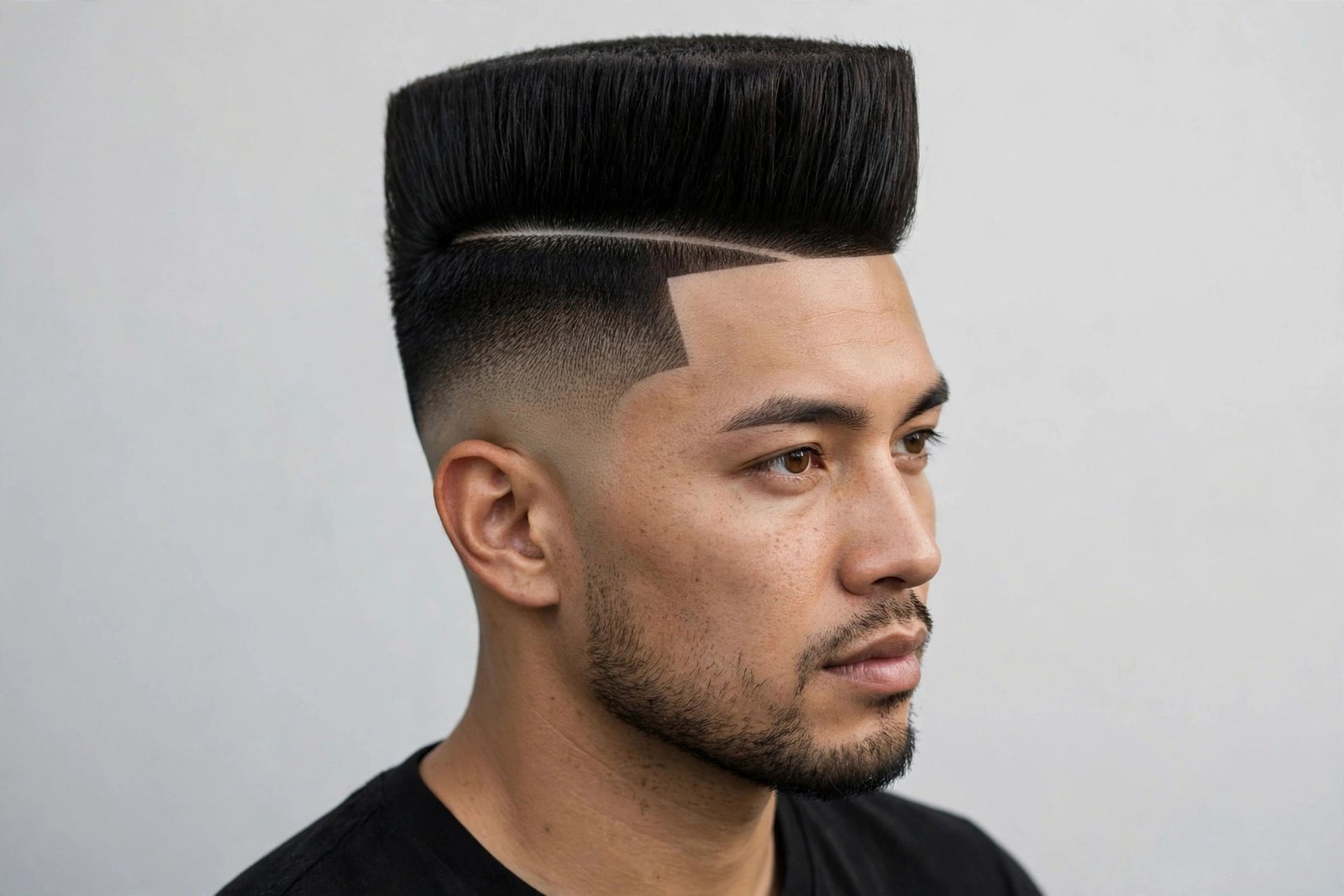
Here is the thing barbers will not always tell you: the line-up is what makes this cut high-maintenance. Those crisp edges start softening within days, not weeks. If you want it to look fresh constantly, you are either back in the chair weekly or you are learning to touch up your own edges at home with a trimmer — which, fair warning, is how a lot of men accidentally push their hairline back over time. Be conservative with the front line; do not let anyone “clean it up” aggressively, because that hairline does not grow back on command.
That said, the payoff is enormous. The line-up gives the cut its architecture — the contrast between the tall textured top and those laser-straight edges is the whole visual drama of the high top fade. It suits every face shape because the lines can be shaped to flatter you: rounded slightly for a softer look, squared for maximum sharpness. Style the top however you like — the line-up does the heavy lifting on the “wow” factor. Just budget for the upkeep, and find a barber whose edges you trust with your life. Bad line-ups are how good haircuts die.
3. The Curly High Top Fade
If you have natural curls, I am going to be straight with you: the curly high top fade might be the best thing you ever do with your hair. Where straight hair fights to hold height, curls do it for free. The coils stack naturally, giving you that tall silhouette with a fraction of the styling effort. The 2026 version keeps the curls defined but not helmet-like — think soft, touchable coils with a crisp fade underneath. It is the perfect marriage of natural texture and sharp barbering.
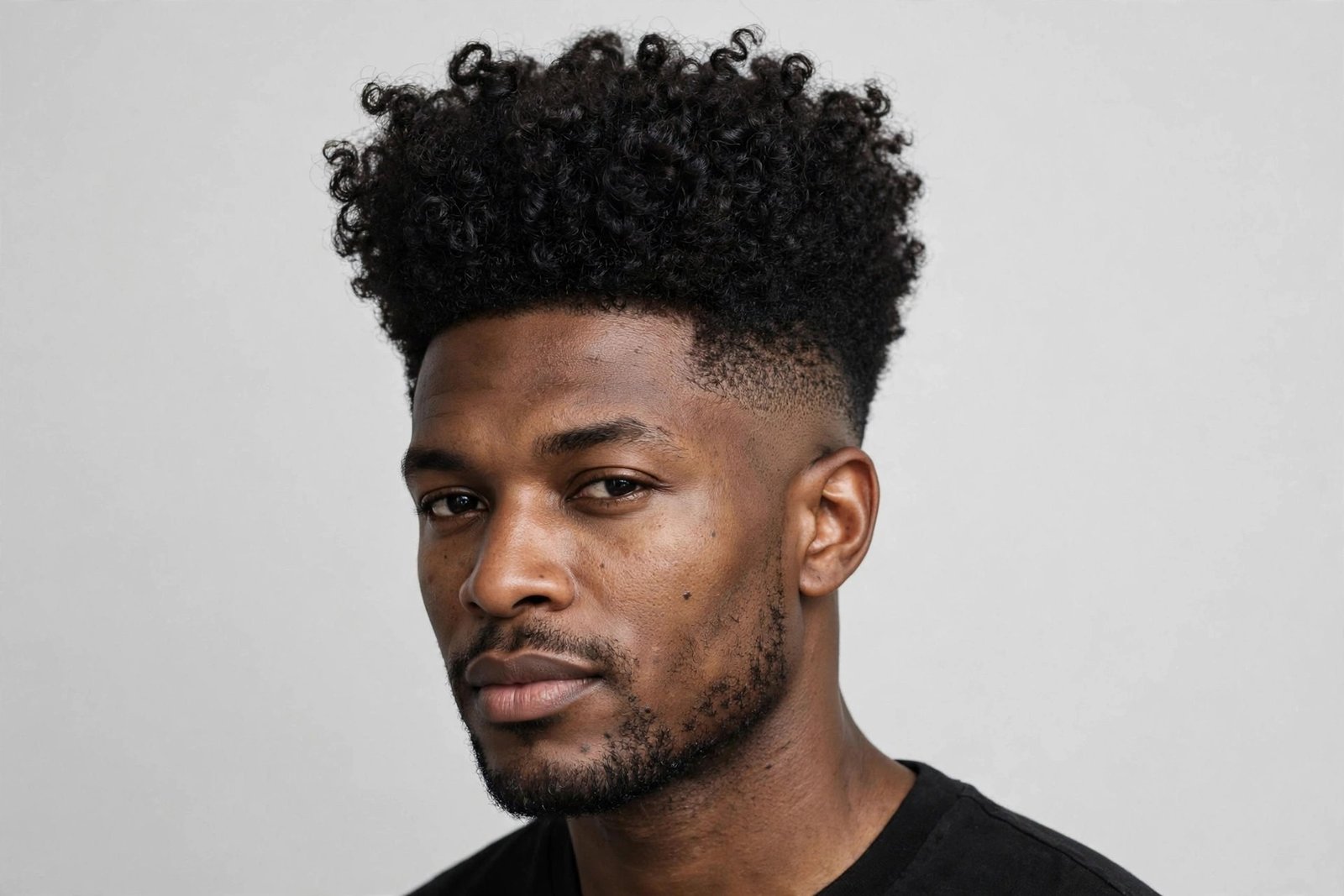
The barber script matters here more than most versions. You want a barber who cuts curly hair dry or at least understands shrinkage — wet curly hair hangs two inches longer than dry, and a barber who shapes it wet will leave you shorter than you planned. Say: “High top fade, keep the curls long on top — at least three inches dry — shape it rounded-square, fade the sides high.” Products are your best friends: curl cream on damp hair, then a light hold product if your curls need convincing. Diffusing on low heat keeps the shape tall without frizz, and a silk or satin bonnet at night is not optional if you want second-day hair.
Who suits it? This is the natural-home version for coily and curly hair types, and it flatters round faces beautifully because the height draws the eye up. The honest downside is the grow-out: curls at the top can start looking lopsided between cuts if you skip maintenance, and the fade needs refreshing every two to three weeks. But on styling effort per unit of good looks, nothing in this list beats the curly high top fade. Your hair was built for this.
4. The High Top Skin Fade
The skin fade version takes the sides all the way down to bare skin, and the effect on a high top is dramatic in the best way. Where a regular high top fade has a soft gradient on the sides, the skin fade goes from nothing to full height in a tight, aggressive blend. The contrast is the point — the top looks even taller and more sculptural when the sides disappear completely. This is the version that turns heads from across the street.
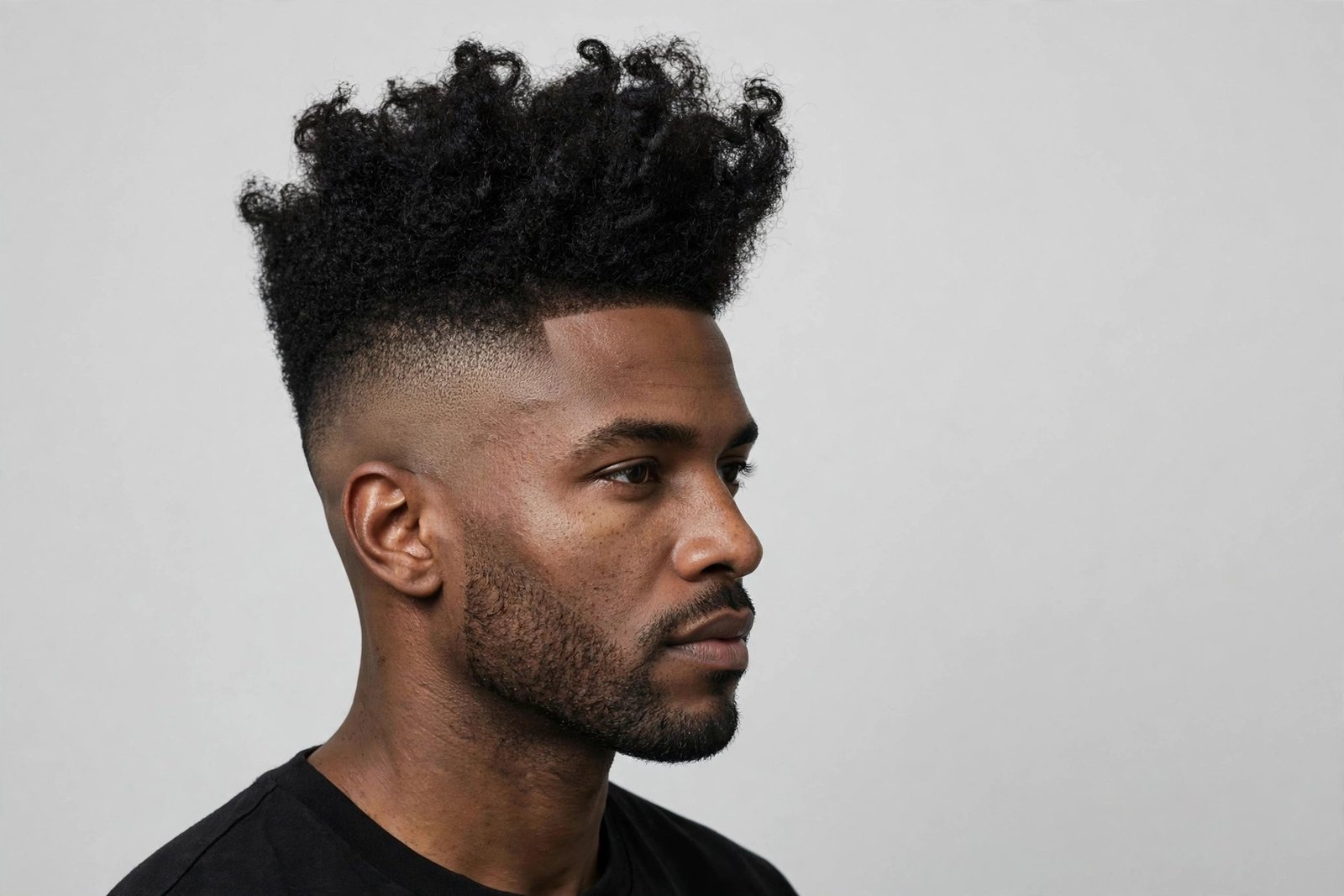
A word of caution from someone who has seen this go wrong: the skin fade magnifies everything, including mistakes. A wavy blend line, an uneven transition, a fade that climbs too high on one side — all of it is visible because there is nowhere to hide. This is not the cut to try with a budget barber. Ask specifically for a “high skin fade with a smooth blend into the top,” and check their portfolio for skin fades before you sit down. The top itself can be whatever you like — boxy, rounded, textured — but the sides are the star of this show.
Maintenance is the steepest of any version on this list: skin fades show regrowth within days, so plan on touch-ups every ten days to two weeks if you want it crisp. It suits men with strong jawlines and defined features, because the bare sides put your bone structure on display. It also pairs brilliantly with a beard, since the skin fade can blend into facial hair for one continuous sharp silhouette. The downside is purely practical — the upkeep cost and time. But for maximum impact per haircut, this is the one.
5. The High Top Fade with Beard Connection
The beard-connected high top fade is a full-head composition — the hair on top, the faded sides, and the beard all working as one continuous piece of grooming. Your barber fades the sides down and blends them into the beard, so there is no awkward gap between the haircut and the facial hair. When it is done right, the whole head looks sculpted, like one flowing design from crown to chin. This is the most “complete” look on the list, and on the right man it is unbeatable.
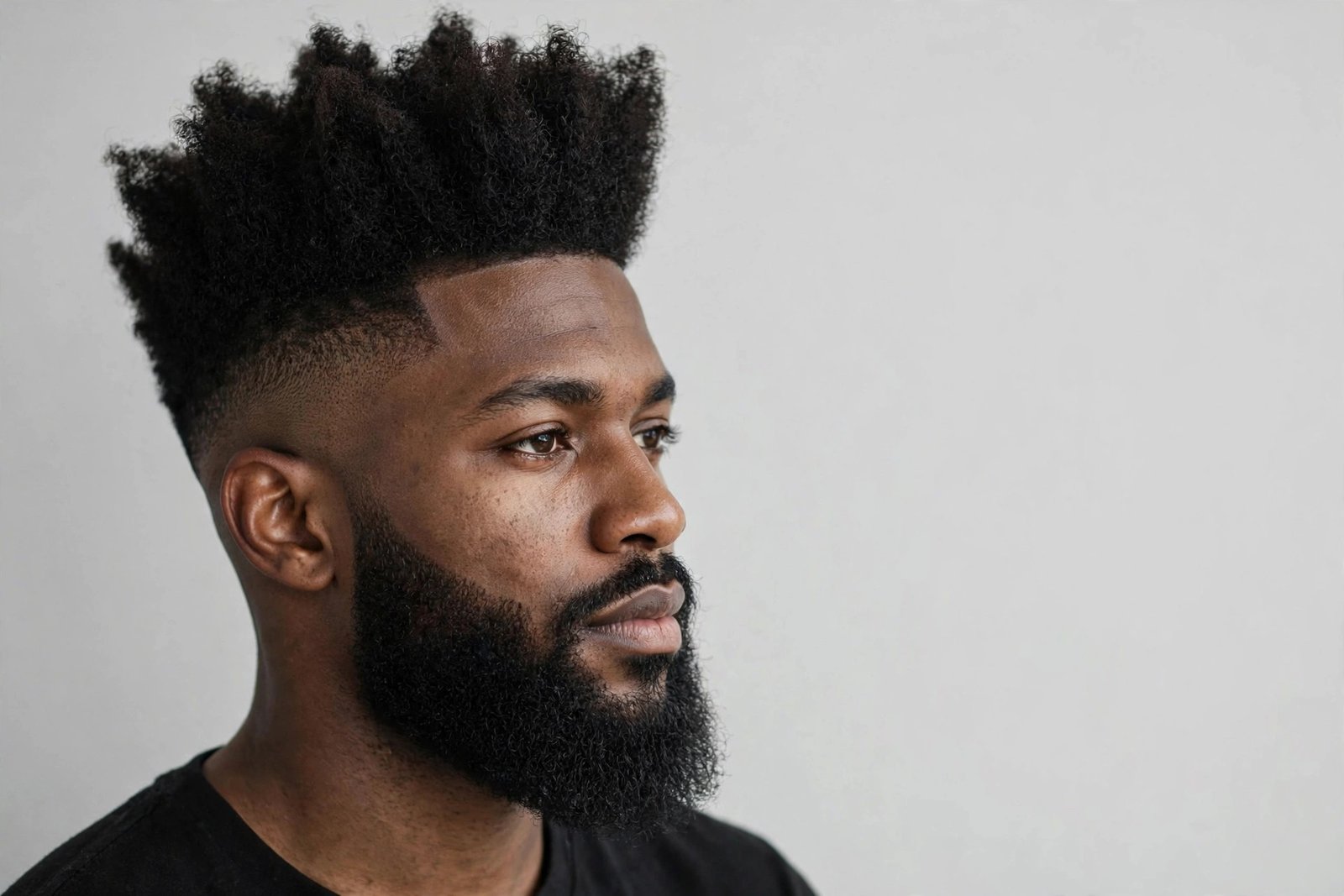
Let me be honest about the difficulty level: this is advanced. You need enough beard density to actually blend with, which not every man has — patchy beards and this look do not mix, and trying to force it just highlights the patches. The fade-to-beard transition is one of the trickiest blends in barbering, because the texture change from head hair to facial hair is abrupt, and only a skilled barber makes it look seamless. Your script: “High top fade, and fade the sides into my beard — keep the beard full but shaped.” If you are working with a beard that you are still growing out, tell the barber to keep the fade a little higher until the beard fills in.
Maintenance doubles — you are maintaining a fade and a beard now. Beard oil, a boar-bristle brush, and weekly beard line-ups keep the facial hair sharp; the fade still needs its two-week refresh. But the payoff is a look that is fully, unmistakably yours. Square and oval faces carry this best, and men with strong beards finally get a haircut that treats the beard as part of the design instead of an afterthought. If you have got the facial hair for it, this is the version I recommend most.
6. The Tapered High Top (High Top with Taper Fade)
Not every man wants the sides taken down aggressively, and that is exactly where the tapered high top shines. Instead of a full fade, the taper gradually shortens the hair around the sideburns and neckline while leaving more length through the sides. The top stays tall and proud — same silhouette, same statement — but the sides have a softer, more natural finish. Think of it as the high top fade’s sophisticated older brother.
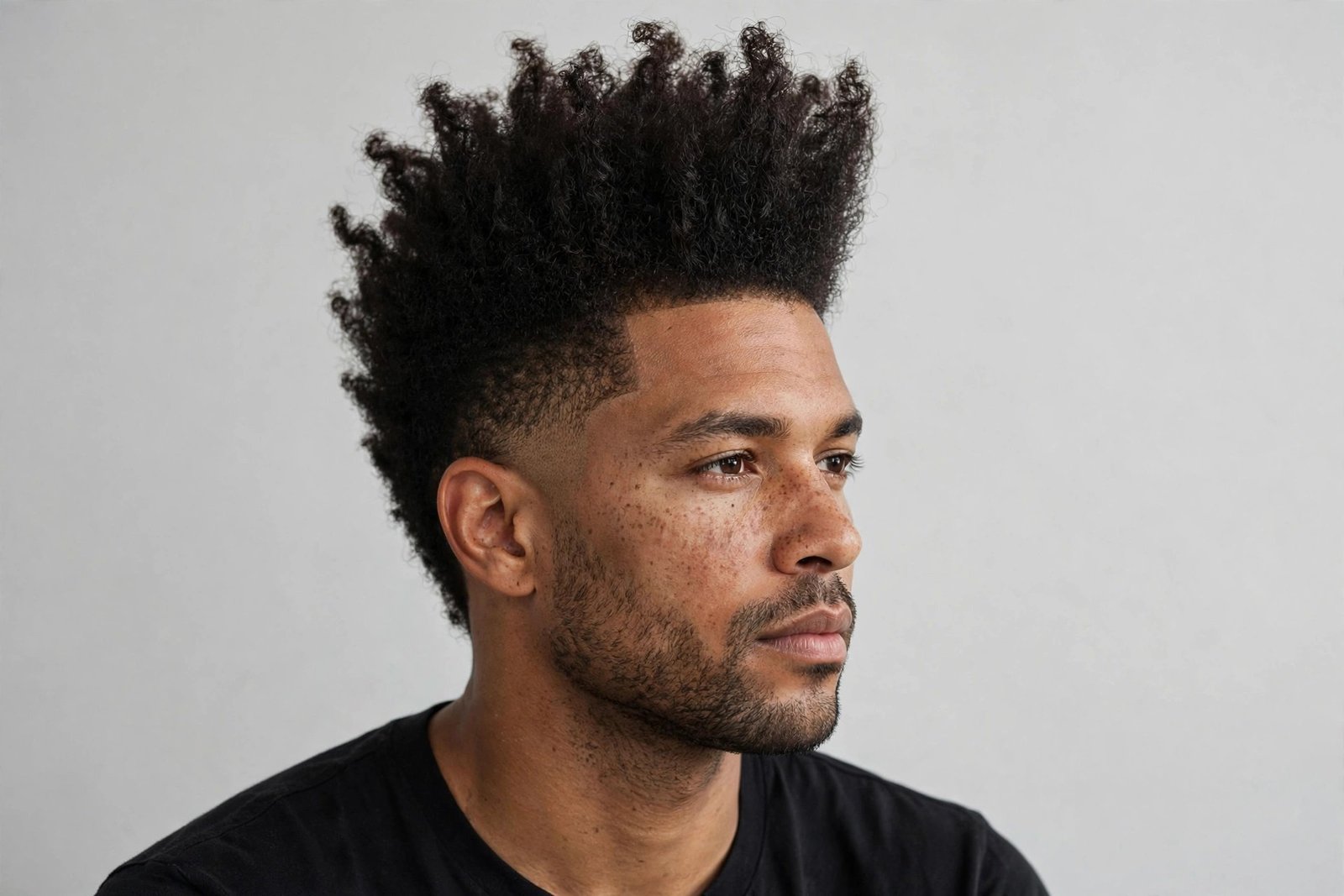
This is quietly the most versatile version on the list. It works in offices where a skin fade might raise eyebrows. It grows out gracefully — no harsh lines appearing after ten days. And it suits men who like the high top silhouette but do not want to commit to the high-maintenance fade schedule. Your barber script: “High top on top, but taper the sides instead of fading — keep it natural around the ears and neckline.” If you want a reference point, the classic blowout taper shares the same DNA of softness around the edges.
The styling is identical to the classic version — lift the top, shape it, done. The honest trade-off is impact: without that high, dramatic fade, the cut reads a little calmer. Some men will miss the edge. But for professionals, for guys growing the cut out from something shorter, or for anyone who wants the shape without the weekly barber visits, the tapered high top is the smartest version of this list. It is the one I recommend to first-timers who are nervous about the full commitment.
7. The Afro High Top Fade
The afro high top fade is the purest expression of this cut — the version that started it all in barbershops decades ago and never really left. The full afro shape on top, tall and proud, with a clean high fade carving out the sides and back. There is no artifice here, no fighting your hair’s nature. The 2026 update is in the details: cleaner blends, more precise shaping, and fades that sit higher and sharper than the old-school versions.
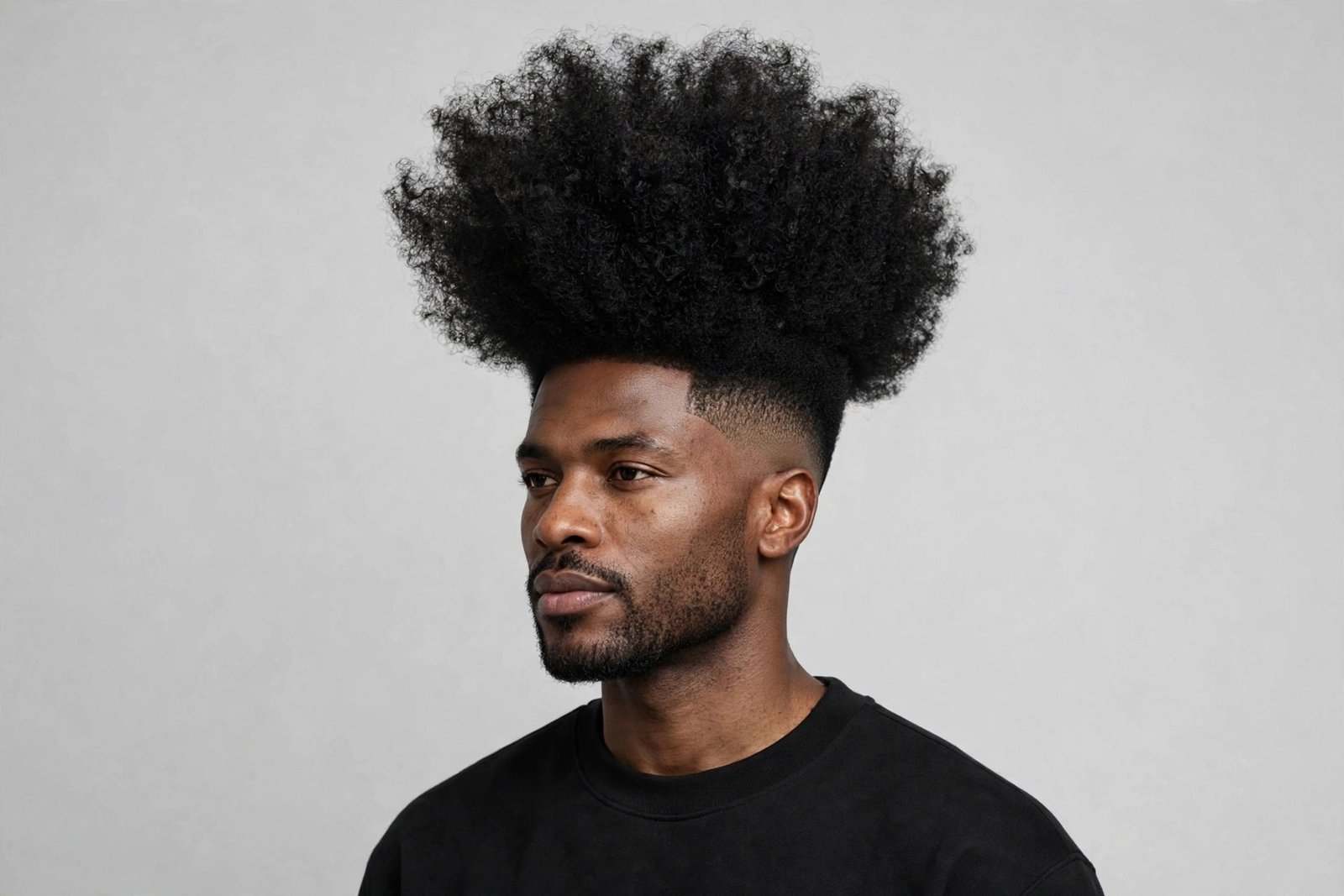
If you have the hair for it, this cut is pure joy to wear. The shape does the talking, and maintenance is mostly about keeping the afro picked out and moisturized — a wide-tooth pick, a good leave-in, and regular trims to keep the silhouette even. Your barber shapes the top with clippers over comb, which is a genuine skill; watch for a barber who rushes this part, because uneven clipper work on an afro shows immediately. Script: “Afro high top — keep it full and tall, fade the sides high, shape the top even all around.”
It suits round and square faces beautifully, adding height that balances everything below it. The grow-out is forgiving — an afro high top that is a week overdue still looks intentional, just a little wilder. The real downside is length-dependent: you need several inches of growth on top before this cut even becomes possible, so men starting from short hair are looking at months of patience. But that is also the beauty of it. This is a cut you grow into, literally and figuratively, and it carries heritage with it. Wear it like you mean it.
8. The High Top Fade with Design
Hair designs — the carved lines, geometric patterns, and freestyle art etched into faded sides — turn a high top fade into a walking gallery piece. A single razor line curving behind the ear, a geometric pattern on one side, a star or tribal-inspired motif: the fade becomes a canvas and the design becomes the signature. In 2026, the best designs are clean and intentional rather than chaotic — one or two bold elements beat a busy mess every time.
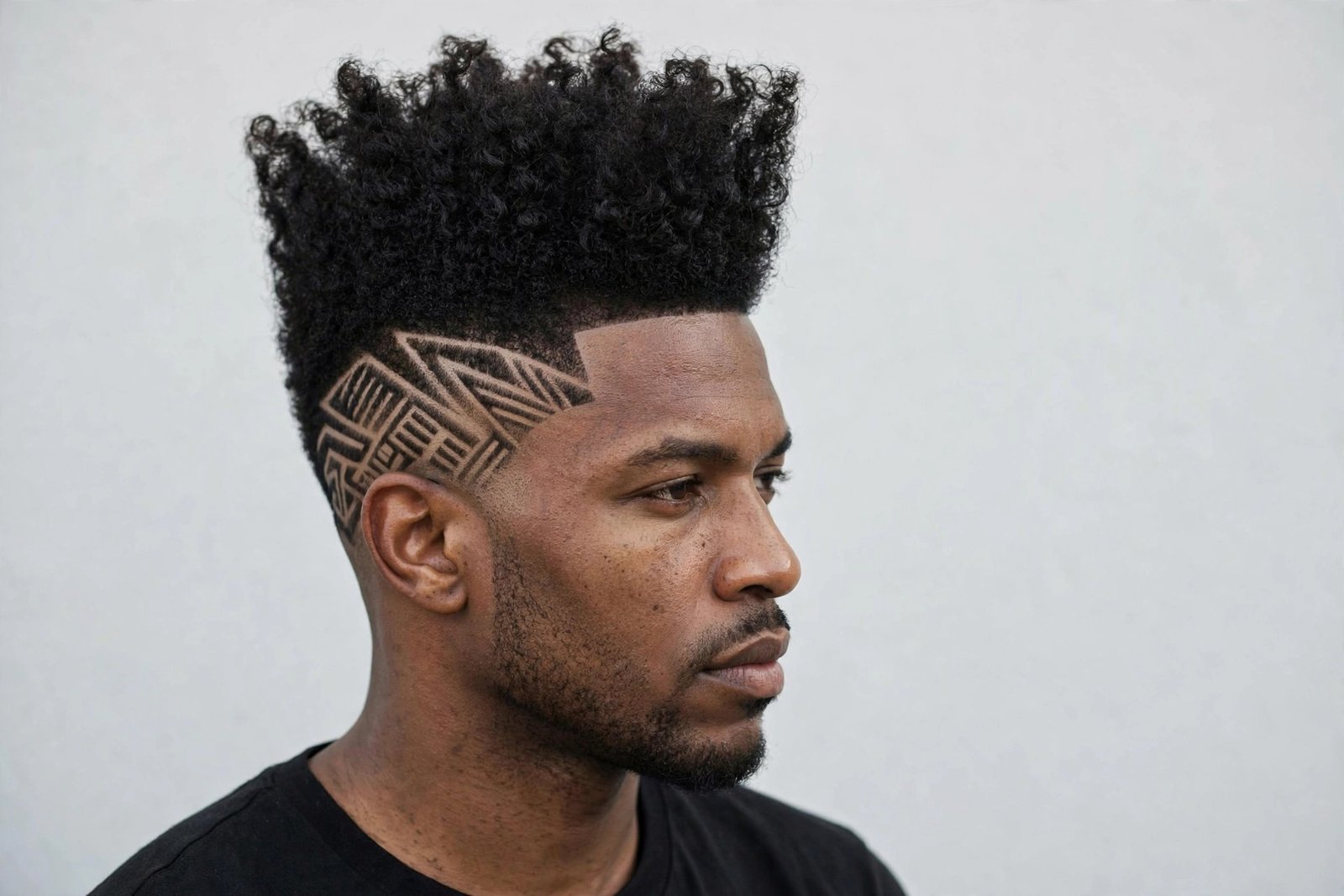
Let us talk honestly about the commitment, because this is the highest-maintenance version here. Designs grow out in days — a week later the lines are blurry and the whole thing looks accidental. You are back in the chair every seven to ten days if you want it crisp, and you need a barber who is genuinely an artist, not just someone who owns a trimmer. Ask to see their design portfolio before you commit; freestyle design is a separate skill from fading. Also consider your life: some workplaces and professions still frown on visible hair art. Know your room before you walk into it.
Placement matters too. Designs sit best on the fade itself — the smooth, short area gives the cleanest lines. A design that creeps up into the tall top usually looks messy. The classic move is a clean line or two on one side, keeping the other side plain for balance. And here is a pro tip: start simple. One sharp line looks intentional and classy; you can always go bolder next time. This version suits confident dressers who treat their look as self-expression, and it photographs incredibly. Just go in with eyes open about the upkeep.
9. The Textured High Top Fade
The textured high top fade is the 2026 answer to everyone who loved the silhouette but hated the helmet look. Instead of a perfectly smooth, boxy top, the hair is point-cut and layered so it has movement, separation, and a lived-in finish. It still stands tall, still fades high — but it looks like hair, not architecture. This is the version for men who want the statement without the stiffness.
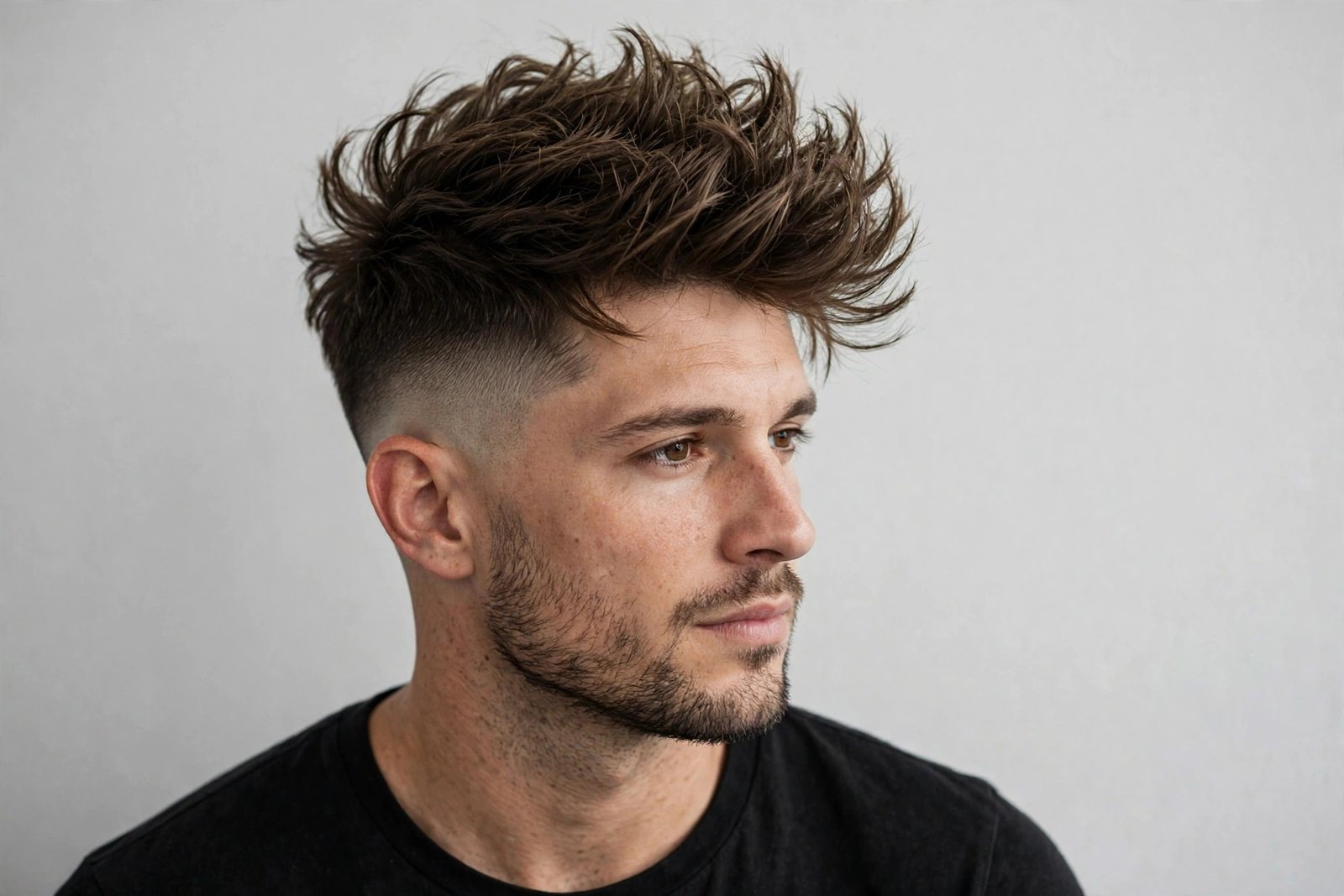
The magic is in the cutting technique. Your barber uses point-cutting or texturizing shears through the top to remove bulk and create piece-y separation, rather than cutting everything to one blunt length. The result catches light differently, moves when you move, and — crucially — grows out much more gracefully than a blunt-cut top. Script: “High top fade, but texture the top — point-cut it, I want movement, not a flat box.” Bring a reference photo, because “textured” is one of those words barbers interpret differently.
Styling is where this version earns its keep: a matte clay or paste worked through dry hair, a little scrunching with the fingers, and you have got a top that looks deliberately undone in the best way. It suits wavy and straight hair types especially well — hair that would not hold a rigid box on its own suddenly has a version of this cut that works with it instead of against it. The honest downside? It needs the right product and a little daily effort to look textured rather than just messy. Skip the styling and it reads as “bedhead” instead of “textured.” But put in the two minutes and it is one of the most modern, wearable versions on this list.
10. The High Top Fade with Temple Taper
The temple taper — sometimes called a Brooklyn fade — keeps the fade concentrated around the temples and sideburns while leaving the back and the rest of the sides longer. On a high top, this creates an interesting, refined variation: the dramatic height on top, a crisp clean finish around the temples, but none of the full-fade commitment around the whole head. It is subtle where the classic version is loud.
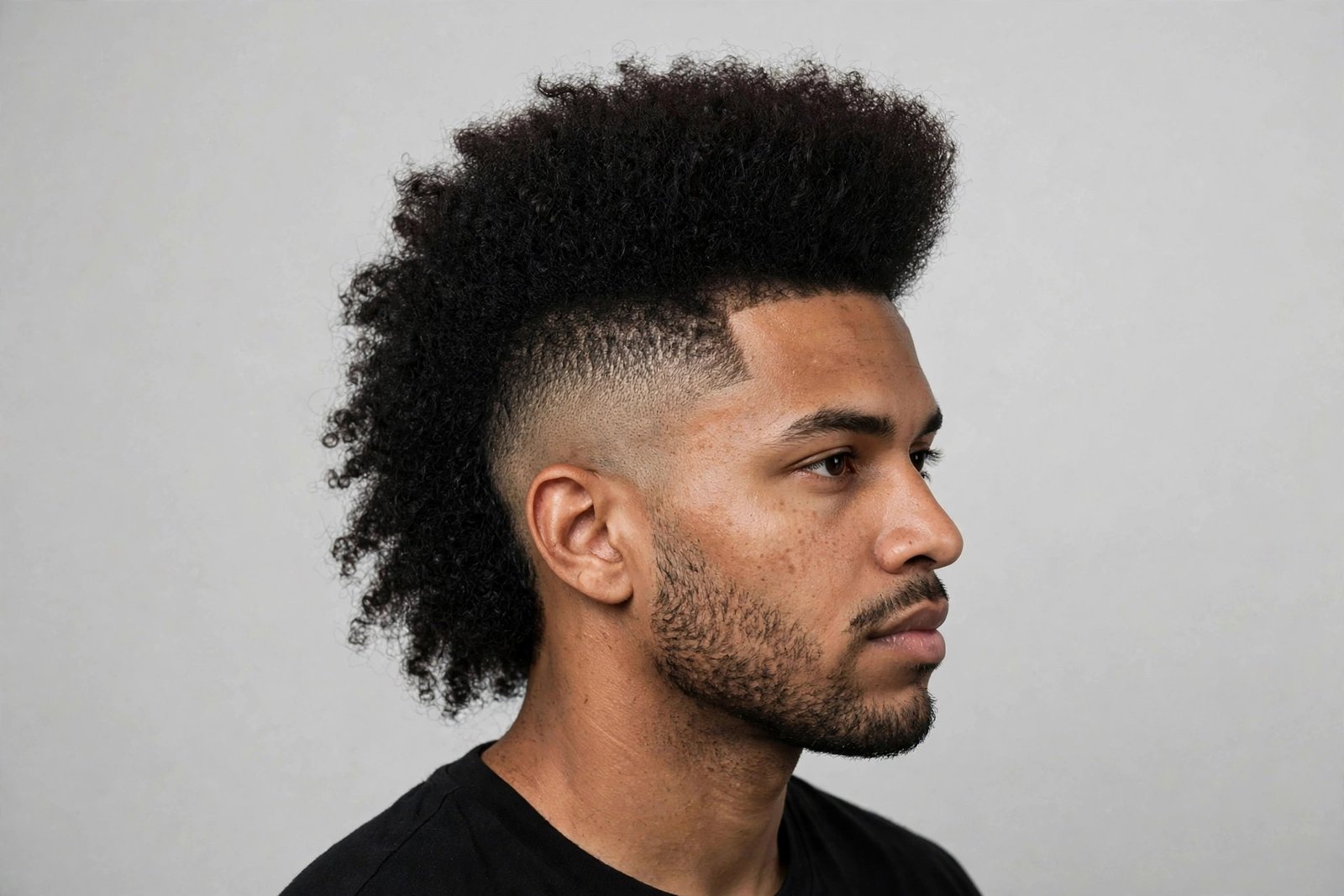
This is a fantastic option for men with great hairlines who want to show them off, because the temple taper frames the hairline beautifully without taking the whole side down. It is also one of the easiest versions to maintain — the taper around the temples is a quick touch-up, and the rest of the cut grows out without drama. Script: “High top, but instead of a full fade, just taper the temples and sideburns — keep the rest natural.” If you like this idea but want to see the taper concept taken further, our guide to the temple fade breaks down every variation.
Who suits it? Men who want the high top silhouette in professional settings, guys with receding temples who want the area kept clean and deliberate, and anyone who likes low-maintenance versions of bold cuts. The trade-off is that it does not have the full dramatic contrast of a complete high fade — from the back, it reads more like a tall tapered cut than a fade. If the fade itself is what you love about this style, you might find this version a little tame. But as an entry point into the high top world, it is brilliant.
11. The Short High Top Fade (The Low-Key Version)
Not everyone wants four inches of height towering over their forehead, and the short high top fade is for those men. The top sits at about one and a half to two inches — clearly a high top silhouette, clearly faded high on the sides — but compact, controlled, and easy. It is the high top fade for men who have jobs, gym schedules, and no interest in a ten-minute styling routine.
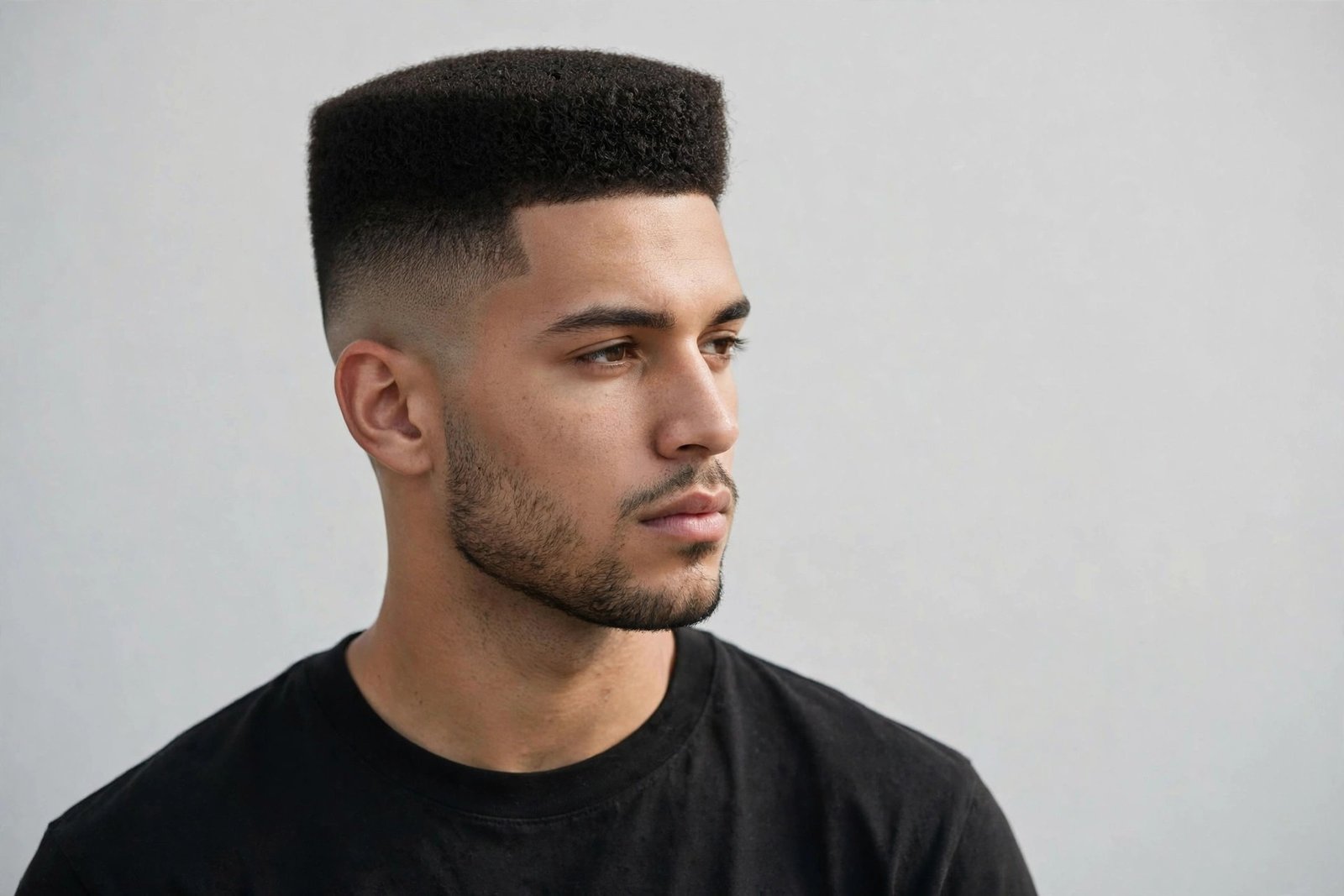
I genuinely love this version because it is honest. It does not pretend to be something it is not — it is a sharp, masculine, low-effort cut that still has the high top DNA. Styling takes ninety seconds: a dab of product, push it up and shape it, walk out the door. It suits nearly every face shape because the moderate height does not distort proportions, and it works for fine hair types that could not hold a taller version. Your barber script: “High top fade, but keep the top short — two inches max, neat and tight.”
The grow-out is the easiest of any version here — a short top fading into a high fade just gets slightly shaggier, never embarrassing. You can stretch touch-ups to three or even four weeks. The only real downside is that purists might say it is not a “real” high top, and there is some truth to that — you lose the dramatic silhouette that makes the cut famous. But what you gain is a cut you can actually live with every single day. For a lot of men, that trade is worth it twice over.
12. The Extra-Tall High Top Fade
And then there is the other end of the spectrum: the extra-tall high top, where the top pushes five, six, even seven inches toward the sky. This is the statement of statements — the version that stops conversations. The fade climbs high and tight, the top is sculpted into a towering shape, and the whole thing has a sculptural, almost artistic quality. In 2026, this is the version the boldest dressers and the most confident personalities are wearing.
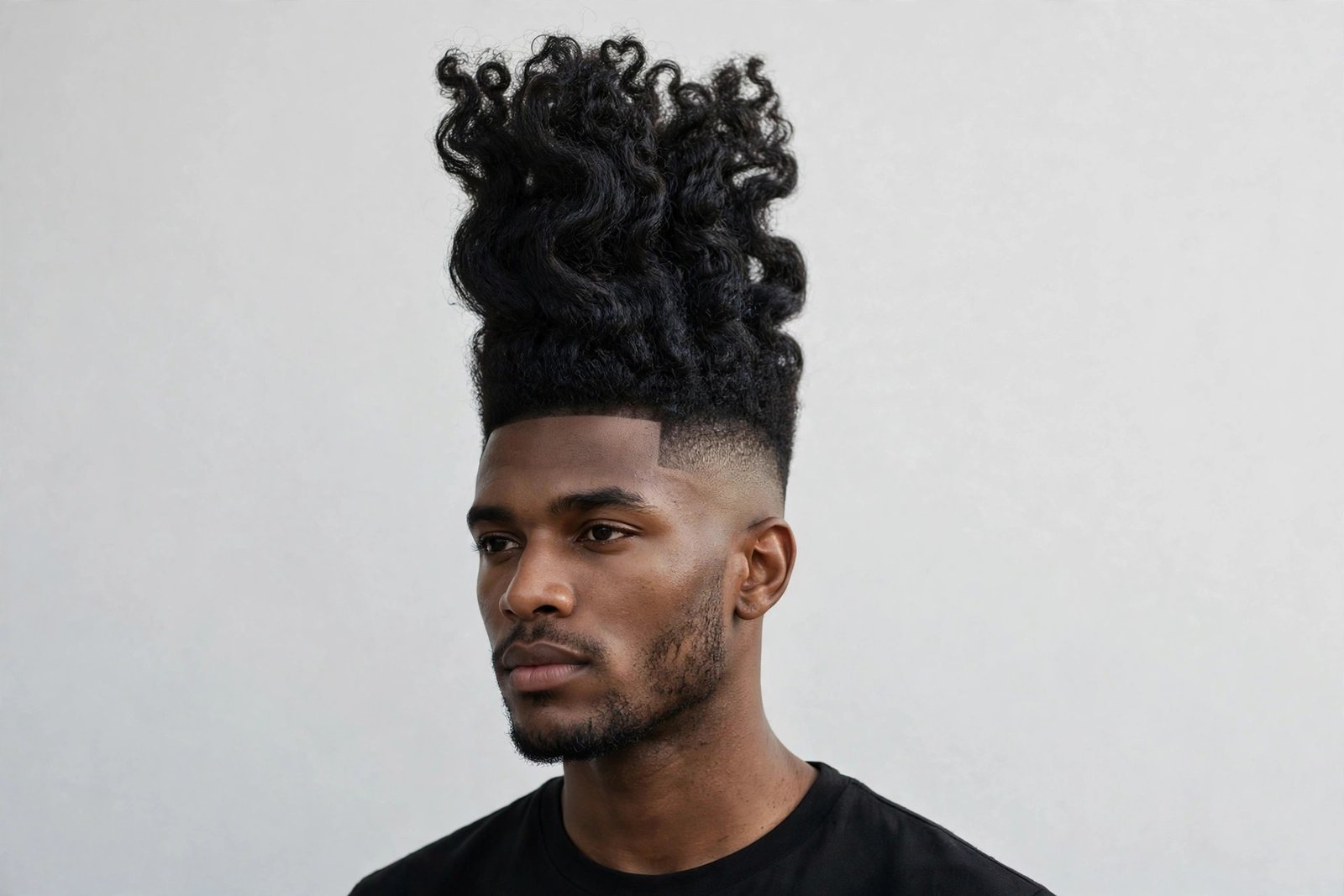
Let us be completely real: this is not a practical haircut. It takes the longest to grow out, the most product to hold, the most skilled barber to shape, and the most maintenance to keep. Wind is your enemy. Hats are your enemy. Low doorframes are, occasionally, your enemy. You are committing to a lifestyle where your hair is a daily project. But — and this is a big but — nothing else looks like it. The confidence it takes to wear this is the whole point, and people respond to that confidence.
You need thick, dense, preferably coily hair to pull this off; fine hair simply cannot hold this much height without looking wispy and sad. Long or oval faces should be cautious — this much height on an already-long face can look cartoonish. Round and square faces, though, get a magnificent balancing effect. Script: “As tall as my hair will go — I want the full extra-tall high top, fade it high and clean.” And find a barber who has done this before; shaping seven inches of hair into something that looks intentional is genuinely difficult. This is a special-occasion or personality-driven cut for most men, and there is zero shame in admitting that. Wear it loud.
13. The High Top Fade with Waves
The wavy high top fade takes one of black hair culture’s most beloved textures — deep, spinning 360 waves — and gives it the tall silhouette of a high top. The top is kept long enough for the wave pattern to show, usually with a sponge or brush routine maintaining the definition, while the sides fade high and clean. The result is mesmerizing: waves on top, sharp fade below, and a cut that moves when you turn your head.
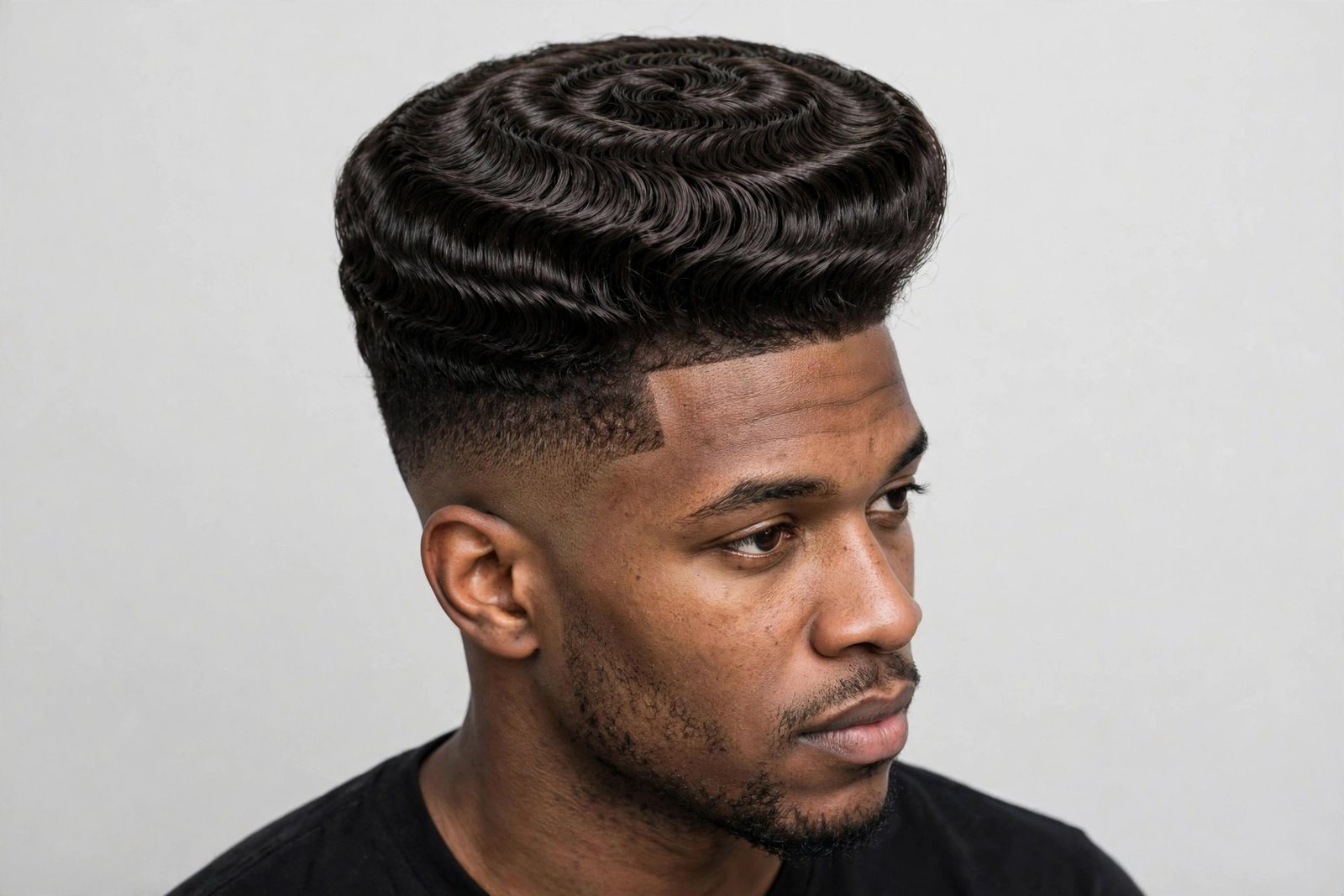
This version is a commitment in a very specific way: waves are not a haircut, they are a lifestyle. You need to be brushing daily — and I mean daily, multiple sessions — wearing a durag to sleep, and keeping the top at the right length where waves actually form instead of just looking like texture. Too short and the waves disappear; too long and they lose definition. Your barber needs to understand waves, because cutting against the grain of a wave pattern ruins months of work. Script: “High top fade, keep the top at wave length — do not cut against the pattern — fade the sides high.” For the full breakdown on building waves from scratch, check out a dedicated 360 waves routine guide.
Who suits it? Men who already have waves or are deep into the wave journey — this cut is the reward for all that brushing. It flatters round and oval faces, and the texture on top adds visual interest that a smooth top cannot match. The honest downside is that maintaining both waves and a crisp fade is genuinely a lot of daily work. But for the wave community, that work is the point. This is a cut that says you take your hair seriously, and everyone can see it.
14. The Drop Fade High Top
The drop fade is one of the smartest fade variations of recent years, and paired with a high top it creates something special. Instead of the fade line running straight around the head, it “drops” — curving down behind the ear as it travels toward the back. On a high top, this gives the cut a rounded, almost sculpted quality from every angle, and it is incredibly flattering from the side profile.
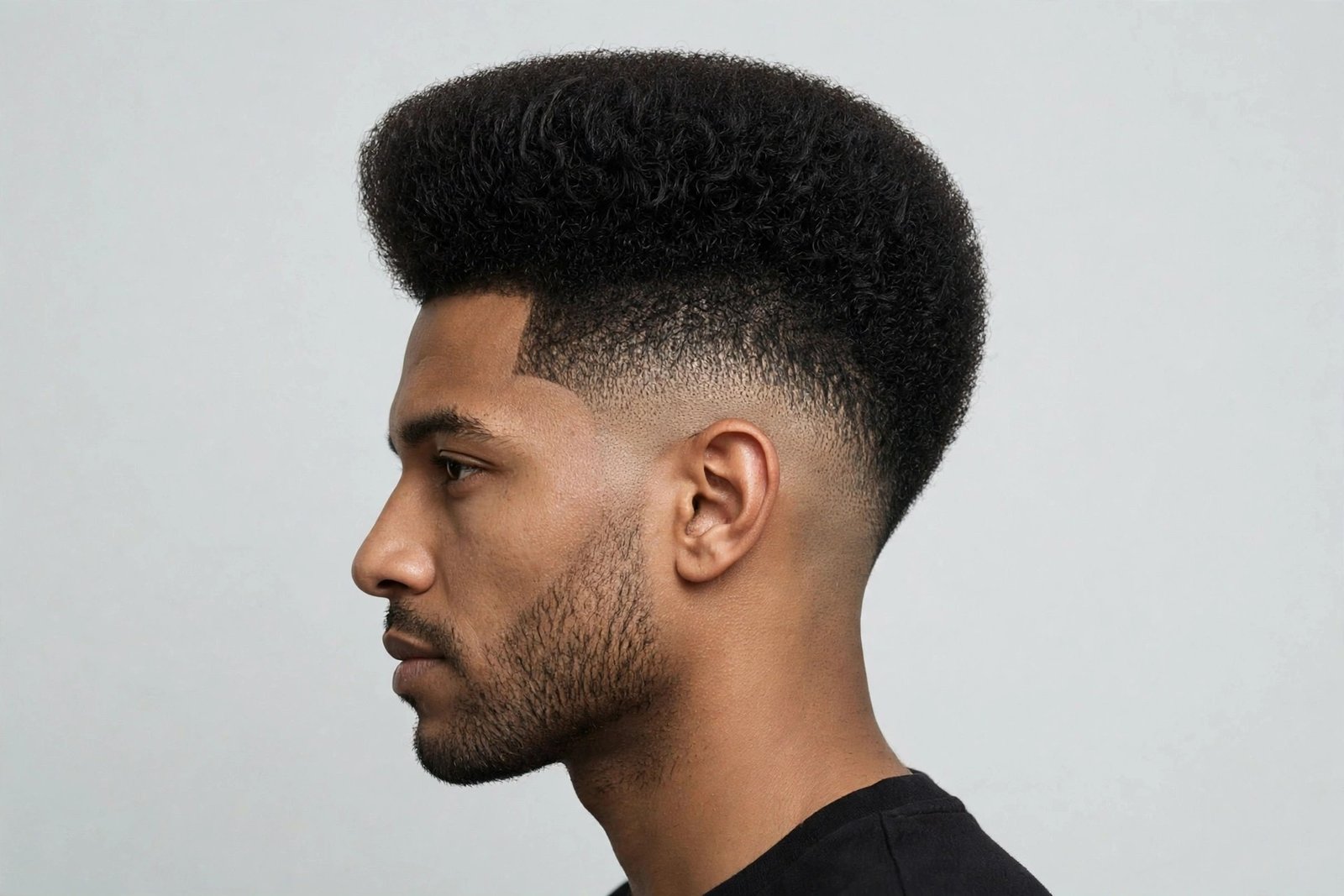
Here is why barbers love cutting this: the drop follows the natural curvature of the head, so the blend looks more organic and the grow-out is more forgiving. It suits men whose heads are not perfectly round — the curved fade line works with your skull shape instead of fighting it. Script: “High top with a drop fade — curve it down behind the ears.” Not every barber does drop fades well, so ask specifically; a drop fade done wrong just looks like a crooked fade, and there is no coming back from that without growing it out.
Styling the top is standard high top procedure — the drop fade does not change what happens up top. It suits oval and round faces particularly well, and it is a great choice for men who want something a little different from the standard high fade without going full experimental. Maintenance is normal fade territory: two to three weeks. The only downside is finding the right barber, because this is a technique-sensitive cut. But once you find someone who nails it, you will wonder why every fade is not a drop fade.
15. The High Top Fade with Blonde or Color
Color on a high top fade is pure visual drama. A platinum blonde top over dark faded sides, a rich copper, a deep burgundy — the contrast between the tall colored top and the natural faded sides makes the color pop in a way that full-head color never does. In 2026, the trend is toward intentional, rich color rather than random dye jobs: think deliberate platinum, warm honey blonde, or deep auburn, applied cleanly to the top only.
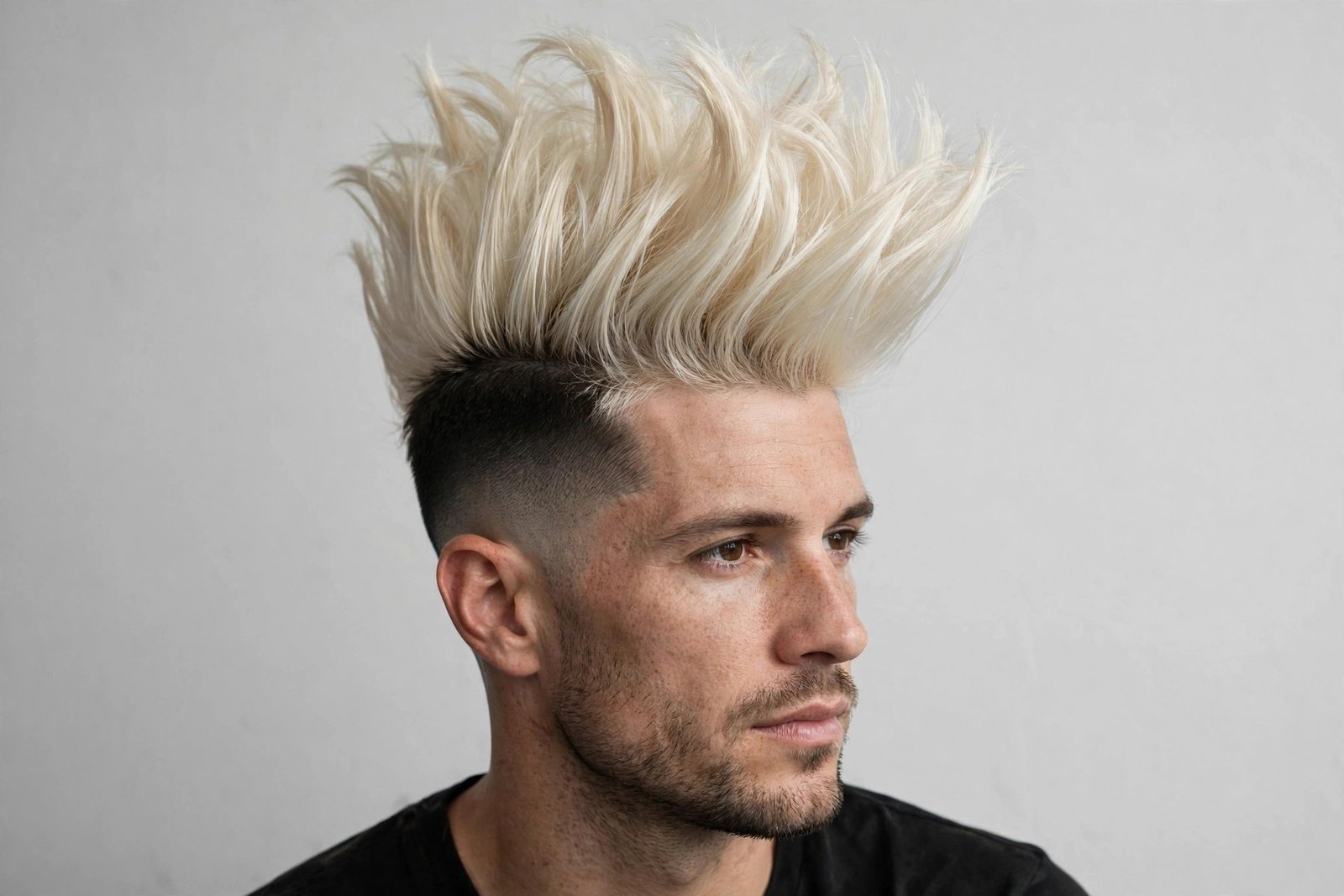
The practical talk: bleaching the top while keeping the sides natural means regular root touch-ups as the top grows — every four to six weeks depending on how fast your hair grows and how stark the contrast is. Bleached hair is drier and more fragile, so deep conditioning becomes part of your routine, not an occasional treat. And please, for the love of your hair, get this done by a professional colorist the first time. Box bleach on top of a haircut you care about is how you end up with breakage at the exact height you wanted to show off. Script for the colorist: “Lift the top only — keep the faded sides natural — I want [your color] with a clean grow-out.”
Who suits it? Confident dressers, creatives, anyone whose personal style already leans bold. The color draws every eye to the top, so your shaping needs to be immaculate — color highlights both good and bad cutting. It works on all face shapes because the color does not change the geometry. The honest downside is cost and upkeep: color + regular fade touch-ups is a real monthly budget line. But as a statement, nothing on this list competes. A blonde high top fade in a crowded room is not a haircut, it is a headline.
16. The Grown-Out High Top Fade (The Maintenance Stage)
Here is the version nobody talks about but everybody lives through: the grown-out high top fade. Three, four weeks after the cut, the fade has softened, the top has gained length, and the whole thing has relaxed into something looser and more natural. And you know what? A lot of men prefer it this way. The grown-out stage has a laid-back confidence that the fresh-cut version does not — less sculpture, more personality.
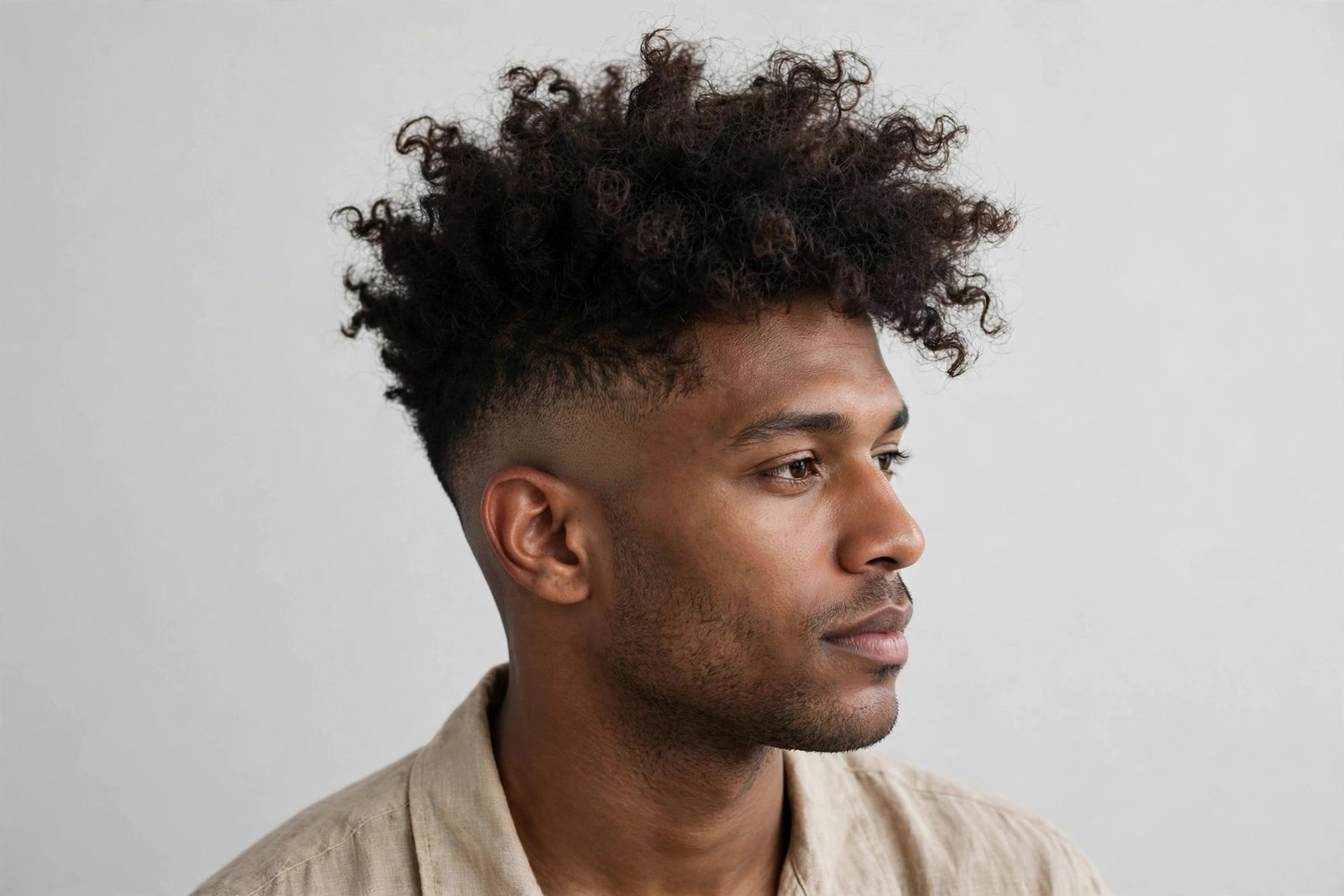
I am including this deliberately, because the grow-out phase is where most men panic and do something drastic. Do not. A high top fade between cuts is not a ruined haircut — it is a different, softer version of the same cut, and with the right styling it looks intentional. A little more product, a pick to reshape the top, and you can easily stretch an extra week or two. Some men even prefer to keep it in this perpetual “week three” state, getting the fade cleaned up but letting the top run longer than the textbook version.
The honest framing: this is not a style you ask for, it is a stage you manage. But knowing how to wear it well — keeping the edges clean with a home trimmer, reshaping the top daily, owning the softer silhouette — is what separates men who always look good from men who look good only on haircut day. If your lifestyle does not support bi-weekly barber visits, plan for this stage from the start: ask your barber to cut the top slightly longer than the “ideal,” knowing you will live in the grown-out version most of the time. That is not settling. That is strategy.
How to Style, Cut, and Maintain Your High Top Fade
Here is the unglamorous truth that separates the men who look incredible in a high top fade from the men who look like they are wearing a lopsided lampshade: the haircut is only half the battle. The other half is what happens in your bathroom every morning and what you say in the barber’s chair every few weeks. Get the routine right and this cut practically maintains itself. Get it wrong and even the best cut in the world falls apart by Thursday. This section is the full playbook — the barber script, the daily styling, the washing and night care, and the touch-up schedule that keeps the shape sharp.
The Barber Visit: What to Actually Say in the Chair
Most bad high top fades are not the barber’s fault — they are communication failures. “High top fade” means different things to different barbers, and if you sit down, say those three words, and hope for the best, you are gambling. Walk in with specifics: how tall you want the top (in inches, not vibes), how high you want the fade to climb, whether you want a skin fade or a softer blend, and what shape you want on top — boxy, rounded, or textured. Inches are a universal language. “Three inches on top, fade it high, blend it smooth” gets you infinitely closer than “make it look like the picture” — though you should also bring the picture.
Photos are non-negotiable for this cut. Bring two or three from different angles if you can find them, and — this is the part people skip — bring one photo of what you do NOT want. “Not this short on top” is as useful as “like this on the sides.” A good barber will also push back on you, and you should let them. If they say your hair texture will not hold that height, or that your head shape needs the fade a little lower, listen. They are looking at your actual head, not a photo of someone else’s. The barbers who just say “yeah, yeah” to everything are the ones who give you a cut you hate.
Ask about the blend specifically. The transition zone between the faded sides and the tall top is where this cut lives or dies, and it is worth saying out loud: “Take your time on the blend — I do not want a shelf.” Watch how they shape the top, too. Clipper-over-comb is the classic technique, and it should look controlled and even, not rushed. And before you leave the chair, ask them to show you the back with a hand mirror. Every time. The back of a high top fade is where uneven work hides, and you will be seeing it in every group photo for the next three weeks.
Daily Styling Routine: Ten Minutes, Zero Drama
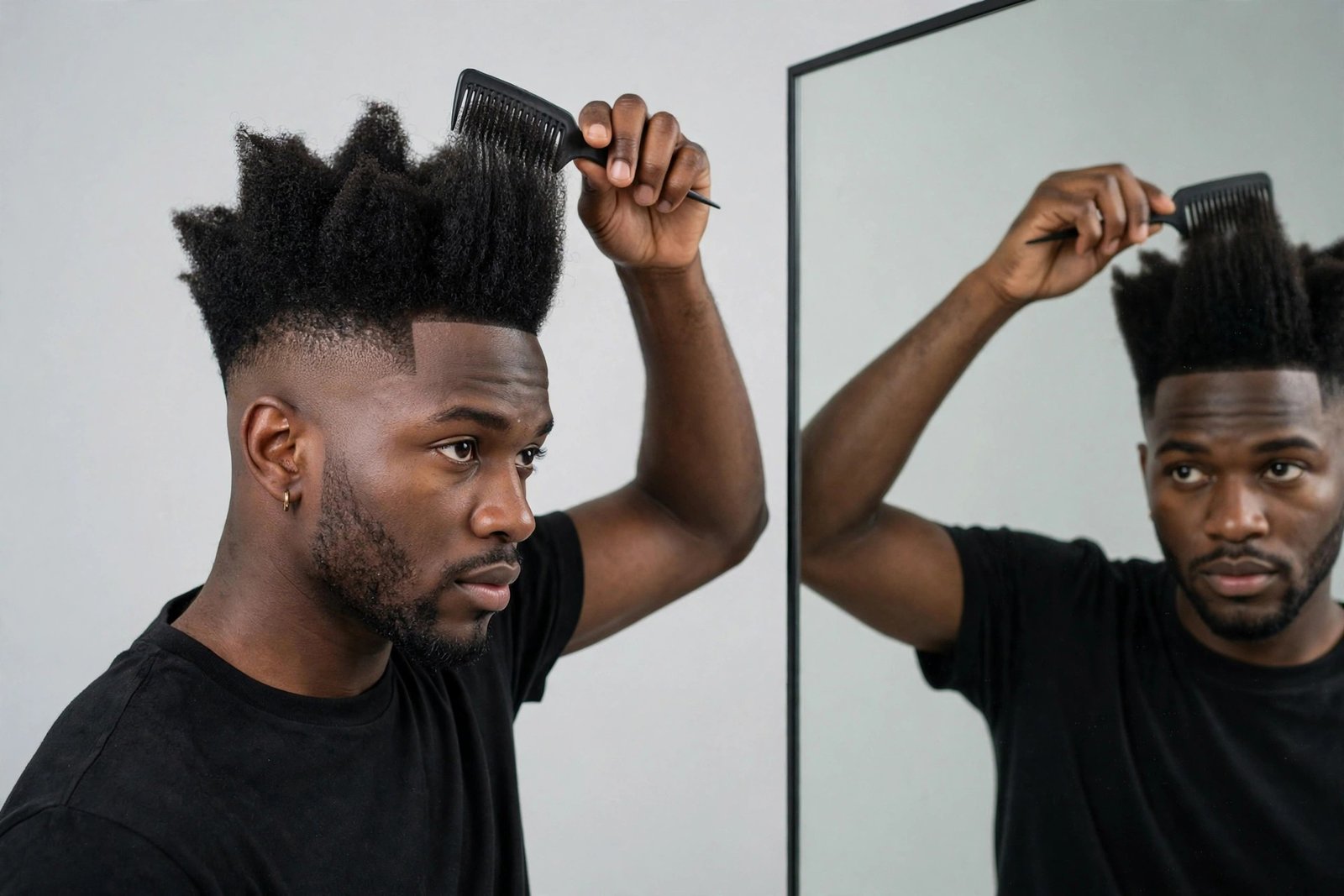
The morning routine for a high top fade is a ritual, and once you have done it twenty times it becomes automatic. Start with damp — not soaking — hair. If you shower in the morning, towel-dry until it is just damp; if not, a spray bottle does the job. Work a small amount of leave-in conditioner or curl cream through the top, depending on your texture. This is the foundation step that most men skip, and it is why most home-styled high tops look dry and frizzy by noon. Moisture first, always.
Next, shape. For coily and curly hair, a wide-tooth pick lifts the top evenly — pick it out in all directions, then shape it into the silhouette you want. For straighter or wavy hair, fingers and a blow dryer do the work: lift the hair upward while drying on medium heat, then lock the shape with a cool shot. Product goes on after shaping, not before — a matte clay, paste, or light pomade worked through the top holds the shape without making it look wet or crunchy. Start with less than you think you need; you can always add more, but too much product on a high top looks greasy fast because there is so much hair up there.
The final step is the detail check, and it takes thirty seconds: look at the cut from the front, both sides, and the back. The top should be even all around — high tops go lopsided overnight because you sleep on one side, and a quick re-pick in the morning fixes it. Check the edges: if your line-up is a few days old, a quick pass with a trimmer keeps it sharp between barber visits. Ten minutes, and you walk out looking like the cut is fresh. Skip the routine, and you walk out looking like the cut is three weeks old. Your call.
Washing and Night Care for High Top Hair
Washing a high top fade is not complicated, but there are rules. Wash two to three times a week, not daily — daily shampooing strips the natural oils that keep the top manageable, and a dry high top is a frizzy high top. When you do wash, use a sulfate-free shampoo and always follow with conditioner on the top. The faded sides barely need product attention; the top is where all the care goes. If your hair is color-treated (looking at you, style number fifteen), swap in a color-safe shampoo and add a weekly deep-conditioning mask. Bleached hair on top of a high-maintenance cut is a combination that punishes neglect.
Night care is where long-term high top wearers separate themselves from the pack. Cotton pillowcases are the enemy — they create friction that flattens one side and frizzes the other. A satin or silk pillowcase, or a durag or bonnet, keeps the top’s shape overnight and cuts your morning styling time in half. For curly and coily tops, the “pineapple” method — loosely gathering the top hair at the crown — preserves the shape beautifully. It feels like a lot of fuss the first week. By week three, you will wonder how you ever slept without it.
Between washes, a light refresh keeps things alive: a spritz of water, a tiny bit of leave-in, a quick pick or finger-shape, and the top is back. Dry shampoo has no real role here — the top is too long and textured for it to help, and it can leave a visible residue on darker hair. The goal of all of this is simple: protect the shape you paid for. Every night of good care is a morning of easy styling, and every morning of easy styling is a day the cut looks intentional.
How Often to Get a Touch-Up (The Real Schedule)
Let us put real numbers on this, because vague advice like “get it cut regularly” helps nobody. For a crisp high top fade with a skin or high fade: every two weeks, no debate. The fade is the part that shows regrowth first, and by week three the sharp contrast that defines the cut has softened into something ordinary. If you are running a line-up too, add a weekly edge touch-up — either in the chair or carefully at home — because edges blur in days.
For softer versions — the tapered high top, the temple taper, the short high top — you can stretch to three weeks comfortably, sometimes four. The grow-out is kinder because there is less dramatic contrast to lose. Budget-wise, this matters: bi-weekly cuts at a good barber add up fast, and it is better to choose a version whose maintenance schedule you can actually sustain than to get the dramatic version and let it go ragged. An honestly maintained short high top looks a hundred times better than a neglected extra-tall one.
One more piece of honest advice: find one barber and stick with them. A high top fade is a relationship cut — your barber learns your head shape, your growth patterns, your preferences, and every visit gets better. Barber-hopping with this cut means starting the learning curve over every time, and the results show it. Loyalty to a good barber is the single highest-ROI decision in this whole guide. Tip well, book ahead, and never no-show. Your hair will thank you.
Frequently Asked Questions
Real questions from real men considering this cut — answered straight, no sales pitch. If you are on the fence about the high top fade, this section is probably the most useful part of the whole guide.
How long does my hair need to be on top for a high top fade?
You need at least two to three inches on top for a proper high top fade — that is the minimum where the “high top” part of the name actually means something. For the classic look, three to four inches is the sweet spot. The dramatic versions need five or more. If you are starting from a buzz cut or short crop, you are looking at roughly three to five months of growing, since hair grows about half an inch per month. Here is the practical tip: do not wait until you have full length to visit the barber. Get the sides faded and shaped as you grow the top out — it keeps you looking intentional during the awkward months instead of just looking unkempt. And be honest with yourself during the grow-out: if your hair is thin or fine, more length does not always mean more height. Sometimes it just means more flop.
Does the high top fade work for straight hair?
Yes, but with honest expectations. Straight hair can absolutely wear a high top fade — the textured and short versions on this list were practically made for it — but it will not hold height the way coily or curly hair does. You will lean harder on product (a strong matte clay or paste), on blow-drying the top upward for lift, and on a barber who knows how to cut straight hair for height rather than against it. The textured high top fade is your best friend here, because the layering creates the illusion of fullness that straight hair lacks on its own. What I would steer straight-haired men away from is the extra-tall version — without natural coil to support it, extreme height on straight hair tends to look thin and wispy rather than bold. Work with your texture, not against it, and you will be fine.
How often should I get my high top fade touched up?
Every two weeks for the crisp versions — skin fades, high fades with line-ups, anything where sharp contrast is the point. The fade shows regrowth within ten days, and by week three the cut has lost the definition that makes it special. Softer versions (tapered, temple taper, short high top) can go three to four weeks. The line-up is the wildcard: edges blur in days, so weekly edge touch-ups keep everything looking fresh — learn to do light edge maintenance at home with a trimmer, but stay conservative around the hairline. The golden rule is simple: a well-maintained modest version always beats a neglected dramatic one. Pick the version whose schedule you will actually keep.
Is a high top fade professional and work-appropriate?
It depends on the version and the workplace, and anyone who gives you a blanket yes or no is not being honest. The tapered high top, the short high top, and the temple taper versions read as sharp and professional in most modern workplaces — they are bold but controlled. The skin fade with a razor design and platinum color? That is a harder sell in conservative offices, law firms, and client-facing finance roles. Creative industries, tech, media, and most customer-facing retail? Generally fine with all of it in 2026. My honest advice: if you are unsure, start with a conservative version and feel out the room. You can always go bolder at the next appointment. And remember — a well-groomed, intentional high top fade reads as confidence and self-care, which most workplaces respect. It is the unkempt version that causes problems, not the cut itself.
What is the difference between a high top fade and a flat top?
They are cousins, not twins. A flat top is cut perfectly level across the top — like a tabletop — and is defined by that flat, geometric plane. A high top fade is defined by the combination of height on top plus the high fade on the sides, and the top does not have to be flat at all — it can be rounded, textured, curly, or wavy. In practice, many modern “high top fades” borrow the flat top’s boxy silhouette, which is where the confusion comes from. The simplest way to think about it: flat top describes the shape of the top, high top fade describes the whole cut including the fade. You can have a high top fade with a flat top finish, but you can also have one with curls, texture, or waves — and those would never be called flat tops. When you are in the chair, specify both: the fade height and the top finish you want.
Can I cut a high top fade myself at home?
I am going to be straight with you: probably not well, and this is one of the worst cuts to learn on. The high top fade requires clipper-over-comb work on the top, precise blending at the transition, and — hardest of all — cutting the back of your own head evenly, which you cannot see. Even experienced home barbers struggle with this one. What you CAN do at home is maintenance: cleaning up the edges and neckline with a trimmer between appointments, which stretches the time between paid cuts. But the actual cut — the shaping, the blend, the silhouette — belongs in a professional chair. The money you “save” doing it yourself gets spent tenfold growing out a bad cut. If budget is the concern, get the dramatic version cut professionally every three weeks instead of the full version every two, or choose the tapered version that is more forgiving. Some things are worth paying a professional for, and according to GQ’s grooming coverage, the high-maintenance statement cuts top that list. Your head is one of them.
How do I keep my high top fade from looking lopsided?
Lopsidedness comes from three places, and all three are fixable. First: sleep. You flatten one side every night — a satin pillowcase or durag plus a quick morning re-pick solves most of it. Second: uneven growth. Hair does not grow symmetrically, and the dominant side (the side you sleep on, the side you part toward) often grows faster or lies flatter. Your barber should account for this, so mention it: “the left side always grows faster” is genuinely useful information. Third: cutting errors. If the top was shaped unevenly in the chair, no amount of styling fixes it — go back and have it corrected, because a good barber would rather fix it than have you walk around advertising their mistake. Daily, the fix is simple: pick or finger-shape the top every morning, check it in the mirror from multiple angles, and do not leave the house until both sides match. Two minutes of checking beats a whole day of lopsided.
Conclusion
Here is what I want you to take away from all of this: the high top fade is not just a haircut, it is a commitment to looking like you mean it. It asks more of you than a safe crop — more grow-out patience, more barber visits, more mornings spent shaping the top — and in return it gives you something no low-effort cut can: presence. When the lines are crisp and the height is right, you do not just look good, you look deliberate. And deliberate is magnetic.
Start where you are. If your hair is short, begin the grow-out now and keep the sides clean while the top catches up. If you are nervous, the tapered or short versions are honest entry points that still carry the DNA of the cut. Find one good barber, bring photos, say the blend matters, and stick with them. Take care of the top at night so your mornings are easy. And when someone asks why you put this much effort into your hair — because someone will — just smile. You will know exactly why. For the science of what your hair is actually doing up there, Wikipedia’s overview of hair is a solid rabbit hole.
The high top fade has survived four decades of trends for a reason. It is bold without being reckless, classic without being boring, and in 2026, with the sharper blends and better techniques barbers have now, it is the best version of itself it has ever been. Sixteen styles, one head of hair, zero excuses. Book the chair.